• Skip to primary navigation
  • Skip to main content
  • Skip to primary sidebar
  • Home
  • About Us
    • Privacy Policy
    • Comment Policy
    • Disclosures & Disclaimers
  • Resources
    • Links, Essays & Articles
    • Fandomology!
    • CLAMP Directory
    • BlogRoll
  • Features & Columns
    • 3 Things Thursday
    • Adventures in the Key of Shoujo
    • Bit & Blips (game reviews)
    • BL BOOKRACK
    • Bookshelf Briefs
    • Bringing the Drama
    • Comic Conversion
    • Fanservice Friday
    • Going Digital
    • It Came From the Sinosphere
    • License This!
    • Magazine no Mori
    • My Week in Manga
    • OFF THE SHELF
    • Not By Manga Alone
    • PICK OF THE WEEK
    • Subtitles & Sensibility
    • Weekly Shonen Jump Recaps
  • Manga Moveable Feast
    • MMF Full Archive
    • Yun Kouga
    • CLAMP
    • Shojo Beat
    • Osamu Tezuka
    • Sailor Moon
    • Fruits Basket
    • Takehiko Inoue
    • Wild Adapter
    • One Piece
    • After School Nightmare
    • Karakuri Odette
    • Paradise Kiss
    • The Color Trilogy
    • To Terra…
    • Sexy Voice & Robo
  • Browse by Author
    • Sean Gaffney
    • Anna Neatrour
    • Michelle Smith
    • Katherine Dacey
    • MJ
    • Brigid Alverson
    • Travis Anderson
    • Phillip Anthony
    • Derek Bown
    • Jaci Dahlvang
    • Angela Eastman
    • Erica Friedman
    • Sara K.
    • Megan Purdy
    • Emily Snodgrass
    • Nancy Thistlethwaite
    • Eva Volin
    • David Welsh
  • MB Blogs
    • A Case Suitable For Treatment
    • Experiments in Manga
    • MangaBlog
    • The Manga Critic
    • Manga Report
    • Soliloquy in Blue
    • Manga Curmudgeon (archive)

Manga Bookshelf

Discussion, Resources, Roundtables, & Reviews

manga

Guest Post: What Manga Got You To Read More?

February 6, 2013 by Justin Stroman 43 Comments

OLYMPUS DIGITAL CAMERA
So tell me, how did you all get into manga? Because let me tell you something: I didn’t exactly get hooked immediately. During my middle school years I mostly settled on watching anime and anything that aired on Toonami and Adult Swim. It wasn’t until around 8th grade when I finally bought manga, and those manga happened to be Psychic Academy, One Piece, and D.N Angel. I can’t remember how I had come to know what manga was—I may have learned about it in a magazine most likely—but thanks to some silly reasons (for example, I mixed up a character from a fighting game, and that’s why I brought Psychic Academy), I bought these three manga.

I only kept up with Psychic Academy and maybe mistakenly gave up on the others—even throwing them away because they were starting to take up space in my room and I wasn’t reading them. After that, though, I wasn’t all that connected with manga, and stayed in the realm of anime and video games. However, I suddenly had a desire to write and draw around my high school years. Don’t worry, these are stories I’ll be inclined to keep to myself! Anyway, when I attended college, I decided it was time to learn my craft. At the time, purchasing books or anything related to what I did was not an option, so I didn’t know what was a trend or what was really all that popular. So during my sophomore year of school, I believe, I decided to return to the manga world and start reading in general—just to get a sense of what I’d like and what was popular. I wasn’t convinced, though. I had only picked up manga I had heard of like Rosario + Vampire and Negima, and aside from the usual shounen stuff (Rurouni Kenshin, Bleach), nothing really compelled me to read more and take manga seriously.

Then the best thing happened to me when it came to manga: I watched the first episode of Monster on SYFY. That episode made such a great impression on me that I had to find out more on what it was and what it was all about. That was how I found out Monster was a manga series created by some artist named Naoki Urasawa. I brought the first volume at the bookstore, got home, and started turning the pages. And turning. And turning! Needless to say, I was captivated. The story was suspenseful and full of seemingly implausible yet true twists, the art blew me away (as at the time I didn’t believe manga could be like that), and it made me understand a lot of things about manga that I might have glossed over before. Needless to say, this was the time I wanted more.

So you could also approach this as a question of how you got into manga, but let’s try and dig a bit deeper. What was that one manga you read that really hit you and told you to go read more manga? Were you in a position where you read a manga, did not like it, but was convinced by someone or something to check out a different manga? Whatever the case is, feel free to share in the comments the manga that got you hooked onto more manga.


Justin Stroman is the founder of Organization Anti-Social Geniuses, a Japanese Pop Culture Blog that covers anime, manga, games, and more. You can follow him on Twitter and like the Facebook page to get updates and links to Japanese Pop Culture Related content.

Filed Under: FEATURES & REVIEWS Tagged With: manga, Reading More Manga

Adventures in the Key of Shoujo: Skip Beat! 3-in-1, Vol. 1

February 5, 2013 by Phillip Anthony 7 Comments

Skip Beat | By Yoshiki Nakamura | Published by VIZ Media | Rated: Teen

sb_viz

Kyoko just wants to be with her boyfriend, Sho. That’s all—simple enough request. Trouble is Sho’s not really into the whole “love and respect” thing. He’s also not into the whole “tell the truth” angle in a relationship. Sho is coasting towards being a superstar pop idol (whatever the hell that is) but isn’t quite there yet. Still, he thinks things are secure enough that he makes the mistake of blabbing to his REAL girlfriend about how he’s playing with Kyoko and would dump her in a heartbeat. Soon Kyoko has no boyfriend, no life, and no reason to go on.

Kyoko should have paid attention to the axiom: “Revenge is a dish best served cold.” After Sho dumps her, Kyoko’s only purpose in living is to destroy Sho and beat him at his own game. By “beating him” I mean that she’s going to become an idol like him, and by “destroying him” I mean in the Doctor No, James Bond villainy sort of way. You know things will not stay calm when the lead character is delirious over the idea of her enemy’s destruction.

The main thing I took from my reading of this manga is that victories over your enemies are often hollow. Kyoko, for all her wild plotting to destroy Sho, sometimes hits brick walls. Her first order of business after vowing revenge on Sho is to join L.M.E., the rival talent agency to Sho’s. But she thinks that raw anger is enough to carry her through the auditions. When she’s rejected, she curls into a ball. Only the poking and prodding of friends and rivals gets her going again. It’s like every time she hits an impasse, Kyoko reverts back to the day after Sho left her. Luckily she doesn’t waste time, and like every good leading character, she comes back better than ever.

Of course, the supporting cast of this story has to be good to keep up with such a manic main lead. The family that employs Kyoko in one of two jobs she held while supporting Sho spends their time fretting about her, just like her real parents would. The patriarch in that family is one of my favourites. He pretends to be gruff, but really has that Burgess Meredith coach-like toughness. Another person who antagonizes Kyoko into action is Sho’s rival, Ren Tsuruga. Ren is everything Sho isn’t: quiet, reserved, and methodical. But every time he and Kyoko get close, he says something to deliberately make her mad. Is he going for this tactic because he sees something in her? Possibly—he does make cryptic remarks to his assistant with that in mind. More often than not, his observations coincide with lessons that Kyoko has to learn the hard way. Is he saying what he’s saying because he’s been in her shoes or because her motives are so transparent? Interesting how that question is not resolved in this volume.

I haven’t spoken too much about Sho. The reason is, he feels somewhat one-dimensional. When the big reveal shows him to be a cad, playing with Kyoko’s heart, all he’s short of is having the moustache and twirling it—he’s that evil. But afterwards, he’s shown to be clueless and unaware of the horrors he’s caused for our heroine. So this leads me to conclude that either the author didn’t know quite what to do with him after the initial chapters, or that he was always this inept and Kyoko was just too blinded by love to see it. Resolutions, I require them.

The most enjoyable parts of this omnibus occur after Kyoko joins L.M.E., where she is put into the agency’s version of the morale maintenance squad. There, she must play general dogsbody to the rest of the employees in order to gain points, which means that if she cheeses off the wrong person, points will be taken away. Kyoko spends her time thinking she’s done a good job only to have her work undone by one trip up—sometimes in the service of comedy, other times for dramatic effect. Either way, it’s another way to gauge her progress as a character.

It’s great to see a female protagonist engage in the kind of antics reserved for comedy manga. The way Kyoko describes how she will destroy Sho is incredibly rewarding, and Yoshiki Nakamura’s artwork makes light work of putting Kyoko’s narrative across. The characters around her can almost sense what she’s done or what she’s thinking in these moments (usually with a murderous intent), and their reactions are as satisfying as hers are.

As the volume progresses, the cast begins to include other people from L.M.E., like the manager of the new recruits section who has to put up with Kyoko haunting him day and night in her quest for a place at the agency. The president of L.M.E. wins the prize for most flamboyant character in the volume (mind you, it’s set around a talent agency which has naturally flamboyant people in it!) who takes a personal interest in Kyoko. His tests are where Kyoko hits most of her brick walls, but he seems to be waiting for her to “get” something that she’s not paying attention to. Hopefully either Kyoko figures out what that is or his actions get some kind of sharper clarity in further volumes.

I didn’t think I would like Skip Beat as much as I did. Coming late into shoujo romance, I don’t always know what is considered standard in the genre and what’s not. When you get past the funny parts of this tale, you are still left with a girl who has been hurt by someone she trusted and cared for and who must now find herself, her place, and her self-respect again. I can relate to this and I’m sure you reader can too. Shojo Beat had earlier indicated that Skip Beat’s omnibus’ might not keep going—I would presume due to low sales—but recently they confirmed that they would be continuing with these releases. These omnibuses are a great way for new readers to make their way in and I recommend reading these rather than trying to dive into the latest volume (which is on volume 30 now as far as I know).


Sailor Moon will be back in March with two reviews for volumes seven and eight. Are you looking forward to it returning to the column? If not, why? Please leave a comment or send me a tweet to me or the official MBS twitter account.

Filed Under: Adventures in the Key of Shoujo Tagged With: manga, omnibus, shojo beat, VIZ

Guest Post: How a Non-Manga Fan Got Me Into Sakuran

January 21, 2013 by Ash Brown

As host of the Moyoco Anno Manga Moveable Feast, I am delighted to welcome Erica Friedman to Experiments in Manga as a guest writer. Thank you, Erica, for your contribution to the Feast!

Erica Friedman is the founder of Yuricon and ALC Publishing—she is devoted to bringing fans of yuri together. Erica reviews yuri and shoujo-ai manga and anime as well as other comics with lesbian themes at her blog Okazu. She can also be found on Twitter @OkazuYuri.

* * *

“In your wanderings, can you look for this for me?”

That was the message I received on Facebook from a friend. She’s asked for me to look for random things in Japan before this message, but when I looked at the “this” I was shocked – she wanted me to look for a manga? She has no interest in manga. None whatsoever.

“I like the art,” was her reply to my question. Oh well, now *that* made sense. My friend is an artist – an exceptionally talented one, I might add. Okay, no problem, I’ll look for the book. It was clearly Anno Moyocco’s art, but I otherwise knew nothing about it. I missed out on the Happy Mania! mania when Tokyopop printed it, and although I’d certainly encountered her work in some of the Josei manga magazines I read, I’d never been a fan.

The manga, as it turned out, was well out of print. I never expected to find it for her. One day I wandered into a used manga store, turned the corner and there it was, one of the Kodansha deluxe editions, old, but still with gorgeous paper, with colored edges. I flipped through it, bought it and gave it to her without anymore thought to the contents. Anno’s art was not for me.

And then, out of the blue, Vertical licensed Sakuran. So I contacted my friend with the news, expecting her to say she wasn’t interested in the book in English. I guess I just expected her interest to end with the art, loopy as it appeared to be. But, to my surprise, she said she was interested, so I got her volume 1. And with her permission, I read it before I gave to her.

I loved it. The character was amazing, the story harsh and unsympathetic (all things I had come to expect from Anno.) But about halfway into the book there’s a series of color pages, in which the color washes away leaving only blues. It was, for me, a moment of blinding recognition of Anno’s mastery.

A few years ago, I did a lecture at the Brooklyn Museum of Art about the Ghost in the Shell: Innocence movie. At that time they were running an exhibit of Utagawa art. It was at this exhibit I learned about Prussian Blue and Ultramarine, two colors that completely changed Japanese art forever. (Incidentally, these colors helped inform my understanding of Murakami Haruki’s art which was also on exhibit at the BMA, and of Nakamura Ching’s GUNJO, the title of which means “ultramarine.”)

So there, as the color leeches out of the color pages, we are left staring at a what has to be seen as shockingly good late 19th century print. In a flash, Anno’s style made perfect sense to me. As I read the cold, calculating instructions on how to perform successful oral sex on a man, I became a fan.

I’m having a hard time summing up my feelings about Sakuran, so I turned to my friend who is completely responsible for this review. She nailed it.

“I enjoyed her nonstop and often inexplicable anger and her near-sociopathic disregard for everyone around her. On the other hand, I often wondered why she didn’t just walk out of there and go out on a world-conquering spree on her own. She certainly seemed to have enough bad-assery and blind force of will to make such a move, but I guess traditional Japanese class distinctions were too overwhelming. I also really, really liked her appalling table manners; particularly in that oh-so-proper Japanese setting.”

Yes, that was it. It was her anger that appealed to me most. That white-hot rage against the universe and all the people in it. Recently I was involved in a discussion about how tediously psychopaths were written these days in fan media. Kiyoha’s genuine hatred for every single person around her read more realistically to me than anything I’d seen in ages.

Skilled execution, combined with ferocious misanthropy. No wonder I love this book. Thanks, Meryl, for turning me into an Anno fan.

Filed Under: UNSHELVED Tagged With: manga, Manga Moveable Feast, Moyoco Anno

Moyoco Anno Manga Moveable Feast: Archive

January 1, 2013 by Ash Brown

© Moyoco Anno

The January 2013 Manga Moveable Feast (January 20-January 26), hosted right here at Experiments in Manga, features Moyoco Anno and her works. This page serves as the Feast’s archive and links to posts contributed to the Feast as well as to earlier reviews, interviews, and articles.

Call for Participation
An Introduction
Roundup One
Roundup Two
Roundup Three
A Final Farewell

Reviews:
Flowers & Bees, Volume 1 (Experiments in Manga)
Happy Mania, Volume 1 (Experiments in Manga)
Happy Mania, Volumes 1-5 (Manga Report)
Japan as Viewed by 17 Creators (Experiments in Manga)
Sakuran (Experiments in Manga)
Sakuran (Manga Xanadu)
Sakuran (Nagareboshi Reviews)
Sugar Sugar Rune, Volume 1 (Experiments in Manga)

Other contributions:
How a Non-Manga Fan Got Me Into Sakuran (Experiments in Manga)
Interview: Moyoco Anno “I really don’t like women that much!” (The Beat)
Moyoco Anno’s Study of the Bitch (All About Manga)
My Week in Manga (Experiments in Manga)
My Week in Manga: Moyoco Anno Edition (Manga Bookshelf)

From the archives (pre-Feast content):
Moyoco Anno at New York Comic Con 2012
Manga Interview: Moyoco Anno (MTV Geek)
New York Comic Con 2012: Moyoco Anno (Reverse Thieves)
Part 1: Moyoco Anno and the Madding Crowd (Sequential Tart)
Part 2: Moyoco Anno on Clueless Boys, Career Women, and Courtesans (Sequential Tart)
Vertical Inc Presents Moyoco Anno Panel (Anime News Network)

Chameleon Army (1995-1997)
Chameleon Army (Brain Vs. Book)

Happy Mania (1995-2001)
Happy Mania, Volume 1 (Manga Worth Reading)
Happy Mania, Volume 1 (Sesho’s Anime And Manga Reviews)
Happy Mania, Volume 1 (Slightly Biased Manga)
Happy Mania, Volume 2 (Manga Worth Reading)
Happy Mania, Volume 2 (Sesho’s Anime And Manga Reviews)
Happy Mania, Volume 3 (Sesho’s Anime And Manga Reviews)
Happy Mania, Volume 4 (Sesho’s Anime And Manga Reviews)
Happy Mania, Volume 8 (Manga Worth Reading)
Happy Mania, Volume 9 (Manga Worth Reading)
Happy Mania, Volume 11 (Slightly Biased Manga)
Happy Mania (Jason Thompson’s House of 1000 Manga)

Flowers & Bees (2000-2003)
Flowers & Bees, Volume 1 (Comics-and-More)
Flowers & Bees, Volume 1 (Slightly Biased Manga)
Flowers & Bees, Volume 2 (Slightly Biased Manga)
Flowers & Bees, Volume 3 (Slightly Biased Manga)
Flowers & Bees, Volume 6 (Slightly Biased Manga)
Flowers & Bees, Volume 7 (Slightly Biased Manga)
Flowers & Bees (Jason Thompson’s House of 1000 Manga)
8 Reasons Why You Should Read or Revisit Moyoco Anno’s Flowers and Bees (Uncharted Territory)

Sakuran: Blossoms Wild (2001-2003)
Sakuran (Anime News Network)
Sakuran (A Case Suitable for Treatment)
Sakuran (Comic Attack)
Sakuran (Comics-and-More)
Sakuran (Genji Press)
Sakuran (Heart of Manga)
Sakuran (The Manga Critic)
Sakuran (Manga Test Drive)
Sakuran (Manga Worth Reading)
Sakuran (Matt Talks About Manga)
Sakuran (Otaku USA)
Sakuran (Slightly Biased Manga)
Moyoco Anno’s ‘Sakuran’ Tackles ‘Difficult’ Women in a Difficult Time [Exclusive Preview] (Comics Alliance)
Off the Shelf: Sakuran (Manga Bookshelf)
Sakuran – Is It Our Nature to Decieve? (Manga Therapy)

Sugar Sugar Rune (2003-2007)
Sugar Sugar Rune, Volume 1 (Sixty Minute Manga)
Sugar Sugar Rune, Volume 1 (Slightly Biased Manga)
Sugar Sugar Rune, Volume 2 (Slightly Biased Manga)
Sugar Sugar Rune, Volume 3 (Slightly Biased Manga)
Sugar Sugar Rune, Volume 4 (Slightly Biased Manga)
Sugar Sugar Rune, Volume 5 (Slightly Biased Manga)
Sugar Sugar Rune, Volume 6 (Slightly Biased Manga)
Sugar Sugar Rune, Volume 7 (Manga Maniac Cafe)
Sugar Sugar Rune, Volume 7 (Slightly Biased Manga)
Sugar Sugar Rune, Volume 8 (Slightly Biased Manga)
Sugar Sugar Rune, Volumes 1-8 (Graphic Novel Reporter)
13 Days of Halloween: Sugar Sugar Rune (Kuriousity)
Overlooked Manga Festival: Sugar Sugar Rune (Shaenon K. Garrity)

Japan as Viewed by 17 Creators (2005)
Japan as Viewed by 17 Creators (Graphic Novel Reporter)
Japan as Viewed by 17 Creators (Japan Reviewed)
Japan as Viewed by 17 Creators (Jason Thompson’s House of 1000 Manga)
Japan as Viewed by 17 Creators (The Manga Curmudgeon)
Japan as Viewed by 17 Creators (Read About Comics)
Japan as Viewed by 17 Creators (Slightly Biased Manga)

Other Feast Archives

Filed Under: UNSHELVED Tagged With: manga, Manga Moveable Feast, Moyoco Anno

Adventures in the Key of Shoujo: A Kiss on Tearful Cheeks, Vol.1

December 22, 2012 by Phillip Anthony 3 Comments

A Kiss on Tearful Cheeks | By Tsumugi (Story), Yukie Sasaki (Art) | Published by JManga.com | Rated: Teen Plus

Don’t Let The Sun Catch You Crying might be the perfect anthem for the heroine of A Kiss on Tearful Cheeks, Iori Narazaki. She is constantly upset by the little things, not the big things. She’s never been in love because her feelings never lasted. Mam and Dad are abroad so big sister Shiori takes care of her. Shiori works in a publishing company and Iori, 17, goes to school. One day she is crying after being dropped off at school when a young man named Yusuke Izumi asks her if she’s alright. After revealing that he works in the same company as Shiori, and also knows her, Yusuke gives her his card and says if she’s ever crying again to call him. Iori toys with the idea of contacting him but doesn’t, and after being set up on a date by her best friend, Megu, seems to like the guy Megu set her up with. Unfortunately, the date turns out to be a lesser example of the male sex and when things look bad for Iori, Yusuke suddenly turns up and rescues her. So, Iori begins to think that this feeling she has when she thinks of Yusuke might not be so bad.

The best thing about this title for me upon starting it is that it is a million miles away from my usual fare for the column. It’s entirely contemporary and set in the here and now. Iori is a bit of a crybaby but she isn’t helpless. She has a bad case of poor self-esteem, that’s all. She really wishes that people wouldn’t have to worry about her. She always wonders why she isn’t like her sister, for example. But when Yusuke comes into her life, it really does transform things around her. He wants her only because of her not because he grew up with her, or is best friends with her or is related to her. And Yusuke, aside from one or two odd bits of behaviour, doesn’t want to pressure her into doing something she doesn’t want to. Simply put, he is enchanted with her and she’s smitten with him.

Now, as I said, there are one or two quirks of behaviour on Yusuke’s part that I don’t get as they seem slightly at odds with the rest of his makeup. One, he gets intensely jealous whenever other boys Iori knows pay attention to her. He’s only known the girl a wet week and already he’s jealous? Second, after he and Iori decide to get together, he keeps leaving love bites on her body. And refers to them as his mark. Hmm, I don’t understand that. Now, if he didn’t have positive attributes like not wanting to push her into having sex with him (every bloke worth his salt should come with this way of thinking as a standard part) or explaining himself when he does get jealous, this would be a different kind of story. One thing about the way Iori is written that doesn’t sit very well with me is she, twice in a row, gets into a situation where really creepy lads try to maul her (thats’s the best way I can put it) and twice Yusuke rescues her. Does she really need him to rescue her? So little of her psychological makeup is described in this first volume, I worry that it will become an “Oh, no! I’m being attacked! Save me, Yusuke!” trope of the story. The authors are not helping matters by using Iori in this way, because they have a person she barely knows attack her and then has a person she has known all her life attack her. What does that say about girls in Japan? No matter what they say, you can have your way with them? I really worry about that kind of message.

Maybe I’m projecting too many of my own insecurities about messages like that in this review. If I am, consciously or unconsciously, I apologise as the series has a lot of potential. The best bits in this are the moments when Iori and Yusuke are with each other and we hear Iori’s innermost thoughts. These are the thoughts of a person who doesn’t know where she and he are going but after living a life of uncast doubts, she wants this feeling she gets around Yusuke. Wants it more than anything. Come hell or high water. Come laughter, scares and yes, even the tears. I think some of us can relate to this feeling. Hell, I know I’ve been in throes of such a feeling and having and wanting no way out. It could all turn to cat poop in five minutes. Iori doesn’t seem to care. Much like the lyrics of the above mentioned song, Iori doesn’t mind crying now because now she’s not crying about nothing, she’s crying about a feeling she’s got and that’s not a bad thing.

Yukie Sasaki’s art is somewhat refined but the joy here is the long delicate features of her characters, their huge expressive eyes, and the unfinished look to things. It makes for a uneven mess, but it’s a lovely mess for my money. Tsumugi, the author, really needs to decide where her main characters mental tics should settle. Plus the mixed messages thing about Iori being a target for every guy that’s not Yusuke needs to end, full stop. Other than that, I’m happy to keep going.

This is my first review for Manga BookShelf using the JManga platform, though I would humbly ask that you check out the rest of the writers on Manga Bookshelf for a better view of the service as a whole. I like JManga, not enough to say it’s a perfect system because it’s not. There are parts of it I would change. They are starting to address the pricing problems of the original setup of the website. And yes, universal access to all titles, regardless of geography, is an absolute must. But for titles like A Kiss… there is simply no way it would ever be released by a print publisher. Sadly, the market just won’t support it. So, I am looking forward to buying more of A Kiss… but I would ask the people at JManga to bring over the rest of the series as there are only three volumes of nine available. Incomplete series make no money no matter how loyal their readers are.

Question time: Given how much fun I had with JManga, would you like me to take a break from Sailor Moon more often and do stuff like A Kiss…? I know that a few of you had said initially that doing Sailor Moon alone was not the end all and be all of shoujo and I do see that. Seeing as I can’t spend all that much on manga these days (Google: Irish economic problems. Not being sarcastic here.), what would you like more of? Stuff like A Kiss… and Skip Beat or more fantasy stuff like Sakura Hime or Sailor Moon? With it ending in 7 or so more volumes and I’m having so much fun on the column that I don’t want to dry up when I finish on SM. Comments and emails are welcome in this endeavour.

Filed Under: Adventures in the Key of Shoujo Tagged With: a, cheeks, JManga, kiss, manga, on, shoujo, tearful

Comic Conversion: The Infernal Devices: Clockwork Angel

December 6, 2012 by Angela Eastman 3 Comments

The Infernal Devices: Clockwork Angel | Novel: Cassandra Clare / Margaret K. McElderry Books | Manga: Hyekyung Baek / Yen Press

Tessa Gray arrives in England to live with her brother, but instead of Nathaniel she finds herself kidnapped. A pair of warlocks keep her locked in a house, forcing her to utilize a power she didn’t know she had—the ability to change into anyone, living or dead, and access their memories simply by holding an object they possessed. Suddenly Tessa is rescued by Will Herondale, a beautiful and dangerous boy who claims to be a Shadowhunter—warriors blessed with angelic power who exist to rid the world of demons. The rest of the Shadowhunters, like the diminutive Charlotte and the kind but sickly Jem, agree to protect Tessa from the mysterious Magister who had her kidnapped, and to help her find her lost brother. But as Tessa, Will, and Jem strive to figure out what is happening, Tessa may uncover some terrible truths.

Cassandra Clare’s first series, The Mortal Instruments, tells the story of Clary and Jace, a pair of superbly star-crossed lovers, which takes place in the present day. When the first three of this soon-to-be six book series was completed, Clare began work on a prequel that takes place over a hundred years before Clary and Jace’s adventures, The Infernal Devices. It’s not necessary to read both series together, but The Infernal Devices does provide some background for the other The Mortal Instruments, giving us a look not only at the ancestors of some of our favorite characters from the first set of books, but also a peek into the earlier lives of some of the immortals that make an appearance in both books. Since I often find myself more delighted with the side characters (in this case, a couple of immortals) than the main pair in The Mortal Instruments, this is a series I couldn’t help but pick up. Yen Press’s release of the manga adaptation was the perfect excuse to give this series a go.

While this novel, and presumably the rest of the trilogy, can stand on its own, there are some times when Clare seems to take for granted that her readers are already familiar with The Mortal Instruments series, as she doesn’t go quite so deeply into the details about Shadowhunters and their history, or spend so much time explaining the problems with Downworlders. The big things are easy to pick up on, though, like the harshness of their lives (most don’t grow very old, as they die in battle, and if they decide to leave they lose all contact with the ones they loved) and the Accords, a deal set with creatures like vampires and werewolves to help keep the peace.

A problem I’ve had with Clare’s writing in the past is the abundance of dead details—in particular, descriptions that have absolutely no bearing on the story. Most things such as dresses and rooms I can let slide, as Clare uses these descriptions to fix her readers in the time period. Other things, however, are entirely useless, like her constant referral to Will’s blue eyes. Bits like this waste time, slowing down the pace of the novel while also leaving little for the reader to imagine herself. Another thing that tends to clunk up the story is the tendency for conversations to veer off course, like when Tessa begins to ask Will to leave her brother alone, then suddenly rants (for pages) about Will’s personality and how he should be looking for Jem’s cure. These conversations just turn into characters saying things the readers already know or that are inconsequential to the story, unnecessarily dragging out the time between plot points.

Even with my gripes, Clockwork Angel is an entertaining young adult book, particularly if you’re already a fan of Clare’s other series. Her story is engaging, with sudden twists and betrayals, which are still exciting even if you can see them coming for ages. The cast is diverse (if predictable), with both the “good” and “bad” boy romantic interests, but even the most seemingly flat characters, like Jessamine, have hidden depths that, even if they don’t reveal themselves completely in this novel, leave the readers to believe that we’ll come to understand these characters as the series progresses.

Now, for the manga. Hyekyung Baek’s adaptation does a good job of keeping us close to Tessa, convincingly converting the narration to her inner thoughts and giving us a shot of her dynamic expressions even in the middle of the excitement. Compared to the novel, the comic’s plot really clips along, with Baek skipping some unneeded scenes and cutting down the rambling conversations. But unfortunately, more often than not this swift pace works against the manga. Characters are moved like props from one place to the next so it’s hard to keep track of their movements, such as in one scene in which Tessa and company shift from the library to an upstairs room seemingly instantaneously. And while I feel readers get a clear understanding of Tessa and her character arc, the too-quick pace is damaging to the development of the other characters: we never get a clear picture of Charlotte’s trouble and insecurities with running the institute, and even snotty, selfish Jessamine comes across more sympathetic in the novel.

I enjoyed Baek’s art in the Gossip Girl adaptation, but while her style worked wonders in that glamorous, sexy world, it doesn’t quite click for me in Infernal Devices. Don’t get me wrong, Baek’s character designs are gorgeous, but I feel her style often makes the teenage characters look too old, and backgrounds are bland and boring, even when she includes detail. Baek also seems to go for prettiness over what was actually described in the novel, most notably when it comes to the maid Sophie’s face. When we first meet Sophie, Clare describes her scar: “a thick, silvery ridged scar slashed from the left corner of her mouth to her temple, pulling her face sideways and distorting her features into a twisted mask.” Baek draws the scar merely as a long scratch on the cheek, which could be taken as a stray strand of hair if Tessa didn’t mention it. One thing Baek’s art definitely improved upon were the goofy asides. Bits that came across as a bit awkward in the novel worked more easily in the comic, as exaggerated expressions and super-deformed characters gave the jokes more punch.

Many of my issues with Clare’s prose are stylistic, and while I wasn’t as invested in this novel as I have been in her other series, the problems I had still did not get in the way of my overall enjoyment of the book. The manga adaptation has its good points, but overall it left me feeling frustrated. While Clare’s novel may meander, the manga’s swift pace just barrels through the plot and skims over characterization. Baek’s adaptation is something fans will likely enjoy, but those looking to get a proper introduction to Clare’s universe are better off going with the novel.

Filed Under: Comic Conversion, FEATURES, FEATURES & REVIEWS Tagged With: Cassandra Clare, graphic novel, Hyekyung Baek, manga, Teen Lit, The Infernal Devices, yen press

Guest Feature: 10 Things We Should Know About Manga

November 9, 2012 by Justin Stroman 6 Comments

There are many things to know about manga — after all, it’s existed for a pretty long time — but while there are a lot of things to learn about manga, I say there are 10 you should know already. Let’s get this list going!
…

Read More

Filed Under: FEATURES, FEATURES & REVIEWS Tagged With: manga, manga list, Things We Should Know About Manga

Adventures in the Key of Shoujo: Sailor V, Vol.2

November 2, 2012 by Phillip Anthony 2 Comments


Codename: Sailor V, Vol. 2 | By Naoko Takeuchi | Published by Kodansha Comics USA | Rated: T, Ages 13+

Oh, ho. What a difference a few months make. I had planned to review the second volume of Codename: Sailor V right after I reviewed the first. Then, Sailor Moon became more important to read and review, so Minako’s final solo mission was put to one side. Now that I’m officially taking a breather from Sailor Moon (it’ll be back later this month) and making time for other stuff, I want to get Sailor V out of the way first. Not that it’s a chore to read it—in many ways it is like its sister series in terms of execution—but the tone is different between the two leads.

In our last volume with Sailor Venus, a twofold structure is in place. One constitutes the bulk of the volume and is completely deceptive as to the volume’s true intentions. The other is examined near the end of the book and sets up the story to be continued on a grander scale. To explain, we get Mina fighting crime and villains for the most part—and yes, whether it’s DeVleene with her evil fattening chocolates (shame on thee!) or the Atavistic family of Nyan-Nyan, Wan-Wan and Chu-Chu (some mothers do have them), she dishes out the smite most excellently. She takes all of this in stride, all the while whining and complaining to Artemis, her familiar, about everything. At the end of the DeVleene chapter, we get a glimpse of a character who will trigger the other plot restructuring, Phantom Ace. As the final chapters started, I had no idea that Takeuchi would pull the rug from under me and ramp up some drama and heartstrings being pulled. She hadn’t done it for the whole of the other volume, so I wasn’t paying attention. When she showed Phantom Ace looking like Tuxedo Mask, I should have known what she was up to.

In many ways, I wish that Sailor V had been like this from the beginning, with some kind of gravitas to anchor the story. But then I remember that before Venus (spoilers) joins the rest of the Sailor Senshi in Sailor Moon, the girls treat Sailor V as a hero and a very serious character. So without having the Sailor V series be goofy by default, it would have been weird for Takeuchi NOT to portray Venus as a goofball to begin with and then, as she matures, the serious girl that she is. Plus when the aforementioned serious arc starts in Sailor V, all of Mina’s notions about what exactly she is destined for change for the better, but not without a bittersweet cruelty to proceedings. Mina HAS to have these challenges or what does she want to fight for? Certainly not for boys or fame, both of which she chased and lost and laughed off—but only at the end of her journey does she see how far she’s come.

This made me ask the question, to myself at least, what is the heroine/hero in a story of destiny? Is she the instrument of destiny or the catalyst of destiny? Where does her free will stop and the path of the “chosen one” come into play? If Mina had not found Artemis that day, would Artemis have sought her out anyway? If the Boss (whom we never meet at all, strange that) had not pushed Artemis to accept Mina despite her spacey moments and her reckless attitude, would Mina have succeeded? I suspect that that Mina would have become a Sailor Senshi anyway, but her journey would have been longer. She has all the talents to be one; all she needed was to accept her destiny. In the end, though, she has to make the decision to accept it. This brings me to the destiny that is revealed to her at the end. It’s not as bad a destiny as some shoujo heroines get saddled with. Certainly it sets her up for the awesome nature of being a Sailor Guardian. But still, the mantle of responsibility has a downside.

Artwork-wise, I find that Takeuchi has clean lines and excellent design work especially when she has Mina transform into whatever disguise she needs to use and with the costumes the villains wear. Things get a little busy in the crowds scenes and yes, I still have difficulty following some of the action, but it’s more manageable than in Sailor Moon. The translations by William Flanagan are excellent and he gives us a healthy dose of reference notes at the end of the book. I’m really spoiled by the level of the work.

In the end, I would say that in order to get a complete picture of the whole Sailor Moon manga experience, Codename: Sailor V is required reading. It sets up parts of the story that the reader will recognize from the main series. It also provides a fully detailed origin story for a team member other than Usagi. Not that Usagi’s origin is more or less important than Mina’s. But this is Mina’s story, full stop. You don’t need to read it to enjoy Sailor Moon—the other saga being self contained. But this is a nice arc for a character who starts out as slightly ditzy and a klutz but who takes on the whole ball of wax in regards to knowing what her path looks like and what it will take to walk it. It’s definitely not what it appeared to be in its first volume and it is a rare thing indeed for me to find a manga where I kinda liked the main character but totally got them after only two volumes. Still, however serious the last parts become, the title remains fun until the end. Mina makes me laugh as she commits crimes against basic logic and sense. As I sit reading while my family and friends talk or move around me, Mina’s silliness lets me forget my troubles for awhile. I laugh at Mina, reply to a question someone in the room asked me, and then go back eagerly to see what Mina’s going to do next. My advice: buy the two volumes, have fun and go from there.

Filed Under: Adventures in the Key of Shoujo Tagged With: kodansha, Kodansha Comics, kodansha usa, manga, shoujo

My Week in Manga: October 22-October 28, 2012

October 29, 2012 by Ash Brown

My News and Reviews

Last week was the Vampire Manga Moveable Feast. As part of my contribution, I reviewed Vampire Hunter D, Volume 1–Saiko Takaki’s manga adaptation of Hideyuki Kikuchi’s novel of the same name. I still haven’t read the original Vampire Hunter D novels, but the manga adaptation of the series is starting to grow on me. Keeping with the vampire theme, I also reviewed Hideyuki Kikuchi’s vampire novel Yashakiden: The Demon Princess, Volume 3. There are parts of Yashakiden that I really enjoy but there are just as many parts that frustrate me immensely. Since there are only two more volumes in the English release, and I’ve already come this far, I’ll probably end up finishing the series at some point. Completely unrelated to vampires, but because it’s a graphic novel I wanted to mention it here: Over at my other blog, Experiments in Reading, I’ve posted a review of Mark Siegel’s Sailor Twain: Or, The Mermaid on the Hudson, which I quite enjoyed.

Quick Takes

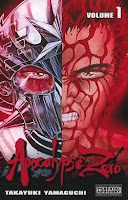
Apocalypse Zero, Volumes 1-6 by Takayuki Yamaguchi. Unfortunately, only six of the eleven volumes of Apocalypse Zero were released in English. I can’t say that I’m surprised and I don’t expect that the license will ever be rescued–the series will appeal only to those with a strong constitution and who aren’t offended easily. It’s extremely graphic, bloody and violent. The imagery is deliberately repulsive, gloriously grotesque, and highly sexualized. Honestly, I feel a little dirty admitting that I loved Apocalypse Zero in all of its outrageousness, but I did. Yamaguchi does make use of a lot of standard tropes and cliches, but he takes them to such ridiculous, over-the-top extremes that they are almost unrecognizable.

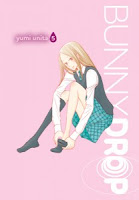
Bunny Drop, Volumes 5-6 by Yumi Unita. With a ten year time skip, Bunny Drop has become an entirely different series. It’s not bad, but it has lost much of charm that made the first four volumes stand out. However, the character interactions are still great. The “new” Bunny Drop probably wouldn’t be a series that I would follow had I not already been invested its characters. It seems to have turned into a pretty typical high school drama. I did enjoy seeing the kids all grown up though, Rin and Kouki especially. Unfortunately, Daikichi, who has always been my favorite, has almost become a secondary character in these volumes (although, a very important one). I do still like Unita’s artwork and plan on finishing the last few volumes in the series.

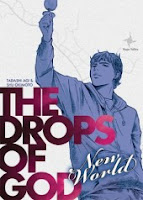
The Drops of God: New World written by Tadashi Agi and illustrated by Shu Okimoto. It’s sad to say, but New World may very well be the last volume of The Drops of God to be published in English. At the request of the author, this omnibus (collecting volumes 22 and 23 of the original release) jumps ahead in the story to a point which features New World wines. As Shizuku heads to Australia and Issei heads to America in search of the seventh apostle, they both manage to get into some serious trouble. The plot might be a little ridiculous at times, but I still find The Drops of God to be entertaining and informative. Who knew the world of wine could be so dangerous?

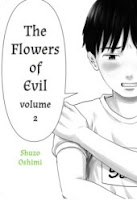
The Flowers of Evil, Volumes 2-3 by Shuzo Oshimi. I really thought that I was through with middle school dramas, but then I started reading The Flowers of Evil. The series is exceedingly dark and ominous. I have a hard time looking away as the events unfold. I have no idea where Oshimi is going with this series and I’m almost afraid to find out. It’s intense, to say the least. The characters in The Flowers of Evil are so incredibly messed up. Even those who at first appear “normal” have some serious issues; it’s hard to tell what’s really going on in their heads. Kasuga is caught in this agonizing relationship between Saeki, the girl he idolizes, and Nakamura, the girl who torments him but from whom he can’t seem to break away.

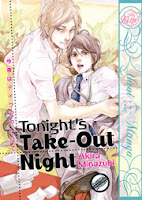
Tonight’s Take-Out Night! by Akira Minazuki. A collection of three boys’ love stories, Tonight’s Take-Out Night is the first manga that I’ve read by Minazuki. While I enjoyed the stories, the high-contrast art style is what really caught my attention. The stories are short, so the development of the couples’ relationships has to happen fairly quickly. However, Minazuki’s characterizations are strong enough that they carry the stories fairly well. I liked the pairings and I liked their relationships which were mostly free of non-consensual elements. The first and third story are both good-natured and a little quirky. But the second story, with it’s period setting and supernatural twist, was my personal favorite.

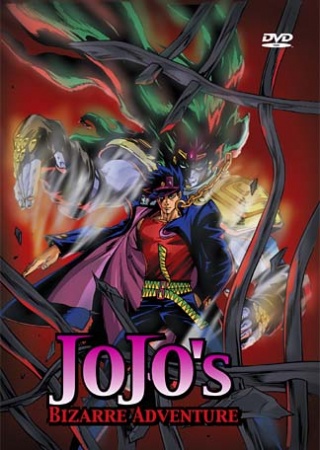
JoJo’s Bizarre Adventure, Volumes 1-6 produced by Studio APPP. Technically, the JoJo’s Bizarre Adventure anime adaptation is two series. The last six episodes were released between 1993 and 1994 while the first seven were released between 2000 and 2002. I do prefer the manga over the anime, but the OVA series is an excellent adaptation. The anime strips the story down to it’s core. The humor and the horror elements of the original tend to be downplayed; the anime focuses mostly on the action and battles. This does mean that some of my favorite moments from the manga were cut, but all of the fights that are particularly important to plot and character development are included. No matter what the medium, I love JoJo’s Bizarre Adventure.

Filed Under: My Week in Manga Tagged With: Akira Minazuki, anime, Apocalypse Zero, bunny drop, Drops of God, Flowers of Evil, JoJo's Bizarre Adventure, manga, Shu Okimoto, Shuzo Oshimi, Tadashi Agi, Takayuki Yamaguchi, Yumi Unita

Adventures in the Key of Shoujo: Sailor Moon, Vol. 6

October 3, 2012 by Phillip Anthony Leave a Comment

Pretty Guardian Sailor Moon, Vol. 6 | By Naoko Takeuchi | Published by Kodansha Comics USA | Rated: T, Ages 13+

A curious thing happened to me the other night. After reading the sixth volume of Sailor Moon, I looked back over the earlier volumes of the series, and I came to the inescapable conclusion that the Sailor Senshi could be confused with a murderous vigilante gang. Now, before you laugh, let me explain it this way. In this volume, the girls find themselves tangling with the Mugen Group and their master, Pharaoh 90. The entire clan of bad guys all live in an evil-looking tower and seem to be happy drawing in unsuspecting minions rather than going out to destroy. Oh, and no, I’m not kidding about the evil tower part, several characters mention the fact that they get a weird feeling just looking at it. Therefore it becomes evil, the Trashheap has spoken on the matter.

As I was saying, the Mugen group are turning their students into monsters with the aid of some questionable science, at best, and then said monsters go on a rampage. The Senshi turn up and vaporize the bad guy and everything’s all right with the world. But if you viewed it another way, the Senshi have been going around destroying public property, causing mass panics and riots to break out, and killing any God’s amount of singers/idols/famous people because they were in league with that month’s chief villain. Isn’t anyone going to notice they’re, I dunno, dead? Or that there seems to be an abnormal amount of incidents around this particular part of Tokyo? Don’t get me wrong, I’m as OK with suspension of disbelief as the next person but does Takeuchi expect us to believe that nobody has noticed anything, at all? One of these days, I’ll get an answer, I just don’t think it’ll come from Sailor Moon. Not that I mind, because in this volume, we are introduced to Sailors Neptune and Uranus, two of the more interesting Senshi. I only know of these two by internet reputation so in that respect, I’m kind of trying to walk around spoiler territory for myself here. Haruka (Uranus) is interesting in that she is presented as a girl and a fella. There’s no ambiguity with her/him when they interact with other people. Strangely, the only person who is confused and states that she is confused is Usagi but that’s because Uranus kisses her in her male persona. There’s something familiar about Haruka to Usagi and it upsets her to think about it. Curiouser and curiouser. Michiru as Neptune is not as exciting but she definitely is more mysterious. I think because of her lower profile, I worry that Takeuchi will give all the revelations to Uranus, and that would be not so good.

Also, we are introduced to Hotaru Tomoe, a person whom I’ve heard about but know nothing about. Hotaru is a sick young girl whose father works for the Mugen group in their laboratory. He’s kind of like the Josef Mengele of the Mugen group insofar that nobody he knows specifically is being hurt by what he’s doing. In the meantime, eh, what do a couple of students matter? How do people like Professor Tomoe get college educations? Does nobody notice when his report cards read “COULD WORK HARDER. COULD APPLY HIMSELF. COULD BE LESS EVIL.”? Whatever his problem, Hotaru looks like she needs a friend, and she gets one in the form of Chibi-Usa. After stumbling into her in front of the Tomoe lab, Chibi-Usa decides to hang out with her. Is this going to end well? I don’t know but I’m happy that Takeuchi has decided to give Chiba-Usa something to do other than hang out with Usagi and Mamoru and monopolise their time together.

One of the wildest moments for me in this volume is the amount of bad guys who get vapourised by the Senshi. Sweet Christmas, they get enough time to say things like (and I’m paraphrasing here) “Sailor Mars! Sailor Jupiter! You won’t stop me or my master, Pharaoh 90! I’ll defeat-AARGGGHHHH!!!” before being turned into crispy critters. They even have their power levels displayed above their heads at one point and I was thinking going from head to head, “One round, one round, two round, end of level boss.” I am telling you, reading manga shouldn’t be this much fun. Every time a new villain is introduced to the series, I keep thinking of Col. Trautman saying to the Sheriff in Rambo that if he (the Sheriff) wants to send that many men to deal with the problem to not forget a supply of body bags. It’s almost like there’s no reason to give any credence to these lieutenants, they are literally not going to be in the book long enough to like or hate. Their job is to advance the plot or the characters or both. I’m not disparaging the practice, I’m just saying that you should be aware going into the series.

William Flanagan’s translation notes return in full and as always they are fun but not exhaustive. Things like naming structures and meanings of places and things always help me whenever I read manga so I was missing them in the previous volume. Kodansha continues to put out an excellent book with it being just the right size for me when I’m trying to find my groove at home (I would never read Sailor Moon out on the streets of Dublin. I value my life more!)

We are just around the halfway point in the manga and yes, we have a new villain who is in the Bwa-Ha-Ha mode again but this time, we don’t know if the new Senshi are friend or foe. This complicates matters and makes for an interesting interlude

Filed Under: Adventures in the Key of Shoujo Tagged With: kodansha, Kodansha Comics, kodansha usa, manga, MANGA REVIEWS, shojo, shoujo

It Came From the Sinosphere: Manga and Manhwa Titles

October 2, 2012 by Sara K. 13 Comments

There is a famous sci-fi TV series called Yín​hé​ Fēilóng which means “Milky Way Flying Dragon.” It’s part of a group of TV series called “Xīng​jiàn​ Qí​háng​ Jì​” which roughly means “Tales of Strange Starship Journeys.”

What’s it about? Well. there is a starship, and the captain’s name is Ràng-Lǚ​kè​ Pí​kǎ​’ěr​​. In addition to the captain himself, there are other characters, such as:
Bǎi​kē (who is a rénxíng jīqìrén​, which roughly means “human-like machine person”)
Qiáodí​ Lā​fú​jí (my favorite character)​
Wò​’ěr​fū​ (who is a kèlíngòng)
Wéisīlì Kē​luòxià​ (by sheer coincidence, Wéisīlì is also the name of the most famous character from original Chinese-language science fiction),
Dí​ān​nà Tè​luò​yī​ (who is half bèi​tǎ​rén​)
Bèi​fú​lì​ Kē​luòxià​
​​Wēi​lián​ Ruì​kè

If you don’t recognize this TV show, take a look at one of the covers of the Taiwanese DVD set:

The cover of the Taiwanese edition of 'Star Trek: Next Generation'

This is a big issue when English speakers and Chinese speakers interact with each other. The English titles and Chinese titles are often so different that it can be difficult to determine if we are talking about the same movie/TV show/book/etc.

Ok, there are some cases which are quite straightforward, such as the movie Měiguó​ Duìzhǎng, which literally means “Captain United States.” And it wasn’t too hard for me to figure out that Fù​chóu​zhě​ Lián​méng​ (Avengers’ Union) is The Avengers. But without a reference, such as a movie poster, it’s difficult to make the connection between Biànxíng Jīngāng (Shape-Changing Hard Metal) and Transformers.

Not that things are any easier going in the other direction. Taiwanese people always stare at me when I explain that the most common title for Shén​diāo​ Xiá​lǚ (“Divine Eagle Gallant Companion,” alternatively “The Giant Eagle and Its Companion”) in English is ​Return of the Condor Heroes. And then there is Tiān​lóng​bā​bù which is often called Demi-Gods and Semi-Devils because that title is practically impossible to ​translate into English. An alternative English title, “The Eight Levels of the Heavenly Dragon” is more literal but misses the point, and yet another English title, “Dragon Oath,” demonstrates that the translator pretty much gave up on trying to translate the original title and instead tried to create a title which was appropriate for the work being translated.

Which raises the question … how are various manga and manhwa titles translated into Chinese? The answer is, the Chinese titles for various manga and manhwa are often as close to the Japanese/Korean/English title as Yín​hé​ Fēilóng is to Star Trek: Next Generation, or Lǜ​ Yě​ Xiān​ Zōng​ (Traces of the Wild Green Celestial) is to The Wonderful Wizard of Oz.

The cover of a Taiwanese manhua adaptation of The Wonderful Wizard of Oz

I think some Chinese manga/manhwa titles are an improvement … and some make me groan.

So I have put together a collection of Chinese titles of various manga/manhwa with a literal English translation, and another list of the official English titles. And I’ve jumbled the order. I will post the correct correlations between the Chinese titles and the official English titles when I have time. Until then, have fun matching them up yourself.

Chinese Titles / Literal English

Huǒyǐng Rěnzhě (Fire-Shadow Ninja)
Huàn Hǎi​ Qí​ Qíng (Fantastic Sea Strange Happenings)
Wǒ​ de​ Yě​mán Wáng​fēi​ ​(My Uncivilized Royal Consort)
Háng​hǎi​ Wàng​ (Seafaring King)
Rén​yú​ Liàn​rén ​(Merman Lover)
Fàng​kè hòu​ Bǎo​jiànshì​ (After Class Nurse’s Office)​​
Xiāng​jù yī Kè​​​ (Together for a Moment)
Quǎn​yè​chà​ ([no translation])
Yāo​jing​ de Wěi​ba​ (Tail of the Evil Spirit)
Tōu​tōu​ Ài​zhe Nǐ​ (Secretly Loving You)
Měi​ Shào​nǚ Zhàn​shì​​ (Beautiful Maiden Warrior)
Wǒ​men de Cún​zài (Our Existence)
Měi​wèi​ Dà Tiǎo​zhàn​​ (Great Delicious Challenge)
Jué​duì​ Bǐ​shì​ (Absolute Bishi)
Sǐ​shén (Death Gods)​​​
Yǐn​ zhī​ Wàng (Kin​g of Secrets)
Zhàn​lì​ Shājī (Trembling Intent to Kill)
Bǎo​ Mǎ​ Wáng​zǐ​ (Precious Horse Prince)
Huá​lì​ de Tiǎo​zhàn​ (Glamorous Challenge)
Wǒ hé​ Tā de XXX (My and Her XXX)​​
Měi​shí​ Liè​rén​ (Gourmet Hunter)
Huā​ Yàng​ Rén​shēng​ (Flower-style Life)
Mó​ Kǎ Shào​nǚ ​​Yīng​ (Demon Card Maiden Cherry)
Pó​suō​luó​ (I ought to put this as [no translation], but just for kicks, I will translate this as ‘Whirling Gauze’)

Official English Titles

7Seeds
Absolute Boyfriend
Afterschool Nightmare
Banana Fish
Basara
Bleach
Evyione: Ocean Fantasy
Fairy Tail
Flower of Life
Goong
Hana-Kimi
Inuyasha
Maison Ikkoku
Nabari no Ou
Naruto
Oishinbo
One Piece
Princess Knight
Sailor Moon
Skip Beat
Toriko
Your and My Secret

UPDATE: The answers are posted in the comment below.

Next Time: Spirit Sword (novel)


Sara K. thinks it is wonderful that this post is going live on her birthday.

Filed Under: It Came From the Sinosphere Tagged With: Chinese, manga, manhwa

Adventures in the Key of Shoujo: Sailor Moon, Vol. 5

September 26, 2012 by Phillip Anthony 1 Comment

Pretty Guardian Sailor Moon, Vol. 5 | By Naoko Takeuchi | Published by Kodansha Comics USA | Rated: T, Ages 13+

I’m trying to put into words the ideas I’ve discovered with this volume of Sailor Moon. In this volume, the fight between Wiseman and his Malefic Black Crystal and our heroes reaches its crescendo. Some of our heroes are not going to be returning, I’m sad to say, and one character who only recently got introduced is for the chop. As I said, it’s not easy trying to explain the ideas I’ve had bouncing around since I finished the volume. I guess if we’re boiling it down, it’s the idea of infinity and eternity. In my mind, Sailor Moon and her friends embody the idea of infinity. The idea of infinity is that there is no end to it, stretching out into an endless horizon. The Sailor Senshi are that concept in action. On first inspection there seem to be limits to their powers. Even after three of them being captured, Sailor Moon still finds an unending horizon of strength to fight back against the power of Wiseman and his planet, Nemesis.

As the fight against Wiseman heats up to include fighting against one of their own, the team has to—has to—find the inner strength to defeat an enemy who just won’t stop. And in turning to eternity, we see the concept in Wiseman. Here is an enemy who has been waiting for so long to destroy Neo Queen Serenity, 30th Century Crystal Tokyo, and the Earth in general that he has been bleached by the universe until only the hate remains. He could wait forever for his revenge, he just doesn’t want to. In this volume, despite the team fighting their hardest fight, Wiseman and his cronies just keep coming.

The core of this volume is the maturing of Chibi-Usa into a girl who isn’t just the daughter of the King and Queen of Crystal Tokyo. She drops the bratty act in this volume and becomes a person who has only an idea about who she wants to be. The people around her only want the best for her but if she doesn’t recognize that, events will destroy the people she loves. The way Takeuchi writes the relationship between Usagi and Chibi-Usa, initially I despaired that it would degenerate into catty, screaming sessions between them. But Usagi starts seeing her as her daughter rather than the Queen’s daughter (Usagi has, up until this point, been viewing Chibi-Usa as another person’s daughter and not hers) and this causes her to risk everything. The person who helps her see this, surprisingly, is Mamoru. Without his character taking the risk to trust Chibi-Usa, the way Takeuchi is going with this wouldn’t work.

That’s not to say there aren’t problems with this volume. The other Senshi get pretty much pushed to one side and I thought they were treated as kind of “We need Sailor Magic artillery! Quick, call up our reserves!” And after I’ve been introduced to them properly over the last little while, it felt a bit jarring. Another problem is Demande (yeah, remember him?). We’ve been given hints that he’s really unsettled by something about Wiseman. When his suspicions are confirmed, he quickly descends into madness. Completely. Totally. I really mean this, he just goes crazy and does the whole Andross from StarFox: “If I go down, I’m taking you with me!” After watching him be so measured for the last few volumes, his spiral into CrazyTown is positively Shakespearean.

The destiny angle comes up again in this volume and I must say, I’m trying hard to figure out if Takeuchi will ditch putting Usagi in peril anymore. The reason I say that is because we know she becomes Neo Queen Serenity, so putting her in danger doesn’t make any sense since we know she’ll be ok. Yes, I know that she could be put into a pocket dimension or into the far future but still, I would feel kind of insulted if the author tried to do this.

If nothing else, normally I should hate the fact that Takeuchi keeps trapping me in endless cycles of “New enemy! Even more effeminate than the last! Another Senshi is kidnapped! Another massive fight! Another defeat for the Senshi! Another stand-alone fight between the big Evil Cheese and Sailor Moon!” I really should be annoyed because she hasn’t changed the record once, but really the parts I like the most about the fights are the little moments when Usagi and Mamoru try and reconnect with each other. They’re the parts that reveal the most about these two lovers and the lengths either will go for the other. It takes skill to pull the wool over my eyes like that and still get me to come back. Yeah, like I’m that important, right?

No translation notes this time around but that’s OK, there weren’t really any moments that confused me. One thing I wanted to ask you guys about. A few of the pages in the book are blurry and smudged. Dialogue is also blurred, so it’s a printing issue. Is this affecting anybody else’s copies? Let me know, would you?

We are nearing the halfway point of the series and while I’m enjoying myself, the fact is that little voice in the back of my head is whispering “It’s almost half over!” This makes me a little sad because I don’t want the merry-go-round to stop. It has to, I know, still here I am. This is a fine entry and I can’t say anything more praiseworthy in life than that.

(After a two month hiatus, I’m back on the column! Apologies if you were wondering where I had gone. The Kurosagi Corpse Delivery Service MMF kept me busy so I decided to skip doing a column post for August. I’m up at full speed again and I’d like to know if there are any immediate recommendations you would suggest for after I end covering Sailor Moon.)

Filed Under: Adventures in the Key of Shoujo Tagged With: kodansha, Kodansha Comics, kodansha usa, manga, MANGA REVIEWS, shojo, shoujo

My Week in Manga: July 30-August 5, 2012

August 6, 2012 by Ash Brown

My News and Reviews

I had three posts for you all last week here at Experiments in Manga. First was the announcement of the Love Hina Giveaway Winner which also includes a brief list of some of the harem and reverse harem manga that have been licensed in English. I also posted July’s Bookshelf Overload. I managed to restrain my impulse buys over the last month (for the most part). And finally, I reviewed Frederik L. Schodt’s The Astro Boy Essays. I actually haven’t read or watched much Astro Boy, but Schodt’s book is a fantastic introduction to Astro Boy and Osamu Tezuka.

Many boys’ love fans celebrated “Yaoi Day” on August 1st, or 8/01. (With a little Japanese wordplay, 801 can be pronounced as “yaoi.”) I saw a lot of love for est em last week, and for a good reason–she’s a fantastic creator. Jocelyne Allen translated and posted a portion of her interview with est em from 2010 at her site Brain Vs. Book. Over at Otaku Champloo, Khursten Santos had a special spotlight on est em. And, while not part of the yaoi day celebrations, Jason Thompson’s House of 1000 Manga featured est em a few weeks back.

Also! The call for participation for August’s Manga Moveable Feast has been posted! Later this month the manga blogging community will be taking a closer look at Eiji Ōtsuka and Housui Yamazaki’s The Kurosagi Corpse Delivery Service.

Quick Takes

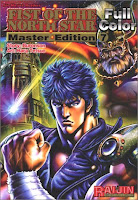
Fist of the North Star: Master Edition, Volumes 7-9 written by Buronson and illustrated by Tetsuo Hara. Gutsoon Entertainment was only able to publish nine volumes of Fist of the North Star before going defunct. I would absolutely love to see more of the series available in English. When I first started reading Fist of the North Star, it seemed like the series was heading towards a bad-guy-of-the-week sort of story. This isn’t necessarily a bad thing, but I was very happy to see it evolve an engaging overarching plot. Plus, I love the gloriously over-the-top martial arts. These last few English volumes further develop Kenshiro and his brothers’ backstories and introduces one of the primary antagonists of the series.

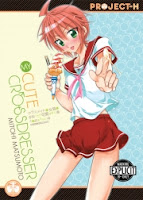
My Cute Crossdresser by Mitohi Matsumoto. A part of Digital Manga’s new hentai imprint Project-H, My Cute Crossdresser falls into the genre known as otokonoko. Generally written for a male audience, otokonoko features cross-dressing guys, often in somewhat compromising situations (it is ecchi, after all). I quite enjoyed My Cute Crossdresser. For the most part, the sexual content is actually fairly mild. The first and longest story, “Raising Decoy,” in which a guy dresses as a girl to catch gropers on the train in order to bring them to justice, ends up being rather sweet. “Spilled Milk” and “Leo and the Night Sky of Summer” are partially excuses for suggestive crossplay. The collection also includes “An Angel’s Flight” and “Actress.” The volume is fun and even a bit fluffy.

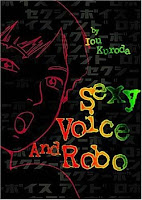
Sexy Voice and Robo by Iou Kuroda. It’s difficult for me to adequately capture my response to reading Sexy Voice and Robo, or to even describe what this manga actually is about. It’s a strange and rather unusual story, but I found it be appealing and immensely enjoyable. Nico, aka “Sexy Voice,” is a bright fourteen-year-old girl who wants to be spy when she grows up, or maybe a fortuneteller. She finds other people intensely fascinating and can’t help but meddle in their affairs, often putting herself in some very dangerous situations as a result. The endearing and hapless “Robo,” who is frequently caught up in her escapades, is one of many men she met while working for a tele-club dating scam.

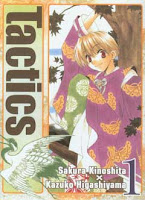
Tactics, Volumes 1-2 by Sakura Kinoshita and Kazuko Higashiyama. First published by ADV Manga, then Tokyopop, and now available through JManga, Tactics is one of the few manga that I’ve read that takes place during Japan’s Taishō era. Kantarou is a young folklorist who is occasionally called upon to exorcise yokai that are causing problems for people. The plot moves a little too quickly at times and is nearly as hyperactive as its protagonist. The stories tend to be fairly benign even when they include slightly more menacing elements. Personally, I prefer my yokai tales to have a little more bite to them, but there were parts of Tactics that were genuinely fun. I was particularly amused by the tengu Haruka’s extreme attachment to his rice bowl.

Filed Under: My Week in Manga Tagged With: Buronson, Fist of the North Star, Iou Kuroda, Kazuko Higashiyama, manga, Mitoh Matsumoto, Sakura Kinoshita, Sexy Voice and Robo, tactics, Tetsuo Hara

Manga, and the Olympic Inspiration

August 3, 2012 by Justin Stroman 4 Comments

I’m always kind of waiting for the good news. I’m tired of hearing about athletes getting in trouble and seeing scandals that ultimately question the actual humanity inside of a person. In the case of athletes, there’s always someone at fault and it usually involves the athlete themselves, and I can’t stand it since those who do get in trouble are pretty fortunate: they have a far more secure standing than most, and have made tons of money that they earned due to their talent and day and night training so they can make their living. Now, when the Olympics roll around every four years, I don’t pay attention to all of the sporting events; I especially don’t pay attention to it when NBC decides to tape delay it. However, I’m always up for hearing some great stories involving a participant in the games, and usually, while the Olympics does hold some controversy, there are moments that take place that can make a person and a community smile, just a little bit. And with Kouhei Uchimura’s story, this is one that manages to involve the manga community in its own little way.

While growing up, you’re most likely to have read a work that tells you to shoot for your dreams, and you’re most likely to have watched a cartoon or show with the theme inspiring you to never give up. Then you become an adult, and suddenly realize it’s not feasible to accomplish what you wanted to do as a child. Only a few out of the billions of people on Earth grow up to eventually accomplish what they want to do; Kouhei is part of that few, or more specifically, one of that few to have read a work and let that guide him throughout the 2012 Olympics. Kouhei began taking Gymnastics at his parents’ sports club in Nagasaki Prefecture at the age of 3. In 1994, Shogakukan launched Ganba! Fly High, a manga illustrated by Hiroyuki Kikuta and written by Shinji Morisue in Weekly Shounen Sunday. Ganba! Fly High tells the story of high school gymnast Shun Fujimaki who wants to compete in the 2000 Olympic Games. He eventually is able to rise through the competition and win a gold medal.

What is the correlation you ask? Shinji Morisue happened to be a participant in the Olympic Games—in fact, in the 1984 Summer Olympics, he left Los Angeles with three medals: a bronze in team combined exercises, a silver in vault, and a gold medal in horizontal bar. Uchimura will leave London with the gold in all-around competition. When I saw the original ANN link to the news, I was pretty touched, as it seemed to be right down my alley: an athlete saying how a manga he either read as a child or as a teen was one of his inspirations in making it to the Olympics, and it just so happened the author of the said manga he had read was the last to have won the gold in the same sport’s all-around event. As it turns out (clarified in the news link), Morisue did not win all around gold in 1984—that was a different Japanese gymnast, Koji Gushiken—but it doesn’t really diminish the real story.

The real story involves a manga created and based on what Morisue knew about Gymnastics, and how it managed to inspire an athlete to shoot for gold. Yes it’s kind of cheesy and Uchimura didn’t have to mention it, but he did. In case we might have forgotten inspiration can come from entertainment or literature, this can serve as a reminder. It’s still probably a rare occurrence, but it is certainly possible. The Olympic Games can mean a lot of things, but if there’s one thing people can take from it is that it’s an athlete-driven event that not only has highly paid superstars representing their respective countries, but also high school and college students who love to play their sport and get salaries comparable to a regular day job. It means the stories these athletes have are actually genuine, and worthy of great admiration.

Kouhei Uchimura has won events before, securing wins at numerous competitions prior to the London Olympics, so he has received good money for his accomplishments. I still find it cool to see that there was a manga that inspired him to keep on pushing, as attempting to be an athlete means pushing through all the good times and the bad times. As for Ganba! Fly High, to know of a work that did inspire someone to make a mention of it reminds me of how we always hear manga artists tell us who inspired them to create their works. It also makes me want to see more athletes share their stories in manga form, whether it’s a success story, one that doesn’t end as it should, or another athlete inspired by a manga. We all get inspiration from something, though, so it’s not exclusive to sports. So do you guys have something that inspired you, or have a story that you thought was pretty cool? Do you know of other manga works that athletes have written and shared aside from Ganba! Fly High? And what do you think of Uchimura’s story?

You may check out more of Justin’s work at Organization Anti-Social Geniuses.

Filed Under: FEATURES Tagged With: ganba! fly high, inspiration, manga, olympics

Comic Conversion: Cirque Du Freak

August 2, 2012 by Angela Eastman 2 Comments

Cirque Du Freak | Novel: Darren Shan / Little, Brown and Company | Manga: Takahiro Arai / Yen Press

When Darren Shan and his best friend Steve find a flyer for Cirque Du Freak (a circus of freaks) they just have to go. A wolf-man, a snake-boy—what boy wouldn’t love it? But when Mr. Crepsley and his spider, Madame Octa, come on stage, both boys are overcome with desire—Darren, to own the spider, and Steve, to become a vampire! Darren manages to get his hands on the spider, but his control slips and the deadly bug bites his friend. Mr. Crepsley is the only one with an antidote, and he will only hand it over on one condition: Darren must become his assistant.

According to his website, Cirque Du Freak‘s author (confusingly also named Darren Shan) was inspired to write his vampire novels by the combined inspiration of Goosebumps, with its easy-to-read format, and the dark horror of Stephen King novels. Later, manga artist Takahiro Arai was awarded the opportunity to recreate Shan’s story in manga form after winning a contest. Even though the manga adaptation was originally published in Shonen Sunday, thanks to Yen Press’s ties with Little, Brown and Company (the original novels’ publisher) they were able to print the manga in English.

I love creepy stories. I ate up the Goosebumps series as a kid, cringing and wincing at every page and then scrambling for the next book. I’d been eying the Cirque Du Freak novels precisely because of the promise for creepiness, but unfortunately I found myself disappointed. Despite the generally excited tone of the narrator, the descriptions often read with too little emotion to invoke fear or horror, even when a woman’s hand is bitten clean off by a wolf-man. Shan also manages to ruin his tension simply by reminding us of it too much. In the prologue, his narrator reiterates the point that this is a “true story” where bad things can happen—a common enough tactic that beefs up the tension. But then, Shan keeps doing it: “Little did I know that Alan’s mysterious piece of paper was to change my life forever. For the worse!” “If only I hadn’t been so scared of looking like a coward! I could have left and everything would have been fine.” It quickly becomes repetitive, and makes it feel like Shan is trying to force anxiety on the readers.

Despite my dissatisfaction with the creepy tone, the story is still pretty compelling. A boy becomes a vampire not because he wants to or is forced to, but because that’s the price he pays to save a friend from the mistake he made. There are quite a few times where the novel drags. Shan apparently feels compelled to describe all of Darren’s actions—even unimportant ones like the chores he did while waiting to go to the circus—and the chapters set aside to describe all of the freaks take ages. The plot itself is engrossing enough to still qualify the book as a page turner, but it’s tough to ignore all the awkward bits.

Takahiro Arai’s manga adaptation is definitely creepier. This is thanks in large part to the art; particularly with the freaks, the character designs at times take on a surreal, over-exaggerated feel, and his backgrounds of oversized crescent moons and propped up coffins look like scenes out of Soul Eater. Sometimes Arai takes it a little too far with Steve. His wide eyes and sharp-toothed grins are too quick to give away that there’s something messed up about this kid, but even so he feels like more of a threat than he did in the novel. Darren does look much younger than I imagined him (though to be fair, the book never specifies his age), and unfortunately the designs for the side characters are either weak or generic-looking, like the “cute girl” assistants in the freak show.

The manga takes a couple of liberties with the story in both minor and major ways. In the manga, Darren and his friends play soccer for money rather than fun (as they do in the novel), but this streamlines their path between getting cash and buying the tickets. Arai also changes some of Mr. Crepsley’s actions. First, he gives the flyer directly to Darren (rather than someone handing a flyer to a friend’s brother), again streamlining the plot while also making it seem more deliberate than coincidental that Darren was there that night. Then Mr. Crepsley shows up immediately to take back Madam Octa after Steve is bitten—meaning that Darren’s little sister sees him. Having not read the rest of the series, I don’t know if Darren’s family ever makes it back into the narrative, so this could either be foreshadowing that Annie will eventually figure out what happened…or an unfulfilled expectation for the reader.

The sometimes emotionless writing of the book really kills the creepiness that Shan obviously wants to build, and while the pacing is quick there’s a good deal of unnecessary action that still manages to gunk the story up. Arai’s adaptation fixes a lot of these problems, rooting out unnecessary tidbits and making the story just a little scarier. But I think what I like the most about the manga version is that if I had had no awareness of the original book, I probably wouldn’t have been able to pick this out as an adaptation. The manga flows well on its own, and the straight-from-the-text narration is kept at an astonishingly low level. And even though the novel has the strange feeling of being more of a “part one” than its own stand-alone story, the full volume of set up works well in the manga format. The Cirque Du Freak manga has its own issues, but it’s still the better choice.

Filed Under: Comic Conversion, FEATURES, FEATURES & REVIEWS Tagged With: Cirque Du Freak, Darren Shan, Little Brown and Company, manga, Takahiro Arai, Teen Lit, yen press

  • « Go to Previous Page
  • Page 1
  • Interim pages omitted …
  • Page 34
  • Page 35
  • Page 36
  • Page 37
  • Page 38
  • Interim pages omitted …
  • Page 60
  • Go to Next Page »
 | Log in
Copyright © 2010 Manga Bookshelf | Powered by WordPress & the Genesis Framework