• Skip to primary navigation
  • Skip to main content
  • Skip to primary sidebar
  • Home
  • About Us
    • Privacy Policy
    • Comment Policy
    • Disclosures & Disclaimers
  • Resources
    • Links, Essays & Articles
    • Fandomology!
    • CLAMP Directory
    • BlogRoll
  • Features & Columns
    • 3 Things Thursday
    • Adventures in the Key of Shoujo
    • Bit & Blips (game reviews)
    • BL BOOKRACK
    • Bookshelf Briefs
    • Bringing the Drama
    • Comic Conversion
    • Fanservice Friday
    • Going Digital
    • It Came From the Sinosphere
    • License This!
    • Magazine no Mori
    • My Week in Manga
    • OFF THE SHELF
    • Not By Manga Alone
    • PICK OF THE WEEK
    • Subtitles & Sensibility
    • Weekly Shonen Jump Recaps
  • Manga Moveable Feast
    • MMF Full Archive
    • Yun Kouga
    • CLAMP
    • Shojo Beat
    • Osamu Tezuka
    • Sailor Moon
    • Fruits Basket
    • Takehiko Inoue
    • Wild Adapter
    • One Piece
    • After School Nightmare
    • Karakuri Odette
    • Paradise Kiss
    • The Color Trilogy
    • To Terra…
    • Sexy Voice & Robo
  • Browse by Author
    • Sean Gaffney
    • Anna Neatrour
    • Michelle Smith
    • Katherine Dacey
    • MJ
    • Brigid Alverson
    • Travis Anderson
    • Phillip Anthony
    • Derek Bown
    • Jaci Dahlvang
    • Angela Eastman
    • Erica Friedman
    • Sara K.
    • Megan Purdy
    • Emily Snodgrass
    • Nancy Thistlethwaite
    • Eva Volin
    • David Welsh
  • MB Blogs
    • A Case Suitable For Treatment
    • Experiments in Manga
    • MangaBlog
    • The Manga Critic
    • Manga Report
    • Soliloquy in Blue
    • Manga Curmudgeon (archive)

Manga Bookshelf

Discussion, Resources, Roundtables, & Reviews

VIZ

One-Punch Man, Vols. 1-2

January 6, 2017 by Katherine Dacey

In a scene that would surely please Jack Kirby, One-Punch Man opens with a pow! splat! and boom!, as Saitama, the eponymous hero, goes mano-a-mano with the powerful Vaccine Man, a three-story menace with razor-sharp claws. Though Vaccine Man is formidable, he has a pronounced Achilles’ heel: chattiness. “I exist because of humankind’s constant pollution of the environment!” he tells Saitama. “The Earth is a single living organism! And you humans are the disease-causing germs killing it! The will of the earth gave birth to me so that I may destroy humanity and their insidious civilization!” Vaccine Man is so stunned that Saitama lacks an equally dramatic origin story that he lets down his guard, allowing Saitama to land a deadly right hook.

And so it goes with the other villains in One-Punch Man: Saitama’s unassuming appearance and matter-of-fact demeanor give him a strategic advantage over the preening scientists, cyborg gorillas, were-lions, and giant crabmen who terrorize City Z. Saitama’s sangfroid comes at a cost, however: the media never credit his alter ego with saving the day, instead attributing these victories to more improbable heroes such as Mumen Rider, a timid, helmet-wearing cyclist. Even the acquisition of a sidekick, Genos, does little to boost Saitama’s visibility in a city crawling with would-be heroes and monsters.

If it sounds as if One-Punch Man is shooting fish in a barrel, it is; supermen and shonen heroes, by definition, are a self-parodying lot. (See: capes, spandex, “Wind Scar.”) What inoculates One-Punch Man against snarky superiority is its ability to toe the line between straightforward action and affectionate spoof. It’s jokey and sincere, a combination that proves infectious.

Saitama is key to ONE’s strategy for bridging the action/satire divide: the character dutifully acknowledges tokusatsu cliches while refusing to capitulate to the ones he deems most ridiculous. (In one scene, Saitama counters an opponent’s “Lion Slash: Meteor Power Shower” attack with a burst of “Consecutive Normal Punches.”) ONE’s script is complemented by bold, polished artwork; even if the outcome of a battle is never in question, artist Yusuke Murata dreams up imaginative obstacles to prevent Saitama from defeating his opponents too quickly, or rehashing an earlier confrontation.

Is One-Punch Man worthy of its Eisner nomination? Based on what I’ve read so far, I’d say yes: it’s brisk, breezy, and executed with consummate skill. It may not be the “best” title in the bunch–I’d give the honor to Moyocco Anno’s In Clothes Called Fat–but it’s a lot more fun than either volume of Showa: A History of Japan… Scout’s honor.

The verdict:  Highly recommended.

One-Punch Man, Vols. 1-2
Story by ONE, Art by Yusuke Murata
Rated T, for teens
VIZ Media, $6.99 (digital)

This review originally appeared at MangaBlog on June 12, 2015.
Filed Under: Manga, Manga Critic, REVIEWS Tagged With: Comedy, one punch man, Shonen Jump, VIZ

Short Takes: Food Wars, Manga Dogs, and Yukarism

January 6, 2017 by Katherine Dacey

Did you receive an Amazon or RightStuf gift certificate this holiday? If so, this post is for you! Below, I’ve reviewed the first volumes of three series that debuted in 2014, offering a quick-and-dirty assessment of each. Already read Food Wars? Fear not—I’ve also tackled Manga Dogs, a comedy about a teen manga artist, and Yukarism, a time-traveling, gender-bendering manga from Chika Shiomi (Canon, Yurara).

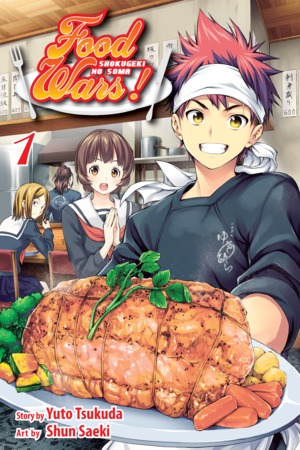
thumb-10857-FDW_01_webFood Wars, Vol. 1
Story by Yuto Tsukada, Art by Shun Saeki
Rated T+, for Older Teens
VIZ Manga, $9.99

Food Wars begins with an only-in-manga scenario: Soma Yukihira’s dad shutters the family’s greasy spoon restaurant and lights out for America, leaving his son behind. With no place to go, Soma enrolls at Totsuki Culinary Academy, a hoity-toity cooking school that prides itself on its wealthy alumnae, rigorous curriculum, and high attrition rate. Soma’s working-class background is a major handicap in this environment, but his can-do attitude and culinary instincts allow him to triumph in difficult situations, whether he’s salvaging an over-salted pot roast or wowing an unscrupulous developer with a simple potato dish.

In theory, I ought to hate Food Wars for its cartoonish characters and abundant cheesecake, two qualities I generally despise in a manga. But here’s the thing: it’s fun. Soma repeatedly shows up bullies and snobs with his ability to transform everyday dishes into haute cuisine, proving that good food doesn’t need to be fancy. Though Soma’s foes are stock types—the Busty Bitch, the Rich Mean Boy, the Teacher With Impossibly High Standards—Shun Sakei’s crisp caricatures make them seem like fresh creations. I wish I could say the same for Sakei’s abundant fanservice, which quickly wears out its welcome with porny images of women enjoying Soma’s cooking. These pin-up moments are supposed to be funny, I guess, but the heavy emphasis on heaving cleavage and bare skin seems more like a concession to teenage male taste than an organic part of the story.

The verdict: I can’t decide if Food Wars is a guilty pleasure or a hate read, but I’ve just purchased volumes 2-4.

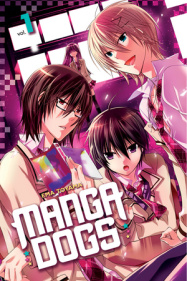
Manga Dogs 1Manga Dogs, Vol. 1
By Ema Toyama
Rated T, for Teens
Kodansha Comics, $10.99

Manga Dogs has a terrific premise: a teenage artist decides to enroll in her school’s manga program, only to discover that her teacher is inept, and her classmates are pretty-boy otakus with no skill or work ethic. When Kanna’s classmates discover that she’s actually a published artist, Fumio, Fujio, and Shota glom onto her in hopes of breaking into the business—even though her debut series is on the verge of being cancelled.

With such a ripe set-up, it’s a pity that Manga Dogs is DOA. Part of the problem is that the script panders to the reader at every turn, whether it’s poking fun at reverse-harem tropes or saddling the characters with pun-tastic names inspired by famous manga creators. The author spends too much time patting the reader on the back for “getting” the jokes and not enough time writing genuinely funny scenarios or imbuing her characters with more than one personality trait each. The other issue is pacing: the story and artwork are both frenetic, with characters screaming, jumping, and flapping their arms on almost every page. By the end of the third chapter, I felt as if someone had beaten me up for my lunch money while asking me, “Do you think I’m funny? No? Now do you think I’m funny?”

The verdict: Just say no.

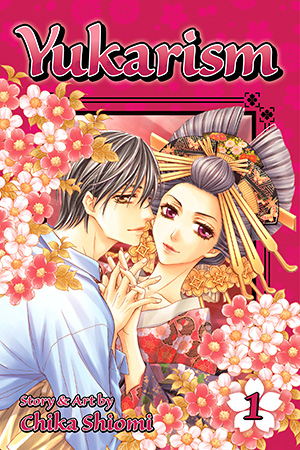
1421575906Yukarism, Vol. 1
By Chika Shiomi
Rated T, for Teen
VIZ Media, $9.99

Yukarism combines the supernatural elements of Rasetsu with the historical drama of Sakuran, then adds a dash of gender-bending weirdness for good measure. The story revolves around Yukari, a best-selling author whose novels explore the history of Edo’s red-light district. Though fans attribute the abundant details in his writing to research, Yukari has an even better strategy for learning about the past: he visits it! When he returns to the 1800s, however, Yukari becomes Yumurasaki, a top-earning oiran (or courtesan) enmeshed in a web of political intrigue, lust, and violence.

Given the complexity of the plot, it’s not surprising that the first volume of Yukarism is a bumpy ride. The tone see-saws between broad physical comedy and brooding melodrama, making it difficult to know if Yukari’s plight is being played for laughs or sniffles. The script, on the other hand, is too pointed; manga-ka Chika Shiomi is so intent on telling us what Yukari is thinking and seeing that she forgets the old dictum about showing, not telling. The same kind of editorial interventions result in at least one character waxing profusely about how handsome and cool Yukari is, just in case we haven’t realized that he’s supposed to be handsome and cool. Now that the basic parameters of the story have been established, however, Shiomi can dispense with the heavy-handed dialogue and do what she does best: write sudsy supernatural romances with beautiful characters in beautiful costumes.

The verdict: Volume two should be a pure guilty pleasure.

These reviews originally appeared at MangaBlog on January 2, 2015.

Filed Under: Classic Manga Critic, Manga, Manga Critic, REVIEWS Tagged With: Cooking and Food, kodansha, shojo, Shonen, VIZ

Assassination Classroom, Vol. 1

January 6, 2017 by Katherine Dacey

Americans steadfastly believe that all students need to succeed are a few good teachers—think of how many movies you’ve seen about an unorthodox educator who helps a group of misfits, losers, or underachievers realize their full potential against all odds. Perhaps that’s why American publishers hesitated before licensing Assassination Classroom, a comedy that outwardly conforms to the tenets of the genre while poking fun at its hoariest cliches.

Assassination Classroom‘s star teacher is Koro-sensei, a super-powered alien who can wipe out an army with a swish of a tentacle. His students are class 3-E, the troublemakers and flunkies of Kunugigaoka Junior High School. Instead of studying calculus or Shakespeare, however, Koro-sensei’s charges are learning how to kill him and save Earth in the process—in other words, it’s To Sir With Lethal Force.

If the script isn’t quite as edgy as my summary suggests, Assassination Classroom scores points for the sheer ridiculousness of the premise. Koro-sensei’s relentless enthusiasm and high standards match those of other fictional educators—Michelle Pfeiffer in Dangerous Minds, Robin Williams in Dead Poets Society—but are applied to such activities as shooting and stabbing. He gives the same kind of inspirational speeches that you’d find in those movies, too, reminding his charges that he specifically requested the job because he knows the students’ true potential.

In one scene, for example, timid student Okuda presents Koro-sensei with three deadly potions, imploring him to sample them. “I’m not good at surprise attacks!” she tells him. “But I love chemistry! And I really put my heart and soul into this!” Koro-sensei cheerfully obliges, offering to help Okuda “research a poison that can kill me.” When Okuda proves more skillful at mixing chemicals than persuading her target to drink them, Koro-sensei reminds her that “in order to kill someone, you need to understand how they feel,” skills that she can cultivate through—what else?—reading and writing.

The exchange between Okuda and Koro-sensei is complemented by some of the best visual gags in volume one. One of the poisons, for example, neutralizes Koro-sensei’s Cheshire grin into a flat line, prompting a student to exclaim, “You look like an emoticon!” Although Koro-sensei’s face is the essence of simplicity—a circle with pin-dot eyes and a toothy smile—this subtle tweak of his appearance yields a big pay-off laugh-wise.

At the same time, however, the poison episode illustrates Assassination Classroom‘s biggest flaw: Yusei Matsui wants to have his cake and eat it, too, soft-pedaling the humor with an uplifting, awwww-worthy moment in almost every chapter. Students unironically vow to do their best after Koro-sensei points out the flaws in their technique, saves them from harm, or gives them a pep talk. None of the students harbor a grudge against him—at least not for very long—or question the value of Koro-sensei’s lessons. (Makes you wonder: is Koro-sensei guilty of grade inflation?)

Still, I enjoyed volume one enough to continue with the series, even if Matsui’s efforts to express the Shonen Jump dictum of “friendship, effort, victory” sometimes blunt the edge of his satire.

ASSASSINATION CLASSROOM, VOL. 1 • BY YUSEI MATSUI • RATED T+, FOR OLDER TEENS • VIZ MEDIA

This review originally appeared at MangaBlog on December 18, 2014.

Filed Under: Manga, Manga Critic, REVIEWS Tagged With: Comedy, Shonen Jump Advanced, VIZ, Yusei Matsui

Requiem of the Rose King, Vol 3

January 18, 2016 by Anna N

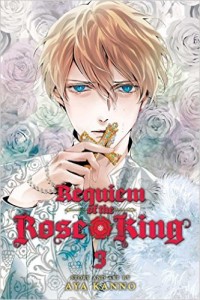
Requiem of the Rose King Volume 3 by Aya Kanno

This manga just keeps getting better and better as Kanno adds even more royal intrigue to her unique story of Richard III and the Wars of the Roses.

The second volume closed with Richard embodying a demonic spirit of vengeance when he discovered that his father was killed. The third volume opens with Richard’s older brother Edward, the new king, making questionable decisions about women. Edward is utterly captivated by the widow Elizabeth Woodville, who secretly detests the House of York. She maintains Edward’s interest by continually refusing him until he is desperate enough to make her his queen, going against the other alliances his court is arranging for him. Richard proves to be an unenthusiastic ally in Edward’s courtship, going along with his brother on hunting trips to provide cover for Edward’s visits to Elizabeth. When Edward is staying in a hunting cabin, he again meets the wayward Lancaster King Henry. Richard and Henry are drawn to each other, without fully knowing who each other are.

Henry’s dreamy outlook on life has made him one of the few people who relates to Richard as just Richard, without the “demon child” legend that has poisoned everyone against him. But Henry’s distance from his own family ensures that when his son Edward discovers the men together, his jealousy over his father’s relationship with Richard looks like it is going to have horrible consequences.

Kanno’s art continues to be both dark and lavish, fitting the settings and themes of this tragic story excellently. I’m always in awe of her facility with facial expressions and how it contributes so well to character development. Just a couple panels of Elizabeth Woodville’s gleefully staring eyes as she contemplates her plans for Edward establish that she’s up to no good. Henry’s abstracted expression show him to not fully live in the world, while Richard’s sensitivity and hesitancy in trusting Henry is clearly portrayed. This continues to be such a standout title in Viz’s current publishing lineup.

rerok3

Filed Under: REVIEWS Tagged With: requiem of the rose king, VIZ, viz media

News Round-Up for NYCC 2015

October 11, 2015 by Katherine Dacey

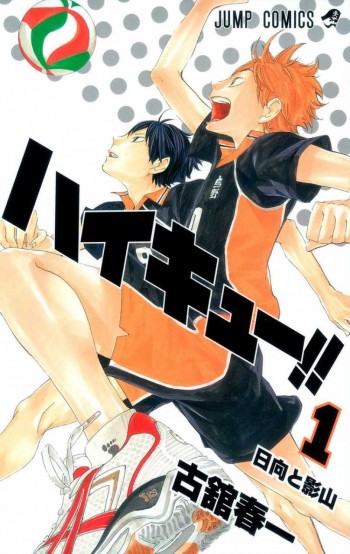
haikyuuGood news for manga readers: 2013-2014 was the first time since the mid-2000s that the industry enjoyed two consecutive years of sales growth. While the manga market isn’t as red-hot as it was in Tokyopop’s heyday, publishers released almost 800 new volumes in 2014, up 25% from 2013. [ICv2]

At its Friday panel, VIZ Media unveiled a diverse slate of titles that ran the gamut from shonen (Black Clover) to josei (Everyone’s Getting Married). Among the most interesting licenses were two sports manga: Haikyuu!, which focuses on a volleyball team, and Kuroko’s Basketball. VIZ also confirmed that it will be publishing Seventh Garden, Monster Hunter: Flash Hunter, and fan favorite Yona of the Dawn. [Crunchyroll]

Yen Press announced five new manga at NYCC, including an adaptation of Space Dandy and a new series by Yuji Iwahara (Cat Paradise, King of Thorn) called Dimension W. Also joining the Yen line-up in 2016 are Scumbag Loser, a cautionary tale about lying to your peers; Corpse Party: Blood Covered, another entry in the teens-fight-to-the-death-in-an-alternate-universe genre; and Unhappy Go Lucky!, a comedy about a group of unlucky middle-school students. [Anime News Network]

Yen isn’t the only company on the Space Dandy bandwagon: Kodansha Comics will be publishing I Am a Space Dandy!, another manga spin-off of the popular anime. Kodansha also revealed plans to publish the 4-koma Spoof on Titan. [Anime News Network]

At the Crunchyroll panel, the company introduced fans to its newest offerings, which include Arakawa Under the Bridge, a drama by Saint Young Men creator Hikaru Nakamura; Gugure! Kokkuri-san, a comedy about a little girl who inadvertently summons a fox demon; and Cuticle Detective Inaba, a supernatural comedy-thriller about a detective who’s half wolf, half man. (The “cuticle” in the title refers to the character’s pronounced interest in hair. Oh, manga…) [Anime News Network]

In a further sign of manga’s global reach, two companies announced that they would publish comics inspired by a signature title in their catalogs. Kodansha’s Attack on Titan and Dark Horse’s Lone Wolf and Cub 2100 projects will feature original stories by Faith Erin Hicks, Gail Simone, and other creators active in the American industry. [A Case Suitable for Treatment]

Although Vertical Comics did not announce any new manga acquisitions, it did give con-goers a sneak peek at an intriguing new project: audio light novels with music, sound effects, and voice acting. Look for the product line’s debut in spring 2016. [Crunchyroll]

Tokyo Ghoul, One-Punch Man, and Attack on Titan are fighting for the top spot on this week’s New York Times Manga Best Seller list. [New York Times]

Reviews: Michelle Smith and Sean Gaffney post a new set of Bookshelf Briefs, with short reviews of Assassination Classroom, He’s My Only Vampire, and QQ Sweeper.

Lori Henderson on vols. 1-2 of Beast Master (Manga Xanadu)
Terry Hong on The Complete Chi’s Sweet Home: Part One (Book Dragon)
Richard Gutierrez on vol. 2 of Is It Wrong to Pick Up Girls in a Dungeon? (The Fandom Post)
Wolfen Moondaughter on vol. 23 of Kaze Hikaru (Sequential Tart)
Kat Stevens on vol. 1 of L-DK (AiPT!)
Terry Hong on vol. 1 of One-Punch Man (Book Dragon)
Amy McNulty on vol. 72 of Naruto (Anime News Network)
Megan R. on Neon Genesis Evangelion (The Manga Test Drive)
Jordan Richards on vol. 6 of Noragami: Stray God (AiPT!)
Sheena McNeil on vol. 1 of QQ Sweeper (Sequential Tart)
Kate O’Neil on vol. 1 of Rose Guns Days: Season One (The Fandom Post)
SKJAM on Sanctuary (SKJAM! Reviews)
Wolfen Moondaughter on vol. 6 of Seraph of the End (Sequential Tart)
Rebecca Silverman on vols. 1-3 of Servamp (Anime News Network)
Anna N. on vol. 3 of So Cute It Hurts! (The Manga Report)
Plutoburns on Terra Formars (Pluto Burns)
Richard Gutierrez on vol. 1 of Tokyo ESP (The Fandom Post)
Garrett Gottschalk on vol. 1 of Ultraman (No Flying No Tights)
Ken H. on vol. 6 of Vinland Saga (Sequential Ink)
G.B. Smith on vol. 7 of Witchcraft Works (The Fandom Post)
Lori Henderson on Yurei Attack! The Japanese Ghost Attack Survival Guide (Manga Xanadu)

*Indicates YouTube review


Filed Under: MANGABLOG Tagged With: attack on titan, crunchyroll, Dark Horse, Kodansha Comics, Vertical Comics, VIZ, yen press

Adventures in the Key of Shoujo: Skip Beat! 3-in-1, Vol. 2

January 15, 2015 by Phillip Anthony 1 Comment

Skip Beat | By Yoshiki Nakamura | Published by VIZ Media | Rated: Teen

skip_beat_2

“Oh, it’s like riding a bike!” That’s what I told myself when resuming the responsibility of the column. The worst thing I could have done was tackle an ongoing storyline with complex characters, new characters being introduced, and a rapid fire script. So, I went for Skip Beat! which doesn’t sound anything like that, right? Well, if it were any other manga, I’d say I’d done myself a mischief, but with Skip Beat!, it’s such a good story I can’t complain.

Kyoko Mogami wanted to beat her slimy ex-boyfriend, Shu Fuwa, at being an idol after he cheated on her and treated her like a servant for kicks. Kyoko is now fully invested in becoming an idol at the LME agency and has been put into the grinder for it. Mr. Takarada (head of LME and secret Telenovela wannabe) has made her a member of the Love Me team (yeah, it sounds as bad as all that) along with Kanae Kotonami (Moko) who can’t stand Kyoko’s effervescence. While this made sound like a bit of a bad turn, in truth, Takarada really does see something in her that merits further help. Everyone else however sees her as either a joke or is scared to be around her. Along the way, the mangaka manages to fit in a petulant child who needs someone to see her as her, a psycho rival for Moko and the pressures of being Ren Tsuruga’s manager. Kyoko has to deal with the pain of seeing Shu again and by falling into the trap of wanting to hate on him (for good reason I might add), she ends up jeopardising her career. Despite all the progress she makes, he only has to turn up and she can’t help herself. I feel for her as there are people who have crossed my path and hurt in life and when I see them in the street, God help me, I want them to stub a toe or something. Now, I can shrug it off and go on with my day but Kyoko is so hurt and raw that we laugh at her getting angry and sending wave after wave of Kyoko demons into the air (scaring the hell out of anyone around her by the way) but then she does herself in and we’re there with her again as Sho dumps her.

For me, the highlight of the omnibus is the stand off between Kyoko and Moko and Erika Koenji and her partner in the audition for the drink commercial. After we learn in true villainess fashion that Erika has been thwarting Moko’s acting career since they were in school (I love how Nakamura makes it seem like it was ages and ages ago!) and that even when Moko looks like she could win, Erika uses her money to stop her. I am not kidding when I say I peed myself laughing at her. She makes the best villains in a silent era film look tame by comparison. Every time she wins, it’s the stock Japanese schoolgirl “Ho! Ho! Ho!” attitude and when she gets beaten, it’s the “I won’t be beaten by the likes of YOU!!!” for Moko. She lies, cheats and bribes her way into winning the audition and only because Moko completely has to trust Kyoko is the day won for our heroes. Speaking of heroes, Moko and Kyoko really start to look like they could be more alike than in the previous volume. Moko still has these tantrums where Kyoko is screaming at her for being bad (at least in Kyoko’s book) and Moko just screams back. It’s really amazing to see them as two bitching friends than rivals. Along the way, they deal with Erika and her hench-squad (who couldn’t catch a cold) and still manage to make it seem like they got away with it rather than have any actual skills, though we know they do. I like how the author uses the people and trials Kyoko finds to give us little snippets of her backstory. Whatever happened with her mother, it’s as open a wound as the one Sho made in her. When he brings the mother subject up with Kyoko, you can actually see Mr. Takarada wince at the crestfallen expression on the poor girl’s face. Also, when she runs across Sho, Kyoko makes me love her more by all the things she did for that git and he still burned her at the stake for it.

Nakamura spends the last bit of the book with Ren and Kyoko being together as she learns about him and who he was and is as a person and actor. I still think he acts way too aloof to be taken seriously. The author does show him to be a hard working actor and a kind person in his own way but every time he sees Kyoko’s angry side and tells her she’s wrong to want to be an entertainer for selfish reasons, I am left asking myself “Who are YOU to make such a judgement on people?” I’m not saying he can’t make assumptions like that, just that it’s hard to see where the author is going with this given that they’re quite good at showing Kyoko making enough of her own mistakes to prove Ren’s point. It feels like we need reminding that, oh yes, Ren will be the other person in this relationship with Kyoko and Sho. I wish this wasn’t needed but I’m hopeful that Nakamura doesn’t rely on old tricks as well as old tropes to carry the story. With that said, the lines and little comments the cast makes have me smiling and watching people like Mr. Takarada riding in on a horse with full trumpeting musicians behind him is double take territory. I’m happy to watch Kyoko get dirty and clean fighting her corner for another volume.

As always, please feel free to agree or disagree with my assessment. Leave comments in the area provided or give me a shout on Twitter at my account or the MBS account.

Filed Under: Adventures in the Key of Shoujo Tagged With: manga, omnibus, shojo beat, VIZ

Black Rose Alice Vol 2

November 24, 2014 by Anna N

Black Rose Alice Volume 2 by Setona Mizushiro

If you had asked me where Black Rose Alice was headed after reading the first volume, I would not have replied “slice of life reverse harem story about vampires running a cafe” and yet that was what ended up happening in the second volume. I thought that after establishing Dimitri’s past and the troubled present lives of the teacher Azusa and her doomed relationship with her student Koya, I was expecting a bit more fallout after Azusa agreed to trade her soul to Dimitri in exchange for Koya’s life. There are a few hints of Azusa’s past feelings in the second volume, but the bulk of the story is spent establishing her new existence inhabiting Agnieszka’s body and what exactly happens when she wakes up as the object of affection for four vampires that all want to continue their species. Azusa takes on the name Alice in her new incarnation.

Dimitri has surrounded himself with vampire companions. There’s the twins Reiji and Kai, who are a bit young (for vampires) and naive. Leo, who is more sophisticated dedicates himself to waging a calculated campaign for Alice’s affections. In an interesting twist on the reverse harem scenario, Alice is going to be the only way for the young vampires to extend the life of their line, but it is up to her to make a choice about who she wants to end up with. Dimitri is determined to hold himself aloof from the new soul inhabiting Agnieeszka’s body, but he finds himself drawn to Alice despite himself.

While the first volume had more of a tumult of emotions, this second volume was much more even in tone and had some vampire-centric slice of life moments as Alice slowly gets used to her new identity. Alice has an imperious streak that comes out from her former habits of managing a classroom. There are still a few moments of the surreal body horror that made the first volume more distinctive, but not nearly as many random tarantulas spewing from a given vampire’s mouth. It isn’t often that I put down the second volume of manga feeling genuinely surprised about the direction and tone, but I finished up this volume feeling more intrigued than I did after reading the first. This series seems to be shaping up to be quite quirky and unique, which is just the type of thing that I’m currently most interested in reading.

Filed Under: REVIEWS Tagged With: Black Rose Alice, shojo beat, shoujo, VIZ

Adventures in the Key of Shoujo: Strobe Edge, Vol.2

November 3, 2013 by Phillip Anthony 2 Comments

Strobe Edge Vol.2 | By Io Sakisaka | Published by Viz Media | Rated: Teen

strobe_edge_vol_2

Ah, the tangled web of love. After being shot down by school hotie, Ren, Ninako is trying to adjust to life in a post-rejection world. The poor girl has been told by the guy she likes that he’s not interested after she told the guy who is interested in her that she wasn’t interested! Now that the whole school knows, she is trying to figure out the “what now?” It’s not fair when that happens to someone but to her credit she’s trying to deal with it. Though, there are a couple of moments in this volume where she kind of scares me with something along the lines of “I still love him but I’m happy to be around him.” That is a recipe for disaster but who wants to listen to little old me? Anyways, the point of this volume seems to be that section in the guidebook where you really should let sleeping dogs lie. Ninako doesn’t seem to disengage from Ren, in fact she’s over the moon that they will be attending school council meetings together. I feel that she is trying to live off the embers, as it were, of her infatuation with Ren. I really love her earnest wish to be around her currently-not-to-be beau but I can’t help but feel she’s going about it in the wrong way.

Ren for his part almost seems to not notice that the girl who confessed to him is now hanging out with him. Now, the author looks like she’s skirting this issue by showing us the rejected girls club, a group of girls who have been rejected by Ren alone, and their snotty attitude toward him. But after Ninako rejects (lot of rejections going on in this volume) their ideas, she is then ostracized from a club she didn’t want to be part of. Wait, what? We then get them bullying her in minor ways for the remainder of the volume. Does this happen to Japanese girls or girls in general? If it does, man that is a sad way to conduct yourself. While I’m sympathetic to Ninako and her plight, the fact that she still likes Ren even after she tells us, the reader, that she knows Ren has a girlfriends is kind of weird. What is she trying to accomplish by doing this? She isn’t a bad person so she wouldn’t try and steal Ren from his girlfriend, Mayuka. But she still wants to be around Ren? Sorry, I don’t get it. On the other hand, Ren spends much of this volume going from cold fish to says hi to Ninako to getting into an embrace with Ninako. No wonder the girl doesn’t know which way is up.

Another thing I don’t get is Daiki. He is Mayuka’s younger brother and the guy who Ninako rejected. He spends the entire volume chasing around after Ninako or getting in classmate Ando’s face (more on him later) for being so brazen as to ask the girls for their numbers. Daiki is my least favourite character because, and I’m just giving my initial impressions of him here, he comes across like a sore loser in this edition. Like someone took away his beloved toy and won’t give it back. I understand he’s just as hurt by Ninako as she is with Ren but there’s no excuse to treat other people this way. On the subject of Ando, he is a great element to the cast. He’s a disruptor, coming in and hanging out with Ninako and making her goes places with her. He seems to be just another cad but then he has an interesting conversation with Ren when they witness her standing up to the Rejected Club. More or less, he warns Ren not to treat Ninako to same way as the other girls he rejected. That is a strange statement to make. He, ostensibly, doesn’t know Ninako until he joins the class so why would he say this? Could this mean he knew Ninako before and she doesn’t recognise him? I’ll be interested to see volume three for a clarification. Ando seems to be fresh with everyone but he skirts a fine line between being outgoing and being a complete flirt. Is he really into Ninako or is he playing? When he kisses Ninako on the head, he does seem upset that he upset her.

One thing that bothered me more than the up and down character reveals was that I couldn’t recognise a lot of the girls in this volume. Io Sakisaka is a good artist with wonderful designs so the fact I have to stare at each girl’s hair style to recognise Ninako or others is a little much for me. It’s not a major thing but it did become distracting through the middle of the book.

The series looks like it is a lock for my ongoing pile in a way that I haven’t been able to attach to Sakura Hime. I’m interested in the characters plight (yes, even Daiki) so I want to see how things start to turn out for them.

Little bit of housekeeping here, readers. You may have noticed that it has been around four months since my last post here on Manga Bookshelf. First, my apologies to you and also to MJwho basically left me alone to sort out my stuff. For the purposes of letting you guys understand that I wasn’t just sitting on my duff, scratching my proverbial, here’s what happened to me over the summer. First, I effectively lost my job. It was a nice job, I liked it but it didn’t like me and the people where I worked couldn’t have been more accommodating to me but c’est la vie. Next, I got a bad respiratory infection that wouldn’t go away. It wasn’t serious but it kind of kills your ability to like reading manga. Lastly, writers block set in whenever over the month of August I tried to read anything. Just a wave of “ugghhh” set in whenever I tried to concentrate. But that’s all done with now and I’m looking forward to posting the end of the Sailor Moon series and seeing how that turns out. So, thanks for sticking with me, readers and I promise I won’t do that again.

Filed Under: Adventures in the Key of Shoujo Tagged With: shojo, shojo beat, VIZ

Adventures in the Key of Shoujo: Strobe Edge, Vol. 1

March 17, 2013 by Phillip Anthony Leave a Comment

Strobe Edge Vol.1 | By Io Sakisaka | Published by VIZ Media | Rated: Teen

strobe_Edge

Here is your basic relationship equation: Girl (Ninako Kinoshita) likes school friend (Daiki Korenaga) but develops feelings for other school boy (Ren Ichinose). After finding out she might love Ren, Ninako discovers Daiki has feelings for her. So, Boy + Boy / Girl = Story. Not the most original idea but Strobe Edge uses what it’s got and delivers a good slice of teenage angst with some aplomb. Some parts I liked in its execution, some I did not. Shall we begin?

Understanding love is one of the fundamental questions of humanity. What is it? Why is so good and bad at the same time for us? Why do we need it so much? What does it feel like? For teenager Ninako, the fact that she’s never been in love, never been loved (that she knows of) and doesn’t know how it feels is the smartest and dumbest thing about this manga. I would like to say that there’s more to it than that but I respect when authors can just explore a simple idea and run with it, warts and all.

On one hand you want to scream at the girl for being so naïve that she doesn’t know what love is, presumably because she must be loved at home. I mean, I haven’t seen her family yet but she gives no indication that things are bad. Plus she has her friends in school, so she must know what love is! Yes, I know, love for your friends is not the same as love for a significant other. But the basic feeling is the same. I don’t understand why Io Sakisaka tries to present Ninako as laughing with her friends in school and then have her go into automaton mode around Ren. It’s like “What is feeling I have? I … feel? What is feel?” (Sorry, I’m being really simplistic with that last sentence but you get the idea). It’s a set of mental tracks that doesn’t seem like it’s going anywhere. I don’t know if I have the fortitude to root for a character who is that emotionally stunted.

Yet, in the same way, it is fun to watch her as she tries to make sense of these two guys and their attempts (or non-attempts) at getting her to like them. If I had to choose, I would say that Ren is a better character than Daiki. Daiki comes across as a nice guy but there’s something off about a guy who wants the girl but when he finds out that somebody who is dating his sister is interested in the girl, he warns them off from the girl but not his sister. I dunno, but Ren for all of his aloof slightly bad boy angle is a better idea in action as everybody, and I mean everybody, reacts against him. He doesn’t need to do anything and people take notice of him or are aware of him. Ninako is aware of him but as she gets into the mystery of who Ren is as a person we see her change as she realizes that by studying him, she fell in love with him. This is done in a slowly unfolding manner rather than BOOM! I LOVE HIM. Which would cheese me off as that isn’t what Sakisaka is possibly going for here.

The best way of describing the three kids; relationship is this: imagine if they were part of a solar system, OK? Ninako is in the middle of the system and Daiki is the sun. The sun in Ninako’s world is bright, happy to have her around and has always been in her view. But one day a gas giant, Ren, which had always been there but did nothing, suddenly exerts an influence over the planet in the middle. Not enough to completely dislodge it from the sun’s view but once the gas giant has started, a critical change occurs on the planet in the middle. Daiki isn’t going to give up Ninako to someone like Ren but I don’t think it’s as simple for them as “I must possess her!” because Ninako is trying to sort out her own head at the same time. Speaking of Ren, I don’t know why the author chose to insert that final revelation about Ren and his relationship with Ninako at the point she did. I can’t go into specifics without spoiling certain things, but it felt like it was an attempt to promote the idea that Ren really was too good to be true. I am not saying that it is unwelcome but it could have been left until volume two and that would have been a better jumping point for the cast to deal with in the rest of volume two. It’s kind of happily maddening, that’s how I would describe it.

Is there a point in saying that the artwork in this is gorgeous? It’s not master craftsmanship levels at work but the story that it tells, the work on display suits it perfectly and I don’t have a problem with the amount of daydreaming the cast seem to engage in as long as the art looks like this.

I am a bit of a soap drama watcher and while I don’t need to obsess over every episode of the shows I watch, I would say that Strobe Edge has some of that going on here. This first volume presents a few problems for me, that much is certain, but there’s just enough in the way Sakisaka presents the cast and the setup that doesn’t allow me to dismiss it out of hand without giving it a proper whirl. Much like those soaps I am not supposed to like.

Filed Under: Adventures in the Key of Shoujo Tagged With: shojo, shojo beat, VIZ

Adventures in the Key of Shoujo: Skip Beat! 3-in-1, Vol. 1

February 5, 2013 by Phillip Anthony 7 Comments

Skip Beat | By Yoshiki Nakamura | Published by VIZ Media | Rated: Teen

sb_viz

Kyoko just wants to be with her boyfriend, Sho. That’s all—simple enough request. Trouble is Sho’s not really into the whole “love and respect” thing. He’s also not into the whole “tell the truth” angle in a relationship. Sho is coasting towards being a superstar pop idol (whatever the hell that is) but isn’t quite there yet. Still, he thinks things are secure enough that he makes the mistake of blabbing to his REAL girlfriend about how he’s playing with Kyoko and would dump her in a heartbeat. Soon Kyoko has no boyfriend, no life, and no reason to go on.

Kyoko should have paid attention to the axiom: “Revenge is a dish best served cold.” After Sho dumps her, Kyoko’s only purpose in living is to destroy Sho and beat him at his own game. By “beating him” I mean that she’s going to become an idol like him, and by “destroying him” I mean in the Doctor No, James Bond villainy sort of way. You know things will not stay calm when the lead character is delirious over the idea of her enemy’s destruction.

The main thing I took from my reading of this manga is that victories over your enemies are often hollow. Kyoko, for all her wild plotting to destroy Sho, sometimes hits brick walls. Her first order of business after vowing revenge on Sho is to join L.M.E., the rival talent agency to Sho’s. But she thinks that raw anger is enough to carry her through the auditions. When she’s rejected, she curls into a ball. Only the poking and prodding of friends and rivals gets her going again. It’s like every time she hits an impasse, Kyoko reverts back to the day after Sho left her. Luckily she doesn’t waste time, and like every good leading character, she comes back better than ever.

Of course, the supporting cast of this story has to be good to keep up with such a manic main lead. The family that employs Kyoko in one of two jobs she held while supporting Sho spends their time fretting about her, just like her real parents would. The patriarch in that family is one of my favourites. He pretends to be gruff, but really has that Burgess Meredith coach-like toughness. Another person who antagonizes Kyoko into action is Sho’s rival, Ren Tsuruga. Ren is everything Sho isn’t: quiet, reserved, and methodical. But every time he and Kyoko get close, he says something to deliberately make her mad. Is he going for this tactic because he sees something in her? Possibly—he does make cryptic remarks to his assistant with that in mind. More often than not, his observations coincide with lessons that Kyoko has to learn the hard way. Is he saying what he’s saying because he’s been in her shoes or because her motives are so transparent? Interesting how that question is not resolved in this volume.

I haven’t spoken too much about Sho. The reason is, he feels somewhat one-dimensional. When the big reveal shows him to be a cad, playing with Kyoko’s heart, all he’s short of is having the moustache and twirling it—he’s that evil. But afterwards, he’s shown to be clueless and unaware of the horrors he’s caused for our heroine. So this leads me to conclude that either the author didn’t know quite what to do with him after the initial chapters, or that he was always this inept and Kyoko was just too blinded by love to see it. Resolutions, I require them.

The most enjoyable parts of this omnibus occur after Kyoko joins L.M.E., where she is put into the agency’s version of the morale maintenance squad. There, she must play general dogsbody to the rest of the employees in order to gain points, which means that if she cheeses off the wrong person, points will be taken away. Kyoko spends her time thinking she’s done a good job only to have her work undone by one trip up—sometimes in the service of comedy, other times for dramatic effect. Either way, it’s another way to gauge her progress as a character.

It’s great to see a female protagonist engage in the kind of antics reserved for comedy manga. The way Kyoko describes how she will destroy Sho is incredibly rewarding, and Yoshiki Nakamura’s artwork makes light work of putting Kyoko’s narrative across. The characters around her can almost sense what she’s done or what she’s thinking in these moments (usually with a murderous intent), and their reactions are as satisfying as hers are.

As the volume progresses, the cast begins to include other people from L.M.E., like the manager of the new recruits section who has to put up with Kyoko haunting him day and night in her quest for a place at the agency. The president of L.M.E. wins the prize for most flamboyant character in the volume (mind you, it’s set around a talent agency which has naturally flamboyant people in it!) who takes a personal interest in Kyoko. His tests are where Kyoko hits most of her brick walls, but he seems to be waiting for her to “get” something that she’s not paying attention to. Hopefully either Kyoko figures out what that is or his actions get some kind of sharper clarity in further volumes.

I didn’t think I would like Skip Beat as much as I did. Coming late into shoujo romance, I don’t always know what is considered standard in the genre and what’s not. When you get past the funny parts of this tale, you are still left with a girl who has been hurt by someone she trusted and cared for and who must now find herself, her place, and her self-respect again. I can relate to this and I’m sure you reader can too. Shojo Beat had earlier indicated that Skip Beat’s omnibus’ might not keep going—I would presume due to low sales—but recently they confirmed that they would be continuing with these releases. These omnibuses are a great way for new readers to make their way in and I recommend reading these rather than trying to dive into the latest volume (which is on volume 30 now as far as I know).


Sailor Moon will be back in March with two reviews for volumes seven and eight. Are you looking forward to it returning to the column? If not, why? Please leave a comment or send me a tweet to me or the official MBS twitter account.

Filed Under: Adventures in the Key of Shoujo Tagged With: manga, omnibus, shojo beat, VIZ

Strobe Edge, Vol. 1

October 30, 2012 by Katherine Dacey 3 Comments

One of the most maddening aspects of shojo manga is that it can take 100 or 200 pages for a character to realize what she’s feeling, and another 200 or 300 before she actually tells someone; only the British period drama wrings more tension from its characters’ inability to say what they’re thinking. Strobe Edge, the newest addition to VIZ’s Shojo Beat imprint, isn’t quite as drawn out as Parade’s End or The Remains of the Day, but there are enough meaningful glances, lip quivers, and moist eyes for an entire BBC mini-series.

Strobe Edge focuses on Ninako, a classic shojo everygirl: she’s cute but not gorgeous, bright but not brilliant, liked but not popular. Through a twist of fate, Ninako meets and befriends Ren, her school’s Designated Dreamboat. Ninako is initially happy to be Ren’s pal, but soon finds herself consumed with thoughts about  him: should she tell him how she feels and risk alienating him, or silently resign herself to being his friend?

Author Io Sakisaka certainly evokes the mixture of excitement and fear that grips anyone in the throes of a crush, but she’s less successful at expressing those ideas in a distinctive voice; Ninako is so utterly lacking in personality that everything she thinks and says sounds like a lyric from a Selena Gomez song. (“For some reason, my chest kinda aches,” she muses after one encounter with Ren.) That same blandly polished quality extends to the artwork. Though Sakisaka exercises restraint in her layouts, giving Ninako room to breathe and reflect, her character designs are too ordinary to make much of an impression; I swear I’ve seen this cover before.

Perhaps that’s the point — Sakisaka has created a story and heroine so generic that almost any young teenager could see parallels between her own life and Ninako’s. While that kind of reading experience can be enormously comforting at twelve or thirteen, it’s awfully dull for older readers who need a little more than thousand-mile stares and cryptic conversations to hold our attention; a little subtext or, frankly, context, would make all that angstful withholding more dramatically compelling.

Review copy provided by VIZ Media. Volume one will arrive in stores on November 6, 2012.

STROBE EDGE, VOL. 1 • BY IO SAKISAKA • VIZ MEDIA • 200 pp. • RATING: TEEN (13+)

Filed Under: Manga Critic Tagged With: shojo beat, Strobe Edge, VIZ

Strobe Edge, Vol. 1

October 30, 2012 by Katherine Dacey

One of the most maddening aspects of shojo manga is that it can take 100 or 200 pages for a character to realize what she’s feeling, and another 200 or 300 before she actually tells someone; only the British period drama wrings more tension from its characters’ inability to say what they’re thinking. Strobe Edge, the newest addition to VIZ’s Shojo Beat imprint, isn’t quite as drawn out as Parade’s End or The Remains of the Day, but there are enough meaningful glances, lip quivers, and moist eyes for an entire BBC mini-series.

Strobe Edge focuses on Ninako, a classic shojo everygirl: she’s cute but not gorgeous, bright but not brilliant, liked but not popular. Through a twist of fate, Ninako meets and befriends Ren, her school’s Designated Dreamboat. Ninako is initially happy to be Ren’s pal, but soon finds herself consumed with thoughts about  him: should she tell him how she feels and risk alienating him, or silently resign herself to being his friend?

Author Io Sakisaka certainly evokes the mixture of excitement and fear that grips anyone in the throes of a crush, but she’s less successful at expressing those ideas in a distinctive voice; Ninako is so utterly lacking in personality that everything she thinks and says sounds like a lyric from a Selena Gomez song. (“For some reason, my chest kinda aches,” she muses after one encounter with Ren.) That same blandly polished quality extends to the artwork. Though Sakisaka exercises restraint in her layouts, giving Ninako room to breathe and reflect, her character designs are too ordinary to make much of an impression; I swear I’ve seen this cover before.

Perhaps that’s the point — Sakisaka has created a story and heroine so generic that almost any young teenager could see parallels between her own life and Ninako’s. While that kind of reading experience can be enormously comforting at twelve or thirteen, it’s awfully dull for older readers who need a little more than thousand-mile stares and cryptic conversations to hold our attention; a little subtext or, frankly, context, would make all that angstful withholding more dramatically compelling.

Review copy provided by VIZ Media. Volume one will arrive in stores on November 6, 2012.

STROBE EDGE, VOL. 1 • BY IO SAKISAKA • VIZ MEDIA • 200 pp. • RATING: TEEN (13+)

Filed Under: Manga, Manga Critic, REVIEWS Tagged With: shojo beat, Strobe Edge, VIZ

Off the Shelf: King of RPGs, Genbu Kaiden, Pride

October 20, 2012 by MJ and Michelle Smith 2 Comments

MICHELLE: Hey, MJ! Did you hear about the fire at the circus?

MJ: Why no, Michelle. Why don’t you tell me about it?

MICHELLE: It was in tents!

MJ: Ba-dum dum *chick*.

MICHELLE: I concede that there is a distinct possibility that nobody enjoys these dumb jokes but me, but I can’t seem to resist trotting them out whenever it’s my turn to start us off. Anyhoo, read any good manga lately?

MJ: I certainly have! It’s been a long time coming, but I finally acquired myself a copy of the second volume of Jason Thompson and Victor Hao’s OEL manga series King of RPGs, released over a year ago by the much-missed Del Rey. I enthusiastically reviewed volume one many moons ago for Deb Aoki at About.com, but I’d missed continuing on. And now that I have, I’m sorry that it took me so long!

After volume one’s over-the-top, madcap, shounen-esque conclusion, the series’ second volume begins in relatively grounded territory as it introduces us to the online universe of “World of Warcraft Warfare,” the MMORPG that originally drove the story’s hero, Shesh, to hospitalization and extensive psychotherapy. WOW servers have been overrun by “gold farmers”—players who collect in-game valuables (currency, magical items, high-level characters, etc.) and sell them for real-world cash. As rival guild members battle and kill each other (rather than their AI enemies) over these valuables, the name “Moggrathka,” Shesh’s long-abandoned character, lives on in legend as the most-feared and respected player-killer of all time. Soon after, we’re reintroduced to Rona Orzak, volume one’s misguided, gamer-hating student policewoman, who inadvertently reawakens Shesh’s in-game alter-ego by way of her own WOW account, thus unleashing the player-killing monster into both the real and virtual worlds. Of course, in King of RPGs, only tabletop gaming can save the day!

This series has a lot going for it, particularly for gamers and shounen manga fans who are pretty much equally serviced by its generously applied fan culture references, character-driven narrative, and fast-paced adventure. But its greatest appeal by far is Jason Thompson’s spot-on humor, which somehow manages to make a bunch of potentially alienating in-jokes accessible to casual readers without mocking hard-core fans. I can only attribute this to Thompson’s obvious love for the subject matter, and its effectiveness really can’t be overstated. If there’s a consistent vibe that tends to emanate from real nerd culture, it’s a weird combination of passionate fandom and deep resentment over any attempt to bring newcomers into the fold—as if the conversion of each new fan somehow reduces the value of the fandom itself. But Thompson actively invites readers into the world of tabletop RPGs (and, more stealthily, shounen manga) with a real warmth and generosity that makes you want to join him at the table. That, more than anything, makes the series a great read. And the hilarity… oh, the hilarity!

I should mention, too, Hao’s artwork, which has really grown since the series’ beginning. Volume two’s visual storytelling is just as energetic as ever, but feels cleaner and vastly more focused, especially in later chapters.

MICHELLE: You know, I have volume one on my shelf, but never got around to reading it. It seems like I should rectify that. Has there been any word on the fate of this series now that Del Rey is no more?

MJ: Nothing official that I’m aware of (though I believe the authors are hopeful!), but Jason Thompson’s webcomic “expansion” has been running on the series’ website since February, so there’s something to tide us over, at least. Also, gamers will enjoy the fake blog of Theodore Dudek, King of RPGs‘ overenthusiastic GM.

So, now that I’ve sufficiently nerded-out, what have you been reading this week?

MICHELLE: I have been enjoying a marathon catch-up read of Fushigi Yûgi: Genbu Kaiden, by Yuu Watase!

The anime of the original Fushigi Yûgi was one of the first shoujo anime I ever saw, and the story remains dear to my heart, even though I am fully cognizant of its flaws. When Genbu Kaiden started coming out in English, I collected it faithfully, but somehow never ended up reading it. Now that the much-anticipated tenth volume has finally been published (almost three years after volume nine), I made it my priority to get caught up.

And what a delightful read it has been! Watase sure has matured a lot as a storyteller in the intervening years, crafting a story that’s similar enough to the original to appeal to long-time fans, but fully its own creation capable of attracting new readers. Genbu Priestess Takiko Okuda is a much more likable heroine than the original’s Miaka, and the primary romance here is one that leaves me more touched than annoyed. I was actually expecting to like Tomite and Hikitsu the best (especially Hikitsu), since they appeared in the original story (and since Hikitsu is very pretty), but my favorite characters have actually turned out to be the Celestial warriors appearing here for the first time. I’m surprised by how much I like Uruki (Takiko’s love interest), but my favorite is probably Namame, the mute (only Takiko can hear his voice) but ever-helpful warrior who spends most of his time in the form of a stone doll.

In volume ten, the Celestial warriors have infiltrated the capital, where one of their number is being imprisoned and made to use his powers for the protection of the power-hungry emperor. Some nifty revelations ensue, including a tour through the memories of Uruki’s corrupt dad, but by far the most significant aspect of the story is that Takiko has begun to show signs of the same illness that claimed her mother’s life, but is trying to hide it from the others. She knows now that she will be compelled to sacrifice herself if she summons Genbu, but since her death seems imminent anyway, it might as well serve the purpose of saving people who are dying from war, cold, and starvation.

Although there are a few lighthearted moments—as well as a smattering of romantic ones—on the whole, this is a much more sober tale than the original and definitely its equal, if not its superior. I’m exceedingly glad to see volume eleven on the near horizon (March 2013) and hope that one day Watase is able to pen the Byakko saga, as well!

MJ: I’m so glad you’ve caught up on this series, because now we can share the squee! Having (still!) not read the original—something I’ll rectify soon—I don’t have the same reference for comparison, but I’ve enjoyed Genbu Kaiden immensely. I’ve also been surprised by how much I like Uruki, and I thought his romance with Takiko was one of the highlights of volume ten. And could Namame possibly be more adorable? I don’t think so!

MICHELLE: I am starting to think you may want to avoid the original until Genbu concludes, because it does give away the ending, though I am sure Watase has some surprises in store on that account.

Anyway! Once again, we have both read the debut volume(s) of a newly released series, which is something we enjoy doing and something we intend to do more of in future! Care to tackle the introductory duties this time, MJ?

MJ: I’d be happy to!

So, this week’s mutual read comes from online publisher JManga, whose wealth of recent acquisitions includes Yukari Ichijo’s josei series Pride, originally from Shueisha’s Chorus magazine.

Pride follows the stories of two aspiring classical singers—Shio Asami, whose upscale musical education is abruptly halted by a sudden downturn in her widower father’s fortunes, and Moe Midorikawa, whose lower-class background has made entering the elitist world of opera an uphill battle from nearly every angle. Though the series’ plotline mainly concerns their mutual struggle to keep singing while maintaining day-to-day survival (along with the obligatory rivalries, both professional and romantic), the real meat of it all lies in the ways that their disparate backgrounds have formed their personalities and how that affects the way they approach their respective lives and careers.

Shio’s respectable upbringing and musical pedigree (her late mother was an international opera star) have burdened her with a sense of pride that is ultimately unhelpful when she requires assistance from others, and her well-schooled refinement hinders her ability to perform with any real emotional resonance. Meanwhile, Moe’s natural expressiveness as a singer is not quite enough to make up for inferior training, and her desperate personal circumstances have made her absolutely ruthless (and fairly ungraceful) in her quest for career success.

What works particularly well about all this is that Ichijo manages to make both characters pretty much equal parts sympathetic and maddening. And while Shio ends up tipping the scale in likability, it’s impossible not to sympathize with Moe’s deep need to escape from her truly icky origins. By the end of volume two, I found myself rooting for both of them, despite their genuinely ugly rivalry.

How about you?

MICHELLE: Kudos on that summary! I loved Pride almost without reservation. Let’s see if I can count the ways…

I love that Shio doesn’t follow the “poor little rich girl” stereotype. She and her father have a genuinely loving relationship, and though the fact that she’s been protected from pain and hardship all her life later becomes a weakness, it’s still this relationship that gives her the strength to persevere. As a musician, I really identify with Shio’s struggles with expressiveness and the realization that perfection is sometimes boring. I was especially interested when she abandons the fantasy of herself as a singing princess and really begins to recognize the reality of her situation. I worry that marrying Jinno, the producer, will allow her an only temporary return to that sparkling world, only to be followed my massive despair. (I worry for her marrying him much like I worried about Hachi marrying Takumi in NANA, actually.)

Too, I love that the rivalry between Shio and Moe is so very equal. They’ve each got skills the other doesn’t possess, which makes them the perfect mate/muse for the guy that the other girl fancies, and it all builds so organically. True, I can’t really like Moe very much, but I absolutely sympathize with her. About the only aspect of Pride that I didn’t love were the scenes involving Moe’s incredibly horrible mother, but I acknowledge they were necessary and am grateful that Ichijo kept them fairly brief.

Although each woman is dealt some awful blows, each also has a few lucky breaks, too, so everything balances out.

MJ: Well said, Michelle, on all counts!

I’ll add, I guess, that though I share your reservations about Shio marrying Jinno, at least she’s going in with her eyes open, unlike Hachi did in NANA. Shio’s not remotely in love with Jinno and has no illusions about him being in love with her, so while I think she’s ultimately in for a very unhappy marriage, at least she’s not fooling herself into thinking it’s a real marriage to begin with. In a way, that’s what makes it such a powerful plot point. She’s prepared for it to be disappointing, romantically, but I suspect it’s going to disappoint and hurt her in other ways that she’s not anticipating at all. And I’m sure it’ll make for great drama in future volumes!

MICHELLE: I’m sure it will! All in all, this is just a great depiction of how just plain old life can get in the way of one’s dreams, and how two women still have enough fight left in them to keep trying to attain what they want, rather than just giving up.

Thank you so much, JManga, for introducing us to Pride! Please, sirs, can we have some more?

MJ: Yes, yes, more!

Filed Under: OFF THE SHELF Tagged With: del rey, fushigi yugi genbu kaiden, JManga, king of rpgs, pride, VIZ

A First Look at Cross Manage

October 13, 2012 by Katherine Dacey 3 Comments

For a series whose plot hinges on a mammary collision, Cross Manage is better than it has any right to be: it’s interesting, funny, and populated with appealing characters who rise above type.

The collider and the collidee are, respectively, Sakurai, an aimless second-year student, and Misora, captain of the girls’ lacrosse team. Though Sakurai has joined and quit twelve clubs, he has yet to discover an activity at which he excels; he scoffs at the idea that anyone would play a sport or pursue a hobby simply for enjoyment. Misora is his diametric opposite, an enthusiast who can describe the history of lacrosse in voluminous detail, but can’t make a shot to save her life. When Sakurai accidentally grabs Misora’s chest during an impromptu coaching session, she offers him a choice: become the manager of the girls’ lacrosse team, or risk public humiliation.

Yikes! The “whoops-I-touched-your-boob!” gag is one of the most overused and least amusing “comic” bits in shonen manga, not least because it portrays boys as the victims of mammary collisions, rather than the other way around. I admit that my heart sank a little when I read that scene: surely Kaito could have found a more creative way to set the plot in motion, perhaps one that didn’t scream Love Hina: The Lacrosse Years. But I soldiered on for another chapter, and was pleasantly surprised to discover that Cross Manage wasn’t evolving into a panty-fest or a string of lecherous, Benny Hill-style gags, but an amusing character study of two charmingly screwed-up teens.

Anyone who’s read more than two shonen rom-coms will recognize Sakurai and Misora as familiar types, but artist/author Kaito has invested them with more personality than is called for by the genre. Misora, for example, is a classic Shonen Spaz Dream Girl, but she’s an interesting variation on the type; though she’s utterly incompetent at everything, she’s clearly knowledgeable about lacrosse. She freely admits that she’s terrible, but she doesn’t care because playing the game gives her a sense of accomplishment and purpose.

Sakurai embodies another classic type, the Cool Reader Surrogate. As portrayed in the first two chapters of Cross Manage, Sakurai is a natural at everything — photography, shogi, sports — even though he never practices. Sakurai is a sympathetic character nonetheless, one who’s both moved and puzzled by Misora’s dedication to a sport at which she… well, sucks. And while Misora has a lot to learn from Sakurai about how to handle the stick and pass the ball, Sakurai clearly has a lot to learn from Misora as well — not the least of which is how to enjoy doing things at which he’s not an expert. (Also how to comport himself around girls, of whom he has a deep, unnatural phobia that’s sure to be explained in a future chapter.)

As with many Shonen Jump titles, the artwork is crisp if not terribly distinctive; I’d have a hard time picking Sakurai and Misora out of a line-up of recent Jump characters, though both are memorable enough within the context of the story. Kaito has the artistic chops to populate Cross Manage with a diverse supporting cast — a key skill in a series that promises to have a bumper crop of comic relief characters. Though he hasn’t had many opportunities to showcase this skill just yet, a throwaway scene involving the “prince” of the shogi club hints at Kaito’s ability to establish personality through a few well-chosen details.

If Kaito can steer clear of excessive fanservice, and provide both Sakurai and Misora room for personal growth, I could see myself following Cross Manage; if not, it will join the large pile of shonen romantic comedies that I’ve abandoned after the fifth — or fifteenth — “misunderstanding” involving groping, nudity, or panties. Stay tuned.

CROSS MANAGE, CHAPTERS 1-2 • BY KAITO • VIZ MEDIA • CURRENTLY RUNNING IN WEEKLY SHONEN JUMP ALPHA

Filed Under: Manga Critic Tagged With: Lacrosse, Shonen, Shonen Jump, Sports Manga, VIZ

A First Look at Cross Manage

October 13, 2012 by Katherine Dacey

For a series whose plot hinges on a mammary collision, Cross Manage is better than it has any right to be: it’s interesting, funny, and populated with appealing characters who rise above type. The collider and the collidee are, respectively, Sakurai, an aimless second-year student, and Misora, captain of the girls’ lacrosse team. Though Sakurai has joined and quit twelve clubs, he has yet to discover an activity at which he excels; he scoffs at the idea that anyone would play a sport or pursue a hobby simply for enjoyment. Misora is his diametric opposite, an enthusiast who can describe the history of lacrosse in voluminous detail, but can’t make a shot to save her life. When Sakurai accidentally grabs Misora’s chest during an impromptu coaching session, she offers him a choice: become the manager of the girls’ lacrosse team, or risk public humiliation.

Yikes! The “whoops-I-touched-your-boob!” gag is one of the most overused and least amusing “comic” bits in shonen manga, not least because it portrays boys as the victims of mammary collisions, rather than the other way around. I admit that my heart sank a little when I read that scene: surely Kaito could have found a more creative way to set the plot in motion, perhaps one that didn’t scream Love Hina: The Lacrosse Years. But I soldiered on for another chapter, and was pleasantly surprised to discover that Cross Manage wasn’t evolving into a panty-fest or a string of lecherous, Benny Hill-style gags, but an amusing character study of two charmingly screwed-up teens.

Anyone who’s read more than two shonen rom-coms will recognize Sakurai and Misora as familiar types, but artist/author Kaito has invested them with more personality than is called for by the genre. Misora, for example, is a classic Shonen Spaz Dream Girl, but she’s an interesting variation on the type; though she’s utterly incompetent at everything, she’s clearly knowledgeable about lacrosse. She freely admits that she’s terrible, but she doesn’t care because playing the game gives her a sense of accomplishment and purpose.

Sakurai embodies another classic type, the Cool Reader Surrogate. As portrayed in the first two chapters of Cross Manage, Sakurai is a natural at everything — photography, shogi, sports — even though he never practices. Sakurai is a sympathetic character nonetheless, one who’s both moved and puzzled by Misora’s dedication to a sport at which she… well, sucks. And while Misora has a lot to learn from Sakurai about how to handle the stick and pass the ball, Sakurai clearly has a lot to learn from Misora as well — not the least of which is how to enjoy doing things at which he’s not an expert. (Also how to comport himself around girls, of whom he has a deep, unnatural phobia that’s sure to be explained in a future chapter.)

As with many Shonen Jump titles, the artwork is crisp if not terribly distinctive; I’d have a hard time picking Sakurai and Misora out of a line-up of recent Jump characters, though both are memorable enough within the context of the story. Kaito has the artistic chops to populate Cross Manage with a diverse supporting cast — a key skill in a series that promises to have a bumper crop of comic relief characters. Though he hasn’t had many opportunities to showcase this skill just yet, a throwaway scene involving the “prince” of the shogi club hints at Kaito’s ability to establish personality through a few well-chosen details.

If Kaito can steer clear of excessive fanservice, and provide both Sakurai and Misora room for personal growth, I could see myself following Cross Manage; if not, it will join the large pile of shonen romantic comedies that I’ve abandoned after the fifth — or fifteenth — “misunderstanding” involving groping, nudity, or panties. Stay tuned.

CROSS MANAGE, CHAPTERS 1-2 • BY KAITO • VIZ MEDIA • CURRENTLY RUNNING IN WEEKLY SHONEN JUMP ALPHA

Filed Under: Manga, Manga Critic, REVIEWS Tagged With: Lacrosse, Shonen, Shonen Jump, Sports Manga, VIZ

  • « Go to Previous Page
  • Page 1
  • Page 2
  • Page 3
  • Page 4
  • Page 5
  • Page 6
  • Interim pages omitted …
  • Page 26
  • Go to Next Page »
 | Log in
Copyright © 2010 Manga Bookshelf | Powered by WordPress & the Genesis Framework