This week, David, Kate, Michelle, & MJtake a look at several titles from Yen Press and Viz Media, including a special dual-view of Usamaru Furuya’s Genkaku Picasso.
 Arata: The Legend, Vol. 4 | By Yuu Watase | Viz Media – Shôjo superstar Watase’s first foray into shônen has a number of appealing qualities, many of which are reminiscent of the work of Rumiko Takahashi. There’s a durable quest plot that suggests that Watase is in this for the long haul. There’s the concurrent fish-out-of-water narrative, with an average, contemporary kid swapping places with a roguish boy from a fantasy kingdom in turmoil. And there’s a burgeoning supporting cast of cranky but amusing jerks who can’t resisting throwing their lot in with the heroes. It’s not all Takahashi pastiche, though. Careers could certainly be (and probably have been) built on that, but Watase has her own sensibility that’s very much in evidence here: recognizable emotions writ large, and ordinary people thrown into extraordinary circumstances. It’s a very endearing, sturdy series that may not be particularly surprising, but it’s always nice to see Watase in good form. -David Welsh
 Case Closed, Vol. 38 | By Gosho Aoyama | Viz Media – One of the unfortunate side effects of long-running shônen is a build-up of excessive familiarity, especially if there isn’t much forward plot motion. Case Closed is certainly guilty of that, but this high-concept mystery is lively fun if you don’t read too much of it at once. This volume is business as usual. Teen-turned-tyke super-sleuth Conan Edogawa looks for a way to restore himself to his proper age, helps his elementary-school friends solve a theft, figures out who murdered a professional wrestler in spite of adult dismissal and incompetence, and helps a rival teen super-sleuth out of a sticky situation. Aoyama certainly knows how to keep his episodes moving briskly, and it’s entertaining to try and solve the cases along with Conan and company. My favorite bits feature Conan and his classmates, and there’s at least one laugh-out-loud moment in their amiable investigation. -David Welsh
 Genkaku Picasso, Vol. 3 | By Usamaru Furuya | Viz Media – The third and final volume of Genkaku Picasso follows the same basic template as the previous installments: Hikari, a.k.a. “Picasso,” draws pictures of what’s inside his classmates’ hearts, then plunges into the images to decode their meaning. This time around, however, Hikari finds himself trapped inside one of his own visions, and must interpret what he’s seeing in order to heal his own emotional wounds. Although the series ends on a happy note, the prevailing tone is decidedly cheeky; Furuya can’t seem to decide if he’s writing a Shonen Jump title or mocking one. That ambiguity isn’t a bad thing, however, as it injects even the most mawkish or predictable scenes with a jolt of subversive energy. -Katherine Dacey
Genkaku Picasso, Vol. 3 | By Usamaru Furuya | Viz Media – I was a bit critical of Genkaku Picasso‘s first two volumes, generally finding Usamaru Furuya’s art to be the main draw instead of the too-easy efforts of antisocial artist Hikari (and ghostly pal, Chiaki) to solve the secret problems plaguing his classmates. Imagine my surprise, then, when the final volume of this weird little series actually evoked a sniffle or two! True, some elements of the final chapter, in which Hikari dives into his own heart and must learn to accept the truth of Chiaki’s death, are kind of hokey, but I liked it anyway. – Michelle Smith
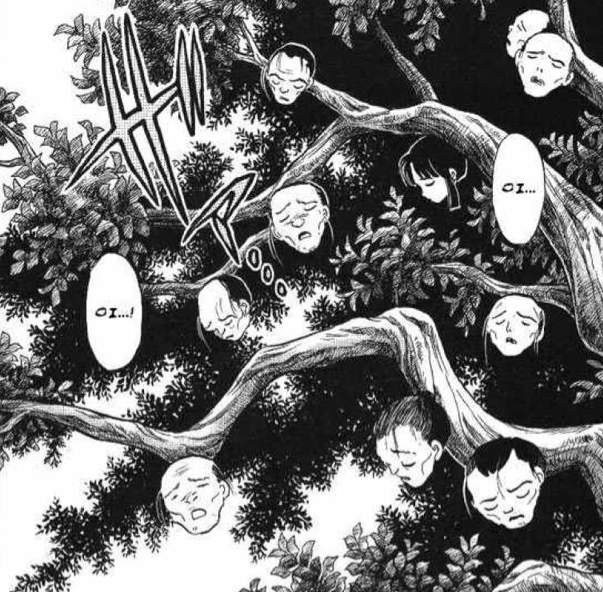
 Higurashi When They Cry: Demon Exposing Arc | Story by Ryukishi07, Art by En Kito | Yen Press – The family that slays together stays together — or so we’re led to believe through most of the Demon Exposing Arc. The story focuses on the Kimiyoshis, recent transplants from the Hinamizawa region. In the days following a terrible explosion in Hinamizawa, Grandma Kimiyoshi becomes convinced that Oyashiro-sama, guardian spirit of Hinamizawa, was punishing the villagers for their lack of faith, and sets out to prove her devotion to this ancient and wrathful god. Grandma’s resolve alone would make for a spooky story, but as her family is drawn into her paranoid fantasies, the plot takes a grislier and more compelling turn. As with other installments of the Higurashi franchise, the story sometimes bogs down in dense, info-dump dialogue, but the story remains suspenseful from beginning to end, rewarding readers with a deliciously nasty surprise in the final pages. -Katherine Dacey
 My Girlfriend’s a Geek, Vol. 3 | By Rize Shinba, story by Pentabu | Yen Press – Taiga gets a shock as this volume opens, when his girlfriend informs him that she’s found a girlfriend. Later on, he gets roped into some romantic Christmas cosplay, and nearly roped into attending winter Comiket. This series may not be deep, but it sure is fun, enhanced nicely by Rize Shinba’s skillful visual storytelling and fujoshi-tinged sense of humor. As a bonus, volume three also includes a chapter from Sepatte Takuro, Yuiko’s favorite slashable shounen manga-within-the-manga, drawn by mangaka Hiromi Namiki, which is frankly delightful. This is one of those series I feel I probably shouldn’t like, but I just really do, more so with each new volume. Recommended for a light weekend read. -MJ


 MJ: I’m going to start us off looking ridiculous by naming Hiromu Arakawa’s
  DAVID: I can’t tell you how glad I am that Kate suggested this theme, because I was feeling horribly guilty about some of my (entirely defensible and necessary) omissions. I’ll begin the redressing by mentioning the prolific Yuu Watase. Now, for my money, the cream of her crop isn’t one of her fantasy-tinged epics. It’s the down-to-earth romantic comedy
  KATE: At the risk of sounding like a broken record, my suggestion is
  MICHELLE: I probably should be writing about Basara here. I always write about Basara in response to this sort of question. This time, though, I am going to cast my vote for Akimi Yoshida’s


 MICHELLE: There’s a lot of good stuff hitting Midtown Comics this week, including new volumes of several of my Shojo Beat favorites. But I simply must award my pick of the week to the 23rd and final volume of
  MJ: Well, wow, it’s incredibly tempting to second Michelle’s choice. I have a deep, deep love for Hikaru no Go, something you’ll all be hearing more about as the week goes on. In the interest of diversity, however, I’ll take up the torch for Usamaru Furuya’s
  DAVID: It’s certainly an embarrassment of riches this week, and I certainly second both Michelle and MJ’s choices, and there are new volumes of some utterly winning shôjo series (Kimi ni Todoke and The Story of Saiunkoku leap to mind), but I’m going to cast my vote for the