 To a casual observer, Asuka Masamune epitomizes masculinity. Not only is he the captain of the kendo team and a star student, he’s also tall, handsome, and quick to defend weaker students from bullies — the kind of stoic, principled guy that boys and girls admire. That macho exterior belies Asuka’s true nature as a sensitive young man with girly hobbies such as making elaborate bento boxes, sewing stuffed animals (the cuter, the better), and reading Love Chick, a shojo manga serialized in his favorite magazine, Hana to Mame (literally, “Flowers and Beans,” a pun on Hana to Yume, or “Flowers and Dreams”).
Asuka’s charade is threated by classmate Juta Tachibana, a tousle-haired player who discovers Asuka’s big secret: an unrequited crush on transfer student Ryo Miyakozuka. Ryo is yin to Asuka’s yang, a pretty young woman who can deliver a mean karate chop but can’t bake a cake or sew a button onto a blouse. They may seem like a match made in shojo heaven, but there’s a catch: Ryo disdains “girly” guys. Her initial impression of Asuka is favorable, but that encounter unleashes a torrent of emotion inside Asuka that makes it increasingly difficult for him to play the cool, macho customer. Juta pledges to help Asuka win Ryo — a gesture that initially seems out of character for such a transparent opportunist and womanizer. As we begin to learn more about Juta, however, we discover that he is, in fact, the manga-ka behind Love Chick (he uses the pseudonym “Jewel Tachibana”) and that Asuka is the inspiration for the series’ graceful heroine. Whether Juta empathizes with his subject, or is hoping to manipulate Asuka’s life for literary fodder, isn’t yet clear, though Juta embraces his matchmaking role with gusto.
…

 Gorgeous Carat caught my eye because it seemed to be a frothy costume drama set in turn-of-the-century Paris, and I’m a sucker for historical fiction. There’s something delicious about seeing another time and place through a sympathetic character’s eyes, trying to imagine what it was like to live during the Napoleonic wars or the Tokugawa era. What’s not so delicious, however, is seeing a contemporary author unconsciously absorb the prejudices of another era and incorporate them into her story.
 GENGHIS KHAN: TO THE ENDS OF THE EARTH AND SEA
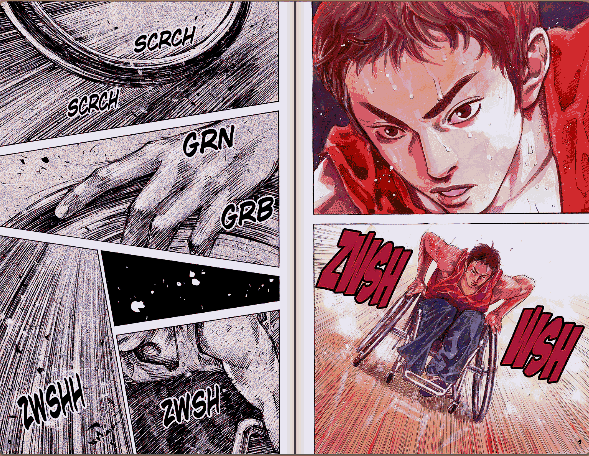
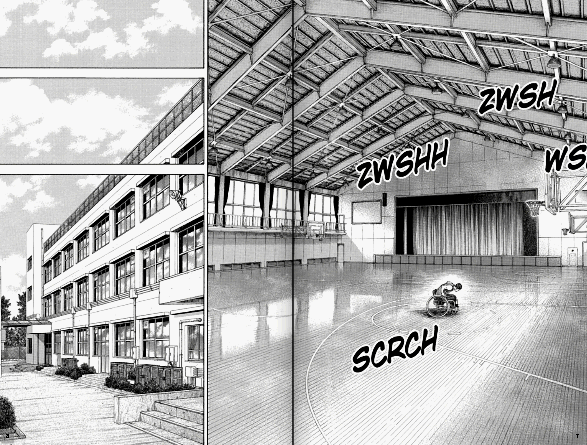
 Slam Dunk may have been the series that put Takehiko Inoue on the map and introduced legions of Japanese kids to basketball, but for me, a long-time hoops fan who grew up watching Larry Bird lead the Celtics to numerous NBA champtionships, Slam Dunk was a disappointment, a shonen sports comedy whose goofy hero desperately needed a summer at Robert Parrish Basketball Camp for schooling in the basics. Real, on the other hand, offered this armchair point guard something new: a window into the fiercely competitive world of wheelchair basketball. Watching Inoue’s characters run a man-to-man defense and shoot three-pointers from their chairs gave me a fresh appreciation for just how much strength, stamina, and smarts it takes to play the game, with or without the use of ones’ legs.
 Remake or retread? That’s the question facing critics whenever someone updates a classic novel or favorite film, be it Pride and Prejudice or The Taking of Pelham One Two Three. A remake brings new urgency or wit to the original story, new clarity to its structure, or new life to a premise that, by virtue of social or technological change, seems dated—think of Philip Kaufman’s The Invasion of the Body Snatchers, which infused a 1950s it-came-from-outer-space story with a healthy dose of seventies paranoia, or Alfred Hitchcock’s 1955 version of The Man Who Knew Too Much, which featured a leaner, meaner script than his 1934 original. Retreads, on the other hand, evoke the letter but not the spirit of the originals, embellishing their plots with fussy details, slangy dialogue, or new characters without adding anything of value—think of Ethan and Joel Coens’ deep-fried version of The Ladykillers, which was louder, cruder, and longer than the 1955 film, yet decidedly less funny.
 Mourning the cancellation of
