• Skip to primary navigation
  • Skip to main content
  • Skip to primary sidebar
  • Home
  • About Us
    • Privacy Policy
    • Comment Policy
    • Disclosures & Disclaimers
  • Resources
    • Links, Essays & Articles
    • Fandomology!
    • CLAMP Directory
    • BlogRoll
  • Features & Columns
    • 3 Things Thursday
    • Adventures in the Key of Shoujo
    • Bit & Blips (game reviews)
    • BL BOOKRACK
    • Bookshelf Briefs
    • Bringing the Drama
    • Comic Conversion
    • Fanservice Friday
    • Going Digital
    • It Came From the Sinosphere
    • License This!
    • Magazine no Mori
    • My Week in Manga
    • OFF THE SHELF
    • Not By Manga Alone
    • PICK OF THE WEEK
    • Subtitles & Sensibility
    • Weekly Shonen Jump Recaps
  • Manga Moveable Feast
    • MMF Full Archive
    • Yun Kouga
    • CLAMP
    • Shojo Beat
    • Osamu Tezuka
    • Sailor Moon
    • Fruits Basket
    • Takehiko Inoue
    • Wild Adapter
    • One Piece
    • After School Nightmare
    • Karakuri Odette
    • Paradise Kiss
    • The Color Trilogy
    • To Terra…
    • Sexy Voice & Robo
  • Browse by Author
    • Sean Gaffney
    • Anna Neatrour
    • Michelle Smith
    • Katherine Dacey
    • MJ
    • Brigid Alverson
    • Travis Anderson
    • Phillip Anthony
    • Derek Bown
    • Jaci Dahlvang
    • Angela Eastman
    • Erica Friedman
    • Sara K.
    • Megan Purdy
    • Emily Snodgrass
    • Nancy Thistlethwaite
    • Eva Volin
    • David Welsh
  • MB Blogs
    • A Case Suitable For Treatment
    • Experiments in Manga
    • MangaBlog
    • The Manga Critic
    • Manga Report
    • Soliloquy in Blue
    • Manga Curmudgeon (archive)

Manga Bookshelf

Discussion, Resources, Roundtables, & Reviews

Recommended Reading

Confession

April 1, 2025 by Katherine Dacey

Confession is a tight, twisty thriller that reads like an episode of The Twilight Zone or Alfred Hitchcock Presents. Author Fukumoto Nobuyuki establishes the premise in a few quick strokes: two hikers—one gravely injured—huddle on a mountainside pummeled by a fierce winter storm. As they debate the best course of action, Ishikura—who is bleeding profusely—confesses to murdering a mutual acquaintance, telling Asai, “I killed Sayuri… with my own two hands.” Asai, however, refuses to abandon Ishikura, dragging his wounded friend to the safety of an abandoned cabin. As the two wait for a rescue team to arrive, it finally dawns on Asai that Ishikura might regret what he said.

For a two-hander like this to work, it’s not enough to know what Asai is thinking; we need to feel his growing sense of desperation. Kaiji Kawaguchi’s art is up to the task, creating a spare, claustrophobic environment that’s almost as hostile as the barren slopes that surround the cabin. The cabin itself is rendered in just enough detail for the reader to grasp the layout and size, as well as the lack of good hiding places. Equally important, Kawaguchi’s character designs emphasize the wide social gap between the conventionally handsome Asai and the squat, dour Ishikura, encouraging the reader to question how these two people ever travelled in the same circles.

The artwork is so effective, in fact, that some of Asai’s internal monologue feels superfluous, especially when he states the obvious: “If my suspicions are right, are you and I going to fight to the death?” (Signs point to yes!) Aside from a few clumsy monologues, however, the story never sags under the weight of too much exposition; Nobuyuki carefully doles out information about Asai and Ishikura’s past to reveal how fraught their relationship was before they went climbing, hinting at a long-simmering conflict between them. The final scene is a shocker in the best sense, challenging the reader’s perception of both characters without cheating or taking any narrative shortcuts to get there. Hitchcock, I think, would approve. Recommended.

CONFESSION • STORY BY NOBUYUKI FUKUMOTO • ART BY KAIJI KAWAGUCHI • TRANSLATION BY EMILY BALISTERI • PRODUCTION BY TOMOE TSUTSUMI, PEI ANN YEAP, AND HIROKO MIZUNO • KODANSHA USA • RATED 16+ (VIOLENCE) • 314 pp.
Filed Under: Manga, Manga Critic, Recommended Reading, REVIEWS Tagged With: kodansha, Thriller

Drunks

January 4, 2025 by Katherine Dacey

In the shadow of the mainstream North American manga industry, there are a handful of indies who are keeping manga weird. They’re publishing the kind of offbeat stories that you won’t read in Shonen Jump or stream on Crunchyroll, stories that are elliptical, profound, strange, funny, or unsettling in ways that My Hero Academia or Blue Lock aren’t. 

On a recent visit to Star Fruit Books, for example, I discovered Okaya Izumi’s Drunks, a pair of stories that put a novel spin on the meet-cute. In the first, a shy salary man staggers home from a night of drinking only to fall prey to a chatty vampire who casually asks, “Do you have blackout drapes at your house?” You can guess where this is going, but the light tone and odd notes of humor push “Drunks” in an unexpected direction as these two wildly different people find solace in each other’s company. The second story—“Tick Tock”—also crosses genre boundaries, using elements of science fiction to set the plot in motion. Tomoko, the heroine, spends a century in a cryogenic chamber before a young man accidentally frees her. Though the pair stumble into a physical relationship quickly, Okaya focuses as much on Tomoko’s complex reaction to rejoining the world as on her sexual reawakening, helping us understand why Tomoko is secretly relieved to discover that the future is not much different than the past.

Art-wise, Okaya’s style recalls Nishi Keiko (Love Story) and Yamada Murasaki (Talk to My Back, Second Hand Love), as Izumi’s characters are rendered in thin, almost scribbly, lines that make them look a little fragile. In her stories’ most emotionally charged scenes, there is almost no background detail; the reader’s eye is drawn to the characters’ faces and body language, allowing us to more fully appreciate their sense of joy, astonishment, and confusion over finding companionship in unexpected places. The quiet authenticity of these moments help both stories transcend their cliché elements to make a deeper point about the characters’ need for connection. Recommended.

DRUNKS • BY OKAYA IZUMI • TRANSLATED BY DAN LUFFEY • LETTERING/RETOUCHING BY KELLY NGO • STAR FRUIT BOOKS • 60 pp.
Filed Under: Manga, Manga Critic, Recommended Reading, REVIEWS Tagged With: Okaya Izumi, Star Fruit Books

The Best and Worst Manga of 2023

January 9, 2024 by Katherine Dacey

This weekend’s Nor’easter provided me a swell opportunity to finish my long-gestating Best and Worst Manga list for 2023. One of the things that tripped me up was the sheer volume of new work published last year; when I first started reviewing manga in 2006, it was hard to imagine a market that offered a title for every conceivable reader, from the Chainsaw Man enthusiast to the the romantic, the oenophile, the foodie, the soccer fan, the gore hound, the isekai buff, and even the middle-aged manga critic. Though I made a concerted effort to be as thorough as possible, I freely admit that my picks barely capture the sheer quantity and diversity of last year’s new releases. Instead, I focused on the titles that stayed with me weeks and months after I first read them, from the exuberant One Hundred Tales to the unnerving The Summer Hikaru Died. For additional perspective on 2023’s best and worst manga, I encourage you to check out the well curated lists at Anime News Network, Anime UK News, Asian Movie Pulse, The Beat, The Comics Journal, From Cover to Cover, Okazu, and The School Library Journal.

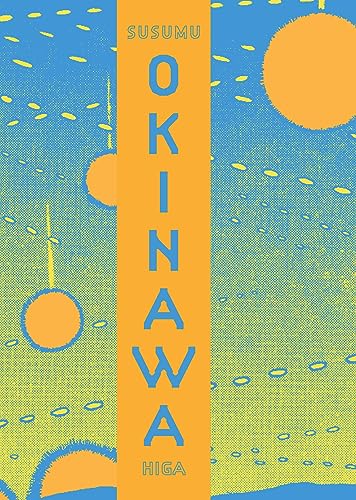
Best New Manga: Okinawa
Story and Art by Susumu Higa • Translated by Jocelyne Allen • Lettering by Patrick Crotty and Kayla E. • Fantagraphics
There are books that critics like, and books that readers like. I’d put Okinawa squarely in the first category, as it has all the hallmarks of a Serious Manga™: slightly naïve artwork, historically important events seen through the eyes of ordinary people, and detailed footnotes explaining the story’s cultural and linguistic nuances. If I sound a little cynical, I was; I put off reading Okinawa for months after its release because so many reviewers rehearsed the same talking points about how “harrowing,” “heartbreaking,” “complex,” and “haunting” it was. After reading Okinawa, however, I have to admit the critics were right: Okinawa is a deeply moving exploration of the island’s fraught relationship with Japan and the United States. It’s also a tribute to Susumu Higa’s parents, whose memories of World War II pervade many of Okinawa’s most affecting stories; a celebration of Okinawan resilience and spirituality; and the best manga I read in 2023.

Best New Drama: River’s Edge“Story and Art by Kyoko Okazaki • Translated by Alexa Frank • Vertical Comics
River’s Edge offers a gritty portrait of adolescence before chat rooms, cell phones, and social media, focusing on the slackers and misfits at a Tokyo high school. Haruna Wakakusa, the protagonist, is caught between her fierce sense of justice and her ambivalent feelings towards her on-again, off-again boyfriend Kannonzaki, a horny, hot-headed loser who bullies weaker classmates. Over the course of the story, Haruna forges an unlikely friendship with one of Kannonzaki’s targets, an aloof young man whose popularity with the girls belies his true sexual orientation. Okazaki’s spare, stylish linework is ideally suited to the material, as the character’s exaggerated facial features and ungainly proportions remind the reader of how confusing, weird, and uncomfortable it is to be on the physical cusp of adulthood. Okazaki also nails the casual cruelty and cluelessness of adolescence: her characters’ impulsiveness, selfishness, and inexperience often compel them to betray each other in small (and big) ways that feel true to life even when the plot teeters on the brink of melodrama.

Best Classic Title: One Hundred Tales
Story and Art by Osamu Tezuka • Translated by Iyasu Adair Nagata • Lettering by Aidan Clarke • ABLAZE
Over the course of his long career, Osamu Tezuka published three series based on the legend of Doctor Faustus, among them One Hundred Tales (1971), which ran in Weekly Shonen Jump. Tezuka takes a few liberties with the original story: his hero is not a brilliant scholar in search of knowledge but a lowly samurai who’s been sentenced to death for his employer’s misdeeds. In a fit of desperation, he sells his soul to a witch and is reborn as Fuwa Usuto, a dashing young man who wants two things: love and power. What follows is a rowdy picaresque, as Fuwo ventures into the lair of an alluring demon, saves his daughter from an arranged marriage, and insinuates himself into the house of a foolish daimyo in his quest to become more worldly and powerful. These episodes provide Tezuka ample opportunity to insert pop-cultural sight gags—Christopher Lee and Astro Boy both make fleeting appearances—but they also showcase Tezuka’s flair for character design and panel structure; the artwork is fluid and playful, equally suited to moments of exquisite silliness and heartbreaking sadness as Fuwo stumbles towards transcendence.

Best New Horror Series: The Summer Hikaru Died
Story and Art by Mokumokuren • Translated by Ajani Oloye • Lettering by Abigail Blackman • Yen Press
The Summer Hikaru Died begins with a familiar scene: two high school buddies are clowning around outside a convenience store, trading good-natured barbs. But something’s off, and midway through a seemingly ordinary conversation Yoshiki realizes that he’s talking to an impostor who’s the spitting image of his friend Hikaru. Though the mystery of what happened to the real Hikaru is resolved quickly, many questions remain: is it possible for Yoshiki to befriend “Hikaru” even though he has no real memories of their relationship? And what, exactly, is “Hikaru”? Mokumokuren resists the temptation to provide simple answers, relying instead on suggestion to create a tense, atmospheric story that skillfully blends elements of body horror, BL, and fantasy in a fresh, unsettling way.

Best New Cat Manga: Nights With a Cat
Story and Art by Kyuryu Z • Translated by Stephen Paul • Lettering by Lys Blakesly • Yen Press
Though there are dozens of great pet manga now available in English, Nights with a Cat has something genuinely new to offer: simple, observational storytelling that doesn’t shamelessly tug on the heartstrings or anthropomorphize our furry companions. The series explores the relationship between Fuuta and Kyuruga, his roommate’s cat. As someone who’s never lived with a cat before, Fuuta is fascinated by Kyuruga, marveling at Kyuruga’s anatomy—his pupils, his sandpaper tongue, his retractable claws—as well as Kyuruga’s ability to silently materialize in surprising places. Kyuryu Z doesn’t play these moments for laughs, choosing instead to emphasize how strange and amazing cats really are with illustrations that capture the fluidity of Kyuruga’s movements and the changeability of his moods. Recommended for new and long-time cat owners alike. (Reviewed at Manga Bookshelf on 5/21/23)

Best Ongoing Series: Go With the Clouds, North by Northwest
Story and Art by Irie Aki • Translated by David Musto • Vertical Comics
After a two-year wait, a new installment of Go With the Clouds, North by Northwest arrived in stores this fall, demonstrating once again why this odd, delightful, and occasionally thrilling story deserves a bigger audience. Strictly speaking, Go With the Clouds is a murder mystery, but Aki Irie refuses to observe the basic tenets of the genre, frequently interrupting her story for interesting diversions: a fitful romance between supporting characters, a brief lesson on Icelandic geography, a casual conversation between Kei, the main protagonist, and his trusty jeep. What prevents the story from being twee or mannered is its matter-of-fact tone. In the first chapter of volume six, for example, Kei uses ESP to track a kidnapping victim through the streets of Reykjavik by chatting up parked cars around the city, a goofy gambit that works thanks to Irie’s superb pacing and commitment to character development; Kei’s methodical approach suggests that his ESP is something he uses on an everyday basis, not something that manifests per the plot’s demands. Swoon-worthy art and twisty plotting add to the series’ considerable appeal. (Volumes one and two reviewed at The Manga Critic on 8/30/19).

Most Disappointing New Series: #DRCL: Midnight Children
Story and Art by Shin’ichi Sakamoto • Based on Bram’s Stoker’s Dracula • Translation Caleb Cook • Touch-Up & Lettering by Brandon Hull • VIZ Media
Let’s face it: Bram Stoker’s Dracula sucks, marred by turgid prose and a convoluted form. In the hands of other creators, however, Stoker’s ideas have thrilled, titillated, and shocked six generations of horror buffs. The introduction to #DRCL: Midnight Children suggests that Shin’ichi Sakamoto might be one of those creators, as he offers the reader a claustrophobic, suspenseful riff on Dracula‘s most famous chapter, “The Voyage of the Demeter.” The rest of volume one, by contrast, is a fever dream of short, incoherent scenes that bump up against each other like commuters on a rush-hour train. Anyone familiar with Stoker’s original novel will recognize the characters’ names but wonder why Sakamoto re-imagined Renfield as a nun who’s chained up in a dormitory room or Mina Murray as a short, scrappy redhead who’s an expert wrestler. (Also: a dead ringer for Anne of Green Gables.) It’s a pity that the story is so fragmented and overripe, as Sakamoto has a fertile imagination; the first volume is filled with hauntingly beautiful renditions of Dracula himself that instill a sense of awe and fear that’s missing from the rest of the story.

Filed Under: Manga, Manga Critic, Recommended Reading, REVIEWS Tagged With: ABLAZE, Aki Irie, Bad Manga, BEST MANGA, Cats, fantagraphics, Kyoko Okazaki, Mokumokuren, Osamu Tezuka, Shin'ichi Sakamoto, Susumu Higa, Vertical Comics, VIZ, yen press

My Dear Detective: Mitsuko’s Case Files, Vol. 1

August 31, 2023 by Katherine Dacey

Have you seen The Law According to Lidia Poët? It’s a period drama that’s loosely inspired by the career of Italy’s first woman lawyer. Though the series explores the real-life Poët’s long, lonely battle for professional recognition, it also makes plenty of room for romance and adventure, portraying her as a free spirit who solves mysteries with the aid of a handsome male journalist. The show’s breezy tone is more Remington Steele than Masterpiece Theater, but it never shies away from acknowledging that nineteenth-century Italy was truly a man’s, man’s world.

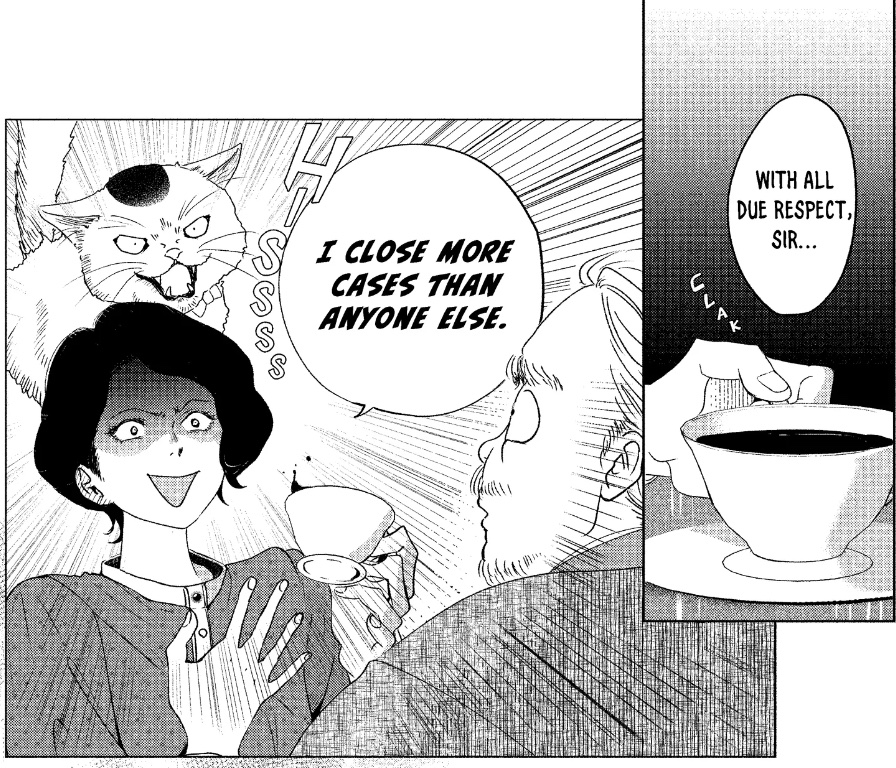
If Lidia Poët sounds like something you’d watch, you might like My Dear Detective, which also features a plucky heroine in a male-dominated field. The setting is Taisho-era Japan, where twenty-something Mitsuko Hoshino works for the Ginza Detective Agency as an investigator. Though Mitsuko is a natural, she faces skepticism and condescension in her day-to-day work that sometimes shades into outright hostility; early in volume one, for example, local hooligans vandalize the agency with slogans accusing her of “stealing men’s jobs.” Her boss is unfazed, however, and remains quietly but kindly supportive of her desire to be, in her words, “a working woman.”

Through one of those only-in-manga contrivances, Mitsuko crosses paths with Satou Yoshida, a handsome young man who turns out to be the scion of a prominent family. (The Yoshidas own one of the poshest department stores in Tokyo.) He soon joins the agency as Mitsuko’s assistant, chauffeur, and bodyguard, dropping the Yoshida name whenever it expedites their investigation, and swooping in to save Mitsuko whenever she’s in danger. Mitsuko—ever the consummate professional—won’t admit to herself that she likes Satou, and puts up a blustery front any time he flirts with her.

Though the script is lively and the pacing brisk, the artwork is a little plain. The costumes, hairstyles, and props are just detailed enough to give a sense of the period, but the backgrounds are a little too sterile and generic to really evoke Tokyo in the 1920s. More appealing are the character designs: Natsumi Ito does an effective job of conveying each cast member’s age, social standing, and personality through small but meaningful details. Mitsuko, for example, sports a sleek, modern bob and knee-length skirts, while the older women she interacts with favor Nihongami and kimono, evoking the transitional spirit of the Taisho era.

Taken as a whole, however, My Dear Detective is the manga equivalent of The Law According to Lidia Poët. One the one hand, it’s a fizzy, fun series that offers solid mysteries with interesting twists solved by impossibly good-looking people. On the other hand, My Dear Detective gently reminds the reader how many practical barriers professional women faced a century ago, acknowledging the degree to which misogyny made it all but impossible for smart, ambitious women to chart a course for themselves outside of traditional gender roles. These two sensibilities don’t always mesh harmoniously, but most of the time My Dear Detective toes the line between escapism and didacticism in a highly entertaining fashion. Lidia Poët would undoubtedly approve. Recommended.

MY DEAR DETECTIVE: MITSUKO’S CASE FILES, VOL. 1 • BY NATSUMI ITO • TRANSLATED BY SAMUEL R. MESSNER • LETTERING BY BARRI SHRAGER • COVER DESIGN BY GLEN ISIP • AZUKI • 183 pp. • NO RATING

Filed Under: Manga, Manga Critic, Recommended Reading, REVIEWS Tagged With: Azuki, Historical Drama, Mystery/Suspense

Lovely Muco!, Vol. 1

May 16, 2023 by Katherine Dacey

For thirteen years, I lived with Grendel, a smart, stubborn Australian shepherd who treated me and my husband like a pair of unruly sheep. She woke us up at 5:45 am every day, herded us to the park, and marched us around until we were exhausted. She nipped our ankles when we left for work—we weren’t supposed to leave the farm, I guess—and had strong preferences about everything, from which routes we walked to which brand of kibble we bought. When she wasn’t trying to bend us to her will, she applied her formidable intelligence to foraging snacks; she had a black bear’s talent for opening containers of peanut butter, Tums—you name it. I loved her dearly, but I admit that there were times when I fantasized about living with a dog who wasn’t so determined to run our house.
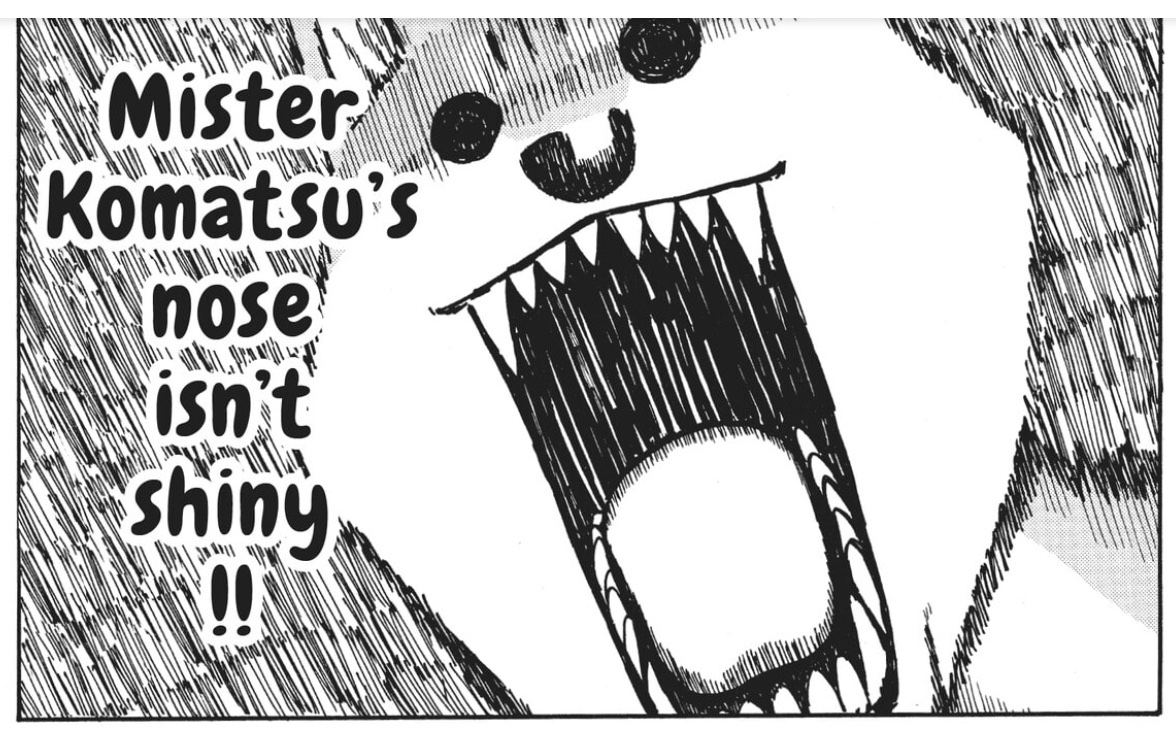
With my current commute, I can’t own the happy-go-lucky dog of my dreams, but I can do the next best thing: read about one. That’s where Lovely Muco! comes in. It’s a gag manga inspired by the real-life relationship between Komatsu, a professional glass blower, and Muco, his exuberant Shiba Inu. In every chapter, Muco makes a discovery—that her nose is shiny, or that Komatsu isn’t a dog—and becomes so consumed with excitement that she ends up in trouble. Muco’s reactions to everyday situations bring out her inner Gracie Allen; she’s less dim than dizzy, viewing the world with the peculiar logic of a canine enthusiast. A trip to the vet, for example, leads her to wax rhapsodic about the cone of shame, which she views as a stylish accessory, rather than an encumbrance. Even when her injury starts to itch, Muco remains convinced that she looks cool, going so far as to imagine how Komatsu would look with his own cone.

As much as I love Muco’s antics, my favorite storyline focuses on Komatsu, who hires his pal Ushiko to design him a website. Ushiko uses the tools that you’d expect—a digital camera, a laptop—but Komatsu’s reactions to these technologies seem more appropriate for someone who’d just spent the last 20 years living off the grid than someone making a living in modern-day Japan. His child-like wonder mirrors the way Muco approaches just about everything in her life, from tennis balls to car rides—a neat inversion of their usual roles.

Takayuki Mizushina’s artwork plays a big role in making their owner-dog dynamic funny. Mizushina’s approach is more gestural than literal, distilling each character, human or animal, to a set of bold lines and basic shapes. Muco, for example, bears only a passing resemblance to a Shiba Inu, as Mizushina  draws her head like a stop sign with triangular ears. That hexagonal shape, however, provides Mizushina an ideal frame for Muco’s facial expressions:

And while plenty of other manga artists use this same device to express extreme emotion, Mizushina really captures the essence of how an excited dog reacts to new things in its environment; you can almost hear Muco barking whenever she has an epiphany.

What I like best about Lovely Muco, though, is that Muco’s thought process isn’t like Grommit or Snoopy’s. She’s not building wild contraptions or fantasizing about being a World War I flying ace; she’s just trying to make sense of the people and things around her. Her fascination with ordinary objects is a nice reminder that part of living with a dog—or any sentient creature—is recognizing how strange and interesting our world must seem to them, and taking pleasure in their curiosity and enthusiasm. Recommended.

PS: If you just can’t get enough shiba inu hijinks, you can follow the real-life Muco’s exploits on Twitter. (Hat tip to @debaoki for the link.)

LOVELY MUCO! THE HAPPY DAILY LIFE OF MUCO AND MR. KOMATSU, VOL. 1 • ART AND STORY BY TAKAYUKI MIZUSHINA • TRANSLATED BY CASEY LEE •  KODANSHA COMICS  220 pp. • RATED 10+ (SUITABLE FOR READERS OF ALL AGES)

Filed Under: Manga, Manga Critic, Recommended Reading, REVIEWS Tagged With: Animals, Comedy, Kodansha Comics

Insomniacs After School, Vol. 1

April 6, 2023 by Katherine Dacey

First published in 1911, Frances Hodgson Burnett’s The Secret Garden has beguiled millions of readers with its portrait of Mary and Colin, two sickly children who heal themselves by finding a forgotten space and bringing it back to life. Burnett’s story is very much a product of the Edwardian era, steeped in colonialism and patriarchy, but the core plot—in which the children discover their own agency, and create their own sanctuary—seems as relevant in 2023 as it did over a century ago.

Insomniacs After School steals a page or two from The Secret Garden, shifting the action from a British manor to a Tokyo high school where Nakami, a grumpy, uptight boy, and Magari, a goofy, spontaneous girl, are struggling with insomnia. The two meet cute when Nakami stumbles over Magari sleeping on the floor of the school’s long-abandoned observatory. After commiserating about their difficulty falling asleep, Nakami and Magari hatch a plan to transform the observatory into a clubhouse where they can hang out or sneak in a much-needed midday nap. They scavenge furniture, hang curtains, and welcome a neighborhood cat into their space, in the process uncovering the telescope left behind by the now-defunct astronomy club and, of course, becoming friends.

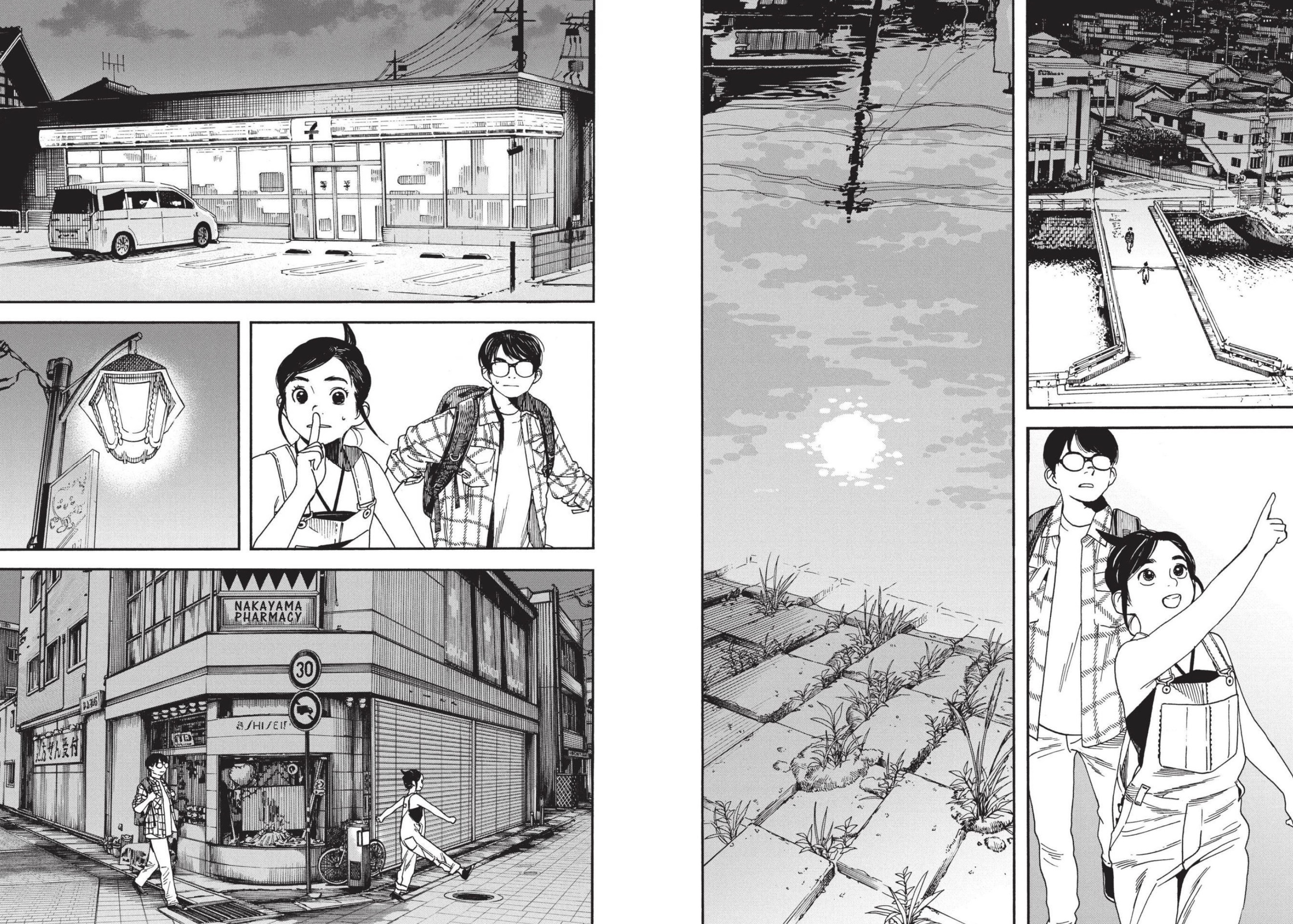
As delightful as these early scenes are, the best sequence in volume one documents their first outing as members of the “Enjoy-the-Night Club.” Nakami and Magari sneak out of their homes and into the city, meandering through empty neighborhoods, dodging a night patrolman, posing for photographs, and gazing out over the harbor as the first glimmers of dawn form on the horizon. Though there are a few lines of dialogue sprinkled throughout the chapter, most of Nakami and Magari’s adventure unfolds in companionable silence, allowing us to appreciate the stillness of early morning, and their thrill at being the only ones to witness the sunrise:

One of the strengths of Insomniacs After School is Ojiro’s low-key approach to character development. Ojiro isn’t in a hurry to reveal too much about his characters, fleshing out their backstories in an organic fashion through snippets of conversation and brief glimpses into their home lives. Nakami’s dad, for example, seems troubled, though it’s not clear from context what might be wrong, while Magari reveals she suffered from a serious childhood illness that made her frail. Neither teen wants their parents to know the full extent of their exhaustion, however, so they don’t seek help from the adults; as Magari declares, “When I was sick as a kid, I really hated how everyone worried about me. That’s why I keep my insomnia a secret.”

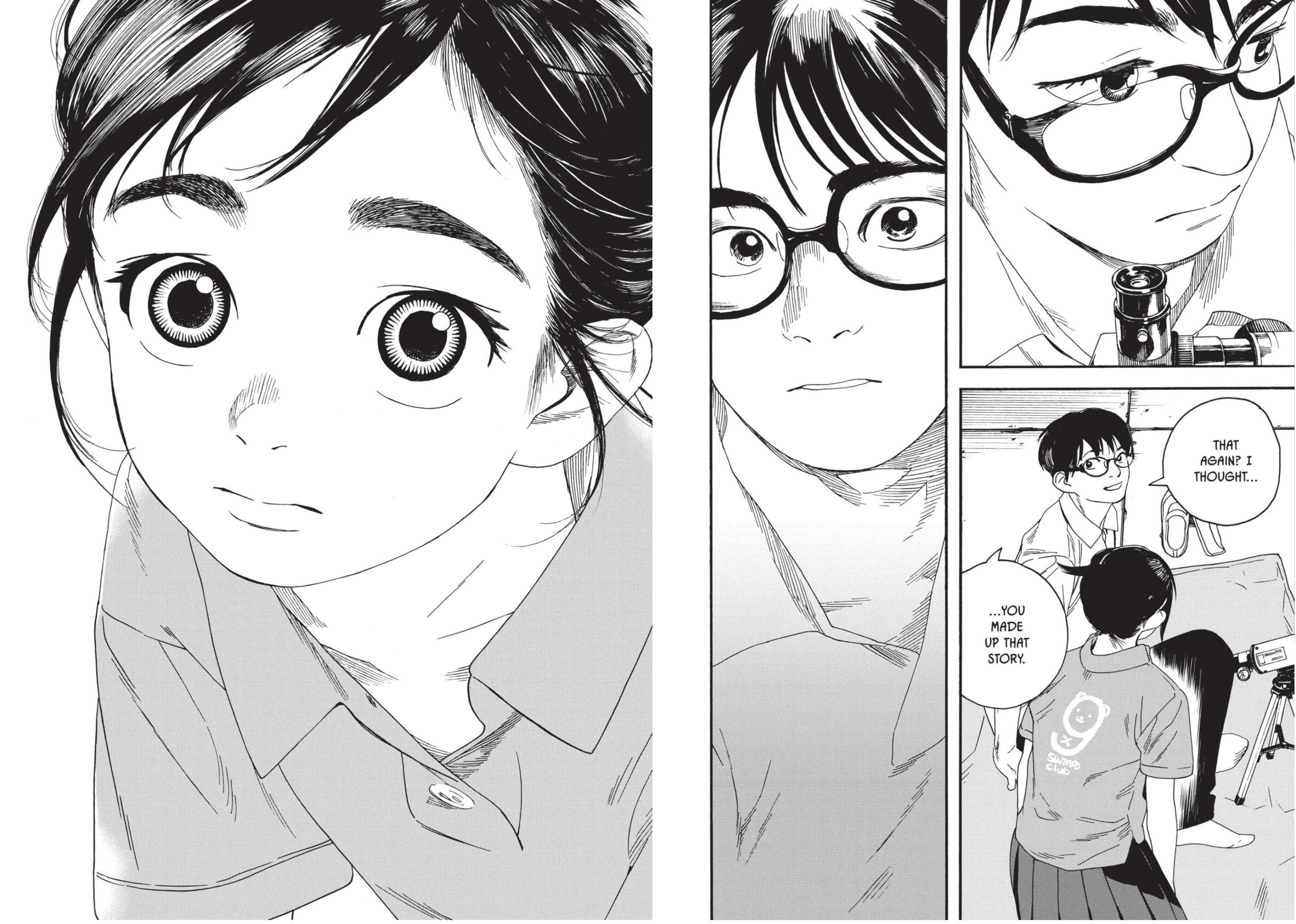
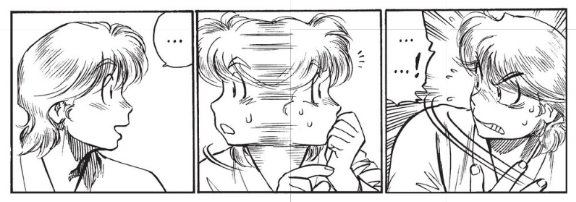
Another strength is the clean, expressive artwork. Ojiro’s facial close-ups and fresh use of perspective give us a sense of the characters’ eagerness for connection as well as their vulnerability and inexperience. In this sequence, for example, we see what happens when Nakami’s simple, matter-of-fact statement lands differently than expected:

The shift in perspective neatly underscores Nakami’s confusion: one minute he felt at ease with Magari, and the next he’s puzzled by her reaction, a note of trepidation registering on his face. Ojiro resists the temptation to verbalize what his characters are thinking, instead letting the reader feel his characters’ discomfort as Nakami’s comment hangs in the air.

Ojiro’s knack for capturing these small but emotionally charged moments lends Insomniacs After School a realism that will appeal teen readers; it’s a quiet, carefully observed portrait of two kids who are navigating the space between friendship and romance, with all the confusion and excitement that entails. Other readers—especially those of us with vivid memories of The Secret Garden—will find Insomniacs a warm reminder that bringing light and life to a neglected place can heal the heart, no matter how old you are. Highly recommended.

INSOMNIACS AFTER SCHOOL, VOL. 1 • BY MAKOTO OJIRO • TRANSLATED BY ANDRIA CHENG • TOUCH-UP & LETTERING BY INORI FUKUDA TRANT • VIZ MEDIA • RATED T (FOR TEENS)

Filed Under: Manga, Manga Critic, Recommended Reading, REVIEWS Tagged With: Romance/Romantic Comedy, VIZ

The Best and Worst Manga of 2022

January 1, 2023 by Katherine Dacey

When I sat down to compose my Best of 2022 list, I was certain I’d compiled a similar one as recently as 2017, only to discover that I hadn’t done so in almost seven years. In looking over some of my earlier efforts, I hardly recognize myself: who was this person with the energy to review 40 or 50 books in a year? Or who thought that Yowamushi Pedal was the best new series of 2015? It felt a little daunting to revisit those lists, honestly, as I’ve often let my blog lie fallow for months at a stretch as I adjusted to a more demanding teaching schedule or a longer commute; I’ve been vowing to “bring back” The Manga Critic for years. Reading other bloggers’ year-end lists, however, inspired me to get back in the saddle and take stock of the manga I loved—and didn’t—in 2022.

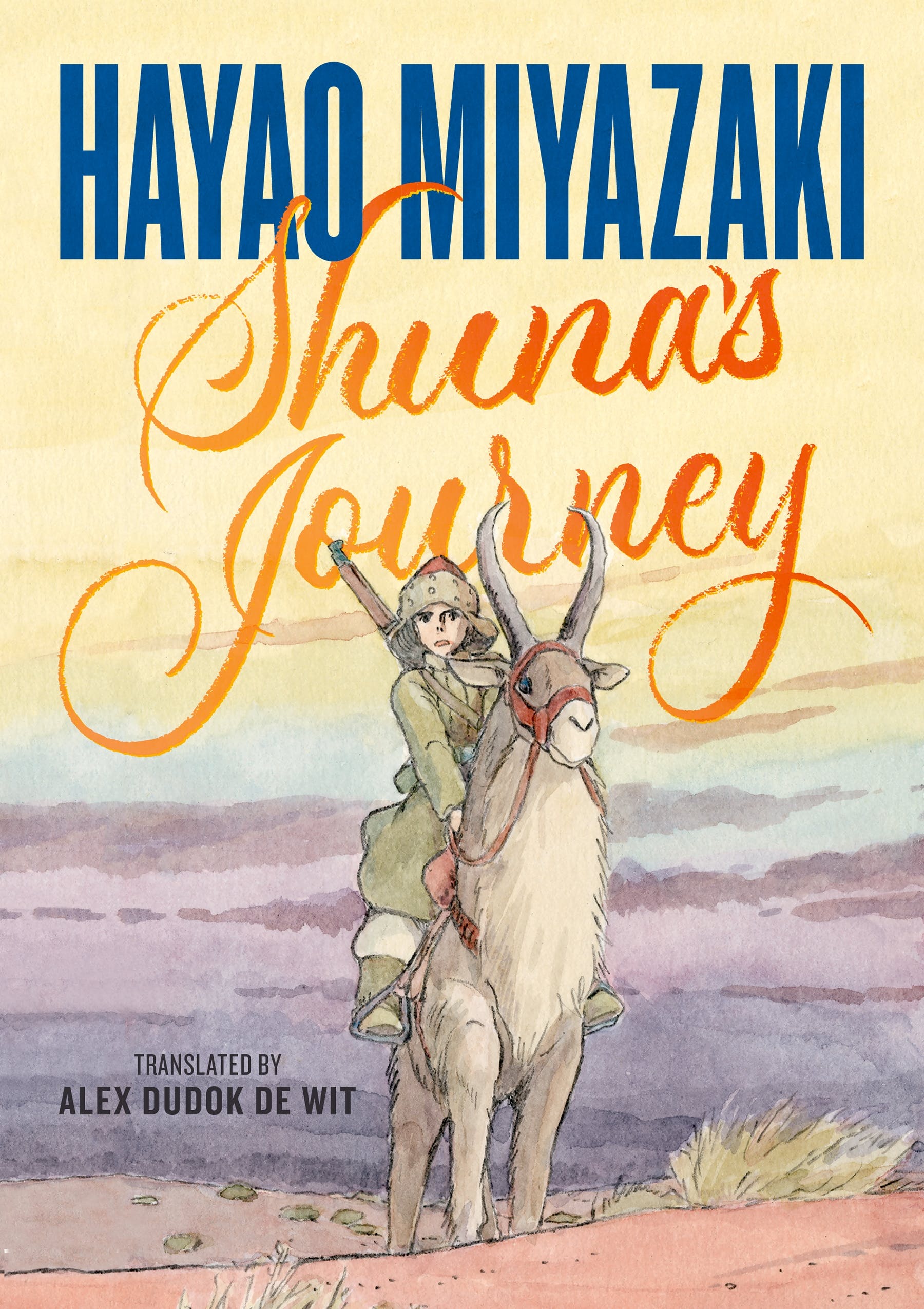
Best New Manga: Shuna’s Journey
By Hayao Miyazaki • Translated by Alex Dudok de Wit • First Second
In this deceptively simple work, Hayao Miyazaki creates a richly detailed world filled with beautiful, strange imagery that invites the reader to contemplate where and when the story takes place without definitively answering those questions. Miyazaki’s hero is just as mysterious as the landscapes he crosses; Shuna’s odyssey is not a journey of self-discovery but a practical quest that, despite its myriad hardships, leaves him fundamentally unchanged. Is a he a folkloric hero or a witness to environmental catastrophe? Miyazaki leaves that question unanswered as well, creating a work that’s more ambiguous and less didactic than Nausicaä of the Valley of the Wind or Princess Mononoke, but similar in its emphasis on the complex relationship between humans and the natural world.

Best Archival Project: Talk to My Back
By Yamada Murasaki • Translated by Ryan Holmberg • Drawn & Quarterly
“For six years now, I’ve never walked at a pace that was mine,” notes Chiharu, the protagonist of Yamada Murasaki’s sharply observed Talk to My Back. First published in the 1980s, Murasaki’s thirty-six vignettes chronicle the small pleasures and intense disappointments of a middle-class Japanese housewife. Through spare linework and judicious use of blank space, Murasaki conveys Chiharu’s quest to define herself outside the role of mother and wife, documenting Chiharu’s anger, frustration, and alienation in a restrained fashion that suggests how stifled and powerless Chiharu often feels. In a thorough, thoughtful companion essay, translator Ryan Holmberg explores Murasaki’s trailblazing role as an alt-manga creator; Murasaki was one of the first women artists to be featured in the pages of COM and Garo magazines, opening the door for creators such as Akino Kondo and Junko Mizuno. Here’s hoping that Drawn & Quarterly decides to publish more of Murasaki’s work in English.

Best New Sci-Fi Manga: Yokohama Kaidashi Kikou
By Hitoshi Ashinano • Translated by Daniel Komen • Adapted by Dawn Davis • Seven Seas
I’m not sure if I would have been as receptive to Yokohama Kaidashi Kikou five or ten years ago, as its low-key depiction of life in the aftermath of an environmental catastrophe might have struck me as hopelessly twee. With the worst of the pandemic behind us, however, I found the series’ emphasis on small, everyday moments more resonant; Hitoshi Ashinano convincingly evokes the rhythm of everyday life in a world of scarcity, minus the Hobbesian emphasis on violent competition. Alpha, the main character, is an android who divides her time between running a small cafe and roaming the coastline on her scooter, photographing the empty roads and submerged towns as well as the small, vibrant communities where people still find time to hold rowdy association meetings and stage elaborate firework displays. Her efforts to document humanity’s final chapter offer a wistful—and hopeful—meditation on what it means to persevere in the face of uncertainty and change.

Best New Romance: Kowloon Generic Romance
By Jun Mayuzuki • Translated by Amanda Haley • Yen Press
The aesthetic of Kowloon Generic Romance is pure 80s manga—think City Hunter or RG Veda—but the story and characters suggest the work of filmmaker Wong Kar-Wai, as Kowloon focuses on an intense but unconsummated flirtation between Reiko, a real estate agent, and Kudou, her brash, horny colleague. Like Kar-Wai, manga-ka Jun Mayuzuki is as enamored of settings as she is of characters, leading the reader on a languid tour of Kowloon’s shopping districts, cafes, back alleys, and apartment blocks, conveying how densely settled this city-within-a-city truly is. Though there are some minor elements of science fiction in play, the main attraction is the artwork and pacing; Mayuzuki devotes an entire chapter to depicting, in rapturous detail, Reiko’s evening ritual of enjoying a cigarette on her flat’s meager balcony, allowing the reader to experience the moment as Reiko does: a brief, wordless respite from the hustle and bustle of Kowloon.

Best New Comedy: Phantom of the Idol
By Hijiki Isoflavone • Translated by Max Greenway • Kodansha
In this delightfully bonkers series, a grumpy male pop star swaps bodies with the ghost of a former teen idol whose discipline and talent help transform Yuya into a charismatic, telegenic performer. The twist? Yuya’s been possessed by Asahi Mogami, a perky girl whose budding career was cut short by a car accident. The physical slapstick takes the humor in some unexpected directions as Asahi navigates the complexities of inhabiting the lazy Yuya’s body, while the dialogue offers plenty of sly pokes at the music industry, as well as some not-so-subtle reminders that pop stardom can be as grueling as it is exhilarating.

Best Manga I Thought I’d Hate: The Men Who Created Gundam
By Hideki Ohwada, Hajime Yatate, and Yoshiyuki Tomino • Translated by Jason Moses • Denpa
Of all the ways you could tell the story of Japan’s most famous robot franchise, it seems only right that Gundam creators Hideki Ohwada and Yoshiyuki Tomino opted for an over-the-top manga that dramatically recreates key moments in the series’ early history. The prevailing tone is reminiscent of a VH-1 Behind the Music special, complete with sudden reversals and last-minute triumphs; every line of dialogue is delivered with the kind of urgency usually reserved for a nuclear crisis, even when the conversation is focused on the more mundane aspects of creating a hit television show. Interspersed among the chapters are brief but useful essays connecting the storylines to real events, offering readers a more nuanced explanation of how Gundam helped the create the template for modern pop-cultural fandoms around the globe.

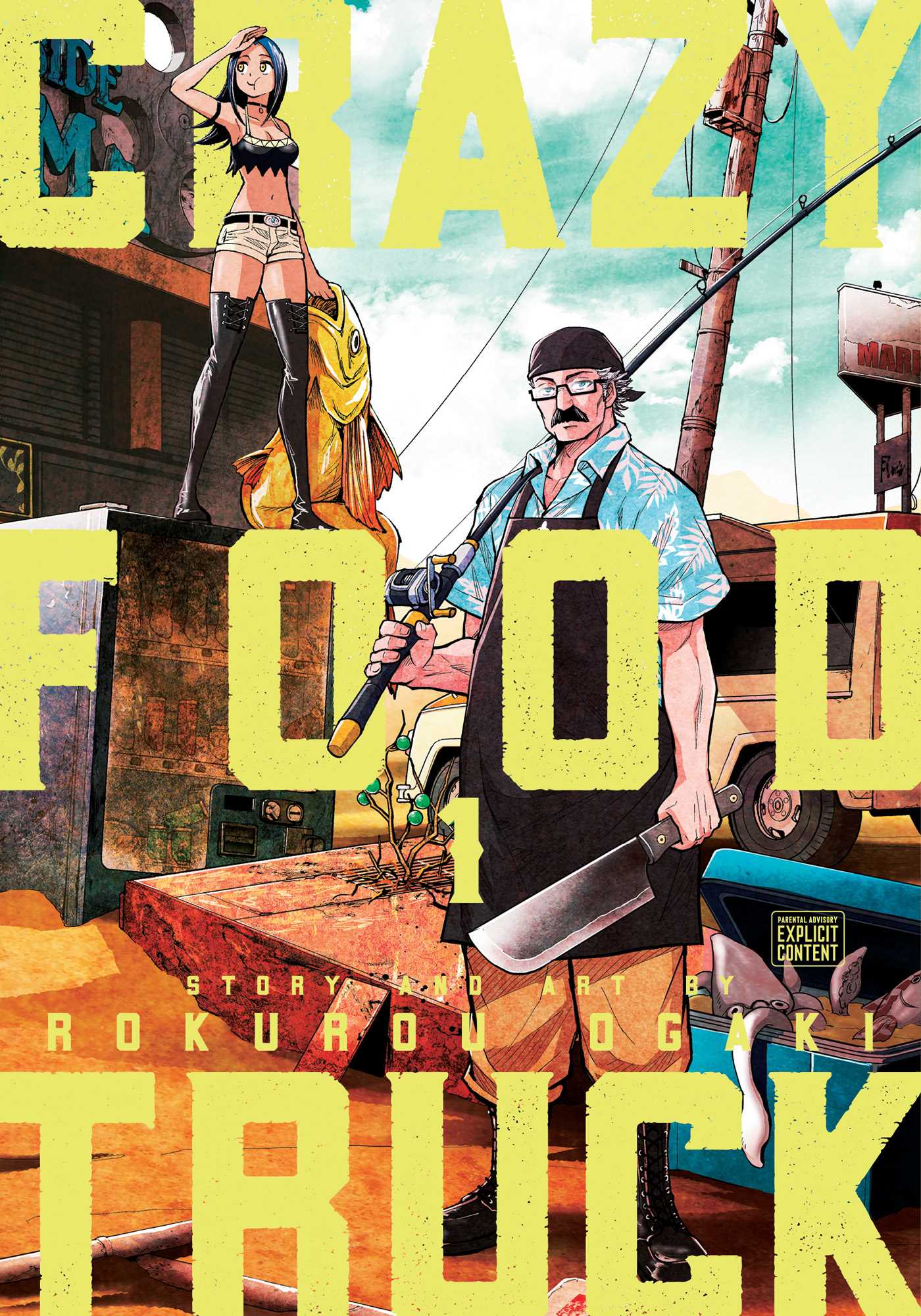
Worst Manga I Thought I’d Love: Crazy Food Truck
By Rokurou Ogaki • Translated by Amanda Haley • VIZ Media
On paper, Crazy Food Truck sounded like a blast, a cross between Mad Max: Fury Road and The Great Food Truck Race. In practice, however, Crazy Food Truck was surprisingly dull, serving up fight sequences as unimaginative as the food its hero serves his few paying customers. The central joke might be funnier if Gordon’s menu was so good that people would risk life and limb for his gourmet sandwiches, but when a BLT with mustard is his signature dish, it seems more like a failure of imagination than a real attempt at humor, especially when creator Rokurou Ogaki frequently reminds us that Gordon has mounted a cannon on top of his truck to ward off bad guys. Gordon’s sidekick Anisa is a one-note character, inserted into the narrative primarily for fan service that’s so indifferently executed it’s hard to muster any outrage over her penchant for nudity. I have no doubt this series rocked some reader’s world, but I found it flavorless. (Reviewed at The Manga Critic on 6/7/22)

Worst Manga I Read in 2022: Rooster Fighter
By Sou Sakuratani • Translated by Jonah Mayahara-Miller • VIZ Media
Rooster Fighter is a disappointment: the premise is too slight to sustain a long series, the script is strenuously unfunny, and the storylines are numbingly predictable. In every chapter, the nameless hero wanders into a new town, antagonizes and befriends the locals in equal measure, then kills a grotesque demon that’s been terrorizing the community. About the only good joke in whole series is how the rooster kills demons; anyone who’s lived on or near a farm will enjoy a rueful laugh or two at the hero’s superpower. Otherwise, this series is a total Cock-a-Doodle-Don’t. (Reviewed at Manga Bookshelf on 8/16/22)

Filed Under: Manga, Manga Critic, Recommended Reading, REVIEWS Tagged With: Bad Manga, BEST MANGA, Denpa Books, Drawn & Quarterly, First Second, Gundam, Hayao Miyazaki, Hijiki Isoflavone, Hitoshi Ashinano, Jun Mayuzuki, Kodansha Comics, Seven Seas, Yamada Murasaki, yen press

Emma Dreams of Stars: Inside the Gourmet Guide

October 9, 2022 by Katherine Dacey

Before Yelp! and Open Table made it easy to find a good restaurant, you had two options: consult your local newspaper’s Arts & Leisure section, or buy a guidebook that ranked and sorted joints by price, cuisine, decor, and service. Zagat’s, for example, offered pithy, sometimes withering, assessments of restaurants that were capped by a starred rating, while The Fearless Critic used a ten-point scale that resembled the scoring system for a gymnastics meet. The most trusted—in the US, at least—was the Forbes Travel Guide, which employed an army of undercover critics to evaluate hotels and restaurants, and rank them on a scale from “average” to “one of the best in the country”. Though different in tone and format, all three owed a debt to a much older publication: The Michelin Guide, which was introduced in 1900.

The Guide was the brainchild of Édouard and André Michelin, founders of the Michelin Tire Company. At the time their booklet debuted, France was just beginning to embrace the automobile; the brothers hoped that distributing free copies might encourage people to buy their first car, as the Guide contained a wealth of information for the would-be motorist, including maps, auto repair tips, and lists of hotels, garages, restaurants, and attractions. In the 1920s, the Guide introduced its first rating system, eventually settling on a scale of one to three stars. The Guide also began hiring anonymous male inspectors to visit restaurants and hotels around Europe, reasoning that the nature of the job—travelling solo for weeks at a time—made it impossible for a woman to perform.

Enter Emmanuelle Masionneuve, who joined the Guide almost 100 years after Michelin introduced its star system. Masionneuve had an unusual path to becoming an inspector, training first as a lawyer and journalist before pivoting into the culinary industry. After working for three France’s most esteemed chefs—Michael Bras, Alain Ducasse, Alain Passard—she decided to put her food expertise to the ultimate test by auditioning for the Michelin Guide. Emma Dreams of Stars: Inside the Gourmet Guide, co-written with Julia Pavlowitch and illustrated by Kan Takahama, tells Masionneuve’s story.

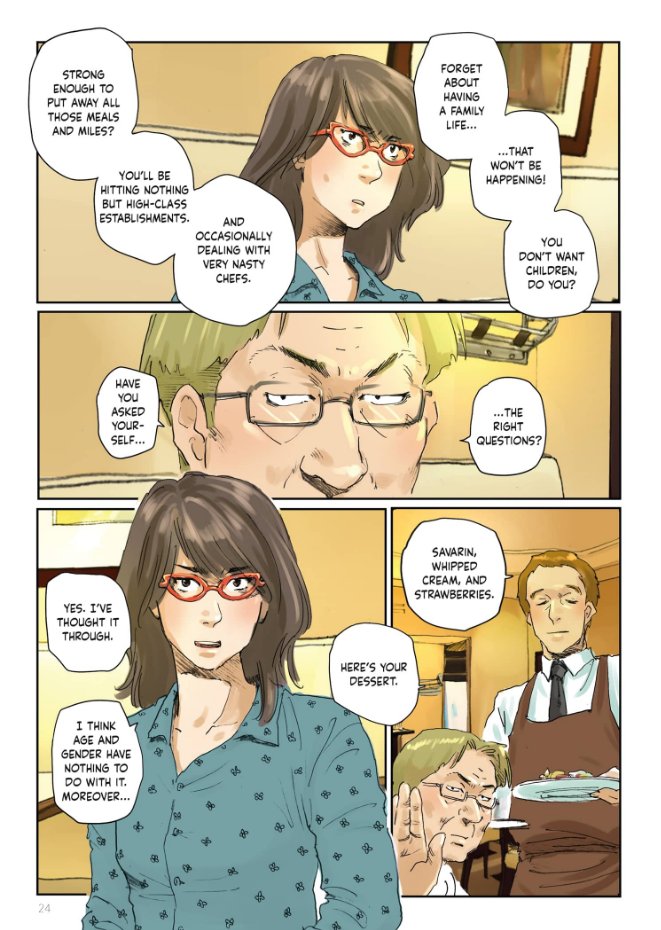
In the early chapters, Emma functions both as a character and a reader surrogate. We follow Emma through every stage of her training, from her initial interview to her first solo trip, along the way gleaning interesting tidbits about how inspectors maintain their anonymity, interact with chefs and hoteliers, and avoid heartburn. (Eating rich meals all day isn’t all it’s cracked up to be.) Emma Dreams of Stars also explores Maisonneuve’s efforts to navigate the stuffy male culture of the Michelin Guide, where she’s reminded on a daily basis that she’s the only woman inspector. Though most of her male peers are collegial, she feels the weight of being a trailblazer, worrying that even the smallest mistake will jeopardize her future with the Guide.

Of course, Emma Dreams of Stars is also a story about French cuisine, and that front, the authors deliver exceptionally well. Throughout the book, there are lengthy discussions about the merits of various cheeses and wines, as well as numerous soliloquies extolling the virtue of simply prepared dishes, locally sourced ingredients, and regional specialties. Artist Kan Takahama does an expert job of rendering the food, using a soft palette that captures the texture and presentation of each meal in life-like detail. The same is true of her backgrounds; every setting demonstrates similar attention to light, pattern, and color, making it easy for the reader to feel the atmosphere of every restaurant and hotel that Emma visits, from a chic Parisian cafe to a dim but cozy rural pub.

Whenever the shop talk threatens to stop the story in its tracks, Takahama breaks up the stream of chatter by breaking the flow of her tight, orderly grids. Characters burst out of the frame, allowing us to more fully appreciate their enthusiasm and resolve. As these panels demonstrate, Takahama has a great talent for faces, working in a naturalistic style that’s reminiscent of Naoki Urasawa; Takahama imbues each one of her characters with an individuality that speaks volumes about their age and experiences, as well their taste in food and wine.

Though Takahama’s artwork is stellar throughout the book, there are a few passages where the authors didn’t fully trust the images to tell Emma’s story, most notably when depicting her strained relationship with Thomas, her long-term boyfriend. The two never meet in person, but exchange increasingly tense voice mails and text messages that reveal just how much Thomas resents Emma’s growing independence. Takahama’s artwork does a great job of showing us how conflicted Emma feels, but the authors saddle these moments with heavy-handed voice overs that spell out what the reader can readily grasp from Emma’s facial expressions and body language: she’s determined to have a meaningful career on her own terms, even if that means leaving Thomas behind.

If these moments feel a little forced, Emma’s interactions with other female foodies do not. In one particularly delightful chapter, for example, the Guide dispatches Emma to the Côte Vermeille, where a chance encounter with Natalie, a local vinegar maker, leads Emma to a lively farm-to-table bistro on the outskirts of town. As Natalie and Emma chat about the terroir–the secret ingredient in Natalie’s concoctions–we can see how their expertise and enthusiasm helps them form an immediate bond; by the time they arrive at the restaurant, they’re chatting like old friends.

The same spirit of mutual respect animates Emma’s interactions with another culinary expert: Kanami, a travel guide who leads Emma through a whirlwind tour of Tokyo. Kanami explains the origins of particular dishes, challenges the Michelin rating for a famous restaurant, and takes Emma to the Tsukiji Market to see how local fishmongers transform enormous tuna into delicate morsels. Emma is humbled by the depth and breadth of Kanami’s knowledge, and vows to return to Japan so that she can “keep learning and growing.” By the time I finished Emma Dreams of Stars, that’s how I felt, too. I was reminded of how little most of us know about the food we eat, and pledged to develop a deeper, more thoughtful relationship with the meals I prepare, and the dishes I enjoy. Recommended.

EMMA DREAMS OF STARS: INSIDE THE GOURMET GUIDE • BY EMMANUELLE MAISONNEUVE AND JULIA PAVLOWITCH • ART BY KAN TAKAHAMA • TRANSLATED BY EAMON FOGARTY • KODANSHA COMICS • NO RATING • 192 pp. 


Filed Under: Manga, Manga Critic, Recommended Reading, REVIEWS Tagged With: Cooking and Food, Kan Takahama, Kodansha Comics

The Best Manga You’re Not Reading: Venice

March 2, 2018 by Katherine Dacey

Venice — one of the last projects Jiro Taniguchi completed before his death in 2017 — is perhaps the most beautiful work he produced, a paean not only to the great Italian city, but to his own superb command of light, color, and line. Rendered in watercolor and ink, Venice‘s subtle palette and expansive treatment of the page are reminiscent of Taniguchi’s Guardians of the Louvre, while its premise recalls The Walking Man, Furari, and The Solitary Gourmet, three manga in which an unnamed male character strolls through the thoroughfares and byways of a major city, stopping to admire a blossoming tree or duck into an unassuming noodle shop.

Taniguchi makes an agreeable guide to Venice, frequently pausing to luxuriate in the very places that a visitor would find most charming: an outdoor marketplace filled with fruit and vegetable vendors, a moonlit promenade dotted with strolling couples, a faded but elegant hotel. Though Taniguchi renders these locations with the utmost precision, his most striking images are of canals and harbors. He captures the play of light on water with the same authority as a great maritime painter like Homer Winslow, using a watercolor palette of greens, blues, grays, blacks, and pinks to pinpoint the time of day and weather, as well as the tide — a small but potent reminder of Venice’s precarious relationship with the sea.

Though framed as a travelogue, Venice also explores similar thematic terrain as Taniguchi’s A Distant Neighborhood. Like the protagonist of Neighborhood, the Venetian wanderer is a middle-aged man making sense of his family’s past, a quest triggered by the discovery of a small lacquer box among his late mother’s possessions. A single image — a photo of a dapper Japanese couple feeding pigeons at the San Marco Piazza — leads him to Venice, where he retraces the couple’s steps. Taniguchi handles the mystery in an elegant fashion, eschewing pointed dialogue or voice-overs in favor of evocative imagery: a sepia-toned portrait of a family, a hand-drawn postcard of the Grand Canal. By focusing on these artifacts, Taniguchi provides just enough information for the reader to figure out who this young couple was without baldly explaining what drove them apart; only a brief inscription on the back of a postcard suggests the length and anguish of the couple’s separation.

These temporal shifts in the narrative are echoed in the way Taniguchi draws Venice itself. On several pages, for example, Taniguchi shows us familiar Venetian streetscapes as they looked in the 1930s, when the mystery couple lived there. On other pages, Taniguchi achieves a similar effect through the juxtaposition of the traditional with the modern: kayakers bob alongside gondoliers, floating past Renaissance merchants’ grand homes, while the mouth of the Canal de la Galeazze frames the arrival of a giant cruise ship. (In a nice touch, Taniguchi tracks the ocean liner’s stately progress over several panels, allowing us to appreciate its enormous size and sleek lines.) Even the most prosaic scenes emphasize the degree to which Venetians’ daily routines are shaped by its lengthy history; we see young children in baseball jackets sipping water from a fountain built in the 17th century and dog walkers chatting in the shadow of Venice’s great Campanille, unawed or unaware of these landmarks’ significance.

And while such sensuous images are fundamental to Venice‘s appeal, Taniguchi does more than recreate Venice’s great architecture; he conveys the rhythms and emotions of a journey, the experience of savoring new places while realizing in the moment that the place where you stand will be different the next time you visit. He evokes the curious sensation of déjà vu you experience in an unfamiliar city, as you see small elements of your own life reflected in the way that strangers live theirs. And he conveys the profound sense of discovery that comes from visiting a place that holds significance for a parent, lover, or friend, as you see the landscape through their eyes for the first time. That Taniguchi evokes these emotions primarily through the artful use of color and detail, rather than character development or dialogue, is testament to the depth of his artistry. Highly recommended.

For more insight into Venice, I encourage you to watch this brief video in which Taniguchi discusses the genesis of the story, and how he created some of the book’s most arresting images:

VENICE • BY JIRO TANIGUCHI • FANFARE/PONENT MON • NO RATING • 128 pp. 

Filed Under: Manga, Manga Critic, Recommended Reading, REVIEWS Tagged With: Fanfare/Ponent Mon, Jiro Taniguchi, Louis Vuitton, Venice

The Best Manga You’re Not Reading: Star Wars

December 29, 2017 by Katherine Dacey

I was five years old when Star Wars: A New Hope blasted its way into movie theaters. Like most members of Generation X, the film cast a long shadow over my childhood, dictating my Halloween costumes, afterschool play, Happy Meal purchases, toy collections, and clothing; I had Princess Leia action figures, Star Wars drinking glasses, Star Wars t-shirts, and a Star Wars beach towel. One of the few tie-in products I didn’t own, however, was a comic book adaptation of the movie. I’d purchased The Star Wars Storybook at a Scholastic book fair in 1978, but never knew that Marvel Comics or manga publishers were peddling something similar.

That’s a pity, because Star Wars has a long and fascinating history in print. Marvel’s six-issue adaptation of A New Hope, for example, was cooked up by a Lucasfilm executive to drum up business for the film — in essence, it was a trailer for comic geeks, arriving on newsstands a month before the movie opened. Though Marvel executives had been reluctant to license Star Wars — according to former editor Jim Shooter the “Prevailing Wisdom” at Marvel was that “science fiction doesn’t sell”  — it proved one of the company’s best business decisions of the 1970s. “The first two issues of our six issue adaptation came out in advance of the movie,” Shooter observed:

Driven by the advance marketing for the movie, sales were very good. Then about the time the third issue shipped, the movie was released. Sales made the jump to hyperspace. Star Wars the movie stayed in theaters forever, it seemed. Not since the Beatles had I seen a cultural phenomenon of such power. The comics sold and sold and sold. We reprinted the adaptation in every possible format. They all sold and sold and sold.

By contemporary standards, Roy Thomas and Howard Chaykin’s version is skillful but a little stodgy, relying on voice-overs to introduce key characters and explain plot points, rather than allowing the art to shoulder the responsibility of telling the story. Nonetheless, as Star Wars fever crossed the Pacific, Weekly Shonen Magazine republished Thomas and Chaykin’s comic, touching off a Star Wars manga blitz in Japan.

Japan caught Star Wars fever again in 1997, when the Special Edition trilogy hit theaters across the globe. Kadokowa’s MediaWorks division churned out a new set of Star Wars manga, hiring Hisao Tamaki (A New Hope), Toshiki Kudo (The Empire Strikes Back), and Shin-Ichi Hiromoto (Return of the Jedi) to handle the adaptations. And while all three are good, faithfully reproducing the main beats from each film, Tamaki’s version of A New Hope is that rarest of tie-in products: it captures the look and feel of the movie without slavishly copying it, offering both a fresh perspective on a canonical text and a point of entry for someone wholly unfamiliar with Star Wars. 

Part of what makes Tamaki’s version so fascinating is how he compensates for the absence of a soundtrack — no mean feat, given how noisy the Star Wars universe is. While Tamaki uses plenty of hand-lettered sound effects, he never uses them as a crutch, instead finding nifty ways to help us imagine the sound of a landspeeder skimming the desert floor or a Stormtrooper firing his blaster. Tamaki’s most effective tactic is careful attention to the velocity and direction of moving objects; through deft placement of speedlines and artful manipulation of the panels’ shape and size, he conveys the same information that a well engineered roar, squeak, thud, or electronic rumble might.

Then there’s the film’s lush, Wagnerian score, the kind of movie music that had been fashionable in the era of Ben Hur and Lawrence of Arabia but was considered unhip in the gritty, naturalistic world of early 70s cinema. The opening fanfare and dense web of leitmotifs are unquestionably part of A New Hope‘s appeal, goosing fight scenes and capturing the melancholy of a young Luke Skywalker as he gazes at a Tatooine sunset. Absent those musical prompts, however, Tamaki is forced to think about how to elicit the same emotions in words and pictures. One of the most dramatically successful attempts to bridge sound and silence occurs in volume one of Tamaki’s adaptation, right after R2D2 and C3PO land on Tatooine:

In the film, John Williams accompanies C3PO’s trek with music cribbed from The Rite of Spring — a decent choice, as Stravinsky’s dour ostinati and octatonic harmonies imbue the harsh landscape with an otherworldly quality. Tamaki, however, distills this two-minute scene to an evocative two-page spread in which a wide-angle view of the Tatooine desert unfolds beneath the individual panels, reminding us just how small and vulnerable both droids are. These images track closely with Lucas’ own vision, but the implied silence of the first and final panels in this sequence more powerfully conveys C3PO’s isolation than any musical gesture could:

The absence of sound has another unexpected benefit: minus the actors’ desperate attempts to make George Lucas’ dialogue sound… well, like conversation, the script has more room to breathe. Tamaki plays the earnest stuff straight and ramps up the comedy whenever someone is surprised or indignant. Luke, in particular, benefits from such an approach, given his age and naivete; in Tamaki’s hands, he’s Monkey D. Luffy with a lightsaber, freaking out over chores, the Millennium Falcon’s shabby appearance, Obi-Wan Kenobi’s death, a kiss from Princess Leia… you get the idea. Tamaki’s elastic deformations of Luke’s face transform him from blandly handsome farm boy to Shonen Jump hero, equal parts brave and ridiculous:

One of the manga’s other great virtues is its ability to expand and contract time in ways that a purely temporal medium like film can’t. The ability to speed up and slow down the unfolding the plot isn’t unique to comics, of course; filmmakers can use slow motion imagery or cross-cutting to manipulate the viewer’s perception of time, but a good manga artist takes advantage of the fact the reader can, in fact, stop time by poring over an image or a scene for minutes, savoring small but telling details that would otherwise get lost in the cinematic flow. Writing for Animerica in 2004, Patrick Macias offered a thoughtful explanation of how this kind of creative expansion of time adds new layers of meaning to Tamaki’s story:

It is in Tamaki’s take on destruction of the planet Alderaan that he really shows off his stuff. A scene that took mere moments to depict on-screen is drawn out to fill half a dozen pages. He inserts images of the Alderaan populace looking up to the heavens, and you can almost hear those “millions of voices suddenly crying out in terror” with more dramatic impact in the manga than in the film.

Of course, none of this would matter if Tamaki lacked the precision to bring Lucas’ vision to life on page. Again and again, Tamaki delivers amazingly detailed drawings of space ships, aliens, and weapons that pulse with the same life as Katsuhiro Otomo’s AKIRA and Shirow Masamune’s Ghost in the Shell; if you’d never seen or heard of Star Wars, you might reasonably infer that Tamaki dreamt up this world on his own. Tamaki proves equally adept at staging deep space dogfights, too, conveying both the dizzying speed with which the ships are moving and the maze-like surface of the Death Star:


For readers coming to the manga from the films, the biggest stumbling block will be the character designs: did Tamaki get them right? The short answer is yes, if you can tolerate a little artistic license with hairdos and body types. Not surprisingly, R2D2 and C3PO look most like their big-screen counterparts — no pesky noses or mouths to draw — but the rest of the cast bear a passing-to-strong resemblance to the actors who portrayed them, though Obi-Wan Kenobi looks and moves more like Chuck Norris than Sir Alec Guiness. Tamaki does an even better job of bringing Darth Vader and his Stormtroopers to life on the page, adding an extra touch of menace in the way he draws their helmets; you can almost see the soldiers grimacing under their plastic armor from the way he draws their browlines.

If I’ve sold you on manga Star Wars, you’ll be happy to know it’s a relatively inexpensive way to relive the original trilogy. The digital versions — currently available through Amazon and ComiXology — retail for $1.99 per volume. There’s also a Phantom Menace manga for the morbidly curious; Kia Asamiya is the author, and he’s been given the truly thankless task of condensing that stinker into two volumes. At least it won’t be as interminable as the movie.

WORKS CONSULTED

Macias, Patrick. “Star Wars, The Manga.” Animerica, VIZ LLC, 7 Apr. 2004, https://web.archive.org/web/20040407180902/http://www.animerica-mag.com/features/starwars.html. Accessed 27 Dec. 2017.

Rickard, Ron. “Retro Foreign: Japanese Weekly Shōnen Magazine #18 – 23 (1978).” Star Wars Comic Collector, 20 May 2016, http://swcomiccollector.blogspot.com/2016/05/retro-foreign-japanese-weekly-shonen.html. Accessed 27 Dec. 2017.

Shooter, Jim. “Roy Thomas Saved Marvel.” Jim Shooter, 5 July 2011, https://web.archive.org/web/20150912134444/http://www.jimshooter.com/2011/07/roy-thomas-saved-marvel.html. Accessed on 28 Dec. 2017.

Spellman, Ron. “A Long Time Ago: The Strange History of Marvel’s Original Star Wars Universe.” Comics Alliance, Townsquare Media, 28 Jan. 2016, http://comicsalliance.com/original-marvel-star-wars-comics-history/. Accessed 28 Dec. 2017.

Tamaki, Hisao. Star Wars: A New Hope, adapted from an original script by George Lucas, Marvel Comics, 1998. 4 vols.

Filed Under: Manga, Manga Critic, Recommended Reading, REVIEWS Tagged With: Dark Horse, Hisao Tamaki, Kadokawa, Marvel Comics, star wars

The Manga Critic’s Guide to Jiro Taniguchi

February 11, 2017 by Katherine Dacey


Word of Jiro Taniguchi’s death spread quickly this afternoon via Twitter and Facebook. It was a sobering moment for American fans; most of us imagined that he was only one great series away from mainstream recognition in the U.S., and eagerly hoped that his next release — whatever it might be — would wow new readers and make bank. Alas, the only appreciation we may see is in the value of his older, rarer titles like Icaro (a collaboration with French artist Moebius) and Samurai Legend (a collaboration with Kan Furuyama).

Manga lovers who haven’t yet discovered Taniguchi’s skill may be surprised to learn just how versatile and prolific he was. He leaves behind a rich assortment of historical dramas, hard-boiled crime thrillers, samurai swashbucklers, alpine adventures, food manga, and coming-of-age stories. As an introduction to Taniguchi’s sizeable oeuvre, I’ve compiled a list of my favorite titles, as well as a complete list of Taniguchi’s work in English.

Benkei in New York
With Jinpachi Mori • VIZ Media • 1 volume
Originally serialized in Big Comic Original, Benkei in New York focuses on a Japanese ex-pat living in New York. Like many New Yorkers, Benkei’s career is best characterized by slashes and hyphens: he’s a bartender-art forger-hitman who can paint a Millet from memory or make a killer martini. Benkei’s primary job, however, is seeking justice for murder victims’ families. Part of the series’ fun is watching him set elaborate traps for his prey, whether he’s borrowing a page from the Titus Andronicus playbook or using a grappling hook to take down a crooked longshoreman. Though we never doubt Benkei will prevail, the crackling script, imaginatively staged fight scenes, and tight plotting make Benkei in New York Taniguchi’s most satisfying crime thriller. – Reviewed at The Manga Critic on 3/20/12

A Distant Neighborhood
Fanfare/Ponent Mon • 2 volumes

A Distant Neighborhood is a wry, wistful take on a tried-and-true premise: a salaryman is transported back in time to his high school days, and must decide whether to act on his knowledge of the past or let events unfold as they did before. We’ve seen this story many times at the multiplex — Back to the Future, Peggy Sue Got Married — but Taniguchi doesn’t play the set-up for laughs; rather, he uses Hiroshi’s predicament to underscore the challenges of family life and the awkwardness of adolescence. (Hiroshi is the same chronological age as his parents, giving him special insight into the vicissitudes of marriage, as well as the confidence to cope with teenage tribulations.) Easily one of the most emotional, most intimate stories Taniguchi’s ever told. – Reviewed at The Manga Critic on 2/23/11

Furari
Fanfare/Ponent Mon • 1 volume

One part Walking Man, one part Times of Botchan, this elegant collection of stories focuses on Ino Tadataka (1745-1818), the cartographer responsible for the first complete map of Japan’s coastline. We meet Tadataka shortly before he embarks on the arduous task of surveying the main island. As we follow him through the parks and streets of Edo, we realize that Tadataka is consumed with measuring; he makes mental note of every step he takes, calculating and re-calculating his routes. That’s a slender premise on which to hang a manga, but Taniguchi’s fine eye for detail transforms Tadataka’s daily walks into an immersive experience, capturing the energy, light, and sounds of the eighteenth century cityscape in all its vitality. These walks are so vividly drawn, in fact, that you could read Furari in blissful ignorance of Tadataka’s identity and still find it utterly engrossing.

Guardians of the Louvre
NBM/Comics Lit • 1 VOLUME

Guardians of the Louvre has a simple premise: a Japanese artist dreams about the world’s most famous museum. In each chapter, our unnamed protagonist is temporarily transported to a particular place and time in the Louvre’s history, rubbing shoulders with famous artists, witnessing famous events, and chatting with the Nike of Samothrace, who chaperones him from exhibit to exhibit. The set-up provides Taniguchi with a nifty excuse to draw rural landscapes, gracious country manors, war-ravaged cities, and busy galleries, as well as convincing recreations of Van Gogh and Corot canvasses. If the story lacks the full emotional impact of A Zoo in Winter or A Distant Neighborhood, the gorgeous, full-color illustrations and deluxe presentation make Guardians a natural gateway for exploring Taniguchi’s work. – Reviewed at The Manga Critic on 1/6/17

Hotel Harbour View
With Natsui Sekikawa • VIZ Media • 1 volume

The two stories that comprise Hotel Harbour View are among the pulpiest in the Taniguchi canon. In the first, a man waits in a seedy Hong Kong bar for the person who’s supposed to kill him, while in the second, an assassin returns to Paris for a showdown with his former associates. Both stories can be enjoyed as simple exercises in hard-boiled crime, but attentive readers will appreciate Taniguchi and Sekikawa’s sly nods to film noir, yakuza flicks, and the French New Wave. The characters in both stories self-consciously behave like gangsters and molls, trading quips and telling well-rehearsed stories about their pasts; they even wear fedoras, a sure sign that they’re reliving their favorite moments from the silver screen. A mirrored shoot-out is the highlight of the volume, demonstrating Taniguchi’s crisp draftsmanship and mastery of perspective. – Reviewed at The Manga Critic on 1/14/11

Kodoku Gourmet
With Masayuki Qusumi • JManga • 1 volume*

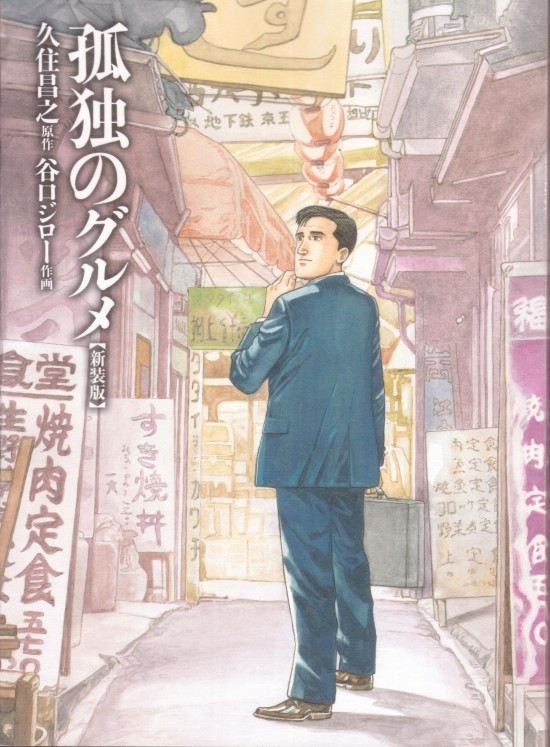
If you’re a fan of Kingyo Used Books, you may remember the chapter in which Japanese backpackers shared a dog-eared copy of Kodoku no Gourmet (a.k.a. The Lonely Gourmet) in order to feel more connected to home. Small wonder they adored Gourmet: its hero, Goro Inoshigara, is a traveler who devotes considerable time and energy to seeking out his favorite foods wherever he goes. While the manga is episodic  — Goro visits a new restaurant in every chapter — Jiro Taniguchi does a wonderful job of conveying the social aspect of eating, creating brief but vivid portraits of each establishment: its clientele, its proprietors, and, of course, its signature dishes. Best of all, Taniguchi and writer Masayuki Qusumi have the good sense to limit the story to a single volume, allowing the reader to savor Goro’s culinary adventures, rather than ponder its very slight premise. – Reviewed at The Manga Critic on 5/24/12

The Summit of the Gods
With Yumemakura Baku • Fanfare/Ponent Mon • 5 volumes

On June 8, 1924, British explorer George Mallory started up the summit of Mt. Everest, never to be seen again. His disappearance drives the plot of The Summit of the Gods, a pulse-pounding adventure in which two modern-day climbers retrace Mallory’s steps up the Northeast Ridge, searching for clues to his fate. Although the drama ostensibly focuses on Fukumachi, a hard-charging photographer, and Habu, a tough-as-nails mountaineer, the real star of Summit is Everest. Taniguchi captures the mountain’s danger with his meticulous renderings of rock formations, glaciers, and quick-changing weather patterns, reminding us that Everest is one of the remotest places on Earth; at the top of the world, no one can hear you scream. – Reviewed at The Manga Critic on 10/12/2009

The Times of Botchan
With Natsuo Sekikawa • Fanfare/Ponent Mon •  5 volumes**

In The Times of Botchan, Natsuo Sekikawa and Jiro Taniguchi immerse readers in the tumult of the Meiji Restoration. Novelist Soseki Natsume (Botchan, I Am a Cat) functions as our de facto guide, introducing us to the suffragettes, anarchists, novelists, poets, and politicians whose struggle helped create modern Japan. Taniguchi invests small details with great meaning, using them to reveal the characters’ ambivalent relationship with the West; some embrace European dress, others flatly reject it, and most, like Natsume, strike a compromise, combining a yukata with a button-down shirt and bowler hat. Though Sekikawa’s script is not as nimble as Taniguchi’s artwork, the series leaves a vivid impression nonetheless, offering modern readers a window into Natsume’s world. – Reviewed at The Manga Critic on 5/19/2010

Venice
Fanfare/Ponent Mon • 1 volume

Venice — one of the last projects Jiro Taniguchi completed before his death in 2017 — is perhaps the most beautiful work he ever produced, a paean not only to the great Italian city, but to his own superb command of light, color, and line. Rendered in watercolor and ink, Venice‘s subtle palette and expansive treatment of the page are reminiscent of Taniguchi’s Guardians of the Louvre, while its premise recalls The Walking Man, Furari, and The Solitary Gourmet, three manga in which an unnamed male character strolls through the thoroughfares and byways of a major city, stopping to admire a blossoming tree or duck into an unassuming noodle shop. Taniguchi does more than recreate the Venetian landscape, however; he conveys the rhythms and emotions of a journey as the hero retraces his grandparents’ steps through 1930s Venice. – Reviewed at The Manga Critic on 3/2/18.

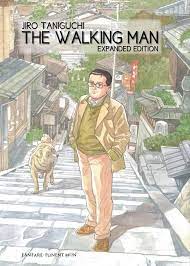
The Walking Man
Fanfare/Ponent Mon • 1 volume

This nearly wordless manga follows an ordinary man through his daily routines. He walks his dog; he swims laps at the pool; he retrieves a model airplane from a tree. In less capable hands, the sheer lack of conflict would result in a dull comic, but Taniguchi invests these activities with meaning by interrupting them with moments of simple beauty: a rare bird alighting on a branch, a rooftop view of a neighborhood in spring bloom. Though we learn very little about the protagonist — he remains nameless throughout the story — his capacity for noticing and savoring these details becomes a small act of heroism, a conscious effort to resist the indifference, complacency, and impatience that blinds us to our surroundings and dulls our imaginations.

A Zoo in Winter
Fanfare/Ponent Mon • 1 volume

Drawing on his own experiences, Jiro Taniguchi spins an engaging tale about a young man who abandons a promising career in textile design for the opportunity to become a manga artist. Though the basic plot invites comparison with Bakuman, Taniguchi does more than just document important milestones in Hamaguchi’s career: he shows us how Hamaguchi’s emotional maturation informs every aspect of his artistry — something that’s missing from many other portrait-of-an-artist-as-a-young-man sagas, which place much greater emphasis on the pleasure of professional recognition than on the satisfaction of mastering one’s craft. Lovely, moody artwork and an appealing cast of supporting characters complete this very satisfying package.  —Reviewed at The Manga Critic on 5/28/11

* * * * * *

Below is a complete list of Jiro Taniguchi’s manga in English. Please note that I’ve provided the publication information for the English translations, not the original Japanese editions. This list was last updated on August 28, 2023 to include several books that have been released since 2017.

As Artist and Author

  • Taniguchi, Jiro. A Distant Neighborhood. Fanfare/Ponent Mon, 2009. 2 vols.
  • Taniguchi, Jiro. Furari. Fanfare/Ponent Mon, 2017. 1 vol.
  • Taniguchi, Jiro. Guardians of the Louvre. NBM/Comics Lit, 2016. 1 vol.
  • Taniguchi, Jiro. The Ice Wanderer and Other Stories. Fanfare/Ponent Mon, 2010. 1 vol.
  • Taniguchi, Jiro. A Journal of My Father, Fanfare/Ponent Mon, 2021. 1 vol.
  • Taniguchi, Jiro. The Quest for the Missing Girl. Fanfare/Ponent Mon, 2010. 1 vol.
  • Taniguchi, Jiro. Sky Hawk. Fanfare/Ponent Mon, 2019. 1 vol.
  • Taniguchi, Jiro. Venice. Fanfare/Ponent Mon, 2017. 1 vol.
  • Taniguchi, Jiro. The Walking Man. Fanfare/Ponent Mon, 2007. 1 vol.
  • Taniguchi, Jiro. A Zoo in Winter. Fanfare/Ponent Mon, 2011. 1 vol.

As Artist

  • Boilet, Frederic and Jiro Taniguchi. Tokyo Is My Garden. Fanfare/Ponent Mon, 2010. 1 vol.
  • Furuyama, Kan and Jiro Taniguchi. Samurai Legend. Central Park Media, 2003. 1 vol.
  • Moebius and Jiro Taniguchi. Icaro. IBooks, 2003-2004. 2 vols.
  • Mori, Jinpachi and Jiro Taniguchi. Benkei in New York. VIZ Media. 2001. 1 vol.
  • Qusumi, Masayuki and Jiro Taniguchi. Kodoku Gourmet.  JManga, 2012. 1 vol.*
  • Sekikawa, Natsuo and Jiro Taniguchi. Hotel Harbour View. VIZ Media, 2001. 1 vol.
  • Sekikawa, Natsuo and Jiro Taniguchi. The Times of Botchan. Fanfare/Ponent Mon, 2007-2010. 5 vols.**
  • Yumemakura, Baku and Jiro Yaniguchi. The Summit of the Gods. Fanfare/Ponent Mon, 2009-2015. 5 vols.

*This title was only released digitally through the JManga platform.

**This series is incomplete in English; the complete Japanese edition spans 10 volumes.

Filed Under: Manga, Manga Critic, Recommended Reading Tagged With: Fanfare/Ponent Mon, Jiro Taniguchi, JManga, NBM/Comics Lit, VIZ

The Best and Worst Manga of 2015

January 6, 2017 by Katherine Dacey

After a two-year hiatus from blogging, I donned my critic’s cap again in 2015. I’ve enjoyed writing my quasi-weekly column, but composing a year-end list reminded me why I stepped off the reviewing treadmill in 2012: mediocre books! This year yielded a veritable bumper crop of so-so manga, titles that were competently executed but otherwise unmemorable thanks to an abundance of generic characters, cliché settings, and predictable plot twists; you’d be forgiven for feeling that you’d read many of 2015’s debuts before, even if the artists were new to the US market.

Lurking among the paint-by-number romances and boy-saves-world titles, however, were a few gems. I’ve done my best to highlight the titles that made me feel something, whether that feeling was love, hate, or a mixture of both. To that end, I’ve included my nominees for the worst manga of 2015 alongside the books that made me laugh and cry.

Yowamushi-Pedal-Volume-1Best New Series: Yowamushi Pedal
By Wataru Watanabe • Yen Press
You know the rap on sports manga: American readers won’t buy it, and don’t like it. Yowamushi Pedal might just change that, however, thanks to a story that plays well across the nerd-jock divide. Onoda, the hero, is a self-professed otaku whose weekly bike rides into Akihabara have transformed him into a secret Lance Armstrong clone. Though Onoda wants to revive his school’s anime club, his amazing hill-climbing skills and stamina get noticed by more seasoned riders, all of whom convince Onoda to join the cycling team. The series’ races are nail-biting, page-turning affairs, but it’s the in-between stuff that makes Yowamushi Pedal work. Onoda doesn’t just discover a new skill; he discovers a community of people who share his passion for riding and respect his talent. In short, Yowamushi Pedal is a coming-of-age story in which a bike becomes the nerdy hero’s vehicle—pun intended—for self-actualization.

One-Punch ManBest New Shonen Series: One-Punch Man
By ONE and Yusuke Murata • VIZ Media
One-Punch Man is the ultimate have-your-cake-and-eat-it-too manga. On the surface, it’s an affectionate spoof of shonen clichés that pokes fun at goofy costumes, over-the-top training sessions, and speech-prone villains. On a deeper level, however, One-Punch Man is a great adventure series about an ordinary but strong-willed individual who sets out to rid his city of monsters, only to discover that there’s a much greater threat to mankind than the lobster-men and were-lions that roam the streets. The result is a sincere, gut-bustingly funny manga that reads like a Silver Age superhero comic, splats and all.

Horimiya_cover1Best New Romance Manga: Horimiya
By Hero and Daisuke Hagiwara • Yen Press
Horimiya is one of 2015’s most pleasant surprises, a teen rom-com that avoids cliché situations by focusing on the characters’ lives outside school. At first glance, its lead characters look like opposites: Kyouko is the class queen, while Izumi is a quiet loner. When they bump into each other off campus, however, they quickly realize they have more in common than their carefully constructed identities would suggest–a realization that leads to friendship and flirtation. In less imaginative hands, Kyouko and Izumi’s budding romance would be subjected to endless tests–school plays, beach trips, hot transfer students–but the authors resist the urge to trot out these over-used scenarios, relying instead on more ordinary settings for comedic (and dramatic) grist. It’s the perfect antidote to the wacky misunderstandings that drive the plots of Cactus’ Secret, Special A, and a dozen similar titles.

Cat_DiaryBest New Gag Manga: Junji Ito’s Cat Diary: Yon & Mu

By Junji Ito • Kodansha Comics
Draw a Venn diagram that shows the overlap between Junji Ito fans and cat lovers, and you’ve found the small but perfect audience for Junji Ito’s Cat Diary, a collection of anecdotes about Ito’s beloved pets Yon and Mu. Though the manga’s jokes explore familiar terrain, Ito’s exaggerated reaction shots are priceless, capturing the mixture of love and disgust that cats inspire in their owners. (Imagine Edvard Munch drawing a gag manga about cats, and you get the general idea.) Ito is refreshingly honest about the way animals change the dynamic between people, too; in some of the manga’s most memorable scenes, Ito and his fiancée compete fiercely for their cats’ affection, plying Yon and Mu with toys, treats, and cuddles. Though the prevailing tone is campy, Ito’s obvious affection for his cats helps prevents the Diary from becoming too arch.

ludwig_kansiBest Historic Title: Ludwig B.
By Osamu Tezuka • DMP, Inc.
Left unfinished at the time of Osamu Tezuka’s death, Ludwig B. is a fictionalized biography of Beethoven. Tezuka only completed two volumes, but oh, those two volumes! Tezuka draws evocative scenes of Beethoven at the keyboard, using striking visual metaphors to convey the sound of Beethoven’s music. Tezuka also does a good job of capturing the dynamic between Beethoven and his father, revealing the extent to which Johann’s drinking, gambling, and stage-parenting cast a long shadow over Beethoven’s adult life. Purists should note that Tezuka takes frequent liberties with the historical record, creating a mustache-twirling villain named Franz Kreuzstein to serve as a foil for the young, determined Beethoven. If you’re not offended by such creative license, however, Ludwig B. offers an interesting glimpse into Beethoven’s development as a composer, and Tezuka’s lifelong fascination with Beethoven.

planetesBest Reprint Edition: Planetes
By Makoto Yukimura • Dark Horse
Listen up, manga publishers: if you’re going to do a new edition of a fan favorite, Dark Horse’s two-volume omnibus of Planetes is a swell example of how to do it right. The story has a crisp new translation, full-color pages, and a bigger trim size that gives Makoto Yukimura’s artwork room to stretch out. Better still, the new edition collects more chapters in each volume, allowing newcomers to read far enough into Planetes for Yukimura’s episodic character studies to gel into a more coherent story about space travel and social inequality; by the time newbies reach the end of volume one, they’ll be hooked, too.

sakamotoBest Manga I Thought I’d Hate: Haven’t You Heard? I’m Sakamoto
By Nami Sano • Seven Seas
In theory, Haven’t You Heard? I’m Sakamoto is a one-note samba: the titular character is handsome, good at everything, and unfailingly logical in all situations. In practice, however, Haven’t You Heard? is the Goldberg Variations of gag manga, taking stock scenes and putting a bizarre twist on them. The secret? Sakamoto is just a little too perfect, behaving more like a well-programmed android than a flesh-and-blood person. His peculiar brand of sangfroid confounds enemies and admirers alike; no one can decide if he’s cool or crazy, or where his loyalties might lie, making it impossible to predict how he’ll respond to each new challenge.

jojo_phantom_blood1Worst Manga I Thought I’d Love: JoJo’s Bizarre Adventure, Part 1: Phantom Blood

By Hirohito Araki • VIZ Media
At the risk of becoming the Armond White of manga critics, I’m nominating Hirohito Araki’s bone-crunching, chest-thumping saga for Most Exhausting New Series of 2015. That’s because Phantom Blood is a prime example of all-caps theater, the sort of manga in which every word balloon is filled with emphatic punctuation, and every plot twist seems like the brainchild of six teenage boys hopped up on Mountain Dew. In small doses, this more-is-more approach to storytelling can be amusing, but in longer installments, the cumulative effect of so much narrative excess is numb resignation; I didn’t feel entertained so much as punched in the face. (Reviewed at Manga Blog on 5/22/15.)

mizuki_hitlerMost Disappointing Manga: Shigeru Mizuki’s Hitler
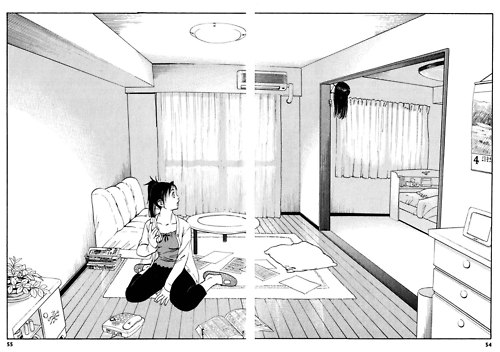
By Shigeru Mizuki • Drawn & Quarterly
Shigeru Mizuki’s Hitler is one of the artist’s lesser works, uncomfortably see-sawing between character study and history lesson in its efforts to show us the man behind the Third Reich. Mizuki’s signature blend of cartoonish figures and photo-realistic backgrounds have been deployed to powerful effect in Non Non Ba and Onwards Towards Our Noble Deaths. Here, however, Shigeru’s hybrid style is a poor match with the subject; seeing Hitler reduced to a crude caricature makes it all too easy to view the book as a curiosity, rather than a serious meditation on evil. The virtual absence of the Holocaust is an even greater shortcoming; Shigeru Mizuki’s Hitler never grapples with the Fuhrer’s most disturbing legacy save for one blurry image of stacked corpses. Perhaps Mizuki felt the subject was too complex to explore in this biography, but it’s hard to imagine any dramatization of the Fuhrer’s life that fails to examine his virulent anti-Semitism.

* * * * *

So what are other folks saying about 2015’s best titles? My Manga Bookshelf colleagues just posted their Pick of the Year, with Ash Brown posting a separate, more detailed run-down of his favorite titles at Experiments in Manga. At the B&N Sci-Fi & Fantasy Blog, Brigid Alverson has posted separate lists for her favorite new and continuing series.

This article originally appeared at MangaBlog on December 30, 2015.

Filed Under: Classic Manga Critic, Manga, Manga Critic, Recommended Reading Tagged With: BEST MANGA, Dark Horse, DMP, Drawn & Quarterly, Osamu Tezuka, Seven Seas, VIZ, yen press

The Best Manga You’re Not Reading: Mail

October 20, 2012 by Katherine Dacey

Have spirit gun, will travel — that’s the basic plot of Mail, a three-volume collection of ghost stories penned by Kurosagi Corpse Delivery Service illustrator Housui Yamazaki. Like Kurosagi, Mail follows a spook-of-the-week formula, pausing occasionally to fill us in on the personal life of its chief exorcist, Detective Reiji Akiba. Akiba initially presents as a Columbo-esque figure, disarming clients with his rumpled coat and penchant for napping on the job, but his true nature is soon revealed in the first story: he’s handy with Kagutsuchi, his trusty pistol, and unflappable in the presence of the undead.

As we learn over the course of the series, Akiba was born blind. Medicine restored his sight, but with a side effect: he began seeing dead people. After years of living in fear of ghosts, Akiba learned to perform exorcisms with Kagutsuchi, a skill he parlayed into a career as a modern-day onmyoji.

If Akiba’s strategies for assisting his clients are decidedly hi-tech — websites, cellphones, GPS devices, bullets — the stories have a pleasantly old-fashioned quality to them. Some are morality plays; in “The Doll,” for example, a toy becomes the vessel for a hit-and-run victim to bring her killer to justice. Others read more like good campfire tales; in “Suppressed,” for example, a young woman begins receiving mysterious calls from a “friend” who’s en route to her home, the last of which appear to be originating from inside her apartment. Still others draw on urban legend for inspiration; “Ka-tsu-mi,” the fifth chapter in the series, focuses on a girl who dies after accidentally photographing a ghost.

I’d be the first to admit that Yamazaki is not a master of suspense. Though Mail is filled with suitably gruesome imagery and creative variations on oft-told ghost stories, the reader is never in doubt about Akiba’s ability to save his clients. The endings have a sameness that becomes more apparent when reading them back-to-back, as Akiba’s only method for banishing the undead is to fire Kagutsuchi. And while Akiba demonstrates remarkable sangfroid when confronting murdered babies, vengeful lovers, and drowning victims, his undeniable coolness doesn’t quite compensate for the predictability of the denounements.

What Mail lacks in suspense it makes up in atmosphere. Yamazaki shows considerable flair for turning ordinary urban environments into unbearably scary places, whether he’s depicting an empty public bathroom or a high-rise building. In one of Mail‘s best stories, for example, a woman receives a letter urging her to move out of her apartment right away. Shortly after reading the letter, she catches glimpse of something moving along the ceiling of the adjacent room:

Though we’re outside the picture plane, viewing the action from a different angle than the hapless apartment dweller, we don’t have any more information about what’s lurking in the other room than she does; Yamazaki is relying on the reader to guess what might be crawling along the ceiling by planting one suggestive detail.

The other thing that makes this image so unsettling is the very mundaneness of the setting. With its square rooms and bland furnishings, this scene could be unfolding in almost any Tokyo neighborhood, in almost any modern apartment complex. (Add a parquet floor, and it could just as easily be taking place in any postwar building in Manhattan.) More unsettling still is that this scene is taking place in broad daylight, not at night; whatever is haunting the apartment isn’t relying on the camouflage of darkness, but is sallying forth at a time of day when spirits are supposed to be hidden and, more importantly, impotent.

Not all of the stories take place in Tokyo; several unfold in the countryside. Mail is at its best in urban settings, however, as the very nature of city living gives Yamazaki ample material to work with, whether he’s spinning a cautionary tale about the anonymity of modern life or simply reflecting on the myriad layers of history buried underneath new roadways and buildings. As a life-long city-dweller, I found stories such as “The Drive” — which takes place on an urban freeway — “The Elevator” — which takes place in a stalled elevator car — and “Hide-and-Seek” — which takes place in a haunted apartment — among the spookiest in the collection, as they tapped into a deep well of fear that all urban folk share: that cities harbor something even bigger and scarier than crime, high property taxes, or gridlock.

MAIL, VOLS. 1-3 • BY HOUSUI YAMAZAKI • DARK HORSE • RATING: OLDER TEEN/MATURE

Filed Under: Manga, Manga Critic, Recommended Reading, REVIEWS Tagged With: Dark Horse, Horror/Supernatural, Housui Yamazaki

The Best Manga You’re Not Reading: Suki

July 26, 2012 by Katherine Dacey

The brilliant sociopath, the hooker with the heart of gold, and the naïf are my three least favorite character types, the first two for their tiresome ubiquity in popular culture, and the third for being tiresome: when was the last time you read a story about a sweet, innocent person that didn’t make you feel horribly manipulated or horribly jaded? Imagine my surprise, then, at discovering CLAMP’s delightfully odd series Suki: A Like Story, which revolves around a brilliant but impossibly naive teenager who trusts everyone, reads picture books, and talks to teddy bears. I thought I’d be tearing my breast in agony by the end of the first chapter; instead, I quickly succumbed to Suki‘s charms and even suppressed a sniffle or two in the final pages.

Suki succeeds, in large part, because the supporting cast has the same reaction to sixteen-year-old Hinata Asashi as the reader. Hina’s boundless enthusiasm endears her to best friends, Touko and Emi, though both roll their eyes at her inability to read social cues or grasp ulterior motives. Touko, in particular, is keen to protect her pal; as we learn in the second volume of the series, Hina has been kidnapped nine — count ’em — times over the course of her short life. (Hina’s dad is rich and willing to pay ransom for the safe return of his daughter.) Though an ordinary person might be deeply scarred by such experiences — or least more suspicious of strangers — Hina remains cheerful and oblivious to signs that a tenth abduction might be in the works.

Those signs include a string of odd coincidences: the long-vacant house next to Hina’s is suddenly occupied by a handsome young man who just happens to be Hina’s new homeroom teacher, Shiro Asou. Shiro just happens to be around whenever Hina is in need of an escort, or rescuing. And Shiro just happens to conduct clandestine meetings when the class goes on field trips. The ever-vigilant Touko quickly suspects the worst, but Hina interprets Shiro’s gruff yet solicitous behavior as concern, and develops a chaste crush on her sensei.

Watching Hina come to terms with her feelings is a painful but believable process. At first, she revels in any opportunity to spend time with Shiro, whether they’re raking leaves or walking home from school. Later, she begins to see parallels between their relationship and the relationship between two characters in a favorite picture-book series. (More on the series-within-a-series gambit in a minute.) In the final chapters of the book, Hina develops a more realistic idea of who Shiro is, eventually telling him how her feelings have evolved from youthful naivete to adult maturity. “At first, I fell in love with you because you did so many things I loved,” she confesses. “But from now on, Asou-san… whatever you do for yourself… I’ll love you for that.”

That Hina’s epiphany is facilitated, in part, by reading a children’s book may strike some readers as hopelessly twee. Suki — the name of the story-within-a-story — isn’t subtle; using bears as surrogates for Hina and Shiro, Suki charts the budding friendship between a small, chatty bear and her large, bespectacled neighbor. The parallels between the main plot and the story-within-the-story are obvious, but they serve an important purpose, reminding us that Hina is struggling to reconcile new, adult feelings with her decidedly child-like worldview.

Art-wise, Suki: A Like Story is one of CLAMP’s simplest — one might even say plainest — series. Tsubaki Nekoi’s style is much less Baroque than her cohorts’; she favors ordinary street clothes over epaulets and garter belts, and more realistic physiques over exaggerated shoulders and sharp chins. By shedding the fanciful trappings, Nekoi focuses the reader’s attention on faces, allowing us to fully register how each character is feeling. Nowhere is that more evident in the way Nekoi draws Touko. Touko is by far the most mature girl at Hina’s school, and the one most attuned to signs of adult malfeasance. Though Touko voices her concerns, the sadness in her face reveals a level of understanding that might be rooted in her own experiences, not just Hina’s:

Though Hina has a much more innocent personality than Touko, Nekoi resists the temptation to draw Hina as a child; Hina is clearly meant to be a teenager, given her size and athleticism. Hina’s transparent facial expressions, wide-eyed enthusiasm, and sudden, darting movements, however, hint at the discrepancy between her chronological and emotional ages; she bounces and skips and claps her way through the story, reacting with intense glee at even the briefest exchange with Shiro:

The art isn’t perfect by any means. Shiro’s proportions, for example, often look wrong: he has a tiny head and an enormous frame, and is so much taller than the other characters that he’d be NBA draft material in real life. Suki, the book-within-a-book, is also problematic. It’s quite possibly the dullest picture book I’ve read, a series of simple drawings accompanied by large, undifferentiated blocks of text. I certainly wasn’t expecting Sylvester and the Magic Pebble (or A Kiss for Little Bear), but the flat, unimaginative illustrations make it harder for the reader to imagine why someone Hina’s age would find the story so compelling:

Perhaps the most interesting thing about Suki is that Hina’s realistic coming-of-age story is embedded within a thriller. The suspenseful elements of Suki are handled with skill and restraint, even if they are a wee bit ridiculous. (OK, a lot ridiculous: who allows their frequently kidnapped sixteen-year-old daughter to live alone with her teddy bears?!) The few action scenes are brief but crisply executed, adding some much-needed variety in tone and pacing to the story. If the ending is a little too tidy, CLAMP avoids the trap of pandering to the reader’s expectations of what should happen; there’s a note of melancholy in that final scene, joyous though Hina may be.

Readers curious about Suki: A Like Story won’t have too much difficulty tracking down used copies on eBay or Amazon; the complete series will set you back about $20-30.

SUKI: A LIKE STORY, VOLS. 1-3 • BY CLAMP • TOKYOPOP • RATING: TEEN (13+)

Filed Under: Manga, Manga Critic, Recommended Reading, REVIEWS Tagged With: clamp, Suki, Tokyopop

7 Mouth-Watering Food Manga

May 24, 2012 by Katherine Dacey

When Khursten Santos announced that this month’s Manga Movable Feast would be… well, a feast, that provided me with a swell excuse to highlight my favorite food manga. I attribute my interest in the genre to my brief but intense infatuation with Iron Chef in the mid-2000s. I had always found cooking shows uninteresting: why watch someone make a cake or a roast when I already knew how to do that? Iron Chef, however, reimagined the cooking show as a tournament manga with an identifiable cast of characters who faced new and increasingly difficult challenges each week. Presiding over the competition was a flamboyant “villain” — the one and only Chairman Kaga — who was capricious and extravagant, demanding his contestants turn asparagus and ayu into ice cream and amuse-bouche. I can’t say I learned how to prepare any dishes from watching Iron Chef, but I came to appreciate the Iron Chefs’ creativity and combat-readiness.

When I discovered that there were manga that looked and sounded like an episode of Iron Chef, I was ecstatic. I read Iron Wok Jan and Yakitate!! Japan before discovering more sedate forms of food manga: Antique Bakery, Kitchen Princess, Mixed Vegetables. I gradually lost interest in the melodramatic pageantry of Iron Chef, but not in Japanese cuisine. I’ve been expanding my culinary horizons through manga instead, tackling anything with a food theme. Which ones reign supreme in Manga Critic Stadium? Read on for the list!

7. Ekiben Hitoriabi
By Kan Sakurai and Jun Hayase • JManga • 2 volumes+ (incomplete in English)
If you need definitive proof that there’s a manga for every conceivable niche audience, look no further than Ekiben Hitoritabi, a charming series about a train bento enthusiast. Yes, you read that right: Ekiben Hitoritabi follows the exploits of Daisuke Nakahara, a thirty-five-year-old man whose greatest ambition is to sample the boxed lunches served at train stations around Japan. The story is as relaxed and meandering as Daisuke’s journey, as he transfers from one line to the next in search of the country’s best — and most exotic — ekiben. Slight as the story may be, the authors’ meticulous attention to detail and obvious fondness for train travel carry the day, making this manga both fun and educational. Now if only Amtrak would investigate ekiben… I’d take a fish cake over microwave pizza any day.

6. Neko Ramen
By Kenji Sonishi • Tokyopop • 4 volumes (complete)
If you’ve ever lived with a cat or dog, you know that no meal is complete without a pet hair garnish. Now imagine that your beloved companion actually prepared your meals instead of watching you eat them: what sort of unimaginable horrors might you encounter beyond the stray hair? That’s the starting point for Neko Ramen, a 4-koma manga about a cat whose big dream is to run a noodle shop, but author Kenji Sonishi quickly moves past hair balls and litter box jokes to mine a richer vein of humor, poking fun at his cat cook’s delusions of entrepreneurial grandeur. Taisho is the Don Quixote of ramen vendors, dreaming up ludicrous giveaways and unappetizing dishes in an effort to promote his business, never realizing that he is the store’s real selling point. The loose, sketchy artwork gives the series an improvisational feel, while the script has the pleasant, absurdist zing of an Abbott and Costello routine. (Reviewed at The Manga Critic on 6/2/10.)

5. Yakitate!! Japan
By Takhashi Hashiguchi • VIZ Media • 26 volumes (complete)
Kazuma Azuma is a boy with a dream: to create a bread so beloved by the Japanese people that it becomes synonymous with the country itself. Though he lacks formal training, he’s a prodigy in the kitchen, blessed with “hands of the sun” (a.k.a. hands warm enough to jump-start the dough’s rising) and a jazz musician’s knack for improvisation. These skills land him at the modest South Tokyo branch of Pantasia, a popular chain of bakeries. There, alongside the loud-mouthed apprentice Kyosuke Kawachi, the cute but steely manager Tsukino Asuzagawa, and the bread master Ken Matsushiro, he hones his craft, develops new Ja-pan prototypes, and enters countless bake-offs. (In other words, Yakitate!! Japan is One Piece with pastry.) The series does, at times, sag under the weight of repetition — how many death-defying baking competitions can one boy win? — but its mouth-watering concoctions, colorful cast, and impromptu science lessons ensure that every volume has a least one or two outstanding chapters. (Reviewed at PopCultureShock on 3/7/07)

4. Kodoko no Gourmet
By Masayuki Qusumi and Jiro Taniguchi • JManga • 1 volume (complete)
If you’re a fan of Kingyo Used Books, you may remember the chapter in which Japanese backpackers shared a dog-eared copy of Kodoku no Gourmet (a.k.a. The Lonely Gourmet) in order to feel more connected to home. Small wonder they adored Gourmet: its hero, Goro Inoshigara, is a traveler who devotes considerable time and energy to seeking out his favorite foods wherever he goes. While the manga is episodic  — Goro visits a new restaurant in every chapter — Jiro Taniguchi does a wonderful job of conveying the social aspect of eating, creating brief but vivid portraits of each establishment: its clientele, its proprietors, and, of course, its signature dishes. Best of all, Taniguchi and writer Masayuki Qusumi have the good sense to limit the story to a single volume, allowing the reader to savor Goro’s culinary adventures, rather than ponder its very slight premise.

3. Gokodou Meshi
By Shigeru Tsuchiyama • JManga • 2 volumes+ (incomplete in English)
Gokudou Meshi revolves around a contest: once a year, the residents of Naniwa South Prison describe the best food they’ve ever eaten. The prisoner with the most mouth-watering story wins an item from each of his fellow inmates’ osechi, a special New Year’s Eve box filled with fish, rice cakes, omelettes, and other holiday treats. As one might expect from such a conversation-driven series, Gokudou Meshi is told primarily through flashbacks, with each prisoner recounting a memorable meal or favorite noodle shop. Such an improbable premise lends itself to sitcom exaggeration, but author Shigeru Tsuchiyama plays it straight, respecting the sincerity of his thugs’ culinary convictions. The results read like cross between a Damon Runyon story and a Food Network Show; one could almost imagine Nicely-Nicely Johnson waxing poetic with the Naniwa gang about the hot dogs at Saratoga.

2. Not Love But Delicious Foods Make Me So Happy!
By Fumi Yoshinaga • Yen Press • 1 volumes (complete)
My Dinner With Fumi: that’s what I would have called the English-language edition of Not Love But Delicious Foods Make Me So Happy! The fifteen stories contained within this slim volume celebrate good food and good conversation, documenting Yoshinaga’s interactions with friends, assistants, and fellow artists at real restaurants around Tokyo. No culinary stone goes unturned, as Yoshinaga — or, as her fictional alter ego is called, Y-naga — visits a Korean restaurant, a French bistro, an Italian trattoria, a sushi joint, an all-you-can-eat dim sum buffet, and a bakery famous for its bagels. As the characters chatter enthusiastically about what they’re eating, we realize that Yoshinaga’s real objective is showing us the important role that food plays in fostering friendships. One contentious conversation even prompts the omniscient narrator to praise good food for its diplomatic value: “But through the power of skirt steak, their hearts resumed beating as one,” the narrator observes. In Yoshinaga’s world, detente is just a dish away.  (Reviewed at The Manga Critic on 12/12/10.)

1. Oishinbo a la Carte
By Tetsu Kariya and Akira Hanasaki • VIZ Media • 8 volumes (complete English edition)*
Equal parts Iron Wok Jan, Mostly Martha, and The Manga Cookbook, this educational, entertaining series explores Japanese cuisine at its most refined — sake, seabream sashimi — and its most basic — rice, pub food. The stories fall into two categories: stories celebrating the important role of food in creating community, and stories celebrating the culinary expertise of its principal characters, newspaperman Yamaoka Shiro and his curmudgeonly father Kaibara Yuzan. (Fun fact: Yuzan is such a food snob that he drove Yamaoka’s mother to an early grave, causing an irreparable break between father and son.) Though the competition between Yamaoka and Yuzan yields some elegant, mouth-watering dishes, Oishinbo is at its best when it focuses on everyday food in everyday settings, shedding light on how the Japanese prepare everything from bean sprouts to ramen. Warning: never read on an empty stomach!

* The English edition is an adaptation of the original series, which spans 111 volumes.

* * * * *

So, hungry readers, which food manga are your favorites? Are there food manga you’d like to see translated into English (e.g. Cooking Papa)? Dish away!

Filed Under: Manga, Manga Critic, Recommended Reading Tagged With: Cooking and Food, Manga Movable Feast

  • Page 1
  • Page 2
  • Page 3
  • Go to Next Page »
 | Log in
Copyright © 2010 Manga Bookshelf | Powered by WordPress & the Genesis Framework