If you’ve been jonesing for a stylish thriller that doesn’t take itself too seriously, Eldo Yoshimizu’s Ryuko might just fit the bill: it has the pulpy soul of a Kazuo Koike manga and the brash attitude of a James Bond flick. And while Ryuko never quite achieves the simmering intensity or cohesion of Lady Snowblood and Crying Freeman, it does hold its own against Koike’s best work thanks to its audacious action sequences and cool-as-ice heroine who’ll stop at nothing to avenge her mother’s kidnapping.
Running in tandem with the kidnapping storyline are four —maybe five — other subplots, all connected to the Soviet-Afghanistan war. There’s gun-running and opium harvesting, Soviet malfeasance and CIA chicanery, and some other elements that, frankly, don’t make a lot of sense, though they provide sufficient justification for the imaginatively staged combat. Anyone hoping for a few helpful lines of expository dialogue will be frustrated, as the characters are so laconic they seldom utter more than a few words before throwing a punch or brandishing a gun.
The real star of Ryuko is Eldo Yoshimizu’s artwork, which deftly synthesizes Japanese and European influences without slavishly copying them. His female characters, in particular, have the undulating hips, flowing locks, and determined scowls of Leiji Matsumoto’s most lethal heroines, while the male characters’ appearances owe a debt to the rugged manly-men that stalked the pages of Hugo Pratt, Takao Sato, and Goseki Kojima’s adventure stories. Not surprisingly, Yoshimizu lavishes his greatest attention on Ryuko, swathing her in barely-there dresses and leopard-print catsuits–an artistic decision that makes her look cool, but seems impractical for dodging bullets and karate-chopping enemies.
But oh, Ryuko’s fight scenes! They’re worth the price of admission, as they showcase the full range of Yoshimizu’s talents as a draftsman, veering sharply between naturalism, suggestion, and pure abstraction. In this sequence, for example, we see the young Ryuko ambushing a group of Soviet soldiers:
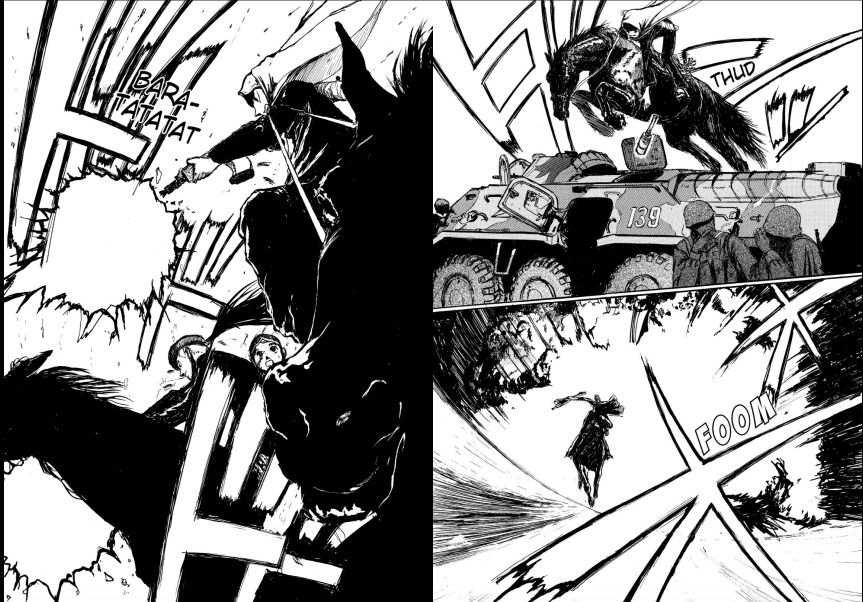
In the first panel, the tank is drawn with utmost specificity, allowing us to appreciate its sheer mass and its weaponry. The subsequent panels, however, are more gestural than the first, as we glimpse Ryuko silhouetted against the explosion, her age and gender completely obscured by the brilliant flash of light behind her. In the final panel of the sequence, Yoshimizu uses two horses to frame the action, rendering them as bold patches of black, with just a suggestion of a nostril and an eye, their demonic appearance echoing Ryuko’s own fierce resolve. Other sequences, such as this one, are even more abstract, dispensing with a grid in favor of fluid, overlapping images; in a particularly effective gambit, Ryuko’s arm forms a kind of panel boundary between the first stage of the attack — a knee to the stomach — and the second, in which she flips and pins her opponent:
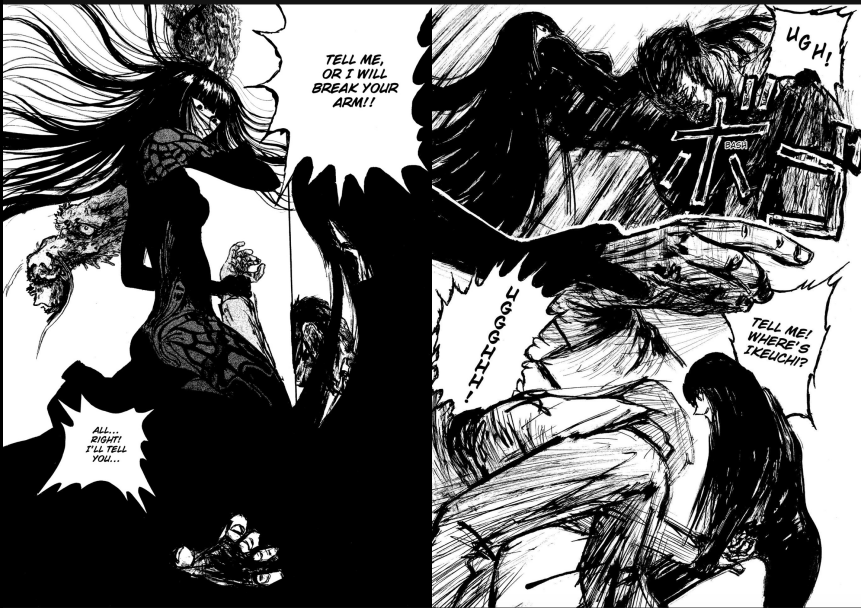
Even Ryuko’s hair plays an important role in helping us understand what’s happening in this confrontation. In the first sequence, her hair swings around her face and shoulders in a naturalistic fashion, but in the final panel, her hair looks like a furious nest of snakes, each poised to strike her victim. That shift is subtle but important, a nifty metaphor for just how quick and lethal Ryuko can be.
For all the verve with which these scenes are drawn, Ryuko‘s characters never quite register as flesh-and-blood people. Yoshimizu has provided them with backstories, but the characters’ behavior is so steeped in action-movie cliche that their motivations for shooting and punching are almost immaterial. The story’s breakneck pacing doesn’t allow anyone much time for introspection, either; the few flashbacks to Ryuko’s childhood separation from her mother are the only genuinely emotional moments in the story. Still, no one reads trashy thrillers for a deep exploration of the human psyche; they’re looking for an over-the-top story that serves up generous helpings of car chases, gun battles, and fist-fights, the more outlandish, the better. On that front, Ryuko performs admirably, infusing a shopworn revenge plot with the sensual swagger of old-school classics like Lady Snowblood and Lupin III. Recommended.
RYUKO, VOL. 1 • ART AND STORY BY ELDO YOSHIMIZU • TRANSLATION BY MOTOKO TAMAMURO AND JONATHAN CLEMENTS • TITAN COMICS • NO RATING (PARTIAL NUDITY, VIOLENCE) • 256 pp.
 Daytime Shooting Star, Vol. 1 by Mika Yamamori
 Komi Can’t Communicate, Vol. 1 by Tomohito Oda
 Snow White with the Red Hair, Vol. 1 by Sorata Akiduki
 That Blue Sky Feeling, Vols. 1-2 by Okura and Coma Hashii
 Will I Be Single Forever? by Mari Okazaki
 Reviewing nineteen volumes of a manga at once is a pretty daunting task, but here goes!
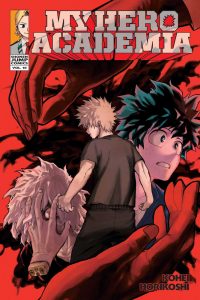 Meanwhile, just as Izuku is the protégé of All Might, All for One had taken a boy under his wing, as well. Tomura Shigaraki is a nihilistic villain with a particular grudge against All Might. He forms the League of Villains and so far has attempted to assassinate All Might at the school, attacked a training camp and kidnapped Bakugo, and ambushed a police caravan in order to steal Quirk-erasing drugs that had been seized from a former ally. While All Might exhausted the remainder of his powers to vanquish All for One, Shigaraki remains an active threat. Because of the power vacuum left by All Might’s retirement, the U.A. first years are able to take their provisional license exams earlier than normal and also go out into the field in work-study capacity.
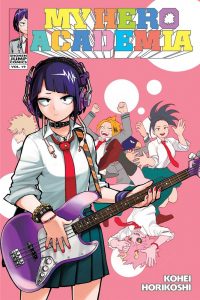 • Shoto Todoroki – He became Izuku’s friend after the Sports Festival, in which Izuku encouraged him to finally embrace the half of his powers that came from his odious dad, #2 hero Endeavor. He’s still got a complex about his dad, but he’s working through it. And, for his part, Endeavor is trying to become a better hero, too, though he’s got a long way to go.
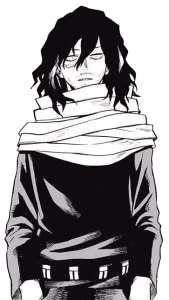 • Shota Aizawa – I saved the best for last. Aizawa is the homeroom teacher for class 1-A and I love him so, so much. He is a great teacher and puts a lot of thought into how best to encourage development in his students. One of my favorite Aizawa moments occurs at a press conference when he expresses absolute faith that Bakugo will not be tempted to join the League of Villains. “More than anyone, he pursues the title of top hero with all he has.” Later, during a home visit with Bakugo’s parents to discuss the new on-campus dormitories, Bakugo’s mom reveals how much she appreciated this proof that her son has been understood by his educators. “Most everything comes easy to him. His whole life, people’ve made a fuss about him… praising him for every little thing he does.” Aizawa sees Bakugo’s potential but also doesn’t let any of his shortcomings slide. I love, too, how he helps take care of Eri and buys her outfits with kitties on them.
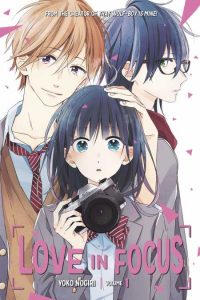 Love in Focus, Vol. 1 by Yoko Nogiri
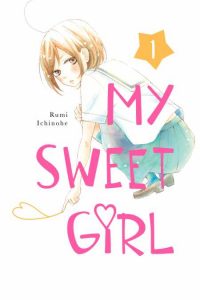 My Sweet Girl, Vol. 1 by Rumi Ichinohe
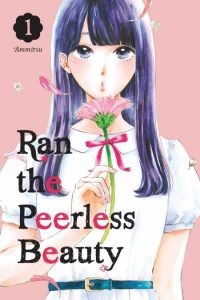 Ran the Peerless Beauty, Vol. 1 by Ammitsu
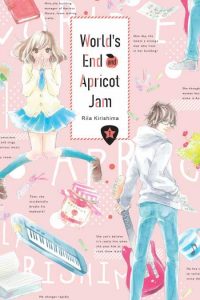 World’s End and Apricot Jam, Vols. 1-2 by Rila Kirishima
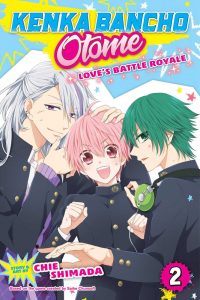 Kenka Bancho Otome: Love’s Battle Royale, Vols. 1-2 by Chie Shimada
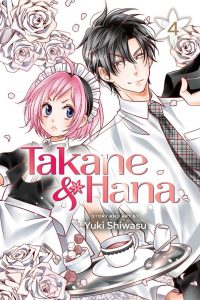 Takane & Hana, Vols. 1-4 by Yuki Shiwasu
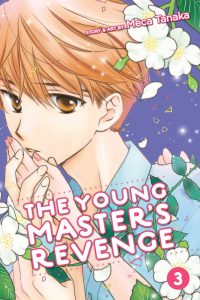 The Young Master’s Revenge, Vols. 1-3 by Meca Tanaka