 In Manga: Sixty Years of Japanese Comics, author Paul Gravett argues that female mangaka from Riyoko Ikeda to CLAMP have often used “the fluidity of gender boundaries and forbidden love” to “address issues of deep importance to their readers.” Taeko Watanabe is no exception to the rule, employing cross-dressing and shonen-ai elements to tell a story depicting the “pressures and pleasures of individuals living life in their own way and, for better or worse, not always as society expects.”
Kaze Hikaru begins in 1863, a period of immense political and social upheaval in Japan, as the ruling class divided into factions loyal to the emperor (whose seat was in Kyoto), and factions loyal to the shogun (whose government was housed in Edo, or present-day Tokyo). Exacerbating the tension between these groups was the looming question of sakoku, or isolationism, a centuries-old policy that was crumbling in the face of military and economic pressure from the West, an unstable currency, and the dawning realization that certain Western technologies might have a role to play in the modernization of Japan. Taeko Watanabe draws on the events of the Bakumatsu (or late shogunate era, 1863 – 1867) for Kaze Hikaru, incorporating real historical figures into the story and dramatizing some of the major and minor conflicts of the period, from the Ikedaya Affair of 1864 to the Shinsengumi’s ambivalence about adopting rifles and canons into the samurai arsenal.
…
 THE FOUR IMMIGRANTS MANGA: A JAPANESE EXPERIENCE IN SAN FRANCISCO, 1904 – 1924
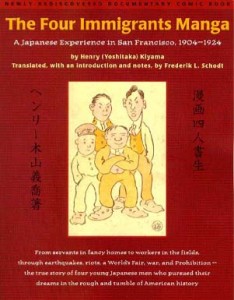 The Four Immigrants Manga
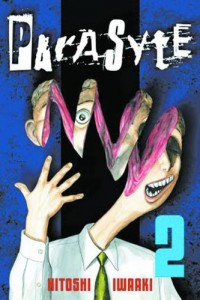 Parasyte
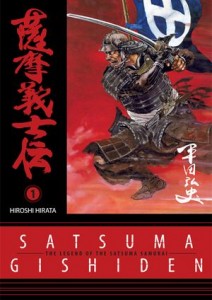 Satsuma Gishiden
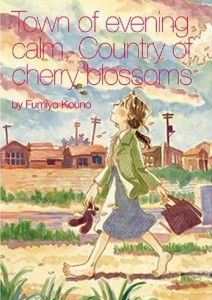 Town of Evening Calm, Country of Cherry Blossoms
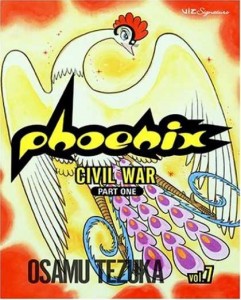 BONUS PICK: Phoenix: Civil War
 About two years ago, I reached a tipping point in my manga consumption: I’d read enough just enough stories about teen mediums, masterless samurai, yakuza hit men, pirates, ninjas, robots, and magical girls to feel like I’d exhausted just about everything worth reading in English. Then I bought the first volume of Taiyo Matsumoto’s No. 5. A sci-fi tale rendered in a stark, primitivist style, Matsumoto’s artwork reminded me of Paul Gauguin’s with its mixture of fine, naturalistic observation and abstraction. I couldn’t tell you what the series was about (and after reading the second volume, still can’t), but Matsumoto’s precise yet energetic line work and wild, imaginative landscapes filled with me the same giddy excitement I felt when I first discovered the art of Rumiko Takahashi, CLAMP, and Goseki Kojima.
 PINEAPPLE ARMY
 The characters in Solanin are suffering from what I call a “pre-life crisis”—that moment in your twenties when you realize that it’s time to join the world of adult responsibility, but you aren’t quite ready to abandon dreams of indie-rock stardom, literary genius, or artistic greatness. From a dramatic standpoint, the pre-life crisis doesn’t make the best material for a novel, graphic or otherwise, as twenty-something angst can seem trivial when compared with the vicissitudes of middle and old age. Yet Asano Inio almost pulls it off on the strength of his appealing characters and astute observations.
 Come for the cat, stay for the cartooning — that’s how I’d summarize the appeal of Chi’s Sweet Home, a deceptively simple story about a family that adopts a wayward kitten. Chi certainly works as an all-ages comic, as the clean, simple layouts do a good job of telling the story, even without the addition of dialogue or voice-overs. But Chi is more than just cute kitty antics; it’s a thoughtful reflection on the joys and difficulties of pet ownership, one that invites readers of all ages to see the world through their cat or dog’s eyes and imagine how an animal adapts to life among humans.
 If someone had told me a week ago that I’d be praising Honey Hunt, I’d have scoffed at them; I’ve never been a big fan of Miki Aihara’s work, thanks to the icky sexual politics of Hot Gimmick!, but her story about a poor little rich girl who seeks revenge on her celebrity parents turned out to be shockingly readable. It isn’t terribly original — the plot mirrors Skip Beat! in its basic outline — nor is its heroine a paradigm of strength and self-sufficiency — she weeps at least once every other chapter — but Honey Hunt is slick, fast-paced, and perfectly calibrated to appeal to a sixteen-year-old’s idea of the glamorous life.
 10. ASTRAL PROJECT
 9. CHIKYU MISAKI
 8. THE NAME OF THE FLOWER
 7. SHIRLEY
 6. KIICHI AND THE MAGIC BOOKS
 5. PRESENTS
 4. GON
 3. FROM EROICA WITH LOVE
 2. SWAN
 1. EMMA
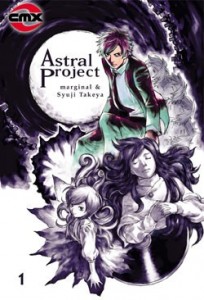 10. Astral Project
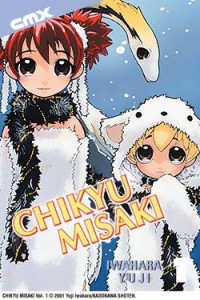 9. Chikyu Misaki
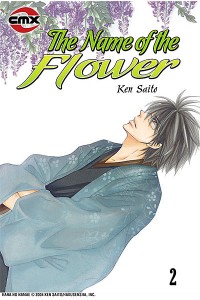 8. The Name of the Flower
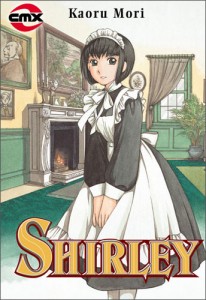 7. Shirley
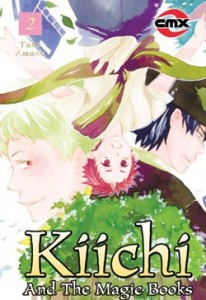 6. Kiichi and the Magic Books
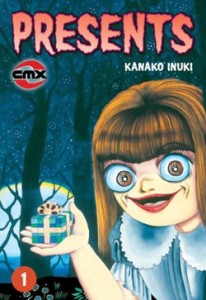 5. Presents
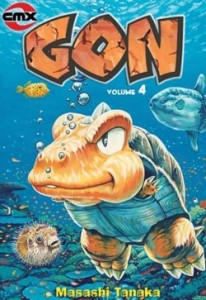 4. Gon
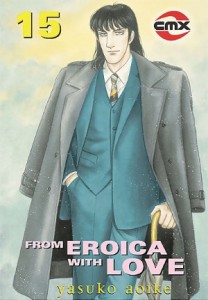 3. From Eroica with Love
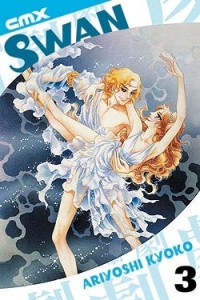 2. Swan
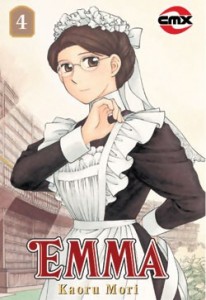 1. Emma