• Skip to primary navigation
  • Skip to main content
  • Skip to primary sidebar
  • Home
  • About Us
    • Privacy Policy
    • Comment Policy
    • Disclosures & Disclaimers
  • Resources
    • Links, Essays & Articles
    • Fandomology!
    • CLAMP Directory
    • BlogRoll
  • Features & Columns
    • 3 Things Thursday
    • Adventures in the Key of Shoujo
    • Bit & Blips (game reviews)
    • BL BOOKRACK
    • Bookshelf Briefs
    • Bringing the Drama
    • Comic Conversion
    • Fanservice Friday
    • Going Digital
    • It Came From the Sinosphere
    • License This!
    • Magazine no Mori
    • My Week in Manga
    • OFF THE SHELF
    • Not By Manga Alone
    • PICK OF THE WEEK
    • Subtitles & Sensibility
    • Weekly Shonen Jump Recaps
  • Manga Moveable Feast
    • MMF Full Archive
    • Yun Kouga
    • CLAMP
    • Shojo Beat
    • Osamu Tezuka
    • Sailor Moon
    • Fruits Basket
    • Takehiko Inoue
    • Wild Adapter
    • One Piece
    • After School Nightmare
    • Karakuri Odette
    • Paradise Kiss
    • The Color Trilogy
    • To Terra…
    • Sexy Voice & Robo
  • Browse by Author
    • Sean Gaffney
    • Anna Neatrour
    • Michelle Smith
    • Katherine Dacey
    • MJ
    • Brigid Alverson
    • Travis Anderson
    • Phillip Anthony
    • Derek Bown
    • Jaci Dahlvang
    • Angela Eastman
    • Erica Friedman
    • Sara K.
    • Megan Purdy
    • Emily Snodgrass
    • Nancy Thistlethwaite
    • Eva Volin
    • David Welsh
  • MB Blogs
    • A Case Suitable For Treatment
    • Experiments in Manga
    • MangaBlog
    • The Manga Critic
    • Manga Report
    • Soliloquy in Blue
    • Manga Curmudgeon (archive)

Manga Bookshelf

Discussion, Resources, Roundtables, & Reviews

Archives for January 2012

Usamaru Furuya Manga Moveable Feast: Roundup One

January 24, 2012 by Ash Brown

© Usamaru Furuya

It’s the first roundup for the Usamaru Furuya Manga Moveable Feast!

On Sunday I posted an introduction to the Feast, which includes a brief biography of Usamaru Furuya and an overview of what to expect at Experiments in Manga this week. Yesterday was My Week in Manga, a regular feature here at Experiments in Manga. I took the opportunity to present quick takes of most of Furuya’s manga available in English as well as some the films in which he has been involved.

Justin of Organization Anti-Social Geniuses wins the prize for being the first and only person other than myself to contribute to the Feast, so far. (At least, that I know of.) Thanks, Justin! Justin reviews No Longer Human, Volume 2, noting that Yozo is a difficult character to really like, but that Furuya’s work is still compelling:

There’s no doubt however that panel after panel [Furuya] continues to make the characters stand out in a way where you will feel a powerful emotion, whether it is dislike or sympathy, and that of course makes the work a solid read every time, along with following Yozo’s story.

The Feast may be off to a slow start, but it is still early in the week. I have high hopes that things will pick up as the Feast progresses. If you know of any Feast content that I have missed, please let me know! I’d like to keep the archive as up to date as possible.

Filed Under: UNSHELVED Tagged With: Manga Moveable Feast, Usamaru Furuya

Jason Thompson on what went wrong with manga

January 24, 2012 by Brigid Alverson

Here’s your must-read manga post of the day: Editor, creator, and all-around manga pundit Jason Thompson pens a thoughtful essay at io9 titled Why Manga Publishing Is Dying (And How It Could Get Better). Jason’s description of the reasons for the decline of manga publishing is impeccable, but I’m not sure I’m on board with his suggestions for improving the picture. Be sure to read the comments for some more pointed criticism.

The Manga Bookshelf bloggers (myself included) discuss their Pick of the Week.

At The Beat, Torsten Adair looks at some of the new manga due out this month.

Attention translator wannabes: The digital manga site JManga is having a translation contest! Do your best translation of a four-koma strip from JManga title Young-kun and send it in, and you could win a copy of the full book plus 1,000 points. You have to have a JManga account to enter, which means you must live in North America.

The competition will be judged by veteran translator William Flanagan, and JManga also has an interview with him in which he talks about the finer points of manga translation.

News from Japan: Crunchyroll has the list of winners of the Shogakukan Manga Awards, with nice cover images and a summary of each one—none are licensed in English yet. Shin Mashiba, creator of Nightmare Inspector: Yumekui Kenbun, is working on a new series set in Kyoto in the Heian era. Utau! Heian-kyō will debut in the March issue of Square Enix’s Monthly G Fantasy magazine. Boys Be… Next Season will come to an end in the Feb. 20 issue of of Kodansha’s Magazine Special.

Reviews: Short takes on new manga are the order of the day in this week’s Bookshelf Briefs column at Manga Bookshelf. At Experiments in Manga, Ash Brown takes a break from hosting the Usumaru Furuya Manga Moveable Feast to present a weeks’ worth of manga reading that, not surprisingly, includes a lot of Furuya’s work.

Erica Friedman on vol. 15 of Hayate x Blade (Okazu)
Kate Dacey on vol. 1 of Hyakusho Kizoku (The Manga Critic)
Victoria Martin on vol. 4 of K-ON! (Kuriousity)
Ken Haley on vol. 1 of Princess Knight (Sequential Ink)

Filed Under: MANGABLOG

Combat Commentary: Belated Introduction

January 24, 2012 by Derek Bown 4 Comments

It occurred to me, after reading Philip’s new column, that I had been remis in my priorities. I should have realized that an introduction was in order, otherwise how could readers know what I was trying to do, let alone who I am. I will rectify that mistake right now.

Most of you probably don’t know me from my blog, Burning Lizard Studios, where I review anime and manga (among other things), though mostly anime, because for some reason I decided reviewing every single series I watched would be a good idea. But since my real love is manga, I’ve been wanting to write more about it. I’ve done a few reviews, and participated in some of the Manga Movable Feasts, but writing about manga is too easy to push to the side when I have episode after episode of unreviewed anime pilling up.

To force myself into writing about manga more often, and because I wanted to expand my audience a bit more, I responded to MJ’s call for contributors. My original idea was to write comparisons between manga and their anime adaptations. I thought that perhaps if I connected what I was already writing about to what I wanted to write about, it would make the transition easier. But that idea was far too similar to an existing column, so I had to think of some new ideas.

It took me a little while, and when I first came up with the idea for Combat Commentary, it was mostly something that I was throwing towards MJwithout much hope that it would be accepted. But, she liked it, and while spending the past month preparing to write this column weekly, I started to fall in love with it too.

The majority of my manga experience comes from shounen manga. I’ve explored shoujo, seinen, and josei a bit, but never found anything that quite caught my attention as much as shounen did. I could go on for a while about why exactly I prefer shounen over other types of manga, but I’d rather simply summarize it: Shounen manga is all about fun.

Most shounen manga (not all) tend not to delve too deep into serious issues. The main purpose is to entertain, and sometimes morality tales are slid in among the pages. I’m not a big fan of drama, though I can appreciate the power a well told tragedy can have. When I read I like to have fun. But not mindless fun, because that is not in my personality, so I tend to overanalyze what I read.

The major genre of shounen—the one most people know it for—is battle manga. The way I look at battle manga is similar to the way I look at a well-written novel. While some seinen series may have deeper characters and a greater focus on storytelling, shounen to me is the graphic medium in its purest form. Rather than rely on a large amount of text, good shounen take full advantage of the form to tell their stories. Most of the story is told with the pictures, and nowhere else is that clearer than during battle scenes.

Letting pictures do the talking is, in my opinion, the purpose of all graphic novels. And because battle scenes rely on pictures to tell the story so much, I consider them to be the heart and soul of shounen manga. Because of this, we can easily tell whether a battle manga is good or bad based on the creator’s skill at rendering battle scenes.

My intent for Combat Commentary is to examine various battle scenes throughout several different shounen (and non-shounen) series and evaluate their effectiveness. The purpose is not to pass judgement on the series as a whole based on the battles, though I do put a great deal of weight on them.

If anyone has any suggestions or requests of series and battles for me to look at, I’d be glad to hear them. As I mentioned in my previous post, I am willing to look at anything, even non-shounen series. While other genres of manga don’t focus on battles as much as many shounen do, my theory is that the skill to draw a good battle scene translates into other areas of creating manga. So I hope that you like my new column, and that I don’t ever run out of battles to review.

Read this week’s Combat Commentary: Bleach, Vol. 2, Ch. 9-12.

Filed Under: UNSHELVED

Combat Commentary: Bleach Vol. 2, Ch. 9-12

January 24, 2012 by Derek Bown 3 Comments

Bleach is similar to Naruto, in that it’s a popular series that has lost a lot of fans in recent years. Like Naruto, there is a tendency for people to dismiss Bleach as another overhyped series that has outstayed its welcome. And this would not be entirely untrue, but again, like Naruto, Bleach would not still exist if it had been a bad series to begin with. So it must have done something right. And as with many shounen manga, the answer lies in one of the most crucial aspects of the genre: its fight scenes.

(click on images to enlarge)

As a monster of the week series, it was essential for Bleach in its early days to capture an audience with interesting villains, and to find ways for those villains to be defeated in a manner that showed off its characters’ strengths and got the reader interested in reading the next chapter. To do this, some writers rely on cliffhangers, or introduce a new element at the end of the story to lead readers on to the next. Bleach, on the other hand, enticed the reader back each week by providing well-contained short stories that stood out on their own.

Chapters 9–12 provide the climax to a completely self-contained story. Instead of introducing a new thread at the very end of the story, Kubo instead finishes it and lets it stand on its own. He banks on the story being well-written and well-received enough that the reader will want to read more, not just because he wants to find out what happens next, but because he anticipates the next story being just as good.

Prior to the final battle, Ichigo’s friend Chad has been running from an unseen enemy. Rukia and Ichigo manage to find him, and engage the enemy (a Hollow) in battle. The scale of the fight is small, but even a more intimate fight can take on real gravitas if the author sets the right stakes. In this case, the stakes are the lives of not only Chad (someone Ichigo has a personal connection to), but also that of a small child. In these chapters, the Hollow reveals that he was a serial killer in real life who died after the child, Yuichi, tripped him off a balcony. As revenge, he’s been tormenting Yuichi with false promises of returning his dead mother.

This Hollow is more distinct than the series’ previous enemies. He is not a mindless monster, consuming souls on instinct alone, nor is he fueled by resentment against a loved one. He is the first real monster that Ichigo encounters as a Soul Reaper—one that was evil, even as a human. He is built up by the narrative only to be hated, which makes his eventual defeat all the more cathartic.

Kubo knows well how to represent motion with his drawings and panel layout. He gives the scene an almost cinematic quality, and unlike in his later work, he wastes no space just for the sake of looking good. Still, he knows when to indulge in a little more space to make particular movements dynamic. Ichigo’s final blow against the Hollow easily ranks among the better final blows in manga. His sword itself is not seen. Instead, the entire focus is on the motion, allowing the reader’s mind’s eye to truly see the motion of the blow.

The downside of this fight is that Kubo robs the Hollow’s “leech bomb” attack of some of its threat by allowing Rukia (who has none of her spiritual powers at this time) to survive two blasts, so that later, when Ichigo is covered with these attacks, there is no real sense of danger. He is in so little danger, one can imagine the HP bar hovering above his head. So even though the vision of Ichigo shoving a handful of leeches into the Hollow’s mouth is the epitome of badass, its effect is weakened by our knowledge that he could have just let the blast go off and would have come out of it, at worst, slightly singed.

Kubo knew what he was doing, early on, when he chose to focus on individual fights with their own mini arcs. His style complemented this “all battles all the time” approach. And chapters 9–12 are prime examples of what Kubo looked like at his best. He knew how to put the right stakes on the line, and even if it was clear that Ichigo would not lose, there was still enough “cool” to keep that lack of danger from dampening the enjoyment of the chapters’ climax.

But even the obvious “plot armor” surrounding Ichigo in this fight only served as set up for the next major confrontation he would face…

Remember to check out the awesomeness that is Derek’s Blog. Burning Lizard Studios.

Filed Under: Combat Commentary, FEATURES

Hyakusho Kizoku, Vol. 1

January 23, 2012 by Katherine Dacey

Drawn in a loose, improvisational style, Hiromu Arakawa’s Hyakusho Kizuko may remind readers of the gag strips that round out every volume of her wildly successful Fullmetal Alchemist. That’s not a knock on Hyakusho, by the way; like her fellow sister-in-shonen Yellow Tanabe, Arakawa’s omake are every bit as entertaining as her more polished stories, offering her a chance to riff on favorite characters, complain about her job, and reflect on her previous career as a dairy farmer.

In Hyakusho Kizuko, however, the focus is squarely on the joys and hardships of farm life, rather than the pressures of bringing a popular comic to press. Arakawa shares humorous anecdotes about her ongoing war with the Hokkaido squirrel, a skilled crop thief, as well as her family’s penchant for using animal medicines to cure their own ailments. She also waxes poetic about the temperament of cows — apparently, they make great pets — and celebrates Hokkaido’s important role in feeding the rest of Japan. (As she notes in chapter seven, Japan’s dependence on imported food would rise from 50% to 80% if Hokkaido stopped supplying the other islands with its agricultural products.)

Arakawa doesn’t neglect her life as an artist; throughout the stories, we see her interact with her editor, who’s decidedly skeptical about the marketability of agricultural manga. “How come you’ve written about poop two chapters in a row?” her exasperated editor asks. “In a farmer’s story, poop is your friend,” Arakawa cheerfully counters. Besides, Arakawa notes, her manga explores other topics: “I also mention cow teats,” she declares.

As these matter-of-fact exchanges suggest, Arakawa is eager to educate Japanese readers about where their food comes from. She drops facts about food consumption, discusses cow bloodlines, decries government interference in dairy production, and describes what happens to animals that don’t contribute to a farm’s bottom line. She does so with a light hand, however, interspersing the more serious discussions about sustainability with sight gags involving wild bears, foolish tourists, and barn cats.

None of these passages would be entertaining (or edifying) were it not for a solid adaptation. I’ve complained in the past about other JManga titles, which sometimes suffered from overly literal translations; witness Otaku-Type Delusional Girl, better known in English as Fujoshi Rumi. Hyakusho Kizuko, however, is a pleasant surprise; the translator has done an excellent job of rendering the text in fluid, conversational English that’s a genuine pleasure to read. In fact, the best compliment I could pay the translator is to note that I actually laughed out loud reading several passages.

I’d be the first to admit that Hyakusho Kizuko won’t be every FMA fan’s idea of a good read; folks who like Arakawa best when she’s staging magical combat may find the information-dense passages too didactic for their tastes. For curious city dwellers, however, Hyakusho Kizuko will be a revelation, offering them an entertaining look at the day-to-day operations of a working farm. Highly recommended.

HYAKUSHO KIZOKU, VOL. 1 • BY HIROMU ARAKAWA • SHINSOKAN PUBLISHING CO., LTD. • 139 pp. • NO RATING

Filed Under: Manga, Manga Critic, REVIEWS Tagged With: Agricultural Manga, Comedy, Hiromu Arakawa, JManga

Hyakusho Kizoku, Vol. 1

January 23, 2012 by Katherine Dacey 16 Comments

Drawn in a loose, improvisational style, Hiromu Arakawa’s Hyakusho Kizuko may remind readers of the gag strips that round out every volume of her wildly successful Fullmetal Alchemist. That’s not a knock on Hyakusho, by the way; like her fellow sister-in-shonen Yellow Tanabe, Arakawa’s omake are every bit as entertaining as her more polished stories, offering her a chance to riff on favorite characters, complain about her job, and reflect on her previous career as a dairy farmer.

In Hyakusho Kizuko, however, the focus is squarely on the joys and hardships of farm life, rather than the pressures of bringing a popular comic to press. Arakawa shares humorous anecdotes about her ongoing war with the Hokkaido squirrel, a skilled crop thief, as well as her family’s penchant for using animal medicines to cure their own ailments. She also waxes poetic about the temperament of cows — apparently, they make great pets — and celebrates Hokkaido’s important role in feeding the rest of Japan. (As she notes in chapter seven, Japan’s dependence on imported food would rise from 50% to 80% if Hokkaido stopped supplying the other islands with its agricultural products.)

Arakawa doesn’t neglect her life as an artist; throughout the stories, we see her interact with her editor, who’s decidedly skeptical about the marketability of agricultural manga. “How come you’ve written about poop two chapters in a row?” her exasperated editor asks. “In a farmer’s story, poop is your friend,” Arakawa cheerfully counters. Besides, Arakawa notes, her manga explores other topics: “I also mention cow teats,” she declares.

As these matter-of-fact exchanges suggest, Arakawa is eager to educate Japanese readers about where their food comes from. She drops facts about food consumption, discusses cow bloodlines, decries government interference in dairy production, and describes what happens to animals that don’t contribute to a farm’s bottom line. She does so with a light hand, however, interspersing the more serious discussions about sustainability with sight gags involving wild bears, foolish tourists, and barn cats.

None of these passages would be entertaining (or edifying) were it not for a solid adaptation. I’ve complained in the past about other JManga titles, which sometimes suffered from overly literal translations; witness Otaku-Type Delusional Girl, better known in English as Fujoshi Rumi. Hyakusho Kizuko, however, is a pleasant surprise; the translator has done an excellent job of rendering the text in fluid, conversational English that’s a genuine pleasure to read. In fact, the best compliment I could pay the translator is to note that I actually laughed out loud reading several passages.

I’d be the first to admit that Hyakusho Kizuko won’t be every FMA fan’s idea of a good read; folks who like Arakawa best when she’s staging magical combat may find the information-dense passages too didactic for their tastes. For curious city dwellers, however, Hyakusho Kizuko will be a revelation, offering them an entertaining look at the day-to-day operations of a working farm. Highly recommended.

HYAKUSHO KIZOKU, VOL. 1 • BY HIROMU ARAKAWA • SHINSOKAN PUBLISHING CO., LTD. • 139 pp. • NO RATING

Filed Under: Manga Critic Tagged With: Hiromu Arakawa, JManga

Pick of the Week: Expect the Unexpected

January 23, 2012 by Katherine Dacey, Michelle Smith, Brigid Alverson, Sean Gaffney and MJ 6 Comments

There’s plenty of good manga coming in to Midtown Comics this week. Check out picks from the Battle Robot below!


KATE: I think I was the only person in the mangasphere who liked Nao Yazawa’s Moon and Blood, so I was happy to see the second volume on Midtown Comics’ shipping list this week. What charmed me the most about this jokey horror-romance was its retro vibe: Yazawa’s characters seem to have stepped out of a shojo manga from the late 1980s/early 1990s. There’s an imperious, handsome boy who’s an ace at everything (and looks like the lead in Itazura na Kiss); a ditzy but energetic heroine with long, curly hair; a dumb but kind thug who’s loved the heroine since childhood; and a child-vampire who looks like a refugee from an early Rumiko Takahashi story. The script won’t win any prizes for originality, but it’s brisk, funny, and — most importantly — never takes itself too seriously. For folks who have OD’ed on angstful horror-romances — and I count myself among that number — Moon and Blood is a great palate cleanser.

MICHELLE: There’s actually quite a bit on this list that I can see myself picking up at some point in time. Perhaps the most obvious pick is the third volume of Pretty Guardian Sailor Moon, but I think I’ll choose volume six of Arisa this time, for a little variety. Even though I’m not entirely convinced that mangaka Natsumi Ando knows where her story is going, it is nevertheless the fast-paced and suspenseful tale of a girl masquerading as her twin sister to find out what made her attempt suicide. I don’t know a lot about Nakayoshi, the magazine in which this is serialized, but it’s darker fare than I’d generally expect to find there, all while looking as stereotypically shoujo as can be. An interesting mix, to be sure!

BRIGID: I’m going to go with Michelle’s choice and pick up vol. 6 of Arisa. I find Natusme Ando’s manga strangely addictive, despite her wholesale embrace of shoujo manga cliches. I think it’s because she throws in a twist now and then to keep me guessing. I’m really enjoying Arisa, even more than Kitchen Princess, so this week’s choice is an easy one for me.

SEAN: It’s tough for me as well, as this week features volumes of two of the most essential shoujo series available in English. Tempted as I am to pick Sailor Moon – which is awesome – I’m going to make my pick the third omnibus of Cardcaptor Sakura. Back in the days when CLAMP didn’t need to confuse its audience, this is still one of their best and most heartfelt series, and Sakura is still one of the quintessential shoujo heroines. This omnibus begins the second half of the series, where the reader wonders where the manga can go now that she’s collected all the cards (answer: quite a long way), and also begins to move forward her cute romance with Syaoran. Great stuff, and Dark Horse’s package is wonderful.

MJ: It’s not too often that I choose a BL title for this column, but I admit I’m pretty psyched to see the second volume of Kai Asou’s Only Serious About You finally making its way to Midtown Comics. I enjoyed volume one immensely, and I’ve been eagerly anticipating its continuation. Good romance is so difficult to write, and in a genre where shoddy writing is so widely-tolerated, it’s no wonder few writers really make the effort. Fortunately, Asou is one of the few. She’s the kind of skilled writer who is able to make standard genre tropes feel fresh again, and perhaps even reminds us why they became”standard” to begin with. Though this was officially released in December, Midtown and I are equally behind the times, as I hadn’t realized it was already available. It’s just become this week’s must-buy manga! My only regret is that it isn’t yet available by way of DMP’s iPad app.


Readers, what looks good to you this week?

Filed Under: PICK OF THE WEEK Tagged With: arisa, cardcaptor Sakura, moon and blood, only serious about you

Bookshelf Briefs 1/23/12

January 23, 2012 by Katherine Dacey, Michelle Smith and Sean Gaffney Leave a Comment

This week, Kate, Michelle, & Sean look at new releases from Kodansha Comics, Viz Media, and Yen Press.


Animal Land, Vol. 3 | By Makoto Raiku | Kodansha Comics – What a difference a volume makes! Now that Taroza can walk, talk, and kick butt, Animal Land has taken a turn for the better. The action sequences are imaginatively staged, allowing Taroza to display a wider range of abilities and fight more formidable opponents. Volume three is also noteworthy for the introduction of the series’ second human character, a feisty blond girl who’s allied herself with a pride of hungry lions. While the interactions between her and Taroza are predictable (Capri is puzzled by her attraction to Taroza), Makoto Raiku manages to eke some fresh laughs out of their awkward courtship. A good choice for the middle-school crowd, in spite of the 13+ rating. – Katherine Dacey

Bokurano: Ours, Vol. 5 | By Mohiro Kitoh | Viz Media – I hadn’t originally planned on reading this right away, figuring it might be nice to have several volumes of this series to consume sequentially. But then I read that there’s a major revelation in this volume, and I just couldn’t resist. Actually, for a series about children who are conscripted into piloting a giant mecha with their life force, this is what passes for an upbeat volume, in that one boy successfully completes his mission then donates his heart to a very ill friend and one of the girls is able to catch a glimpse of her newborn baby brother before passing away. I thought the “major revelation” was telegraphed a bit too strongly beforehand, so it wasn’t as shocking as it could’ve been, but it’s certainly an intriguing twist. Kitoh’s sketchy, minimalist, and distinctive art style is growing on me, as well. Definitely still recommended. – Michelle Smith

Gon, Vol. 3 | By Masashi Tanaka | Kodansha Comics – If you dutifully purchased all seven volumes of Gon in late 2000s, fear not: the new Kodansha version is nearly identical to the old CMX Manga edition, save for the trade dress. If you missed out on Gon, however, now is a perfect time to explore this delightful series. As you’ve probably heard, Gon features a small orange t-rex who has a ten-year-old boy’s penchant for causing mischief. In volume three, for example, Gon floats down the Amazon, accidentally ingests some hallucinogenic mushrooms, and goes mano-a-mano with a tiger. All of Gon’s escapades are rendered in breathtaking detail; Masashi Tanaka’s linework is impeccable, capable of suggesting the texture of a reptile’s skin or a pine tree’s bark. Tanaka also has great comic chops; only Chuck Jones is his peer when it comes to drawing funny animals. Highly recommended. – Katherine Dacey

Kimi Ni Todoke, Vol. 12 | By Karuho Shiina | Viz Media. – We continue to focus on Sawako and Kazehaya’s new relationship, and how neither of them are quite sure what to do now. Sure, they’re dating and all, but how do two basically shy people go about holding hands, or even *gulp* kissing? To add to Kazehaya’s nervousness, Sawako’s parents now know they’re together. Luckily Kazehaya is a sweetie pie – indeed, her father is irritated that he can’t forbid Sawako to date him as he’s basically swell. There’s also a fantastic chapter showing how Chizu and Ayane met – Chizu, who always speaks before she thinks, makes a wonderful contrast to Ayane’s calculated speech and cognizance of the way others think. One could argue very little really happens in this volume, but who cares? Still fantastic.-Sean Gaffney

Pandora Hearts, Vol. 8 | By Jun Mochizuki | Yen Press – As we approach a volume count in the double digits, we’re starting to get plenty of information about the past, including some significant revelations about Alice. My reactions to this material can best be summed up by one of the characters, who says, “Hrm… ‘twould all seem to make sense, but not quite.” Here’s another applicable quote: “It’s been one crazy story after another, so my head’s still working on catching up.” After demonstrating some sympathy for her readers with this dialogue, Mochizuki gets back to the present, sending Oz to a local festival while suggesting that Gilbert’s about to go all crazypants. Rounding out the volume is the original one-shot concept for the series which is, I am sorry to say, both confusing and dull, but offers some entertainment in the form of familiar characters in unfamiliar situations. – Michelle Smith

Psyren, Vol. 2 | By Toshiaki Iwashiro | Viz Media. – I always find these mid-range Jump series difficult. There’s nothing inherently wrong with Psyren – the hero is fun in a Jump way, he contrasts nicely with his more competent friend, and the heroine is cute and more sensible than her other two friends. Still, there’s nothing here that demands I go out and get the next volume IMMEDIATELY, as I always feel with One Piece. It’s not a great series, it’s merely pretty good. Still, pretty good isn’t that bad. Matsuri is a fun addition to the cast, and there’s some great humor here with Ageha completely failing to use his psychic powers… then overdoing it when he finally gets it. The fighting scenes aren’t really as interesting yet, though. Given it’s a Jump manga, I hope that gets sorted out soon. Again, recommended if you like the Jump style.-Sean Gaffney

Filed Under: Bookshelf Briefs Tagged With: animal land, bokurano: ours, gon, kimi ni todoke, pandora hearts, psyren

ALC and JManga partner to bring new yuri online

January 23, 2012 by Brigid Alverson

Here’s an intriguing new development: A partnership between the small yuri manga publisher ALC and the digital manga portal JManga. The two are working together to bring the yuri manga Poor Poor Lips to North American readers—and alas, only North American readers, as JManga is available only in this region. Erica Friedman announced the news at Okazu, and she devotes most of her Yuri Network News post to answering some criticisms and reminding readers that the manga scene is evolving, and this is just one moment in that evolution.

Ash Brown is hosting this month’s Manga Moveable Feast, which focuses on the works of Usumaru Furuya, at Experiments in Manga.

At Slightly Biased Manga, Connie puts the spotlight on the popular shoujo manga creator Arina Tanemura.

Deb Aoki guests on the latest edition of Crunchyroll’s internet-TV show The Live Show, which focuses on Manga Maniacs.

Matt Blind crunches the numbers and comes up with the best-selling manga for the week ending January 1, and he also looks at some up-and-coming titles in his latest Manga Radar post.

Three Steps Over Japan takes a look at one of the lesser-known seinen magazines, Grand Jump.

Khursten Santos explores the manga scene in the Philippines, and she makes some recommendations as well.

News from Japan: The Japan Times has an interesting piece on two prefectures that are trying to grow a local manga industry: Kochi, the home of AnPanMan creator Takashi Yanase, and Tottori, the home of Shigeru Mizuki (GeGeGe No Kitaro, Onward Towards Our Noble Deaths) Meanwhile, lots of new projects are under way: Bunny Drop manga-ka Yumi Unita will publish a series of manga essays focusing on technique in Kodansha’s online magazine Digital Kiss. Miki Yoshikawa (Yankee-kun to Megane-chan) will launch a new series in Kodansha’s Monthly Shonen Magazine next month. Cloth Road artist okama is also working on a new series, Tail Star, which will start next month in Shueisha’s Ultra Jump. And yuri manga creator Milk Morinaga has wrapped up Kuchibiru Tameiki Sakurairo (Kisses, Sighs, and Cherry Blossom Pink), but she has a new series in the works that will launch in the June issue of Comic High!

Reviews: MJ and Michelle Smith discuss three yaoi manga from Digital in the latest edition of BL Bookrack at Manga Bookshelf. Michelle also checks out three shoujo series from Kodansha at Soliloquy in Blue. Daniella Orihuela-Gruber discusses some older manga series she just finished reading at All About Manga. Lori Henderson posts some short takes on recent reading at Manga Xanadu.

Justin on vol. 18 of 20th Century Boys (Organization Anti-Social Geniuses)
Lesley Aeschliman on vol. 5 of Chobits (Blogcritics)
Kristin on vols. 5 and 6 of Kamisama Kiss (Comic Attack)
Queenie Chan on Nausicaa of the Valley of the Wind (Queenie Chan)
Justin on vol. 2 of No Longer Human (Organization Anti-Social Geniuses)
Rebecca and Jennifer Silverman on One Piece Color Walk Art Book 2 (ANN)
Lori Henderson on vol. 4 of Oresama Teacher (Manga Xanadu)
Sean Gaffney on vol. 26 of Skip Beat! (A Case Suitable for Treatment)
Julie Opipari on vol. 6 of Stepping on Roses (Manga Maniac Cafe)
Chris Kirby on vol. 6 of Tegami Bachi (The Fandom Post)
Rebecca Silverman on vol. 2 of Wandering Son (ANN)

Filed Under: MANGABLOG

Skip Beat!, Vol. 26

January 23, 2012 by Sean Gaffney

By Yoshiki Nakamura. Released in Japan by Hakusensha, serialization ongoing in the magazine Hana to Yume. Released in North America by Viz.

It’s been a while since I reviewed Skip Beat! in depth – the last two volumes were Briefs for the Manga bookshelf team. Since then, the Natsu arc has basically wrapped up, although Kyoko is still doing that show. In the meantime, Chaiki has now joined the Love Me team. And, as with Kyoko and Kanae, her cynicism and inability to “love” is her undoing, at least as far as Lory is concerned.

Lory may be an eccentric (the python is quite typical of him, complete with the pun), but you can’t say that he’s not trying his best for these girls. Not only is his “punishment” acting assignments most young people would kill for, but they’re tailored perfectly for each of the victims. Chiaki in particular is trying hard to rediscover her love of acting, and swallows her pride a little here as she is well aware of what she needs to do in order to open up. Sadly, we only hear a bit of what Kanae is going to be doing. But Kyoko is the star, and as always the focus is on her.

Kyoko is ordered to go meet a “scary person”, and I was amused at the reminder of how out of place she is in normal society, especially in the Love Me uniforms (which are given a nice cover image here). Kyoko just stands out, and given that the crowd are already creeped out by Cain Heel, it makes sense that the combination of his aura with that of Kyoko’s leads to fireworks. Speaking of Cain Heel, Cain is, of course, Ren, something that we and Kyoko recognize right away, though Kyoko immediately doubts herself. I do sometimes wonder if Ren is an ex-Love Me member, and if Lory still gives him assignments in the same manner that he does for Kyoko. Certainly Cain Heel is designed to hit several of Ren’s buttons.

Naturally, Kyoko is now paired with Ren again, and we get to see her take on another role – this one outside of the TV camera, as she’s playing Cain Heel’s spoiled sister, Setsu. Seeing Kyoko get into the role is probably the high point of this volume. Each time she’s had to play someone “different” from herself it’s caused problems, and this time is no different. Yet she seems to get a hold of Setsu’s basic nature much faster, and has become adept at looking into the character’s motivations. Of course, this can be very problematic when they’re forced to live together in the same motel room…

Though obviously not explicit, there’s an incestual subtext here. The Heel siblings are close to the point of obsession, and Kyoko accurately notes that Setsu’s love of her brother is a bit disturbing. And it goes the other way as well, of course, showing us Cain’s love of his sister intermingling with Ren’s feelings for Kyoko. Ren has always been about repression and masks, so seeing him losing it and cracking is a treat. He really desires Kyoko here, and we start to see the real reason that Lory paired Ren and Kyoko together. Of course, he regards his desires as deeply wrong, so we’re still not actually going anywhere, but…

This new arc promises to be a lot of fun, and is already mixing together humor, romance and drama in equal measures. It’s still running in Japan, so we’ll be seeing a lot of the Heel siblings in future volumes. For now, though, we’ll enjoy the comedy, be amused at the pseudo-romance, pretend not to notice Ren’s obsession merging with “Cain Heel”, and try to forget that terrifying panel of Ren’s huge hand reaching out to grab Kyoko and drag her into an alleyway, which would be genuinely horrible if we didn’t know it was him.

Filed Under: REVIEWS

BL Bookrack: January 2012

January 22, 2012 by MJ and Michelle Smith 3 Comments

Welcome to 2012’s first installment of BL Bookrack! This month, MJand Michelle take a look at two offerings from the Digital Manga Guild, Love & Trap and My Sempai, as well as Men of Tattoos from Digital Manga Publishing’s Juné imprint.


Love & Trap| By Kotetsuko Yamamoto | Digital Manga Guild | Young Adult (16+) – High school student Mochida Masaki will do anything to keep himself safe from bullies, even if it means using his body to “trap” someone stronger or more powerful into becoming his protector. Having only ever used sex as a tool for persuasion, it’s a tremendous shock to Masaki when he finds himself experiencing real attraction to Aihara, the class loner whose family is rumored to be connected to the Yakuza. Are Masaki’s feelings real, or is he just gravitating towards his next target?

Building a romance manga around real societal or psychological issues is tricky business, especially when one of those issues is as serious as teen prostitution, which is essentially what Yamamoto attempts to tackle with Love & Trap. Regardless of the writer’s knowledge of the subject, it’s incredibly difficult to balance complex reality with the demands of the genre, without either trivializing the issue or doling it out with an insufferably heavy hand. This balance is even more challenging to achieve if one must do so over the course of a single volume (or less).

With all that in mind, it’s not surprising to note that Love & Trap leans towards the former. Despite the manga’s dramatic setup, Yamamoto quickly resolves issues that would take most therapists years to unravel, just in time to grant Masaki his genre-approved happy ending. She fares a little better with the book’s obligatory (unrelated) side-stories, “Love Blood,” a dreamy little tale of sexual awakening that reads like a light-BL letter to Penthouse Forum, and “We’re Blooming,” a breezy workplace love-triangle romance set in a florist’s shop.

Yamamato’s artwork is a highlight throughout, clean and expressive, with an almost-classic sensibility that reflects some impressive influences, including Moto Hagio, whose character “Jeremy” (from A Cruel God Reigns) was Yamamoto’s model for the lead in “Love Blood.” On the strength of this alone, I’d be interested in seeking out her other works. Fortunately, the DMG seems to have licensed quite a few, including Blooming Darling, a two-volume sequel to the charming “We’re Blooming.” Stay tuned!

– Review by MJ


Men of Tattoos | By Yuiji Aniya | Digital Manga Publishing | Mature (18+) – I have recognized in myself a fondness for yakuza-themed BL, so when Deb Aoki named Men of Tattoos her Best New Yaoi Manga of 2011 and described it as “strange, funny, heartbreaking and surreal,” I knew I had to read it for myself.

Deb was absolutely right in her description of the series. The first four stories feature yakuza and are interconnected in various unexpected ways. “My Katagi-kun” is the story of a pair of childhood friends who reconnect and become lovers, “Dog of the Ranunculus” is about a guy who’s relatively high up in the organization falling in love with the boss’s son, “Cinderella and the Mad Shark” is about getting revenge, and “Everyone’s Song” is about dreams that don’t come true. Probably the last one packs the biggest punch, but it needs the other three stories to put it into context.

Rounding out the collection are two stories about a pair of college students who keep having dreams about each other. It’s more interesting than it sounds—and fairly steamy besides—and functions like a mental palate cleanser, as it allows the book to actually end on a happy note.

Even if you’re not a particular fan of yakuza stories or of BL in general, I’d still recommend Men of Tattoos. Aniya does some clever things with storytelling that can be appreciated by any manga fan.

– Review by Michelle Smith


My Sempai | Hebiko Habuyama | Digital Manga Guild | Young Adult (16+) – In terms of premise, My Sempai doesn’t sound terribly unique. A fresh-faced teenager, Hajime Amemiya, is being hassled by some thugs when he is rescued by cool and intimidating Saburo Ninomiya, who turns out to be an upperclassman at Hajime’s school. Immediately, a comedic tone is set when Hajime proceeds to stalk Ninomiya, pouncing on him from time to time while absurdly declaring, “I am a love vulture!!” Saburo attempts to discourage his interest at first, but when faced when Hajime’s inextinguishable belief in his being a better person than rumors suggest, he relents.

The boys start spending time together on the weekends—seeing movies, playing video games—and gradually get closer. Saburo’s not a very communicative guy, so instead of volunteering information about himself, he tells Hajime that he can ask anything he likes. It’s tough for Hajime to do this, though, so he’s pretty uncertain about how Saburo feels about him, and also feels left out when one of Saburo’s obnoxious friends (my least favorite character by far) spills the beans about a post-graduation job offer in Okinawa. They do make a cute couple, though, so I enjoyed their interactions. In addition, the chaste, fade-to-black consummation of their relationship has to be one of the happiest-looking I’ve ever seen in BL.

Habuyama’s artwork takes a bit of getting used to, as screentone (and maybe everything else, who knows?) appears to be rendered by computer. Eventually, though, I discovered that her style is particularly suited for outdoor scenes, especially at night, and there were quite a few wide-shot panels with composition worth admiring. I’m always a sucker for drawings of buildings, and there’s a particular image of a dejected Hajime standing on Saburo’s shadowy front porch that I remember as especially striking.

While some elements of My Sempai are not exactly original, I still found it a pleasant and generally humorous read. Habuyama writes in her afterword, “All that matters is that you laughed and enjoyed yourself. I draw with that intention.” I did both, so I’d call that a success.

– Review by Michelle Smith


Review copies provided by the publisher.

Disclosure: MJ is currently under contract with Digital Manga Publishing’s Digital Manga Guild, as necessitated for her ongoing report Inside the DMG. Any compensation earned by MJin her role as an editor with the DMG will be donated to the Comic Book Legal Defense Fund.

Filed Under: BL BOOKRACK Tagged With: digital manga guild, dmg, love & trap, men of tattoos, my sempai

Usamaru Furuya Manga Moveable Feast: An Introduction

January 22, 2012 by Ash Brown

© Usamaru Furuya

Welcome, everyone, to the Usamaru Furuya Manga Moveable Feast!

The first Manga Moveable Feast of the year begins today, January 22, and will end next Sunday, January 29. The Feast gives the manga blogging community an opportunity to explore and examine together a particular manga or creator. This month we will be focusing on mangaka Usamaru Furuya and his works and Experiments in Manga will be hosting.

Who is Usamaru Furuya?
Usamaru Furuya was born on January 25, 1968 in Tokyo. (That’s right! His birthday is Wednesday, so let’s throw a great Feast in his honor.) He made his manga debut in 1994 with Palepoli which was serialized in the monthly alternative manga magazine Garo.

Furuya was interested in creating manga since his childhood, even enrolling in Osamu Tezuka Manga Correspondence School and submitting to the portrait section of Shōnen Gaho. But in high school, his focus shifted to oil painting. He went on to study art at Tama Art University where he also developed an interest in drama, sculpture (particularly abstract three-dimensional figures), and butoh dance. For a time, Furuya was a member of the butoh performance groups Karas and Sankai Juku. After graduating from Tama Art University, Furuya worked as a high school art teacher before returning to manga, bringing his fine arts background with him.

Furuya has also worked a bit in the film industry. After creating the manga adaptation of Sion Sono’s 2002 cult classic Suicide Club, Furuya would play a role (“the man in the cafe”) in the film’s 2006 sequel Noriko’s Dinner Table. He also acted in another of Sono’s films, 2008’s Love Exposure, playing the part of Miyanishi. Furuya was also involved with the 2005 film adaptation of Otsuichi’s horror short story collection Zoo (which I have reviewed here). He was responsible for the screenplay, storyboard, and character design for the story “Hidamari no Shi” (translated as “Song of the Sunny Spot” in the English short story collection), the only animated short in the collection. There very well may be other examples, but these are the instances I am familiar with.

Blog: 古屋兎丸ブログ「ウサギ☆ひとりクラブ
Twitter: @usamarus2001

Furuya’s Manga in English
Usamaru Furuya’s official introduction to English-reading audiences was all thanks to Viz Media. First came excerpts from Palepoli in Japan Edge in 1999 and then in Secret Comics Japan in 2000. (Regrettably, the entirety of Palepoli has never been released in English, although the selections in the previously mentioned volumes are different from each other.) Furuya’s series Short Cuts was serialized in Viz’s now defunct manga magazine PULP before the two individual volumes were collected in 2000 and 2003, respectively.

CMX Manga announced in 2009 the licensing of Furuya’s 51 Ways to Save Her. Unfortunately (or perhaps fortunately) the company folded before any of the series made it into in English. The recent resurgence of Furuya’s manga in English began in 2010 with Viz Media’s publication of the first volume of Genkaku Picasso. The final two volumes of the series were released in 2011.

2011 also saw Vertical stepping up with some Furuya manga, beginning with the one-volume Lychee Light Club, based on the Tokyo Grand Guignol’s theater piece. (Vertical has also expressed interest in licensing the prequel Our Light Club.) Most recently, Vertical began the publication of Furuya’s No Longer Human, a manga adaptation of Osamu Dazai’s novel by the same name (which I have reviewed here). The third and final volume is currently scheduled to be released next month.

Who knows what the future may hold, but I sincerely hope it includes more of Furuya’s works being licensed and released in English.

Feasting at Experiments in Manga
This is the first time that Experiments in Manga has hosted the Feast, so what should you expect? There will be new content related to the Feast posted every day. Mostly, the posts will consist of my own in-depth reviews of Furuya’s manga, so nothing too terribly exciting. I’ve previously reviewed Lychee Light Club, so for the Feast I’ll mostly be focusing on the first volumes of Furuya’s series. There should also be at least one guest post to look forward to! (Another first for Experiments in Manga.) Also, my monthly manga giveaway will begin on Wednesday and you’ll be able to enter for a chance to win Furuya’s Genkaku Picasso, Volume 1.

There will be three roundup posts during the Feast—one each on Tuesday, Thursday, and Saturday—as well as a final send-off on Sunday. These posts will highlight other participants’ contributions to the Feast. I will also be updating the archive page throughout the Feast. (I’ve already populated it with a ton of pre-Feast reviews and articles, so check it out.)

It will be very boring if I’m the only person posting content, so I encourage you all to take part in the Feast. Simply notify me of your contributions by e-mail at phoenixterran(at)gmail(dot)com or through my Twitter account @PhoenixTerran and I’ll make sure that you’re included in the roundups and archive.

Please enjoy the Feast!

Filed Under: UNSHELVED Tagged With: manga, Manga Moveable Feast, Usamaru Furuya

Tidbits: A Trio of Kodansha Shoujo

January 21, 2012 by Michelle Smith

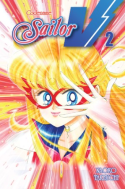
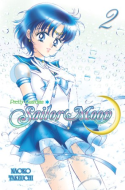
I’m catching up on three of Kodansha’s currently running shoujo series, so I thought I’d group them all together here for a Tidbits post! First up are volumes four and five of Natsumi Ando’s suspenseful Arisa, followed by the second and final volume of Naoko Takeuchi’s Codename: Sailor V, with the second volume of Pretty Guardian Sailor Moon bringing up the rear. Tidbit power, make up!

Arisa, Vols. 4-5 by Natsume Ando
Tsubasa Uehara continues to attend school in the guise of her sister, Arisa, as she endeavors to find the identity of the King who is fulfilling wishes from chosen students in dangerous ways. Her spirits flag when it seems she’s been unsuccessful in protecting the latest target, but when it turns out her efforts actually prevented the girl from sustaining permanent injury, her spirits rise. Alas, a friend’s betrayal is followed by an explanation of divided loyalties and the introduction of a pivotal new character with kind feelings towards Tsubasa but a burning hatred for Arisa.

So, there are several characters at this point who could be the King, but the strongest possibility seems to be Kudo, a transfer student who I had forgotten about entirely after reading volume three, so that tells you how memorable of a guy he is. Manabe doesn’t seem like the culprit, and neither does Arisa’s boyfriend, Midori, but it’s not out of the question. Mostly we see the King as a shadowy figure, grinning in a dastardly fashion as he does things like arrange for Tsubasa to fall off a cliff. (Side note: any time the female lead of a shoujo manga goes out into the woods at night, she is going to fall off a cliff. It’s, like, the law.) New character Shizuka seems like a potential candidate, until it’s revealed that the King is manipulating her into making wishes that will harm Arisa/Tsubasa.

All of this makes for a fast-paced and suspenseful read, but it does cause me to wonder whether Ando’s just making up all of this as she goes along. Does she really have a plan for who the King is, or is she keeping readers suspicious of everyone until inspired to take the story in a specific direction? I’m not exactly complaining—because, again, it is a fun read—but the lack of any kind of permanent gain is a little bit frustrating. I just hope there’s a satisfying and dramatic payoff in the end!

Codename: Sailor V, Vol. 2 by Naoko Takeuchi
It’s rather hard to like Minako for the majority of this volume, as several of the stories play up her shallow side. First she gets fat by eating too much evil chocolate, then she must contend with a trio of animal-themed siblings who unleash energy-sucking cats, dogs, and mosquitoes upon the populace. Minako slacks off frequently and makes various unkind comments to her long-suffering feline companion, Artemis. She also meets the latest idol sensation, handsome and mysterious Phantom Ace, and becomes one of his biggest fans.

There’s not really a whole lot to recommend these chapters except more of Sailor V’s amusing speeches, like this one, which occurs as she’s foiling the enemy’s scheme to collect energy via blood donation:

You have used clever words to abscond with a precious tribute of blood from weakened hospital patients! That is your crime!

And to add to it, you have sullied a woman’s simple joy of collecting stamps!

Worse, you forgot to give me my reward for donating blood to the tune of 800cc! And that crime is grave!

Luckily, though the premise of the final two chapters is just as silly as what’s come before—Minako is ordered to win the part of Ace’s leading lady in his latest project, filming in China, so that she can observe his potentially evil production company—it doesn’t preclude genuine dramatic impact. Though Minako entertains fantasies of marrying Ace and retiring, when he professes his to love her, she realizes that it’s not what she wants. She loves being Sailor V and, furthermore, remembers making a promise to protect an important person. Eventually, her memories fully awaken and her Sailor V costume is replaced by one matching the design of the other senshi. It’s kind of goosebump-inducing.

Though I’ve read this series before (with translations), I had completely forgotten that Ace had any connection at all to Minako’s past life, so was pleasantly surprised by that revelation as well as by this awesomely grim quote:

Your love will never be granted, for all eternity… Your love or your duty… now you can live the rest of your life never having to worry about the tortures of deciding between them. Your fate is to battle on. Because your true battle starts now.

How could I have forgotten that?! Minako is a girl who is always falling (if superficially) in love, so she can’t welcome this news, but neither does she shirk from her destiny. Ever irrepressible, she ends the series on an upbeat note, poised to show (if I recall rightly) greater maturity and determination when she joins the others in the main series.

Ultimately, Codename: Sailor V is worthwhile despite its flaws. We never learn what the enemy was hoping to achieve, nor the identity of “Boss” (though the second volume of Pretty Guardian Sailor Moon provides some insight on the matter), but we do meet a special, spunky girl as she comes to accept her unique destiny, and that can never be a bad thing.

Pretty Guardian Sailor Moon, Vol. 2 by Naoko Takeuchi
A lot happens in this volume, which I shall attempt to quickly summarize. When facing off against Zoisite, the girls are rescued by the timely arrival of Sailor Venus. Minako is now in her second year of middle school and comes across as very mature, competent, and serious about her duty. She’s been monitoring Usagi through the Sailor V game and has also been researching the enemy. She provides all sorts of information about the Dark Kingdom and also claims (well, Artemis claims) that she is Princess Serenity. Her proximity triggers some past-life memories in the others, as well.

However, Usagi starts having dreams that suggest that she was actually Serenity, and when Mamoru is injured protecting her from one of Kunzite’s attacks, one of her tears transforms into the Legendary Silver Crystal and her true identity is revealed. (The bit with Venus was evidently a ruse to direct enemy attacks onto a more experienced Guardian.) Mamoru is subsequently kidnapped by the Dark Kingdom and eventually used as Queen Beryl’s pawn, securing the crystal for her by volume’s end.

So, all of this is very dramatic and shoujo-tastic while it occurs and I honestly loved every minute of it. There are a couple of things that I found especially interesting, though. The first is how much information we get on the enemy compared to the dearth of intel provided in Codename: Sailor V. We see, for example, a flashback to the moment in which Beryl was “irresistibly drawn to” the North Pole, where she discovered the remains of the Dark Kingdom. This made me wonder… was Beryl reborn on Earth as a regular human, just like the Guardians? And did she waken to her past memories as the seal imprisoning Metalia faded?

We also learn a bit about the Four Kings of Heaven, who were generals to Endymion (Mamoru’s past identity) that were swayed into becoming Metalia’s devotees. I’m not exactly sure about this, but it seems as if their bodies had been converted into crystals and recently awakened into human form at Metalia’s whim, and that they can be revived as many times as necessary. Somehow this is sadder and more sympathetic than if they had just been some regular guys suddenly remembering their previous lives.

The second thing that struck me was how much certain elements of the story remind me of Please Save My Earth. Usagi and friends living on the moon in their past lives is the most obvious resemblance, but there’s also the fact that Usagi is troubled by questions of identity brought on by these recollections (“Am I becoming the princess? It’s like I’ve stopped being me…”) and that the residents of the Moon Kingdom were tasked with fondly watching over Earth and helping it to evolve in the best manner possible. They actually travel to the moon to listen to a computerized incarnation of Queen Serenity tell them about the tragic events of the past and how Metalia must be sealed away for good. (She was also responsible for waking Artemis and Luna from the stasis they entered after the destruction of the Moon Kingdom, which makes me suspect that she is “Boss.”)

I could probably go on for another five hundred words, which just goes to show how engaging this story is. It wouldn’t be a Kodansha review if I didn’t complain about the typos—seeing the word “it’s” used instead of “its” is even more painful when it’s part of genius Ami’s dialogue—but even their irksome presence does not detract from the enjoyment I derive from reading this series.

Filed Under: REVIEWS Tagged With: Kodansha Comics, Naoko Takeuchi

Manga Radar: 1 January 2012

January 20, 2012 by Matt Blind Leave a Comment

Database Additions for 01 January

A Bride’s Story 3 – Yen Press, Mar 2012 ::
Ar Tonelico Visual Book – Udon, Aug 2011 ::
At Full Moon 1 – Kodansha Comics, Nov 2011 ::
At Full Moon 2 – Kodansha Comics, Jan 2012 ::
Faraway Places (ebook) – DMP Digital Manga Guild, Dec 2011 ::
Maihime!! (ebook) Tale 1 – Stren Publishing, Dec 2011 ::
My Boyfriend is a Vampire (ebook) 3 – Seven Seas, Dec 2011 ::
Oresama Teacher 7 – Viz Shojo Beat, Mar 2012 ::
Oresama Teacher 8 – Viz Shojo Beat, May 2012 ::
Oresama Teacher 9 – Viz Shojo Beat, Jul 2012 ::
Oresama Teacher 10 – Viz Shojo Beat, Sep 2012 ::
Rin-Ne 8 – Viz Shonen Sunday, Mar 2012 ::
Sin (ebook) Chapter 1 – MangaMagazine, Sep 2011 ::
Spring Demon (ebook) 1 – Yaoi Press, Oct 2011 ::
Spring Demon (ebook) 2 – Yaoi Press, Oct 2011 ::
The Kneeling Butler (ebook) – DMP Digital Manga Guild, Dec 2011 ::
Utsumi & His Yellow Glasses (ebook) – Stren Publishing, Mar 2011 ::
Vampire Knight 14 – Viz Shojo Beat, Jul 2012 ::

Case Closed Casebook: An Essential Guide – Cocoro Books, Jul 2008 ::
The Pirate & The Princess (novel) 1 – Seven Seas, Oct 2007 ::
One Piece The One Piece Adventurer: A Treasure Trove of Trivia – Cocoro Books, Oct 2007 ::
Ogre Slayer 2 – Viz, Jun 1998 ::
Ogre Slayer 1 – Viz, Jan 1997 ::

##

Notes:

At Full Moon is the sequel to Until the Full Moon, also from Kodansha; I’m currently considering how/if to list these as a single series in the database.

The Pirate & The Princess light novels were licensed by Seven Seas, and the first volume released but only via Scholastic bookfairs – when the major bookstore chains refused to buy it, Seven Seas cancelled it (with some regret).

Cocoro Books has transitioned from selling actual books that feed parasitically off of popular series, to ebook versions of the same that do so, only better. For those who are curious, here is the pull from the database, with current weekly rankings:

83. ↑273 (356) : Dragon Ball Z Legend: The Quest Continues – Cocoro Books, May 2004 [113.5] ::
93. ↑288 (381) : Fruits Basket Uncovered: The Secrets of the Sohmas – Cocoro Books, Mar 2007 [103.8] ::
131. ↑263 (394) : Naruto Saga: The Unofficial Guide – Cocoro Books, Nov 2004 [84.1] ::
207. ↑573 (780) : Bleach The Bleach Breakdown: The Unofficial Guide – Cocoro Books, Oct 2007 [56.6] ::
475. ↑592 (1067) : Fullmetal Alchemist Archive: The Complete Guide – Cocoro Books, May 2010 [21.2] ::
776. ↑ (last ranked 13 Nov 11) : Death Note Fatally Fun Facts: Mysteries and Secrets Revealed – Cocoro Books, Sep 2007 [8.8] ::
916. ↓-202 (714) : Inuyasha The Inuyasha Experience: Fiction, Fantasy, & Facts – Cocoro Books, Jan 2011 [5.9] ::
976. ↑172 (1148) : Naruto Forever: The Unofficial Guide – Cocoro Books, Feb 2008 [4.8] ::
1206. ↑new (0) : One Piece The One Piece Adventurer: A Treasure Trove of Trivia – Cocoro Books, Oct 2007 [2.2] ::
1548. ↑new (0) : Negima! Reader: Secrets Behind the Magic – Cocoro Books, Oct 2007 [0.5] ::
1674. ↑new (0) : Case Closed Casebook: An Essential Guide – Cocoro Books, Jul 2008 [0.1] ::
. (last ranked 21 Nov 10) : Ghost in the Shell User’s Manual: A Wired Guide – Cocoro Books, Oct 2008 [0.0] ::
. (last ranked 2 Oct 11) : Mushishi Essentials: A Wanderer’s Handbook – Cocoro Books, Nov 2007 [0.0] ::
. (ref) : Blood+ Chevalier’s Handbook – Cocoro Books, Sep 2008 [0.0] ::
. (ref) : Eureka Seven Unlimited Answers: A Roadmap of Gekkostate and Beyond – Cocoro Books, Sep 2008 [0.0] ::
. (ref) : Haruhi Suzumiya Yearbook – Cocoro Books, Nov 2008 [0.0] ::

Since many of these series are not available as ebooks, is it any wonder that young fans casting about for any manga for newly-gifted devices end up buying these ‘guides’? Perhaps, even, by mistake? I’ll leave any conclusions [past my leading comments] to the reader, and to publishers.

##

Top Preorders

9. ↑33 (42) : Naruto 54 – Viz Shonen Jump, Mar 2012 [336.5] ::
15. ↑3 (18) : Sailor Moon 4 – Kodansha Comics, Mar 2012 [285.7] ::
26. ↓-2 (24) : Sailor Moon 5 – Kodansha Comics, Apr 2012 [243.0] ::
44. ↑7 (51) : Sailor Moon 6 – Kodansha Comics, Jun 2012 [188.8] ::
101. ↓-4 (97) : Negima! 34 – Kodansha Comics, Apr 2012 [99.5] ::
103. ↑8 (111) : xxxHolic 19 – Kodansha Comics, Feb 2012 [98.3] ::
128. ↓-6 (122) : Kannagi 4 – Bandai, Cancelled [84.8] ::
156. ↓-2 (154) : Toradora! 4 – Seven Seas, Apr 2012 [71.9] ::
172. ↓-8 (164) : Gunslinger Girl Omnibus 4 – Seven Seas, Mar 2012 [67.8] ::
181. ↓-10 (171) : Bamboo Blade 12 – Yen Press, Mar 2012 [63.0] ::

[more]

Filed Under: Manga Radar, UNSHELVED

Manga Bestsellers: 2012, Week Ending 1 January

January 20, 2012 by Matt Blind 1 Comment

Comparative Rankings Based on Consolidated Online Sales

last week’s charts
about the charts

##

Manga Bestsellers

1. ↔0 (1) : Sailor Moon 2 – Kodansha Comics, Nov 2011 [460.5] ::
2. ↑1 (3) : Sailor Moon 1 – Kodansha Comics, Sep 2011 [443.5] ::
3. ↑4 (7) : Sailor Moon 3 – Kodansha Comics, Jan 2012 [432.5] ::
4. ↑2 (6) : Fullmetal Alchemist 27 – Viz, Dec 2011 [424.5] ::
5. ↓-3 (2) : Maximum Ride 5 – Yen Press, Dec 2011 [419.3] ::
6. ↓-1 (5) : Sailor Moon Codename: Sailor V 2 – Kodansha Comics, Nov 2011 [413.5] ::
7. ↓-3 (4) : Naruto 53 – Viz Shonen Jump, Dec 2011 [412.8] ::
8. ↑5 (13) : Ouran High School Host Club 17 – Viz Shojo Beat, Dec 2011 [366.5] ::
9. ↑33 (42) : Naruto 54 – Viz Shonen Jump, Mar 2012 [336.5] ::
10. ↔0 (10) : Black Butler 7 – Yen Press, Oct 2011 [329.6] ::

[more]

Top Imprints
Number of volumes ranking in the Top 500:

Viz Shonen Jump 89
Yen Press 76
Viz Shojo Beat 66
Kodansha Comics 42
Viz Shonen Jump Advanced 35
Vizkids 23
Seven Seas 21
DMP Juné 18
HC/Tokyopop 14
Dark Horse 11

[more]

Series/Property

1. ↔0 (1) : Sailor Moon – Kodansha Comics [1,089.0] ::
2. ↔0 (2) : Naruto – Viz Shonen Jump [944.6] ::
3. ↔0 (3) : Maximum Ride – Yen Press [791.5] ::
4. ↔0 (4) : Black Butler – Yen Press [765.3] ::
5. ↑2 (7) : Fullmetal Alchemist – Viz [628.9] ::
6. ↑3 (9) : Ouran High School Host Club – Viz Shojo Beat [580.7] ::
7. ↓-2 (5) : Vampire Knight – Viz Shojo Beat [543.1] ::
8. ↓-2 (6) : Warriors – HC/Tokyopop [491.5] ::
9. ↓-1 (8) : Pokemon – Vizkids [482.3] ::
10. ↑10 (20) : Black Bird – Viz Shojo Beat [470.7] ::

[more]

New Releases
(Titles releasing/released This Month & Last)

3. ↑4 (7) : Sailor Moon 3 – Kodansha Comics, Jan 2012 [432.5] ::
4. ↑2 (6) : Fullmetal Alchemist 27 – Viz, Dec 2011 [424.5] ::
5. ↓-3 (2) : Maximum Ride 5 – Yen Press, Dec 2011 [419.3] ::
7. ↓-3 (4) : Naruto 53 – Viz Shonen Jump, Dec 2011 [412.8] ::
8. ↑5 (13) : Ouran High School Host Club 17 – Viz Shojo Beat, Dec 2011 [366.5] ::
16. ↑10 (26) : xxxHolic 18 – Kodansha Comics, Dec 2011 [285.4] ::
18. ↓-1 (17) : Bleach 37 – Viz Shonen Jump, Dec 2011 [276.5] ::
21. ↑38 (59) : Black Bird 12 – Viz Shojo Beat, Jan 2012 [263.9] ::
23. ↑8 (31) : Blue Exorcist 5 – Viz Shonen Jump Advanced, Dec 2011 [254.8] ::
30. ↑9 (39) : K-On! 4 – Yen Press, Dec 2011 [217.2] ::

[more]

Preorders

9. ↑33 (42) : Naruto 54 – Viz Shonen Jump, Mar 2012 [336.5] ::
15. ↑3 (18) : Sailor Moon 4 – Kodansha Comics, Mar 2012 [285.7] ::
26. ↓-2 (24) : Sailor Moon 5 – Kodansha Comics, Apr 2012 [243.0] ::
44. ↑7 (51) : Sailor Moon 6 – Kodansha Comics, Jun 2012 [188.8] ::
101. ↓-4 (97) : Negima! 34 – Kodansha Comics, Apr 2012 [99.5] ::
103. ↑8 (111) : xxxHolic 19 – Kodansha Comics, Feb 2012 [98.3] ::
128. ↓-6 (122) : Kannagi 4 – Bandai, Cancelled [84.8] ::
156. ↓-2 (154) : Toradora! 4 – Seven Seas, Apr 2012 [71.9] ::
172. ↓-8 (164) : Gunslinger Girl Omnibus 4 – Seven Seas, Mar 2012 [67.8] ::
181. ↓-10 (171) : Bamboo Blade 12 – Yen Press, Mar 2012 [63.0] ::

[more]

Manhwa

220. ↑344 (564) : JTF-3 Counter Ops (ebook) – RealinterfaceStudios.com, Mar 2011 [53.2] ::
305. ↑883 (1188) : Angel Diary 9 – Yen Press, Jul 2009 [38.6] ::
330. ↑ (last ranked 18 Dec 11) : Totally Captivated 6 – Netcomics, Feb 2009 [34.0] ::
369. ↑474 (843) : Bride of the Water God 9 – Dark Horse, Oct 2011 [30.1] ::
425. ↑262 (687) : Angel Diary 3 – Yen Press, Jul 2006 [24.8] ::
534. ↑905 (1439) : Angel Diary 13 – Yen Press, Dec 2010 [18.0] ::
545. ↑310 (855) : March Story 3 – Viz Signature, Oct 2011 [17.6] ::
573. ↓-254 (319) : Tarot Cafe 1 – Tokyopop, Mar 2005 [16.3] ::
578. ↑185 (763) : March Story 2 – Viz Signature, Apr 2011 [16.1] ::
668. ↓-73 (595) : March Story 1 – Viz Signature, Oct 2010 [12.3] ::

[more]

BL/Yaoi

54. ↑83 (137) : Maelstrom (ebook) 1 – Yaoi Press, Jun 2011 [156.1] ::
76. ↑2 (78) : Mr. Tiger & Mr. Wolf – DMP Juné, Sep 2011 [123.7] ::
80. ↑23 (103) : A Fallen Saint’s Kiss – 801 Media, Jan 2012 [120.6] ::
126. ↑14 (140) : Private Teacher 2 – DMP Juné, Jan 2012 [85.3] ::
139. ↑37 (176) : Finder Series 4 Prisoner in the View Finder – DMP Juné, Aug 2011 [79.1] ::
143. ↑271 (414) : Yakuza Cafe – DMP Juné, Oct 2011 [76.9] ::
145. ↓-11 (134) : Finder Series 5 Truth in the View Finder – DMP Juné, Dec 2011 [75.9] ::
163. ↑35 (198) : Seven Days Friday-Sunday – DMP Juné, Sep 2011 [70.1] ::
244. ↓-17 (227) : Only Serious About You 2 – DMP Juné, Dec 2011 [46.5] ::
262. ↑117 (379) : Private Teacher 1 – DMP Juné, Jan 2012 [44.5] ::

[more]

Ebooks

54. ↑83 (137) : Maelstrom (ebook) 1 – Yaoi Press, Jun 2011 [156.1] ::
61. ↑5 (66) : Manga Moods – Japanime’s Manga University, Mar 2006 [141.2] ::
73. ↑412 (485) : Amazing Agent Luna 6 – Seven Seas, Sep 2010 [126.6] ::
74. ↑194 (268) : Vampire Cheerleaders 1 – Seven Seas, Mar 2011 [125.5] ::
78. ↑20 (98) : Manga Cookbook – Japanime’s Manga University, Aug 2007 [121.8] ::
83. ↑273 (356) : Dragon Ball Z Legend: The Quest Continues – Cocoro Books, May 2004 [113.5] ::
89. ↑501 (590) : The Outcast 1 – Seven Seas, Sep 2007 [107.2] ::
93. ↑288 (381) : Fruits Basket Uncovered: The Secrets of the Sohmas – Cocoro Books, Mar 2007 [103.8] ::
97. ↑599 (696) : How to Draw Manga (ebook) Lesson 1 Eyes – Japanime’s Manga University, May 2011 [102.1] ::
112. ↑751 (863) : Amazing Agent Luna 1 – Seven Seas, Mar 2005 [92.0] ::

[more]

Filed Under: Manga Bestsellers Tagged With: Manga Bestsellers

  • « Go to Previous Page
  • Page 1
  • Page 2
  • Page 3
  • Page 4
  • Page 5
  • Interim pages omitted …
  • Page 7
  • Go to Next Page »
 | Log in
Copyright © 2010 Manga Bookshelf | Powered by WordPress & the Genesis Framework