• Skip to primary navigation
  • Skip to main content
  • Skip to primary sidebar
  • Home
  • About Us
    • Privacy Policy
    • Comment Policy
    • Disclosures & Disclaimers
  • Resources
    • Links, Essays & Articles
    • Fandomology!
    • CLAMP Directory
    • BlogRoll
  • Features & Columns
    • 3 Things Thursday
    • Adventures in the Key of Shoujo
    • Bit & Blips (game reviews)
    • BL BOOKRACK
    • Bookshelf Briefs
    • Bringing the Drama
    • Comic Conversion
    • Fanservice Friday
    • Going Digital
    • It Came From the Sinosphere
    • License This!
    • Magazine no Mori
    • My Week in Manga
    • OFF THE SHELF
    • Not By Manga Alone
    • PICK OF THE WEEK
    • Subtitles & Sensibility
    • Weekly Shonen Jump Recaps
  • Manga Moveable Feast
    • MMF Full Archive
    • Yun Kouga
    • CLAMP
    • Shojo Beat
    • Osamu Tezuka
    • Sailor Moon
    • Fruits Basket
    • Takehiko Inoue
    • Wild Adapter
    • One Piece
    • After School Nightmare
    • Karakuri Odette
    • Paradise Kiss
    • The Color Trilogy
    • To Terra…
    • Sexy Voice & Robo
  • Browse by Author
    • Sean Gaffney
    • Anna Neatrour
    • Michelle Smith
    • Katherine Dacey
    • MJ
    • Brigid Alverson
    • Travis Anderson
    • Phillip Anthony
    • Derek Bown
    • Jaci Dahlvang
    • Angela Eastman
    • Erica Friedman
    • Sara K.
    • Megan Purdy
    • Emily Snodgrass
    • Nancy Thistlethwaite
    • Eva Volin
    • David Welsh
  • MB Blogs
    • A Case Suitable For Treatment
    • Experiments in Manga
    • MangaBlog
    • The Manga Critic
    • Manga Report
    • Soliloquy in Blue
    • Manga Curmudgeon (archive)

Manga Bookshelf

Discussion, Resources, Roundtables, & Reviews

Archives for January 2012

Combat Commentary: One Piece Vol. 3, Ch. 18-20 – Luffy vs. Buggy

January 31, 2012 by Derek Bown 2 Comments

And we save the best for last. Not necessarily the best fight, but most certainly the best series. One Piece is interesting when compared to the others of Jump‘s Big Three. As opposed to starting strong and losing steam as the years passed, One Piece did the exact opposite. It has become a war cry for One Piece fans trying to get new readers into the series, “Just make it past the first nine volumes, make it to the Arlong Arc and you’ll be hooked.” With oddly cartoonish art and stories that fans generally rank among the series’ worst, the early chapters of One Piece belie the powerhouse of a manga it would later become.

But surely there must have been something that drew readers in? After all, every manga fan knows that One Piece is easily the world’s number one manga (at least sales-wise). So what let it survive beyond its infancy? Well, if you’ve been reading this column for the past two weeks, chances are you have an inkling of my answer to this question.

Also, since this column is still new, I’m always testing new ideas for formats. Let me know what you think of this version.

What Happened?
After defeating the tyrannical Axe-hand Morgan, Luffy and Zoro find themselves drifting on the ocean with no food and no way to navigate. Luffy tries to catch a bird to eat, but ends up on an island occupied by the dread pirate Buggy the Clown. Luffy runs into Nami, who initially turns him over to Buggy in order to get to his treasure map, but then saves him at the last second. Luffy beats Mohji the beast trainer, and Zoro beats Cabaji the acrobat, leaving Luffy and Buggy ready for the final battle.

(click on images to enlarge)

What Happens?
Buggy’s devil fruit powers give Luffy a hard time at first, but before long he is able to take advantage of Buggy’s weaknesses. Buggy tells Luffy about the time he was an apprentice on a pirate ship with Luffy’s idol, Red Haired Shanks. After Shanks inadvertently ruin’s Buggy’s plan to sell a valuable devil fruit, Shanks then saves Buggy’s life, but earns his eternal ire. With some help from Nami, Luffy is able to defeat Buggy easily, sending him flying with most of his body parts missing.

What does it mean?
Compared to the straightforward action scenes in Bleach and Naruto, One Piece can often rub fans of those series the wrong way with how it portrays action. The early fights, especially the first three in the series (Alvida, Ax-Hand Morgan, and Buggy) come across as just ways to show off how cool the main character is.

Buggy stands out among the early fights, because he is the only antagonist Luffy faces (before Logue Town) that has devil fruit powers. While later on in the series every villain worth his (or her) salt has devil fruit powers, this early in the game it was a big deal. None of the other characters had powers like Luffy. What makes this fight stand out so much is how creatively these powers are put to use. Luffy always finds ways to make his strange power combat-worthy, but to see another character doing the same thing makes this fight stand out in a sea of sword-swinging and punching fights.

This is what makes Buggy’s status as a “joke villain” so strange. While he is portrayed as a serious threat, the ease with which Luffy deals with him (after some minor set backs) doesn’t quite match up. It feels as if Buggy could have either been taken seriously or written off as a complete joke, and seeing him as a little of both is jarring to say the least—still fun, but a little too much in the middle to make for easy classification.

Though Luffy is still portrayed as an invincible protagonist, Oda manages to throw in some tension by giving Luffy a weakness that Buggy can exploit. Luffy’s hat, given to him by Red Hair Shanks, is the only part of him that can be effectively damaged, and Buggy takes advantage of this.

But Buggy is not the only person who can take advantage of others’ weaknesses. As he learns to his suffering. Luffy takes advantage of Buggy still feeling the pain of his separate body parts. And with only two eyes, Buggy cannot both hunt down Nami (who is getting away with his treasure) and protect his lower half.

After this point, the seriousness of the fight dissipates, and Buggy goes from being a threat to being the the fight’s buttmonkey. While the transition is a little jarring, it helps that Oda does not switch back and forth. When Buggy is threatening, he is threatening, but once his weakness is discovered, Luffy takes full advantage of it, and Buggy becomes a joke. So in its own way, the shift from serious to gag goes as smoothly as it possibly could have.

This fight ranks as one of the best in the East Blue arc, solely because it stands out as the first real threat Luffy faces, as well as only one of two villains that have devil fruit powers. Compared to Kuro and Don Krieg, Buggy is one of the more memorable One Piece villains. The shift from serious threat to comedic foil may be jarring for some, but it’s One Piece in a nutshell. No matter how dangerous the situation, there’s always a good laugh to be had.

Filed Under: Combat Commentary, FEATURES Tagged With: Combat Commentary, One Piece, VIZ

Shonen Jump makes the leap to digital

January 31, 2012 by Brigid Alverson

The big news this week is the launch of Shonen Jump Alpha, Viz’s weekly digital edition of Shonen Jump, which will replace their monthly print magazine. Crunchyroll has a wide-ranging interview with Viz VP and general manager Alvin Lu, and John Jakala kicks the tires on the new magazine and finds a few glitches. The biggest problem: Despite Viz’s push to speed up releases of the English-language series, they still lag the Japanese releases by quite a few chapters—and since SJ Alpha runs each chapter two weeks after it runs in Japan, readers are left with a gap in the stories.

The Usamaru Furuya Manga Moveable Feast has wound up, and Ash Brown posts roundup posts for day two and day three, as well as a final roundup, at Experiments in Manga. Over at Manga Bookshelf, MJ and Michelle Smith devote their latest Off the Shelf column to Furuya’s No Longer Human, and at Slightly Biased Manga, Connie explains why Palepoli should be translated into English.

The Manga Bookshelf team (myself included) discusses their Pick of the Week. What’s yours? Also at Manga Bookshelf, Matt Blind posts a new set of recent manga bestsellers and a Manga Radar column about up-and-coming future releases.

Erica Friedman rounds up the latest yuri news at Okazu.

Three Steps Over Japan looks at a seasonal Japanese magazine, Jump Next.

Akira creator Katsuhiro Otomo will be a guest at this year’s San Diego Comic Con.

Makoto Tateno (Yellow) and Tomo Maeda (Beyond My Touch) will be guests at MangaNEXT later this month.

If you’re reading this in the Philippines, take a minute to take Khursten Santos’s survey on Philippine anime fandom at Otaku Champloo.

News from Japan: A Japanese manga called It’s Not My Fault I’m Not Popular has apparently become a hit on 4chan (Anonymous is scanting it, although the scanlations seem to be hosted elsewhere), and the latest volume bears a cover line celebrating that: “A smash hit on the overseas version of 2chan!!” Princess Resurrection manga-ka Yasunori Mitsunaga has a new series in the works that will launch in the April issue of Kodansha’s Monthly Shonen Sirius magazine. Yūki Kodama’s spinoff of Sakamichi no Apollon will start in the May issue of Shogakukan’s Monthly Flowers.

Reviews: The Manga Bookshelf gang posts a new set of Bookshelf Briefs to greet the new week. Ash Brown post an unusually varied weekly roundup at Experiments in Manga.

Erica Friedman on vol. 2 of Ame-iro Kouchakan Kandan (Okazu)
Kate Dacey on The Art of the Secret World of Arrietty (The Manga Critic)
Anna on vols. 9 and 10 of Basara (Manga Report)
Michelle Smith on vols. 1 and 2 of Dawn of the Arcana (Soliloquy in Blue)
Kristin on vol. 1 of A Devil and Her Love Song (Comic Attack)
Sean Gaffney on vol. 1 of Durarara!!! (A Case Suitable for Treatment)
Ash Brown on vol. 1 of Genkaku Picasso (Experiments in Manga)
Shannon Fay on vol. 5 of Highschool of the Dead (Kuriousity)
Matthew Alexander on vol. 15 of Higurashi: When They Cry (The Fandom Post)
Erica Friedman on Houkago Kanon (Okazu)
Alex Hoffman on vol. 1 of Mardock Scramble (Manga Widget)
Ash Brown on vol. 1 of No Longer Human (Experiments in Manga)
Sean Gaffney on vol. 3 of Sailor Moon (A Case Suitable for Treatment)
Leroy Douresseaux on vol. 6 of Sakura Hime: The Legend of Princess Sakura (The Comic Book Bin)
Ash Brown on vol. 1 of Short Cuts (Experiments in Manga)
Ben Leary on vol. 16 of Slam Dunk (The Fandom Post)
Lesley Aeschliman on vol. 7 of Tears of a Lamb (Blogcritics)
Ken Haley on vol. 6 of Vampire Hunter D (Sequential Ink)
Kate Dacey on Yakuza Cafe(The Manga Critic)

Filed Under: MANGABLOG

Pretty Guardian Sailor Moon, Vol. 3

January 31, 2012 by Sean Gaffney

By Naoko Takeuchi. Released in Japan as “Bishoujo Senshi Sailor Moon” by Kodansha, serialized in the magazine Nakayoshi. Released in North America by Kodansha Comics.

I had forgotten how much compressing the 18 original volumes into 12 (and 2 side-story books) would speed things up. That’s right, we’re already at the end of the first arc and starting the second! Indeed, you can definitely tell that, had Sailor Moon not been a huge success, Nakayoshi would have likely ended it here, right before Chibi-Usa arrives. But then, had that happened, we wouldn’t be discussing it now.

For fans of the anime, that’s Sailor Mars on the cover. You might not recognize her as she’s looking cool, calm and collected. :) In the actual manga, though, things really aren’t going so well. Mamoru has been possessed by Metallia, and even if Jupiter and Venus manage to kill off Beryl, things aren’t going to end quite that easily. (Speaking of which, a couple of things to note: a) there’s an ongoing gag about Venus’ sword being too heavy to use. Done for comedy in Vol. 2, it’s now quite serious, as Venus has a lot of trouble actually wielding it. That said, even if Jupiter (who is much stronger) gets in the first blow, it’s Venus who actually kills Beryl. b) Wasn’t there a shot of archaeologist Beryl being possessed by Metallia in a previous volume? I guess we’re assuming, like the Four Generals, that once they were converted to evil, they couldn’t be saved. Keep an eye out for villains killed in Sailor Moon going forward, and see how many were once human…)

Unfortunately, Mamoru is still evil, and so it’s up to Sailor Moon to kill him for the good of the world. Which she actually does, even using Venus’ huge sword. And then, very startlingly, she proceeds to reverse the sword and kill herself. Or at least, so it seems. I dunno, maybe it’s because of the anime episode 45 and 46, but I find the ending to the first arc in the manga somewhat confusing. It would appear that both Sailor Moon and Mamoru were ‘saved’ from a deadly blow from the sword; Mamoru by a crystal containing the essence of his four Generals, and Sailor Moon by Mamoru’s watch. This… seems a bit too pat. On the good side, Moon is just as awkward with a heavy sword as you’d expect. Honestly, none of them look comfortable with it.

The action then moves to the North Pole, where, in order to wake Sailor Moon and Mamoru, the senshi decide to sacrifice their lives. This involves using their transformation pens to somehow use all their power to wake Sailor Moon, and again kind of pales in comparison with the anime. But that’s not the manga’s fault. But now Sailor Moon is alive, and can use the power of love, the power of prayer and the power of basic light over darkness to defeat Metallia. Now she’s finally reunited with an unpossessed Mamoru, and they kiss. And then she… finds out her friends are all dead. Oopsie. (Note we see them in pools of blood, which are all drawn as ‘clear fluid’ rather than the typical ‘black blood’ you see in monochrome. I suspect this may be to make it less horrifying – they’re drenched in it.) Luckily, Sailor Moon can resurrect the dead with her new powerup, which she proceeds to do. (If you’re rolling your eyes at this, get used to it – it’s not the last time we’ll be seeing it.)

Yay! Happy ending, everyone’s alive and going back to school, Usagi has a boyfriend, and all is well… wait, who’s this kid? Yes, Chibi-Usa drops in, and sets the stage for the second major arc in the manga, which is generally called Sailor Moon R in deference to its anime counterpart. Chibi-Usa… is a brat at times, even in the manga. But at least in the manga it’s very clear that she is, at heart, a very scared child, and that much of her behavior is due to panic and stress as much as anything else. She arrives out of the sky with her mind-controlling ball that looks like Luna and immediately proceeds to ingratiate herself with Mamoru, get accepted into Usagi’s family, and get on Usagi’s nerves. And she’s also after the Silver Crystal… which the villains are also after. Is she a villain?

Yes, we get a new set of villains here as well, with the Black Moon Family. More on Prince Demande later, as he’s a truly horrible ass, but here we just get to see bits of the main villains. Instead, they send out disposable minions, each with the powersets to match up against a specific senshi, to capture them. And it actually works quite well, as first Mars, then Mercury are captured by the enemy and… well, not killed, but moved off the board for a while. This, by the way, results in the deaths of the minions. This is not the anime, no redemption for you! There are also, by the way, some lovely scenes of Ami, Rei, Makoto and Mamoru interacting with their friends in daily life. The friends don’t get big roles, but it helps to show that the cast are (mostly) quite popular and well-liked.

I’m not sure if there were any extras in this volume in Japan; there aren’t any here, I can tell you. But regardless of that, this was a solid volume of Sailor Moon. More battle-oriented than most, which means I like it a bit less than the others, as Takeuchi’s battle scenes can get confusing. But as we leave our heroes, the Senshi are now down to three. And somehow, I have a feeling that the start of Vol. 4 will end with Jupiter getting abducted as well, as that’s how these things go. Is this what happens when you find yourself on the cover?!?!

Filed Under: REVIEWS

Yakuza Cafe

January 30, 2012 by Katherine Dacey

Yakuza Cafe is a pleasant surprise, a cheerful, smutty send-up of gangster manga that playfully mocks maid cafes, foodie manga, and yakuza culture.

The titular gangsters are the Fujimaki Clan, a once-feared crime syndicate who’ve launched a legitimate business: a yakuza-themed cafe, staffed by the clan’s former foot soldiers. Though the food is tasty, and the waitstaff comely, the cafe is all but deserted — that is, until Shinri, the clan leader’s only son, discovers the root of the problem: no one can brew a decent cup of tea! Not to worry: Shinri just happens to be an expert on the subject, thanks to his grandmother, a tea connoisseur so dedicated that she grew her own leaves.

Of course, Yakuza Cafe is yaoi, so there’s also a romantic subplot running in tandem with the shop’s rehabilitation. That storyline involves Shinri and a brooding, muscle-bound thug named Mikado, who’s famous for his fiery temper. Though others warn Shinri not to become emotionally or physically involved with Mikado, Shinri finds himself irresistibly drawn to Mikado and his elaborate dragon tattoo. (The tattoo, it should be noted, is almost a character in its own right.)

Yakuza Cafe has three things working in its favor: a cast of handsome men, a clever premise, and a deep affection for the genres it parodies. Shinano Oumi draws elegant, if generic, characters in a variety of pleasing shapes and sizes: broad-shouldered types for readers who prefer rugged men and slender, snappy dressers for those who favor metrosexuals. Oumi doesn’t just populate her story with attractive characters, she inserts them into a situation that’s ripe with comic potential: what could possibly go wrong when former hit men serve tea and pastries to teenage girls? Of course, none of these scenarios would be funny if Oumi overplayed them, but she uses a light touch throughout the story, whether she’s borrowing ideas from The Drops of God — grandma’s tea expertise could easily spawn a manga of its own — or putting a BL spin on a gangster manga cliche. (Mikado tries to slice off his own pinky in order to atone for his relationship with Shinri.)

The main drawback to Yakuza Cafe is the romance. Shinri and Mikado’s attraction is explained by means of a very tired shojo trope — The Handsome Senpai From My Childhood — and never properly developed. That’s a pity, because the other lengthy story in Yakuza Cafe, “The Crimson Seal,” achieves a much better balance between the main story and the budding relationship between a college grifter and a Fujimaki foot soldier. “Seal” also offers the manga’s only really emotional moment, culminating in a Tragic Death as sincere and silly as anything in Crying Freeman. (I say this with love.)

Whether you’ll enjoy Yakuza Cafe boils down to a simple test: do you read yaoi for the stories or the pictures? If the former, you’ll find it entertaining, with passably exciting bedroom scenes; if the latter, you may not find enough visual stimulation to hold your interest through all the maid cafe and yakuza jokes.

Digital review copy provided by Digital Manga Publishing.

YAKUZA CAFE • BY SHINANO OUMI • DMP • 168 pp. • RATING: MATURE (18+)

Filed Under: Manga, Manga Critic, REVIEWS Tagged With: DMP, Yakuza, Yaoi

Yakuza Cafe

January 30, 2012 by Katherine Dacey 6 Comments

Yakuza Cafe is a pleasant surprise, a cheerful, smutty send-up of gangster manga that playfully mocks maid cafes, foodie manga, and yakuza culture.

The titular gangsters are the Fujimaki Clan, a once-feared crime syndicate who’ve launched a legitimate business: a yakuza-themed cafe, staffed by the clan’s former foot soldiers. Though the food is tasty, and the waitstaff comely, the cafe is all but deserted — that is, until Shinri, the clan leader’s only son, discovers the root of the problem: no one can brew a decent cup of tea! Not to worry: Shinri just happens to be an expert on the subject, thanks to his grandmother, a tea connoisseur so dedicated that she grew her own leaves.

Of course, Yakuza Cafe is yaoi, so there’s also a romantic subplot running in tandem with the shop’s rehabilitation. That storyline involves Shinri and a brooding, muscle-bound thug named Mikado, who’s famous for his fiery temper. Though others warn Shinri not to become emotionally or physically involved with Mikado, Shinri finds himself irresistibly drawn to Mikado and his elaborate dragon tattoo. (The tattoo, it should be noted, is almost a character in its own right.)

Yakuza Cafe has three things working in its favor: a cast of handsome men, a clever premise, and a deep affection for the genres it parodies. Shinano Oumi draws elegant, if generic, characters in a variety of pleasing shapes and sizes: broad-shouldered types for readers who prefer rugged men and slender, snappy dressers for those who favor metrosexuals. Oumi doesn’t just populate her story with attractive characters, she inserts them into a situation that’s ripe with comic potential: what could possibly go wrong when former hit men serve tea and pastries to teenage girls? Of course, none of these scenarios would be funny if Oumi overplayed them, but she uses a light touch throughout the story, whether she’s borrowing ideas from The Drops of God — grandma’s tea expertise could easily spawn a manga of its own — or putting a BL spin on a gangster manga cliche. (Mikado tries to slice off his own pinky in order to atone for his relationship with Shinri.)

The main drawback to Yakuza Cafe is the romance. Shinri and Mikado’s attraction is explained by means of a very tired shojo trope — The Handsome Senpai From My Childhood — and never properly developed. That’s a pity, because the other lengthy story in Yakuza Cafe, “The Crimson Seal,” achieves a much better balance between the main story and the budding relationship between a college grifter and a Fujimaki foot soldier. “Seal” also offers the manga’s only really emotional moment, culminating in a Tragic Death as sincere and silly as anything in Crying Freeman. (I say this with love.)

Whether you’ll enjoy Yakuza Cafe boils down to a simple test: do you read yaoi for the stories or the pictures? If the former, you’ll find it entertaining, with passably exciting bedroom scenes; if the latter, you may not find enough visual stimulation to hold your interest through all the maid cafe and yakuza jokes.

Digital review copy provided by Digital Manga Publishing.

YAKUZA CAFE • BY SHINANO OUMI • DMP • 168 pp. • RATING: MATURE (18+)

Filed Under: Manga Critic Tagged With: DMP, Yaoi

Manga Radar: 8 January 2012

January 30, 2012 by Matt Blind Leave a Comment

Database Additions for 08 January

20th Century Boys 22 – Viz Signature, Aug 2012 ::
Bastard King (ebook) 1 – Yaoi Press, Sep 2011 ::
Bastard King (ebook) 2 – Yaoi Press, Oct 2011 ::
Big Deal (ebook) 1 – Ai Press, Jan 2012 ::
Bunny Drop 6 – Yen Press, Aug 2012 ::
Claymore 20 – Viz Shonen Jump Advanced, Jul 2012 ::
Fluffy Fluffy Cinnamoroll 1 – Vizkids, Jan 2012 ::
Fluffy Fluffy Cinnamoroll 2 – Vizkids, Mar 2012 ::
Fluffy Fluffy Cinnamoroll 3 – Vizkids, May 2012 ::
Fluffy Fluffy Cinnamoroll 4 – Vizkids, Jul 2012 ::
Full Bloom (ebook) 1 – DMP Digital Manga Guild, Dec 2011 ::
Holy Night & Other Stories (ebook) – Enjugroup, Feb 2011 ::
My Boyfriend Is a Vampire (ebook) 4 – Seven Seas, Dec 2011 ::
NonNonBa – Drawn & Quarterly, Mar 2012 ::
Pokemon Diamond & Pearl/Platinum 5 – Vizkids, Jun 2012 ::
Rosario+Vampire Season II 9 – Viz Shonen Jump Advanced, Jul 2012 ::
Sailor Moon 7 – Kodansha Comics, Sep 2012 ::
Spring Demon (ebook) 3 – Yaoi Press, Nov 2011 ::
Tenjo Tenge vols 13-14 collection – Viz Signature, Jun 2012 ::
The Manga Guide to the Universe – No Starch Press, Aug 2011 ::

Idol (yaoi) – Yaoi Press, Feb 2007 ::
Mobile Suit Gundam Blue Destiny 1 – Tokyopop, Jan 2003 ::

##

Idol, from Yaoi Press, is also available as an ebook (for kindle) which is why it’s getting added to the database now, as opposed to 5 years ago. I’m not familiar at all with Gundam Blue Destiny, and that particular Gundam book is so old the cover thumbnail had a Mixx logo on it.

##

Top Preorders

8. ↑1 (9) : Naruto 54 – Viz Shonen Jump, Mar 2012 [390.0] ::
18. ↓-3 (15) : Sailor Moon 4 – Kodansha Comics, Mar 2012 [279.0] ::
22. ↑4 (26) : Sailor Moon 5 – Kodansha Comics, Apr 2012 [257.8] ::
33. ↑11 (44) : Sailor Moon 6 – Kodansha Comics, Jun 2012 [212.1] ::
88. ↑15 (103) : xxxHolic 19 – Kodansha Comics, Feb 2012 [114.9] ::
103. ↓-2 (101) : Negima! 34 – Kodansha Comics, Apr 2012 [98.5] ::
121. ↑7 (128) : Kannagi 4 – Bandai, Cancelled [84.8] ::
138. ↑144 (282) : Naruto 55 – Viz Shonen Jump, Mar 2012 [77.1] ::
143. ↑13 (156) : Toradora! 4 – Seven Seas, Apr 2012 [74.9] ::
148. ↑108 (256) : The Betrayal Knows My Name 3 – Yen Press, Apr 2012 [71.9] ::

[more]

Filed Under: Manga Radar, UNSHELVED

Manga Bestsellers: 2012, Week Ending 8 January

January 30, 2012 by Matt Blind Leave a Comment

Comparative Rankings Based on Consolidated Online Sales

last week’s charts
about the charts

##

Manga Bestsellers

1. ↑2 (3) : Sailor Moon 3 – Kodansha Comics, Jan 2012 [444.0] ::
2. ↔0 (2) : Sailor Moon 1 – Kodansha Comics, Sep 2011 [442.8] ::
3. ↓-2 (1) : Sailor Moon 2 – Kodansha Comics, Nov 2011 [431.5] ::
4. ↔0 (4) : Fullmetal Alchemist 27 – Viz, Dec 2011 [407.0] ::
5. ↔0 (5) : Maximum Ride 5 – Yen Press, Dec 2011 [404.5] ::
6. ↑1 (7) : Naruto 53 – Viz Shonen Jump, Dec 2011 [392.8] ::
7. ↑1 (8) : Ouran High School Host Club 17 – Viz Shojo Beat, Dec 2011 [391.5] ::
8. ↑1 (9) : Naruto 54 – Viz Shonen Jump, Mar 2012 [390.0] ::
9. ↑12 (21) : Black Bird 12 – Viz Shojo Beat, Jan 2012 [384.0] ::
10. ↑25 (35) : Rosario+Vampire Season II 7 – Viz Shonen Jump Advanced, Jan 2012 [351.0] ::

[more]

Top Imprints
Number of volumes ranking in the Top 500:

Viz Shonen Jump 84
Yen Press 77
Viz Shojo Beat 72
Kodansha Comics 43
Viz Shonen Jump Advanced 38
Seven Seas 23
DMP Juné 20
Vizkids 15
Dark Horse 14
Viz 12

[more]

Series/Property

1. ↔0 (1) : Sailor Moon – Kodansha Comics [1,072.2] ::
2. ↔0 (2) : Naruto – Viz Shonen Jump [981.9] ::
3. ↔0 (3) : Maximum Ride – Yen Press [745.3] ::
4. ↔0 (4) : Black Butler – Yen Press [731.5] ::
5. ↔0 (5) : Fullmetal Alchemist – Viz [609.6] ::
6. ↑4 (10) : Black Bird – Viz Shojo Beat [602.8] ::
7. ↓-1 (6) : Ouran High School Host Club – Viz Shojo Beat [567.5] ::
8. ↓-1 (7) : Vampire Knight – Viz Shojo Beat [548.4] ::
9. ↑9 (18) : Rosario+Vampire – Viz Shonen Jump Advanced [533.2] ::
10. ↑11 (21) : Skip Beat! – Viz Shojo Beat [440.5] ::

[more]

New Releases
(Titles releasing/released This Month & Last)

1. ↑2 (3) : Sailor Moon 3 – Kodansha Comics, Jan 2012 [444.0] ::
4. ↔0 (4) : Fullmetal Alchemist 27 – Viz, Dec 2011 [407.0] ::
5. ↔0 (5) : Maximum Ride 5 – Yen Press, Dec 2011 [404.5] ::
6. ↑1 (7) : Naruto 53 – Viz Shonen Jump, Dec 2011 [392.8] ::
7. ↑1 (8) : Ouran High School Host Club 17 – Viz Shojo Beat, Dec 2011 [391.5] ::
9. ↑12 (21) : Black Bird 12 – Viz Shojo Beat, Jan 2012 [384.0] ::
10. ↑25 (35) : Rosario+Vampire Season II 7 – Viz Shonen Jump Advanced, Jan 2012 [351.0] ::
14. ↑56 (70) : Skip Beat! 26 – Viz Shojo Beat, Jan 2012 [320.5] ::
17. ↑106 (123) : Dengeki Daisy 8 – Viz Shojo Beat, Jan 2012 [283.6] ::
19. ↓-3 (16) : xxxHolic 18 – Kodansha Comics, Dec 2011 [276.1] ::

[more]

Preorders

8. ↑1 (9) : Naruto 54 – Viz Shonen Jump, Mar 2012 [390.0] ::
18. ↓-3 (15) : Sailor Moon 4 – Kodansha Comics, Mar 2012 [279.0] ::
22. ↑4 (26) : Sailor Moon 5 – Kodansha Comics, Apr 2012 [257.8] ::
33. ↑11 (44) : Sailor Moon 6 – Kodansha Comics, Jun 2012 [212.1] ::
88. ↑15 (103) : xxxHolic 19 – Kodansha Comics, Feb 2012 [114.9] ::
103. ↓-2 (101) : Negima! 34 – Kodansha Comics, Apr 2012 [98.5] ::
121. ↑7 (128) : Kannagi 4 – Bandai, Cancelled [84.8] ::
138. ↑144 (282) : Naruto 55 – Viz Shonen Jump, Mar 2012 [77.1] ::
143. ↑13 (156) : Toradora! 4 – Seven Seas, Apr 2012 [74.9] ::
148. ↑108 (256) : The Betrayal Knows My Name 3 – Yen Press, Apr 2012 [71.9] ::

[more]

Manhwa

202. ↑18 (220) : JTF-3 Counter Ops (ebook) – RealinterfaceStudios.com, Mar 2011 [56.0] ::
233. ↑602 (835) : Angel Diary 11 – Yen Press, Mar 2010 [47.0] ::
259. ↑ (last ranked 18 Dec 11) : Bride of the Water God 2 – Dark Horse, Jan 2008 [43.1] ::
311. ↑223 (534) : Angel Diary 13 – Yen Press, Dec 2010 [35.5] ::
351. ↑18 (369) : Bride of the Water God 9 – Dark Horse, Oct 2011 [31.1] ::
525. ↓-220 (305) : Angel Diary 9 – Yen Press, Jul 2009 [19.0] ::
540. ↑5 (545) : March Story 3 – Viz Signature, Oct 2011 [18.3] ::
585. ↓-255 (330) : Totally Captivated 6 – Netcomics, Feb 2009 [17.0] ::
674. ↓-96 (578) : March Story 2 – Viz Signature, Apr 2011 [12.5] ::
759. ↓-334 (425) : Angel Diary 3 – Yen Press, Jul 2006 [9.8] ::

[more]

BL/Yaoi

45. ↑9 (54) : Maelstrom (ebook) 1 – Yaoi Press, Jun 2011 [179.5] ::
70. ↑6 (76) : Mr. Tiger & Mr. Wolf – DMP Juné, Sep 2011 [134.7] ::
84. ↑79 (163) : Seven Days Friday-Sunday – DMP Juné, Sep 2011 [119.5] ::
96. ↓-16 (80) : A Fallen Saint’s Kiss – 801 Media, Jan 2012 [107.2] ::
110. ↑16 (126) : Private Teacher 2 – DMP Juné, Jan 2012 [94.9] ::
114. ↑25 (139) : Finder Series 4 Prisoner in the View Finder – DMP Juné, Aug 2011 [89.3] ::
123. ↑20 (143) : Yakuza Cafe – DMP Juné, Oct 2011 [84.4] ::
140. ↑5 (145) : Finder Series 5 Truth in the View Finder – DMP Juné, Dec 2011 [76.7] ::
174. ↑109 (283) : Ambiguous Relationship – DMP Juné, Mar 2012 [62.6] ::
203. ↑59 (262) : Private Teacher 1 – DMP Juné, Jan 2012 [56.0] ::

[more]

Ebooks

45. ↑9 (54) : Maelstrom (ebook) 1 – Yaoi Press, Jun 2011 [179.5] ::
65. ↑18 (83) : Dragon Ball Z Legend: The Quest Continues – Cocoro Books, May 2004 [142.5] ::
71. ↑18 (89) : The Outcast 1 – Seven Seas, Sep 2007 [131.2] ::
78. ↑34 (112) : Amazing Agent Luna 1 – Seven Seas, Mar 2005 [123.0] ::
79. ↑73 (152) : Maihime!! (ebook) Tale 1 – Stren Publishing, Dec 2011 [122.0] ::
80. ↑13 (93) : Fruits Basket Uncovered: The Secrets of the Sohmas – Cocoro Books, Mar 2007 [121.1] ::
81. ↓-3 (78) : Manga Cookbook – Japanime’s Manga University, Aug 2007 [120.0] ::
87. ↓-26 (61) : Manga Moods – Japanime’s Manga University, Mar 2006 [115.0] ::
92. ↓-19 (73) : Amazing Agent Luna 6 – Seven Seas, Sep 2010 [111.3] ::
101. ↑45 (146) : Amazing Agent Luna 2 – Seven Seas, Jul 2005 [99.3] ::

[more]

Filed Under: Manga Bestsellers Tagged With: Manga Bestsellers

Pick of the Week: Time Warp

January 30, 2012 by Sean Gaffney, Michelle Smith, Katherine Dacey, Brigid Alverson and MJ 1 Comment

We may have stepped into a wormhole this week at Midtown Comics, whose incoming manga list is comprised mainly of not-quite-fresh releases. Fortunately, this gives the Battle Robot an excuse to recommend some well-loved titles.


MICHELLE: This week’s new manga list at Midtown Comics is comprised mostly of Vertical titles, some of which have been available elsewhere for a while now. Still, this is a good opportunity to recommend No Longer Human, Usumaru Furuya’s intriguing adaptation of the novel by Osamu Dazai. MJand I devoted our most recent Off the Shelf column to the title, which I enjoyed far more than I expected to. Yes, it’s dark and rather depressing, but there’s enough distance and self-analysis from and by the protagonist that one can enjoy it without getting bogged down. I recommend the series heartily and look forward to volume three!

SEAN: I’m not quite sure why the 6th volume of sublime baseball manga Cross Game is three weeks later than it should have been, but that’s okay. It gives me another chance to rave about this very different type of shonen we’re seeing here. Make no mistake, this series is a classic example of everything that doesn’t sell well in North America: subtle character humor, low-key art, no fights, no supernatural content (unless you think Wakaba has reincarnated as Akane), and a bunch of baseball. And that’s what makes it one to cherish. As the market continues to contract and companies keep looking for things that the kids will buy, series like these that take chances will be fewer and farther between. Never mind that Adachi is a household name in Japan: here he’s a cult, and as such, deserves love.

KATE: Since I’m a proud owner of a cat, I feel duty-bound to recommend the seventh volume of Chi’s Sweet Home. It’s totally accessible to the feline-free, of course; I was an unabashed Dog Person at the time I reviewed volume one, and I thought it was utterly charming then. Now that I can compare my cat’s behavior with Chi’s, however, I have a new appreciation of Konami Konata’s artistry. She nails the small details, whether it’s the sound of Chi’s feet on a hard floor or Chi’s tendency to misconstrue everyday objects as “prey.” (So far, I’ve had limited experience with cat barf, though years of dog ownership have prepared me for the worst.) Not much happens in a typical volume of Chi’s Sweet Home, but the scenes are artfully staged, whether the intent is humorous or heart-tugging.

BRIGID: Hmpf. Midtown seems to be well behind the rest of the world, but given the list in front of me, I would go for one of the volumes of Twin Spica. I can’t say enough about how much I like this series, and the characters, and I also like that Vertical is releasing it in double-size volumes so we get a lot of pages for the money. Go Asumi!

MJ: With all these Vertical catch-up releases coming in, it’s tough to know which to choose, but I think I’ll take the opportunity to back up Michelle on this one and recommend No Longer Human. It’s the kind of series that leaves me mulling over it for days after I’ve finished a volume, so despite the fact that it “had me craving cheese puffs” (not so good for my waistline!), I highly recommend it.


Readers, what looks good to you this week?

Filed Under: PICK OF THE WEEK Tagged With: chi's sweet home, cross game, no longer human, twin spica

Bookshelf Briefs 1/30/12

January 30, 2012 by MJ, Michelle Smith, Katherine Dacey and Sean Gaffney 4 Comments

This week, MJ, Michelle, Kate, and Sean take a look at recent releases from Kodansha Comics, Vertical, Inc., and the Digital Manga Guild.


@Full Moon, Vol. 2 | By Sanami Matoh | Kodansha Comics – Published a full ten years later than Matoh’s supernatural gender-bender Until the Full Moon, @Full Moon continues the story of pretty-boy vampire David and his werewolf husband Marlo (who turns into a woman on the night of each full moon). Though the new series features updated character designs and an internet-savvy title, it’s interesting to note how little else has changed. The series’ primary conflict still revolves around hapless romantic rivals attempting to break up the story’s main couple using revolutionary tactics like kidnapping. And though Matoh’s storytelling is more grounded than it was in 1998, there’s nothing unique enough to warrant more than a surface read. For readers like me, for whom the only draw of the original was Matoh’s gorgeous, retro artwork, I’d recommend passing on the cyber-age remake, though I must award a few points for sleeves. Not worth it for the lulz alone. – MJ

Air Gear, Vol. 21 | By Oh!Great | Kodansha Comics – After slogging through the “Full Contact” edition of Tenjo Tenge, I had a strong suspicion that Air Gear wouldn’t be my cup of tea. Reading volume 21 didn’t do much to change my opinion of Oh!Great as a storyteller — he vacillates between dopey harem comedy and ultra-violent nonsense with whiplash-inducing frequency — but it did convince me that his artistry has improved dramatically since TenTen. I was genuinely impressed by his slick, sexy character designs, elegantly choreographed fight scenes, and bad-ass monsters, even if the plot didn’t make much sense. I can’t say I enjoyed Air Gear, exactly, but I finished the volume with a grudging respect for Oh!Great’s ability to draw cool stuff. – Katherine Dacey

Cage of Eden, Vol. 3 | By Yoshinobu Yamada | Kodansha Comics – Cage of Eden is the manga equivalent of a frenemy. Sometimes it’s fun: Yoshinobu Yamada shamelessly borrows plot points from Lord of the Flies, Lost, and I Know What You Did Last Summer, creating an entertaining pastiche of chase scenes, monster fights, and teenage tribunals. Sometimes it’s a drag, however: Yamada seems to enjoy humiliating his female characters, who are groped and ogled at every turn. Only a third-act plot twist prevented me from throwing in the towel with Eden; it’s the kind of game-changing revelation that has the potential to move the story in an intriguing new direction, and make me (temporarily) forgive Yamada for his lousy treatment of Rion and Kanako. – Katherine Dacey

Full Bloom, Vol. 1 | Story by Rio, Manga by Saori Mieno | Digital Manga Guild – In this 13+ offering from the Digital Manga Guild, we meet Masaki Shiina, a princely karate expert who is holding a torch for Nagi, the girl who disappeared three years ago right after Shiina confessed his feelings for her. When she and her twin brother—who also goes by “Nagi”—transfer to Shiina’s school, he is thrilled to see her again (despite her initially frosty reception) but also confused by the appeal of her equally lovely brother. As the volume progresses, we learn a few of the twins’ secrets—with the suggestion of more to come—and that Nagi may really like Shiina after all. This might sound confusing and/or dull, but Mieno’s languid execution of the story promotes a mysterious atmosphere. True, Shiina’s not the most fascinating character around, but overall, the romantic triangle is shaping up to be more interesting than such things generally are. I’m looking forward to volume two! – Michelle Smith

Monster Hunter Orage, Vol. 3 | By Hiro Mashima | Kodansha Comics – The third volume of Monster Hunter Orage succeeds largely on the strength of Hiro Mashima’s wonderful cartooning. Watching Ailee and Sakya’s faces register amusement, irritation, bewilderment, and awe is a fine spectator sport; one could almost dispense with the dialogue in this goofy, somewhat aimless series, given how marvelously plastic the character designs are. Mashima also knows how to inject humor and suspense into the series’ rigid formula of track-fight-kill, whether he’s pitting the gang against a ferocious tundra jaguar or a herd of ‘tudinous lizards. The result is like a decent sitcom: it doesn’t push any creative boundaries, but offers a familiar and pleasing menu of laughs, conflicts, and big, toothy predators. – Katherine Dacey

The Song of Rainfall | By Nawo Inoue | Digital Manga Guild – I gotta admit, it was the cover that drew me to this one. No matter what it was about, I had to read it. As it turns out, this is a collection of stories about three couples. In “The Man Wearing One Sock,” Itou’s lousy luck begins to change when adorable Aoi moves in next door. “In First Love’s Midst” is a relatively insubstantial piece about a boy named Shin and the childhood caretaker he has come to love. The title story, about a reserved professor and the stranger he invites in from the rain on account of a resemblance to his first love, is the longest, but though it’s enjoyable, it lacks a certain emotional punch. That said, I like the way Inoue draws her characters, and would definitely read something else by her in future. – Michelle Smith

Twin Spica, Vol. 11 | By Kou Yaginuma | Vertical – Much of the first half of this volume deals with the fallout from last volume’s cliffhanger, and it’s handled perfectly, being achingly sad without quite getting overly sentimental. And it’s telling that it has a flashback to the five protagonists reiterating their dream to go to space together. This series balances those dreams with pragmatism, and while we want them all to succeed, intellectually we know by the end of the series, only Asumi’s going to be there. So we continue the ‘culling’ as it were – though I was pleased to see Marika’s story did not go the dark and downbeat way I thought it would – and come ever closer to the day when we know Mr. Lion is going to leave for good. Well-written stuff, though the end of this volume, coming so soon after the last one, does ring a bit false in terms of cliffhanger-ness. I’m not quite buying it. But this only detracts a little from a great series in its penultimate volume.-Sean Gaffney

Filed Under: Bookshelf Briefs Tagged With: @full moon, air gear, Cage of Eden, full bloom, monster hunger orage, the song of rainfall, twin spica

Two manga win top prizes at Angouleme

January 30, 2012 by Brigid Alverson

There’s lots of digital manga news in my latest Digital Comic Resources roundup at CBR, and check out my dual review of vol. 1 of Dawn of the Arcana and vol. 1 of Princess Sakura at MTV Geek.

Two manga took awards at this past weekend’s Angoulême International Comics Festival: Kaoru Mori’s A Bride’s Story won the Prix Regards sur le monde (World Outlook Award), and Yoshihiro Tatsiumi’s A Drifting Life took the Prix Intergénérations (Intergenerational Award).

Jason Thompson takes a look at Rumiko Takahashi’s Ranma 1/2 in his weekly trip through the manga swayback machine, House of 1000 Manga, at ANN.

YA librarian Nicole Dolat writes about manga that teens should not miss just because the books were originally written for adults.

Digital Manga had lots of announcements last week: Two batches of new digital manga (here and here) and a new license, Momoko Tenzen’s Flutter.

News from Japan: The March issue of LaLa features Detarame Mōsōryoku Opera, a one-shot manga by Ouran High School Host Club manga-ka Bisco Hatori. Dai Suzuki will launch Kuzu!!, a spinoff of Hiroshi Takahashi’s gangster manga Crows, in the next issue of Young Champion. And Santa Inoue is wrapping up Tokyo Tribe 3; the last chapter will appear next month. Yasuhiro Yoshiura’s anime Sakasama no Patema (Patema Inverted) will be adapted into a manga, which will run in Monthly Big Champion.

Reviews: Omar Valdivieso, Tommy Pfeiffer, and Melanie Valdivieso post some brief reviews of recent manga at About Heroes.

Justin on vols. 2-4 of 7 Billion Needles (Organization Anti-Social Geniuses)
Sarah Boslaugh on vol. 16 of Black Jack (PLAYBACK:stl)
Leroy Douresseaux on vol. 6 of Blue Exorcist (The Comic Book Bin)
Jocelyne Allen on Moyoco Anno’s Chameleon Army (Brain Vs. Book)
Leroy Douresseaux on vol. 1 of A Devil and Her Love Song (The Comic Book Bin)
Rebecca Silverman on vol. 1 of A Devil and her Love Song (ANN)
Lori Henderson on vol. 1 of Genkaku Picasso (Manga Xanadu)
Rebecca Silverman on vol. 5 of House of Five Leaves (ANN)
TSOTE on Kurogane (Three Steps Over Japan)
AstroNerdBoy on vol. 3 of Negima (omnibus edition) (AstroNerdBoy’s Anime and Manga Blog)
Kristin on vol. 2 of No Longer Human (Comic Attack)
Leroy Douresseaux on vol. 7 of Nura: Rise of the Yokai Clan (The Comic Book Bin)
Serdar Yegulalp on vols. 1 and 2 of Princess Knight (Genji Press)
Rebecca Silverman on vol. 26 of Skip Beat! (ANN)
Leroy Douresseaux on vol. 8 of Tegami Bachi (The Comic Book Bin)
Carlo Santos on vol. 11 of Twin Spica (ANN)

Filed Under: MANGABLOG

Usamaru Furuya Manga Moveable Feast: An Epilogue

January 29, 2012 by Ash Brown

© Usamaru Furuya

The Usamaru Furuya Manga Moveable Feast is drawing to a close. It’s been a great week with some great contributions. Here are the most recent submissions.

At Experiments in Manga, I posted a review of No Longer Human, Volume 1. Furuya’s adaptation of Osamu Dazai’s original novel was one of my most anticipated releases for 2011. I wasn’t disappointed.

Connie of Slightly Biased Manga brings us a license request for Palepoli, which includes great examples from the manga showing off the tremendous range in Furuya’s artwork:

Every single one of his books is interesting to look at. He’s constantly using unusual imagery and a plethora of styles to convey the story visually, and there’s nobody quite like him when it comes to this. It’s fine art in manga form, and I wish like nobody’s business that more of his work would be licensed.

Manga Connection participates in the Manga Moveable Feast for the very first time and uses the opportunity to take a look at Furuya’s No Longer Human, noting how easy it is to dislike Yozo and yet still relate to him:

Yozo is a manipulator and takes advantage, no doubt, but how many of us acknowledge it like he does? Does that make him any better or worse that us — no longer human? These are questions I could mull over a long time.

Terry Hong of BookDragon, a part of the Smithsonian Asian Pacific American Program, only recently discovered the Manga Moveable Feast and joins in for the first time, reviewing the final two books of Genkaku Picasso:

Picasso’s closer friends finally begin to wonder how he knows so much about their lives. Questions, then accusations fly, sending Picasso off on a soul-search of his own … and Chiaki must guide him through one more challenging adventure.

Genkaku Picasso is also the subject of All About Manga‘s Daniella Orihuela-Gruber’s delightful article Usamaru Furuya’s Genkaku Picasso & Why It’s Currently the Only Shounen Manga on My Shelves which looks at the series from the perspective of someone who’s not generally a fan of shōnen manga:

Genkaku Picasso, on the other hand, has enough creativity to attack unconventional issues and goes so far as to mock the generic shounen formula it does take. Not to forget the manga’s shounen roots, the ending will probably make you cry a single, manly tear. I couldn’t think of a better shounen title to read right now.

As always, if I’ve missed something relating to the Feast, please let me know so that I can add it to the archive. While today was the official end of the Feast, I know there are still some contributions out there being written. Maybe you wanted to participate but for one reason or another weren’t able to during the Feast. Don’t let that hold you back! I will be posting one last, final farewell sometime later this week. Please let me know if you plan on submitting something and I’ll be sure that you are included.

I have already mentioned this several times during the Feast, but this was the first time that Experiments in Manga hosted the Manga Moveable Feast. It was a lot of work, but it was a great experience for me. I’m very glad that I volunteered. I sincerely hope that I was able to serve an adequate host. (Actually, I really hope that I was good host, but I’ll settle for adequate.) But, more importantly, I hope that you enjoyed the Feast.

I would like to thank everyone who participated in the Usamaru Furuya Manga Moveable Feast, especially those who contributed reviews and articles. I would also particularly like to thank everyone who helped spread the word about and link to the Feast; Experiments in Manga is a newer and not particularly well-known manga and Japanese literature blog, so I really appreciated the assistance. Thank you also to everyone who took time to comment on the various posts. And all of you lurkers who wandered around reading but not saying anything? I’d like to thank you, too. The Feast would have been unrewarding if no one showed up to appreciate it. Thank you all for making the Usamaru Furuya Manga Moveable Feast a success.

I hope you’ll all join us again for February’s Feast, hosted by the magnificent Kate Dacey of The Manga Critic. Scheduled for February 19-February 25, we’ll be celebrating Osamu Tezuka and exploring his works together. Bring a friend!

Filed Under: UNSHELVED Tagged With: manga, Manga Moveable Feast, Usamaru Furuya

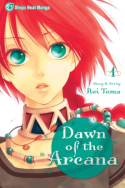
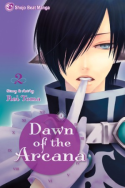
Dawn of the Arcana, Vols. 1-2

January 29, 2012 by Michelle Smith

By Rei Toma | Published by VIZ Media

In premise, Dawn of Arcana sounds like fairly generic shoujo fantasy. Princess Nakaba of Senan is married to Prince Caesar of Belquat in an arrangement ostensibly meant to ensure peace between their warring kingdoms, but which nobody expects to do so for long. Nakaba is resigned to her fate, but not without backbone, while Caesar is arrogant and entitled and makes remarks like, “Make no mistake. You are my property.” It’s pretty obvious they will fall for each other soon.

Accompanying Nakaba is her demi-human attendant, Loki, who belongs to an enslaved race possessed of heightened strength and senses. He’s been by Nakaba’s side ever since the village in which she lived was attacked by Belquat soldiers—evidently, her mother (also a princess) eloped with a member of a race possessed of precognitive powers, which Belquat was attempting to wipe out and of which Nakaba is now the only survivor—and so she feels much love and gratitude for him.

The first volume mainly focuses on Nakaba’s attempts to fit in around the enemy castle. In Senan and Belquat, only royalty have black hair, so the fact that hers is red has always prompted sneers, curiosity, and contempt, so the reaction would be the same no matter where she resided. Gradually, she gets to know Caesar a little better, and we see that his main problems are youth and actually buying into the “it’s your right” lectures that his mother has been subjecting him to since childhood. Here’s a great sample exchange between them:

Caesar: (After planting a smooch on Nakaba.) I’m a prince, and this is my kingdom. If I want something, I take it.

Nakaba: You may be a prince, but there are some things you’ll never have. Allow me to be the first.

Nakaba actually trusts him to keep his word when he promises to help Loki get out of trouble at one point, and expresses faith in his abilities to succeed in the very endeavors which his mother discouraged him from even trying. In return, he somewhat awkwardly tries to make her happy by bestowing lavish gifts upon her, and learns that a simple thing like caring for a wounded bird does the job better than fancy dresses. It’s certainly nothing new for a surly hero to be thus tamed by a spunky heroine, but I like the development all the same.

And speaking of development, volume two is a lot more interesting than the first. While someone plots to poison Caesar—and attempts to frame Nakaba for the deed—tension is brewing between Nakaba’s husband and her attendant. Loki intervenes to save Caesar from the would-be assassin, but admits that this is only to earn his trust. “I do want him dead… Have you forgotten? They are the enemy.” For too long, Loki’s people have been kept down, and he is now plotting rebellion. “You must not let him into your heart,” he warns, knowing that Caesar must eventually be his target, but though Nakaba attempts to comply, out of loyalty to Loki, she’s ultimately unable to do so.

Despite the fact that Nakaba falling for Caesar is predictable, I still like them together—how she improves him, and how he manages to make her feel safe yet simultaneously guilty—and I really like that she’s torn between these two guys, but not exactly in a romantic sense. Even while her feelings for Caesar are growing, she’s aware of the possibility that she’ll end up betraying him for Loki’s sake. Personally, I’m betting on Caesar becoming aware of the atrocities committed by his father and joining Loki’s cause—there have been some hints in this direction already—but the angst will be fun in the meantime.

Ultimately, this is a solidly good series. It’s not great yet, but it’s also far from bad.

Dawn of the Arcana is published in English by VIZ Media. Volume one is out now and volume two will officially be released on February 7, 2012. The series is ongoing in Japan, where the ninth volume has just come out.

Review copies provided by the publisher.

Filed Under: REVIEWS Tagged With: shojo beat, VIZ

Book Girl and the Corrupted Angel

January 29, 2012 by Sean Gaffney

By Mizuki Nomura. Released in Japan by Enterbrain. Released in North America by Yen Press.

As I noted in my previous review of Book Girl, the plots and mysteries in these novels all seem to take the same turns. So rather than focus on how Konoha finds once again how his life mirrors that of the guest star this week, I have some thoughts that occurred to me as I read it, which will contain spoilers for both this book and the previous three.

First of all, as the author notes in her afterword, the cliffhanger from Book Three is not touched on here at all, except for the fact that Konoha reveals that yes, he did actually know about it and this is not a “secret” being kept from him. The reasoning for this is because Nomura-san felt that if she moved on to the ‘finale’ right now, it would do Nanase a disservice. Which is true, I suppose, except that for a book that is meant to be her focus book, Nanase gets startlingly little to do here. I’ve had issues with her in the past three books – I felt she was the flattest of the characters, and looked forward to seeing what happened with her here – but so much of the action in this book revolves around her being a touchstone to the other characters, an ideal, rather than interacting with her as a person.

That said, her scene with Konoha in the abandoned house of Mito’s family is brilliant, and a good thing too, as it’s likely to be the last decent interaction she’ll get with Konoha. Nanase may be a tsundere, but she’s never been able to repress her emotions at all. Whereas Konoha is *all* repressed emotions – except they keep slipping out of him with every panic attack he has. Their confessions and commiserations are done over cell phones, even though they’re sitting next to each other – which is both heartwarming and also quite sad. And then, finally, Nanase confesses. And Konoha, neither as the narrator nor in dialogue, ever acknowledges that she has for the rest of the novel. Not even when people confront him on it point-blank, or refer to it obliquely. Indeed, his narration can be quite aggravating as he tries to think of things to do to cheer Nanase up – you can hear your teeth grind as you read it.

For all that Konoha has been supposedly growing with each novel, he still shows signs here of being nowhere close to a functional human being. Which is absolutely fine. I mean, Konoha essentially has post-traumatic stress disorder, among other problems. As he learned in the previous Book Girl, these aren’t the sorts of things that can be resolved in a nice, pat 30-minute TV show. His joy at talking with Mariya-san earlier is based around the fact that he constantly seeks others that he can emulate, and thinks that the quiet, chai-loving joys of this music teacher give him hope. Of course, this is then stomped to bits over the rest of the book. Honestly, the real ways that Konoha grows in this book is in relation to his writing. Slowly he is coming to realize the joy that reading Miu Inoue has given to others, and that it’s not just because they’re shallow or are seeking escape in a happy fantasy world. He is accepting his own work, which will (we hope) eventually lead him to accept his own self.

Tohko, of course, is the primary reason this is happening at all. Despite having a vague harem-atmosphere in the broadest sense, the meat of this series has absolutely nothing to do with “who will Konoha end up with?” Which is good, as it’s unlikely to be Tohko, the titular Book Girl. She’s absent from a lot of the investigation for once, as she’s preparing for college exams. Of course, she blows off her practice exams in order to solve the mystery. She’s fulfilling several functions in Konoha’s life, but perhaps the most important is keeping him writing – even if he refuses to admit that what he writes for Tohko is the same thing as what he wrote as Miu Inoue. His writing is a gift, a real talent, and by Tohko not allowing that to die, even under a purportedly selfish guise of “wanting snacks”, she can help to heal his heart. Tohko is not really a love interest here – more of a muse, with a bit of therapist thrown in.

The book examined here, by the way, is The Phantom of the Opera, as stated on the back cover. With a bit of Dumas’s Camille thrown in. It’s a book that has most people nowadays thinking of the adaptations instead, as Tohko acknowledges, but it also prepares us for a lot of high emotion. Konoha’s fits and panic attacks seem even higher-strung than the prior books, and the denouement of the mystery consists of a lot of people screaming at each other. There’s a lot of sordid things happening here, as with previous Book Girl novels. Enjo Kosai, or “compensated dating”, comes up as a main plot point, and it’s not glamorized at all – it’s sordid and disempowering. The actual finale of the book, on the other hand, is quite quiet and beautiful – and leaves a little bit of hope, which is all you ask for a series like this.

As I said, the cliffhanger from Book Three is not resolved here, but Miu Asakura, the girl from Konoha’s past, does pop up here and there in Nanase’s backstory and narration – and doesn’t sound at all pleasant. Well, we couldn’t expect all happy smiles and forgiveness, now could we? Even though we don’t meet her here, she is enough of a force that Nanase’s final statement manages to be a cliffhanger on its own. After being faked out last time, I’m not sure if Book Five will resolve it either – there are eight books in the series, after all. But certainly I want to read more, and July, which sees Book Girl and the Wayfarer’s Lamentation (these titles always sound so sad) seems very far away. Recommended.

Filed Under: REVIEWS

Game Review: Motto Tanto Cuore

January 28, 2012 by Paul Beasi 4 Comments

A party in the park with our favorite maids!
Bits & Blips: Manga Bookshelf Edition

The maids are back, and this time they’re getting ready for a party! If you’ve read my review of Tanto Cuore (and if not, I suggest you do so now if you aren’t familiar with the game) then you know that I was pleasantly surprised by it. Motto Tanto Cuore by Arclight Games brings back some familiar faces along with some new ones, and introduces a mechanic that once again brings a new twist to the deck building genre. I won’t go into too much detail with what hasn’t changed and will instead focus on the changes and additions.

Celina Lavaux—High Class Maid in charge of decorations.

Setup and Gameplay:

Motto Tanto Cuore has a new group of maids called the High Class Maids and a new type of card called Preparation Cards which come in three types: Decorations, Food, and Cleaning. The Preparation cards are strictly victory point (VP) cards that players are trying to acquire during the game. There is also a “first master” card which will be given to the start player (chosen randomly) at the beginning of the game. These cards, along with ten of the thirteen general maids and the 1, 2, and 3 love cards make up the “park.” The general maids and the love cards are all considered “staff.”

The general maids have a new “skills” section on them with varying amounts of Concentration (Con), Effort (Eff), and Ingenuity (Dev). Why is ingenuity “Dev”? I used some online tools to translate the Japanese characters in that box and while Google Translate comes up with “Device,” other Japanese-to-English specific sites came up with different things such as imagination and ingenuity. Thematically, “ingenuity” made more sense to me than “device” so that’s the translation I used, while I suspect the publisher chose “device”. It doesn’t really matter much since you will mostly be concerned about matching the skills on the maids with the requirements on the Preparation cards.

In turn order, starting with the player who has the “first master” card, each player will select one of the nine High Class Maids. These maids each have a special ability that will take effect at the start of a player’s turn. Three of these maids are linked to obtaining Preparation cards, and one of them allows the holder to take the “first master” card from the player who is currently holding it. The remaining maids offer special abilities such as gaining additional servings, employs, callings, or love. One of them lets you return a “1 love” card to the park, useful for thinning out your deck.

A Cleaning Preparation card.

Once everyone has selected a High Class Maid, the players begin their turns again starting with the player who holds the “first master” card. First, the High Class Maid’s special ability (if she has one) takes effect. Next is the “Serving phase” where the player will use “servings” (actions) to play cards from her “side” (hand). The next step is a new phase called the “Work phase.” In this phase, players will gain Preparation cards. In order to gain a Preparation card, the following requirements must be met:

  1. The player must have the equivalent High Class Maid.
  2. The player must have played cards during the Serving phase with the correct amounts of skills required: Effort, Concentration, and/or Ingenuity.

If the conditions are met, then the player takes the top Preparation card from the pile that she qualified for and places it in her house (not in the deck). There is no limit to how many Preparation cards may be gained on a turn provided the player can meet the skill requirements for the next card. The Preparation cards get more valuable as the pile is depleted, but the costs get steeper.

Players now have an opportunity to “employ” (buy) new staff. Any new staff is placed in the “kitchen” (discard pile). Finally, the High Class Maid is returned to the park and the “Cleanup” phase is executed. Play now passes to the next player. At the end of the round, whoever is now in control of “first master” card will be the new start player.

Play continues until two of the general maid piles or one of the Preparation card piles have been depleted. When this happens, the current round is finished. Once all High Class Maids have been returned to the park in this final round, the game is over.

Artwork:

Once again, an incredible number of Japanese artists were brought in to design the cards. There isn’t much new to say here about the art that I didn’t already mention in my review of Tanto Cuore. Some people will like the art, some will hate it, and some will probably just ignore it. I like most of the new cards, although like before there are one or two that push up against my own personal taste boundaries, but none that outright offend me.

No one messes with the Hitmaid!

Is it different enough?

While some of the mechanics are the same, the introduction of the High Class Maids and Preparations gives the game a very different feel from the original. You have just five cards in your hand when you have to choose your High Class Maid. Do you have all the servings and skills you need to get a Preparation card? If so, then take the corresponding High Class Maid—unless someone else already did! If not, is it possible for you to draw the cards you need this turn? Is it worth the risk of taking a High Class Maid you might not ultimately get to use if you don’t draw the right cards? Or maybe you think you’ll have the right cards next turn, and you should get that “first master” card so you don’t miss out.

Points are a lot more scarce in Motto Tanto Cuore. You need to get those Preparation cards. Sure, there are other ways to get points, either from high cost general maids or with chamber maids as in Tanto Cuore, but not as easily. In this game, building a deck that will get you the right skills at the right time is critical. That’s not to say a deck that generates a lot of love (enabling you to buy those high cost maids) couldn’t be a winning strategy, but I have yet to see that play out.

Can I use cards from Tanto Cuore and its two expansions?

Yes! You can add any combination of 10 Private maids, the Illness and Bad Habit cards, and/or a single pile of 10 random maids from any Tanto Cuore set to create an 11th pile of general maids. The old games can expand the new one; I think that’s pretty slick.

Downsides:

Although there are instructions for two and three player games which involve removing some cards, this game will play the best with four players. With two players, there’s rarely any competition for the High Class Maids. I played it this way and enjoyed it, but games with more players were far more interesting. If you’re looking for a good two player game, I would stick with the original.

Also, we did notice that if one player manages to snatch up most of the Chiffon Loudenne general maids, that player’s ability to generate Effort became really powerful, making it pretty easy to grab the cleaning Preparation cards and run away with the win. My current thought is “don’t let that happen”, but that means one pile is going to get depleted rapidly in almost every game, since she’s an inexpensive card and you need three of her to really see her full potential.

Conclusions:

Overall, I’m very happy with this new take on Tanto Cuore. The role selection mechanic and new VP cards make for some different choices and strategies that I enjoy a lot. However, it probably won’t hit the table as often as Tanto Cuore, simply because it’s easier for me to find one or two players who are willing to play than it is to find four, and this game really shines with four.

An important note: Currently, this game does not have an English publisher, so it is only available in Japanese. Cardhaus games specializes in Japanese boardgame imports and you can get this one as well as many other Japanese-only titles there. You can find translated rules and cards on BoardGameGeek. All translations were provided by the magnificent Simon Lundström to whom I owe a great deal of thanks for his tremendous work.

Age: 12+
Length: 30-60 mins
# of players: 2 to 4

Designer: Masayuki Kudou
Pubisher: Arclight Games
Artists:

Tohru Adumi
COMTA
F.S
Akira Hayase
Kinoshita Ichi
Natsuki Koko
Souji Kusaka
Misa Matoki
Rin Minase
Nana
Aoi Nanase
Nishida
Fujii Rino
Poyoyon Rock
Ruchie
Sanba-sou
Ofuu Yamadori
Kazuno Yuikawa

Filed Under: Bits & Blips, Game reviews, REVIEWS Tagged With: motto tanto cuore, tanto cuore

Usamaru Furuya Manga Moveable Feast: Roundup Three

January 28, 2012 by Ash Brown

© Usamaru Furuya

We’re nearing the end of the Usamaru Furuya Manga Moveable Feast, so here’s the third roundup to help you catch up with what’s been going on these last couple of day!

I posted two reviews here at Experiments in Manga. One for the first volume of Short Cuts, which I thought was hilarious, and one for the first volume of Genkaku Picasso. Personally, I find Genkaku Picasso, Volume 1 to be one of Furuya’s weaker manga, but it’s still intriguing and the next two volumes in the series do improve.

At A Case Suitable for Treatment (now a part of the Manga Bookshelf network), Sean Gaffney reviews both volumes of Short Cuts, his first exposure to Usamaru Furuya’s work:

It takes on a lot of funny subjects, especially the kogal movement in Japan, but it’s never mean about them. You get the feeling that Furuya likes these girls, and is rooting for them. And we do as well.

Lori Henderson of Manga Xanadu returns to the Feast, this time with a review of Genkaku Picasso, Volume 1, having first read a preview in Shonen Jump, but only now reading the entire volume:

What makes Genkaku Picasso work so well are its characters. Furuya has created a quirky lead with a cast of characters to match. Hikari Hamura, aka Picasso, so named for a spelling error and his love of drawing, is a fun yet endearing lead.

Kristin Bomba, writing for Comic Attack, takes a look at Furuya’s No Longer Human, Volume 2:

Furuya has a wonderful ability to illustrate the human condition, in particular the darker parts of it, making No Longer Human an excellent read.  I can’t say it’s for everyone […] but if you want a good story that is so fantastical it feels absolutely real, a story of one person’s struggle to do more than exist, then be sure to check this series out.

MJ and Michelle Smith also discuss No Longer Human as part of a regular feature at Manga Bookshelf, “Off the Shelf”. They have a marvelous conversation addressing Furuya’s artistry and the women in Yozo’s life among other topics:

Disaster is clearly just around the corner, in the same sure way as you’d expect in, say, a Dickens novel. Yoshino is doomed just as it seems Oba is truly doomed, and nobody’s even trying to hide it. Furuya makes the most of this, too.

And there we have it…for now! Tomorrow is the final day of the Feast and there will be one last wrap up post before it’s done. Please let me know of any Feast content that I might have missed so that I can include it in the archive. Please enjoy the rest of the Feast!

Filed Under: UNSHELVED Tagged With: Manga Moveable Feast, Usamaru Furuya

  • Page 1
  • Page 2
  • Page 3
  • Interim pages omitted …
  • Page 7
  • Go to Next Page »
 | Log in
Copyright © 2010 Manga Bookshelf | Powered by WordPress & the Genesis Framework