• Skip to primary navigation
  • Skip to main content
  • Skip to primary sidebar
  • Home
  • About Us
    • Privacy Policy
    • Comment Policy
    • Disclosures & Disclaimers
  • Resources
    • Links, Essays & Articles
    • Fandomology!
    • CLAMP Directory
    • BlogRoll
  • Features & Columns
    • 3 Things Thursday
    • Adventures in the Key of Shoujo
    • Bit & Blips (game reviews)
    • BL BOOKRACK
    • Bookshelf Briefs
    • Bringing the Drama
    • Comic Conversion
    • Fanservice Friday
    • Going Digital
    • It Came From the Sinosphere
    • License This!
    • Magazine no Mori
    • My Week in Manga
    • OFF THE SHELF
    • Not By Manga Alone
    • PICK OF THE WEEK
    • Subtitles & Sensibility
    • Weekly Shonen Jump Recaps
  • Manga Moveable Feast
    • MMF Full Archive
    • Yun Kouga
    • CLAMP
    • Shojo Beat
    • Osamu Tezuka
    • Sailor Moon
    • Fruits Basket
    • Takehiko Inoue
    • Wild Adapter
    • One Piece
    • After School Nightmare
    • Karakuri Odette
    • Paradise Kiss
    • The Color Trilogy
    • To Terra…
    • Sexy Voice & Robo
  • Browse by Author
    • Sean Gaffney
    • Anna Neatrour
    • Michelle Smith
    • Katherine Dacey
    • MJ
    • Brigid Alverson
    • Travis Anderson
    • Phillip Anthony
    • Derek Bown
    • Jaci Dahlvang
    • Angela Eastman
    • Erica Friedman
    • Sara K.
    • Megan Purdy
    • Emily Snodgrass
    • Nancy Thistlethwaite
    • Eva Volin
    • David Welsh
  • MB Blogs
    • A Case Suitable For Treatment
    • Experiments in Manga
    • MangaBlog
    • The Manga Critic
    • Manga Report
    • Soliloquy in Blue
    • Manga Curmudgeon (archive)

Manga Bookshelf

Discussion, Resources, Roundtables, & Reviews

yen press

Of the Red, the Light, and the Ayakashi, Vol. 1

March 24, 2016 by Ash Brown

Of the Red, the Light, and the Ayakashi, Volume 1Creator: Nanao
Original story: HaccaWorks*

U.S. publisher: Yen Press
ISBN: 9780316351966
Released: December 2015
Original release: 2012

Of the Red, the Light, and the Ayakashi was originally a visual novel developed and created by the doujin group HaccaWorks* that was released in 2011. The manga adaptation by another doujin creator, Nanao, began serialization in Japan in 2012. The first volume of the manga was also collected and released later that year. In English, the Of the Red, the Light, and the Ayakashi manga is being released by Yen Press and debuted in late 2015. I haven’t actually played the original Of the Red, the Light, and the Ayakashi, though I’m fairly certain it would be something that I would enjoy. In fact, I didn’t even known that the manga was based on a game when I first picked it up. Nor was I previously familiar with any of the creators involved which probably isn’t too surprising—I believe that Of the Red, the Light, and the Ayakashi may very well be Nanao’s first professional work as a mangaka. But, due to the evocative and vaguely ominous cover art and title as well as the promise of the involvement of yokai, the series still caught my attention.

For as long as he can remember, Yue has lived at the mountain shrine associated with the town of Utsuwa where he has been taken care of by the local fox spirits and their attendants. Despite being told not to leave the mountain, Yue and Kurogitsune, one of his fox companions, sneak out of the shrine to attend the town’s festival. The new experience, although exciting, is somewhat overwhelming for Yue. But while at the festival, he encounters two young men who stand out to him more than anyone else—whereas most people appear as shadowy, indistinguishable figures to Yue, Tsubaki and Akiyoshi are distinctive and unique presences. Upon his return to the shrine Yue is duly scolded for breaking the rules but when the master learns about Akiyoshi and Tsubaki she encourages him to meet them again. The fate of all three boys are now intertwined. Because Yue finds himself so irresistibly drawn to Tsubaki and Akiyoshi, he is told that he will one day have to choose one of them to become his “meal,” necessary for sustaining his very existence.

Of the Red, the Light, and the Ayakashi, Volume 1, page 39I was pleasantly surprised by how much I enjoyed the first volume of Of the Red, the Light, and the Ayakashi. The manga combines elements of folklore, horror, and mystery in a very satisfying way. Granted, after the first volume, readers are left with more questions than answers. Much about the series’ story, setting, and characters remain unclear at this point, but what is possibly implied is tantalizing. At times Of the Red, the Light, and the Ayakashi can be unnecessarily cryptic—entire conversations are held in which the characters obviously know what they are talking about but readers aren’t given enough information or context to really understand or follow—which is more frustrating than mysterious, but this still sparks curiosity. I am genuinely intrigued by the series; I want to know more about the ominous events and strange disappearances occurring in Utsuwa, a place inhabited by both humans and spirits which seems to be some sort of threshold between worlds.

Utsuwa isn’t the only thing peculiar that’s peculiar in Of the Red, the Light, and the Ayakashi. The characters, too, are all a bit odd. Yue goes through life in an almost dreamlike, innocent state, his real identity not only obscured to readers but to himself as well. Akiyoshi, with his eccentric behavior and flair for the dramatic, comes across as conspiracy theorist except that he actually has evidence and legitimate reasons to be concerned. Tsubaki would initially appear to be a fairly normal if somewhat moody young man if it wasn’t for the fact that humans and spirits alike frequently find themselves obsessed or enamored with him. The three form an curious bond as they begin to investigate the unusual happenings in Utsuwa. They’re not exactly friends but are far more than mere acquaintances. Supported by Nanao’s attractive (if occasionally cluttered) artwork, intriguing characters, and an effective sense of mystery and impending misfortune, Of the Red, the Light, and the Ayakashi has a dark, otherworldly atmosphere which I’m really enjoying.
Filed Under: REVIEWS Tagged With: HaccaWorks, manga, Nanao, Of the Red the Light and the Ayakashi, yen press

The Manga Revue: Handa-Kun

February 26, 2016 by Katherine Dacey

VIZ isn’t the only manga publisher experimenting with digital-first releases; Yen Press has also rolled out new titles in digital form before introducing print editions. One of the latest Yen titles to make the leap from web to page is Handa-kun, Satsuki Yoshino’s comedy about a talented teen calligrapher. If the premise sounds familiar, that’s because the title character also stars in Yoshino’s later series Barakamon–which begs the question, is Handa-kun just for fans, or will it appeal to the uninitiated? Read on for my verdict.

handakunHanda-kun, Vol. 1
By Satsuki Yoshino
Rated T, for teens
Yen Press, $15.00

By the time we meet Sei Handa in the first pages of Barakamon, he’s a twenty-something jerk who bristles at criticism, resents authority, and resists overtures of friendship. The tenth-grader we meet in Handa-kun isn’t as curmudgeonly, but he has a problem: he constantly misreads other people’s motives, whether he’s interpreting a love letter as a threat or perceiving a job offer as a “shady” attempt to unload stolen clothing. For all his weirdness, however, Handa’s classmates worship him, viewing his odd behavior and sharp calligraphy skills as proof of his coolness.

Author Satsuki Yoshino wrings a surprising number of laughs from this simple premise by populating the story with a large, boisterous cast of supporting players. Though the outcome of every chapter is the same–female suitors and male rivals alike profess their sincere admiration for Handa–the path to each character’s epiphany takes unexpected turns. Yoshino complements these humorous soliloquies with expressive, elastic artwork that sells us on the characters’ transformations.

In the volume’s best chapter, for example, Yoshino pits Handa against a bespectacled nerd named Juniichi. Juniichi’s entire self-image is rooted in his years of service as class representative–that is, until one of his peers nominates Handa for the honor. Yoshino makes us feel and smell Juniichi’s desperation by showing us how Juniichi sweats, grimaces, and paces his way through the vote-counting process, flagging or rallying with each ballot. By chapter’s end, Juniichi’s cheerful declaration that “Right now, I feel the best I have ever felt in my life” seems like the natural culmination of this fraught emotional journey–even though, of course, his feeling is rooted in a false sense of Handa’s moral rectitude.

My primary concern about Handa-kun is that the series will overstay its welcome. Handa seems fundamentally unable to learn from his interactions with peers, and his classmates seem just as clueless in their blind adoration of him. If Yoshino doesn’t take steps to change this dynamic–perhaps by introducing a character who is genuinely unimpressed with Handa–the series risks settling into a predictable routine. For a few volumes, however, the current set-up will do just fine, offering the same brand of off-kilter humor as Haven’t You Heard? I’m Sakamoto.

The bottom line: The first volume is funny enough to appeal to newbies and die-hard Barakamon fans.

Reviews: Megan R. jumps in the WABAC machine for a close look at two BL titles from the mid-00s: Brother (originally published by Drama Queen) and Love Pistols (originally published by BLU Manga). At The OASG, Justin Stroman convenes a round table discussion of Kentaro Miura’s Giganto Maxima.

Theron Martin on vol. 1 of Angel Beats!: Heaven’s Door (Anime News Network)
Matt on vol. 1 of Die Wergelder (Ani-TAY)
Matt on vol. 1 of Dimension W (Ani-TAY)
Julie on vol. 1 of FukuFuku: Kitten Tales (Manga Maniac Cafe)
Helen on vol. 1 of Ga-Rei (The OASG)
Sarah on vols. 2-3 of Kiss Him, Not Me! (Anime UK News)
Sheena McNeil on vol. 8 of Kiss of the Rose Princess (Sequential Tart)
Karen Maeda on vol. 3 of Komomo Confiserie (Sequential Tart)
Terry Hong on vol. 5 of Master Keaton (Book Dragon)
Ken H. on vol. 7 of Noragami (Sequential Ink)
SKJAM! on vols. 10-11 of Ooku: The Inner Chambers (SKJAM! Reviews)
Plutoburns on Parasistence Sana (Plutoburns)*
Marissa Lieberman on vol. 1 of School-Live! (No Flying No Tights)
Matt on vol. 2 of School-Live! (Ani-TAY)
Kane Bugeja on vol. 7 of Seraph of the End (Snap 30)
Sarah on vol. 4 of Servamp (Anime UK News)
Rebecca Silverman on vol. 1 of Taboo Tattoo (Anime News Network)
Nic Creamer on vol. 3 of UQ Holder! (Anime News Network)
Michael Burns on vols. 5-6 of Yamada-kun and the Seven Witches (Ani-TAY)

* Denotes a video review

Filed Under: MANGABLOG, REVIEWS Tagged With: Barakamon, Handa-kun, Manga Review, yen press

The Manga Revue: Idol Dreams and Monthly Girls’ Nozaki-Kun

January 15, 2016 by Katherine Dacey

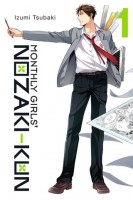
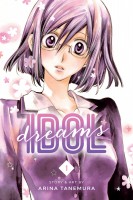
Happy New Year! (Is it too late to extend that greeting to readers?) For my first column of 2016, I dove into my pile of unread books and chose two that I’d meant to review last year. The first is Arina Tanemura’s Idol Dreams, a body-swap comedy about a thirty-something office lady; the second is Izumi Tsubaki’s Monthly Girls’ Nozaki-Kun, a 4-koma series about a hunky high school manga artist who just happens to be the author of a popular girls’ comic.

idol-dreams-vol-1Idol Dreams, Vol. 1
By Arina Tanemura
Rated T, for readers 13 and up
VIZ Media, $9.99

Chikage Deguchi is at a crossroads: once a pretty, popular high school student, she’s become a sexless, thirty-something office drone who’s mocked by her co-workers. After making a fool of herself at a high school reunion, Chikage’s childhood friend Tokita stages a unique intervention, offering Chikage a drug that transforms her into a 15-year-old girl for a few hours a day. Chikage then does what any self-respecting 31-year-old would do: she pursues a (part-time) career as a teen idol.

Setting aside the question of whether anyone would voluntarily relive their teenage years, Idol Dreams has a bigger problem: tone. Arina Tanemura can’t decide if her story will revel in its absurdity or play things straight, and veers wildly between wacky show-biz hijinks and clumsy office scenes that are meant to establish just how awful Chikage’s adult life is. In the afterword to the story, Tanemura cheerfully vents her frustrations at being asked to do “a magical girl series for adults” without recourse to “too much screentone,” “gags and comedic touches,” or “super-stylish atmosphere.” Oddly enough, I don’t think these restrictions are the true source of the problem; if anything, Tanemura’s artwork is more polished and appealing in Idol Dreams than in Phantom Thief Jeanne or I.O.N. The real issue is the lead character: Tanemura never really explains why temporarily impersonating a 15-year-old would solve any of Chikage’s issues, especially since Chikage’s teenage alter ego is a wet noodle, too. The underlying message seems to be that recapturing youthful beauty is a pathway to empowerment–not a particularly novel or uplifting idea, given the developed world’s obsession with Botox, face lifts, wrinkle cream, and 17-year-old models.

The bottom line: I never thought I’d say this, but Idol Dreams is the rare Tanemura manga that would benefit from more zaniness and sparkly backgrounds.


monthly_girlsMonthly Girls’ Nozaki-Kun
, Vol. 1
By Izumi Tsubaki
Rated T, for teen readers
Yen Press, $13.00

Monthly Girls’ Nozaki-Kun is a textbook example of what happens when a great idea bumps up against the limitations of a restrictive format. The set-up is comedy gold: tenth-grader Chiyo Sakura confesses her romantic feelings to hunky classmate Umetarou Nozaki, only to have him casually respond, “Do you want to come to my place right now?” Flustered, Chiyo agrees but is surprised when Nozaki doesn’t put the moves on her; instead, he puts her to work on a chapter of his hit shojo manga Let’s Fall. Chiyo’s attempts to extricate herself from Nozaki’s employ or clarify her feelings for him only make things worse, as Nozaki is both romantically inexperienced and genuinely obtuse.

So far, so good: the concept provides plenty of fodder for jokes and pratfalls. The four-panel format, however, locks each character into a holding pattern in which he or she is doomed to repeat the same behavior over and over again. The supporting cast is big enough to prevent Monthly Girls from reading like a month’s worth of Cathy or Garfield strips, but the rhythm of every gag is virtually the same, whether author Izumi Tsubaki is introducing a new character, poking fun at shojo manga cliches, or demonstrating just how socially inept Nozaki really is; long stretches of Monthly Girls read like a Henny Youngman set, albeit with stranger–and funnier–material. Take my manga… please!

The bottom line: Some of the jokes are genuinely funny, but the series already feels like it’s chasing its tail by the end of chapter three.

Odds and Ends: Organization Anti-Social Geniuses has a new look, a new name, and a new URL. You’ll now find Justin Stroman and the gang at http://www.theoasg.com/. Manga vlogger Pluto Burns took a break from reviewing books and conducted a great interview with Carolina Manga Library founder Laura Mehaffey. If you’re not familiar with the good work that Mehaffey and her staff are doing, click here to learn more about this traveling book collection.

Reviews: Sean Gaffney, Anna N. and Michelle Smith post their first Bookshelf Briefs column of 2016. On the agenda: D-Frag!, My Love Story!!, Pandora Hearts, and Saki. Elsewhere on the web, Rebecca Silverman and Kory Cerjak review the first volume of Yowamushi Pedal, my pick for Best New Manga of 2015.

Chris Kirby on vol. 1 of 7 Billion Needles (The Fandom Post)
Karen Maeda on vol. 7 of Assassination Classroom (Sequential Tart)
Matthew Warner on Ayako (The Fandom Post)
Sheena McNeil on vol. 1 of Bloody Mary (Sequential Tart)
Megan R. on CLAMP School Detectives (The Manga Test Drive)
Justin on Confession (The OASG)
Kate O’Neil on vol. 5 of Demon from Afar (The Fandom Post)
Sean Gaffney on vol. 3 of Emma (A Case Suitable for Treatment)
Sean Gaffney on vol. 1 of Honey So Sweet (A Case Suitable for Treatment)
Ash Brown on vol. 3 of JoJo’s Bizarre Adventure, Part 1: Phantom Blood (Experiments in Manga)
Sheena McNeil on vol. 19 of Kamisama Kiss (Sequential Tart)
Ken H on vol. 1 of LD♥K (Sequential Ink)
Rebecca Silverman on vol. 1 of Livingstone (Anime News Network)
Lori Henderson on vol. 1 of Monthly Girls’ Nozaki-Kun (Manga Xanadu)
Dustin Cabeal on vol. 2 of My Hero Academia (Comic Bastards)
Sean Gaffney on vol. 1 of Of the Red, the Light, and the Ayakashi (A Case Suitable for Treatment)
Kane Bugeja on vol. 3 of One-Punch Man (Snap 30)
David Brooke on vol. 4 of One-Punch Man (AiPT!)
Dustin Cabeal on vol. 4 of One-Punch Man (Comic Bastards)
SKJAM! on vol. 18 of Rin-ne (SKJAM! Reviews)
Ken H. on vol. 9 of Say I Love You (Sequential Ink)
Helen on vol. 1 of Student Council’s Discretion (The OASG)
Patrick Moore on vol. 8 of Tiger & Bunny (Bento Byte)
Che Gilson on Tokyo Ghoul (Otaku USA)
Marion Olea on vol. 2 of Tokyo Ghoul (No Flying No Tights)
Frank Inglese on vols. 8-9 of Vagabond: VIZBIG Edition (Snap 30)
Ash Brown on vol. 7 of Vinland Saga (Experiments in Manga)
SKJAM! on vol. 7 of Vinland Saga (SKJAM! Reviews)
Megan Rupe on vols. 1-2 of Yo-Kai Watch (No Flying No Tights)


Filed Under: MANGABLOG, REVIEWS Tagged With: 4-koma, Arina Tanemura, Manga Review, shojo, viz media, yen press

The Most Anticipated Manga of 2016

January 4, 2016 by Katherine Dacey

We’re kicking off 2016 with a look at the manga titles and trends we’re most excited about. Joining me and Brigid is manga journalist and critic Deb Aoki, former guide to AboutManga.com, current host of Manga Comics Manga, and Publishers Weekly contributor.

What new manga are we looking forward to this year?

New Fruits BasketBRIGID: Fruits Basket! Natsuki Takaya’s tangled tale of a cursed family was one of the first shoujo manga I ever read, and I’m looking forward to re-reading it with a more experienced eye (and a better translation).

The other upcoming manga that everyone seems to be looking forward to is Princess Jellyfish, which Kodansha is publishing in double-sized omnibus volumes. This josei title about a bunch of nerdy girls living in their own rooming house sounds like it will be a lot of fun.

In terms of continuing series, I loved the first volume of Planetes and I’m looking forward to more. It’s a smart science fiction story with likeable characters and thoughtful storylines, and Dark Horse’s new edition is a beautiful two-volume omnibus that really feels like something special. I can’t wait to read more of Hiroya Oku’s Inuyashiki, about two humans given extreme superpowers in a freak accident—one uses them for good, one… doesn’t—and Yoshitoki Ōima’s A Silent Voice, an amazingly powerful story that’s about bullying but also about alienation and redemption. One more: Your Lie in April, which has kind of slid under the radar, a shonen romance about musicians that, like A Silent Voice, goes beyond the standard shonen romance tropes and has relatable characters experiencing real emotions.

On a general note: When I was compiling my lists of the best new and ongoing manga series of 2015, I was struck by how many really good manga debuted in 2015. From all accounts, 2016 is going to be even better.

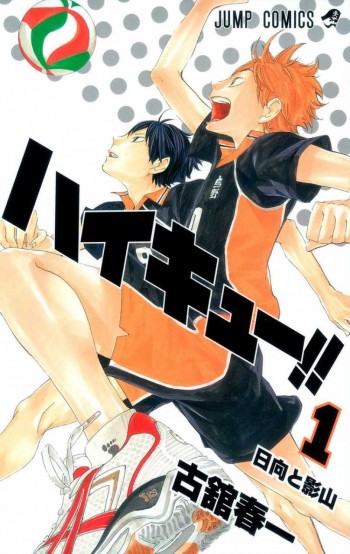
haikyuuDEB: I’m most excited about the trend where manga publishers are taking chances on titles and genres that were once considered the third rail/extra risky to license, like sports manga. Super excited about the Summer 2016 arrival of the first volumes of Haikyu!! by Haruichi Furudate and Kuroko’s Basketball by Tadatoshi Fujimaki from Shonen Jump/VIZ Media! I love Haikyu!! a lot — been watching the first and second seasons on Crunchyroll over and over again. the characters are really wonderful — it’s delightful to see the team grow and reach new heights every time. It’s got lots of heart and humor as well as exciting sports action. It’s now one of my all-time faves!
I’ve also been enjoying the recently released Yowamushi Pedal by Wataru Watanabe, a manga about a hapless anime otaku who discovers that he has a talent for bicycle racing. Big ups to Yen Press for publishing this fairly long series in double-sized volumes.

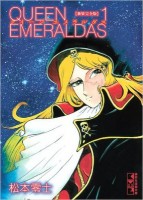
queen-emeraldas-smallAnother example of manga publishing biz in the US dipping their toes into riskier fare is the upcoming publication of three classics: Rose of Versailles by Riyoko Ikeda from Udon Entertainment, Queen Emeraldas by Leiji Matsumoto from Kodansha Comics, and Otherworld Barbara by Moto Hagio from Fantagraphics Books.  For too long, the classics that are the foundation of manga in Japan have been largely unavailable in English. I’m hoping that these titles succeed so we can someday get more.

Also super excited about having more manga by Asano Inio available in English. Solanin and What a Wonderful World! are go-to recommendations for anyone who loves indie comics and is curious about manga. Now VIZ Media is publishing the mind-bending Goodnight Pun Pun, and A Girl on the Shore, coming from Vertical Comics. Both should be on your pre-order lists, as these are beautifully drawn, thought-provoking books that everyone will be talking about in the months to come.

rose-of-versailles-udonKATE: I share Deb’s excitement about classic manga. It’s a risky undertaking for any publisher, especially when so many readers are young (under 20) and not particularly curious about the medium’s roots. It will be interesting to see if UDON can pitch Rose of Versailles to the Shojo Beat crowd; though the artwork is a little dated, the melodrama, costumes, and kick-butt female lead have obvious parallels with titles in VIZ, Kodansha, and Yen’s catalogs. Who knows? It could be a surprise hit.
Speaking of vintage titles, I’m ecstatic about Drawn & Quarterly’s new Kitaro volumes. D&Q will be releasing these previously untranslated stories in slimmer, kid-friendly editions–a departure from their 2013 Kitaro release, which screamed “prestige project!” I think that’s a smart move: adults with an interest in Shigeru Mizuki’s work will buy it in almost any format, but younger manga fans need a length and trim size that reflects their own reading habits.

Another title on my must-read list is Jiro Taniguchi’s Guardians of the Louvre, which NBM Publishing will be releasing in April. The previous installment of the Louvre series–Hirohiko Araki’s Rohan at the Louvre–was the ultimate otaku two-fer: a ghost story and a standalone chapter in the JoJo’s Bizarre Adventure saga. Taniguchi’s book will undoubtedly be a more sober affair, but one I’m anticipating with the same eagerness: I can’t wait to see how Taniguchi integrates the museum’s famous collection into his story.

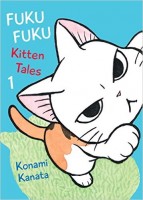
fukufukuIn the just-for-fun department, I Am a Hero, a zombie thriller from Dark Horse, is near the top of my list, as are VIZ’s Haikyu! (mentioned by Deb above), Vertical’s FukuFuku: Kitten Tales, and the final installment of DC Comics’ Batman: The Jiro Kuwata Batmanga. I’m also looking forward to Wandering Island, a story about a gutsy young woman who runs an air mail service in a remote corner of Japan. The illustrations are by Kenji Tsurata, the creator of the criminally under-appreciated Spirit of Wonder, which was published by Dark Horse in 1998.

Last but not least, I’d also make a plug for The Osamu Tezuka Story: A Life in Anime and Manga. This visual biography clocks in at a hefty 900 pages, highlighting important periods in Tezuka’s career as an illustrator and animator. Its author, Toshio Ban, worked closely with Tezuka in the 1970s and 1980s, giving Ban a unique perspective on his subject. As an added bonus for American readers, Stone Bridge Press brought in Frederick L. Schodt to do the translation.

How about conventions—does anything look particularly tempting?

DEB: I’m always curious to see what Toronto Comic Arts Festival will be bringing as their guests this May. Last year was Gurihiru and Aya Kanno, prior years brought Konami Kanata, Moyoco Anno, Akira Himekawa, Usamaru Furuya, Est Em, Natsume Ono and Yoshihiro Tatsumi to name just a few. I don’t know what they have planned, but I know it’ll be worth the trip!

As booth space and tickets get harder and harder to get at San Diego Comic-Con, Anime Expo in Los Angeles has turned into the Japanese content biz must-go show. I’ve noticed that more companies from Japan are buying booths, and see lots of meetings / business being conducted at the show.

It’s great that AX is getting bigger and bigger, but I worry that it creates a situation where the anime/manga world becomes even more segregated/separated from the general pop culture community that converges at Comic-Con and similar American shows. This is especially irksome because it seems like most of the Western comics / pop culture press corps basically ignore / don’t report on / don’t attend Anime Expo or any of the announcements that come out of this show.

This pisses me off because anime/manga matter more than ever — especially as its fandom tend to skew younger, are more active, and more interested in all kinds of entertainment from US and Japan compared to their counterparts on the superhero side of the comic shop. So much for my “be less crabby in 2016” resolution… ;-)

KATE: I had a blast attending shows like New York Comic Con and Wondercon in the late 2000s. The last time I attended NYCC, however, I felt that the show had taken a much sharper turn towards the television, film, and gaming industries, and was losing its identity as a comics convention. The manga publishers were still there, of course, but it was harder to circulate and interact with editors and sales reps because of the enormous crowds. That experience pretty much soured me on going to any more big conventions. TCAF always sounds like a blast, but the timing never works for me; I’m always knee-deep in final exams and student papers when it rolls around!

BRIGID: I echo Deb’s concern about AX, but it does seem like this year, the news was spread across a broader swath of conventions—and many of the new licenses, including Fruits Basket, were announced on Twitter. The presence of so many people from the Japanese publishers—not just creators but editorial staff as well—was very noticeable this year and shows that the publishers are taking the American audience seriously. It also enhanced the experience to see, for instance, the editor of Noragami explaining the process of how it went from sketches to finished page. I’m looking forward to more of that at the larger shows as well as the more intimate experience at the smaller shows, where the creators and their readers are not so far apart.

Any predictions about the industry?

DEB: Almost all signs point to a healthier, more robust manga publishing business in 2016, which is a great thing. I don’t see the same rush to publish anything and everything vaguely manga-ish (even crappy manga) that I saw prior to the crash of the late 2000’s — publishers seem to be making more careful choices, more calculated risks. The fact that they’re taking any risks at all — by expanding genres, offering their stories via more digital channels and doing more simulpub/same day as Japan releases, is a good sign.

I’m also intrigued/encouraged by the efforts being made by Japanese manga publishers to welcome submissions by creators from outside of Japan, like Comics Zenon’s Silent Manga Audition contests and the Japanese edition of Shonen Jump’s latest contest to get published in their online magazine, Jump Plus. It’s no secret that many up-and-coming comics creators from around the world are inspired by manga, so it’ll be very interesting to see what happens when more of these creators get exposure in Japan and guidance from Japan’s top-notch manga editors.

magus1KATE: I’m consistently impressed by Seven Seas’ tenacity and business acumen, but not so impressed with the actual titles they license. Last year, however, Seven Seas published The Ancient Magus’ Bride and acquired Orange, neither of which fit the profile of a typical Seven Seas manga; if anything, both seemed like the kind of titles that CMX used to license. That gamble has paid off with Bride, which recently cracked the NY Times Manga Bestseller list. My prediction: Seven Seas will continue to make bold licensing choices in 2016, even as vampire-monster girls remain their core business.
BRIGID: I see publishers taking manga more seriously as the audience expands. While the “pile ‘em high and sell ‘em cheap” attitude that made Tokyopop and Viz’s Shonen Jump lines such a success ten years ago works well with teen readers, who gobble up manga in quantity, publishers are starting to cater to older readers who want a somewhat better experience. The oversized omnibus isn’t that much more expensive than single volumes, but it allows for a more satisfying reading experience, and publishers often include extras like better quality covers and color pages. Viz’s new edition of Monster, Dark Horse’s Planetes, and Yen Press’s Emma are all examples of this, and Kodansha gets a shoutout for not only its superb editions of Vinland Saga but its deluxe Attack on Titan Colossal Edition. This seriousness goes beyond production values to the licensing of quality manga that might not have found a market in earlier years, including Inuyashiki and Naoki Urasawa’s Master Keaton.

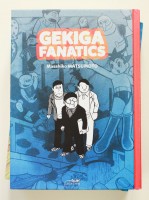
gekiga01If any publishers are reading this, I have a very specific licensing request. There’s a small French publisher called Lezard Noir that is publishing some amazing manga in French; I spoke to the publisher when I was in Angouleme two years ago and was really impressed with his line, which includes Minetaro Mochizuki’s Chiisakobé, Bonten Taro’s Sex & Fury, and Masahiko Matsumoto’s Gekiga Fanatics. I’m not the only one—every year at least one of his books is picked as an official selection by the Angouleme festival. I’d love to see some U.S. publishers pick up these titles in a similar format—I think they would have a lot of appeal to those older, more sophisticated manga readers.
Filed Under: FEATURES, MANGABLOG Tagged With: Drawn & Quarterly, fantagraphics, Kodansha Comics, Leiji Matsumoto, Most Anticipated Manga, moto hagio, NBM Publishing, Ryoko Ikeda, Seven Seas, Stone Bridge Press, Udon Entertainment, Vertical Comics, viz media, yen press

The Best and Worst Manga of 2015

December 30, 2015 by Katherine Dacey

After a two-year hiatus from blogging, I donned my critic’s cap again in 2015. I’ve enjoyed writing my quasi-weekly column, but composing a year-end list reminded me why I stepped off the reviewing treadmill in 2012: mediocre books! This year yielded a veritable bumper crop of so-so manga, titles that were competently executed but otherwise unmemorable thanks to an abundance of generic characters, cliché settings, and predictable plot twists; you’d be forgiven for feeling that you’d read many of 2015’s debuts before, even if the artists were new to the US market.

Lurking among the paint-by-number romances and boy-saves-world titles, however, were a few gems. I’ve done my best to highlight the titles that made me feel something, whether that feeling was love, hate, or a mixture of both. To that end, I’ve included my nominees for the worst manga of 2015 alongside the books that made me laugh and cry.

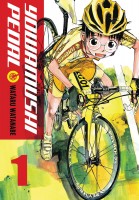
Yowamushi-Pedal-Volume-1Best New Series: Yowamushi Pedal
By Wataru Watanabe • Yen Press
You know the rap on sports manga: American readers won’t buy it, and don’t like it. Yowamushi Pedal might just change that, however, thanks to a story that plays well across the nerd-jock divide. Onoda, the hero, is a self-professed otaku whose weekly bike rides into Akihabara have transformed him into a secret Lance Armstrong clone. Though Onoda wants to revive his school’s anime club, his amazing hill-climbing skills and stamina get noticed by more seasoned riders, all of whom convince Onoda to join the cycling team. The series’ races are nail-biting, page-turning affairs, but it’s the in-between stuff that makes Yowamushi Pedal work. Onoda doesn’t just discover a new skill; he discovers a community of people who share his passion for riding and respect his talent. In short, Yowamushi Pedal is a coming-of-age story in which a bike becomes the nerdy hero’s vehicle—pun intended—for self-actualization.

One-Punch ManBest New Shonen Series: One-Punch Man
By ONE and Yusuke Murata • VIZ Media
One-Punch Man is the ultimate have-your-cake-and-eat-it-too manga. On the surface, it’s an affectionate spoof of shonen clichés that pokes fun at goofy costumes, over-the-top training sessions, and speech-prone villains. On a deeper level, however, One-Punch Man is a great adventure series about an ordinary but strong-willed individual who sets out to rid his city of monsters, only to discover that there’s a much greater threat to mankind than the lobster-men and were-lions that roam the streets. The result is a sincere, gut-bustingly funny manga that reads like a Silver Age superhero comic, splats and all. (Reviewed at Manga Blog on 6/12/15.)

Horimiya_cover1Best New Romance Manga: Horimiya
By Hero and Daisuke Hagiwara • Yen Press
Horimiya is one of 2015’s most pleasant surprises, a teen rom-com that avoids cliché situations by focusing on the characters’ lives outside school. At first glance, its lead characters look like opposites: Kyouko is the class queen, while Izumi is a quiet loner. When they bump into each other off campus, however, they quickly realize they have more in common than their carefully constructed identities would suggest–a realization that leads to friendship and flirtation. In less imaginative hands, Kyouko and Izumi’s budding romance would be subjected to endless tests–school plays, beach trips, hot transfer students–but the authors resist the urge to trot out these over-used scenarios, relying instead on more ordinary settings for comedic (and dramatic) grist. It’s the perfect antidote to the wacky misunderstandings that drive the plots of Cactus’ Secret, Special A, and a dozen similar titles.

Cat_DiaryBest New Gag Manga: Junji Ito’s Cat Diary: Yon & Mu

By Junji Ito • Kodansha Comics
Draw a Venn diagram that shows the overlap between Junji Ito fans and cat lovers, and you’ve found the small but perfect audience for Junji Ito’s Cat Diary, a collection of anecdotes about Ito’s beloved pets Yon and Mu. Though the manga’s jokes explore familiar terrain, Ito’s exaggerated reaction shots are priceless, capturing the mixture of love and disgust that cats inspire in their owners. (Imagine Edvard Munch drawing a gag manga about cats, and you get the general idea.) Ito is refreshingly honest about the way animals change the dynamic between people, too; in some of the manga’s most memorable scenes, Ito and his fiancée compete fiercely for their cats’ affection, plying Yon and Mu with toys, treats, and cuddles. Though the prevailing tone is campy, Ito’s obvious affection for his cats helps prevents the Diary from becoming too arch. (Reviewed at Manga Blog on 12/12/15.)

ludwig_kansiBest Historic Title: Ludwig B.
By Osamu Tezuka • DMP, Inc.
Left unfinished at the time of Osamu Tezuka’s death, Ludwig B. is a fictionalized biography of Beethoven. Tezuka only completed two volumes, but oh, those two volumes! Tezuka draws evocative scenes of Beethoven at the keyboard, using striking visual metaphors to convey the sound of Beethoven’s music. Tezuka also does a good job of capturing the dynamic between Beethoven and his father, revealing the extent to which Johann’s drinking, gambling, and stage-parenting cast a long shadow over Beethoven’s adult life. Purists should note that Tezuka takes frequent liberties with the historical record, creating a mustache-twirling villain named Franz Kreuzstein to serve as a foil for the young, determined Beethoven. If you’re not offended by such creative license, however, Ludwig B. offers an interesting glimpse into Beethoven’s development as a composer, and Tezuka’s lifelong fascination with Beethoven.

planetesBest Reprint Edition: Planetes
By Makoto Yukimura • Dark Horse
Listen up, manga publishers: if you’re going to do a new edition of a fan favorite, Dark Horse’s two-volume omnibus of Planetes is a swell example of how to do it right. The story has a crisp new translation, full-color pages, and a bigger trim size that gives Makoto Yukimura’s artwork room to stretch out. Better still, the new edition collects more chapters in each volume, allowing newcomers to read far enough into Planetes for Yukimura’s episodic character studies to gel into a more coherent story about space travel and social inequality; by the time newbies reach the end of volume one, they’ll be hooked, too.

sakamotoBest Manga I Thought I’d Hate: Haven’t You Heard? I’m Sakamoto
By Nami Sano • Seven Seas
In theory, Haven’t You Heard? I’m Sakamoto is a one-note samba: the titular character is handsome, good at everything, and unfailingly logical in all situations. In practice, however, Haven’t You Heard? is the Goldberg Variations of gag manga, taking stock scenes and putting a bizarre twist on them. The secret? Sakamoto is just a little too perfect, behaving more like a well-programmed android than a flesh-and-blood person. His peculiar brand of sangfroid confounds enemies and admirers alike; no one can decide if he’s cool or crazy, or where his loyalties might lie, making it impossible to predict how he’ll respond to each new challenge. (Reviewed at The Manga Critic on 8/7/15.)

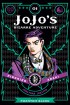
jojo_phantom_blood1Worst Manga I Thought I’d Love: JoJo’s Bizarre Adventure, Part 1: Phantom Blood

By Hirohito Araki • VIZ Media
At the risk of becoming the Armond White of manga critics, I’m nominating Hirohito Araki’s bone-crunching, chest-thumping saga for Most Exhausting New Series of 2015. That’s because Phantom Blood is a prime example of all-caps theater, the sort of manga in which every word balloon is filled with emphatic punctuation, and every plot twist seems like the brainchild of six teenage boys hopped up on Mountain Dew. In small doses, this more-is-more approach to storytelling can be amusing, but in longer installments, the cumulative effect of so much narrative excess is numb resignation; I didn’t feel entertained so much as punched in the face. (Reviewed at Manga Blog on 5/22/15.)

mizuki_hitlerMost Disappointing Manga: Shigeru Mizuki’s Hitler
By Shigeru Mizuki • Drawn & Quarterly
Shigeru Mizuki’s Hitler is one of the artist’s lesser works, uncomfortably see-sawing between character study and history lesson in its efforts to show us the man behind the Third Reich. Mizuki’s signature blend of cartoonish figures and photo-realistic backgrounds have been deployed to powerful effect in Non Non Ba and Onwards Towards Our Noble Deaths. Here, however, Shigeru’s hybrid style is a poor match with the subject; seeing Hitler reduced to a crude caricature makes it all too easy to view the book as a curiosity, rather than a serious meditation on evil. The virtual absence of the Holocaust is an even greater shortcoming; Shigeru Mizuki’s Hitler never grapples with the Fuhrer’s most disturbing legacy save for one blurry image of stacked corpses. Perhaps Mizuki felt the subject was too complex to explore in this biography, but it’s hard to imagine any dramatization of the Fuhrer’s life that fails to examine his virulent anti-Semitism.

* * * * *

So what are other folks saying about 2015’s best titles? My Manga Bookshelf colleagues just posted their Pick of the Year, with Ash Brown posting a separate, more detailed run-down of his favorite titles at Experiments in Manga. At the B&N Sci-Fi & Fantasy Blog, Brigid Alverson has posted separate lists for her favorite new and continuing series.

Filed Under: MANGABLOG, REVIEWS Tagged With: Best Manga of 2015, Dark Horse, DMP, Drawn & Quarterly, Junji Ito, Kodansha Comics, Osamu Tezuka, Seven Seas, Shigeru Mizuki, viz media, yen press

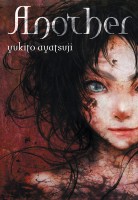
Another

October 21, 2015 by Ash Brown

AnotherAuthor: Yukito Ayatsuji
Translator: Karen McGillicuddy
U.S. publisher: Yen Press
ISBN: 9780316339100
Released: October 2014
Original release: 2009

Another is a horror mystery novel written by Yukito Ayatsuji which was originally serialized in Japan between 2006 and 2009 before being collected into a single volume later that year. The novel was then released again in 2011 in two separate volumes. It is that edition upon which the English translation by Karen McGillicuddy is based. Another was initially released digitally in English by Yen Press in two volumes in 2103, but in 2014 it was published as a single-volume hardcover under the newly established Yen On light novel imprint. In addition to being Ayatsuji’s first novel to be translated into English, Another is probably his most widely-known work, especially outside of Japan. This is in part due to the fact that Another was adapted as a manga series and as an anime series, both of which have been licensed in English, as well as a live-action film. Although I’ve known about Another for a while, it actually wasn’t until I read Ayatsuji’s debut novel The Decagon House Murders that I was inspired to pick it up.

Yomiyama North Middle School’s third-year Class 3 is cursed. For some strange reason, the students of that class and their immediate families seem to be more susceptible to dying. Some years pass by without any casualties while other years see multiple deaths every month. The curse is said to be tied to an incident which occurred twenty-six years ago. A popular student named Misaki died, but the entire class was in such denial that Misaki’s spirit manifested. Now more than two decades later, Misaki’s story has been embellished and retold so many times that it’s difficult to tell how much of it is rumor and urban legend and how much is really true. Koichi Sakakibara recently transferred into Class 3 and isn’t sure what to believe and nobody is being particularly forthcoming about the situation. The curse could just simply be a ghost story, but his classmates and teachers are honestly frightened of something. And soon after Koichi’s arrival, a new series of deaths begin.

Another is a marvelous combination of mystery and horror. The first half of the novel explores the “what” and “why” of the increasingly odd situation while the second reveals the “how” and “who.” As a transfer student, Koichi is an outsider. He isn’t as knowledgeable as the other people involved, and they are reluctant to share information with him, so Koichi is largely left to investigate on his own. Eventually he gains some dubious allies, the most important being a young woman named Mei Misaki who may or may not actually exist. Ayatsuji excels at creating a constant air of uncertainty in Another—he introduces just enough creepiness and doubt that readers, like Koichi, are left questioning everything. While logical analysis is a valid option, the weirdness of the situation and the possibility of supernatural interference makes the more mundane, straightforward answers feel suspect. Additionally, Koichi himself is shown to be a somewhat unreliable narrator, and it’s his perspective of the unfolding events that drives Another.

Ayatsuji is particularly well-known for his inventive stories with dramatic twists. Another definitely falls into that category, the plot taking multiple clever and surprising turns over the course of the novel. However, without spoiling things, there was one major reveal towards the end that left me feeling cheated, especially when most of the other developments were so engaging. Retrospectively, the reveal does fit into the overall narrative, and there were some clues hinting at it scattered throughout the novel, but it isn’t foreshadowed as well as it could have been. As a result, I found it to be very unsatisfying. The revelation is shocking and certainly leaves an impact, but I think that had the information been shared earlier in the novel it could have been used even more effectively. Despite this one notable complaint, I actually quite enjoyed Another. The mystery was intriguing, the horror was disconcerting, and blended together they formed a chilling novel that was highly readable and kept me eagerly turning the pages.

Filed Under: REVIEWS Tagged With: Another, Novels, Yen On, yen press, Yukito Ayatsuji

News Round-Up for NYCC 2015

October 11, 2015 by Katherine Dacey

haikyuuGood news for manga readers: 2013-2014 was the first time since the mid-2000s that the industry enjoyed two consecutive years of sales growth. While the manga market isn’t as red-hot as it was in Tokyopop’s heyday, publishers released almost 800 new volumes in 2014, up 25% from 2013. [ICv2]

At its Friday panel, VIZ Media unveiled a diverse slate of titles that ran the gamut from shonen (Black Clover) to josei (Everyone’s Getting Married). Among the most interesting licenses were two sports manga: Haikyuu!, which focuses on a volleyball team, and Kuroko’s Basketball. VIZ also confirmed that it will be publishing Seventh Garden, Monster Hunter: Flash Hunter, and fan favorite Yona of the Dawn. [Crunchyroll]

Yen Press announced five new manga at NYCC, including an adaptation of Space Dandy and a new series by Yuji Iwahara (Cat Paradise, King of Thorn) called Dimension W. Also joining the Yen line-up in 2016 are Scumbag Loser, a cautionary tale about lying to your peers; Corpse Party: Blood Covered, another entry in the teens-fight-to-the-death-in-an-alternate-universe genre; and Unhappy Go Lucky!, a comedy about a group of unlucky middle-school students. [Anime News Network]

Yen isn’t the only company on the Space Dandy bandwagon: Kodansha Comics will be publishing I Am a Space Dandy!, another manga spin-off of the popular anime. Kodansha also revealed plans to publish the 4-koma Spoof on Titan. [Anime News Network]

At the Crunchyroll panel, the company introduced fans to its newest offerings, which include Arakawa Under the Bridge, a drama by Saint Young Men creator Hikaru Nakamura; Gugure! Kokkuri-san, a comedy about a little girl who inadvertently summons a fox demon; and Cuticle Detective Inaba, a supernatural comedy-thriller about a detective who’s half wolf, half man. (The “cuticle” in the title refers to the character’s pronounced interest in hair. Oh, manga…) [Anime News Network]

In a further sign of manga’s global reach, two companies announced that they would publish comics inspired by a signature title in their catalogs. Kodansha’s Attack on Titan and Dark Horse’s Lone Wolf and Cub 2100 projects will feature original stories by Faith Erin Hicks, Gail Simone, and other creators active in the American industry. [A Case Suitable for Treatment]

Although Vertical Comics did not announce any new manga acquisitions, it did give con-goers a sneak peek at an intriguing new project: audio light novels with music, sound effects, and voice acting. Look for the product line’s debut in spring 2016. [Crunchyroll]

Tokyo Ghoul, One-Punch Man, and Attack on Titan are fighting for the top spot on this week’s New York Times Manga Best Seller list. [New York Times]

Reviews: Michelle Smith and Sean Gaffney post a new set of Bookshelf Briefs, with short reviews of Assassination Classroom, He’s My Only Vampire, and QQ Sweeper.

Lori Henderson on vols. 1-2 of Beast Master (Manga Xanadu)
Terry Hong on The Complete Chi’s Sweet Home: Part One (Book Dragon)
Richard Gutierrez on vol. 2 of Is It Wrong to Pick Up Girls in a Dungeon? (The Fandom Post)
Wolfen Moondaughter on vol. 23 of Kaze Hikaru (Sequential Tart)
Kat Stevens on vol. 1 of L-DK (AiPT!)
Terry Hong on vol. 1 of One-Punch Man (Book Dragon)
Amy McNulty on vol. 72 of Naruto (Anime News Network)
Megan R. on Neon Genesis Evangelion (The Manga Test Drive)
Jordan Richards on vol. 6 of Noragami: Stray God (AiPT!)
Sheena McNeil on vol. 1 of QQ Sweeper (Sequential Tart)
Kate O’Neil on vol. 1 of Rose Guns Days: Season One (The Fandom Post)
SKJAM on Sanctuary (SKJAM! Reviews)
Wolfen Moondaughter on vol. 6 of Seraph of the End (Sequential Tart)
Rebecca Silverman on vols. 1-3 of Servamp (Anime News Network)
Anna N. on vol. 3 of So Cute It Hurts! (The Manga Report)
Plutoburns on Terra Formars (Pluto Burns)
Richard Gutierrez on vol. 1 of Tokyo ESP (The Fandom Post)
Garrett Gottschalk on vol. 1 of Ultraman (No Flying No Tights)
Ken H. on vol. 6 of Vinland Saga (Sequential Ink)
G.B. Smith on vol. 7 of Witchcraft Works (The Fandom Post)
Lori Henderson on Yurei Attack! The Japanese Ghost Attack Survival Guide (Manga Xanadu)

*Indicates YouTube review


Filed Under: MANGABLOG Tagged With: attack on titan, crunchyroll, Dark Horse, Kodansha Comics, Vertical Comics, VIZ, yen press

The Manga Revue: Rose Guns Days Season One

September 25, 2015 by Katherine Dacey

In principal, a video game or visual novel ought to be a solid foundation on which to build a manga: the designers have already done the hard work of creating characters, endowing them with powers (or weapons), and setting them loose in a richly detailed environment. In practice, however, many game-franchises-cum-manga are a dreary affair, with thin plots and two-dimensional characters. I’ve largely sworn off the genre, but when my Manga Bookshelf colleague Sean Gaffney sang the praises of Rose Guns Days Season One, I thought I’d take it for a test drive.

Ryukishi07_RoseGunDays_1Rose Guns Days Season One, Vol. 1
Story by Ryukishi07, Art by Soichiro
Rated OT, for older teens
Yen Press, $13.00

Rose Guns Days has an intriguing premise: what if Japan had surrendered to the Allied Forces in 1944 instead of fighting until the bitter end? In Ryukishi07’s scenario, American and Chinese troops occupy Japan, carving out distinct spheres of influence while rebuilding the country in their respective images. Japanese citizens, meanwhile, are struggling to get by: work and food are scarce, creating an environment in which smuggling and prostitution flourishes.

Sounds interesting, no? If only the story was as compelling as the universe in which it unfolds! A close examination of Leo Shisigami, the principal character, offers insight into why Rose Guns Days reads like a pale imitation of better series. Shisigami’s got the skinny suit, tousled hair, and dangling cigarette made famous by Cowboy Bebop‘s Spike Spiegel, but their resemblance is pure surface; Leo is a cheerful blank whose only quirk–if it can be called that–is a fondness for pasta. After a meet-cute that’s shown not once but twice, Leo becomes a bodyguard for Rose Haibana, a pretty madam whose establishment caters to foreigners. The next 100 pages are a riot of kidnappings, fisticuffs, and golden-hearted hookers–no cliche goes unturned.

The artwork is similarly pedestrian. Though the supporting characters are rendered with loving attention to costumes, facial features, and body types, Rose looks like something pilfered from a twelve-year-old’s Deviant Art account: she barely has a nose or mouth, and her face is framed by two immobile locks of hair. The backgrounds, too, run the gamut from meticulously rendered to barely-there. Only a few panels capture the disruption and poverty caused by the occupying forces; most scenes appear to be taking place in a no man’s land of Photoshop fills and traced elements. What’s most disappointing, however, is that the artwork does nothing to bring depth or nuance to the original visual novel concept. Each scene feels like a collection of artful poses, rather than a dynamic presentation of a story with fistfights and car chases. With so little effort to adapt the material for a different medium, it begs the question, Why bother?

The verdict: Unless you’re a devotee of the visual novel series on which Rose Guns Days is based, skip it.

Reviews: Seth Hahne posts an in-depth assessment of Ikigami: The Ultimate Limit, while Erica Friedman reviews the Japanese edition of Rose of Versailles. Over at Snap30, Frank Inglese test drives the new Weekly Shonen Jump series Samon the Summoner, which debuted on September 21st.

Mark Pelligrini on vol. 1 of AKIRA (AiPT!)
Tyler Sewell on Bat-Manga! The Secret History of Batman in Japan (AiPT!)
Michael Burns on vol. 1 of Black Bullet (AniTAY)
Connie on vol. 31 of Blade of the Immortal (Slightly Biased Manga)
Rebecca Silverman on vol. 1 of Chiro: The Star Project (Anime News Network)
Lori Henderson on vol. 1 of The Complete Chi’s Sweet Home (Good Comics for Kids)
ebooksgirl on Cromartie High School (Geek Lit Etc.)
Vernieda Vergara on Gangsta (Women Write About Comics)
Patrick Moore on Fragments of Horror (Bento Byte)
Erica Friedman on vol. 2 of Iono The Fanatics, Special Edition (Okazu)
Helen on King’s Game: Origin (Organization Anti-Social Geniuses)
Jennifer Wharton on vol. 1 of Kiss of the Rose Princess (No Flying No Tights)
Kristin on vol. 1 of Komomo Confiserie (Comic Attack)
Megan R. on La Esperanca (The Manga Test Drive)
Thomas Maluck on The Legend of Zelda: A Link to the Past (No Flying No Tights)
Nic Wilcox on vol. 1 of Log Horizon (No Flying No Tights)
Amy McNulty on vol. 71 of Naruto (Anime News Network)
Sean Gaffney on vols. 1-2 of One-Punch Man (A Case Suitable for Treatment)
Connie on vol. 5 of Phantom Thief Jeanne (Slightly Biased Manga)
Ian Wolf on vol. 2 of Requiem for the Rose King (Anime UK News)
Jordan Richards on vol. 1 of Rose Guns Days Season One (AiPT!)
Karen Maeda on vol. 1 of Ultraman (Sequential Tart)
Austin Lanari on issue #43 of Weekly Shonen Jump (Comic Bastards)
Adam Capps on vol. 6 of Witchcraft Works (Bento Byte)
Connie on vol. 4 of X: 3-in-1 Edition (Slightly Biased Manga)
Lori Henderson on vol. 1 of Yu-Gi-Oh: 3-in-1 Edition (Good Comics for Kids)

Filed Under: MANGABLOG, REVIEWS Tagged With: Manga Review, Rose Gun Days, yen press

The Manga Revue: Prison School and Twin Star Exorcists

July 24, 2015 by Katherine Dacey

This week, I take a look at two new releases: Prison School, a hotly anticipated series about five boys trying to break out of an all-girls’ school, and Twin Star Exorcists, a shonen manga about two teenage onmyoji who hold the fate of the world in their hands. (Let’s hope they do their best–otherwise, we’re toast!)

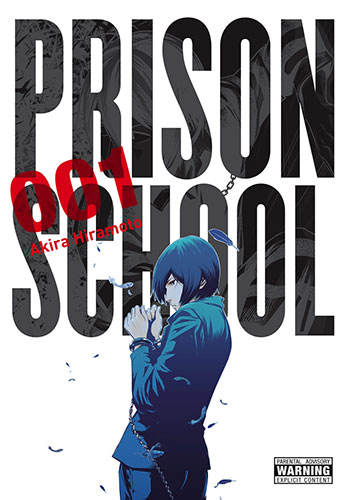
Hiramoto_PrisonSchoolV1Prison School, Vol. 1
By Akira Hiramoto
Rated M, for mature readers (18+)
Yen Press, $20.00

Paging Russ Meyer! Prison School is a veritable parade of big-bosomed, wasp-waisted women brandishing whips, kicking ass, and eschewing bras. The target of their scorn: Kiyoshi, Kingo, Gackt, Joe, and Andre, the first five men to enroll at the Hachimitsu Private Academy in its fifty-year history. These hapless souls want nothing more than to “catch glances of breasts and panties,” but their efforts to spy on their classmates incur the wrath of the school’s Shadow Student Council, a secret organization whose primary role is to “crack down on illicit sexual relationships.” After a dramatic show trial in the school’s courtyard, Kiyoshi and friends are sentenced to hard time in the school penitentiary.

I’d be the first to admit that the premise has potential: what woman or girl hasn’t fantasized about coolly administering a karate chop to a lecherous jerk on the subway or in the street? What prevents Prison School from rising above grindhouse fare is Akira Hiramoto’s complete dehumanization of his characters. The Student Council members are portrayed as ball-busting man-haters, intent on humiliating the boys for their sexual proclivities, while the prisoners are depicted as sniveling pervs. The only genuinely sympathetic pair are Kiyoshi and Chiyo, a cute girl who shares Kiyoshi’s passion for sumo wrestling. Kiyoshi’s desire to have a normal relationship with Chiyo provides the story’s few emotionally authentic moments; by contrast, most scenes revel in the lurid, psychosexual relationship between the boys and their jailers.

Though all of the characters are objectified, no one fares as poorly as Meiko Shiraki, the Shadow Council’s Vice President. Hiramoto always draws her from an extreme angle–upskirt is one of his favorites–that emphasizes her monstrously distended breasts and reveals her penchant for wearing thongs. Perhaps a fifteen-year-old boy would find her terrifyingly sexy, but an older reader who’s seen actual breasts would have a hard time viewing Meiko as anything but a fetishist fantasy.

All of which is to say: Prison School could have been a sly riff on Escape from Alcatraz, The Great Escape, or even Caged, but Hiramoto’s strenuously raunchy scenarios overwhelm the other elements of the story, stopping it dead in its tracks.

The verdict: Prison School is an all-or-nothing proposition: you’ll either love it or hate it.

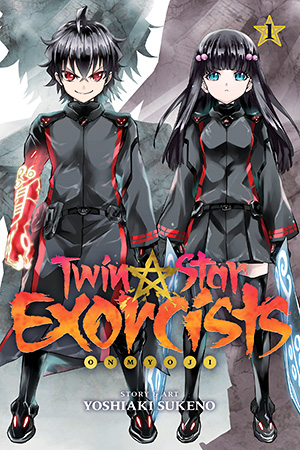
twin_starTwin Star Exorcists, Vol. 1
By Yoshiaki Sukeno
Rated T, for teens
VIZ Media, $9.99

Twin Star Exorcists is a love story dressed up as an action-packed supernatural adventure. At the beginning of volume one, the principal characters have a meet-cute that establishes their personalities in broad strokes: Rokuro is gifted but reluctant to use his exorcism skills, while Benio is gifted but trigger happy, nuking monsters at the slightest provocation. Making their Darcy-and-Elizabeth dynamic more complicated is that Rokuro and Benio are destined to marry and have a child who will save the world from the Kegare, a demonic race that lives in a parallel universe. (Rokuro and Benio are also fourteen, a point underscored by their endless bickering.)

Although the fight scenes are competently executed, the beats are so familiar that the combat feels superfluous. And therein lies Twin Star Exorcists‘ biggest problem: it’s boring. The plot lines, characters, and demon lore are so familiar that the story lacks a distinctive personality; even the setting is cliche. (Rokuro and Benio attend an exclusive academy for onmyoji in training.) Just two days after finishing the volume I couldn’t remember the principal characters’ names–a sure sign that the author treated each element of the story as something to be checked off a list, rather than an integral part of the narrative.

The verdict: Zzzzzz…..

Reviews: GC4K contributor Mike Pawuk praises Svetlana Chmakova’s Awkward, just out from Yen Press. Over at Heart of Manga, Laura posts brief reviews of He’s My Only Vampire, The Ancient Magus’ Bride, and Let’s Dance a Waltz. Joe McCulloch dedicates his latest TCJ column to CoroCoro magazine.

Lesley Aeschliman on vol. 17 of 07-Ghost (WatchPlayRead)
Connie on Alice in the Country of Clover: Nightmare (Slightly Biased Manga)
Alice Vernon on Awkward (Girls Like Comics)
Connie on vol. 29 of Blade of the Immortal (Slightly Biased Manga)
Sheena McNeil on vol. 7 of Deadman Wonderland (Sequential Tart)
Allen Kesinger on vol. 1 of The Devil is a Part-Timer! (No Flying No Tights)
Chris Randle on Fragments of Horror (The Guardian)
Frank Inglese on vol. 6 of Gangsta (Snap30)
Sarah on Kitaro (nagareboshi reviews)
Matthew Alexander on vol. 13 of Knights of Sidonia (The Fandom Post)
Leroy Douresseaux on vol. 1 of Love Stage!! (Comic Book Bin)
Johanna Draper Carlson on vol. 1 of Love Stage!! (Comics Worth Reading)
Marissa Lieberman on vol. 1 of Midnight Secretary (No Flying No Tights)
Thomas Maluck on vols. 1-3 of My Love Story!! (No Flying No Tights)
ebooksgirl on vol. 3 of My Neighbor Seki! (Geek Lit Etc.)
Helen and confused muse on Natsume’s Book of Friends (Organization Anti-Social Geniuses)
Sean Gaffney on vol. 2 of No Game No Life (A Case Suitable for Treatment)
Erica Friedman on Okujou no Yuri Yurei-san Side B – Nakayoshi Quiz (Okazu)
A.J. Adejare on vol. 2 of Oreimo: Kureneko (The Fandom Post)
Connie on vol. 1 of Paradise Kiss (Slightly Biased Manga)
Connie on vol. 3 of Phantom Thief Jeanne (Slight Biased Manga)
Sheena McNeil on vol. 3 of Pokemon X.Y (Sequential Tart)
Lostty on vols. 1-4 of Princess Jellyfish (Organization Anti-Social Geniuses)
Lesley Aeschliman on vol. 17 of Rin-ne (WatchPlayRead)
Ash Brown on vol. 2 of Sengoku Basara: Samurai Legends (Experiments in Manga)
Frank Inglese on vol. 6 of Terra Formars (Snap30)
Sheena McNeil on vol. 9 of Voice Over! Seiyu Academy (Sequential Tart)
Lesley Tomsu on vols. 1-2 of Witch Buster (No Flying No Tights)
Ken H. on vol. 2 of Your Lie in April (Sequential Ink)

Filed Under: MANGABLOG, REVIEWS Tagged With: Manga Review, Prison School, Seinen, Shonen, Twin star Exorcists, viz media, yen press

The Manga Revue: Alice in Murderland and Demon From Afar

June 26, 2015 by Katherine Dacey

Reading Kaori Yuki is a little bit like eating a bag of Pop Rocks and washing it down with a can of Tab: the rush is undeniable, but the aftertaste is pretty gnarly. I swore off her manga years ago–too much stimulation for my taste–but her two latest series looked so snazzy I couldn’t resist giving her work a second chance.

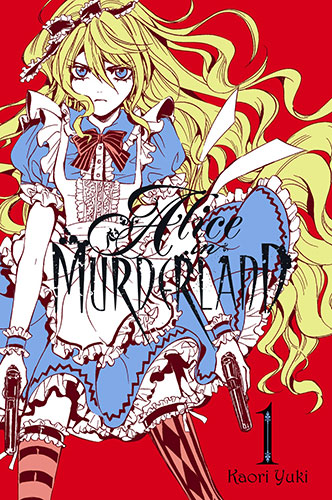
AliceinMurderlandv1Alice in Murderland, Vol. 1
By Kaori Yuki
Rated OT, for Older Teens
Yen Press, $17.00

Nine Is Enough might be a better title for Alice in Murderland, as it neatly summarizes the main plot: per their mother’s orders, the nine Kuonji children must fight to the death to determine who will inherit the family fortune. Of course, if you’ve read Godchild or Angel Sanctuary, you know that even Kaori Yuki’s most basic story ideas are complicated by a profusion of subplots and supporting characters. Alice in Murderland is no exception: Yuki introduces over thirty people in volume one, each of whom has a stake in the outcome of the Kuonji Battle Royale.

The characters are so hastily conceived, however, that their behavior makes no sense; when they turn on each other, those reversals register not as betrayals but as speed bumps on the road to the next gruesome showdown. Even the revelation that the Kuonji matriarch is a bandersnatch–no, really–barely makes an impression, as her breathless monologue about demonic powers is no more shocking or ridiculous than the violent melodrama that precedes it. (On the plus side, it does explain her rotten parenting skills.) The artwork, though attractive, barely hangs together; small wonder that Yuki relies so heavily on dialogue to plug the holes in her storytelling.

The verdict: No amount of Lewis Carroll references can disguise the fact the Alice in Murderland is a flaming hot mess.

Yuki_DemonFromAfarV1_HCDemon From Afar, Vol. 1
By Kaori Yuki
Rated T, for Teens
Yen Press, $18.00

In contrast to Alice in Murderland, Demon From Afar has a discernible storyline and real characters. Three teens–Sorath, Garan, and Kiyora–live on the estate of the wealthy, ruthless Baron Kamichika. As children, they found solace in each others’ company; as young adults, however, they unwittingly become pawns in their guardian’s elaborate scheme to achieve immortality.

Though Kaori Yuki can’t help but populate the fringes of the story with beautiful, inscrutable figures, the main narrative never loses it focus on Sorath, Garan, and Kiyora’s increasingly tenuous allegiance. The supernatural elements–another potential distraction–prove organic to the story as well; from the very first pages, it’s clear that Sorath possesses unusual powers, though we don’t see them fully manifested in volume one. Only Yuki’s decision to invoke Walpurgisnacht raises a few eyebrows: surely there was a Japanese festival or tradition that would have made more sense in the context of the Taisho-era setting. (The story takes place shortly after the Great Kanto Earthquake of 1923.) Faust tributes aside, Demon From Afar manages the difficult feat of juggling many stylistic sensibilities–horror, romance, teen angst–without sacrificing coherence or pacing.

The verdict: Demon From Afar won’t win the Tezuka Prize, but it scores points for readability and visual flair.

Reviews: Sad news for fans of ANN’s House of 1000 Manga: Jason Thompson and Shaenon Garrity have announced that their final column will run next week. To mark the occasion, Shaenon counts down her ten favorite manga from the House archives.

Deionte Coates on vol. 5 of Cardfight!! Vanguard (BentoByte)
Megan R. on City Hunter (The Manga Test Drive)
Lori Henderson on vol. 1 of Demon From Afar (Manga Xanadu)
Adam Caps on Dream Fossil (BentoByte)
Holly Saiki on Dream Fossil (Examiner)
Leroy Douresseaux on Fragments of Horror (Comic Book Bin)
Sean Gaffney on Fragments of Horror (A Case Suitable for Treatment)
Orrin Gray on Fragments of Horror (Innsmouth Free Press)
Vernieda Vergara on vols. 1-3 of The Heroic Legend of Arslan (Women Write About Comics)
Ash Brown on vol. 2 of Hide and Seek (Experiments in Manga)
Alice Vernon on Judge (Girls Like Comics)
Nic Wilcox on Kisses, Sighs, and Cherry Blossom Pink: The Complete Collection (No Flying No Tights)
Sarah on vol. 1 of Love Stage! (Anime UK News)
Wolfen Moondaughter on vol. 5 of Seraph of the End: Vampire Reign (Sequential Tart)
Ken H. on vols. 5-8 of The Seven Deadly Sins (Sequential Ink)
Paige Sammartino on vol. 1 of A Silent Voice (Women Write About Comics)
Johanna Draper Carlson on vol. 1 of So Cute It Hurts! (Comics Worth Reading)
Richard Eisenbeis on vols. 1-2 of Sword Art Online: Girls’ Ops (Kotaku)
Thomas Maluck on vol. 1 of Sword Art Online: Progressive (No Flying No Tights)
Karen Maeda on vol. 6 of Terraformars (Sequential Tart)
Ian Wolf on Tony Takezaki’s Neon Genesis Evangelion (Anime UK News)
Sean Gaffney on vol. 7 of Toradora! (A Case Suitable for Treatment)
Sheena McNeil on vol. 28 of Toriko (Sequential Tart)
Rob Clough on Trash Market (High-Low)
James Hadfield on Trash Market (The Japan Times)
L.B. Bryant on vol. 1 of Trinity Seven: The Seven Magicians (ICv2)

Filed Under: MANGABLOG, REVIEWS Tagged With: Alice in Murderland, Demon From Afar, Kaori Yuki, Manga Review, yen press

The Devil Is a Part-Timer!, Vol. 1

June 19, 2015 by Ash Brown

The Devil Is a Part-Timer, Volume 1Author: Satoshi Wagahara
Illustrator: 029

Translator: Kevin Gifford
U.S. publisher: Yen Press
ISBN: 9780316383127
Released: April 2015
Original release: 2011
Awards: Dengeki Novel Prize

The Devil Is a Part-Timer! began in 2011 as a light novel series written by Satoshi Wagahara with illustrations by 029, but it has since expanded to include an anime adaptation and multiple manga series as well. I was actually introduced to The Devil Is a Part-Timer! through the 2013 anime series directed by Naoto Hosoda. I rather enjoyed it and so when Yen Press licensed not only the manga but the orignal light novel series of The Devil Is a Part-Timer!, it caught my attention. I was particularly interested in reading the anime’s source material, currently an ongoing series of novels at fourteen volumes in Japan. The Devil Is a Part-Timer!, Volume 1, which earned Wagahara a Silver Dengeki Novel Prize, was released in English in 2015 under Yen Press’ new light novel imprint Yen On with a translation by Kevin Gifford. The volume also includes color pages and an end-of-book bonus—character files in the form of a collection of resumes.

Satan, the Devil King, had one simple goal: to conquer Ente Isla and subjugate the humans there who manage to survive the invasion of his forces. All was going well until the Hero made her appearance on the battlefield. Emilia throws the Devil King’s plans into disarray and Satan is forced to make a hasty retreat along with Alciel, his strategist and one of the Four Great Demon Generals. Unintentionally, they end up in the parallel world of modern-day Japan with no immediate way back to Ente Isla. Emilia isn’t far behind them, which only causes another set of problems to deal with. Until they can return to their own world, Satan, now known as Maou, and Alciel, now known as Ashiya, must survive in this one as humans with very little access to their demonic powers. But then Maou secures a job as a part-timer at a fast food joint. He’s convinced that this will be the first step in conquering Japan, the world, and (assuming they can figure out how to get home) Ente Isla.

The Devil Is a Part-Timer, Volume 1, page 21The first volume of The Devil Is a Part-Timer! and at least some if not all of the second were adapted as part of the anime series, so there were no real surprises for me plot-wise reading it. The novel does include a few more worldbuilding and character details, but for the most part the anime was a very straightforward, routine interpretation of Wagahara’s orignal story. The writing in The Devil Is a Part-Timer! isn’t particularly flashy, stylish, or clever—it’s more functional than anything else—but all of the characters have their own ways of speaking and expressing themselves. It’s immediately apparent who’s responsible for any given line of dialogue because they each have a unique, individual voice. As for the plot, it’s intentionally ridiculous and absurd, which to some extent is what makes The Devil Is a Part-Timer! entertaining. Admittedly, it sometimes doesn’t make a whole lot of logical sense, and there seem to be a few potential plot holes left for Wagahara to address as well, but the novel can still be legitimately fun. High literature it certainly isn’t, though, something that both Wagahara and the characters are well-aware of; the story developments in The Devil Is a Part-Timer!, Volume 1 are repeatedly compared to those of a B movie.

Very little of The Devil Is a Part Timer!, Volume 1 has much to do with magic or mayhem. Eventually Wagahara builds up to it for the volume’s finale, but for the most part the novel is surprisingly mundane. In the end, the crises that Maou is most concerned about is the possibility of being late for work. It seems likely that Maou and Ashiya’s personalities have significantly changed along with the changes in their physical forms. But then the humor in The Devil Is a Part-Timer! is largely derived from the characters being not at all who one would assume them to be and behaving in ways that are stunningly ordinary, especially considering their epic origins. Occasionally they do recall their quests—the demons’ goal to take over Ente Isla and Emilia’s desire to destroy Satan and his cohorts—but overall Maou appears to be content in his new-found work, Ashiya has come to accept his role of househusband, and even Emi has made a nice life for herself in Japan. Ultimately that’s what makes The Devil Is a Part-Timer so amusing, the complete mismatch between the characters as they are and the expectations of who they should be.

Filed Under: REVIEWS Tagged With: 029, Dengeki Novel Prize, Devil Is a Part-Timer, Light Novels, Novels, Satoshi Wagahara, Yen On, yen press

The Angel of Elhamburg

May 1, 2015 by Ash Brown

The Angel of ElhamburgCreator: Aki
U.S. publisher: Yen Press
ISBN: 9780316340465
Released: March 2015
Original release: 2013

So far, three of Aki’s manga have been released in English. First was her debut, Utahime, published by Digital Manga. Second was her short series Olympos, released by Yen Press as a single omnibus volume. Most recently published in English is Aki’s The Angel of Elhamburg, initially conceived of as a short, one-shot manga, but expanded to fill an entire volume. Also released by Yen Press, The Angel of Elhamburg is presented in an attractive hardcover edition with a dust jacket with foil accents. The manga was released in Japan in 2013 and in English in 2015. Aki’s manga tend to be historical fantasies with prominent European influences and a fair amount of melancholy and sadness. The Angel of Elhamburg falls into that category as well. Although I sometimes find aspects of Aki’s storytelling frustrating, I largely enjoy her manga and her artwork is consistently beautiful. I was very happy to see The Angel of Elhamburg licensed.

After successfully overthrowing the previous lord, Madeth has become the High King, something that would not have been possible had it not been for the support and efforts of his close friend and knight Lalvan. Madeth has extraordinary charisma—people easily love and willingly follow him—but he is uneducated and of low birth. He lacks the ambition and confidence that one would expect from a ruler. Lalvan, on the other hand, is exceptionally clever and capable. But despite his talents, and his peculiar ability to see spirits invisible to others, Lalvan has always been overshadowed by his friend and most often finds himself in an auxiliary role. Now that Madeth has become king, their relationship has started to fracture as long-hidden and suppressed insecurities, jealousies, and issues of trust threaten to destroy their friendship and perhaps even throw the kingdom into turmoil once more.

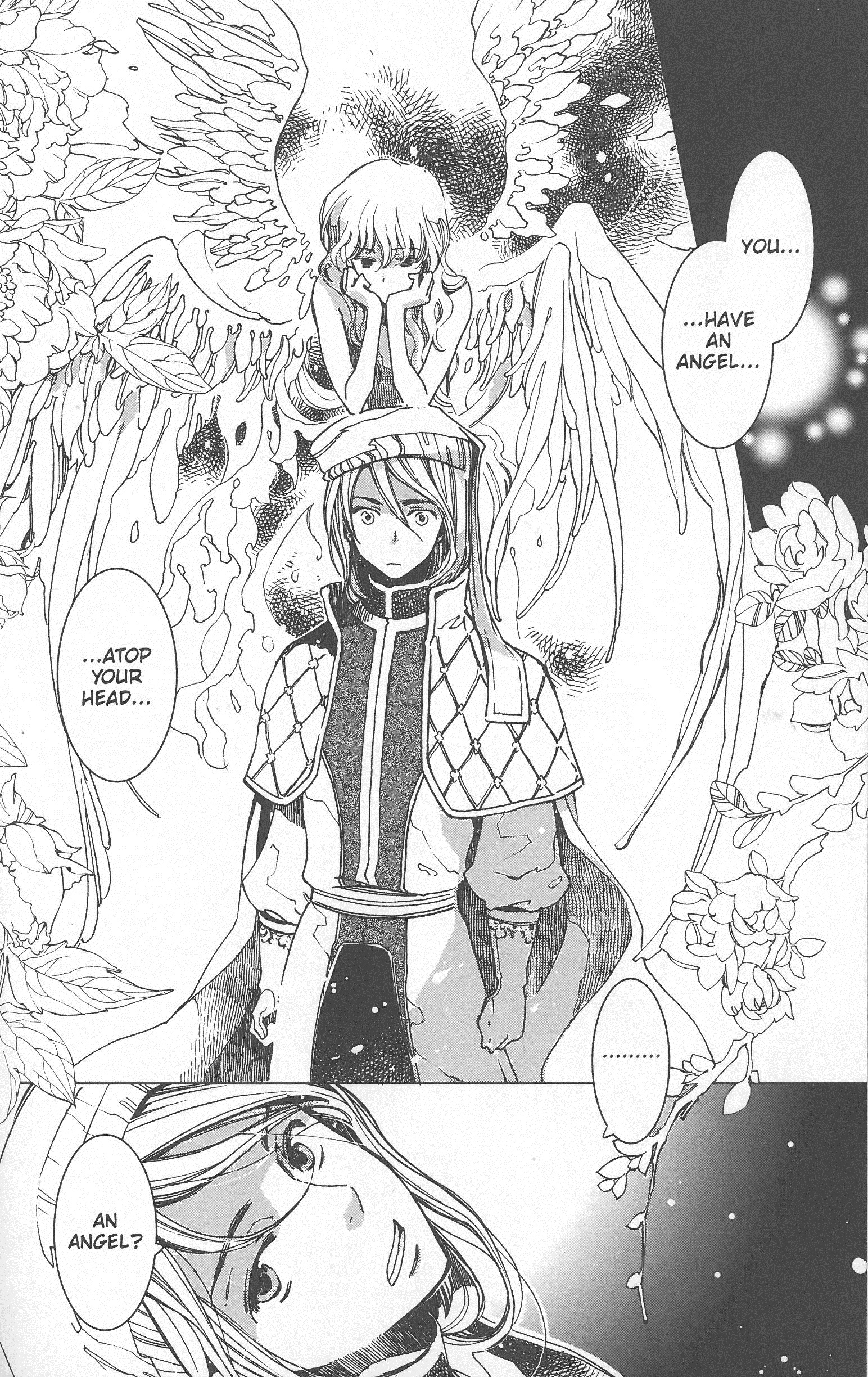
The Angel of Elhamburg, page 6Although the title is The Angel of Elhamburg, the role of the angel in the manga—a spirit that watches over Elhamburg Castle, the kingdom’s seat of power—is actually a relatively minor one. The fact that Lalvan can see the angel significantly impacts some of the story and character developments, but the angel itself is not an active character, merely a notable presence. The real focus of The Angel of Elhamburg is on the changing relationship between Lalvan and Madeth, with a particular emphasis given to Lalvan and his perspective of events. This highlighting of the characters is present in Aki’s storytelling as well as in her artwork. Although overall quite lovely, the backgrounds and settings tend to be somewhat limited; more attention is devoted to the characters’ facial expressions and body language, and to the details of their clothing and design. Because the manga’s focus is so much on people as individuals, The Angel of Elhamburg often feels very intimate and personal.

The Angel of Elhamburg is told in five scenes, or chapters. I particularly liked the structure of the first which is further divided into three acts following Lalvan, Madeth, and the angel respectively. However, once Aki decided to expand the manga, the narrative deviates from this initial structure and becomes more linear until the last scene. The final chapter is a little confusing at first since its use of flashbacks and flash-forwards obscures the story’s chronology. The Angel of Elhamburg is a bittersweet tragedy. With the manga’s classical feel and theatric nature, I could easily see it being adapted as a stage production. The rise and fall of a kingdom serves as the backdrop for the interpersonal drama and conflict, which is the true heart of the manga. There is a story, but The Angel of Elhamburg is probably best described as a character study. The Angel of Elhamburg excels in conveying the depth of Lalvan and Madeth’s individual personalities and fears, ultimately showing an established and evolving relationship that is believably complicated.

Filed Under: REVIEWS Tagged With: Aki, manga, yen press

Review: Barakamon, Vol. 1

November 19, 2014 by Katherine Dacey

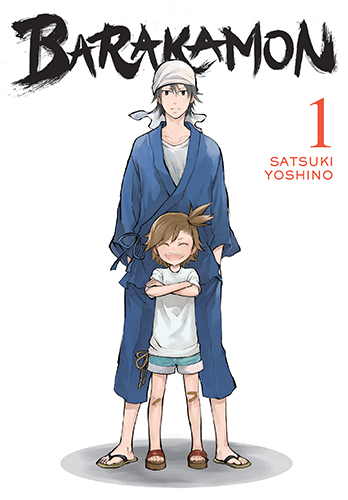
Yoshino_Barakamon_V1_TPBarakamon, Vol. 1
By Satsuki Yoshino
Rated T, for Teens
Yen Press, $15.00

Barakamon is a textbook fish-out-of-water story: an impatient city slicker finds himself in the country where life is slower, folks are simpler, and meaningful lessons abound. Its hero, Seishuu Handa, is a calligrapher whose fiery temper and skillful but unimaginative work have made him a pariah in Tokyo. His foils are the farmers and fishermen of Gotou, a small island on the southwestern tip of Japan that’s inhabited by an assortment of eccentrics, codgers, and naifs.

If this all sounds a little too familiar, it is; you’ve seen variations on this story at the multiplex, on television, and yes, in manga. (I think I liked it better when it was called Cold Comfort Farm, and starred Kate Beckinsale and Rufus Sewell.) Satsuki Yoshino does her best to infuse the story with enough humor and warmth to camouflage its shopworn elements, throwing in jokes about internet pornography, dead frogs, and bad report cards whenever the story teeters on the brink of sentimentality. The mandates of the genre, however, demand that Handa endure humiliations and have epiphanies with astonishing regularity—1.5 times per chapter, by my calculations.

From time to time, however, Yoshino finds fresh ways to show us Handa’s slow and fitful progress towards redemption. The first chapter provides an instructive example: Handa angrily dismisses his six-year-old neighbor Naru when she declares his calligraphy “just like teachers write.” After seeing Naru’s wounded expression, Handa chastises himself for lashing out at a kid. Handa never musters an apology to Naru, but makes restitution by joining her for a series of small adventures. The experience of swimming in the ocean, scrambling over a wall, and watching a sunset prove liberating, leading Handa to an explosive outburst of creativity punctuated by a few high-flying kicks. (Now that’s what I call action painting.) The results are messy, but the message is clear: Handa has the potential to be a genuine artist if he can connect with his playful side.

Like the story, the artwork is serviceable if not particularly distinctive. Yoshino creates enough variety in her character designs that the reader can easily distinguish one islander from another—an important asset in a story with many supporting players. Yoshino’s grasp of anatomy, however, is less assured. When viewed from the side, for example, Handa’s Tokyo nemesis has a cranium like a gorilla’s and a chest to match; when viewed from above, however, the Director appears small and wizened. Other characters suffer from similar bodily distortions that exaggerate their necks, arms, and torsos, especially when Yoshino attempts to draw them from an unusual vantage point.

Yoshino is more successful at creating a sense of place. Through a few simple but evocative images of the harbor and coastline, she firmly establishes the seaside location. She also uses architectural details to suggest how old the village is; though locals enjoy such modern conveniences as television, their homes look otherwise untouched by modernity. Yoshino is less successful in creating a sense of space, however. It’s unclear, for example, if Naru lives a stone’s throw from Handa’s house—hence her frequent intrusions—or if she lives a mile down the road.

The dialogue, too, plays an important role in establishing the setting. Faced with the difficult task of rendering the Gotou dialect, translators Krista and Karie Shipley chose a broad Southern accent for the local population. That decision neatly illustrates the cultural divide between Handa and his neighbors, but at the cost of nuance; a few jokes that hinge on vocabulary simply can’t be conveyed by this particular adaptation strategy. (The Shipleys’ translation notes are helpful in demystifying these exchanges.) Most of the punchlines, however, need no such editorial interventions to enjoy; certain elements of city slicker/country bumpkin humor transcend culture.

My verdict: Barakamon has enough charm and energy to engage the reader, even if the story isn’t executed with enough precision or subtlety to transcend the basic requirements of the fish-out-of-water genre.

Filed Under: MANGABLOG, REVIEWS Tagged With: Barakamon, yen press

S.S. Astro: Asashio Sogo Teachers’ Room, Volume 1

January 15, 2014 by Ash Brown

S.S. Astro, Volume 1Creator: Negi Banno
U.S. publisher: Yen Press
ISBN: 9780759528987
Released: August 2008
Original release: 2007

S.S. Astro: Asashio Sogo Teachers’ Room is a yonkoma, or four-panel, manga created by Negi Banno. The first volume of S.S. Astro was originally published in Japan in 2007. Yen Press released the English translation of the manga in 2008, around the same time that it was licensing several other yonkoma manga series. As for S.S. Astro, only one volume was ever released. As far as I can tell, the series has been on hiatus since 2007 in Japan. Although I believe that Banno has created more S.S. Astro strips than those found in the first volume, there have not been enough to collect into a second volume. I have no idea if Banno plans to ever return to the S.S. Astro manga, but because so many years have passed it seems increasingly unlikely. S.S. Astro was actually one of the first yonkoma manga that I ever read. I originally came across it a few years back while searching for manga in English with yuri elements, which used to be a little more difficult to find than it is now.

Seven years after she graduated, Izumi Maki is back at her old high school. Except this time she’s one of the ones responsible for molding the young minds of Tokyo’s Asashio Integrated Public High School. It’s her first year as a teacher. Maki’s now in charge of both health and physical education classes, not to mention a home room with nearly forty students. (Now she just somehow needs to find a way to remember all of their names.) Maki’s not the only fresh blood at Asashio. Her good friend Yuko Nagumo, the new Japanese instructor, is also a first year teacher. The nursing teacher Setsuna Arai has a couple of years of experience on them and Maki’s backup teacher Kaname Karasuma, the instructor for the school’s English course, has even more. She also has a huge crush on Maki, not that Maki has noticed. Throw in all of the other teachers and their quirks, as well as Maki’s older brother, and high school is just as entertaining and complicated as it was the first time around.

Yonkoma manga tend to be fairly hit-or-miss for me, but in the case of S.S. Astro it’s mostly a hit. As with many four-panel manga, whether or not someone actually likes the series will depend on whether or not the reader likes the characters as they are. Although there are plenty of running jokes in S.S. Astro, the series tends to be episodic without much of an overarching plot and very little in the way of character development. Fortunately, I do like the characters. Quite a bit, actually. Maki’s a scatterbrain but earnest. Nagumo can put away an impressive amount of food and is closet fujoshi. Arai has a delightfully sadistic streak. Of the four main characters, Karasuma is the most responsible one, at least when she isn’t completely lovestruck. About halfway through the first volume of S.S. Astro the rest of the Asashio staff are more thoroughly introduced. Prior to that they were largely relegated to the background. I like the other teachers as well and wish more time could have been spent getting to know them better, too.

Quite a few manga licensed in English take place in a school setting. What helps to set S.S. Astro apart is that it focuses on the teachers rather than on the students. I find this to be a refreshing change of pace. One of the reasons that I’m particularly fond of S.S. Astro is that the manga focuses on the adults and their lives and relationships. Granted, the main cast are all relatively young and still in their twenties, but there are some older characters as well. Maki and the others can be immature at times, but in the end they are adults with adult responsibilities. Which is not to say there isn’t room for fun in S.S. Astro; being an adult has its perks, too. Video games, drinking parties, and a little bit of workplace romance (straight and otherwise) all have their place in the series. The artwork tends to be rather cute, too. In general, I find S.S. Astro to be fun and funny. S.S. Astro may not be a manga that I go out of my way to recommend to people, but it is one that I quite enjoy. I only wish that there was more of it.

Filed Under: REVIEWS Tagged With: manga, Negi Banno, S.S. Astro, Year of Yuri, yen press

Yen Press NYCC 2013

October 13, 2013 by MJ 1 Comment

hasslerIn typical Yen Press fashion, Publishing Director Kurt Hassler & Co. skipped straight to the good stuff in yesterday’s panel, with a string of license announcements, peppered with pleasantly snarky humor.

First off in new licenses, to Manga Bookshelf’s delight, is Void’s Enigmatic Mansion, a new manhwa series with artwork by HeeEun Kim and story by JiEun Ha. This series will be serialized digitally, chapter-to-chapter on a simultaneous schedule with Korea, with eventual print releases as well.

Next, Yen will be offering Ani-Imo by Haruko Kurumatani, which promises body-swapping and inappropriate sibling affection, so be sure to check it out if that’s your thing. And if that’s not quite my thing, paranormal shoujo romance absolutely is, which brings us to He’s My Only Vampire by Aya Shouoto. I’ll admit I’m somewhat iffy on vampires these days, but I suspect I’ll risk it.

In the interest of saving the best for last, I’ll skip now to Alice in the Country of Diamonds ~ Wonderful Wonder World ~ Official Visual Fan Book, created by QuinRose, which is sure to please fans of the Alice series. And moving then to High School DxD (story by Ichiei Ishibumi, art by Hiroji Mishima), which Hassler introduced by asking “Who likes boobs?” (I sadly heard “Who likes booze?,” so I couldn’t help but be a disappointed by the result.)

yuki2Did I mention I was saving the best for last? How about Kaori Yuki’s Demon from a Foreign Land? This, unsurprisingly, looks to be a dark supernatural romance, enhanced by Yuki’s always-delicious artwork. Yen is “super-excited about this one!” and they’re proving that by giving the series hardcover treatment. I’m feeling pretty excited as well.

After speeding through their license announcements, the Yen crew answered questions from the crowd.

When asked about the importance of digital releases, Hassler responded, “Digital is doing fine—digital is growing,” but qualified that by adding that, “it is still a very small part of our business, as it is with everyone … the reality is for pretty much every publisher here, print is still 90% of our business.” He punctuated this point by claiming that the Yen staff spends time burying their faces in new print books and getting “high on glue.”

giveawayFans of digital have good news on the horizon, however, as Hassler confirmed that they “absolutely” are going to be acquiring digital rights for their Square Enix titles, now that the Japanese publisher’s online reader is finally being pulled down. “We’re just finalizing the details,” he said.”Keep your ears open, we’ll have announcements for you soon.” Even better, these titles will be available worldwide.

Hassler also reinforced the company’s dedication to their light novel releases, dismissing industry claims that light novels “don’t work” in North America. “I am hugely enthusiastic about the light novel business, they have been very successful for us.”

Yen’s panel closed with a book giveaway for all the attendees, passing on the panelists’ jovial mood to the entire room.

We’ll be covering New York Comic Con all weekend, so stay tuned!

Filed Under: UNSHELVED Tagged With: NYCC, NYCC 2013, yen press

  • « Go to Previous Page
  • Page 1
  • Page 2
  • Page 3
  • Page 4
  • Page 5
  • Interim pages omitted …
  • Page 10
  • Go to Next Page »
 | Log in
Copyright © 2010 Manga Bookshelf | Powered by WordPress & the Genesis Framework