• Skip to primary navigation
  • Skip to main content
  • Skip to primary sidebar
  • Home
  • About Us
    • Privacy Policy
    • Comment Policy
    • Disclosures & Disclaimers
  • Resources
    • Links, Essays & Articles
    • Fandomology!
    • CLAMP Directory
    • BlogRoll
  • Features & Columns
    • 3 Things Thursday
    • Adventures in the Key of Shoujo
    • Bit & Blips (game reviews)
    • BL BOOKRACK
    • Bookshelf Briefs
    • Bringing the Drama
    • Comic Conversion
    • Fanservice Friday
    • Going Digital
    • It Came From the Sinosphere
    • License This!
    • Magazine no Mori
    • My Week in Manga
    • OFF THE SHELF
    • Not By Manga Alone
    • PICK OF THE WEEK
    • Subtitles & Sensibility
    • Weekly Shonen Jump Recaps
  • Manga Moveable Feast
    • MMF Full Archive
    • Yun Kouga
    • CLAMP
    • Shojo Beat
    • Osamu Tezuka
    • Sailor Moon
    • Fruits Basket
    • Takehiko Inoue
    • Wild Adapter
    • One Piece
    • After School Nightmare
    • Karakuri Odette
    • Paradise Kiss
    • The Color Trilogy
    • To Terra…
    • Sexy Voice & Robo
  • Browse by Author
    • Sean Gaffney
    • Anna Neatrour
    • Michelle Smith
    • Katherine Dacey
    • MJ
    • Brigid Alverson
    • Travis Anderson
    • Phillip Anthony
    • Derek Bown
    • Jaci Dahlvang
    • Angela Eastman
    • Erica Friedman
    • Sara K.
    • Megan Purdy
    • Emily Snodgrass
    • Nancy Thistlethwaite
    • Eva Volin
    • David Welsh
  • MB Blogs
    • A Case Suitable For Treatment
    • Experiments in Manga
    • MangaBlog
    • The Manga Critic
    • Manga Report
    • Soliloquy in Blue
    • Manga Curmudgeon (archive)

Manga Bookshelf

Discussion, Resources, Roundtables, & Reviews

Features & Reviews

Manga the Week of 10/3

September 26, 2012 by Sean Gaffney

It’s a first week of the month, folks. You know what that means. But let’s start with not-Viz stuff.

Kodansha has a new volume of Fairy Tail, continuing its alternate world journey. And they’ve got the oddly numbered Ghost in the Shell Volume 1.5, which is still 176 pages, in case folks were worried.
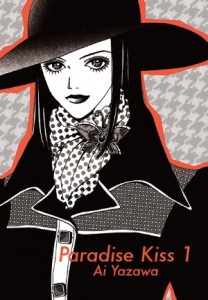
Vertical has the debut of its new re-release of Paradise Kiss, this one in larger trim, 3 omnibus volumes and a new translation. The manga is fantastic, anyone who hasn’t read it yet should go get it. And Arashi no longer speaks like a Brit. There’s also the new Drops of God, leaping ahead to discuss wines from ‘the new world’, and also possibly the last volume unless sales get really really good. And GTO is up to his 5th volume of 14 Days in Shonan, the halfway point.

Viz, of course, has its Viz blitz. On the Shonen Jump side we have Bakuman 15, Bleach 48 and 49 (which, hallelujah hallelujah, moves onto a new arc), Nura 11, Slam Dunk 24, Toriko 12, and Yu-Gi-Oh 5Ds 3, which sounds like a RPG dice roll. Meanwhile, on the shoujo side, there’s Dawn of the Arcana 6, Devil and Her Love Song 5, Jiu Jiu 2, Skip Beat! 29, Stepping on Roses 8 (any shogi, let me know), and Story of Saiunkoku 8. There’s something for everyone, in other words. Well, unless you’re a hardcore ‘indie manga only’ person. In which case, look up for Vertical stuff.

So what are you getting? And can you finish it before New York Comic Con?

Filed Under: FEATURES, manga the week of

Adventures in the Key of Shoujo: Sailor Moon, Vol. 5

September 26, 2012 by Phillip Anthony 1 Comment

Pretty Guardian Sailor Moon, Vol. 5 | By Naoko Takeuchi | Published by Kodansha Comics USA | Rated: T, Ages 13+

I’m trying to put into words the ideas I’ve discovered with this volume of Sailor Moon. In this volume, the fight between Wiseman and his Malefic Black Crystal and our heroes reaches its crescendo. Some of our heroes are not going to be returning, I’m sad to say, and one character who only recently got introduced is for the chop. As I said, it’s not easy trying to explain the ideas I’ve had bouncing around since I finished the volume. I guess if we’re boiling it down, it’s the idea of infinity and eternity. In my mind, Sailor Moon and her friends embody the idea of infinity. The idea of infinity is that there is no end to it, stretching out into an endless horizon. The Sailor Senshi are that concept in action. On first inspection there seem to be limits to their powers. Even after three of them being captured, Sailor Moon still finds an unending horizon of strength to fight back against the power of Wiseman and his planet, Nemesis.

As the fight against Wiseman heats up to include fighting against one of their own, the team has to—has to—find the inner strength to defeat an enemy who just won’t stop. And in turning to eternity, we see the concept in Wiseman. Here is an enemy who has been waiting for so long to destroy Neo Queen Serenity, 30th Century Crystal Tokyo, and the Earth in general that he has been bleached by the universe until only the hate remains. He could wait forever for his revenge, he just doesn’t want to. In this volume, despite the team fighting their hardest fight, Wiseman and his cronies just keep coming.

The core of this volume is the maturing of Chibi-Usa into a girl who isn’t just the daughter of the King and Queen of Crystal Tokyo. She drops the bratty act in this volume and becomes a person who has only an idea about who she wants to be. The people around her only want the best for her but if she doesn’t recognize that, events will destroy the people she loves. The way Takeuchi writes the relationship between Usagi and Chibi-Usa, initially I despaired that it would degenerate into catty, screaming sessions between them. But Usagi starts seeing her as her daughter rather than the Queen’s daughter (Usagi has, up until this point, been viewing Chibi-Usa as another person’s daughter and not hers) and this causes her to risk everything. The person who helps her see this, surprisingly, is Mamoru. Without his character taking the risk to trust Chibi-Usa, the way Takeuchi is going with this wouldn’t work.

That’s not to say there aren’t problems with this volume. The other Senshi get pretty much pushed to one side and I thought they were treated as kind of “We need Sailor Magic artillery! Quick, call up our reserves!” And after I’ve been introduced to them properly over the last little while, it felt a bit jarring. Another problem is Demande (yeah, remember him?). We’ve been given hints that he’s really unsettled by something about Wiseman. When his suspicions are confirmed, he quickly descends into madness. Completely. Totally. I really mean this, he just goes crazy and does the whole Andross from StarFox: “If I go down, I’m taking you with me!” After watching him be so measured for the last few volumes, his spiral into CrazyTown is positively Shakespearean.

The destiny angle comes up again in this volume and I must say, I’m trying hard to figure out if Takeuchi will ditch putting Usagi in peril anymore. The reason I say that is because we know she becomes Neo Queen Serenity, so putting her in danger doesn’t make any sense since we know she’ll be ok. Yes, I know that she could be put into a pocket dimension or into the far future but still, I would feel kind of insulted if the author tried to do this.

If nothing else, normally I should hate the fact that Takeuchi keeps trapping me in endless cycles of “New enemy! Even more effeminate than the last! Another Senshi is kidnapped! Another massive fight! Another defeat for the Senshi! Another stand-alone fight between the big Evil Cheese and Sailor Moon!” I really should be annoyed because she hasn’t changed the record once, but really the parts I like the most about the fights are the little moments when Usagi and Mamoru try and reconnect with each other. They’re the parts that reveal the most about these two lovers and the lengths either will go for the other. It takes skill to pull the wool over my eyes like that and still get me to come back. Yeah, like I’m that important, right?

No translation notes this time around but that’s OK, there weren’t really any moments that confused me. One thing I wanted to ask you guys about. A few of the pages in the book are blurry and smudged. Dialogue is also blurred, so it’s a printing issue. Is this affecting anybody else’s copies? Let me know, would you?

We are nearing the halfway point of the series and while I’m enjoying myself, the fact is that little voice in the back of my head is whispering “It’s almost half over!” This makes me a little sad because I don’t want the merry-go-round to stop. It has to, I know, still here I am. This is a fine entry and I can’t say anything more praiseworthy in life than that.

(After a two month hiatus, I’m back on the column! Apologies if you were wondering where I had gone. The Kurosagi Corpse Delivery Service MMF kept me busy so I decided to skip doing a column post for August. I’m up at full speed again and I’d like to know if there are any immediate recommendations you would suggest for after I end covering Sailor Moon.)

Filed Under: Adventures in the Key of Shoujo Tagged With: kodansha, Kodansha Comics, kodansha usa, manga, MANGA REVIEWS, shojo, shoujo

Higurashi: When They Cry, Vol. 19

September 26, 2012 by Sean Gaffney

Story by Ryukishi07; Art by Hinase Momoyama. Released in Japan as “Higurashi no Naku Koro ni: Minagoroshi-hen” by Square Enix, serialized in the magazine GFantasy. Released in North America by Yen Press.

This review has spoilers!

Ladies and gentlemen, after 18 volumes, meet our heroine.

The author talks in the notes for this volume about how he tried to keep Rika’s main character-ness a secret at first, with Keiichi, Rena and Shion getting all the attention. The Time Killing Arc was probably the one exception, and even that was 5 years before the main action. We’ve known Rika is much deeper than she seems, and that she can see/understand the constant resets in this world. But this is where the manga outright has her as the star. And while no one is going to pick up a new manga 19 volumes in, the first chapter does a decent job at setting up the ‘mysteries’ and ‘rules’ of the resetting worlds… even if it turns out to be wrong a lot.

By the way, the twin girl that Rika meets is Frederica Bernkastel, whose poetry we have been enjoying at the start of each arc. She is somewhat unimportant to the Higurashi series (we’ll only see her again at the very, very end), but is a far larger player in Umineko, which begins over here in two months… Also, Frederica, not Furude Rika. I don’t know how anyone could mix them up. :)

We do also meet another major character here – Hanyu, aka ‘Oyashiro-sama’. For a series that has combined moe and gore to such a large degree, it’s not as much of a surprise as one would think to find that their torture god is an adorable little girl who hates all the killing. Seeing her stomping her feet in rage at Takano’s insane ravings is quite funny. Possibly the only funny thing she gets to do in this arc – Hanyu is a drag, and ends up bringing Rika down with her. Downtrodden and depressed, she’s the one resetting the worlds, but it’s clear she has no confidence this one will be any different.

But oh, how wrong she is. This is what the previous 18 volumes have led to. Remember Higurashi is actually an adaptation of a game, where the player saw everyone make really, really horrible mistakes. And in this world, through the constant replays and reboots, they subconsciously learn from those mistakes, and make the right decisions. This is one of the more heartwarming parts of the volume. Seeing Keiichi give Mion the doll, seeing Shion treating Satoko like a little sister, Rena confessing that she got her dad help and a job… it’s great to see. And it has a wonderful capper, as who should show up in Hinamizawa but Akasasa. With his wife. Who is not dead. It’s pure happiness on a manga page.

And this is where hubris starts to hit Rika. After being so depressed for so long, seeing this is a world where everything is ‘perfect’ makes her a little too cocky. She goes to tell Tomitake and Takanao that they’re going to be killed… and they seem to believe her. She deliberately incites a gang to hit her… and it turns out she now has hidden bodyguards. So she gets the tiniest bit smug… and oh, does she ever pay for it. Because this is the Answer Arc for the MOST DEPRESSING ARC EVER, the Curse Killing Arc.

See, when Rena turned to Mion and confessed the difficulties she and her dad were having, Mion told her family. Who are yakuza. Who responded by simply quietly killing off Mamiya, the woman blackmailing Rena’s dad. And with Mamiya now dead… Satoko’s uncle has come back home. This leads to the most chilling image of the volume, Satoko with a huge bruise on her cheek and empty eyes. We only have one problem to solve in this world, but oh, it’s a doozy.

But remember, people are learning from their mistakes, mostly. So even though Shion backslides a little, murder for once ISN’T an option. Instead, they go to child services. Who suck. Horribly. So they go back, with their teacher and principal. And fail again. It’s like beating your head against a brick wall, mostly as Satoko refuses to admit that she is being abused. (Well, maybe murder isn’t an option as it’s being taken off the table… the first thing Rika does is go to Takano and ask that her hired goons take out Satoko’s uncle. She should know better.) And Ooishi, despite getting a nicer introduction than usual, is not helping at all with his usual elliptical warnings.

By the way, there’s still the matter of who is killing Rika. When this first started in GFantasy in 2009, the games were finished. As was the anime. 95% of the people reading this knew who the main villain was. So you see the author cheating a bit, with perhaps a few more creepy villainous smiles than might be warranted. More on this later. It isn’t called the Massacre Arc for nothing, after all.

As you can see, there’s a lot going on in these first two volumes. I am pleased that Yen omnibused them. The next two aren’t out till December, but luckily we have Umineko in November. We switch from cicadas to seagulls… and also switch from a series searching for its happy ending to one where that may not even be an option.

Filed Under: REVIEWS

It Came From the Sinosphere: The City and the Drama (part two)

September 25, 2012 by Sara K. 3 Comments

One of the main characters is making a funny face.

So last week, I introduced Black & White, one of the few idol dramas set in southern Taiwan, and the idol drama most closely associated with the city of Kaohsiung. This is a continuation of that discussion … starting with certain personal observations.

The Taiwanese Pride/Shame Complex

Two characters from the drama are laughing and embracing each other.

You all probably know this about the culture of the United States, but I’m going to spell it out to make the contrast with Taiwanese culture clearer.

The society of the United States is very proud. Proud to the point that it is unwilling to accept criticism, especially from outsiders. The United States is #1, regardless of objective evidence. It is difficult for the United States to pick up lessons from other societies. In other words, the United States goes beyond pride into the territory of arrogance.

Even in pockets of the United States such as, oh, San Francisco and Berkeley, which openly criticize “mainstream” American culture, getting people to accept criticism aimed at them is pretty tough. People in San Francisco and Berkeley are just as assured that they are #1 as anyone else in the United States, and I say that as someone born in Berkeley and raised in San Francisco.

Taiwan is different. In this respect, Taiwan is very different.

Taiwanese people are certainly proud of some parts of their society. They are generally proud of the local tea, for example. Many are also proud of how they have preserved “Chinese” culture (though how they define “Chinese” varies from person to person—some are proud of the continued use of traditional characters, whereas others are proud of the preservation of, say, Hakka culture, so one also has to be careful of what someone means when they say “Chinese”). Many are also proud of the beautiful local scenery, such as Yushan, the highest mountain in East Asia.

However, the two things which are most apparently successful to a casual outsider—the technology industry, and the development of democracy —tend to elicit more mixed feelings from the Taiwanese. It’s not that they aren’t proud of their achievements in technology and democracy (they are) but their awareness of the continuing problems in both tempers their attitude. Perhaps this is wise.

But when I bring up many aspects of their society—education, comics (manhua), child care, fashion, once in a while even the food (which mystifies me, as someone who prefers Taiwanese food to “mainstream” American food), Taiwanese people tell me that Taiwan is not [as good] as [some other society, particularly Japan, the United States, western Europe and, sometimes, South Korea or even China].

I think some of this is just being polite. In Taiwan, being boastful is considered rude, and the proper way to respond to praise is to claim that one does not deserve such praise.

On the other hand, Taiwanese often seem to feel they have been abandoned by the world. They aren’t a part of the UN; many people don’t know the difference between Taiwan and Thailand; and when they see media from the outside world (and they see a lot—the movies come from United States, the comics come from Japan, the TV dramas come from South Korea, etc.) they rarely see/hear Taiwan being mentioned. So when some Taiwanese people claim that Taiwan is not such a good place, I think I sometimes do perceive a lack of confidence which goes a bit deeper than common etiquette.

I think that this humility has its positive side. Taiwan the most gender-equal, queer-friendly, and religiously tolerant society in Asia, as well as having one of the lowest levels of inter-ethnic strife among multi-ethnic Asian societies. I think this can largely be attributed to the Taiwanese people’s willingness to admit that their society has problems (I don’t think it can be explained by democracy, since South Korea and Japan are also democracies yet are further behind Taiwan when it comes to gender equality and the treatment of queer people).

But just as having low self-esteem in oneself takes a psychological toll, having low esteem in one’s own society also takes its toll.

And for Taiwanese people who come from less privileged regions (in simplistic terms, anywhere outside of Taipei), the sense of shame seems to go just a little deeper.

Which Kaohsiung Is In the Drama?

The Kaohsiung featured in Black & White is the newly cleaned-up Kaohsiung, beautified by international designers, with trendy cafes, contemporary art, good public transit, and plenty of space for recreation. As the story progresses, the drama also addresses some of the less glamorous aspects of the city, such as homelessness and corruption. ‘

Pizi and Yingxiong outside a trendy cafe.

But what I found particularly striking was what was not shown in the drama.

In The Outsiders 2, there is a character from Kaohsiung, and the way they rub in that the character is from Kaohsiung is that all of his dialogue is in Taiwanese. It is part of idol drama logic that everyone from the south speaks Taiwanese. And when I ask (northern) Taiwanese people to describe southern Taiwan, one of the most common things they say is ‘everyone speaks Taiwanese’ or ‘Taiwanese is the main language’ or something along those lines.

Yet, in all of Black & White I don’t recall a single dialogue in Taiwanese.

I’m not saying there was zero Taiwanese in Black & White—most Taiwanese people put some Taiwanese words in their Mandarin speech—and there could have been some dialogue in Taiwanese which I simply missed. But I am confident that more English than Taiwanese was spoken in the drama.

And for a TV series which so prominently features southern Taiwan, that seems wrong.

Or is it?

I was just a visitor in Kaohsiung, so I didn’t get to observe the city in a deep way. I did notice that people in my age group would usually talk to each other in Mandarin—even if they had spent their entire lives in Kaohsiung, and they weren’t talking to me (I don’t speak Taiwanese). I needed interpretation into Taiwanese only once during my entire trip … and generally, I heard a lot more Mandarin than Taiwanese spoken (this may reflect the fact that I was mostly hanging around people in my own age group. When observing older people, I heard a lot more Taiwanese).

some people are playing some game on a table

This is a picture I took in Kaohsiung. I don’t remember what language they were speaking in, but they look like the kind of people who would speak in Taiwanese.

This drama is clearly aimed at the younger generation, as opposed to dramas such as Fated to Love You which are made for a wider age range. As such, I have to say that the choice of using Mandarin almost exclusively was appropriate.

Yet there is a broader issue at hand.

Sure, in Kaohsiung, I saw the shiny new stuff, including the cleaned-up Love river, the MRT system, the renewed harbor-side area, the parks, other recreation areas, etc. But I also saw some of the interesting old stuff. I stayed in Fengshan, an older area, and visited Cijin Island, a historic district, and the Zuoying district, which, aside from the shiny new HSR station, has the highest number of temples per squre kilometer of anywhere in Taiwan. These are all tourist draws (even Fengshan gets some tourist action because of the night market) … yet I don’t recall seeing any of it reflected in Black & White.

A Taiwanese deity walks in the street

This is a picture I took in the Cijin district.

Indeed, it seems that Black & White doesn’t show any aspect of Kaohsiung which is older than the Tuntex Sky Tower (completed in 1997). No historic districts, no Taiwanese language, no sign of heavy industry (Kaohsiung was once the center of heavy industry in Taiwan).

A picture of a temple

This is a picture I took in the Zuoying district.

Again, I must stress that I was just a visitor in Kaohsiung, I am not deeply familiar with the city, and that my thoughts are based on what I saw and heard. I’m sure I missed a lot.

To me, Black & White‘s depiction of Kaohsiung seems shallow. While it thoroughly explores the new Kaohsiung, it shows almost nothing of the old Kaohsiung. And since, as a causal visitor, I still managed to see some of the old Kaohsiung (and not necessarily on purpose), the makers of Black & White must have made an effort not to show any of that. And that absense sticks out to me.

It’s almost as if they are trying to hide the old Kaohsiung.

The Effect on the City … and the People

So far, I have been talking about how the city has influenced the drama. But how has the drama influenced the city?

Based on my observation, quite a bit.

While more people have seen Fated to Love You, I have seen Taiwanese people express much more enthusiasm for Black & White. And I think it’s because it’s helped fill in a hole in their psyche.

I don’t want to spoil the story but, so I’ll just say that, even though Pizi and Yingxiong are now star cops in the Kaohsiung police force, they had previously suffered neglect. Their confident exteriors cover up psychological wounds which haven’t fully healed. This can be interpreted as a metaphor for Taiwan as a whole, and southern Taiwan more specifically. Taiwan now has shiny tall buildings, sophisticated electronics manufacturing, and is a cultural exporter (Ang Lee is the best known cultural export in the United States, but there are many others who are well known, in one way or another, in many Asian countries). Yet in spite of all of the smartphones, DSL lines, and other high tech, many places still don’t have a modern sewer system. This kind of juxtaposition feeds into the pride/shame complex I have observed in Taiwanese people.

I think, by validating their experiences, this drama resonates with Taiwanese people who had to leave their hometowns for economic reasons, as well as the people who stayed behind and directly suffered from this neglect. In other words, it resonates with the majority of the (younger) Taiwanese population.

And the city itself has taken the drama and run with it. I could see Black & White paraphernalia all over the place, including stuff produced directly by the city government.

Availability in English

The DVD set has English subtitles, and is available for sale at YesAsia.com (among other places). It’s a bit pricey, but then again, it is cheaper than a round-trip full-fare high-speed train ticket between Taipei and Zuoying.

Conclusion

I travelled to Kaohsiung with friends who live in Taipei, but who have family ties to Kaohsiung. When they got their Kaohsiung transit cards, they were excited to see that all transit cards had a Black & White theme. They visited some places specifically because some scene from Black & White had been filmed there (whereas I generally had to see the interesting old traditional stuff on my own). Being with them shaped the way I viewed the city … and the way I view this drama.

Indeed, I think the fact that, not only was their city featured in an idol drama, but in one of the highest-quality idol dramas every made, means more to the people of Kaohsiung than all of trendy cafes and public art spaces.

This drama has helped lower the shame and increase the pride Taiwanese people feel towards their society and, by extension, themselves. And that is why it is important.

Next Week: Fluffy Fluff Fluff


This was the hardest post yet for this column. Sara K. simply must write something very fluffy for next week (otherwise, she would have to go on hiatus). She is also afraid that she has grossly misinterpreted Taiwanese culture, and that this post will haunt her forever. On the other hand, if she never said anything at all due to fear of exposing her misinterpretations, she would never blog. On a completely different note, she saw monkeys today. Wild monkeys. In the wild. That happens once in a while in Taiwan.

Filed Under: Dramas, It Came From the Sinosphere Tagged With: Black & White, idol drama, Kaohsiung, Mark Chao, taiwan, Vic Chou

Bookshelf Briefs 9/24/12

September 24, 2012 by Sean Gaffney and Katherine Dacey 1 Comment

This week, Sean and Kate look at recent releases from Kodansha Comics, VIZ Media, and Yen Press.


Attack on Titan, Vol. 2 | By Hajime Isayama | Kodansha Comics – This grim and downbeat story continues to intrigue almost despite itself, as we see humanity battle against the seemingly unstoppable titans. Luckily, they are helped out this time by a mysterious titan who turns against its own, tearing them apart in messy ways. The revelation of the titan’s identity is not as much of a surprise as the author wants, I think, but still well done – particularly Mikasa’s reaction. The main problem with this series, though, continues to be the artwork – I simply can’t tell many of the characters apart, and their being soldiers in the same uniform isn’t helping. At one point I thought I saw one of the soldiers we knew shoot himself in the head, only for it to turn out to be another, similar crew-cut soldier. A character guide at the front of the volume is no help – it only has the three leads. -Sean Gaffney

Blue Exorcist, Vol. 7 | By Kazue Kato | VIZ Media – One of the things that never ceases to amaze me about Blue Exorcist is Kazue Kato’s ability to tell an intricate story while still providing enough points of entry that a newcomer can follow what’s happening. In volume seven, for example, we learn more about Mamushi and Todo’s true purpose in stealing the Impure King’s eyes. Though these scenes are more emotionally engaging for a well-informed reader, a newbie can readily grasp the basics: Kyoto will be toast if the Impure King’s seal is broken. You don’t need to know much else to appreciate Kato’s smart pacing, crisp artwork, and flair for the grotesque; the Impure King looks like the unholy love child of InuYasha‘s Naraku and AKIRA‘s Tetsuo, and haunted me for several days after I’d finished the volume. Still highly recommended. -Katherine Dacey

Durarara!!, Vol. 3 | Created by Ryohgo Narita, Character Design by Suzuhito Yasuda, and Art by Akiyo Satorigi | Yen Press – Durarara!! is 50% great, and 50% irritating. The good parts involve Celty, a headless Irish spirit who rides through Tokyo on a sleek motorcycle; Celty is tough, funny, and more human than the high school students, thugs, and evil scientists who also inhabit her world. Her quest to be reunited with her head provides the story’s best comic and dramatic moments, including an agonizing scene in which she must decide whether to reclaim it from its new owner. The not-so-good parts involve the rest of the cast, none of whom behave like real human beings. The worst offender is Namie Yagiri, whose obsessive interest in her younger brother crosses the line between eccentric and just plain icky. More frustrating still is how labored these scenes feel; a judicious trimming of secondary characters and subplots would make Durarara!! a more consistently entertaining series. -Katherine Dacey

Miles Edgeworth: Ace Attorney Investigations, Vol. 2 | By Kenji Kuroda & Kazuo Maekawa | Kodansha Comics – As with Volume One of this series, the only regulars from the games are Miles and Detective Gumshoe, which makes me sad. Things are simply less silly here, as Miles doesn’t have everything go wrong as much as Phoenix does. The first case is fairly straightforward and obvious, though I loved Miles casually pointing his finger and saying ‘Objection” to an officer, as if he uses it in conversation all the time. The second case is stronger, with a better gimmick – the so-called Gentlemen Thieves. It also has a Maya/Kay surrogate in Monet Kreskin, and a very clever solution – I had figured out half the mystery, but not the other half, and the revelation was quite well done. Mystery fans will enjoy this as a quick, non-filling read.-Sean Gaffney

Yotsuba&!, Vol. 11 | By Kiyohiko Azuma | Yen Press – One thing I’ve always loved about the Yotsuba series is that the title character is not presented as a weirdo in a world of normal people. Yotsuba can do strange things, yes, but less so as the series has gone by – she’s no longer prone to climbing telephone poles, and is content to buzz around the neighborhood with a camera. Likewise, the adults and teens all have quirks of their own, from Fuuka’s strange sense of humor (which also seems to drive her relationship with Shimau – sorry, Miss Stake) to Yotsuba’s father’s tendency towards overacting. I’ve even grown to tolerate Yanda, their annoying friend, who is growing more tolerant of everyone messing with him – and in fact seems bothered by Yotsuba’s inability to do so because of depression. Lastly, Asagi is the best big sister ever. That is all.-Sean Gaffney

Filed Under: Bookshelf Briefs

GA: Geijutsuka Art Design Class, Vol. 4

September 24, 2012 by Sean Gaffney

By Satoko Kiyuduki. Released in Japan by Houbunsha, serialization ongoing in the magazine Manga Time Kirara Carat. Released in North America by Yen Press.

It may seem like forever, but in reality we’re getting two new volumes by Kiyuduki-san this fall, with this and the 3rd Shoulder-A-Coffin Kuro. This series ended up being far more popular in Japan (much to the consternation of Western fans, who I think prefer the darker Kuro), probably due to its dynamic – let’s face it, if every series you do with cute high school girls living their ordinary lives sells well, you’re going to want more of that. The artist does use this fourth volume to provide a bit more depth and characterization than we’d seen previously, though.

This series has always been compared with Sunshine Sketch (and not just over here – Japanese fanartists cross the two series over a lot), but GA is far more serious about its art. Previous volumes have dealt with color choice, textures, and lettering. This one has the color pages dealing with fashion from early to modern, and the chapters cover topics like the best way to convey water, how to get your model to not pose stiffly, and (in the best sequence) Kisaragi losing her glasses and seeing the rest of the cast as indistinct, vegetable-like shapes. For a 4-koma cutie series, the artist is not afraid to experiment within its boundaries.

Speaking of which, one series starring Noda, the flakey and eccentric girl, shatters the fourth wall in what turns out to be a long dreams sequence (which surprised me, as usually it’s Kisaragi who gets those sorts of stories). Noda, by the way, enjoys teasing Namiko, the straight woman of the group, about her weight and her larger chest. It was entertaining seeing that Namiko is starting to fight back in a deadpan way, and seeing Noda getting all upset is quite amusing, given she’s normally so hyperactive and cheery. Speaking of Namiko, she may be the perfect oneesama character to keep everyone else in check, but apparently her home ec skills show she’s not ready to be a perfect Japanese housewife just yet.

As for the third-year group that’s our secondary cast of GA characters, they get some nice spotlight time as well. Awara ends up wandering into said home ec class, and gets corralled into helping Kisaragi and Namiko make pasta. We also learn her eyesight is exceptional, almost preternaturally so. This is a contrast to the bespectacled Uozumi, who not only needs glasses but turns out to be color-blind (which, this being GA, leads to a discussion of how color-blind people see art and what Van Gogh painted). And in the final chapter of the volume, we see the sickly Tomokane brother, having passes out in the sun (his being sickly has been a plot point throughout) musing on the relationship between him and his sister (also Tomokane – the artist has deliberately avoided giving them first names) and how they contrast perfectly with each other. Not to mention how his sister apparently has psychic powers to know when he needs her help…

As I noted above, there are a ton of cute girl 4-koma series out there, even in North America. Most need something beyond the initial gimmick to keep you reading. And besides the bond between the cast members, humor, and occasional bits of character development, this series simply makes you more interested in art, and how artists see things. It’s great fun, and I’m pleased that we finally have the 4th volume. It’s coming out very slowly in Japan, though, so it may be a while before we see it again.

Filed Under: REVIEWS

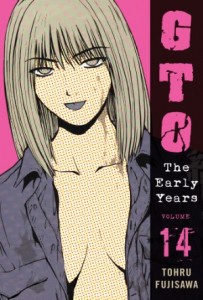
GTO: The Early Years, Vol. 14

September 23, 2012 by Sean Gaffney

By Toru Fujisawa. Released in Japan as “Shonan Jun’ai Gumi” by Kodansha, serialized in the magazine Weekly Shonen Magazine. Released in North America by Vertical.

One of the things I’ve always liked about the GTO franchise, be it Shonan Jun’ai Gumi or GTO or Shonan 14 Days, is its insistence on taking responsibility for your own actions while at the same time not letting that destroy your dreams. Onizuka choosing to become a teacher may have had a lecherous motivation at the start, but it’s been proven time and time again that his ability to motivate jaded young minds and make them see there are other ways is second to none. And it’s also seen here in the earlier title, as we meet Nao Kadena, a former young punk who drove around in fast cars and on fast bikes (because there was nothing else to do, of course) who is now returning as a teacher in order to motivate these kids to get better grades… by any means necessary.

Onizuka here is fairly admirable throughout. Even if he’s attracted to Nao and thinking with his genitals as usual, he still notes that there’s something off about her, and resolves to dig a bit deeper and find out (and if he happens to see her naked, well, bonus). It’s this desire to understand and help others that makes him such an attractive shonen hero, and helps us to understand why girls actually do fall for him.

Then we have the second half of the book, which opens with a scene which reminds you why, even if he has a lot of girls falling for him, he’s still a virgin. After being mocked by Ryuuji, who is off for a secret date with Nagisa (still locked up by her parents, I believe), Onizuka decides to lose his virginity once and for all. So he climbs 12 stories up to Shinomi’s apartment, breaks into her bedroom, removes her panties and prepares to rape her in her sleep. Now, I know this was meant to be played for comedy. I also get that Shinomi woke up, beat the shit out of him, and that everyone regards him as a complete idiot for these actions. But holy crap, Shonen Magazine! What kind of heroes are you rolling out here?

Of course, we can also guess he probably wouldn’t have been able to go through with it. When he meets up with a genuinely cute girl later at a karaoke bar, who seems to be almost too good to be true. Taking her to a love hotel, he confesses his desire, and she’s willing to sleep with him… but is clearly doing it because he wants to, not due to any feeling on her part. This stops Onizuka cold, and he walks out, noting that he wants his first time to have some sort of love behind it. (That sound you heard was my neck breaking from the whiplash from three chapters ago to this point.) This touches her, and so over the course of the next few days the two begin a genuine romance – much to Shinomi’s annoyance (yes, she still has a crush on him despite everything).

Of course, the final pages seem to indicate that this romance won’t last. I’m not actually sure if this will end in a comedic way or will be another ‘Onizuka saves a lost soul and teaches them to dream again’ sort of climax. We will see in Vol. 15, the final volume in the series. Till then, enjoy Onizuka, seen here at his best and worst.

Filed Under: REVIEWS

Comp Ace, Where the Moe Things Are

September 22, 2012 by Erica Friedman 4 Comments

When people casually refer to Japanese manga magazines as “phone books” they are commenting on the general size, thickness and paper quality of the things. And of these phone book-sized magazines, there are few as impressively phone book-like as Monthly Comp Ace. One of the many Kadokawa Shoten magazines designed to generate highly popular anime franchises and massive amounts of related goods, Comp Ace magazine reaches an impressive 900+ pages all for a mere 780 yen ($9.97 at time of writing).

Manga series from the likes of Comp Ace rarely become licensed properties, and when they do, they more often perplex than delight. This is due to the specific qualities of the 4-panel comics that run in the magazine, comics which are designed to cater to the hardcore anime, manga and gaming otaku of Japan. Lucky Star is probably the most globally well known-of these series. Lucky Star actually made it over to western shores as an anime – that did not do nearly as well in the west as it did in Japan, where it *still* inspires fans to make pilgrimages to the town where it is set – and as 8 volumes of manga which suffered at the hands of poor translation at the beginning and bad management throughout it’s time on shelves.

Manga that runs in Comp Ace is far more likely to do well in game form, as the audience for this magazine are gamers at their core. Idolmaster: Xenoglossia, many of the Fate/ series, Cardfight! Vanguard, Tantei Opera Milky Holmes and many other games have graced Comp Ace‘s pages as manga.

Lastly, and to some extent most successfully here in the west, many of the franchises whose spin-off manga runs in Comp Ace, are well-known to westerners as anime series. Magical Girl Lyrical Nanoha Vivid, Tengen Toppa Gurren Lagann: Gurren Gakuen-hen, Macross Frontier, Kiddy Girl-and Pure, Canaan, all have had some anime presence here in the west.

Comp Ace is part of the Comptiq set of magazines for the same audience, many of which include the same series or cross-overs of series. The website for the magazines is: http://www.comptiq.com/ Each individual magazine is given a cover page with a list of contents, and there is a general news link for the site and specific series are highlighted on the menu.  Interestingly, these magazines often come with goods as extras. I picked up this copy of Comp Ace for the fan with an intimate picture of Fate and Nanoha from Magical Girl Lyrical Nanoha, (a series of which I am a fan, despite myself. ^_^;)

The problems with the translation of these manga to English are severalfold. The in-jokes are crafted for Japanese fandom, many of the rituals and habits of whom are alien to western fans, and the 4-panel comic format is about as funny in Japanese as Sunday paper comic strips like Blondie are in English. Many of the series in Comp Ace tend towards the eroticization of pre-pubescent girls, in extreme displays of moe art. Female nudity is copious and unrealistic. In fact, despite the fact that I follow a few of the series in Comp Ace, reading it always leaves me with the feeling of needing a shower.

Comp Ace, from Kadokawa Shoten: http://www.comptiq.com/indexca.html

Filed Under: Magazine no Mori Tagged With: Erica Friedman, Magazine no Mori, Manga Magazine

Manga Bestsellers: 2012, Week Ending 2 September

September 22, 2012 by Matt Blind Leave a Comment

Comparative Rankings Based on Consolidated Online Sales

last week’s charts
about the charts

##

Manga Bestsellers

1. ↑1 (2) : Sailor Moon 3 – Kodansha Comics, Jan 2012 [423.0] ::
2. ↑1 (3) : Sailor Moon 4 – Kodansha Comics, Mar 2012 [417.5] ::
3. ↓-2 (1) : Yu-Gi-Oh! GX 9 – Viz Shonen Jump, Aug 2012 [407.1] ::
4. ↔0 (4) : Sailor Moon 2 – Kodansha Comics, Nov 2011 [392.0] ::
5. ↔0 (5) : Sailor Moon 1 – Kodansha Comics, Sep 2011 [369.8] ::
6. ↑4 (10) : Death Note vols 1-13 box set – Viz Shonen Jump Advanced, Oct 2008 [345.6] ::
7. ↓-1 (6) : Sailor Moon 6 – Kodansha Comics, Jun 2012 [325.5] ::
8. ↓-1 (7) : Naruto 57 – Viz Shonen Jump, Jul 2012 [309.6] ::
9. ↓-1 (8) : Vampire Knight 14 – Viz Shojo Beat, Jul 2012 [308.1] ::
10. ↑1 (11) : Sailor Moon 7 – Kodansha Comics, Sep 2012 [305.0] ::

[more]

Top Imprints
Number of volumes ranking in the Top 500:

Yen Press 89
Viz Shonen Jump 88
Viz Shojo Beat 60
Kodansha Comics 49
Viz Shonen Jump Advanced 36
DMP Juné 30
Dark Horse 18
Seven Seas 14
Vertical 13
Viz Signature 11

[more]

Series/Property

1. ↔0 (1) : Sailor Moon – Kodansha Comics [1,128.5] ::
2. ↔0 (2) : Naruto – Viz Shonen Jump [717.4] ::
3. ↔0 (3) : Bleach – Viz Shonen Jump [646.6] ::
4. ↑1 (5) : Yu-Gi-Oh! – Viz Shonen Jump [524.3] ::
5. ↓-1 (4) : Highschool of the Dead – Yen Press [508.5] ::
6. ↑5 (11) : Soul Eater – Yen Press [474.0] ::
7. ↑3 (10) : Death Note – Viz Shonen Jump Advanced [467.3] ::
8. ↓-2 (6) : Vampire Knight – Viz Shojo Beat [458.7] ::
9. ↓-2 (7) : Black Butler – Yen Press [411.8] ::
10. ↓-2 (8) : Ouran High School Host Club – Viz Shojo Beat [411.5] ::

[more]

New Releases
(Titles releasing/released This Month & Last)

3. ↓-2 (1) : Yu-Gi-Oh! GX 9 – Viz Shonen Jump, Aug 2012 [407.1] ::
10. ↑1 (11) : Sailor Moon 7 – Kodansha Comics, Sep 2012 [305.0] ::
15. ↓-2 (13) : Bleach 44 – Viz Shonen Jump, Aug 2012 [261.0] ::
19. ↑4 (23) : Yotsuba&! 11 – Yen Press, Sep 2012 [238.6] ::
20. ↓-3 (17) : Bleach 45 – Viz Shonen Jump, Aug 2012 [238.3] ::
24. ↑17 (41) : Soul Eater 10 – Yen Press, Aug 2012 [216.1] ::
25. ↑9 (34) : Puella Magi Madoka Magica 2 – Yen Press, Aug 2012 [211.9] ::
27. ↑19 (46) : Naruto 58 – Viz Shonen Jump, Sep 2012 [202.1] ::
38. ↓-9 (29) : Omamori Himari 8 – Yen Press, Aug 2012 [180.8] ::
40. ↓-12 (28) : Bunny Drop 6 – Yen Press, Aug 2012 [175.4] ::

[more]

Preorders

13. ↑6 (19) : Sailor Moon 9 – Kodansha Comics, Jan 2013 [268.5] ::
17. ↑3 (20) : Sailor Moon 8 – Kodansha Comics, Nov 2012 [248.6] ::
29. ↑7 (36) : Sailor Moon 10 – Kodansha Comics, Mar 2013 [201.3] ::
35. ↓-2 (33) : Avatar: The Last Airbender The Promise 3 – Dark Horse, Oct 2012 [189.0] ::
65. ↑5 (70) : Negima! 36 – Kodansha Comics, Oct 2012 [128.7] ::
70. ↑4 (74) : Nausicaa of the Valley of the Wind 2 vol hardcover box set [complete] – Viz Ghibli Library, Nov 2012 [126.0] ::
71. ↑40 (111) : Black Butler 11 – Yen Press, Oct 2012 [124.6] ::
92. ↑11 (103) : Omamori Himari 9 – Yen Press, Nov 2012 [106.4] ::
116. ↑4 (120) : Negima! 37 – Kodansha Comics, Jan 2013 [95.8] ::
129. ↓-5 (124) : Velvet Kiss 2 – Project H, Nov 2012 [87.7] ::

[more]

Manhwa

569. ↑11 (580) : Bride of the Water God 10 – Dark Horse, Jan 2012 [17.8] ::
596. ↑10 (606) : Time & Again 6 – Yen Press, Jul 2011 [16.5] ::
617. ↔0 (617) : Bride of the Water God 11 – Dark Horse, May 2012 [15.8] ::
725. ↓-26 (699) : Time & Again 1 – Yen Press, Dec 2009 [11.5] ::
745. ↓-29 (716) : Time & Again 5 – Yen Press, Mar 2011 [10.8] ::
751. ↓-33 (718) : Time & Again 3 – Yen Press, Jul 2010 [10.5] ::
789. ↓-41 (748) : Time & Again 2 – Yen Press, Mar 2010 [8.9] ::
826. ↑13 (839) : Let Dai 11 – Netcomics, Feb 2008 [7.8] ::
1032. ↑83 (1115) : One Thousand & One Nights 11 – Yen Press, Aug 2010 [4.2] ::
1056. ↓-44 (1012) : One Thousand & One Nights 7 – Yen Press, Apr 2009 [4.0] ::

[more]

BL/Yaoi

16. ↓-7 (9) : Finder Series 6 Passion within the View Finder – DMP Juné, Jul 2012 [261.0] ::
81. ↑9 (90) : Only the Ring Finger Knows (novel) 5 – DMP Juné, Sep 2012 [116.6] ::
90. ↑11 (101) : Ai no Kusabi (novel) 7 – DMP Juné, Sep 2012 [106.8] ::
132. ↓-34 (98) : Samejima-Kun & Sasahara-Kun – DMP Juné, May 2012 [86.5] ::
149. ↓-7 (142) : In These Words – 801 Media, Jun 2012 [80.5] ::
176. ↓-8 (168) : Private Teacher 3 – DMP Juné, May 2012 [69.5] ::
183. ↑96 (279) : The Man I Picked Up – DMP Juné, Aug 2012 [66.2] ::
198. ↓-18 (180) : His Arrogance – 801 Media, Dec 2008 [61.5] ::
219. ↓-10 (209) : Alcohol, Shirt, & Kiss – DMP Juné, Mar 2007 [56.3] ::
226. ↑94 (320) : Loveless 9 – Viz, Sep 2012 [54.9] ::

[more]

Ebooks

8. ↓-1 (7) : Naruto 57 – Viz Shonen Jump, Jul 2012 [309.6] ::
28. ↓-3 (25) : Naruto 56 – Viz Shonen Jump, May 2012 [201.9] ::
31. ↑1 (32) : Maximum Ride 5 – Yen Press, Dec 2011 [192.4] ::
36. ↑2 (38) : Naruto 55 – Viz Shonen Jump, Mar 2012 [183.1] ::
57. ↓-1 (56) : Naruto 54 – Viz Shonen Jump, Mar 2012 [142.1] ::
61. ↓-2 (59) : Haruhi Suzumiya Melancholy of Haruhi Suzumiya 13 – Yen Press, Aug 2012 [132.6] ::
63. ↑5 (68) : Naruto 53 – Viz Shonen Jump, Dec 2011 [130.8] ::
82. ↓-25 (57) : Blue Exorcist 1 – Viz Shonen Jump Advanced, Apr 2011 [115.8] ::
84. ↑11 (95) : Maximum Ride 1 – Yen Press, Jan 2009 [114.7] ::
103. ↑11 (114) : Naruto 52 – Viz Shonen Jump, Jul 2011 [99.8] ::

[more]

Filed Under: Manga Bestsellers Tagged With: Manga Bestsellers

Manga the Week of 9/26

September 20, 2012 by Sean Gaffney

The last week of the month this year has always been rather sad and winsome, but that doesn’t mean all is lost! See what we have for you next week!

For those of you who were unable to kick in for DMP’s Kickstarter Project, Barbara is now here in comic shops to beguile you! This Osamu Tezuka manga is part of his ‘brilliant yet screwed up’ period, and is well worth a read. DMP is also releasing The Tyrant Falls in Love Vol. 7, which apparently does not need a Kickstarter in any way.

Kodansha Comcis has a trio of releases. Deltora Quest hits Volume 8 (are they still questing for Deltora, I wonder?), the 2nd Genshiken omnibus is out (with Vols. 4-6, and introducing Ogiue), and Miles Edgeworth shows us that he can investigate just as much as Phoenix Wright, even if his cast of silly characters continues to be just Gumshoe.

That’s it. What’s on your wallet’s mind?

Filed Under: FEATURES, manga the week of

A Devil and Her Love Song, Vol. 4

September 19, 2012 by Katherine Dacey

A Devil and Her Love Song has been one of 2012’s best surprises. Though the series uneven — and sometimes a little silly — its heroine is one of the most memorable in the Shojo Beat canon. Maria Kawai looks like a mean girl on the surface: she’s pretty and unsparingly blunt, pointing out her classmates’ insecurities with all the delicacy of Dr. Phil. Yet Maria’s bull-in-a-china-shop demeanor reflects her own uncertainty about how to be the kind of person who’s liked for who she is, not the kind of person who’s admired for telling unpleasant truths. And that makes her interesting.

Early in volume four, for example, Maria confronts queen bee Ayu in the bathroom, where she finds Ayu primping for the television cameras. When Maria questions Ayu’s behavior — “But you look the same,” she tells Ayu — Ayu is furious. Maria, however, persists — not because she wants the embarrass a rival, but because she wants to share a hard-won piece of advice. “If someone likes you, or wants to get to know you, it’s not because of how you look,” she tells Ayu. “It’s because you show them how you feel.”

Ayu’s subsequent behavior, however, points to one of the series’ weaknesses: characters have epiphanies with whiplash-inducing frequency. (Saul would never have made it to Damascus if he fell off his donkey as many times as Maria’s classmates do.) Though some of these epiphanies feel genuine, many are contrived: would an alpha girl suddenly confess her feelings to a cute boy in front of all her friends, risking public rejection? Or the class darling admit that she’s actually a nasty manipulator, risking her popularity? Those are nice fantasies, but not very plausible ones; Tomori is working too hard to convince us that Maria’s classmates secretly wish they could be more like her, and not giving group-think and fear enough due.

The series also relies heavily on shopworn gimmicks to advance the plot. The arrival of a television crew in volume three, for example, serves no useful purpose; they disappear for long stretches at a home, only to materialize when the plot demands that someone bear witness to the class’ antics. Maria’s long-running feud with her teacher, too, feels more like an editor’s suggestion than an original idea. To be sure, a student as outspoken as Maria might infuriate a certain kind of adult, but her teacher’s cartoonish behavior renders him ineffective; his actions seem too obvious, too ripe for exposure, for him to pose a real threat to Maria.

Where A Devil and Her Love Song shines is in Maria’s one-on-one interactions with other students. These scenes remind us that everyone is wearing a mask in high school — even Maria, whose sharp comments are as much a pose as Hana’s forced cheerfulness. Though Tomori nails the mean-girl dynamic in all its exquisite awfulness, the best of these exchanges belong to Maria and Shin. Their will-they-won’t-they tension is certainly an effective narrative hook, but what makes these scenes compelling is their honesty. Tomori captures her characters’ body language and fitful conversations, which unfold in fragments, silences, and sudden bursts of feeling, rather than eloquent declarations.

I don’t know about you, but that’s how I remember high school, as a time when I had flashes of insight and bravery, but a lot more moments of cringe-inducing stupidity, cowardice, or tongue-tied helplessness. That Tomori captures adolescence in all its discomfort while still writing a romance that’s fun, readable, and sometimes endearingly silly, is proof of her skill. Now if she could just ditch the television crew and the evil teacher…

Review copy provided by VIZ Media.

A DEVIL AND HER LONG SONG • BY MIYOSHI TOMORI • VIZ MEDIA • 200 pp. • RATING: TEEN (13+)

Filed Under: Manga, Manga Critic, REVIEWS Tagged With: Miyoshi Tomori, shojo, shojo beat, VIZ

Hayate the Combat Butler, Vol. 20

September 19, 2012 by Sean Gaffney

By Kenjiro Hata. Released in Japan as “Hayate no Gotoku!” by Shogakukan, serialization ongoing in the magazine Shonen Sunday. Released in North America by Viz.

In general, you find two types of Hayate fans when you look at your average message board discussing the series. Those who appreciate that this is, at heart, a comedic gag manga, and those who do not. To be fair, Hata does not make this easy for us. Indeed, Volumes 23-24 will be almost entirely gagless, as was Vol. 18. Hata brought this on himself by creating, as part of his comedy manga, a classic harem manga where you genuinely *don’t* have a clue which way it will eventually resolve. And the interaction of the girls with Hayate can be adorable, heartwarming, and fluffy. Thus, when Hata decides after a particularly shippy chapter to suddenly do something incredibly silly with Fumi, or a fanservicey plot that goes nowhere with Izumi and company, fans who want harem resolution (i.e., more Hinagiku and Maria) tend to get irritated.

Fortunately for the romance fans, Volume 20 should keep them very happy indeed. There are no real pointless gag chapters (though there is much humor), and lots of character development – well, the closest one gets in a title where nothing can be resolved. We open with the resolution of the Las Vegas story, as Wataru and Saki manage to finally get one over on his mother and escape. Wataru’s ambivalent feelings towards her are nicely portrayed – he acknowledges that she’s a horrible, immature person who is not ready to raise her son even though he’s a teenager – but she is still his mother, and should she show up at his door one day, he’d likely take her in.

Parents in Hayate tend to get a raw deal – there are no less than three different characters whose parents have saddled them with a huge amount of debt and run off, Nagi’s grandfather seems to be the main villain of the series, and Mikoto is happy to use and abuse even her own son. Interestingly, we also see far more of Nagi’s late mother (in flashbacks) in this volume than in any of the previous ones. She is the one exception – she’s allowed to be, as she is dead – and seems to be a kind and loving, if flakey, mother. I sometimes wonder if all the parents of our current gang knew each other growing up (it’s clear some of them did), and are taking it out on the next generation. Luckily, Hayate and company seem to be a bit more with it.

On the love front, Ayumu has drawn Hina out to where she can admit her love for Hayate openly as long as there’s no one else around. Progress! Of course, actual conversation with Hayate is still awkward – they both tend to put their foot in their mouth a lot – and she’s annoyed when she realizes that, because she’s strong and Hayate trusts her to take care of herself, he may not see her as feminine. As for Ayumu, she’s still the most mature of the cast, and gets to think what most North American harem fans don’t want to hear – that Nagi is the most important person in his life right now. (If Hayate resolves with a Nagi ending, by the way, watch this fandom crash and burn even faster than School Rumble and Negima did. This is why so many harems are unresolved…)

So now everyone’s in Greece, having fun and accidentally ending up in underground tunnels. You know, the usual vacation antics. If I recall correctly, we still have a ways to go before we get back to the serious Athena scenes (and yes, there are also folks who primarily read Hayate, a gag manga, for the serious parts), so when Vol. 21 comes out the usual six months from now, expect hijinks! Meanwhile, this is a great volume for fans of the series – though obviously a bad place for newcomers to jump in.

Filed Under: REVIEWS

It Came From the Sinosphere: The City and the Drama (part one)

September 18, 2012 by Sara K. 2 Comments

The promotional post for Black & White, featuring all of the main characters

If you asked me what the most important idol dramas ever made are, I would answer Meteor Garden (adapted from Hana Yori Dango) and Black & White. Meteor Garden, of course, as the first idol drama ever made, defined the entire genre, and was extremely influential not only in Taiwan, but also Japan, South Korea, China, the Philipines, Thailand, and beyond. However, while Black & White has not had Meteor Garden‘s international reach, its effect on Taiwan itself, based on my subjective observation, has been deeper. Most of this post is about this effect, rather than reviewing the drama itself.

Quick Story Overview

Kaohsiung Police Department’s top two crime solvers are Chen Zaitian (nicknamed Pǐzi – “Ruffian”) and Wu Yingxiong (Yīngxióng means “Hero”). Pizi goes around wearing snazzy white suits, hanging out at trendy cafes, sleeping with women, and working the sleaze circuit in ordet to ferret out clues. On the other hand, Yingxiong, who usually is wearing black, is brave, has a very strong sense of justice, personally sets out to right wrongs and, well, he generally acts like a hero. Unfortunately, he’s not very patient or subtle.

The Kaohsiung Police Department assigns these two to work on a case together. Oh dear.

Actually, this description makes this story sound a bit like something else I’ve discussed in this column. I guess there are no new plots.

About the Main Actors

The main actors, of course, are Vic Chou as Chen Zaitian, and Mark Chao as Wu Yingxiong.

Vic Chou as Chen Zaitian (Pizi) and Mark Chao as Wu Yingxiong

Vic Chou is one of the top idol drama actors ever. He debuted in Meteor Garden as Huazelei (Hanazawa Rui). However, he didn’t really show his full potential until he was cast as Ling (Rei) in Mars. I think his popularity is justified, and I have a lot of respect for him as an actor. While he needs a good script to show his talent (most actors do), his performances in both Mars and Black & White are excellent.

Vic Chou as Ling in Mars

Mark Chao, on the other hand, is better known as a singer than as an actor. This is the only time he has ever appeared in a TV drama … yet he won the Golden Bell Award (the Taiwanese equivalent of the Emmy Award) for Best Leading Actor. His other notable acting performance is as Wenzi (the main character) in the blockbuster film Monga. When I say Monga was a blockbuster, I mean that it was the #1 film in the Taiwanese box office during its run in theaters … and it ran in theaters at the same time as James Cameron’s Avatar. Mark Chao also sings the opening song for Black & White.

Mark Chao as Wenzi in Monga

But, while Vic Chou and Mark Chao are both celebrities and play the main characters, neither is the true star of the drama. The true star, of course, is Kaohsiung.

The City

Kaohsiung is Taiwan’s second-largest city, Taiwan’s largest port, and the largest city in southern Taiwan. Over the last ten years, Kaohsiung has gone through a great transformation.

In older accounts, Kaohsiung is called an ugly, highly-polluted, boring hellhole where the tap water is laced with heavy metals (including lead and arsenic), and which should be avoided unless one must be there for economic reasons. However, nowadays people are always telling me about how nice Kaohsiung is.

What changed? Mostly, government policy.

For a long time, Kaohsiung, aside from some key business interests, had been neglected by the government, which is one reasons why the city had such severe problems.

Then a funny thing called democracy appeared in Taiwan. In fact, most historians say that the ‘Kaohsiung Incident’ was a turning point for the Taiwanese democracy movement. It is worth noting that Kaohsiung suffered more under authoritarian rule than Taipei did, so it was not a coincidence the human rights activists were organizing there.

Of course, governmental reform took decades – Taiwan didn’t have its first free and fair presidential election until 1996. And even then, it took time to shift policies. But shift they did (to what extent, of course, is a subject of heated debate).

The major changes to Kaohsiung happened under the leadership of Mayor Frank Hsieh, and continued under Kaohsiung’s current mayor, Chen Chu (Chen Chu was one of the “Kaohsiung Eight,” and is the only woman to have ever been mayor of a major Taiwanese city). The government reduced pollution, improved the sewage system, built an MRT system, created many parks and recreation areas, hired international designers to beautify the city, and otherwise turned Kaohsiung into a much more livable place.

Of course, it wasn’t only the government that was neglecting Kaohsiung. It was also the cultural media. The vast majority of Mandarin-language dramas are filmed in northern Taiwan – either in Taipei itself, or, if they want to have a more rustic feel and/or reduce filming costs, neighboring areas such as Taoyuan or Yilan county (I do not know enough about Taiwanese (Hokkien) language dramas to comment on them, but most younger people in Taiwan don’t watch them anyway). I think this type of cultural neglect has a psychological effect on people.

North vs. South

Like almost every inhabited place on Earth, Taiwan has regional divisions, and the big one is north vs. south. In Taiwan, the north is definitely richer, more powerful, more economically robust, better infrastructure, etc. It is telling that when many people think of Taiwan, they think of Taipei, Taiwan’s northernmost major city. And Taipei also happens to be the capital (political power).

Northern Taiwan is also the center of ‘Chinese’ culture in Taiwan. When I say “Chinese,” I mean the culture of the people who moved from China to Taiwan in the middle of the 20th century. For example, Mandarin is spoken more in northern Taiwan (ex-Yilan) than anywhere else in Taiwan. Likewise, Taiwanese/Hokkien is less spoken in northern Taiwan (again, ex-Yilan) than anywhere else in Taiwan.

However, southern Taiwan is the center of Taiwanese/Hoklo culture (note: some people prefer to refer to it as “Taiwanese” culture because they consider it to be the true heritage of Taiwanese society, whereas other people prefer to refer to it as “Hoklo” to emphasize that it is only one of Taiwan’s traditions, and that the other cultural traditions are just as ‘Taiwanese’ as the Hoklo one – I am trying to be neutral, so I will use both terms). In particular, Tainan, Taiwan’s oldest city and former capital, is considered the heart of traditional Taiwanese/Hoklo culture.

A further wrinkle is that many residents of nothern Taiwan are originally from southern Taiwan. Due to the better economic and educational opportunities, many people from other regions of Taiwan move to the north, but still have family and cultural connections to their native region. And many have moved from Kaohsiung to the north (especially Taipei). The reverse is a lot less common. Thus many people in northern Taiwan actually identify with the south on some level.

While Kaohsiung does not carry the historical and cultural weight of Tainan, it is also a symbol of the south, and for many Taiwanese people, arguably a majority of Taiwanese people, the south is their ‘native’ land.

Kaohsiung’s Own Idol Drama

Black & White is not the first idol drama set in Kaohsiung. For example, Prince Turns into Frog, another popular idol drama, is also set in Kaohsiung. However, in Prince Turns into Frog, the setting seemed incidentle – though they occasionally included shots of Kaohsiung’s landmarks, it could have just as easily been filmed in northern Taiwan.

That most certainly is not the case of Black & White. It has Kaohsiung all over it. The opening song features Kaohsiung prominently; the ending song also features the city prominently. The first episode features Formosa Boulevard Station, Kaohsiung’s most notable MRT station. There are some scenes in the Yuansu Yujhu fashion area, which is Kaohsiung’s equivalent of Taipei’s Ximending and Tokyo’s Harajuku. The climax of the story takes place in the middle of Kaohsiung’s most famous feature, it’s harbor. The city is clearly featured in every single episode. I have seen no other idol drama which puts as much emphasis on place as Black & White.

In fact, I wonder if the MRT system was featured so prominently in the drama to encourage people to ride it. I know that it has been a disappointment due to the low ridership. People (both Taiwanese and foreign) have told me that the Kaohsiung MRT ‘sucks’, but I found it very useful. If I had spent more time in Kaohsiung, I might have figured out why it ‘sucks’, but for now it seems to me that the problem lies in people’s attitudes rather than the MRT system itself (granted, there are also claims of corruption in the construction of the MRT system, which is a totally different issue).

This has very high production values for a idol drama. I don’t just mean the special effects and cinematography; the producers pulled in top acting talent (see above), got really good writers on the project, and had a very clear commitment to quality across the board.

It’s as if Black & White tried to compensate for decades of media neglect in one fell swoop.

So, What’s Next

This is one of those posts which ended up being a bit long, so I’ve broken it into two parts. Normally, I try to post two-parters in the same week … but this week I’m really busy, so part two will be posted next week. In part two, I discuss, among other things, how the drama depicts the city, how the city depicts the drama, how to get this drama in English (hint: it can be done legally), and some personal observations.

See you next week…


Sara K. spend a couple years living in Oakland, California. When she thinks of Oakland, she thinks of the majestic cranes at the port (when she was a kid, she thought they were dinosaurs). So when she sees the cranes of any port city, she always feels a tinge of childhood wonder, as will as a light, wispy, fleeting sense of home.

Filed Under: Dramas, It Came From the Sinosphere Tagged With: Black & White, idol drama, Kaohsiung, Mark Chao, taiwan, Vic Chou

Bookshelf Briefs 9/16/12

September 17, 2012 by Sean Gaffney, Katherine Dacey and Michelle Smith Leave a Comment

This week, Sean, Kate, and Michelle look at recent releases from Viz Media, Kodansha Comics, and Seven Seas.


The Earl & The Fairy, Vol. 3 | By Ayuko & Mizue Tani | Viz Media – I’m afraid that Edgar and Lydia are not helping their causes when it comes to making me not want to strangle them. Edgar continues to be the sort of hero who hides everything that he does, no matter the reason, because it’s just his way. (To be fair, his upbringing likely invited this.) And Lydia keeps looking for reasons to mistrust him, and finding them, of course, as one does in a series like this. Also, despite the appearance of a bogey-beast partway through this volume, there was a lot less fantasy and a lot more romantic angst. The villain being a typical spoiled brat is also not helping its cause. I’m sure things will get more involved in the 4th (and final?) volume, but nothing in this one convinced me it shouldn’t have ended nicely with two. -Sean Gaffney

Itsuwaribito, Vol. 6 | By Yuuki Iinuma | Viz Media – Volume six of Itsuwaribito reads a lot like an early story line from InuYasha: there are killer dolls, a spider-like villain with eight arms, and a brother-sister pair who would give Kohaku and Sango a run for their money in the pathos department. Alas, that’s where the similarities between these two titles end. Though Rumiko Takahashi did a good job of allowing her story to unfold without too much authorial intervention, Yuuki Iinuma saddles his characters with info-dump dialogue and thought balloons filled with excruciatingly obvious observations. The result is a curiously unengaging story, devoid of suspense or shock; only the most inattentive reader will be surprised by the outcome of Utsusho, Yakuma, Neya, and Pochi’s battle with Naraku the deadly spider demon. -Katherine Dacey

Lizzie Newton: Victorian Mysteries, Vol. 1 | By Hey-jin Jeon and Ki-ha Lee | Seven Seas – A new manhwa series! And a mystery series, at that! As if that weren’t enough to entice me, we’ve also got an intelligent, clear-headed, marriage-averse young Victorian lady sleuth as a protagonist, and while that role might be rather cliché nowadays, it’s still a type that I enjoy reading about. Set in London in 1864, Lizzie Newton begins with the titular heroine attending a social function during which the hostess’ despondent brother turns up dead. Lizzie declares the feat a murder, though the obvious signs point to suicide, and then—with the help of her barrister suitor turned family steward, Edgar—conducts her own chemical experiments to confirm the evidence before calmly giving her testimony to an astounded Inspector who comes to call. Again, this kind of story isn’t exactly new, but it’s sort of… invigorating, all the same. I look forward to volume two! – Michelle Smith

Pretty Guardian Sailor Moon, Vol. 7 | By Naoko Takeuchi | Kodansha Comics – This volume comprises the meat of the “S” arc, the details of which are quite a bit different in the manga than they are in the anime. What’s not different, though, is the dramatic goodness supplied by two groups of Sailor Guardians with opposing missions. Usagi is determined that everyone ought to fight as one, but the older and more powerful “outer” Guardians are equally resolved to save the world at any cost, even if it means taking the life of an innocent girl with the potential to bring ruin and destruction. There are Guardian awakenings, Guardian revelations, and Guardian power-ups in this volume, plus a healthy dose of Haruka awesomeness. (I’m especially fond of her obvious affection for Usagi.) Chalk it up to fangirl enthusiasm if you will, but after the somewhat yawn-inducing “R” arc, it’s nice to be excited about the series again. – Michelle Smith

Psyren, Vol. 6 | By Toshiaki Iwashiro | Viz Media – Having killed off the extremely likeable Elmore Wood kids easily in the previous volume, this one (now back in the past before that happens) gets to show off how they’re all actually really talented, so that it looks more impressive. Also impressive was seeing Ageha, up[on finding out that someone is going to die, immediately trying to change the future by telling them. He gets beaten up for this and told, essentially, “You can’t break the rules”, but I liked his moxie. If there’s a drawback here, it’s that this volume, which serves to develop the ‘normal’ world and show how folks can abuse psi powers, doesn’t really tie into the main plotline, leaving everything hanging a bit, Also, Sakurako’s barely in it. Still, if the excuse is ‘broadening the scope of the manga’s worldview’, it’s a good one.-Sean Gaffney

Toradora!, Vol. 5 | By Yuyuko Tamemiya & Zekkyo | Seven Seas – I’d mentioned that I loved this manga for Minori’s goofy moments, so imagine my surprise when it’s Kitamura who proves to be the complete whackjob here, showing us far more of himself than anyone wanted to see. In fact, Minori actually gets some angst here, as we’re starting to see that her outward personality hides some self-doubt and melancholy. Ryuuji’s advice to her is pitch-perfect, and shows who he’s still a harem lead even though he and Taiga are the obvious end couple. Speaking of Taiga, she’s mostly herself here, but gets a lovely moment when Ami and company go out for a girl’s day out, and Taiga comes along. For once everyone manages to have fun, and Taiga’s thanks is heartfelt – even Ami realizes it. This is a cliched title, but works as the characters are simply so likeable. -Sean Gaffney

Filed Under: Bookshelf Briefs

One Piece, Vol. 64

September 17, 2012 by Sean Gaffney

By Eiichiro Oda. Released in Japan by Shueisha, serialization ongoing in the magazine Weekly Shonen Jump. Released in North America by Viz.

The Fishman Island arc, considering that we spent such a long time waiting for it to finally arrive, has been n unfortunate mixed bag so far. And that doesn’t really change with this volume, as while there are a lot of cool things going on, some good dialogue and humor, and some interesting bad guys, for once I wish that Oda would try pacing a little more like Bleach and let things slow down a bit.

The Straw Hat Pirates (plus Jimbei) are on the cover of this particular volume, and they do all get to show off their respective skills, in Oda’s standard shonen “see how I have grown stronger!” montage. Indeed, Zoro is captured and put into a cage (along with Usopp and Brook), but you get the sense that he barely treats it as something more than a minor inconvenience – he’s faced off against worse than this. Robin, meanwhile, can seemingly not only duplicate body parts but also herself now (let’s see Usopp try to imitate that!), and Nami gets to steal something for the first time in what seems like forever.

Speaking of Nami, given that we were at Fishman Island we were always going to touch on her past at some point. After the long flashback, Jimbei apologizes to her for not stopping Arlong, but this is an older, more mature Nami, and she can mourn the past while still looking forward to the future, and realizes that she’s met her crew and had grand adventures because of all this as well. It’s very heartwarming (as the rest of the cast seems to note, as several tear up in a “this is so heartwarming!!!” moment).

You would think Oda would have his hands full dealing with the prejudice moral that’s running through this arc, but apparently that wasn’t quite enough, so we also have some drug abuse going on, with the bad guys taking the Fishman equivalent of stimulants to keep going. As for the bad guys themselves, we meet Hody’s four lieutenants here, who are basically all variations on ‘goofy Fish guy Oda thought up to be funny’. There’s the one who adds sound effects to his sentences, the one whose camouflage is so good he gets run over, and the Drunken Master, just for a nice Hong Kong reference. Like Vander Decken, they are there to be bad guys you want to see beaten down but also enjoy reading about.

And so we finally start getting into the big fight about 2/3 through this book. It took longer than I thought – Luffy’s brief battle with Jimbei was particularly pointless filler but it’s here at last. So I’m hoping for some really good fights to take my mind off the fact that this arc is, for Oda, pretty mediocre. I mean, it’s still worth picking up – this is One Piece, and I don’t think Oda is capable of making anything not entertaining – but it’s not as fulfilling as what has come before it.

Filed Under: REVIEWS

  • « Go to Previous Page
  • Page 1
  • Interim pages omitted …
  • Page 402
  • Page 403
  • Page 404
  • Page 405
  • Page 406
  • Interim pages omitted …
  • Page 541
  • Go to Next Page »
 | Log in
Copyright © 2010 Manga Bookshelf | Powered by WordPress & the Genesis Framework