• Skip to primary navigation
  • Skip to main content
  • Skip to primary sidebar
  • Home
  • About Us
    • Privacy Policy
    • Comment Policy
    • Disclosures & Disclaimers
  • Resources
    • Links, Essays & Articles
    • Fandomology!
    • CLAMP Directory
    • BlogRoll
  • Features & Columns
    • 3 Things Thursday
    • Adventures in the Key of Shoujo
    • Bit & Blips (game reviews)
    • BL BOOKRACK
    • Bookshelf Briefs
    • Bringing the Drama
    • Comic Conversion
    • Fanservice Friday
    • Going Digital
    • It Came From the Sinosphere
    • License This!
    • Magazine no Mori
    • My Week in Manga
    • OFF THE SHELF
    • Not By Manga Alone
    • PICK OF THE WEEK
    • Subtitles & Sensibility
    • Weekly Shonen Jump Recaps
  • Manga Moveable Feast
    • MMF Full Archive
    • Yun Kouga
    • CLAMP
    • Shojo Beat
    • Osamu Tezuka
    • Sailor Moon
    • Fruits Basket
    • Takehiko Inoue
    • Wild Adapter
    • One Piece
    • After School Nightmare
    • Karakuri Odette
    • Paradise Kiss
    • The Color Trilogy
    • To Terra…
    • Sexy Voice & Robo
  • Browse by Author
    • Sean Gaffney
    • Anna Neatrour
    • Michelle Smith
    • Katherine Dacey
    • MJ
    • Brigid Alverson
    • Travis Anderson
    • Phillip Anthony
    • Derek Bown
    • Jaci Dahlvang
    • Angela Eastman
    • Erica Friedman
    • Sara K.
    • Megan Purdy
    • Emily Snodgrass
    • Nancy Thistlethwaite
    • Eva Volin
    • David Welsh
  • MB Blogs
    • A Case Suitable For Treatment
    • Experiments in Manga
    • MangaBlog
    • The Manga Critic
    • Manga Report
    • Soliloquy in Blue
    • Manga Curmudgeon (archive)

Manga Bookshelf

Discussion, Resources, Roundtables, & Reviews

Features & Reviews

Strobe Edge, Vol. 2

January 7, 2013 by Anna N


Strobe Edge, Vol 2 by Io Sakisaka

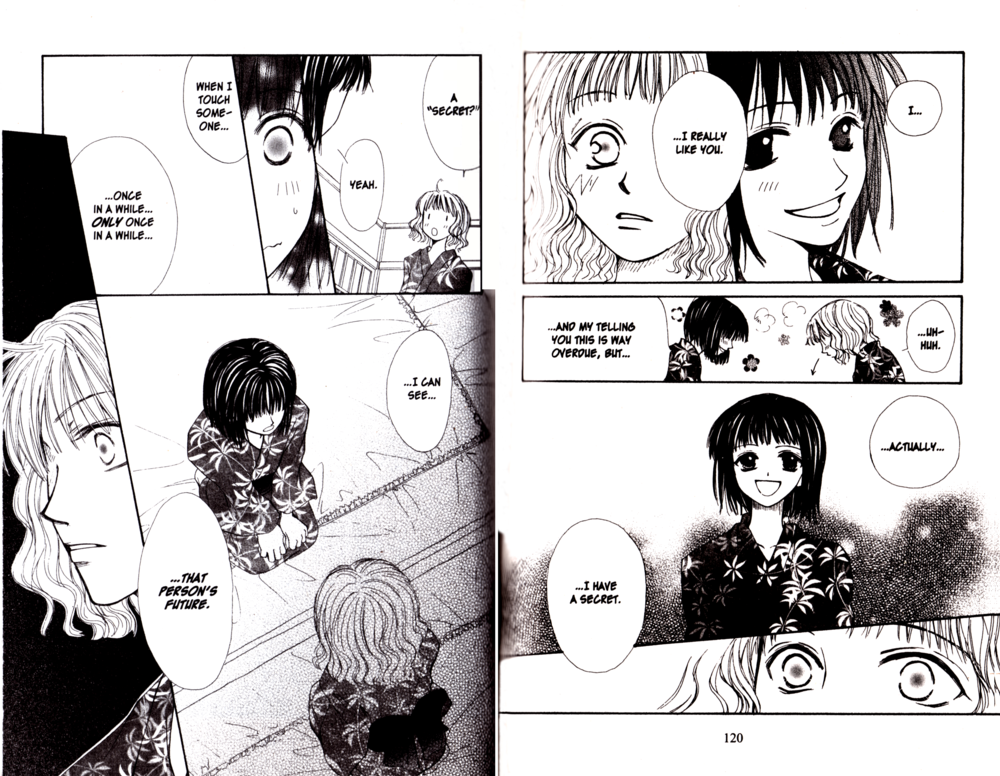
I liked the first volume of Strobe Edge well enough, but I was hoping that the second volume would be a tiny bit more interesting, in order to justify my wanting to keep following the series. I wasn’t disappointed, as the second volume dropped the emphasis on the heroine Ninako’s naivety in favor of some standard shojo plot elements with an emphasis on the characters’ emotions and just enough of a twist to produce some unexpected moments.

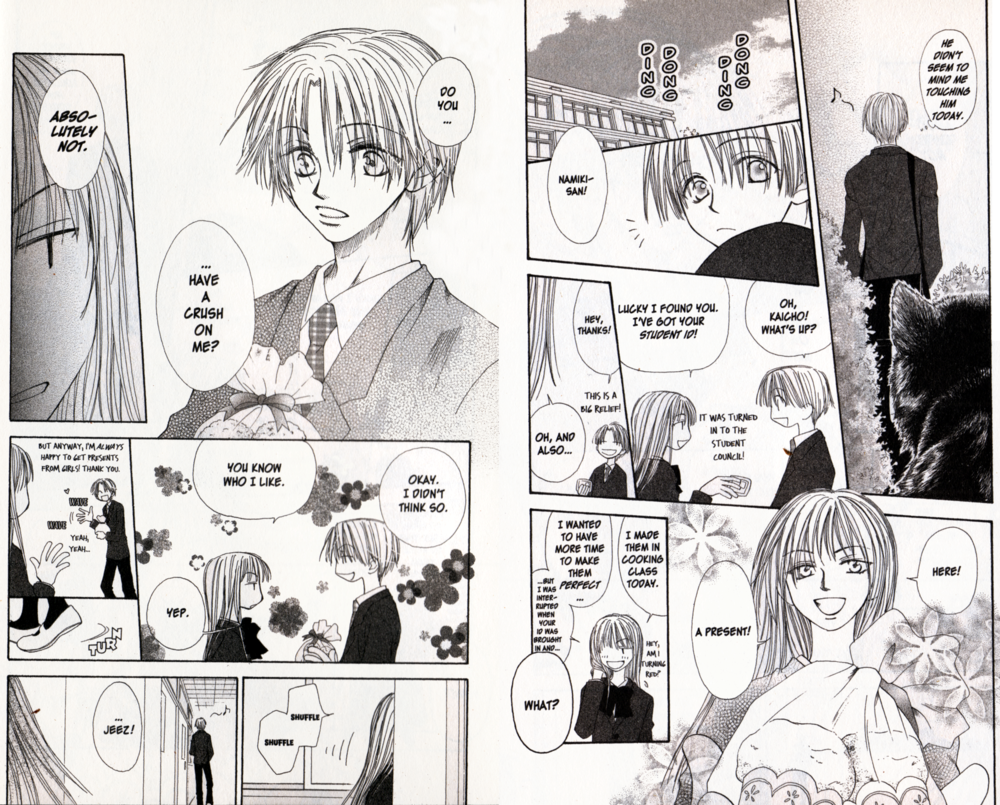
Ninako is back at school after summer vacation, wondering how to deal with the fact that she confessed her feelings to laconic yet secretly super-nice heartthrob Ren on the last day of school. Ren turned her down nicely, mentioning his girlfriend. Ninako practices how to say hello to him and reflects that their first encounter will likely be as difficult for the rejector in addition to the rejectee. Unfortunately word of Ninako’s daring has spread and she is known throughout the school as “girl who confessed to Ren on the train platform.” Her friends try to comfort her, but Ninako finds a slightly unwelcome distraction in the person of Ando, a flighty womanizer who seems fascinated by her indifference to him and her continued love for Ren even after being rejected. The unlikely trio gets thrown together in doing some committee work for school, and while Ando might have a habit of trying to collect as many girls’ cell phone numbers as possible, he does exhibit some genuine friendship and sensitivity to Ninako when she’s placed in an awkward situation.

Strobe Edge isn’t the type of shojo manga that challenges conventions, but it is extremely well-executed. I couldn’t find anything to quibble with the artwork, and the pained expressions Ninako sometimes makes as she navigates the storm of teenage romance offsets some of the expected shojo prettiness. There were plenty of humorous elements too, as Ninako is initially embraced by a secret society at school that is comprised solely of girls that Ren has rejected. I continue to enjoy the fact that most of the characters are genuinely nice and sympathetic. A bonus story in this volume focuses on the way Ren and his girlfriend Mayuka began their relationship, and it was fun to see a different aspect of those characters told from Mayuka’s side. I wish more manga had side stories that served as a supplement to the main plot, as opposed to publishing unrelated short stories by the same author in the back of a volume just to fill it out. Strobe Edge is perfect comfort reading for anyone who wants to read a well-done shojo manga that keeps things on the light and fluffy side.

Review copy provided by the publisher.

Filed Under: REVIEWS Tagged With: shojo beat, Strobe Edge, viz media

Off the Shelf: Chocolat

January 7, 2013 by MJ and Michelle Smith 13 Comments

chocolate8MJ: Good morning, Michelle! How are you holding up after your marathon read?

MICHELLE: Fairly well! I’m usually a terribly slow reader, so it’s always nice to marathon manhwa since the big, spacious paneling allows me to go a lot faster!

MJ: Girls’ manhwa, especially, is easy on the eyes… and in more ways than one, most of the time!

So, anyone who’s been following My Week in Manga will know that the series Michelle and I have been marathoning this week is Chocolat, a girls’ manhwa series by writer JiSang Shin and artist Geo—the same team who brought us Very! Very! Sweet. This series went abruptly on hiatus after seven volumes—the last of which was published here in 2008—and finally resumed publication in South Korea in the spring of 2011. Its North American publisher, Yen Press, collected the series’ final three volumes into a single omnibus that was released just last month.

Chocolat tells the story of Kum-Ji Hwang, a middle-school student obsessed with a popular idol group known as “DDL,” and particularly its lead singer, Jin. Having discovered DDL too late to get in on its fan club’s initial membership drives, Kum-Ji and her friends are firmly stuck at the very bottom of the fandom hierarchy, with little hope of ever seeing their idols up close, let alone interacting with them in any meaningful way. Frustrated by this cruel reality, Kum-Ji gets in on the ground floor of the fan club for a new idol group, Yo-i. Though she cares nothing at all about Yo-i, Kum-Ji’s status as a club officer grants her special access to entertainment complexes and live events, including those that Yo-i shares with DDL!

When the day finally arrives that Yo-i and DDL are working in the same studio, Kum-Ji struts in proudly to find her way to DDL’s waiting room, and though she finally gets her opportunity to meet Jin, her moment of glory is interrupted by E-Soh, a cute (but spoiled) boy she tussled with on the elevator, who also happens to be the lead singer for Yo-i. Catching on to Kum-Ji’s ruse, E-Soh threatens to blow her cover unless she agrees to be his personal slave.

(click images to enlarge – read left-to-right)

blackmail1    blackmail2

The rest of the plot is totally predictable, right? Kum-Ji will grudgingly consent to E-Soh’s terms, all the while hating him with her whole heart, until hate finally turns into mutual love and they live happily (and entertainingly) ever after. Right?? Thankfully, no.

Though Kum-Ji initially succumbs to E-Soh’s blackmail, she’s not cut out for polite servitude and her rebellious nature pretty much ensures that her cover is doomed from the start. But as it turns out, Kum-Ji’s aunt is a coordinator for Yo-i, which means that Kum-Ji’s proximity to the idol world is not wholly dependent on her fan club status. This is pretty fortunate for Kum-Ji, since her “disrespectful” treatment of E-Soh puts her immediately at odds with the Yo-i fan club president—a dazzling beauty commonly referred to as “Barbie.”

Beyond this, the series becomes pretty complicated to summarize. Though its melodramatic nature gives it a formulaic feel, its romantic entanglements and various character trajectories are actually quite difficult to sum up in any kind of neat way. Predictably, E-Soh falls for Kum-Ji (in typically inexplicable fashion—at least at first), but Kum-Ji’s feelings are much more complicated as she tries to weigh her growing friendship with E-Soh against both her longstanding idol worship of Jin and her unexpected sexual attraction Yo-i’s main rapper, E-Wan. Meanwhile, Barbie’s obsession with E-Wan spurs her to pursue a career as an idol herself so that she can approach him as a colleague instead of a fan, and E-Wan struggles with just figuring out how to coexist with other humans at all. Ultimately, the series becomes a strange mixture of tried-and-true romance formulas and surprisingly insightful musing on the nature of love and corporate-made social hierarchies, which works better than you might think.

MICHELLE: Wow, that summary was incredibly well done!

As I began Chocolat, I had the same expectations. “Okay, this is another series where a childish and uncouth girl encounters a handsome and rich guy and they bicker and bicker until suddenly he loves her, but then she’s never grateful for anything he does until suddenly she matures and they live happily ever after.” And, on some levels, it kind of is that, but there are definitely some twists to the old formula.

I expected that Kum-Ji would mature—for the first four volumes, she’s pretty insufferable—but I wasn’t prepared for just how awesome she would become and how necessary all that earlier squabbling would turn out to be. If you’re introduced to a character who is calm and mature, they could be a bit dull, but knowing her background, when we see her exhibiting those qualities, we’re just struck by how much she’s grown. Also, she is completely reflective on her own past behavior and acknowledges several times how she’s sorry for it and grateful for the many kindnesses she initially rebuffed. By the end of the series, I liked her very much.

I also thought JiSang Shin and Geo did a decent job explaining why these boys would be attracted to her, even though it initially seems so inexplicable. Aside from the fact that their obsessively scandal-phobic production company is keeping them away from girls as much as possible, Kum-Ji is the one girl they meet who is utterly honest and who expects nothing from them. E-Wan later explains that he’s attracted to her because, growing up the son of a mother who never put him first, he can see that she’ll become a terrific mother one day. Strong, loving, and utterly willing to protect her kid with the full extent of her ability. (Well, okay, he doesn’t necessarily say all that, but that’s what he means.) She finally convinces him that real love is possible, and if his change of heart is a little swift and unconvincing initially, by the end I was sold on their relationship.

(click image to enlarge)

beautiful

MJ: I think in general I have a higher tolerance for heroines like Kum-Ji than you do (I tend to find the arrogant male love interest much more insufferable), but in Kum-Ji’s defense, specifically, I feel that she has an especially good excuse for immaturity, since she is actually younger than all of the male idol characters, none of whom are any more mature than she is, when you think about it—quieter, in some cases, but not particularly mature. I am in complete agreement with you, however, on how awesome she becomes, and I need to extend the same praise to E-Soh, whose personal growth is just as dramatic as Kum-Ji’s. It’s not often that I find myself equally admiring both the heroine and the guy she doesn’t end up with by the end of a romance comic.

MICHELLE: Oh, I found the arrogant guys pretty insufferable, too! The tone of the story in early volumes is also more “comedic,” in that there are lots and lots of ugly panels and some truly awful attempts at humor at Wu-Hee’s (the female member of Yo-i) expense. I expect you know what sequence I’m talking about, and I really could have done without that. The whole manhwa could’ve done without that! But, in general, I don’t get along that well with comedies, so that probably contributed significantly to my irritation with earlier volumes. I had faith that the story would eventually shift into something more my speed, though, and it did.

E-Soh is indeed an interesting character. I really liked the bit at the end where he’s realizing that the idol business can’t go on forever and he should think about what else he might want to do with his life. I’m not sure characterization with him was always consistent—at one point he’s playing a sort of Momiji role by helping Kum-Ji and E-Wan get together, but later he’s demanding of his bandmate “What the heck do you see in her?!!”—but his overall story line is a good one.

MJ: Yeah, I think there are some confusing moments in E-Soh’s character development, but some of those end up being used to great advantage, too. One of the things I love most about the way Kum-Ji and E-Soh’s relationship is written throughout the series, is that the authors aren’t afraid of letting them be confused or to hurt themselves and each other in the midst of that confusion. Neither of them is portrayed as the villain in the relationship, and the differences between the way Kum-Ji feels about E-Soh versus E-Wan versus Jin are really nuanced and not necessarily cut along the lines drawn by typical romance tropes. Likewise, E-Soh’s feelings about Kum-Ji and E-Wan are changeable and not easily defined. Because of this, Kum-Ji and E-Soh’s relationship is probably my favorite in the series—kind of because they don’t end up together romantically. There’s a scene near the end of the final volume in which Kum-Ji thanks E-Soh for making a clean break with her, and he acknowledges how difficult keeping it clean actually was that really sums up how well the relationship is written and it actually made me kind of teary at the time.

(click image to enlarge)

thankful

MICHELLE: I agree completely about the nuanced difference in Kum-Ji’s feelings, and I thought that the manhwa-ga team did a great job clarifying those for the reader at a pace that matched the internal clarification Kum-Ji herself was experiencing. This leads me to note that the portrayal of fandom is also really well done—the dedicated fervor as well as the gradual moving away from that kind of idealized obsession while still looking back on all those times with nostalgic fondness. It’s never portrayed as a waste of time and the feelings experienced by fans are presented as absolutely genuine.

And yet, reality inevitably wins out in the end. There’s a great scene where E-Wan, thinking to do something nice for Kum-Ji, invites her over to Jin’s place, but by then her feelings for E-Wan have developed so much that she only has eyes for him and practically ignores her idol lounging next to her on the couch in his bathrobe.

MJ: Yes, I absolutely loved the way the story handles fandom/fans. I think Jung-Yeon (aka “Pretty Boy Jin”) is one of the best examples of this. First, I love the fact that Kum-Ji and her friends continue to think of his online fandom name as his actual name (wow, can I relate to that), and also that he ends up being both a totally real guy with his own life and issues and also a serial fan who is just really good at being a fan. He’s that fan whose homemade gifts and banners outshine everyone else’s, and by the end of the story he’s moved on to another fandom to which he’s just as devoted as he ever was to DDL (I can relate to that, too).

fans

MICHELLE: Because he looks so much like Jin when he’s first introduced, I kept waiting for the big reveal that he was some secret little brother or something, but nope, just a fanboy. At one point, it seemed like his story would come more to the fore, as there was a line about his parents having kicked him out, but then we never hear about it again, so I’m not sure what happened there.

MJ: Oh, interesting, I never really expected it to become more prominent—just kind of took it as a character note—but I should mention, too, that I liked his relationship with Kum-Ji and the kind of friend he was to her, even if it was clear that they weren’t exactly on the same page there. I was glad that the authors didn’t feel it necessary to try to neatly fit him into her harem (like making him confess or something), but that there was some ambiguity and unsettled-ness in terms of how each of them viewed the friendship.

MICHELLE: Definitely. If it had been yet another boy expressing his interest in her, it would’ve been overkill.

Speaking of boys who fancy Kum-Ji, we haven’t really talked about E-Wan very much. He starts off very surly and angsty—this, combined with the boy band aspect of the story, reminded me of the lead character in You’re Beautiful to the point that I called him “Murderbot” in my notes a few times—but we eventually learn that he’s had a terrible home life. It seems like he joined Yo-i at least in part to distract himself from his pain, but all the smiling and singing and pretending like nothing’s wrong are really wearing him down.

Burdened by a past full of unsolicited, expectant admirers, he’s pretty nasty to Kum-Ji when she finally confesses her feelings to him, but when she—unlike all the others—actually takes his feelings into account and leaves him alone afterwards, he apologizes and starts becoming nicer in general. I actually found his about-face here a little too sudden—I was so suspicious I wondered whether his illness was terminal or something—but it’s certainly not unwelcome.

ewan    murderbot
Twin Murderbots?

MJ: Ha! I’ll admit that “Murderbot” came to my mind a few times as well, though I do kinda love that, unlike Tae-Kyung in You’re Beautiful, E-Wan isn’t the obvious love interest from the start. He sort of sidles in there unexpectedly as Kum-Ji gets to know the group, unlike E-Soh, who is completely transparent and in Kum-Ji’s face (and thus, ours) the whole time.

E-Wan’s transformation felt pretty slow and natural to me, but I wonder if that has something to do with the fact that I was actually re-reading the first seven volumes rather than marathoning the whole series for the first time. Did my later impressions of E-Wan color my reading of him early on? That certainly seems possible.

Though as a reader, I would have been happy to see Kum-Ji end up with either E-Soh or E-wan (as long as she was happy), I admit I loved E-Wan’s final volume persona as the cranky idol who will only behave for magical manager Kum-Ji. I would have been sad had that E-Wan never surfaced. He’s pretty adorable.

MICHELLE: “Sidling” is the perfect way to describe how E-Wan ends up becoming the love interest. I really liked that, too, though because Kum-Ji ends up genuinely becoming such close friends with E-Soh, ending up with him wouldn’t have felt super-predictable either.

And yes, I quite liked the glimpse of the two of them at the end! In their notes, the creators mentioned being dissastified with the conclusion to the series, but I honestly don’t see what’s wrong with it! I was a little worried when Kum-Ji didn’t get angry when E-Wan suggested she forget college and just marry him, but relieved to see that she did indeed go to university and made a name for herself doing something related to him, but by no means dependent upon him.

MJ: Speaking of Kum-Ji’s career trajectory, I also am in love with the scene in which she discovers that she’s good at sewing costumes and her aunt says (essentially) something along the lines of, “Well, if you’re just going to go to fancy costume design school and still end up doing this like all the rest of us did, you might as well just skip that enormous time-suck and sign up with us now!” Because even though this isn’t precisely what Kum-Ji ends up doing, it’s still surprisingly practical advice for a romance series to be handing out.

MICHELLE: Yeah, and there’s an arrow pointing to the lady who did go to a prestigious school and the caption “sewing spangles on a shirt.” Hee.

(click image to enlarge)

spangles

This does bring up the thoroughly corporate nature of the band. It’s never expressly stated, but I don’t think any of the boys knew each other before being drafted to be in the group together. (E-Soh and Wu-Hee were “discovered” simultaneously.) Due to their closeness, it’s possible E-Wan and Eun-Sung did know each other, but this is never explored. (Eun-Sung in general is never explored, which is kind of a shame.) They live in dormitories furnished by the company and have a rigorous schedule of promoting an album, then having a break while another group rotates into the spotlight, then having a “comeback” when it’s time for their second album. Although we see them rehearsing from time to time, it’s generally just choreography. They’re never seen writing songs or playing instruments, and are really described as rappers in a “dance group” rather than singers in a band. So, really, they don’t seem to be musicians with any particular love of music. They’re just handsome and coordinated guys put together by a company to generate income. It’s all very… sterile.

MJ: Yes, definitely. And it’s interesting how the comic addresses it, too, by acknowledging it without judgement. On one hand, there is a character who really does crave more—Jin, who eventually leaves DDL in order to pursue his own songwriting and a career as a real musician—and we also have Barbie, who (rather accidentally) discovers that she’s got real talent as an actress. But E-Wan’s job (and the job of all the other members of Yo-i) really is just to be an idol, completely crafted by corporate entertainment for mass consumption. And this is totally okay, according to Chocolat! I kind of love that. It’s oddly refreshing.

MICHELLE: “Acknowledging it without judgment” nicely sums up the depiction of fandom, too!

So, let’s talk about Barbie for a minute! Originally Yo-i’s fan club president before embarking upon the path to stardom, Barbie is desperately in love with E-Wan. Although she is at times at odds with Kum-Ji—and orders a couple of fangirl attacks upon her—they eventually call a truce. Towards the end of the series, however, when Barbie learns that Kum-Ji lied to her about having feelings for E-Wan and went so far as to confess to him, Barbie declares that she must pay the price for the deception.

I was expecting more bullying to ensue, but instead there’s actually a fairly awesome moment when Barbie intercepts the boys just as they’re about to go back on stage for their comeback and pulls E-Wan into a much-photographed embrace, effectively overshadowing their return (which had been delayed by a terrible car accident) with scandal. Perhaps I shouldn’t have been surprised by this twist, but I was, and quite delighted by its cruel efficiency.

MJ: Everyone’s reactions to her villainous move were so, so interesting, too! E-Wan, E-Soh, and Kum-Ji all react in ways so true to their characters, it’s a further delight!

MICHELLE: Is there anyone else we forgot to talk about? Although the supporting cast is pretty vivid, I’m not sure I have too much to say about them, aside from lamenting again that Eun-Sung and, to an even greater extent, Wu-Hee are not given very much to do. I did like the acknowledgment that it was only Wu-Hee’s quirkiness that kept her safe from fangirl vitriol, but she’s pretty much portrayed as a country bumpkin throughout.

MJ: I was a bit offended by Wu-Hee’s country bumpkin portrayal in the beginning, though I liked her quite a lot by the end, so I’m thinking the offensiveness must have been toned down at that point. Sadly, I think her role in the series was mainly to provide E-Soh with both a huge burden of guilt (as she’s horribly injured in a work-related car accident not long after he prevents her from quitting the group) and a crippling neurosis (again, related to the accident).

(click image to enlarge)

trauma

Eun-Sung, on the other hand, seems to exist to provide a sounding board for E-Wan, though one thing I do like about the way he’s written is that he’s really kind of an ass, which was totally unexpected—at least by me. So often, I expected him to come out and say something warm and helpful only to be confronted by a guy who is perhaps more caught up in the corporate-invented classism of the idol business than anyone. There’s a scene early on where he basically lectures Kum-Ji about not respecting her betters which was so not what I was expecting from the role he seemed to play. It made his close, cuddly relationship with E-Wan even more intriguing. I’m not sure even now that I completely understand how they really got there.

MICHELLE: I also wasn’t expecting Eun-Sung to be such an ass! Early on, I was still making You’re Beautiful parallels and had him pegged for the kindly Shin-Woo type. Sounds like we were in the same boat there.

MJ: We certainly were!

I’d also like to take a moment to express my enjoyment of Kum-Ji’s circle of fandom friends, because I was so pleased that the authors decided to check back in with them at the end of the story so that we could see how they all turned out. They managed to capture fandom friendship perfectly as something that really is real, but is also usually destined to fade over time as the friends all move on to other obsessions or regular life pursuits. They portray this without trivializing the group’s fandom experience or the bond formed between them, and it made me feel certain that the writers had been fans on that level themselves at some point in their lives.

MICHELLE: I think there were actually some author features in early volumes (these would be the Ice Kunion editions) that mentioned them being fans of some group, but I can’t remember now what it was. So yes, I’m sure they had intimate knowledge of those kinds of friendships. Heh, now I’m recalling a girl I was “best friends” with in sixth grade based on the fact that we liked the same boy. And when I stopped liking him, our friendship fizzled overnight.

MJ: I’ve had both that exact friendship (which can feel—and I think is—very real in the moment) and also the even better kind that ends up transcending fandom and remains even after the shared interest has waned. After all, I met my husband via band fandom! Chocolat‘s nuanced approach leaves room for all of this, and I love it for that. Also, I admit I’m a fan of Pretty Boy’s new look. Heh.

prettyboy

MICHELLE: It certainly is striking!

MJ: I suppose it’s obvious by now, but I’d like to wrap up just by saying how happy I am that Yen Press opted to complete this series, even after such a long hiatus. It’s a charming treat, and I’m grateful for the opportunity to see it through to the end … and also for the opportunity to discuss it with you! Thank you, Michelle, for a delightful conversation!

MICHELLE: It was fun!


More full-series discussions with MJ & Michelle:

Moon Child | Fullmetal Alchemist | Paradise Kiss | Tokyo Babylon (with guest Danielle Leigh)
The “Color of…” Trilogy | One Thousand and One Nights | Please Save My Earth
Princess Knight | Fruits Basket | Wild Adapter (with guest David Welsh)

Full-series multi-guest roundtables: Hikaru no Go | Banana Fish | Gerard & Jacques | Flower of Life

Filed Under: OFF THE SHELF Tagged With: chocolat, manhwa

Bookshelf Briefs 1/7/13

January 7, 2013 by Sean Gaffney, Anna N and Michelle Smith 1 Comment

This week, Sean, Anna, and Michelle look at recent releases from VIZ Media and Vertical, Inc.


jiujiu3Jiu Jiu, Vol. 3 | By Touya Tobina | VIZ Media – The halfway decent second volume of Jiu Jiu must’ve been a fluke, because this one was equal parts confusing and dreadfully dull. It’s primarily about a meeting of the various hunter clan members, including the guy who used to be Takamichi’s fiancé as well as the guy who’s her current fiancé. Some family heads don’t approve of using mixed breeds as minions, but right when their actions are facing the most scrutiny, Snow and Night commit various acts of violence that I assume are provoked by jealousy (but it’s all a bit too muddled to be sure). I’m not even able to appreciate the occasional tidbits of fanservice, since I see Takamichi’s canine familiars more as “dogs who transform into hot boys” rather than the reverse. I’ve given it three volumes to snare me, to no avail. I think I may be done with Jiu Jiu now. – Michelle Smith

limit2Limit, Vol 2 | By Keiko Suenobu | Vertical – Limit continues to be shojo for the person who is weary of shojo. There’s no boys on the horizon at all, and being stranded in the wilderness takes the typical high school centric plots out of the equation entirely. Suenobu continues to develop the different personalities and characters of the small group of survivors of a school bus crash. What I found most interesting in this volume was the way the horror of the situation really comes from within each girl. Survival depends on being able to drop the programmed responses that they’ve been taught by modern society. Kamiya is pragmatic almost to the point of being sociopathic, but her knowledge of survival skills and ability to handle the tarot Otaku with a sythe Morishige makes it seem like she’s best fit for survival. Usui’s weakness is her lack of self confidence, and her belief that the mean girl norms of highschool are going to continue indefinitely, and she ends up putting herself in a sticky situation. Konno’s dawning self-awareness and her reappraisal of the situation places her in conflict with Kamiya, but I wonder if Konno’s self-prized trait of being able to go with the flow will enable her to continue on as food and shelter remain scarce. I’m looking forward to volume 3! – Anna N

oresama12Oresama Teacher, Vol. 12 | By Izumi Tsubaki | VIZ Media – I must admit I’m not all that fond of the new character, Aki, who so far has proved to be more of a really annoying pest than anything else. But then, I thought the same thing about Yui at first, and now I love him to bits, the idiot. And speaking of idiots, it’s hard not to feel sorry for Okegawa, who now has to repeat a year because everyone around him is a dork. (But glorious dorks – the traps set up to stop him are the funniest part of this volume). There’s little plot movement here beyond introducing Aki, but I was pleased to see a few heartwarming moments involving Ayabe and his family (and a hint that the student council president isn’t as evil as he seems). Lastly, there’s even a brief feeling of Takaomi possibly getting jealous, and reinforcing his master-servant relationship with Mafuyu. As always, Oresama Teacher is PACKED WITH STUFF. -Sean Gaffney

otomen14Otomen, Vol. 14 | By Aya Kanno | VIZ Media – After adoring Vol. 13 and its Ryo focus, there was no way I wasn’t going to be let down by this new volume, which heads back towards its Otomen focus. That said, there’s stuff to like here as well. Kitora is the focus of the first half of the book, along with Juta’s tsundere sister Kuriko, who likes Kitora in the usual ‘constantly angry at him’ way. There’s also a genuine supernatural element to the chapter, which makes things a bit odder. I wasn’t as wild about the second half, as honestly the otomen plot is wearying, given that every single male character in the series is proving to be a secret otomen. One thing does carry over from last volume – Asuka is still uncertain about what he wants to do with his life, but is beginning to realize that he has to resolve things with his mother before he can move forward. Let’s hope that resolution comes soon. -Sean Gaffney

strobeedge2Strobe Edge, Vol. 2 | By Io Sakisaka | VIZ Media – Oh, Strobe Edge, you’re as sweet and insubstantial as cotton candy, but I still like you. In fact, sometimes my brain needs a comforting and thoroughly unchallenging high-school romance like this. In this second volume, Ninako is trying to move on from being rejected from her first love, Ren, and has asked that they remain friends. Meanwhile, she meets a flirtatious guy named Ando who is sometimes obnoxious and sometimes keenly observant, a trait that comes in handy when Ninako meets Ren’s girlfriend and learns that she’s super nice and cute. What it boils down to is… there’s really nothing new here. But what is here is well done and compelling and easily digestible. It’s like brain balm. I’ll definitely be continuing on. – Michelle Smith

Filed Under: Bookshelf Briefs

Manga Bestsellers: 2013, Week Ending 6 January

January 6, 2013 by Matt Blind 1 Comment

Comparative Rankings Based on Consolidated Online Sales

last week’s charts
about the charts

##

Manga Bestsellers

1. ↔0 (1) : Sailor Moon 8 – Kodansha Comics, Nov 2012 [408.5] ::
2. ↔0 (2) : Maximum Ride 6 – Yen Press, Sep 2012 [399.7] ::
3. ↑1 (4) : Naruto 59 – Viz Shonen Jump, Nov 2012 [367.6] ::
4. ↓-1 (3) : Sailor Moon vols 1-6 box set – Kodansha Comics, Nov 2012 [355.0] ::
5. ↑1 (6) : Sailor Moon 9 – Kodansha Comics, Jan 2013 [354.1] ::
6. ↓-1 (5) : Death Note vols 1-13 box set – Viz Shonen Jump Advanced, Oct 2008 [352.2] ::
7. ↑1 (8) : Vampire Knight 15 – Viz Shojo Beat, Nov 2012 [329.7] ::
8. ↓-1 (7) : Nausicaa of the Valley of the Wind two volume hardcover box set [complete] – Viz Ghibli Library, Nov 2012 [313.1] ::
9. ↔0 (9) : Sailor Moon 1 – Kodansha Comics, Sep 2011 [300.7] ::
10. ↔0 (10) : Maximum Ride 1 – Yen Press, Jan 2009 [285.4] ::

[more]

Top Imprints
Number of volumes ranking in the Top 500:

Yen Press 100
Viz Shonen Jump 96
Viz Shojo Beat 56
Kodansha Comics 51
Viz Shonen Jump Advanced 36
Seven Seas 27
Dark Horse 24
Viz 13
Tokyopop 11
Del Rey 9

[more]

Series/Property

1. ↔0 (1) : Sailor Moon – Kodansha Comics [1,039.0] ::
2. ↑1 (3) : Naruto – Viz Shonen Jump [759.8] ::
3. ↓-1 (2) : Maximum Ride – Yen Press [755.7] ::
4. ↔0 (4) : Black Butler – Yen Press [634.9] ::
5. ↔0 (5) : Vampire Knight – Viz Shojo Beat [540.4] ::
6. ↔0 (6) : Death Note – Viz Shonen Jump Advanced [500.3] ::
7. ↑1 (8) : Bleach – Viz Shonen Jump [464.4] ::
8. ↓-1 (7) : Soul Eater – Yen Press [458.1] ::
9. ↔0 (9) : Alice in the Country of Clover – Seven Seas [377.0] ::
10. ↑11 (21) : Ouran High School Host Club – Viz Shojo Beat [370.4] ::

[more]

New Releases
(Titles releasing/released This Month & Last)

5. ↑1 (6) : Sailor Moon 9 – Kodansha Comics, Jan 2013 [354.1] ::
18. ↑2 (20) : Yu-Gi-Oh! Zexal 2 – Viz Shonen Jump, Dec 2012 [222.7] ::
21. ↓-4 (17) : Black Bird 15 – Viz Shojo Beat, Dec 2012 [216.3] ::
25. ↑196 (221) : Bleach 54 – Viz Shonen Jump, Jan 2013 [205.4] ::
26. ↑2 (28) : Puella Magi Madoka Magica 3 – Yen Press, Dec 2012 [203.2] ::
44. ↑42 (86) : A Certain Scientific Railgun 6 – Seven Seas, Dec 2012 [163.3] ::
45. ↓-15 (30) : D. Gray-Man 23 – Viz Shonen Jump Advanced, Dec 2012 [163.3] ::
49. ↓-10 (39) : Pandora Hearts 13 – Yen Press, Dec 2012 [160.4] ::
69. ↓-36 (33) : Bleach 52 – Viz Shonen Jump, Dec 2012 [134.2] ::
73. ↑99 (172) : Girl Friends: Complete Collection 2 – Seven Seas, Jan 2013 [130.1] ::

[more]

Preorders

30. ↑16 (46) : Sailor Moon 10 – Kodansha Comics, Mar 2013 [197.8] ::
39. ↑40 (79) : Sailor Moon 12 – Kodansha Comics, Jul 2013 [166.2] ::
63. ↑40 (103) : Sailor Moon 11 – Kodansha Comics, May 2013 [143.3] ::
100. ↓-2 (98) : Alice in the Country of Joker Circus & Liar’s Game 1 – Seven Seas, Feb 2013 [103.4] ::
102. ↔0 (102) : Alice in the Country of Joker Circus & Liar’s Game 2 – Seven Seas, May 2013 [99.4] ::
108. ↓-2 (106) : Wallflower 30 – Kodansha Comics, Feb 2013 [94.6] ::
113. ↓-9 (104) : Battle Angel Alita Last Order 17 – Kodansha Comics, Feb 2013 [92.6] ::
116. ↓-2 (114) : Negima! 38 – Kodansha Comics, Apr 2013 [91.4] ::
130. ↑23 (153) : Negima! Omnibus 6 – Kodansha Comics, Feb 2013 [83.7] ::
142. ↓-22 (120) : Bakuman 19 – Viz Shonen Jump, May 2013 [76.8] ::

[more]

Manhwa

552. ↑8 (560) : March Story 4 – Viz Signature, Oct 2012 [16.0] ::
633. ↓-108 (525) : Chocolat 8 – Yen Press, Dec 2012 [12.0] ::
657. ↓-276 (381) : Jack Frost 1 – Yen Press, May 2009 [10.9] ::
660. ↑21 (681) : Bride of the Water God 12 – Dark Horse, Nov 2012 [10.9] ::
945. ↑ (last ranked 28 Oct 12) : Raiders 6 – Yen Press, May 2011 [4.7] ::
1139. ↓-297 (842) : Moon Boy 9 – Yen Press, Nov 2010 [2.6] ::
1295. ↓-714 (581) : Legend 6 – Yen Press, Oct 2009 [1.3] ::
1365. ↑ (last ranked 7 Oct 12) : Raiders 3 – Yen Press, Jul 2010 [0.9] ::
1412. ↑ (last ranked 2 Dec 12) : Jack Frost 2 – Yen Press, Nov 2009 [0.7] ::
1448. ↓-36 (1412) : Angel Diary 6 – Yen Press, Jul 2008 [0.5] ::

[more]

BL/Yaoi

133. ↓-14 (119) : Alice the 101st 3 – DMP DokiDoki, Jan 2013 [82.7] ::
135. ↑32 (167) : Ze 7 – 801 Media, Jan 2013 [79.4] ::
150. ↓-19 (131) : A Century of Temptation – DMP Juné, Apr 2013 [74.1] ::
154. ↑ (last ranked 9 Sep 12) : Ai no Kusabi (novel) 2 – DMP Juné, Mar 2008 [72.0] ::
191. ↑191 (382) : Loveless 10 – Viz, Jan 2013 [58.3] ::
198. ↑6 (204) : Otodama: Voice from the Dead 2 – DMP DokiDoki, Oct 2013 [57.0] ::
211. ↓-2 (209) : Finder Series 6 Passion within the View Finder – DMP Juné, Jul 2012 [55.1] ::
242. ↔0 (242) : Ninth Life Love – DMP Juné, Dec 2012 [48.6] ::
247. ↓-1 (246) : Honey*Smile – DMP Juné, Oct 2012 [47.7] ::
251. ↓-33 (218) : Loveless 9 – Viz, Sep 2012 [47.3] ::

[more]

Ebooks

10. ↔0 (10) : Maximum Ride 1 – Yen Press, Jan 2009 [285.4] ::
31. ↓-7 (24) : Maximum Ride 2 – Yen Press, Oct 2009 [192.0] ::
33. ↓-4 (29) : Maximum Ride 5 – Yen Press, Dec 2011 [181.9] ::
34. ↓-9 (25) : Maximum Ride 3 – Yen Press, Aug 2010 [180.8] ::
56. ↓-2 (54) : Naruto 57 – Viz Shonen Jump, Jul 2012 [156.0] ::
61. ↓-9 (52) : Maximum Ride 4 – Yen Press, Apr 2011 [150.6] ::
89. ↓-5 (84) : Naruto 56 – Viz Shonen Jump, May 2012 [111.1] ::
103. ↑7 (110) : Blue Exorcist 1 – Viz Shonen Jump Advanced, Apr 2011 [99.3] ::
112. ↓-15 (97) : Naruto 1 – Viz Shonen Jump, Jul 2003 [93.0] ::
126. ↓-3 (123) : Blue Exorcist 2 – Viz Shonen Jump Advanced, Jun 2011 [85.3] ::

[more]

Filed Under: Manga Bestsellers Tagged With: Manga Bestsellers

Dengeki Daisy, Vol. 11

January 5, 2013 by Sean Gaffney

By Kyousuke Motomi. Released in Japan by Shogakukan, serialization ongoing in the magazine Bessatsu Comic (“Betsucomi”). Released in North America by Viz.

I’m trying to think when Dengeki Daisy went from ‘shoujo series I quite like’ to ‘one of my top recommendations for shoujo period’. Probably around Vol. 8 or 9, when the thriller aspects of the title were at their height. Of course, this is not to take away from the comedy or the romance, but Daisy blends all three quite well. Judging from the cover, you might think that this was another melodrama like We Were There, and certainly there are a few dramatic angsty elements. But what’s most thrilling about this title is that it feels almost like a movie – action revelations, lots of running around, kidnappings and threats. A modernized Republic serial, without all the stupid bits.

dengekidaisy11

This volume mostly deals with Teru’s friend Rena, who has come a long way from the ‘princess’-type we saw early in the series. She’s somewhat trapped in an arranged marriage due to her family’s business, and is not very fond of her fiancee. Nor should she be, as he is a jerk through and through, something that the author really doesn’t try to hide at all (she even apologizes to the reader for all the face time he’ll be getting). Amusingly, he’s also shown to be a second-tier bad guys, and the true villains such as Chiharu have little respect for him. But this doesn’t mean he’s not a danger to Rena herself, and the cliffhanger is set up beautifully. It also gives Teru a chance to experience what everyone else in her group goes through when she’s kidnapped or threatened… and I don’t think she likes it any more than they do.

Earlier in the volume, when everyone thinks that Kazuki is merely a jerk fiancee, they set about trying to support Rena and cheer her up – while at the same time allowing her to handle the situation, which she feels she needs to do. I love the way that this manga handles its romances. Both Kurosaki and Kiyoshi (who has a crush on Rena) want desperately to simply sweep in like a white knight and solve all their respective love’s problems, keeping them safe from all harm. But both know that that’s just selfishness, and try to keep a balance between protectiveness and simply being there when needed. (To be fair, this cast does get into danger constantly, so you can see why they’re edgy.) Honestly, few shoujo mangas out right now respect their female characters as much as Dengeki Daisy.

Other things to note: Rena’s trick to inform everyone of her true feelings was brilliant, and they’re right, I hadn’t even thought of that method since childhood. Also, when Kurosaki says “wholesome high school kids read Betsucomi”, all I could think was “And unwholesome kids read Sho-Comi!”. (Kyousuke Motomi, like Mitsuru Adachi and Rumiko Takahashi, likes to plug her own work and her bosses whenever she can.) And that final page simply looks fantastic. If you haven’t been reading this series, try to catch up. It’s a complete winner.

Filed Under: REVIEWS

Manga the Week of 1/9

January 3, 2013 by Sean Gaffney, Michelle Smith and MJ Leave a Comment

SEAN: For once, all the manga that was supposed to arrive this week actually did, meaning that next week is quieter than usual, as I’m not shuffling titles that should have come out already around. Let’s hope this trend continues in 2013!

Dark Horse has Vol. 2 of OreImo. Of all the moe faux-incest manga that was published in 2012, it was among the best. Which is possibly the worst compliment ever, but there you go.

MICHELLE: I hate to start the year off with an “ugh,” but… ugh.

MJ: Ditto. Unfortunately.

07-ghost2SEAN: Viz takes up the remaining slots. 07-Ghost receives a new Vol. 2 (an older Vol. 2 came out years ago from publishers now defunct). It’s hard to make amusing comments about this title, so I hope that the series gets to Vol. 7 so that I can at least go with the numerology gag.

MICHELLE: Despite being confusing at times, I found the debut volume of 07-Ghost to be fairly intriguing, so I’m glad that VIZ opted to rescue this title. I’ll definitely be checking out volume two.

MJ: Yeah, I’m genuinely looking forward to this volume! I quite liked Volume One.

SEAN: Case Closed, meanwhile, has hit Volume 45. It has a few more volumes to go before it can pass Inu-Yasha as the longest running North American Shonen Sunday series. I hope that it makes it. (I also hope for an omnibus edition that restores the original names, but I suspect I can whistle for that.)

MICHELLE: I have generally benevolent feelings towards Case Closed, but they’re not sufficient to compel me to personally collect and house a series so notoriously long. I rely on my local library to do that instead. But it is a pretty fun series, if formulaic.

Tangent: I can’t whistle. I’m very bitter about that.

MJ: Awww!

SEAN: Lastly, how do you want your Loveless? There’s the 2nd omnibus, which will no doubt deepen all the mysteries and sexual tension. And there’s Vol. 10, where everything has already exploded messily and you get to see the pieces fly apart in amusing ways. What about it, readers? Slow or fast?

MICHELLE: I never did read Loveless the first time around, so while I’m happy to see those later volumes coming in, I’m still back in the 2-in-1 territory. I really enjoyed the first omnibus, and am looking forward to continuing.

MJ: I admit I’m pretty psyched about this release. I really enjoyed the first omnibus and I kinda can’t wait for more!

SEAN: Does anything catch your eye next week?

Filed Under: FEATURES, manga the week of

My Week in Manga, Episode 5

January 2, 2013 by MJ 2 Comments

Welcome back to our new video feature, My Week in Manga! This week’s episode includes a short review of volume two of Io Sakisaka’s Strobe Edge.

Manga this week:
Chocolate (Yen Press)
Strobe Edge, Vol. 2 (VIZ Media)
A Bride’s Story, Vol. 4 (Yen Press)
His Favorite, Vol. 1 (SuBLime Manga)
Planet Ladder, Vol. 1 (Digital Manga Publishing)

Links:

Off the Shelf (Strobe Edge, Vol. 1)
MJ’s Best Manga of 2012, Part 2
Off the Shelf: Chocolat

Edited by MJ
Music (“Stickybee,” “20/20,” “Stars Collide,” & “Swansong”) by Josh Woodward

Filed Under: My Week in Manga Tagged With: Strobe Edge

Dorohedoro, Vol. 8

January 2, 2013 by Sean Gaffney

By Q Hayashida. Released in Japan by Shogakukan, serialization ongoing in the magazine Ikki. Released in North America by Viz.

I’ve said a few times before that I don’t really read Dorohedoro for the plot, and it’s true. This is the sort of series that is best experienced by, when a new volume comes out, re-reading every previous volume just to remind yourself of all the little details. Since I don’t do that, I’m constantly forgetting things. But even I have to admit that the main plotline is starting to actually give us more than vague hints here. The Cross-Eyes are becoming more and more important, and Risu and Caiman’s search looks to be the same one, from different angles. Most of all, we meet a guy in a flashback who I have a sneaking suspicion is the one man tying this all together.

dorohedoro8

All right, enough of the plot. Let’s go back to talking about violence and humor, which are still this manga’s main fuel. Hayashida excels at writing grotesque action scenes filled with gore, and we certainly get that here. The highlight is probably Shin headbutting a man so hard his brain goes flying out the back of his head. I mean, this series isn’t rated M just for the breasts, you know. And quite often the violence and humor combine, such as the fate of the Cross-Eyed’s landlady, which is both horrible and yet somehow amusing. It’s hard to take an evil gang seriously when they’re such schlubs, and I can’t imagine what new bright-eyed character Natsuki sees in them.

The other thing threading through this entire series is drug use and abuse. The way magic works in this universe involves a lot of ‘black powder’ being sold to help non-magic users get a quick fix. Though they’re running out, so they’re starting to sell off some coarser fakes that aren’t as pure. No prizes guessing what the metaphor is here. Meanwhile, En is basically trying to build a new and better hallucinogenic mushroom, and finds that while it makes your wildest dreams come true, the comedown afterwards is rather harsh (poor Fujita…). I have to think at this point that En is aware that Chota is impersonating Nikaido and is just giving him enough rope to hang himself, given Chota’s pathetic attempts at impersonation.

But as always, it’s the relationships and friendships between everyone that are the main reason to read Dorohedoro. Shin may not have a crush on Noi the way she does on him, but his single-minded devotion to finding her is impressive to see. Nikaido and Caiman have swung back into their old groove, though I’m not sure how long that will last. Seeing Dr. Kasukabe reunite with his wife (who has a surprise new job!) is bittersweet but also rather touching, and I hope we see more of her soon. And then there’s Ebisu and her dream of her parents, reminding us that she is more than just comedy relief but a broken young girl.

I still can’t think of a dystopian title I’m enjoying more than Dorohedoro. I know that things will get much worse for everyone soon, but for once I’m actually looking forward to it. This cast does better when its backs are against the wall. And most importantly: will we see more of the Gyoza Fairy?

Filed Under: REVIEWS Tagged With: dorohedoro

It Came from the Sinosphere: Full Count

January 1, 2013 by Sara K. 1 Comment

Oh goodness. It’s Giddens again.

Story

Li Ke with a baseball bat

Li Ke with a baseball bat

Li Ke (Ah Ke) is a young man who works at an electronics store (he also has a passion for baseball). He has a big crush on his boss, Yu Wenzi.

His boss, Yu Wenzi

His boss, Yu Wenzi

He wants to confess his feelings on Wenzi’s birthday but, understandably, he’s extremely nervous. Ah Ke’s friend, Bao Luo, recommends that he gets over his nerves by practising – confess his feelings of love to 100 women before he confesses to Wenzi. Since Wenzi’s birthday is just the next day, Ah Ke can’t be picky – he confesses to old women, young girls, basically any female he encounters.

Ah Ke awkwardly practises confesses his feelings of love

Ah Ke awkwardly practises confesses his feelings of love

Most of these people reject him as a creep, which suits Ah Ke just fine since he doesn’t want a relationship with them. But – if know anything about romantic comedies, you know this is going to happen – when Ah Ke makes his 100th confession to a pretty young woman called Su Xiaoxue, she accepts.

Su Xiaoxue

Su Xiaoxue

Oh dear.

Oh, and to top it off, another colleague, Meng Xue, does confess his feelings to Wenzi on her birthday.

Background

This idol drama is adapted from the Giddens novel of the same name. I have discussed Giddens before here and here.

This is an early Giddens novel, in fact, I think it’s only the second romance novel he wrote (one of the main characters from his first romance novel makes a cameo appearance in this one). In the introduction, he says that he wrote this novel while his friend was in the hospital, so he wanted to write a light-hearted story.

For an American, I am extremely clueless when it comes to baseball, thus all references to baseball in this story are lost on me. Baseball is actually reasonably popular in Taiwan. Since Taiwan does not have its own major leagues, many Taiwanese baseball fans keep track of the major leagues in the United States (some also choose to keep track of Japanese baseball).

Novel vs. Idol Drama

The fundamental story is mostly intact, but there are actually a lot of changes between the novel and the idol drama, and there is a significant change in the ending. I don’t want to catalogue the differences, so I’ll make general comments instead.

Some of the changes seem to have no point whatsoever. I don’t mind them, since I don’t think they made the story worse, but I also didn’t why they bothered (production reasons)?

Some changes seem to be there to make the story longer i.e. add filler. As far as filler goes, I think most of it is okay, but it also doesn’t improve the story.

I did not like the way they changed the ending. They basically tried to shoehorn the ending into a typical idol-drama ending … and one of the things I liked about the novel is that it did not pick the most conventional ending for a romantic comedy. There are enough idol dramas which follow the standard formula – and do so with more flair – that I don’t think this drama should have forced the story down that route.

Storywise, though, the change I liked the least (spoiler warning, even though I think this is so predictable that it shouldn’t count as a spoiler) was Xiaoxue’s crime spree. In the TV show, she is a graffiti artist. In the novel, she burns mailboxes. I think burning mailboxes is much more interesting. And it also makes more sense in the context of the story – I think a mailbox-arsonist is much more likely to appear in the news multiple times. Furthermore, I think it’s more in character for Xiaoxue to be a mailbox-arsonist than a graffiti artist (okay, maybe I feel that way because I read the novel first). Maybe they changed the crime to graffiti art because they wanted to make Xiaoxue to be more likeable … but I think mailbox-arson adds much more zest to the story.

Actually, I think that reflects the overall change in tone between the novel and the TV show. The novel kept the readers on their toes by inserting all kinds of bumps of while keeping the story coherent. The TV show smooths out the bumps for a more conventional, idol drama ride.

About Bao Luo’s Homosexuality

This is another change from the novel.

A picture of Bao Luo from the opening song.

In both the novel and the idol drama, Bao Luo identifies as gay. However, in the novel, his romantic/sex life is completely off-screen. I know there are issues with having gay friends in fiction whose romantic/sex lives are never shown, but what the TV show does is definitely worse.

In the TV show, he gets a crush on a woman.

Now, I know that sexuality is fluid, and that sexual orientations are not as fixed as some people claim they are (this is an example). However, this plot change doesn’t seem to come from great sensitivity to the full range of human diversity. Instead, it feels like a denial of Bao Luo’s non-heterosexuality. In other words, the TV show is saying that he’s not *really* gay, and by extension, implies that homosexuality isn’t a *real* sexual orientation.

On the one hand, Taiwan is probably more tolerant towards queer people than any other large society in Asia (this is mainly because that’s a pretty low standard). The Taipei Gay Pride Parade is the largest gay pride parade in Asia, and there are many civil organizations run by and for queer people. Queer people in Taiwan are probably less likely to be targeted for violence on account of their orientation than their peers in the United States. Most Taiwanese people under 30 who I’ve met will at least say that there’s nothing wrong with being gay, even though they sometimes display a certain degree of discomfort.

On the other hand, I have been astonished by how ignorant most Taiwanese people are about queer people. Granted, I grew up in San Francisco, so I may underestimate most of the world’s ignorance of queer people. Still, this ignorance leads many Taiwanese people – even the people who claim that they have nothing against gay people – to enforce heteronormativity. Taiwanese queer people say they still face plenty of discrimination.

I think making a Bao Luo a “gay man” instead of a gay man reflects this ignorance. Thank goodness Giddens didn’t do that in the original novel.

Location

The story is set in Taipei, and as such, much of it is familiar territory to me. What I want to point out is Core Pacific City, which is described by Lonely Planet as:

Some people call it Core Pacific City. We like to think of it as The Great Golf Ball of Taipei. Designed by Jon Jerde, the Pablo Picasso of the architecture world, Core Pacific City is quite probably the weirdest shopping mall in Asia. An inspired (by MC Escher or perhaps LSD) building to say the least, from the outside CPC looks like a gigantic golf ball being embraced by a stone sarcophagus.

Ah Ke being interviewd by news reporters outside of Core Pacific City

Core Pacific City is used as a background for some of the scenes in this TV drama.

I personally was underwhelmed when I visited Core Pacific City, though I thought the puppet museum next door was very informative.

Nonetheless, I think it’s appropriate that Core Pacific City is used as a location for this odd story.

Did I Enjoy Watching This?

The short answer is yes.

Overall, the acting is pretty good, and even the music grew on me after I heard it enough times.

And, to its credit, it actually does not follow the standard idol drama plot formula (despite the last-ditch effort at the end). Plenty of the quirkiness of the novel still comes through, and makes for a refreshing change. But it’s not just the quirkiness. Most of Giddens’ work have a certain sincerity, and I think that’s one of the reasons he’s so popular. The sincerity also comes through in the TV series.

Availability in English

As far as I know, there is no legal way to watch this idol drama or read the novel in English.

Conclusion

I actually do like the novel (quite frankly, I like this novel more than You Are the Apple of My Eye). It’s off-beat and a nice change from what I usually read.

I even like the TV show. While I complained about the changes, I think a lot of what I like about the novel is also present in the TV series. And … I think that there should be more Giddens-inspired idol dramas. He influences the genre in a good way.

Next Time: The Eleventh Son (novel)


Sara K. wishes everybody a happy new year.

Filed Under: Dramas, It Came From the Sinosphere Tagged With: Full Count, Giddens, idol drama, Love is Full Count, Taiwanese drama

Nisekoi, Vol. 1

December 31, 2012 by Sean Gaffney

By Naoshi Komi. Released in Japan by Shueisha, serialization ongoing in the magazine Weekly Shonen Jump. Released in North America by Viz Media.

It’s been an awfully long time since I’ve reviewed a Shonen Jump Vol. 1 from Viz. There have been some Jump Square titles, such as Blue Exorcist or Genkaku Picasso. But I never did read Barrage when it was released digitally, or Takama-ga-hara. The reason being that by the time those series really got going enough to pay attention to them, Japan had already cancelled them. (And honestly, I expect sports manga Cross Manage to meet the same fate.) Shonen Jump Alpha had tried to introduce new series simultaneously with Japan, only to come up against the brutal cancellation process that 75% of all Jump series go through. So they needed to try to find an already successful series to bring in, one that didn’t require much explanation, didn’t need censoring, wasn’t over 20 volumes long already, wasn’t getting death threats in Japan, and wouldn’t give their translators nervous breakdowns. The obvious choice was Nisekoi, which has passed the 2-3 volume death range of Jump titles and become a nice little hit over in Japan.

nisekoi1

I admit to being surprised by this one a bit as well, as it requires a bit of a leap of faith from Viz. You see… (whispers) it has no supernatural content. Really! Nor is it about sports. So, for long-time readers of Jump, that leaves two categories. Gag comedy (not gonna happen over here), or romantic harem comedy. Nisekoi fits squarely into the latter, and is Viz’s first attempt at pure romantic Jump since Strawberry 100% and I”s. Luckily, it has a bit more going for it, including a good sense of humor and willingness to make fun of its characters, as well as a yakuza Romeo and Juliet style plot.

Given that a Jump romantic comedy is never going to be hugely original, I was pleased to see the things this series did right. Ichijo is a nebbish, somewhat weak harem hero who nevertheless can stand up for himself and does not automatically fall into cleavage every two seconds. Kirisaki is a tsundere jerk, but most of that is frustration at her upbringing and general poor social skills, rather than it being her default. And the other girl in the love triangle, Onadera, is… well, so far pretty damn cliche. But then she’s a nice sweet girl in a harem genre, so she’s not going to get the guy anyway. In addition, while I’m sure they will come up at some point, it was a pleasure to see a Jump romance that didn’t revolve around underwear or boobs. The comedy stems from the situations and personalities of the leads, which is always a plus.

As for the plot, the series has the subtitle ‘False Love’, which is referring to the fact that, to prevent their rival yakuza families from killing each other, Ichijo and Kirisaki must pretend to be a couple. But there’s also the love issues created by Ichijo’s pendant, which is a lock that his long-forgotten promise girl (anyone who’s read Love Hina knows this plot) has the key to. I’ll bet you two to one there are multiple keys. Ichijo wants to find the promise girl so he can profess his love, but his that real true love? And what about Onadera’s obvious crush?

There’s nothing astoundingly original here. But for anyone who tried the aforementioned Love Hina and found its leads too irritating and its author too obsessed with naked girls hitting the hero, Nisekoi is a more mild alternative. The current chapters are running in Shonen Jump Alpha, with a ‘here’s what happened in the 6 or so volumes before these’ synopsis. I imagine the intervening volumes will come out fairly rapidly to catch up. Digitally, at least. I’ve no idea what the print schedule for this is. In any case, good stuff, and glad to see Viz once again taking a chance on Jump titles that don’t involve demons, ghosts, vampires, or all three.

Filed Under: REVIEWS Tagged With: nisekoi

Bookshelf Briefs 12/30/12

December 31, 2012 by Michelle Smith, Anna N, Sean Gaffney and MJ 1 Comment

This week, Michelle, Anna, Sean, and MJlook at recent releases from Yen Press, JManga, Dark Horse, and VIZ Media.


QuinRose_AliceFanaticRabbit_V1_TPAlice in the Country of Hearts: My Fanatic Rabbit, Vol. 1 | By QuinRose, Delico Psyche, and Owl Shinotsuki | Yen Press – I think this is the fourth iteration of the Alice series to be released here, and so far it’s shaping up to be the best since the first at hinting ominously about the mystery of the world in which Alice finds herself and her relationship with her older sister. True, the first series actively focused on these things instead of on romance, but My Fanatic Rabbit does an okay job balancing Alice’s growing affections for Elliot with these other plot threads. Elliot here is rather different than we’ve seen him before, more of a blush-prone goofball who casually kills people on command, and frequently finds himself the unwilling victim of Alice’s ear-fondling attacks. I know, I know, I’m probably taking this all way too seriously, but I honestly found those moments seriously icky. None of that in volume two (which concludes the series), please. – Michelle Smith

crazyforyou4Crazy for You, Vol. 4 | By Karuho Shiina | Shueisha/JManga – Oftentimes, the best shoujo manga has very little actual plot and instead derives its story from the characters’ evolving emotions. Crazy for You falls solidly in that category, though this volume boasts a little more plot than most, as it involves someone almost getting hit by a car. But for the most part, it’s about Sachi trying to forget about her feelings for Yuki and seriously consider Akihoshi’s confession and realizing the many subtle ways in which her feelings for the two boys differ. I’m also really intrigued by her friend, Akemi, whose “critical and serious” nature puts obstacles in the way of her happiness. As in her later series, Kimi ni Todoke, Shiina has created a complex character as her lead’s best friend, which results in some interesting new complications for this love polygon. There’s only two volumes left, and I’m highly eager to see how this story wraps up! – Michelle Smith

devil6A Devil and Her Love Song, Vol. 6 | By Miyoshi Tomori | VIZ Media – A Devil and Her Love Song continues to be a quirky and interesting read due to its unconventional heroine Maria, even as it moves forward with some fairly standard shoujo plot elements of love triangles, unrequited love, and revenge. This volume explores some mean girl antics as Maria’s friend Anna acts on her own feelings for Shin just as Maria decides to confess her feelings for him after being prodded into action by Yusuke. A Devil and Her Love Song leans a bit towards darker themes, as Anna actively prevents a deeper relationship from forming between Maria and Shin. At this point in the series as a reader I’m still undecided if I think Shin or Yusuke would be better for Maria, so I’m still actively engaged in wanting to find out what happens next. Maria’s forthright way of sailing through high school drama always produces some unexpected results, especially when she decides that she doesn’t care if she’s hated as a result of her actions. – Anna N

omg43Oh My Goddess, Vol. 43 | By Kosuke Fujishima | Dark Horse Comics – Generally around Vol. 43 of a long-running series you’re looking for the little things, those moments of well-crafted story or amusing character development that remind you why you still read a series. This is especially true with something like OMG, whose romantic payoff – or lack thereof – is the stuff of legends. Thus, seeing Keiichi and Belldandy having to choose between who has to murder a demon. (Urd and Skuld, who have less scruples, are safely locked away for most of the volume.) The conclusion is foregone but welcome nevertheless. Then, their next opponent is the supposed final boss, which means things get serious. Seeing Keiichi’s arms and legs ‘lopped off’, even bloodlessly, is a bit of horror we’re simply not used to from this series. Another good reminder of why Oh My Goddess fans still read this. -Sean Gaffney

wwt15We Were There, Vol. 15 | By Yuuki Obata | VIZ Media – After becoming completely disillusioned by this series’ main romantic pairing in volume thirteen, I was swept right back up into it by volume fourteen, and this new (old) direction has not let me down, as volume fifteen finally really tackles the question of “Just what is really wrong with Motoharu?” The answer, of course, turns out to be both more complicated and more simple than Nanami or Motoharu could have imagined. The whole thing is gorgeous and heart-wrenching in exactly the way this series has always been gorgeous and heart-wrenching, and though it’s obviously winding down, I know I’ll be a little heartbroken when the final volume arrives next year. This series has been the shoujo romance closest to my heart, and after fifteen volumes, it has never let me down. Still recommended. – MJ

Filed Under: Bookshelf Briefs Tagged With: a devil and her love song, alice in the country of hearts, crazy for you, oh my goddess, we were there

MJ’s Best Manga of 2012, Part 2

December 30, 2012 by MJ 7 Comments

Welcome to the continuation of my year-end “Best Manga” roundup! Again, I remind you that when I say “best,” I mean “favorite.”

(For “Top Five New Print Manga” and “Top Five New Digital-Only Manga” see Part 1.)


Top Five Continuing Series

wanderingson2Wandering Son | by Takako Shimura | Fantagraphics – This series about two transgender children in modern-day Japan has been a favorite since it debuted last year thanks to its delicate, truthful storytelling and understated artwork. From my review of volume one: “First of all, this is a elegantly-crafted, character-driven story that lets us into its characters’ private worlds with both candor and delicacy. We are brought into their lives completely, and though we’re privy to their some of their most private thoughts and fears, there is never a sense that we’re observing them as “subjects” or invading their privacy—something I often feel when experiencing “issue”-focused fiction. the real secret to this is that they aren’t treated as though their gender is all that they are, despite how much weight that aspect of their identity is being given in their thoughts and hearts over the course of this volume.” Its most recent volume (three) goes a bit darker and deeper, only heightening my interest in the series (and I absolutely adore new character Makoto). Volume four is due out in April of 2013.

ooku7Ooku | by Fumi Yoshinaga | VIZ Media With her wordy, idiosyncratic style and simple, elegant artwork, Fumi Yoshinaga has been a favorite mangaka of mine since the very first time I read her work. Her longest series to-date, Ooku is a departure from much of her other work—darker and more serious—but perhaps even more brilliant. From my review of volumes 1-3: “Yoshinaga displays a new talent for creating cold, self-serving, and even cruel characters who are complex enough to be, not just interesting, but actually relatable. And she does it just about as far out of her comfort zone as possible. There is nothing warm or quirky about Ooku. Life inside the shogun’s chambers is nowhere near casual or even remotely lighthearted. Even Yoshinaga’s earlier stabs at period pieces (such as Gerard & Jacques or Garden Dreams) are inappropriate for comparison, so great is the difference in weight and complexity … As a fan of Fumi Yoshinaga, josei manga, and the Viz Signature imprint, there is no question that a series like this, even just in theory, is a very exciting work. Fortunately, this truth extends beyond the theoretical and into the actual. Ooku is beautiful, engaging, and a very exciting work indeed.” Volume eight is due out in September of 2013.

bride2A Bride’s Story | by Kaoru Mori | Yen Press This breathtakingly beautiful series about a young woman in early 19th century Central Asia who leaves her family to marry a boy eight years her junior is quietly, lovingly obsessed with its historical period—and to great effect. From my review of volume one: “While a lesser writer might easily lose the thread without a clear point of view to cling to, Mori uses the opportunity to focus on detail. No expression or bit of dialogue is wasted. Every moment is deliberate and carefully crafted to eke out these characters and their burgeoning relationships. As a result, we feel that we’re getting to know the characters just as slowly as they are becoming comfortable with each other, something I found to be incredibly effective as a reader … This is a quiet, slow-moving manga, with an emphasis on character development, yet it also has some of the most thrilling moments I’ve experienced in my comics reading to date.” Volume four is due out in January.

wwt15We Were There | by Yuki Obata | VIZ Media This is an especially personal choice, as is obvious from just a glance at any of my reviews of the series. Few shoujo stories have resonated with me so personally, or made me cry quite so often. From my review of volume four: “I honestly was not sure if I could write a review of this volume. It hit me so hard and so close to home, I spent a solid half-hour after the first time I read it sobbing violently to myself in a room at the back of the house. This is exactly why I have to write this review, however. For a comic book to affect me so strongly, I think it must be a pretty exceptional comic, and people should be told. The writing in this manga is so genuine and extraordinary it’s difficult to put into words, but that’s my job here so I’ll try … These feelings–this painful honesty that is the one bit of chaos we humans can’t tame is what We Were There is all about, and it manages to express all of it without ever resorting to melodrama or syrupy romance, always maintaining the same emotional sincerity and restrained, wistful quality it has possessed from the beginning.” Though a couple of the series’ middle volumes left me overly-frustrated with its main romantic pairing, volume fifteen has reminded me why I adored this story from the start. Its 16th and final volume is due out in May of 2013.

pandorahearts3Pandora Hearts | by Jun Mochizuki | Yen Press Speaking of personal choices, here’s a title you’re unlikely to see on many of this year’s “Best of” lists. A few moments browsing the tag for Pandora Hearts on Manga Bookshelf will reveal things like my personal obsession with its delicious costuming and numerous reviews peppered with descriptions like “whimsy spliced with menace.” It will also reveal a number of the series’ flaws, primarily its often convoluted plotting. And hey, Pandora Hearts may be bit of a mess, but it’s a beautiful mess, and that’s my very favorite kind. From my review of volume three: “This quality–an inexplicably likable creepiness–is what really carries this series, created by a powerful combination of tragically beautiful characters and idiosyncratically beautiful artwork … Though Mochizuki’s slow revelation of the mysteries of her universe may be painful for some, she’s got me decidedly hooked with her sad, complex characters and their profoundly oversized shirtsleeves. For the sake of these things, I can wait forever.” Xerxes Break 4evah. Volume fourteen is due out in February.


Top Five Concluding Series

spica9Twin Spica | by Kou Yaginuma | Vertical, Inc. Though I’ve put off reading the final volume of this series, it’s only because I’m so reluctant to let it end! This charming, charming series about aspiring, young astronauts has been one of the brightest spots on the manga landscape since it debuted in 2010. From my review of volume one: “Though this series finished its run in seinen magazine Comic Flapper just last year, its simple artwork and wistful tone make its first volume read like an instant classic. Even the volume’s cover art, with its innocent imagery and sepia-like warmth, evokes feelings of nostalgia. Also, though the story’s foundation is set firmly in hard sci-fi, it is its heroine’s poignant and occasionally whimsical inner life that really defines its voice. Asumi provides the heart of this story, and it is a strange and wonderful heart indeed.” I’ll be savoring every moment of that final volume.

13-213th Boy | by SangEun Lee | Yen Press Oh, Beatrice, Beatrice… we loved you so well. This Korean manhwa by SangEun Lee is probably one of my top three favorite girls’ comics of the past five years. From our farewell post on Off the Shelf: “On the topic of Hee-So’s pain, something I’ve been thinking about a lot lately … is just how much mileage an author can get out of managing to both mock and love her/his protagonist … SangEnug Lee makes no bones about Hee-So being self-consiously dramatic (and also ridiculous) here in the series’ final volume, which ends up making her more sympathetic and relatable rather than less so for the reader. Watching Hee-So come to school every day in comically bundled-up mourning after the loss of Beatrice (visibly sweating in her seasonally-inappropriate garb, but unwilling to cop to that) only makes her grief feel more real, because man we all were that teenager at some point or another, whether it manifested itself the same way or not. I mean, on the face of it, 13th Boy‘s odd supernatural elements make it one of the strangest little romance series I’ve ever read, while Hee-So’s overblown teen angst also makes it one of the best.” I miss it already.

fiveleaves8House of Five Leaves | by Natsume Ono | VIZ Media Natsume Ono can be hit-or-miss (mostly “hit” for me, though not always) but House of Five Leaves was an instant favorite, and will likely stand as one of my favorite series for a long, long time. From my review of volume four: “What makes House of Five Leaves so consistently intriguing, though, is the failed samurai that provides the series’ heart. With Masa at its core, there’s always an odd mingling of warmth and unease running through the story. These feelings are where Masa lives, and one has the sense that this has always been the case. There’s a heartbreaking flashback in this volume, in which we see Masa being basically thrown out of his home for being so ill-suited as a samurai. Yet it’s hard to imagine exactly what he should be. He’s all ambiguity (and a little self-loathing), and certainly not a hero, yet it’s impossible not to care for him, and it’s obvious that Ono does. I’ve loved this series from the beginning, and it’s only become more dear to me over time. It’s probably my favorite of Ono’s work, and that’s saying quite a lot.”

crossgame8Cross Game | by Mitsuru Adachi | VIZ Media Suspicious of sports manga, I put off reading this series for quite a while, despite many recommendations from my colleagues. This is a decision I would come to regret! From my review of volume one: “It’s difficult to know what to say about Cross Game that hasn’t already been said (and better) by my cohorts, two of whom selected it as their favorite “C” manga. Probably the best I can do is to just say, “they’re right.” This is sports manga as it should always be done—moving, character (and relationship)-driven, and as deeply rooted in the lives of its characters as it is in the sport that brings them together. And while it doesn’t require a background or interest in baseball to enjoy Cross Game, Adachi doesn’t trivialize the sport either. The series is dazzling thanks to spectacular emotional resonance rather than super-human displays of athleticism … It’s exactly my kind of manga, blessed with strong female characters and lots of emotional messiness, while pleasantly lacking in melodrama.” It’s worth mentioning that this series is available in its entirety (8 double-length volumes) by way of VIZ’s digital apps. If only it were even longer!

xxxholic19xxxHolic | by CLAMP | Del Rey Manga This is another very personal choice, though I’d argue its merits forever. Nearly four years after I posted Why you should read xxxHolic here at Manga Bookshelf (and at least one year more since it originated in my old fannish blog), the series finally ended (at least for now), and as one of the maybe five or so people who didn’t hate the ending (in fact, I actually liked it and felt it was extremely appropriate to the series), I feel compelled to include it on this list. Though the series suffered somewhat from a heavy reliance on its crossover with Tsubasa: Reservoir Chronicle, its protagonist, Kimihiro Watanuki, remains my favorite CLAMP character to-date. From that “persuasion post”: “xxxHolic is one of those stories that appears to be one thing at first and then at a certain point you think, “Ah ha! This is what it is really about!” Then several volumes later you think, “AH HA! No, THIS is what it’s really about!” I have had a couple of these moments already and I expect to have more before the series is completed.” And indeed I did.


Do you have favorites to share?

Filed Under: FEATURES Tagged With: best of 2012

Manga Bestsellers: 2012, Week Ending 30 December

December 30, 2012 by Matt Blind 2 Comments

Comparative Rankings Based on Consolidated Online Sales

last week’s charts
about the charts

##

Manga Bestsellers

1. ↔0 (1) : Sailor Moon 8 – Kodansha Comics, Nov 2012 [409.2] ::
2. ↔0 (2) : Maximum Ride 6 – Yen Press, Sep 2012 [393.6] ::
3. ↔0 (3) : Sailor Moon vols 1-6 box set – Kodansha Comics, Nov 2012 [378.6] ::
4. ↑1 (5) : Naruto 59 – Viz Shonen Jump, Nov 2012 [363.0] ::
5. ↓-1 (4) : Death Note vols 1-13 box set – Viz Shonen Jump Advanced, Oct 2008 [359.7] ::
6. ↑14 (20) : Sailor Moon 9 – Kodansha Comics, Jan 2013 [317.1] ::
7. ↑9 (16) : Nausicaa of the Valley of the Wind two volume hardcover box set [complete] – Viz Ghibli Library, Nov 2012 [315.7] ::
8. ↓-2 (6) : Vampire Knight 15 – Viz Shojo Beat, Nov 2012 [313.7] ::
9. ↓-2 (7) : Sailor Moon 1 – Kodansha Comics, Sep 2011 [300.3] ::
10. ↓-2 (8) : Maximum Ride 1 – Yen Press, Jan 2009 [300.2] ::

[more]

Top Imprints
Number of volumes ranking in the Top 500:

Yen Press 101
Viz Shonen Jump 98
Kodansha Comics 49
Viz Shojo Beat 49
Viz Shonen Jump Advanced 37
Seven Seas 25
Dark Horse 20
Viz 18
Tokyopop 10
Vizkids 10

[more]

Series/Property

1. ↔0 (1) : Sailor Moon – Kodansha Comics [1,050.7] ::
2. ↑1 (3) : Maximum Ride – Yen Press [771.9] ::
3. ↓-1 (2) : Naruto – Viz Shonen Jump [757.7] ::
4. ↔0 (4) : Black Butler – Yen Press [660.2] ::
5. ↔0 (5) : Vampire Knight – Viz Shojo Beat [529.3] ::
6. ↑1 (7) : Death Note – Viz Shonen Jump Advanced [511.1] ::
7. ↑1 (8) : Soul Eater – Yen Press [483.8] ::
8. ↓-2 (6) : Bleach – Viz Shonen Jump [457.6] ::
9. ↔0 (9) : Alice in the Country of Clover – Seven Seas [361.6] ::
10. ↑13 (23) : Nausicaa of the Valley of the Wind – Viz [355.8] ::

[more]

New Releases
(Titles releasing/released This Month & Last)

1. ↔0 (1) : Sailor Moon 8 – Kodansha Comics, Nov 2012 [409.2] ::
3. ↔0 (3) : Sailor Moon vols 1-6 box set – Kodansha Comics, Nov 2012 [378.6] ::
4. ↑1 (5) : Naruto 59 – Viz Shonen Jump, Nov 2012 [363.0] ::
7. ↑9 (16) : Nausicaa of the Valley of the Wind two volume hardcover box set [complete] – Viz Ghibli Library, Nov 2012 [315.7] ::
8. ↓-2 (6) : Vampire Knight 15 – Viz Shojo Beat, Nov 2012 [313.7] ::
17. ↓-5 (12) : Black Bird 15 – Viz Shojo Beat, Dec 2012 [235.7] ::
20. ↓-3 (17) : Yu-Gi-Oh! Zexal 2 – Viz Shonen Jump, Dec 2012 [222.5] ::
28. ↑3 (31) : Puella Magi Madoka Magica 3 – Yen Press, Dec 2012 [204.8] ::
30. ↓-7 (23) : D. Gray-Man 23 – Viz Shonen Jump Advanced, Dec 2012 [194.4] ::
33. ↓-6 (27) : Bleach 52 – Viz Shonen Jump, Dec 2012 [180.8] ::

[more]

Preorders

6. ↑14 (20) : Sailor Moon 9 – Kodansha Comics, Jan 2013 [317.1] ::
46. ↓-2 (44) : Sailor Moon 10 – Kodansha Comics, Mar 2013 [170.1] ::
79. ↑39 (118) : Sailor Moon 12 – Kodansha Comics, Jul 2013 [123.9] ::
88. ↑4 (92) : Negima! 37 – Kodansha Comics, Jan 2013 [112.9] ::
98. ↔0 (98) : Alice in the Country of Joker Circus & Liar’s Game 1 – Seven Seas, Feb 2013 [102.3] ::
102. ↑2 (104) : Alice in the Country of Joker Circus & Liar’s Game 2 – Seven Seas, May 2013 [98.2] ::
103. ↑10 (113) : Sailor Moon 11 – Kodansha Comics, May 2013 [97.4] ::
104. ↓-1 (103) : Battle Angel Alita Last Order 17 – Kodansha Comics, Feb 2013 [97.3] ::
106. ↑5 (111) : Wallflower 30 – Kodansha Comics, Feb 2013 [96.4] ::
114. ↓-5 (109) : Negima! 38 – Kodansha Comics, Apr 2013 [91.5] ::

[more]

Manhwa

381. ↑ (last ranked 16 Dec 12) : Jack Frost 1 – Yen Press, May 2009 [25.8] ::
525. ↓-14 (511) : Chocolat 8 – Yen Press, Dec 2012 [16.3] ::
560. ↓-102 (458) : March Story 4 – Viz Signature, Oct 2012 [14.8] ::
581. ↓-193 (388) : Legend 6 – Yen Press, Oct 2009 [13.6] ::
625. ↓-284 (341) : Legend 3 – Yen Press, Aug 2008 [12.3] ::
681. ↓-155 (526) : Bride of the Water God 12 – Dark Horse, Nov 2012 [10.7] ::
813. ↓-325 (488) : Legend 1 – Yen Press, Nov 2006 [7.3] ::
827. ↓-326 (501) : Legend 2 – Yen Press, May 2008 [7.0] ::
842. ↑1257 (2099) : Moon Boy 9 – Yen Press, Nov 2010 [6.6] ::
905. ↓-322 (583) : Legend 4 – Yen Press, Dec 2008 [5.5] ::

[more]

BL/Yaoi

119. ↑6 (125) : Alice the 101st 3 – DMP DokiDoki, Jan 2013 [86.6] ::
131. ↑6 (137) : A Century of Temptation – DMP Juné, Apr 2013 [80.3] ::
167. ↓-5 (162) : Ze 7 – 801 Media, Jan 2013 [67.2] ::
204. ↓-18 (186) : Otodama: Voice from the Dead 2 – DMP DokiDoki, Oct 2013 [56.4] ::
209. ↓-24 (185) : Finder Series 6 Passion within the View Finder – DMP Juné, Jul 2012 [55.4] ::
218. ↓-51 (167) : Loveless 9 – Viz, Sep 2012 [52.1] ::
242. ↑956 (1198) : Ninth Life Love – DMP Juné, Dec 2012 [47.1] ::
246. ↓-15 (231) : Honey*Smile – DMP Juné, Oct 2012 [46.5] ::
382. ↑79 (461) : Loveless 10 – Viz, Jan 2013 [25.7] ::
445. ↑ (last ranked 2 Dec 12) : Vampire Slave 1 – Yaoi Press, Jun 2012 [20.5] ::

[more]

Ebooks

10. ↓-2 (8) : Maximum Ride 1 – Yen Press, Jan 2009 [300.2] ::
24. ↑6 (30) : Maximum Ride 2 – Yen Press, Oct 2009 [212.7] ::
25. ↑12 (37) : Maximum Ride 3 – Yen Press, Aug 2010 [211.0] ::
29. ↔0 (29) : Maximum Ride 5 – Yen Press, Dec 2011 [196.5] ::
52. ↑6 (58) : Maximum Ride 4 – Yen Press, Apr 2011 [160.5] ::
54. ↓-1 (53) : Naruto 57 – Viz Shonen Jump, Jul 2012 [158.1] ::
84. ↑2 (86) : Naruto 56 – Viz Shonen Jump, May 2012 [118.5] ::
97. ↓-9 (88) : Naruto 1 – Viz Shonen Jump, Jul 2003 [102.4] ::
110. ↓-4 (106) : Blue Exorcist 1 – Viz Shonen Jump Advanced, Apr 2011 [94.7] ::
123. ↑10 (133) : Blue Exorcist 2 – Viz Shonen Jump Advanced, Jun 2011 [83.8] ::

[more]

Filed Under: Manga Bestsellers Tagged With: Manga Bestsellers

JManga the Weeks of 1/3 and 1/10

December 28, 2012 by Sean Gaffney, Michelle Smith and MJ 2 Comments

SEAN: JManga is taking a New Year’s break next week from newsletters (but not releases), so gave us two weeks worth of announcements. What’s new and exciting?

Well, first off, Pico Pico Boy has been pushed back to 1/10, so see previous post for our (minimal) thoughts.

I keep confusing Tsumanuda Fight Town, a Shonen Gahosha title with a blue-haired heroine, with Iketeru Futari, an as-yet unreleased Shonen Gahosha title with a blue-haired heroine. Perhaps JManga can look into the latter (though it’s over 30 volumes long). As for the actual release in question (Vol. 2), it’s for those who wish shonen fight tournaments and maids could be combined. So, Negima fans.

MICHELLE: Heh. In general, I don’t mind shounen fight tournaments, though.

MJ: Ugh.

crimepunishment3SEAN: Crime and Punishment: A Falsified Romance is really not my thing at all, but I can’t deny its brilliance. A fantastically dark seinen tragedy of morals updating the Russian novel to modern-day Japan, it’s one of Futabasha’s best titles from its initial deluge of Manga Action series to JManga. Vol. 3 is out next week.

MICHELLE: Yeah, I feel bad that I’m not really into this, but I’m not.

MJ: I actually *might* like this… maybe I should give it a shot.

SEAN: Yurumates is slice-of-life seinen 4-koma. I hadn’t even realized we’ve already gotten 3 volumes of this, but here is the 4th. It runs in Takeshobo’s Manga Club, home to Morita-san Wa Mukuchi.

MICHELLE: This is a very under-the-radar sort of title. It’s pretty tough for me to get excited about 4-koma manga.

SEAN: Moving on to titles out the 2nd week of January, there’s a new Lucifer and Biscuit Hammer (Vol. 3) and Soredemo Machi wa Mawatteiru (Vol. 10), both from Shonen Gahosha’s Young King Ours. I’ve mentioned before how I like Biscuit Hammer’s odd apocalyptic take on superheroes, and SoreMachi’s slice of life maids are growing on me as well.

MICHELLE: More stuff I haven’t read.

MJ: I really do need to try out Soredemo Machi wa Mawatteiru. It’s not my usual fare on the face of it, but I’ve heard such good things about it!

foulballsSEAN: Some new BL, which I think is from an author new to these shores. We Immediately Swing At Foul Balls certainly wins title of the week if nothing else, but loses points for the standard BL hug from behind while partner cowers cover. It’s done in one volume, so I can only assume the balls weren’t too foul. (whack) Ow.

MICHELLE: Oh dear.

MJ: Heh!

SEAN: The other title, by the same author, is Pochi to Tama, which looks far more adorable, and has pets. Both these titles are from BL flaghip Be x Boy magazine.

MICHELLE: The pets do tempt me a little…

MJ: Pets are sometimes a plus. Usually I’ll check out BL from JManga. Their track record is pretty good.

SEAN: Has anyone stopped to think of the ridiculous amount of titles JManga put out last year? The mind reels…

MICHELLE: It’s fantastic. Keep up the good work! (And pick up Cat Street!)

Filed Under: FEATURES, manga the week of

My Week in Manga: Holiday Edition

December 28, 2012 by MJ 4 Comments

I’ve just uploaded episode four of My Week in Manga! It’s a special holiday edition featuring all the manga I found under the Christmas tree this year. Wanna see what I got?

Manga this week:
The Drops of God, Vol. 2 (Vertical, Inc.)
Twin Spica, Vol. 12 (Vertical, Inc.)
Love Song (VIZ Media)
X 3-in-1, Vols. 3-4 (VIZ Media)
Gate 7, Vol. 3 (Dark Horse)
Cardcaptor Sakura Omnibus, Vol. 4 (Dark Horse)
Wandering Son, Vols. 3-4 (Fantagraphics)
Heart of Thomas (Fantagraphics)
We Were There, Vol. 15 (VIZ Media)

Links:
The Shoujo Beauty of X
Why You Should Read Cardcaptor Sakura

Edited by MJ
Music (“Dust” & “Swansong”) by Josh Woodward


If you were gifted some manga over the holidays, or if you’d like to tell me how to spend my new Amazon credit, let me know in comments!

Filed Under: My Week in Manga

  • « Go to Previous Page
  • Page 1
  • Interim pages omitted …
  • Page 400
  • Page 401
  • Page 402
  • Page 403
  • Page 404
  • Interim pages omitted …
  • Page 551
  • Go to Next Page »
 | Log in
Copyright © 2010 Manga Bookshelf | Powered by WordPress & the Genesis Framework