• Skip to primary navigation
  • Skip to main content
  • Skip to primary sidebar
  • Home
  • About Us
    • Privacy Policy
    • Comment Policy
    • Disclosures & Disclaimers
  • Resources
    • Links, Essays & Articles
    • Fandomology!
    • CLAMP Directory
    • BlogRoll
  • Features & Columns
    • 3 Things Thursday
    • Adventures in the Key of Shoujo
    • Bit & Blips (game reviews)
    • BL BOOKRACK
    • Bookshelf Briefs
    • Bringing the Drama
    • Comic Conversion
    • Fanservice Friday
    • Going Digital
    • It Came From the Sinosphere
    • License This!
    • Magazine no Mori
    • My Week in Manga
    • OFF THE SHELF
    • Not By Manga Alone
    • PICK OF THE WEEK
    • Subtitles & Sensibility
    • Weekly Shonen Jump Recaps
  • Manga Moveable Feast
    • MMF Full Archive
    • Yun Kouga
    • CLAMP
    • Shojo Beat
    • Osamu Tezuka
    • Sailor Moon
    • Fruits Basket
    • Takehiko Inoue
    • Wild Adapter
    • One Piece
    • After School Nightmare
    • Karakuri Odette
    • Paradise Kiss
    • The Color Trilogy
    • To Terra…
    • Sexy Voice & Robo
  • Browse by Author
    • Sean Gaffney
    • Anna Neatrour
    • Michelle Smith
    • Katherine Dacey
    • MJ
    • Brigid Alverson
    • Travis Anderson
    • Phillip Anthony
    • Derek Bown
    • Jaci Dahlvang
    • Angela Eastman
    • Erica Friedman
    • Sara K.
    • Megan Purdy
    • Emily Snodgrass
    • Nancy Thistlethwaite
    • Eva Volin
    • David Welsh
  • MB Blogs
    • A Case Suitable For Treatment
    • Experiments in Manga
    • MangaBlog
    • The Manga Critic
    • Manga Report
    • Soliloquy in Blue
    • Manga Curmudgeon (archive)

Manga Bookshelf

Discussion, Resources, Roundtables, & Reviews

Features & Reviews

Manga the Week of 12/26

December 20, 2012 by Sean Gaffney, Michelle Smith and MJ 3 Comments

SEAN: Things are pretty quiet the day after Christmas. Even Diamond Comics is taking the week off, with the exception of a few books from its elite, non-manga publishers. That said, Midtown Comics has a few things that Diamond already sent out that are coming in from their other suppliers, so let’s catch up.

Cage of Eden 8 continues to be action-packed, thrilling, revelatory, and absolutely drenched in fanservice. It’s a title I enjoy reading but can’t recommend to anyone unless they’re used to large breasts everywhere. That said, it is refreshing seeing a shonen title doing well over here that really is for 10-12 year old boys, as opposed to Jump’s more balanced gender readership.

MICHELLE: I have some small interest in this title because of its plot but, yeah, boobs deter me.

MJ: I suppose that, being a manga fan, I’m *used* to large breasts everywhere, but I admit it gets wearying after a while. I wouldn’t say they deter me, exactly, but they do tend to push me into “critical” mode right out of the gate.

dogs7

SEAN: Viz has a new volume of Dogs: Bullets and Carnage, the first in a year. (Either it’s caught up to Japan or sales are meh. I suspect the former.) This is also filled with action, thrills, and revelations, and is absolutely drenched in fanservice… for female readers. I don’t think I’ve read a single non-BL Dogs fanfic on the internet. (Note: Dogs has no actual BL.) I need to catch up with this, but it’s recommended in a dystopian sort of way.

MICHELLE: I have just started reading Dogs with an eye to featuring this latest volume in an upcoming Off the Shelf. “Dystopian” really is an apt way to describe it, and since I usually like those sorts of stories, I am kind of liking this one too, even if violence is trumping characterization at the moment. I’m just in volume one, though, so this could obviously change.

MJ: Is it wrong that I find myself more interested in looking up the fanfic than I am in the series itself? I’ve always been kinda so-so on this series, and I suspect some BL might help.

SEAN: And Neon Genesis Evangelion 13 may have come out last month everywhere else, but this means little to Midtown, who are seeing it arrive a bit late. It’s worth the wait, as I noted in my review. And may finally end with Vol. 14, sometime before we all die. Or the artist does.

MICHELLE: Y’know, I have never actually seen Evangelion (aside from the first couple of episodes), nor have I read any of the manga. Possibly this is a serious oversight in need of correction.

MJ: I’m a fan of the anime, but I never got very far with the manga adaptation. Sean’s review has me feeling rather curious, however.

SEAN: What are you spicing up your Boxing Day with?

Filed Under: FEATURES, manga the week of

Neon Genesis Evangelion Omnibus, Vol. 1-3

December 19, 2012 by Sean Gaffney

By Yoshiyuki Sadamoto and GAINAX. Released in Japan by Kadokawa Shoten, serialized in the magazine Shonen Ace. Released in North America by Viz Media.

In a not-entirely-coincidental move, Viz has released the first of their omnibus releases for Evangelion at the same time as Vol. 13, giving the reader a chance to catch up and remind themselves of what they may have forgotten. And it’s definitely possible that they forgot, as the manga began in 1995, and Viz started releasing it in 1998 or so, in 32-page comic book format (remember when they did that?) and flipped (remember when they did that?). But now it’s decades later, and it’s time to get the band back together again with this new oversize omnibus with color pages and snazzy packaging. (Which is well worth it, by the way, it looks great.) But what about the content?

evangelion

Given I only reviewed Vol. 13 of Evangelion last week, there may be some repetition involved. But the main reason I tend to prefer the manga adaptation of Evangelion to the anime is that it takes the basic plot and makes everything just slightly more tolerable. And indeed, in these early volumes, it is pretty slight – there are no major changes from what we watched in the first 6 episodes or so of the anime. For those living in a cave, Evangelion starts off as a post-apocalyptic giant robot sort of story where a young teenager estranged from his father is called to a super secret base to find out that he’s one of the few people who can pilot said giant robot and defeat the enemy creatures that keep attacking the Earth. Only the creatures are Angels, and that’s not merely Japan’s love for using religion where it’s not appropriate – Evangelion is drenched in religion, with each enemy angel having an appropriate name – Sachiel, Shamshel, Ramiel, etc.

Shinji in particular benefits from the adaptation to manga. He still complains quite a bit, and still runs off halfway through the volume, but his general demeanor is more argumentative and sullen rather than weak and whiny, and it simply makes the reader identify with him better. Indeed, his reasoning for running off is given better depth in the manga – he’s desperately searching for a family/parental figure, and finding that the closest one he now has, Misato, has been writing a journal for NERV analyzing him is a crushing blow. His response to Touji is also excellent – some may object that it shows Shinji being too ‘cool’, but I like to think that it shows Shinji as being slightly less broken.

There’s also Shinji’s relationship with Gendo, and his observation of Rei’s relationship with Gendo. I’ll admit I’m not all that fond of Gendo, and the manga doesn’t help – he’s the one character who’s actually less appealing than in the anime. But seeing his interactions with Rei must deal Shinji’s fragile psyche a crushing blow, wondering what in God’s name is wrong with him if he can’t get any sort of affection from his father but she can. Of course, this isn’t Rei’s fault, and it’s to his credit that he’s able to bond with her as well. The three volumes are roughly divided into Shinji’s relationship with another person – Gendo in Vol. 1, Misato in 2, and Rei in 3. The climax to 3, where Shinji manages to coax a genuine smile out of Rei,l is wonderfully heartwarming, and a great place to end this omnibus.

If you haven’t read the manga yet, this is absolutely a worthy release to get, showing why it’s become one of the most important stories from the last thirty years.

Also, Page 234 has to be read to be disbelieved. Sometimes an Angel is not just a cigar, I guess. And Misato’s dialogue is just icing on the cake.

Filed Under: REVIEWS Tagged With: evangelion

It Came from the Sinosphere: The Flying Guillotine

December 18, 2012 by Sara K. Leave a Comment

There is a new movie, which I have yet to see, called The Guillotines. It’s directed by Andy Lau (who, among many other accomplishments, starred in one of the most popular versions of Return of the Condor Heroes and directed the Hong Kong version of ‘Initial D’), and one of the actors is Ethan Ruan, who starred in both My Queen and Fated to Love You. This gives me an excellent excuse to talk about the original Chinese-language guillotine movie, The Flying Guillotine.

The Story

The emperor gets a frightening new weapon, called the “flying guillotine” for his team of guards. Eventually, the paranoid emperor orders the assassination of the weapon’s inventor. This disillusions Ma Teng, one of the guards. However, when your emperor is paranoid, questioning him is super-dangerous, so Ma Teng has to flee and live the life of a fugitive, constantly terrified that the flying guillotine will soar back into his life … and cut off his head.

About the “Flying Guillotine”

Supposedly, this weapon really was used during the Qing dynasty, however there are no good historical descriptions of it, which allows creative people to fill in the details with their imaginations.

This movie is not the first time this weapon has appeared in fiction – I recall a 1960s wuxia novel making reference to the weapon – but it’s the first work famous for featuring this weapon, and without this movie we probably would not have seen any other ‘guillotine’ movies.

There are right ways and wrong ways to use flying guillotines in movies. Let me start with a wrong way.

The Wrong Way to Do It

In Tsui Hark’s Seven Swords, we see the flying guillotine being used to kill people within the first few minutes of the movie.

The flying guillotine at the beginning of Seven Swords

The flying guillotine at the beginning of Seven Swords


Unless the victim is a child, puppy, or otherwise obviously innocent and cute, or we can immediately understand the how the death devastates other people, or you’re a film genius, you cannot get the audience to feel a powerful emotional hit when somebody dies in the first few minutes of a movie. Note that the saddest movie in the world has a cute kid and a situation that is really easy to understand.

Flying guillotines are not easy to understand.

Unless you assume that the audience is already familiar with flying guillotines, it just looks like a fancy weapon – and heck, I was familiar with the flying guillotine, and even I felt a distinct lack of resonance.

The Right Way to Do It

The inventor develops the concept of the flying guillotine.

The inventor develops the concept of the flying guillotine.

The Flying Guillotine spends a lot of time explaining what the flying guillotine is. It shows how the inventor got the inspiration; it shows the weapon being demonstrated on a dog before the emperor; it shows the guards training for months on wooden dummies. This is to ensure that the audience has a very clear understanding of how the weapon works. It’s almost a half-hour into the movie before the weapon is used on a human being, and by then, we know exactly why we should be freaked out.

The guards are practising using the flying guillotine

The guards are practising using the flying guillotine

How does it work?

1. The attacker, hidden, throws the flying guillotine out, while holding onto the chain.
2. The flying guillotine lands on the victim’s head, like a hat.

Oh No!  There's a flying guillotine on his head! We know what happens next...

Oh No! There’s a flying guillotine on his head! We know what happens next…

3. The attacker yanks the chain, which causes the blades inside the hat to slice the victim’s neck.
4. The attacker, via chain, pulls the guillotine back, which comes with the head.
5. The victim is left standing there, only without a head.

This is a scary weapon because:

1) It seems to come out of nowhere – so the characters always have to be careful, lest a flying guillotine comes in the window, into the courtyard, out from the woods, etc – YOU ARE NEVER SAFE!!!!
2) We get to see the flying guillotine land on the victims head before the head gets cut. This gives the audience a moment to feel horror as they anticipate the next step.
3) The head seems to simply … disappear. Bystanders are left clutching the now-headless victim, not understanding where the head went (the audience, of course, understands too well). The movie repeatedly shows the moving bodies of headless people … and it’s always creepy.

All of the above relies on the audience understanding what is going on. If the audience doesn’t know about the danger of flying guillotines coming from hidden locations, the audience won’t constantly be afraid that the protagonists’ heads will get cut off with little advance warning. If the audience doesn’t know how the flying guillotine works, then the audience won’t feel quite as terrified when one lands on a character’s head. If the audience doesn’t understand how it works, then the audience will be confused instead of creeped out by the headless people.

The Emotional Resonance

What seals the deal, of course, is the emotional resonance.

First of all, there are lots of reaction shots. They are just right. They are usually pretty quick, so they don’t drag on and overstay their welcome. However, they effectively communicate the characters’ terror. The dread is contagious.

A reaction shot

A reaction shot

And the movie is very good at stepping up the tension right up to the climax. First, even when the guards are just training, it feels as tense as a sword hanging by a thread – we know that it’s only a matter of time before heads roll, or more accurately, get snatched away. Then heads do get snatched way. Then Ma Teng gets married, so his wife is also in danger. Then Ma Teng has a child, so there is also now a cute kid in danger.

The villain has kidnapped the cute kid!!!!!!

The villain has kidnapped the cute kid!!!!!!

Another way the film ups the emotional resonance is splitting fight scenes with a scene that gives the fight meaning.

Split Scenes

The woman sings and dances.

It’s time for a song

The first split scenes is a fight that happens against a … Huangmei opera number. Shaw Brothers happen to be the biggest producer of both Huangmei and kung-fu movies, so it’s not surprising that they would mix the two. As Ma Teng fights for his life, this woman sings and dances. Aside from providing a beat for the fight, it’s a stark contrast to have such an upbeat song for a life-and-death battle. But I think that’s the point. It’s supposed to jolt the audience … and also give the audience a sense of why Ma Teng wants to stay alive.

Let us dance - by which I mean fight to the death - to the upbeat music!

Let us dance – by which I mean fight to the death – to the upbeat music!

The song featured in the movie was also covered by Teresa Teng (Deng Lijun), Taiwan’s greatest cultural export and the most popular singer in the entire history of East Asia.

The other split scene is when Ma Teng’s wife gives birth inside, while Ma Teng fights the two assassins outside. Aside from contrasting birth and death, splicing the childbirth scene and the fight really heightens what’s at stake.

gui07

The Sounds

There is a set of distinctive sounds used with the flying guillotines. First, there is the whirring sound of the guillotines themselves, and then there is the signature music which always plays after the guillotine has completed the decapitation. This trains the audience to always associate this pattern of sounds with the guillotines … so that as soon as the sounds play the audience can anticipate the terror. For example, when Ma Teng has nightmares, the sounds play, and the audience at first thinks that a guillotine is really coming before it’s apparent that it’s just Ma Teng’s imagination. It gives the audience a sense of what it’s like to be Ma Teng.

There is also the distinctive bell that rings when the guards are ordered to carry out another assassination.

I’m the kind of person who is much more easily spooked by sound than by sight.

Autobiography?

I pointed out that Ni Kuang wrote the script for The 36th Chamber of Shaolin. He also wrote the screenplay for this film … and I strongly suspect it’s autobiographical.

Am I suggesting that Ni Kuang is some time traveller who used to be one of Emperor Yongzheng’s guards? No.

He was, however, a public security official for the People’s Republic of China in the 1950s. Part of his job was writing death sentences. He became suspicious about some of the cases brought before him, and asked a local party chief about it. The chief replied that if he kept asking such questions, Ni Kuang himself would be sentenced to death. Out of fear for his life, Ni Kuang eventually fled the People’s Republic of China and settled in Hong Kong, where he became one of the most popular Chinese-language writers of the 20th century.

I don’t think it is can be a coincidence that Ma Teng and Ni Kuang’s lives have such parallels.

Availability in English

It is easy to get this movie with English subtitles.

Conclusion

This is one of my favorite Chinese-language movies. Is it the kind of movie which you can use to demonstrate your high-culture credentials? No. But I have seen my share of art house films, and at least to me, most do not have as much feeling as this kung-fu flick.

Recommended.

Next time: TBD (though there is a high probability that it will be a manhua by Lai An aka Ryan)


The more Sara K. learns about Chinese-language media, the more she realizes how much she doesn’t know. Sometimes she feels like her knowledge is inadequate for writing this column. However, she makes no pretence about academic qualifications (or other kinds of qualifications), and perhaps her novice status makes her posts more accessible to people new to Chinese-language media.

Filed Under: It Came From the Sinosphere Tagged With: flying guillotine, kung fu

Alice in the Country of Hearts: My Fanatic Rabbit, Vol. 1

December 17, 2012 by Sean Gaffney

By Quin Rose, Owl Shinotsuki and Delico Psyche, based on the game by Quin Rose. Released in Japan as “Heart no Kuni no Alice ~My Fanatic Rabbit~” by Mag Garden, serialized in the magazine Comic Blade Avarus. Released in North America by Yen Press.

Well this has certainly turned into a franchise, hasn’t it? Given sales in North America seem to be relatively strong (for manga), we shouldn’t be surprised. Yet here is the third spinoff series from the original Alice manga, with promises of a fourth this spring and two more in the summer. Each focusing on a different pairing for our heroine, in the finest otome game tradition. And each managing to also deal with the main serious game plotline, where your secondary goal is to figure out that Alice actually regaining her memories is BAD BAD BAD. And with one exception (sorry, Bloody Twins, you still suck), the spinoff manga have done an impressive job of doing just that.

QuinRose_AliceFanaticRabbit_V1_TP

Not that you would know it from the first half. And I try not to begrudge the series its romance – after all, that *is* the other half of the goal of the games, and its primary audience is women who like to see hot guys of various types (all psychotic, but in different ways!) fall for our stand-in-for-the-reader heroine. This time around, it’s Elliot March, aka the march Hare, who is Blood Dupre’s #2 at the Hatter Mansion. As with the rest of the cast, Elliot is drawn to Alice being different (her ‘outsider’ status) and both he and Alice starting to fall for each other while simultaneously not knowing what that is. You know the drill – “what is this strange pain in my chest”, etc.

Things start to change as we are reminded that the hatter clan is a mafia organization – and that Wonderland has a very casual, even callous view of death, given that it’s impermanent (well, relatively). Alice has been trying to distance herself from the fact that she’s living with a bunch of killers, so Blood (deliberately, I suspect) makes absolutely sure that she gets this shoved in her face, and knows that Elliot is a trained killer as well.

Then comes the part of the book that really knocks it out of the park. For all that Alice is the heroine in Wonderland to whom all the guys are attracted, she has amazingly low self-esteem, constantly living in the shadow of her perfect big sister (whose fate, again, is alluded to but never specified by the other men in the cast) and having to be around Blood, who physically resembles her old boyfriend/crush/whichever. Elliot notices that Alice gets depressed every time this comes up, and offers a solution. And once again, the manga (and no doubt the games) remind you that it’s not just a case of picking a hot guy and living sexily ever after – these people are SCREWED UP. Wonderland is a world of twisted values about death and what it means to be alive, and they’re not attracted to Alice’s personality or beauty – they’re attracted to Alice as she has a beating heart rather than a clock.

After this, the rest of the manga isn’t quite as interesting – it doesn’t help that Peter shows up, and is in ‘obsessive’ mode. It does end on a good cliffhanger, though, with Vivaldi calling for Alice’s head even as Elliot races to the Hatter Mansion to save her. There’s only two volumes in the series, so everything will wrap up nicely next time, I imagine. But this series continues to show how to make a really interesting romance series – having you constantly question everything about the heroes, heroine, world, and premise. Nice job.

Filed Under: REVIEWS

Bookshelf Briefs 12/17/12

December 17, 2012 by Sean Gaffney, MJ, Michelle Smith and Anna N 3 Comments

This week, Sean, MJ, Anna, & Michelle look at recent releases from VIZ Media, Yen Press, Kodansha Comics, and Vertical, Inc.


crossgame8Cross Game, Vol. 8 | By Mitsuru Adachi | VIZ Media – And so Cross Game comes to an end (for the record, I started sniffling at page 305). While it’s an extremely satisfying ending, Adachi stops short of adding scenes that fans might like to see, but which are ultimately superfluous to the story. Wakaba’s dream was always of Ko pitching at Koshien, not necessarily winning Koshien, so most of this omnibus is devoted to the riveting final came of the North Tokyo tournament. We never see the Seishu team at Koshien itself, nor do we see Ko and Aoba openly profess their love for one another. But the thing is… they don’t need to. They’ve always been so much alike, after all. It’s a lovely, understated, uplifting ending, and possibly my favorite thing about it involves Akaishi. (Dang it, I’m about to start sniffling again.) There’s something profoundly comforting about sports manga that Cross Game encapsulates perfectly. I couldn’t recommend it more highly. – Michelle Smith

kamisamakiss11Kamisama Kiss, Vol. 11 | By Julietta Suzuki | VIZ Media – I’m always struck by how well done Kamisama Kiss is. The story that started off this volume provided a glimpse into human kamisama Nanami’s past as she slips through a mystical gate and becomes a child again. Her shinshi Tomoe sticks around to observe Nanami as a young girl back when her parents were still alive. He begins to have a newfound appreciation for Nanami’s strong personality when he observers her flighty father and her strong mother. Nanami clearly gets much of her personality from her mother, even if she doesn’t remember her clearly. While some of the adventures in Kamisama Kiss might seem a bit repetitive as Nanami always seems to encounter new otherworldly spirits due to her habit of rushing into action without thinking clearly, Nanami’s adventures are always filled with such interesting and well-executed illustrations that this manga continually seems fresh. I particularly enjoyed a story where Nanami and Tomoe venture to a New Year’s market to buy essential shrine supplies, only to find themselves shopping for shoes, dodging the stompy feet of giants, and talking to a rabbit fortuneteller who has a fondness for leaf umbrellas. – Anna N.

fairytail22Fairy Tail, Vol. 22 | By Hiro Mashima | Kodansha Comics – This is one of those ‘fight’ volumes we see so often in shonen manga, but Mashima does a very good job of balancing the fights with plot, humor, and heartwarming. We’re starting to see the different sides of the villains, and that not all of them are simply evil for the hell of it. Erza and Gray are able to return, which allows us to get what we knew was coming – Erza fighting her evil doppelganger. We get to see more about what’s actually happening here, and the huge gulf between the cat race and the humans. And, of course, this being a Magazine title, we get tons of fanservice, mostly from Lucy, as it is her duty (she does get to be awesome as well, which is a relief). Essentially, this is a very solid Fairy Tail volume, and will not disappoint readers of the series. -Sean Gaffney

limit2Limit, Vol. 2 | By Keiko Suenobu | Vertical, Inc. – The second volume of Limit sees us expanding a bit beyond our main cast, showing us the school starting to figure out what’s going on and the bus company panicking (I sense a cover-up coming soon). What this translates to is not a lot of help coming anytime soon for our heroines. Meanwhile, while Mizuki does manage to bond with some of her fellow survivors in basic things like catching fish and making fires, the class strata are still at work. Everyone is coping in their own different way, especially Chieko, whose way of thinking the sentimental Mizuki just doesn’t get. And then there’s Chikage, who’s not really coping at all, and decides to remove herself from the entire picture. Gripping and compelling, the soap-opera style confrontations don’t feel all that forced, and you still really want to find out what’s next – and if there can even be a happy ending. -Sean Gaffney

pandorhearts13Pandora Hearts, Vol. 13 | By Jun Mochizuki | Yen Press – Well, wow. This volume is full of revelations, particularly regarding the Baskerville family, but also concerning Elliot Nightray and his valet, Leo, who are not only caught up in something that seems inevitably horrifying and tragic (by no fault of their own), but also suddenly stand as the series’ most slashable couple—and in this series, that says a lot. That’s not to say that there’s anything remotely romantic about this volume—in fact, it’s filled with truly horrible events, some of which are quite painful—but it’s exactly this kind of thing that reveals people’s deepest bonds, isn’t it? Jun Mochizuki certainly understands this to be true, and she uses it to her best advantage here, marrying love and pain in an irresistible display of emotional theatrics. As a bonus, this volume makes more sense than Mochizuki’s displays sometimes do—not that lack of such has ever deterred me from reading. Pandora Hearts, never change. Love, MJ. – MJ

madokamagica3Puella Magi Madoka Magica, Vol. 3 | Story by Magica Quartet, Art by Hanokage | Yen Press – The only real downside of having watched the anime series Puella Magi Madoka Magica, is that having done so, it’s impossible to know for sure what it would be like to experience the story by way of its manga adaptation for the very first time. That said, my best guess would be “utter confusion,” especially as it reaches its third and final volume. Two of the series’ biggest revelations occur in this volume—the history of magical girl Homura Akemi and the truth of Kyubey’s mission—yet the former is rushed through at such breakneck speed, it lacks any real impact or even basic coherency. Though Kyubey’s revelation (and existence) still manages to be massively creepy, without a real understanding of Homura’s devotion to balance things out, the series has essentially been robbed of its heart. For completist fans of the anime series, this adaptation may be a necessary part of their Madoka collections, but it’s hard to recommend on its own. Sadly disappointing. – MJ

rin-ne10Rin-Ne, Vol. 10 | By Rumiko Takahashi | VIZ Media – As I’ve noted before, this series has very little regard for its ghosts that drive much of the plot. If there’s a message in Rin-Ne’s comedy one-shots, it may simply be “don’t hold on to attachments after you die, as it will never be worth it.” The ghosts we see here are whiny, despondent, and histrionic. The ones that they leave behind, however, tend to be more like the series’ heroine, Sakura – practical, pragmatic, and moving on with their lives. Now, that said, this makes Rin-Ne sound a lot deeper than it really is. This particular volume doesn’t even have any advances in the love quadrangle, which is par for the course with Takahashi, but usually she at least mentions it once or twice. Still having the same pluses and minuses as the previous nine volumes, this is for the reader who misses Ranma 1/2 and wish it had more ghostbusting.-Sean Gaffney

souleater11Soul Eater, Vol. 11 | By Atsushi Ohkubo | Yen Press – A danger of releasing a series as popular as Soul Eater is that you want to put out the spinoffs as well – even if the spinoffs are far newer. As a result, Soul Eater Not! 2, which came out in 2012, spoils a major plot point for Soul Eater 11, which was released in Japan in 2008. That said, it’s not like Kim was a major character in Soul Eater to begin with. Unfortunately, the Witch Hunt surrounding her goes about as well as real-life witch hunts did, and I have a feeling that we may be seeing some brainwashing coming really soon. Other than that, Maka and Soul get to be extra awesome here, mostly as Black * Star has run off and Death The Kid is getting even more OCD with every chapter. And that’s not even mentioning Crona. There’s a whole lot of plot going on here – don’t miss it. -Sean Gaffney

wallflower29The Wallflower, Vol. 29 | By Tomoko Hayakawa | Kodansha Comics – It says something about what this series has become when the author praises herself for writing a chapter that’s meant to be heartwarming rather than ridiculous. And to be fair, she does deserve some of that, as it’s the best chapter in the book, and uses a peculiar time skip that gives it a fairy-tale quality (and makes the backstory more depressing). That said, it’s not like this series wasn’t ridiculous to begin with as well. And the ridiculous is in top form here as well, particularly in the fanservice-laden chapter where, to combat a heat wave and a stubborn Sunako revoking AC privileges, the boys decide to walk around naked. It’s every bit as funny as it sounds. (Kyohei as a nerdish rule-driven class president comes close, though.) No romance whatsoever, but lots of laughs, and a bit of sweetness at the end.-Sean Gaffney

Filed Under: Bookshelf Briefs Tagged With: cross game, Fairy Tail, kamisama kiss, Limit, pandora hearts, Puella Magi Madoka Magica, rin-ne, Soul Eater, the wallflower

Manga Bestsellers: 2012, Week Ending 16 December

December 17, 2012 by Matt Blind Leave a Comment

Comparative Rankings Based on Consolidated Online Sales

last week’s charts
about the charts

##

Manga Bestsellers

1. ↔0 (1) : Sailor Moon 8 – Kodansha Comics, Nov 2012 [403.1] ::
2. ↔0 (2) : Death Note vols 1-13 box set – Viz Shonen Jump Advanced, Oct 2008 [394.2] ::
3. ↔0 (3) : Naruto 59 – Viz Shonen Jump, Nov 2012 [373.4] ::
4. ↑1 (5) : Maximum Ride 6 – Yen Press, Sep 2012 [371.1] ::
5. ↓-1 (4) : Vampire Knight 15 – Viz Shojo Beat, Nov 2012 [342.2] ::
6. ↔0 (6) : Sailor Moon vols 1-6 box set – Kodansha Comics, Nov 2012 [329.8] ::
7. ↔0 (7) : Sailor Moon 1 – Kodansha Comics, Sep 2011 [307.7] ::
8. ↑4 (12) : Black Bird 15 – Viz Shojo Beat, Dec 2012 [297.2] ::
9. ↑2 (11) : Fullmetal Alchemist vols 1-27 box set – Viz, Nov 2011 [290.8] ::
10. ↓-2 (8) : Sailor Moon 3 – Kodansha Comics, Jan 2012 [265.9] ::

[more]

Top Imprints
Number of volumes ranking in the Top 500:

Yen Press 99
Viz Shonen Jump 93
Viz Shojo Beat 55
Kodansha Comics 52
Viz Shonen Jump Advanced 35
Seven Seas 24
Dark Horse 20
Viz 17
Vizkids 12
Del Rey 11

[more]

Series/Property

1. ↔0 (1) : Sailor Moon – Kodansha Comics [987.2] ::
2. ↔0 (2) : Naruto – Viz Shonen Jump [761.9] ::
3. ↔0 (3) : Maximum Ride – Yen Press [698.9] ::
4. ↑1 (5) : Black Butler – Yen Press [636.0] ::
5. ↓-1 (4) : Vampire Knight – Viz Shojo Beat [580.2] ::
6. ↑1 (7) : Bleach – Viz Shonen Jump [558.8] ::
7. ↑6 (13) : Fairy Tail – Del Rey/Kodansha Comics [516.3] ::
8. ↔0 (8) : Death Note – Viz Shonen Jump Advanced [494.7] ::
9. ↔0 (9) : Soul Eater – Yen Press [463.6] ::
10. ↓-4 (6) : Alice in the Country of Clover – Seven Seas [449.1] ::

[more]

New Releases
(Titles releasing/released This Month & Last)

1. ↔0 (1) : Sailor Moon 8 – Kodansha Comics, Nov 2012 [403.1] ::
3. ↔0 (3) : Naruto 59 – Viz Shonen Jump, Nov 2012 [373.4] ::
5. ↓-1 (4) : Vampire Knight 15 – Viz Shojo Beat, Nov 2012 [342.2] ::
6. ↔0 (6) : Sailor Moon vols 1-6 box set – Kodansha Comics, Nov 2012 [329.8] ::
8. ↑4 (12) : Black Bird 15 – Viz Shojo Beat, Dec 2012 [297.2] ::
16. ↑19 (35) : Yu-Gi-Oh! Zexal 2 – Viz Shonen Jump, Dec 2012 [243.0] ::
17. ↓-7 (10) : Alice in the Country of Clover Cheshire Cat Waltz 3 – Seven Seas, Nov 2012 [240.2] ::
19. ↑5 (24) : Bleach 52 – Viz Shonen Jump, Dec 2012 [236.0] ::
27. ↓-8 (19) : Rosario+Vampire Season II 10 – Viz Shonen Jump Advanced, Nov 2012 [208.4] ::
29. ↑8 (37) : Bakuman 17 – Viz Shonen Jump, Dec 2012 [205.1] ::

[more]

Preorders

20. ↔0 (20) : Sailor Moon 9 – Kodansha Comics, Jan 2013 [230.0] ::
42. ↓-8 (34) : Sailor Moon 10 – Kodansha Comics, Mar 2013 [174.7] ::
76. ↓-17 (59) : Sailor Moon 11 – Kodansha Comics, May 2013 [123.5] ::
86. ↓-28 (58) : Sailor Moon 12 – Kodansha Comics, Jul 2013 [113.8] ::
90. ↓-1 (89) : Negima! 37 – Kodansha Comics, Jan 2013 [111.4] ::
98. ↑3 (101) : Alice in the Country of Joker Circus & Liar’s Game 1 – Seven Seas, Feb 2013 [102.2] ::
101. ↑6 (107) : Battle Angel Alita Last Order 17 – Kodansha Comics, Feb 2013 [99.5] ::
109. ↑2 (111) : Alice in the Country of Joker Circus & Liar’s Game 2 – Seven Seas, May 2013 [96.0] ::
113. ↑8 (121) : Negima! 38 – Kodansha Comics, Apr 2013 [93.7] ::
117. ↑7 (124) : Wallflower 30 – Kodansha Comics, Feb 2013 [87.3] ::

[more]

Manhwa

391. ↑76 (467) : March Story 4 – Viz Signature, Oct 2012 [25.0] ::
411. ↓-47 (364) : Bride of the Water God 12 – Dark Horse, Nov 2012 [23.2] ::
476. ↓-236 (240) : Let Dai 15 – Netcomics, Dec 2008 [18.6] ::
750. ↓-108 (642) : Chocolat 8 – Yen Press, Dec 2012 [8.2] ::
788. ↑ (last ranked 11 Nov 12) : 100% Perfect Girl 3 – Netcomics, Aug 2007 [7.2] ::
845. ↑1656 (2501) : Laon 4 – Yen Press, Jan 2010 [6.1] ::
878. ↑49 (927) : Black God 8 – Yen Press, Feb 2010 [5.5] ::
959. ↓-140 (819) : Bride of the Water God 11 – Dark Horse, May 2012 [4.2] ::
1074. ↑ (last ranked 2 Dec 12) : Banya The Explosive Delivery Man 4 – Dark Horse, Jun 2007 [3.0] ::
1095. ↑3 (1098) : Jack Frost 6 – Yen Press, Sep 2012 [2.8] ::

[more]

BL/Yaoi

126. ↑9 (135) : Alice the 101st 3 – DMP DokiDoki, Jan 2013 [84.2] ::
139. ↑71 (210) : A Century of Temptation – DMP Juné, Apr 2013 [77.7] ::
157. ↑10 (167) : Ze 7 – 801 Media, Jan 2013 [70.2] ::
160. ↓-11 (149) : Finder Series 6 Passion within the View Finder – DMP Juné, Jul 2012 [69.6] ::
191. ↑75 (266) : Otodama: Voice from the Dead 2 – DMP DokiDoki, Oct 2013 [58.4] ::
266. ↑86 (352) : Honey*Smile – DMP Juné, Oct 2012 [42.7] ::
279. ↓-25 (254) : Loveless 9 – Viz, Sep 2012 [39.6] ::
299. ↓-189 (110) : Awkward Silence 2 – SuBLime, Oct 2012 [36.6] ::
348. ↓-71 (277) : I’ve Seen It All 2 – DMP Juné, Dec 2012 [29.4] ::
471. ↓-91 (380) : Awkward Silence 1 – SuBLime, Jul 2012 [19.1] ::

[more]

Ebooks

13. ↑8 (21) : Maximum Ride 1 – Yen Press, Jan 2009 [261.4] ::
32. ↑6 (38) : Maximum Ride 5 – Yen Press, Dec 2011 [201.5] ::
48. ↑23 (71) : Maximum Ride 3 – Yen Press, Aug 2010 [164.8] ::
51. ↓-4 (47) : Naruto 57 – Viz Shonen Jump, Jul 2012 [163.6] ::
52. ↓-2 (50) : Maximum Ride 2 – Yen Press, Oct 2009 [162.7] ::
70. ↑9 (79) : Maximum Ride 4 – Yen Press, Apr 2011 [135.3] ::
85. ↑7 (92) : Naruto 56 – Viz Shonen Jump, May 2012 [113.9] ::
99. ↑5 (104) : Naruto 1 – Viz Shonen Jump, Jul 2003 [101.8] ::
103. ↑5 (108) : Blue Exorcist 1 – Viz Shonen Jump Advanced, Apr 2011 [99.5] ::
106. ↑184 (290) : Blue Exorcist 3 – Viz Shonen Jump Advanced, Aug 2011 [97.9] ::

[more]

Filed Under: Manga Bestsellers Tagged With: Manga Bestsellers

Off the Shelf: Ghosts, Demons, & Darling Kitten Hair

December 16, 2012 by MJ and Michelle Smith 4 Comments

MJ: Helloooooooooooooo!

MICHELLE: Yo.

MJ: It took every bit of willpower I had not to begin with “Ho, ho, ho!” That’s how much I’m looking forward to my upcoming vacation.

MICHELLE: Heh. I’m not taking much of one, but hubby is, which is kind of like a vacation for me!

MJ: I hope it gives you a least a bit of a break! I’m counting the days…

So, in all the mess of holiday preparations (or not), have you had a chance to read any manga?

MICHELLE: Not a great deal, actually, but some!

demonlovespell1The first item on my agenda this week is the debut of Demon Love Spell, a supernatural shoujo comedy from Mayu Shinjo. I must admit that the setup of this one—an inept shrine maiden with the thoroughly uninspired name of “Miko” tames a sexy demon—did not sound very promising. Coupled with the mess that is Ai Ore!, I definitely had to question why I was putting myself through another Shinjo manga. As it turns out, though, it isn’t bad. It’s not good, nor original, but it isn’t bad!

Miko Tsubaki is descended from a family that has protected a certain shrine for generations. Her father is a renowned exorcist, and though Miko lacks the ability to see ghosts and demons, she still wants to follow in his footsteps. When a classmate suggests her cheating boyfriend is possessed by a demon, Miko takes her seriously and attempts to bind the guy. To her utter astonishment, she succeeds. Kagura, a formerly studly incubus, who survives by feeding off women’s passionate feelings, has been reduced to a tiny state. This ignominious downfall prompts other demons to show up and mock him. However, whenever Kagura’s in physical contact with Miko, she’s able to see and fight them off.

Thus begins a partnership, with Miko lending him energy and him lending her his powers until she’s able to remember the spell to change him back. Of course, there’s a lot of innuendo here, as Kagura is typically tucked into her cleavage for these scenes, and he also has been visiting her sexually in her dreams. I did kind of worry this would be something like Black Bird, but it really isn’t. Kagura is pretty sexually voracious, true, but he doesn’t seem to be doing anything Miko doesn’t want—her dream self states quite plainly that she’s been enjoying what’s going on—and occasionally seems rather sad that she’s unable to remember their closeness during their waking hours. Theirs isn’t a deep love and unfolds far too quickly to be convincing, but at least it’s not icky.

Ultimately, Demon Love Spell is kind of generic, but it’s the kind of fluff one can enjoy without feeling bad about it.

MJ: I reviewed this book for my very first episode of My Week in Manga, and surprisingly, I think I enjoyed it more than you did—or at least felt more enthusiastic about enjoying it—though this could possibly be due to my extremely low expectations. (I never made it past volume two of Ai Ore!) I think I really appreciate its ability to provide some genuine sexiness without all the gross misogyny of Ai Ore! or Black Bird. I don’t know why these things always seem to go hand-in-hand in trashy shoujo manga, but they really do. I’m grateful for a break from it.

MICHELLE: Yes, “sexy without being gross” is a good way to describe it. I like it enough so far to read more, but it’s not the kind of thing I see myself wanting to reread multiple times in the future.

Anyways, what have you been reading this week?

kittenhair2MJ: I pondered heavily over what to choose for my solo read this week—even going so far as to solicit suggestions on YouTube—but in the end, I snatched up the opportunity to talk about volume two of Haruko Kumota’s My Darling Kitten Hair, out this week from JManga. Normally, I’d save a title like this for our BL Bookrack column, but this series is so charming, I just couldn’t wait that long!

A quick recap of the premise for those who missed my short review of the first volume: Young salaryman Kei-chan has left his Hokkaido hometown in order to join his high school boyfriend, Mii-kun (a slovenly writer who makes his living penning erotica), at his grandmother’s boarding house in Tokyo. Though the two have been a couple for a long time, the bohemian atmosphere of the boarding house is a far cry from their closeted world back home, which turns out to be a real adjustment for both of them.

This is absolutely a slice-of-life series, much heavier on characterization than it is on plot, but its series of snapshots into the young men’s lives illustrates beautifully the unquestionable weirdness of becoming a real, independent adult, especially when you’re trying to do it alongside someone from your childhood. Volume one focused heavily on Kei-chan’s introduction to Mii-kun’s queer circle of friends and the shifting of their relationship from chaste country sweethearts (and later, long-distance lovers) into that of sexually active adults. Volume two continues with more of both, which in less skilled hands might simply become repetitive. Fortunately Kumota is the kind of writer who understands how to move her characters forward without having to rely on dramatic plot points to do so. Her deceptively light story develops slowly and naturally, full of warmth and charm in every moment.

It’s so rare to read a BL series (or any relationship-driven story) that is about staying in love rather than falling in love, and there’s a reason for that. It’s hard! As difficult as it can be to write authentic, well-developed romance, much like actual romance, it’s even harder to keep that fire burning after the initial rush of first love. Thankfully, My Darling Kitten Hair stands as a lovely example of how to do exactly that. And it’s a real pleasure to read.

MICHELLE: That sounds really wonderful. Almost like a worthy successor to Future Lovers, if I may make so bold a claim having not read any of the title in question! Is the story still ongoing after the second volume?

MJ: The internet tells me that it is, indeed, ongoing, which fills me with great joy! You particularly, Michelle, will enjoy the two bonus chapters at the end of volume two, depicting Kei-chan and Mii-kun’s relationship from the contrasting POVs of the boarding house’s two cats.

So as usual, we have a mutual read on deck. Would you like to introduce it this week?

MICHELLE: !! Okay, that settles it. I am going to do a brief of this in next week’s Bookshelf Briefs, I do declare!

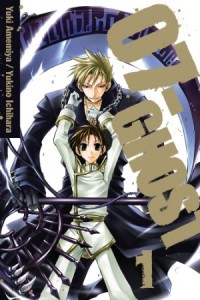
07-ghost1Our mutual read this week is the re-debut of 07-Ghost, which was originally launched by Go!Comi a few years ago and is now back in print thanks to VIZ Media. This political/military/religious fantasy is the story of Teito Klein, a shrimpy (there needs to be some kind of master list of short male manga protagonists!) but talented student at the Barsburg Empire military academy. He’s a member of the special class, whose students use a power called zaiphon “to shape the divine energy of life.”

Their graduation ceremony includes banding together to defeat a hulking prisoner, and soon after Teito and his best friend Mikage manage to pass the test, Teito overhears some school officials talking about how he’s the best candidate for something called the Eye of Mikael, which was a stone that protected the rival Raggs Kingdom. This sets off a flurry of disjointed memories, and very quickly thereafter Teito has escaped and found himself seeking sanctuary in a church ruled by three rather eccentric bishops. The school/military hasn’t given up on finding him, however, and they’ve got no qualms about using Mikage to do it.

MJ: Well done, Michelle! What readers also should know is that this series runs in Ichijinsha’s Comic Zero Sum which, if you’re a fan of other Zero Sum fantasy series from authors like Yun Kouga (Loveless) and Kazuya Minekura ( Saiyuki Reload), gives you a pretty good idea of what to expect. I went into 07-Ghost expecting three things: pretty male characters, sprawling fight scenes, and homoerotic subtext, and it delivered on all three.

MICHELLE: It definitely reminds me of those series, especially visually. Somehow the art style strikes me as “old-fashioned,” but I can’t really explain why. It’s not as light and simple as some things I’ve been reading recently, which helps create the fantasy feeling, methinks. There were times when I was confused by what I was looking at—what is that flying thing? what’s going on in this fight scene?—but these questions were all quickly answered by the story, so it wasn’t really an issue.

One thing I had some issues with is the pacing. Teito’s escape from the military academy after that overheard conversation is a veritable whirlwind, and he deduces very quickly that he’s a member of Raggs royalty. Perhaps I’m simply used to other manga, where we actually see the moment when a truth is realized, and there is much emphasis on the point to make sure the reader gets it, but with 07-Ghost it felt a little rushed to me. His memories, visions, and temptations to sell his soul in order to learn about his past can also be a little confusing. But that said, I think some of the other plot elements are paced nicely, like the continued allusions to the seven ghosts who I can only assume are eventually going to awaken and do something badass.

MJ: I agree, there were some whirlwind sections that left me feeling a bit frazzled and confused (though the story always caught me back up), and I think the fight scenes in particular could use more definition. But overall, I really enjoyed the chance to sink into some female-aimed action/fantasy, which I’ll admit is a pet genre of mine. I feel like the rushed introduction to Teito’s past was supposed to sweep us along so that we’d experience the same shock as Teito does, but it doesn’t linger quite long enough on that moment of realization which robs it of some impact (and a bit of credibility). But in the context of the whole volume, I can accept this as a minor stumble. And I’m anxious to find out more about the seven ghosts!

MICHELLE: Me, too! I wasn’t aware prior to reading this that I actually wanted 07-Ghost to be license-rescued, but now that it has been, I see that it was a pretty worthy contender. Thanks, VIZ!

Filed Under: OFF THE SHELF Tagged With: 07 Ghost, demon love spell, my darling kitten hair

JManga the Week of 12/20

December 15, 2012 by Sean Gaffney, Michelle Smith and MJ 1 Comment

SEAN: A nice quiet week, with only three new titles, but each of them having its own audience.

YuruYuri is basically K-On! with less music and more yuri tease. Well, no, I take that back, K-On! actually had more yuri tease than Yuru Yuri. Which is sort of sad, really. Recommended to anime fans.

MJ: Heh, that is pretty sad.

hanjukujoshiSEAN: Hanjuku Joshi is another one of those Ichijinsha yuri titles where I always check Erica’s Okazu reviews before I give my thoughts. After all, Ichijinsha has been known to put out lowest common denominator sexy tease yuri as well. That said, I’m really looking forward to this title, which seems to be a slightly more realistic take on high school yuri feelings-type stories.

MICHELLE: Yay for more yuri, especially a more realistic take on the topic.

MJ: Agreed! This looks promising to me.

SEAN: And it’s been a while since we’ve had train bento manga, so it’s nice to see Vol. 4 of Ekiben Hitoritabi. Which always makes me hungry.

MICHELLE: Man, me too. I always want those kenshi (sp?) eggs! I actually had forgotten volume three had come out already, so that gives me two volumes to gobble up. (harhar)

MJ: I need to finally read this! I love manga that makes me hungry.

Filed Under: FEATURES, manga the week of

Demon Love Spell, Vol. 1

December 14, 2012 by Sean Gaffney

By Mayu Shinjo. Released in Japan as “Ayakashi Koi Emaki” by Shueisha, serialized in the magazine Margaret. Released in North America by Viz.

When I first heard this was licensed, I had assumed it was due to the popularity of Maru Shinjo, creator of Sensual Phrase and Ai Ore!, and that it would have lots of hot jerk guys trying to get into the female cast’s pants. Which is absolutely true. But little did I realize that the main reason this was licensed was probably because it played into Viz’s newfound obsession with yokai manga. I mean, this is basically just a sexier Kamisama Kiss, right? With adorable chibi-incubus!

demonlovespell1

This is very much on the ‘silly’ side of Mayu Shinjo’s work, which suits me just fine, as I like her best when she’s putting her heroes through the ringer rather than when they’re emotionally manipulating the heroine. Though there’s a fair bit of that going on here as well. But for some reason, I find it more acceptable here than I do in Ai Ore!. Miko is just a little bit stronger than Mizuki, and less likely to be taken in by some sweet talk and sweet loving (well, except in her dreams, where they’re apparently already gone pretty far). As for Kagura, there is a built-in plot device to keep him from being an ass – he’s in adorable SD-mode! Yes, many things that are hideously inappropriate when a grown man is saying them are totally OK when the guy snuggling the heroine’s breasts can fit easily in between them.

There are a few random yokai demons here, who look similar to the ones we see in, say, Nura, or Natsume’s Book of Friends. Those two titles would probably tone down the fact that Kagura is an incubus, of course. But Mayu Shinjo, who got her start writing softcore porn shoujo for Shogakukan and has never really strayed quite that far away, knows how to do the sexy. The relationship dynamics between the main couple go back and forth all the time, which makes things more interesting. Admittedly, things slow down a bit after the first 2/3 of the book, when the series switched from being a one-off to a longer run, and the author had to figure out what to do next. Thus we meet a new classmate who’s sensitive to spirits, and a manipulative fox creature (who, naturally, turns into a cute, shy bishonen).

This being a shoujo manga, there’s still plenty of waffling from the heroine about what these strange feelings are, with the added bonus of ‘what the hell did he do to me in my dreams?’. That said, the humor here is top-notch, with many amusing humiliations of our otherwise handsome seductive hero. There is a choice scene with a hamster that I won’t spoil, but made me laugh out loud. In Ai Ore!, Shinjo was always at her best when not taking her hero seriously, and the same applies here. Given all the cliches she has to work with – heck, the hero’s powers even awake with a kiss – I expect we’ll only see more of this in the future.

I always go back and forth on Shinjo manga, and indeed there’s a chance that this could turn sour in a hurry, depending on how Miko is developed. For now, though, we have a first volume that’s a winner, especially if you enjoy yokai comics but want a little spice to it.

Filed Under: REVIEWS

Manga the Week of 12/19

December 13, 2012 by Sean Gaffney, MJ and Michelle Smith 3 Comments

SEAN: The danger of skipping ahead when you don’t like what a list is providing you is that eventually the list will catch up. Midtown didn’t have a lot of things that we knew were arriving in bookstores, or via Diamond, in the last two weeks, and so we put them on our own list or talked about them before. And now here they are, coming round to Midtown like a prodigal. So this list will skip the volumes we’ve already discussed in previous weeks.

Dark Horse starts us off with Vol. 43 of Oh My Goddess, which is still in its big Hell arc, which continues to give the impression that it’s working its way towards a finale. Working its way at Oh My Goddess’ usual pace, which is to say still a few years. But the ending may be a glimmer in the road ahead.

MJ: This is such a famous, long-running series, I’m a bit embarrassed about the fact that I’ve never read even a single page of it. Probably I should rectify this, but at 43 volumes and counting, that just seems daunting.

MICHELLE: Same here. I at least regard it benevolently.

Goodbyegeist

SEAN: Good-bye Geist is a title from GEN manga, a publisher I always want to throw more support. Unfortunately, I really don’t find the synopsis, which mentions sexual assault and animal cruelty, all that appetizing. Perhaps it’s due to having ‘Geist’ in its title? Something about that word does violent things to anime and manga…

MJ: I have this dilemma with GEN all the time. I really like what they’re doing, and I want to support them, but their titles so rarely appeal to me, at least on the surface. I need to dig deeper more often.

MICHELLE: Even if there is surprising depth to Good-bye Geist, I am simply unwilling to wade through sexual assault and animal cruelty to get to it.

SEAN: Kodansha Comics has Danza, a new collection of short stories by Natsume Ono. I’ve already reviewed this book on my blog. It has the same strengths and weaknesses as most of her short works do, but is still recommended for Ono fans, as well as those who like middle-aged men sitting around talking.

MJ: I never realized that was me, but I guess it is, at least when it’s Natsume Ono driving the conversation.

MICHELLE: I intend to get this some day, but I’m not particularly clamoring for it.

SEAN: Seven Seas has a bunch of titles out this week via Diamond and next week at Midtown. A Certain Scientific Railgun 6 finally gets to the point that it can’t avoid anymore: adapting the third A Certain Magical Index novel. So, a few less surprises here for fans of the franchise, but the Sisters arc is still pretty great, so I’m sure I’ll like this.

Dance in the Vampire Bund is, I believe, Seven Seas’ best-selling Japanese title (someone can correct me if I’m wrong). As such, it makes sense to do a deluxe oversize omnibus, to lure in new readers. And indeed, I’d never read the series, but decided to check it out after reading the crossover with Young Miss Holmes. Hopefully it will rise above ‘loli vampire’, which is what its premise seemed like.

MJ: I have never been able to get interested in this title. I suppose that’s the “loli vampire” bit.

MICHELLE: Yeah. Railgun interests me at least some, though I haven’t read any of it yet.

mayochiki

SEAN: Mayo Chiki is a new Comic Alive title from Media Factory, the makers of Haganai and I Don’t Like You At All, Big Brother!!. It features reverse traps, boys terrified of girls, sadists who love tormenting guys, and, well, that cover. I haven’t read it yet, so someone please tell me it isn’t just a giant catalog of moe fetishes?

MJ: Yes, please.

MICHELLE: This is, like, the third title (at least!) out in English that involves sadistic girls tormenting guys. I hadn’t realized that was a genre.

SEAN: Given we’ve established that I judge BL based on their covers, I am highly amused by His Favorite Vol. 2 from SubLime. I hope it lives up to it, because the combination of ‘Sexy pose!’ and ‘Get the hell off me!’ is a total win.

MJ: Ha! And “agreed.”

MICHELLE: I do that too with BL, and this is certainly a striking one!

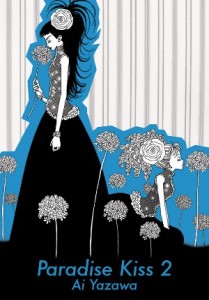
SEAN: Vertical has the 2nd collection of Paradise Kiss, deepening the relationship between Yukari and George… for better and worse. So hot together… so bad for each other.

MJ: I made this my pick of the week this week–a bit ahead of schedule, I guess–but it’s really a gorgeous volume.

MICHELLE: There’s a scene toward the end that gives me goosebumps just *thinking* about it. But I shan’t spoil it here.

SEAN: Viz has the 8th volume of my favorite Ikki series, Dorohedoro. The imprint hasn’t done lights-out sales, so I am very thankful to Viz for continuing this awesome series, which has earned great critical praise. Last time we ended on a nasty cliffhanger, which I hope is resolved with little damage. Wait, it’s the world of Dorohedoro, never mind.

MICHELLE: I have been hoarding this one with the intention of talking about it in Off the Shelf at some point, but so far I haven’t yet managed it.

SEAN: Tenjo Tenge is up to the 10th volume of its omnibus collections, so must be nearing the end. I’m so far behind I’ll never catch up, but it’s a great manga for those who like fighting and unrealistic female bodies.

MJ: Heh.

MICHELLE: At least once during each of these columns, Sean, you make me go *snerk*. This was where I did it this week.

SEAN: Lastly, Vagabond also has an omnibus out, collecting more gorgeous art and depressing storylines for the Inoue lover in all of us.

MICHELLE: Oh, Vagabond. You know, I really really love Inoue’s basketball manga (Slam Dunk and Real), and Anna and I even cohosted a MMF celebrating his works earlier this year. But as part of that, I read the first Vagabond omnibus and found it largely unaffecting. Still, owning the first ten omnibus volumes as I do, it’s a given that I’ll be picking up the eleventh as well as giving the series another go in the future. Perhaps it’s simply best in small doses.

SEAN: ‘Zat you, Santa Claus? What manga did you bring me?

Filed Under: FEATURES, manga the week of

My Week in Manga, Episode 2

December 13, 2012 by MJ 7 Comments

Welcome back to our new video feature, My Week in Manga! In this week’s episode, I talk about what I’ve read this week and what I’ll be reading before the week is out, including a short review of Yuuki Kodama’s Blood Lad, out this week from Yen Press.

Come join me!

Manga this week:
07-Ghost, Vol. 1 (VIZ Media)
Blood Lad, Vol. 1 (Yen Press)
Puella Magi Madoka Magica, Vol. 3 (Yen Press)
Pandora Hearts, Vol. 13 (Yen Press)

Edited by MJ
Music (“20/20,” “Stars Collide,” & “Swansong”) by Josh Woodward

Filed Under: My Week in Manga

The Most Familiar Manga Magazine You’ve Never Read, Hana to Yume

December 12, 2012 by Erica Friedman 7 Comments

Here on Magazine no Mori, I seek to introduce you to the rich and varied world of manga magazines available in Japan. From kids’ books to the kind of thing you might actually see that mythical salaryman read on that mythical commuter train, I’ve barely scratched the surface. If I’m fortunate enough to continue this column for ten more years, I will still have barely scratched the surfaced, there are just that many manga magazines…and new ones popping up all the time.

Today I wanted to step off the unbeaten path I usually take through this forest of magazines, to look at what is arguably the best known manga magazine that no one in the west has ever read. ^_^

Hana to Yume (花とゆめ) magazine published by Hakusensha is the source material of a huge chunk of Viz’s shoujo imprint (and before that, much of Tokyopop’s shoujo in later days.) Just a random sampling of titles from this magazine will be instantly familiar to most western manga readers: Tachibana Higuchi’s Gakuen Alice, Suzuki Julietta’s Kami-sama Hajimemashite (published in English as Kamisama Kiss), Oresama Teacher by Izumi Tsubaki,  Nakamura Yoshiki’s Skip Beat.  Hana to Yume was also the magazine in which the record-breaking Fruits Basket  by Takaya Natsuki, ran. Two of the seminal (yes, pun intended) BL classics that comprised the vanguard of the Boy’s Love genre back in the day, Yuki Kaori’s Angel Sanctuary and Matsushita Youko’s Yami no Matsuei (Descendants of Darkness) also come from the pages of Hana to Yume. For as comprehensive coverage as possible on Hakusensha titles available in translation, check out Sean Gaffney’s blog,  A Case Suitable for Treatment  here on Manga Bookshelf.

In fact, so many titles are familiar to the English-language manga audience, it’s worth taking a look at the Wikipedia article for the magazine just to take stock of all the titles that *haven’t* made it over here, among which is one of my favorite series of all time – Shinji Wada’s Sukeban Deka, Which brings me to an interesting point about fashion in manga magazines. In the 70’s and 80’s, Hana to Yume was a “weird” magazine, full of speculative fiction series, action, and really off-beat stories. I picked up a recent issue to find that the current art style is significantly simplified and the stories, while they may have supernatural elements, are mostly romantic comedies.

Hana to Yume has a website, Hana to Yume. com,  with the traditional girly, pink, sparkly, flower-y look, previews of this and next month’s magazines, a game corner, and a branded “mangaka course.” The magazine also has a stripped-down Hana to Yume Online site, suitable for reading on mobile devices. The lack of decoration makes the exact same content suddenly appear more mature.  ^_^

Hana to Yume premiered in 1974 and now has supplemental titles,  Bessatsu Hana to Yume  and The Hana to Yume. These come in a smaller size than the monthly magazine, which sells for 350 yen ($4.24  at time of writing.), with about 500 pages per issue – and one of the strongest creator line-ups in manga. The most recent data from the Japanese Magazine Publisher’s Association put the magazine’s monthly circulation at 189,113 for 2010-2011. Thanks to English-language translation Hana to Yume series are probably better loved here, (as unknown as the magazine itself is,) than in Japan where its standing among girls’ comics magazines has been slipping – from 4th in 2006, to 7th in 2010.

If you’re a western fan of shoujo manga, Hana to Yume has probably been your gateway drug. ^_^

Hana to Yume, by Hakusensha: http://www.hanayume.com/hanayume/index.html

Filed Under: Magazine no Mori Tagged With: Erica Friedman, Hakusensha, Manga Magazines

Neon Genesis Evangelion, Vol. 13

December 12, 2012 by Sean Gaffney

By Yoshiyuki Sadamoto and GAINAX. Released in Japan by Kadokawa Shoten, serialized in the magazine Young Ace. Released in North America by Viz Media.

The trouble with reviewing a manga series like Evangelion, with release dates from hell, is that of memory. I mean, I’m obsessed with Excel Saga, but even I had to do a bit of a reread when it was coming out on a once a year basis. And Evangelion isn’t even allowed that luxury – it comes out when a Japanese volume comes out, and Sadamoto is notorious for hiatuses, breaks, and 8-page chapters because the editors had to submit something or they’d lose their jobs. Luckily, he’s with Kadokawa Shoten, former home of CLAMP, so they’re used to things like this. What this means, though, is that it’s entirely possible that this manga, which started in 1995 in Japan, may not finish by 2015, which is the date it actually takes place.

Evangelion13

However, the comet has passed by once more, which means that we have a new Evangelion volume. And luckily, Sadamoto continues to do what we all want him to do; he tells the basic story of Evangelion, but makes everything better and all the characters more tolerable. Now, this does have its down side, which is that he is still telling the same story. The manga looks as if it might end with Vol. 14 (though that’d be compressing things a bit), and we’re still heading for the orange goo horizon, if you know what I mean. But without Anno’s veneer of self-hatred and disgust surrounding Shinji and company, we’re left with a title that’s a bit less soul searching but has a lot more ‘hell yeah!’ moments.

Let’s start with the most obvious, which we started to see at the end of Volume 12: Shinji rescues Asuka. Now, this probably isn’t permanent; indeed, by the end of the volume, I’m not entirely certain if she’s dead or not. But that’s irrelevant. Shinji making an effort, doing something other than whine and clutch his knees, is the main reason to read the Evangelion manga at all. And his reunion with Asuka, however brief, is all the more touching for it.

As for the rest of the cast, well, Fuyutsuki and the Bridge Bunnies are mostly used to shout the plot at us, as you’d expect when the apocalypse is coming down and has to be carefully monitored. (At least they avoided saying that Lilith’s power levels were over nine thousand.) Ritsuko, meanwhile, also gets to meet a bad end, mostly due to the astonishing idea that she thought that the computers (i.e. her mother) would side with her over Gendo. I mean really, has she met her mother? That said, she too gets a better exit which is more satisfying, both for her and for us. (Who here wasn’t wanted to shoot Gendo in the throat? Come on, let’s not always see the same hands…)

We end on a cliffhanger, with Giant Rei towering over all, and Shinji having dream flashbacks to Yui trying to tell him something, only he’s not quite sure what it is. I’m not sure if everything will be resolved in the next volume, or even whether that volume will come out before I die. And I suspect this will all end in tears. But at least I’ll be able to look back on the cast and say they tried their best, which is more than I could say for the anime. (The new movies, I hear, are trying to do something similar.) Recommended, especially for those who enjoy seeing Shinji achieve things.

Filed Under: REVIEWS

It Came from the Sinosphere: The Bride with White Hair

December 11, 2012 by Sara K. 2 Comments

A drawing of Zhuo Yihang and Lian Nichang

To start, allow me to translate an excerpt:

Lian Nichang crumpled a wildflower, and threw it down the mountain valley. Zhuo Yihang, stunned, watched the flower pieces float down in the wind, and suddenly said “Sister Lian, your looks should be like an everlasting flower.”

Lian Nichang laughed. “What a silly daydream! Where under the sun is there a place with everlasting spring? I say, if the old man of heaven were just like a human, having done so much thinking, even he would be old! We see each other here, bicker with each other there, the next time you see me, I fear I’ll already be an old woman with a head full of white hair!”

What she said made Zhuo Yihang’s feelings surge, and he thought “Lian Nichang really is very insightful. She hasn’t read many books, can’t compose poetry, nor fit lyrics to a song, but when she says what she thinks, aside from not having a proper meter, is simply wonderfully poetic. [Zhuo Yihang quotes poetry in Classical Chinese, which I can’t translate.] Doesn’t what she just said have the same meaning as all that classical poetry? However what she says is much easier to understand, and thus is more moving.”

Lian Ninchang laughed, and said “I just fear that when my head if full of white hair you won’t want to see me.”

Zhuo Yihang knew that she was just trying to get him to pour out his true feelings, but he found it very hard to answer her, so he tried to make light of it, and answered “when your hair turns white, I find an elixir to restore your youth.”

Lian Nichang sighed, and said “when someone else is trying to have a serious conversation,you make a joke of it.” Her mind soured, and said no more.

The foreshadowing is tickling me.

“The Bride with White Hair” is the most iconic female character in all of wuxia. She is one of the most iconic characters of all of wuxia period.

This novel has been adapted for TV five times, the most recent one being the 2012 TV drama. Additionally, there are four film adaptations, of which the best-known is the 1993 movie adaptation starring Brigette Lin as Lian Nichang. In other words, it’s one of the most-adapted wuxia stories ever.

The Story

The Ming dynasty is in decline, and the Manchus are ready to take some power. Meanwhile, there is a fierce sword fighter, known as “Jade Rakshasi” who is kicking everybody’s ass.

Zhuo Yihang meets Lian Nichang in a cave

Zhuo Yihang, of the Wudang sect, gets involved in some of the intrigues happening around the throne. During his adventures, he encounters a beautiful maiden called Lian Nichang who was raised by wolves. Later, he enters a duel with the “Jade Rakshasi” … only to discover that she is none other than Lian Nichang!

Zhuo Yihang and the Wudang elders

Anyway, Zhuo Yihang and Lian Nichang work together for a while to deal with intrigues, during which they meet Yue Mingke. While Lian Nichang and Yue Mingke are comparing notes, Lian Nichang’s sword-fighting manual gets stolen, which leads to set of adventures in which Lian Nichang becomes Tie Feilong’s adopted daughter, and Yue Mingke gets acquainted with Tie Feilong’s biological daughter Tie Shanhu. Heck, Lian Nichang and Zhuo Yihang get pretty sweet on each other. Then Zhuo Yihang becomes the leader of the Wudang sect and, well, Lian Nichang is officially their enemy…

Zhuo Yihang gets into a sword-fight

About Liang Yusheng

If you want to know about Liang Yusheng, the writer, read the Wikipedia entry and this webpage.

Mountains, trees, and sword-fighting!

It’s worth noting that one of his innovations was infusing real history into his stories, and this story is no exception – many of the characters are based on actual historical figures. I have previously mentioned another Liang Yusheng novel, Pingzong Xiaying Lu

Tie Shanhu flees for her life!

One thing which really makes Liang Yusheng stand out from other wuxia writers is how he handles female characters. He treats them pretty much the same way he treats the male characters. In many wuxia stories, it seems that the female characters’ primary purpose is to offer romantic options to the male protagonist. This is definitely not the case in Liang Yusheng stories.

The female characters are also sometimes, you know, the main character. It’s not just this novel, it’s a trend in Liang Yusheng novels.

Female Appearances

Let me state the obvious. Women are judged based on their looks far more and far more narrowly than men. They are expected to look pretty, sexy, and youthful. Actually, both mainstream Chinese and mainstream American culture have trouble imagining a woman who is pretty and sexy without looking youthful. I once heard a guy once asked a professional makeup artist why old men look dignified, but old women don’t. The professional makeup artist said this was 100% cultural, and has nothing to do with physical appearances.

The main purpose of this type of ‘female beauty’ is to please men.

Yue Mingke meets Ke Shi

One of the villains, Ke Shi, is a middle-aged woman who has managed to maintain her youthful appearance. She considers her looks as a tool to manipulate males and, thus, take their power. Likewise, she considers her young and pretty daughter to be an asset that she can trade with a man to acquire more power. Ironically, in her quest for power, she is submitting to the idea that a woman’s place is to be youthful and pretty to satisfy men’s desires.

By contrast, Lian Nichang likes youth and beauty for its own sake, not as a bait for males. Having been raised by wolves, she didn’t grow up with patriarchy. She doesn’t hate men; she loves her adopted father Tie Feilong, and becomes good friends with Yue Mingke, not to mention that she falls in love with Zhuo Yihang. She simply treats men as she would anyone else.

Lian Nichang and Zhuo Yihang meet again

People’s hair turning white while they are still young is a common trope in wuxia – in the Condor Trilogy alone there is not just one, but two characters under the age of 25 whose hair turns white. However, The Bride with White Hair explores this much more deeply.

I think white hair looks beautiful, and is a great way for a woman to look pretty while countering the male gaze. So at first I thought it was strange that Lian Nichang was so upset about the white hair. But it is an involuntary change, and she does value her youth, not to mention that the circumstances which cause her hair to turn white are extremely distressing.

Nonetheless, she at one point puts on a mask which makes her look like an old woman (aside from the hair, she still looks young). This was clearly a move to reject the male gaze.

Zhuo Yihang chases Lian Nichang through the mountains

Meanwhile, Zhuo Yihang is much more preoccupied with Lian Nichang’s looks than, well, her feelings. When he meets Lian Nichang disguised as an old woman, his response is “in my heart you look just the same as when I met you” (as in, he wouldn’t value her if she looked like an old woman in his heart) and “I will find an elixir which will restore your youth” (this time, he’s serious).

Lian Nichang fights the Red Flower Devil Woman

Since this is a society-wide problem, the female characters either have to take it, or sacrifice their social life (particularly the prospect of romance). Tie Feilong had made Mu Jiuniang his concubine because he wanted a pretty young female to satisfy his desires, and he doesn’t think about her feelings until it is too late (he deeply regrets that). Mu Jiuniang happily leaves him … but the man she marries ends up being even worse. Meanwhile, the Red Flower Devil Woman (a badass swordswoman) had left her husband because he didn’t respect her … but her own son Gongsun Lei is like his father, and considers women to be mere sex objects. Eventually, he is murdered out of revenge for a rape he had committed. “Find a lover who respects gender equality” is not helpful advice when a) you’re looking for a male lover and b) males who respect gender equality are in very short supply.

Even Lian Nichang doesn’t escape from this unscathed.

A Surprise that Made Me Think

While reading the novel, I expected this story to have a very predictable ending. Then actual ending turns out to be quite different from the “predictable” ending I imagined.

This made me think hard about the story, and helped me appreciate the novel in a much deeper way. Lian Nichang grew up among wolves, who didn’t teach her how a woman should act. She doesn’t do what a woman “should” do, she does what she wants to do. And that’s less predictable.

Availability in English

Naturally, this novel has not been published in English.

As far as I know, the only version of this story which is available legally in English is the 1993 movie. Speaking of the movie, I find Albert A. Dalia’s comparison of Lian Nichang and Mulan intriguing.

Conclusion

Now that I’ve read this novel, I now get why it’s difficult to have a serious conversation about gender and feminism in the wuxia genre without discussing this story. Even compared to wuxia novels written by women, or the other Liang Yusheng novels I’ve read, it is shockingly feminist. Heck, compared to most novels by women I’ve read in English, it is shockingly feminist. And it’s hard to shock me with feminism.

That said, this novel has plenty of flaws … much of it is totally non-memorable. But the memorable parts are enough to make this a must-read for anybody who can read Chinese and has an interest in wuxia and/or gender roles.

Next time: The Flying Guillotine (movie)


Sara K. is also shocked that she stayed up past her bed time to working on this post.

Filed Under: It Came From the Sinosphere Tagged With: Liang Yusheng, Novel, The Bride with White Hair, wuxia

Story of Saiunkoku, Vol. 8

December 10, 2012 by Anna N

Story of Saiunkoku, Vol 8. by Kairi Yura and Sai Yukino

I enjoy the meditative pace of Story of Saiunkoku. By the end of this volume plucky heroine and trailblazing civil servant Shurei Hong is finally launched at another stage of her life, and the fact that it took eight volumes for her to experience a new adventure doesn’t bother me at all. The main reason why I enjoy this series so much is the fact that the manga features such a rich variety of characters, all of whom are sympathetic and interesting in different ways. As the first and only woman to pass the civil servant exam, Shurei has been accused of cheating and must clear her name. It is always a bit heartwarming how all the people that surround Shurei come together to support her. She’s a very capable young woman, but the path that she’s chosen is so incredibly difficult that it is a good thing that she has so many friends and relatives who work behind the scenes to make sure that she can succeed on her own terms.

It turns out that the burdensome paperwork that Shurei and Eigetsu were processing also not so coincidentally included the clues to major financial irregularities in the Ministry of Rites whose head was determined to prevent Shurei from becoming a civil servant. Shurei and Eigetsu’s hazing resulted in their peers becoming more sympathetic to them, and the duo was also able to research and create a report that contained very damning evidence about an enemy that they didn’t even know they had. Supporting cast members that come to the forefront in this volume include Shurei’s uncle Renshin Hong and Minister Ko, whose devastating beauty ends up being a weapon for Shurei when he actually takes off his mask in court to force a confession from the Minister of Rites. There’s plenty of humor in this scene, as the onlookers are warned that if they look at Minister Ko’s face they will lose their ability to concentrate on work for years, their home life will collapse, and “in the worst case, you may lose your mind.”

There’s a great scene between Shurei and Ryuki towards the end of the volume where he demonstrates his trust in her by appointing her as a civil servant even though he would prefer that she stay as his bride. Shurei and Eigetsu embark on a new phase of their lives as civil servants together, but life can’t be boring when they are about to be sent to govern the most rebellious province in the land, aided mainly by the roguish Ensei. This volume also features a very lighthearted story about a cross-dressing contest that Shurei tries to make her male friends participate in because she’s so enthusiastic about the grand prize of many bales of rice. I think we’re catching up to the Japanese releases of this manga and the next volume is the final one. I’ll be a bit disappointed since I believe the light novel version of the story covers much more than the manga. Still, I’ll be happy with whatever I can read from this series.

Filed Under: REVIEWS Tagged With: shojo beat, shoujo, story of saiunkoku

  • « Go to Previous Page
  • Page 1
  • Interim pages omitted …
  • Page 402
  • Page 403
  • Page 404
  • Page 405
  • Page 406
  • Interim pages omitted …
  • Page 551
  • Go to Next Page »
 | Log in
Copyright © 2010 Manga Bookshelf | Powered by WordPress & the Genesis Framework