• Skip to primary navigation
  • Skip to main content
  • Skip to primary sidebar
  • Home
  • About Us
    • Privacy Policy
    • Comment Policy
    • Disclosures & Disclaimers
  • Resources
    • Links, Essays & Articles
    • Fandomology!
    • CLAMP Directory
    • BlogRoll
  • Features & Columns
    • 3 Things Thursday
    • Adventures in the Key of Shoujo
    • Bit & Blips (game reviews)
    • BL BOOKRACK
    • Bookshelf Briefs
    • Bringing the Drama
    • Comic Conversion
    • Fanservice Friday
    • Going Digital
    • It Came From the Sinosphere
    • License This!
    • Magazine no Mori
    • My Week in Manga
    • OFF THE SHELF
    • Not By Manga Alone
    • PICK OF THE WEEK
    • Subtitles & Sensibility
    • Weekly Shonen Jump Recaps
  • Manga Moveable Feast
    • MMF Full Archive
    • Yun Kouga
    • CLAMP
    • Shojo Beat
    • Osamu Tezuka
    • Sailor Moon
    • Fruits Basket
    • Takehiko Inoue
    • Wild Adapter
    • One Piece
    • After School Nightmare
    • Karakuri Odette
    • Paradise Kiss
    • The Color Trilogy
    • To Terra…
    • Sexy Voice & Robo
  • Browse by Author
    • Sean Gaffney
    • Anna Neatrour
    • Michelle Smith
    • Katherine Dacey
    • MJ
    • Brigid Alverson
    • Travis Anderson
    • Phillip Anthony
    • Derek Bown
    • Jaci Dahlvang
    • Angela Eastman
    • Erica Friedman
    • Sara K.
    • Megan Purdy
    • Emily Snodgrass
    • Nancy Thistlethwaite
    • Eva Volin
    • David Welsh
  • MB Blogs
    • A Case Suitable For Treatment
    • Experiments in Manga
    • MangaBlog
    • The Manga Critic
    • Manga Report
    • Soliloquy in Blue
    • Manga Curmudgeon (archive)

Manga Bookshelf

Discussion, Resources, Roundtables, & Reviews

Features & Reviews

Manga the Week of 8/21

August 15, 2013 by Sean Gaffney, MJ, Michelle Smith and Anna N 4 Comments

SEAN: Third week of the month, which is traditionally Yen Press time, and that’s true this month as well. But before we get to Yen, we have a few choice tidbits.

Kodansha has the 11th volume of Cage of Eden. Now that it’s getting serious enough to kill off some of its main cast, will things continue to take a turn for the deadly? And what will this mean for the female cast’s ability to strip naked and bathe in rivers? (Likely not much.)

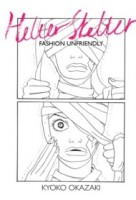
helterskelter

Vertical continues to dip its toes into the josei market, this time with Kyoko Okazaki’s Helter Skelter: Fashion Unfriendly, a done-in-one manga volume from the pages of Shodensha’s Feel Young. The premise reminds me of the movie Death Becomes Her, though I suspect this won’t be as funny as that was. It’s still a highly awaited release.

MJ: I’m absolutely looking forward to this, and have been since the announcement last year at NYCC. I’ll be picking it up for sure.

MICHELLE: Me, too!

ANNA: I am looking forward to this as well! I think Vertical putting out more josei is a great thing, and I’ll absolutely be picking this up.

SEAN: Viz has its annual release of Ikigami: The Ultimate Limit, but it’s almost over, as I think the series ends with 10. I’m not sure if it’s still doing the ‘let’s see how people deal with impending death’ thing or if it’s moving into a big climax. Honestly, it was a bit too depressing for me.

MJ: I haven’t read this in a long time, and had actually thought it was already over. Oops?

MICHELLE: I have a bunch of volume of this but I haven’t read beyond volume two ‘cos it was too depressing for me, too.

SEAN: And now about that Yen. There’s Vol. 3 of BTOOOM!. Indeed. There is that.

MJ: Um. No.

MICHELLE: Big fat no.

SEAN: We have reached Vol. 9 of Bunny Drop, which ends the main storyline, though there is one more volume of side-stories coming out next year. This is the biggie, and now at last everyone can discuss THAT spoiler. Though not till next week, please. (It’s also still quite well-written, but I fear any discussion of it tends to be dwarfed by THAT.)

MJ: I’m diving in… with a little fear, I’ll admit, but I wouldn’t miss this for the world.

MICHELLE: I definitely feel that I have to read it for myself before formulating an opinion, but there is definitely some trepidation.

ANNA: I honestly stopped reading this because of THAT spoiler, I think I stopped at volume 3 or so.

SEAN: For those who liked the Doubt omnibus, we have Vol. 1 of Judge. I didn’t, so will be passing. But hey, more students trapped in a survival game who die one by one. We can never get enough of that. Apparently.

MJ: Heh.

pandora17

SEAN: Pandora Hearts 17 will no doubt excite MJas much as 15 and 16 did. Or perhaps even more. One day I’ll read it. (Likely whenever Squeenix titles are available digitally again.)

MJ: Definitely more! After volume 16, I’m pretty much dying for what comes next. DYING, I say.

MICHELLE: Big fat yes!

ANNA: Everyone is such a fan of this, one of these days I’m going to have to check this series out.

SEAN: Puella Magi Kazumi Magica is apparently the fluffier of the two spinoffs, but that’s really not saying much. Any series with Kyubey in it is guaranteed to get very dark, very fast. Vol. 2 is here.

Spice and Wolf’s 9th novel drops. Wolves. Economics. Econowolves.

Lastly, Umineko: When They Cry wraps up its 2nd Arc, Turn of the Golden Witch. In case you needed reminding, this manga contains some scary scenes that may not be suitable for children. PARTICULARLY the tea party. (shudder)

MICHELLE: I gave up on this a while ago. Has that kid stopped going “Uuuuu! Uuuuu!!” yet?

SEAN: Pretty much no, though we do eventually find out why she does that.

What manga are you reading with your tea and cake?

Filed Under: FEATURES, manga the week of

Escaflowne Eps 1-4

August 14, 2013 by Anna N

escaflowne

It was a funny coincidence that I decided that I would embark on a rewatch of The Vision of Escaflowne and finished the first disc the day before Funimation announced that they’d acquired rights to make this classic anime available again. I haven’t watched a ton of anime, but Escaflowne is by far my favorite series. Every two years or so I decide to watch it again, and I’m generally fine with just watching a show once or twice. This show really rewards those who see it multiple times, as the characterization, setting, and storyline are so rich and complex, I often feel like I find something new to appreciate with each viewing. I’ll see if I can work through my old Bandai DVDs by the time the new edition from Funimation comes out, and feel free to dig out your copies of Escaflowne and join me in a rewatch in anticipation of what Funimation decides to do with the rerelease.

Hitomi the heroine of the show is sympathetic without being cloying. She’s a bit of a jock, as she’s dedicated to her track team. Hitomi also indulges in a bit of mysticism as she’s her school’s resident tarot card reader. She has a goofy crush on the captain of the boys’ track team at her school, and she spends plenty of time with her best friend awkwardly blushing and obsessing about him. Hitomi starts seeing visions as she’s running of destruction, giant metal monsters, and a young boy fighting. Her visions become true as Van Fanel appears on the high school track, pursued by a dragon. Hitomi and her friends narrowly escape while Van kills the dragon, but Hitomi and Van are carried off to to his world Gaea, where Earth appears as a second moon in the sky.

Van-Fanel-and-Hitomi-Kanzaki

Van is the reluctant prince of the country Fanelia, a place with a strong martial arts tradition, a missing older prince (this is significant), and a hazardous habit of sending out future rulers to slay dragons as a rite of passage. Van has a habit of initially addressing Hitomi by yelling “Hey Girl!” (and not in a Ryan Gosling sort of way) but he seems to call her by her first name whenever she’s in danger. Van seems to be doing the best he can in a role he doesn’t want, but he’s affected by violence and doesn’t particularly want to fight even though he can be good at it.

The world of Gaea is an interesting place. It is quasi-medieval, but people have ancient mecha called Guymelefs. There’s a bit of a steampunk and mystical vibe to the technology shown on Gaea, as you see cogs and gears snap into position, and the mecha seem to have the creaky joints of old machines. In addition to humans, there are humanoid animals that live on Gaea as well, with the most prominent being Van’s catgirl Merle. There’s trouble for Fanelia as the Zaibach Empire has cloaking technology for their mecha (like the Romulans!), and an insane military captain in the form of the androgynous and dangerously emotionally unstable Dilandau. Fanelia is razed to the ground and Van is suddenly a prince without a country. He manages to escape with Hitomi and his country’s greatest treasure – the Escaflowne Guymelef.

escaflownehitomialan

As Van and Hitomi try to figure out what to do, they fall in with Allen Shezar, whose talents as a swordsman are rivaled only by the puffiness of his sleeves. Alan is a Knight of the country Asturia, and he leads a somewhat piratical crew aboard the airship The Crusade. Hitomi promptly develops a crush on Allen, while Merle jealously guards Van’s attention. One of the things I enjoy about this series is that the world seems so rich, and there is plenty to think about between viewings. What were Allen’s adventures aboard his airship? How did Van and Merle develop a close bond? The world of Escaflowne just seems to exist in a special place where there’s space to ponder the history and relationships between the characters going beyond just the animated episodes.

The show was developed in 1996, but despite the limitations of animation at the time, it doesn’t feel all that dated. The rich setting combined with the strong orchestral and vocal score give the series an epic feel. The theme of the horrors of war and violence is established early, as the fighting provoked by the Zaibach Empire is portrayed as devastating, not glamorous. Even though I’ve probably seen Escaflowne already 5 or 6 times, it sill seemed fresh and interesting when I watched it again, which is the mark of a series that is just timeless. I’m looking forward to watching the rest of my old DVDs now and finding out more about the new edition of this series coming soon.

Filed Under: FEATURES Tagged With: bandai, funimation, Vision of Escaflowne

It Came from the Sinosphere: Laughing in the Wind

August 14, 2013 by Sara K. 1 Comment

xajh03

Ah, Laughing in the Wind. While I simply couldn’t resist putting this screenshot at the top, I think I should begin at the beginning.

The Opening Scene

I at first was planning to describe the opening scene fully, but then I realized that it would be easier to direct readers to Dramafever so they can watch the opening scene themselves. If you can, I suggest you watch the first eight minutes or so (up to the point where the horse-riders come in) before I share my observations. I realize not everyone can (for example, *I* cannot access this show on Dramafever, so I’m assuming that it’s the same as my DVD version), so I’ll try to provide enough description so that even those without access can follow along.

First of all, do you notice the theme song? I think that is one of the most low-key TV theme songs I have ever encountered. On the one hand, by being so low-key, it invites the viewers to judge the show for what it is. On the other hand, by being so low-key, it’s also saying ‘this show is different’.

A man is riding a donkey cart through a forest

Then, we see two strangers get along very well, playing music and drinking wine. However, it turns out that these two strangers belong to different factions – factions which insist that the other is Totally Awful and Should Always Be Treated as an Enemy. The older man seems to have no problem associating with a member of the other faction, and offers his friendship in spite of the difference in faction. The younger man, however, refuses, because *his* elders forbade him from having any dealings with the Sun Moon Cult.

An old man plays music while sitting on a tree branch.

Thus, in less than ten minutes, the viewers learn what pretty much the entire TV show is about: Montagues and Capulets (with lots of music, swords, and wine, of course).

The Story

I’ve already summarized this story once as a political allegory, but I’ll summarize it again, this time time with a Romeo-and-Juliet theme.

There is a group known as the Montagues Five Mountain Sword Sects, and another group known as the Capulets Sun Moon Cult. They are bitter enemies. Romeo Linghu Chong belongs to the Huashan Sect, which is part of the alliance. He has some rather antagonistic encounters with Juliet ‘Shenggu’ (that’s Chinese for ‘holy maiden’ or ‘lady saint’), who is of course part of the Sun Moon Cult.

xajh04

Liu Zhengfeng belongs to one of the Five Mountain Sword Sects, and love music. Qu Yang belongs to the Sun Moon Cult, and also loves music. In spite of the enmity between the Five Mountain Sword Sects and the Sun Moon Cult, these two become great friends, and compose a wonderful work of music which they title ‘The Laughing Proud Wanderer’.

Well, when the Montagues Five Mountain Sword Sects learn about Liu Zhengfeng and Qu Yang’s relationship, things turn out really badly. Before the conclusion of this particular story, Liu Zhengfeng and Qu Yang pass on the score of ‘The Laughing Proud Wanderer’ to Linghu Chong. They ask him to preserve it so that it may not be lost to the ages.

Ren Yingying plays music with Linghu Chong

The thing is, Linghu Chong knows nothing about music, so he can hardly play the tune itself. Now, ‘Shenggu’ is a musical expert, but … that would require Linghu Chong and ‘Shenggu’ to cooperate. And if they cooperated by pooling the musical score (Linghu Chong) and musical skills (Shenggu), they might start liking each other, which would be fascinating dangerous. Look at what happened to Liu Zhengfeng and Qu Yang because of their musical collaboration. Might the tune ‘The Laughing Proud Wanderer’ cause Romeo and Juliet Linghu Chong and ‘Shenggu’ to have a similar fate?

Background

This TV series is adapted from Jin Yong’s novel The Laughing Proud Wanderer (notice that the novel is named after the piece of music).

This series is significant because a) it is producer Zhang Jizhong’s first Jin Yong adaptation (I’ve written about Zhang Jizhong before) and b) the first Jin Yong TV adaptation ever made in mainland China.

For many years, all of Jin Yong’s works were banned in China, and as Jin Yong’s most political novel, The Laughing Proud Wanderer was probably especially unwelcome by the Chinese Communist Party. The fact that this was the first novel they adapted is, to me, quite interesting.

Shenggu holds a chick

I wonder if the makers of this TV series ever felt like a chick in Shenggu’s grasp.

Just before this series was produced, Jin Yong revoked TVB’s (in Hong Kong) license to adapt his works because he strongly disliked their last couple adaptations. I’ve read that he sold the rights to Zhang Jizhong for a single yuan on condition that he produce an adaptation as good as his adaptations of Water Margin and Romance of the Three Kingdoms.

In other words, the people making this series had pressure on them. They definitely had pressure from Jin Yong, who might never allow another adaptation to be made in mainland China if they disappointed him, they had indirect pressure from Chinese censors (my understanding is that, even when Chinese censors do not directly interfere, it’s always a lingering concern), and most of all, they had to prove to fans that a mainland Chinese Jin Yong production could be good.

The Scenery

One thing which really stands out about this TV show is the embarrassing abundance of gorgeous landscapes. Mist-filled forests, serene waterfalls, lofty mountains, you name it. This is actually pretty common in wuxia (just as it’s common in Westerns), but I know of no other work of wuxia which excels at natural scenery as much as this series.

Shenggu stands among mist-filled mountains

Obviously, some of the scenery is the ‘Wu Yue’ (Five Great Mountains), which according to this article are ecologically in better shape than equivalent non-sacred areas in China.

A traditional Chinese lotus pond

You gotta have a lotus pond.

I also get the feeling that most of this TV show was filmed in southern China – which would make sense since part of the story is set in southern China. The main reason I get this feeling is that much of the scenery looks similar to Taiwan, which (at lower elevations) is ecologically similar to south-eastern China.

Sandstone cliffs with lots of plants and a stream.

This looks like Taiwan.

After moving to Taiwan, I’ve become an outdoor enthusiast – I generally try to go out to Taiwan’s forests/grasslands/waterfalls etc. whenever feasible. And I’ve developed a personal attachment to Taiwan’s environment. Much of the landscape in this TV show feels really familiar to me – particular the landscapes which looks like subtropical forests on top of sandstone. That the characters live in a place which looks very much like where I like to hang out in my free time gives me an odd yet warm feeling.

A broad-leaf forest full of mist

This does not look so much like Taiwan (though maybe one could find something like this in Taiwan at the right elevation).

Faithfulness?

Since this is an adaptation, some people want to ask ‘is this faithful to the original novel?’

My short answer is ‘no’.

That said, I still consider it an adaptation, rather than fanfiction. Most of the overall plot and characters come through. However, there are a lot of changes, most of them small, but they add up.

Two broad changes stand out to me:

– The ‘Romeo-and-Juliet’ Slant. My summary above might have thrown off people familiar with the original novel. Trust me, it reflects the TV show.
– Courtesy. The characters show much more tact in this TV show than in the original novel. I actually didn’t realize just how rude the characters are until I saw their rudest behavior stripped away. No caves full of blind men insulting their enemies’ grandmothers in this adaptation. While I think the outrageous comments are the most memorable dialogue from the novel, the story actually stick works very well without the rudeness. Plus, one side-effect of the characters’ cleaning their mouths is that this TV show is significantly less trans-phobic than the original.

Blood mixes with flower petals as the lovers die (I'm not saying *which* lovers die, so this is not a spoiler)

Blood mixes with flower petals as the lovers die (I’m not saying *which* lovers die, so this is not a spoiler)

I don’t mind most of the changes. If I want something exactly like the original novel, I should just go re-read the original novel (and let me tell you, some parts of the novel are so flawed that even the most faithful adaptations alter them). I demand quality, not faithfulness to the source.

Speaking of changes…

Ren Yingying

Ren Yingying (aka ‘Shenggu’) has a much bigger presence in this show than in the novel. She appears in the very first episode, and appears in most episodes after that. By contrast, she doesn’t appear at all in the first half of the novel.

Ren Yingying wearing a veil

I had felt that the Linghu Chong / Ren Yingying romance was not as powerful as that of some of Jin Yong’s other romantic couples simply because they do not spend enough time together. This TV show definitely takes care of this, and I felt the rapport between them much stronger here than in the novel. Besides, some of the ‘new’ scenes between them are just plain fun (which, for me, compensates for the omission of Ren Yingying’s tartest comments in the novel).

However, it’s not just the romance which benefits from Yingying’s increased screentime – it’s her entire character development.

Ren Yingying without the veil.

In the novel, Yingying doesn’t seem to grow very much. I know that, technically, she does change in the novel, but she doesn’t show up enough for me to really feel it as a reader. But here, in this TV show, her growth as a character is much, much, much more apparent. And I think a character as interesting as here deserves a bit more spotlight.

There is More to Come…

I am not done talking about this TV show, but I think this is a good place to pause. In the mean time, if I have piqued your interest and you have Dramafever access, you can watch it and form your own opinions.


One can learn quite a bit about somebody just from their book collection. Sara K. has a set of books about the wildflowers of Taiwan, as well as three books about hiking in northern Taiwan, two travel books about other parts of Taiwan, and some hiking maps of Taiwan. Just like China, Taiwan has its own ‘Wu Yue’ – Yushan, Syueshan, Xiuguluanshan, Nanhudashan, and Beidawushan, which, though less famous, are actually much higher than China’s Wu Yue.

Filed Under: Dramas, It Came From the Sinosphere

Blade of the Immortal, Volume 24: Massacre

August 14, 2013 by Ash Brown

Creator: Hiroaki Samura
U.S. publisher: Dark Horse
ISBN: 9781595827517
Released: October 2011
Original release: 2008
Awards: Eisner Award, Japan Media Arts Award

Massacre is the twenty-fourth volume in the English-language release of Blade of the Immortal, Hiroaki Samura’s long-running manga series. Earlier on in the series’ release, Dark Horse divided the volumes by storyline rather than by number of chapters. Because of this, many of the individual volumes are slightly different in the English-language edition compared to the original Japanese release of Blade of the Immortal. Massacre, published by Dark Horse in 2011, collects the same chapters as the twenty-third volume of the Japanese edition of the series which was released in 2008. At this point, the manga has entered its final major story arc. The previous two volumes, Footsteps and Scarlet Swords, provided the necessary set up which allows Samura to really let loose in Massacre. As can be assumed from the title, it’s a rather bloody volume.

As agreed, the Ittō-ryū is leaving Edō after being banished from the city. However, the rogue sword school is still being chased by Habaki Kagimura and his Rokki-dan warriors as well as by Rin Asano and her bodyguard Manji. But what the pursuers don’t yet realize is that there are key members missing from the group of Ittō-ryū said to be making its way to the port in Hitachi: the sword school’s leader Anotsu Kagehisa and three of its elite fighters–Magatsu Taito, Ozuhan, and Baro Sukezane. The four highly skilled swordsmen have their own task to complete, a bold raid on Edō Castle through one of its most heavily guarded entrances. It’s a brash move that, if successful, will leave quite an impression in its wake, not to mention a high body count. The Ittō-ryū has already been identified as a threat, but they are prepared to show just how dangerous they can be.

Samura’s artwork in Blade of the Immortal has always been something that has particularly appealed to me about the series, but his kinetic style works especially well in Massacre. A large part of the volume is devoted to the daring attack on Edō Castle; the sequence is one of the most effectively choreographed and visually executed battles in Blade of the Immortal thus far. The Ittō-ryū is a group of swordsmen sharing the same ideals and martial philosophy more than it is a strictly enforced style. This can especially be seen in Massacre simply by watching how the Ittō-ryū’s elite fight. They all use different weapons and techniques and each has his own aura. Anotsu’s elegance, Magatsu’s cruder dynamism, Ozuhan’s speed and uninhibited wildness, and Baro’s strength and power are all readily apparent. They fight well as individuals, but also work well together as a team.

Although the focus of Massacre is on the raid of Edō Castle–a quickly paced, action packed, violent, and rather impressive escapade–several other important things happen in the volume as well. For the last few volumes of Blade of the Immortal Shira has been on the fringe of the story, but his prominence is quickly growing. He may have lost a limb or two over the course of Blade of the Immortal but his extreme sadistic streak and penchant for sexual violence remain. Shira is as terrifying as ever. Also making his return to the series was Ayame Burando, which I was surprised but happy to see. He and Manji even end up having a heart-to-heart about atonement and the meaning of evil. These are themes that play a major role in Blade of the Immortal, one of the reasons that I like the series so well. As always, I’m looking forward to reading the next volume, Snowfall at Dawn.

Filed Under: REVIEWS Tagged With: Blade of the Immortal, Dark Horse, Eisner Award, Hiroaki Samura, Japan Media Arts Award, manga

Kitaro

August 14, 2013 by Sean Gaffney

By Shigeru Mizuki. Released in Japan as “Gegege no Kitaro” by Kodansha, serialized in the magazine Weekly Shonen Magazine. Released in North America by Drawn & Quarterly.

This is another of those titles manga fans have been waiting for years to see, and now Drawn & Quarterly are finally releasing what I hope is the first of multiple volumes devoted to it. Shigeru Mizuki’s most famous and influential series, about the adventures of a young yokai and his various supernatural friends, who spends much of his time investigating creepy happenings and trying to stop them. Almost all yokai manga on the market owe a debt to Kitaro, even if, on the surface, this manga is not really all that much like Kamisama Kiss or Natsume’s Book of Friends.

kitaro

It starts off fairly slowly, with a few short one-shots involving Kitaro being mysterious, and a large amount of human involvement. There are some very nice scares, though, such as the story about the drunken salarymen who insult yokai at a bar and then get taught a lesson on the train ride home. These stories have Kitaro mostly on his own, which is fine for a while, but he’s pretty much a stoic straight man, so the series needs some spicing up after it gets going. Enter Nezumi Otoko (Rat Man), a yokai who is always out for himself above any other. His appearance adds a lunatic joy to the proceedings, as you’re never quite sure if he’s been possessed by evil, is changing sides merely to save his own skin, or is genuinely being a complete ass. Usually it’s all three.

As the collection goes on, the stories get longer and more complex. One tale has Kitaro and several of the stronger yokai (including future series regulars Konnaki Jiji, Sunakabe Baba, and Ittamomen) headed to an island that has been taken over by Western monsters such as Dracula and Frankenstein. At first I was expecting this to be a fairly lighthearted romp, but things got surprisingly dark and serious for our heroes. Even more impressive is the largest story in the book, which shows Kitaro joining an expedition to track down an immortal yokai monster, but being hindered (and later completely betrayed) by an egotistical young scientist who wants the credit and glory of single-handedly discovering it. What eventually happens is a giant kaiju battle, a la Godzilla. This gives us some of the best art of the series, and also has Nezumi Otoko bitchslapping the villain over and over again, something I will never get tired of reading.

Contrary to today’s hipper, sexier Shonen Magazine, the stories that ran in the 1960s version are totally child-friendly, and I think that still applies today. Younger kids may get freaked out a bit by some of the scarier things, particularly Kitaro and his father, who is an eyeball that lives in Kitaro’s own empty socket, and pops out grotesquely from time to time. For the most part, however, these are great, fast-paced ghost stories with action and laughs that any child can enjoy.

And it goes without saying that adult manga fans should enjoy this as well. It’s fairly episodic – there really aren’t any ongoing plot threads beyond ‘Kitaro discovers new yokai threat’ – but that’s mostly irrelevant. You’re here to see a good story well told, some really creepy yokai, and the work of a master craftsman in what has proven to be his greatest work. Highly recommended.

Filed Under: REVIEWS

My Week in Manga: August 5-August 11, 2013

August 12, 2013 by Ash Brown

My News and Reviews

The Boys’ Love Manga Moveable Feast came to an end last week. Khursten at Otaku Champloo did a fabulous job as the host and posted some great content. Sadly, it may be the last Manga Moveable Feast to be held, at least in the foreseeable future. I did have one last offering for August’s Feast before it ended: I announced the 801 Manga Giveaway Winner. The post also includes a wishlist of boys’ love manga. (And speaking of manga giveaway winners, the winner of the Umineko giveaway from a few months ago created a video of the unboxing of her prize.)

Last week I also posted two in-depth reviews. The first was for Suehiro Maruo’s The Strange Tale of Panorama Island. I have literally been waiting for this manga for years and am thrilled that it is finally available in English. Last Gasp has done a beautiful job with the release. The manga is an adaptation of Edogawa Rampo’s novella Strange Tale of Panorama Island which I reviewed earlier this year. The second review that I posted last week was for Isuna Hasekura’s light novel Spice & Wolf, Volume 8: Town of Strife I. Although I had previously enjoyed the series, with this volume Spice & Wolf has finally lost its charm for me.

I also updated the Resources page, adding a couple of sites. Last week I mentioned Deb Aoki’s new site Manga Comics Manga which is definitely worth checking out if you haven’t already. I also recently discovered Seth T. Hahne’s review site Good Ok Bad. I really like the site which includes reviews of manga in addition to other comics and graphic novels.

On to other interesting things found online! Nippon.com has the very interesting article Urasawa Naoki Talks with Top European Artists. The most recent Speakeasy podcast at Reverse Thieves is about American comics recommended for manga readers. Reverse Thieves also posted a review with Melissa Tanaka talking about her work translating Mobile Suit Gundam: The Origin. (I loved the first volume of the series and my review of the second should be coming soon.) If you’re interested in what Viz Media is up to these days, ICv2 has a two part interview with Leyla Aker and Kevin Hamric and Comic Book Resources has an interview with Ken Sasaki.

Also last week was Otakon. Sean Gaffney at A Case Suitable for Treatment takes a quick look at some of the recent manga announcements. Vertical has licensed Fumi Yoshinaga’s What Did You Eat Yesterday? which I am extremely excited about. Viz Media is bringing Naoki Urasawa’s Monster back into print in a deluxe omnibus edition. I already own the series and probably won’t be double-dipping, but I’m very happy to see this re-release. Finally, Seven Seas will be publishing Milk Morinaga’s most recent yuri series Gakuen Police. I really enjoyed Morinaga’s Girl Friends and Kisses, Sighs, and Cherry Blossoms Pink, so I plan on picking up Gakuen Police, too.

Quick Takes

Animal Land, Volumes 1-4 by Makoto Raiku. I’m not sure why I was so reluctant to read Animal Land but after repeated urging from a few fans of the series I decided to finally give it a try. And I’m very glad that I did. It took me a volume or so to really settle into the story, but I definitely want to read more. Taroza is a human who was abandoned as a baby only to be rescued and raised by a young female tanuki in a world of animals. The art in Animal Land is kind of strange, mixing realism, anthropomorphism, and just plain goofiness even within the same species. Despite its cuteness, the story in Animal Land can be very dark. It’s also not particularly subtle, but it is engaging. Animal Land surprised me; so far it’s a great series.

Ichiro by Ryan Inzana. Ichiro is a young man living with his Japanese mother in New York City after his American father dies. When her work takes them both to Japan, Ichiro has the chance to get to know his grandfather who he’s never met and learn more about the country’s history and culture. One night he unexpectedly stumbles into an even stranger world. I did find the sections dealing with Ichiro’s real life to be much more compelling than his adventures in the land of the gods and immortals. However, I really liked the blend of story, mythology, and reality in Ichiro and I loved the artwork. Inzana smoothly shifts his style of art and use of color throughout the graphic novel depending on the tale being told in a very effective way.

Limit, Volumes 5-6 by Keiko Suenobu. Limit has been very hit-or-miss for me. Overall, I did like it, but I had a few problems with the story. There weren’t plot holes per se, but significant suspension of disbelief is required. (I’m still trying to figure out how Usui’s bandage ended up on the ground and why no one seemed to hear the helicopters.) But the series had some truly great moments and intense, dramatic group dynamics. The fear that the characters deal with as they struggle to survive is almost palpable. I liked most of the fifth volume which revealed some great plot twists, but found the final volume to be rather unsatisfying. Everything is tied up too neatly and nicely and there’s a fair amount of moralizing.

Triton of the Sea, Omnibus 1 (equivalent to Volumes 1-2) by Osamu Tezuka. I was delighted when Triton of the Sea was licensed as part of one of Digital Manga’s Kickstarter projects. Although I don’t have a particular affinity for merfolk, I have always enjoyed stories involving oceans and other bodies of water. Triton is a merman, one of the last of his kind when his clan is wiped out by Poseidon, the king of the sea. Unaware of his true nature, Triton is adopted by a human family. As he grows older he is drawn into a fight against Poseidon. Triton of the Sea isn’t as strong or as innovative as some of Tezuka’s other manga, but it’s still a solid adventure story. I particularly enjoyed Triton’s relationship with his family and his interactions with humans.

Filed Under: My Week in Manga Tagged With: animal land, comics, Keiko Suenobu, Limit, Makoto Raiku, manga, Osamu Tezuka, Ryan Inzana, Triton of the Sea

Takasugi-San’s Obento Vol. 1

August 11, 2013 by Anna N

Takasugi-San’s Obento Vol. 1 by Nozomi Yanahara

This title is available on emanga.com, and the print volume is available for pre-order.

I’ve always been a bit interested in bento, even though I haven’t made it yet. I like the idea of all the cute bento boxes and accessories you can buy, and it certainly seems like a healthy way to prepare lunch. Takasugi-San’s Obento will appeal to foodie manga fans and those who enjoy slice of life stories. Takasugi is a hapless newly minted professor who hasn’t been able to get a regular faculty position since getting his doctorate. While the manga says his subject area is geography, his research methods look a lot more like cultural anthropology to me. While Takasugi is in his early thirties, he gets blindsided with adult responsibilities very quickly when he gets word that his long-lost aunt has died and left him her 12 year old daughter Kururi.

Kururi ends up being a tiny, doll-like girl who mainly presents herself as a blank slate. She does however get extremely excited about grocery store bargains, as she and Takasugi mainly attempt to bond with each other through the process of making lunch for the next day. Along the way they explore favorite meals and how the preparation of a bento can take on a deeper meaning. Kururi shops around to find the ingredients for a lunch her mother used to prepare for Takasugi after he makes an offhand comment about remembering his Aunt’s lunches. When Takasugi observes the differences between Kururi and her classmates at school he concludes that the way to fix things is to put more ingredients in her bento.

Different dishes and geographic variation with food are addressed as Takasugi and Kururu slowly get used to living with each other. They communicate mainly through food preparation. There’s a bit of a humorous element to this slice of life manga, as Takasugi’s eagerness to prove that he isn’t creepy for being the guardian of a 12 year old girl comes across as somewhat creepy, and his colleagues are constantly talking about Takasugi’s lack of job direction. There are some glimmerings of romance, but the focus of the manga is on food preparation, and I hope it stays this way for the next volume. It was interesting to read about the various ways of making bento in the context of this slice of life story.

Filed Under: REVIEWS Tagged With: bento, digital manga publishing, emanga.com

Spice & Wolf, Volume 8: Town of Strife I

August 11, 2013 by Ash Brown

Author: Isuna Hasekura
Illustrator: Jyuu Ayakura

Translator: Paul Starr
U.S. publisher: Yen Press
ISBN: 9780316245463
Released: April 2013
Original release: 2008

Town of Strife I is the eighth volume in Isuna Hasekura’s light novel series Spice & Wolf, illustrated by Jyuu Ayakura. The previous volume, Side Colors, was actually a collection of three side stories; Town of Strife I picks up the story immediately following Spice & Wolf, Volume 6. As indicated by its title, Town of Strife I is the first part of a two-volume story, a first for Spice & Wolf. Town of Strife I was originally published in Japan in 2008. Paul Starr’s English translation of the novel was released by Yen Press in 2013. Spice & Wolf is a series that I have been enjoying much more than I thought I would. Although I wasn’t particularly taken with most of Side Colors, I was interested in getting back to the main story again with Town of Strife I.

Having had quite the adventure on the Roam River, Kraft Lawrence, a traveling merchant, and Holo the Wisewolf, a centuries-old spirit in the form of a young woman, have finally made their way to the port town of Kerube with a new companion in in tow–Col, a young student they encountered along the river. Together the three of them are following a curious rumor: a search is on for the bones of a northern town’s guardian deity. Many people think the story is some far fetched fairytale, but Lawrence, Holo, and Col know very well that there could be some truth behind the rumors. Upon their arrival at Kerube Lawrence seeks the aid of Eve, a former noblewoman and a skilled merchant in her own right. He’s been burned once before in his dealings with her, but Eve’s impressive network of connections may be their best chance of finding the bones.

One of the things that I have always enjoyed about Spice & Wolf is the relationship and developing romance between Lawrence and Holo. By this point in the series, Lawrence has lost some of his awkwardness when it comes to Holo. While I suppose this means he’s grown as a character, I do miss the more easily embarrassed Lawrence. With the addition of Col to the mix, the dynamics of Holo and Lawrence’s relationship has also changed. Their battles of wits and their good-natured bickering and teasing which once seemed so natural now feel forced as if the two of them are putting on some sort of performance for the boy. More often than not, Holo and Lawrence are verbally sparring for show in Town of Strife I and it’s not nearly as entertaining. Ultimately I do like Col (everyone in Spice & Wolf likes Col), but his presence in the story is somewhat distracting.

Not much happens in Town of Strife I; it mostly seems to be setting up for the second volume in the story arc. Hasekura promises that Lawrence will get to be “really cool” in the next volume and Town of Strife I does end on a great cliffhanger, but I’m not sure that I’m actually interested in finding out what happens. Unfortunately, the series has finally lost its charm for me. The characters know one another so well and their conversations are so cryptic that the story is difficult to follow. The narrative lacks sufficient detail and explanations leaving readers to puzzle out the characters’ motivations and actions. This has always been the case with Spice & Wolf but what makes it particularly frustrating in Town of Strife I is that the volume doesn’t even have a satisfying ending and doesn’t stand well on its own. Hasekura claims that he needed two volumes to tell this particular story, but considering how tedious much of Town of Strife I is, I’m not convinced.

Filed Under: REVIEWS Tagged With: Isuna Hasekura, Jyuu Ayakura, Light Novels, Novels, Spice and Wolf, yen press

BL Bookrack: Totally Captivated, MMF Edition

August 10, 2013 by MJ and Michelle Smith 1 Comment

TC1 TC2 TC3 TC4 TC5 TC6

MJ: Back in the spring of 2010, I undertook a digital marathon read of Totally Captivated, a Korean boys’ love series by Hajin Yoo, in preparation for a review of its final volume, which was soon to be released in print by its North American publisher, NETCOMICS. It was an intense 48 hours, to be sure, and at the time, I enjoyed the series so much that this quote from my review turned up on the back of that print volume: “In its early volumes, Totally Captivated was smart, sexy, and fabulously dramatic. Now at the end of its final volume, it has also grown into an unexpectedly satisfying love story, rivaling the best of its genre.”

Since we love Korean manhwa in general (and BL manhwa in particular), for our contribution to the BL Manga Moveable Feast, Michelle suggested that we devote a column to Totally Captivated. I was excited by the idea, but a little worried that I might not love the series as much after so much time (and so much BL), and in some ways my worry was justified. Having been a relative newcomer to both manga and manhwa back then, it’s only natural that my tastes would have evolved, even over the course of just three years. Fortunately, the things I loved most about Totally Captivated have endured, and I can ultimately stand by the quote above.

So what is Totally Captivated? Since I’ve always found summarizing a story’s premise to be the most difficult part of a review (no, seriously), I’ll let my 2010 self do the heavy lifting:

Ewon Jung is a 23-year-old scholarship student in Seoul, whose curiosity over whether or not it is possible to have great sex without love (“It was possible.”) leads him to cheat on his boyfriend, Jiho.

TC-itwaspossible1

TC-itwaspossible2

Devastated and yearning for revenge, Jiho persuades his new boyfriend, a small-time loan shark named Mookyul Eun, to force Ewon into service at his office where he is expected to run errands, clean, and balance the books, all without payment. Unfortunately for Jiho, Mookyul soon develops an interest in Ewon, and it isn’t long before Jiho ends up shunted aside once again. Mookyul is controlling and occasionally violent, and Ewon is far from a pushover, but they eventually reach a mutually beneficial arrangement and begin living together. Things do not continue peacefully for long, however, as Ewon becomes aware that he is falling harder for Mookyul than he intended and experiences his first real taste of jealousy. Though the story’s premise initially seems contrived, its real function is to provide a stylish, humorous background to what is essentially a very moving story about two deeply damaged men learning how to love.

Care to add to that summary, Michelle?

MICHELLE: Man, am I ever glad to see you say that your worry was justified, because up to volume four I was a bit fretful that I wasn’t enjoying the series as much as I had hoped to. Happily, that did change.

I don’t think I have anything in particular to add to the summary other than the fact that it takes these guys a long time to figure out where they’re coming from, and there are a lot of scenes (especially in volumes three and four) where you wonder, “Why on earth does Ewon stay with Mookyul?!” It’s like the stereotypical sadistic seme turned up to eleven. It’s only later that you start to gain some insight into why Mookyul is behaving like he is, so it’s definitely worth it to persevere even when you’re disgusted by him.

MJ: I was re-reading my full review of volume six, and I see that I’d mentioned there how hard it was to continue to root for the relationship during a few of the middle volumes, and that’s definitely what I found even harder to deal with this time around. Yet I had a similar reaction by the end as I’d had originally—that once we knew enough about both of them to understand why they were who they were, it was actually a really romantic story. I don’t know that any other story with such a controlling love interest has managed to redeem itself with me to that extent, which makes Totally Captivated special, indeed.

The thing that makes this really work, in my opinion, is Ewon, because he’s such a consistent character all the way through, and even if we don’t understand everything about his past from the beginning, everything we learn as we go slots right into Ewon as we know him. From the beginning, he avoids commitment and real emotional connection, he’s absolutely clear with himself about what he’s willing to put up with and what he’s not, and he’ll find a way to extract himself from a situation he can’t tolerate, one way or another (I think this is why I was able to stomach him staying with Mookyul during their worst times—because when he’s done with something, he actually does leave).

But most of all, something that I think is made very clear is that (and I think this answers your question), with all that emotional avoidance in mind, the reason Ewon gets together with Mookyul, and even the reason he stays with him for a long time, is that he finds him incredibly attractive. Mookyul is exactly Ewon’s kind of hot, and he’s pretty honest with himself about the fact that this is a highly motivating factor for him, even to the end.

MICHELLE: Yeah, I know Ewon has essentially regarded Mookyul as his dream guy since middle school, but still… No matter how attractive a guy, I wouldn’t endure what Ewon endures! That said, he does also mention at one point that, because of what happened between them in the past—young Ewon pledged to wait for delinquent Mookyul to return to school, and though he did wait, his adult self forgot all about it, when to Mookyul it became a sustaining memory—he feels somewhat responsible for how messed up Mookyul has turned out. So that’s part of it, as well.

(click images to enlarge — read left-to-right)

TC-chocolate1

TC-chocolate2

The big turning point for me came in volume four, when Ewon’s friends pressure him to invite Mookyul out to drink with them, and it all goes horribly wrong. I loved seeing how concerned Ewon’s friends are with how controlling his new lover is, and I love the argument that results when Ewon and Mookyul get back home. “All I wanted was to introduce you to my friends. Just like other normal people get to do!”

I feel like this was the point where we realize that this isn’t going to just be some standard BL romance, but an in-depth character study. From here on out, we start to realize that Mookyul may actually be pretty clueless, despite how suave he seems to be. He has no idea how to be in a real relationship, and he’s going about it the wrong way because he can tell that Ewon is just looking for that thing that’s going to give him an excuse to bolt.

MJ: I love that volume four argument as well (and I actually adore pretty much all of Ewon’s school friends whom we meet during the series, but I expect we’ll talk about a few of them in-depth later), and the fact that Ewon never just takes any of Mookyul’s crap—there’s always a fight.

As I was reading your response, though, it also occurred to me that I think Mookyul’s bad behavior is maybe even part of why Ewon is willing to be involved with him, because he is always looking for an excuse to bolt. And since Mookyul is providing those excuses on a pretty much daily basis, it keeps that escape route always open for Ewon. Unlike with Jiho, a genuinely sweet, devoted guy whom Ewon couldn’t help but feel guilty for betraying, Mookyul is someone he could betray almost out of a sense of righteousness. Who could ever blame him for stepping out on Mookyul? He’s practically asking for it, right? And Ewon actually does this at one point early on in their relationship (more than once, if you consider his behavior with Dohoon). In a twisted way, a jerk like Mookyul is the perfect match for someone who always has one foot out the door, and that’s Ewon all over.

TC-warning1

TC-warning2

(click images to enlarge — read left-to-right)

TC-warning3

MICHELLE: I can see that. I want to be clear, though, that I’m not putting responsibility for Mookyul’s horribly controlling ways on Ewon’s inability to commit. Because Mookyul really does and says some horrible things, from threatening to kill Ewon a couple of times to forcing himself on Ewon in volume four just after that argument in which it seems like he’s beginning to see the light, to concealing the fact that he’s in a sexual relationship with “Chairman Lee,” the father figure in his life, when his declarations of love had persuaded Ewon that it was safe to give his heart—that one, precious possession that he clung to when he had nothing else—to Mookyul.

TC-self

MJ: I should be clear that I’m not, either. Mookyul is 100% responsible for every shitty thing he says and does to Ewon. Ewon’s only responsible for his decision to stay with him (which, even then, I’d probably still lay on Mookyul, given all the threats he makes, if Ewon hadn’t made it perfectly clear time and again that he’s totally capable of leaving when he wants to—and does at least twice over the course of the series), and that’s where I see his inability to commit coming into play. I’m saying that Mookyul’s abusive behavior is is attractive in some way to Ewon because it makes it easier for him to avoid dealing with his real feelings. But that doesn’t erase the fact that Mookyul’s behavior is abusive.

In fact, I’d say Mookyul is unbelievably lucky—much more than he deserves to be—in that he’s managed to find someone (Ewon) who, over time, is willing to wade through all his abuse and teach him how to be a person. I think it might make me angry that he gets to have that, actually, if Ewon didn’t ultimately get something he really needs out of the relationship. The fact that Yoo is able to write all this in a way I can stomach at all is pretty incredible.

MICHELLE: Yes, I agree with that completely.

It’s only in the second half of the series that we start to see that Mookyul is actually pretty desparate to keep the people he cares about from leaving him. He’s jealous of any other guy Ewon talks to, and attempts to restrict his behavior, and yet also continues to sleep with Chairman Lee because he can’t just toss aside his own “father,” to whom he owes so much. Because he’s compartmentalized those two parts of his life, it’s almost like he can’t even see that sleeping with Lee qualifies as cheating on Ewon, which is something guaranteed to drive him away.

MJ: And, you know, I have so little sympathy for cheaters (it’s a thing), you think I’d have at least a moment of satisfaction when Ewon gets a taste of his own medicine (after all, the first thing we see Ewon do in the series is cheat on Jiho), but Ewon’s so genuinely distraught when he realizes that his pain over the discovery of Mookyul and Chairman Lee’s relationship is the same pain he’s inflicted on Jiho… I couldn’t even get there. And oh, Ewon’s pain. Yoo writes this perfectly, because it isn’t just pain Ewon feels, but also the humiliation of discovering that he’d been essentially made a fool—that he’d stood by, smiling, while Mookyul was cheating on him in the next room. Ewon’s sickening reaction and his remorse towards Jiho… it’s all written with such emotional truth.

(click images to enlarge — read left-to-right)

TC-ewon-sorry1

TC-ewon-sorry2

MICHELLE: Exactly! What I really loved about all of this is that it honestly, genuinely shocked me. We’re so conditioned by romantic fiction of all kinds to believe the behaviorally challenged (seriously, I tried out and rejected ten adjectives here) hero when he claims that his beloved is the only one for him that I totally did believe it when Mookyul said so. It never even occurred to me that Yoo would let him be lying. But, of course, in reality people lie all the time, and they hurt each other like this all the time. It’s a complication to Ewon and Mookyul’s relationship that I can love deeply because it is realistic and not just some genre trope.

MJ: Yes! And actually, there is a ton of lying in this series, perpetrated by characters we care about—in fact, Ewon does more of it than anyone. He lies frequently, sometimes to save himself from grief (or serious harm), sometimes to save someone else, and sometimes just because it’s easy to do and it makes a potentially complicated situation less complicated for him. And because he’s our POV character, we know about all of it.

MICHELLE: I love that, even though he’s our POV character, Yoo still lets him do some pretty shitty things. Like when he leaves Mookyul’s place and goes straight to Dohoon, the friend he knows has a thing for him, and proceeds to sleep with him. Poor Dohoon thinks that Ewon has chosen him at last, but it turns out not to be the case. Ewon’s just distracting himself from his
pain.

(click images to enlarge — read left-to-right)

TC-rent1

TC-rent2

MJ: Help! I’m torn between two emphatic responses!

First, yes, I so agree with what you’ve said here. I love the fact that Ewon is not always a good guy, at least when it comes to the way he treats his romantic and/or sexual partners (and in Dohoon’s case, his romantically-interested friends). Which isn’t to say that he’s an anti-hero by any means. He’s a protagonist you can’t help but love. It’s just that he’s a mess in a lot of ways, and one of the ways in which that manifests himself is in the way he takes advantage of his attractiveness to other men.

TC-dohoon-sad1

TC-dohoon-sad2

But what I maybe love even more is the way his circle of friends feels like the real thing, in all the best and worst ways. Dohoon is a fantastic character (one of my favorites in the series, actually), but more than that, I know that guy. Not necessarily in the most obvious sense—I don’t have many close friends from wealthy, connected families—but that friend, that long-time friend with whom one has weird sexual tension that is maybe mostly one-sided, but you’d do anything for each other no matter what shit is going down… I know that guy. And Ewon’s whole circle feels like that. They drink together, they date, they break up, they sometimes hate each other, but mostly love each other to bits. They can hurt and use each other and ultimately be forgiven. Those are friends I know and love. And though Ewon’s friends are sort of in the periphery of this story, they are fully realized all the same.

MICHELLE: I find I’m partial to a guy whose name I don’t know, so I’ll just call him the Peacemaker. He’s the one in the scene with Mookyul and Ewon’s friends who is trying to smooth things out, reinterpreting what other people are saying in order to foster understanding and avoid unpleasantness. I mean, he’s just a bit character, really, and we already can tell so much about him by how he acts in that situation.

MJ: I know that guy, too! I think I used to be that guy!

MICHELLE: I pretty much am that guy!

TC-peacemaker1

TC-peacemaker2

MJ: I think you’ve articulated something here, too, that is key to the success of this series. The fact that Yoo creates a character like the Peacemaker, whose name we don’t even know, but who is so immediately familiar and fully fleshed-out for us in his tiny role—that’s exactly what she does throughout the series, and she kind of does it on the sly. Particularly early on, before we start getting into the meat of Ewon and Mookyul’s histories (which takes a while, partly because Ewon avoids thinking about his past and because he lies so often), Totally Captivated is a deceptively light read. It’s over-the-top and genuinely funny (I’d forgotten, really, how funny it is), and on the surface it appears to be pretty much just a stylish romp. But Yoo is so skillful with things like characterization, that before you know it, you’re hooked into something much deeper, and you’re not even sure how you go there.

MICHELLE: And the story is just well constructed in general. The most significant action takes the form of conversations (or arguments), which I liked, but there’s also the storyline about the power struggle within Chairman Lee’s organization, and I thought that was handled quite well. There’s not too much of the gangster stuff to make it boring, but it ties together reasonably well and impacts our leads in significant ways.

MJ: Yeah, gangster stuff is not usually something I’m extremely interested in, but not only does it support the main romantic story in various ways, especially in terms of dealing with Mookyul’s relationship with Chairman Lee (which did not play out as I expected!), but the day-to-day stuff in the office of a loan shark actually provided some of my favorite moments in the series! Obviously the main relationship is developing in that office, but I also really love the way Ewon makes a place for himself with Mookyul’s underlings, and the way they all support him. There’s a scene somewhat early on in which Ewon is studying in the office and though he’s already asked everyone if they needed coffee, Mookyul fails to ask for any until later on. When he then does ask for coffee, his guys basically reprimand him, “You should have raised your hand when he asked.” It’s such a heartwarming little moment.

(click images to enlarge — read left-to-right)

TC-studying1

TC-studying2

Then, of course, there’s all the stuff with Byungsoo Yoo, which is so interesting. He’s an underling working for Mookyul, who gets kicked out early on for embezzling from the organization—a feat he clumsily accomplishes by convincing Ewon to let him temporarily take over the office bookkeeping (it had originally been his job before it was Ewon’s) while Ewon is busy with schoolwork. There are a whole slew of things I love about Byungsoo’s story, though not for his sake, but rather for what his story reveals about both Ewon and Mookyul over the course of the series.

First, during the scene in which he asks to take over the bookkeeping, Byungsoo makes a homophobic remark to Ewon, and Ewon’s reaction is so much exactly who he is. He doesn’t try to defend himself (why should he have to defend his existance to anyone, especially a guy like that?) or engage him on the subject at all, he just quietly writes him off as a person.

TC-homophobe1

TC-homophobe2

Then later, as the increasingly clueless Byungsoo walks away, spouting promises to buy him a drink, Ewon just gives him the finger. “I don’t want some stinking homophobe to buy me a drink.” It’s just Ewon all over. He’s totally comfortable with himself and his sexuality, and anyone who’s not simply isn’t worth his concern. And yet, still, when the shit inevitably hits the fan, Ewon throws himself to the lions (Mookyul) in order to save Byungsoo from a grisly death. Which, incidentally, ends up being a surprisingly hilarious moment, in the way that Yoo creates hilarious moments.

TC-homophobe3MICHELLE: I think that was our first inkling, too, that Ewon isn’t going to necessarily be completely honest about everything. Because he didn’t ever really confess that he pretty much knew that the guy was going to embezzle, only that he wanted to take over the accounting and Ewon let him.

MJ: Yes, you’re right. This is our first really clear glimpse of Ewon’s lying for self-preservation, something that happens a lot, and which I don’t even totally disapprove of, I find, which is interesting for me as a reader.

Then, later, when Byungsoo re-enters the story, it’s Mookyul we end up learning things about—namely that he’s smarter and more forgiving than I had realized, though it all seems so obvious once it’s out there.

MICHELLE: We start to see new facets of Mookyul once he’s given up everything for Ewon. It’s like he can relax at last because Ewon has come back to him. There’s a great scene early in volume six just after they’ve been reunited when he is still clearly himself and yet exudes a completely different vibe, saying, “It’s strange… I have nothing left now. But I’m happy.”

MJ: This brings up something that’s a point of discomfort for me in the series, and that definitely bothered me more on my second read than it had originally. Both Ewon and Mookyul have epic abandonment issues that make them each who they are, and it all feels very real. It rings true, even during the most super-dramatic portions of the series. Mookyul needs to control and Ewon needs to detach—this is how they’ve each learned to cope. Obviously each character’s behavior is destructive to himself and his relationships, and we watch that happening, over and over. Nobody, including Mookyul, Ewon, and the author thinks this behavior is healthy. It just is what it is.

TC-breakup1

Where I feel uncomfortable is where they ultimately end up, but I wonder if that’s just because it pings my own issues. By the end, they’ve each finally accepted that the other *isn’t going to leave* and that’s a huge relief for them both. They can worry about losing each other to outside forces, but they’re also there to keep each other safe from those things. And I really appreciate that this intense universe of two, which is so often just written as a super-romantic vision of controlling, over-protective behavior, is instead here a mutual coping mechanism that can help these two seriously damaged men build a happy life together—one happier than either of them ever hoped to find. It’s brilliant, actually. Yoo has taken an overused, unhealthy romantic cliche and turned it into something understandable and actually not creepy.

But a little bit? I’m still creeped.

MICHELLE: I’d say I’m more concerned than creeped. It’s just not healthy to be so dependent on another person that you declare “I won’t be able to breathe without you.” But, as you said, it’s understandable given what they’ve gone through. I hope that, with time and maturity, they’ll be able to achieve the ability to function separately as need be while retaining a feeling of certainty about their relationship.

MJ: The other thing that bothers me is that I worry that Ewon doesn’t get his way often enough in the bedroom, and this also was a bigger issue for me on my second read. Now, I’m not even talking about the non-con early on. The power dynamic is seriously screwed up in the beginning, and even though Ewon proves he can get out of situations he doesn’t want to be in, it’s still clear that he sometimes goes through with things he doesn’t want just because it’s easier, which isn’t the same as actual consent. This is a problem, and though it’s handled in a more complex manner here than in a lot of BL, it’s still yucky.

But what I’m talking about here is just their general bedroom dynamic. Ewon finds Mookyul to be pretty impossibly sexy, and clearly wants to sleep with him, so that’s not the issue. The issue is that they always have sex the way Mookyul wants to have it, and I never get the feeling that this is really okay with Ewon.

Yoo tackles the whole seme/uke (if we’re talking Japanese BL tropes), top/bottom business in a way that feels more authentic than what we usually see (I’m not saying it is authentic—how would I know?—just that it reads like it is, so I’m able to buy in), but where it works well in her scenes with Ewon and Dohoon (both exclusively “pitchers” who aren’t particularly interested in experimentation, which leads to verbal sparring), the arrangement between Ewon and Mookyul (also two “pitchers”) just reads as perpetually unsatisfying for Ewon. I’m unhappy with this state of affairs, and Ewon should be, too.

(click images to enlarge — read left-to-right)

TC-pitcher1

TC-pitcher2

MICHELLE: I wondered a bit about that myself. I think Ewon only makes one complaint about that aspect of their relationship, and it’s not followed up on. But after he leaves Mookyul and goes on his sex-as-distraction spree, he starts off by being “catcher” for Dohoon. I’m not sure what he does with those other guys, but I kind of thought maybe he realized he liked it after all. I do note here that this title is rated 16+, so we don’t get any kind of intimate details of bedroom relations, for which I’m grateful.

And I wonder how flexible Mookyul is in that department. When Ewon discovers that Mookyul and Lee are sleeping together, he implies that Mookyul is the catcher in that scenario and Mookyul doesn’t deny it, but doesn’t confirm it, either.

MJ: Hmmmmm, perhaps you’re right. I suppose my overall reaction is based on a sense that we mostly see Ewon just exhausted from sex with Mookyul, rather than basking in the afterglow. So I kind of felt that he never really liked it as much as he could. And when he goes to Dohoon, it’s out of a pretty destructive kind of need, so I’m not convinced he actually wants the sex then either, but rather just to be wanted, which is something Dohoon can easily deliver (unfortunately for Dohoon). I mean, Ewon’s a guy who clearly likes sex, but I’m not sure that particular spree is representative of his healthiest impulses.

Speaking of Chairman Lee… wow. There are very few characters I hate more than Chairman Lee, between the semi-incestuous (and definitely abusive) relationship with his “son,” to his downright *mean* behavior with Ewon, he enraged me more often than anyone else in the series, with a healthy side of SKEEVE. Though, true to form, Yoo managed to surprise me with him in the end.

MICHELLE: While majorly, majorly icky, I still found Chairman Lee pretty fascinating. Yoo could’ve easily turned him into a mustache-twirling villain, but he never feels like that at all.

(click images to enlarge — read left-to-right)

TC-lee1

TC-lee2

MJ: Yeah, he’s significantly less that kind of villain than, say, Papa Dino in Banana Fish. Fortunately, he’s also never portrayed as actually sympathetic, which I don’t think I could stomach. But he is a more fully-formed character than your average sexual abuser might be, and that at least makes it easier to understand Mookyul’s extreme loyalty. And this makes it feel that much more profound when he actually does cut Lee out of his life in order to be with Ewon, too. As twisted as Mookyul’s relationship is with Lee, I think they actually love each other. It’s just that this love is constantly compromised by Lee having established a deeply inappropriate sexual relationship with Mookyul.

And speaking of twisted relationships… oh, Jiho. Poor Jiho. Want to talk about him a bit?

MICHELLE: Sure! I actually grew to like him quite a lot. I like that he was still able to care about Ewon, despite everything that happened, and felt close enough to challenge him on some of his bad behavior. I think this may be another case of someone finding love and security—Jiho eventually acquires a sweet and adoring boyfriend—and then being able to move past some of their past hangups.

MJ: I was surprised to end up liking Jiho as much as I did, even though he was initially wronged by Ewon. I thought his revenge (or what I interpreted as simple revenge at the time) was disproportionate to the crime. But he absolutely won me over, and actually his friendship with Ewon is one of my favorites in the series. It’s one of those times where I think maybe they just got it wrong the first time around, and they were always meant to be friends. I love watching the two of them care for each other, which they do over and over. And Jiho’s little declaration of independence is possibly the cutest thing ever.

TC-prowl

And here’s another area where Yoo just really gets it right. When Ewon is going through his self-destructive sex spree, Jiho can’t help but care, and he kind of scolds himself for worrying about who Ewon is sleeping with when he’s got his own awesome boyfriend to care about now. And that’s exactly what would happen. It’s not like we stop caring about people who wrong us… if we did, they wouldn’t have been able to hurt us in the first place. So Jiho can’t help but care.

MICHELLE: And, of course, there’s that great moment above when Ewon is able to apologize to Jiho for the pain he caused, finally knowing what it feels like to be betrayed by the one to whom you’ve given your heart. I think we’re back to the “Ewon has great friends” point again. :) But actually, Mookyul has some loyal friends, too. Especially Sangchul, who’s his right-hand man in many ways.

MJ: You’re right, of course! I mean, technically Mookyul’s friends are kinda paid to be on his side, but it’s obvious that their loyalty to him is real. And later, when Mookyul really needs them, they come through, particularly Sangchul and, surprisingly, Byungsoo.

MICHELLE: I guess we are Friend Fangirls for this series. They provide a good deal of the humor, too.

MJ: It’s true, they do. Like the entire section where the the boys in the office are trying to cover up the fact that Ewon’s in hiding after having accidentally broken an important vase? That whole thing is hilarious, from start to finish.

Heh, I was going through the books to pick out some of my favorite bits of humor, and there are just so many! Humor is so much a part of the fabric of Yoo’s storytelling, I get the feeling that she’s barely trying; humor just happens. Sure, sometimes she takes the time to go all chibi-like to punctuate the humor (and her chibis are freaking adorable, I have to say). But so often it’s just part of the drama. I mean, there are are, in the middle of a life-or-death scene, and somehow there’s nothing funnier than Ewon suddenly exclaiming, “The crazy fucker that tried to grab your sac in elementary school was me!”

TC-crazyfucker

MICHELLE: I thought it was a good sign when I snickered on, like, page three. That “It was possible.” line is just so well-timed.

MJ: Heh, yes, it really is. I suppose this is what you get when an author is just plain funny herself, rather than trying to make jokes. She can’t help but endow her protagonist with the same natural comic timing she has. And the same self-deprectating humor, too.

TC-doujinshiWe get to see that directly aimed at Yoo, even, from time to time, during occasional breaks in the fourth wall. One of my favorite instances of this is in volume two, before Ewon is sexually or romantically involved with Mookyul, and he’s gossiping about Mookyul’s relationship to Chairman Lee with Sangchul. “Hajin Yoo says she’s gonna elaborate on the relationship between Mookyul and the big boss in a doujinshi,” says Sangchul. Ewon responds, “How can you trust what that lazy-ass says?” at which point he is punched in the eye by the text bubble.

MICHELLE: Hee. I’d forgotten that bit.

So, are we basically saying that Totally Captivated has it all (save for gratuitous sex scenes)? Good points, bad points, humor, romance, well-developed characters, and loads of profanity?

MJ: And eyes! I love the heavily-lined, detailed eyes we see in so much female-aimed manhwa. Yoo totally delivers on the eyes.

But yes, I guess that’s what we’re saying. Now that you’ve laid it all out there like that, it makes me want more.

MICHELLE: Alas, this appears to be Yoo’s only work released in English. It looks like she did follow through with writing a few doujinshi based on the series, though—including one featuring Ewon’s fourteen-year-old little sister.

MJ: I procrastinated on picking up the volumes that NETCOMICS printed (they were awfully spendy) and they sold out long ago. Though, given the 18+ rating, I suppose none of these is the little sister story. Sad.

MICHELLE: I actually had no idea they’d printed any of the doujinshi!

MJ: I still have some hope for a manhwa resurgence over here, and given how much I’ve enjoyed most of the Korean BL I’ve read, more of that (and more of Hajin Yoo) is absolutely on my wish list.

MICHELLE: Mine, too!


All images © Hajin Yoo, English text © NETCOMICS. This article was written for the 801 Manga Moveable Feast. Check out Otaku Champloo for more!


More full-series discussions with MJ & Michelle:

Moon Child | Fullmetal Alchemist | Paradise Kiss
The “Color of…” Trilogy | One Thousand and One Nights | Please Save My Earth
Princess Knight | Fruits Basket | Chocolat
Wild Adapter (with guest David Welsh) | Tokyo Babylon (with guest Danielle Leigh)

Full-series multi-guest roundtables: Hikaru no Go | Banana Fish | Basara | Gerard & Jacques | Flower of Life

Filed Under: BL BOOKRACK Tagged With: Manga Moveable Feast, manhwa, MMF, totally captivated, yaoi/boys' love

Book Girl and the Scribe Who Faced God, Part 1

August 9, 2013 by Sean Gaffney

By Mizuki Nomura. Released in Japan by Enterbrain. Released in North America by Yen Press.

It is not uncommon in the world of fiction – and indeed in the world of manga – for the main character to be the most difficult, the most problematic, and sometimes the least satisfying. This is particularly true when the goal of your book or series of books is to have that character achieve catharsis, to rise above mental and emotional blocks and become a better person who can move past the past that may be causing them suffering. There’s a fine line here, particularly in a series. Their faults and trauma drive the plot, but at the same time the goal is to heal them. This can lead to an unfortunate tendency to ‘forget’ past lessons learned in time for the new book to roll around, so the character always starts two steps backward from where he was before.

bookgirl7

As you can guess, I’m talking about Konoha Inoue, the first-persona narrator and hero of these books. The last events in this series chronologically, Book Girl And The Wayfarer’s Lamentation, showed Konoha finally confronting directly the girl most associated with his past trauma – Asakura Miu – and dealing with exactly what led to that point, both his actions and those of Miu. At the end, both have moved to a point where they can start to repair their psyches. So you can imagine my frustration where, at several times during this new volumes, Konoha is still consumed by the same demons that haunted him before, particularly in regards to his writing.

It’s especially frustrating because we even see Miu, who is brought in in a short scene to attempt to smack some sense into Konoha, and we can see for ourselves that the same thing has not happened to her. Miu is changing, has grown and started to mature, even though we see that it’s hard for her, and she may still be regretting a few things. We thought this is what Konoha was doing as well. He was moving in the right direction, had started to opemn up to others, and had (we thought) made peace with Tohko, his mentor/friend, moving on to college. Of course, the main problem with this is that the series didn’t end with Book 5, and there’s one more backstory we haven’t really focused on, and that’s Tohko’s.

Konoha and Tohko have what amounts to a very codependent relationship in this book, far more than what we appeared to see in the prior books in the series. There had been small hints in the past, but nothing that quite led us to expect what was going on with Tohko and Ryuto here. It thus feels overwrought and emotionally draining, and worse, it feels like those emotions haven’t really been earned yet. This is in contrast with the scenes with Miu, and also Nanase, where you can buy into the tension and dissonance that flows between their characters and Konoha. Tohko seems to have made a leap here I wasn’t prepared for.

Speaking of Nanase, she really needs to move to another series ASAP. K-On!, or Sunshine Sketch, or something cute and fluffy that is absolutely not filled with broken people who think nothing of throwing each other to the wolves. While Ryuto’s frustration with Konoha is absolutely understandable – we feel the same way, honestly – his handling of Konoha is brutal and horrible, and made me lose all sympathy for him, mostly as he’s risking Konoha having a complete mental breakdown. Given the cliffhanger shows that he’s determined to ‘break’ Nanase, I can only look forward to that part of Vol. 8 with dread. I never had any illusions that Konoha and Nanase were going to remain a couple – his affection for her has never quite seemed like genuine romantic love – but this isn’t how I want to see them break up.

Lastly, there’s the question of what Book Girl as a series thinks of writing and authors in general. Ryuto’s mother points out that Konoha shouldn’t be an author, and Konoha through this book seems to regard writing as suffering. Except, of course, that he’s been writing short stories for Tohko the entire time. He just doesn’t think of that as coming from the same place. What he fears more than writing is notoriety – someone reading his work, holding it up to others, and judging it. Tohko notably never does that – his snacks are pretty much immediately eaten by her, and never see anyone else’s eyes. But given how screwed up Kohona is at this point, and the fact that Tohko’s mask may have been in place more than any of the other masked characters in this series, can we really resolve this in just one volume?

Well, no, that’s why there’s a Part 1 up there. This came out in Japan in 2 parts, and unlike the Haruhi 2-parter coming out in November, Yen has chosen to release it separately as two volumes. This means we have to wait till January to find out how this will all end. And despite all my complaints, I still want very much to see the resolution. After all, any series that can make me go on at this length about its faults is one that’s worthy enough to read. Even if Konoha does make me grind my teeth. A lot.

Filed Under: REVIEWS

The Strange Tale of Panorama Island

August 9, 2013 by Ash Brown

Creator: Suehiro Maruo
Original story: Edogawa Rampo

U.S. publisher: Last Gasp
ISBN: 9780867197778
Released: July 2013
Original release: 2008

I have been looking forward to Suehiro Maruo’s The Strange Tale of Panorama Island with great anticipation ever since the license was announced by Last Gasp in 2009. After years of delay, the manga was finally released in English in 2013 as a gorgeous, large-format hardcover. Maruo’s The Strange Tale of Panorama Island was originally released in Japan in 2008. The manga is an adaptation of the renowned author Edogawa Rampo’s novella Strange Tale of Panorama Island which was initially serialized between 1926 and 1927. (Coincidentally, the novella was also released in English for the first time in 2013.) After reading Edogawa’s Strange Tale of Panorama Island, I couldn’t think of a more perfect artist to adapt his work than Maruo. I didn’t think it was possible, but I was somehow even more excited for the release of Maruo’s The Strange Tale of Panorama Island after reading the original.

As the Taishō Era draws to a close, failed novelist Hirosuke Hitomi finds himself behind in his rent and the prospect of his work being published slim. His latest novel, The Tale of RA, is a utopian fantasy which allows him to dream about what he would do if he had limitless riches. His editor encourages him to write about something closer to his real life instead. Months later Hitomi is confronted with an almost impossible opportunity that could be straight out of his novel. His former classmate Genzaburō Komoda, to whom he bears an uncanny resemblance, has unexpectedly died, leaving behind an immense fortune. Devising an outlandish scheme to take Komoda’s place and take control of his wealth, Hitomi plans on devoting all of it to the creation of a hedonistic paradise, Panorama Island. The plan proceeds surprisingly well, but there is still one person who could reveal Hitomi as a fake–Komoda’s wife.

I have been an admirer of Maruo’s work ever since I first discovered it. At this point, only two other volumes of Maruo’s manga have been published in English: Mr. Arashi’s Amazing Freak Show and Ultra-Gash Inferno. As I have come to expect, Maruo’s illustrations in The Strange Tale of Panorama Island are exquisite. With its sensuality, eroticism, and shades of the macabre and grotesque, Maruo’s artwork is ideally suited to Rampo’s story. Even in all of its beauty, The Strange Tale of Panorama Island has an ominous and vaguely disconcerting atmosphere that is extraordinarily effective in setting the mood of the work. Hitomi’s paranoia and madness is captured in ink for all to see. And then there’s the island itself–Maruo’s portrayal is breathtaking with stunning reveals, careful attention to detail, and beautiful design and perspective work. The art in The Strange Tale of Panorama Island is simply marvelous.

Maruo’s The Strange Tale of Panorama Island is a superb adaptation and a spectacular work in its own right. The manga is not at all a slavishly executed interpretation. While staying true to Rampo’s original, Maruo allows himself to put his own touches and flourishes on the story. The ending is admittedly abrupt and somewhat disorienting (this was true of the novella as well), but what comes before more than makes up for this weakness. In part, Maruo’s The Strange Tale of Panorama Island is about the end of one era and the beginning of the next, the start of a new life after the old has been discarded. Hitomi begins as a penniless author only to become intoxicated with his own ideas as he slips into a life of debauchery and excess. Maruo’s vision of his descent is both captivating and unsettling, alluring and abhorrent. In the end, I am absolutely thrilled that The Strange Tale of Panorama Island is finally available in English.

Filed Under: REVIEWS Tagged With: Edogawa Rampo, Last Gasp, manga, Suehiro Maruo

Red Blinds the Foolish by est em

August 8, 2013 by Anna N

I wasn’t sure at first what I was going to write about for the 801 Manga Moveable Feast, and then I remembered that I bought a few volumes of manga when Deux was going out of business and hadn’t gotten around to reading them. In particular I’ve been hoarding a couple Est Em books that I haven’t read yet, I think just because I just liked knowing that there was some English language Est Em manga that I could look forward to.

As I picked up this volume, one thing that caught my attention was a quote on the back by translator Matt Thorn comparing est em to Ursula LeGuin. At first I wasn’t sure what to make of that comparison, but as I thought about it more it seemed to make sense, as both authors explore concepts, ideas, and place in their work in an extremely thoughtful way. I tend to think of est em as a literary titan among yaoi authors. Red Blinds the Foolish doesn’t disappoint the reader looking for more thoughtful yaoi.

The main story in this volume focuses on Ratifa, a young successful matador, and Mauro who ends up butchering the bulls that are killed in the ring. Maruo is bull-like in some of his characteristics, as he is color blind just like a bull. This type of set-up might seem like a bit like metaphoric overload from a lessor creator, but est em’s slice of life approach documents the growing relationship between the couple in such a natural way that the reader ends up absorbing a lot of philosophy and bullfighting information without being hit over the head with a hammer of symbolism. There are fairly explicit sex scenes in this book, but I didn’t find them to be particularly lascivious because they take place in the context of a conversation between the characters. They could just be going out for coffee or eating tapas and and talking but since this is a yaoi manga they’re having sex.

The last third of the manga is a few short stories focusing on relationships in various stages – established, just beginning, and nostalgic. What makes est em’s work so interesting isn’t so much the specific details of the plots of her stories, but the general sense of wistfulness or longing she evokes by the time the reader reaches the conclusion. Seeing est em illustrations and then going back to more commercial manga always gives me a bit of mental whiplash, as her style with delicate, not overly polished lines and a very judicious use of screen tone always evokes a sense of clarity. I enjoyed reading Red Blinds the Foolish very much. It shows how versatile est em can be, that she can produce a work that explores relationships like Red Blinds the Foolish and then is also able to make an abrupt turn into the wacky but still poignant with a manga like Working Kentauros.

Filed Under: REVIEWS Tagged With: est em, Manga Moveable Feast, Yaoi

Manga the Week of 8/14

August 8, 2013 by Sean Gaffney, Anna N, Michelle Smith and MJ 3 Comments

SEAN: First of all, I’m giving up on moving Yen to when I get it. Diamond is shipping it next week to me, but that would mean 25 books this week, and only 3 to discuss next week. That’s just imbalanced. I’ll go back to using Amazon’s street date, and just revel in things on my own earlier.

triton1

We start off with another Tezuka manga, as Vol. 1 of Triton of the Sea hits stores via Digital Manga Publishing. Another late 60s/early 70s Tezuka title, this was serialized one page at a time in Kodansha’s daily newspaper Sankei Shimbun. The story involves humans and mermaids, and is not as peppy and cheerful as Unico and Atomcat were.

ANNA: This looks interesting!

SEAN: DMP are slowly returning to print, which means more BL titles as well. The Tyrant Falls in Love has hit 8 volumes, and judging by the description it’s done that by basically being a giant soap opera. Expect emotions.

MICHELLE: I’ve never read any of this series, but I’m very happy to see DMP returning to print editions.

ANNA: I’m also glad to see that DMP is returning to print.

MJ: I hated the first volume of this series and then loved the second. I’ve been warned off later volumes of the series by fans who know my tastes, but I’m still glad to see it returning to print.

SEAN: Meanwhile, Wild Honey is a one-and-done volume that involves… sigh… werewolves. Really hot werewolves, no doubt.

Kodansha has the 2nd Battle Angel Alita: Last Order omnibus. I think this volume will feature the title’s descent into the Tournament Arc from Hell, which it takes several years to emerge from. That said, the fights are quite well drawn.

And the second volume of No. 6 drops, where no doubt our hero continues to find out how this world really operates and has more not-quite-ship tease with his newfound companion.

MICHELLE: I’m going to give this series one more volume at least, but I’m feeling a little meh so far.

SEAN: SubLime has the 2nd volume of Blue Morning, for those who want butlers and masters and really well-done cover art.

MICHELLE: Yay!

MJ: I kinda can’t wait for this.

SEAN: For those who don’t want well-done cover art, there’s Embracing Love, debuting here in a 2-in-1 omnibus. See how the leads stare at you. They are serious about being gay. VERY serious.

MICHELLE: *snerk* I believe this is considered a BL classic, so I’m interested to read it.

MJ: Agreed.

SEAN: Viz has some amazing titles coming out this week, making my Pick of the Week either a chore or something I will have to cheat on. Dorohedoro hits double digits, which I am honestly delighted by. Still my favorite SigIkki title, and it looks like it may be hitting a point of no return soon in regards to Caiman.

excel26

EXCEL SAGA 26! The second to last volume! Do you realize that we are almost at a point where you will not be buying new volumes of Excel Saga? This makes me so sad! And yet, new volume! Everyone must buy it! It has Homestuck, Warehouse 13, and Welcome to Night Vale cameos in it! Really! Trust me! Would I lie to you?

MJ: Someday, Sean, I’m going to try to read this series, and it will be entirely because of your undying enthusiasm.

SEAN: InuYasha’s VIZBIG edition hits Vol. 16, containing… (calculates) 3 more volumes! Honestly, I can’t remember. I think it’s somewhere in the 40s. Takahashi fantasy at its most popular. I really must catch up one day.

MICHELLE: I still haven’t finished InuYasha. I think I have the last ten volumes hanging around here unread.

ANNA: I am frightened by the length of this series, but it is totally something I would check out of the library one day.

SEAN: Itsuwaribito 9 brings us to a village ruled by women who have no use for men. Oh dear. In a shonen manga? Please don’t have the village learn a valuable lesson about how awesome the male lead is…

magi1

I’ve been waiting for this debut for a while now. Magi is one of Shonen Sunday’s more successful current titles, and I hope the title breaks out here in North America in a big way. Retelling the Arabian Nights the shonen fantasy way, with verve and sass. And yes, starts slow. All Sunday titles start slow.

MICHELLE: I was pleasantly surprised by volume one, so if it gets even better from here, that’s definitely promising.

ANNA: Hmm, this sounds like a good shonen series for me to try out.

MJ: I’ve definitely got this in my queue!

SEAN: Neon Genesis Evangelion 3-in-1 gives us Vol. 4, containing Vols. 10-12 of the original title, and everything begins to go completely to hell here. Not that it had all that far to wander, honestly.

If you can’t get enough of the main Tiger & Bunny series, how about a doujinshi anthology? No, not like that, you pervs. This is 100% clean, though no doubt FILLED with ship tease. Vol. 1 of the anthology debuts from Viz.

MJ: I gotta say… meh. Unfortunately.

SEAN: Lastly, the X 3-in-1 hits Vol. 6. If I’m not mistaken, this is where the volumes will have to end, at least until CLAMP returns to the title to wrap it up. Which ain’t happening anytime soon. In the meantime, enjoy where it leaves off.

MICHELLE: I have no idea if it’s still available, but the anime did offer an ending of sorts. Or at least a reasonably satisfying stopping point.

ANNA: This is really one of my favorite CLAMP series despite the lack of ending.

MJ: I’m actually really looking forward to this, even though I’ve already read the not!ending. These lovely editions really have given me a new appreciation for the series.

SEAN: Besides EXCEL SAGA!, what else interests you here?

Filed Under: FEATURES, manga the week of

Last of the Mohicans

August 7, 2013 by Sean Gaffney

By Shigeru Suguira. Released in Japan initially by Shueisha; this updated edition was released by Shobunsha. Released in North America by PictureBox.

Wow. I had heard that this author was a bit surreal, so I went into this thinking I was prepared, but I was not remotely prepared. I’m not entirely sure that this manga can be read, per se. It’s an experience, almost like going to an interactive art show or something. Each page led to a new expression on my face: awe, bewilderment, sometimes staring blankly while saying “Really?” There is a story to tell, and it flows pretty well, but I’ll be honest, there’s nothing here regarding plot and characterization to talk about. Not that this is a bad thing. I found reading this to be very sensory, and absolutely would recommend it to other hardcore manga fans.

Mohicans

Technically, this is an adaptation of James Fenimore Cooper’s Leatherstocking Tale, and the basic framework does sort of follow the plot. This doesn’t take place in a realistic world, however. This is the world of Wild West movies, where the East Coast can have huge mesa and rocky cliffs. It’s also very much the world of 50s comic books and strips. Photorealistic serious-minded Indians stand together with some of the goofiest faces you’ve seen this side of Doraemon. And it’s in your face the whole time – there’s no way you can try to work around it. Because this is also very comedic, despite its presence. There’s lots of fourth-wall breaking, and silly gags, and dumb Indians doing dumb things. It’s fun, but loose – one feels that if you take one wrong step along the way, you’ll end up in a place no reader has gone before.

According to the very welcome essays at the end of this book by translator Ryan Holmberg, this is how Sugiura’s style worked in general, particularly in the 60s and 70s. This edition dates from 1973-74, and is an update of the original 1953 edition. Reading the essays made me realize what my mind had been struggling with the entire time I read the manga – it felt like a collage. Pastiche isn’t quite right, because it doesn’t explain the way that the work gives a sense that anything can be pasted in from anywhere as you go. And so the two military daughters who need to be rescued are straight out of a romance comic-book and the villain of the piece is drawn completely straight, yet one of the guards is Oliver Hardy, and Wimpy from Popeye is the chef. The band Negativland once called this kind of approach culture jamming, and that’s what we see here – American and Japanese influence all thrown into one glorious canvas.

This is not the sort of manga I would recommend to any casual manga reader, nor do I think it would be a good present for kids, even if it was meant for young children in Japan. The content pretty much deals with the old, slightly racist way that Hollywood and comic books dealt with Indians, though honestly it’s much better than other contemporary works could be. But for those who really love something different in their manga, or for scholars, this is a real treat. It’s just about the right length – I’m not sure I could have taken more than the 114 pages it turned out to be, mostly as reading it can be a bit exhausting. For those who like a challenge, or art lovers, or even folks who enjoy slapstick comedy, give Last of the Mohicans a try. It’s like a yaminabe – you never quite know what ingredient will come out next.

Filed Under: REVIEWS

It Came From the Sinosphere: Shadow of Visions

August 6, 2013 by Sara K. Leave a Comment

Cover of Volume One of Shadow of Visions.

Example Scene

When I first picked this up and browsed through it, this was the scene that caught my eye.

shadow03

Wanxiang’s dream is to win the beauty pageant so she can win the prize, return to her hometown, marry her childhood friend, and live comfortably ever after.

shadow04

However, a seer has told her that it’s best for her to forget about the pageant and just return to her hometown now. But without the prize, she will be poor. And she’s certain she will win.

shadow05

The pageant has started, and Wanxiang is as confident as ever.

Wanxiang is on a boat displaying her beauty.

It is the most beautiful, splendid, glorious moment of her life …

Wanxiang is shot, is bleeding, falls, and dies.

… and the end of her life.

shadow02

I was struck by the contrast of her beauty and the serenity all around her, and the fact that she has just been murdered.

The Story

Yingshuang has a dream: the freedom to wander and go where she wants. Strange, I know. However, everybody expects her to marry the son of her wealthy neighbor, Wen Moyan. Though Moyan has been sweet on Yingshuang since childhood, she doesn’t have the slightest interest in being his wife.

Moyan visits Yingshuang

Then one day, an apparently blind man, Shan Yumu, appears in the village. He is said to bring bad luck. In fact, he’s not blind – he’s merely tired of seeing the future. And he sees that, unless Yingshuang gives up her dream and marries Moyan, her family will soon be destroyed.

Well … not long afterwards, her home is set on fire, and Yingshuang is the sole survivor of her family. It is eventually revealed that the arsonist/murderer is … Moyan, who is so in love with Yingshuang that, after her repeated refusals of his marriage proposals, was driven to destroy her family so that she would be completely dependent on him and finally agree to marry him (note: if this is “love,” then I hope nobody ever “loves” me).

After Yingshuang frees Yumu (who had been arrested as a suspected arsonist), they start wandering together. But Moyan does not give up so easily…

Background

This is yet another Star Girls title (I have written about StarGirls before). Sheau Giun (she seems to prefer her Taiwanese name to her Mandarin name) is a regular contributor to Star Girls – she has a series running in the magazine right now.

Artwork

shadow09

Can you tell this is from Taiwan and not Japan just by looking at the artwork?

shadow08

I can’t. Sure, the visual sensibility is certainly informed by Chinese traditions, but that’s also true of Japanese manga set in historical China.

shadow12

Of course, this is what I expect from Star Girls, which tries to be as much like Japanese shojo magazines as possible.

And this manhua can be just as bloody as Japanese shojo manga.

And this manhua can be just as bloody as Japanese shojo manga.

I like the artwork. First, it’s very effective at telling the story. It’s also clean, and pleasing to the eye (or at least my eye).

shadow11

While I could go into a detailed analysis of how the artwork works, this time, I think I’ll let the pictures speak for themselves.

shadow10

Choice vs. Predestination

Well, the premise of this story is: are our fates determined, or can we choose our fate? (the answer: both, because our choices are predetermined)

The story adds a feminist slant, in that society defines women’s fates more narrowly than men’s. Yingshuang *should* just go ahead and marry Moyan, who will “love” her and spend many happy years with her, while her family can continue to prosper. All she needs to do is give up on her dream of having some freedom.

And when Yingshuang refuses this path, and Moyan decides to burn her family because he “loves” her so much, it’s *Yingshuangs’s* fault that her family is gone and that Moyan is now a criminal. No, not Moyan’s fault at all. In the real world, this victim-blaming happens all the time when men punish women for exercising autonomy.

The thing is: it’s humans who determine this. There wasn’t any supernatural force which makes Moyan act as he does; Moyan, in spite of his claims that Yingshuang’s rejection of his love “forced” him, actually chooses his own actions. However, society assigns the blame to Yingshuang because she has rejected the status quo, whereas Moyan is acting in accordance to the status quo. We later learn that, though Yumu is male, his personal circumstances are more like Yingshuang’s than Moyan’s. This is why, repeatedly throughout the story, people trust Moyan but not Yingshuang or Yumu – Yumu looks like a bum, Yingshuang is a teenage girl, but Moyan is a “charming” man from a “good” (re: powerful) family.

Yingshuang, with her hair cut, wanders through the desert

The story puts a neatly ironic twist in Yingshuang’s ‘fate’, but that would be a spoiler.

My History With This Manhua

When I was first nursing a curiosity about Chinese-language comics, there was precious little information available. I could piece together some bits of information from the internet, but it was not very newbie-friendly. I did, however, learn about Star Girls, and lacking better guidance, I went to a Taiwanese comic book shop and picked up the first volume of every Star Girls manhua they had in stock.

This manhua was one of them.

Some of the manhua I picked up from that grab-bag were so terrible that I am grateful that I’ve already forgotten them.

This, however, made the deepest impression. It was one of the few which I bothered to track down in its entirety.

One of the reasons I write this column is so that it will be a little easier for the next person who becomes curious about Chinese-language comics. While this column is not a comprehensive guide, I hope it’s more useful than what I was working with when I started exploring.

Availability in English

This manhua has never been licensed in English *Sara K. experiences a coughing attack*.

Conclusion

This is overall a solid read. While I can quibble about its faults (for example, that plot hole left wide open in the last volume), overall, it’s competent storytelling. I also have fond memories of it being one of the first manhua I liked.

Yet, somehow, it falls short of being so wonderful that I simply MUST SHARE WITH EVERYONE!!!! But perhaps that’s just as well. I’m fine with it going on being the manhua which I like, but which nobody else reads (not that anybody reads the manhua which I enthusiastically recommend either).

Next time: Laughing in the Wind (TV show)


Hail. In Taiwan. In JULY. Sara knows it snows in the mountains in winter, but she sure did not expect the summer to be this cold. After spending three nights at temperatures of about 12 degrees C with only a sleeping bag to keep her warm, Sara was even looking forward to returning to humid, 30+ degrees-C weather. Well, one of the reasons she went to the mountains in the first place was to get away from summer heat. In that respect, the trip was a resounding success.

Filed Under: It Came From the Sinosphere Tagged With: manhua, Sheau Giun, star girls, taiwan

  • « Go to Previous Page
  • Page 1
  • Interim pages omitted …
  • Page 367
  • Page 368
  • Page 369
  • Page 370
  • Page 371
  • Interim pages omitted …
  • Page 538
  • Go to Next Page »
 | Log in
Copyright © 2010 Manga Bookshelf | Powered by WordPress & the Genesis Framework