• Skip to primary navigation
  • Skip to main content
  • Skip to primary sidebar
  • Home
  • About Us
    • Privacy Policy
    • Comment Policy
    • Disclosures & Disclaimers
  • Resources
    • Links, Essays & Articles
    • Fandomology!
    • CLAMP Directory
    • BlogRoll
  • Features & Columns
    • 3 Things Thursday
    • Adventures in the Key of Shoujo
    • Bit & Blips (game reviews)
    • BL BOOKRACK
    • Bookshelf Briefs
    • Bringing the Drama
    • Comic Conversion
    • Fanservice Friday
    • Going Digital
    • It Came From the Sinosphere
    • License This!
    • Magazine no Mori
    • My Week in Manga
    • OFF THE SHELF
    • Not By Manga Alone
    • PICK OF THE WEEK
    • Subtitles & Sensibility
    • Weekly Shonen Jump Recaps
  • Manga Moveable Feast
    • MMF Full Archive
    • Yun Kouga
    • CLAMP
    • Shojo Beat
    • Osamu Tezuka
    • Sailor Moon
    • Fruits Basket
    • Takehiko Inoue
    • Wild Adapter
    • One Piece
    • After School Nightmare
    • Karakuri Odette
    • Paradise Kiss
    • The Color Trilogy
    • To Terra…
    • Sexy Voice & Robo
  • Browse by Author
    • Sean Gaffney
    • Anna Neatrour
    • Michelle Smith
    • Katherine Dacey
    • MJ
    • Brigid Alverson
    • Travis Anderson
    • Phillip Anthony
    • Derek Bown
    • Jaci Dahlvang
    • Angela Eastman
    • Erica Friedman
    • Sara K.
    • Megan Purdy
    • Emily Snodgrass
    • Nancy Thistlethwaite
    • Eva Volin
    • David Welsh
  • MB Blogs
    • A Case Suitable For Treatment
    • Experiments in Manga
    • MangaBlog
    • The Manga Critic
    • Manga Report
    • Soliloquy in Blue
    • Manga Curmudgeon (archive)

Manga Bookshelf

Discussion, Resources, Roundtables, & Reviews

Features & Reviews

Bookshelf Briefs 4/28/15

April 28, 2015 by Sean Gaffney and Michelle Smith Leave a Comment

This week, Sean and Michelle look at recent releases from Kodansha Comics, Viz Media, and Yen Press.

Genshiken- Second Season6Genshiken: Second Season, Vol. 6 | By Shimoku Kio | Kodansha Comics – I’m still not quite sure which direction Kio is taking this manga – something that I’m sure is quite deliberate on his part. After resolving the long-running Saki plot last time, she hints that Madarame is gathering a harem of his own, and this volume is happily content to riff on that for all it’s worth (as well as fracturing his wrist, possibly for daring to be a harem protagonist). But it doesn’t shy away from Hato’s gender identity issues either, with him trying to distance himself from both Madarame and BL while feeling completely miserable about everything. There’s plenty of humor here as well, as you’d expect given it takes place mostly during Comiket. Solid, but a bit too diffuse – impossible as that is. – Sean Gaffney

magi11Magi, Vol. 11 | By Shinobu Ohtaka | Viz Media – It can be very difficult to deal with the fact that the world can sometimes be a cruel, unjust place – we see this every day of our lives. And in this volume of Magi, we see how it can turn an adorable young princess into a power-crazed villain. And just because you’ve been getting more powerful every day does not mean you’re going to waltz in and save the day – after winning the dungeon, our heroes get the crap kicked out of them by some powerful villains, and require a rescue by the cavalry from Sinbad’s country. In fact, this may be the most graphic, violent volume of Magi that we’ve seen to date. It’s a harsh but powerful read, and reminds you why we want people like our heroes to triumph over injustice. – Sean Gaffney

skipbeat34Skip Beat!, Vol. 34 | By Yoshiki Nakamura | Viz Media – A lot of this volume focuses on Kyoko’s view of how love makes her a terrible person, for not only does she become an idiot, but she also hates herself for taking comfort in the fact that Ren’s belief that he doesn’t deserve love means that she won’t have to worry about someone else snagging him. The President tries to help adjust her thinking on this, and gives her a break from her role as Setsu, but soon enough she and Ren are back on location in Guam for a shoot, only Kyoko has arrived early and encountered Ren looking like Kuon. And then there’s a super-cruel cliffhanger that we have to wait until September to see resolved. Argh! As much as I look forward to these rare treats of Skip Beat!, they really do keep the agony of waiting for the next dollop of story fresh. – Michelle Smith

saoprogressive2Sword Art Online: Progressive, Vol. 2 | By Reki Kawahara and Kiseki Himura | Yen Press – I usually don’t pick up the manga adaptation after I start reading the light novel, but this was a very good example of how adaptations change the source to fit better within the manga genre. There’s more goofy humor here, Asuna’s POV is given a lot more workout than Kirito’s, and the plot is streamlined. That can also work against it, as we miss Kirito and Argo’s side story, and the loss of seeing the blacksmith working on a sword before Asuna’s makes the cliffhanger ending more of a surprise than it was in the book. Also, Kirito is a lot more into Asuna here than he is in the novel. Still, if folks want to pass up the novel for the manga, this is still very good, with likeable art. – Sean Gaffney

voiceover10Voice Over: Seiyu Academy, Vol. 10 | By Maki Minami | Viz Media – I was sure that this would be the volume where Shiro’s secret finally came out, along with the inevitable fallout. But no, we’re keeping things going right until the end, even as Senri is getting more and more suspicious that SOMETHING is going on, and Hime is finding it harder and harder to keep the two sides separate. On the acting front, there’s some great discussion of how an actor should try their best not to listen to what the fans want or recommend when performing – in particular, don’t go to forums! The rest of the cast take a back seat to Senri and Hime here, but that’s what you’d expect – next volume is the last, and they’re the main couple, so let’s keep them hanging for one last cliffhanger. – Sean Gaffney

Voice Over!: Seiyu Academy, Vol. 10 | By Maki Minami | Viz Media – Hime, in her guise of Shiro, has a role in a new anime but fans of the character are so far displeased by her performance. While she works hard to figure out what she’s doing wrong, Mizuki—coming off as creepily controlling—suggests Shiro’s friendship with Senri will jeopardize Hime’s dream of becoming a top voice actor, so she abruptly pulls away from Senri. Lots of great moments of professional and personal growth ensue, with one particular scene making me go all sniffly. True, Hime does continue to be awfully careless at protecting her secret when Senri is around, but the scene in which he appears to maybe figure it out is done about as well as it could be. With only two volumes left, I find myself hoping for a romance-free ending. None of these characters is ready for that, anyhow! – Michelle Smith

Filed Under: Bookshelf Briefs

Sword Art Online, Vol. 4: Fairy Dance

April 28, 2015 by Sean Gaffney

By Reki Kawahara and abec. Released in Japan by ASCII Mediaworks. Released in North America by Yen Press.

So yeah, I know a lot of people were taking bets to see when I would stop being a raving fanboy about this series. This is not to say that there weren’t parts of this novel I greatly enjoyed, but there’s simply a lot of things wrong with the climax of the book, and they take away from a suspension of disbelief that has already been in danger of snapping since SAO began. I am rather happy that things are resolved, everyone’s back in the real world, and if this weren’t a franchise I’d be mostly satisfied with the ending here, but… your villains need work, Kawahara-san.

fairydance2

Let’s start with what I liked. The first 60 pages or so were completely skipped in the manga adaptation I read, and are a terrific look at Kirito and Leafa’s similarities and differences, where choosing to save a monster from being attacked by another monster, and later on defending it from a party trying to kill it, even if it means losing all forward progress, is greatly rewarded. It’s just a nice sequence that shows why people still want to play these games even after the deathtrap that was SAO, and really shows off Leafa’s compassion. She’s only human, though, and still a teenager – her relationship with Recon is not one of equals, and I think she needs to sit the boy down and tell him she’s not going to be returning his feelings.

The whole Suguha falls for Kazuto/Kirito plotline was handled better than I thought given that its existence is enough to provoke a groan these days – I remind myself it was originally written as a web story around 2004-2005, when “pseudo-incest” was not overwhelming the market like it is now. Her anguish on discovering Kirito’s true identity is very well written, as is the duel that eventually follows. I also liked the epilogue set in the “SAO survivors” school, which not only gets to see our lead couple be extremely cute, but also gives us cameos of the rest of the cast, particularly Lisbeth adn Silica, who it was great to see.

All right, let’s talk Sugou, and by extension his conspirators, who we see in the form of slavering tentacle insects. First off, there was no reason to include those guys in that form for any reason other than to titillate a certain segment of fandom which is not remotely me. I’ve hated it in the manga, and hate it here, though thankfully there aren’t explicit illustrations. Secondly, Sugou is insane, and thus dull – you’re just waiting for him to get his just desserts, and the fact that he’s so over the top means there’s no real suspense that he’ll achieve anything. But probably the thing that irritated me most was the “return” of Kayaba as a ghost in the machine, who gives Kirito magical GM powers to finally be the godlike cheat character everyone accuses him of being. It’s a deus ex machina of the worst kind, and comes out of nowhere. I also think that the writing was a bit too sympathetic towards a man who murdered thousands of people for a thought experiment. Kazuto thinking he was similar to both Kayaba AND Sugou also didn’t help.

So not as good as the first couple of books, but hey, it’s finished, and I’m still invested in the franchise. Next time we’ll meet a new heroine, a new gameworld, and Kirito will get in touch with his feminine side.

Filed Under: REVIEWS

My Week in Manga: April 20-April 26, 2015

April 27, 2015 by Ash Brown

My News and Reviews

Last week at Experiments in Manga I posted a review of Kaori Ekuni’s quiet yet devastating novel God’s Boat. Ekuni’s debut novel Twinkle Twinkle is one of my favorites, so I made it a point to read more of her work. The underlying premise of God’s Boat—a young woman and her daughter living their lives together while the child’s father has gone missing—is somewhat similar to Hiromi Kawakami’s novel Manazuru which a I read relatively recently, but the two books are very different. I find Ekuni’s work to be very effective, so I wish that more was available in translation. Last week I also posted my second Adapatation Adventures feature, this time taking a closer look at The Twelve Kingdoms and comparing the anime adaptation with the original novels. Both version of The Twelve Kingdoms are excellent. I’m really hoping that one day the novels might be licensed again.

As for other interesting reading that I discovered last week, Brigid Alverson wrote A Brief History of Ultraman in honor of Viz licensing one of the more recent Ultraman manga. Jonathan Clements posted an article about the Japanese manga industry, particularly in regards to digital publishing. Alicia at Things We Lost at Dusk translated an excerpt of an interview with Hanamura Eiko, Chiba Tetsuya, and Takemiya Keiko about drawing girls in early shoujo manga. Other interesting things of note, the 2015 Eisner Award Nominations have been announced. As always, there are some great comics on the list. Though, as usual, manga has for the most part been relegated into the Best U.S. Edition of International Material—Asia category: All You Need Is Kill, In Clothes Called Fat, Master Keaton, One-Punch Man, Showa: A History of Japan, and Wolf Children: Ame & Yuki. The major exception this year is Massive: Gay Erotic Manga and the Men Who Make It which is up for Best Anthology. Viz’s Hello Kitty, Hello 40: A Celebration in 40 Stories was also nominated in the Best Publication for Early Readers category. And speaking of Viz, the publisher is currently running a survey about social media and websites.

Quick Takes

Let's Dance a Waltz, Volume 1Let’s Dance a Waltz, Volume 1 by Natsumi Ando. I’ve previously read two other series in which Ando was involved: Kitchen Princess and Arisa. Her manga tend to incorporate a fair number of well-worn shoujo tropes and melodrama, which is true of Let’s Dance a Waltz as well. But, the manga are put together in such a way that makes for an enjoyable read even if the series aren’t particularly ground breaking. Let’s Dance a Waltz is cute, and I liked the series’ focus on ballroom dancing, which isn’t often seen in manga in English. However, one thing that really annoyed and bothered me was how Ando handled Himé’s weight at the end of the volume. After two weeks of intense dancing, she loses over forty pounds, becoming stereotypically slim and pretty. She was already cute before that though. Sadly, I suppose it was too much to ask that her and the series’ expressed admiration of the other dancers was an appreciation of their elegance and confidence rather than their slim figures. But at least Himé seems to be interested in dancing for dancing’s sake rather than as a weight loss program.

Lies & KissesLies & Kisses Masara Minase. A few of Minase’s boys’ love manga have been translated into English, but so far Lise & Kisses is the only one that I’ve actually read. Tatsuya has been searching for his long-lost half-brother Haruka and unwittingly sleeps with him after bringing an attractive stranger home from the bar one evening. Haru does switch from being the adoring younger brother to the sex-craving lover surprisingly easily and quickly, so the manga loses its believability very early on. But ignoring that, the aptly named Lies & Kisses actually handles the characters’ emotional turmoil and baggage surprisingly well. The reasons for Haru and Tatsuya’s repeated miscommunication makes sense and their conflicting feelings as their relationship evolves are understandable. When it is revealed that they may or may not actually be related by blood, even more emotional drama ensues. Most of the decisions made by the two men to lie and to hide things from each other, while misguided, are generally done so with good intentions and with concern for the other’s well-being.

UQ Holder, Volume 4UQ Holder!, Volume 4 by Ken Akamatsu. I continue to be somewhat frustrated by UQ Holder! and the hero’s ambiguous and seemingly directionless ambitions, but I have liked the last couple of volumes more than the first two. Tōta’s goal is still extraordinarily vague and uncomplicated—as far as I can tell, at this point it basically amounts to just wanting to be awesome—but at least the fight scenes tend to be fairly entertaining. The part of UQ Holder! that currently interests me the most is the wide variety of immortals in the series. This particular volume reveals yet another character with a special skill that, with careful use, more or less renders her immortal. Functionally, she is able to create a “save point” which, although it does have its limitations, is an admittedly cool ability. The fourth volume also ties UQ Holder! in a little closer to the tangentially related series Negima! by introducing one of its major characters, Fate Averruncus, as a primary antagonist. Hopefully this means the story of UQ Holder! will become more engaging now that it seems that the manga might be developing an actual plot.
Wolfsmund, Volume 5Wolfsmund, Volumes 5-6 by Mitsuhisa Kuji. If I recall correctly, Wolfsmund was initially expected to end with the sixth volume, but it looks like there will be at least seven volumes if not more. Wolfsmund is an extraordinarily brutal manga and its violence is not at all romanticized. The fighting and torture is savage and cruel, making the series an uncomfortable read at times. In these two volumes of Wolfsmund, the Swiss rebellion continues its attack on the “Wolf’s Maw” of Sankt Gotthard Pass. Austrian reinforcements are expected, so their time is limited. They must overtake the barrier station and its bailiff as quickly as possible. Desperate measures are needed in order to accomplish that. The rebels literally throw their lives and bodies at the fortress, becoming willing participants in what amounts to a suicide mission. Even after breaching the outer defenses, they still have to contend with the traps found inside the barrier station itself and the clever design of a fortress built to withstand invasion from the outside. The deaths are gruesome and extremely unpleasant, but ultimately the rebels are able to overcome simply because they have a great number of people who are willing to die for their cause.

Filed Under: FEATURES, My Week in Manga Tagged With: Ken Akamatsu, Let's Dance a Waltz, manga, Masara Minase, Mitsuhisa Kuji, Natsumi Ando, UQ Holder, Wolfsmund

Is It Wrong To Try To Pick Up Girls In A Dungeon?, Vol. 2

April 26, 2015 by Sean Gaffney

By Fujino Omori and Suzuhito Yasuda. Released in Japan as “Dungeon ni Deai o Motomeru no wa Machigatte Iru Darou ka?” by Softbank Creative. Released in North America by Yen On.

My initial review of this title was a bit lukewarm, mostly expressing surprise that I didn’t immediately hate it given the premise and ‘light novels with long titles’ cliches. After reading the second volume, I’ve had to change my mind. This isn’t merely adequate, it’s quite good. Yes, there are still a few issues with Bell as the typical harem hero, and Hestia can be a bit annoying at times, as you’d expect from a series like this. Yet as with the first book, both seem to recognize their flaws and try to grow from them. Actually, I’d argue Hestia’s biggest issue is how little she’s been in these books given she’s the heroine, and also apparently the next big meme now that the anime is appearing in Japan.

dungeon2

Instead, this volume has as its main female lead Lilly, who is a hobbit (yes, I know it’s translated differently, but come on, she’s a hobbit) with a tragic backstory, who fills the role of supporter in Bell’s party, since this is not one of those worlds where you have infinite inventory. This also serves as another look at how this ‘game world’ would work in a semi-real-life setting, as supporters are basically the lower class poor here, sneered at and abused by adventurers who regard them as little better than pack mules. Needless to say, Bell is different, but Lilly is so beaten down by the cruelty of everyone else in her sphere that it takes her the entire book to realize that.

I did have issues with Bell’s response to “Why did you save Lilly?” at the end. “Because you’re a girl,” was the first thing that came to mind, which is annoying, as “Because I felt empathy for your situation and could have been like you if things had gone a different way” is far more accurate. There *is* still a major harem aspect to this book, don’t get me wrong. Lilly clearly falls for Bell a bit here; Hestia is going on “dates” with him; Eina admits to herself that she has feelings for Bell; Aiz, the object of his intense adoration, spends much of the book in a depressed funk as he ran away from her in a panic; and of course Freya wants to hug him and squeeze him and call him George. Indeed, the other issue I think I have with the book is that the nature of Bell’s ‘skill’ makes him get far too good at things too fast. This is lampshaded by others, but still, I’d like to have seen more actual work put into it given we already have a glut of perfect fantasy heroes at the moment (hi, Kirito).
The main reason I think this works as a novel is that you don’t get the sense, as you often do with series like these, that the world vanishes once Bell walks out of the picture. These characters have lives and ambitions that don’t all revolve around Bell, and certain teases from the first book are followed up on here. (I was very happy that a character who I thought was a red herring in the first book turned out to be me being right here in the second.) When I finished the first I thought “Well, I guess I might as well get the second volume.” After finishing the second, I’m really looking forward to the third. Though I’d still pitch this more to fans of fantasy than fans of harems.

Filed Under: REVIEWS

Adaptation Adventures: The Twelve Kingdoms

April 24, 2015 by Ash Brown

The Twelve Kingdoms, Volume 1: Sea of ShadowIn 1992, The Twelve Kingdoms debuted as a series of fantasy novels written by Fuyumi Ono with illustrations by Akihiro Yamada. The series has inspired an anime adaptation as well as audio dramas and video games. Between 2007 and 2010, Tokyopop released English translations of the first four books in the series (which I have previously read and reviewed): Sea of Shadow, Sea of Wind, The Vast Spread of the Seas, and Skies of Dawn.

Although I had vaguely heard great things about The Twelve Kingdoms, I didn’t actually get around to reading the novels until they had technically gone out of print. I ended up loving them and they are well-worth tracking down. (The hardcover editions were apparently notorious for quality control issues, though, so it’s probably best to stick with the paperback releases when they can be found.) Soon after reading the first volume, Sea of Shadow, I immediately sought out the remaining books as well as the anime adaptation; I wanted all of The Twelve Kingdoms in English that I could get. Directed by Tsuneo Kobayashi, the anime is a forty-five-episode series which originally aired between 2002 and 2003. In North America the anime was licensed by Media Blasters. It, too, is well-worth tracking down.
The Twelve Kingdoms is a fantasy epic with an Asian flair, the worldbuilding drawing particular inspiration from Chinese myths and legends. It’s a story about the rise and fall of kingdoms as well as a person’s role in influencing the world around them, whether for good or for ill. There is action, adventure, magic, politics, combat, court intrigue, and more. The Twelve Kingdoms is broad in its scope, but it can also be very personal with the attention that is devoted to its characters and to their development as individuals. Both the narrative and the characters of The Twelve Kingdoms are layered and complex. The Twelve Kingdoms also stands out from many other fantasy works due to its excellent female characters. They often play a prominent role, whether as a hero or as a villain, and in many cases are the characters who are the focus of and really drive the story. They are every bit as nuanced as any of the other characters in the epic.

The Twelve Kingdoms Complete CollectionFor the most part, The Twelve Kingdoms anime adapts the material covered in the first four books. So, anyone who has read the Tokyopop novels and is looking for more of the The Twelve Kingdoms story in English won’t find much new. However, there are some differences between these two versions of The Twelve Kingdoms. Some changes are inevitable due to the very nature of the new medium in which the story is being expressed—illustrated prose has been transformed into moving images with color and sound—while others are the result of deliberate choices made by the creative teams.

The anime remains faithful to the content and tone original, but it’s also not a strict retelling. Generally, the novels tend to stand on their own as separate books. They are closely related to one another, sharing the same world and even some of the same characters, but the individual stories don’t necessarily directly impact the others in the series. In the anime, the plot is treated as more of an overarching whole and is chronologically more cohesive. As a result, the anime is arguably more successful in making The Twelve Kingdoms feel more like a single, continuing story rather than a series of connected tales. There are still distinct story arcs in the anime, they’re just more closely intertwined and slightly reordered when compared to those of the novels.

One of the most notable differences between the novels and the anime is the introduction of two new characters (Ikuya Asano and Yuka Sugimoto) who play an important role in the first major story arc which largely adapts the first novel. The addition of these characters actually makes a good deal of sense. For the most part, Sea of Shadow follows Youko Nakajima, who becomes one of the most significant characters in The Twelve Kingdoms as a whole. In the first novel she is quite often alone, both literally and figuratively, and so much of the narrative as well as her personal character development are internal. This sort of inwardly-focused storytelling doesn’t always translate well in a more visual medium; the inclusion of the new characters allows the internal development of The Twelve Kingdoms to become more outwardly explicit in the anime.

TwelveKingdomsYoukoIn general, I find Yamada’s illustrations in the novels to be more refined and consistent than the anime’s visuals. (I have been sorely tempted to import Yamada’s The Twelve Kingdoms artbooks; they’re gorgeous.) There are scenes in the anime that are stunning, but there are also scenes where the animation and artwork are simply off. However, it is marvelous to see and be constantly aware of the visual details of the series’ setting and character designs in the anime, something that is more easily missed when reading the books. While the novels often allow a reader to better understand the worldbuilding and the more internalized aspects of The Twelve Kingdoms, overall the anime does provide a better visual context.

The anime also has a wonderful soundtrack, something that I particularly appreciate as a musician. Obviously, a soundtrack is one of the elements that the novels completely lack and is therefore unique to the anime. The music for the anime was composed by Kunihiko Ryo and is a mix of sweeping orchestral pieces and pieces more reminiscent of folk music. As previously mentioned, The Twelve Kingdoms as a whole is in large part inspired by Chinese culture, legends, and mythology. This influence can be heard in the soundtrack as well; Ryo incorporates many traditional Chinese instruments and stylings into the music of The Twelve Kingdoms.

I love The Twelve Kingdoms, both the original novels and the anime adaptation. The Twelve Kingdoms has an interesting setting and exceedingly detailed worldbuilding, well-developed characters with strengths and weaknesses, and a complex story that can be engaging as well as emotionally resonant. Anyone who enjoys a good fantasy tale would do well to experience the epic for themselves, in whichever medium it happens to be that appeals to them most. I wish that more of The Twelve Kingdoms was available in English, but what we do have is great.

Filed Under: FEATURES Tagged With: Akihiro Yamada, anime, Fuyumi Ono, Light Novels, Novels, Tokyopop, Tsuneo Kobayashi, Twelve Kingdoms

Manga the Week of 4/29

April 23, 2015 by Sean Gaffney, Ash Brown, Michelle Smith, MJ and Anna N 1 Comment

SEAN: The last week of April is pretty much KODANSHA WEEK, with only two exceptions.

There’s a 3rd Attack on Titan Junior High omnibus, which is highly recommended for those who enjoy seeing how far an adaptation can go, those who enjoy seeing their favorite characters being very silly indeed, and those who like to quote one-liners on Tumblr.

Maria the Virgin Witch is a title I was very conflicted about after reading the first volume, but I’ve heard that it improves, and it’s a short series, so I will give Vol. 2 a try.

ASH: The series has a lot of potential, so I’m curious to see how it develops.

SEAN: There’s a 4th volume of supernatural comedy Noragami.

And a 7th of addictive shoujo potboiler Say “I Love You”. (I will never let go of those quote marks. It would be like leaving the ! out of Skip Beat!.)

MICHELLE: I have fallen behind on this one. Must rectify!

holicrei3

SEAN: Lastly, a 3rd volume of xxxHOLIC Rei, which I will continue to read as long as there’s a possibility of more Himawari/Doumeki/Watanuki OT3 shenanigans.

MICHELLE: I still have not managed to finish the original xxxHOLiC. Bad manga fan!

ASH: I was glad to see it recently announced that CLAMP is resuming work on this series after its hiatus.

MJ: This! I will be reading this.

ANNA: When will they finish X/1999? WHEN?

SEAN: In non-Kodansha news, there’s a new Alice in the Country of Clover from Seven Seas, this time focusing on Elliot: The March Hare’s Revolution.

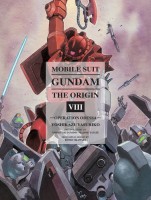
And Vertical Comics gives us a 9th deluxe hardcover edition of Gundam The Origin.

ASH: There was a delay on this volume’s release to address some printing errors, so I’ll be happy to see it finally arrive!

ANNA: Need to get caught up on this!

SEAN: Still catching up from last week? Or does something here leap out at you?

Filed Under: FEATURES, manga the week of

Shades of London, Books 1-3 by Maureen Johnson

April 23, 2015 by Michelle Smith

The actual title of this post should be “Books 1-3 plus that novella that came out in 2014,” but that was rather inelegant.

name-of-the-starThe Name of the Star
When Louisiana native Rory Deveaux’s professorial parents take a sabbatical in the UK, Rory jumps at the chance to attend boarding school in London. The early chapters of The Name of the Star depict her acclimation to life at Wexford, befriending her new roommate (Jazza) and developing a flirtation with one of the male prefects (Jerome). Because the phrase “boarding school in London” is totally my cup of tea (har har) and because Rory is amusingly snarky, I was already loving the book at this point, and that’s before I even got to the part with Jack the Ripper and ghosts!

A copycat of the notorious killer is on the loose, and since Wexford is located in Whitechapel, many of the crime scenes are nearby. After a near-death experience by choking grants Rory the ability to see ghosts, she actually witnesses the perpetrator (who has mysteriously failed to show up on any CCTV recordings of the murders) which brings her to the notice of a special secret police squad tasked with controlling any unruly members of the spectral population.

Several more fun characters are then introduced, and here I must compliment the narrator of the unabridged audiobook, Nicola Barber, whose facility in accents made me feel like I was listening to a BBC show. (I especially liked that Callum, a former football hopeful now dispatching meddlesome ghosts on the Underground, sounded rather like Lister from Red Dwarf!) In fact, I think this would make a pretty great BBC show, with its mildly diverse cast and the fact that the heroine is not merely brave (she eventually assists the squad in their ghosthunt), but funny, too. Admittedly, there were a couple of moments where Rory did some dumb things, but one could argue she didn’t really have better alternatives.

I haven’t loved a book this much in quite a long time, and I am both happy and bummed that there are two more (only two more!) in the series currently.

madness_underneathThe Madness Underneath
It is with true regret that I must report that The Madness Underneath suffers from an unfortunate case of Middle Book Syndrome. A crack created at the end of the first book seems to be providing a way for the buried dead of Bedlam to make it to the surface, and Rory’s newfound skills as a human “terminus” are effective in dispatching one murderous ghost, but this plotline fizzles out partway through. (Sidebar: it’s a crazy coincidence that this article comes out the very day I finish this book!) Then Rory falls in with a cult whose philosophy and goals don’t make a lot of sense, and shortly after her costly rescue, there’s suddenly a cliffhanger ending. If I had to wait for book three, I would probably be peeved that that’s all there was.

That is not to suggest that nothing of merit happens, however. I actually really liked how Rory’s return to Wexford was handled—how she was just simply incapable of caring about things she used to care about. So far behind in schoolwork that it’s overwhelming, she can’t muster the desire to try, and yet is blindsided when it is suggested that perhaps she ought to withdraw prior to exams. So caught up in the ghosthunting gig, boyfriend Jerome’s suspicions (and then guilt over same) become just another nagging problem, so she ends their relationship. I liked that Callum feels more antagonistically towards ghosts than the others do, and yet everyone seems to respect each other’s point of view. I liked the Marc Bolan reference. And, of course, before the more serious stuff starts to happen, there are at least a dozen lines of dialogue that made me laugh. (There’s also a dream featuring ham lunchmeat that I think might be an homage to the Buffy the Vampire Slayer episode “Restless.”)

Even though this particular installment was kind of disappointing, I continue to look forward to subsequent books just as much as before.

boy_in_smokeThe Boy in the Smoke
This short novella visits four defining moments in the life of Stephen Dene, leader of the ghost police, offering insight into the thoughts and background of a notably reticent character. Some of these incidents have been referred to in previous books, but not in this much detail.

“The Forgotten Boy” recounts a time when Stephen’s parents forget to fetch him from school at the end of term. (They’ve gone to Barbados instead.) His sister Regina comes to his rescue, determined to save him from a life doing what their parents expect, but she’s erratic and Stephen soon figures out that she’s using drugs. In “The Break in the Chain,” Stephen is attending Eton when he gets word of Regina’s death by overdose. (His parents “worked out their grief at a resort in Switzerland.”) He manages to carry on for several years, determined to fulfill his duty of succeeding at Eton and carrying on to Cambridge, until a visit from his unfeeling family leads him to commit suicide (in a scene that is absolutely riveting).

“The Specialist” find Stephen recovering at a psychiatric hospital and being recruited by Thorpe to lead the reformed team. And in “The Boy in the Smoke,” Stephen has finally achieved his dream of becoming a police officer. Practically the first thing he does is search for Regina’s ghost, only to find she did not return. Lastly, he fulfills his promise to come back to visit the ghost who saved his life and this slim little book comes to an end that left me rather verklempt.

Is this book essential to understanding the Shades of London series? No, but I’d say it’s essential to understanding Stephen, and very definitely worth the time.

shadcabThe Shadow Cabinet
What do you get when you take a series that first beguiled me with London, boarding school, Jack the Ripper, and ghosts, and then remove half of those things? A book that is reasonably good but which I just cannot love with anything approaching the ardor I originally felt.

The Shadow Cabinet offers a lot more information about the cult and their goals, introduces the concept of powerful stones that prevent London from being overrun by spirits as well as a secret society tasked with protecting them, and unleashes creepy, evil siblings Sid and Sadie upon the world. More attention, though, is devoted to Rory’s personal plight. Now in hiding from family and friends after running away from Wexford, she and the team are searching everywhere for one of their own who they believe has become a ghost.

The resolution to book two’s cliffhanger is pretty satisfying, I must admit, and I found that I did care a lot about whether certain characters made it out of Sid and Sadie’s proximity unscathed. I also really liked getting to know more about Thorpe, the group’s MI-5 overseer, and that Rory apparently receives permission to tell her two closest friends from Wexford what’s really been going on. And then there’s also the part where Stephen asks the bad guys, “Do you want to test that theory?” which surely must be another Buffy reference, right?

I’m still looking forward to the fourth book, which I believe is going to be the last in the series, but I must admit that my expectations are lower now than they once were.

Filed Under: Books, REVIEWS, Supernatural, Suspense, YA Tagged With: Maureen Johnson, Shades of London

No Game No Life, Vol. 1

April 23, 2015 by Sean Gaffney

By Yuu Kamiya. Released in Japan by Media Factory. Released in North America by Yen On.

I can only imagine that being someone who wants to read No Game No Life for the plotting, characterization, worldbuilding and excellent sense of dialogue is sort of like being someone who genuinely does read Playboy only for the articles. There’s that realization that you’re sort of enjoying something except for that one thing, but that you can’t actually tell people about it or recommend it to anyone, and it’s intensely frustrating. This is particularly the case with NGNL because the fanservice is so… unimportant. Yes, having Sora be a bit of a loser pervert allows Stephanie to feel conflicted so that she doesn’t simply give in and start crushing on him right away, but as for Shiro… there’s just no need for naked 11-year-old bath fanservice here.

ngnl1

Luckily, in prose format, this is a bit easier to gloss over. Ignoring the art (provided, unusually, by the author, who got his start as an artist for light novels, which perhaps also explains a lot of the service), I’m still really drawn into this world and these two broken losers who are brought into it. I had reviewed Seven Seas’ manga adaptation a while back, which covers about the first third of the book, and it applies here as well. Sora and Shiro have glorious overconfidence that’s really a mask for their crippling social issues, which can only be resolved when they aren’t separated from each other. This even extends to relationships, as Sora, while he does say “fall in love with me” to Stephanie (before, I think, he really grasps how things work here), points out straight away that nothing can happen for the next seven years as he literally can’t have Shiro not in the room so is waiting till she’s 18.

Much of the second half of the book is devoted to a chess match which has an excellent premise – the pieces move based on your determination, and won’t sacrifice themselves if they don’t want to. This is disastrous for genuine logical minds like Shiro’s who see every scenario provided the rules are correct, but Sora is familiar enough with warfare and dynamic speaking (seriously, Sora’s speeches are amazing in this novel… love the JoJo’s reference) to get the whole board on his side. It’s a great way of showing how [ ] works as a team. Likewise, I loved their discussion with Tet at the end, where it’s revealed he’d never lost before he met them, and they point out they’ve both lost many, many times… to each other. They know how to use that feeling to win again.

There’s a lot left unspoken here that I want to read more volumes to find out about. Actually seeing some of the other races, whether Sora or Shiro will actually bother to rule or just push everything onto Stephanie, whether Stephanie actually does have feelings for Sora or if it’s just the mechanics of that world at work… I’m likely going to read on, because of a keenly developed ability over years of reading questionable material to put my fingers in my ears and say la-la-la. But sadly, in the end this is another series, even in novel form, I can only recommend to the ‘otaku’ demographic it’s going after. And honestly, I suspect most of those people will be screaming ‘boycott, deal breaker!’ because she’s spelled Chlammy anyway.

Filed Under: REVIEWS

God’s Boat

April 22, 2015 by Ash Brown

God's BoatAuthor: Kaori Ekuni
Translator: Chikako Kobayashi
U.K. publisher: Thames River Press
ISBN: 9780857282491
Released: December 2012
Original release: 1999

One of my favorite books that I’ve read in the past few years is Kaori Ekuni’s debut and award-winning novel Twinkle Twinkle. Because I enjoyed it to such a great extent, I made a point to seek out more of Ekuni’s work to read. Sadly, God’s Boat is currently her only other major work to have been released in English. The novel was originally published in Japan in 1999. Later it was selected as a part of the Japanese Literature Publishing Project—an effort to promote the publication of modern Japanese works in translation across the globe. The English translation of God’s Boat by Chikako Kobayashi was released in 2012 by Thames River Press, a publisher based in the United kingdom. Ekuni is a respected author in Japan and has won several prestigious awards for her work. However, she doesn’t seem to be very well-known among English-reading audiences, which is a shame. I wish that more of Ekuni’s work was available in translation; her writing is excellent.

Yoko Najima lives alone with her young daughter Soko. She left her husband soon after Soko was born as the result of a passionate love affair. To make ends meet, Yoko teaches piano and works at bars and restaurants. There are three things that she counts as true treasures in her life: piano, Soko, and Soko’s father. But he has disappeared and has been gone for nearly a decade, promising that one day he will return for her. Without him by her side, Yoko feels like she doesn’t belong anywhere. Every few years she moves from one place to another with Soko in tow, afraid that if she gets too comfortable and begins to blend with her surroundings he will never find her. Yoko and Soko drift along together in life, but as Soko grows older she becomes weary of the process of moving and starting over again and again. She wants to make some lasting friendships, establish roots, and find stability. But her mother yearns for nothing more than to be reunited with Soko’s father. She is desperate to see him once more.

Much like Twinkle Twinkle, the narrative of God’s Boat alternates between two, not quite stream-of-consciousness, perspectives. The story gently progresses, at times seen through Yoko’s eyes and at others seen through Soko’s. God’s Boat paints a very intimate portrait of these two women and of their relationship with each other. A little at a time, their most private thoughts and personal memories are revealed, creating a framework from which Ekuni explores themes of love, family, grief, and loss. The novel begins in 1997, when Soko is nine years old, and ends in 2004, following them from Takahagi, to Sakura, to Zushi, and then finally to Tokyo. Yoko doesn’t change much as the novel progresses, but Soko grows significantly as she matures from a child into a young woman, which forces her relationship with her mother to evolve as well. In part, God’s Boat is Soko’s coming-of-age story as she learns to cope with her mother’s eccentricities while living under the shadow of a father she never knew.

In the epilogue, Ekuni states that while God’s Boat “is simple and quiet, the tale is one of madness. Even now I believe it to be the most perilous novel I’ve written thus far.” For the most part, God’s Boat is a very straightforward narrative about the everyday lives of its characters. The madness that Ekuni refers to is subtle, more obvious in retrospect but present from the very beginning of the novel. At first, God’s Boat is fairly unassuming, but tension slowly builds as Soko matures until the novel takes a sudden and devastating turn near its conclusion when the precarious state of Yoko’s mental and emotional stability is laid completely bare. Looking back, the developments aren’t so surprising—eventually reality must invade the romanticized existence that Yoko has created for herself and her daughter. Even so, I was not expecting God’s Boat to be nearly as hard-hitting and emotionally wrenching as it ends up being. The novel is one that will stick with me for quite some time, a testament to Ekuni’s skill as an author.

Filed Under: REVIEWS Tagged With: Kaori Ekuni, Novels

Bookshelf Briefs 4/20/15

April 20, 2015 by Sean Gaffney, Anna N and Michelle Smith Leave a Comment

This week, Sean, Anna, & Michelle look at recent releases from Seven Seas & Viz Media.

gakuenpolizi2Gakuen Polizi, Vol. 2 | By Milk Morinaga | Seven Seas – I had wanted Gakuen Polizi to get a bit less insubstantial, but I’m not sure this is what I meant. After fairly swiftly dealing with the evil rival who showed up for last volume’s cliffhanger, and who’s not all that evil after all, the final arc delves into the world of racy photos for money and spirals into teen prostitution. This includes a teacher whose talk about artistry of innocent half-nude schoolgirls trumping petty legality does not sound far off from some yuri fans. Oh yes, and there is a bit of yuri in here after all, though due to Aoba’s denseness we get a confession and kiss AND it doesn’t go anywhere. Fans of yuri will likely still enjoy this, but the last volume was far too moodswingey for me. – Sean Gaffney

foodwars5Food Wars, Vol 5 | By Yuto Tsukuda, Shun Saeki, and Yuki Morisaki | Viz Media – Volume five of this series is a bit of a transitional one, as the big storyline centered around the competition at the Totsuki Resort gets wrapped up and Soma finds himself with a chance to go home for a little break. Unfortunately, there’s a culinary crisis at the street market near Soma’s family restaurant, with a new corporate fried chicken chain threatening all the businesses. Soma digs in and comes up with a solution with his childhood friend Mayumi and he even imports meat expert Nikumi from school for extra help. This made for an entertaining interlude right before the next competition at cooking school starts. Food Wars has grown on me a bit with each volume and now I’m finding it consistently entertaining. – Anna N

meteorprince2Meteor Prince, Vol. 2 | By Meca Tanaka | Viz Media – Meteor Prince comes to a close in this volume, though not before a couple more aliens (Tania, Io’s rather obnoxious and clingy “true mate,” and Yuro, his ruthless younger brother) show up to erect obstacles to our lead couple’s happiness. I was a little disappointed that the origin of Hako’s spectacularly bad luck was never revealed, but there were other good things, like her awesome parents and protective little brother, and an ending that had just the right smidge of a drama for a two-volume series but rectified it all pretty swiftly and sweetly while still showing us Hako determined to take more control of her own destiny. If you miss the breed of shoujo that CMX used to release, you really ought to check out Meteor Prince; I have a feeling it’ll be on your wavelength. – Michelle Smith

Meteor Prince, Vol. 2 | By Meca Tanaka | Viz Media – Despite taking place after the main couple gets together, I thought this was the stronger of the two volumes of Meteor Prince, as we see all the various fallout that comes from this decision, and Io’s insistence that in the end he doesn’t care. Given this is a manga that began with predestined soulmates connected by wavelengths, the decision to show how in the end it’s people’s own choices that are important is an excellent one. Of course it’s not very original – there’s a comedic fiancee, a jealous little brother, and the choice between duty as a prince and romance. But for a series that is only two volumes long, Meteor Prince wraps everything up nicely, and the size feels just right. – Sean Gaffney

mylovestory4My Love Story!!, Vol. 4 | By Kazune Kawahara and Aruko | Viz Media – I have to admit, we finally hit something in this manga that I was less than satisfied with. I did not like Hayato, and felt his behavior, which involved getting his crush to resolve her feelings for Takeo so she can move on to him, was creepy and far too sympathetically told. That said, it’s hard for even that to penetrate the fuzzy adorable feeling anyone gets reading this. We get more here of Takeo thinking over and over again that people just don’t like him in ‘that way’, and seeing time and time again that it isn’t true. Which is cliched, yes, but also helps to point out how negative reinforcement as a child or teen can have major self-worth consequences down the road. Thank goodness he has Suna and Rinko. – Sean Gaffney

roseking1Requiem of the Rose King, Vol. 1 | By Aya Kanno | Viz Media – I have now sampled three series by Aya Kanno, and they’re so different from one another that I am quite impressed! Based on Shakespeare’s Henry VI and Richard III, Kanno’s latest retells the story of The War of the Roses—with plenty of bishounen in significant roles—but instead of perpetuating the “hunchback” version of Richard, gives him a different body image problem (and quite a nifty character design!) that should affect the familiar tale in fascinating ways. My main complaint is that I don’t remember my history well enough to know if some actions attributed to Richard here, like the almost seductive way he cajoles his father into not giving up the fight for the crown, actually happened, or if Kanno is writing him somewhat inconsistently. In either case, I am definitely on board for volume two! – Michelle Smith

toriko27Toriko, Vol. 27 | By Mitsutoshi Shimabukuro | Viz Media – The power of positive thinking is what drives the first half of this volume, which is still devoted to a serious of battles at the shattered remains of the Cooking Festival. It takes Toriko a long way, to the point where we think that he’s going to be able to take out Starjun, but… in the end, all of our current heroes may not be enough, and not even Setsuno and company can turn the tide. Luckily, there’s a few more old-timers who’ve yet to arrive that may help out. There’s been a lot of fighting and very little food lately, and I am looking forward to seeing the outcome of this battle, even if things aren’t looking all that good for Toriko or Komatsu right now. – Sean Gaffney

Filed Under: Bookshelf Briefs

Uninvited by Sophie Jordan

April 20, 2015 by Michelle Smith

uninvitedbook description:
When Davy tests positive for Homicidal Tendency Syndrome, aka “the kill gene,” she loses everything. Once the perfect high school senior, she is uninvited from her prep school and abandoned by her friends and boyfriend. Even her parents are now afraid of her—although she’s never hurt a fly. Davy doesn’t feel any differently, but genes don’t lie. One day she will kill someone.

Without any say in the matter, Davy is thrown into a special class for HTS carriers. She has no doubt the predictions are right about them, especially Sean, who already bears the “H” tattoo as proof of his violence. Yet when the world turns on the carriers, Sean is the only one she can trust. Maybe he’s not as dangerous as he seems. Or maybe Davy is just as deadly.

Review:
We meet Davina (Davy) Hamilton in March 2021, when she is about to graduate from her prestigious prep school and proceed on to Juilliard. Davy is a special snowflake musical prodigy who is also gorgeous, with a studly boyfriend many other girls covet. She’s also not shy about congratulating herself for these things.

Her privileged existence comes to an end when routine screening reveals that she carries the gene for HTS—Homicidal Tendency Syndrome. She is promptly uninvited from her swanky school and sent to a class for “carriers” at the local public school, where some of the kids are obviously creeps but others seem as normal and harmless as Davy insists she is. Carriers are treated poorly by society, and when an angry group of them perpetrates a mass shooting, all carriers are rounded up and sent to detention camps. Davy and a couple of classmates, however, are diverted into a program where they train to kill on government command.

While there were a few things I liked about Uninvited, I must admit that it was not especially good. Original-flavor Davy is not a sympathetic character, but she does eventually realize that she used to be a pretty crappy person and that her friends and boyfriend never truly cared about her. I also found the repeated references to music in her head puzzling—as a musician myself, it’s true that I usually have a song (or at least unformed noodling) in my head, but I thought this was normal for everyone, and not a sign of genius as we are evidently supposed to believe here.

Too, the writing is sometimes weirdly choppy, and I’m not sure what the point of that was. Is it simply bad writing or is it an attempt to convey how grim the situation is? If that’s the case, why use it during a scene where Davy’s boyfriend seems to accept her, kill gene and all?

I need this. So much. His arms. His love.

That’s just one example. I confess that I eventually started internally reading these in a flat robot voice to amuse myself. Jordan sometimes seems to mix up musical terms, too, like when Davy refers to the “pitch” of an aria, or that her body sways to the “harmony.” Plus, there were two instances of “y’all” being spelled “ya’ll.” Can you become an editor without understanding how contractions are formed? Apparently, at Harper Teen you can!

So, irritating main character, bizarre writing style… what is there to like? Well, the concept itself is kind of interesting, and because I didn’t particularly care about anyone, their misfortunes didn’t cause me any anxiety. The portion of the novel set in the training program is the strongest, with Davy becoming determined not only to become strong in her own right, but buying into the claim that if she does well enough, the government will have the neck tattoo proclaiming her as a violent carrier removed.

In the end, I find myself interested enough to read the sequel, Unleashed, though I am very grateful that this series is not a trilogy.

Filed Under: Books, REVIEWS, Sci-Fi, YA Tagged With: Sophie Jordan

My Week in Manga: April 13-April 19, 2015

April 20, 2015 by Ash Brown

My News and Reviews

Two more in-depth manga reviews were posted at Experiments in Manga last week, and once again they were both for manga. Though, unlike the week before which featured newer manga, last week’s reviews focused on a couple of older titles, one of which is actually out of print. That would be After School Nightmare, Volume 3 by Setona Mizushiro. This is the last volume in the series that I had previously read before embarking on my monthly horror manga review project, so I’m particularly curious to see where the manga goes from here. But, since next month’s horror manga review will be Mushishi, Volume 3, I’ll have to wait until June to find out. The other review posted last week was for Yak Haibara’s Sengoku Basara: Samurai Legends, Omnibus 1. Technically, it’s an adaptation of the Sengoku Basara 2 video game, but no familiarity with the games are needed and it stands alone as its own work. In addition to the incredibly over-the-top and badass characters and fight sequences, there’s actually some legitimate history mixed in as well. I find the series highly entertaining.

There wasn’t a lot in the way of manga news and announcements that I saw last week. (Granted, I was pretty busy paying attention to more pressing matters). If I missed something noteworthy, please do let me know! I would, however, like to mention Vertical’s ask.fm account, which continues provide a bit of fun in addition to excellent insight into the North American manga industry. I was particularly interested in the answer to a question about the impact of libraries on book sales since I happen to be a librarian. Also, Seven Seas has an ask.fm account, too, which I tend to forget about for some reason. Elsewhere online, Organization Anti-Social Geniuses has an interesting article about a used bookstore owner who nabbed more than 400 volumes of manga without even really knowing a thing about manga. Finally, two of Deb Aoki’s manga articles for Publishers Weekly were recently released from behind a paywall: Manga Publishing Update, Spring 2015 and Manga Publishers Try Games, Erotica to Grow Market.

Quick Takes

Karneval, Omnibus 1Karneval, Omnibus 1 (equivalent to Volumes 1-2) by Touya Mikanagi. Gareki is a fairly successful thief, but when a burglary doesn’t exactly go according to plan, he becomes the accidental protector of a strange young man called Nai and the both of them suddenly find themselves drawing the attention of Circus, a powerful association charged with dealing with criminals and situations regular law enforcement can’t handle. When Karneval was licensed, a resounding cry went up from its fans. I can definitely understand the appeal of the series. It has action and adventure, some sweetness as well as darkness, heroes with tragic backstories, mysteries and secret (and not-so-secret) organizations, quirky and attractive characters and designs (mostly men, but a few women as well), and so on. But although I thoroughly enjoyed parts of the first omnibus of Karneval, it didn’t quite grab my attention as much as I was hoping, or expecting, it would. I think this may be because the worldbuilding doesn’t feel as cohesive as I would like it to be. Mikanagi is smashing together some interesting and engaging elements and ideas, but they’re not quite meshing yet. However, I suspect the connections will become clearer as the series progresses.

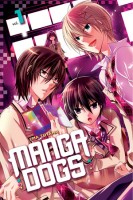
Manga Dogs, Volume 3Manga Dogs, Volume 3 by Ema Toyama. The third volume of Manga Dogs is also its last. It’s an amusing gag manga, but I think three volumes is just about right for the series. If it was stretched out for too much longer, it would likely become tiresome. Manga Dogs requires a high-tolerance for shallow characters, foolish comedy, and general absurdity. Although there is something of an overarching storyline, Manga Dogs tends to be fairly episodic, relying on the jokes to carry the manga more so than the characters or plot. As for the plot, at this point in the series Tezuka’s manga Teach Me Buddha is unsurprisingly in danger of cancellation as is the school’s manga program. Tezuka and the three air-headed male students who have attached themselves to her must work together in order to stop that from happening. Anyone who has read the first two volumes of Manga Dogs probably already has a pretty good idea of how well that works. I find Manga Dogs to be funniest when the humor directly ties into the manga industry or the mangaka’s creative processes. Although it’s taken quite seriously by Tezuka and the others, I’d actually be interested in reading Teach Me Buddha as a parody of shoujo manga; it has the potential to be funnier than Manga Dogs manages to be.

Yamada-kun and the Seven Witches, Volume 1Yamada-kun and the Seven Witches, Volume 1 by Miki Yoshikawa. I first learned about Yamada-kun and the Seven Witches when it was added to Crunchyroll Manga. I heard very good things about it at the time, and it sounded like something that I would enjoy, so I was very pleased when Kodansha Comics picked it up for print release. I’ll admit, I tend to enjoy body-swap manga, especially when there is some gender-swapping involved. (Which, now that I think about it, is probably more often the case than not.) Yamada-kun and the Seven Witches is one of the most entertaining examples of that particular subgenre that I’ve read recently. At this point, the series is definitely being played as a comedy. The trigger for the body-swapping is kissing, and there certainly is plenty of that in the first volume. Girls kissing guys. Guys kissing other guys. (Perhaps later on in the series, there will even be girls kissing other girls.) There are kisses for everyone! Not unexpectedly, there is also a bit of fanservice. However, for the most part it doesn’t tend to be overly sexualized and generally makes sense within context of the manga. Yoshikawa used to be an assistant to Fairy Tail‘s Hiro Mashima; some of that influence can easily be seen in the artwork of Yamada-kun and the Seven Witches.

Filed Under: FEATURES, My Week in Manga Tagged With: Ema Toyama, Karneval, manga, Manga Dogs, Miki Yoshikawa, Touya Mikanagi, Yamada-kun and the Seven Witches

12 Beast, Vol. 1

April 19, 2015 by Sean Gaffney

By Okayado. Released in Japan by Fujimi Shobo, serialization ongoing in the magazine Dragon Age. Released in North America by Seven Seas.

When something sells, it makes perfect business sense to get 5 other things that are similar to that thing. This tends to irritate a certain type of reader, but it’s true. This is why I joke about the newest vampire manga being licensed all the time – vampire manga tend to sell. Even the really mediocre vampire manga. The same holds true for ‘real people end up in fantasy/game world and are forced to fight’. Oddly, it doesn’t really hold true for ninja manga – Naruto was a huge hit, but other attempts to bring ninjas over here haven’t quite caught on. And of course there’s the ever popular ‘lots of fanservice and suggestive sexual scenes with no actual sex’ manga genre. Add to this the realization that Monster Musume was a much bigger hit than expected (I think) and the desire to license something else by the same author, and 12 Beast is perhaps one of the least surprising licenses ever.

12beast1

Of course, the question is, what happens when you try to take multiple popular genres and cram them all into the same work? The answer is a bit of a mess, unfortunately. Our hero is the heir to a ninja school who would much rather spend his time playing games, and who is quite happy to humiliate himself in order to avoid any sort of trouble. Of course, this can’t possibly stand, so into his world comes Aero, who is a bird-woman demanding that Eita come and save her people with his amazing hero skills. He spends much of the volume trying to run away, or at least talk sense into the berserker bird-woman soldiers whose idea of attacking the enemy is ‘hit it till we die’. But naturally, when push comes to shove he gets to show off his awesome ninja skills and talent at battle analysis (via gaming, which we all know from other manga is a perfect preparation for real warfare). And of course he starts to amass a harem of bird-women who are falling for them, possibly as he keeps rubbing their wings, which are oh so sensitive.

If you imagine that last paragraph read out by me in a sort of flat monotone, you get my general impression of the book. I will give Seven Seas credit, the adaptation is excellent, and almost a reason to get the book on its own. It’s filled with humor and in-jokes from page 1, where we not only get a reference to No Game No Life (another SS series), but also a nostalgic reference to “attacking its weak point for massive damage”. Unfortunately, the same can’t be said about the manga itself, which, like its hero, is content to coast. Almost everything here has been done better somewhere else. Hell, even the blatant fanservice is not as blatant as it is in the author’s other title Monster Musume. Basically, if you’re looking for a hero coming to a fantasy kingdom and saving the day, amassing women as he does so, and want to collect the entire set of manga that feature this plot, pick this up. But I’d wait till the very last to get it.

Filed Under: REVIEWS

Sengoku Basara: Samurai Legends, Vol. 1

April 17, 2015 by Ash Brown

Sengoku Basara: Samurai Legends, Omnibus 1Creator: Yak Haibara
U.S. publisher: Udon Entertainment
ISBN: 9781926778334
Released: April 2012
Original release: 2007-2008

Sengoku Basara, an outrageous reimagining of the people and events of Japan’s Warring States period, is a franchise that started out as a series of video games but expanded to include manga, anime, and radio shows among other media. Although I have been aware of Sengoku Basara for quite some time, I’ve somewhat surprisingly never actually played any of the games. Instead, my first direct experience with the franchise was through Yak Haibara’s manga series known in English as Sengoku Basara: Samurai Legends, an adaptation of the second game, Sengoku Basara 2 (which is also the Japanese title of the manga). The first volume of Udon Entertainment’s Samurai Legends was released in 2012. It’s actually an omnibus collecting the first two volumes of the Japanese edition, published in 2007 and 2008 respectively. Normally, I tend to shy away from video game adaptations, often finding them to be less than satisfying, but I liked Haibara’s artwork and so made an exception for Samurai Legends. I’m glad that I did, because the manga is a tremendous amount of fun.

June 2, 1582. Akechi Mitsuhide leads a rebellion against Oda Nobunaga, setting fire to Honnou Temple and burning those inside alive. With Nobunaga dead, Japan’s temporary peace is disrupted as warlords once again battle to gain control over the country. The power vacuum is quickly filled by Hideyoshi Toyotomi with the aid of his impressively skilled strategist Hanbei Takenaka. Currently, they’re in the best position to seize complete control, but they aren’t the only ones taking advantage of the recent upheaval. In the east, the young and brash Masamune Date is itching to make his move, his chance encounter with Shingen Takeda’s protegé Yukimura Sanada spurring him on. Meanwhile, further to the west, Takeda is locked at an impasse with the “God of War” Kenshin Uesugi. While the balance of power is shifting swiftly and dramatically, the appearance of the vagabond Keiji Maeda on the field of war only seems to hasten events.

Sengoku Basara: Samurai Kings, Volume 1, page 87The Sengoku or Warring States period was an extremely tumultuous time in Japan, lasting from the fifteenth to seventeenth centuries. Conflict was nearly constant as alliances between military factions were repeatedly forged and broken, making for an exciting setting for a franchise like Sengoku Basara. While fairly loose with its interpretation of historical figures and events, one thing is for certain: the action and fighting in Samurai Legends is almost nonstop. It’s also ridiculously over-the-top and over-powered. Characters are incredibly strong and resilient. They each have their own style of fighting and distinctive weaponry that, frankly, are often absurd. I mean, Date fights with three swords in each hand and Takeda’s battle-axe is as big as a horse. And that’s only two examples. Samurai Legends includes anachronisms and is hardly realistic, but the manga’s badassery is bombastic, dynamic, and highly engaging as a result.

Surprisingly enough, there actually is some legitimate history mixed into the raucousness that is Samurai Legends, but the manga was never intended to be a primer or to be taken too seriously. Though I will admit, I do find it much easier to remember who was who historically having been exposed to their highly-fictionalized counterparts. The manga has a very large cast of important and memorable players. Though Date is arguably the lead in the series, every faction involved in the conflict has at least one moment in the series in which it takes precedence. Samurai Legends isn’t particularly subtle or nuanced with its story or characterizations—more often than not it’s just one spectacular fight scene after another—but the manga’s humor and intense drama, exciting action, and sheer audacity have their own charm and appeal. Honestly, I never expected that I would like series as much as I do, but I get a huge kick out of Samurai Legends and find it to to be extraordinarily entertaining.

Filed Under: REVIEWS Tagged With: manga, Sengoku Basara, Udon Entertainment, Yak Haibara

Gangsta Vols 4 and 5

April 16, 2015 by Anna N

As I embarked on getting caught up on Gangsta, I found myself very grateful for the character bios and plot summaries in front of the volumes. The first couple volumes focused on the slightly more intimate lives of Alex as she meets and is taken in by the Handymen Worick and Nic inter cut with various scenes of violence, but the series is now headed into a full on gang war, and it is useful to be reminded of just who is who in the ever expanding cast of characters.

Gangsta Volume 4 by Kohske

The fourth volume deals with the personal problems of the characters as well as introducing more members of the sprawling underworld in the city of Ergastulum. The handymen are cleaning up after an attack, and Alex is distracted with memories of her younger brother. After shaking the dependency on the drugs she was previously addicted to, more of her normal memories are starting to come back, but she’s not yet able to recall the details of her past life. One of the things I like about this series is the artful way Kohske portrays her action scenes. Alex goes on an errand for the Handymen, and when she happens on a scene where another woman is being attacked, she grabs a stray piece of lumber and rushes in to defend a stranger without thinking of her own safety. Alex is about to get attacked herself, when on the next page a single panel of Nic in motion, mid-leap behind her attacker shows that the problem is being taken care of with almost frightening efficiency.

Alex and the Handymen go to a party thrown by the Cristiano Family, one of the weakest mafia families who is also the most charitable when it comes to taking care of Twilights who would otherwise not have a place to claim sanctuary. The head of the family is a tiny young girl named Loretta, who pragmatically surrounds herself with skilled bodyguards. An equally young twilight hunter shows up at the party and sets off a bloodbath. Another hunter names Erica appears, and while the Handymen and their allies manage to fight off the attack, they sustain huge losses in the process.

Gangsta Volume 5 by Kohske

In this volume it seems clear that the mafia factions in Ergastulum are going to be headed into war. The team of Destroyers becomes more defined, and the situation for regular Twilights not affiliated with an organization is looking worse and worse. Alex has gained even more of her memories, remarking to Nic that she knew him before, only to not get a response. Worick is forced to use his sense for objects to identify corpses, and he and Nic are separated throughout most of this volume, with dangerous consequences. The Destroyers begin to tear through the city, and identify themselves as agents of the Corsica family. Still, even in the middle of a tidal wave of violence, there are quick scenes of normal daily life, when Nic hands Alex a mug as soon as she wakes up from some disturbing dreams of her past. Nic heads off to help out Loretta, and Worick is left to help fend off an attack at the Monroe family house. Things are looking fairly grim for the found family the Handymen have built for themselves. We’re starting to get more caught up with the Japanese release of Gangsta, and I know I’m going to start getting impatient as the wait between volumes grows longer.

While Gangsta does feature plenty of action and grim themes centered around drugs, class issues, and the mafia, the core story circling around Alex and her relationship with the Handymen ensures that the violence in the manga always seems to have a narrative purpose. Koshke’s narrative start small and builds up to a intercut scenes of a sprawling cast headed into some serious confrontations is building more and more suspense and tension as the series progresses. I’m also always impressed with the variety of character designs and defined looks as the manga includes more and more characters. I’m glad that Viz is continuing to give quality seinen some serious attention in the Signature Line with this title.

Filed Under: REVIEWS Tagged With: Gangsta, Seinen, viz media, VIZ Signature

  • « Go to Previous Page
  • Page 1
  • Interim pages omitted …
  • Page 327
  • Page 328
  • Page 329
  • Page 330
  • Page 331
  • Interim pages omitted …
  • Page 551
  • Go to Next Page »
 | Log in
Copyright © 2010 Manga Bookshelf | Powered by WordPress & the Genesis Framework