• Skip to primary navigation
  • Skip to main content
  • Skip to primary sidebar
  • Home
  • About Us
    • Privacy Policy
    • Comment Policy
    • Disclosures & Disclaimers
  • Resources
    • Links, Essays & Articles
    • Fandomology!
    • CLAMP Directory
    • BlogRoll
  • Features & Columns
    • 3 Things Thursday
    • Adventures in the Key of Shoujo
    • Bit & Blips (game reviews)
    • BL BOOKRACK
    • Bookshelf Briefs
    • Bringing the Drama
    • Comic Conversion
    • Fanservice Friday
    • Going Digital
    • It Came From the Sinosphere
    • License This!
    • Magazine no Mori
    • My Week in Manga
    • OFF THE SHELF
    • Not By Manga Alone
    • PICK OF THE WEEK
    • Subtitles & Sensibility
    • Weekly Shonen Jump Recaps
  • Manga Moveable Feast
    • MMF Full Archive
    • Yun Kouga
    • CLAMP
    • Shojo Beat
    • Osamu Tezuka
    • Sailor Moon
    • Fruits Basket
    • Takehiko Inoue
    • Wild Adapter
    • One Piece
    • After School Nightmare
    • Karakuri Odette
    • Paradise Kiss
    • The Color Trilogy
    • To Terra…
    • Sexy Voice & Robo
  • Browse by Author
    • Sean Gaffney
    • Anna Neatrour
    • Michelle Smith
    • Katherine Dacey
    • MJ
    • Brigid Alverson
    • Travis Anderson
    • Phillip Anthony
    • Derek Bown
    • Jaci Dahlvang
    • Angela Eastman
    • Erica Friedman
    • Sara K.
    • Megan Purdy
    • Emily Snodgrass
    • Nancy Thistlethwaite
    • Eva Volin
    • David Welsh
  • MB Blogs
    • A Case Suitable For Treatment
    • Experiments in Manga
    • MangaBlog
    • The Manga Critic
    • Manga Report
    • Soliloquy in Blue
    • Manga Curmudgeon (archive)

Manga Bookshelf

Discussion, Resources, Roundtables, & Reviews

Features & Reviews

Mushishi, Vol. 3

May 13, 2015 by Ash Brown

Mushishi, Volume 3Creator: Yuki Urushibara
U.S. publisher: Del Rey
ISBN: 9780345496454
Released: February 2008
Original release: 2002
Awards: Japan Media Arts Award, Kodansha Manga Award

Mushishi, Volume 3 by Yuki Urushibara was originally published in Japan in 2002. The volume was initially released in English in print by Del Rey Manga in 2008. Although that particular edition is no longer available, Kodansha Comics did re-release Mushishi, Volume 3 digitally in 2014. I count myself lucky to own the entirety of Mushishi in print. I fell in love with the series after reading the first volume and so made a point to begin collecting it. Fortunately, Mushishi was being released in English around the same time I first started to really get into comics and manga and I didn’t have a difficult time finding the series. To this day, Mushishi remains one of my favorite manga. I like its quiet yet often creepy atmosphere and its folktale-like nature. I’m not the only one who appreciates Mushishi. The series was a recipient of a Kodansha Manga Award and has also been the basis for a live-action movie as well as multiple anime adaptations and other media.

Unseen to most people but found throughout nature are mushi—creatures that are still very close to the original form of life. They can be benign forces but often their presence is a source of trouble when it encroaches upon the human world. Illness and disease and even seemingly natural phenomena can all be attributed to mushi. Some people with the ability to see mushi make their living as mushishi by traveling across the country, studying the creatures, and trying to return balance where disturbances have occurred. But there are also those who can see mushi who are not mushishi. Frequently they are unaware of what the creatures truly are, and many times the people around them don’t believe them when they try to describe their experiences with mushi. This lack of understanding can cause significant strife, even within tightly knit communities. People who can see and are aware of mushi, whether they be mushishi or not, are treated differently, sometimes out of concern and sometimes out of fear.

Mushishi, Volume 3, page 202While the previous volume of Mushishi seemed to place a particular emphasis on mushishi, the fourth volume mostly features stories in which Ginko—a mushishi and the series’ protagonist—is dealing with incidents where people who can see mushi but who are not formally trained as mushishi are somehow involved. In “The Cry of Rust,” the unique quality of a young woman’s voice attracts mushi, bringing calamity to her village. “From the Ocean’s Edge” follows a man whose wife has been missing at sea for three years after they both saw peculiar creatures in the water. “The Heavy Seed” tells the story of a village that has strangely bountiful harvests during times of famine. Children fall deathly ill in “White Living in the Inkstone” when they accidentally release dormant mushi while playing in Doctor Adashino’s storehouse without permission. (Adashino is one of the very few recurring characters in Mushishi; his slightly antagonistic relationship with Ginko is absolutely delightful.)

Although during serialization it followed “The Cry of Rust,” the final chapter collected in Mushishi, Volume 3 is “The Fish Gaze.” The episode is particularly notable because it reveals some of Ginko’s backstory. Even though it’s a past that he himself is unable to remember—a rare example of a time when the reader is more knowledgeable than he is—this specific part of Ginko’s life story plays a very important role in who he later becomes. Mushishi tends to be episodic, but elements of Ginko’s character and personality have been revealed throughout the series. However, “The Fish Gazee” is the first chapter to really delve into his history. Like many of the other stories in Mushishi, Ginko’s tale has elements of darkness and tragedy, but the emphasis placed on the ultimate perseverance of life in the face of death and sorrow remains. Mushishi frequently incorporates sadness, but the manga is not without hope; Urushibara seems to be able to navigate a fine balance between melancholy and wonder with ease.

Filed Under: REVIEWS Tagged With: del rey, Japan Media Arts Award, Kodansha Manga Award, manga, mushishi, Yuki Urushibara

Evergreen, Vol. 1

May 12, 2015 by Sean Gaffney

By Yuyuko Takemiya and Akira Kasukabe. Released in Japan by ASCII Media Works, serialized in the magazine Dengeki Daioh. Released in North America by Seven Seas.

Sometimes a series has to work hard to get out from under the preconceptions it carries and also the tropes it seems inspired by. Evergreen is from the author of Toradora!, something I was rather surprised wasn’t mentioned at least on the back cover, and therefore already has some expectations since Toradora! is one of those rare harem series that actually is enjoyed by female readers. Unlike the author’s other series, this one is a manga original, though. It also has the extreme misfortune of coming out scant weeks after Kodansha’s shonen series Your Lie in April, which features a sullen teen who has given up on any hopes or dreams who is inspired by a gorgeous beauty who turns out to be rather eccentric. As it turns out, the series don’t really share much in common besides that, but there is a threat of “Manic Pixie Dream Girl” hanging over the whole thing.

evergreen1

Having gotten that out of the way, there’s a lot I enjoyed here. On-chan (if she gets a full name, I missed it) is really fun, carrying most of the comedy on her back, and having a nice love-hate relationship with Sora, who she will clearly end up with but for now is content to simply beat up. As for the two leads, the awkwardness both of them have interacting with each other is handled very well, and I like Hotaka’s imaginary “I am smooth and cool” fantasies that occasionally intrude before reality ensues. The awkwardness doesn’t just end with his relationship with Niki, though – his past guilt and physical condition have left him a bit broken, and I empathized with him a great deal when he visited his paternal grandmother, who is dying in the hospital.

I am interested to see if the plot goes in the direction that it’s hinting at, and how the manga will handle it. Hotaka’s heart condition seems to have a parallel with the sudden nosebleed that Niki got, and the visit to the grandmother reveals that there is another sibling who is supposed to be involved that we don’t know about. It’s not hard to put two and two together, but if I skipped every manga because of potential incest these days, I’d never read anything. I am pretty confident, having read Toradora!, which handles various serious plots like parental neglect and abandonment with a deft hand, that Evergreen is not likely to go down that road. And the art is quite pretty (fanservicey color page aside), making this a very smooth read. It’s only four volumes long, so I don’t think that any of the major plot bombs hinted at should drag on too long, and these are good kids, so I want to see them overcome their difficulties.

To sum up: Evergreen is not exceedingly original, and may rely a bit too much on some well-worn cliches, but its heart appears to be in the right place, and I want to see how it deals with the reveal I have a sneaking suspicion is coming soon.

Filed Under: REVIEWS

My Week in Manga: May 4-May 10, 2015

May 11, 2015 by Ash Brown

My News and Reviews

Despite spending a long weekend in Canada for the Toronto Comic Arts Festival and generally being very busy, I still managed to post a few things here at Experiments in Manga last week. To begin with, the winner of the Yamada-kun and the Seven Witches manga giveaway was announced. The post also includes a list of some of the manga available in English that feature witches. As for reviews, two were posted. The first was for Blade of the Immortal, Volume 31: Final Curtain, the last volume of Hiroaki Samura’s epic manga series. With that post, I have now written a review for every Blade of the Immortal trade collection in English. (At some point, I do hope to work on an Adaptation Adventures feature for the Blade of the Immortal anime, as well.) Last week’s other review is only very tangentially related to manga. I finally read Lewis Carroll’s Alice’s Adventures in Wonderland and Through the Looking-Glass, which is simply marvelous and I highly recommend the novels. I specifically read (and reviewed) Seven Seas’ recent omnibus edition which includes hundreds of delightful illustrations by International Manga Award-winning artist Kriss Sison.

As previously mentioned, I spent a portion of last week at TCAF and so was rather preoccupied. (I hope to post some random musings about the event later this week, most likely on Friday if I can’t manage to get the feature together that quickly. Otherwise, I’ll aim for next week.) Still, I did catch some interesting things online. For example, a recent episode of the Inkstuds podcast features Anne Ishii and Graham Kolbeins, the editors of the Massive anthology, talking about gay manga, its creators, and other related topics. Tofugu posted a couple of manga-related articles recently: an interview with Araki Joh and Exploring Shueisha. A few licenses were announced last week as well. Coinciding with the news that Masashi Kishimoto will be a guest at this year’s New York Comic-Con, Viz also announced new Naruto light novels, an artbook, and a box set. Seven Seas slipped in another license announcement, too: Tsukasa Saimura’s manga series Hour of the Zombie. And not to be left behind, Yen Press also made two license announcements on Twitter: Of the Red, the Light and the Ayakashi by HaccaWorks* and Nanao, and School-Live! by Sadoru Chiba and Norimitsu Kaihou.

Quick Takes

Attack on Titan: Before the Fall, Volume 4Attack on Titan: Before the Fall, Volume 4 written by Ryo Suzukaze, illustrated by Satoshi Shiki. Although Before the Fall has kept my attention since the beginning of the series, the fourth volume is the first volume that really excited and engaged me. Part of that is likely due to the introduction of a new character, Cardina Baumeister, who is much more capable than he initially appears. (Although, maybe it’s a bad thing that I find him more interesting than the series’ protagonist…) He and Kuklo are both prisoners who will soon be quietly and secretly sent to their deaths. The method of their planned execution? Abandonment outside of the walls, left to be consumed by the Titans. Fortunately for Kuklo, there are people who are invested in keeping him alive. But even considering that, surviving still won’t be an easy feat. At this point in the series, Before the Fall is beginning to tie in a little more closely with the established history and worldbuilding of Attack on Titan as a whole, which I like to see. The fourth volume reveals a bit more about the political and social settings of Attack on Titan in addition to having some exciting action sequences. I don’t really care much for how the Titans are drawn in Before the Fall, though. Or Sharle’s character design, for that matter.

Seven Deadly Sins, Volume 7The Seven Deadly Sins, Volumes 7-8 by Nakaba Suzuki. Happily, by the beginning of the seventh volume, the largely pointless tournament arc of Seven Deadly Sins is done and over with and the series is getting back on track with an actual plot. More of Meliodas’ personal history is revealed as are the motivations of the Holy Knights who are trying to incite a massive war. Another of the legendary Seven Deadly Sins is introduced in these volumes as well: Gowther, a rather peculiar young man known as the Goat Sin of Lust. I still haven’t been able to figure out the significance of the animals or even the sins as the relate to the warriors, which seems like a lost opportunity for Suzuki’s worldbuilding. Perhaps there really is no greater meaning, and the names are just supposed to sound cool. It’s also rather curious that, despite having been comrades who fought closely together in the past, the Seven Deadly Sins don’t seem to actually know who each other are. They don’t seem to pay attention to each other either; for example, Meliodas seems very surprised to discover a demon he is fighting used to be a Holy Knight when Gowther stated that very fact at the end of the previous chapter. But, while Seven Deadly Sins can be frustrating, there are very entertaining parts as well, like when Diane simply chucks her teammates forty miles when they need to cover distance quickly.

Your Honest Deceit, Volume 1Your Honest Deceit, Volumes 1-2 by Sakufu Ajimine. I believe that the short boys’ love series Your Honest Deceit is the only work by Ajimine to have been released in English. It’s a largely enjoyable manga, but for me it wasn’t a particularly spectacular one. However, I did appreciate that for the most part the story revolves around grown, adult men with well-established careers. In this particular case, Your Honest Deceit is about lawyers and their professional assistants. (Granted, if I’m in the mood to read about gay lawyers, I would generally prefer Fumi Yoshinaga’s Ichigenme… The First Class Is Civil Law. Or What Did You Eat Yesterday?, for that matter.) Kuze is the younger of the two men of the series’ primary couple. He went to law school and did exceptionally well in his classes, but he seems to not be interested in becoming a lawyer and is content working as a secretary for the older Kitahara, the lawyer and object of his affections and one of the school’s lecturers. Your Honest Deceit has its serious moments and misunderstandings, but Ajimine incorporates a fair amount of humor in the manga. At the same time, I’m not really sure that I would call it a comedy; Kuze and Kitahara’s burgeoning relationship is threatened by their own jealousies as well as by interference from other people, so it can be rather dramatic at time.

Filed Under: FEATURES, My Week in Manga Tagged With: attack on titan, manga, Nakaba Suzuki, Ryo Suzukaze, Sakufu Ajimine, Satoshi Shiki, Seven Deadly Sins, Your Honest Deceit

Alice’s Adventures in Wonderland and Through the Looking-Glass

May 10, 2015 by Ash Brown

Alice's Adventures in Wonderland and Through the Looking-GlassAuthor: Lewis Carroll
Illustrator: Kriss Sison

U.S. publisher: Seven Seas
ISBN: 9781626920613
Released: August 2014
Original release: 1865, 1871

Alice’s Adventures in Wonderland and Through the Looking-Glass and What Alice Found There are two well-loved, oft-adapted, and extremely influential novels written by Lewis Carroll, the pseudonym of English author Charles Lutwidge, in 1865 and 1871 respectively. I was initially a little surprised when Seven Seas announced that it would be publishing a newly illustrated omnibus edition of the novels in 2014, especially as the company had moved away from publishing prose works in recent years in order to focus on manga and other comics. However, the novels do nicely complement Seven Seas’ releases of the various Alice in the Country of manga. What makes Seven Seas’ edition of Alice’s Adventures in Wonderland and Through the Looking-Glass stand out from others are the incredibly cute and charming manga-influenced illustrations by Kriss Sison, an International Manga Award-winning artist from the Philippines. In addition to a gallery of color artwork, hundreds of black-and-white illustrations can be found throughout the volume.

Alice was enjoying a leisurely afternoon on a riverbank with her older sister when a very curious thing happened—a rabbit with a pocket watch hurries by talking to itself. When Alice follows after it she tumbles down a rabbit hole to find herself in a very strange place indeed. What else is there to do for an inquisitive and adventurous young girl but to go exploring? And so she does. As Alice wanders about she discovers food and drink that cause her to grow and shrink, animals of all sizes and shapes that can talk, and people who have very peculiar ways of thinking about and approaching life. Eventually she returns home to her sister, but several months later she finds herself once again slipping into a fantastical world when she crawls through the mirror above a fireplace mantel. Of course, Alice immediately sets off exploring, encountering even more strange and wondrous things and meeting all sorts of new and perplexing people.

Alice, by Kriss SisonDespite already being familiar with the story of Alice’s Adventures in Wonderland and Through the Looking-Glass (mostly through the seemingly infinite number of adaptations and otherwise Alice-inspired works) and despite having been encouraged for years by devotees of Carroll’s writings, I had never actually read the original novels for myself until I picked up Seven Seas’ edition. I’m really somewhat astonished that it took me so long to do so and it truly is a shame that I didn’t get around to it sooner. Alice’s Adventures in Wonderland and Through the Looking-Glass is absolutely marvelous and an utter joy to read. It’s easy to see why the novels have been treasured and continue to be treasured by so many people for well over a century. The books are incredibly imaginative and delightfully clever. Carroll liberally employs puns and other wordplay, turning nonsense into logic and vice versa. Alice’s Adventures in Wonderland and Through the Looking-Glass has been translated into something like seventy different languages; though certainly worthwhile, I can’t imagine these interpretations were easy to accomplish due to the novels’ linguistic complexities.

What particularly impresses me about Alice’s Adventures in Wonderland and Through the Looking-Glass are the novels’ broad appeal. Both children and adults can easily enjoy the works. Younger readers will likely be amused and drawn to their silliness while more mature readers will be able to more fully appreciate the cleverness of Carroll’s prose, poetry, and song. I would wholeheartedly encourage just about anyone to read Alice’s Adventures in Wonderland and Through the Looking-Glass. Even without counting the multitude of adapted works, there are a huge number of editions of the original two novels available. There is bound to be a version that will appeal, whether it be Martin Gardner’s extensively annotated editions, which reveal references that modern readers are apt to miss, or one of the many illustrated releases. While I may one day move on to The Annotated Alice, I was very pleased with Seven Seas’ Alice’s Adventures in Wonderland and Through the Looking-Glass. Carroll’s novels and Sison’s illustrations are a delightful combination. I am very glad to have finally read the novels and anticipate reading them again with much enjoyment.

Filed Under: REVIEWS Tagged With: Kriss Sison, Lewis Carroll, Novels, Seven Seas

Blade of the Immortal, Vol. 31: Final Curtain

May 8, 2015 by Ash Brown

Blade of the Immortal, Volume 31: Final CurtainCreator: Hiroaki Samura
U.S. publisher: Dark Horse
ISBN: 9781616556266
Released: April 2015
Original release: 2013
Awards: Eisner Award, Japan Media Arts Award

So, this is it. The Final Curtain of Blade of the Immortal, both literally and figuratively. Released by Dark Horse Comics in 2015, the volume is the thirty-first and final installment in the English-language edition of Hiroaki Samura’s epic manga series. After nearly two decades of publication, the entirety Blade of the Immortal has now been translated. Due to slight differences between the early English trade collections and the Japanese releases, Final Curtain is actually equivalent to the thirtieth volume of the original Japanese edition of Blade of the Immortal published in 2013. The manga has been well-received by both critics and fans alike, winning Samura many awards and honors including a Japan Media Arts Award and an Eisner Award. Blade of the Immortal was one of the very first manga that I began reading and collecting and the series has remained a personal favorite of mine ever since I discovered it. Because of that, Blade of the Immortal and its ending hold particular meaning for me. I have been looking forward to reading its conclusion for a very long time.

At its height, the Ittō-ryū was poised to become the official sword school of the shogunate, bringing the goal of the group’s leader Anotsu Kagehisa—the restoration of the way of the sword to Japan—tantalizingly close. But in the end they were betrayed and massacred by the very people who invited them to join the banshū. Since then the Ittō-ryū’s numbers have continued to dwindle as the survivors of that initial attack have been hunted down by the Mugai-ryū and Rokki-dan, forces largely made up of death row criminals commanded by Habaki Kagimura. The fighting has been fierce and casualties have been immense on both sides. Now only a few members of each group remain and they are locked in their final battles against one another. Though it appears as though Anotsu may have the upper hand, the outcome of the conflict is far from certain, especially as there are others interested in controlling the fate of the Ittō-ryū, including the young woman Rin and her near-immortal bodyguard Manji.

Blade of the Immortal, Volume 31: Final Curtain, page 238Final Curtain serves two main purposes: providing a resolution to the intense and bloody confrontations begun in the previous volume, Vigilance, and granting a conclusion to Blade of the Immortal as a whole. I feel the final volume is successful on both counts. Even though they aren’t as over-the-top or as brutal as some of the other fight sequences in the series, there are still plenty of surprises to be had in the final battles of Blade of the Immortal. They require incredible physical, mental, and even emotional fortitude from those involved, making the scenes very engaging to read. It’s not just fighting for fighting’s sake; there is deliberate purpose and reason behind the struggles. Lately, the series seems to have turned its attention to the dramatic demise of the Ittō-ryū and its leader, but Final Curtain manages to bring the manga full circle again by allowing Rin and Manji to once again become directly involved in how events unfold.

Blade of the Immortal has always had a large cast of characters as well as several intertwining plot threads. All of the survivors and the families and friends of those who have died have at least one moment in Final Curtain, even if it’s only a few panels, in which they become the focus of the manga, creating something akin to an epilogue. Loose ends are tied up and, while some ambiguity remains, the aftermath of the long struggle is revealed. Blade of the Immortal covered a lot of ground in its thirty-one volumes, the story twisting and turning and the characters and their relationships continually growing and evolving. The series can be read and enjoyed simply for its impressive action and fight sequences, but the manga also explores deeper, thought-provoking ideas. The characters are morally complex—very few can be said to be entirely in the right or in the wrong—and Blade of the Immortal questions what their or any person’s ultimate legacy will be. As for the last volume itself, I found Final Curtain to be a very satisfying conclusion to the series.

Filed Under: REVIEWS Tagged With: Blade of the Immortal, Dark Horse, Eisner Award, Hiroaki Samura, Japan Media Arts Award, manga

Manga the Week of 5/13

May 6, 2015 by Sean Gaffney, MJ, Anna N, Ash Brown and Michelle Smith 1 Comment

SEAN: I haven’t seen a week this small since Christmas. It’s sort of creepy.

First of all, right after I posted Manga the Week of last week, Dark Horse did a classic date slip, so Drug & Drop 2 is here again. Dark Horse is famous for release date slips, though they’re better than they used to be. If nothing else, it gives the MB team an opportunity to pick it two weeks in a row.

MJ: And since I flaked last week, it gives me the opportunity to get excited about it this week!

pantystocking

SEAN: The other Dark Horse release is of a very different nature. Panty & Stocking with Garterbelt was a manic anime series from a couple years back, and like many anime had a tie-in manga as well, this one running in Kadokawa’s Young Ace. It’s complete in one volume.

The Heroic Legend of Arslan has its third volume – the series has slowed somewhat (as has Silver Spoon by the same author) due to family emergencies, apparently. Still should be good high fantasy.

ANNA: I keep meaning to check this out! One day!

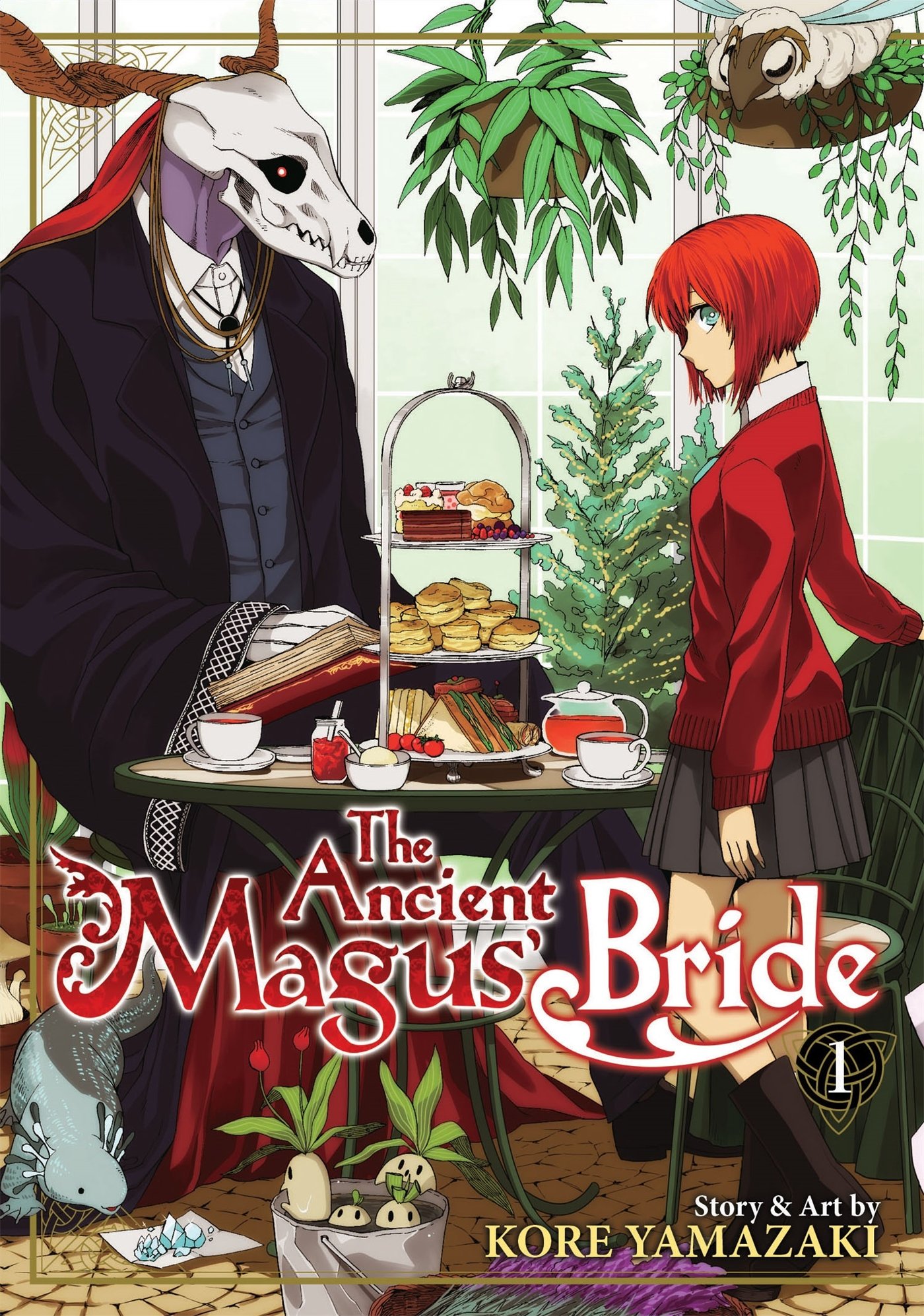
SEAN: Seven Seas debuts two new series. The Ancient Magus’ Bride is from Mag Garden’s Comic Blade, which we haven’t seen stuff from in years. It’s also a Taisho award winner with gorgeous art. The genre, as you can likely guess, is fantasy/romance, like half the titles licensed recently.

ASH: I’m intrigued by this series and look forward to giving it a try.

ANNA: I am always interested in fantasy/romance. This does sound intriguing.

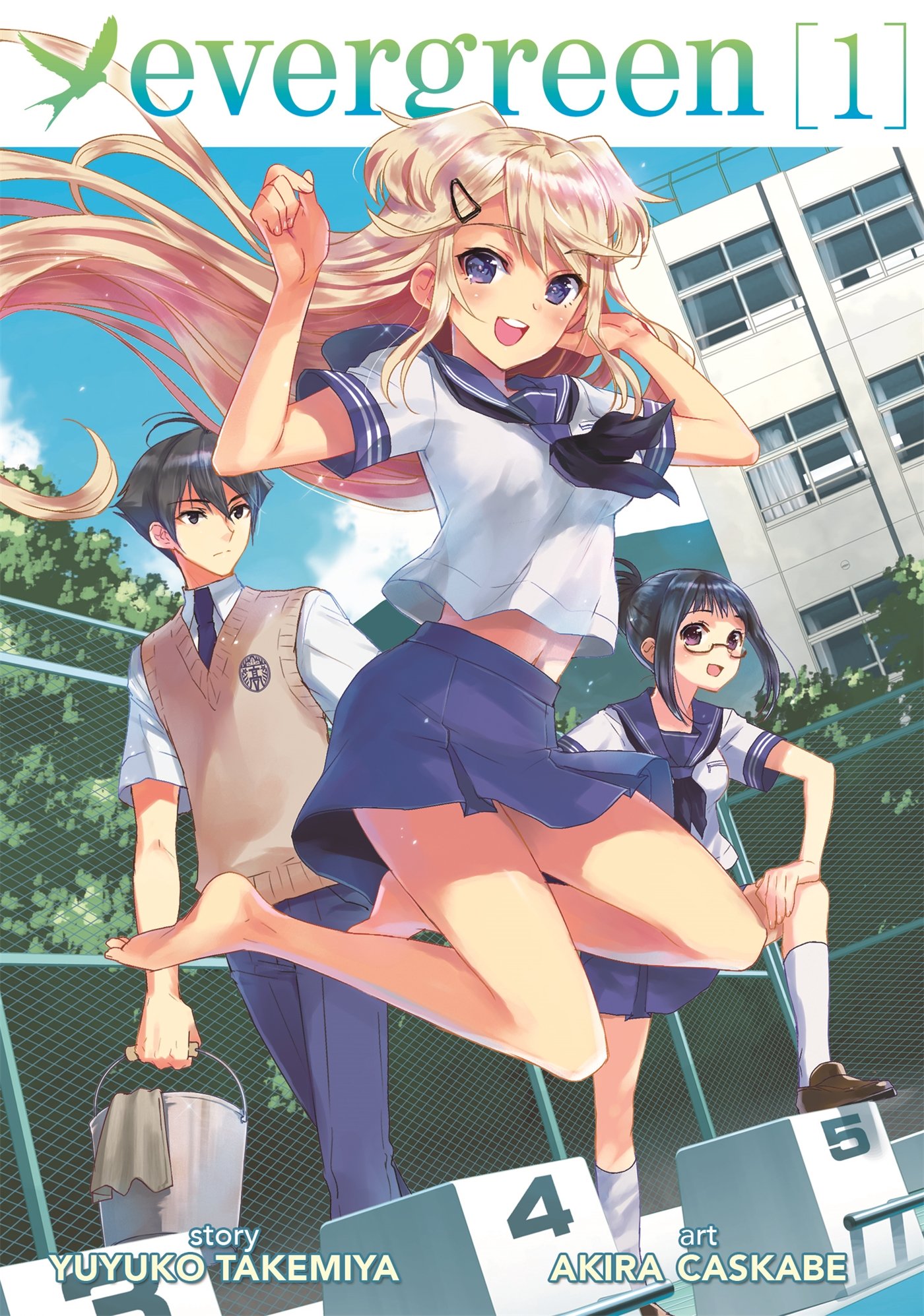
SEAN: Evergreen is from the author of Toradora!, and from what I hear is something of a similar series, starting out as a sweet romance but introducing darker themes as it goes on. It runs in Dengeki Daioh.

Another debut, this one from SubLime, Viz’s BL imprint. Love Stage! runs in Asuka Ciel, which is what Asuka readers turn to when they’re looking for the harder stuff. It’s also by Eiki Eiki and Taishi Zaou, who I assume most BL fans have already heard of.

MJ: I’m looking forward to this, I admit.

MICHELLE: I haven’t read anything by Eiki Eiki and Taishi Zaou in ages! I might have to check this out, too.

SEAN: Lastly, 07-GHOST inches ever closer to completion with its 16th volume.

ANNA: One day I will read it all! ONE DAY!

MICHELLE: Me, too. Every time there’s a new volume, I think, “Oh, I am terribly remiss!” but then I just get waylaid by other things.

SEAN: Anything exciting you for next week?

Filed Under: FEATURES, manga the week of

A Certain Scientific Railgun, Vol. 10

May 5, 2015 by Sean Gaffney

By Kazuma Kamachi and Motoi Fuyukawa. Released in Japan as “Toaru Kagaku no Railgun” by ASCII Media Works, serialization ongoing in the magazine Dengeki Daioh. Released in North America by Seven Seas.

I have to be careful not to repeat myself too much here, as the third Index novel is out in a couple of weeks and covers similar themes. But Academy City, as we’ve seen, breeds superheroes. Which is fine, except that you’re left wondering what they want an entire city of superheroes for. And when you get to the Level 5s, and the quest to get one of them to Level 6, be it Accelerator, Misaka, or what have you, it’s no longer about superheroes but about nuclear weapons testing. Many of the scientists we’ve seen in Index and Railgun regard morality and ethics as something that gets in the way of results – in fact, Yoshikawa may be the only nice scientist we’ve met to date (in Index), and she ends up almost dying for her sins. Gensei, on the other hand, is perfectly happy to wipe out the entire city in the name of science.

railgun10

You’ll note that Misaka’s in the background of the cover art, while Misaki and Kuroko take center stage. That’s a somewhat accurate look at the volume itself – given that she is the weapon being tested, Misaka doesn’t get much to do here except be used. That said, the other two end up carrying the “women in this series are awesome” load very well, and Uiharu also provides assistance with her amazing hacking skills. Kuroko in particular is impressive, and reminds us how brilliant she can be when she’s not scheming to get into Misaka’s pants. Misaki outgambits not only the villain, but also herself. And then there’s Mitori, the main miniboss of this arc, who may be trying to help Gensei but is still, like the rest of the weapons being created in Academy City, just being manipulated herself. So after a mammoth beatdown we see her bonding with Misaki, and the two of them reuniting with their past.

I should also mention Touma, as he’s here as well, though doesn’t do as much as expected. (For Railgun readers wondering why Touma’s arm can turn into a dragon, the 2nd Index novel can help with that.) The author is quite fond of the grand gesture of “saving the girl”, and it’s not going to go away – the only way to keep it out of this title is to have him not appear. A better appearance here was Gunha, another Level 5 who had barely appeared in either series till this point. He’s even more of a shonen hero than Touma is, dealing with problems by punching them and insisting that “guts” is the solution to absolutely everything. He’s a nice light-hearted moment in what is otherwise a very serious book.

The arc wraps up here with almost a sitcom ending – Misaka is forced to dance with Touma at the conclusion of the athletics festival and Kuroko naturally kicks her way in between then – but overall this arc with Misaki and Misaka was one of the most satisfying of the entire series. Which is good, as it may be at least another year before we see a new volume here.

Filed Under: REVIEWS

Magi by Shinobu Ohtaka Vols 1-3

May 5, 2015 by Anna N

I know that Magi is a favorite shonen manga among the MangaBookshelf crew, so I’ve been meaning to read it for a long time. I finally set aside some time to read the first three volumes, and I’m glad I did!

The first volume introduces Aladdin, a young boy with mysterious powers. Aladdin seems to be obsessed with food, boobs, and making new friends. He has a magical flute through which he can summon the body of a djinn whenever trouble comes. The catch is that only the body, and not the head of the djinn manifests, so since Aladdin wears the flute around his neck, often it looks like his head is perched on a giant muscly body that then proceeds to take care of whatever danger threatens Aladdin. Aladdin says that the djinn Ugo helps him out because instead of using his wish to ask for gold or any other typical wish, he simply asked the djinn to be his friend. Aladdin is a bit of a cipher at first, but he quickly decides to help out a local caravan, meeting a caravan girl and her best friend who turns out to be an undercover bandit. Ohtaka plays with proportion a great deal as she shows the djinn appearing to help out Aladdin. There’s plenty of slapstick humor, but as one might expect Aladdin’s seemingly simple personality is a bit of a distraction from his true mystical power.

Even though there are plenty of references to Arabian Knights, Magi isn’t a straightforward adaptation. Soon, a teenage Alibaba shows up and when he gets a glimpse of Aladdin’s power, he promptly decides to use his new friend to raid dungeons! The dungeons are a bit of a more typical shonen manga monster of the week type plot convenience, as they mysteriously pop up in various places in the desert landscape, filled with treasure, monsters, and traps. Only a great hero can expect to venture into a dungeon and come out alive with plenty of riches. Aladdin tends to get exhausted after any sort of battle involving the djinn, and he passes out after he and Alibaba have entered the dungeon. Alibaba realizes that he’s gone into danger with a boy he knows little about, and is determined to find out more about his new friend when he wakes up. The adventures are interrupted by the despotic ruler of the local town, Jamil who kidnaps the sleeping Aladdin and forces Alibaba to walk in front of him as a dungeon trap detector. Jamil is accompanied by a slave girl named Morgiana with super strong legs and a bodyguard called Goltas. Alibaba uses his trademark cleverness to ditch Jamil and reunite himself with Aladdin again, and as they explore the dungeon they discover an entire underground kingdom.

Aladdin isn’t an ordinary boy, and it becomes clear that he has magical abilities way beyond someone who can only summon a djinn. He’s a fabled sorcerer or Magi who has the power to crown a king, and Jamil is disappointed when Aladdin doesn’t find him worthy. Aladdin, Morgiana, and Alibaba get sent out of the cleared dungeon by the resident djinn, and while Alibaba and Morgiana end up back in their town Aladdin is far away. Alibaba uses his newfound fortune to free the slaves of the town and sets off to find his friend.

The first couple volumes set up a possible team of adventurers in Aladdin, Morgiana, and Alibaba, and the third volume delves more into some background aspects of Aladdin’s power. He wakes up in a faraway land with a horse tribe who promptly adopts him as one of their own. The shaman of the village is a wise woman named Baba who tells Aladdin that she can also see Rukh, the force that binds souls together. Ohtaka does a good job at establishing new characters in a quick way that still carries a great deal of depth. The horse tribe is represented mostly by a brash young warrior named Doruji who conspicuously deflates whenever he’s around Baba’s serene granddaughter Toya. The horse tribe is about to encounter an invading force, but the Princess Hakuei Ren who is the acting general is determined to pull a country together by winning hearts and minds and not by force. Her views are not shared by her underlings, which leads to complications.

It turns out that Hakuei Ren is another dungeon conqueror, with her own djinn. One mysterious part of Magi is the way the djinns seem to get together to gossip a bit whenever they see each other, and Aladdin isn’t able to make out what they are saying. There are flashbacks now and then to Aladdin’s time trapped with his djinn in a room, and while Baba tells Aladdin some of the legends of the Magi that she knows, he still has a lot of gaps about his own background that he wants to fill in.

The first three volumes set up this series well, there are plenty of concrete plot details and humor to enjoy and at the same time there’s a general sense of Ohtaka’s world building gradually unfolding as more information about the Magi are slowly revealed. Aladdin’s bluntness and naivete combined with his power makes him an interesting leading character, and his overwhelming desire for friendship and need to understand his own history when he already possesses plenty of mystical power makes him very sympathetic. Ohtaka has plenty of humorous moments, even if many of them rely on the sight gag of a djinn running around the countryside with a flute for a head. I enjoyed the first three volumes of this series very much, and I’ll be reading onward to see if the adventurers end up together again.

Filed Under: REVIEWS Tagged With: magi

My Week in Manga: April 27-May 3, 2015

May 4, 2015 by Ash Brown

My News and Reviews

Last week was the end of one month and the beginning of another, which means the most recent manga giveaway at Experiments in Manga is currently underway. The winner will be announced on Wednesday, so there’s still a little time to enter for a chance to win Miki Yoshikawa’s Yamada-kun and the Seven Witches, Volume 1. An in-depth manga review was posted last week as well. I took a look at Aki’s The Angel of Elhamburg, a bittersweet tragedy which, although it can be difficult to follow in places, is a lovely single-volume manga. And finally, over the weekend, April’s Bookshelf Overload was posted for those who are curious about the manga that made its way into my home last month.

On to other interesting reading and news found elsewhere online! Sparkler Monthly has started a monthly blog and the first post Why do we need “comics for women”? Why not “comics for everyone”? is excellent. Seven Seas announced three new manga licenses last week: Katsuhisa Kigitsu’s Fraken Fran, Wataru Karasuma’s Not Lives, and Ichigo Takano’s Orange (which is also being released digitally by Crunchyroll.) Franken Fran in particular has been a oft-requested title by fans. Organization Anti-Social Geniuses talked with Lissa Pattillo from Seven Seas about the Franken Fran license. Also at OASG is an interview with Hope Donovan, a managing editor at Viz Media. And Mangabrog has posted a translation of a conversation between mangaka Nobuyuki Fukumoto and musician and author Kenji Ohtsuki.

Quick Takes

Cipher, Volume 1Cipher, Volumes 1-6 by Minako Narita. During its time, CMX published some really great manga, including several old-school shoujo series. Cipher is one of those, and probably one of the most eighties manga that I’ve read. The series, set in New York, began serialization in 1984 and includes many references to American pop culture of the time. Anise is trying to make friends with Siva, an up-and-coming actor as well as one of her classmates, when she discovers his secret. He has a twin, Cipher, and they’ve been taking turns pretending to be “Siva.” And so they make a bet: if after two weeks she can tell the two twins apart, they will tell her why they have been sharing an identity. Cipher doesn’t always have the most believable story—for one, I don’t know of any parents who would ever let their child move in with someone they’ve never met even temporarily—but the characters and interpersonal drama are consistently engaging and at times even compelling. So far, I’m loving it. Cipher is often slow-moving, generally focusing on the everyday lives of American teenagers, but a plot twist towards the end of the sixth volume hastens and sets up important character and story developments for the second half of the series.

Junk!Junk! Shushushu Sakurai. If I’m not mistaken, Junk! was the very last manga to be released by DramaQueen before the publisher disappeared. Like Sakurai’s other DramaQueen release, Missing Road, Junk! is a boys’ love manga that incorporates elements of science fiction and action. Also like Missing Road, Junk! is a manga that could have benefited from additional volumes in order to explore some of the complexities of the plot and setting. Reading these manga, Sakurai seems to be overly ambitious when it comes to her stories. However, I think Junk! is the more cohesive, coherent, and successful of the two overall. Even though it’s only a single volume, Junk! has a lot going on in it. A religious cult focused on breeding people together—whether they are male or female—in order to foster the evolution of even stronger humans. A man who holds the key to a closely kept government secret that ensures a person’s survival even in the face a nuclear apocalypse. And, because it is a mature boys’ love title after all, there’s plenty of sex, too, even at inopportune moments. (Seriously, taking time to bang your lover in the middle of a dangerous infiltration mission doesn’t seem to be the wisest decision.)

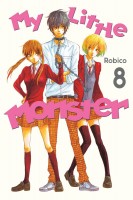
My Little Monster, Volume 7My Little Monster, Volume 7 by Robico. The last few volumes of My Little Monster left me a little frustrated with the lack of progress in the development of the series’ story and in the relationships of its characters. Fortunately, the seventh volume seems to get things back on track and the manga continues to be a fairly amusing and even endearing series from time to time. Also, I love that after everything that has happened, Nagoya, the pet chicken, continues to make repeated appearances. The cast of My Little Monster is made up of a bunch of oddballs who tend to be socially awkward, but I do like them quite a bit. Part of that social awkwardness means they can be completely oblivious to other people’s feelings, even when those feelings have been clearly and repeatedly stated. To be fair, they’re sometimes oblivious to their own feelings as well. The result is one heck of a mess of tangled and conflicting relationships. The seventh volume of My Little Monster sees some but certainly not all of those relationships sorted out after several confessions of love are made and replies to them eventually given. At this point the series is more than halfway over, so I hope Robico is able to maintain its forward momentum.

Sankarea: Undying Love, Volume 11Sankarea: Undying Love, Volume 11 by Mitsuru Hattori. I was very curious to see how Sankarea would end since I honestly had no idea which direction Hattori was going to take things. And now that I’ve read the final volume, I’m not entirely convinced that Hattori actually knew, either. From the very beginning Sankarea has been a strange mix of horror and romantic comedy, an offbeat story with offbeat characters. Sometimes the ideal balance between the two genres was there, and sometimes it wasn’t. The finale of Sankarea would seem to demand that Hattori choose one over the other, but instead he attempts to satisfy the requirements of both by employing a series of false endings. I think that ultimately the conclusion of Sankarea would have been more satisfying if Hattori had simply picked one ending and ran with it. Like the rest of the series, the eleventh volume of Sankarea had its cute and sweet moments as well its moments of blood and gore. It also has the return of Rea’s abusive father (legitimately one of the most disturbing elements of the series), trying to put him in a slightly more sympathetic light.  In the end, little Bub the undead cat is probably still my favorite part of the entire series.

Filed Under: FEATURES, My Week in Manga Tagged With: Cipher, manga, Minako Narita, Mitsuru Hattori, My Little Monster, Robico, Sankarea, Shushushu Sakurai

Log Horizon: The Beginning of Another World

May 3, 2015 by Sean Gaffney

By Mamare Touno and Kazuhiro Hara. Released in Japan by Enterbrain. Released in North America by Yen Press.

As I’ve said in a few Manga the Week of posts before this, the first I ever heard of Log Horizon was when I was researching Sword Art Online after reading that series, and TVTropes saying that the two series had a “fandom rivalry”. This is unsurprising, given that the two series essentially share a very similar plot – gamers suddenly find themselves trapped inside a game and have to find ways to deal with it. That said, once you get past that there’s a lot that’s different. In SAO you have “if you die in the game, you die in real life” lending an air of tension and menace to everything. Log Horizon, on the other hand, generates its tension from the opposite: even death merely has you regenerated at your start point, so there’s no point to anything at all.

loghorizon1

Our hero is a quiet, thoughtful, introverted sort, who has those “mean eyes” that fans of Toradora! might recognize, and a tendency to see everything in a cynical way. He’s partnered with a big, outgoing guy who enjoys making perverted jokes as a way of breaking the ice (though, as we later see, he can’t take it when it’s dished out to him), and a quiet, even more introverted assassin who, once she’s in her proper body, proves that Ayanami Rei expies are still alive and well in the world of anime and manga. Much of the novel has them figuring out what the rules of this new-yet-familiar world are, realizing that a lot of combat techniques they did in their sleep seated at a computer are much harder when a genuine threat is speeding towards you, and trying to rescue a young girl trapped in a faraway city that has fallen into lawlessness as some people realize that since there’s no real consequence to death except that you get to loot their stuff, that that’s a great way to pass the time.

This is very much a novel for experienced MMORPG players, and has a lot more mechanics in it than SAO did. Given that I’m not a gamer, I found myself skimming the explanations at times. The characters fared much better – Shiroe and Akatsuki I especially liked, and I enjoy that the two suggested couples (though nothing’s likely to happen for at least 10 volumes is my guess) are both similar types – there’s no “opposites attract” cliche here. It’s actually refreshing seeing two introverts driving an action series at all, and that also came across very well. And the series’ worldbuilding is excellent, taking its time and showing us what you can and cannot do – the food problem is particularly frustrating for all involved.

I would say that I find Sword Art Online more exciting and gripping – Log Horizon has a certain dry tone that matches that of its hero. But it’s a very good start to a series, and I look forward to seeing how things go, and if “returning to the real world” even becomes a plot point at all – it’s mentioned very little here, with a lot of folks just assuming they’re trapped forever. In any case, between this, No Game No Life, DanMachi, and SAO, gamers certainly have their hands full of Yen On titles right now.

Filed Under: REVIEWS

The Angel of Elhamburg

May 1, 2015 by Ash Brown

The Angel of ElhamburgCreator: Aki
U.S. publisher: Yen Press
ISBN: 9780316340465
Released: March 2015
Original release: 2013

So far, three of Aki’s manga have been released in English. First was her debut, Utahime, published by Digital Manga. Second was her short series Olympos, released by Yen Press as a single omnibus volume. Most recently published in English is Aki’s The Angel of Elhamburg, initially conceived of as a short, one-shot manga, but expanded to fill an entire volume. Also released by Yen Press, The Angel of Elhamburg is presented in an attractive hardcover edition with a dust jacket with foil accents. The manga was released in Japan in 2013 and in English in 2015. Aki’s manga tend to be historical fantasies with prominent European influences and a fair amount of melancholy and sadness. The Angel of Elhamburg falls into that category as well. Although I sometimes find aspects of Aki’s storytelling frustrating, I largely enjoy her manga and her artwork is consistently beautiful. I was very happy to see The Angel of Elhamburg licensed.

After successfully overthrowing the previous lord, Madeth has become the High King, something that would not have been possible had it not been for the support and efforts of his close friend and knight Lalvan. Madeth has extraordinary charisma—people easily love and willingly follow him—but he is uneducated and of low birth. He lacks the ambition and confidence that one would expect from a ruler. Lalvan, on the other hand, is exceptionally clever and capable. But despite his talents, and his peculiar ability to see spirits invisible to others, Lalvan has always been overshadowed by his friend and most often finds himself in an auxiliary role. Now that Madeth has become king, their relationship has started to fracture as long-hidden and suppressed insecurities, jealousies, and issues of trust threaten to destroy their friendship and perhaps even throw the kingdom into turmoil once more.

The Angel of Elhamburg, page 6Although the title is The Angel of Elhamburg, the role of the angel in the manga—a spirit that watches over Elhamburg Castle, the kingdom’s seat of power—is actually a relatively minor one. The fact that Lalvan can see the angel significantly impacts some of the story and character developments, but the angel itself is not an active character, merely a notable presence. The real focus of The Angel of Elhamburg is on the changing relationship between Lalvan and Madeth, with a particular emphasis given to Lalvan and his perspective of events. This highlighting of the characters is present in Aki’s storytelling as well as in her artwork. Although overall quite lovely, the backgrounds and settings tend to be somewhat limited; more attention is devoted to the characters’ facial expressions and body language, and to the details of their clothing and design. Because the manga’s focus is so much on people as individuals, The Angel of Elhamburg often feels very intimate and personal.

The Angel of Elhamburg is told in five scenes, or chapters. I particularly liked the structure of the first which is further divided into three acts following Lalvan, Madeth, and the angel respectively. However, once Aki decided to expand the manga, the narrative deviates from this initial structure and becomes more linear until the last scene. The final chapter is a little confusing at first since its use of flashbacks and flash-forwards obscures the story’s chronology. The Angel of Elhamburg is a bittersweet tragedy. With the manga’s classical feel and theatric nature, I could easily see it being adapted as a stage production. The rise and fall of a kingdom serves as the backdrop for the interpersonal drama and conflict, which is the true heart of the manga. There is a story, but The Angel of Elhamburg is probably best described as a character study. The Angel of Elhamburg excels in conveying the depth of Lalvan and Madeth’s individual personalities and fears, ultimately showing an established and evolving relationship that is believably complicated.

Filed Under: REVIEWS Tagged With: Aki, manga, yen press

Manga the Week of 5/6

April 30, 2015 by Sean Gaffney, Ash Brown, Michelle Smith and Anna N 3 Comments

SEAN: May, and the manga volumes coming out are not letting up in any way. Let’s see what we have in next week’s pile.

I’m not entirely sure if Dr. Makumakuran And Other Stories is coming out this first week – Amazon’s site says “May 2015” in an unhelpful way. But it’s from Bruno Gmunder Verlag, so you know what that means. Fans of Massive should check this out.

ASH: Definitely! Especially as Takeshi Matsu was one of the artists who was featured in Massive. This will be his second collection of manga released in English. I rather enjoyed his first, More and More of You and Other Stories, so I’m looking forward to it.

SEAN: Dark Horse brings out a 17th volume of popular manwha title Bride of the Water God.

And a second volume of Legal Drug continuation Drug & Drop, now with added plot and deeper characterization!

ASH: Woo!

MICHELLE: Huzzah!

ANNA: I haven’t checked out the first volume of this yet, but I intend to!

SEAN: Kodansha has a fourth omnibus of Tsubasa, still in its excellent period before its plot brambles became too strong.

Hopefully the 2nd volume of Yamada-kun and the Seven Witches will give us some actual witches.

ASH: And more kissing.

zelda

SEAN: I admit I rarely talk Perfect Square books here, but the Legend of Zelda manga they have coming out next week looks awesome. Called A Link to the Past, it’s in full color and should appear to all LoZ fans.

ASH: This should be great.

SEAN: Seven Seas gives us a new Devils and Realist (Vol. 5) and a new Dragonar Academy (Vol. 6), both of which will interest their prospective audiences, which sadly are not me.

And Vertical has an 8th volume of What Did You Eat Yesterday?, which has lost me, but still enchants the rest of Manga Bookshelf.

ASH: It’s true!

MICHELLE: I’ve been so pleased with the speed with which this series has been coming out, but I’m already sad that we’ll soon be caught up with Japan.

SEAN: Viz, as always, has most of its releases this week. There’s a 4th volume of Black Rose Alice, the story of a touching romance between a body and the spiders within it.

ASH: Actually, that’s not entirely inaccurate.

MICHELLE: Heh. Here’s another series where I’m already dreading being caught up to Japan.

ANNA: I enjoy this series a bunch. Each volume is a bit of a surprise. Also, spiders.

SEAN: The 11th Bleach 3-in-1 omnibus finds the cast in the middle of the Hueco Mundo arc, one of the most beloved and uncontroversial arcs in all of Bleach.

If you thought that JoJo’s Bizarre Adventure had reached peak ridiculousness with the first hardcover, be advised it only gets weirder from here. The 2nd hardcover ships next week.

ASH: Dioooooo!

ANNA: YAY!

SEAN: I haven’t enjoyed Kiss of the Rose Princess as much as He’s My Only Vampire, but it’s good enough, and a 4th volume should be decent reading.

MICHELLE: Yeah, I’ll keep reading the former but actually keep the latter. There’s the distinction for me.

ANNA: I enjoy it for what it is.

SEAN: If you were waiting for the 2nd Millennium Snow omnibus to keep your shelves neat and tidy, here it is.

ANNA: I’ve been meaning to do a complete reread of this after only reading the first early volumes.

nisekoi9

SEAN: Nisekoi’s ninth volume. The subtitle is still False Love, reminding those of us who enjoy the balanced harem aspect of it that there’s still one main heroine.

Ranma 1/2’s eighth omnibus gives us two of the series’ most memorable (and silliest) one-shot villains, The Gambling King and Picolette Chardin II.

Rosario + Vampire Season II Volume 14 still has too much punctuation and numbers in its title.

Spell of Desire continues to be edgy in ways I don’t like, as opposed to edgy in ways I like (which Midnight Secretary was).

MICHELLE: I had high hopes for Spell of Desire, possibly chiefly because the male lead was kind to a kitty, but now I find that I don’t like it as much as Midnight Secretary after all. I kind of can’t explain how that happened.

ANNA: I like it just as much, but I’m not a very critical paranormal romance manga reader.

SEAN: Lastly, there’s a second Yu-Gi-Oh! 3-in-1 omnibus. It’s based on a card game. Many people don’t know that bit of trivia.

ANNA: My kids have now moved on from Pokemon cards to Yu-Gi-Oh cards, and let me tell you how thrilled I am that there is yet another card game that they want to collect.

SEAN: Something for everyone? What’s for you?

Filed Under: FEATURES, manga the week of

The Devil Is A Part-Timer!, Vol. 1

April 30, 2015 by Sean Gaffney

By Satoshi Wagahara and 029. Released in Japan by ASCII Mediaworks. Released in North America by Yen Press.

Of the five titles I’m reading in April from Yen On, this is the odd one out, as it’s the only one that does not involve gaming in some way, shape or form. Instead this is a straight up fantasy/comedy, and reads as the most “traditional” of the lot. Our hero is our villain, who is forced to come to Japan and abandon his fantasy world, pursued by his nemesis, the hero, who seeks to destroy him. That said, Japan is not as laced with magic as they would like, so our hero is forced to bide his time and save his strength, instead deciding to try to use his part-time job as a stepping stone to world domination. Which is fine, except his part-time job is with McDonald’s… sorry, McRonald’s.

parttimer1

The main reason to read this title is the comedy – it’s very funny, in ways that come out of the personalities of the characters, which is one of the best kinds of humor. Maou is intelligent and capable, but has taken to life as a lowly paid wage slave in Japan a little *too* well, as everyone immediately notices. His Demon General/Househusband Ashiya is in turns nagging him about eating properly and returning to their world, but can also be an emotional drama queen at the worst time. Chiho is a normal lovestruck girl you’d see in any anime romance series, which is why it’s so funny that she’s stuck in the middle of all this. As for Emi, when doing research on this title I found a TVTropes quote about her that noted “She’s generally hated on /a”, which is always a true sign that I will love a character. She was wonderfully fun and emotional.

We do not get too many flashbacks to Maou’s time as the demon lord, notably. This is deliberate, I imagine, given that he is supposed to be the destroyer of many, many lives… including Emi’s father. We do see a bit pf her past, mostly as she is forged into a weapon used to take out the Demon King… and then tossed aside so that the real evil guy can get on with his behind the scenes manipulation. When she confronts Maou with his deeds, his response is to half-heartedly apologize, indicating he hadn’t really thought much about what he was doing. This is really dissonant, and I’m not sure how much of it is deliberate. We’ll see if it comes up again in future books.

There’s also many cool battles, and our hero and villain show that they’re definitely a force to be reckoned with if they team up and if the hero can stop screaming at him for long enough. I don’t expect Emi’s essential tsundere character to end anytime soon, as that’s her type, but I do think that a lot of her rage in the latter half of the book is more due to finding out that the entire life she lived was based on a lie than anything else… it will be interesting to see how she handles her black-and-white morality getting grey tones.

Mostly, though, this book is just plain fun. If you like comedic fantasy/romance, and don’t mind that some of the characters (everyone but Maou, basically) are stereotypes, this is definitely a book to pick up.

Filed Under: REVIEWS

Master Keaton, Vol 2

April 29, 2015 by Anna N

Master Keaton Volume 2 by Naoki Urasawa

I enjoyed the first volume of this series a lot, but I was hoping that the second volume would be a bit more consistent, without some of the pacing issues that I noted in the first volume. My expectations were met, as the stories in the second volume had a good balance of mystery of the week, background on Keaton, and just enough crazy wilderness badassery.

The pacing of the chapters in this volume was more episodic, and I enjoyed the faster pace as Keaton moved from case to case. He investigates a stolen Olympic medal only to uncover a complicated friendship between two champion runners, then moves on to investigating an insurance case that manages to touch on the legend of William Tell. “Red Moon” features more of a medical mystery, and the male equivalent of a Black Widow. Keaton’s personal life is touched on as well. The second volume feels more settled, without needing to frantically introduce both his academic and military background. The fallout of Keaton’s tendency to travel instead of teach is followed up on, with him losing his previous position. He’s now serving as a guest lecturer in another university that is about to close its doors, but he manages to convey his passion for education and reconnect with a long-lost mentor.

Keaton’s military background is showcased in a couple stories. In “Black Forest” he helps the object of a manhunt by building improvised weapons drawing upon his knowledge of archaeology and in “Little Big Man” he crosses paths with a group of bounty hunters, only to singlehandedly deal with his job and expose them as amateurs. There are a couple scenes showing more of Keaton’s family, as his daughter shows up to visit for one story, and an entire chapter is devoted to Keaton’s father solving a case of a missing rare dog.

Overall, this volume just felt more self-assured in the storytelling throughout the manga, with the pacing and variety of the stories just right in terms of exploring the variety of situations Keaton can find himself in. With chapters exploring murder, survival, the value of higher education, and the strained relationships among the folks who end up as the subject of an insurance investigation, the second volume of Master Keaton made me more interested in picking up the rest of the series.

Filed Under: REVIEWS Tagged With: Master Keaton, viz media

Manga Giveaway: Yamada-kun and the Seven Witches Giveaway

April 29, 2015 by Ash Brown

The end of April is almost here, which means it’s time for another manga giveaway! With thanks to Kodansha Comics, this month you will all have a chance to win a copy of Miki Yoshikawa’s Yamada-kun and the Seven Witches, Volume 1. (I unintentionally ended up with two copies, so my gain is also your gain!) As always, the giveaway is open worldwide.

Yamada-kun and the Seven Witches, Volume 1

What with the recent releases of Yamada-kun and the Seven Witches, Maria the Virgin Witch, and Witchcraft Works, it seems as though manga featuring witches are becoming increasingly prevalent in English. And that’s not even to mention all of the series that don’t actually have the word “witch” in the title. Now, despite it’s cover and title, after only one volume Yamada-kun doesn’t seem to necessarily have anything to do with witches, but I’ve been assured by others that they are indeed a part of the series.

As with vampires, I don’t have a particular interest in witches, though that’s certainly not going to stop me from reading a manga. (Interestingly, but perhaps unsurprisingly, vampires appear to be more prevalent in manga intended for women while witches appear to be more prevalent in manga intended for men.) I have no idea why witches seem to have become so popular recently, but they’ve actually been around in manga for a while.

One of my favorite witch manga is the sadly out-of-print Sugar Sugar Rune. Berserk, another favorite series of mine, also features a young witch as a main character in its recent story arc. The two series are drastically different from each other, though; just because a manga has a witch in it doesn’t mean it will be like any of the others!

So, you may be wondering, how can you win the first volume of Yamada-kun and the Seven Witches, Volume 1?

1) In the comments below, tell me about your favorite witch from manga. (If you don’t have one, or have never read a manga about a witch, you can simply mention that instead.)
2) If you’re on Twitter, you can earn a bonus entry by tweeting, or retweeting, about the contest. Make sure to include a link to this post and @PhoenixTerran (that’s me).

And there you have it! Each person can earn up to two entries for this giveaway and has one week to submit comments. If you have trouble with the form, or if you would prefer, entries can also be sent to me via email at phoenixterran(at)gmail(dot)com. I will then post the comments here in your name. The giveaway winner will be randomly selected and announced on May 6, 2015. Good luck!

VERY IMPORTANT: Include some way that I can contact you. This can be an e-mail address in the comment form, a link to your website, Twitter username, or whatever. If I can’t figure out how to get a hold of you and you win, I’ll just draw another name.

Contest winner announced–Manga Giveaway: Yamada-kun and the Seven Witches Giveaway Winner

Filed Under: FEATURES, Giveaways Tagged With: manga, Miki Yoshikawa, Yamada-kun and the Seven Witches

  • « Go to Previous Page
  • Page 1
  • Interim pages omitted …
  • Page 326
  • Page 327
  • Page 328
  • Page 329
  • Page 330
  • Interim pages omitted …
  • Page 551
  • Go to Next Page »
 | Log in
Copyright © 2010 Manga Bookshelf | Powered by WordPress & the Genesis Framework