• Skip to primary navigation
  • Skip to main content
  • Skip to primary sidebar
  • Home
  • About Us
    • Privacy Policy
    • Comment Policy
    • Disclosures & Disclaimers
  • Resources
    • Links, Essays & Articles
    • Fandomology!
    • CLAMP Directory
    • BlogRoll
  • Features & Columns
    • 3 Things Thursday
    • Adventures in the Key of Shoujo
    • Bit & Blips (game reviews)
    • BL BOOKRACK
    • Bookshelf Briefs
    • Bringing the Drama
    • Comic Conversion
    • Fanservice Friday
    • Going Digital
    • It Came From the Sinosphere
    • License This!
    • Magazine no Mori
    • My Week in Manga
    • OFF THE SHELF
    • Not By Manga Alone
    • PICK OF THE WEEK
    • Subtitles & Sensibility
    • Weekly Shonen Jump Recaps
  • Manga Moveable Feast
    • MMF Full Archive
    • Yun Kouga
    • CLAMP
    • Shojo Beat
    • Osamu Tezuka
    • Sailor Moon
    • Fruits Basket
    • Takehiko Inoue
    • Wild Adapter
    • One Piece
    • After School Nightmare
    • Karakuri Odette
    • Paradise Kiss
    • The Color Trilogy
    • To Terra…
    • Sexy Voice & Robo
  • Browse by Author
    • Sean Gaffney
    • Anna Neatrour
    • Michelle Smith
    • Katherine Dacey
    • MJ
    • Brigid Alverson
    • Travis Anderson
    • Phillip Anthony
    • Derek Bown
    • Jaci Dahlvang
    • Angela Eastman
    • Erica Friedman
    • Sara K.
    • Megan Purdy
    • Emily Snodgrass
    • Nancy Thistlethwaite
    • Eva Volin
    • David Welsh
  • MB Blogs
    • A Case Suitable For Treatment
    • Experiments in Manga
    • MangaBlog
    • The Manga Critic
    • Manga Report
    • Soliloquy in Blue
    • Manga Curmudgeon (archive)

Manga Bookshelf

Discussion, Resources, Roundtables, & Reviews

Blog

Ooku: The Inner Chambers, Vol. 1

September 15, 2009 by Katherine Dacey

ookuBuilt in 1607, the Ooku, or “great interior,” housed the women of the Tokugawa clan, from the shogun’s mother to his wife and concubines. Strict rules prevented residents from fraternizing with outsiders, or leaving the grounds of Edo Castle without permission. Within the Ooku, an elaborate hierarchy governed day-to-day life; at the very top were the joro otoshiyori, or senior elders, who supervised the shogun’s attendants and served as court liaisons; beneath them were a web of concubines, priests, pages, cooks, and char women who hailed from politically connected families. This elaborate social system was mirrored in the physical structure of the Ooku, which was divided into three distinct areas — the Rear Quarters, the Middle Interior, and the Front Quarters — each intended solely ladies of a particular rank. The only male permitted into the Ooku (unescorted, that is), was the shogun himself, who accessed the “great interior” by means of the Osuzu Roka, a long corridor that connected the shogun’s living quarters with the imperial harem.

…

Read More

Filed Under: Manga Critic Tagged With: Alternative History, fumi yoshinaga, Josei, VIZ

Unsophisticated and Rude by Momoko Tenzen: B+

September 14, 2009 by Michelle Smith

unsophisticatedUnsophisticated and Rude is a collection of five boys’ love tales from Momoko Tenzen. Unlike most compilations in this format, all of the stories are enjoyable and demonstrate an impressive ability to establish unique and compelling characters within a limited number of pages.

The first two stories—“Unsophisticated and Rude” and “Pretender”—are the best, offering additional dramatic complications beyond what’s generally expected with stories of this type. In the title story, Hiroto is surprised when his childhood friend, Satoshi, confesses that he has feelings for a male upperclassman. Hiroto pledges his support, but secretly possesses feelings for the same guy. While he cares for Satoshi and wants things to work out for his friend, he can’t help being jealous and, in the end, makes the difficult choice to seize love while he can. In “Pretender,” Katase has attempted to forestall his friend Manaka’s love confession by going out with a girl, to no avail. He’s very conscious of the stigma surrounding homosexuality, and resists engaging in a relationship, worrying that Manaka “isn’t really like me.”

My one real complaint is that, because of the inherent constraints of a short story, some things are not shown that I’d like to see. Particularly in the title story, readers are left wondering how Hiroto’s decision to choose love over his best friend will affect his life. Then again, perhaps it’s better to leave the undoubtedly painful implosion of their friendship to one’s imagination.

Review copy provided by the publisher. Review originally published at Manga Recon.

Filed Under: REVIEWS Tagged With: digital manga publishing, Juné, Momoko Tenzen

Out of "Office" Notification

September 13, 2009 by MJ Leave a Comment

I’m sure you’ve all noticed it’s been a bit quiet around here lately! I promise it won’t last much longer. I greet you today from Charlotte, North Carolina, where I am attending the Southeastern Theater Conference on behalf of the company I work for. The process here tends to be long and somewhat grueling, though I’ve brought plenty of manga to read during slow moments.

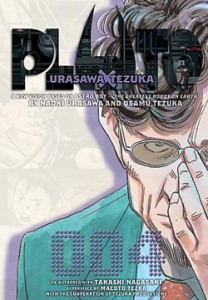
Packed in my bags are copies of Yotsuba&! volume six, NANA volume 18, Pluto volume 4, and many more, so you can look forward some (likely) glowing reviews upon my Wednesday return! Meanwhile, keep an eye on Twitter for updates both on-topic and off.

Enjoy the rest of your weekend!

Filed Under: NEWS

Out of “Office” Notification

September 13, 2009 by MJ Leave a Comment

I’m sure you’ve all noticed it’s been a bit quiet around here lately! I promise it won’t last much longer. I greet you today from Charlotte, North Carolina, where I am attending the Southeastern Theater Conference on behalf of the company I work for. The process here tends to be long and somewhat grueling, though I’ve brought plenty of manga to read during slow moments.

Packed in my bags are copies of Yotsuba&! volume six, NANA volume 18, Pluto volume 4, and many more, so you can look forward some (likely) glowing reviews upon my Wednesday return! Meanwhile, keep an eye on Twitter for updates both on-topic and off.

Enjoy the rest of your weekend!

Filed Under: NEWS

What Belongs in the Manga Canon?

September 11, 2009 by Katherine Dacey

Back in 2006, I stumbled across this entry at Otaku Champloo, reflecting on the need for a manga “canon.” The author noted that books in the Western literary canon (e.g. Aeschylus, Dante, Shakespeare) were not the “most popular” titles, but titles that “reflect[ed] the progress of humanity” from classical antiquity to the machine age. She then posed several intriguing questions:

[W]hat really struck my head was the idea of a canon for manga. Could we come up a list of mangas that would best represent humanity and the manga genre? Another interesting question would be… what good would a manga canon bring? Does the world of manga need one?

When I first responded to her essay back in 2006, I hadn’t read very much manga — just enough to be dangerously opinionated and scornful of shojo* — and my knowledge of “classic” titles was limited to a few works by Osamu Tezuka and Kazuo Koike. I thought it would be an interesting challenge to revisit and revise that initial response to reflect where I am now, three years and hundreds of series later.

TO INCLUDE OR NOT TO INCLUDE, THAT IS THE QUESTION

As I noted in my initial response, I used to teach at a university that organizes its undergraduate curriculum around the idea that certain works of art, literature, music, and philosophy represent the acme of Western civilization. You might think that the list of canonic works would be fixed, but in fact, the canon is constantly evolving. When the university first mandated its “great works” curriculum in the 1920s, for example, Mary Wollenstonecraft didn’t make the cut; only with the rise of feminist scholarship in the 1970s was her groundbreaking Vindication of the Rights of Woman added to the canon. The 1980s prompted a similar round of revisions to the curriculum: realizing that its emphasis on Western culture excluded some of the oldest and most influential literature in the world, the university developed courses about the canonic work of Eastern civilizations: The Art of War, The Tale of Genji, The Shahnameh.

I cite these curriculum changes because they remind us that defining a canon is a tricky business. There’s a veritable cottage industry of think-tanks and self-appointed cultural guardians who view the inclusion of new voices as a threat to the integrity of the literary canon, as if the recognition that women and blacks have written important books might undermine the point of the whole exercise. (They generally fuss less about Great Art and Great Music, though more conservative scholars in those fields police these canons with a similar zeal: Clara Schumann, hit the road!) In their eyes, the canon is a super-exclusive night club open only to a few “universally” recognized authors; they reject the notion that scholars might have valid historical reasons for admitting a few more folks past the velvet rope.

Then there’s that pesky issue of relevance. My students were always shocked that our music survey didn’t include familiar composers like Tchaikovsky: if we were still performing The Nutcracker and Swan Lake, why wasn’t he taking his rightful place alongside Hildegaard of Bingen and Anton Webern, two composers that 98% of them had never heard of before taking my class? As a music historian, I could rebut their arguments, but my students had a point: sometimes we become so obsessed with the idea that a canon represents the best, most timeless products of a culture that we forget the extent to which taste and connoisseurship play a role in deciding what to include — and what to exclude. (Poor old Tchaikovsky is just too tacky for some scholars, I guess.) We ignore that distinction at our own peril, however, as a canon can become a self-perpetuating list impervious to criticism or revision. Anyone intent on making a list of manga masterpieces, therefore, should bear in mind these observations about how and why we create canons — observations drawn from own experiences studying one of the most canon-centric fields, music.

First, historians play a major role in deciding what works make the cut. This is what I call the “Bach” rule: by the time J. S. Bach was writing his best-known works, his style was seen as old-fashioned, even a little stodgy, and not something an up-and-coming composer would want to emulate. Yet 250 years later, Bach is a household name. Why? Because Bach was “discovered” in the nineteenth century by prominent historians and composers who admired the rigor of his counterpoint and the beauty of his compositions. As a result, he became one of the most studied and posthumously influential composers in Western history. I say this not to slight Bach, or to perpetuate Romantic notions of genius (“they only appreciate you after you’re dead!”), but to remind any would-be canon-builders that an artist’s role in advancing the medium is often the most important rationalization for including his work in a canon.

Second, scholars tend to be suspicious of artists whose work is genuinely popular. This is what I call the “Rachmaninoff” rule: audiences may flock to performances of the Second Piano Concerto, but the canon’s gate-keepers treat Rachmaninoff as “just” a tunesmith whose crowd-pleasing melodies lack the harmonic or structural sophistication of Stravinsky and Wagner’s best work. Rachmaninoff’s tenuous membership in the canon reflects our lingering skepticism about popularity: if everyone likes Rachmaninoff’s music, could it really as worthy of study and emulation as music that aspires to greater levels of compositional complexity (e.g. The Rite of Spring, Parsifal)? It’s the same impulse that might lead a manga scholar to include Tezuka’s Buddha in the canon while excluding Kishimoto’s Naruto or Takahashi’s Ranma 1/2 — we wouldn’t want the “merely” popular taking its place alongside bonafide masterpieces, would we?

Third, there is no such thing as a “universal” canon. This is what I call the “Gershwin” rule. From the perspective of an American historian, George Gershwin is a canonic composer, profoundly influencing the development of American music with his distinctive marriage of black vernacular styles to European art forms. But from a Russian or Italian perspective, Gershwin is a local anomaly, a decent American composer who enjoys a far greater reputation among his fellow countrymen than in the international community. (Translation: he ain’t no Stravinsky or Verdi.) As such, Gershwin is less likely to be mentioned by an Italian musicologist in the same breath as Rossini, Verdi, or Beethoven. Undoubtedly, there will be artists whose importance to Americans may make them obvious candidates for inclusion in a manga canon, but who may not be viewed as favorably on the other side of the Pacific (and vice versa, I might add).

Finally, there is no such thing as an opera or a novel or a manga that is timeless. This is what I call the “Don Giovanni” rule: we still perform Mozart’s opera 200+ years after its initial premiere, but our experience of Don Giovanni is utterly different than that of audiences who heard it 1787. Most of the opera’s musical “in jokes,” for example, are lost on us—how many of us would recognize Mozart’s shout-out to fellow composer Martin y Soler? And how many of us would grasp the subtle musical gestures that Mozart uses to indicate his characters’ social status—gestures that were old hat to his audience? It’s a safe bet that Osamu Tezuka’s current audience experiences his work differently than its original readers, even though we may admire some of the same qualities in his work as the first generation of Princess Knight and Astro Boy fans.

Is there a need for a similar “canon” of manga masterpieces? The growing body of literature on influential artists such as Osamu Tezuka suggests that scholars already entertain some notion of a manga canon. As we begin labeling works “masterpieces,” however, we need to be mindful of the way in which these labels can trap us, preventing us from critiquing or questioning, say, Tatsumi or Tezuka’s greatness. We also need to remember that whatever canon we devise will be flawed from the outset, revised many times, and say as much about our own tastes and values as it will about the inherent quality or relevance of the manga it includes.

POSTSCRIPT

Having identified several potential pitfalls of canonization (if I might re-purpose that term for non-Vatican usage), I’m curious to know (a) whether it makes sense to talk about a manga “canon” and (b) what titles and authors you think belong in the canon. I’m particularly interested in the issue of gender: what female manga-ka belong in a canon and why? Do we have an innate bias towards seinen works, to the exclusion of shojo and josei titles? Inquiring minds want to know!

UPDATE, 9/15/09: Over at Extremely Graphic, librarian-blogger Sadie Maddox offers a thoughtful response to the question of whether or not Americans even have any business talking about a “manga canon.” She notes:

By being translated the integrity of the original work is compromised.  Of course, I’m all for translating because it means I get to read manga and I know that most translators do an excellent job.  But still, that’s one layer removed from the original intent. Are Americans really the ones who should be making a canon out of completely foreign material?

I didn’t get into the issue of translation (obviously one that would need to be addressed, if we were going to take this exercise to its logical conclusion), so go, read, and join the discussion at Extremely Graphic.

UPDATE, 10/6/09: Scholars John E. Ingulsrud and Kate Allen, authors of Reading Japan Cool: Patterns of Manga Literacy and Discourse, posted an interesting response to the question, “What belongs in the manga canon?” Their argument hinges on pedagogy: they note the original purpose of a canon was “to teach and test,” citing the New Testament as a body of literature compiled, in part, to answer the question, “Who was Jesus?” They suggest that any manga canon will arise from a similar need to teach and test. I think that’s a valid argument for the Japanese academy, but is more problematic in a Western context; it’s simply too early to know whether manga will be a permanent part of the American cultural landscape or just a passing fad. I also think they’re too quick to dismiss the question of artistry, as one of the most important contemporary functions of the so-called Western canon — by which I mean literature, art, and music — is to teach aesthetics. Whatever my philosophical differences with Ingulrud and Allen, I found their historical arguments compelling, and encourage you to read their essay for a different perspective on the issue of canonicity.

* I got over it, so don’t paint me as a shojo-hater. Anytime someone wants to license The Windows of Orpheus or The Poe Family, I’ll be a very happy camper.

Filed Under: Manga, Manga Critic Tagged With: criticism

What Belongs in the Manga Canon?

September 11, 2009 by Katherine Dacey

Back in 2006, I stumbled across this entry at Otaku Champloo, reflecting on the need for a manga “canon.” The author noted that books in the Western literary canon (e.g. Aeschylus, Dante, Shakespeare) were not the “most popular” titles, but titles that “reflect[ed] the progress of humanity” from classical antiquity to the machine age. She then posed several intriguing questions:

[W]hat really struck my head was the idea of a canon for manga. Could we come up a list of mangas that would best represent humanity and the manga genre? Another interesting question would be… what good would a manga canon bring? Does the world of manga need one?

When I first responded to her essay back in 2006, I hadn’t read very much manga — just enough to be dangerously opinionated and scornful of shojo* — and my knowledge of “classic” titles was limited to a few works by Osamu Tezuka and Kazuo Koike. I thought it would be an interesting challenge to revisit and revise that initial response to reflect where I am now, three years and hundreds of series later.

…

Read More

Filed Under: Manga Critic

Underfoot in Show Business by Helene Hanff: A

September 9, 2009 by Michelle Smith

underfootFrom the front flap:
“Each year, hundreds of stagestruck kids arrive in New York determined to crash the theatre… One in a thousand turns out to be Noel Coward. This book is about life among the other 999. By one of them.”
– Helene Hanff

In her spirited, witty and vastly entertaining memoir, Helene Hanff recalls her ingenuous attempts to crash Broadway in the early forties as one of “the other 999.”

From the joys of summer theatre and furnished rooms to being Seen at Sardi’s and weathering one more Theatre Guild flop, Miss Hanff recalls the rigors of crashing Broadway with warmth and generous humor. Her exuberant account of a misspent youth will hearten theatre hopefuls and entertain the large, devoted readership she has acquired through her subsequent works.

Review:
Helene Hanff’s memoir of her attempts to break into the threatre spans decades from the early ’40s to the early ’60s. Conforming to Flanagan’s Law, a theory advanced by a friend of hers that states, “If you can predict it, it doesn’t happen. In the theatre, no matter what happens to you, it’s unexpected,” Hanff’s career does not go as planned. It starts off well, with Hanff taking top prize in a contest, but soon sputters. Though she wants to be a playwright, and can create excellent characters and settings, she’s never been a fiction fan so her plots are always weak and her plays never sell. To make ends meet she takes a variety of part-time jobs, and eventually ends up writing for television. Just as she accepts that it’s time to give up on plays and focus on TV, all of the writing jobs for that medium move off to the West Coast and she’s left unemployed once again.

Hanff tells the story of her career trajectory with warmth and wit and, though I just used this adjective the other day and am hesitant to do so again, the result is nothing short of delightful. Interspersed with tales of her various odd jobs—including a memorable episode where she and an assistant have to alter 10,000 mimeographed press releases for Oklahoma! by hand when its creators decide it needs an exclamation point—are stories about the places she used to live (garrets with a communal kitchen and colorful neighbors), the free entertainment she and a friend used to enjoy (courtesy of a nifty trick of mingling in with the crowd at intermission), and snippets of wisdom gleaned from so many years in the business.

Toward the end, the narrative overlaps a little with 84, Charing Cross Road, probably the best known of Hanff’s works. At least one story shared with her English penpals is recounted in this book, too—about a dramatization of the life of Aesop and Rhodope—but it’s not tiresome by any means. It’s more like your friend telling you an amusing story and not quite remembering they’ve told you already, but it’s fun and you like them, so you play along and don’t interrupt.

And speaking of not interrupting, this book is so captivating that I very nearly read it in one sitting and would have if not for the pesky necessity of going to bed at a reasonable hour. A special thanks to MJfor the recommendation!

Filed Under: Books Tagged With: Helene Hanff

Sand Chronicles, Volume 5

September 9, 2009 by MJ 5 Comments

Sand Chronicles, Vol. 5
By Hinako Ashihara
Published by Viz Media

sandchronicles5
Buy This Book

After promising to call once he’s sorted out his feelings, Daigo has gone three months without contacting Ann and each passing day makes it more difficult for him to pick up the phone. Ann tries to be patient but is dying inside, saved finally by her friend Asa who places a call to Daigo on her behalf. Determined to be the one to put in the work this time, Ann rushes to the airport and flies back to see him. Meanwhile, Shika has been going all out to try to attract Daigo for herself, though she meets repeated rejection. Finally faced with Ann’s presence (and her own betrayal), Shika’s desperation leads to desperate action and though ultimately some things do end up going her way, the outcome is far from what she might have hoped.

As rare as it is for first love to last forever, particularly in ones so young, it’s still painful to watch such an intense relationship wane, especially when both characters are so likable and so obviously still in love. Though Ann’s considerable emotional baggage and Daigo’s hero complex make their relationship potentially damaging for them both, their mutual devotion is hard to beat and very difficult to give up easily as a reader. “No, no!” I found myself crying throughout much of this volume, despite the fact that both characters have equally appealing admirers waiting patiently (or not) in the wings.

One of the most powerful characteristics of this series, of course, is its nuanced treatment of love and friendship, and this volume provides an perfect example of that trait, if not in quite the way one might expect. Though the mangaka’s handling of Ann’s relationships with both Daigo and rival Fuji are as poignant and wonderfully layered as always, the most interesting interaction in this volume is between Ann and Shika. Alternately defiant and conflicted over her decision to steal her best friend’s boyfriend, Shika never loses either the love or jealousy she feels for Ann, and as a result, ties them both up in knots. The fact that this volume nowhere contains (or even remotely approaches) any kind of stereotypical cat fight or other confrontation between the two of them keeps the story’s melancholy feel perfectly intact, while also demonstrating the power of the characters’ long mutual history. Even while hurting each other, these characters are connected too deeply to relish the results or even to just be okay with them. This kind of thoughtful writing is perhaps what I treasure most in shojo manga and is certainly what draws me to this series.

Also in this volume, both Ann and Daigo face decisions about their careers–a common theme in high school manga–presented here with the same delicate anxiety that permeates the series overall. Both of their personal struggles here are highly engaging, as Daigo fights off snickers from friends and family when he sheepishly announces his intention to get into a well-respected public university and Ann fights her own complacency when she realizes she’s never developed any ambition at all beyond her desire to go back home and marry Daigo. This plot line only enhances the sense that the two of them may be growing irrevocably apart, as new love interests are the ones best poised to help each of them move forward.

Though this series’ art lacks the extraordinary poignance of something like We Were There–a series with a similarly melancholy feel–it is visually well-paced and nicely expressive with occasional moments of stillness and beauty that can be truly breathtaking. Body language, in particular, is one of the artist’s real strengths, which is a great asset to her already-rich characterization.

For those of us who prefer our shojo manga heavily weighted in sweet, sweet angst, choosing Sand Chronicles is no-brainer and its fifth volume could not possibly embody this aesthetic more. Bring some tissues and dig right in!

Review copy provided by the publisher.

Filed Under: MANGA REVIEWS Tagged With: manga, sand chronicles

Celebrating Dorrie

September 6, 2009 by MJ 16 Comments

Please excuse this off-topic post but I must take a moment to talk about Dorrie, my beloved friend and companion for the past eighteen years. Today we lost her and though my heart is truly broken, I’d like to share with you all some of what made her so special.

I first met Dorrie when I was working as a waitress at a Mexican restaurant in New York’s financial district. Another waitress was looking for a home for a six month old kitten belonging to her little sister. The girl had stopped caring for the kitten and her mom was sick of dealing with it herself, so she planned to have the kitten put to sleep. Though I already had four cats and was not looking for another, I immediately said, “Bring me the cat!” The next day, she brought me a half-grown kitten named “Princess” in a cardboard box. I re-named her “Dorrie” (though she was occasionally referred to as “The Cat Formerly Known As Princess”), hopped on the subway, and brought her back to my apartment. Dorrie was named for a character in one of my favorite books, B.J. Chute’s Greenwillow. Greenwillow‘s Dorrie was a foundling, taken in and loved by two sisters who raised her as their own. I considered my Dorrie to be much the same.

Though Dorrie had clearly been abused in her former life and it took a lot of love and patience to get her through the trauma that had instilled in her, over the years she developed into the most friendly, loving, unique cat I have ever known. There has never been another like her.

According to legend (and by “legend” I mean “my husband”), Dorrie has been many things over the years, including (but not limited to) a film star, a pitcher for the Red Sox, leader of a nation, a licensed driver, reliable transportation (later upgraded), a presidential candidate, an express delivery service (man, I wish the Dorrie Express website was still up), a donkey, a hardened criminal, burger ingredients, meat pie, a superhero, an artist’s model (that’s actually real–thanks Ellen!), valid currency, an avid writer, omniscient, possibly evil, occasionally flabby, and… okay, I don’t actually remember what this was about, capable of mind-reading, speaking English, teleportation, writing fanfiction, and pretty much anything else you can imagine. She also kept my husband warm. She definitely loved the telephone and the Kitty Kat Komb, was creative about her seating choices, and occasionally felt hurt.

Most of all, though, she was our most dear, beloved cat. I will miss her more than I can possibly express, though I feel very lucky that she allowed me to share my life with her for eighteen wonderful years.

R.I.P. Dorrie 1991-2009

Picture 2

Filed Under: NEWS Tagged With: Bloggish, dorrie

Have His Carcase by Dorothy L. Sayers: B

September 6, 2009 by Michelle Smith

havehiscarcaseFrom the back cover:
The mystery writer Harriet Vane, recovering from an unhappy love affair and its aftermath, seeks solace on a barren beach—deserted but for the body of a bearded young man with his throat cut. From the moment she photographs the corpse, which soon disappears with the tide, she is puzzled by a mystery that might have been suicide, murder, or a political plot. With the appearance of her dear friend Lord Peter Wimsey, she finds a reason for detective pursuit—as only the two of them can pursue it.

Review:
On the one hand, Have His Carcase is nothing short of delightful. Upon learning that his beloved Harriet Vane has discovered a body upon a stretch of coastline, Lord Peter dashes to the scene with a stated claim of interest in the case, though he is really there to defend Harriet, lately the defendant in a notorious murder trial and likely to be suspected on that account. When the local police force seems content with a verdict of suicide, Peter and Harriet proceed to work together to prove the victim was murdered. He still loves her and often cavalierly asks her to marry him, but she steadfastly refuses. While the banter between them is brisk, witty, and wonderful, the most emotional moments are really the best, like when Peter confesses that he camouflages his proposals in flippancy because he can’t bear to see the repulsed reaction a genuine query would engender.

Sayers sets the scene for these two right at the start in a highly amusing way that I must quote out of admiration for its economical humor:

The best remedy for a bruised heart is not, as so many people seem to think, repose upon a manly bosom. Much more efficacious are honest work, physical activity, and the sudden acquisition of wealth… Harriet Vane found all three specifics abundantly at her disposal; and although Lord Peter Wimsey, with a touching faith in tradition, persisted day in and day out in presenting the bosom for her approval, she showed no inclination to recline upon it.

Significantly less delightful, alas, is the investigation itself. This aspect of the book definitely has attributes to recommend it—I had no idea who’d really done the deed and had even begun to think perhaps Sayers would conclude by saying, “What do you know, it really was suicide!”—but bogs down a lot in lengthy passages spent decoding ciphers or tracking down innumerable townsfolk possessed with an uncanny ability to remember the precise time they saw a certain gentleman get into a Bentley. Cracking the case hinges on the time of death, so a lot of emphasis is placed on alibis and many theories are advanced that attempt to make all of the random clues work together. It’s kind of interesting, but does get rather tiresome after a while.

Still, it’s a solid mystery and I am satisfied that some progress was made in tempting Harriet to reconsider the merits of the Wimsey bosom.

Filed Under: Books Tagged With: Dorothy L. Sayers

  • « Go to Previous Page
  • Page 1
  • Interim pages omitted …
  • Page 984
  • Page 985
  • Page 986
  • Page 987
  • Page 988
  • Interim pages omitted …
  • Page 1059
  • Go to Next Page »
 | Log in
Copyright © 2010 Manga Bookshelf | Powered by WordPress & the Genesis Framework