• Skip to primary navigation
  • Skip to main content
  • Skip to primary sidebar
  • Home
  • About Us
    • Privacy Policy
    • Comment Policy
    • Disclosures & Disclaimers
  • Resources
    • Links, Essays & Articles
    • Fandomology!
    • CLAMP Directory
    • BlogRoll
  • Features & Columns
    • 3 Things Thursday
    • Adventures in the Key of Shoujo
    • Bit & Blips (game reviews)
    • BL BOOKRACK
    • Bookshelf Briefs
    • Bringing the Drama
    • Comic Conversion
    • Fanservice Friday
    • Going Digital
    • It Came From the Sinosphere
    • License This!
    • Magazine no Mori
    • My Week in Manga
    • OFF THE SHELF
    • Not By Manga Alone
    • PICK OF THE WEEK
    • Subtitles & Sensibility
    • Weekly Shonen Jump Recaps
  • Manga Moveable Feast
    • MMF Full Archive
    • Yun Kouga
    • CLAMP
    • Shojo Beat
    • Osamu Tezuka
    • Sailor Moon
    • Fruits Basket
    • Takehiko Inoue
    • Wild Adapter
    • One Piece
    • After School Nightmare
    • Karakuri Odette
    • Paradise Kiss
    • The Color Trilogy
    • To Terra…
    • Sexy Voice & Robo
  • Browse by Author
    • Sean Gaffney
    • Anna Neatrour
    • Michelle Smith
    • Katherine Dacey
    • MJ
    • Brigid Alverson
    • Travis Anderson
    • Phillip Anthony
    • Derek Bown
    • Jaci Dahlvang
    • Angela Eastman
    • Erica Friedman
    • Sara K.
    • Megan Purdy
    • Emily Snodgrass
    • Nancy Thistlethwaite
    • Eva Volin
    • David Welsh
  • MB Blogs
    • A Case Suitable For Treatment
    • Experiments in Manga
    • MangaBlog
    • The Manga Critic
    • Manga Report
    • Soliloquy in Blue
    • Manga Curmudgeon (archive)

Manga Bookshelf

Discussion, Resources, Roundtables, & Reviews

Blog

Sweetness & Lightning, Vols. 1-3

February 14, 2017 by Michelle Smith

By Gido Amagakure | Published by Kodansha Comics
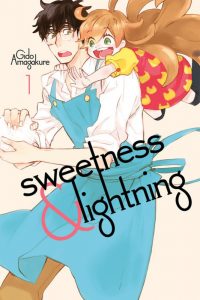
sweetness1Widowed math teacher Kohei Inuzuka wants to do his best when it comes to raising his daughter, Tsumugi. It’s been six months since his wife passed away, and because he has never had much of an appetite and hasn’t fared well with cooking in the past, he mostly relies on store-bought fare for Tsumugi. However, after they run into one of his students, Kotori Iida, while looking at cherry blossoms, he can’t help but notice how fascinated Tsumugi is by the home-cooked lunch Kotori’s been eating. To make his daughter happy, he ends up taking her to Kotori’s family restaurant, which leads to regular dinner parties where they experiment with making different things together.

Sweetness & Lightning is not the only food manga currently being released in English, but it does offer something a bit different. Whereas Food Wars! features students enrolled at an elite culinary academy and What Did You Eat Yesterday? focuses on an accomplished home cook, Sweetness & Lightning is about neophytes. Almost everything is new to Inuzuka, and though Kotori is an enthusiastic fan of food with a chef for a mother, her own fear of knives has prevented her from doing much beyond making rice. With her busy mother helping with recipes and easy-to-follow instructions, the trio learns how to make things like Salisbury steak, sweetness2chawanmushi, and some seriously drool-inducing gyoza. Recipes are included, and for the first time, I feel like they’re actually something I might attempt.

The secondary focus of the story is on Inuzuka’s life as a single parent. Between having to leave work to pick a sick Tsumugi up from preschool, or losing sight of her at a crowded festival, or reacting to her leaving the apartment while he’s sick, he does his best to parent her in a loving and rational way. After being reunited at the festival, for example, I love the way he shows her that he’s been scared and upset, and yet recognizes that she feels bad about running off and is not a bad kid at heart. Tsumugi is a girl with a great deal of enthusiasm for life, and Inuzuka wants to preserve that as much as possible. Their bond is very sweet.

Of course, the questionable propriety of afterhours teacher-student socializing isn’t lost on Inuzuka, who consults with a colleague (and Kotori’s mother) prior to agreeing to the arrangement. sweetness3He and Kotori maintain their distance at school, and he frequently worries about inconveniencing her mother. And yet, the gatherings make Tsumugi so happy—and even lift her spirits when she begins to truly comprehend the permanence of her mother’s absence—that he gratefully accepts the Iidas’ hospitality. He behaves professionally at all times. Kotori, however, seems to be developing feelings for him, though it’s all mixed up as she sees him as both a guy and as a father figure. I wouldn’t be surprised if the manga ends with them getting married, but I hope nothing romantic ensues for a very long time.
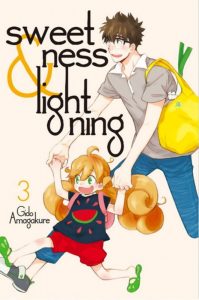
Ultimately, this is a sweet, occasionally poignant, slice-of-life story about a father learning to prepare food for his daughter. It’s adorable in a non-treacly sort of way and I very much look forward to continuing.

Sweetness & Lightning is ongoing in Japan, where it is up to eight volumes. Kodansha will release volume four in English later this month.

Filed Under: Manga, REVIEWS, Seinen

Bookshelf Briefs 2/13/17

February 13, 2017 by Michelle Smith and Sean Gaffney Leave a Comment

Assassination Classroom, Vol. 14 | By Yusei Matsui | Viz Media – Japan enjoys using abusive parents for the sake of drama, but they sometimes have difficulty following through on this, and a lot of the time the parent is easily forgiven and it’s shown that the right thing to do is really to respect your parents after all. This shouldn’t be surprising, particularly in a Jump title, but Western fans might find Nagisa’s mother’s quick turn to the good fairly unrealistic. And judging by the cliffhanger we see here, we may be about to get the tragic flashback that shows how the school principal ended up being the sort who will literally destroy lives in order to better educate. I betcha two to one he’s easily forgiven as well. Despite this, still very recommended. – Sean Gaffney

Black Clover, Vol. 5 | By Yuki Tabata | Viz Media – After gradual improvements from volume to volume, this one is a bit of a step back, as we resolve one plot a little too easily before moving on to the next. Asta’s kidnapping is taken care of in a perfunctory “I needed a cliffhanger” way, and the villains get away to live to fight another day. The best of them is Sally, a sort of Evil Hange Zoe who is perfectly happy to drain magic permanently from a bunch of kids FOR SCIENCE! Things pick up in the second half, when said young kids are kidnapped in a very pied piper sort of way. Unfortunately, Gauche, another Black Clover member, has a sister complex which is explained and deconstructed, but that doesn’t make him any less irritating. A wildly variable volume. – Sean Gaffney

Fire Force, Vol. 2 | By Atsushi Ohkubo | Kodansha Comics – I’m still somewhat torn about this series. The characters are fun and the premise is good, and any manga series about firefighters is always welcome, even if we need to make them cool supernatural firefighters. That said, the move to Kodansha has overall been a very mixed bag, as this is simply visually less arresting than Soul Eater, though you can see him trying. The fanservice is also greatly amped up, not a surprise given that it’s Shonen Magazine, but something of a surprise after a series that ended with a giant boob joke. I guess he still had more to do. Overall, this is pretty good, and worth investigating further, but I’m not sure Soul Eater fans will be enjoying it as much. – Sean Gaffney

Food Wars!: Shokugeki no Soma, Vol. 16 | By Yuto Tsukuda and Shun Saeki | Viz Media – The running gag of the series was that the main heroine was barely in it, but we’re finally starting to see that change with this new volume. Erina was always going to be Best Girl, much to the frustration of some fans, and it was therefore surprising how little she did over the course of the series. Now Daddy Dearest has come home to roost, hijacking the school and impressing his cooking theology on the student body, who I expect will get winnowed down very soon. He’s also shown to have been abusing Erina since she was a child, and his return is very much unwelcome by the now former head of the school, who begs Soma to save his granddaughter. I expect a far more serious arc next. – Sean Gaffney

Kuroko’s Basketball, Vols. 7-8 | By Tadatoshi Fujimaki | VIZ Media – What does any character in a sports manga do after suffering crushing defeat? Try to get stronger, of course. Everyone’s got their own wall to surmount, and Kuroko and Kagami realize they must get stronger independently before they’re able to rely on each other again. Kuroko, in particular, lacks any other skills aside from passing, so it takes him a while to figure out what he needs to do. But, because this is sports manga, he does figure it out. Also figuring things out is Kise, whom we spend a great deal of time with in the second half of the book, as Seirin wraps up their training camp with a trip to watch Kise and Aomine duke it out in the tournament. It’s definitely entertaining, though I can’t help but note some members of the Seirin team get a lot less attention than other guys on other teams. – Michelle Smith

One Piece, Vol. 81 | By Eiichiro Oda | VIZ Media – Man, it is such a relief to finally be done with the Dressrosa arc! In this volume, the two halves of the Straw Hat crew reunite on the island of Zou, populated by talking animal people called minks. I liked the way the story of the conflict there was related after the fact to the new arrivals, including the departure of Sanji, who has taken off on his own to take care of a problem related to his hitherto-unknown past as the son of the leader of an evil army. The problem is, he might end up making an enemy of one emperor of the sea while the Straw Hats have been gearing up for conflict with another. Luffy is far more concerned about losing Sanji as a crewmate, but I really loved the scene of the whole gang back again, debating what to do. And hey, it wasn’t Dressrosa! – Michelle Smith

Say “I Love You,” Vol. 17 | By Kanae Hazuki | Kodansha Comics – All right, Asami’s relationship troubles ended a lot more positively tan I expected, and Mei and Yamato are able to patch things up as well. And we’re even getting the next generation, as the grumpiest cast member, Aiko, is also the first to get pregnant. Given the series ends in the next volume, this is unsurprising. It does mean that the bulk of the dramatic lift is done by Megumi, who remains the one cast member whose life is still unresolved. It’s getting resolution now, but not really in the way that she wants. She and her French boyfriend break up (good, I never liked him), but this means she’s now getting almost no work at all. I doubt the series is going to end darkly, but given the last volume is months away, I worry. – Sean Gaffney

Toriko, Vol. 37 | By Mitsutoshi Shimabukuro | Viz Media – This is Toriko‘s final arc, and it’s the first time that I’ve ended a volume thinking “Thank God this is almost over.” The manga has become tedious, as it’s come to suffer from massive cast expansion at the expense of the regulars (Bleach Syndrome), and we’re getting a bunch of fights which feel like recapitulations of fights we’ve seen done better before. I did enjoy seeing Komatsu bond with a young poor kid who lives with his (as it turn out, missing) mom, but then he disappears so that we can move to another locale for more shonen battle rage. This eventually happens to all Jump series (even One Piece lately with Dressrosa), but it’s a shame to see it happen to Toriko. – Sean Gaffney

Yona of the Dawn, Vol. 4 | By Mizuho Kusanagi | VIZ Media – Once again, Yona of the Dawn reminds me of various different shoujo manga, but in a good way. Yona, along with her three male companions, is searching for the other legendary dragon warriors in a very Fushigi Yuugi way, even while she insists (in a very Basara way) that she’s not the incarnation of the Crimson Dragon King. When they do finally track down the Blue Dragon, he’s shunned by the villagers and forced to wear a mask to hide his powerful eyes, and given a sad backstory with an atmosphere that reminded me a bit of Natsume’s Book of Friends. I suppose all these comparisons show that Yona is not exactly the most original story ever conceived, but that doesn’t mean that it isn’t extremely enjoyable, and I will always appreciate Yona’s insistence on being able to protect herself. – Michelle Smith

Filed Under: Bookshelf Briefs

Shojo Beat Quick Takes – Honey So Sweet Vol. 5 and My Love Story!! Vol. 11

February 13, 2017 by Anna N

Kicking off the week of Valentine’s Day by reading some shoujo manga seemed like a good idea! Honey So Sweet and My Love Story!! are some of the most adorable and cute manga currently being published. Both couples in this series are in more established relationships, so it is interesting to see how the series continue to develop these romances.

Honey So Sweet Volume 5 by Amu Meguro

Christmas dates are a staple plot element in shoujo manga. In this case Nao and Taiga plan on getting together, but their solo date plans are quickly derailed when their entire group of friends decides that a Christmas party is happening. While everyone does have fun, it turns out that Futami decides to employ some social pressure to make sure that Nao and Taiga get some alone time. Hence, a scene of fierce blushing as the young couple is painfully aware that they are at last alone with each other. Other than blushes and some hand holding, nothing happens because Taiga’s mom suddenly returns home and embarks on a fierce examination of her son’s new girlfriend.

The artwork shifts from the general wispy and feminine style Meguro usually employs into some panels with dark screentone and bold fierce lettering as Taiga’s mom demands that the couple break up. Aggressive mothers are no match for Nao’s earnestness, as she proclaims that she loves Taiga and is determined to stay in the relationship. They then bond over Taiga’s embarrassing childhood photo albums. Nao also has to repair her relationship with her uncle and guardian Sou after accidentally staying out all night. While Sou denies being angry while acting passive aggressive and Nao decides that she’ll avoid the situation as much as she can, it takes a moment of insight and extraordinary emotional intelligence from Taiga for things to get back to normal.

A shoujo series that only focuses on the main couple gets boring fast, which is why this volume emphasizing relationships with parents or parent-like figures along with the regular romance ensures that the series as a whole continues to be entertaining.

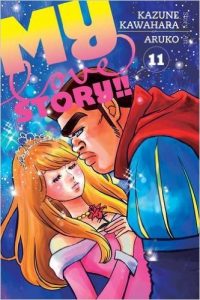
My Love Story!! Volume 11 by Kazune Kawahara and Aruko

First of all, the skewed Sleeping Beauty illustration on this volume is hilarious. This is one of my favorite shoujo manga currently being translated just because it raises the bar so much for any series attempting to be both sweet and hilarious at the same time. At this point, Takeo and Rinko haven’t seen each other very much, but they are about to be thrown in close proximity due to some coinciding class trips.

Takeo is freaking out about his ability to control his romantic urges, while Rinko keeps not so innocently popping up in his personal space. As always in My Love Story!! there’s plenty of comedic tension but the couple ends up talking things through to smooth over any awkwardness. The next story in this volume focuses on a scenario where Takeo and Rinko try to learn more about each other’s hobbies. Takeo attempts to make pancakes with results that end up carbonized while Rinko starts running around to boxing gyms because she wants to learn how to do feats of strength. Takeo ends up training her in tumbling techniques, and the scenes showing his intensity with constant frowning and fire burning in the background and her determined attempts to be a good student are fun to read. I always put this manga down feeling like I’m in a better mood, and what more could someone want out of some leisure reading?

Filed Under: Manga Reviews, REVIEWS Tagged With: honey so sweet, My Love Story, shojo beat, shoujo, viz media

A First Look at Tokyo Tarareba Girls

February 13, 2017 by Katherine Dacey

Are you breathlessly awaiting the next installment of Princess Jellyfish? Still fuming over Tokyopop’s cancellation of Suppli? Eagerly searching for a manga romance whose heroine is old enough to drink? Then I have the cure for what ails you: Akiko Higashimura’s Tokyo Tarareba Girls, which makes its digital debut tomorrow (2/14) courtesy of Kodansha Comics. This fizzy, fast-paced comedy is every bit as good as Higashimura’s Princess Jellyfish, deftly mixing wacky misunderstandings and witty banter with moments of genuine rue and self-reflection.

The first chapter begins with the narrator declaring, “I spent all my time wondering ‘What if,’ and then one day I woke up and was 33.” As Rinko fills us in on her career, female readers will feel an immediate sense of identification with her — she’s smart, capable, and constantly imagining her future instead of being fully invested in the present, something many of us are guilty of doing in our twenties and early thirties. Though Rinko has forged her own career path, she frets over being single. Rinko isn’t alone in her frustration, since Kaori and Kayuki — her gal pals and drinking buddies — are in the same boat.

The plot is set in motion by a cryptic message from Rinko’s co-worker Hayasaka. In a brief flashback to 2004, we see Rinko and Hayasaka on an uncomfortable date: she focuses on his shyness, his clothing, and his fumbling efforts to be suave, while he ignores her squirming and tries to give her an unwanted gift. Ten years later, both still work for the same company, although there’s a lingering note of tension — or is that romantic frisson? — between them. When Hayasaka sends Rinko a text asking, “I would like to discuss something with you. Could I trouble you for some time later this week?” Rinko immediately declares a “four-alarm” emergency and reaches out to her girls for counsel: after all this time, is Mr. Hayasaka planning to propose? And if so, should she say yes?

If you’re thinking been there, seen that, I get it. Tokyo Tarareba Girls sounds like a hundred other comedies about single women navigating a paired-off world, from Bridget Jones’ Diary to How to Be Single. What prevents Tarareba Girls from reading like a Sex in the City clone is Higashimura’s storytelling chops.

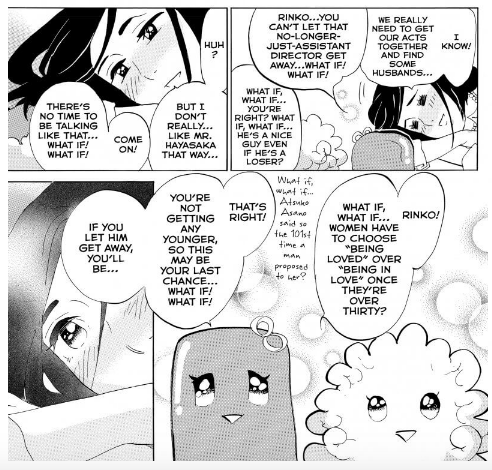
Consider Higashimura’s strategy for making us privy to Rinko’s thoughts. Though Rinko often functions as the series’ narrator, Higashimura looks for more imaginative ways to dramatize Rinko’s emotional life than simple disclosure. In one scene, for example, Rinko’s food — yes, you read that right — cheerfully engages her in a conversation about her romantic dilemma:

Coming from one of her gal pals, this exchange would sound too on-the-nose, a bald statement of the manga’s main thesis. But coming from an izakaya dish? That’s genius! It allows us a window into Rinko’s state of mind (and her state of intoxication) without falling back on such shop-worn devices as the “Dear Diary” entry or the “Little did I know then…” voice-over.

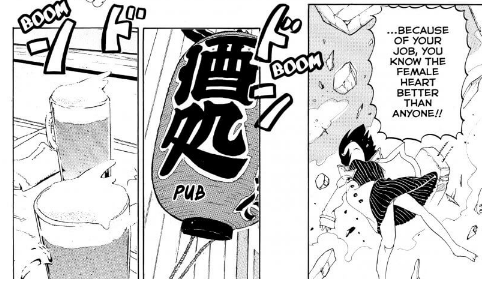
Elsewhere in chapter one, Higashimura uses a similar technique of transposing Rinko’s inner thoughts onto the outer world, using the visual language of action movies — explosions, falling debris — to evoke the intensity of Rinko’s embarrassment over misunderstanding a friendly overture:

This sequence, too, is genius: anyone who’s ever read too much into an email, a voice mail, a text, or a friendly conversation knows exactly how Rinko feels in that moment and can laugh — or cringe — in self-recognition. At the same time, however, the reader can also see that Rinko’s romantic delusions are blinding her to the real lesson of turning 33: that she should learn what — or who — she really wants instead of settling for Mr. Not Quite Right.

The first chapter ends with the introduction of a prickly, truth-telling character whose appearance adds a welcome jolt of energy to the story; his barroom sermon about self-defeating female behavior is a show-stopper, both for its blunt honesty and for the impact it has on Rinko and her pals. Whether he becomes Rinko’s enemy or love interest, his memorable exit leaves the reader wanting to know what happens next — further proof of Higashimura’s storytelling mojo.

TOKYO TARAREBA GIRLS, VOL. 1 • BY AKIKO HIGASHIMURA • KODANSHA COMICS • RATED OT, FOR OLDER TEENS (16+) 

Filed Under: Manga, Manga Critic, REVIEWS Tagged With: Akiko Higashimura, Josei, Kodansha Comics, Romance/Romantic Comedy

My Week in Manga: February 6-February 12, 2017

February 13, 2017 by Ash Brown

My News and Reviews

Last week at Experiments in Manga I posted the Bookshelf Overload for January–it was kind of a strange month for manga and other media acquisitions for me, but it wasn’t as absurd as December so at least my wallet’s a little happier. I also managed to finish my draft for February’s in-depth review, so I should have that cleaned up and posted sometime later this week.

Last week I came across a few interesting things online related to queer manga, comics, and other media. Massive has now released Jiraiya’s Two Hoses in English, a manga telling the story of “The Greatest Couple,” characters who were initially designed for the company as part of its launch. (Massive has released Jiraiya’s Caveman Guu manga, too, which was subsequently collected in the excellent anthology Massive: Gay Erotic Manga and the Men Who Make It.)

I haven’t had a chance to actually listen to it yet, but the most recent ANNCast focused on LGBT representation in manga and anime with guests Erica Friedman, Jason Thompson, and Valerie Complex. Friedman also visited the University of Michigan back in January to discuss queer manga. The recording of her presentation Alt Manga, Queer Manga: Telling Our Own Stories is now available to watch on YouTube.

There were a few Kickstarter campaigns that caught my attention last week as well. First and foremost, Chromatic Press is raising funds to release the final volume of Lianne Sentar’s series Tokyo Demons in print, produce a revised edition of the first novel, as well as reprint the other books in the series. It isn’t a secret that I am a huge fan of the series, so I definitely want to see the project succeed. Tabula Idem is a great-looking tarot-themed queer comics anthology with an accompanying queer-themed major arcana tarot deck. I’m not very familiar with most of the artists involved, but Kaiju (whose comics I greatly enjoy) is contributing the cover illustration. Pamela Kotila has also launched a campaign to print the second volume of the webcomic Spidersilk. Though I haven’t actually read it yet, I recently picked up the first volume so this project seems to be aptly-timed.

Quick Takes

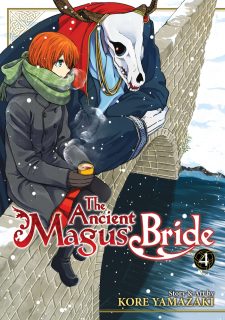
The Ancient Magus' Bride, Volume 4The Ancient Magus’ Bride, Volumes 4-6 by Kore Yamazaki. It’s been a little while since I’ve read The Ancient Magus’ Bride but that’s not because I don’t like the manga. In fact, it’s quite the opposite–The Ancient Magus’ Bride is actually one of my favorite series currently being released in English. I simply wanted to have a whole stack of volumes to read all at once. (Also worth noting: The first printing of Volume 6 is even accompanied by a special booklet with an additional comic!) Somehow, I had managed to forget just how much I enjoy The Ancient Magus’ Bride. I love its moody atmosphere and setting, beautiful artwork, and intriguing characters. Elias remains something of an enigma although parts of his past have now been revealed. He isn’t particularly happy about this development, though. Likewise, more is known about Chise, too, although she is still hesitant to share. The relationship dynamics in The Ancient Magus’ Bride are somewhat peculiar but remain compelling. Most of the characters in the manga are struggling with some sort of heartbreaking loneliness or feelings of isolation. To see them slowly drawing closer together, forming bonds of friendship, family, and love is immensely satisfying.

Mr. Mini MartMr. Mini Mart by Junko. Although the boys’ love manga Mr. Mini Mart was released in English first, my introduction to Junko’s work was through the series Kiss Him, Not Me. Because I was enjoying that series, I made a point to track down a copy of Mr. Mini Mart which for a time had gone out-of-print. (It’s more-or-less back in print again, but the manga seems to only be available directly from Juné Manga’s online store.) I forget why I initially passed on Mr. Mini Mart but I’m very glad that I finally got around to reading it. Mr. Mini Mart collects two boys’ love stories. Most of the volume is devoted to the titular “Mr. Mini Mart” but a short, unrelated one-shot manga “Young Scrubs” is included as well. It’s not nearly as good, though. “Mr. Mini Mart” is wonderful and surprisingly sweet. The story follows the high-school-aged Nakaba who, after an unfortunate incident in middle school, has been living as a shut-in. He gets finally gets out of the house when his uncle gives him a job at his store, but Nakaba has a difficult time getting along with his coworker Yamai and his abrasive personality. I’ll admit, I’m a sucker for a sensitive tough guy and it turns out that Yamai is an amazing example of one and is just a great person in general.

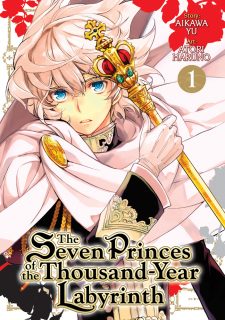
The Seven Princes of the Thousand-Year Labyrinth, Volume 1The Seven Princes of the Thousand-Year Labyrinth, Volume 1 written by Yu Aikawa and illustrated by Haruno Atori. I really wanted to like the first volume of The Seven Princes of the Thousand-Year Labyrinth more than I actually did. The basic premise is intriguing. A group of some of the kingdom’s most noteworthy, and in some cases most notorious, citizens wake up to find themselves trapped together in an elaborately booby-trapped castle. (The exception is the protagonist Ewan whose only distinguishing characteristics are his trusting nature, inherent kindness, and the fact that he’s from the kingdom’s most remote island.) The assumption is that whoever manages to survive the ordeal will become the kingdom’s emperor and reigning lords. There is a ton of potential in this set up, but The Seven Princes of the Thousand-Year Labyrinth simply didn’t work for me. Mostly I think it’s because the characters all come across as types rather than well-rounded individuals. What’s more is that they don’t even feel like they should all be a part of the same series; I found this lack of cohesiveness to be frustrating. The artwork is pretty, though, if not especially distinctive and there are plenty of plot twists, too.

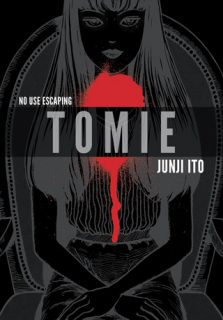
TomieTomie by Junji Ito. Although uncommon, license rescues aren’t particularly rare, but Ito’s horror series Tomie is one of the very few manga to have been released in English by three different publishers. Most recently, Viz Media has collected the entire series in a single, massive tome with over seven hundred forty pages. The translation used is the same as the one in Dark Horse’s Museum of Terror series which I own, but I couldn’t resist the deluxe, hardcover treatment the volume received to match Viz’s other recent re-releases of Ito’s manga. Tomie was actually Ito’s award-winning professional debut and began serialization in 1987 in a shoujo magazine. The manga is largely episodic although there may be several chapters devoted to a single story arc and later stories sometimes make passing references to earlier ones. What ties the series together is the presence of Tomie, a beautiful young woman who is seemingly immortal. Time and again men fall desperately in love with Tomie and are eventually overcome by a desire to murder and dismember her. Not only does Tomie survive, she regenerates and multiplies, and so the horror continues. While not as mind-bendingly bizarre as some of Ito’s later works, Tomie is still weird, horrifying, gruesome, and grotesque.

Filed Under: FEATURES, My Week in Manga Tagged With: Ancient Magus' Bride, Haruno Atori, Junji Ito, Junko, Kore Yamazaki, manga, Seven Princes of the Thousand-Year Labyrinth, Tomie, Yu Aikawa

Pick of the Week: Chihayafuror

February 13, 2017 by Anna N, Ash Brown, Katherine Dacey, MJ, Michelle Smith and Sean Gaffney Leave a Comment

MICHELLE: I have wished for an English release of Chihayafuru for nearly a decade now. It’s josei, it’s long, it’s about an obscure game… all of the things that made me sure I’d love it made it an unlikely licensing prospect. And yet Kodansha came through! I must say, I am already deeply loving their ramped-up digital initiative. I will surely be checking out Tokyo Tarareba Girls and Springtime with Ninjas (and Germany o/~), but Chihayafuru simply must be my pick this week.

SEAN: Absolutely Chihayafuru, if only so I can cross another title off my “this will never be licensed” bucket list.

ANNA: Michelle has said everything I would about Chihayafuru. As someone who loves josei manga, I wish more of it would be translated, and I’m delighted about Chihayafuru.

KATE: Since Michelle and Sean have already mentioned my top picks for the week, I’m going off-list to honor the late, great Jiro Taniguchi, who passed away on Saturday. A quick glance at online retailers like Amazon reveals that many of his manga are out of print. Two great titles that are still readily available are A Distant Neighborhood, a lovely coming-of-age story that’s funny, wise, and unsentimental, and Guardians of the Louvre, a handsome, full-color manga exploring the Louvre’s history.

ASH: Kodansha’s digital offerings of late really have been fantastic! I’ll throw in with everyone else and declare my top pick to be Chihayafuru. I’d also like to join Kate in highlighting some of Taniguchi’s work: A Distant Neighborhood is a personal favorite of mine as is his collaboration with Baku Yumemakura The Summit of the Gods.

MJ: From deep beneath a pile of snow, I raise my fist and shout, “Chihayafuru!” Yes, Chihayafuru.

Filed Under: PICK OF THE WEEK

Overlord: The Bloody Valkyrie

February 13, 2017 by Sean Gaffney

By Kugane Maruyama and so-bin. Released in Japan by Enterbrain. Released in North America by Yen On. Translated by Emily Balistrieri.

There is a glut of light novels at the moment based on the game stats premise, be it “trapped in a game” or that the world simply works like a game. This includes Overlord, which manages to be a combination of both. At its best, Overlord shows us the cognitive dissonance between what Ainz is thinking in his head and what is actually happening, or what his minions are actually doing without his knowledge. At its worst, it gets bogged down in long grinding fights that are simply collections of spell moves. Overlord seems to be very much in the Dungeons and Dragons mode, which is fine for worldbuilding, but to keep the mechanics of it as well means that for non-gamers, the climactic fight can get amazingly tedious at times. Which is not what you want to hear about what you’ve spent the entire book building to.

This book also spends a large amount of time away from ainz – he doesn’t show up till a third of the way in – and thus also shows that the book is best when it focuses on him. I can see why we had the extended prologue – the plot is that his minion Shalltear has been mind-controlled, so we need to spend a fair amount of time with her at the start so that we actually get a sense about what the mind control really means and can try to care about her. Unfortunately, this is Overlord, a series made up of evil villains. And so Shalltear is a monster, who only seems sympathetic because the humans that she lays to waste here are a bunch of thugs who like to rape and rob young women. Her best moment was when she ran into one of the humans Ainz met in Book 2, who has one of his potions. This accidentally saves the girl’s life, as Shalltear has no idea why Ainz gave it to her, and so doesn’t dare kill her.

We are at the “this is successful, go ahead and expand your subplots” point in the series as well, so we get a few characters who show up and I suspect will be plot-relevant later on. This includes the somewhat ineffectual king, whose only ally seems to be his noble soldier (who we met in Vol. 1 thanking Ainz for defending the village). There’s also the king’s young daughter, who is gorgeous and beloved and I suspect has a lot more to her, and the daughter’s somewhat overly serious and twitchy bodyguard. And there is the unfortunately named Brain (it’s OK, the bodyguard’s name is Climb), who has spent much time training to be the strongest only to run into someone who completely breaks him to bits with no effort at all. The humans in this book tend to be cannon fodder, but he actually gets away, so we’ll see if he shows up again.

As I indicated, this is best when focused on Ainz and his inner monologues, meaning it’s the middle third that held my interest most. Overlord is still a series well worth reading. But it could stand a good editing, and eventually I will have to get used to the fact that it’s a bunch of bad guys power-tripping.

Filed Under: overlord, REVIEWS

Secret of the Princess

February 12, 2017 by Sean Gaffney

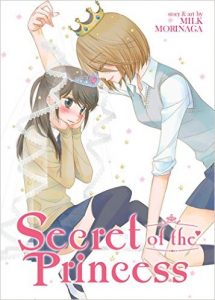
By Milk Morinaga. Released in Japan as “Ohime-sama no Himitsu” by Shinshokan, serialized in the magazine Hirari. Released in North America by Seven Seas. Translated by Jennifer McKeon, Adapted by Shannon Fay.

Morinaga Milk’s books are simply nice. They’re sweet. They put a smile on your face. They are not the most original books in the world – in fact, they sometimes have so many cliches that they rack up a Yuri Trope Bingo before they’re halfway done – but they’re smooth reads, and you don’t have to worry about serious tragedy befalling anyone. There is angst in this volume, don’t get me wrong, but it’s the sort of book where one of the heroines threatening to kill herself by jumping off a roof is treated as a loving confession rather than an actual suicide attempt. If you try to attack too much reality to this, it begins to come apart, but that’s the point. It’s yuri fantasy.

Stop me if you’ve heard this one before. At an all-girls school, Fujiwara is the tall, athletic, cool, one-quarter Western beauty who all the girls admire. She’s also just accidentally destroyed the principal’s expensive vase. This is witnessed by Miu, a girly young first year whose mother has drilled into her that the secrets to catching a good husband. Of course, at an all-girls school, men are thin on the ground, so Miu has no idea how actual dating works. So, in exchange for her silence, she asks Fujiwara to pretend to date her so she can discover how this all works. Of course, she doesn’t consider the jealousy of her fellow students, or Fujiwara’s own loneliness and need for the social interactions that she gains with Miu, or, of course, her own growing and conflicting feelings.

Miu can be a weak part of this book – she’s a bit hard to take and frustrating, though she improves as the volume goes on. This is complete in one book, and a short book at that, so there’s not really much time to slowly develop anything. Fujiwara fares better, having a home life that seems to be mostly filled with maids (of course she lives in a rich mansion, have you read this genre before?) and her friend Hirosawa, who is also a short-haired beauty with a fan club but is second to Fujiwara. (The shoujo dynamic of the blond taking second place to the brunet lead seems to be reversed for Yuri titles.) Other than that, there’s not much to talk about – they date cute, break up when they start feeling guilty about the “falseness” of things, get back together dramatically, and end up in bed (though fleetingly – for the most part, this is pretty squeaky-clean.)

So it’s not mind-boggling, but it’s nice to see some sweet titles coming out here after a year of Citrus and Netsuzou Trap. And we have more from this author coming up next month as well. I suspect it will be sweet, fluffy, somewhat insubstantial, and yuri. Much as this is.

Filed Under: REVIEWS, secret of the princess

The Manga Critic’s Guide to Jiro Taniguchi

February 11, 2017 by Katherine Dacey


Word of Jiro Taniguchi’s death spread quickly this afternoon via Twitter and Facebook. It was a sobering moment for American fans; most of us imagined that he was only one great series away from mainstream recognition in the U.S., and eagerly hoped that his next release — whatever it might be — would wow new readers and make bank. Alas, the only appreciation we may see is in the value of his older, rarer titles like Icaro (a collaboration with French artist Moebius) and Samurai Legend (a collaboration with Kan Furuyama).

Manga lovers who haven’t yet discovered Taniguchi’s skill may be surprised to learn just how versatile and prolific he was. He leaves behind a rich assortment of historical dramas, hard-boiled crime thrillers, samurai swashbucklers, alpine adventures, food manga, and coming-of-age stories. As an introduction to Taniguchi’s sizeable oeuvre, I’ve compiled a list of my favorite titles, as well as a complete list of Taniguchi’s work in English.

Benkei in New York
With Jinpachi Mori • VIZ Media • 1 volume
Originally serialized in Big Comic Original, Benkei in New York focuses on a Japanese ex-pat living in New York. Like many New Yorkers, Benkei’s career is best characterized by slashes and hyphens: he’s a bartender-art forger-hitman who can paint a Millet from memory or make a killer martini. Benkei’s primary job, however, is seeking justice for murder victims’ families. Part of the series’ fun is watching him set elaborate traps for his prey, whether he’s borrowing a page from the Titus Andronicus playbook or using a grappling hook to take down a crooked longshoreman. Though we never doubt Benkei will prevail, the crackling script, imaginatively staged fight scenes, and tight plotting make Benkei in New York Taniguchi’s most satisfying crime thriller. – Reviewed at The Manga Critic on 3/20/12

A Distant Neighborhood
Fanfare/Ponent Mon • 2 volumes

A Distant Neighborhood is a wry, wistful take on a tried-and-true premise: a salaryman is transported back in time to his high school days, and must decide whether to act on his knowledge of the past or let events unfold as they did before. We’ve seen this story many times at the multiplex — Back to the Future, Peggy Sue Got Married — but Taniguchi doesn’t play the set-up for laughs; rather, he uses Hiroshi’s predicament to underscore the challenges of family life and the awkwardness of adolescence. (Hiroshi is the same chronological age as his parents, giving him special insight into the vicissitudes of marriage, as well as the confidence to cope with teenage tribulations.) Easily one of the most emotional, most intimate stories Taniguchi’s ever told. – Reviewed at The Manga Critic on 2/23/11

Furari
Fanfare/Ponent Mon • 1 volume

One part Walking Man, one part Times of Botchan, this elegant collection of stories focuses on Ino Tadataka (1745-1818), the cartographer responsible for the first complete map of Japan’s coastline. We meet Tadataka shortly before he embarks on the arduous task of surveying the main island. As we follow him through the parks and streets of Edo, we realize that Tadataka is consumed with measuring; he makes mental note of every step he takes, calculating and re-calculating his routes. That’s a slender premise on which to hang a manga, but Taniguchi’s fine eye for detail transforms Tadataka’s daily walks into an immersive experience, capturing the energy, light, and sounds of the eighteenth century cityscape in all its vitality. These walks are so vividly drawn, in fact, that you could read Furari in blissful ignorance of Tadataka’s identity and still find it utterly engrossing.

Guardians of the Louvre
NBM/Comics Lit • 1 VOLUME

Guardians of the Louvre has a simple premise: a Japanese artist dreams about the world’s most famous museum. In each chapter, our unnamed protagonist is temporarily transported to a particular place and time in the Louvre’s history, rubbing shoulders with famous artists, witnessing famous events, and chatting with the Nike of Samothrace, who chaperones him from exhibit to exhibit. The set-up provides Taniguchi with a nifty excuse to draw rural landscapes, gracious country manors, war-ravaged cities, and busy galleries, as well as convincing recreations of Van Gogh and Corot canvasses. If the story lacks the full emotional impact of A Zoo in Winter or A Distant Neighborhood, the gorgeous, full-color illustrations and deluxe presentation make Guardians a natural gateway for exploring Taniguchi’s work. – Reviewed at The Manga Critic on 1/6/17

Hotel Harbour View
With Natsui Sekikawa • VIZ Media • 1 volume

The two stories that comprise Hotel Harbour View are among the pulpiest in the Taniguchi canon. In the first, a man waits in a seedy Hong Kong bar for the person who’s supposed to kill him, while in the second, an assassin returns to Paris for a showdown with his former associates. Both stories can be enjoyed as simple exercises in hard-boiled crime, but attentive readers will appreciate Taniguchi and Sekikawa’s sly nods to film noir, yakuza flicks, and the French New Wave. The characters in both stories self-consciously behave like gangsters and molls, trading quips and telling well-rehearsed stories about their pasts; they even wear fedoras, a sure sign that they’re reliving their favorite moments from the silver screen. A mirrored shoot-out is the highlight of the volume, demonstrating Taniguchi’s crisp draftsmanship and mastery of perspective. – Reviewed at The Manga Critic on 1/14/11

Kodoku Gourmet
With Masayuki Qusumi • JManga • 1 volume*

If you’re a fan of Kingyo Used Books, you may remember the chapter in which Japanese backpackers shared a dog-eared copy of Kodoku no Gourmet (a.k.a. The Lonely Gourmet) in order to feel more connected to home. Small wonder they adored Gourmet: its hero, Goro Inoshigara, is a traveler who devotes considerable time and energy to seeking out his favorite foods wherever he goes. While the manga is episodic  — Goro visits a new restaurant in every chapter — Jiro Taniguchi does a wonderful job of conveying the social aspect of eating, creating brief but vivid portraits of each establishment: its clientele, its proprietors, and, of course, its signature dishes. Best of all, Taniguchi and writer Masayuki Qusumi have the good sense to limit the story to a single volume, allowing the reader to savor Goro’s culinary adventures, rather than ponder its very slight premise. – Reviewed at The Manga Critic on 5/24/12

The Summit of the Gods
With Yumemakura Baku • Fanfare/Ponent Mon • 5 volumes

On June 8, 1924, British explorer George Mallory started up the summit of Mt. Everest, never to be seen again. His disappearance drives the plot of The Summit of the Gods, a pulse-pounding adventure in which two modern-day climbers retrace Mallory’s steps up the Northeast Ridge, searching for clues to his fate. Although the drama ostensibly focuses on Fukumachi, a hard-charging photographer, and Habu, a tough-as-nails mountaineer, the real star of Summit is Everest. Taniguchi captures the mountain’s danger with his meticulous renderings of rock formations, glaciers, and quick-changing weather patterns, reminding us that Everest is one of the remotest places on Earth; at the top of the world, no one can hear you scream. – Reviewed at The Manga Critic on 10/12/2009

The Times of Botchan
With Natsuo Sekikawa • Fanfare/Ponent Mon •  5 volumes**

In The Times of Botchan, Natsuo Sekikawa and Jiro Taniguchi immerse readers in the tumult of the Meiji Restoration. Novelist Soseki Natsume (Botchan, I Am a Cat) functions as our de facto guide, introducing us to the suffragettes, anarchists, novelists, poets, and politicians whose struggle helped create modern Japan. Taniguchi invests small details with great meaning, using them to reveal the characters’ ambivalent relationship with the West; some embrace European dress, others flatly reject it, and most, like Natsume, strike a compromise, combining a yukata with a button-down shirt and bowler hat. Though Sekikawa’s script is not as nimble as Taniguchi’s artwork, the series leaves a vivid impression nonetheless, offering modern readers a window into Natsume’s world. – Reviewed at The Manga Critic on 5/19/2010

Venice
Fanfare/Ponent Mon • 1 volume

Venice — one of the last projects Jiro Taniguchi completed before his death in 2017 — is perhaps the most beautiful work he ever produced, a paean not only to the great Italian city, but to his own superb command of light, color, and line. Rendered in watercolor and ink, Venice‘s subtle palette and expansive treatment of the page are reminiscent of Taniguchi’s Guardians of the Louvre, while its premise recalls The Walking Man, Furari, and The Solitary Gourmet, three manga in which an unnamed male character strolls through the thoroughfares and byways of a major city, stopping to admire a blossoming tree or duck into an unassuming noodle shop. Taniguchi does more than recreate the Venetian landscape, however; he conveys the rhythms and emotions of a journey as the hero retraces his grandparents’ steps through 1930s Venice. – Reviewed at The Manga Critic on 3/2/18.

The Walking Man
Fanfare/Ponent Mon • 1 volume

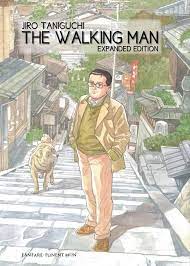
This nearly wordless manga follows an ordinary man through his daily routines. He walks his dog; he swims laps at the pool; he retrieves a model airplane from a tree. In less capable hands, the sheer lack of conflict would result in a dull comic, but Taniguchi invests these activities with meaning by interrupting them with moments of simple beauty: a rare bird alighting on a branch, a rooftop view of a neighborhood in spring bloom. Though we learn very little about the protagonist — he remains nameless throughout the story — his capacity for noticing and savoring these details becomes a small act of heroism, a conscious effort to resist the indifference, complacency, and impatience that blinds us to our surroundings and dulls our imaginations.

A Zoo in Winter
Fanfare/Ponent Mon • 1 volume

Drawing on his own experiences, Jiro Taniguchi spins an engaging tale about a young man who abandons a promising career in textile design for the opportunity to become a manga artist. Though the basic plot invites comparison with Bakuman, Taniguchi does more than just document important milestones in Hamaguchi’s career: he shows us how Hamaguchi’s emotional maturation informs every aspect of his artistry — something that’s missing from many other portrait-of-an-artist-as-a-young-man sagas, which place much greater emphasis on the pleasure of professional recognition than on the satisfaction of mastering one’s craft. Lovely, moody artwork and an appealing cast of supporting characters complete this very satisfying package.  —Reviewed at The Manga Critic on 5/28/11

* * * * * *

Below is a complete list of Jiro Taniguchi’s manga in English. Please note that I’ve provided the publication information for the English translations, not the original Japanese editions. This list was last updated on August 28, 2023 to include several books that have been released since 2017.

As Artist and Author

  • Taniguchi, Jiro. A Distant Neighborhood. Fanfare/Ponent Mon, 2009. 2 vols.
  • Taniguchi, Jiro. Furari. Fanfare/Ponent Mon, 2017. 1 vol.
  • Taniguchi, Jiro. Guardians of the Louvre. NBM/Comics Lit, 2016. 1 vol.
  • Taniguchi, Jiro. The Ice Wanderer and Other Stories. Fanfare/Ponent Mon, 2010. 1 vol.
  • Taniguchi, Jiro. A Journal of My Father, Fanfare/Ponent Mon, 2021. 1 vol.
  • Taniguchi, Jiro. The Quest for the Missing Girl. Fanfare/Ponent Mon, 2010. 1 vol.
  • Taniguchi, Jiro. Sky Hawk. Fanfare/Ponent Mon, 2019. 1 vol.
  • Taniguchi, Jiro. Venice. Fanfare/Ponent Mon, 2017. 1 vol.
  • Taniguchi, Jiro. The Walking Man. Fanfare/Ponent Mon, 2007. 1 vol.
  • Taniguchi, Jiro. A Zoo in Winter. Fanfare/Ponent Mon, 2011. 1 vol.

As Artist

  • Boilet, Frederic and Jiro Taniguchi. Tokyo Is My Garden. Fanfare/Ponent Mon, 2010. 1 vol.
  • Furuyama, Kan and Jiro Taniguchi. Samurai Legend. Central Park Media, 2003. 1 vol.
  • Moebius and Jiro Taniguchi. Icaro. IBooks, 2003-2004. 2 vols.
  • Mori, Jinpachi and Jiro Taniguchi. Benkei in New York. VIZ Media. 2001. 1 vol.
  • Qusumi, Masayuki and Jiro Taniguchi. Kodoku Gourmet.  JManga, 2012. 1 vol.*
  • Sekikawa, Natsuo and Jiro Taniguchi. Hotel Harbour View. VIZ Media, 2001. 1 vol.
  • Sekikawa, Natsuo and Jiro Taniguchi. The Times of Botchan. Fanfare/Ponent Mon, 2007-2010. 5 vols.**
  • Yumemakura, Baku and Jiro Yaniguchi. The Summit of the Gods. Fanfare/Ponent Mon, 2009-2015. 5 vols.

*This title was only released digitally through the JManga platform.

**This series is incomplete in English; the complete Japanese edition spans 10 volumes.

Filed Under: Manga, Manga Critic, Recommended Reading Tagged With: Fanfare/Ponent Mon, Jiro Taniguchi, JManga, NBM/Comics Lit, VIZ

Strike the Blood, Vol. 5

February 11, 2017 by Sean Gaffney

By Gakuto Mikumo and Manyako. Released in Japan by ASCII Mediaworks. Released in North America by Yen On. Translated by Jeremiah Bourque.

As always, Strike the Blood does what it wants competently and efficiently, with good pacing and a nice balance between the hero and his various female leads. And yet it continues to be one of the most frustrating light novel series that I follow, because it is content to be simply that. There’s potential for a lot more here, and at times the series looks as if it’s going to show you that potential… and then it backs off, content to give us a comedic perverted parent, or a bath scene with a giant nosebleed, or Yukina saying her catchphrase again with all the well-crafted timing of a Swiss watch. Strike the Blood is what it is, and thus I will never get to experience what I have with most other cliched light novel series, which is the joy of seeing the books get better as they go along.

This is the second half of a two-part arc, and as such we hit the ground running, with less development and more fights. Sadly, this also means less development for Yuuma, who is injured enough to be shunted to the side for the majority of the book, until the climax where she shows up to use her clone status against her mother. There is talk of the idea of her being a disposable tool being wrong, which would probably read a lot better of the author weren’t treating her like a disposable tool, using her to help resolve things at the climax and then cheerfully writing her out to go serve time as an accessory. We also finally meet Kojou’s mother, who is unaware (possibly) that he is a vampire now, and is an absurdly youthful genius doctor mom who has a tendency to feel up girls for fun. I called this “TV Tropes: The Novel” last time, and that hasn’t changed. His mother is there to provide gropes and exposition, and stop Yuuma from dying.

As for the plot itself, as the villain cheerfully admits, half of it is an excuse for a giant runaround using minibosses to build up tension but never actually do much beyond sort of threaten the hero and heroines and then get dealt with. I was happy to see Asagi get something more substantial to do – she remains my favorite of the three main heroines, and her solution to the first miniboss battle showed off her smarts (with the help of her AI that controls the entire island). Sadly, the main villain herself is less interesting, which is especially irritating as she didn’t have to be. There’s suggestion of a deeper story between her and Natsuki, and we even see a brief flashback, but it’s just spice to show why she hasn’t merely killed everyone before this. If we’d gotten an entire chapter devoted to Natsuki and Aya’s school days and what led to her descent into mad villainy, I might have praised it. But we don’t.

I keep hoping this will get bad enough for me to drop, but it’s far too efficient for that. It has dropped a new novel in our laps, and we will read it, vaguely enjoy it, be disappointed at what could have been, adn then forget about entirely until the next book. Sigh.

Filed Under: REVIEWS, strike the blood

  • « Go to Previous Page
  • Page 1
  • Interim pages omitted …
  • Page 447
  • Page 448
  • Page 449
  • Page 450
  • Page 451
  • Interim pages omitted …
  • Page 1048
  • Go to Next Page »
 | Log in
Copyright © 2010 Manga Bookshelf | Powered by WordPress & the Genesis Framework