• Skip to primary navigation
  • Skip to main content
  • Skip to primary sidebar
  • Home
  • About Us
    • Privacy Policy
    • Comment Policy
    • Disclosures & Disclaimers
  • Resources
    • Links, Essays & Articles
    • Fandomology!
    • CLAMP Directory
    • BlogRoll
  • Features & Columns
    • 3 Things Thursday
    • Adventures in the Key of Shoujo
    • Bit & Blips (game reviews)
    • BL BOOKRACK
    • Bookshelf Briefs
    • Bringing the Drama
    • Comic Conversion
    • Fanservice Friday
    • Going Digital
    • It Came From the Sinosphere
    • License This!
    • Magazine no Mori
    • My Week in Manga
    • OFF THE SHELF
    • Not By Manga Alone
    • PICK OF THE WEEK
    • Subtitles & Sensibility
    • Weekly Shonen Jump Recaps
  • Manga Moveable Feast
    • MMF Full Archive
    • Yun Kouga
    • CLAMP
    • Shojo Beat
    • Osamu Tezuka
    • Sailor Moon
    • Fruits Basket
    • Takehiko Inoue
    • Wild Adapter
    • One Piece
    • After School Nightmare
    • Karakuri Odette
    • Paradise Kiss
    • The Color Trilogy
    • To Terra…
    • Sexy Voice & Robo
  • Browse by Author
    • Sean Gaffney
    • Anna Neatrour
    • Michelle Smith
    • Katherine Dacey
    • MJ
    • Brigid Alverson
    • Travis Anderson
    • Phillip Anthony
    • Derek Bown
    • Jaci Dahlvang
    • Angela Eastman
    • Erica Friedman
    • Sara K.
    • Megan Purdy
    • Emily Snodgrass
    • Nancy Thistlethwaite
    • Eva Volin
    • David Welsh
  • MB Blogs
    • A Case Suitable For Treatment
    • Experiments in Manga
    • MangaBlog
    • The Manga Critic
    • Manga Report
    • Soliloquy in Blue
    • Manga Curmudgeon (archive)

Manga Bookshelf

Discussion, Resources, Roundtables, & Reviews

Blog

Kitaro: The Great Tanuki War

May 21, 2017 by Sean Gaffney

By Shigeru Mizuki. Released in Japan as “Gegege no Kitaro” by (among others) Kodansha, serialized in various magazines. Released in North America by Drawn & Quarterly. Translated by Zack Davisson.

The large majority of this book is made up of the title story, the first really huge epic tale we’ve seen from this collection of Kitaro stories by Drawn & Quarterly. And it’s a real pip, showing off the best qualities of Kitaro in the 1960s. He’s far more heroic here than he’s been in the past two books, but it’s a pretty thankless task, especially when he’s going up against shifty Japanese politicians. Honestly, you’d think he’d be used to dealing with them given that he’s best friends with Nezumi Otoko, who is in peak form here, always siding with whatever appears to be the winning side, and showing no moral qualms about throwing humanity under the bus. There’s also a larger role for Itta Momen, a yokai made up of flying cloth that I thought was meant to be toilet paper for the longest time.

The villains in this story are the titular Tanuki, who have featured in many Japanese folktales, though not usually as yokai per se. These are The 800 Tanuki of Shikoku, who are here to reclaim earth and take over. They’ve got many and varied ways of doing this, each of which seems to set a higher bar of “how on Earth will Japan get out of this one”? What’s worse, they really do a number on Kitaro, taking him out several times via various fatal traps – and I mean literally fatal, by the end of this story Kitaro has to regenerate from a baby for a month or so. It’s very much in the classic serial vein, which unfortunately means that the ending reads like “OK, wrap it up in this chapter” – it’s very sudden. But the grotesque ideas and imagery are pure Mizuki, and really stand out in this epic story, which also borrows from kaiju-style tales.

I was somewhat surprised by seeing the two-faced Japanese Prime Minister tell Kitaro that they will rely on him to save Japan just like Moshe Dayan saved Israel, till I realized that this was running in Shonen Magazine only two months or so after the Six Day War. You don’t think of Kitaro as referencing too many current events, but there are times it does, particularly when he gets involved in politics, as seen here. (Speaking of references, I was rather startled to see the Tanuki declare that they were going to have the Japanese woman serve them as maids – if only they’d been 30 years later they could have gone to a cafe instead!) The final two stories feel a bit like filler compared to the epic Tanuki war, but we do get to see a rare example of Nezumi Otoko coming out on top for once – it reminds me of the rare cartoons where Tom won over Jerry.

This is a very strong volume of Kitaro, though the reader should be prepared for bad things to happen to him – he spends some of the book as a literal puddle of liquid. As always, a must for fans of classic manga, as well as modern yokai readers who want to read something by the master.

Filed Under: kitaro, REVIEWS

Bluesteel Blasphemer, Vol. 1

May 20, 2017 by Sean Gaffney

By Ichirou Sakaki and Tera Akai. Released in Japan by Hobby Japan. Released in North America digitally by J-Novel Club. Translated by James Rushton and Kevin Steinbach.

If you’ve grown tired of novels where our hero is either transported to another world or dies and is reincarnated in another world, well, this is another one of those. There’s so many that you really need to figure out what it is about this particular one that makes it worth reading over the other 87,326 series released this year alone. In the case of Bluesteel Blasphemer, the answer may be its pedigree. This is not a case of a newbie writer who was putting his fiction on the web and got discovered by a publisher. Ichirou Sakaki has written such things as Scrapped Princess, Chaika the Coffin Princess, and Outbreak Company, which does feature a princess. And now we have one of his newer series, Bluesteel Blasphemer, which does not have princesses – at least not yet – but has a mayor’s daughter, a sacrificial victim, and a Rei Ayanami expy, because god knows we don’t have enough of those.

Our hero is Yukinari, a young man who is rescued from modern-day Japan, where he was dying in a fire that killed his older sister, and reincarnated in a cool body (with a few tricks up its sleeve) by a young alchemist who seems very similar to his older sister, and Dasa, her younger sister and the Rei clone I mentioned above. After stuff happens, he and Dasa are on the run through the backwaters of the country, and run across Berta, a beautiful young orphan about to be sacrificed to appease the local erdgod, which is a nasty piece of work. It’s not clear whether the sacrifices work or not, and the mayor’s daughter Fiona, who’s in charge while her father is in ill health, has her doubts as well, but hey: it’s tradition. Unfortunately, Yukinari and Dasa proceed to massacre tradition, and now have to deal with his being the assumed local erdgod replacement – as well as the unfortunate arrival of the local Inquisition, here to enslave the village into their religion.

There are pluses and minuses to this series. The pluses are the plot and the writing, which are both excellent. You can tell the author is far more experienced, as there’s no long introductory sequence like most isekai. Instead, we get the feeling we’re starting with Book 2, which gets a bit confusing but pays off in the long run. The action sequences, of which there are many, work fine, and the plot twists happen at just the right moment. On the down side, well, the characters are not nearly as good as the book being written around them. Yuknari is fairly faceless, Dara is, as I said, another in a long line of snarky deadpan barely legals, and Berta’s desire to serve Yukinari as the new replacement erdgod is rather disturbing, as she seems to be confusing love and worship in her head. Fiona was probably the best character of the lot. (Honestly, as the author himself admits in the afterword, the harem aspect seems totally tacked on and uninspired). Also, the two older sisters who both die to inspire the heroes… bleah. I bet they both had that dead mom sidetail, didn’t they?

So it’s a decent, but not stellar, debut for this series. I’m willing to give it another volume to draw me in more. That said, I’m rather glad it’s only 4 volumes total.

Filed Under: bluesteel blasphemer, REVIEWS

The Full-Time Wife Escapist, Vols. 1-2

May 20, 2017 by Michelle Smith

By Tsunami Umino | Published digitally by Kodansha Comics

Mikuri Moriyama is a 25-year-old licensed clinical psychologist who hasn’t been able to find a job after grad school. She’s been living with her parents and working for a temp agency, and when she’s laid off her father arranges for her to assume housekeeping duties for a guy he used to work with. Hiramasa Tsuzaki is 36 and single. He seems humorless and particular at first, but Mikuri finds that working for a hard-to-please guy makes it easier to know when she’s been successful. She performs her duties well, even managing to nurse Tsuzaki through an illness in such a business-like way that it’s not awkward for him. Things go well for a few months, then Mikuri’s father prepares to retire and move to the countryside. Rather than lose their mutually beneficial arrangement, Mikuri and Tsuzaki decide that she’ll move in with him and, for the sake of propriety, become his common-law wife. They proceed to perpetuate the ruse that they’re actually a real couple.

I am really enjoying The Full-Time Wife Escapist so far! Mikuri is an interesting character. She’s outwardly educated and competent—equally able to engage in conversations about globalization and maintain a meticulous budget—but has these inward flights of fancy that only the reader is privy to. She often imagines herself being interviewed about the state of her life, be it with an unsympathetic talk show host or a man-on-the-street segment about middle-aged virgins (which Tsuzaki appears to be), or performing heartbreaking Les Miserables-style songs about the woes of unemployment. The injection of whimsy is fun and reminds me a little of Tokyo Tarareba Girls, but Mikuri is a lot more practical (and a lot less boozy) than the characters of that series.

As Tsuzaki’s coworkers learn that he’s gotten married, his social calendar suddenly fills up in a way it never did before, while Mikuri notices that her aunt Yuri, with whom she’s very close, has been hesitant to invite her out as much as she used to before Mikuri got married. Spending time with Numata and Kazami is enjoyable for the couple, but it’s also risky, because nosy Numata snoops and learns there’s only a twin bed in the bedroom, and by volume two, Kazami is convinced that they’re faking it. Kazami is perhaps as equally developed as Tsuzaki himself, as we hear a great deal about his reservations about marriage, which all leads up to the big cliffhanger ending of volume two (which I shan’t spoil). Tsuzaki, meanwhile, is attempting in vain to keep from developing feelings for Mikuri. She persists in being business-like, and he 100% believes there’s no chance she’d ever reciprocate, so he often looks emotionless in front of her, only revealing his feelings when he’s alone. I love that neither one of them is spazzy; they’re in a somewhat trope-y arrangement, but they’re handling it like adults.

I really can’t wait for volume three. There’s so many interesting ways the story could go, though I admit I actually do want it to go in the standard “they fall in love and live happily ever after” direction.

The Full-Time Wife Escapist is ongoing in Japan; nine volumes have been released so far.

Review copies provided by the publisher.

Filed Under: Josei, Manga, REVIEWS

Chihayafuru, Vol. 2

May 19, 2017 by Sean Gaffney

By Yuki Suetsugu. Released in Japan by Kodansha, serialization ongoing in the magazine Be Love. Released in North America digitally by Kodansha Comics. Translated by Ko Ransom.

I’d said in the last review that Chihayafuru is, in many ways, a sports manga. But this is not your average baseball or soccer title. Karuta is not really thought of as something that kids do these days, particularly once they enter high school, and especially if they’re good at other sports, which Chihaya is – everyone points out she should be on the track team. But Chihaya has a dream, and is very, very driven towards getting that dream, even if it means playing over and over without her two friends – we’re in high school now, and both have been away for years. Luckily, Taichi has returned, bringing his unspoken crush, his reluctance to get back into an “uncool” sport, and his ability to see flaws that Chihaya can’t see herself. Arata is another matter – not only does he still live far away, but he tells them in no uncertain terms that he isn’t playing karuta anymore.

The reason Arata abandoned karuta is not the most original one in the world – in fact it’s the most cliched part of the book – but it works anyway, especially as it helps to show off why Chihaya’s impulsiveness is not always a good thing. That said, it looks like it may work out in the end, which is good. Karuta is very much something that Chihaya associates with ‘having fun with friends’, and the group activity is the most exciting part about it. In fact, Chihaya’s enthusiasm is actually masking several issues – Taichi notes that her memorization at the start is still quite bad, and a new character who ends up joining the club, Ooe Kanada, who reminds her that the poems aren’t just there because they sound pretty – there’s meaning and depth behind each one. This is AMAZING to Chihaya, who is nice and sweet but her single minded determination means she can miss the obvious.

As for the Karuta itself, it’s actually still pretty exciting. I was not entirely certain whether Chihaya would win the match halfway through the book – in a series like this, the occasional loss is going to be inevitable, even if you promise that you’re going to win. I’m still somewhat amused at various antics going on during karuta that I would argue are fouls, but then I’m not a karuta player. It’s also a very old-fashioned game – it’s pretty obvious why the club is somewhat mocked, though honestly you get the sense it’s due to Chihaya’s overenthusiasm more than anything else. It’s also very clear why Kana thinks that they should be performing it in kimonos – a lot of karuta runs on aesthetic, and if you look the part it may help in other areas as well. As for any romance in the story, well, Taichi still has a crush on Chihaya, but that’s about it – she’s totally oblivious.

Chihayafuru may not be the most obvious josei series out there, but if you read it it will win you over on pure energy, just like its heroine.

Filed Under: chihayafuru, REVIEWS

Manga the Week of 5/24/17

May 18, 2017 by Sean Gaffney, Michelle Smith, Ash Brown and Anna N 1 Comment

SEAN: Either you ride with the manga tide or you let it drown you. Looking at next week… blub blub blub.

MICHELLE: I thought this list was huge enough as it is!

SEAN: Dark Horse has a 2nd volume of Psycho Pass prequel Inspector Shinya Kogami.

J-Novel Club gives us a 3rd volume of Mixed Bathing in Another Dimension, which I still find much better than its title would suggest.

Kodansha has a pile, of course. In the Del Rey rescue category, we have Nodame Cantabile 19 (get ready for weekly releases of this), and Princess Resurrection 14.

MICHELLE: I continue to be asquee about Nodame. Looks like they’ll have the final volume out by the end of June!

ASH: Wow! I wasn’t expecting such a rigorous schedule for Nodame!

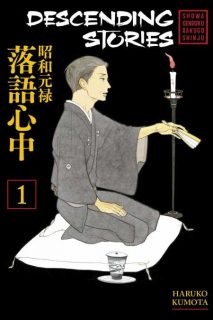
SEAN: Their debut is Descending Stories: Showa Genroku Rakugo Shinju, a josei title from Itan magazine. Its anime was insanely popular, so I’m expecting good things.

MICHELLE: I’m definitely looking forward to this one!

ASH: As am I! It’s actually one of my most anticipated debuts for the year.

ANNA: Sounds great!

SEAN: The Full-Time Wife Escapist has a 3rd volume digitally, and I still want more of it.

MICHELLE: I still need to read 1-2!

ANNA: This is one series I’m actually not behind on reading!

SEAN: Hozuki’s Coolheadedness also has a new volume out digitally, its 2nd.

ASH: So many things I’m interested in are only being released digitally right now!

SEAN: Missions of Love 14 is here to make me grind my teeth but enjoy it anyway. It’s still a while away from an ending.

There is also a 3rd Peach Heaven out digitally.

The Seven Deadly Sins is almost old enough to drink with its 20th volume.

And Welcome to the Ballroom has a 5th book, no doubt starting the next arc.

And now for Seven Seas. First off, we have the 7th Golden Time manga, a good solid romantic dramedy.

Kase-san and Bento is the 2nd in the “Kase-san” series, and I would guess will involve bento lunches.

MICHELLE: That’s a good guess. The first one wasn’t profound or anything, but it was pleasant, so I reckon I’ll read this one, too.

ASH: I’ve been meaning to give the series a try for a while now, but there being a food theme does bump it up on the to-be-read list.

SEAN: And a 7th volume of sleepy slice of life Non Non Biyori.

Vertical gives us an 8th volume of Cardfight!! Vanguard, which seems to have gotten over whatever licensing issues had it on hold.

I’ve been forgetting about Boys Over Flowers Season 2, which Viz is still releasing digitally – the 5th volume is out next week.

MICHELLE: I wish I could love this as much as the original. Sadly, it hasn’t grabbed me.

ANNA: I liked the first couple volumes, but I agree, not as compelling as the original series.

MICHELLE: The Yoko Kamio series I *would* be excited about is Cat Street.

SEAN: The rest is Yen, but so much Yen. On the novel side, we get an 11th A Certain Magical Index, now on location in Italy.

Death March to the Parallel World Rhapsody has a 2nd volume. I understand it is one of them newfangled trapped in another world thingummies.

The much delayed My Youth Romantic Comedy Is Wrong As I Expected finally gets its 2nd novel, which may require me to reread the first to remind me what’s going on.

And a 4th volume of Overlord, this time focusing on some Lizardman Heroes who will no doubt be destroyed by our title antihero in some way.

Strike the Blood will have a 6th volume of eminently readable and totally uninspiring antics.

The big novel release this month is your name, whose lack of capital letters did not prevent it from becoming a huge movie. It’s complete in one volume, though a sequel is out later this fall.

MICHELLE: I’m a little wary of this, since I loved the movie so much. What if it taints my experience?

ASH: I’m interested in seeing how the novel reads. The manga adaptations of Shinkai’s works have generally been quite good, though.

SEAN: And there’s 3 more Spice & Wolf digital releases, 15-17, which I believe finishes the catch up.

In manga news, there’s a 5th Anne Happy, which wrings laughs out of misfortune. Well, chuckles at least.

Big Order has its second omnibus, as it continues to try to outdo Future Diary.

This isn’t manga, but I don’t care. Brave is out next week! From creator Svetlana Chmakova, it’s a semi-sequel to her hit Awkward, taking place in the same universe but focusing on new kids. It’s super good.

Following something like Brave with the 17th volume of BTOOOM!, a series still best known for its bomb-breast-bouncing scene, seems cruel.

The Case Study of Vanitas gets a 2nd volume. I understand there are vampires.

ASH: And pretty artwork, from what I hear.

SEAN: Corpse Party: Blood Covered must have killed its way through the cast, as this is the 5th and final omnibus. Not to worry, a sequel is out later this year.

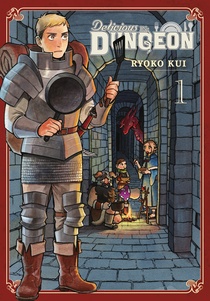
Several exciting new debuts this week, starting with Delicious in Dungeon (Dungeon Meshi), a seinen series from Enterbrain’s Harta magazine that manages to combine dungeon crawls and a cooking manga.

MICHELLE: I am excite!

ASH: Same! I love the premise of the series so much. Granted, the few times that I’ve played tabletop rpgs, the groups had a tendency to put a lot of emphasis on food, both in the game and outside of it.

ANNA: Oh yeah, this sounds good!

SEAN: Dimension W has a 6th volume for those of you who enjoy the things Dimension W provides. (Can I get any vaguer?)

Girls’ Last Tour (Shoujo Shuumatsu Ryokou) is also debuting, coming from Shinchosha and one of its many Bunch magazines. It’s post-apocalyptic slife-of-life, and probably the closest to Yokohama Kaidashi Kikou anyone is going to get.

ASH: I’m very curious about this one, actually.

SEAN: Karneval has a 7th omnibus.

Kiss and White Lily for My Dearest Girl has a 2nd volume, which seems fast but recall the first volume was delayed a month. In any case, yay!

MICHELLE: Forsooth!

Log Horizon: The West Wind Brigade has a 5th volume, and is one of the more enjoyable fluffy spinoffs out there.

Monthly Girls’ Nozaki-kun remains a highlight every time it comes out, even with its 7th volume.

ASH: Yes! It is so consistently great! I love it so much!

SEAN: And if you want hyperviolent fanservicey trash (which I sort of like anyway), there’s a 2nd Murcielago.

ASH: Definitely not a series for everyone, but I liked the first volume, too.

SEAN: Re: Zero’s manga starts to adapt the 2nd novel with Chapter 2: A Week at the Mansion. Yes, folks, you’ll get your Rem here.

Rokka: Braves of the Six Flowers has a 2nd volume of its manga adaptation as well.

We get the 3rd and final volume of Rose Guns Days Season 2. Worry not, fans, Season 3 is on the schedule. (Are there Rose Guns Days fans?)

Yen released this digitally ages ago, but it’s popular enough to get print now (the upcoming anime may have something to do with it). Enjoy The Royal Tutor!

ASH: Glad to see more digital titles released in print! I wanted to give this series a try when it was first licensed, and now I finally can.

SEAN: Spirits & Cat Ears has a 2nd volume, and while I wish we’d get more of the former and less of the latter I expect to be disappointed.

There is a 9th Trinity Seven.

Lastly, Black Butler fans will take interested in the 2nd Yana Toboso Artworks book, which is devoted to the series.

Keeping your head afloat? What are you getting?

Filed Under: FEATURES, manga the week of

How a Realist Hero Rebuilt the Kingdom, Vol. 2

May 18, 2017 by Sean Gaffney

By Dojyomaru and Fuyuyuki. Released in Japan by Overlap, Inc. Released in North America digitally by J-Novel Club. Translated by Sean McCann.

This second volume of Realist Hero details a war fought on several fronts, and will no doubt delight those who enjoyed running campaigns in various roleplaying games. There are several ‘thinking outside the box’ moments that made me smile, most of which are lampshaded by excerpts from a future history book that show how the outside the box idea led to an idiom that is now in common use. And once again, I’m pleased w3ith how the cleverest ideas are not always left to Souma, the titular Realist Hero, and he’s occasionally allowed to be caught flat footed. That said, the thing that struck me the most about this second volume is that I was far more invested in the characterization than I was in the first volume, mostly due to one of the more subtle and unemotional nervous breakdowns I’ve seen.

(As a sidenote, if you’re going to have the cover of Vol. 2 feature the elf girl bodyguard, you might want to give her something to actually do in the book. Carla would have been more appropriate.)

Our king, Souma, may be a history expert who can map war scenarios onto old Japanese campaigns and spout Machiavelli with the best of them (though that thankfully happens less this time around), but he’s still a young man who grew up in modern Japan, and this whole King thing is wearing down at him. Interestingly, we never see this reflected in his own narration – it’s only when Liscia or one of the others is observing Souma that they note that something seems off about him. It’s also interesting to see how the polyamory is handled in this series – most of the other LNs I’ve seen with ‘multiple wives are legal’ scenarios mostly just have it as an excuse to not write jealousy, but Realist Hero looks into how its world handle this, and shows that the pecking order in such relationships is actually class-based more than anything else. It’s both amusing and disquieting to see Liscia pushing hard for Souma to take Carla as a secondary Queen, even showing off her hot body like a car dealer. Liscia and Carla are best friends who ended up on opposite sides in this war, and Liscia knows if Souma doesn’t marry Carla she’ll likely be executed.

The first book left several plotlines dangling for the second, and some of them are dealt with, though not all. Moreover, this second volume has quite a big open ending, as we don’t actually see what happens to Carla, her father, or any of the other nobles who rose up against Souma (bar the obvious cartoon villain nobles who get theirs at the end). Given the “realist” nature of this book, I’m not actually sure if Castor will be executed or not (Carla, being a young hot girl and friend to Liscia, I’m pretty sure is safe.) We get a few more details on the kingdoms and empires surrounding our Realist Hero’s kingdom, and are introduced to a few more potential future harem members. The series could go in any number of directions from here. The writing of Realist Hero is merely OK, and sometimes I suspect that what I’m seeing as subtle underplaying is actually just being dull, but I must admit that I want to know what happens next far more in this series than I do in other light novels.

(Also, more fantasy isekais need therapists.)

(Also also, did Liscia dramatically cut her hair just to stop me saying that she’s a duplicate of Red Saber?)

Filed Under: how a realist hero rebuilt the kingdom, REVIEWS

Dreamin’ Sun, Vol. 1

May 17, 2017 by Michelle Smith

By Ichigo Takano | Published by Seven Seas

Even without knowing much about Dreamin’ Sun, I was sold by the fact that it’s an earlier series from Ichigo Takano, creator of orange, which I loved dearly. Dreamin’ Sun is more of a straightforward and comedic shoujo story in which characters do not contend with letters from their future selves or how to save a suicidal friend, but it still has a few poignant moments.

Shimana Kameko’s mother died in a car accident three years ago. Now, her father has remarried and with her new step-mom and baby brother, Shimana only feels visible when she’s being criticized. “I feel like this isn’t even my home anymore,” she thinks, as she decides to run away. Promptly, she encounters a weird kimono-wearing guy in the park named Taiga Fujiwara who offers her a cheap place to stay. Luckily for her, he isn’t a creep, and after assigning her the task of finding a spare key for his place (since he’s locked out), he also gets her to admit the real reason she left home: accepting the new arrangement felt like betraying her mother.

Thus, Shimana moves in with Taiga and two of her male classmates, Zen Nakajou and Asahi Tatsugae. Zen is the hyper, panda-loving one and Asahi the considerate, studious, princely one. Soon Shimana is developing feelings for Asahi, but he’s in love with his childhood friend who is, herself, in love with someone. In fact, there’s a lot of unrequited love going around. Zen seems to have unacknowledged feelings for Shimana, one of Taiga’s coworkers fancies him, but knows she’s not the one he really wants, etc.

These wistful feelings elevate Dreamin’ Sun beyond the “plain girl lives with several hot guys” trope. In addition, I really loved how much Taiga cares for the kids in his charge. He’s the one who’s able to convince Shimana’s parents to let her remain at his house and concocts a few situations to help her maybe get something going with Asahi. He also encourages each of them to have a dream, and claims his dream is “for all of you to grow up.” Could he be atoning for something? Too, at the end of the volume, we learn that he’s actually a prosecutor and that his father helped out Shimana’s family three years ago. Will some accident-related secret be forthcoming?

Even if no mystery arises, Dreamin’ Sun is still an appealing series, and I definitely plan to continue it.

Dreamin’ Sun is complete in ten volumes. Seven Seas will release volume two in July.

Filed Under: Manga, REVIEWS, Shoujo

Neon Genesis Evangelion: Legend of the Piko Piko Middle School Students, Vol. 1

May 17, 2017 by Sean Gaffney

By Yushi Kawata and Yukito. Released in Japan as “Shin Seiki Evangelion – Pikopiko Chuugakusei Densetsu” by Kadokawa Shoten, serialization ongoing in the magazine Young Ace. Released in North America by Dark Horse Comics. Translated by Michael Gombos. Adapted by Carl Gustav Horn.

For the most part, if I have reviewed any of the endless Evangelion spinoffs at all, I’ve reviewed them as Briefs, mostly as for the most part it’s very difficult to try to work up 500+ words on the topic. The Evangelion manga is excellent, but its spinoffs and side stories have amounted to a creepy shoujo supernatural comic that barely felt like Eva at all (Campus Apocalypse), a Lowest Common Denominator romantic “comedy” (Shinji Ikari Raising Project), a mystery with BL overtones (Detective Diary), *another* lowest common denominator romantic comedy (Angelic Days, if anyone remembers it), and various gag anthologies. This new title is definitely on the “gag anthology” side, being a spinoff of one of the stories from the Evangelion Comic Tribute that was popular enough to get its own series.

In my review of the Comic Tribute anthology (which I guess I did give a full review to), I noted that the stories by these creators were the best part of the book, so it makes sense that they’d get a chance to add more wacky humor and dense references. The “plot” is mostly irrelevant, but essentially we see NERV trying to defeat the Angels by training gaming nerds to defeat them, and Shinji, Asuka and Rei are the three biggest. What follows is a string of gags, both visual and verbal, which range from average to quite good, though I don’t know that I laughed out loud. Characterization is, for the most part, exaggerations of the “fanon” view, so Shinji is a bit meek and overserious, Asuka’s angry all the time, Rei is stoic, and Kaworu is super gay. But above all else, there’s the boke/tsukkomi comedy we’ve come to expect from Japan, and everyone (well, OK, just Shinji and Asuka) are quick with the retorts.

Those with an observant eye may note that Carl Horn adapted this himself, and it’s very much an adaptation in the nature of his Excel Saga work, i.e. he takes the original and crafts it into something else. If you like overly literal translations, you’ll hate this, but for the most part it works out very well, especially as the original is there to help, being filled with fourth wall breaking, bizarre gaming references, and stupid running gags (it’s just a t-shirt!). Adapting manga that’s solely devoted to comedy can be tricky, but they do a good job. Of course, the drawback is that there is only comedy here – if you like Evangelion for literally anything other than gags, you’re wasting a purchase with this. But the comedy is finny, everyone is exaggerated but not totally loathsome (except Gendo, of course), and the fanservice is surprisingly minimal, something actually pointed out by the characters as they lament their lack of a beach episode. Piko Piko Middle School Students is here to crack dumb jokes and chew bubblegum, and they’ve run out of bubblegum.

Filed Under: evangelion, REVIEWS

Arifureta: From Commonplace to World’s Strongest, Vol. 1

May 16, 2017 by Sean Gaffney

By Ryo Shirakome and Takayaki. Released in Japan as “Arifureta Shokugyou de Sekai Saikyou” by Overlap. Released in North America digitally by J-Novel Club. Translated by Ningen.

First of all, it is very hard for me to read this book and not have ‘Arifureta, gentille arifureta, Arifureta, je te plumerai.” in my head, so I want you all to have it there as well. Secondly, this book in many ways reads like Isekai Smartphone’s dark mirror. They’re both intensely serious attempts at the classic isekai, but while Smartphone is content to be light as air and coast along on the awesomeness of his hero and the goodwill of the reader, in the grim darkness of Arifureta there is only hatred and revenge. Except, of course, we never see the actual revenge that we expect, and the hatred mostly manifests itself as our hero getting impossibly overpowered and badass. It’s a teenage power fantasy, but it has not gone the way most of those types of fantasies go – at least not yet.

The first third of the book starts you off on the wrong foot, leading you to believe this will be a far more traditional isekai than it actually is. Our hero is Hajime, a normal high school student who happens to be bullied by the majority of the class, mostly because the cutest girl in the class, Shirasaki, has taken it upon herself to interact with him every day. This becomes seemingly irrelevant when the entire class is transported to another world, there to become heroes and fight for the sake of the new country they’re now in. All of the class has cool adventurer stats and awesome powers… except Hajime, whose stats are awful and who is basically a blacksmith. So he’s bullied AGAIN, physically and emotionally. Worse, Shirasaki is still interested in him. And so one day, when the class are fighting a horrible battle far above their skill level (which Hajime actually helps out with more than anyone else), one jealous classmate turns to murder and Hajime falls into the deepest, darkest depths of the dungeon.

So far so dull, but then the plot and the writing take a dive off a cliff, just like our hero. Hajime, due to the happenstance of various things I won’t bother to get into, ends up leveling up so much his stat level is ???, acquires innumerable powers, and uses his basic blacksmith stats so do amazing things, and also build lots of guns, because kids who get transported to another world tend to be gun nuts. This is the point of the book where the reader has to throw up their hands and just go with it, because it is absolutely overblown and ridiculous, and the prose verges on the hilarious. It also may be the best part of the book, because he shortly meets a vampire princess trapped in the dungeon with him, and after rescuing her the series (again) becomes far more predictable.

That said, I expected by the end of the novel that he would get back to the surface and get revenge on those who once wronged him. This doesn’t happen, though we do cut back to the surface occasionally to check in on the rest and show how Shirasaki was very, very much in love with dull ol’ Hajime. Instead, the last third of the book relies on long battle scenes (which are done pretty well) and the interaction between Hajime and Yue, which is done less well. Hajime has a tendency at times to act as tsukkomi to Yue, which is a shame as it makes him sound like Araragi from the Monogatari series, especially bad given Yue is a blonde loli vampire. Another surprise, and a warning of sorts: Hajime and Yue have sex, several times. It’s implied rather than shown, but it is worth noting, simply as that sort of thing rarely actually happens in isekai harems like this, and likely shows off its web novel roots. You will have to trot out the old “it’s OK as she’s really hundreds of years old, she just LOOKS nine” chestnut.

Arifureta was less terrible than I was expecting, but there are better isekais out there. I’d only recommend it to those who really like this sort of thing and don’t mind overpowered, overserious heroes.

Filed Under: arifureta, REVIEWS

Pick of the Week: Take Me to the Other Side

May 15, 2017 by Sean Gaffney, Michelle Smith, Katherine Dacey, Ash Brown and Anna N Leave a Comment

SEAN: Most of the titles I’m interested in this week are digital. My pick is the second volume of Chihayafuru, because I still can’t believe it got licensed at all.

MICHELLE: On any ordinary week, I would be seconding that pick heartily, especially since my love of Chihayafuru is significantly tinged with gratitude. I’m really looking forward to Drowning Love and Our Precious Conversations, too, but I gotta award my vote to the second volume of The Girl from the Other Side. It’s a lovely, magical series with the sort of main character who I just can’t help but love with all my heart.

KATE: This week, I only have eyes for one manga: the latest volume of The Girl From the Other Side. It’s easily the best thing I’ve read this year, with a hauntingly beautiful story and gorgeous pen-and-ink drawings. I had to pinch myself when I realized that it’s published by Seven Seas, everyone’s favorite purveyor of monster girl T&A.

ANNA: Like many people, I’m excited about both The Girl From the Other Side and Chihayafuru, two very different manga. I think I’m going to have to give the edge to Chihayafuru though, the extended flashback in the first volume has me very curious about what’s happening with a more grown-up version of the characters. I’ve been waiting impatiently for the second volume!

ASH: Likewise, I’m interested in both Chihayafuru and The Girl from the Other Side, but in my case The Girl from the Other Side is the obvious choice for my pick of the week. I absolutely loved the first volume with it’s striking artwork, intriguing characters, and mysterious atmosphere. I’m really glad that Seven Seas licenses such a wide variety of material!

Filed Under: PICK OF THE WEEK

  • « Go to Previous Page
  • Page 1
  • Interim pages omitted …
  • Page 449
  • Page 450
  • Page 451
  • Page 452
  • Page 453
  • Interim pages omitted …
  • Page 1068
  • Go to Next Page »
 | Log in
Copyright © 2010 Manga Bookshelf | Powered by WordPress & the Genesis Framework