Two Guys, a Girl, and a Pastry Shop might be a better title for this rom-com about a teen who waits tables at the neighborhood bakery, as the characters are so nondescript I had trouble remembering their names. The girl, Uru, is as generic as shojo heroines come: she’s a spunky, klutzy high school student who blushes and stammers around hot guys, bemoans her flat chest, and wins people over with her intense sincerity. The two guys — Shindo, a moody jerk whose boorishness masks a kind nature, and Ichiro, a cheerful slacker — are just as forgettable, despite the manga-ka’s efforts to assign them novel tics and traits. Shindo, for example, turns out to be a genius who finished high school at fifteen, while Ichiro suffers from hunger-induced narcolepsy, keeling over any time his blood sugar drops.
The plot, like the characters, has a similarly generic quality. At the beginning of volume one, Uru walks past Cafe Bonheur, overhearing a conversation between two giggling, satisfied customers. She then resolves to land a gig at the “Happy Cafe,” as she calls it, but is nearly defeated by the job interview: she accidentally breaks the front door, endures rude comments from Shindo about her youthful appearance (she looks ten), and nearly falls over Ichiro, who’s sprawled, unconscious, on the kitchen floor. (Shindo administers first aid in the form of a bun, reviving his co-worker.) Undeterred, Uru pleads with Shindo for a job, eventually persuading him to hire her on a trial basis. Broken dishes and spilled coffee notwithstanding, Uru quickly insinuates herself into Shindo and Ichiro’s lives.
Happy Cafe aims for a mixture of wacky comedy and heartfelt drama, but doesn’t quite succeed on either count. The humor is mild but not very funny; the few good gags — Uru’s super-strength, Ichiro’s ability to nap anywhere, anytime — are repeated with little variation until they cease to register as jokes. The drama, too, is tepid and predictable; every conflict is resolved so neatly and sweetly that a strong whiff of pointlessness hangs over the whole enterprise. Early in the volume, for example, we learn that Uru is living on her own, thanks to her mother’s decision to marry a younger man. Uru misses her mom terribly, but worries that her presence interferes with mom’s new relationship. So far, so good: the idea of a mother allowing her sixteen-year-old to live alone is a little ridiculous, but the set-up could yield some juicy, emotional scenes. Matsuzuki squanders that potential by resolving the conflict in a matter of three pages: mom and stepdad beg Uru to return, Uru asserts her desire to visit but maintain her independence, and her parents shower her with affection. The end.
Matsuzuki’s artwork is serviceable, if not memorable. Her characters are virtually indistinguishable from the cast of Me & My Brothers, right down to their perfectly messy hair, rail-thin frames, and noseless faces. Matsuzuki struggles with more ambitious perspective drawings; some of her attempts to place characters on different levels in the picture plane result in unnaturally foreshortened bodies. Where Matsuzuki’s art shines is in her characters’ nuanced facial expressions. Uru’s round, open visage registers a convincing range of emotions, from embarrassment to loneliness to indignation. On those occasions when Uru smiles — sweetly or with mischievous intent — it’s easy to grasp why the terminally grouchy Shindo keeps her around, as the character radiates joy.
If I were to compare Happy Cafe with baked goods, I’d say it reminds me of a Duncan Hines cake mix: it’s easy to follow, yields predictable results, and, while sweet, is curiously bland. Readers in search of manga comfort food could certainly do worse than this sugary dramedy, though I’d steer more adventurous souls towards The Antique Bakery or Cafe Kichijoji de, both of which are funnier, tastier, and sexier than this by-the-book shojo title.
HAPPY CAFE, VOL. 1 • BY KOU MATSUZUKI • TOKYOPOP • 192 pp. • RATING: TEEN
 The very first Sinfest strips tell you everything you need to know about Tatsuya Ishida’s cheeky yet surprisingly reverential comic. In them, we see a young man seated at a table across from the Devil, negotiating a contract that would enable him to enjoy — among other perks — a “supermodel sandwich” in exchange for his soul. The transaction isn’t taking place in an office or the gates of Hell, however, but, in a hat tip to Charles Schulz, at a jerry-rigged booth that’s a shoo-in for the one Lucy van Pelt used to dispense nickel-sized bits of wisdom to the Peanuts gang.
 Do you remember those first, glorious seasons of Heroes and Lost? Both shows promised to reinvigorate the sci-fi thriller with complex, flawed characters and plots that moved freely between past, present, and future. By the middle of their second seasons, however, it was clear that neither shows’ writers knew how to successfully resolve the conflicts and mysteries introduced in the first, as the writers resorted to cheap tricks — the out-of-left-field personality reversal, the all-too-convenient coincidence, and the arbitrary let’s-kill-off-a-character plot twist — to keep the myriad plot lines afloat, alienating thousands of viewers in the process. Heroes and Lost seemed proof that even the scariest doomsday scenario would fall flat if saddled with too many subplots and secondary characters.
 From the very first pages of volume one, Urasawa demonstrates an uncommon ability to move back and forth in time, juxtaposing scenes from Kenji’s past with brief glimpses of the future. The success of these scenes is attributable, in part, to Urasawa’s superb draftsmanship, as he does a fine job of aging his characters from their long-limbed, baby-faced, ten-year-old selves into thirty-somethings weighed down by adult responsibilities.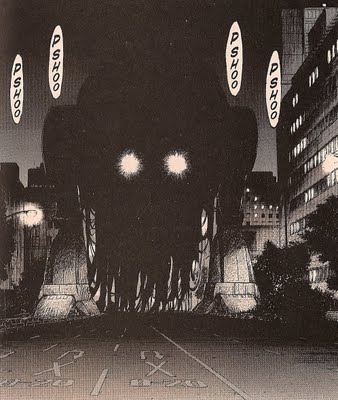
 In The Idea of History, author R. G. Collingwood argues that nineteenth-century historians viewed their task in a different spirit than their predecessors. While previous generations of scholars treated history as a simple chain of events, the Romantics wanted to recreate the past through their writings. The Romantic historian, Collingwood explained, “entered sympathetically into the actions which he described; unlike the scientist who studied nature, he did not stand over the facts as mere objects for cognition; on the contrary, he threw himself into them and felt them imaginatively as experiences of his own.”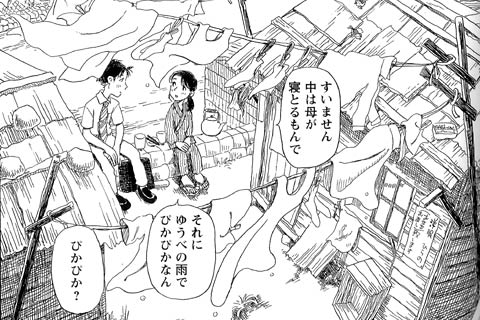

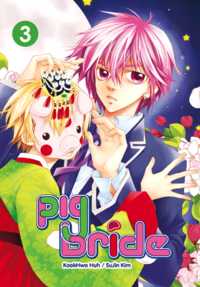 5. Pig Bride
  4. Zone-00
 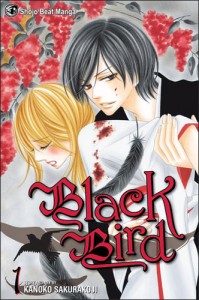 3. Black Bird
 2. Lucky Star
 1. Maria Holic
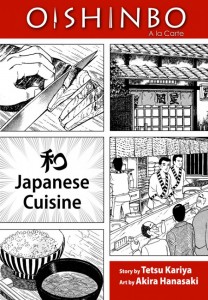 10. Oishinbo a la Carte

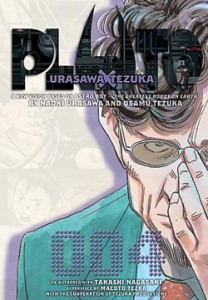 4. Pluto: Urasawa x Tezuka

 I mean no disrespect to Tetsu Kariya or Akira Hanasaki when I say that the Vegetables volume of Oishinbo A la Carte irresistibly reminded me of 1970s television. Back in the day when there were only three networks, hour-long dramas doggedly followed the same formula: they dramatized a problem — say, drinking and driving, or falling in with a bad crowd — then resolved it with a little action and a lot of talking, culminating in a freeze-frame shot of the entire cast laughing at corny situational humor. Oishinbo follows this template to a tee, using hot-button issues such as bullying and pollution to preach the healing power of vegetables. The stories are as hokey and predictable as an episode of CHiPs or Little House on the Prairie, but entertaining in their sincerity.