• Skip to primary navigation
  • Skip to main content
  • Skip to primary sidebar
  • Home
  • About Us
    • Privacy Policy
    • Comment Policy
    • Disclosures & Disclaimers
  • Resources
    • Links, Essays & Articles
    • Fandomology!
    • CLAMP Directory
    • BlogRoll
  • Features & Columns
    • 3 Things Thursday
    • Adventures in the Key of Shoujo
    • Bit & Blips (game reviews)
    • BL BOOKRACK
    • Bookshelf Briefs
    • Bringing the Drama
    • Comic Conversion
    • Fanservice Friday
    • Going Digital
    • It Came From the Sinosphere
    • License This!
    • Magazine no Mori
    • My Week in Manga
    • OFF THE SHELF
    • Not By Manga Alone
    • PICK OF THE WEEK
    • Subtitles & Sensibility
    • Weekly Shonen Jump Recaps
  • Manga Moveable Feast
    • MMF Full Archive
    • Yun Kouga
    • CLAMP
    • Shojo Beat
    • Osamu Tezuka
    • Sailor Moon
    • Fruits Basket
    • Takehiko Inoue
    • Wild Adapter
    • One Piece
    • After School Nightmare
    • Karakuri Odette
    • Paradise Kiss
    • The Color Trilogy
    • To Terra…
    • Sexy Voice & Robo
  • Browse by Author
    • Sean Gaffney
    • Anna Neatrour
    • Michelle Smith
    • Katherine Dacey
    • MJ
    • Brigid Alverson
    • Travis Anderson
    • Phillip Anthony
    • Derek Bown
    • Jaci Dahlvang
    • Angela Eastman
    • Erica Friedman
    • Sara K.
    • Megan Purdy
    • Emily Snodgrass
    • Nancy Thistlethwaite
    • Eva Volin
    • David Welsh
  • MB Blogs
    • A Case Suitable For Treatment
    • Experiments in Manga
    • MangaBlog
    • The Manga Critic
    • Manga Report
    • Soliloquy in Blue
    • Manga Curmudgeon (archive)

Manga Bookshelf

Discussion, Resources, Roundtables, & Reviews

Katherine Dacey

The Girl from the Other Side: Siúil, a Rún, Vol. 4

April 24, 2018 by Katherine Dacey

The Girl from the Other Side: Siúil, a Rún was one of 2017’s surprise hits, an emotionally wrenching fantasy manga about a demon who rescues an orphan girl from a plague-ridden world. Nagabe’s art — with its graceful linework and unique character designs — was enough to distinguish Girl from the Other Side from virtually any other series licensed by a major American publisher. But it was the characters and the poignancy of their relationship that truly captivated readers, as the bond between Teacher (the demon) and Shiva (the girl) was tested by Shiva’s ties to the human world, particularly her attachment to the aunt who raised her — and then abandoned her in the woods. Four volumes in, Girl from the Other Side is still casting a powerful spell, even as the story takes another grim turn.

As the volume opens, Teacher, Shiva, and Auntie have formed an uneasy family unit, with Shiva desperate to broker the peace between her adoptive parents. Nagabe does a fine job of dramatizing the conflict between Teacher and Auntie without spoiling the quiet mood of the story, using small gestures to convey how desperately each wants to protect Shiva from the human world. Nagabe also includes a handful of scenes that chart the progress of Auntie’s disease, showing us how quickly the curse erases a victim’s memory and personality — a development that raises the interesting question of who Teacher was before he assumed his demonic form.

Perhaps the most striking aspect of volume four is how much of the characters’ interior lives are revealed through the artwork. In the first chapter, for example, Teacher and Auntie slip into the woods for a nighttime conference about Shiva. Each carries a lantern as they walk and talk — two pinpoints of light against a scrim of trees — their conversation ending when Auntie’s lantern flickers out, leaving her and Teacher side by side in darkness. What makes this sequence so effective is the deliberate placement of the characters on the page and the meticulous attention to lighting; Nagabe has found an elegant — and wordless — way to demonstrate the characters’ shared resolve to protect Shiva, even though they remain suspicious of one another. Such carefully observed moments are a potent reminder that The Girl from the Other Side is an all-too-rare example of a manga whose story engages the heart and mind by suggesting, rather than saying, what the characters are feeling. Recommended.

The Girl From the Other Side: Siúil, a Rún, Vol. 4
Art and Story by Nagabe
Translated by Adrienne Beck
Seven Seas, 180 pp.

Filed Under: Manga, Manga Critic, REVIEWS Tagged With: Fantasy, Girl from the Other Side, Nagabe, Seven Seas, Shonen

Pick of the Week: An Embarrassment of Riches

April 23, 2018 by Sean Gaffney, Michelle Smith, Katherine Dacey, Anna N, Ash Brown and MJ Leave a Comment

SEAN: My pick this week is tricky, especially with so much good manga. There’s Nozaki-kun, Silver Spoon, Murcielago… that said, as you’d expect, my eye is drawn to light novels. No, not Vending Machine, though I am morbidly curious. My pick is I’ve Been Killing Slimes for 300 Years and Maxed Out My Level, which not only has a female protagonist but seems to be dedicated to “relaxing and taking it easy” despite the max level. I like the idea of an isekai with the mood of, say, Flying Witch.

MICHELLE: Because I am confident at least one other person will pick Silver Spoon, I’m going with the eighth Yowamushi Pedal omnibus. I rejoice every time there’s a new volume of this series.

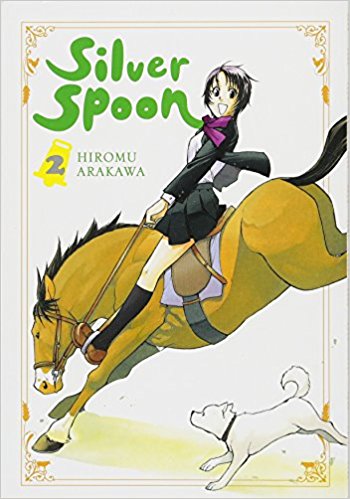
KATE: I like To Your Eternity, but jeez — it’s a downer. My vote goes for volume two of Silver Spoon, the only manga series in English that features at least three udder-ly wonderful jokes about cows per volume. (Yeah, I went there.) (No, I’m not sorry.)

ANNA: I’m so far behind, I haven’t read the first volumes of To Your Eternity and Silver Spoon, but out of everything coming out this week, those are the titles that I’m sure I’d like.

ASH: There are so many great releases again this week, it’s difficult to pick just one! Many of my favorites have already been mentioned–Monthly Girls’ Nozaki-kun, Silver Spoon, Yowamushi Pedal, To Your Eternity–and I’m not even going to try to choose among them. And so, even though it’s not manga, I would like to take the opportunity to call attention to Perfect Blue: Awaken from a Dream.

MJ: Probably predictably, I’m Silver Spoon all the way this week. I absolutely loved the first volume, and I’m anxious for more. Also, I deeply appreciate Kate for the cow pun.

Filed Under: PICK OF THE WEEK

Pick of the Week: Again!! Again

April 16, 2018 by Sean Gaffney, Michelle Smith, Katherine Dacey, Ash Brown and Anna N Leave a Comment

MICHELLE: I am, of course, looking forward to DAYS 8 and Giant Killing 12, as well as the second volume of Again!!, but I’ve been anticipating Wotakoi for a long time, so it’s gotta be that.

SEAN: I really should be picking Dead Dead Demon’s Dededede Destruction, but I’ve had experience with thinking I’ll love Asano titles and then finding them too dark. So instead I too will go with Wotakoi, which looks like a lot of fun.

KATE: Oof… there’s too much good stuff to pick just one title this week. If I had to limit myself to one, however, my vote would be for volume two of Again!!, a fresh take on the time-travel-to-high-school genre. It’s funny, rueful, and sometimes cringe-inducing — just like high school, only with better jokes.

ASH: I’m thrilled by pretty much everything that’s been mentioned so far. For ongoing series Again!! and Spirit Circle are probably the top of my list this week. As for debuts, I look forward to giving Wotakoi a try, but I’ll make Dead Dead Demon’s Dededede Destruction my official pick since no one else has yet. (I will never be able to say or type the title without looking at it though, and maybe not even then…)

ANNA: I liked the first volume of Again!! so much, I’m happy the second volume is coming out so soon after I finished the first one! That’s my pick!

Filed Under: PICK OF THE WEEK

Short Takes: Delicious in Dungeon and Golden Kamuy

April 16, 2018 by Katherine Dacey

Today’s reviews come to you courtesy of Patriot’s Day, my second favorite Massachusetts-only holiday. (The first is Evacuation Day, a thinly-disguised attempt to give Boston’s civil servants permission to skip work on St. Paddy’s.) For your consideration are volume four of D&D cooking extravaganza Delicious in Dungeon, and volumes three and four of everyone’s favorite backwoods culinary adventure Golden Kamuy. Looking back on food manga’s early history in the US, who could have predicted that readers would be feasting on such a wide array of titles in 2018, from Sweetness and Lightning and What Did You Eat Yesterday? to Giant Spider & Me: A Post-Apocalyptic Tale, Food Wars!! Shokugeki no Soma, and Toriko. Maybe the North American market is finally ready for an Iron Wok Jan renaissance…

Delicious in Dungeon, Vol. 4
Story and Art by Ryoko Kui
Translated by Taylor Engel
Yen Press, 192 pp.
Rated T, for Teens (13+)

If the first volume of Delicious in Dungeon was about assembling a posse, and the second and third about turning monsters into meals, then the fourth is about friendship — specifically, the strong emotional bond between Laois, Marcille, and Falin — and revenge, as the gang finally comes face-to-face with the Red Dragon. The showdown takes place inside a walled city whose narrow, maze-like streets give them a strategic advantage over their Godzilla-sized foe. And as exciting as the fight is, the real payoff is what follows, as Laois and Marcille discover that bringing Falin back from the dead isn’t a simple proposition. It’s in these moments that Ryoko Kui proves a more deft storyteller than we initially realized, effortlessly shifting gears from comedy to drama without mawkishness or cheap jokes. Instead, we’re allowed to contemplate the real horror of being eaten alive — as Falin was — and the real possibility of a character dying for good.

If I’ve made volume four sound like a bummer, rest assured it isn’t. Seshi gets his turn in the spotlight with a weaponized assortment of kitchen tools, while the rest of the gang endures its share of fumbles and miscommunications on the way to catching their dragon adversary. Though I suspect the next volume of Delicious in Dungeon will revert to a monster-of-the-week formula, that’s OK; Kui has firmly established her dramatic and culinary bonafides in volume four, leaving the door open for more character development in the future. Recommended.

Golden Kamuy, Vols. 3-4
Story and Art by Satoru Noda
Translated by Eiji Yasuda
VIZ Media
Rated M, for Mature (18+)

Midway through volume four of Golden Kamuy, Asirpa builds a fox trap in the woods. “Do foxes taste good?” Sugimoto inquires. “No, not really,” Asirpa replies. “Tanuki have more fat in them and taste a lot better.” With a twinkle in her eye, she then asks, “But Sugimoto, don’t you want to try eating a fox?” A mildly exasperated Sugimoto replies, “You know, I’m not out here to try all the delicacies in Hokkaido.”

There are two ways to read this exchange: as a tacit admission that the cooking elements of Golden Kamuy sometimes occupy more real estate than the battles, or a tacit admission that the series is more compelling as a study of Ainu culture than a bloody frontier adventure. I vote for the second interpretation, as the series’ frequent detours into the food, medicine, and mythology of the Ainu are fascinating, offering a window into a culture that has been largely hidden from Western view. Golden Kamuy is on weaker footing, however, when focusing on its secondary characters and subplots. None of the other gold-seekers are fleshed out as carefully as Asirpa and Sugimoto, despite Satoru Noda’s efforts to give each villain a unique motivation for wanting the treasure. The newest baddie — Kazuo Hemni — exemplifies this problem to a tee: though he’s been given a particularly grisly backstory to explain his murderous proclivities, he’s such a textbook sociopath that he barely rises above the preternaturally-calm-and-savage type.

The art, too, sometimes has a perfunctory quality; in several scenes, Noda’s use of a Photoshopped background doesn’t mesh well with the hand-drawn elements, resulting in an awkward collage. Noda’s use of perspective can also be a distraction. He has difficulty drawing bodies to scale, especially when he’s depicting Asirpa and her family, some of whom look more like Smurfs than people in their head-to-body ratio.

Still, the camaraderie between Asirpa and Sugimoto, and the well-staged action scenes more than compensate for the occasional roughness of the execution or flatness of the characterizations. Golden Kamuy continues to entertain, horrify, and educate in equal measure — something I can’t say for any other manly-man manga that’s currently being published in English. Recommended.

Filed Under: Manga, Manga Critic, REVIEWS Tagged With: Delicious in Dungeon, Golden Kamuy, Ryoko Kui, Satoru Noda, VIZ Signature, yen press

Pick of the Week: Talking About Boys

April 9, 2018 by Sean Gaffney, Michelle Smith, Katherine Dacey, Ash Brown, Anna N and MJ Leave a Comment

SEAN: Even though I have reservations, I admit My Boy is my Pick of the Week. I’m curious to see how it’s handled, and how good the writing is. I want to know why Vertical wanted to license it. It’s intriguing.

MICHELLE: I’m wary of My Boy, so I reckon I’ll just go the shoujo debut route and pick You Got Me, Sempai. I can’t say I’m super-excited about it, though.

KATE: Hmmmmm… I don’t see anything on this week’s list that feels like a must-buy, so I’m going to focus instead on my ever-growing pile of unread manga. That manga isn’t going to read itself, you know!

ASH: I’m going to follow Michelle’s lead this week and go the shoujo debut route. In my case, I’m curious about Mermaid Boys and its gender-reversed take on The Little Mermaid.

ANNA: I’m sort of half-Kate, half-Ash. I’m most likely to spend my time this week trying to get caught up on the unread stacks of manga in my house, but I am also curious about Mermaid Boys.

MJ: I’m in the same boat as everyone else here this week, in that I’m a little wary of everything. But I think I’ll join Ash and Anna and throw my vote behind Mermaid Boys. That’s a lot to live up to, Mermaid Boys. Good luck.

Filed Under: PICK OF THE WEEK

Kenka Bancho Otome: Love’s Battle Royale, Vol. 1

April 6, 2018 by Katherine Dacey

For a manga based on a dating game, Kenka Bancho Otome is far better than it ought to be. It’s a fast-paced, loose-limbed story that’s both cheerfully stupid and mildly subversive, buoyed by its deliciously queer premise: a girl goes undercover in an all-boys’ high school where her androgynous beauty and lethal karate chops inflame her classmates’ hearts.

The plot is set in motion by an accidental encounter between Hinako Nakayama, an orphan, and her long-lost twin Hikaru, whom she rescues from the path of an oncoming car. In the aftermath of the accident, Hikaru cajoles his sister into impersonating him for a day, lending her his school uniform and dropping her at the campus gates. Hinako soon realizes the folly of her brother’s request, however; Shishiku Academy is more like Rock ’n’ Roll High School than prep school, as its entire curriculum—if one could call it that—centers on fighting. Making matters worse is that everyone wants to fight Hinako because they believe she’s the heir apparent to the Onigumo crime family. She isn’t, of course, but Hikaru is, a detail he conveniently omitted when roping her into his charade. 

If you’ve read more than one shojo comedy, you know what happens next: Hinako befriends and beguiles the best-looking delinquents at the school, from Totomaru, an earnest cutie who’s prone to nosebleeds and blushing, to Kira, a tousle-haired bishonen with a sensitive side. Author Chie Shimada has the good graces to keep the hot guys and fist-fights coming — the better to distract from the thinness of the plot —and the imagination to add small but delightful quirks to her main characters’ personalities. Her best running gag is Hikaru, who seems more at home impersonating his sister than inhabiting his own skin; though his temper suggests he’d be a ruthless crime boss, his obvious joy in looking pretty and flirting with Miraku, Shinsiku Academy’s resident idol, add a fresh dimension to the identity-swapping formula. 

As you might expect, the artwork is more serviceable than memorable. Shimada proves capable of drawing a variety of familiar bishonen types — lanky guys with ponytails, serious guys with glasses — though the pro forma nature of the character designs occasionally makes it difficult to parse the fight scenes. (All those artfully coiffed young men have the same lanky, spike-haired silhouette.) Then, too, there are riotously busy pages where Shimada’s screentone is so thick and smudgy it’s almost palpable; the phrase “applied with a trowel” comes to mind.

Still, the Shishiku gang’s bonhomie is hard to resist, carrying the reader past the story’s creakier moments. So, too, is Hinako’s sincerity; her journey towards self-actualization is both touching and amusing, as she discovers that she might, in fact, be a more natural bancho than her twin. That she wins her fellow delinquents’ admiration with a mean right hook and a roundhouse kick is less important than the fact they appreciate her for her pluck, kindness, and thirst for justice — a nuance that elevates Kenka Bancho Otome from otome rehash to actual story. Recommended.

KENKA BANCHO OTOME: LOVE’S BATTLE ROYALE, VOL. 1 • STORY AND ART BY CHIE SHIMADA • ORIGINAL CONCEPT BY SPIKE CHUNSOFT • VIZ MEDIA • 194 pp. • RATED T, FOR TEENS (13+)

Filed Under: Manga, Manga Critic, REVIEWS Tagged With: Comedy, Otome, shojo, shojo beat, VIZ

CITY, Vol. 1

April 3, 2018 by Katherine Dacey

CITY, Keiichi Arawi’s latest series, charts the misadventures of Midori, a feckless undergrad who’s behind on the rent, in debt to her roommate, and surrounded by “not-quite-ordinary people.” In a last-ditch effort to stay in her apartment, she hatches several get-rich schemes — betting on horses, entering a photography contest — all of which backfire in spectacular fashion. That premise sounded ripe with comic potential, so I decided to pick up a copy of volume one.

I’ll be honest: I had a hard time reviewing CITY, a manga that seems to be tickling everyone else’s funny bone but mine. Though I could appreciate the skill and imagination behind Keiichi Arawi’s work, I found CITY too frantic to be amusing, thought-provoking, or interesting. My frustration boiled down to two basic observations about Arawi’s methods — first, his unwavering belief that repeating gags is a surefire strategy for laughs, and second, his unwavering belief that certain types of jokes subvert convention when, in fact, they’re just as cliche as the conventions they’re spoofing. Nowhere are those two tendencies more pronounced than in his depiction of Midori’s landlady, a feisty old broad who goes to violent lengths to collect the rent. A karate-chopping grandma sounds hilarious in the abstract, but you’ve seen this gag done better elsewhere, most spectacularly in Kung Fu Hustle, where the regal and ridiculous Yuen Qi steals the show from under Stephen Chow’s nose  — something that can’t be said of Midori’s landlady, whose shouting and punching barely distinguishes her from her equally batshit neighbors.

It’s only in the quieter interludes, when the focus shifts from Midori to her neighbors that Arawi’s flair for the absurd manifests itself. In “Officer,” for example, a neighborhood patrolman finds himself under citizen’s arrest for a theft he was asked to investigate. The officer’s placid expression and deadpan delivery contrast sharply with the physical and emotional indignities of his job, his beatific expression unbroken by the ordeal of being hog-tied by an overzealous mob. Another modestly amusing interlude — “Wako Izumi” — focuses on a control freak who’s distraught by the loss of a restaurant point card. Like the officer, Wako proves an unreliable narrator, her impulsive, weird behavior contradicting the Sgt. Friday-esque tone of her internal monologue. These moments of surrealism aren’t funny, exactly, but they at least feel original, something that can’t be said of the tired slapstick jokes and strenuously unpleasant main characters.

Verdict: Your mileage will vary. See my colleague Sean Gaffney’s review for a different perspective on CITY.

CITY, Vol. 1
Art & Story by Keiichi Arawa
Translated by Jenny McKeon
Vertical, Inc., 166 pp.
No rating

Filed Under: Manga, Manga Critic, REVIEWS Tagged With: CITY, Comedy, Keiichi Arawi, Seinen, Vertical Comics

Pick of the Week: Manga Strikes!

April 2, 2018 by Sean Gaffney, Michelle Smith, Katherine Dacey, Ash Brown and Anna N Leave a Comment

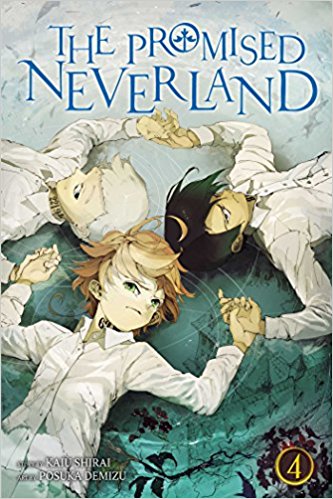
MICHELLE: I’m looking forward to so much this week! Ace of the Diamond, Chihayafuru, Promised Neverland, My Hero Academia, to name but a few. However, seinen romantic comedy from Mitsurou Kubo wins in my book. It’s gotta be Moteki. Plus, you get the first half of the series in one package. Nice!

SEAN: There is, frankly, an embarrassment of riches this week. including every single Shojo Beat title, as well as The Promised Neverland, which will be brilliant and make me suffer. But yes, I’m going with Moteki, a title we would never have seen here if not for Yuri on Ice taking off the way it did. I’m not complaining.

KATE: Moteki and The Promised Neverland are my must-read manga of the week. If I had to choose just one title, though, it would be the third volume of The Promised Neverland, since previous installment ended with a game-changing revelation.

ASH: I’m actively following so many of the series coming out this week! But when it comes to the pick of the week, debuts tend to get most of my attention, and so Moteki it is for me! (Although I’m also rather curious about Kenka Bancho Otome… )

ANNA: There’s a ton of great stuff coming out this week! It makes it so hard to pick! Like many others I have to give Moteki the edge though.

Filed Under: PICK OF THE WEEK

A First Look at Starving Anonymous

March 27, 2018 by Katherine Dacey

Have you been checking out Kodansha Comics’ digital-only and digital-first releases? I have, and I love this initiative: it lets me sample dozens of series that might otherwise never see the light of day in North America. Rugby manga. Karuta manga. Really weird horror manga. Medical drama. Josei. As you might expect, there’s a good reason why no one was clamoring to bring out print editions of, say, Deathtopia, but lurking among the pedestrian, the awful, and the amateurish are gems such as Dragon Head, PTSD Radio, Shojo FIGHT! and Tokyo Tarareba Girls. This week, I previewed one of Kodansha’s most recent digital offerings, Starving Anonymous, which, according to Kodansha’s editorial staff, is “an intense dystopian horror thriller in the apocalyptic vein of Dragon Head and Attack on Titan, from the team that brought you zombie actioner Fort of Apocalypse.”

That’s not a bad description of Starving Anonymous; if you can imagine an Eli Roth remake of Soylent Green in all its gory, sadistic intensity, you’ll have some idea of what it’s like to read Yuu Kuraishi and Kazu Inabe’s latest effort. Like the 1973 Charlton Heston film, Starving Anonymous takes place in a heat-ravaged future where supplies are scarce, birth rates are plummeting, and people are crowded into fewer and fewer cities. The series’ protagonist is I’e, a normal high school student whose life is violently upended when he’s snatched off a bus and deposited at an enormous industrial facility where the main product is — you guessed it — people.

A concept this potentially repulsive lives or dies by the thoughtfulness of the execution, and it’s here where Kuraishi and Inabe stumble. The writing is efficient but artless, establishing the direness of the world’s condition through news flashes and pointed conversations but revealing little about I’e; he’s more a placeholder than a character, a collection of reaction shots in search of a personality. The artwork, by contrast, varies from slickly generic — Tokyo apparently looks the same 50 years from now — to willfully ugly; once inside the factory, Inabe draws rooms and conveyor belts filled with distended bodies, rendering every roll of fat and bulging eye in fetishistic detail. If Kuraishi and Inabe were trying to make a point about the ethics of factory farming, or the evils of overconsumption, that message is quickly shoved aside in favor of a more conventional escape-from-prison plot in which I’e and a group of young, healthy rebels fight their way to the outside. Nothing in the first chapter suggested that Starving Anonymous has anything on its mind other than characters doing and seeing horrible stuff, so I’ll be passing on this one.

Starving Anonymous, Chapter 1
Story by Yuu Kuraishi, Art by Kazu Inabe, Original Concept by Kengo Mizutani
Kodansha Comics
Rating: OT (Older teen)

Filed Under: Manga, Manga Critic, REVIEWS Tagged With: Digital Manga, Horror/Supernatural, Kodansha Comics, Sci-Fi, Starving Anonymous

Pick of the Week: Manga a Go Go!

March 26, 2018 by Sean Gaffney, Michelle Smith, Katherine Dacey, Ash Brown and Anna N Leave a Comment

SEAN: I’m torn this week between Seven Seas’ release of Cutey Honey a Go Go!, an updated manga featuring the classic leads as adults instead of schoolgirls, and Vertical’s release of CITY, the new comedy manga from the creator of Nichijou. If pressed, I will pick Cutey Honey, but I’m going to be getting both.

MICHELLE: I’m not super excited about anything, but I do enjoy Waiting for Spring, so I’ll go with that.

KATE: If you drew a Venn diagram of my taste in manga and Sean’s, the overlapping region would include both of his picks for March 27th. The end is nigh?

ASH: Hahaha! It’s not nearly as uncommon for Sean and I to be interested in the same manga, so it’s perhaps not too surprising that Cutey Honey a Go Go! is the release that’s caught most of my attention this week.

ANNA: There aren’t many series coming out this week that really appeal to me, but I have to say I am most intrigued by Cutey Honey a Go Go!, so that’s my pick.

Filed Under: PICK OF THE WEEK

Silver Spoon, Vol. 1

March 25, 2018 by Katherine Dacey

The title of Hiromu Arakwa’s latest series is a pointed reference to Kansuke Naka’s The Silver Spoon: Memoir of a Japanese Boyhood. First serialized in the pages of the Asahi Shimbun in 1913, The Silver Spoon traced Naka’s journey from childhood to adolescence through a series of vignettes that recalled turn-of-the-century Tokyo in vivid detail, describing both the bustle of its modern neighborhoods and the rustic isolation of its western regions, a contrast underscored by one of the book’s most important events: Naka’s move to rural Tokyo. “For me to be born in the midst of Kanda was as inappropriate as for a kāppa to be hatched in a desert,” he declares, viewing the country as a place of rebirth.

Yuugo Hachiken, the fictional protagonist of Arakawa’s Silver Spoon, undertakes a similar journey, moving from Sapporo to the Hokkaido countryside, where he enrolls at at Ooezo Agricultural High. Though his peers chose the school for its curriculum, Hachiken chose it to escape the college prep grind — cram schools and high-stakes tests — and his parents, who seem indifferent to his misery. His competitive streak remains intact, however; he assumes that he’ll be the top student at Ezo AG, sizing up his classmates’ mastery of English and geometry with all the condescension of a prep school boy in a backwoods schoolhouse.

Hachiken’s path to redemption predictably begins with a rude awakening: there’s no spring break and no sleeping in at Ezo AG, where students rise at 4:00 am to muck stalls and harvest eggs. Adding insult to injury, his cosmopolitan prejudices are challenged by his peers, who are more ambitious, motivated, and knowledgable than he is; in one of the volume’s best scenes, Hachiken’s elation turns to despair when he overhears his classmates discussing the transformative effect of somatic cell cloning on the Japanese beef market. “Are they speaking in tongues!!?” he fumes, rivers of sweat pouring down his ashen face. “Are you guys smart or stupid? Make up your minds!!”

After a series of humiliating trials, Hachiken makes tentative steps towards fitting into the community and finding his purpose. His incentive for trying a little harder is, unsurprisingly, a girl — specifically Aki Mikage, a pragmatic, cheerful soul whose horse-wrangling skills, can-do attitude, and endless patience with dumb questions endear her to Hachiken. Though she’s instrumental in persuading Hachiken to join the equestrian club, her main role in volume one is to help Hachiken overcome his sentimental ideas about farm life, encouraging him to see the farm as a factory or business rather than a collection of cute animals.

This bracing dose of reality is one of the manga’s strengths, preventing the story from devolving into a string of sight gags and super-deformed characters screaming and flapping their arms at the sight of poop. Near the end of volume one, for example, Mikage invites Hachiken and fellow classmate Ichirou Komaba to the Ban’ei Racetrack to watch a draft horse pull, an outing that quickly turns somber when they stumble upon a horse funeral in progress. “Some souls are thrust into a cruel existence where there are only two options, life or death, simply because they happen to be born livestock,” Mikage’s uncle observes — a statement that makes a deep impression on Hachiken, who’s just beginning to realize that many of the piglets and chickens he’s raising will be on someone’s dinner table in a matter of months.

The racetrack episode also highlights Silver Spoon‘s other secret weapon: its terrific supporting cast. Though Hachiken, Komaba and Mikage’s more serious conversations dominate the chapter, one of the series’ most memorable personalities — Nakajima, the equestrian club supervisor — makes a cameo appearance as well. Nakajima exemplifies Arakawa’s gift for creating visually striking characters whose goofy, exaggerated appearances belie their true nature. He looks like a Bodhisattva but acts like a gambler, a tension that plays out almost entirely on his face. When riding a horse or encouraging Hachiken to join the equestrian club, for example, his eyes are half-open, framed by two semi-circular brows that suggest a meditative state, but when he visits the race track, the thrill of betting brings a maniacal gleam to his eyes, pulling his eyebrows into two sharp peaks. He even dresses the part of a Saratoga regular, trading his pristine riding outfit for a trenchcoat — collar popped, of course — and low-slung fedora.

As this comic interludes suggests, the twists and turns of Hachiken’s evolution from sullen teen to happy young man are dictated more by shonen manga convention than fidelity to Naka’s The Silver Spoon — there are 200% more jokes about cow teats and chicken anuses — but the sincerity with which Arakawa captures the emotional highs and lows of adolescence shows affinity with Naka’s writing. Hachiken’s mopey interior monologues and fumbling efforts to connect with his classmates are as authentic as Naka’s own reminiscences; both convey youthful angst without irony, embarrassment, or “the layered remembrances of adulthood” (Kosaka). And for readers more interested in laffs than literary references, there are plenty of those, too; Hachiken spends as much time hanging out with ornery ruminants as he does ruminating, all but ensuring a bumper crop of manure gags in volume two. Highly recommended.

Works Cited:

Arakawa, Hiromu. Silver Spoon, Vol. 1, translated by Amanda Haley, Yen Press, 2018.

Kosaka, Kris. “A misanthropic memoir from Meiji Era Tokyo.” The Japan Times, 26 Sep. 2015, https://www.japantimes.co.jp/culture/2015/09/26/books/misanthropic-memoir-meiji-era-tokyo/#.Wres_5PwY1g. Accessed 24 Mar. 2018.

Filed Under: Manga, Manga Critic, REVIEWS Tagged With: Agricultural Manga, Comedy, Hiromu Arakawa, Silver Spoon, yen press

Voices of a Distant Star

March 19, 2018 by Katherine Dacey

What would it be like to embark on a deep space voyage, knowing that when you returned, nothing on Earth would be as you remembered it? That’s the question at the heart of Makoto Shinkai and Mizu Sahara’s Voices of a Distant Star, a thoughtful — if sometimes clumsy — rumination on the human toll of interstellar travel.

The story begins in 2046, as sixteen-year-old Noboru Terao anxiously awaits text messages from his childhood friend Mikako Nagamine, who’s enlisted in the military. As we learn through snippets of conversation and text, Nagamine isn’t at a conventional boot camp: she’s been deployed to Mars, where humanity is preparing for a lengthy campaign against an alien race known as the Tharsians. Her early exchanges with Noboru arrive in a matter of days or weeks, but when she’s transferred to the front lines, she realizes that it may be years before Noboru receives her next text; as she ruefully observes, “By the time this message reaches you, everyone will be growing up into people I don’t know.”

The emotional honesty of their epistolary romance is the best reason to read Voices of a Distant Star. Through their brief exchanges, we grasp that Noboru and Nagamine are torn between the desire for a normal relationship and the dawning realization that they may be better off pursuing their own destinies — a realization made more poignant by the sharp contrast between Noboru’s ordinary school life and Nagamine’s extraterrestrial mission. Their dilemma would be more moving, however, if the artwork wasn’t executed in such a desultory fashion. The characters are utterly generic, lacking any semblance of individuality, while the space combat lacks any sense of place; the story could just as easily be unfolding in Phoenix, AZ as on a planet eight light years from Earth. I know — the story is supposed to give me the feels, not the chills — but a little more attention to the dangerous aspects Nagamine’s mission would have raised the emotional temperature of Voices of a Distant Star from mild to muy caliente. In spite of these artistic shortcomings, Noboru and Nagamine’s plight remains powerful, reminding us that our greatest obstacle to space travel isn’t distance — it’s time. Recommended.

Voices of a Distant Star
Story by Makoto Shinkai, Art by Mizu Sahara
Translated by Melissa Tanaka
Vertical Comics, 238 pp.

Filed Under: Manga, Manga Critic, REVIEWS Tagged With: makoto shinkai, Sci-Fi, voices of a distant star

Pick of the Week: An Assortment of Manga

March 19, 2018 by Sean Gaffney, Michelle Smith, Ash Brown, Anna N, Katherine Dacey and MJ Leave a Comment

MICHELLE: There are quite a few good things coming out this week! I’ll definitely be reading the latest Giant Killing and Wake Up, Sleeping Beauty, and I’m happy to see more Sweet Blue Flowers. Too, there’s Perfect World, a josei series with a very interesting premise. But still, Twinkle Stars is coming to an end, and I find I’m really in the mood to see how this one wraps up, so that’s my pick for this week.

SEAN: Sadly, I suspect I will be the only one picking this, meaning I can’t call Pick of the Week “Take Back Your Mink”. But my Pick this week is definitely the first omnibus of Dragon Half, which I’m hoping will let me wallow in nostalgia.

KATE: I hate to be predictable, but my pick is volume four of Golden Kamuy. Is it a cooking manga with action sequences, or an action manga with lengthy discussions about squirrel meat preparation? Danged if I know, but I’m hooked.

ASH: So much is coming out this week that I’m looking forward to! Sweet Blue Flowers, Golden Kamuy, Twinkle Stars, Dragon Half and more. I’ll take this opportunity to pick one that hasn’t been mentioned by someone else yet, Natsume Ono’s ACCA 13-Territory Inspection Department. The first volume was a slow burn, but stylish and intriguing.

ANNA: There’s a lot of great titles coming out this week! I have to go with my general inclination to celebrate josei whenever a new series comes out, so my pick is Perfect World.

MJ: since I’m going last here, I’ll round things out by picking the third omnibus of Sweet Blue Flowers. I’m a fan of this series, and I’m a fan of angst, so this works well for me.

Filed Under: PICK OF THE WEEK

Toppu GP, Vol. 2

March 13, 2018 by Katherine Dacey

For two decades, Kosuke Fujishima’s Oh! My Goddess was a veritable institution in the US. It arrived in comic book stores in 1994 and finished its run in 2015, along the way introducing several generations of manga fans to the fraught relationship between the nebbishy Keiichi Morisato and his otherworldly companion Belldandy. Fujishima’s current project Toppu GP debuted last year with little attention from critics, but this sports manga might just be the better of the two series; as I noted in my review of volume one, the characters are types and the drama predictable, but the motorcycle races are thrilling, funny, and surprisingly educational, helping the novice appreciate the skill necessary to ride at an elite level.

The latest installment of Toppu GP does all the things you’d expect the second volume of a sports manga to do: it introduces new rivals for the principal characters, expands the supporting cast, and features several lengthier, riskier races. Not all of these gambits work. Toppu’s new fanclub — which includes Billy Izumo, a tow-headed bike enthusiast, and Itsuki Nagoya, a nerdy girl with a crush on Toppu — provides the weakest sort of comic relief by making Nagoya and Myne compete for Toppu’s attention. (“Who is this old lady?” Nagoya sniffs when introduced to Myne.) When the action shifts to the race track, however, the story roars to life, offering Fujishima a unique opportunity to explain the physics and strategy of moto GP through imaginative visual metaphors. In one sequence, for example, Toppu compares the components of his bike to instruments in a rock band — a neat way to suggest the sound and function of each — while in another, Fujishima represents Toppu’s anxiety as a giant, coiled rattlesnake. These metaphors are corny, to be sure, but they enliven the racing sequences, breaking the relentless stream of speedlines, facial close-ups, and banked turns.

Though Toppu gets top billing, Myne also gets a turn in the spotlight in a fiercely competitive race against Daiya Ishibashi, the reigning champ at the Course 2000. Their race is a genuine nail-biter, with Ishibashi and Myne aggressively vying for the lead. By the end of the volume, it’s not clear if Myne will prevail over Ishibashi, but her tenacity and cunning have made that outcome a real possibility. Readers who want to know whether Myne wins have two choices: wait until August for volume three, or purchase chapters 15 and 16 right now. (The digital serialization is up to chapter 23.) Me? I’m going to tough it out until August, since Toppu GP is one of the few series I’m actively collecting. Recommended.

Toppu GP, Vol. 2
By Kosuke Fujishima
Translated by Stephen Paul
Kodansha Comics, 192 pp.
Rated T, for Teen (13+)

Filed Under: Manga, Manga Critic, REVIEWS Tagged With: Kodansha Comics, Kosuke Fujishima, Moto GP, Sports Manga, Toppu GP

Pick of the Week: Different Sides

March 12, 2018 by Sean Gaffney, Katherine Dacey, Anna N, Michelle Smith and Ash Brown Leave a Comment

SEAN: My pick this week, despite my whining and groaning, goes to the 12th and final volume of Genshiken: Second Season. I’m afraid to say that my reason for this is entirely selfish. It’s because MY SHIP WINS! HAH! (cough) Or, in other words, the harem plot is finally satisfactorily resolved. I will miss complaining about it.

KATE: Predictably, my pick for the week is the fourth installment of The Girl from the Other Side, but I’ll need a chaser for that one — words like “moody” and “harrowing” come to mind when describing it — so I’ll throw a copy of Sorry for My Familiar in the basket, too.

ANNA: There’s not a lot coming out this week that appeals to me, but The Girl From the Other Side is so unique and surreal, it would likely be my pick during a week with many of my favorite series being released.

MICHELLE: I’m with Kate and Anna on this one! For my chaser, I’ll go with Blue Morning, as I love BL with a complex storyline.

ASH: Oh, that sounds like a great plan, Michelle! The Girl from the Other Side is absolutely marvelous and is without a question my pick. I definitely look forward to getting my hands on Blue Morning, too, though. I don’t read quite as much BL as I once did, but the series is very high on my list, BL or not.

Filed Under: PICK OF THE WEEK

  • « Go to Previous Page
  • Page 1
  • Interim pages omitted …
  • Page 33
  • Page 34
  • Page 35
  • Page 36
  • Page 37
  • Interim pages omitted …
  • Page 89
  • Go to Next Page »
 | Log in
Copyright © 2010 Manga Bookshelf | Powered by WordPress & the Genesis Framework