• Skip to primary navigation
  • Skip to main content
  • Skip to primary sidebar
  • Home
  • About Us
    • Privacy Policy
    • Comment Policy
    • Disclosures & Disclaimers
  • Resources
    • Links, Essays & Articles
    • Fandomology!
    • CLAMP Directory
    • BlogRoll
  • Features & Columns
    • 3 Things Thursday
    • Adventures in the Key of Shoujo
    • Bit & Blips (game reviews)
    • BL BOOKRACK
    • Bookshelf Briefs
    • Bringing the Drama
    • Comic Conversion
    • Fanservice Friday
    • Going Digital
    • It Came From the Sinosphere
    • License This!
    • Magazine no Mori
    • My Week in Manga
    • OFF THE SHELF
    • Not By Manga Alone
    • PICK OF THE WEEK
    • Subtitles & Sensibility
    • Weekly Shonen Jump Recaps
  • Manga Moveable Feast
    • MMF Full Archive
    • Yun Kouga
    • CLAMP
    • Shojo Beat
    • Osamu Tezuka
    • Sailor Moon
    • Fruits Basket
    • Takehiko Inoue
    • Wild Adapter
    • One Piece
    • After School Nightmare
    • Karakuri Odette
    • Paradise Kiss
    • The Color Trilogy
    • To Terra…
    • Sexy Voice & Robo
  • Browse by Author
    • Sean Gaffney
    • Anna Neatrour
    • Michelle Smith
    • Katherine Dacey
    • MJ
    • Brigid Alverson
    • Travis Anderson
    • Phillip Anthony
    • Derek Bown
    • Jaci Dahlvang
    • Angela Eastman
    • Erica Friedman
    • Sara K.
    • Megan Purdy
    • Emily Snodgrass
    • Nancy Thistlethwaite
    • Eva Volin
    • David Welsh
  • MB Blogs
    • A Case Suitable For Treatment
    • Experiments in Manga
    • MangaBlog
    • The Manga Critic
    • Manga Report
    • Soliloquy in Blue
    • Manga Curmudgeon (archive)

Manga Bookshelf

Discussion, Resources, Roundtables, & Reviews

Katherine Dacey

Pick of the Week: Nothing but Blue Skies

October 7, 2019 by Sean Gaffney, Michelle Smith, Katherine Dacey, Ash Brown, Anna N and MJ Leave a Comment

SEAN: This week I feel the Manga Bookshelf eye is turning towards That Blue-Sky Feeling, and I have to agree, I really want to see how it turns out.

MICHELLE: You’re definitely right where I’m concerned. There are a couple other things I’ll check out from this week but none with the emotional impact of That Blue Sky Feeling .

KATE: I’m going to make a pitch for volume two of Queen Bee, a cute–if predictable–shojo series about a girl with a serious case of Resting Bitchface and a temper to go with it. I don’t think I’ve ever read a manga quite so… relatable.

ASH: I am absolutely here for That Blue Sky Feeling, but I’d like to give a shout out to Roadqueen, too. It’s not manga, but it looks delightful.

ANNA: I’m now curious about Queen Bee which sounds delightful. But to be honest I’m attempting to catch up on my unread manga pile instead of reading anything coming out this week. Maybe I’ll actually be able to take a volume or two off that stack!

MJ: I’m definitely intrigued by Kate’s description of Queen Bee (and I’m apparently a volume behind!) but it’s hard for me to pick anything else but the lovely and poignant That Blue Sky Feeling. It’s exactly my thing.

Filed Under: PICK OF THE WEEK

Short Takes: Museum and Phantom Tales of the Night

October 6, 2019 by Katherine Dacey

I have a confession: I am a complete chicken when it comes to horror movies. I watched Alien through my fingers and made it to the end of Fright Night by staring at the ingredient list on a candy wrapper; even the hot vampires of The Lost Boys weren’t soulful or shirtless enough to fully hold my gaze. But horror manga is another story, as I count Mermaid Saga, Gyo, Tomie, The Kurosagi Corpse Delivery Service, and PTSD Radio among my favorites series. I can’t explain why horror manga doesn’t affect me the same way that movies do–no soundtrack, perhaps?–but I’m glad that I’ve found the intestinal fortitude to read Junji Ito and Kazuo Umezu’s work. Alas, I had less patience with the two most recent horror series I read: Museum, a digital-only offering from Kodansha, and Phantom Tales of the Night, a cautionary tale about a mysterious innkeeper.

Museum, Vol. 1
Story and Art by Ryosuke Tomoe
Kodansha Comics
Rated M, for Mature (graphic violence)

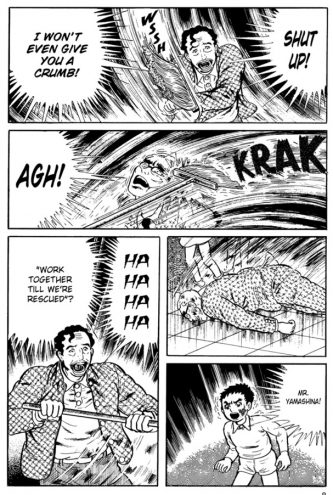
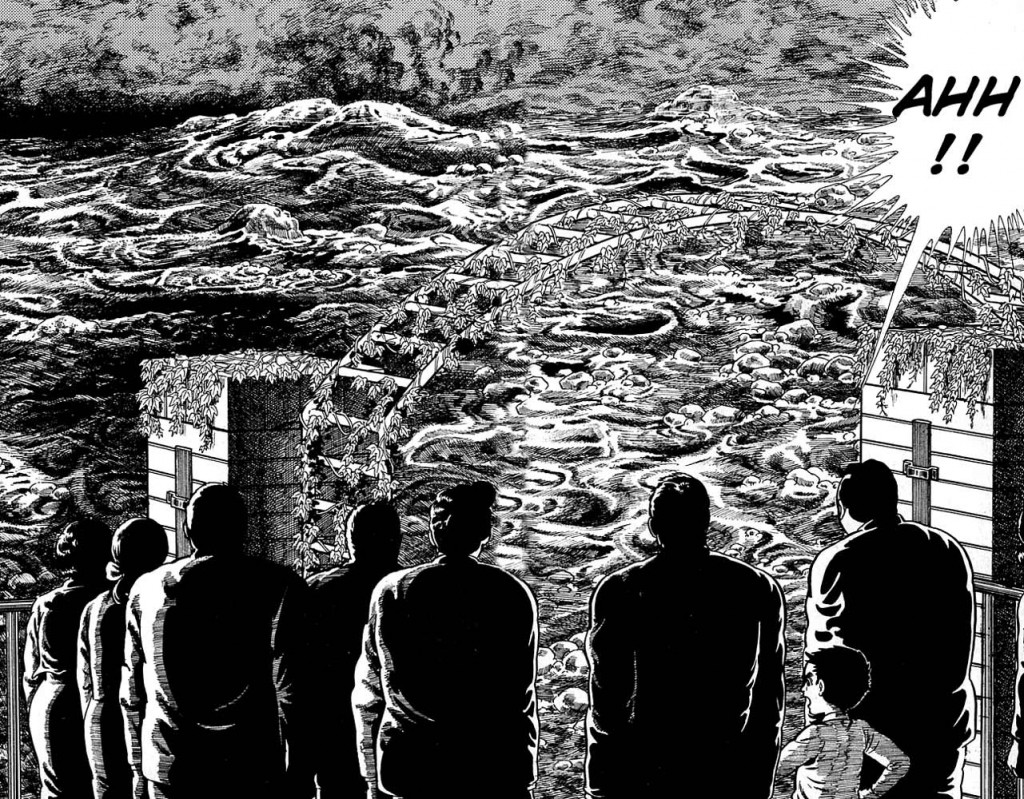
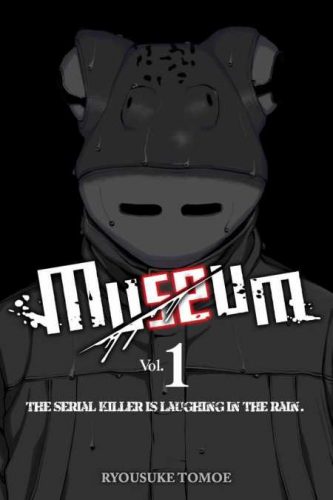
Stop me if you’ve heard this one before: a mask-wearing vigilante kidnaps and tortures his victims in grotesque fashion–feeding them to dogs, severing their ears, tying them to toilets–then leaves cryptic notes that characterize each act as a “punishment,” daring the authorities to catch him. The mystery of who the vigilante is and what motivates him is the main driving force behind Museum, but you might not want to soldier through the carnage for answers to those questions since Ryosuke Tomoe can’t decide if his vigilante is a hero or a monster. Tomoe depicts the violence with such fetishistic detail that the reader is invited to admire the killer’s technique rather than meditate on the true horror of what the character has done. The ugly, utilitarian artwork and  relentlessly dour tone are the nails in the proverbial coffin, underscoring just how unpleasantly banal Museum really is. Not recommended.

Phantom Tales of the Night, Vol. 1
Story and Art by Matsuri
Yen Press
Rated OT, for Older Teens (violence and sexual themes)

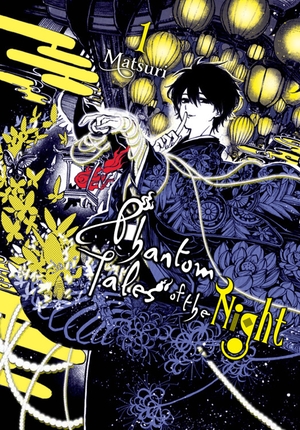
Phantom Tales of the Night is the kind of bad manga that’s difficult to review: it isn’t offensive or ineptly drawn, but it’s a chore to read thanks to its poor plotting, muddled characterizations, and maddeningly opaque dialogue. Ostensibly, the series focuses on the Murakamo Inn, where the demonic host cajoles his guests into revealing their secrets. The rules governing how the Murakamo Inn operates, however, are in a constant state of flux, making it hard to pin down what, exactly, Phantom Tales is about. In some chapters, characters share their secrets with the inn’s owner in exchange for having a wish fulfilled, while in others, characters learn a terrible secret about themselves. The later chapters hint at a potentially longer, more complex arc that will play out over several volumes, but the set-up is so abrupt and confusing that it robs the final pages of their full impact–a pity, since Matsuri has a flair for drawing genuinely creepy monsters. Perhaps the most damning thing about Phantom Tales of the Night is that the characters talk incessantly about “secrets” but lack a basic understanding of what a secret really is or why it holds such power—a key failing in a series that is predicated on the idea that secrets are a kind of supernatural currency. Not recommended.

Filed Under: Manga, Manga Critic, REVIEWS Tagged With: Horror/Supernatural, Kodansha Comics, yen press

Pick of the Week: Ease on Down the Road

September 30, 2019 by Sean Gaffney, Michelle Smith, Katherine Dacey, Ash Brown, Anna N and MJ Leave a Comment

MICHELLE: There’s a new volume of My Hero Academia plus a lot of VIZ shoujo coming out this week that I will absolutely be reading, including a particular favorite in Natsume’s Book of Friends, but my pick this week is The Wize Wize Beasts of the Wizarding Wizdoms. I literally know nothing about it other than it’s by Nagabe, creator of The Girl from the Other Side, but that’s quite enough.

KATE: What Michelle said! I’d read just about anything by Nagabe, as he’s such a terrific artist and storyteller. If people buy The Wize Wize Beasts of the Wizarding Wizdoms, maybe Seven Seas will get around to licensing Nagabe’s older work, too; this collection of short stories looks amazing.

SEAN: I am very interested in the new josei manga from Shojo Beat, but I have to go with Sexiled this week. The standard light novel fantasy is absolutely filled with tropes best described as problematic (read: misogynist), and I long to read a book pinning them to a wall and then stabbing them over and over.

ASH: As intrigued and delighted as I am by what I know about Sexiled, I’m with Michelle and Kate this week – The Wize Wize Beasts of the Wizarding Wizdoms is without question my pick.

ANNA: I’m also intrigued by The Wize Wize Beasts of the Wizarding Wizdoms and An Incurable Case of Love but I’m not going to pass up a chance to celebrate another volume of Kaze Hikaru which is by far one of my favorite historical shoujo series.

MJ: I’m jumping on what apparently is the majority pick this week: The Wize Wize Beasts of the Wizarding Wizdoms. Everything about it—from the artist to the magical creatures to the magazine it runs in—screams that it’s for me. So what other choice do I have?

Filed Under: PICK OF THE WEEK

Shojo & Tell: Moto Hagio Edition

September 28, 2019 by Katherine Dacey

To celebrate the release of Moto Hagio’s The Poe Clan, Shojo & Tell host Ashley MacDonald invited me to join her for an in-depth conversation about three of my all-time favorite manga: A, A’, They Were Eleven, and A Drunken Dream and Other Stories. We mulled over plot developments, discussed problematic passages, and agreed that “Iguana Girl” may be the biggest tear-jerker in the Hagio canon. (Seriously–I can’t read it without getting the sniffles.) Ashley just posted the episode, which you can check out here:

For more insight into the manga that we discussed, I recommend the following essays and reviews from The Manga Critic vault:

  • The Poe Clan, Vol. 1
  • A Drunken Dream and Other Stories
  • Manga Artifacts: A, A’ and They Were Eleven
  • An Introduction to Keiko Takemiya’s To Terra (essay explores Takemiya’s work in the context of the shojo manga revolution of the 1960s and 1970s)

I want to thank Ashley for the opportunity to chat about Hagio, and for doing such a terrific job of editing our conversation! If you’re not regularly following Shojo & Tell, I encourage you to check out the archive, as Ashley is a thoughtful host with a knack for choosing great manga and great guests. Recent contributors include Aisha Soleil and Rose Bridges discussing Bisco Hatori’s Ouran High School Host Club, Asher Sofman discussing CLAMP’s Tokyo Bablyon, and Manga Bookshelf’s own Anna Neatrour discussing Meca Tanaka’s The Young Master’s Revenge. Go, listen!


Filed Under: Manga, Manga Critic, REVIEWS Tagged With: Classic Manga, Magnificent 49ers, moto hagio, Sci-Fi, Shojo & Tell

The Way of the Househusband, Vol. 1

September 25, 2019 by Katherine Dacey

If you’ve seen Lillehammer or My Blue Heaven, you’ll immediately recognize the foundation on which The Way of the Househusband is built: a mafia don or hit man renounces his old life and joins the ranks of ordinary civilians working nine-to-five jobs, mowing lawns, and attending school plays. Predictably, the transition from whacking rivals to whacking weeds is a bumpy one, as the former criminal discovers that the skills he acquired in his old line of work haven’t fully equipped him for a more prosaic existence; seemingly benign interactions at the principal’s office or the post office are fraught with peril, as they’re guided by unfamiliar social codes. Then, too, there’s the specter of his old life—the possibility that a former associate might recognize him or seek him out for one last job.

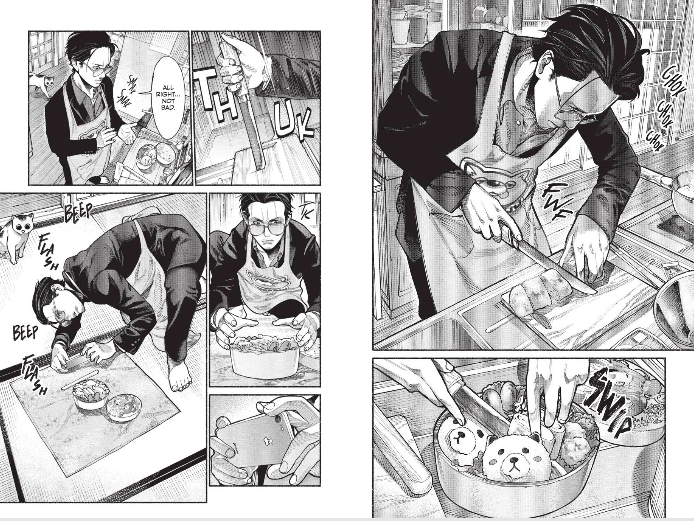
The Way of the Househusband covers all of this well-spaded ground, earning its laughs by putting fresh twists on familiar scenarios. Its protagonist, the stone-faced Tatsu, is a former yakuza boss-cum-househusband who spends his days making elaborate bento boxes for his wife and scouring the grocery store for bargains. As is standard for this particular fish-out-of-water genre, Tatsu’s sangfroid is sorely tested by the minor annoyances of civilian life: a visit from the neighborhood association president, a trip to the mall.

When a knife salesman knocks on Tatsu’s door, for example, author Kousuke Oono teases the idea that his characters’ interactions might end in violence or a harrowing demonstration of Tatsu’s knife-wielding skills. Instead, Tatsu has an opportunity to show off his culinary prowess, winning over the understandably nervous salesman with his “patented hamburger steak plate.” The salesman’s rhapsodic expression and interior monologue put the gag over the top, as the salesman identifies the dish’s secret ingredient—“minced fish paste”—and muses that its flavor “takes me back to my hometown.”

Strong artwork is essential to selling a slapstick premise like Househusband’s, and for the most part, Oono succeeds. Oono’s characters have distinctive appearances that makes it easy to “read” their comic function–the suspicious neighbor, the former crime associate–but Oono never relies on this technique alone, often giving bit players an unexpected moment of steeliness or resourcefulness that nudges the joke in an unexpected direction. The salesman, for example, looks like a soft, middle-aged man, but turns out to be stronger, pushier, and more determined than his initial reaction to Tatsu might suggest, quickly recovering his composure after Tatsu answers the door wearing a bloody apron. (“I was just, uh, doin’ a little butcherin’,” Tatsu explains sheepishly.)

Appearance-wise, Oono does a great job of making Tatsu look utterly incongruous with his surroundings. With his pencil-thin mustache, scarred face, and aviator sunglasses–not to mention his black suit and tattoos–Tatsu cuts a striking figure in the supermarket and on the street. Oono invigorates this obvious sight gag by swathing Tatsu in housewife “drag,” outfitting him in a kerchief and apron emblazoned with a shiba inu to further emphasize just what a fish out of water Tatsu is. That same attention to detail extends to the way that Tatsu moves; Oono draws him like a human cobra whose sinewy, explosive movements strike terror into his enemies’–and his neighbors’–hearts.

Sheldon Drzka and Jennifer LeBlanc’s skillful adaptation of the script is the icing on the cake, giving every character a distinctive voice, and every exchange the pleasant zing of a good Saturday Night Live or Key & Peele sketch–no mean feat, given the cultural specificity of the jokes.

As good as the script and art are, however, I have a sneaking suspicion that Way of the Househusband might run out of gas after three or four volumes unless Oono pivots the storyline in a new direction–say, by introducing a baby into the picture, or revealing that Tatsu’s hard-charging wife has a secret past of her own. But for now, I’m happy to continue reading any series that pits a former yakuza boss against a Roomba and a frisky cat, or depicts a manly man going to extreme lengths to ensure that his wife has a tasty lunch. In the immortal words of Paris Hilton, that’s hawt. Recommended.

VIZ Media provided a review copy. Read a free preview here.

THE WAY OF THE HOUSEHUSBAND, VOL. 1 • STORY AND ART BY KOUSUKE OONO • TRANSLATION BY SHELDON DRZKA, ADAPTATION BY JENNIFER LEBLANC • VIZ MEDIA, LLC • 166 pp. • RATED T+, FOR OLDER TEENS (SUGGESTED VIOLENCE, YAKUZA JOKES)

Filed Under: Manga, Manga Critic, REVIEWS Tagged With: Comedy, VIZ, VIZ Signature, Way of the Househusband, Yakuza

Pick of the Week: Ramen Noodles and Golden Sheep

September 23, 2019 by Sean Gaffney, Katherine Dacey, Michelle Smith, Anna N, Ash Brown and MJ 1 Comment

SEAN: While it’s tempting to go for the Ramen Noodles, or the Golden Sheep, both of which I suspect will be talked about by my fellow Manga Bookshelf peeps, it’s no surprise that I’m going with the 3rd volume of the Zaregoto series, SUSPENSION: Kubitsuri High School. When you get the third in a series after the first and second came out about ten years ago, it’s an event. Also, Ii-chan’s irritating, deliberately inscrutability is fun.

KATE: I’m torn between Ms. Koizumi Loves Ramen Noodles, which sounds like a carbohydrate lover’s dream, and Our Dreams at Dusk, which continues to be one of the best new series of 2019, offering a frank, thoughtful look at gender and sexual identity, so my pick is… both. Get ’em both. You won’t be disappointed.

MICHELLE: I’m definitely here for the ramen noodles and the golden sheep, but I’m most excited by a new volume of The Ancient Magus’ Bride!

ANNA: I’m very curious about Golden Sheep, The God’s Lie was so good, I’m excited to read more Ozaki.

ASH: It’s another great week of great releases! I can get behind everyone’s picks for the reasons already mentioned, but I’d like to take this opportunity to add The Miracles of the Namiya General Store to the mix as well. It’s a novel rather than a manga series, so this is really the only chance that I’ll get to pick it.

MJ: I’m not one hundred percent sold on anything this week, so I find myself waffling between The Golden Sheep and Ms. Koizumi Loves Ramen Noodles, but the melancholy does tend to have an extra pull for me, so I guess I’ll join Anna in choosing The Golden Sheep!

Filed Under: PICK OF THE WEEK

Become You, Vol. 1

September 16, 2019 by Katherine Dacey

Ichigo Takano’s orange may be one the of best shojo manga published in the last ten years, offering readers a vivid, sympathetic portrait of five friends who get an unexpected chance to save a suicidal classmate’s life. Though orange explored dark emotional terrain, it was never mawkish; instead, orange ended on a hopeful note that showed younger readers that life goes on after tragedies big and small.

Become You, Takano’s latest series, mines a similar thematic vein, this time focusing on two emotionally damaged boys who form an improbable bond through music. And by “improbable,” I mean Taiyou and Hikari are temperamental opposites who initially seem ill-suited for friendship, let alone artistic collaboration. Taiyou is one of those only-in-manga characters whose dogged optimism shades into fanaticism—the kind of character who calls everyone his friend, and wears down skeptics with his relentless overtures. Hikari, by contrast, is a classic Character With a Secret, a former prodigy who abruptly abandoned the piano despite (or perhaps because of) his phenomenal success, keeping his classmates at bay with blunt comments. Naturally—by the immutable laws of Shojo Manga Plot Mechanics—Taiyou tries to recruit Hikari for a band, despite the fact that Taiyou is a tyro guitar player.

At first glance, Become You seems to be following a well-worn path in which an enthusiastic novice persuades a reluctant genius to mentor him, in the process drawing out his teacher and helping his teacher recover something that he lost—say, his joy in playing the tuba, or his relationship with an estranged family member. But Takano adds an interesting wrinkle to this familiar plotline: midway through volume one, we learn that Taiyou originally wanted to be an artist, but lost his desire to paint after being bullied by a teacher. In the aftermath of this encounter, what Taiyou really wants is to be good at something—anything, really—and will work diligently towards achieving that goal, even if he shows little or no aptitude for his chosen pursuit. Equally important, Taiyou is just as emotionally vulnerable as his would-be mentor, even though Taiyou papers over his anguish with bright smiles and cheerful comments.

As with orange, a magical plot device brings Become You‘s principal characters together–in this case, a mysterious cloaked figure who presents Taiyou with an electric guitar and words of Yoda-like encouragement. It’s not entirely clear if Taiyou is fantasizing or having a premonition, since his guardian angel looks an awful lot like Hikari. And while the ambiguity of these scenes has little impact on the reading experience, they occupy more space than the time-traveling letters did in orange—a mistake, I think, because Taiyou’s daydreams don’t add any special urgency or poignancy to the story. By contrast, orange‘s letters served a twofold purpose, setting the plot in motion and highlighting all the small ways that innocent comments or decisions could hurt someone as fragile as the suicidal Kakeru.

The other drawback to Become You is that Takano doesn’t seem to know much about music. Taiyou, for example, cheerfully states his intention to attend a “music college,” but lacks the rudimentary skills to play in sync with a metronome or sight-read sheet music. (He also seems blissfully unaware that conservatories require an entrance audition.) The concert sequences are similarly revealing: though Takano draws attractive, animated characters, and can put them through their emotional paces, she struggles to make Taiyou and Hikari’s musical performances come to life on the page, either by showing the physical effort necessary to making a sound—embouchure, hand position, posture—or by drawing convincing crowd shots that convey the impact of the music on listeners.

I’m not ready to give up on Become You just yet, however, as Takano has something worthwhile to say about pursuing activities for emotional fulfillment, rather than for personal achievement. She also explores the idea of artistic mentorship with honesty, acknowledging that the teacher-student relationship can have a profound effect on how a young artists finds his voice; any violation of that compact—an unkind comment, a dogged insistence on doing things the “right” way—can leave deep scars and stunt one’s artistic growth. Here’s hoping volume two strikes a better balance between the magical realism and the realities of being a musician. Tentatively recommended.

BECOME YOU, VOL. 1 • STORY & ART BY ICHIGO TANAKA • TRANSLATED BY AMBER TAMOSAITIS • SEVEN SEAS • RATED TEEN • 200 pp.

Filed Under: Manga, Manga Critic, REVIEWS Tagged With: Drama, Ichigo Takano, Musical Manga, Seven Seas

Pick of the Week: Cats, Lizards, and Househusbands

September 16, 2019 by Sean Gaffney, Michelle Smith, Anna N, Katherine Dacey, Ash Brown and MJ Leave a Comment

MICHELLE: It’s really tough to choose between the debuts of The Way of the Househusband and Cats of the Louvre, but since the latter is complete in one volume and I won’t have the chance to choose it again, I’ll go with that. There really is a lot of good stuff coming out this week, though!

SEAN: Again, I’d love to pick both Househusband AND Cats of the Louvre. But this is the last chance I’ll get to sing the praises of Dorohedoro, whose combination of gore, gratuitous nudity, and fantastic art, plotting and characterization has been a joy to read. Thank you to Viz Media for sticking with it while other Ikki titles died on the vine (remember Kingyo Used Books?).

ANNA: Househusband for me! The premise sounds hilarious and I’m looking forward to it.

KATE: It’s Cats of the Louvre and Way of the Househusband for me, too; it’s been too long since we had a new Taiyo Matsumoto release in English!

ASH: Viz in particular has SO MANY great releases this week! Cats of the Louvre is a definite must, I can’t wait for the debut of Way of the Househusband, and Dorohedoro is a longtime favorite of mine. So, I guess my pick this week is Viz?

MJ: Okay, I gotta go with the cats. Cats of the Louvre is by far my top choice this week.

Filed Under: PICK OF THE WEEK

No Guns Life, Vol. 1

September 9, 2019 by Katherine Dacey

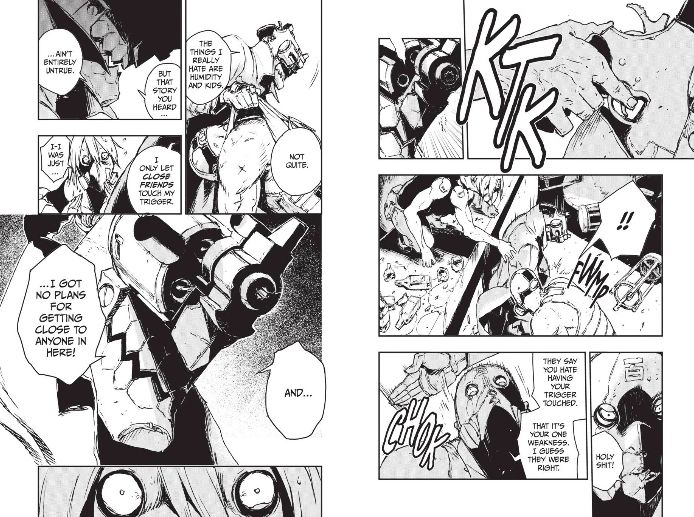
No Guns Life is a textbook example of  “robo noir,” a story that borrows tropes from Double Indemnity and The Maltese Falcon and transplants them to a not-too-distant future where old and new technologies rub shoulders, and damsels in distress might, in fact, be androids. The hero is Juzo Inui, a bodyguard-for-hire who has a strong moral code and an aversion to “humidity and kids.” Like the cyborg clientele he serves, Juzo’s body has been cybernetically enhanced, his head replaced with a giant revolver. Yes—you read that right. Juzo’s head can fire a round of ammunition, a creative decision that skirts the line between funny and horrific; only Juzo’s strong moral code makes the gun-as-head concept palatable.

And speaking of that moral code, volume one focuses on Juzo’s efforts to honor a contract with a fellow cyborg. That cyborg shows up at Juzo’s office with a 12-year-old boy in tow and a request: hide the boy from the Berühen Corporation, a powerful organization that manufactures top-secret weapons. With the police and Berühen’s goons on his trail, Juzo stashes Tetsuro with his friend Mary, a back-alley surgeon, and sets out to discover why Tetsuro is such a hot commodity.

While Juzo’s exploits are entertaining, No Guns Life is a mixed bag. On the plus side, the story is briskly paced and well drawn; Tasuku Karasuma creates a strong sense of place in his establishing shots, drawing a sprawling modern city that still has hole-in-the-wall office buildings, dingy basements, and crowded tenements, all populated by characters with memorable mugs. On the minus side, the story traffics in cliches, from the beautiful assassin who carries out her duties in a skimpy costume to the villains who deliver lengthy, exposition-dense monologues before pulling the trigger. The fight scenes, too, leave something to be desired; there are too many flash-boom panels that bury the action under sound effects and speed lines, leaving the reader to guess what’s happening. None of these shortcomings are fatal, but they emphasize the fact that No Guns Life is chiefly memorable because the protagonist looks like a Second Amendment poster boy, not because the story has something new to say about the boundaries between man and machine, or the ethics of human experimentation.

The bottom line: Fans of the anime will probably enjoy No Guns Life, but readers versed in sci-fi and noir conventions may find it too pedestrian to make a lasting impression.

A review copy was provided by VIZ Media, LLC. Volume one will be released on September 17, 2019. Read a free preview here.

NO GUNS LIFE, VOL. 1 • STORY AND ART BY TASUKU KARASUMA • TRANSLATED BY JOE YAMAZAKI • VIZ MEDIA • RATED T+, FOR OLDER TEENS (VIOLENCE, SCANTILY CLAD WOMEN) • 248 pp.

Filed Under: Manga, Manga Critic, REVIEWS Tagged With: No Guns Life, Post-Apocalyptic Sci-Fi, Sci-Fi, Ultra Jump, VIZ Signature

Pick of the Week: Manga Becomes You

September 9, 2019 by Sean Gaffney, Michelle Smith, Katherine Dacey, Ash Brown, Anna N and MJ Leave a Comment

SEAN: It’s always tempting to pick Hayate the Combat Butler, if only to remind people it exists, and Become You looks promising. That said, the retro shoujo fan in me wants to read Queen Bee, the next-gen sequel to Love Attack!, which Tokyopop released back in 1839. I’ll pick that.

MICHELLE: I am very happy to see more Giant Killing at last, as its seinen take on sports manga is something different, but I am really looking forward to the debut of Become You. I loved orange very much and although Dreamin’ Sun (an earlier work) wasn’t as good, I still enjoyed it. This is Ichigo Takano’s latest series, so I am hoping for great things.

KATE: Hot guys playing the guitar–sign me up! My pick is Become You.

ASH: Eyup! I’m here for the musicians of Become You, too! Though if Queen Bee ever sees a print release, that’s another debut I’d be interested in.

ANNA: I’m going to be relentless in my love for shoujo, and pick Queen Bee as well!

MJ: Okay, I’ve gotta go with Become You. There’s a kid on the cover with a guitar. I’ve been promised childhood dreams. This is a winning combination.

Filed Under: PICK OF THE WEEK

Pick of the Week: Phantom Tales and Other Stories

September 2, 2019 by Sean Gaffney, Katherine Dacey, Michelle Smith, Ash Brown and Anna N Leave a Comment

KATE: Last week’s INSANE manga haul has left me scarred: there was so much good stuff to choose from that I felt paralyzed when trying to choose one or two for our weekly round-up. This week, by contrast, I only have eyes for one series: Phantom Tales of the Night, which sounds a lot like Pet Shop of Horrors and has a pretty snazzy-looking cover to boot.

SEAN: I’ll go with a digital debut this week. Everything I’ve heard about Smile Down the Runway suggests it’s a josei title in shonen’s clothing, and apparently it has a terrific look at fashion and the struggle between doing what you love and earning a living. I want to take a look.

MICHELLE: There’s lots of Shojo Beat goodness, but for me this week is all about the sports boys. When Yowamushi Pedal is pitted against Haikyu!!, much as I love the former, I have to go with the volleyball kids. They’re just so dang endearing!

ASH: I certainly enjoy both Haikyu!! and Yowamushi Pedal, but I’m with Kate this week for my pick. I generally like horror manga, but I find shoujo horror particularly difficult to resist, so <Phantom Tales of the Night it is!

ANNA: There’s so much to choose from! I’m going to go with Daytime Shooting Star just because we don’t get much teacher-student romance shoujo here.

Filed Under: PICK OF THE WEEK

Go With the Clouds: North by Northwest, Vols. 1-2

August 30, 2019 by Katherine Dacey

I’ve never used the word “shambolic” in a review before, but that was the first adjective that came to mind as I read Go With the Clouds: North by Northwest, a handsomely illustrated series that can’t decide if it’s a murder mystery, a coming-of-age story, an Icelandic travel brochure, or a Knight Rider episode. Go With the Clouds’ abrupt tonal shifts and plot twists left me scratching my head, but I was never bored or disappointed by Aki Irie’s narrative choices; if anything, the messy weirdness of the first volume was ingratiating, a reminder that sometimes the most interesting storytellers aren’t particularly disciplined.

The first volume is a bumpy ride, lurching from one idea to the next without warning. In the first five chapters alone, we learn that seventeen-year-old protagonist Kei Miyama is a detective-for-hire; has a younger sibling named Michitaka who’s the chief suspect in a double homicide; and can hear his car’s thoughts. (As befits a story set in Iceland, Kei’s car is very moody.) Though volume one ends with a dramatic confrontation over Michitaka, volume two barely acknowledges the murder investigation, focusing instead on a visit from Kei’s childhood friend Kiyoshi. The two spend an agreeable week touring the Icelandic countryside by car, visiting geysers, gawking at cliffs and waterfalls, and taking pictures. Michitaka makes the briefest of cameos, but is otherwise absent from volume two—a strange choice, given how urgent his storyline seemed in volume one.

Normally, this kind of narrative sloppiness if a turn-off for me, but Irie rewards the patient reader with complex characters, interesting bits of Icelandic lore, and—best of all—breathtaking artwork that captures the starkly beautiful landscape of the Golden Circle. Her linework is crisp and her use of tone sparing; in her most striking panels, we have a sense of how empty the Icelandic countryside really is thanks to her judicious use of white space. At the same time, however, she excels at detail work, giving the reader an intimate look at houses, cafes, churches, and—yes—car interiors. That same attention to detail extends to her character designs, which are an elegant blend of naturalism and stylization; you’d be forgiven for thinking that Kei looks more like a movie star than a moody teenager.

Her characterizations are likewise thoughtful. Kei, for example, isn’t defined solely by his gift; instead, it’s just a small facet of his personality that helps shed light on how attuned he is to his surroundings. The same is true for Kei’s grandfather, who’s initially portrayed as a stubborn curmudgeon but turns out to be more perceptive than his blustery persona might suggest, especially after Michitaka enters the picture. While several seemingly important characters are still in an embryonic stage of development—most notably Kei’s imperious neighbor Lilja—Irie’s ability to depict people in all their idiosyncrasies makes me confident that the supporting cast will be more fleshed out in future volumes.

I’d be the first to admit that the series’ pacing and narrative detours won’t be everyone’s cup of tea; I was initially put off by Kei’s one-sided conversations with his trusty jalopy, and frustrated by the sudden appearance—and equally sudden disappearance—of a Japanese investigator who is convinced of Michitaka’s guilt. By the end of volume one, however, I didn’t care; I felt that Go With the Clouds had transported me somewhere I hadn’t been before—in real life or my imagination—and was eager for another installment of Kei’s saga. Recommended.

GO WITH THE CLOUDS, NORTH BY NORTHWEST, VOLS. 1-2 • ART AND STORY BY AKI IRIE • VERTICAL COMICS • NO RATING

Filed Under: Manga, Manga Critic, REVIEWS Tagged With: Aki Irie, Iceland, Mystery/Suspense, Seinen, Vertical Comics

The Right Way to Make Jump

August 23, 2019 by Katherine Dacey

Most books about the manga industry fall into one of two categories: the how-to book, which offers advice on how to draw proportionate characters, plan a storyboard, and buy the right pens; and the how-I-became-an-artist story, which charts the emotional ups and downs of breaking into the manga biz. The Right Way to Make Jump takes a different approach, pulling back the curtain on the production process.

Our guide to the manga-making process is Takeshi Sakurai, an anxiety-ridden thirty-year-old who traded his dreams of becoming a professional manga-ka for a more predictable, less demanding life as an onigiri chef. Out of the blue, Sakurai receives a call from his former editor Momiyaxx-san about a once-in-a-lifetime opportunity to “create a non-fiction manga” that explains “how Jump is made.” After much hand-wringing and angst—and a friendly nudge from his cheerful, patient wife—Sakurai accepts the assignment, embarking on a series of factory tours and interviews to learn the nuts-and-bolts of publishing an issue of Weekly Jump. His odyssey takes him to a paper mill at the foot of Mt. Fuji, the editors’ bullpen at Shueisha headquarters, and VIZ’s corporate office in San Francisco, where Sakurai gets a first-hand look at how Jump is localized for different markets.

The book is cheekily divided into ten “arcs,” each of which focuses on a specific production step. The most interesting sections focus on the manufacturing process, explaining why Jump uses colored paper and how the magazines are cut, assembled, and bound. For readers who love the Discovery Channel—and I count myself among them—these early chapters are a blast, as they are studded with weird, wonderful facts about paper and machinery. (Among the most interesting: Jump paper dust plays an important role in Tokyo’s sewage treatment program.) The later chapters, by contrast, are less effective, as the editorial staff’s answers to potentially interesting questions are couched in polite, vague language that offers little insight into what they do; you’d be forgiven for rolling your eyes when a Jump staffer offers an essentialist justification for not hiring female editors, or chalks up the order of each issue to ‘intuition.’

Where The Right Way really shines is in Sakurai’s use of clever visual analogies to help the reader grasp the most  intricate parts of the manufacturing process. In “Platemaking,” for example, Sakurai creates a muscle-bound figure who represents the resin plate, a key element in the printing process:

The figure’s transformation neatly embodies the basic principles of creating a positive from a negative by comparing the process to suntanning—something that readers of all ages can relate to from personal experience.

As informative as such passages are, The Right Way can be a frustrating reading experience. Some chapters are briskly executed, achieving a good balance between education and entertainment, while others focus too much on slapstick humor, unfunny exchanges between Sakurai and Momiyaxx-san, and shameless plugs for Weekly Jump. Sakurai’s sardonic tone—expertly captured by translator Emily Taylor—helps mitigate some of these issues, but can’t always goose the tempo when Sakurai frets and fumes about meeting his deadlines; joking about your own shortcomings can be an effective strategy for ingratiating yourself to the reader, but not when you’re using those jokes to pad your weekly page count.

The overall structure of the book, too, leaves something to be desired. Though the first chapters focus on how the magazine is printed, the later chapters tackle a seemingly random selection of topics—Jump Festa, recycled paper stock, cover design, reader contests—suggesting that no one anticipated how long The Right Way would run in Weekly Jump. A topic-of-the-week approach is fine when readers wait for each new installment, but it makes for a chaotic, sometimes repetitive reading experience when collected in a single volume. The most logical strategy for organizing the tankubon edition would have been to start with the editorial process and end with the printing; not only does sequential presentation have obvious explanatory value, it also lends the material a compelling narrative arc, something that The Right Way to Make Jump sorely lacks.

Despite these shortcomings, I’d still recommend The Right Way to Make Jump, as it offers an all-too-rare glimpse of manga publishing’s less glamorous aspects, highlighting the contributions of professionals whose efficiency, creativity, and diligence have made Weekly Jump into a global phenomenon.

THE RIGHT WAY TO MAKE JUMP • ART AND STORY BY TAKESHI SAKURAI • TRANSLATED BY EMILY TAYLOR • VIZ MEDIA • 208 pp. • RATED T, FOR TEENS

Filed Under: Manga, Manga Critic, REVIEWS Tagged With: How-To, Shonen Jump, Takeshi Sakurai, VIZ

Pick of the Week: The Poe Clan

August 19, 2019 by Michelle Smith, Anna N, Katherine Dacey, Sean Gaffney, Ash Brown and MJ Leave a Comment

MICHELLE: I mean, it has to be The Poe Clan, right? If you’re in doubt, check out Kate’s terrific review!

ANNA: I am going to pick The Poe Clan as well, I am excited to read it.

KATE: Thanks for the plug, Michelle! I can’t stress enough how lucky we are to have this ground-breaking series in English, and with a great translation and gorgeous packaging to boot. Go, buy, and be prepared to swoon at all the roses and galaxy eyes!

Since we’re unanimous in our praise of The Poe Clan, I also wanted to highlight a series that would otherwise be my pick of the week: Kenji Tsurata’s Emanon, a beautiful fantasy/sci-fi story about a young woman who lives with the collective memories of all of her ancestors, stretching back to the beginning of life on Earth. The idea sounds kinda hokey (or pretentious), but Tsurata has done a fine job of adapting the source material–it’s based on a story by Shinji Kajio–into a thoughtful rumination on what it means to be alive. If you liked Wandering Island, Emanon is a no-brainer.

SEAN: The Poe Clan, absolutely.

ASH: I’m certainly looking forward to reading more of Emanon this week, and Golden Kamuy, too. But, yeah, there can really be no other pick than The Poe Clan.

MJ: It’s obviously The Poe Clan!

Filed Under: PICK OF THE WEEK

The Poe Clan, Vol. 1

August 15, 2019 by Katherine Dacey

Since its debut in Bessatsu Shōjo Comic, Moto Hagio’s The Poe Clan has proven almost as enduring as its vampire protagonists, living on in the form of radio plays, CD dramas, a television series, a Takarazuka production, and a sequel that appeared in Flowers forty years after the series finished its initial run. The Poe Clan’s success is even more remarkable considering that Hagio was in the formative stages of her career, having made her professional debut just three years earlier with the short story “Lulu to Mimi.” Yet it’s easy to see why this work captivated female readers in 1972, as Hagio’s fluid layouts, beautiful characters, and feverish pace brought something new to shojo manga: a story that luxuriated in the characters’ interior lives, using a rich mixture of symbolism and facial close-ups to convey their ineffable sorrow.

The Poe Clan‘s principal characters are Edgar and Marybelle Portsnell, the secret, illegitimate children of a powerful aristocrat. When their father’s new wife discovers their existence, Edgar and Marybelle’s nursemaid leads them into a forest and abandons them. The pair are rescued by Hannah Poe, a seemingly benevolent old woman who plans to induct them into her clan when they come of age. The local villagers’ discovery that the Poes are, in fact, vampirnellas (Hagio’s term for vampires) irrevocably alters Hannah’s plans, however, setting in motion a chain of events that lead to Edgar and Marybelle’s premature transformation into vampirnellas.

Though my plot summary implies a chronological narrative, The Poe Clan is more Moebius strip than straight line, beginning midway through Edgar and Marybelle’s saga, then shuttling back and forth in time to reveal their father’s true identity and introduce a third important character: Alan Twilight, the scion of a wealthy industrialist whose confidence and beauty beguile the Portsnell siblings. In less capable hands, Hagio’s narrative structure might feel self-consciously literary, but the story’s fervid tone and dreamy imagery are better served by a non-linear approach that allows the reader to immerse themselves in Edgar’s memories, experiencing them as he does: a torrent of feelings. Furthermore, Hagio’s time-shifting serves a vital dramatic purpose, helping the reader appreciate just how meaningless time is for The Poe Clan’s immortal characters; they cannot age or bear children, nor can they remain in any school or village for more than a few months since their unchanging appearance might arouse suspicion.

Hagio’s artwork further reinforces the dreamlike atmosphere through inventive use of panel shapes and placement, with characters bursting out of frames and tumbling across the page, freeing them from the sequential logic of the grid. In this scene, for example, Hagio uses these techniques to depict an act of impulsive violence—Alan pushes his uncle down a flight of stairs—as well as the reaction of the servants and relatives who bear witness to it:

While the influence of manga pioneers like Osamu Tezuka and Shotaro Ishinomori is evident in the dynamism of this layout, what Hagio achieves on this page is something arguably more radical: she uses this approach not simply to suggest the speed or force of bodies in motion, or the simultaneous reactions of the bystanders, but to convey the intensity of her characters’ feelings, a point reinforced by the facial closeups and word balloons that frame the uncle’s crumpled body.

Her method for representing memories is likewise artful. Through layering seemingly arbitrary images, she creates a powerful analogue for how we remember events—not as a complete, chronological sequence but a vivid collage of individual moments and details. In this passage, Hagio reveals why one of Edgar’s schoolmates has confessed to a theft he didn’t commit:

The final frame of this passage reveals the source of Killian’s pain: he witnessed another boy’s suicide. But Killian isn’t remembering how the event unfolded; he’s remembering the things that caught his eye—birds and branches, feet dangling from a window—and his own feelings of helplessness as he realized what his classmate was about to do.

As ravishing as the artwork is, what stayed with me after reading The Poe Clan is how effectively it depicts the exquisite awfulness of being thirteen. Alan, Edgar, and Marybelle feel and say things with the utmost sincerity, so caught up in the intensity of their emotions that nothing else matters. Through the metaphor of vampirism, Hagio validates the realness of their tweenage mindset by depicting their existence as an endless cycle of all-consuming crushes, sudden betrayals, and confrontations with hypocritical, dangerous, or bumbling adults. At the same time, however, Hagio invites the reader to see the tragedy in the Portsnells’ dilemma; they are prisoners of their own immaturity, unable to achieve the emotional equilibrium that comes with growing up.

One final note: Fantagraphics deserves special praise for their elegant presentation of this shojo classic. Rachel Thorn’s graceful translation is a perfect match for the imagery, conveying the characters’ fervor in all its adolescent intensity, while the large trim size and substantial paper stock are an ideal canvas for Hagio’s detailed, vivid artwork. Recommended. 

This post was updated on August 23rd with more accurate information about the current status of The Poe Family‘s serialization in Flowers. Special thanks to Eric Henwood-Greer for the correction!

THE POE CLAN, VOL. 1 • ART AND STORY BY MOTO HAGIO • TRANSLATED BY RACHEL THORN • FANTAGRAPHICS • 512 pp. • NO RATING

Filed Under: Manga, Manga Critic, REVIEWS Tagged With: Classic Manga, fantagraphics, moto hagio, The Poe Clan, Vampires

  • « Go to Previous Page
  • Page 1
  • Interim pages omitted …
  • Page 26
  • Page 27
  • Page 28
  • Page 29
  • Page 30
  • Interim pages omitted …
  • Page 89
  • Go to Next Page »
 | Log in
Copyright © 2010 Manga Bookshelf | Powered by WordPress & the Genesis Framework