• Skip to primary navigation
  • Skip to main content
  • Skip to primary sidebar
  • Home
  • About Us
    • Privacy Policy
    • Comment Policy
    • Disclosures & Disclaimers
  • Resources
    • Links, Essays & Articles
    • Fandomology!
    • CLAMP Directory
    • BlogRoll
  • Features & Columns
    • 3 Things Thursday
    • Adventures in the Key of Shoujo
    • Bit & Blips (game reviews)
    • BL BOOKRACK
    • Bookshelf Briefs
    • Bringing the Drama
    • Comic Conversion
    • Fanservice Friday
    • Going Digital
    • It Came From the Sinosphere
    • License This!
    • Magazine no Mori
    • My Week in Manga
    • OFF THE SHELF
    • Not By Manga Alone
    • PICK OF THE WEEK
    • Subtitles & Sensibility
    • Weekly Shonen Jump Recaps
  • Manga Moveable Feast
    • MMF Full Archive
    • Yun Kouga
    • CLAMP
    • Shojo Beat
    • Osamu Tezuka
    • Sailor Moon
    • Fruits Basket
    • Takehiko Inoue
    • Wild Adapter
    • One Piece
    • After School Nightmare
    • Karakuri Odette
    • Paradise Kiss
    • The Color Trilogy
    • To Terra…
    • Sexy Voice & Robo
  • Browse by Author
    • Sean Gaffney
    • Anna Neatrour
    • Michelle Smith
    • Katherine Dacey
    • MJ
    • Brigid Alverson
    • Travis Anderson
    • Phillip Anthony
    • Derek Bown
    • Jaci Dahlvang
    • Angela Eastman
    • Erica Friedman
    • Sara K.
    • Megan Purdy
    • Emily Snodgrass
    • Nancy Thistlethwaite
    • Eva Volin
    • David Welsh
  • MB Blogs
    • A Case Suitable For Treatment
    • Experiments in Manga
    • MangaBlog
    • The Manga Critic
    • Manga Report
    • Soliloquy in Blue
    • Manga Curmudgeon (archive)

Manga Bookshelf

Discussion, Resources, Roundtables, & Reviews

Archives for November 2013

BL Bookrack: Simply SuBLime

November 5, 2013 by MJ and Michelle Smith 3 Comments

Welcome to the latest installment of BL Bookrack! This time, MJand Michelle take a look at two titles from SuBLime Manga, The Man of Tango and Sleeping Moon. In Brief: Blue Morning, Vol. 3, Off*Beat, Ch. 14, and Tableau Numéro 20.


themanoftangoThe Man of Tango | By Tetuzoh Okadaya | SuBLime Manga | Rated M (Mature) – So distant are the days when I found SuBLime’s selection of titles mostly unimpressive, that it’s a bit of a struggle to recall them. And, in face of a book like The Man of Tango, it’s hard to believe that I ever distrusted this imprint.

Though tango dancer Angie is irresistible on the dance floor (and in the bedroom), he’s never experienced any love approaching his passion for the dance until he meets Hiro, a biracial salaryman who finds himself unexpectedly drawn into Angie’s tango-focused world. Hiro is initially reluctant to become sexually involved with a man, but his growing passion for both Angie and the tango eventually wins him over, introducing him to a kind of warmth and happiness he’s never known.

On the face of it, this sounds like any average BL premise, even down to the reluctant “straight” man, but The Man of Tango is anything but average. Even its looks defy the norm, as the manga features bulky, muscular characters who skew more bara than BL, but given that the artist was influenced by bara legend Gengoroh Tagame, that’s no surprise. More unusual, perhaps, is the story’s fantastic female costar, Bene, whose dream of returning to Buenos Aires is ultimately left for Angie and Hiro to pursue. The self-made family created by the three of them is really at the heart of the story—perhaps even more than its romance—and this isn’t a negative thing by any means. Bene’s presence somehow brings more meaning to everything, including Angie and Hiro’s relationship.

That said, friendship and romance are hardly the volume’s only draw, which is to say that it’s pretty much teeming with sex—passionate, graphic, manly sex—the likes of which are seldom seen in BL, at least on these shores. You’ll find no grimacing, helpless uke here, which dramatically affects my perception of the story’s initial sex scene, in which Hiro is clearly too intoxicated to give consent. It’s a rare BL manga that can overcome my distaste for rape fantasy, but this is one of the rare few. Furthermore, I often complain that sex scenes get in the way of stories rather than genuinely enhancing them, but this could not be less the case with The Man of Tango. Not only do Okadaya’s sex scenes advance the story and the characters’ relationship, but they’re genuinely sexy, which is also surprisingly rare for BL manga.

In short, The Man of Tango is well-crafted, emotionally compelling, and downright hot. Recommended.

– Review by MJ


sleepingmoon2Sleeping Moon, Vols. 1-2 | By Kano Miyamoto | SuBLime Manga | Rated M (Mature) – I’ve read my share of Barbara Michaels novels, quite a few of which feature the heroine returning to her ancestral home to unearth family secrets. Sleeping Moon evokes that same feeling by sending its protagonist, 27-year-old graduate student Akihiko Odagawa, into the countryside to the home in which his father grew up, searching for the origins of a family curse that dooms the male descendents to die young. There, he reconnects with his younger cousin, Ren, but also takes dream journeys into the past, where he meets a scholar named Eitarou, for whom he soon develops feelings.

Sleeping Moon is complete in two volumes, which is a little bit of a disappointment, because it definitely seemed at first that there was enough meat to the premise for it to go on a little longer. That’s not to say the resolution is unsatisfying, though I do admit to being more interested in the origins of the curse itself than in Akihito and Ren’s rather rushed romance. Miyamoto-sensei sustains a nicely creepy atmosphere, and I definitely could’ve read lots more about the fox spirit attempting to protect the family.

I also really liked how Miyamoto depicted the home’s resident kitty. He just kind of wanders through scenes, stepping on people who are in the midst of having a conversation, etc. I hate, though, that his whereabouts are not accounted for at the end, and that no one, in fact, seems to care at all about whether he’s okay, given what happens. (How’s that for vague?) Do not introduce us to a cute kitty then not show him all safe and happy on the last page!
Anyway, Sleeping Moon is a solidly enjoyable supernatural yarn. The romance aspect is somewhat lacking, and it’s not exactly the most original story ever, but it’s still definitely worth reading.

– Review by Michelle Smith


In Brief:


bluemorning3Blue Morning, Vol. 3 | By Shoko Hidaka | SuBLime Manga | Rated M (Mature) – When I reviewed volume one, I wrote “Complex, dark, and a bit twisted, Blue Morning is the best BL I’ve read so far this year.” Happily, subsequent volumes of the series have only further cemented this impression. By volume three, Akihito and Katsuragi’s relationship has evolved as Akihito himself has matured and Katsuragi has begun to change in ways Akihito has yet to notice. Complications abound, however, and because so many of these arise due to the status-conscious society of the day, Hidaka-sensei spends a lot of time on this aspect of the story, with the result that Blue Morning feels more like a genuine period drama than BL romance with some token period frills. With characters this compelling and storytelling this nuanced and sure, there’s potential for much more riveting story to come, and I couldn’t be happier about that. This one is a keeper, for sure. – Michelle Smith


offbeat14Off*Beat, Ch. 14 | By Jen Lee Quick | Chromatic Press | Rated YA – Because this series is American, it gets out of having to label itself “BL” (or not), but if there’s ever been a more gorgeously written love story between two teenaged boys, I certainly don’t know what it is. Part of what makes it work so well, of course, is that it reads as both YA and supernatural (or fringe science) mystery more than it reads as genre romance, and somehow that’s the magic formula for actual romance, at least in the hands of Jen Lee Quick. Her ability to capture her teens’ smart dialogue and awkward body language is, frankly, astounding, and volume 14 is absolutely fraught with these things, along with considerable romantic tension. Then she follows it up with a scene between Tory and his mother that had me nearly in tears. If you’re still holding out on this series… well, stop it. Dive in now. Highly recommended. – MJ


tableauTableau Numéro 20 | By est em | SuBLime Manga | Rated M (Mature) – Let’s be honest, this title pretty much had me at “est em,” but even among her rather generous English-translated catalogue, it ranks among my favorites, and that’s saying quite a bit. Her style here favors short manga, as is generally expected. The book’s title story, a wistful love story between a long-dead painter and his subject, is more fanciful than the author’s norm, but no less moving. Even so, it may not actually be the strongest of the bunch. I was especially fond of “Rasgueado,” a story about a young zapateado dancer who is pulled out of a rut by an older guitarist, but each of the volume’s five short stories is a splendid work of art. Like most of est em’s work, I would consider this book appropriate for any adult manga fan, regardless of his or her preferred genres. Absolutely recommended. – MJ


Other recent BL reviews from MJ & Michelle: Sleeping Moon, Vol. 2 (SuBLime), Off*Beat, Ch. 13 (Chromatic Press)

Filed Under: BL BOOKRACK

Bringing the Drama: I Hear Your Voice

November 5, 2013 by Anna N, Nancy Thistlethwaite and Emily Snodgrass 1 Comment

I_Hear_Your_Voice1

Anna: I Hear Your Voice is a show with a somewhat bland title considering the way it turns viewers into emotional punching bags. I’ve spent the past several weeks working through this show with a mixture of delight and dread. I Hear Your Voice takes some fairly typical plot elements like poor girl vs rich girl conflict and actually makes them interesting all while exploring the good and evil sides of human nature. Throw in a cute psychic teenage boy and an awkward but secretly handsome prosecutor into the mix, and you end up with one of the most unique dramas I’ve watched recently. I Hear Your Voice is streaming on Dramafever.

Yoon Sang Hyun inexplicably cosplaying as someone not hot.

Yoon Sang Hyun inexplicably cosplaying as someone not hot.

The not-so-good poor girl in this drama is Jang Hye Sung, a public defender who is sarcastic, apathetic, and is interested in her job only because of the potential for a steady income. Her nemisis is rich girl prosecutor and judge’s daughter Seo Do Yeon, who has a cold and calculated approach to the law. Hye Sung and Do Yeon are connected through a series of incidents in their childhood, with one of the notable incidents taking place when they witnessed the murder of a man with his young son in the car. The son is Park Soo Ha, a boy with psychic powers who grows into a teenager nursing his childhood crush on Hye Sung. As Hye Sung starts the next phase of her professional career, she encounters another new public defender, the almost belligerently idealistic Cha Kwan Woo. These four lives begin to intersect in very interesting ways as they are all affected by the murderer of Soo Ha’s father, Min Joon Gook.

Nancy: The first episode of this drama made me scream out loud! It’s more than just suspenseful–it’s terrorizing. You must be courageous to watch it, but it’s worth it. The characters all face devastating moral dilemmas. Hye Sung often wants to take the easy way out, and Soo Ha becomes her moral compass. But doing the right thing always comes at a high price in this drama. Hye Sung is pursued by Min Joon Gook, a callous murderer with a grudge to settle. The police are limited in what they can do to protect her, and as a lawyer she knows the justice system is imperfect: bad guys go free and the innocent are convicted. Hye Sung has to start believing in the law to fight Joon Gook the “right” way. At times in this drama I wondered how the courtroom players could have so many conflicts of interest going on in the cases because everything is interrelated. But it did make for good drama! Soo Ha’s ability is hearing other people’s thoughts, and he can hear Joon Gook’s true thoughts as the murderer works the system to gain a chance to extract revenge on Hye Sung. It’s positively Hitchcockian.

Anna: One thing that I Hear Your Voice was particularly good at was lulling viewers into a false sense of security. After Hye Sung started her job as a lawyer, I thought briefly that it was going to turn into a more typical romantic comedy show, and then truly terrible things happened! But even when Min Joon Gook is at his worst, the traumatic events never seemed arbitrary or present only for shock value. Everything plays out as the characters deal with the emotional fallout in different ways, and the relationships between them change as a result.

I have to say too, that I appreciated the fact that there were plot elements that set up the opposition between Hye Sung and Do Yeon in a way that gave it much more depth than the typical antagonistic relationship usually explored in dramas.

Soo Ha had some hilarious moments as he began to realize that the woman who was the focus of all his idealistic hopes and dreams lives like a slob and sometimes indulges in snacks while crouching before her refrigerator in the middle of the night. The looks of confusion and disillusionment on his face were priceless. I also liked Hye Sung’s horribly unfashionable ways of shielding her face to avoid giving away her thoughts to Soo Ha.

She is a delicate flower! Who enjoys sausages.

She is a delicate flower! Who enjoys sausages.

Emily: I admit, I have not finished this drama yet. The reason is because I’m kind of scared to! This show has me that worried for all the main characters! The creators are not afraid to take the plot to very dark places and leave you hanging on terrible cliffhangers. No one is safe! I had to pause while watching as it aired because those cliffhangers were killing me. I couldn’t handle waiting a week to see what happens. For me, this is a marathon show :)

Hye Sung is a great female lead. I like how although she is the ‘poor girl’ (vs the rich girl classmate) she is not a Candy type (the pure and innocent plucky heroine). She feels very… real. She makes good decisions and bad ones and can be both caring and generous as well as selfish and petty. (Soo Ha’s youthful idealism meeting the feminine reality of Hye Sung’s slobbyness was great). Her back story is unusual for a kdrama, and the link she has with Soo Ha must be one of the more unusual relationships I’ve seen in dramaland.

Someone left a perfectly good psychic young man out in the rain!

Someone left a perfectly good psychic young man out in the rain!

This is an interesting show in that even though it can be frightening and suspenseful, there is also a good deal of humor and some romance. That has to be a difficult combination to balance. I look forward to watching the rest, though I admit I may need to cling to a plushie to make it through the scary parts :D

Anna: Oh! I’m going to avoid spoilers except to say that I think you really don’t have to be scared of the ending. It is actually a nice counterpoint to all the dark places the show went, but it is still believable.

I also really enjoyed the fact that in the earlier episodes I was genuinely unsure of who the heroine would end up with, and the overall treatment of the second lead guy was much nicer than you usually see in kdramas. Sometimes the male second lead just fades away, but I didn’t think that was the case with this show.

Seo Do Yeon and Cha Kwan Woo bonding in an elevator.

Seo Do Yeon and Cha Kwan Woo bonding in an elevator.


Nancy:
I really enjoyed the Hye Sung role. Her character grows to such a satisfying degree. She regains the sense of justice she had as a child, but she’s still crafty as an adult. Although I am a romantic at heart, I thought the drama was stronger before Hye Sung and Soo Ha’s relationship changed in the later episodes, but it’s still worth watching.


Anna:
Overall, I thought I Hear Your Voice had a refreshing mixture of plot elements and tone that made it very compelling although a bit nerve wracking to watch. This is definitely a great drama to watch if you are looking for something a bit different to appreciate.

Watch at Dramafever.

I Hear Your Voice - when you need romantic comedy AND terrorizing melodrama

I Hear Your Voice – when you need romantic comedy AND terrorizing melodrama

Filed Under: Bringing the Drama, Dramas

Quick License Roundup

November 4, 2013 by Sean Gaffney

I hate doing these for only one title, but the other one that’s on Amazon already hasn’t quite been announced, so it will have to be content with a tweet or two. In the meantime, we have another Shonen Jump series, though this one is not going to be featured in the weekly online magazine.

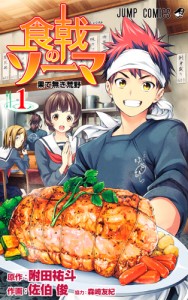
foodwars1

Shokugeki no Soma, which is getting the prefix Food Wars added to it for North America, is a Weekly Shonen Jump series that’s about 4 or 5 volumes so far. It is another manga about food creation but, like another Jump series, Toriko, I suspect this is not so much for the foodie manga reader as it is for the typical Jump manga fan. A young man is challenged by his chef father to go to an elite chef high school where it’s all battles all the time. It has very few graduates. Oh, and the head of the school’s granddaughter hates him. Can he survive just by being the hero of a Shonen Jump manga?

This sort of series has been called Food Porn, and apparently this particular series takes that wording a bit literally. Like many manga artists before they hit it big, Saeki Shun got his start in hentai doujinshi, and it shows in the abundant amounts of fanservice that this title has. Indeed, I was rather surprised at the announcement, not because it’s a battle manga – indeed, that’s likely the lure. It’s because ecchi harem series had been on the decline in North American recently. Strawberry 100%, an earlier Viz Jump title, is on permanent hiatus. Nisekoi is a romantic comedy, but its main thrust is not so much “panties!” the way the classic shonen harem title is. Food Wars (and I haven’t read it, so please correct me if I’m wrong) is combining a cooking manga with harem fanservice in much the same way Toriko combines it with One Piece-esque shonen ludicrousness.

As for whether it succeeds, well, I admit I’m intrigued at what the future will bring if it does. We shall see.

Filed Under: NEWS, UNSHELVED

My Week in Manga: October 28-November 3, 2013

November 4, 2013 by Ash Brown

My News and Reviews

I have been so incredibly busy recently (which is why I don’t have any fun online discoveries to share with you all this week) but I was still somehow able to post a few things here at Experiments in Manga. The most recent manga giveaway is underway and there is still time to enter for a chance to win Sankarea: Undying Love, Volume 1 by Mitsuru Hattori. For those of you interested in the absurd amount of manga that make its way onto my bookshelves, October’s Bookshelf Overload was also posted. And finally, I reviewed the second edition of Hedi Varian’s The Way of Taiko. I myself am a taiko player, and there are very few books in English devoted to taiko, so I am very happy to see the volume back in print in a new edition.

Quick Takes

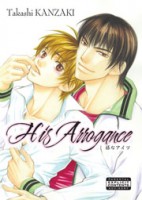
His ArroganceHis Arrogance by Takashi Kanzaki. Despite being part of Digital Manga’s 801 Media imprint, His Arrogance isn’t exceptionally explicit. It’s also not very interesting and I found myself bored with both the story and the characters. Even the artwork, while fairly solid, wasn’t particularly outstanding or noteworthy. Although, occasionally Kanzaki would capture a look of utter adoration that was delightful to see. Ryou’s father established a modeling agency specifically to aid Ryou’s older brother Tomohito in his career. In addition to helping out with the company, Ryou also lives in the dorms with the models. Kazuto is one of those models, one of Ryou’s classmates, and the self-proclaimed rival of Tomohito. I think I would have enjoyed His Arrogance more if Kanzaki would have kept the manga’s focus on Ryou and Kazuto’s relationship. Instead, Ryou’s rather bizarre and vaguely incestuous bond with his brother severely encroaches upon the story. Perhaps it was supposed to be played as comedy, but it just ends up being kind of weird and awkward.

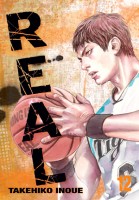
Real, Volume 12Real, Volume 12 by Takehiko Inoue. Many people assume that Inoue’s masterpiece Vagabond would be my favorite of his manga, but that honor probably goes to his series Real. I absolutely love Real, and I’m not even a huge fan of basketball. Although the sport is certainly an incredibly important part of the series, to me Real is much more about the characters themselves, their internal and external struggles, and their development as people. While the previous volume had a particular focus on Nomiya and his tryout for the Tokyo Lightnings, the twelfth volume turns its attention to Togawa and his efforts to become a better team player–something that is extremely difficult for him. Despite of or maybe because of his natural skill as an athlete, Togawa has always been very critical, harsh, and demanding of his fellow players. If there is a theme to Real, Volume 12, I would say that it is change, and specifically the need, desire, and willingness for change. Several of the manga’s characters must make important decisions about who they are and who they want to be in this volume.

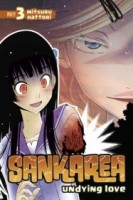
Sankarea: Undying Love, Volume 3Sankarea: Undying Love, Volume 3 by Mitsuru Hattori. The best thing about the third volume of Sankarea? Rea’s father isn’t in it. (That guy is an utter creep.) Hattori also introduces an important new character–Darin Arciento Kurumiya, who is very interested in zombies and therefore very interested in Rea. She also brings along with her a marvelously ridiculous zombie owl. In addition to Kurumiya’s introduction, this particular volume also focuses on Rea and her attempt to return to school after her zombification. There are some challenges, to say the least. Her body continues to decay and fall apart and since she doesn’t really feel pain anymore she has a tendency to overtax herself physically. I was a little surprised to see how toned-down the extraneous fanservice was in this volume. It’s still there, but it’s not nearly as prominent or distracting as it once was. I am honestly enjoying Sankarea much more than I ever expected that I would. It’s a very odd series with very odd characters and I can appreciate its quirkiness. Rea and Chihiro are both weirdos, but they make a cute not-quite-couple.

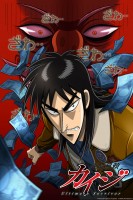
KajiUltimateSurvivorKaiji: Ultimate Survivor directed by Yūzō Satō. After watching and enjoying Akagi, watching Kaji seemed to be a natural choice. It’s another anime series based on a manga Nobuyuki Fukumoto featuring some exceptionally intense and legitimately life-threatening gambles. But whereas Akagi is calm, cool, and collected, Kaiji is hot-blooded and frenetic. (The actor who voiced Akagi also voiced Kaiji; I was quite impressed by his range and how differently he was able to play the two characters.) Kaiji also has extremely bad luck. His troubles really begin when a friend defaults on a loan that Kaiji agreed to co-sign. A man comes to collect but Kaiji, himself in debt, has no way to repay the loan. But he is given an extraordinary opportunity to clear the debt by participating in a series of absurd and increasingly dangerous gambles. Kaiji is incredibly intense and occasionally disturbing with a huge focus on the psychological aspects of the story and the mental torment and despair of its characters. Even a seemingly simple game of rock-paper-scissors can be a traumatic experience.

Filed Under: FEATURES, My Week in Manga Tagged With: anime, Kaiji, manga, Mitsuru Hattori, real, Sankarea, Takashi Kanzaki, Takehiko Inoue

Weekly Shonen Jump Recap: October 21, 2013

November 4, 2013 by Derek Bown Leave a Comment

October 21 CoverAnd here I was looking forward to another hilarious chapter of Seraph of the End. But, unfortunately, this new series is a monthly in Japan that has been going on for a couple months. So in order to stretch it out a bit WSJ will be giving us two chapters a month until we’re caught up. Between this series and One-Punch Man, which is also off this week seeing as we just caught up, it feels like WSJ has heard the complaints that some series aren’t doing well because they didn’t start at the very beginning. They’re definitely trying out new ways to make sure we get the whole story, rather than starting at the most recent chapter and then looking the other way as some readers go read scanlations of what came before. But, this has me worried because while this can work for monthly series there still isn’t any clear way to start a weekly series that has been going on for more than a few chapters. And considering how often new series get cancelled I think that the staff at Viz might be a little gun-shy where brand new series are concerned. Besides the series that have been ongoing and everyone has read scanlations for anyway I’m worried that we won’t be getting many more WSJ series added to the magazine.

I can understand not wanting to put effort into something that might get cancelled anyway, but I read this magazine because I like WSJ. To have so many monthly series from different magazines is a bit worrisome. I’m hoping we don’t go the route of making this magazine nothing but monthly series. While they are easier to start from the beginning, and have often been going for a while, I’m afraid that WSJ won’t be WSJ anymore if this goes on for too long.

Cross Manage Special Bonus Chapter
I could go on a rant about how angry I am that this series was cancelled. And I would be well justified, after being reminded of how much I love this series it would be so easy to get back into a rant mode where all I focus on is that we probably won’t be getting any more of this series. But, like the mature and well adjusted adult I am (please don’t listen to the podcast where we review the last chapter, it will contradict what I just said) I’m going to instead focus on the chapter itself.

First off, you’ll probably like this chapter a lot more if you like the main pairing, and they’re innocent enough that it’s hard not to like them. But even if you don’t care for them you’ll still have plenty to enjoy in this little story set in the middle of the final chapter. Everything we love about Cross Manage is here, the characters, the jokes, and just the overall good vibes the series gives off. While it didn’t focus on lacrosse as much I don’t think anyone will be too worried about that. The sport, after all, isn’t the main reason we came to love this manga in the first place.

All in all it’s a satisfying, if bittersweet, goodbye. Cross Manage had so much potential to live up to, and Kato clearly had the skill to make this one of the great series. But instead, because we are forced to live under the whims of the Japanese votes we have lost a series that made a big impact with western audiences.

Now someone please help me make some noise about this series, let’s start a kickstarter, or something to get the funds together to just straight up pay Kato to write more chapters.

Cross Manage

Bleach Ch. 553
Aaaand suddenly it seems like the Quincies will all be taken down very easily. Don’t you just love convenient plot developments in shonen action series? Never mind the character actually in the battle figuring out how to overcome their enemy. Let’s have a mad scientist just pull the solution out of his ass. Now that’s some good writing!

We’re probably going to be doing this back and forth chapter to chapter for a while now. I’m giving it two more chapters before I’m walking. I don’t mind the typical back and forth, but I would like it to actually be interesting. Fight scenes have a certain flow, and for the most part the conflict between characters has to remain very personal. Only rarely can an outside force influence the fight in a way that doesn’t feel lazy. This is not one of those times.

Naruto Ch. 651
If ever there was a time that the terrible “Believe it!” catchphrase would be appropriate, this would be it. It would be terrible, but it would be terrible in an appropriate way. It certainly wouldn’t be any worse than telling Lee, who can’t use ninjutsu of any kind, “You can do it!” when he asks if he can actually control the rasengan Naruto made for him. I know that at times writers may ignore logic, hoping that the emotion of the climax will be grand enough to avoid any probing questions. But that only works for me if you happen to be writing Dr Who and your composer is good enough to leave me in tears and unable to question your logic.

And I’m afraid that, “You can do it!” is not a valid explanation. It’s barely even a proper sportswear slogan.

Naruto

One Piece Ch. 725
The thing about One Piece is that a lot of times we’ll figure out what’s going to happen in advance because of the hints Oda drops. So the fate of the losers of the tournament is not a surprise. And yet, somehow, it’s still satisfying. I think that can be chalked up to the characters. If you have good characters you can get away with a lot. And Oda has some of the best characters, even those that are bit players at best.

I enjoy Rebecca’s fighting style, it’s a lot smarter than just saying “She’s really strong.” Turns out she actually isn’t very strong, she just knows how to fight smart. And this is the first time we’ve seen a character that is able to win despite not being overpowered. It’s nice to see that Oda can write a woman that is a good fighter in a clever and unexpected way. Now if only he’d give Nami and Robin some good fights again.

Speaking of which, I think Nami has become Doflamingo’s most dangerous opponent. All it would take is him chasing them, and her dispelling all the nearby clouds right over the ocean. He falls, he drowns, end of story. Well, end of his story, not the end of One Piece’s story, since there is so much more beyond Doflamingo to discover, even if he is one of the more interesting elements of the story.

The big question now, though, is what exactly are Violet’s intentions? She’s last seen heading back to the palace, was she just playing Sanji really, really well? Or is there some kind of unfinished business she must resolve before she can make her escape? I’d like to see her still be on the side of the villains. Her turning against Doflamingo was too easy, and it would make a great twist to have her still be evil after what we thought was a sincere turn.

The question, ultimately, is what do you think? I could be completely off base about this chapter and my predictions. If so, let me know.

One Piece

Toriko Ch. 254
This chapter gave us a slightly better explanation for why Midora is evil. It’s still glossed over for the most part, but at least it gives a more emotional reason, rather than the clinical “And now he’s evil because he is sad.”

I keep forgetting that people in Toriko can recover from the most outrageous injuries. When Ichiryu was first injured I thought he was a goner, but now it turns out he actually healed himself. I knew he could do that, I just keep forgetting because it’s actually kind of silly. But even Toriko characters have their limits and it looks like Ichiryu is finished, overpowered by Midora’s dark gourmet cells. We pretty much figured that Ichiryu wouldn’t survive this, but I still look forward to seeing where the story goes from here now that this flashback within a flashback is over.

Nisekoi Ch. 095
Now we’re talking. Nisekoi‘s biggest strength is its characters and the comedy derived from them. So chapters like last week’s do more to hurt the series rather than strengthen it. A character like this one, while not completely original, is a step in the right direction. Basically take the perverted old man and make him a teenaged girl. Quality.

The idea has been done before, but not in many series that are freely available in the West. A good example of the character type is Kaoru from Psychic Squad, a series about espers that is sadly not available as a manga over here, but the decent anime series adaptation has been brought over by Sentai Filmworks. Worth a look if you have the kind of money Sentai prices require.

But Nisekoi has skirted the lines of being derivative before. Major elements of the series are inspired by earlier harem comedies like Love Hina and Ranma 1/2, but I’ve found that they’re incorporated so well that it never stands out as an egregious issue, and since nobody really knows about Psychic Squad but me there won’t be many people calling “foul” on our new character.

So enjoy your new Nisekoi, with all the inappropriate comments being spouted by a teenaged girl.

Nisekoi

World Trigger Ch. 035
This chapter wasn’t bad. But it was mediocre, which is a bigger crime in my book. Besides being reminded that Osamu isn’t a good fighter we didn’t learn that much new, even though the majority of the chapter was explaining how the chameleon trigger worked. Granted, Osamu learns about Jin giving away his black trigger, so we might get something interesting next chapter as Osamu asks for one more round.

Dragon Ball Z Ch. 036
I find it odd that I enjoyed this chapter, when earlier I was complaining about Bleach doing the old “first they win during one chapter, then they lose during the next, and back and forth, etc, etc”. Yet somehow it works here. Probably because DBZ was the first manga many read that introduced this formula. And in this case it works because we saw Goku train to use the Kaioken and in this chapter he overpowers it at great risk to himself. There’s tension, possible consequences, all things that Bleach is missing.

I think I may have found out how to review this series, by comparing it to current Bleach chapters. After all, Bleach is called “DBZ with swords”. So let’s see what the original can teach us about how to write a fight scene.


Again, this was a good week where the good chapters clearly outweighed the bad. The return of Cross Manage, even for just one chapter, lifted my spirits immensely. I may not enjoy next week, with One Piece being off (according to the translator), but who knows, maybe some of my least favorite series might surprise me?

If you want to hear more, check out the Manga^3 Podcast Archives.

Filed Under: FEATURES & REVIEWS, WSJA Recaps Tagged With: bleach, blue exorcist, Dragon Ball Z, Jako The Galactic Patrolman, naruto, nisekoi, One Piece, one punch man, toriko, world trigger

Pick of the Week: Addictive Shoujo

November 4, 2013 by Michelle Smith, MJ, Anna N, Ash Brown and Sean Gaffney 3 Comments

shoujopotwMICHELLE: I’m caught between two equally compelling options. On the one hand, there’s Skip Beat!‘s sixth 3-in-1 omnibus, but I’ve literally been telling people to read this for years, so even though it’s terrific, perhaps I should instead go for option number two, Strobe Edge. It’s more of an unknown quantity for me, but I’ve personally been enjoying it a lot. So… my official pick is… Strobe Edge (but also Skip Beat!).

MJ: As I’m having trouble choosing something this week, I’ll also go with Strobe Edge! I was unimpressed by this series at first, but it had me hooked by the end of the first volume, and that has only intensified over time. It’s become a book I gobble up immediately upon the arrival of each new volume. Nothing quite beats addictive shoujo.

ANNA: I also adore both Strobe Edge and Skip Beat, but I’ll go ahead and make Skip Beat my pick, simply because I’m a big fan of omnibus editions for these long-running series. Skip Beat is the rare long series that manages to keep everything compelling and fresh.

ASH: I haven’t read any of Strobe Edge yet, but I have read and adored Skip Beat!. Great comedy, great characters, and a the omnibuses are a great way of getting into the series. So, despite some of the other intriguing titles being released this week, my vote goes to Skip Beat!, too.

SEAN: And instead of breaking the tie I will choose Oresama Teacher, which not only is that rare series about teenage delinquents that’s licensed in North America, and not only has an entire *cast* that can rival Special A for being dense and not understanding any nuance, and not only manages to have a reverse harem love quadrangle without making me actually take any sides about who will win, but is simply funny as hell. Will always love this.

What looks good to you this week?

Filed Under: PICK OF THE WEEK

Bookshelf Briefs 11/4/13

November 4, 2013 by Sean Gaffney, MJ, Michelle Smith and Anna N 1 Comment

This week, Sean, MJ, Michelle, & Anna look at recent releases from Seven Seas, Viz Media, Kodansha Comics, Yen Press, and 6 Degree Works, Inc.


burninglove2Burning Love on the Aegean Sea | By Harumo Sanazaki | 6 Degree Works, Inc – This is a somewhat random Ohzora manga that I bought on impulse for my Kindle. It is a basic mishmash of Harlequin story tropes, without the elements of humor or lush art that makes romance manga more enjoyable to read. Christian is a man with anger issues and lush, long dark hair who comes back to a Greek island after being expelled with tons of money and revenge in his heart. Leda is the innocent heroine with a trampy older sister and ethically challenged father who is forced to stay on the island when her ex-lover appears, all while raising her sister’s son. Everything is very dramatic, and the illustrations of windswept hair and turbulent seas combine to underscore the tortured relationship of the two leads as they grow closer. Still, something this manga makes it feel more like it is going through the motions as opposed to telling an interesting story, and there’s plenty of other romance manga out there that will be more satisfying for most readers. Anna N

haganai4Haganai: I Don’t Have Many Friends, Vol. 4 | By Yomi Hirasaka and Itachi | Seven Seas – The majority of this volume continues the basic theme of the entire series, which is this group of misfits and outcasts having fun as friends without realizing that’s what they’re actually doing. They write a round-robin fanfic which basically involves torturing each others’ self-inserts, they play the world’s most ridiculous RPG, and they fail mightily at karaoke. There’s nothing particularly earth-shattering here, though the cliffhanger promises that next volume may ramp that up, as Kodaka is invited to meet Sena’s father. As it is, though, romance continues to sit on the back burner here, as the title is more concerned with seeing these broken people insult each other, mock each other, and likely form bonds they’ll cherish for the rest of their lives. -Sean Gaffney

midnight2Midnight Secretary, Vol. 2 | By Tomu Ohmi | Viz Media – As heroine Kaya becomes further dependent upon her vampire boss’ sexual attention (to the point of attempting to free herself by leaving his employ) and boss Kyohei is slowly driven mad by his feelings for a “mere human,” I’m aware that I should be fleeing the scene as quickly as possible. After all, it’s these tormented, controlling love interests I despise the most, isn’t it? Isn’t it?? Alas, I can’t deny that I’m enjoying Midnight Secretary, despite myself. I’m captivated by Tomu Ohmi’s tortured love story, her occasional humor, her clean artwork, but most of all, her competent, serious heroine, whose devotion to her work still trumps all, even sexy vampire bosses. Even for this grumpy old lady, sometimes trashy, over-the-top romance really hits the spot. Midnight Secretary is just that kind of romance. Recommended. – MJ

Mochizuki_Pandora18_FINALPandora Hearts, Vol. 18 | By Jun Mochizuki | Yen Press – I had wondered how volume 18 could top 17, with its many answers and “um… whut?” ending, but I think it does, largely because Mochizuki manages to provide still more answers to long-standing questions in a way that’s unexpected but absolutely fits with what’s gone before. (Well, what I can remember of what’s gone before. At some point, I’d love to start over from the beginning and see how it all hangs together.) I love how everything is tilted on its head in ways that remind me a little of Loveless, actually. I know this is more fangirl gushing than a legitimate review, but hopefully that just goes to show how much I enjoyed it and how eagerly I await the next volume. “Where do we go from here?” indeed. – Michelle Smith

real12Real, Vol. 12 | By Takehiko Inoue | Viz Media – Oh, Real. I seriously love you so much. Why you come out so seldom? Anyway, this volume finds Togawa in pursuit of change—he’s not entirely sure what it is he’s lacking, but he’s banking on finding it at basketball camp. It doesn’t entirely turned out as planned, but some insights from Azumi on his rush-ahead attitude are very welcome. Meanwhile, Hisanobu continues to give rehabilitation his all, and once his formerly estranged father learns about his son’s goal of participating in wheelchair basketball, Inoue-sensei crafts a thoroughly lovely non-verbal sequence wherein the dad learns all about the game and then silently prays for his son’s dream to come true. Sniff. Okay, yes, this volume is full of unabashedly feel-good stuff, but it’s not cloying about it. There’s plenty of sweat, tears, and frustration, and everything is drawn beautifully. Even if you don’t like sports manga, you should make an exception for this one. – Michelle Smith

sankarea3Sankarea, Vol. 3 | By Mitsuru Hattori | Kodansha Comics – The cover to Vol. 3 continues to show how this is being marketed to a very different sort of fan than you’d expect. Yes, there are still elements of harem comedy here, though Wanko is perhaps starting to realize that “I see you like a sister” is a hole that’s usually too big to crawl out of for the typical harem girl. Where the manga really succeeds is in the drama and horror, with the addition of the annoying but informative Darin, and the realization that being dead is not something that Rea can simply deal with and live the rest of her life as normal. The cover art shows this off, as she stares at the stump where her arm used to be. It’s put back, but it’s a sign of a more dangerous trend, which is that she really is a zombie, therefore happily ever after may not be an option here at all. – Sean Gaffney

Filed Under: Bookshelf Briefs

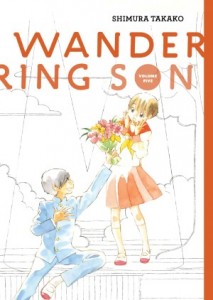
Wandering Son, Vol. 5

November 4, 2013 by Sean Gaffney

By Shimura Takako. Released in Japan by Enterbrain, serialization ongoing in the magazine Comic Beam. Released in North America by Fantagraphics.

Switching to a new environment can be crippling to a young person, particularly if they’re going through a lot of other things as well. So it is with the cast of Wandering Son and middle school. Nitori tries to continue to define himself while also discovering something he’s genuinely good at, Takatsuki discovers she’s no longer the only one in the room doing what she does, and Chiba finds that even if she’s gone from overly emotional to overly stoic, she still has difficulty dealing with anyone. So, in other words, it’s an excellent depiction of anyone’s life in middle school.

wanderingson5

We also meet some new cast members, who basically fly into Takatsuki’s circle of friends and explode like a bomb. Sarashina also sometimes wears male clothing, but it’s nothing to do with gender identity and more to do with her being an eccentric loudmouth who does whatever the hell she wants. Naturally, Takatsuki is drawn to her, as not caring about what people think is something everyone else in this book has trouble getting past. She also has a best friend, though, Shirai, who clearly is very close to her, and is very unhappy with this new girl making advances on her… um, friend. There are no yuri overtones here, really, but Shirai certainly exhibits all the classic signs of jealousy. She’s written a little flatly, so I hope we find out more about her later.

As for Chiba, you really want to reach out and give her a hug, but there’s no way she’d let you. She can’t get over her own feelings of hatred/jealousy towards Takatsuki, and attempting to suppress all emotion is not working out very well when everyone around you is giving you an excuse to go off like a rocket. So the answer, clearly, is to be antagonistic to *everyone* – even the girls in a higher grade than her, a definite no-no in Japanese society. I really hope Chiba can eventually move on past her repressed and upsetting anger, because right now she’s on a very dark road, and given she’s only 12 or so that’s depressing in itself.

Meanwhile, our hero and heroine are both facing the realities of puberty. Nitori and Ariga record their voices on tape, so they’ll be able to remember what they were like before they change. Nitori is a little upset at the idea that he won’t be able to dress as a girl anymore. Takatsuki is having an even worse time… her sports coach is demanding she wear a bra to practice, another reminder that her gender is trying to impose limits on her. The two of them finally make up, sort of, in a touching yet somewhat sad scene as they both worry about the future. Nitori, however, seems to get an idea for it, and begins to start writing a story based on his own experiences. I like the idea of Nitori’s insecurities and dreams fueling his creativity, and wonder if Takatsuki will be able to help in the process besides just having her life give him ideas.

All in all, this was an excellent transitional book in the series. As we settle into middle school, things are bound to get even more awkward, and I hope our cast finds the strength to make it through.

Filed Under: REVIEWS

The Way of Taiko

November 3, 2013 by Ash Brown

The Way of TaikoAuthor: Heidi Varian
Publisher: Stone Bridge
ISBN: 9781611720129
Released: September 2013
Original release: 2005

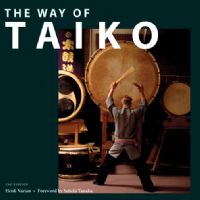
There are very few books available in English that are devoted to taiko–Japanese drums and drumming. In fact, there are only two that I know of: Heidi Varian’s The Way of Taiko and Shawn Bender’s Taiko Boom: Japanese Drumming in Place and Motion. Out of these two works, it was The Way of Taiko that first addressed the subject in depth. Originally published in 2005, by the time that I seriously started studying taiko a few years ago The Way of Taiko was already out of print and my dojo’s copy of the book was literally falling apart. And so, I was extremely pleased to learn that Stone Bridge Press was releasing a second edition of The Way of Taiko in 2013. In addition to Varian’s main text, the volume also includes an extensive glossary by David Leong and a foreword by Seiichi Tanaka–credited for introducing modern taiko to the United States.

After the prefatory material and introduction, The Way of Taiko is divided into three major sections which are then followed by the glossary and other resources for reference. The first part, “A Brief History of Taiko” is just that–a concise survey of the history of taiko drums and music from their mythological beginnings to their modern styles of performance. Notably, Varian addresses the place taiko holds in America as well as in Japan. The second section of The Way of Taiko, “Understanding Sounds and Movements,” takes a closer look at the drums themselves as well as other instruments and vocalizations used in taiko performance. Also explained in this section are some of the more visual elements of taiko, such as the players’ attire and movements. The main text of The Way of Taiko closes with “Training in the Way,” focusing on four major aspects of learning taiko: kokoro (spirit), waza (action), karada (body), and rei (etiquette).

For the most part, although updated and revised, the content of the second edition of The Way of Taiko is nearly identical to that of the first. What really makes the second edition stand out from the original printing is the increased values of production quality. The binding is much better and the colors are much sharper and more vibrant. Since the entire volume is in full-color, this really adds to the overall presentation of The Way of Taiko. The improved color is particularly welcomed for the dozens of photographs that are included in the volume exhibiting the power, dynamism, intensity, and beauty of taiko. Seiichi Tanaka’s San Francisco Taiko Dojo is predominantly represented in the photographs (Varian was associated with that dojo and it is the oldest taiko dojo in the United States), but other groups and soloists from both America and Japan are also featured. It is wonderful to be able to see the joy and spirit that the performers put into their art.

The Way of Taiko is a small but informative volume and very approachable, suited for those with a general interest in taiko as well as for those who are more actively involved in the art form. As a taiko player myself, I enjoyed learning more about its history, meaning, and form from a performance perspective. My dojo has a slightly different style and lineage than most of the groups discussed in The Way of Taiko, but I still found the book to be a very valuable resource. What will probably vary the most from school to school is the level of formality and the etiquette followed, but Varian describes the most proper forms so following her guidelines will aid in avoiding offense in most situations. What I probably appreciated most about The Way of Taiko was how many different aspects of taiko Varian addresses: its history and its future, its art and its science, and taiko’s total incorporation of mind, body, and spirit. The Way of Taiko is an excellent resource and I am very happy to see it back in print again.

Filed Under: REVIEWS Tagged With: Heidi Varian, Nonfiction, Stone Bridge Press

Adventures in the Key of Shoujo: Strobe Edge, Vol.2

November 3, 2013 by Phillip Anthony 2 Comments

Strobe Edge Vol.2 | By Io Sakisaka | Published by Viz Media | Rated: Teen

strobe_edge_vol_2

Ah, the tangled web of love. After being shot down by school hotie, Ren, Ninako is trying to adjust to life in a post-rejection world. The poor girl has been told by the guy she likes that he’s not interested after she told the guy who is interested in her that she wasn’t interested! Now that the whole school knows, she is trying to figure out the “what now?” It’s not fair when that happens to someone but to her credit she’s trying to deal with it. Though, there are a couple of moments in this volume where she kind of scares me with something along the lines of “I still love him but I’m happy to be around him.” That is a recipe for disaster but who wants to listen to little old me? Anyways, the point of this volume seems to be that section in the guidebook where you really should let sleeping dogs lie. Ninako doesn’t seem to disengage from Ren, in fact she’s over the moon that they will be attending school council meetings together. I feel that she is trying to live off the embers, as it were, of her infatuation with Ren. I really love her earnest wish to be around her currently-not-to-be beau but I can’t help but feel she’s going about it in the wrong way.

Ren for his part almost seems to not notice that the girl who confessed to him is now hanging out with him. Now, the author looks like she’s skirting this issue by showing us the rejected girls club, a group of girls who have been rejected by Ren alone, and their snotty attitude toward him. But after Ninako rejects (lot of rejections going on in this volume) their ideas, she is then ostracized from a club she didn’t want to be part of. Wait, what? We then get them bullying her in minor ways for the remainder of the volume. Does this happen to Japanese girls or girls in general? If it does, man that is a sad way to conduct yourself. While I’m sympathetic to Ninako and her plight, the fact that she still likes Ren even after she tells us, the reader, that she knows Ren has a girlfriends is kind of weird. What is she trying to accomplish by doing this? She isn’t a bad person so she wouldn’t try and steal Ren from his girlfriend, Mayuka. But she still wants to be around Ren? Sorry, I don’t get it. On the other hand, Ren spends much of this volume going from cold fish to says hi to Ninako to getting into an embrace with Ninako. No wonder the girl doesn’t know which way is up.

Another thing I don’t get is Daiki. He is Mayuka’s younger brother and the guy who Ninako rejected. He spends the entire volume chasing around after Ninako or getting in classmate Ando’s face (more on him later) for being so brazen as to ask the girls for their numbers. Daiki is my least favourite character because, and I’m just giving my initial impressions of him here, he comes across like a sore loser in this edition. Like someone took away his beloved toy and won’t give it back. I understand he’s just as hurt by Ninako as she is with Ren but there’s no excuse to treat other people this way. On the subject of Ando, he is a great element to the cast. He’s a disruptor, coming in and hanging out with Ninako and making her goes places with her. He seems to be just another cad but then he has an interesting conversation with Ren when they witness her standing up to the Rejected Club. More or less, he warns Ren not to treat Ninako to same way as the other girls he rejected. That is a strange statement to make. He, ostensibly, doesn’t know Ninako until he joins the class so why would he say this? Could this mean he knew Ninako before and she doesn’t recognise him? I’ll be interested to see volume three for a clarification. Ando seems to be fresh with everyone but he skirts a fine line between being outgoing and being a complete flirt. Is he really into Ninako or is he playing? When he kisses Ninako on the head, he does seem upset that he upset her.

One thing that bothered me more than the up and down character reveals was that I couldn’t recognise a lot of the girls in this volume. Io Sakisaka is a good artist with wonderful designs so the fact I have to stare at each girl’s hair style to recognise Ninako or others is a little much for me. It’s not a major thing but it did become distracting through the middle of the book.

The series looks like it is a lock for my ongoing pile in a way that I haven’t been able to attach to Sakura Hime. I’m interested in the characters plight (yes, even Daiki) so I want to see how things start to turn out for them.

Little bit of housekeeping here, readers. You may have noticed that it has been around four months since my last post here on Manga Bookshelf. First, my apologies to you and also to MJwho basically left me alone to sort out my stuff. For the purposes of letting you guys understand that I wasn’t just sitting on my duff, scratching my proverbial, here’s what happened to me over the summer. First, I effectively lost my job. It was a nice job, I liked it but it didn’t like me and the people where I worked couldn’t have been more accommodating to me but c’est la vie. Next, I got a bad respiratory infection that wouldn’t go away. It wasn’t serious but it kind of kills your ability to like reading manga. Lastly, writers block set in whenever over the month of August I tried to read anything. Just a wave of “ugghhh” set in whenever I tried to concentrate. But that’s all done with now and I’m looking forward to posting the end of the Sailor Moon series and seeing how that turns out. So, thanks for sticking with me, readers and I promise I won’t do that again.

Filed Under: Adventures in the Key of Shoujo Tagged With: shojo, shojo beat, VIZ

Weekly Shonen Jump Recap: October 14, 2013

November 3, 2013 by Derek Bown Leave a Comment

October 14 CoverWould you believe me if I told you writing the introduction to my reviews is the hardest part? Well it is. When reviewing the actual chapters I have something to base my comments off of. But when actually writing an introduction I have to chose either something from the chapters to talk about, or just think of any random thing. And after doing a couple of reviews one tends to run out of things to say. So the clever writer will make a big deal about how he has nothing to say in an attempt to fill up the space with text that everybody skips over anyway. Thus he creates the illusion of having written a full review, with an introduction, middle, and conclusion, when in fact all he did was prattle on about how terrible a writer he actually is. And by making it a dense section of text he deters even those readers that read the entire review. Thus, the deception is cleverly put into action.

Only one thing could stop me now, if for example I wrote a second, shorter paragraph that is easier to read where I admit to the deception. Hence prompting readers to take a closer look at my first paragraph.

One Piece Ch. 724
Well, Sanji got beat like we expected, but at least he didn’t look like a complete clown. We already have two literal clowns in this series, we don’t need a formerly badass character joining their ranks. And while we had already figured out Doflamingo’s power we get the first official confirmation from Oda that his power is in fact string based. We also get an explanation of how he can “fly”. While I’d assumed that he could swing from his strings, it wasn’t clear how he was able to do that over the open sea. And it turns out that the way he does it would put Spider-Man to shame.

While Law declares the alliance broken, and it may be tempting to think he’s doing so out of his own convenience, keep in mind that he had a chance to denounce Luffy and his crew at a very convenient moment. Instead he stuck with them and I think that his intent is mostly to protect them. Partially because he doesn’t plan on living beyond this moment most likely, and he needs them to continue the plan, but I still think that a part of him has grown fond of the crew and wants to keep them safe. Now the question is, what exactly did Doflamingo do to Law thirteen years ago? Oda is too good a writer not to have it be connected to the Riku dynasty, if it were a separate even then the arc would be just that much clunkier. Chances are high that Law was a former member of the Riku dynasty.

One Piece

Seraph of the End Ch. 002
So our main character is being forced to attend high school in order to make friends? Because he doesn’t work well with a team? I’m not even going to bother learning his actual name, because I’m just going to be calling him Twilight Sparkle for the rest of this series’ life.

And is it just me, or does that seem really lazy of a military organization to send one of their operatives, no two of them actually, to a regular high school? Aren’t there team building exercises they could do within their own organization? Or are they so underfunded that they have to outsource to the local high school? And if the local high school has the funding to teach people about teamwork but these vampire hunters don’t, then how do they have the resources to fight vampires?

This might actually explain why they didn’t bother saving any of the children being held by vampires. I mean, obviously budget cuts were made and sacrifices were unavoidable. Why else would a group that clearly can take out vampires with ease not be flushing that underground city out?

But what really get me is that this series was sold to me as a post-apocalyptic vampire story. And what do we get? High School. Gosh darnit Japan you couldn’t help yourself? You just had to make it about High School somehow didn’t you? I think the phrase “having your cake and eating it” as nonsensical as it may be, applies here. I mean, really? We went from apocalypse vampires to High School setting within two chapters? That’s almost phenomenal really.

And the main drive of this chapter is made completely irrelevant by the end, when Twilight Sparkle makes a friend and qualifies for the elite vampire hunter unit. What do you want to bet this plot point never comes up again? In which case, wouldn’t it have been easier to just introduce his friend in a different way? There’s no good way around this. If the High School remains a plot point I’ll be pissed because it’s such generic garbage. If it never comes up again I’ll be pissed because this chapter wasted our time. Well done, Manga.

And for those of you that get the Twilight Sparkle reference, here’s another one for you:

Dear Princess Guren,

Today I learned that friendship is important, even if my new friend is clearly going to be the most annoying character in this series.

Oh yes, I also learned you should get bent.

Your faithful student,

Twilight Sparkle

Naruto Ch. 650
I recall that at some point something happened in this chapter. But I can’t remember the details. I should probably write these reviews right after the chapters come out. Except I know for a fact that I wouldn’t remember any of it better then! All I can remember is this vague sense that nothing new was learned, rather something I’ve already known for years was emphasized. Which would be all good and fine, but I just can’t get over how little of an impact this series is leaving! On the plus side, thanks to the Shonen Jump Podcast I’ve learned that the war has been going on for 150 chapters. For the record, the war officially started with volume 55 of the manga. Which was published back in 2011. This has been going on for almost two years. For the record, the series is 651 chapters long. This war has taken up almost a whole sixth of the series. Even more if you consider that there was a 50 chapter lead in to the war. This makes me sad.

Naruto

World Trigger Ch. 034
While I’m still not a World Trigger fan I do enjoy Kitora as a character. She’s had some badass moments and this chapter actually had some funny moments. Sure it was a typical “This girl has a crush” trope, but Kitora’s reactions are so out of the ordinary that I can’t help but enjoy her. And the fact that she doesn’t turn Osamu in for not defeating the Neighbor he became B Rank for. Rather she just uses the information for her own validation. She’s glad her initial read of him was right. She doesn’t turn him in, which is what I would have expected from a character like her. Which is what makes her that much more enjoyable.

I also appreciated Chika’s scene at the end. It was amusing. And there is my biggest problem with this series. It has potential, and plenty of fun moments, but there are some major, major flaws that mask the good moments.

Bleach Ch. 552
This arc has done nothing but retcon the entire series. And in places where it doesn’t need it. We don’t need another reason for the Quincy to hate Hollows. The death of a family is a perfectly valid reason for someone to become villainous and vengeful. Just ask Kishimoto. And I have a problem with the statement that the death of family members isn’t enough to inspire the kind of hatred the Quincies have for Hollows. I beg to differ. If some kind of monster ghost killed my family I’d be enraged enough to destroy them all. Kubo is just complicating his series where it isn’t needed. And that alone is a massive shame.

One-Punch Man Ch. 029
Nice to see this series can expand its humor beyond “He’s strong.” Here the joke is “He’s completely out of place.” And sure a part of the joke is that all these elites are looking down on Saitama when he could beat them all. But if nothing else this chapter was great for world building. Nice to see all but two of the S Class heroes.

One-Punch Man

Nisekoi Ch. 094
While Haru wasn’t unbearable this chapter, I would have liked it a lot more had she not been the focus. Please stop trying to cram her down our throats Naoshi. You’ve got plenty of great characters, so please stop trying to force this one on us. The chapter was plenty enjoyable, but I just can’t get over the fact that the whole chapter was focused on a subpar character.

Toriko Ch. 253
While the backstory has been excellent, I don’t think it has built proper motivation for Midora. The motivation may be there but we don’t actually get to see the moment when Midora turns evil. It’s covered in one of the montages, but because we don’t actually get to see the moment it doesn’t have any kind of emotional impact on us. Considering that was the point of the backstory I can’t help but feel let down. At least we get an explanation for how Froese came back from the dead, and why her first picture in the manga showed her with long hair. Overall a good backstory, but a bit lacking towards the end.

Toriko

Dragon Ball Z Ch. 035
Don’t get me wrong, I like Dragon Ball. But what can I say beyond, “They fought and it’s fun to look at.” There really isn’t much else to it. At least right now.


While most of my comments are negative, I did enjoy this week. If nothing else One Piece was great, and Seraph of the End was the source of much hilarity. So tell me, two chapters in, what do you think of this new series?

If you want to hear more, check out the Manga^3 Podcast Archives.

Filed Under: FEATURES & REVIEWS, WSJA Recaps Tagged With: bleach, blue exorcist, Dragon Ball Z, Jako The Galactic Patrolman, naruto, nisekoi, One Piece, one punch man, toriko, world trigger

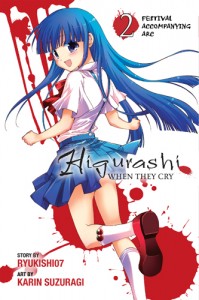
Higurashi: When They Cry, Vol. 23

November 3, 2013 by Sean Gaffney

Story by Ryukishi07; Art by Karin Suzuragi. Released in Japan as “Higurashi no Naku Koro ni: Matsuribayashi-hen” by Square Enix, serialized in the magazine Gangan Joker. Released in North America by Yen Press.

As I’ve been following the Higurashi manga, I’ve also been slowly going through the original visual novel, which MangaGamer has released here in North America (don’t look for their site – Higurashi is their token ‘not porn’ title). I just happen to be at the appropriate place in the novel as I am in the manga, so am able to compare them even more. It’s not clear how closely Ryukishi07 checked the content of the manga with the Higurashi artists – I know he’s very involved with the Umineko manga, particularly the final volumes, to correct certain issues with the novels – but certainly the manga glosses over a lot, being a sort of “greatest hits” compared to the deep immersion of the original. That said, where the manga does succeed is in the emotion. Be it heartwarming, sad tears, or dull horror, the manga delivers the goods here.

Ryukishi07_Higurashi_FestivalArc_V2_TP

Nothing better demonstrates the difference between the two than the fate of Rika’s mother. The visual novel has this scene from the perspective of Ooishi, who is at the Festival waiting to see if anyone is killed. He’s on hand for the death of Rika’s father, made to look like a heart attack, and tries to follow the group back to the Irie Clinic but is hamstrung by traffic. Thus, we only hear that the wife is later found missing, supposedly having drowned herself in the swamp with a suspicious letter left behind. The manga, on the other hand, follows Rika’s mother. Rika’s mom has always been fairly high-strung from what little we’ve seen of her. It’s not hard to figure out why… Rika must be an amazingly difficult child to bring up. And what with the clinic using her as a guinea pig, and her father basically going along with it, her nerves just stretch to the breaking point. As such, she is ill-equipped to deal with Takano.

Takano remains fascinating, and though I think the visual novel does a better job of showing that a lot of this is Hinamizawa Syndrome rather than “lulz, I’m evil like that”, there’s enough here to keep everyone happy. Notably, for the sake of her research, she grovels at the feet of Rika’s parents, and when that fails, seems genuinely at a loss until Okonogi suggests “taking care of” Rika’s parents. Murder comes as a surprise to her… but once it’s in her head, she doesn’t hold back, as Rika’s parents instantly make the transition from “people” to “research subjects”. As such, she can easily justify using Rika’s mother as a live test subject. The murder is terrifying, and does not remotely hold back, with blood flying everywhere and Takano’s insane rictus grin it’s straight out of an Italian horror film.

Later on, Takano faces an even bigger setback when her mentor dies, and it’s shown that he was basically the only thing keeping her project going. Higurashi has a very realistic and cynical take on the Japanese political system and how power-grabbing it can be, particularly in the early 80s when this takes place. Takano once again has everything almost crumble around her, and it becomes apparently that even though she’s the source of all of Rika’s misery, she herself is being manipulated throughout this story, not just by Okonogi, but also a new faction who wants to use her in order to facilitate their own rise to power. If it works, great. If she dies, meh. And it’s clear the Mountain Hounds work for them, not Rika *or* Takano. Honestly, those two really have so much in common. They should talk over a nice cup of tea when this is over.

The visual novel goes into great detail on the pasts of most of the characters, and the manga manages to include some of it – Okonogi’s mourning for his father, and meeting his mentor after WWII shows why things starting with that guy’s death have led to his own obsession, even if it’s misdirected at the Sonozakis. Speaking of the Sonozakis, we see Mion’s grief and anger over Satoshi’s disappearance (Shion is carefully absent here), and her grandmother doing her best to bring “new blood” into the town while still trying to look old and crotchety. That new blood is the Maebara family, with Keiichi trying to start over after the BB gun incident. Rika and Hanyuu are at their most blatant here, with Rika actively showing she knows who they are and relying on people not realizing she’s living the same life over and over again so they laugh it off.

We also see Hanyu’s past, several hundred years ago. She really is a supernatural being, and her earnest attempts to stop the violence between the two tribes occupying Onigafuchi is heartwarming. I do think the drama needed more time to develop – as it is, it’s not as effecting simply as it goes by so fast – Hanyu gets her own daughter to kill her with a giant sword, which should have been given more weight. But then, Hanyu in general is the most problematic character of Higurashi’s so this is likely appropriate.

There are a few other things I felt didn’t work. Given how much Rika is using her past knowledge to make events work for her, her memories “catching up” with her at the end isn’t explained well enough, and seems to be awkwardly shoehorned in so there can be a cliffhanger. Also, four years pass between the start and end of this volume, yet the kids – all growing like weeds, one would think – look exactly the same in 1980 as they do in 1983. (The visual novel has a similar issue – the sprites never change.) More realism, please.

So now, all the pieces are in place – even Akasaka is having memories of a past life where his wife died and Rika was slaughtered, and is prepared to make his way to Hinamizawa immediately. Will all this be enough to defeat Takano and the forces that are manipulating her? And will Shion ever show up in this again? We’ll find out in January. In the meantime, this is still a very good adaptation with a lot of tragic and emotional scenes.

Filed Under: REVIEWS

Voice Over! Seiyu Academy, Vol. 1

November 2, 2013 by Sean Gaffney

By Maki Minami. Released in Japan as “Seiyu Ka!” by Hakusensha, serialized in the magazine Hana to Yume. Released in North America by Viz.

Long-time readers of this blog will know that I am a huge fan of the Japanese shoujo magazine Hana to Yume. Sadly, I have been increasingly unable to rave about its style of shoujo recently, as CMX and Tokyopop went under, and Viz has licensed less and less from the title, preferring to concentrate on their own owners’ magazines. This makes me very happy when I see a new series starting up, specially one from an artist I’ve liked before, Maki Minami. Her prior series here was Special A, a romantic comedy with an emphasis on the comedy, which had all of Hakusensha’s usual strong point, as well as all its weak points. The text and art tends to clutter the page (Hakusensha shoujo packs the page, Shueisha shoujo opens it up), the plotting could be insanely frustrating, particularly in terms of how drawn out the romance was, and character’s growth ended as soon as their function in the story was complete. Now we have her new series, which has many of the same types of people we’ve seen before. Can it fix its predecessor’s issues?

voiceover1

Our heroine has the name Hime Kino, which already sounds like a pseudonym. She wants to follow in the footsteps of her inspiration and become a voice actress. There’s just one problem – she has a deep, husky voice, and she wants to sound like a cute girl. Nevertheless, the academy lets her in anyway, and it’s hinted there’s some deeper, behind the scenes reason. The solution, of course, is obvious – she should play sexy pretty bishonen, which female voice artists do in Japan ALL THE TIME. It’s such an obvious solution that we see it happening at the end of the first chapter, where she has to fill in as the prince in a Snow White dramatization. But Hime clearly wants to be cute, and girly, ad adorable. I imagine a large part of this plotline will be showing her how she should really succeed at what she’s best at.

Cute vs. cool is a classic modern shoujo trope. Usually, heroines want to be the former but end up being the latter, and Hime easily fits into that pattern. And naturally, she’s never more attractive than when she’s acting strong and powerful and masculine. This is a reverse harem manga, so we already have the obvious winner (a sullen brunet – sigh – named Senri Kuno), as well as a few obvious runner-ups. We have the traditional one female friend. I’m hoping for a second as time goes on. And, this being Maki Minami, we have a lot of incredibly goofy guys doing dumb things – there is some fun humor here.

There are some issues, of course. I am rather weary of bullying by teachers in Japan being a) accepted by the institution as good for students in the long run, and b) not called out because the student has to get stronger on her own. It *sounds* admirable, but I think teaches an incomplete lesson. Hime is also a bit aggressively clueless, though so far she’s not quite as bad as Hikari from Special A, who set new records for denseness. Lastly, as with a lot of mainstream shoujo, there’s nothing really original here – just a few old cliches given a new paint job. But I’m perfectly happy with that as long as it’s fun. And for the most part, Voice Over! is fun. I’ll be looking forward to Vol. 2.

Filed Under: REVIEWS

Bookshelf Overload: October 2013

November 1, 2013 by Ash Brown

Thanks to gift certificates, review copies, and some choice preorders, October once again saw plenty of manga and other materials making their way onto my bookshelves at home. Thankfully, it wasn’t as absurd an amount as it has been in past months and I recently made a couple of rather large manga and anime donations to my libraries, but my room is quickly getting very crowded again. My favorite out-of-print manga find for the month was a complete set of Reiko Shimizu’s Moon Child. Coincidentally enough, I purchased it from of a regular reader of Manga Bookshelf without even realizing it! Tucked in as a bonus was a volume of Makoto Kobayashi’s What’s Michael? which I will be reviewing soon. (Yes, folks, I take review requests!) There were a few preorders that I was particularly excited for in October: Takehiko Inoue’s Real, Volume 12 (which I feel is one of the best series currently being released in English), the marvelous omnibus edition of Junji Ito’s Uzumaki: Spiral into Horror (which includes color pages and previously unreleased materials), and Baku Yumemakura and Jiro Taniguchi’s The Summit of the Gods, Volume 4 (which is one of my personal favorites). I’m also very happy to see more of Est Em’s work being released in print (Tableau Numéro 20) and am curious to give Ichiya Sazanami’s Black Bard omnibus from One Peace Books a try.

Manga!
Animal Land, Volumes 5-8 by Makoto Raiku
Attack on Titan, Volumes 8 by Hajime Isayama
Baron Gong Battle, Volumes 1-6 by Masayuki Taguchi
Black Bard by Ichiya Sazanami
Fairy Tail, Volume 31 by Hiro Mashima
Flowers of Evil, Volume 7 by Shuzo Oshimi
Knights of Sidonia, Volume 5 by Tsutomu Nihei
The Manzai Comics, Volume 1 written by Atsuko Asano, illustrated by Hizuru Imai
Missions of Love, Volume 5 by Ema Toyama
Monster Musume: Everyday Life with Monster Girls, Volume 1 by Okayado
Moon Child, Volumes 1-13 by Reiko Shimizu
No. 6, Volume 3 by Hinoki Kino
No Matter How I Look at It, It’s You Guys’ Fault I’m Not Popular!, Volume 1 by Nico Tanigawa
Real, Volume 12 by Takehiko Inoue
Rica ‘tte Kanji!? by Rica Takashima
Sankarea: Undying Love, Volume 3 by Mitsuru Hattori
The Summit of the Gods, Volume 4 written by Baku Yumemakura, illustrated by Jiro Taniguchi
Tableau Numéro 20 by Est Em
The Tyrant Falls in Love, Volume 8 by Hinako Takanaga
Uzumaki: Spiral into Horror by Junji Ito
What’s Michael, Book 2 Makoto Kobayashi

Comics!
Battling Boy by Paul Pope
Homecoming by Creative Alchemy
In These Words, Chapter 9 by Guilt | Pleasure
Prima by Yeehun
Solestar written by Siike Donnelly
The Spectral Engine by Ray Fawkes
Yuri Monogatari, Volumes 5-6 by Various

Nonfiction!
The Nobility of Failure: Tragic Heroes in the History of Japan by Ivan Morris
The Way of Taiko by Heidi Varian

Music!
Tsuritama: Original Soundtrack by Kuricorder Quartet

Filed Under: UNSHELVED

  • « Go to Previous Page
  • Page 1
  • Page 2
  • Page 3
  • Page 4
 | Log in
Copyright © 2010 Manga Bookshelf | Powered by WordPress & the Genesis Framework