 Welcome to another Manhwa Monday! We’re running late this week, but we’ve got some great review links to share.
First off, at Soliloquy in Blue, Michelle Smith reviews volumes two and three of There’s Something About Sunyool, available now from NETCOMICS online.
“In the end, There’s Something About Sunyool offers a lot of crackalicious drama that is extremely fun to read. Volume two is a bit slow, as all of the bickering grows tiresome, but don’t let that dissuade you from continuing on to volume three, which is much better and ends on quite a cliffhanger. ”
Volume one is available in print now, with volume two set for release in September. Check out Michelle’s review for more.
Elswhere in reviews, at Manga Maniac Cafe, Julie takes a look at volume four of Sarasah (Yen Press). At Comic Book Bin, Chris Zimmerman reviews volume three of Jack Frost (Yen Press). Both Kristin Bomba (Comic Attack) and Charles Webb (Manga Life) check out Time and Again …
 Back in the 1980s and 1990s, before publishers realized that they could sell manga to teenagers through Borders and Books-A-Million, VIZ and Dark Horse actively courted the comic-store crowd with blood, bullets, and boobs. It was a golden age for manly-man manga — think Crying Freeman and Hotel Harbor View — but it was also a period in which publishers licensed some bad stuff. And when I say “bad stuff,” I mean it: I’m talking ham-fisted dialogue, eyeball-bending artwork, and kooky storylines that defy logic. Lycanthrope Leo (1997), an oddity from the VIZ catalog, is one such manga, a horror story with a plot that might best be described as Teen Wolf meets The Island of Dr. Moreau with a dash of WTF?!
 – As orphan Teru Kurebayashi’s older brother prepared to pass from this world, he gave her the gift of a cell phone–one which she could use to contact his mysterious friend “Daisy” who he promised would protect Teru in his absence.
 – This is an emotionally heavy volume for Rasetsu, who tries to get over her feelings for Yako at the same time as she’s confronted with new truths about Kuryu (and his feelings for her). Meanwhile, Yako faces some very old spirits who mistake him for the person he most needs to forget.
 – In this installment, Choko and Masayuki take their first overnight trip together, with the intention of finally consummating their relationship. Of course the weekend is crashed by a collection of family and friends, though the two eventually find some time alone to do the deed.
 – The plot thickens in this volume, as it is revealed that Soichiro’s plan for success revolves entirely around manipulating his friend, Nozomu, into falling in love with his new wife, Sumi. Meanwhile, Sumi’s brother has already frittered away the money she sacrificed herself for, leaving the kids in the care of a slovenly drunk.

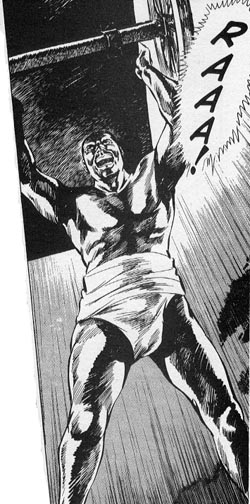 The bigger problem, however, is that King entertains notions of race, class, and gender that would have been as alien to American colonists as they were to Japanese farmers and overlords. His blind commitment to addressing inequality wherever he encounters it — on the road, at a brothel — leads him to do and say incredibly reckless things that require George’s boffo swordsmanship and insider knowledge of the culture to rectify. If anything, King’s idealism makes him seem simple-minded in comparison with George, who comes across as far more worldly, pragmatic, and clever. I’m guessing that Koike thought he’d created an honorable character in King without realizing the degree to which stereotypes, good and bad, informed the portrayal. In fairness to Koike, it’s a trap that’s ensnared plenty of American authors and screenwriters who ought to know that the saintly black character is as clichéd and potentially offensive a stereotype as the most craven fool in Uncle Tom’s Cabin. By relying on American popular entertainment for his information on slavery, however, Koike falls into the very same trap, inadvertently resurrecting some hoary racial and sexual tropes in the process.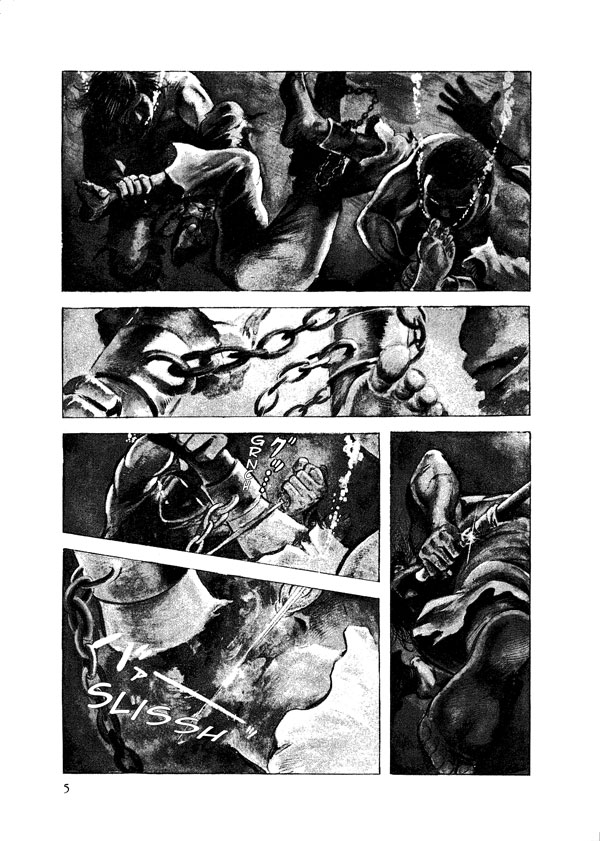
 When reading historical manga, I grant the artist creative license to tell a story that evokes the spirit of an age rather than its details. What rankles my inner historian, however, are the kind of anachronisms that result from sheer laziness or paucity of imagination: modern slang, gross disregard for well-established fact. Alas, Color of Rage is filled with the kind of historical howlers that would make C. Vann Woodward or Leon Litwack gnash their teeth in despair.
 Though I frequently grouse about fanservice , I have a grudging respect for those artists who make costume failures, panty shots, and general shirtlessness play essential roles in advancing their plots. Consider
 – This week’s pick falls into the first category. It’s the final volume of a series I’ve followed ravenously for quite some time, Han SeungHee and Jeon JinSeok’s
 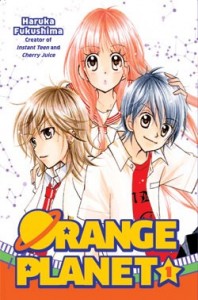 Orange Planet, Vol. 1
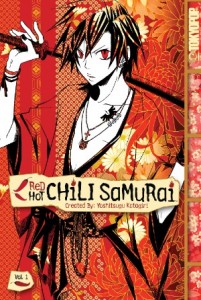 Red Hot Chili Samurai, Vol. 1
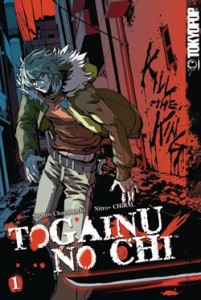 Togainu no Chi, Vol. 1
  ORANGE PLANET, VOL. 1
