• Skip to primary navigation
  • Skip to main content
  • Skip to primary sidebar
  • Home
  • About Us
    • Privacy Policy
    • Comment Policy
    • Disclosures & Disclaimers
  • Resources
    • Links, Essays & Articles
    • Fandomology!
    • CLAMP Directory
    • BlogRoll
  • Features & Columns
    • 3 Things Thursday
    • Adventures in the Key of Shoujo
    • Bit & Blips (game reviews)
    • BL BOOKRACK
    • Bookshelf Briefs
    • Bringing the Drama
    • Comic Conversion
    • Fanservice Friday
    • Going Digital
    • It Came From the Sinosphere
    • License This!
    • Magazine no Mori
    • My Week in Manga
    • OFF THE SHELF
    • Not By Manga Alone
    • PICK OF THE WEEK
    • Subtitles & Sensibility
    • Weekly Shonen Jump Recaps
  • Manga Moveable Feast
    • MMF Full Archive
    • Yun Kouga
    • CLAMP
    • Shojo Beat
    • Osamu Tezuka
    • Sailor Moon
    • Fruits Basket
    • Takehiko Inoue
    • Wild Adapter
    • One Piece
    • After School Nightmare
    • Karakuri Odette
    • Paradise Kiss
    • The Color Trilogy
    • To Terra…
    • Sexy Voice & Robo
  • Browse by Author
    • Sean Gaffney
    • Anna Neatrour
    • Michelle Smith
    • Katherine Dacey
    • MJ
    • Brigid Alverson
    • Travis Anderson
    • Phillip Anthony
    • Derek Bown
    • Jaci Dahlvang
    • Angela Eastman
    • Erica Friedman
    • Sara K.
    • Megan Purdy
    • Emily Snodgrass
    • Nancy Thistlethwaite
    • Eva Volin
    • David Welsh
  • MB Blogs
    • A Case Suitable For Treatment
    • Experiments in Manga
    • MangaBlog
    • The Manga Critic
    • Manga Report
    • Soliloquy in Blue
    • Manga Curmudgeon (archive)

Manga Bookshelf

Discussion, Resources, Roundtables, & Reviews

manga

Manga Giveaway: Blood Lad Giveaway

August 28, 2013 by Ash Brown

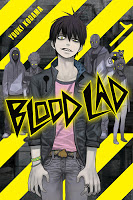
It’s the last Wednesday in August which means it’s the first day in Experiment in Manga’s monthly manga giveaway! Up for grabs this time around is the first omnibus volume of Yuuki Kodama’s Blood Lad manga as published by Yen Press, which is equivalent to the first two volumes of the original Japanese release. Since the anime is currently airing, I thought there might be some renewed interest in the series. As per usual, the contest is open worldwide!
BloodLad1

Vampires seem to be a perennial favorite in film and literature. Manga is no exception and vampires abound. They show up in many different genres–action, comedy, horror, romance (just to name a few)–and appear in all of the major demographics. Shōjo? Matsuri Hino’s Vampire Knight. Shōnen? Hirohiko Araki’s JoJo’s Bizarre Adventure. Josei? Tomu Ohmi’s Midnight Secretary. Seinen? Yuuki Kodama’s Blood Lad. (And that’s just off the top of my head…there are many, many more examples I could provide.) Generally, I prefer my vampires to be real monsters, terrifying creatures that pose a genuine threat to the humans around them. But I’ll admit, I am greatly amused by Staz in Blood Lad. He’s such an otaku goofball that I can’t help but like him.

So, you may be wondering, how can you win a copy of Blood Lad, Omnibus 1?

1) In the comments below, simply tell me who your favorite vampire in manga is and why. (Be sure to mention which manga they’re from, too.)
2) For a second entry, name a vampire manga that hasn’t been mentioned yet by me or by someone else.
3) If you’re on Twitter, you can earn a bonus entry by tweeting about the contest. Make sure to include a link to this post and @PhoenixTerran (that’s me).

And there you have it! Each person can earn up to three entries; you have one week to submit your comments. If you have trouble leaving comments, or if you would prefer, you can e-mail me your entries at phoenixterran(at)gmail(dot)com and I will post them in your name. The giveaway winner will be randomly selected and announced on September 4, 2013.

VERY IMPORTANT: Include some way that I can contact you. This can be an e-mail address, link to your website, Twitter username, or whatever. If I can’t figure out how to get a hold of you and you win, I’ll just draw another name.

Contest winner announced–Manga Giveaway: Blood Lad Giveaway Winner
Filed Under: FEATURES Tagged With: blood lad, manga, Yuuki Kodama

My Week in Manga: August 19-August 25, 2013

August 26, 2013 by Ash Brown

My News and Reviews

Well, the biggest news from last week (at least for me and Experiments in Manga) is that I have officially joined the Manga Bookshelf family of blogs. I posted an introductory post for new readers and anyone else interested in learning a little more about me or Experiments in Manga. I’m still getting used to WordPress, and I still have some cleaning up to do, so if you notice anything amiss, I’d appreciate you letting me know!

I also posted a review of Edogawa Rampo’s collection of short stories Japanese Tales of Mystery and Imagination. Originally released in 1956, the volume was Rampo’s English-language debut. I had previously read and enjoyed Rampo’s novella Strange Tale of Panorama Island which is why I sought out more of his work. (And on a related note: Suehiro Maruo’s The Strange Tale of Panorama Island is also marvelous.)

I also had the opportunity to help out manga critic Jason Thompson last week (who I credit as one of the major reasons I became so interested in manga.) If you’re in Vancouver, Washington this coming Sunday, Jason is presenting “Manga Hell: The Worst Manga Ever Translated” at Kumoricon. It should be pretty great. I was able to provide some images of choice pages from Kazuo Koike and Ryoichi Ikegami’s notorious manga series Wounded Man. (I first learned about Wounded Man thanks when it was selected for Kate Dacey’s Manga Hall of Shame.)

On to a few interesting things found online! I either completely missed this when it was first announced or simply forgot about it, but Bento Books has licensed five novels from Hayakawa Publishing: Hiroko Minakawa’s Pleased to Dissect You, Yuka Nakazato’s Silver Wings of the Campanula, Yu Godai’s, Quantum Devil Saga: Avatar Tuner, Volume 1, Akimaro Mori’s The Black Cat Takes a Stroll, and Issui Ogawa’s Many Many Sheep. It’s an intriguing mix of fantasy, science fiction, and mystery and quite a change of pace from Bento’s first release Math Girls.

In other licensing news, Sean Gaffney has a roundup of the Japan Expo announcements from this weekend. Finally, if you have the time I recommend giving the most recent ANNCast episode a listen–Super Manga Pals Forever. The always marvelous Deb Aoki and Rebecca Silverman join host Zac Bertschy to talk about the manga they’ve been reading and discuss the use of rape and taboos as plot elements in entertainment media. (Warning: Spoilers for the ninth volume of Yumi Unita’s Bunny Drop if by some chance you haven’t been spoiled already.)

Quick Takes

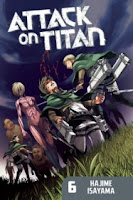
Attack on Titan, Volume 6 by Hajime Isayama. Despite the issues that I have with the art in Attack on Titan, which admittedly has been improving, I continue to be utterly absorbed and engaged by the story. The sixth volume picks up right where the fifth volume left off with the appearance of a new, seemingly intelligent, but still incredibly dangerous titan. It’s mostly one long action sequence as the titans tear through the ranks of the Survey Corps. Unsurprisingly, there are quite a few messy deaths. However, there’s a bit of character development as well. In particular, more is reveled about the members of the Special Operations Squad charged with guarding Eren who are also responsible for killing him should he get out of hand. The ending sets things up nicely for some major plot reveals in the next volume. Fortunately Kodansha has sped up the series release, so it won’t be too long of a wait to find out what happens next.

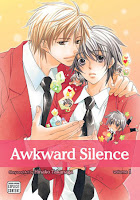
Awkward Silence, Volumes 1-3 by Hinako Takanaga. I tend to be fond of Takanaga’s boys’ love manga and so was happy when SuBLime picked up one of her ongoing series. Normally, I’m annoyed by manga where the plot hinges on a problem that would immediately be solved if the characters would just talk to one another. But in the case of Awkward Silence I didn’t mind as much because there is a very good reason that the characters don’t–Satoru has a difficult time expressing himself. It’s an integral part of his character and integral part of the story. One of the points of the series is that he and his boyfriend Keigo learn to overcome this. Their relationship is really quite sweet. Beginning with the third volume Awkward Silence starts to focus more on two of the secondary characters. (At least they started out as secondary characters.) Personally, I don’t find their relationship to be nearly as interesting. While still enjoyable, it feels more generic. Unlike the main couple, so far it’s missing something to really set it apart.

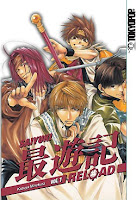
Saiyuki Reload, Volumes 4-6 by Kazuya Minekura. Although I was a little disappointed with the first three volumes of Saiyuki Reload, much preferring the earlier series Saiyuki, I think that Minekura has started to find her stride again. These volumes finish up the long flashback/backstory segement which included a look at Gojyo and Hakkai’s past when they were living together. (I’m a sucker for Hakkai, so I rather enjoyed that.) From there, Saiyuki Reload starts in on a new story arc, giving the plot the focus and direction that it needed. While the first few volumes of the series didn’t seem to be going anywhere, with the introduction of Hazel things are starting to get a bit more interesting. Sanzo and crew are faced with several moral conundrums and suddenly their journey west has some urgency behind it again. And speaking of The Journey to the West–the influences of the original work can definitely be seen. They aren’t always particularly prominent and Minekura is often very free with her interpretations, but The Journey to the West can still be found in there somewhere.

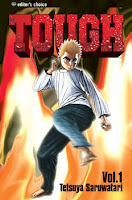
Tough, Volumes 1-6 by Tetsuya Saruwatari. Only six volumes of Tough were ever released in English. The series is actually a translation of Saruwatari’s Kōkō Tekken-den Tough and shouldn’t be confused with its sequel series which in Japan was called Tough. The fights are by far the best thing about Tough. Although the martial arts are taken to the extremes there are some legitimate styles and techniques being used. The manga is ultimately over-the-top, although dubious plausibility is maintained. Tough is violent and frequently brutal. The fighters deliver and sustain immense amounts of damage. Saruwatari doesn’t hesitate to show the resulting blood and broken bones. The few women, too, are shown to be martially capable. (Unfortunately they don’t make much of an appearance after the first volume.) The story, on the other hand, is nearly nonexistent and the attempts at humor fall flat. For the most part the plot is just an excuse to have men beat each other to a pulp. The actual fights are much more interesting than the weak justifications behind them.

X, Omnibus 6 (equivalent to Volumes 16-18) by CLAMP. Well, here it is, what is very likely to be the last volume of X. The series went on hiatus in 2003 and it doesn’t seem that CLAMP will be returning to it anytime soon. I read the first volume of X a few years ago but didn’t think much of it. I gave the series another try when Viz began to release the omnibus volumes and I’ve been hooked ever since. There are many fans frustrated by the series’ lack of ending, waiting for the final battle which may never come; I suppose I can now be counted among them. Still, I thoroughly enjoyed X in all of its epic, melodramatic, twisted, and tragic glory even if it can be a bit ridiculously excessive at times. CLAMP also uses some of the most intriguing page layouts that I’ve seen. They are very effective in conveying the emotional and dramatic moments in the story, of which the series has more than its fair share. Love and death are very closely intertwined in X and there is plenty of heartbreak to be had.

FujikoMineLupin the Third: The Woman Called Fujiko Mine directed by Sayo Yamamoto. This series has style–the animation is distinctive but appealing, the jazz-influenced soundtrack fits it perfectly, the storytelling is mature and has both darkness and levity. Familiarity with the Lupin III franchise isn’t necessary to enjoy the series; The Woman Called Fujiko Mine is a different take on the characters and story and can stand alone. Fujiko Mine is a thief and femme fatale. She is very much in charge of her sexuality and is more than willing to use it to get what she wants. It shouldn’t be too surprising, but nudity is a fairly frequent occurrence in the anime, but it is handled tastefully and artistically. In the last four episodes, things take a surprising turn for the strange when the revelation of Fujiko’s backstory really beings. Up until that point the series seemed largely to be an episodic collection of the various heists with which Fujiko was involved. There were hints of what was to come and most everything is tied together rather nicely in the end.

Filed Under: FEATURES, My Week in Manga Tagged With: anime, attack on titan, awkward silence, clamp, Hajime Isayama, Hinako Takanaga, kazuya minekura, Lupin III, manga, Saiyuki, Tetsuya Saruwatari, Tough, X

My Week in Manga: August 12-August 18, 2013

August 19, 2013 by Ash Brown

My News and Reviews

Two reviews, and some big news! First up was my review of Blade of the Immortal, Volume 24: Massacre by Hiroaki Samura. As you might suspect from the title, it’s a rather bloody volume. It also features what I think is one of the best visually executed battles in the series. I also reviewed Yukio Mishima’s novel Forbidden Colors which is a bit twisted but extremely engrossing and very good. Like his earlier novel Confessions of a Mask, it deals with homosexual themes and includes autobiographical elements.

As for the big news! Over the weekend Experiments in Manga celebrated it’s third anniversary and I wrote quite a lengthy post about it. If you don’t feel like reading the whole thing, here’s the really important bit: I am delighted to announce that in the very near future Experiments in Manga will be joining the Manga Bookshelf network of blogs!

I was traveling quite a bit last week (a couple of my friends were getting married), so I’m a little out of touch when it comes to some of the most recent manga news. However, there is one thing that I want to be sure to pass along. I personally don’t read much manga digitally, but Organization of Anti-Social Geniuses has a fantastic post looking at all the legal ways to read digital manga in 2013.

Quick Takes

The Last of the Mohicans by Shigeru Sugiura. The Last of the Mohicans is the first volume in editor Ryan Holmberg’s Ten-Cent Manga series, exploring classic manga influenced by popular culture and comics from the United States. In addition to the manga itself, the volume also includes an article by Sugiura and an extensive essay by Holmberg which puts The Last of the Mohicans into context. For me, this was probably the greatest appeal of the volume. I more or less enjoyed the manga, but I valued to an even greater extent learning about its history and Sugiura’s influences. I don’t know that The Last of the Mohicans will necessarily entice casual manga readers, but for those interested in comics history it’s great.

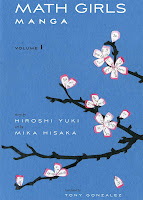
Math Girls Manga, Volume 1 written by Hiroshi Yuki and illustrated by Mika Hisaka. Based on the Math Girls series of novels, the manga focuses a little more on the romance and a little less on the math, but it still can teach a thing or two about it. Unfortunately, errors slipped into the English edition and some of the mathematical symbols are missing. Seeing as Math Girls is about, well, math, this is somewhat problematic. But if you can ignore that, Math Girls is a rather delightful and charming manga. Math lovers in particular will appreciate it, but as with the novels it’s possible to skip over the math-intensive sections and just enjoy the story. I wouldn’t mind seeing more of the Math Girls manga, but I suspect there won’t be another volume released anytime soon.

Strawberry Chan, Volumes 1-2 by Ai Morinaga. I picked up Morinaga’s Strawberry Chan manga on a whim. The series consists of two volumes, The Gorgeous Life of Strawberry Chan and The Super Cool Life of Strawberry Chan. The manga is fairly episodic and each chapter is very short. The titular Strawberry Chan is a small pet frog owned by Taro Akiyoshi, a sadistic high school student who delights in tormenting him. Despite his cruelty, Strawberry Chan adores his master. And then there’s Taro’s roommate who’s legitimately in love with Strawberry Chan and a masochistic classmate who just wants Taro to abuse him instead of the frog. Strawberry Chan is utterly ridiculous, random, and all sorts of wrong. I loved it.

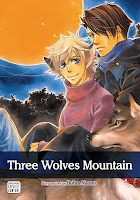
Three Wolves Mountain by Bohra Naono. So far, only two of Naono’s manga have been released in English. Yokai’s Hunger largely frustrated me but I thoroughly enjoyed Three Wolves Mountain; it’s easily my favorite manga out of the two. It’s an odd mix of comedy, drama, and the supernatural, but Naono makes it work this time. Kaya Susugi is a cafe owner by day and a grave keeper by night who ends up taking in Tarou and Jiro Tsukihara, two werewolf brothers. Susugi is used to being alone but becomes very close with both of the brothers, but especially with Jiro who has fallen in love with him. I wasn’t expecting Three Wolves Mountain to become such a family affair, but parents, siblings, and even cousins all have their role to play in the story. Three Wolves Mountain is great stuff.

Filed Under: FEATURES, My Week in Manga Tagged With: Ai Morinaga, Bohra Naono, Hiroshi Yuki, manga, Math Girls, Mika Hisaka, Shigeru Sugiura, Strawberry Chan, Ten-Cent Manga

Blade of the Immortal, Volume 24: Massacre

August 14, 2013 by Ash Brown

Creator: Hiroaki Samura
U.S. publisher: Dark Horse
ISBN: 9781595827517
Released: October 2011
Original release: 2008
Awards: Eisner Award, Japan Media Arts Award

Massacre is the twenty-fourth volume in the English-language release of Blade of the Immortal, Hiroaki Samura’s long-running manga series. Earlier on in the series’ release, Dark Horse divided the volumes by storyline rather than by number of chapters. Because of this, many of the individual volumes are slightly different in the English-language edition compared to the original Japanese release of Blade of the Immortal. Massacre, published by Dark Horse in 2011, collects the same chapters as the twenty-third volume of the Japanese edition of the series which was released in 2008. At this point, the manga has entered its final major story arc. The previous two volumes, Footsteps and Scarlet Swords, provided the necessary set up which allows Samura to really let loose in Massacre. As can be assumed from the title, it’s a rather bloody volume.

As agreed, the Ittō-ryū is leaving Edō after being banished from the city. However, the rogue sword school is still being chased by Habaki Kagimura and his Rokki-dan warriors as well as by Rin Asano and her bodyguard Manji. But what the pursuers don’t yet realize is that there are key members missing from the group of Ittō-ryū said to be making its way to the port in Hitachi: the sword school’s leader Anotsu Kagehisa and three of its elite fighters–Magatsu Taito, Ozuhan, and Baro Sukezane. The four highly skilled swordsmen have their own task to complete, a bold raid on Edō Castle through one of its most heavily guarded entrances. It’s a brash move that, if successful, will leave quite an impression in its wake, not to mention a high body count. The Ittō-ryū has already been identified as a threat, but they are prepared to show just how dangerous they can be.

Samura’s artwork in Blade of the Immortal has always been something that has particularly appealed to me about the series, but his kinetic style works especially well in Massacre. A large part of the volume is devoted to the daring attack on Edō Castle; the sequence is one of the most effectively choreographed and visually executed battles in Blade of the Immortal thus far. The Ittō-ryū is a group of swordsmen sharing the same ideals and martial philosophy more than it is a strictly enforced style. This can especially be seen in Massacre simply by watching how the Ittō-ryū’s elite fight. They all use different weapons and techniques and each has his own aura. Anotsu’s elegance, Magatsu’s cruder dynamism, Ozuhan’s speed and uninhibited wildness, and Baro’s strength and power are all readily apparent. They fight well as individuals, but also work well together as a team.

Although the focus of Massacre is on the raid of Edō Castle–a quickly paced, action packed, violent, and rather impressive escapade–several other important things happen in the volume as well. For the last few volumes of Blade of the Immortal Shira has been on the fringe of the story, but his prominence is quickly growing. He may have lost a limb or two over the course of Blade of the Immortal but his extreme sadistic streak and penchant for sexual violence remain. Shira is as terrifying as ever. Also making his return to the series was Ayame Burando, which I was surprised but happy to see. He and Manji even end up having a heart-to-heart about atonement and the meaning of evil. These are themes that play a major role in Blade of the Immortal, one of the reasons that I like the series so well. As always, I’m looking forward to reading the next volume, Snowfall at Dawn.

Filed Under: REVIEWS Tagged With: Blade of the Immortal, Dark Horse, Eisner Award, Hiroaki Samura, Japan Media Arts Award, manga

My Week in Manga: August 5-August 11, 2013

August 12, 2013 by Ash Brown

My News and Reviews

The Boys’ Love Manga Moveable Feast came to an end last week. Khursten at Otaku Champloo did a fabulous job as the host and posted some great content. Sadly, it may be the last Manga Moveable Feast to be held, at least in the foreseeable future. I did have one last offering for August’s Feast before it ended: I announced the 801 Manga Giveaway Winner. The post also includes a wishlist of boys’ love manga. (And speaking of manga giveaway winners, the winner of the Umineko giveaway from a few months ago created a video of the unboxing of her prize.)

Last week I also posted two in-depth reviews. The first was for Suehiro Maruo’s The Strange Tale of Panorama Island. I have literally been waiting for this manga for years and am thrilled that it is finally available in English. Last Gasp has done a beautiful job with the release. The manga is an adaptation of Edogawa Rampo’s novella Strange Tale of Panorama Island which I reviewed earlier this year. The second review that I posted last week was for Isuna Hasekura’s light novel Spice & Wolf, Volume 8: Town of Strife I. Although I had previously enjoyed the series, with this volume Spice & Wolf has finally lost its charm for me.

I also updated the Resources page, adding a couple of sites. Last week I mentioned Deb Aoki’s new site Manga Comics Manga which is definitely worth checking out if you haven’t already. I also recently discovered Seth T. Hahne’s review site Good Ok Bad. I really like the site which includes reviews of manga in addition to other comics and graphic novels.

On to other interesting things found online! Nippon.com has the very interesting article Urasawa Naoki Talks with Top European Artists. The most recent Speakeasy podcast at Reverse Thieves is about American comics recommended for manga readers. Reverse Thieves also posted a review with Melissa Tanaka talking about her work translating Mobile Suit Gundam: The Origin. (I loved the first volume of the series and my review of the second should be coming soon.) If you’re interested in what Viz Media is up to these days, ICv2 has a two part interview with Leyla Aker and Kevin Hamric and Comic Book Resources has an interview with Ken Sasaki.

Also last week was Otakon. Sean Gaffney at A Case Suitable for Treatment takes a quick look at some of the recent manga announcements. Vertical has licensed Fumi Yoshinaga’s What Did You Eat Yesterday? which I am extremely excited about. Viz Media is bringing Naoki Urasawa’s Monster back into print in a deluxe omnibus edition. I already own the series and probably won’t be double-dipping, but I’m very happy to see this re-release. Finally, Seven Seas will be publishing Milk Morinaga’s most recent yuri series Gakuen Police. I really enjoyed Morinaga’s Girl Friends and Kisses, Sighs, and Cherry Blossoms Pink, so I plan on picking up Gakuen Police, too.

Quick Takes

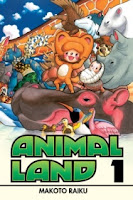
Animal Land, Volumes 1-4 by Makoto Raiku. I’m not sure why I was so reluctant to read Animal Land but after repeated urging from a few fans of the series I decided to finally give it a try. And I’m very glad that I did. It took me a volume or so to really settle into the story, but I definitely want to read more. Taroza is a human who was abandoned as a baby only to be rescued and raised by a young female tanuki in a world of animals. The art in Animal Land is kind of strange, mixing realism, anthropomorphism, and just plain goofiness even within the same species. Despite its cuteness, the story in Animal Land can be very dark. It’s also not particularly subtle, but it is engaging. Animal Land surprised me; so far it’s a great series.

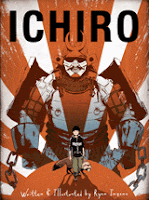
Ichiro by Ryan Inzana. Ichiro is a young man living with his Japanese mother in New York City after his American father dies. When her work takes them both to Japan, Ichiro has the chance to get to know his grandfather who he’s never met and learn more about the country’s history and culture. One night he unexpectedly stumbles into an even stranger world. I did find the sections dealing with Ichiro’s real life to be much more compelling than his adventures in the land of the gods and immortals. However, I really liked the blend of story, mythology, and reality in Ichiro and I loved the artwork. Inzana smoothly shifts his style of art and use of color throughout the graphic novel depending on the tale being told in a very effective way.

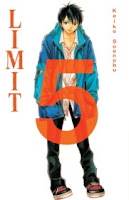
Limit, Volumes 5-6 by Keiko Suenobu. Limit has been very hit-or-miss for me. Overall, I did like it, but I had a few problems with the story. There weren’t plot holes per se, but significant suspension of disbelief is required. (I’m still trying to figure out how Usui’s bandage ended up on the ground and why no one seemed to hear the helicopters.) But the series had some truly great moments and intense, dramatic group dynamics. The fear that the characters deal with as they struggle to survive is almost palpable. I liked most of the fifth volume which revealed some great plot twists, but found the final volume to be rather unsatisfying. Everything is tied up too neatly and nicely and there’s a fair amount of moralizing.

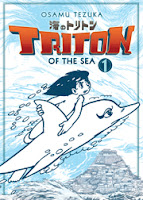
Triton of the Sea, Omnibus 1 (equivalent to Volumes 1-2) by Osamu Tezuka. I was delighted when Triton of the Sea was licensed as part of one of Digital Manga’s Kickstarter projects. Although I don’t have a particular affinity for merfolk, I have always enjoyed stories involving oceans and other bodies of water. Triton is a merman, one of the last of his kind when his clan is wiped out by Poseidon, the king of the sea. Unaware of his true nature, Triton is adopted by a human family. As he grows older he is drawn into a fight against Poseidon. Triton of the Sea isn’t as strong or as innovative as some of Tezuka’s other manga, but it’s still a solid adventure story. I particularly enjoyed Triton’s relationship with his family and his interactions with humans.

Filed Under: My Week in Manga Tagged With: animal land, comics, Keiko Suenobu, Limit, Makoto Raiku, manga, Osamu Tezuka, Ryan Inzana, Triton of the Sea

The Strange Tale of Panorama Island

August 9, 2013 by Ash Brown

Creator: Suehiro Maruo
Original story: Edogawa Rampo

U.S. publisher: Last Gasp
ISBN: 9780867197778
Released: July 2013
Original release: 2008

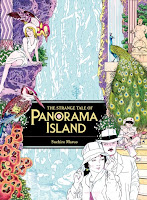
I have been looking forward to Suehiro Maruo’s The Strange Tale of Panorama Island with great anticipation ever since the license was announced by Last Gasp in 2009. After years of delay, the manga was finally released in English in 2013 as a gorgeous, large-format hardcover. Maruo’s The Strange Tale of Panorama Island was originally released in Japan in 2008. The manga is an adaptation of the renowned author Edogawa Rampo’s novella Strange Tale of Panorama Island which was initially serialized between 1926 and 1927. (Coincidentally, the novella was also released in English for the first time in 2013.) After reading Edogawa’s Strange Tale of Panorama Island, I couldn’t think of a more perfect artist to adapt his work than Maruo. I didn’t think it was possible, but I was somehow even more excited for the release of Maruo’s The Strange Tale of Panorama Island after reading the original.

As the Taishō Era draws to a close, failed novelist Hirosuke Hitomi finds himself behind in his rent and the prospect of his work being published slim. His latest novel, The Tale of RA, is a utopian fantasy which allows him to dream about what he would do if he had limitless riches. His editor encourages him to write about something closer to his real life instead. Months later Hitomi is confronted with an almost impossible opportunity that could be straight out of his novel. His former classmate Genzaburō Komoda, to whom he bears an uncanny resemblance, has unexpectedly died, leaving behind an immense fortune. Devising an outlandish scheme to take Komoda’s place and take control of his wealth, Hitomi plans on devoting all of it to the creation of a hedonistic paradise, Panorama Island. The plan proceeds surprisingly well, but there is still one person who could reveal Hitomi as a fake–Komoda’s wife.

I have been an admirer of Maruo’s work ever since I first discovered it. At this point, only two other volumes of Maruo’s manga have been published in English: Mr. Arashi’s Amazing Freak Show and Ultra-Gash Inferno. As I have come to expect, Maruo’s illustrations in The Strange Tale of Panorama Island are exquisite. With its sensuality, eroticism, and shades of the macabre and grotesque, Maruo’s artwork is ideally suited to Rampo’s story. Even in all of its beauty, The Strange Tale of Panorama Island has an ominous and vaguely disconcerting atmosphere that is extraordinarily effective in setting the mood of the work. Hitomi’s paranoia and madness is captured in ink for all to see. And then there’s the island itself–Maruo’s portrayal is breathtaking with stunning reveals, careful attention to detail, and beautiful design and perspective work. The art in The Strange Tale of Panorama Island is simply marvelous.

Maruo’s The Strange Tale of Panorama Island is a superb adaptation and a spectacular work in its own right. The manga is not at all a slavishly executed interpretation. While staying true to Rampo’s original, Maruo allows himself to put his own touches and flourishes on the story. The ending is admittedly abrupt and somewhat disorienting (this was true of the novella as well), but what comes before more than makes up for this weakness. In part, Maruo’s The Strange Tale of Panorama Island is about the end of one era and the beginning of the next, the start of a new life after the old has been discarded. Hitomi begins as a penniless author only to become intoxicated with his own ideas as he slips into a life of debauchery and excess. Maruo’s vision of his descent is both captivating and unsettling, alluring and abhorrent. In the end, I am absolutely thrilled that The Strange Tale of Panorama Island is finally available in English.

Filed Under: REVIEWS Tagged With: Edogawa Rampo, Last Gasp, manga, Suehiro Maruo

Manga Giveaway: 801 Manga Giveaway Winner
August 7, 2013 by Ash Brown

And the winner of the 801 Manga Giveaway is…Linda Liu!

As the winner, Linda will be receiving a new copy of Shiuko Kano’s boys’ love collection Affair as published by 801 Media. This giveaway was a part of the Boys’ Love Manga Moveable Feast and so I asked entrants to tell me about a boys’ love or yaoi mangaka that they would like to read more of in English. (See the 801 Manga giveaway comments for all of the responses and juicy details.) I’ve compiled the list of creators who were mentioned along with any of their manga that I know of that have been licensed in English. (Or, in the case of CLAMP, a small selection of their available manga.) A great way to encourage publishers to release more of mangaka’s work in English is to make that sure their current offerings do well!

First, those creators who have yet to be licensed in English:

Nojiko Hayakawa
Junko
Akira Kamuro
Neko Kanda
Yonezou Nekota
Hiroi Takao

And now, those creators currently available in English:

CLAMP (a small selection)
Cardcaptor Sakura
Clover
Legal Drug
Tokyo Babylon
Wish
X

Lily Hoshino
Alone in My King’s Harem
Chocolate Surprise
Love Quest
Mr. Flower Bride
Mr. Flower Groom
My Only King

Saika Kunieda
Future Lovers

Asumiko Nakamura
Utsubora: The Story of a Novelist
(not boys’ love, but still very good!)

Muku Ogura
Castle Mango
Secrecy of the Shivering Night
Sentimental Garden Lover

Kaim Tachibana
Boys Love
Pieces of a Spiral

Kotetsuko Yamamoto
Blooming Darling
Doki Doki Crush
Love and Trap 
Mad Cinderella
New Beginnings
Tweeting Love Birds

Thank you to everyone who visited Experiments in Manga and entered the giveaway! I hope to see you all again for the next one, too.

Filed Under: UNSHELVED Tagged With: manga, Manga Moveable Feast, Shiuko Kano

Manga Giveaway: 801 Manga Giveaway (Affair)

July 31, 2013 by Ash Brown

Not only is it the last Wednesday of the month–meaning it’s time for another manga giveaway here at Experiments in Manga–it’s also the last day of the month. Tomorrow begins the Boys’ Love Manga Moveable Feast, also known as the 801 MMF. Keeping with the theme of the Feast, I decided to coordinate this month’s giveaway by offering you all a chance to win Shiuko Kano’s boys’ love collection Affair from Digital Manga’s imprint 801 Media. Now, this is a mature title so entries are restricted to those who are eighteen and older. The giveaway is open worldwide, but if boys’ love or yaoi is illegal in your country, please refrain from entering. (Sorry!)

My introduction to Shiuko Kano’s work was through Affair, one of the earliest to be released by 801 Media and Kano’s second manga to be released in English. Since then she’s had a pretty good run of it. Her boys’ love manga has been published in print by 801 Media, Be Beautiful, Deux Press, Juné, and SuBLime. It’s quite impressive, really. Seeing how much of and how frequently her work has been licensed, I think it would probably be safe to assume that Kano has a fairly strong following.

So, you may be wondering, how can you win a copy of Affair?

1) In the comments below, name at least one boys’ love or yaoi mangaka whose manga you would like to see more of in English and tell me why you enjoy their work.
2) If you’re on Twitter, you can earn a bonus entry by tweeting about the contest. Make sure to include a link to this post and @PhoenixTerran (that’s me).

Pretty simple, no? For this giveaway, each person who participates can earn up to two entries. As usual, you have one week to submit your comments. If you have trouble leaving comments, or if you would prefer, you can e-mail me your entry at phoenixterran(at)gmail(dot)com. The winner will be randomly selected and announced on August 7, 2013. Good luck to you all and enjoy the 801 MMF!

VERY IMPORTANT: Include some way that I can contact you. This can be an e-mail address, link to your website, Twitter username, or whatever. If I can’t figure out how to get a hold of you and you win, I’ll just draw another name.

Contest winner announced–Manga Giveaway: 801 Manga Giveaway Winner
Filed Under: Uncategorized Tagged With: manga, Manga Moveable Feast, Shiuko Kano

My Week in Manga: July 15-July 21, 2013

July 22, 2013 by Ash Brown

My News and Reviews

Last week I posted two in-depth manga reviews here at Experiments in Manga. The first review was for Hiroaki Samura’s Blade of the Immortal, Volume 23: Scarlet Swords. Now that Manji has made his escape from the dungeons under Edō Castle the series has started to focus a bit more on the Ittō-ryū once again, which I’m happy to see. My second review last week was my contribution to the Yun Kouga Manga Moveable Feast. I took a closer look at Viz Media’s new release of Kouga’s Loveless. I had previously read Loveless when Tokyopop published the first eight volumes years ago, but Viz’s first omnibus quickly reminded me why I find the manga so peculiarly compelling.

Last week was also the San Diego Comic-Con. Seeing as it’s clear across the country from me and it’s unlikely that I’d ever be able to handle such a huge event, I wasn’t in attendance. However, I did pay attention to some of the news and announcements coming out of SDCC. I was most interested in Haikasoru’s plans for a graphic novel adaptation of All You Need Is Kill (I reviewed the original a few years ago), a new translation of Battle Royale (I reviewed the previous translation a few years ago, too), and a collection of essays on Battle Royale. In other news: Viz is relaunching the Viz Kids imprint as Perfect Square; Kodansha is adding more shoujo titles to its catalog, including some Del Rey license rescues; and Naoki Urasawa’s 20th Century Boys won its second Eisner Award this year.

Oh! And the next Manga Moveable Feast will soon be upon us! Khursten of Otaku Champloo is hosting August’s Feast early in the month in order to coincide 8/01 (a.k.a. “yaoi day.”) Khursten’s calling it a fujojo fiyaysta and the Feast will be focusing on boys’ love and yaoi. So, join us from August 1 to August 10 for a good time, giveaways, and more!

Quick Takes

Honeydew Syndrome, Volumes 1-2 by New Shoe. I thoroughly enjoyed Honeydew Syndrome, particularly it’s quirky and true-to-life characters. Initially released as a webcomic, the boys’ love series was later collected in print in two volumes with additional bonus content. The first volume focuses on the somewhat awkward relationship between Metis and Josh which only gets its start after Josh hauls out and punches Metis in the face. The second volume partly overlaps with the first–some of the same events are seen from different perspectives–and focuses on their friends. Honeydew Syndrome doesn’t really have a driving plot; instead, it’s much more about relationships (and not just the romantic ones.)

Saiyuki Reload, Volumes 1-3 by Kazuya Minekura. Though the manga changed names, magazines, and demographics, Saiyuki Reload is a direct followup to Minekura’s Saiyuki. While I enjoyed the slightly ridiculous Saiyuki, for some reason Saiyuki Reload doesn’t seem to be clicking as well with me. Despite a few flashbacks delving into Sanzo’s past, these early volumes just don’t feel like they’re going anywhere with either the story or the characters. It’s as if Sanzo and his crew are simply playing their previously established roles; the character development seems to be missing. However, the artwork in Saiyuki Reload is more polished than that in Saiyuki. (It is a more recent series after all.) The action sequences tend to be clearer and easier to follow, too.

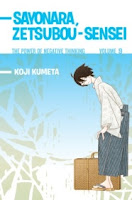
Sayonara, Zetsubou-Sensei: The Power of Negative Thinking, Volumes 9-10 by Koji Kumeta. Sayonara, Zetsubou-Sensei was originally released in English by Del Rey, but it is one of the series that Kodansha now continues to publish. It’s a slow seller–there hasn’t been a volume released in over a year–but I can understand why. The series tends to be episodic, has a very specific sense of humor, and the sheer number of cultural references it uses makes the series challenging to translate and adapt. Despite the fact that I often find Sayonara, Zetsubou-Sensei to be hilarious in a darkly absurd way, I can only read a volume or two at a time without it feeling like a chore. But I do like the series and am glad that it’s available.

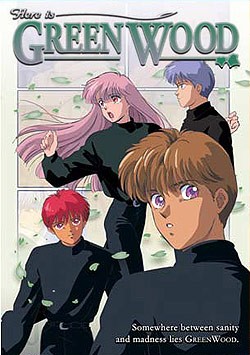
Here Is Greenwood directed by Tomomi Mochizuki. Based on the shoujo manga series by Yukie Nasu, Here Is Greenwood is a six-episode OVA. Although it is a mix of strict adaptation, new material, and slight re-imaginings of the stories in the original, the anime stays very true to the tone of the manga. I read and enjoyed Here Is Greenwood and I enjoyed the anime as well, but I don’t think that it will hold much appeal to those who aren’t already familiar with the characters. Here Is Greenwood is fairly episodic but the stories all revolve around the perpetually stressed-out high school student Kazuya Hasukawa, his oddball dorm and class mates, and the often absurd situations they find themselves in. The series is quirky and funny and made me laugh on several occasions.

Filed Under: My Week in Manga Tagged With: anime, comics, Here Is Greenwood, Honeydew Syndrome, kazuya minekura, Koji Kumeta, manga, New Shoe, Saiyuki, sayonara zetsubou-sensei

My Week in Manga: July 8-July 14, 2013

July 15, 2013 by Ash Brown

My News and Reviews

Last week I posted two reviews. The first was for The Vast Spread of the Seas, the third novel in Fuyumi Ono’s fantasy series The Twelve Kingdoms. I’ve really been enjoying reading The Twelve Kingdoms and this volume was no exception. I also reviewed Jen Lee Quick’s Off*Beat, Volume 1. Originally published by Tokyopop, the recently established Chromatic Press has rescued the series and I couldn’t be happier. The new Chromatic editions also include some additional bonus content as well.

Elsewhere online: Xavier Guilbert has published his interview with Taiyo Matsumoto from the 2013 Toronto Comic Arts Festival. The most recent episode of the Comic Books Are Burning In Hell podcast focuses on Suehiro Maruo. Kodansha Comics is offering two digital samplers containing the complete first chapters of many of its series. The Real sampler collects chapters from Kodansha’s “real-life” manga: Arisa, Bloody Monday, Danza, Genshiken, Genshiken: Second Season, I Am Here, Kitchen Princess, Missions of Love, and Vinland Saga. The Unreal sampler includes chapters from Kodansha’s fantasy, science fiction, and supernatural series: @ Full Moon, Attack on Titan, Cage of Eden, Fairy Tail, Mardock Scramble, Ninja Girls, No. 6, Sankarea: Undying Love, and Until the Full Moon.

Finally, this week is the Yun Kouga Manga Moveable Feast! MJ of Manga Bookshelf is hosting this round and has already posted a marvelous introduction. For my contribution to the Feast I’ll be reviewing the first Loveless omnibus later this week. Loveless was originally published in English by Tokyopop, but Viz Media rescued the license last year (which made me very happy.) Although I enjoy Loveless, I haven’t actually read any of Kouga’s other manga. I look forward to seeing what everyone else has to say about her work.

Quick Takes

Dog X Cat, Volume 1Dog X Cat, Volumes 1-3 by Yoshimi Amasaki. Junya and Atsu have been friends since they were young. They’re in college now and their friendship becomes a little more complicated when Junya lets it slip that he’s actually in love with Atsu. Dog X Cat might not have the most original plot–I’ve seen the friends becoming lovers storyline many a time–but the two young men have a charming relationship with each other and a lot of sex. (Dog X Cat is part of Digital Manga’s more explicit 801 imprint, after all.) Some chapters are told from Junya’s perspective while others are from Atsu’s. It’s nice to see both sides of their story. Dog X Cat is an ongoing series; the fourth volume is scheduled to be released in English in 2014.

Mardock Scramble, Volume 5Mardock Scramble, Volumes 5-7 by Yoshitoki Oima. I’ve read Tow Ubukata’s original Mardock Scramble, but somehow managed to forget how pivotal child and sexual abuse was to the plot. The manga handles it fairly well and hasn’t turned it into something titillating. One thing that I didn’t forget from the novels was the lengthy casino scene. In particular, nearly two hundred pages worth of Blackjack which sorely tried my patience. Although some of the finer details and plot complications are glossed over in Oima’s adaptation, I much preferred reading the two volumes of manga covering the same material. This left one volume for Oima to bring everything to a quickly paced, action-packed close. For the most part, Oima’s interpretation of Mardock Scramble largely succeeds.

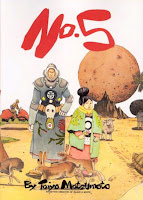
No. 5, Volume 1No. 5, Volumes 1-2 by Taiyo Matsumoto. Only two volumes of No. 5 were ever released in English in print. However, the entire series is now available digitally (on a platform I can’t use). I’ve come to love Matsumoto’s work in general and I particularly enjoy No. 5. The story follows Number Five, a member of the Rainbow Council of the International Peackeeping Forces, a small group of people with superhuman abilities. He’s fallen in love and gone rogue and now his teammates must hunt him down. While Number One and the rest of the Rainbow Council try to maintain control of the situation, there are others who are making the argument that the group is obviously dangerous and should no longer exist.

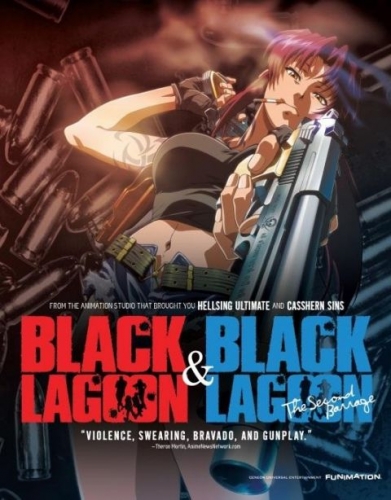
Black Lagoon, Episodes 13-24 directed by Sunao Katabuchi. Although I still enjoyed the second half of Black Lagoon anime, for some reason that I can’t identify I didn’t like it quite as much as the first. The anime follows the manga fairly closely, but takes a few of its own liberties while keeping the same tone as the original. I do think that I still prefer the manga slightly more than the anime, but the anime is entertaining as well. Additionally, the action is a little clearer and easier to follow in the anime. And I continue to be impressed by the sound design. The Black Lagoon anime tends to be violent and bloody and even the protagonists aren’t really “good guys.” They can be just as vicious as the other people they come up against.

Filed Under: My Week in Manga Tagged With: anime, black lagoon, Dog X Cat, manga, mardock scramble, No. 5, Taiyo Matsumoto, Yoshimi Amasaki, Yoshitoki Oima

No. 6, Volume 1

June 8, 2013 by Ash Brown

Creator: Hinoki Kino
Original story: Atsuko Asano

U.S. publisher: Kodansha
ISBN: 9781612623559
Released: June 2013
Original release: 2011

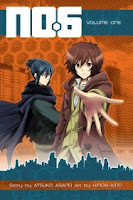
Hinoki Kino’s manga adaptation of No. 6 is the second adaptation of Atsuko Asano’s nine-volume series of science fiction novels to be released in English. The first, and my introduction to No. 6, was the 2011 anime adaptation directed by Kenji Nagasaki. While I largely enjoyed the anime, the rushed and fumbled ending left me disappointed. The first volume of the No. 6 manga was originally published in Japan in 2011, a few months before the anime began airing. Kodansha’s English-language edition of No. 6, Volume 1 was released in 2013. It’s highly unlikely that Asano’s original novels (which are really what I would like to read) will ever be licensed in English, and so I was intrigued when Kodansha announced that Kino’s manga adaptation would be published. Since the series is still currently being serialized in Japan, I’m hoping that the story will have a properly executed ending this time around.

On the surface, the city of No. 6 appears to be an ideal, utopic society. The crime rate is negligible. Medical and technological advancements offer its citizens unprecedented comfort and care. Shion is among the elite of the elite. Identified at a young age as a prodigy with a particular affinity for medicine and ecology, he and his mother have their every need provided for by the city. But when Shion saves the life of a young fugitive named Rat, helping him to escape, Shion is stripped of his status and special privileges. He has seen a brief glimpse of the darker side of No. 6. Four years later he’ll see even more when he stumbles upon a pair of bizarre deaths and he becomes the perfect scapegoat for the supposed murders. With his own life now in danger, Shion has a decision to make: flee No. 6 and the only life he knows or remain in a city that no longer considers him human.

The first volume of No. 6 does a nice job of establishing the series’ two main protagonists: Shion and Rat. Although the two young men share an important connection with each other, they come from very different backgrounds and have very different personalities. Shion is intelligent but sheltered and there’s a certain innocence about him. He comes across as a bit naive and socially awkward, but he is intensely curious and searches for the significance behind things. Even though most of Rat’s past hasnt’ been revealed, it is quite clear by the end of the first volume of No. 6 that he has had a much rougher time of it. He is quick-witted but world-weary and cynical. The underlying meaning of a situation isnt’ nearly as important to him as is the immediate reality. It’s simply a matter of survival. In part because they are so different, Rat and Shion find themselves drawn to each other.

After only one volume, No. 6 has yet to really distinguish itself from other dystopian fiction. It’s a fairly standard set up with a seemingly perfect society that’s not quite everything it appears to be. The manga itself often feels very rushed in places and lacking in details in others. There were a few scenes that had I not previously seen the anime would have left me momentarily confused. In the afterword Kino admits to having had to cut much more from the manga than was ideal in order not to surpass page limits. Even so, No. 6, Volume 1 provides the needed introduction to the story and outlines the world in which it takes place. I hope that now that the stage has been set that the manga will have room to breath and slow down a little. It is a different version of the story than was seen in the anime; I’m looking forward to seeing where Kino takes it.

Filed Under: REVIEWS Tagged With: Atsuko Asano, Hinoki Kino, kodansha, Kodansha Comics, manga, no. 6

Random Musings: Toronto Comic Arts Festival 2013

May 17, 2013 by Ash Brown

© Taiyo Matsumoto

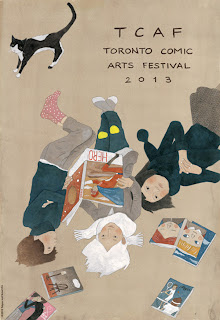
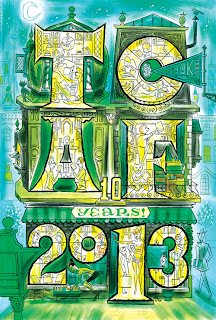
I first learned about the Toronto Comic Arts Festival (TCAF) in 2011 when Usamaru Furuya and Natsume Ono were invited to the event as featured guests. (As a side note: translations of their diary manga from the trip are included in the 2013 TCAF program guide.) It took me two years to finally work up the courage to attend TCAF myself and get my passport in order. 2013 marked TCAF’s tenth anniversary. This year’s festival featured over four hundred creators from nineteen different countries, including mangaka Taiyo Matsumoto and Gengoroh Tagame. While there were festival events throughout May, TCAF 2013’s main exhibition took place on Saturday, May 11th and Sunday, May 12th.

In order to keep the cost of the trip as low as possible, I crossed over the border into Canada from Michigan early Saturday morning along with my good friend Traci (who contributed a guest post here at Experiments in Manga not too long ago.) I arrived in Toronto in time to see The World of Taiyo Matsumoto, an exhibition at The Japan Foundation featuring original artwork by Matsumoto (creator of Blue Spring, Tekkon Kinkreet, GoGo Monster, and the recently released Sunny.) Matsumoto himself was in attendance for a special interview and artist’s talk. The turnout was huge—standing-room only and some people even had to be turned away. Matsumoto admitted that he never expected so many people to turn out to see him and that he was greatly honored. The event and exhibit, which focused on Matsumoto’s artwork, were marvelous. I certainly learned quite a bit: Matsumoto and Santa Inoue (creator of Tokyo Tribes) are cousins and they regularly talk about manga and help each other out; Tekkon Kinkreet was originally intended to be six volumes long, but ended after three since it wasn’t popular enough to continue (although Matsumoto said that he is satisfied with its conclusion and has no desire to revisit the story); in the beginning, Matsumoto was actually reluctant and even resentful working on Ping Pong, which became his breakout manga; and while Matsumoto has always been an innovative artist, more recent developments in printing technology have allowed him to experiment with different drawing materials and techniques, moving even further away from the use of screentone.

© Maurice Vellekoop

From The Japan Foundation, I headed over to the spotlight on Gengoroh Tagame, a highly influential gay manga artist. Joining Tagame were Anne Ishii, Chip Kidd, and Graham Kolbeins to celebrate Tagame and his work and to discuss the recent release of The Passion of Gengoroh Tagame, which they all had a hand in bringing into being. The panelists were all very enthusiastic and had a great senses of humor. Because of this, the spotlight was engaging and entertaining in addition to being informative. Apparently, there was a rumor that Tagame did not want his work translated into English. He assured us all that this was not true. In fact, he was surprised that it took until now for a collection of his manga to be released in English. It is possible that the rumor may have had a chilling effect on the licensing of Tagame’s materials. Like so many other people (myself included), he is very excited about the publication of The Passion of Gengoroh Tagame. He is also unbelievably happy that others share enjoyment in his fantasies. Tagame is unusual in that very few gay manga artists in Japan are able to make their living on their artwork alone, most hold at least a second job. The panel ended with a very interesting conversation about gay manga and bara (manga typically geared towards gay men) and boys’ love and yaoi (manga typically geared towards women.) It’s difficult to generalize about the genres and the distinction between them isn’t always as clear as some people claim or would like; there can be considerable grey area, crossover, and overlap between the two. For a time, yaoi served as an outlet for gay manga before bara became more publicly acceptable and gay manga magazines were established. Tagame actually started out by submitting his work to yaoi magazines when he was eighteen and he continues to have a large number of female fans. In line for his signing after the talk were people of all (adult) ages, genders, and sexualities, which was wonderful to see.

After having my copy of The Passion of Gengoroh Tagame signed, Traci and I met up together again. We made our way down to The Beguiling Books & Art which is an astounding, award-winning comics store. If you find yourself in Toronto, I highly recommend stopping by The Beguiling. It has new comics, old comics, out-of-print comics, mainstream comics, alternative comics, independent comics, domestic comics, international comics (including the largest selection of manga that I’ve ever seen in one place), and more, more, more. And since the shop was across the street from Koreatown, Traci and I took the opportunity to chow down on some delicious Korean food before heading over to Church on Church to catch the tail end of the TCAF Queer Mixer. Unfortunately, we missed the reception and artist talks, but we still were able to see the exhibit Legends: The Gay Erotic Art of Maurice Vellekoop and Gengoroh Tagame which was well worth the trek across town. (Honestly, I was more interested in the art than I was in the mixer itself, anyways.) On a more personal note, I have never had the opportunity to walk around a queer neighborhood before. It was an awesome and somewhat surreal experience for me; it made me very happy just to be in the Church Wellesley Village area.

On Sunday, I attended the Comics Editing International panel which brought together four comics editors from different countries and backgrounds: Thomas Ragon from Dargaud (the oldest comics publisher in France), James Lucas Jones from Oni Press, Mark Siegel from First Second Books, and Hideki Egami from IKKI/Shogakukan. The group talked about the similarities and differences between their work as editors and the comics markets in their countries. The panel was fascinating. I love IKKI manga, and so was very excited to hear editor-in-chief Egami speak. IKKI is different from most magazines in Japan; it appeals to mangaka who want more control over their work and artistic vision as well as those who want to escape the factory-like system associated with so many of the other magazines. Egami mentioned that the manga industry in general is in decline in Japan, and so publishers are beginning to look outside of the country more and more where once they were almost exclusively focused on the domestic market. IKKI has even started to experiment by publishing left-to-right comics with horizontal text, hoping that they will be more easily adapted, translated, and distributed in other countries. I also attended Sunday’s Queer Comics panel which featured Zan Christensen (who is utterly delightful), Erika Moen, Justin Hall, Chip Kidd, and Gilbert Hernandez and Jaime Hernandez. They talked about queer comics specifically and the representation of queer characters in comics in general, with a particular emphasis on non-binary and fluid sexualities and genders, which I personally appreciated. It was a great group and a great discussion.

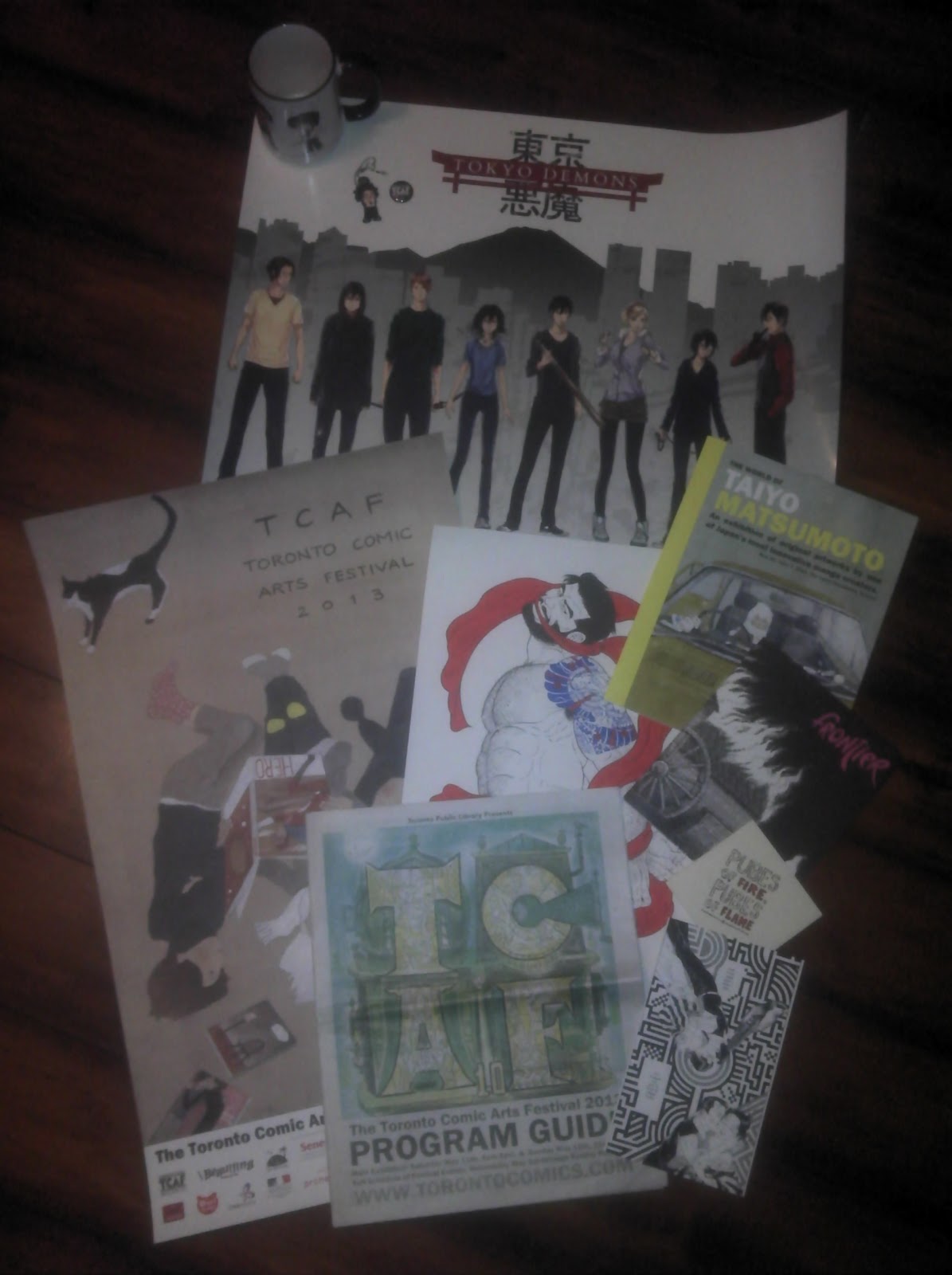
My very small, TCAF haul

For the most part, I intentionally flew under the radar while at TCAF. I saw several of my fellow manga lovers around (Deb Aoki, Brigid Alverson, and Jocelyne Allen, just to name a few) and I know that there were even more of us there, too, but I tend to keep to myself and didn’t seek anyone out. I did, however, wander around the exhibitors’ area for a bit. Because I promised that I would, I made a point to introduce myself to the wonderful ladies of Chromatic Press and Tokyo Demons, which is one of my more recent obsessions. (I had been invited to the Chromatic Manga Mixer on Friday night, but I sadly wasn’t in town yet.) I also chatted with Alex Woolfson about  Artifice and The Young Protectors and stopped by Jess Fink‘s table long enough to awkwardly profess my love for her work. Ryan Sand’s new publishing effort Youth in Decline made it’s official debut at TCAF, so I picked up a copy of the first issue of Frontier to show my support. One of the best things about TCAF, other than the chance to see so many fantastic artists who I already follow all in one place (and there were a lot of them there), was the opportunity to discover creators who I wasn’t previously aware of. This is how I ended up bringing home Andrew Fulton‘s minicomic Pubes of Fire, Pubes of Flame which continues to greatly amuse me.

I really do not do well in unstructured, social settings; simply attending TCAF was a huge deal for me and a tremendous personal achievement. I largely consider my first TCAF experience to be a success. I am very happy to report that Traci and I both had a phenomenal time. After only a few hours of being there, I was already making plans for a return visit for next year’s show. Seriously, TCAF is amazing. There was so much going on that I had to make some extremely tough decisions about which programs to attend over others. I saw a ton of incredible work from incredible creators from all over the world and I still feel like there was more that I didn’t get to see. So next year, I’ll be showing up no later than the Friday before the main exhibition and preferably earlier. I’ll be scheduling more time to spend exploring every nook and cranny of the exhibitors’ area. I’ll also be carrying around some snacks with me during the festival; I was so busy and engaged by the programming and exhibits that I actually forgot to eat for most of the day. Next year, I hope to have the guts to actually introduce myself to everyone and maybe even socialize a bit more, too. (Please do not be offended if I didn’t say hello to you this year!) As long as there’s a TCAF, you can expect me to be there.

Filed Under: UNSHELVED Tagged With: comics, Gengoroh Tagame, manga, Taiyo Matsumoto, TCAF

What’s Your Favorite Weekly Shonen Jump Title?

May 7, 2013 by Justin Stroman 17 Comments

Weekly Shonen Jump Alpha Weekly Shonen Jump

So what do you know? It’s been over a year since Viz’s Weekly Shonen Jump has been around. With it out of the “Alpha” phase and now moving forward with simultaneous releases, it’s doing what I don’t think many would have thought years ago—and it’s pretty impressive. And while maybe the content is not like Japan’s Weekly Shonen Jump, the lineup that’s appeared since the magazine began is nothing to sneeze at. So I’ll ask you all to share what’s been your favorite Weekly Shonen Jump title serialized since January 30, 2012. Here’s a reminder of the works that have appeared in WSJ so far:

Bakuman

Bakuman

Created By: Tsugumi Ohba and Takeshi Obata

Publisher’s summary: “Average student Moritaka Mashiro enjoys drawing for fun. When his classmate and aspiring writer Akito Takagi discovers his talent, he begs Moritaka to team up with him as a manga-creating duo. Can these two boys turn their dreams into reality with all the challenges they must face in the manga-publishing world?”

Run: January 30 to May 7, 2012

Serialized: Weekly

Barrage

Barrage

Created By: Kouhei Horikoshi

Publisher’s summary: “Spunky slum kid Astro gets the chance of a lifetime to end the chaos ripping apart his alien-invaded home planet when the playboy prince switches places with him. Now Astro has become Prince Barrage, a boy charged with the duty of restoring peace to the planet…and given an all-powerful magical spear to do it!”

Run: June 4 to September 2012

Serialized: Weekly

Bleach

Bleach

Created By: Tite Kubo

Publisher’s summary: “Ichigo Kurosaki never asked for the ability to see ghosts — he was born with the gift. When his family is attacked by a Hollow — a malevolent lost soul — Ichigo becomes a Soul Reaper, dedicating his life to protecting the innocent and helping the tortured spirits themselves find peace.”

Run: January 30, 2012

Serialized: Weekly

Blue Exorcist

Blue Exorcist

Created By: Kazue Kato

Publisher’s summary: “Raised by Father Fujimoto, a famous exorcist, Rin Okumura never knew his real father. One day a fateful argument with Father Fujimoto forces Rin to face a terrible truth — the blood of the demon lord Satan runs in Rin’s veins! Rin swears to defeat Satan, but doing that means entering the mysterious True Cross Academy and becoming an exorcist himself. Can Rin fight demons and keep his infernal bloodline a secret? It won’t be easy, especially when drawing his father’s sword releases the demonic power within him!”

Run: July 30, 2012

Serialized: Monthly

Cross Manage

Cross Manage

Created By: KAITO

Publisher’s summary: “Talented but aimless Sakurai just can’t find a place to belong. After trying (and failing at) one extracurricular activity after another, his life changes thanks to a chance encounter with lacrosse fanatic Toyoguchi, who thinks Sakurai has just what it takes to propel her girls’ lacrosse team to victory!”

Run: October 1, 2012

Serialized: Weekly

Dragonball

Dragon Ball (full color)

Created By: Akira Toriyama

Publisher’s summary: “The legendary classic manga series Dragon Ball is back…in full color! Relive the incredible Saiyan Saga with this special re-release.”

Run: February 4, 2013

Serialized: Weekly


Hunter X Hunter Special

Hunter X Hunter Kurapika’s Memories

Created By: Yoshihiro Togashi

Publisher’s summary: “Hunters are a select group of people who track down rare and priceless items. Many people have tried to become one, but most give up or are killed during the exam. This special one-shot is the story of one such Hunter, named Kurapika. His people were wiped out because their eyes turn a fiery red color and are sought by collectors. This is the story of Kurapika before he lost his clan…”

Run: December 17 to Decemeber 24, 2012

Kintoki

Kintoki

Created By: Akira Toriyama

Publisher’s summary: “Once upon a time, the Kinme Clan were an extraordinary tribe best known for their incredible physical strength and golden eyes. Because of that they were revered as gods of war, but now the clan is slowly dying out due to a short lifespan. And just when most everyone has forgotten about the clan, a mysterious golden-eyed boy enters the scene…”

Run: January 28, 2013 (one-shot)


Naruto

Naruto

Created By: Masashi Kishimoto

Publisher’s summary: “Naruto is a young shinobi with an incorrigible knack for mischief. He’s got a wild sense of humor, but Naruto is completely serious about his mission to be the world’s greatest ninja!”

Run: January 30, 2013

Serialized: Weekly

Nisekoi

Nisekoi

Created By: Naoshi Komi

Publisher’s summary: “It’s hate at first sight…rather a knee-to-the-head at first sight when Raku meets Chitoge! Unfortunately, his gangster father arranges a false love match with their rival gang leader’s daughter, Chitoge! However, Raku’s searching for his childhood sweetheart, with a pendant around his neck as a memento, and is surprised to discover three candidates with keys: Chitoge, Onodera (his current crush) and Tachibana (the police chief’s daughter)!”

Run: November 26, 2012

Serialized: Weekly

Nura

Nura: Rise of The Yokai Clan

Created By: Hiroshi Shiibashi

Publisher’s summary: “At first, no one thought that Rikuo, who is only one-quarter yokai and three-quarters human, could handle following in his grandfather Nurarihyon’s footsteps as the leader of the most powerful yokai clan. But now Rikuo has proven he can unite both humans and demons. He’s building the ultimate Night Parade of a Hundred Demons to ward off the legendary onmyoji, Abe no Seimei, and his descendants, the Gokadoin clan, who plan to take over the world with a master strike called The Purification.”

Run: January 30, 2012 to January 14, 2013

Serialized: Weekly

Nura Special

Nura: Aoi Spiral Castle Specials

Created By: Hiroshi Shiibashi

Publisher’s summary: “While the day belongs to humans, the night belongs to Yokai, supernatural creatures that thrive on human fear. Caught between these worlds is Rikuo Nura. He’s three-quarters human, but his grandfather is none other than Nurarihyon, the supreme commander of the Nura clan, a powerful yokai consortium. Now Rikuo’s on his way to taking over that command!”

Run: August 27, 2012 (Part 1), October 29, 2012 (Part 2)

One Piece

One Piece

Created By: Eichiro Oda

Publisher’s summary: “When Monkey D. Luffy accidentally ate the cursed Gum-Gum Fruit, he gained the power to stretch like rubber…at the cost of never being able to swim again! Despite this, he’s vowed to someday become King of the Pirates and find the legendary treasure known as “One Piece” With his large crew of powerful and unique characters and his advanced pirate ship, the Thousand Sunny, Luff’s out to become the greatest pirate that’s ever lived!”

Run: January 30, 2012

Serialized: Weekly

One Piece X Toriko

One Piece X Toriko: Taste of the Devil Fruit

Created By: Eiichiro Oda and Mitsutoshi Shimabukuro

Summary: Crossover one-shot between One Piece and Toriko.

Run: Available to subscribers who signed up before April 30, 2012


One-Man Punch

One-Punch Man

Created By: ONE and Yusuke Murata

Publisher’s summary: “From illustrious illustrator Yusuke Murata of Eyeshield 21 fame and the maniacal mind of up-and-coming mangaka ONE comes a manga series that packs quite the punch! Follow our hero Saitama through his hilarious romps as he searches for the baddest guys to challenge. Let’s get ready to rumble!”

Run: January 21, 2013

Serialized: Weekly

Bakuman Otter #11

Otter #11

Created by: Tsugumi Ohba and Takeshi Obata

Summary: A gag manga series created by Kazuya Hiramaru in Bakuman.

Run: Published in the SJ Alpha Yearbook 2013


Road To Ninja Naruto The Movie

Road To Naruto The Movie

Created By: Masashi Kishimoto

Publisher’s summary: “To commemorate the latest Naruto Shippuden movie hitting Japanese thaters, Shonen Jump Alpha presents a special chapter that chronicles the events right before Road to Ninja: Naruto the Movie. See the Naruto characters in an all-new light as they deal with Tobi’s dark trap!”

Run: August 6, 2012 (One-shot)

Rurouni Kenshin Restoration

Rurouni Kenshin: Restoration

Created By: Nohiburo Watsuki

Publisher’s summary: “Action, romance, and historical intrigue help make Nobuhiro Watsuki’s Rurouni Kenshin, the tale of a wandering swordsman set against the backdrop of the Meiji Restoration, one of the most popular Shonen Jump titles among fans to date. Himura Kenshin, once an assassin (or hitokiri) of ferocious power, now fights to protect the honor of those in need.”

Run: May 21, 2012

Serialized: Monthly

Sachie Chan Good!!

Sachie-Chan Good!!

Created By: Akira Toriyama and Masakazu Katsura

Summary: A collaboration between Akira Toriyama and Masakazu Katsura.

Run: Published in the SJ Alpha Yearbook 2013


Sakuran

Sakuran

Created By: Toshiaki Iwashiro

Publisher’s summary: “A special one-shot from the creator of Psyren.”

Run: April 1, 2013 (One-shot)


Takama-ga-hara

Takama-ga-hara

Created By: Jyuuzouu Kawai

Publisher’s summary: “Yamato Yamada’s family is famous for their physical strength, but Yamato doesn’t want to follow in his four brothers’ footsteps — all he wants to do is draw manga and win the Tezuka Award! Life for Yamato taks an unexpected turn, however, when his right hand becomes even stronger than usual…Does Yamato actually have godlike powers?!”

Run: July 23, 2012 to November 19, 2012

Serialized: Weekly

Toriko

Toriko

Created By: Mitsutoshi Shimabukuro

Publisher’s summary: “In a savage world ruled by the pursuit of the most delicious foods, it’s either eat or be eaten! While searching for the tastiest foods imaginable, Gourmet Hunter Toriko and his bottomless stomach travel around the world facing every beast in his way.”

Run: January 30, 2012

Serialized: Weekly

World Trigger

World Trigger

Created By: Daisuke Ashihara

Publisher’s summary: “A gate to another dimension has burst open, and invincible monsters called Neighbors invade Earth. Only a group of elite warriors who co-opt other-dimensional technology can defend life on Earth as we know it.”

Run: February 11, 2013

Serialized: Weekly


Yu-Gi-Oh Zexal

Yu-Gi-Oh! Zexal

Created By: Shin Yoshida and Naoto Miyashi

Publisher’s summary: “In a futuristic city, augmented reality Duels are all the rage. Duelists, using devices called D-Gazers, can interact with the environment and their opponents as never before. With more awesome monsters and unbelievable cards, the future of Yu-Gi-Oh! starts right here!”

Run: July 9, 2012

Serialized: Monthly


Justin Stroman is the founder of Organization Anti-Social Geniuses, a Japanese Pop Culture Blog that covers anime, manga, games, and more. You can follow him on Twitter and like the Facebook page to get updates and links to Japanese Pop Culture Related content.

Filed Under: FEATURES & REVIEWS Tagged With: bakuman, barrage, bleach, blue exorcist, Cross Manage, Dragon Ball, Hunter X Hunter, Kintoki, manga, naruto, nisekoi, nura: rise of the yokai clan, One Piece, one punch man, Rurouni Kenshin: Restoration, Takama-ga-hara, toriko, Weekly Shonen Jump

My Week in Manga: April 1-April 7, 2013

April 8, 2013 by Ash Brown

My News and Reviews

Last week was one of the slower weeks at Experiments in Manga. I announced the winner of the historical manga giveaway and took the opportunity to ramble on a bit about historical manga as well. I also posted the Bookshelf Overload for March, if you’re interested in seeing the embarrassing amounts of manga and such that I managed to acquire over the month. The honor of the first in-depth manga review for April goes to Baku Yumemakura and Jiro Taniguchi’s The Summit of the Gods, Volume 2. It’s a fantastic series with stunning artwork. It looks like the fourth and penultimate volume might be released in English this year; I’m really looking forward to it.

I believe I’ve mentioned in the past my love for Jen Lee Quick’s Off*Beat. The first two volumes were originally published by Tokyopop and the series was sadly never completed. Happily, the newly established Chromatic Press is bringing Off*Beat back into print and fans will finally see the third and final volume published. A pre-order Kickstarter has been launched for the new Chromatic Press editions, which include bonus material. Any extra funds raised will be going towards the launch of Sparkler Monthly, Chromatic Press’ digital anthology, and Jen Lee Quick will get a nice bonus, too.

I’m starting to really take notice of PictureBox and its planned manga releases. For starters, The Passion of Gengoroh Tagame is one of my most anticipated English manga releases of the year (it should be out later this month.) The publisher also recently confirmed that in addition to its new “Ten-Cent Manga” line, it will also start a “Masters of Alternative Manga” series. I’m very interested in seeing how PictureBox’s manga plans continue to develop.

As for other good stuff online: The newest of Jason Thompson’s House of 1000 Manga columns, which is always worth a read, features Shin Mashiba’s Nightmare Inspector: Yumekui Kenbun. (I quite like the series and wrote a little about it myself a while back–Random Musings: Nightmare Inspector.) The Comic Book Legal Defense Fund has a short documentary that’s well worth watching–Defending Manga: The Ryan Matheson Story. Over at Good E-Reader, Brigid Alverson posted an insightful interview with Ed Chavez on Vertical’s Digital Manga Strategy. And finally, the call for participation for April’s Manga Moveable Feast has been posted! The Feast, held from April 20 through 26, will feature Kaori Yuki and her work. The Beautiful World will be hosting for the first time.

Quick Takes

20th Century Boys, Volumes 17-19 by Naoki Urasawa. The series is nearing it’s conclusion, but that’s okay: 20th Century Boys is starting to feel rather drawn out. I’ll admit that I am still enjoying it, though. Urasawa employs a really interesting narrative technique in 20th Century Boys that I haven’t seen used very often. The manga has its cast of main characters, but the series frequently follows their story indirectly by following the secondary characters instead. The plot is often seen from their perspective. This can be a little messy at times though since it introduces even more characters that readers need to keep track of and 20th Century Boys is fairly complicated to begin with.

Boy Princess, Volumes 1-5 by Seyoung Kim. When the princess elopes with a stable boy two days before a crucial arranged marriage between two kingdoms the youngest prince is disguised and sent in her place. Not surprisingly, it doesn’t take long for the switch to be discovered. Boy Princess starts out as a comedy but at the point where I stopped reading it seems to be veering off towards something more tragic. Personally, I think the series works best when it’s being a little silly. Boy Princess has a nice fantasy setting with a good if often confusing attempt at court intrigue. Kim’s artwork is unfortunately uneven, but improves immensely as the series progresses. Some panels are frankly gorgeous and the costume designs are consistently lovely.

Genshiken, Omnibus 3 (equivalent to Volumes 7-9) by Shimoku Kio. When I wasn’t paying close attention, Genshiken naturally developed into a full-fledged otaku love story. And it’s absolutely wonderful. Much of this third and final omnibus is devoted to Ogiue, her backstory and self-hatred, and her changing relationships with the other members of the Genshiken. There are plenty of serious and touching moments, but the humor and goofiness of the series are still there, too. I’ll admit, I’ve grown rather fond of the characters in Genshiken and all of their quirkiness; I think we’d probably get along pretty well in real life. I’ve really enjoyed this series and look forward to continuing it with Genshiken: Second Season.

I Kill Giants written by Joe Kelly and illustrated by J. M. Ken Niimura. Last year, I Kill Giants became the first comic from the United States to win the International Manga Award. With bullies at school and problems at home, Barbara is going through some very difficult times. A bit of misfit and an outsider, her fantasies give her a way to escape some very harsh realities. It’s easier to hunt and kill giants than it is to face the truth, but some things in life simply can’t be stopped or ignored. Niimura’s art and Kelly’s writing are great and mix Barbara’s fantasies together with her reality in very effective ways. Her confrontation and showdown with the Titan in particular is phenomenal. At times dark and disconcerting, I Kill Giants is a very powerful and personal work.

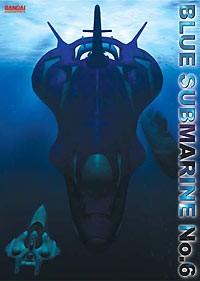
Blue Submarine No. 6 directed by Mahiro Maeda. Discotek announced earlier this year that it had rescued the license for Blue Submarine No. 6 (originally released by Bandai), so I was curious. The four-episode OVA adapts a manga by Satoru Ozawa from 1967. The series is a bit confusing and rushed in places, and almost none of the characters were as well developed as I wanted them to be, but it pulls itself together pretty nicely in the end. I particularly liked the series’ post-apocalyptic ocean setting. Despite the occasionally awkward computer graphics, there were still some very nice visuals and great character designs. I enjoyed Blue Submarine No. 6 well enough, but it’s not a series that I’ll need to own.

Shigurui: Death Frenzy directed by Hiroshi Hamasaki. Based on a manga by Takayuki Yamaguchi, which in turn adapts a novel by Norio Nanjō, Shigurui is an extremely brutal, graphic, and violent series. Nearly all of the characters are detestable and their actions are appalling. The series definitely isn’t for everyone and will offend many. To say it’s intense is to put it mildly. After the first episode, most of the anime is a long flashback; unfortunately, the bloody tale of power and revenge never quite comes full circle. Visually, the series is very distinctive in its style with creepy motifs and merciless fight scenes. I found Shigurui to be incredibly absorbing and even compelling. It’s been a while since an anime has left such a profound impression on me.

Filed Under: My Week in Manga Tagged With: 20th century boys, anime, Blue Submarine No. 6, Boy Princess, comics, Genshiken, J. M. Ken Niimura, Joe Kelly, manga, manhwa, Naoki Urasawa, Seyoung Kim, Shigurui, Shimoku Kio

The Summit of the Gods, Volume 2

April 7, 2013 by Ash Brown

Author: Baku Yumemakura
Illustrator: Jiro Taniguchi

U.S. publisher: Fanfare/Ponent Mon
ISBN: 9788492444328
Released: January 2010
Original release: 2001
Awards: Angoulême Prize, Japan Media Arts Award

The second volume of The Summit of the Gods, a five volume manga series written by Baku Yumemakura and illustrated by Jiro Taniguchi, was originally released in Japan in 2001. The English-language release of The Summit of the Gods, Volume 2 was published by Fanfare/Ponent Mon in early 2010. The series is based on Yumemakura’s 1997 award-winning novel The Summit of the Gods and has won several awards itself, including a Japan Media Arts Excellence Award in 2001 and an Angoulême Prize for Artwork in 2005. I will admit right now that I love Yumemakura and Taniguchi’s The Summit of the Gods. The manga is easily my favorite work that Taniguchi has collaborated on. The series has gorgeous artwork, characters that are larger than life but who remain human in their imperfections, and an engaging story.

After returning to Japan from Nepal, journalist Makoto Fukamachi has been doggedly pursuing the enigma of the man he believes he met there–a legendary Japanese mountain climber named Jouji Habu. Initially, Fukamachi was interested in a camera he is convinced is in Habu’s possession. It may very well be the same camera that George Mallory brought with him on his assault on Everest in 1924. If true, Habu has his hands on an important piece of mountaineering history. But as Fukamachi’s investigation proceeds he becomes more and more interested in Habu himself and what drives the man as a climber. While Fukamachi’s personal life is unraveling he throws himself into his research, tracking down anyone who might know anything about Habu and his current whereabouts.

While I personally find Fukamachi’s persistent research to be interesting as he slowly pieces together disparate clues and leads, what I really love about The Summit of the Gods, Volume 2 are the stories that he uncovers. As unlikeable as Habu can be, and with as many enemies as he has made, his accomplishments as a mountain climber are unquestionably phenomenal. Fukamachi delves into many of Habu’s feats: his disastrous and yet astonishing foray climbing the Grandes Jorasses as well as his notorious participation in a group summit assault on Everest and several unfortunate incidents relating to it. But as amazing as Habu’s achievements are as a climber, it’s Taniguchi’s stunning artwork that makes them a reality for the reader. From the largest mountain vistas to the smallest crack in ice or rock, Taniguchi’s attention to detail is superb. The pacing and timing of his panels make the climbs both exhilarating and terrifying.

Nature and the mountains can be glorious, but they can also be extraordinarily dangerous. Taniguchi’s artwork expertly conveys this. Both the figurative and literal gravity of the situations that the climbers face can almost be felt reading The Summit of the Gods. When something goes wrong, even the smallest something, the repercussions can be devastating. And at times the events that unfold are entirely outside of human control. Saying that a climber fell–such a small and simple word–is easy enough. But the enormity of the human drama and the story surrounding that fall, what happened to cause it, and what happens as a result of it, is intensely engrossing. It is clear that the characters in The Summit of the Gods are effected deeply; the impacts can be seen in their changing relationships to each other, to climbing, and to the mountains themselves. The Summit of the Gods is an incredible work.

Filed Under: REVIEWS Tagged With: Angoulême Prize, Baku Yumemakura, Fanfare/Ponent Mon, Japan Media Arts Award, Jiro Taniguchi, manga, summit of the gods

  • « Go to Previous Page
  • Page 1
  • Interim pages omitted …
  • Page 33
  • Page 34
  • Page 35
  • Page 36
  • Page 37
  • Interim pages omitted …
  • Page 60
  • Go to Next Page »
 | Log in
Copyright © 2010 Manga Bookshelf | Powered by WordPress & the Genesis Framework