• Skip to primary navigation
  • Skip to main content
  • Skip to primary sidebar
  • Home
  • About Us
    • Privacy Policy
    • Comment Policy
    • Disclosures & Disclaimers
  • Resources
    • Links, Essays & Articles
    • Fandomology!
    • CLAMP Directory
    • BlogRoll
  • Features & Columns
    • 3 Things Thursday
    • Adventures in the Key of Shoujo
    • Bit & Blips (game reviews)
    • BL BOOKRACK
    • Bookshelf Briefs
    • Bringing the Drama
    • Comic Conversion
    • Fanservice Friday
    • Going Digital
    • It Came From the Sinosphere
    • License This!
    • Magazine no Mori
    • My Week in Manga
    • OFF THE SHELF
    • Not By Manga Alone
    • PICK OF THE WEEK
    • Subtitles & Sensibility
    • Weekly Shonen Jump Recaps
  • Manga Moveable Feast
    • MMF Full Archive
    • Yun Kouga
    • CLAMP
    • Shojo Beat
    • Osamu Tezuka
    • Sailor Moon
    • Fruits Basket
    • Takehiko Inoue
    • Wild Adapter
    • One Piece
    • After School Nightmare
    • Karakuri Odette
    • Paradise Kiss
    • The Color Trilogy
    • To Terra…
    • Sexy Voice & Robo
  • Browse by Author
    • Sean Gaffney
    • Anna Neatrour
    • Michelle Smith
    • Katherine Dacey
    • MJ
    • Brigid Alverson
    • Travis Anderson
    • Phillip Anthony
    • Derek Bown
    • Jaci Dahlvang
    • Angela Eastman
    • Erica Friedman
    • Sara K.
    • Megan Purdy
    • Emily Snodgrass
    • Nancy Thistlethwaite
    • Eva Volin
    • David Welsh
  • MB Blogs
    • A Case Suitable For Treatment
    • Experiments in Manga
    • MangaBlog
    • The Manga Critic
    • Manga Report
    • Soliloquy in Blue
    • Manga Curmudgeon (archive)

Manga Bookshelf

Discussion, Resources, Roundtables, & Reviews

Manga Critic

The Name of the Flower, Vols. 1-4

July 11, 2010 by Katherine Dacey

nameflower2Given the sheer number of nineteenth-century Brit-lit tropes that appear in The Name of the Flower — neglected gardens, orphans struck dumb by tragedy, brooding male guardians — one might reasonably conclude that Ken Saito was paying homage to Charlotte Brontë and Frances Hodgson Burnett with her story about a fragile young woman who falls in love with an older novelist. And while that manga would undoubtedly be awesome — think of the costumes! — The Name of the Flower is, in fact, far more nuanced and restrained than its surface details might suggest.

The story starts from an old-as-the-hills premise: the orphan who grows up to marry — or, in this case, pine for — her guardian. In The Name of the Flower, the orphan role is fulfilled by Chouko, who, at the age of sixteen, lost her parents in a car accident. Overwhelmed by grief, Chouko stopped speaking or showing emotion until a distant relative took her into his home, admonished her for being silent, and suggested that she revive the house’s lifeless garden. Flash forward two years, and Chouko has emerged from her shell, still quiet but full of calm purpose and warm feelings for Kei, her guardian. Kei, however, is a troubled soul, a successful novelist who achieved notoriety for a string of nihilistic books written while he was in his early twenties. His eccentric garb (he wears a yukata just about everywhere) and brusque demeanor suggest a man in full flight from the outside world — or at least some painful memories.

…

Read More

Filed Under: Manga Critic Tagged With: cmx, Drama, Romance/Romantic Comedy, shojo

The Name of the Flower, Vols. 1-4

July 11, 2010 by Katherine Dacey

Given the sheer number of nineteenth-century Brit-lit tropes that appear in The Name of the Flower — neglected gardens, orphans struck dumb by tragedy, brooding male guardians — one might reasonably conclude that Ken Saito was paying homage to Charlotte Brontë and Frances Hodgson Burnett with her story about a fragile young woman who falls in love with an older novelist. And while that manga would undoubtedly be awesome — think of the costumes! — The Name of the Flower is, in fact, far more nuanced and restrained than its surface details might suggest.

The story starts from an old-as-the-hills premise: the orphan who grows up to marry — or, in this case, pine for — her guardian. In The Name of the Flower, the orphan role is fulfilled by Chouko, who, at the age of sixteen, lost her parents in a car accident. Overwhelmed by grief, Chouko stopped speaking or showing emotion until a distant relative took her into his home, admonished her for being silent, and suggested that she revive the house’s lifeless garden. Flash forward two years, and Chouko has emerged from her shell, still quiet but full of calm purpose and warm feelings for Kei, her guardian. Kei, however, is a troubled soul, a successful novelist who achieved notoriety for a string of nihilistic books written while he was in his early twenties. His eccentric garb (he wears a yukata just about everywhere) and brusque demeanor suggest a man in full flight from the outside world — or at least some painful memories.

The real drama begins when Chouko graduates from high school. Though Kei harbors feelings for Chouko, he worries about the gap in age and experience that separates them — he’s thirty, she’s eighteen — reluctantly acknowledging that it would be selfish to deny her a chance at independence. Despite Kei’s gruff prodding, however, Chouko can’t quite strike out on her own; her profound fear of abandonment keeps her tethered to Kei, even though she attends college and cultivates a small but supportive circle of friends. In short, the two are locked in a complicated, co-dependent relationship that’s about as healthy as Jane Eyre and Edward Rochester’s, though less sensational. (Kei doesn’t have a mad wife stashed in a remote corner of the house or a failed relationship with a French dancer in his past.) Only the intervention of other people — Akiyama, Kei’s sole friend, and Yousuke, Chouko’s classmate and not-so-secret admirer — prevents Kei and Chouko from sinking into a destructive cycle of clinging to and withdrawing from one another.

Throughout the series, Ken Saito walks a fine line between romanticizing Kei and Chouko’s relationship and recognizing its less savory aspects, generally erring on the side of sympathetic frankness. The series’ ending may be predictable, but the feelings it evokes in the reader are not, as we’re left to wonder whether Kei and Chouko can finally let go of their tragic pasts to embrace the present. At the same time, however, the story’s lighter moments — especially some wonderful comic business with Chouko’s friends, a group of hyper-verbal bibliophiles — suggest that Chouko, at least, is capable of feeling great joy and connecting with other people, a suggestion borne out by her relationship with the salty neighborhood septuagenarians, who stop by to trade gardening tips and upbraid Kei for his reclusive, sullen behavior.

Saito’s artwork is simple but lovely. Though her figures and faces aren’t especially distinctive, each of the principle characters’ appearance has been given careful consideration. Aspiring author Yousuke, for example, plays his part to the hilt, sporting a jacket with elbow patches and a tousled mop, while Chouko’s numerous experiments with hairstyles reveal a young woman just beginning to discover her own beauty. (I vacillated between ascribing Kei’s fondness for traditional garb to the author’s theory of the character and her desire to draw handsome men in period costume.) As one would imagine from a manga with the word “flower” in the title, floral imagery plays an important role in illustrating the characters’ inner lives, both in a conventional sense (e.g. faces superimposed atop images of roses) and in a more subtle fashion as well, with the plants’ own natural cycle of growth, death, and rebirth serving as a visual metaphor for the ebb and flow of Kei and Chouko’s relationship. Saito reserves her most detailed panels for Chouko’s garden, however, showing us not only what she planted, but also the physical space itself, from the trellises and vines to the rock formations — a gentle reminder that planting and tending flowers played a key role in Chouko’s emotional rehabilitation, just as it did for Mary Lennox in Burnett’s The Secret Garden.

At four volumes, The Name of the Flower is just the right length for the story that Saito wants to tell, allowing her enough space to explore Kei and Chouko’s relationship without resorting to false drama to delay its resolution. The prevailing mood is wistful and, at times, dark, but never melodramatic; Saito’s restraint is key to preventing The Name of the Flower from devolving into tawdry theatrics. It’s a surprisingly thoughtful character study that proves that shojo can be just as grown-up and sophisticated as its big sister josei. Highly recommended.

THE NAME OF THE FLOWER, VOLS. 1-4 • BY KEN SAITO • CMX • RATING: OLDER TEEN (16+)

Filed Under: Manga, Manga Critic, REVIEWS Tagged With: cmx, Drama, Romance/Romantic Comedy, shojo

5 Underrated Shojo Manga

July 10, 2010 by Katherine Dacey 7 Comments

Earlier in the week, I sang the praises of Kaze Hikaru, my all-time favorite shojo manga (and one of my all-time favorite manga, period). Today I shine the spotlight on five great titles that haven’t garnered as much favorable notice as they deserve. Sadly, all but one are officially out of print or will be soon, owing to publisher closings, lapsed licenses, and so-so sales. If you can’t find them through retailers such as Amazon, Buy.com, or Right Stuf!, you might wish to cast your net wider to include sites like Robert’s Anime Corner Store (a good source for older titles) and eBay, or try your local library for copies.

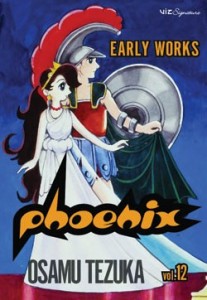
phoenix125. PHOENIX, VOL. 12: EARLY WORKS

OSAMU TEZUKA • VIZ • 1 VOLUME (complete)

A better subtitle for volume twelve of Phoenix would be I Lost It At the Movies, as these four stories reveal just how passionately Osamu Tezuka loved American cinema. In a 1980 essay, Tezuka explained that “watching American big-screen spectacle movies such as Helen of Troy and Land of the Pharaohs made me want to create a similar sort of romantic epic for young girls’ comics.” Looking at this collection, the sword-and-sandal influence manifests itself in almost every aspect of Tezuka’s storytelling, from the costumes and settings to the dialogue, which the characters declaim as if it were of Biblical consequence. (Paging Charlton Heston!) What makes this Hollywood pomposity bearable — even charming — is the tempering influence of Walt Disney. The character designs owe an obvious debt to Snow White, while the supporting cast could easily belong to Cinderella or Sleeping Beauty’s entourage of chatty animal friends.

Anyone looking for the moral complexity of later Phoenix stories will be disappointed in volume twelve, as Tezuka’s villains are cartoonishly evil and his heroes (and heroine) chastely noble. If one approaches this collection in the spirit of, say, a musicologist flipping through Beethoven’s pre-Eroica manuscripts, however, the rewards are more palpable. In these early stories we see Tezuka developing his comedic chops with pop culture references and physical slapstick; we see him experimenting with layout, as he renders the battlefields of Troy and Rome in sweeping, full-page panels; and we see him creating his first cycle of interconnected stories, introducing some of the themes that would unify the entire Phoenix saga. In short, we see Tezuka’s first attempts to find his own voice as he pays tribute to the artists who influenced him, learning more about his exuberant, unique artistry in the process. (Originally reviewed at PopCultureShock on 3/19/08.)

xday14. X-DAY

SETONA MIZUSHIRO • TOKYOPOP • 2 VOLUMES (complete)

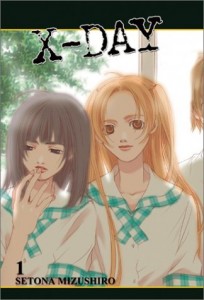
When star high jumper Rika injures her leg and loses her boyfriend to a teammate, she becomes profoundly depressed. She soon discovers an online community of similarly disaffected students, however, all of whom share her desire to “make the school disappear.” Their internet chats soon give way to in-person meetings, where Rika comes face-to-face with three very different people: “Polaris,” a shy teen who dresses like a Goth off campus, “Mr. Money,” a friendly underclassman, and “Janglarian,” a young biology teacher who wants to dynamite the school. Setona Mizushiro’s dark story could easily spiral into melodrama, but she does a fine job of showing us how the normal tribulations of being a teenager — fighting with parents, enduring harassment from peers, feeling overwhelmed by anxiety — have led these four fragile people to hatch such a radical plan for coping with their pain. The second volume lacks the dramatic urgency of the first, as the students’ plot begins to come unraveled, but X-Day remains persuasive until its final pages, thanks to Mizushiro’s vivid characterizations and nuanced artwork.

airevolution13. A.I. REVOLUTION

YUU ASAMI• GO! COMI • 5 VOLUMES (incomplete; 17 volumes in Japan)

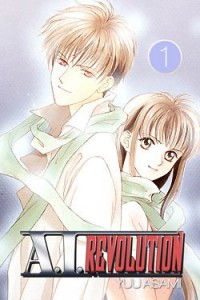
A.I. Revolution starts from a premise familiar to legions of Isaac Asimov fans: a human builds a robot, only to discover his creation has a mind and feelings of its own. Sui, the story’s human protagonist, initially views robots as household appliances, not unlike toasters or vaccuum cleaners. When her father presents her with an android companion, however, Sui develops a strong bond with it, discovering that Vermillion has a capacity for emotion that far outstrips her expectations.

A.I. Revolution may sound like I, Robot Hottie, but Yuu Asami puts a thoughtful spin on the material, filtering familiar sci-fi themes through a shojo lens. Though she weaves evil scientists and corporate espionage into the narrative, the story is at its best when focusing on Vermillion’s interactions with his human family; Sui’s father, for example, has modeled Vermillion in the image of a colleague that he admired, leading to a few funny, awkward moments of human-robot flirtation, while Sui seesaws between sisterly protectiveness and romantic attachment to her handsome companion. (Really, is there any other kind of robot in shojo manga?) Asami’s art reminds me of Akimi Yoshida’s with its elongated character designs, delicate linework, and sparing use of screentone. It’s a little dated perhaps, but a welcome change of pace from the slicker, busier layouts characteristic of the titles licensed by Tokyopop and VIZ. Highly recommended for fans of old-school shojo. (Originally reviewed at PopCultureShock on 3/4/08.)

gals12. GALS!

MIHONA FUJI • CMX • 10 VOLUMES (complete)

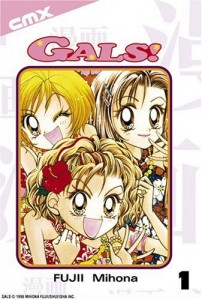
This wacky comedy is one of the better shojo licenses in the CMX catalog, a rude, raunchy, and oddly moral tale about a feisty kogal named Ran Kotobuki. Though Ran and her pals are primarily interested in shopping for outrageous outfits, visiting the tanning salon, and stealing book bags from students at rival schools, Ran’s upbringing in a household full of police officers (dad, mom, and big brother are all cops) has taught her to adhere to a strict code of conduct: no sex for favors, and no tolerance for anyone who disrespects her friends.

Ran is a terrific, memorable character — impetuous, loud, funny, and tough, the kind of person who would literally smack sense into another girl if she thought it would work. Better still, she’s not easily swayed by boys; her relationship with the sweet but dim Tatsuki is surprisingly chaste, limited primarily to hand-holding and awkward discussions about feelings. (Ran won’t deign to say, “I love you,” as it compromises her tough-girl image.) As befits a manga that was serialized in Ribon, all of the characters have enormous, doll-like eyes in the Arina Tanemura style, and fabulous outfits that shame the Gossip Girls. The backgrounds are surprisingly detailed, conveying the look and feel of the Shibuya district with a specificity that’s all too rare in shojo manga. In sum, Gals! is the kind of good-natured gang comedy that I hoped My Darling! Miss Bancho would be: full of humor and heart, but with fewer capitulations to shojo convention.

lovesong1. LOVE SONG

KEIKO NISHI • VIZ • 1 VOLUME (complete)

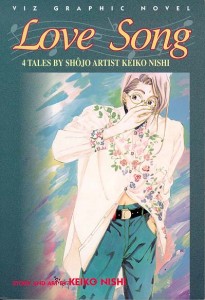
Back in the 1990s, Matt Thorn labored hard to make Keiko Nishi a household name among American manga readers, translating six of her stories for VIZ; two appeared in Four Shojo Stories alongside work by Moto Hagio and Shio Sato, and four appeared in a stand-alone volume called Love Song. Though Nishi didn’t catch on with Western shojo fans, it’s easy to see why Thorn championed her work: she’s a terrific, versatile storyteller, equally capable of writing light-hearted fantasies and character studies of deeply damaged people.

Of the four stories that appear in Love Song, two are standouts: “Jewels of the Seaside,” a black comedy about three sisters who compete for the same man’s affection, with disastrous results, and “The Skin of Her Heart,” a quiet sci-fi tale about a young woman torn between what she wants and what her mother wants for her. (Readers who enjoyed A, A’ or Twin Spica are a natural audience for “Skin of Her Heart,” though it works equally well for folks who aren’t big sci-fi buffs.) Nishi’s artwork is an acquired taste, at times precise, elegant, and naturalistic, and at times loose and sketchy, with the white of the page playing an important role in underscoring the emotional distance between her characters. Her minimalist approach won’t be to every shojo fan’s liking, but she demonstrates that it’s perfectly possible to convey the interior lives of her characters without resorting to the kind of visual shorthands — flowers, sweatdrops, nosebleeds — that have been overused in contemporary shojo manga. Love Song is out of print, but unlike Four Shojo Stories and A, A’, is still relatively easy to obtain through online retailers like Amazon. Highly recommended.

HONORABLE MENTIONS

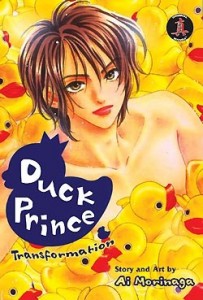
duckprince1DUCK PRINCE (Ai Morinaga • CMP • 3 volumes, suspended)
Morinaga’s battle-of-the-sexes comedy takes a standard shojo plot — homely gal gets makeover to win the guy of her dream — and turns it on its head, substituting a sweet, helmet-haired nerd for the customary plain Jane, and adding a novel twist: Reiichi appears to most girls as a smokin’ hottie, but in the presence of his beloved Yumiko, he reverts to his original form. As in all her work, Morinaga uses humor to make deeper points about gender roles and physical beauty, though Duck Prince is too rude and risque to be mistaken for an Afterschool Special. Central Park Media released three of the five volumes before suspending Duck Prince; of all the titles left homeless by CPM’s demise, it seems like one of the strongest candidates for a license rescue, though middling sales of Your & My Secret and My Heavenly Hockey Club may have scared American publishers away from Morinaga’s distinctive comedies.

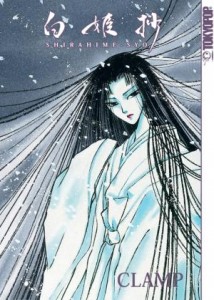
shirahimesyoSHIRAHIME-SYO: SNOW GODDESS TALES (CLAMP • Tokyopop • 1 volume)
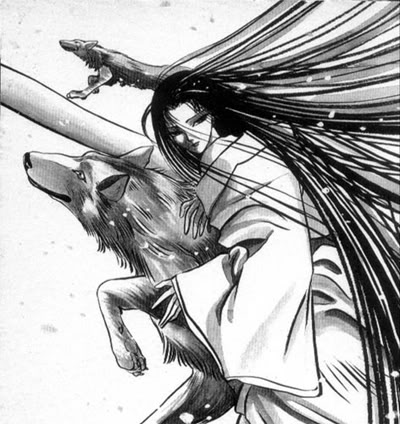
This lovely anthology is a radical departure for CLAMP. Gone are the super-detailed costumes and fussy character designs of their early, post-doujinshi work; in their place are spare, simply-drawn figures that seem consciously modeled on examples from eighteenth- and nineteenth-century scroll paintings. The stories themselves are told directly without embellishment, though CLAMP infuses each tale with genuine pathos, showing us how the characters’ anger and doubt lead to profound despair. As a result, the prevailing tone and spirit are reminiscent of Masaki Kobayashi’s 1964 film Kwaidan, both in the stories’ fidelity to the conventions of Japanese folklore and in their lyrical restraint. And if my description didn’t sell you on Shirahime-Syo, let this beautiful image, taken from the final story of the collection, persuade you to give this out-of-print gem a try:

snowgoddess2

* * * * *

So what titles top your list of underrated shojo manga? Inquiring minds want to know!

Filed Under: Manga Critic Tagged With: Ai Morinaga, clamp, Classic, cmx, Comedy, CPM, Drama, Go! Comi, Historical Drama, Osamu Tezuka, Sci-Fi, Setona Mizushiro, shojo, Tokyopop, VIZ

5 Underrated Shojo Manga

July 10, 2010 by Katherine Dacey

Earlier in the week, I sang the praises of Kaze Hikaru, my all-time favorite shojo manga (and one of my all-time favorite manga, period). Today I shine the spotlight on five great titles that haven’t garnered as much favorable notice as they deserve. Sadly, all but one are officially out of print or will be soon, owing to publisher closings, lapsed licenses, and so-so sales. If you can’t find them through retailers such as Amazon, Buy.com, or Right Stuf!, you might wish to cast your net wider to include sites like Robert’s Anime Corner Store (a good source for older titles) and eBay, or try your local library for copies.

phoenix125. Phoenix: Early Years, Vol. 12
By Osamu Tezuka • VIZ Media • 1 volume (complete)
A better subtitle for volume twelve of Phoenix would be I Lost It At the Movies, as these four stories reveal just how passionately Osamu Tezuka loved American cinema. In a 1980 essay, Tezuka explained that “watching American big-screen spectacle movies such as Helen of Troy and Land of the Pharaohs made me want to create a similar sort of romantic epic for young girls’ comics.” Looking at this collection, the sword-and-sandal influence manifests itself in almost every aspect of Tezuka’s storytelling, from the costumes and settings to the dialogue, which the characters declaim as if it were of Biblical consequence. (Paging Charlton Heston!) What makes this Hollywood pomposity bearable — even charming — is the tempering influence of Walt Disney. The character designs owe an obvious debt to Snow White, while the supporting cast could easily belong to Cinderella or Sleeping Beauty’s entourage of chatty animal friends.Anyone looking for the moral complexity of later Phoenix stories will be disappointed in volume twelve, as Tezuka’s villains are cartoonishly evil and his heroes (and heroine) chastely noble. If one approaches this collection in the spirit of, say, a musicologist flipping through Beethoven’s pre-Eroica manuscripts, however, the rewards are more palpable. In these early stories we see Tezuka developing his comedic chops with pop culture references and physical slapstick; we see him experimenting with layout, as he renders the battlefields of Troy and Rome in sweeping, full-page panels; and we see him creating his first cycle of interconnected stories, introducing some of the themes that would unify the entire Phoenix saga. In short, we see Tezuka’s first attempts to find his own voice as he pays tribute to the artists who influenced him, learning more about his exuberant, unique artistry in the process. (Originally reviewed at PopCultureShock on 3/19/08.)

xday14. X-Day
By Setona Mizushiro • Tokyopop • 2 volumes (complete)
When star high jumper Rika injures her leg and loses her boyfriend to a teammate, she becomes profoundly depressed. She soon discovers an online community of similarly disaffected students, however, all of whom share her desire to “make the school disappear.” Their internet chats soon give way to in-person meetings, where Rika comes face-to-face with three very different people: “Polaris,” a shy teen who dresses like a Goth off campus, “Mr. Money,” a friendly underclassman, and “Janglarian,” a young biology teacher who wants to dynamite the school. Setona Mizushiro’s dark story could easily spiral into melodrama, but she does a fine job of showing us how the normal tribulations of being a teenager — fighting with parents, enduring harassment from peers, feeling overwhelmed by anxiety — have led these four fragile people to hatch such a radical plan for coping with their pain. The second volume lacks the dramatic urgency of the first, as the students’ plot begins to come unraveled, but X-Day remains persuasive until its final pages, thanks to Mizushiro’s vivid characterizations and nuanced artwork.

airevolution13. A.I. Revolution
By Yuu Asami • Go! Comi • 5 volumes (incomplete; 17 volumes in Japan)
A.I. Revolution starts from a premise familiar to legions of Isaac Asimov fans: a human builds a robot, only to discover his creation has a mind and feelings of its own. Sui, the story’s human protagonist, initially views robots as household appliances, not unlike toasters or vaccuum cleaners. When her father presents her with an android companion, however, Sui develops a strong bond with it, discovering that Vermillion has a capacity for emotion that far outstrips her expectations.

A.I. Revolution may sound like I, Robot Hottie, but Yuu Asami puts a thoughtful spin on the material, filtering familiar sci-fi themes through a shojo lens. Though she weaves evil scientists and corporate espionage into the narrative, the story is at its best when focusing on Vermillion’s interactions with his human family; Sui’s father, for example, has modeled Vermillion in the image of a colleague that he admired, leading to a few funny, awkward moments of human-robot flirtation, while Sui seesaws between sisterly protectiveness and romantic attachment to her handsome companion. (Really, is there any other kind of robot in shojo manga?) Asami’s art reminds me of Akimi Yoshida’s with its elongated character designs, delicate linework, and sparing use of screentone. It’s a little dated perhaps, but a welcome change of pace from the slicker, busier layouts characteristic of the titles licensed by Tokyopop and VIZ. Highly recommended for fans of old-school shojo. (Originally reviewed at PopCultureShock on 3/4/08.)

gals12. GALS!
By Mihona Fuji • CMX Manga • 10 volumes (complete)
This wacky comedy is one of the better shojo licenses in the CMX catalog, a rude, raunchy, and oddly moral tale about a feisty kogal named Ran Kotobuki. Though Ran and her pals are primarily interested in shopping for outrageous outfits, visiting the tanning salon, and stealing book bags from students at rival schools, Ran’s upbringing in a household full of police officers (dad, mom, and big brother are all cops) has taught her to adhere to a strict code of conduct: no sex for favors, and no tolerance for anyone who disrespects her friends.

Ran is a terrific, memorable character — impetuous, loud, funny, and tough, the kind of person who would literally smack sense into another girl if she thought it would work. Better still, she’s not easily swayed by boys; her relationship with the sweet but dim Tatsuki is surprisingly chaste, limited primarily to hand-holding and awkward discussions about feelings. (Ran won’t deign to say, “I love you,” as it compromises her tough-girl image.) As befits a manga that was serialized in Ribon, all of the characters have enormous, doll-like eyes in the Arina Tanemura style, and fabulous outfits that shame the Gossip Girls. The backgrounds are surprisingly detailed, conveying the look and feel of the Shibuya district with a specificity that’s all too rare in shojo manga. In sum, Gals! is the kind of good-natured gang comedy that I hoped My Darling! Miss Bancho would be: full of humor and heart, but with fewer capitulations to shojo convention.

lovesong1. Love Song
Keiko Nishi • VIZ Media • 1 volume (complete)
Back in the 1990s, Matt Thorn labored hard to make Keiko Nishi a household name among American manga readers, translating six of her stories for VIZ; two appeared in Four Shojo Stories alongside work by Moto Hagio and Shio Sato, and four appeared in a stand-alone volume called Love Song. Though Nishi didn’t catch on with Western shojo fans, it’s easy to see why Thorn championed her work: she’s a terrific, versatile storyteller, equally capable of writing light-hearted fantasies and character studies of deeply damaged people.

Of the four stories that appear in Love Song, two are standouts: “Jewels of the Seaside,” a black comedy about three sisters who compete for the same man’s affection, with disastrous results, and “The Skin of Her Heart,” a quiet sci-fi tale about a young woman torn between what she wants and what her mother wants for her. (Readers who enjoyed A, A’ or Twin Spica are a natural audience for “Skin of Her Heart,” though it works equally well for folks who aren’t big sci-fi buffs.) Nishi’s artwork is an acquired taste, at times precise, elegant, and naturalistic, and at times loose and sketchy, with the white of the page playing an important role in underscoring the emotional distance between her characters. Her minimalist approach won’t be to every shojo fan’s liking, but she demonstrates that it’s perfectly possible to convey the interior lives of her characters without resorting to the kind of visual shorthands — flowers, sweatdrops, nosebleeds — that have been overused in contemporary shojo manga. Love Song is out of print, but unlike Four Shojo Stories and A, A’, is still relatively easy to obtain through online retailers like Amazon. Highly recommended.

HONORABLE MENTIONS

duckprince1Duck Prince
By Ai Morinaga • CMP • 3 volumes (suspended)

Morinaga’s battle-of-the-sexes comedy takes a standard shojo plot — homely gal gets makeover to win the guy of her dream — and turns it on its head, substituting a sweet, helmet-haired nerd for the customary plain Jane, and adding a novel twist: Reiichi appears to most girls as a smokin’ hottie, but in the presence of his beloved Yumiko, he reverts to his original form. As in all her work, Morinaga uses humor to make deeper points about gender roles and physical beauty, though Duck Prince is too rude and risque to be mistaken for an Afterschool Special. Central Park Media released three of the five volumes before suspending Duck Prince; of all the titles left homeless by CPM’s demise, it seems like one of the strongest candidates for a license rescue, though middling sales of Your & My Secret and My Heavenly Hockey Club may have scared American publishers away from Morinaga’s distinctive comedies.

shirahimesyoShirahime-Syo: Snow Goddess Tales
By CLAMP • Tokyopop • 1 volume

This lovely anthology is a radical departure for CLAMP. Gone are the super-detailed costumes and fussy character designs of their early, post-doujinshi work; in their place are spare, simply-drawn figures that seem consciously modeled on examples from eighteenth- and nineteenth-century scroll paintings. The stories themselves are told directly without embellishment, though CLAMP infuses each tale with genuine pathos, showing us how the characters’ anger and doubt lead to profound despair. As a result, the prevailing tone and spirit are reminiscent of Masaki Kobayashi’s 1964 film Kwaidan, both in the stories’ fidelity to the conventions of Japanese folklore and in their lyrical restraint. And if my description didn’t sell you on Shirahime-Syo, let this beautiful image, taken from the final story of the collection, persuade you to give this out-of-print gem a try:

snowgoddess2

* * * * *

So what titles top your list of underrated shojo manga? Inquiring minds want to know!

Filed Under: Manga, Manga Critic, Recommended Reading Tagged With: Ai Morinaga, clamp, Classic, cmx, Comedy, CPM, Drama, Go! Comi, Historical Drama, Osamu Tezuka, Sci-Fi, Setona Mizushiro, Tokyopop, VIZ

Himeyuka & Rozione’s Story

July 9, 2010 by Katherine Dacey

HIMEYUKAAnthologies serve a variety of purposes. They provide established artists an outlet for experimenting with new genres and subjects; they introduce readers to seminal creators with a representative sample of work; and they offer a window into an early phase of a manga-ka’s development, as he or she made the transition from short, self-contained works to long-form dramas. Himeyuka & Rozione’s Story serves all three purposes, collecting four shojo stories by prolific and versatile writer Sumomo Yumeka, best known here in the US for The Day I Became A Butterfly and Same Cell Organism. (N.B. “Sumomo Yumeka” is a pen name, as is “Mizu Sahara,” the pseudonym under which she published Voices of a Distant Star and the ongoing seinen drama My Girl.)

If the stories in Himeyuka & Rozione aren’t groundbreaking — one focuses on a yakuza princess falling in love with a commoner, another on an inept witch trying to increase her magical mojo in the human world — they are full of nicely observed moments and subtle but effective twists. In “The Princess of Kikouya in District 1,” for example, a feisty young woman tries to delay a marriage intended to consolidate two crime families’ power, only to discover that the qualities she admires in her regular-guy paramour are, in fact, the result of his long involvement with the mob, while in “My Very Own Shalala,” a young witch tries to trick a brusque young man into crying (his tears will enhance her magical power), only to discover that he’s perfectly capable of expressing genuine sadness. The best story of the bunch, “Himeyuka & Rozione,” takes another common shojo trope — the emancipated teen trying to make it on her own — and turns it into a thoughtful parable about the value of maintaining your ties to the past, even as you move into the world of adult responsibility.

…

Read More

Filed Under: Manga Critic Tagged With: shojo, yen press

My Favorite Shojo Manga: Kaze Hikaru

July 7, 2010 by Katherine Dacey

kazehikaru1In Manga: Sixty Years of Japanese Comics, author Paul Gravett argues that female mangaka from Riyoko Ikeda to CLAMP have often used “the fluidity of gender boundaries and forbidden love” to “address issues of deep importance to their readers.” Taeko Watanabe is no exception to the rule, employing cross-dressing and shonen-ai elements to tell a story depicting the “pressures and pleasures of individuals living life in their own way and, for better or worse, not always as society expects.”

Kaze Hikaru begins in 1863, a period of immense political and social upheaval in Japan, as the ruling class divided into factions loyal to the emperor (whose seat was in Kyoto), and factions loyal to the shogun (whose government was housed in Edo, or present-day Tokyo). Exacerbating the tension between these groups was the looming question of sakoku, or isolationism, a centuries-old policy that was crumbling in the face of military and economic pressure from the West, an unstable currency, and the dawning realization that certain Western technologies might have a role to play in the modernization of Japan. Taeko Watanabe draws on the events of the Bakumatsu (or late shogunate era, 1863 – 1867) for Kaze Hikaru, incorporating real historical figures into the story and dramatizing some of the major and minor conflicts of the period, from the Ikedaya Affair of 1864 to the Shinsengumi’s ambivalence about adopting rifles and canons into the samurai arsenal.

…

Read More

Filed Under: Manga Critic Tagged With: Samurai, shojo, shojo beat, VIZ

My Favorite Shojo Manga: Kaze Hikaru

July 7, 2010 by Katherine Dacey

In Manga: Sixty Years of Japanese Comics, author Paul Gravett argues that female mangaka from Riyoko Ikeda to CLAMP have often used “the fluidity of gender boundaries and forbidden love” to “address issues of deep importance to their readers.” Taeko Watanabe is no exception to the rule, employing cross-dressing and shonen-ai elements to tell a story depicting the “pressures and pleasures of individuals living life in their own way and, for better or worse, not always as society expects.”

Kaze Hikaru begins in 1863, a period of immense political and social upheaval in Japan, as the ruling class divided into factions loyal to the emperor (whose seat was in Kyoto), and factions loyal to the shogun (whose government was housed in Edo, or present-day Tokyo). Exacerbating the tension between these groups was the looming question of sakoku, or isolationism, a centuries-old policy that was crumbling in the face of military and economic pressure from the West, an unstable currency, and the dawning realization that certain Western technologies might have a role to play in the modernization of Japan. Taeko Watanabe draws on the events of the Bakumatsu (or late shogunate era, 1863 – 1867) for Kaze Hikaru, incorporating real historical figures into the story and dramatizing some of the major and minor conflicts of the period, from the Ikedaya Affair of 1864 to the Shinsengumi’s ambivalence about adopting rifles and canons into the samurai arsenal.

In the opening pages of Kaze Hikaru, Sei Tominaga, the heroine, lives a sheltered existence under the watchful eye of her father and older brother. Local rabble-rousers accuse the Tominagas of harboring spies at the medical clinic they operate and burn it to the ground, leaving Sei homeless and orphaned. Determined to avenge her family, Sei disguises herself as a boy, adopts the name Kamiya Seizaburo, and joins the Mibu-Roshi, a band of ronin who are fiercely loyal to the Tokugawa Shogunate. (The Mibu-Roshi would come to be known as the Shinsengumi, or “newly chosen corps.” At the height of their power, their ranks numbered around 300, and included a few members who were not born into the samurai caste.) Sei finds a mentor in the slightly older Okita Soji, an accomplished swordsman who acts as a den mother for new recruits. He accidentally discovers Sei’s identity, agreeing to keep her secret if she can demonstrate her worth as bushi, or an honorable warrior.

Watanabe’s art is clean and crisp, conveying enough period detail to firmly establish the setting without overwhelming the eye. A similar attention to facial features and body shapes also informs her nuanced and varied character designs, a godsend for a such a densely populated series. The action sequences are staged simply but effectively, conveying the skill and physical strength necessary to best an opponent in hand-to-hand combat, or suggesting the dangers of a night-time raid. But it’s in the everyday moments that Watanabe’s artistry really shines, as she has a talent for depicting the energy and activity of an urban marketplace, a soliders’ encampment, or a red-light district. We see the Shinsengumi recruits train, squabble, drink, gamble, and abuse their power with innkeepers and merchants, with careful attention paid to the objects they handle, the clothing they wear, and the posture they adopt as they interact with people of higher and lower social status.

Much of the drama — as well as the humor — in Kaze Hikaru stems from Sei’s attempts to fit in with her fellow soldiers by proving her worth as a man — no mean feat, given her small size, feminine appearance, and cultivated upbringing. (This is one of the few cross-dressing stories in which characters routinely ask the question on readers’ minds: “Aren’t you a little too pretty to be a guy?” Not surprisingly, some of the men desire Sei as an exceptionally handsome boy, further confusing our protagonist.) Sei’s greatest challenge, however, is concealing her deep love for Okita as both a mentor and a man. She wants Okita to respect her as a warrior, yet fears that her gender-bending transgression may prevent him from reciprocating her romantic feelings. It’s a classic shojo predicament — think of Lady Oscar and her manservant Andre — that simultaneously reveals Sei’s vulnerability and resolve. Her fierce commitment to the Shinsengumi, however, eventually prevails over her desire to reclaim her feminine identity, as she decides to honor Okita’s wish that she be Seizaburo and not Sei.

When contrasted with other Shojo Beat titles, Kaze Hikaru seems a little old-fashioned. Watanabe tends to favor neat grids and clearly-defined panels over the freer, more expressive layouts used in series like We Were There, Sand Chronicles, and Vampire Knight. The pace, too, is more stately, demanding a higher level of attention from the reader than most Shojo Beat titles; Watanabe’s characters discuss political matters, clan rivalries, and military strategy in considerable detail, giving some scenes the feeling of a Kurosawa movie. Even Sei and Okita’s friendship, rooted as it is in mutual warrior regard, seems out of step with the racier romances depicted in Absolute Boyfriend and B.O.D.Y.: would a school council president or magical girl swoon when she received a customized katana from the object of her affection, even if it was a sincere expression of his respect for her skill and courage?

Yet for all its squareness — or perhaps because of it — Kaze Hikaru remains my all-time favorite shojo manga. What makes Kaze Hikaru so compelling is the way in which Watanabe appropriates a very tired story — samurai seeks revenge in a time of social and political turbulence — and infuses it with a fresh, feminine sensibility. I might call it Satsuma Gishiden for Girls, but I think that downplays Watanabe’s achievement. She’s created an action-filled drama in the vein of The Rose of Versailles or They Were Eleven but transplanted the setting from the relatively safe, romanticized worlds of the French Revolution and outer space to a period in Japanese history in which the male-identified virtues of courage, discipline, and patriotism dominated public discourse. She may not have intended it as a bold political statement, but Watanabe has done something extraordinary: she’s given girls the freedom to project themselves into Japan’s past without gender constraints. American artists looking to connect with female readers would do well to read Kaze Hikaru for inspiration — there’s a great graphic novel to be written about a cross-dressing Minuteman or Union solider, and Sei would make a terrific prototype for its spunky heroine.

Review copies of volumes 17 and 18 provided by VIZ Media, LLC. This is an expanded version of a review that appeared at PopCultureShock on 5/17/07.

KAZE HIKARU, VOLS. 1-18 • BY TAEKO WATANABE • VIZ • RATING: OLDER TEEN (16+)

Filed Under: Manga, Manga Critic, Recommended Reading, REVIEWS Tagged With: Samurai, shojo, shojo beat, VIZ

The Best Manga You’re Not Reading

July 2, 2010 by Katherine Dacey

On Saturday, June 26th, Brigid Alverson, Robin Brenner, Martha Cornog, and I gave a presentation at the American Library Association’s annual conference called “The Best Manga You’re Not Reading.” The goal of our talk was to remind librarians about all the weird, wonderful, and diverse offerings for older teens and adults. Recommendations ran the gamut from Junko Mizuno’s Cinderalla (one of Martha’s picks) to ES: Eternal Sabbath (one of Brigid’s), with an emphasis placed on titles that are in-print and appealing to readers who self-identify as manga fans — and those who don’t. Below are my four picks, plus a “mulligan” (to borrow a term from Brigid).

fourimmigrantsTHE FOUR IMMIGRANTS MANGA: A JAPANESE EXPERIENCE IN SAN FRANCISCO, 1904 – 1924
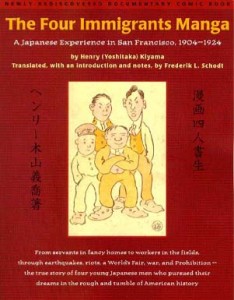
Henry Yoshitaka Kiyama • Stone Bridge Press • 1 volume

In 1904, aspiring artist Henry Kiyama sailed from Japan to the United States in search of economic opportunity. After living in San Francisco for nearly twenty years, Kiyama documented his experiences in the form of 52 short comics. His memoir — one of the very first examples of a graphic novel — examines the racism and economic hardships that he and his friends encountered on a daily basis. Kiyama also addresses major events of the day, critiquing several Congressional acts designed to curtail Asian immigration, and remembering what it was like to live through the Great Earthquake of 1906, attend the Panama Pacific International Exposition of 1915, and survive the flu pandemic of 1918.

…

Read More

Filed Under: Manga Critic Tagged With: Classic, Dark Horse, del rey, Last Gasp, Osamu Tezuka, Samurai, Seinen, VIZ

The Best Manga You’re Not Reading

July 2, 2010 by Katherine Dacey

On Saturday, June 26th, Brigid Alverson, Robin Brenner, Martha Cornog, and I gave a presentation at the American Library Association’s annual conference called “The Best Manga You’re Not Reading.” The goal of our talk was to remind librarians about all the weird, wonderful, and diverse offerings for older teens and adults. Recommendations ran the gamut from Junko Mizuno’s Cinderalla (one of Martha’s picks) to ES: Eternal Sabbath (one of Brigid’s), with an emphasis placed on titles that are in-print and appealing to readers who self-identify as manga fans — and those who don’t. Below are my four picks, plus a “mulligan” (to borrow a term from Brigid).

fourimmigrantsThe Four Immigrants Manga
Henry Yoshitaka Kiyama • Stone Bridge Press • 1 volume
In 1904, aspiring artist Henry Kiyama sailed from Japan to the United States in search of economic opportunity. After living in San Francisco for nearly twenty years, Kiyama documented his experiences in the form of 52 short comics. His memoir — one of the very first examples of a graphic novel — examines the racism and economic hardships that he and his friends encountered on a daily basis. Kiyama also addresses major events of the day, critiquing several Congressional acts designed to curtail Asian immigration, and remembering what it was like to live through the Great Earthquake of 1906, attend the Panama Pacific International Exposition of 1915, and survive the flu pandemic of 1918.

What makes these autobiographical comics truly extraordinary, however, was that they were originally published in 1931 in a bilingual edition right here in America. As Frederik Schodt explains in his introductory essay, Kiyama’s work was aimed at other first-generation immigrants who, like him, were caught between two worlds, trying to make sense of their place in both. The visual style and subject matter may not strike contemporary readers as manga-esque (Schodt notes the influence of American cartoonist George McManus on Kiyama), but the intimate quality of the stories will leave as lasting an impression as graphic memoirs such as Marjane Satrapi’s Persepolis and Alison Bechdel’s Fun Home.

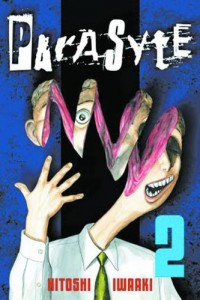
parasyte-v2Parasyte
Hitoshi Iwaaki • Del Rey • 8 volumes, complete
Imagine, if you can, a manga that combined elements of My Left Foot, Invasion of the Body Snatchers, and The Defiant Ones with the witty banter of a good buddy cop picture, and you have some idea of what Hitoshi Iwaaki’s Parasyte is all about. The story focuses on Shin, a high school student who wakes up one night to find a worm-like alien tunneling up his right arm towards his brain. In a moment of panic, Shin applies a tourniquet, arresting the creature’s progress but creating a brand-new problem in the process: the parasite takes up residence in his right hand, manifesting itself as a snail-like entity with googly eyes, a mouth, and the ability to transform itself into an astonishing array of shapes. Recognizing that their bodies are becoming interdependent, Shin and Migi (as he decides to call the parasite) agree to an uneasy truce. It isn’t long before other aliens are alert to Shin and Migi’s presence, forcing Shin and Migi to flee when it becomes apparent that the other parasites won’t tolerate their symbiotic existence. Shin and Migi can’t go to the human authorities, either, without risking imprisonment, quarantine, or worse.

Like a good B-movie, Parasyte uses elements of science fiction and horror to explore Big Questions about human nature while scaring the hell out of readers; the series is filled with nail-biting scenes of Shin and Migi trying to escape detection or fight other parasites. The violence is graphic but not sadistic; most of the action takes place between panels, with only the grisly aftermath represented in pictorial form. (Read: no torture scenes, no female characters being sexually assaulted before becoming an alien’s dinner.) The script is clever and funny, as Shin and Migi trade barbs with the antagonistic affection of Ernie and Bert, Oscar Madison and Felix Unger, or Detectives Mike Logan and Lenny Briscoe. Their relationship is one of Parasyte‘s greatest strengths, adding an element of novelty to a familiar story while deftly critiquing the idea that human beings’ intellect and emotional attachments place them squarely atop the food chain.

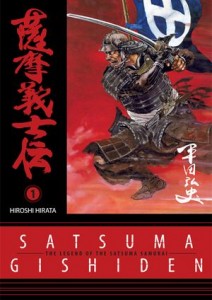
satsumaSatsuma Gishiden
Hiroshi Hirata • Dark Horse • 3 volumes, suspended
With its heady mix of social commentary, political intrigue, and battlefield action, Hiroshi Hirata’s Satsuma Gishiden reads like Kagemusha as told by Sam Peckinpah. Hirata dramatizes the plight of a powerful southern province that rebelled against the shogunate in the late eighteenth century (and would again, more famously, in the nineteenth). The story unfolds in a kaleidoscopic fashion, introducing us to the the sanpin and goshi, low-born samurai who eked out a living as farmers and laborers between military engagements; the daimyo, the leaders of Satsuma’s ruling Shimazu clan; and the administrators, spies, and chonin swept up in the violent conflict.

In the wrong hands, this material would be horribly dull; the initial showdown between Satsuma and shogunate stems from a public works project. (Makes you wonder: was Satsuma Gishiden the favorite manga of Robert Moses?) But Hirata successfully balances historical narrative and dramatic action. He explains the caste system and politics of the Edo period, the ritual of hiemontori, the concept of nise — even the type of water works found in eighteenth-century Japan — tossing in some jokey panels of winged ryo and money-grubbing donjon to illustrate the shogunate’s corruption. Some readers may find these passages didactic, but they provide an essential foundation for grasping nuances of plot and character. Lest the tone become too pedantic, Hirata liberally sprinkles the story with passages of bawdy humor and baroque violence. In one gruesomely funny scene, for example, a dying character uses his own broken rib to puncture an opponent’s skull. Top that, Mr. Peckinpah!

The chief attraction of Satsuma Gishiden, however, is its distinctive visuals. Hirata’s layouts evoke the films of mid-century masters such as Kurosawa, Kobayashi, and Ozu, blending cinematic realism with the rough-hewn aesthetic of woodblock prints. The characters, costumes, and horses are rendered in meticulous detail, yet the artwork is never static; through creative use of perspective, Hirata immerses the reader in vivid battle scenes, lively clan meetings, and ocean voyages. (Just a thought: Satsuma Gishiden would be awesome in 3-D. Maybe Dark Horse could repackage future editions with goggles to enhance the effect?) Recommended for samurai movie buffs, amateur Japanese historians, and readers who’ve exhausted the Kazuo Koike canon. (Originally reviewed at PopCultureShock on 2/16/07.)

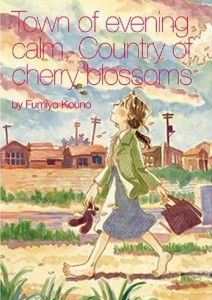
town_coverTown of Evening Calm, Country of Cherry Blossoms
Fumiyo Kouno • Last Gasp • 1 volume
If Barefoot Gen shows readers what it was like to live through the Hiroshima bombing and its horrific aftermath, Town of Evening Calm, Country of Cherry Blossoms shows readers what it was like to live with the memories of that day ten, twenty, and forty years later. Fumiyo Kouno’s book is divided into two stories. The first, “Town of Evening Calm,” is set in 1955, and focuses on one young woman’s attempt to preserve the remnants of her family, while the second, “Country of Cherry Blossoms,” is set in the 1990s, and focuses on the strained relationship between a survivor and his adult daughter. Both stories are simply but beautifully illustrated, avoiding the kind of visual tropes (big eyes, tiny noses, super-cute deformations) that many Western readers find jarring when reading Serious Manga.

In the few panels alluding to the actual events of August 6, 1945, Kouno’s art becomes more primitive and stylized, suggesting the horrific effects of the blast by depicting the victims as stick figures with swollen faces. The child-like simplicity and directness of these images are startling yet effective, a powerful representation of the radiation’s devastating ability to rob its victims of their identities by destroying their hair, hands, and faces. These scenes are notable as well for the skillful way in which present and past co-exist within the same panels; we see the landscape as the survivors do, alive with vivid memories of the blast. None of these images are graphic, though they are an unsettling reminder of the characters’ deep emotional scars.

The book’s strong anti-war message is balanced by the story’s emphasis on quiet, everyday moments, preventing Town of Evening Calm, Country of Cherry Blossoms from succumbing to didacticism or sensationalism. Though Kouno did not grow up in Hiroshima, her meticulous research and careful reading of survivor memoirs lends her work a kind of emotional authenticity that a more dramatic story might have lacked. The result is a moving work that challenges readers to imagine how they might rebuild their lives in the aftermath of incomprehensible tragedy. (Reviewed at The Manga Critic on 1/4/10.)

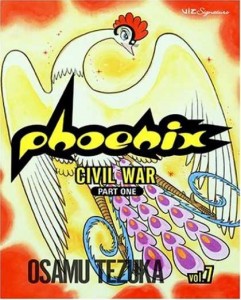
phoenix7BONUS PICK: Phoenix: Civil War
Osamu Tezuka • VIZ • 2 volumes
A quick glance through Phoenix: Civil War might not suggest that this is the stuff of high art. The characters bear an uncanny resemblance to the denizens of Popeye and jokey anachronisms abound. (Although the story ostensibly takes place in twelfth-century Japan, one character receives a telephone call and chows down on a bucket of KFC.) But flip to the back pages, where VIZ has included a brief statement from the manga-ka explaining the origins and meaning of Phoenix, and you’ll learn that Tezuka claimed Igor Stravinsky’s ballet The Firebird as the inspiration for Phoenix. Tezuka saw parallels between Stravinsky’s firebird and a similar creature from Japanese legend, Hou-ou. The phoenix, Tezuka decided, was a powerful symbol of “man’s attachment to life and the complications that arise from greed.” Using the phoenix as a touchstone, Tezuka constructed an elaborate, twelve-volume series exploring Japan’s historic past and possible future. He planned a final volume set in present-day Japan (“where past and future converge”), but passed away without completing his epic.

One of the best things about Phoenix is that readers can enjoy it as a series or a collection of stand-alone stories. Though I love Sun (the series’ epic, two-volume conclusion) and Karma (the fourth volume of the English edition), I think the two-volume Civil War (the seventh and eight volumes of the English edition) make the best introduction to Tezuka’s masterpiece. Civil War is set in Heian-era Kyoto, where several powerful families vie for control of the city. We experience the conflict through myriad perspectives: a lowly woodcutter and his fiancee, a ragtag band of samurai, an apolitical sage, and two powerful clan leaders, both of whom seek the phoenix in an effort to consolidate their political victories and perpetuate their bloodlines. The story may remind readers of The Hidden Fortress as it moves between epic battles and domestic drama, romance, and earthy comedy. While Tezuka isn’t above a little flatulence humor, he never condescends to his characters, using such lowbrow moments to demonstrate the common humanity of his entire cast. The character designs may be too cartoonish for some tastes, but Tezuka’s artwork is never short of spectacular; his imaginative layouts and flair for caricature are as distinctive as Igor Stravinsky’s brilliant orchestrations, churning rhythms, and pungent octatonic harmonies. (Originally reviewed at PopCultureShock on 10/26/06.)

* * * * *

Click here to read Brigid and Martha’s recommendations; click here to read Robin’s. Have a title you’d like to suggest? Let me know in the comments — we’re hoping to do this panel again at another convention, and would welcome your feedback.

Filed Under: Manga, Manga Critic, Recommended Reading, REVIEWS Tagged With: Classic, Dark Horse, del rey, Last Gasp, Osamu Tezuka, Samurai, VIZ

Manga Artifacts: Pineapple Army

June 30, 2010 by Katherine Dacey

pineapple_glenatAbout two years ago, I reached a tipping point in my manga consumption: I’d read enough just enough stories about teen mediums, masterless samurai, yakuza hit men, pirates, ninjas, robots, and magical girls to feel like I’d exhausted just about everything worth reading in English. Then I bought the first volume of Taiyo Matsumoto’s No. 5. A sci-fi tale rendered in a stark, primitivist style, Matsumoto’s artwork reminded me of Paul Gauguin’s with its mixture of fine, naturalistic observation and abstraction. I couldn’t tell you what the series was about (and after reading the second volume, still can’t), but Matsumoto’s precise yet energetic line work and wild, imaginative landscapes filled with me the same giddy excitement I felt when I first discovered the art of Rumiko Takahashi, CLAMP, and Goseki Kojima.

In a rush of enthusiasm to see what else was out there, I began trawling eBay for forgotten treasures, using Jason Thompson’s Manga: The Complete Guide as my map. What I found were an eclectic assortment of titles released in a variety of formats: Katsuhiro Otomo’s Memories, Leiji Matsumoto’s Galaxy Express 999, Jiro Taniguchi’s Hotel Harbor View, Keiko Nishi’s Love Song. Some proved exciting, others abysmal, but all were interesting as artifacts of English-language manga’s pre-history, of the days before Fruits Basket and Naruto were ubiquitous in chain stores and malls. As I’ve been assembling a collection of older titles, I’ve found myself wondering why some of these books were originally licensed and whether there’s a place for them in the current market. To explore these questions, I decided to dedicate more space at my website to examining out-of-print titles, from the undiscovered gems to the unmitigated disasters.

goshiPINEAPPLE ARMY

For my inaugural Manga Artifacts column, I chose one of my happiest discoveries: Pineapple Army (VIZ), a collaboration between writer Kazuya Kudo (Mai the Psychic Girl) and artist Naoki Urasawa. Reading Pineapple Army is like opening a time capsule from the mid-1980s, when wars were Cold, American cities were crime-ridden, and Central America was as important a theater of operations as the Middle East. Jed Goshi, the reluctant hero of Pineapple Army, is an ex-Marine who hasn’t quite managed to re-integrate himself into civilian life after two tours of duty in ‘Nam. Goshi now works for a mysterious agency that helps people who can’t or won’t turn to the proper authorities for help. Though Goshi doggedly insists he’s an instructor, not a bodyguard — “I turn people into combat-ready soldiers in a short amount of time,” he informs one client — he always becomes embroiled in the action, rescuing an inexperienced fighter after a costly bungle or coaching a client out of a tight corner.

Pineapple Army is positively steeped in Reagan-era politics and paranoia. In “The Selva Game,” for example, Goshi runs afoul of the Sandinistas — remember that foreign policy fiasco? — while on a mission along the Honduran/Nicaraguan border, while “The Man From the Past” chronicles his experiences in Zaire, where he tried to teach US-backed troops to resist Communist guerillas. Other stories portray New York City as a kind of urban selva, filled with unscrupulous law enforcement officials, gangsters, and vigilantes; anyone who’s read Banana Fish will immediately recognize the milieu. These stories have the same ripped-from-the-headlines quality of the very earliest Law & Order episodes, borrowing elements of well-known criminal cases and putting a fictional spin on them: “The False Hero,” for example, pits a young female detective against a Curtis Sliwa-esque figure who treats the IRT as his own fiefdom, while “Goshi: The Preceptor” culminates in a showdown between a corrupt cop’s family and the gangster he swindled.

The artwork, like the stories, dates Pineapple Army to the decade of big hair and hair metal. Naoki Urasawa’s style was heavily influenced by Katsuhiro Otomo’s; the characters have the kind of well-fed look — stubby bodies, round faces, sturdy limbs — that Otomo popularized in the 1980s with AKIRA and Domu: A Child’s Dream. A few villains’ faces hint at the distinctive character designs that Urasawa would cultivate in later hits Master Keaton and Monster, but an unpracticed eye might reasonably attribute Pineapple Army to any number of competent artists. Urasawa’s trademark attention to detail, however, is evident throughout the series; he meticulously establishes the setting for each story, whether it’s an overgrown Mayan ruin, a Honduran hacienda, the grubby subway platforms of the IRT, or The Limelight, a church-cum-nightclub that was a Sixth Avenue fixture throughout the 1980s and 1990s.

The original series, which ran in Shogakukan’s Big Comic Original from 1986-88, was collected in several different tankubon editions in Japan, each comprised of about 1,000 pages of material. For the US edition, VIZ cherry-picked ten stories, releasing them first as 32-page floppies, then as a single trade paperback. Though each story works reasonably well as a self-contained adventure, Pineapple Army suffers from some of the same continuity problems as Oishinbo, another longer series that was pared down and repackaged for Western readers. Two of the stories, for example, feature another agent named Janet, who spends most of her time trying to buttonhole Goshi for a date. We never learn much about her or how she knows Goshi, though it’s obvious the pair have some kind of history, perhaps related to their line of work. There’s also a reporter who trails Goshi from Africa to the US, hell-bent on exposing Goshi as a murderer; from their pulpy, melodramatic exchanges, one might infer they have a Jean Valjean-Inspector Javert relationship, but the VIZ edition doesn’t even bother to give the reporter a name. (No, really: Goshi and Janet both refer to him as “Mr. Reporter.”) Such small narrative hiccups are irritating but hardly fatal; the stories and crackling dialogue are strong enough to carry the reader past such interruptions.

Would VIZ ever re-issue Pineapple Army, perhaps in its entirety? I’m tempted to say no, as the artwork would strike most manga fans as passe. Urasawa’s tracings and screentone application sometimes look crude by contemporary standards, and his unfortunate tendency to draw black characters with thick, light-colored lips might necessitate revisions for a new American edition. (In Urasawa’s defense, the characters are not drawn in the grossly exaggerated style that Osamu Tezuka or Shotaro Ishinomori used in Swallowing the Earth or Cyborg 009, respectively, but for many American readers, a long history of nasty racial caricatures makes it difficult to excuse the practice.) Then, too, the stories have the same rhythm and sensibility of a 1980s TV show; one could be forgiven for comparing Pineapple Army with such period gems as The Equalizer, both for Pineapple Army‘s dogged adherence to formula and its deep suspicion of authority.

Yet it’s easy to overlook Pineapple Army‘s flaws, thanks to the strong script and dynamic layouts. Kudo and Urasawa create tough, memorable female characters; dream up creative ways to integrate current events into the storylines; and stage the kind of action scenes that were de rigeur on The A-Team and MacGuyver, complete with car chases, gun battles, and jerry-rigged explosive devices. The stories may be as predictable as taxes, but they’re still entertaining, especially for those of us with vivid memories of “Frankie Says Relax!” t-shirts and Bernhard Goetz’s subway vigilantism.

NOTE TO THE INTREPID BUYER

The comics are much easier to find than the trade paperback, and generally cheaper to boot; I picked up all ten issues for about $9 on eBay. Scanning the web, I’ve found almost no copies of the TPB available, although a few Amazon sellers appear to be offering it for non-usurious prices. French and Spanish speakers, see below for more information about European editions of Pineapple Army. (Hat tip to reader Althalus for information about both series’ availability.)

PINEAPPLE ARMY • STORY BY KAZUYA KUDO, ART BY NAOKI URASAWA • VIZ COMMMUNICATIONS

Filed Under: Manga Critic Tagged With: Classic, Kazuya Kudo, Naoki Urasawa, Seinen, VIZ

Manga Artifacts: Pineapple Army

June 30, 2010 by Katherine Dacey

About two years ago, I reached a tipping point in my manga consumption: I’d read enough just enough stories about teen mediums, masterless samurai, yakuza hit men, pirates, ninjas, robots, and magical girls to feel like I’d exhausted just about everything worth reading in English. Then I bought the first volume of Taiyo Matsumoto’s No. 5. A sci-fi tale rendered in a stark, primitivist style, Matsumoto’s artwork reminded me of Paul Gauguin’s with its mixture of fine, naturalistic observation and abstraction. I couldn’t tell you what the series was about (and after reading the second volume, still can’t), but Matsumoto’s precise yet energetic line work and wild, imaginative landscapes filled with me the same giddy excitement I felt when I first discovered the art of Rumiko Takahashi, CLAMP, and Goseki Kojima.

In a rush of enthusiasm to see what else was out there, I began trawling eBay for forgotten treasures, using Jason Thompson’s Manga: The Complete Guide as my map. What I found were an eclectic assortment of titles released in a variety of formats: Katsuhiro Otomo’s Memories, Leiji Matsumoto’s Galaxy Express 999, Jiro Taniguchi’s Hotel Harbor View, Keiko Nishi’s Love Song. Some proved exciting, others abysmal, but all were interesting as artifacts of English-language manga’s pre-history, of the days before Fruits Basket and Naruto were ubiquitous in chain stores and malls. As I’ve been assembling a collection of older titles, I’ve found myself wondering why some of these books were originally licensed and whether there’s a place for them in the current market. To explore these questions, I decided to dedicate more space at my website to examining out-of-print titles, from the undiscovered gems to the unmitigated disasters.

goshiPINEAPPLE ARMY

For my inaugural Manga Artifacts column, I chose one of my happiest discoveries: Pineapple Army (VIZ), a collaboration between writer Kazuya Kudo (Mai the Psychic Girl) and artist Naoki Urasawa. Reading Pineapple Army is like opening a time capsule from the mid-1980s, when wars were Cold, American cities were crime-ridden, and Central America was as important a theater of operations as the Middle East. Jed Goshi, the reluctant hero of Pineapple Army, is an ex-Marine who hasn’t quite managed to re-integrate himself into civilian life after two tours of duty in ‘Nam. Goshi now works for a mysterious agency that helps people who can’t or won’t turn to the proper authorities for help. Though Goshi doggedly insists he’s an instructor, not a bodyguard — “I turn people into combat-ready soldiers in a short amount of time,” he informs one client — he always becomes embroiled in the action, rescuing an inexperienced fighter after a costly bungle or coaching a client out of a tight corner.

Pineapple Army is positively steeped in Reagan-era politics and paranoia. In “The Selva Game,” for example, Goshi runs afoul of the Sandinistas — remember that foreign policy fiasco? — while on a mission along the Honduran/Nicaraguan border, while “The Man From the Past” chronicles his experiences in Zaire, where he tried to teach US-backed troops to resist Communist guerillas. Other stories portray New York City as a kind of urban selva, filled with unscrupulous law enforcement officials, gangsters, and vigilantes; anyone who’s read Banana Fish will immediately recognize the milieu. These stories have the same ripped-from-the-headlines quality of the very earliest Law & Order episodes, borrowing elements of well-known criminal cases and putting a fictional spin on them: “The False Hero,” for example, pits a young female detective against a Curtis Sliwa-esque figure who treats the IRT as his own fiefdom, while “Goshi: The Preceptor” culminates in a showdown between a corrupt cop’s family and the gangster he swindled.

The artwork, like the stories, dates Pineapple Army to the decade of big hair and hair metal. Naoki Urasawa’s style was heavily influenced by Katsuhiro Otomo’s; the characters have the kind of well-fed look — stubby bodies, round faces, sturdy limbs — that Otomo popularized in the 1980s with AKIRA and Domu: A Child’s Dream. A few villains’ faces hint at the distinctive character designs that Urasawa would cultivate in later hits Master Keaton and Monster, but an unpracticed eye might reasonably attribute Pineapple Army to any number of competent artists. Urasawa’s trademark attention to detail, however, is evident throughout the series; he meticulously establishes the setting for each story, whether it’s an overgrown Mayan ruin, a Honduran hacienda, the grubby subway platforms of the IRT, or The Limelight, a church-cum-nightclub that was a Sixth Avenue fixture throughout the 1980s and 1990s.

The original series, which ran in Shogakukan’s Big Comic Original from 1986-88, was collected in several different tankubon editions in Japan, each comprised of about 1,000 pages of material. For the US edition, VIZ cherry-picked ten stories, releasing them first as 32-page floppies, then as a single trade paperback. Though each story works reasonably well as a self-contained adventure, Pineapple Army suffers from some of the same continuity problems as Oishinbo, another longer series that was pared down and repackaged for Western readers. Two of the stories, for example, feature another agent named Janet, who spends most of her time trying to buttonhole Goshi for a date. We never learn much about her or how she knows Goshi, though it’s obvious the pair have some kind of history, perhaps related to their line of work. There’s also a reporter who trails Goshi from Africa to the US, hell-bent on exposing Goshi as a murderer; from their pulpy, melodramatic exchanges, one might infer they have a Jean Valjean-Inspector Javert relationship, but the VIZ edition doesn’t even bother to give the reporter a name. (No, really: Goshi and Janet both refer to him as “Mr. Reporter.”) Such small narrative hiccups are irritating but hardly fatal; the stories and crackling dialogue are strong enough to carry the reader past such interruptions.

Would VIZ ever re-issue Pineapple Army, perhaps in its entirety? I’m tempted to say no, as the artwork would strike most manga fans as passe. Urasawa’s tracings and screentone application sometimes look crude by contemporary standards, and his unfortunate tendency to draw black characters with thick, light-colored lips might necessitate revisions for a new American edition. (In Urasawa’s defense, the characters are not drawn in the grossly exaggerated style that Osamu Tezuka or Shotaro Ishinomori used in Swallowing the Earth or Cyborg 009, respectively, but for many American readers, a long history of nasty racial caricatures makes it difficult to excuse the practice.) Then, too, the stories have the same rhythm and sensibility of a 1980s TV show; one could be forgiven for comparing Pineapple Army with such period gems as The Equalizer, both for Pineapple Army‘s dogged adherence to formula and its deep suspicion of authority.

Yet it’s easy to overlook Pineapple Army‘s flaws, thanks to the strong script and dynamic layouts. Kudo and Urasawa create tough, memorable female characters; dream up creative ways to integrate current events into the storylines; and stage the kind of action scenes that were de rigeur on The A-Team and MacGuyver, complete with car chases, gun battles, and jerry-rigged explosive devices. The stories may be as predictable as taxes, but they’re still entertaining, especially for those of us with vivid memories of “Frankie Says Relax!” t-shirts and Bernhard Goetz’s subway vigilantism.

NOTE TO THE INTREPID BUYER

The comics are much easier to find than the trade paperback, and generally cheaper to boot; I picked up all ten issues for about $9 on eBay. Scanning the web, I’ve found almost no copies of the TPB available, although a few Amazon sellers appear to be offering it for non-usurious prices. French and Spanish speakers, see below for more information about European editions of Pineapple Army. (Hat tip to reader Althalus for information about both series’ availability.)

PINEAPPLE ARMY • STORY BY KAZUYA KUDO, ART BY NAOKI URASAWA • VIZ COMMMUNICATIONS

Filed Under: Manga, Manga Critic, REVIEWS Tagged With: Classic, Kazuya Kudo, Naoki Urasawa, Thriller, VIZ

Solanin

June 26, 2010 by Katherine Dacey

solanin_coverThe characters in Solanin are suffering from what I call a “pre-life crisis”—that moment in your twenties when you realize that it’s time to join the world of adult responsibility, but you aren’t quite ready to abandon dreams of indie-rock stardom, literary genius, or artistic greatness. From a dramatic standpoint, the pre-life crisis doesn’t make the best material for a novel, graphic or otherwise, as twenty-something angst can seem trivial when compared with the vicissitudes of middle and old age. Yet Asano Inio almost pulls it off on the strength of his appealing characters and astute observations.

Solanin focuses on a quartet of twenty-somethings, each struggling to shed their collegiate persona and forge adult identities. To be sure, these characters are familiar types, working dead-end jobs, remaining in relationships out of habit, and clinging to unrealistic dreams. Yet Inio never dismisses or romanticizes their pseudo-bohemian aspirations, instead viewing these angstful young adults with a parental mixture of frankness and affection.

…

Read More

Filed Under: Manga Critic Tagged With: Seinen, VIZ

Solanin

June 26, 2010 by Katherine Dacey

The characters in Solanin are suffering from what I call a “pre-life crisis”—that moment in your twenties when you realize that it’s time to join the world of adult responsibility, but you aren’t quite ready to abandon dreams of indie-rock stardom, literary genius, or artistic greatness. From a dramatic standpoint, the pre-life crisis doesn’t make the best material for a novel, graphic or otherwise, as twenty-something angst can seem trivial when compared with the vicissitudes of middle and old age. Yet Asano Inio almost pulls it off on the strength of his appealing characters and astute observations.

Solanin focuses on a quartet of twenty-somethings, each struggling to shed their collegiate persona and forge adult identities. To be sure, these characters are familiar types, working dead-end jobs, remaining in relationships out of habit, and clinging to unrealistic dreams. Yet Inio never dismisses or romanticizes their pseudo-bohemian aspirations, instead viewing these angstful young adults with a parental mixture of frankness and affection.

Early in the book, for example, a young woman (Meiko) introduces her boyfriend (Naruo) to her mother while trying to conceal the fact they live together. Inio might have milked the scene for its dramatic potential, staging a confrontation between Meiko and her mother. Yet he opts for something quieter and, frankly, truer to life: Meiko’s mother calls her daughter’s bluff, then offers the couple practical advice and encouragement. Instead of being pleased, however, Meiko is dumbfounded and embarrassed, leaving Naruo to stumble alone through an awkward conversation with her mother. What makes this scene work is Inio’s even-handedness; though we feel sympathy for Meiko — she’s genuinely afraid of upsetting her parents — we also realize that she’s disappointed that her decision to move in with Naruo hasn’t caused a scandal, a symptom of her not-quite-adult-relationship with her mother.

Solanin flounders, however, when Inio injects some drama into the proceedings. His big plot twist wouldn’t seem out of place in a deliciously overripe soap opera like NANA, but it feels too contrived for a low-key, slice-of-life story like Solanin; more frustrating still, Inio telegraphs what’s going to happen more than a chapter before that Big, Life-Changing Event, blunting its emotional impact. The book never quite regains its footing, culminating in a concert scene that’s as hokey as anything in The Commitments. Granted, that scene is beautifully executed, using wordless panels to convey the blood, sweat, and tears needed to pull off a live performance, but it feels too pat to be a satisfactory resolution to what is, in essence, a detailed character study.

I also felt ambivalent about the artwork. On the one hand, Inio draws his characters in a refreshingly soft and realistic fashion; as David Welsh noted in his 2008 review, Inio captures the transitional nature of their age through small but important visual cues: gangly limbs, baby fat still evident in their cheeks and tummies, soul patches and other “unpersuasive” attempts to grow beards and mustaches. Inio nails their body language, too, evoking his characters’ emotional and physical awkwardness as they try to forge connections. In this scene, for example, Inio’s characters can barely look one another in the eye, even though it’s evident from their conversation that each has a deep personal investment in music that s/he wants to share with the other:

solanin_interior

On the other hand, the backgrounds sometimes look like poorly retouched clip art. Such shortcuts are common in manga, but when done poorly (as they are in a few sequences in Solanin), the resulting images look more like dioramas or collages than organic compositions. In several key scenes, the characters appear to be pasted into the picture frame, floating above their surroundings instead of actually inhabiting them, spoiling the mood and pulling me out of the moment.

Artistic and narrative shortcuts aside, I’d still recommend Solanin. Inio’s book is funny, rueful, and honest, filled with beautifully observed moments and conversations that ring true, even if it occasionally succumbs to Brat Pack cliche.

SOLANIN • BY INIO ASANO • VIZ MEDIA • 432 pp • RATING: OLDER TEEN (16+)

This is a revised version of a review that appeared at PopCultureShock on 11/19/2008.

Filed Under: Manga, Manga Critic, REVIEWS Tagged With: Drama, Inio Asano, Musical Manga, VIZ, VIZ Signature

Chi’s Sweet Home, Vol. 1

June 24, 2010 by Katherine Dacey

chi_coverCome for the cat, stay for the cartooning — that’s how I’d summarize the appeal of Chi’s Sweet Home, a deceptively simple story about a family that adopts a wayward kitten. Chi certainly works as an all-ages comic, as the clean, simple layouts do a good job of telling the story, even without the addition of dialogue or voice-overs. But Chi is more than just cute kitty antics; it’s a thoughtful reflection on the joys and difficulties of pet ownership, one that invites readers of all ages to see the world through their cat or dog’s eyes and imagine how an animal adapts to life among humans.

Though Kanata Konami accomplishes some of this by revealing Chi’s thoughts in the form of a simple monologue, delivered — or should that be “dewivered”? — in a child-like voice, it’s the artwork that really drives home the point that Chi is bewildered and intrigued by her new environment. Early in the volume, for example, the newly-rescued Chi awakes in a panicked state: she doesn’t know where she is, and she’s desperate to find her mother. Konami first gives us an overhead view of the living room, tracing Chi’s frantic attempt to find the door, then cuts to a panel of Chi trapped against a wall, two pieces of furniture looming over her. Konami employs a similar tactic when Mr. Yamada takes Chi to the veterinarian for her first check-up, again using an overhead shot of the waiting room to establish the human scale of the space before offering a cat’s eye perspective; as Chi sees things, the vet’s office is filled with enormous, Godzilla-sized dogs who seemed poised to eat her. In both sequences, the quick shift in perspective gives the reader a clear sense of Chi’s disorientation by reminding us how small she is, and how alien the environment seems to her.

…

Read More

Filed Under: Manga Critic Tagged With: Animals, vertical

Chi’s Sweet Home, Vol. 1

June 24, 2010 by Katherine Dacey

Come for the cat, stay for the cartooning — that’s how I’d summarize the appeal of Chi’s Sweet Home, a deceptively simple story about a family that adopts a wayward kitten. Chi certainly works as an all-ages comic, as the clean, simple layouts do a good job of telling the story, even without the addition of dialogue or voice-overs. But Chi is more than just cute kitty antics; it’s a thoughtful reflection on the joys and difficulties of pet ownership, one that invites readers of all ages to see the world through their cat or dog’s eyes and imagine how an animal adapts to life among humans.

Though Kanata Konami accomplishes some of this by revealing Chi’s thoughts in the form of a simple monologue, delivered — or should that be “dewivered”? — in a child-like voice, it’s the artwork that really drives home the point that Chi is bewildered and intrigued by her new environment. Early in the volume, for example, the newly-rescued Chi awakes in a panicked state: she doesn’t know where she is, and she’s desperate to find her mother. Konami first gives us an overhead view of the living room, tracing Chi’s frantic attempt to find the door, then cuts to a panel of Chi trapped against a wall, two pieces of furniture looming over her. Konami employs a similar tactic when Mr. Yamada takes Chi to the veterinarian for her first check-up, again using an overhead shot of the waiting room to establish the human scale of the space before offering a cat’s eye perspective; as Chi sees things, the vet’s office is filled with enormous, Godzilla-sized dogs who seemed poised to eat her. In both sequences, the quick shift in perspective gives the reader a clear sense of Chi’s disorientation by reminding us how small she is, and how alien the environment seems to her.

The other secret to Konami’s success are her character designs. Though Chi is clearly a cat, Konami draws her face as a round, moon-like shape with two enormous eyes — if anything, Chi resembles the heroine of Kiyohiko Azuma’s Yotsuba&! more than, say, Neko Ramen‘s cat cook or Cat Paradise‘s feline warriors. Like Azuma, Konami demonstrates that it’s possible to contort and bend these simple, circular shapes into an enormous range of expressions, from wide-eyed wonder to fear, sadness, and, for want of a better term, hunterly attentiveness. (Chi considers all of her cat toys a form of prey.) Even the very youngest reader will immediately understand how Chi is feeling, even if he isn’t able to parse the accompanying text or make sense of other imagery. (To wit: there’s a marvelous, trippy dream sequence in which Chi is pursued by what could best be described as a canine matryoshka, a chain of barking dogs, each a smaller imitation of the one before it. I don’t know what a four-year-old would make of it, but Chi’s reaction is priceless.)

Given the strength of Konami’s artwork, I would have liked Chi’s Sweet Home even better without the voice-overs. Most of Chi’s comments seem obvious — cats usually fear dogs and vets — or deliberately calculated to tug at the heartstrings. Interior monologues of this kind are generally more effective when they ascribe uniquely human sentiments to an animal: think of Snoopy’s Walter Mitty-esque fascination with the Red Baron, or Garfield’s contempt for Jon Arbuckle, which stems less from a general disdain of humans and more from Garfield’s embarrassment that his owner is a loser. Chi’s voice-overs aren’t a deal-breaker by any means; at times, they prove quite effective, especially in illustrating Chi’s gradual transference of affection from her feline mother to her human family. Moreover, Konami wisely avoids putting words into Chi’s mouth that suggest an unnatural awareness of human behavior or language, allowing Chi to remain completely oblivious to the Yamadas’ numerous attempts to find her a new home. (Their apartment complex doesn’t allow pets.)

If you’re the kind of person who unironically refers to children and housepets as “social parasites,” Chi’s Sweet Home is not the manga for you. But if you’re ever lived with a cat or a dog or any other animal whose companionship you enjoyed, then you’ll find a lot to like about Chi, from its frank treatment of housebreaking and separation anxiety to the numerous scenes of Chi exploring her surroundings, transforming ordinary household items into “prey.” You don’t need to be a manga lover, either, to find Chi’s Sweet Home accessible; the simple artwork and flipped layout (Chi reads left to right, like an English-language book) make this a great place for newbies to begin their exploration of the medium. Highly recommended for readers of all ages.

Volume one will be released on June 29, 2010. Review copy provided by Vertical, Inc.

CHI’S SWEET HOME, VOL. 1 • BY KONAMI KANATA • VERTICAL, INC. • 162 pp. • NO RATING

Filed Under: Manga, Manga Critic, REVIEWS Tagged With: All-Ages Manga, Animals, Cats, Kanata Konami, Vertical Comics

  • « Go to Previous Page
  • Page 1
  • Interim pages omitted …
  • Page 27
  • Page 28
  • Page 29
  • Page 30
  • Page 31
  • Interim pages omitted …
  • Page 39
  • Go to Next Page »
 | Log in
Copyright © 2010 Manga Bookshelf | Powered by WordPress & the Genesis Framework