Apollo’s Song may be one of the strangest sex ed manuals ever written. It begins with a textbook Tezuka scene, at once lyrical and goofy: millions of anthropomorphic sperm race towards a comely egg. After one lucky soul pants and claws his way to the front of the scrum, the sperm and egg dissolve into a passionate embrace. In the following panel, we see the result of their union, an embryo, presiding over a veritable sperm graveyard. This juxtaposition of life and death — or, perhaps more accurately, sex and death — foreshadows the dialectic that will play out in the following chapters.
We are then introduced to Shogo, a young man who has just arrived at a psychiatric hospital. Shogo is a sociopath: unemotional, cruel to animals, scornful of society, and deeply misogynist. While undergoing electroshock therapy, Shogo has a vivid hallucination in which a stern goddess chastises him for renouncing all forms of love. As punishment for his cruelty, she condemns him to a fate straight out of Dante’s Inferno: Shogo will love and lose the same woman over and over again for eternity. Thus begins a series of romantic and sexual encounters between Shogo and various incarnations of his ill-fated partner.
Though the story begins and ends in the present day, the individual episodes unfold in both the past and future, reminding the reader that Shogo cannot escape his fate. Certain recurring motifs suggest that these scenarios are, in fact, manifestations of Shogo’s subconscious as he struggles to reconcile his hatred of women with his need to be loved. In each scenario, for example, Shogo adopts a hyper-masculine guise — Nazi foot soldier, fugitive, hunter, terrorist — that he must ultimately renounce in his quest for spiritual and sexual fulfillment. We’re never entirely certain which of these episodes are unfolding in Shogo’s mind and which, if any, are unfolding in the real world.
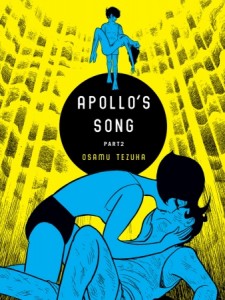 Though Apollo’s Song aspires to universality, Tezuka’s characters remain firmly rooted in the time and place of their creation. Tezuka blames Shogo’s mother — whose crimes include an inability to lactate, promiscuity, and emotional detachment — for her son’s pathology, even treating us to a scene of the youthful Shogo walking in on his mother and a lover. While no one would deny the deleterious effects of parental neglect, Shogo’s mother seems less like a character than a casebook study out of the 1952 DSM. Other characters, such as an “artsy-fartsy,” “self-centered” career woman who defends her chastity with hysterical fury, seem like the morbidly sexual figments of a Freudian imagination.
Tezuka’s moralizing, too, has a curiously alienating effect. In the first episode, for example, Shogo imagines that he is a German soldier aboard a train bound for an unnamed concentration camp. Through the slats of a cattle car, he spots Elise, whose beauty and modesty awakens his sense of moral outrage. He rescues her first from the wreckage of the train (which is bombed by Allied forces), then from German rapists, earning her love through his selflessness. This scenario is clearly meant to teach readers that love can transcend ethnic, racial, and religious divisions, yet this epiphany is of a shallow nature, as Shogo fails to grasp the true horror of the situation or appreciate Elise’s grief at losing her entire family – in essence, the Holocaust has been reduced to a colorful backdrop for yet another of Shogo’s doomed romances.
However problematic the story may be, the artwork in Apollo’s Song ranks among Tezuka’s best, filled with arresting landscapes and surprisingly carnal imagery. In chapter two, for example, Shogo finds himself stranded on a lush tropical island. Peering through a dense frame of vegetation, he spies a secluded glen where deer, panthers, and leopards embrace their mates in sexual congress. The sensuality of the moment is accentuated by their bodies’ curved lines and beatific expressions, infusing a potentially silly scene with a graceful spirituality. Later chapters also abound in vivid images; as Tezuka imagines the Tokyo of the future, the city has been transformed from a glass-and-concrete forest into an Art Deco monstrosity reminiscent of Fritz Lang’s Metropolis or a Soviet Bloc city. Its inhabitants, a race of sexless, synthetic beings that store their faces in jars, preside over a haunted landscape of tombs, forgotten infrastructure, and empty plazas; the very barrenness of the place brings the intensity of Shogo’s yearning and anger into sharp relief.
Revisiting Apollo’s Song three years after its initial release, I find myself torn. On the one hand, Tezuka’s artwork is a feast for the eyes, featuring some of the most erotic images he committed to paper. On the other hand, it’s a deeply flawed work that, in its attitudes towards women and finger-wagging tone, shows its age. Vertical has done an admirable job of fashioning a silk purse from a sow’s ear with the handsomely produced new edition, but even the knockout cover designs can’t conceal the fact that Apollo’s Song is a sour, heavy-handed tale that lacks the essential humanism – and humor – of Buddha and Phoenix.
This is a revised version of a review that appeared at PopCultureShock on 6/22/2007.
APOLLO’S SONG, VOLS. 1-2 • BY OSAMU TEZUKA • VERTICAL, INC. • RATING: OLDER TEEN (16+)




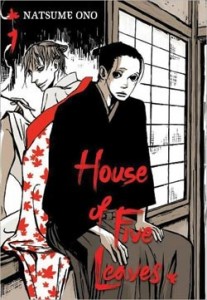 House of Five Leaves, too, focuses less on Big Events and more on everyday activity, but in Leaves, Ono’s restraint serves an important dramatic purpose: she’s showing us events through Masanosuke’s eyes, as he tries to reconcile the bandits’ seemingly ordinary lives with their extraordinary behavior. Making the reader‘s task more difficult is that Masanosuke isn’t very astute. He tends to focus on a kind gesture or a friendly conversation, missing many of the important aural and visual cues that might enable him to understand what’s happening — a trait that the group exploits. In one chapter, for example, Yaichi encourages Masanosuke to accept a job as a bodyguard for a merchant family while the group plans its next kidnapping. Masa befriends his new employer’s son, never realizing that his true assignment is to infiltrate the target’s household so that Yaichi’s minions can snatch the boy for ransom.
 – Kazuaki is a mild-mannered young salaryman in a passionless job whose world is turned upside-down when he (literally) runs into Kira, a successful porn actor, who is filming in a nearby park. Kira falls for Kazuaki in the moment, and though Kasuaki initially rejects his romantic advances, the two pursue a friendship that gradually turns to love.
 – I don’t always like the stories Digital Manga Publishing issues under their DokiDoki imprint (like, say, Millennium Prime Minister), but I usually do. That’s where less explicit boys’ love stories reside and, indeed, the title story of this collection, “Midnight Bloom,” fits the bill quite well.
 – When I reviewed Hiro Madarame’s Cute Devil back in May, I mentioned that while I liked her frequently cute (and amusing) art, I’d like to see what she could do with more sympathetic characters. Scarlet is actually her first comic but it ended up providing the answer.
 – Having been convicted of murdering his lover’s husband, Sen is sentenced for life to an underground prison buried in the depths of Long Island, nicknamed “Under Grand Hotel” by those who live there. It’s a rough introduction for Sen, who is beaten, raped with mop, and stuffed in a dryer by a child-molesting cannibal (no, really) all within the first 24 hours or so of his imprisonment.

 – As orphan Teru Kurebayashi’s older brother prepared to pass from this world, he gave her the gift of a cell phone–one which she could use to contact his mysterious friend “Daisy” who he promised would protect Teru in his absence.
 – This is an emotionally heavy volume for Rasetsu, who tries to get over her feelings for Yako at the same time as she’s confronted with new truths about Kuryu (and his feelings for her). Meanwhile, Yako faces some very old spirits who mistake him for the person he most needs to forget.
 – In this installment, Choko and Masayuki take their first overnight trip together, with the intention of finally consummating their relationship. Of course the weekend is crashed by a collection of family and friends, though the two eventually find some time alone to do the deed.
 – The plot thickens in this volume, as it is revealed that Soichiro’s plan for success revolves entirely around manipulating his friend, Nozomu, into falling in love with his new wife, Sumi. Meanwhile, Sumi’s brother has already frittered away the money she sacrificed herself for, leaving the kids in the care of a slovenly drunk.
 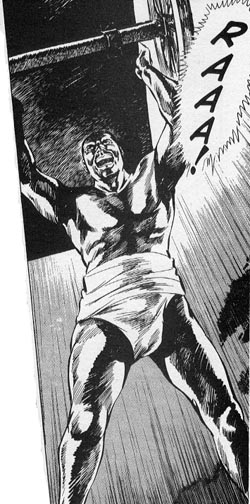 The bigger problem, however, is that King entertains notions of race, class, and gender that would have been as alien to American colonists as they were to Japanese farmers and overlords. His blind commitment to addressing inequality wherever he encounters it — on the road, at a brothel — leads him to do and say incredibly reckless things that require George’s boffo swordsmanship and insider knowledge of the culture to rectify. If anything, King’s idealism makes him seem simple-minded in comparison with George, who comes across as far more worldly, pragmatic, and clever. I’m guessing that Koike thought he’d created an honorable character in King without realizing the degree to which stereotypes, good and bad, informed the portrayal. In fairness to Koike, it’s a trap that’s ensnared plenty of American authors and screenwriters who ought to know that the saintly black character is as clichéd and potentially offensive a stereotype as the most craven fool in Uncle Tom’s Cabin. By relying on American popular entertainment for his information on slavery, however, Koike falls into the very same trap, inadvertently resurrecting some hoary racial and sexual tropes in the process.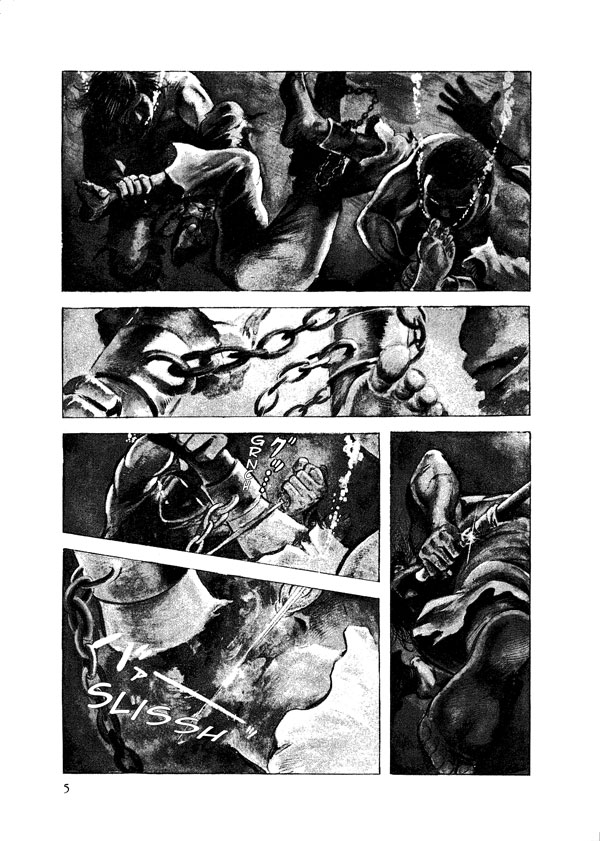

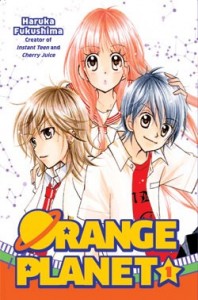 Orange Planet, Vol. 1
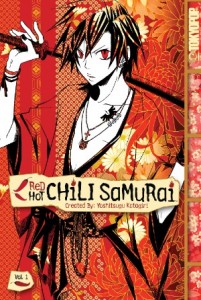 Red Hot Chili Samurai, Vol. 1
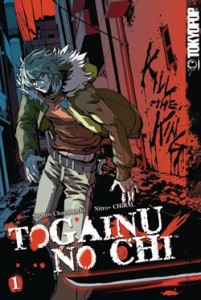 Togainu no Chi, Vol. 1