• Skip to primary navigation
  • Skip to main content
  • Skip to primary sidebar
  • Home
  • About Us
    • Privacy Policy
    • Comment Policy
    • Disclosures & Disclaimers
  • Resources
    • Links, Essays & Articles
    • Fandomology!
    • CLAMP Directory
    • BlogRoll
  • Features & Columns
    • 3 Things Thursday
    • Adventures in the Key of Shoujo
    • Bit & Blips (game reviews)
    • BL BOOKRACK
    • Bookshelf Briefs
    • Bringing the Drama
    • Comic Conversion
    • Fanservice Friday
    • Going Digital
    • It Came From the Sinosphere
    • License This!
    • Magazine no Mori
    • My Week in Manga
    • OFF THE SHELF
    • Not By Manga Alone
    • PICK OF THE WEEK
    • Subtitles & Sensibility
    • Weekly Shonen Jump Recaps
  • Manga Moveable Feast
    • MMF Full Archive
    • Yun Kouga
    • CLAMP
    • Shojo Beat
    • Osamu Tezuka
    • Sailor Moon
    • Fruits Basket
    • Takehiko Inoue
    • Wild Adapter
    • One Piece
    • After School Nightmare
    • Karakuri Odette
    • Paradise Kiss
    • The Color Trilogy
    • To Terra…
    • Sexy Voice & Robo
  • Browse by Author
    • Sean Gaffney
    • Anna Neatrour
    • Michelle Smith
    • Katherine Dacey
    • MJ
    • Brigid Alverson
    • Travis Anderson
    • Phillip Anthony
    • Derek Bown
    • Jaci Dahlvang
    • Angela Eastman
    • Erica Friedman
    • Sara K.
    • Megan Purdy
    • Emily Snodgrass
    • Nancy Thistlethwaite
    • Eva Volin
    • David Welsh
  • MB Blogs
    • A Case Suitable For Treatment
    • Experiments in Manga
    • MangaBlog
    • The Manga Critic
    • Manga Report
    • Soliloquy in Blue
    • Manga Curmudgeon (archive)

Manga Bookshelf

Discussion, Resources, Roundtables, & Reviews

Features & Reviews

7 Billion Needles, Vol. 1

July 7, 2013 by Anna N

7 Billion Needles, Vol. 1 by Nobuaki Tadano

I was happy when I saw that Vertical was releasing some of their titles for the Kindle, but I already had print copies of the main series I was following like Twin Spica. I remember hearing interesting things about 7 Billion Needles, so I decided to give the first volume a try. Hikaru is a typical teenager, spending most of her time shutting out the world by keeping her headphones on. She’s a teenager with something other than angst churning inside her though. On a school trip she had an encounter with an extraterrestrial object that vaporized her body, leading to an alien intelligence named Ciel who reconstructed her body and establishes a symbiotic relationship with her.

Tadano does a good job establishing a slightly unsettling slice of life tone for this manga. Hikaru goes through her life someone aimlessly, and gradually more and more strange events begin to occur around her. Ciel makes contact and tells his host that he’s hunting an even worse threat – an entity called Maelstrom that might also be inhabiting a human. The title 7 Billion Needles refers to the needle in a haystack like task of hunting down an evil alien intelligence hiding somewhere in the human population. The manga is based on the Hal Clement novel Needle, and Tadano does manage to strike a good balance between the thought experiment vibe of classic science fiction and manga action as Hikaru and Ciel strike an uneasy truce and start hunting together.

The reading experience on my Kindle Paperwhite was just fine. I was intrigued by the first volume, and this is the type of digital series I can easily see myself stocking up on when I’m about to go on a trip and can’t haul around a bunch of physical copies of manga with me.

Filed Under: REVIEWS Tagged With: 7 billion needles, vertical

Manga the Week of 7/10

July 5, 2013 by Sean Gaffney, Michelle Smith and MJ 11 Comments

SEAN: Not as big as week 1 of July, but there’s plenty of tasty treats to check out as the summer continues to be hot.

tokyobabylon2

Dark Horse has the 2nd and final omnibus of Tokyo Babylon. I didn’t buy this one, so will forever imagine it ends with a big picnic, and possibly puppies and unicorns. :)

MICHELLE: I will allow you to have your dreams.

MJ: I’m sure everyone can guess how eagerly I’ve been anticipating this release. I was over the moon for Dark Horse’s first omnibus, and since I actually like to be beaten into a sobbing pulp by my fiction, I’m willing to move forward without those puppies and unicorns. Note: This volume will also contain Hokuto’s side story of epic awesomeness, so there’s that.

SEAN: Digital Manga Publishing is finally returning to print manga, and what better title to see returning to our shelves than the 7th volume of Vampire Hunter D?

MICHELLE: While this personally doesn’t excite me much, I was very pleased to see that the tenth volume of Itazura Na Kiss is now available for pre-order. Hurray for print manga!

SEAN: SubLime has two new debuts. False Memories has a cute cover, so I have less to say about it. It’s by the author of Devil’s Honey and Dash!

MICHELLE: The cover is very cute indeed. I confess that was all it took to convince me to read it, and I didn’t connect the author with Devil’s Honey. The latter was pretty good, though, so I’m definitely intrigued.
MJ: Agreed!

hideandseek

SEAN: Oh Dear Lord. Look at the cover for Hide & Seek. Have you seen two people you want to punch in the face more than these two? :) This is by the author of Bond of Dreams, Bond of Love, which if I recall also had ridiculous covers. Recommended for those who enjoy large yaoi hands.

MICHELLE: *snerk* While I liked Yaya Sakuragi’s Stay Close to Me, Bond of Dreams, Bond of Love was so generic and the characters so unappealing that I now view anything else by the author with trepidation.

MJ: Heh. I deeply disliked Bond of Dreams, Bond of Love, but on the upside, at least these two characters both look like adults, so I’ll give it a try.

SEAN: Vertical has the 6th volume of Flowers of Evil, whose sales will hopefully be bumped by the recent conclusion to the anime version.

MJ: I hope so, too! I’m looking forward to this volume in any case.

SEAN: Viz has Case Closed Vol. 47. In Japan, Vol. 79 came out this April. Sadly, I suspect we will not be seeing the great Case Closed speedup anytime soon.

MICHELLE: I find this series to be fun occasionally, but it’s one of those cases where I’m very grateful my local library purchases it so I don’t have to. I can’t imagine housing dozens of volumes of goofy, episodic mysteries.

SEAN: The 5th Fullmetal Alchemist omnibus contains Vols. 13-15 of this shonen series that everyone should own. And I hope Viz can negotiate digital rights back now that Square Enix shuttered their digital site.

MICHELLE: It’s a classic.

rinne12MJ: Fullmetal Alchemist is absolutely a must-own, and I’m glad it’s being given a second run like this.

SEAN: The 4th Loveless omnibus, with Vol. 7 & 8, I think catches us up with Viz’s newer releases, right?

MICHELLE: It does, as volume 11 came out in June. It also catches us up with Japan.

MJ: I honestly can’t wait. The new volumes have been mocking me from the shelf for so long.

SEAN: Rin-Ne has hit a dozen volumes, and is doing well enough that it doesn’t have to worry about getting as behind as Case Closed is. Not that this means any legitimate plot is happening, mind you…

MICHELLE: I’m happy that RIN-NE exists for whenever I want a dose of Takahashi, but it’s true there’s not really anything to get excited about.

SEAN: Finally, we see the second volume of superhero manga Tiger & Bunny. He’s a superhero. He’s also a superhero. THEY FIGHT CRIME!

Anything here catch your fancy?

Filed Under: FEATURES, manga the week of

Mobile Suit Gundam: The Origin, Vol. 2

July 5, 2013 by Sean Gaffney

By Yoshikazu Yasuhiko; Original Story by Yoshiyuki Tomino and Hajime Yatate; Mechanical Design by Kunio Okawara. Released in Japan by Kadokawa Shoten, serialized in the magazine Gundam Ace. Released in North America by Vertical, Inc.

When we last left our heroes, they’d finally gotten back to Earth. Of course, this proves to be only the beginning of their troubles… they’re in enemy territory, and are being told by their allies in South America “get here first, then we’ll tell you what to do next.” Their ace pilot is having a bit of a PTSD attack, and wants no part of all of this. The refugees they picked up are resorting to taking hostages just to be allowed to leave. And our man in charge, Bright Noah, just can’t seem to get any respect. But then, this is what happens when your enemies call your ship the “Trojan Horse”… you have all the luck that Troy did.

gundam2

To get the obvious out of the way first, most of what you enjoyed about the first book is present and correct here in the second. The battles are done very well, with lots of attention to detail and realism (given that these are robot wars), but don’t take up so much of the book that you get bored with all the combat. The overall tone is serious, but there are some very amusing dashes of humor, including Lieutenant Reed’s ulcer, Fraw Bow’s jealousy (and a flash of the same thing from Amuro), and every exasperated face Noah makes. But overall, the message continues to be what Gundam does best: war is a horrible thing that destroys entire cities, and one should never revel in it.

I think my favorite party of the volume was watching every single interaction between Char and Garma. After all the earnestness that our heroes fall into, it’s great seeing two people who clearly despise each other attempting to one-up each other in how politely smug they can be. Char’s needling of Garma, and manipulation as the story goes on, really shows of his people skills, albeit not in a good way. He spends much of this volume simply watching things develop (well, that and taking long showers so that he can properly show off his fantastic naked body to the reader). This makes his arrogant sneering at Garma right at the end all the more startling, and reminds you once again that he may be the bad guy you love to hate, but he’s still the bad guy.

As for Amuro, he gets the bulk of the second half of this volume, as he reunites with his mother. I’ll be honest, I totally expected him to return and find his mother dead – all the signs were pointing that way – but then, this series has pointed one way and gone another before, so I shouldn’t be surprised. What we got was even better, though – his mother has no context for what’s happened to Amuro at all, and all she can see is that her little boy has become a killer. This is far more visceral than most stories of this time, given Amuro has to lethally fight his way out of the encampment his mother is living in. It’s the emotional heart of the story.

And then there is the titular Garma. The Gundam story makes sure that we don’t simply see the Zeon enemy as “space Nazis”, and Garma’s desire to be worthy of his name, as well as his romance with an Earth girl, is part of this. I was never quite sure till the end how invested he was in Icelina, but it seems to be more genuine than I thought, and I wonder if she’ll return at some point down the line. But in the end, this is a story about war and the prices that one pays during it, and the final images we see are a father brutally gunned down in front of his daughter, and a father stunned to hear of the death of his son.

I admit I would perhaps have slightly fewer mech battles if I were plotting this, but oh well. Gundam is still a riveting and fascinating series, and fully justifies why it has endured all these years. And the presentation, again, is fantastic – a real coffee table book. It’s hard to wait three more months to see what happens next.

Filed Under: REVIEWS

It Came from the Sinosphere: Island, End of Nightmare (Manhua)

July 2, 2013 by Sara K. Leave a Comment

The cover of the manhua, featuring Luonian (blue) running towards the reader, and Huaizhen (orange) taking up most of the background.

Why couldn’t I find this image in a bigger size?

Hello, everyone! I’m back.

The Story

During a trip to an island in the South China sea, a teenager called Luonian has an encounter with a phoenix, and then a giant dog (a demon?) pins him to the ground. Then Luonian wakes up in a hospital in Taiwan. Was it just a nightmare?

A picture of Luonian with the island in the background.  We see a jungle and a seagull.

Back in his hometown, Banqiao, Luonian gets attacked by a demon … which gets taken down by some fellow senior high school students. Apparently, a number of teenage demon hunters attend Luonian’s senior high school, but demon hunters are generally pretty discreet about their work, so he wasn’t aware of their activities before. Now that he knows, their offer to train him and let him join their demon-hunting club.

To make matters worse, that “dog,” who is actually a nine-tailed fox and is called “Huaizhen,” comes back. Huaizhen had waited 3000 years to get the “aura” of that phoenix … and Luonian had “stolen” that opporunity by getting the “aura” of the phoenix instead.
Therefore, Huaizhen wants to eat him. However, they strike a deal – Luonian lets Huaizhen suck his phoenix-aura-laden-energy (note: this might not be the best way to translate this from Chinese), and Luonian will let him live. Furthermore, since demons are attracted to the phoenix-aura, Luonian should expect a lot more demons in his life from now on.

In case you’re not familiar with Chinese-mythology, men are supposed to feel extreme sexual attraction towards nine-tailed-foxes. In Huaizhen’s experience, this is generally true … with the notable of Luonian, who doesn’t have the least bit of sexual interest in Huaizhen. Huaizhen finds this … intriguing.

Finally, Huaizhen urges Luonian to join the demon-hunters because a) they can help protect him from the demons (and if the demons get him, she can’t suck his energy) and b) she wants to know more about the demon-hunters. But Huaizhen makes a point of hanging around Luonian a lot, pretending to be Luonian’s teenager sister, and if the demon-hunters learn about her true nature…

Background

This manhua is adapted from a series by a very popular online novelist called Moren. Moren is known for mixing fantasy, wuxia, and science fiction together. I myself have only read the first couple volumes of Island, End of Nightmare, and I would call it fantasy with elements of wuxia and science fiction rather than blend (I feel it has a lot more in common with the YA fantasy I’ve read than the wuxia or science-fiction I’ve read).

The artist YinYin with Han Baobao, who did the writing for the manhua adaptation.

The artist YinYin with Han Baobao, who did the writing for the manhua adaptation.

The manhua edition is drawn by YinYin, who also drew the illustrations and book covers for the original novels. YinYin is a regular contributor to Crative Comics Collection, and has produced her own original manhua.

The Artwork

YinYin says in the interview at the end of the volume that, when drawing for manhua, her first priority is to communicate the story, and aesthetic considerations (i.e. is the artwork pretty) are secondary. I think this is a good set of priorities since comic books are storytelling media, and there are many other media for artists who want to put aesthetics first.

SURPRISE! Fellow senior high school student nabs demon.  There is a big, clear panel showing the main action, with supporting panels with reaction shots.  Also, notice that the demon hunter is erect and vertical, while the demon is horizontal, making a nice right-angle.

SURPRISE! Fellow senior high school student nabs demon. There is a big, clear panel showing the main action, with supporting panels with reaction shots. Also, notice that the demon hunter is erect and vertical, while the demon is horizontal, making a nice right-angle.

And I think YinYin gets the “storytelling” part down. The artwork does an excellent job of clearly communicating the story. Though the plot summary above may seem a bit complicated, it’s actually quite easy to follow in the manhua itself, and I think the artwork definitely helps. It took much less effort to follow the manhua than the original novel, and the novel itself is not hard to follow.

I also don’t think putting the story first costs the aesthetics anything.

First of all, the more I look at it, the more I like the cover illustration of the novel. I really dig the blue/orange theme – and it’s very appropriate that Luonian is blue, and that Huaizhen is orange, since they act as opposite personalities. Come to think of it, this is a beautiful example of storytelling and aesthetics coming together.

This 'big main panel with supporting reaction panels' composition really works.

This ‘big main panel with supporting reaction panels’ composition really works.

The artwork clean and smooth. I think the trick is that YinYin makes sure there is enoguh detail to give the artwork meaning, yet it stays simple enough that everything is focused and the reader’s eye is not distracted by minutiae. And YinYin knows how to make a page pop with a simple, striking image. Most pages are not like that, but then again, if they were, then they wouldn’t pop.

Getting nabbed by a giant dog definitely pops.

Getting nabbed by a giant dog definitely pops.

And some of the images are simply, well, graceful.

I like this page for some reason.

I like this page for some reason.

In fact, I think this is the best work I’ve seen from YinYin.

The phoenix, of course, is lovely.

The phoenix, of course, is lovely.

YinYin also says that, while obviously there is a strong Japanese influence on her work, she tries to express her own style rather than try to make her artwork look like Japanese manga.

Where Have I Seen This Before

If you have read a significant amount of general manga – heck, even if you’re just reasonably familiar with YA fantasy – this should seem like familiar territory. The question is: what sets this tale of teenage demon-hunters apart from other tales of teenage demon-hunters?

One way to stand out is to have superlative writing. Though this story is well-written … and there are definitely touches I like (for example, the fact that Luonian’s senior high school just happens to have a demon-hunting group, and of course he didn’t know about it since there was no reason for him to know about it) … the storytelling alone is not exceptional enough to make it stand out from the other well-written stories in this genre.

Alas, the story's attempts at puberty/sexual humor is not one of the things which makes it stand out.

Alas, the story’s attempts at puberty/sexual humor is not one of the things which makes it stand out.

The thing which does make this story stand out is that it is set in Taiwan.

All other things being equal, people are usually more interested in stories about their own society and themselves than stories about other societies and other people. Taiwanese people are no exception. While Taiwanese people love Japanese manga, all other things being equal, they find things even more interesting if it’s about Taiwanese people in Taiwan than Japanese people in Japan.

While it’s not apparent in the first volume of the manhua (though I’m sure this will come through in future volumes), this story really does run all over Taiwan, and I think that is on purpose. There is such variety in Taiwan itself that one can find quite a variety of interesting locations without ever going abroad. As someone who has travelled extensively in Taiwan, I really enjoy this aspect of the story.

Availability in English

Ha ha ha ha ha.

Conclusion

I have no intention of continuing with this manhua, or with continuing the original novel series. It’s good enough that I don’t mind reading it, it’s just that there is so much more out there that I’m much more excited to read.

This manhua seems to be part of a campaign by the publisher Gaea to promote local manhua, particularly manhua which is distinctively Taiwanese. Making one of the first manhua an adaptation of a popular novel series is probably a good move, at least as far as getting readers’ attention. Considering the recent successes of movies made in Taiwan, I think there is definitely an audience out there for good, distinctively local manhua. The main thing needed to build that readership is to create and publish consistently high-quality manhua to attract and, more importantly, keep them.

However, though this volume was first published last August, volume 2 has yet to appear. That conceivably could be because the artist is too busy … but I think it’s a sign that the manhua has not been selling well.

Next time: The Iron-Crane Pentalogy (novels)


So much has happened in the past few weeks, where can Sara K. begin? Well, she is now one of rare people in the world who can honestly say that she has soked in an outdoor seawater hotspring in the middle of a thunderstorm. There are only three seawater hot springs in the world, and considering her geographic location, Manga Bookshelf readers can probably figure out that she did not go to the one in Sicily.

Filed Under: It Came From the Sinosphere Tagged With: Island: End of Nightmare, manhua, Moren, online novels, YinYin

Utsubora: The Story Of A Novelist

July 2, 2013 by Sean Gaffney

By Asumiko Nakamura. Released in Japan as two separate volumes by Ohta Shuppan, serialized in the magazine Manga Erotics F. Released in North America by Vertical.

I didn’t know a whole lot about this series going into it, except that it had striking cover art, and the premise seemed to promise a whodunnit sort of thing. As it turns out, the death at the start of the book is more of a catalyst than a mystery. Instead, it’s the story of several really broken people, and watching them all move through life, desperately trying to find the purpose they lack. And trust me, that’s a lot more riveting than trying to figure out how someone really died.

utsubora

The plot of the manga involves a well-known writer who has apparently begun a new series in a monthly magazine called ‘Utsubora’ – an archaic Japanese word that can mean ‘hollow space’. The fictional story and the manga both are inhabited by people who define that word, be it the writer himself, the mysterious girl who seemed to be his muse, his exasperated editor, or the niece who is seemingly the most normal girl here. One of the things I really liked about the manga is the way that Nakamura makes you shift sympathies as you read and understand more – I really empathized with Tsuji, the young editor, at the start, and then less and less as the story went on and we saw how far he’d go regarding his crush. Likewise, Mizorogi started off as a stoic creep, but gradually I felt deep pity and empathy for him.

Despite what the title may imply, not every series that runs in Manga Erotics F has to have sex in it. This one does, though, and we see quite a few scenes of lovemaking. The interesting thing is that they’re all presented very differently depending on who is present. Mizorogi’s psychological issues mean that sex with him is very different from sex with someone like Tsuji, a fact that is pointed out immediately by the girl who’s been with both of them. (It also ties in to his issues with being able to write, and using “Fujino” for that.) And a later scene showing Tsuji and a desperate female author who’s in lust with him seems far dirtier than the other scenes, less loving and more passionate and quick.

I haven’t talked much about the two girls on the front and back covers, even thought they are very much the focus of this work. Indeed, for a while I wasn’t quite sure what was going on with them at all. The mystery set up at the beginning was less about the death and more about what happened before, and how much we, as a reader, could trust what’s presented to us. In the end, though, I’m left with an almost aching sadness as I look back on what happened with Aki Fujino, Sakura Miki and Fujiko Akiyama, and it’s her character that conveys the meaning of the title the most. At the start, and at the end, she stands stoic before us, but in between those times the raw emotion is almost too much to bear.

Utsubora is a book, I think, that has to be felt almost as much as it has to be read. Its examination of a writer’s life, and the people that surround that life, is tangible and heartbreaking. There’s a lot of stuff I wasn’t even able to cover here, simply as I didn’t want to spoil too much about this book, which is highly unusual for me. Seek this out, it’s one of the best titles I’ve read this year.

Filed Under: REVIEWS

Weekly Shonen Jump Recap: June 24, 2013

July 1, 2013 by Derek Bown 4 Comments

WSJ June 24 TitleA bit late, but not three weeks late. I count that as progress. What I don’t count as progress, or at least not major progress, is the headliner chapter for this week’s issue. But, let’s dive straight into it shall we?

Naruto Ch. 635
I’m a bit conflicted about this week’s chapter of Naruto. On the one hand it’s good for the story that this isn’t Sasuke’s ultimate redemption. One of the biggest promises made by the series was that in the end Naruto and Sasuke would have a final showdown. It’s hard to do that satisfactorily if Sasuke were redeemed the way we thought he had been. At the same time I’m glad that Sakura hasn’t fallen back into her old habits with the return of Sasuke. The fact that she’s clearly lying to herself about being glad that he’s back is interesting, and promising for her character development, something that I’ve felt has been missing from this series for the past several years.

On the other hand, this chapter isn’t all that great. It’s confusing, some of the art is just weird, and the mood shift is so drastic I tend to focus on that more than I do on how promising these developments are for the series as a whole. If I had anything to say about Naruto—and I do in fact have a lot to say about it, but if we were to narrow what I was to say down to one thing—it would be that this series has been clumsy. It’s been clumsy for many years, ever since the start of the Kage summit.

In the early years this was a great series, but it didn’t take long for certain problems to start cropping up. The series was still enjoyable all the way past the timeskip, and even beyond the timeskip in places. But the attack of Pein against Konoha, and the disappointing way that Kishimoto handled characters like Hinata (which has not been redeemed in the slightest by these past few chapters) were monumental in forming my decision that this series isn’t that great. And that’s not to speak of the years wasted following Sasuke as he does absolutely no growing and all his powers are just given to him by virtue of his ancestry and by necessity of the plot.

But these past few years, and I do mean years, that we’ve been focusing on the Ninja War have been atrocious. Even when the focus is put on characters I want to read more about, it’s been done so clumsily that I can’t see anything this series does as just another bid for time. We all know Naruto won’t be cancelled. Kishimoto knows this, and judging by the quality of his manga at the moment I’d say that while he has an ending in mind he’s stretching it as far as possible. Why? I can’t say. But I’ve got the sneaking suspicion that somewhere in the line, whether it be Kishimoto himself or the editorial department, someone has been sacrificing quality in favor of more money. After all, they’re clearly scared about Bleach and Naruto ending. With two of the big three gone and only one replacement, what does their magazine have? And thus they sacrifice quality and we’re left with manga that we used to know and love but now wish would just go away.

It’s kind of like The Simpsons in that regard.

Oh, and let’s not forget the infantile character interaction between Karin, Suigetsu, and Orochimaru. I think I don’t even need to comment on that one, it speaks for itself. But I will say that I think Kishimoto has either lost his sense of humor or is writing to a much lower age group than he thinks he actually is.

Naruto

One-Punch Man Ch. 020.2
I absolutely love the way Murata draws gadgets in this series. First it was Sonic’s exploding Shuriken, and now it’s Golden Ball’s slingshot. He keeps drawing things that I really, really want. With this chapter we get a look into what the monsters as well as the heroes think about Saitama’s neighborhood. Nobody quite knows what’s going on, but he’s risen to the level of an urban legend. And somehow, even though we know Saitama is the good guy, even though most of the time he’s drawn so plainly, somehow he still manages to be the focus of the most terrifying panel of the chapter. And we still get to see that One can write jokes about Saitama’s power level without growing stale. Though there is a slight hint of, “Okay, we get it” with the overall concept, but in the end I find myself just enjoying this series.

One-Punch Man

World Trigger Ch. 019
I normally don’t let art quirks bug me. But I’ve had enough. The duck faces from Yuma were bad enough, but now we have ANOTHER character whose thing is making duck faces! Is this Ashihara’s concept of the height of comedy? People making duck faces? The kid who writes axe cop would tell this guy, “Dude, come on, it’s not that funny.” The thing about World Trigger is that Ashihara has a lot of good ideas, and he is skilled enough to pull off some nifty scene transitions. The problem is that he isn’t quite skilled enough to bring across ALL of his ideas properly. Sure having a Capybara in his series is kickass, but so what? Without the skill to tell a coherent story, and the wisdom to stick to conventional tropes where necessary (such as actually bothering to give your characters motivation), then all the clever ideas and moments of talent won’t amount to much. I don’t see this series going anywhere, but I think we can expect Ashihara’s next work, or event he next after that, to be something to look forward to. As long as he can recognize his failings and work to adjust them. If he can’t do that, then I don’t expect much from him.

Bleach Ch. 542
The interesting thing about Bleach is that sometimes it will clearly contradict itself, but then after just a moment of thought the answer will present itself. Sure Kubo had said that Kyouraku and Ukitake were the only ones with double Zanpakuto, and sure he broke that with Hisagi, but when Ichigo gets his double Zanpakuto it works because at the time Kyouraku and Ukitake were the only two that had double Zanpakuto. And it makes sense for Ichigo to have two blades like that, considering that we’re going with the idea of his powers being split between his Hollow plus Soul Reaper powers and his Quincy powers. Though with all these redesigns I feel that Kubo has lost the iconic look that so many people associated with his series. And by this point I think a lot of people will be turned off by the constant design changes. Here’s hoping that Kubo can end Bleach soon and then move on to design his next series.

Bleach

Nisekoi Ch. 079
Not only do we finally move away from Haru, but we focus on one of my favorite characters, Tsugumi. The main draw this chapter is getting some more backstory, developing Tsugumi in a very needed way, considering she’s the odd one out from the childhood promise group. While it may feel like any development between her and Raku is wasted space since it’s clear who he will end up with, I still feel that the journey more than makes up for knowing the destination. And of course we get to see Onodera at the very end for the final punchline.

Cross Manage Ch. 038
If this series gets cancelled I will lose all hope in the youth of Japan. I know that at it’s hard to appreciate literary and artistic quality at a young age, what with all the media aimed at you being all vampires and kissing and stuff (I don’t know, I don’t pay much attention to YA anymore). But it takes a special level of dense not to get why this series needs to keep going. It’s a comedy, it’s a character piece, it’s a surprisingly great sports manga, AND it’s a drama! What more could anyone want? The only thing missing is a battle for galactic peace or something. Granted the sensitivity of this series may be a bit more shoujo, but considering that most of my issues with shoujo lie with the art styles and the focus entirely on romance, I consider Cross Manage to be the series that takes the good from shoujo and wraps it in a familiar shounen package. With Misora’s injury all the heavy drama from the first chapter comes back, but this time we’ve had thirty-seven chapters to get to know the characters. Combine this with Kaito’s raw skill for drama and suddenly this series keeps getting more and more compelling. I still don’t know how it end, but now we have an added dilema on top of the possibility of losing the game.

Cross Manage

Toriko Ch. 238
Well, if Cross Manage didn’t give you the raw violence you wanted, then here’s Toriko to the rescue. While the past few chapters have been a bit too much violence with little more substance, I think that this chapter was really aided by the addition of the visualization powers. Essentially we get to go far more violent than either Toriko or Starjun could survive, allowing for the most brutal fight this series has seen in a while, or that Jump has ever seen. And of course it’s supplemented by the fact that they all really are taking major damage. Not much substance as far as the story or characterization is concerned, but it had plenty of well drafted violence. And sometimes that’s just what we’re in the mood for.

Toriko

Dragon Ball Z Ch. 020
Finally we move from the training arc to the actual battle. While the training didn’t take nearly as long as it would have in the anime, stretched into weekly segments it took long enough. But, even though we don’t get that much fighting this chapter, it clearly shows why so many remember this series so fondly, and why it’s considered a classic shonen battle manga. The action is just well rendered and badass. The story behind this manga may not be the strongest, but there’s a reason it’s the strongest in fight scenes.

Dragon Ball Z


Just as a reminder, for any newcomers, I haven’t been reviewing Yugioh Zexal mostly because there is no way I could have fairly represented it. Most of my comments would have been along the lines of, “Card games are dumb, I don’t get this series.” It doesn’t help that I haven’t been reading it from the beginning, and really the only way I could have is if I’d either bought the digital volumes or pirated the series. Neither of which I feel inclined to do for the latest incarnation of a series I haven’t followed since season two of the anime.

And for this week’s question, would you like me to spend more time discussing the specific events of the chapters, which would include spoilers, or do you prefer my relatively spoiler free format that focuses entirely on discussion? My theory is that anyone reading this has either read the chapters and wants another opinion, or they’re deciding whether to read it and won’t appreciate spoilers. Let me know in the comments which you think would work better.

If you want to hear more, check out the Manga^3 Podcast Archives. Or go directly to the last week’s episode, Episode 052 – June 17, 2013 – The Top Five Sexiest Manga Characters | Fairy Tail Vol. 7.

Filed Under: FEATURES & REVIEWS, WSJA Recaps

Bookshelf Briefs 7/1/13

July 1, 2013 by Sean Gaffney, Michelle Smith and Anna N Leave a Comment

This week, Sean, Michelle, & Anna look at recent releases from Seven Seas, Viz Media, Yen Press, and Kodansha Comics.


aceheartsAlice in the Country of Clover: Ace of Hearts | By QuinRose and Mamenosuke Fujimaru | Seven Seas – This wasn’t quite as bad as Bloody Twins, but it’s right up there. I’ve said before that the Alice manga is best when it’s not focusing on romance, and this isn’t that; it’s pretty much Alice falling for Ace, and getting lost a lot with him. There’s some attempt at working with Ace’s psychoses – the friendlier she is to everyone, the less he likes her, which would not bode well for them if this relationship lasted longer than half a book. But for the most part this is simply ‘the Ace ending’ for those who read the visual novel. It’s not even big enough to fill the book – about 60% is Ace, and the rest of the volume is two Crimson Empire stories. Which are also dull. Honestly, even if you’re an Ace fan, there are other books that use him better than this one. – Sean Gaffney

devil9A Devil and Her Love Song, Vol. 9 | By Miyoshi Tomori | Viz Media – I enjoy each new volume of A Devil and Her Love Song, but the reliance on melodramatic tropes keeps it from becoming a favorite. Moments when the drama comes from the characters themselves are the best parts of the series. The highlight of this particular volume is when Maria is able to convince her group of friends to welcome fellow outcast Shintaro, making him profoundly happy. But then there are moments when the drama comes from something trope-y, like that ubiquitous shojo heroine predator, the random thug on the street (a.k.a. “the sidewalk cretin”), one of whom is responsible for causing Maria to miss Shin’s concert hall performance. This plot device is so contrived that it takes away from what’s going on with the characters, which seems to be that Maria’s developing a newfound appreciation for Yusuke. In the end, I really like this series, but I don’t love it. – Michelle Smith

fairytail27Fairy Tail, Vol. 27 | By Hiro Mashima | Kodansha Comics – Last volume had the villains winning everything, now it’s time for Fairy Tail’s comeback. Sometimes this is hilarious (everything about Natsu and Lucy’s teamup is one of the funniest things in this entire manga, and Mashima has shows he can draw funny faces better than almost anyone), and sometimes it’s badass (Loke’s fight with Capricorn, and how it ties into both Lucy and her late mother). Possibly the most interesting fight, though, is one that was changed at the last minute. Juvia’s battle with Meredy was originally supposed to be a big water powers beatdown, but after the Tohoku Earthquake and tsunami Mashima changed it to what we see here, showing that love and acceptance is what is really needed. It’s nice and heartwarming, and fits with Fairy Tail’s basic tenets. – Sean Gaffney

goong9Goong: The Royal Palace, Vol. 9 | by Park SoHee | Yen Press – I enjoy this manhwa, but I stopped following it actively. I stumbled across a bunch of the omnibus volumes at my local library and decided to dive in again. Were the characters’ lips always so bee-stung? In this contemporary story of a modern-day Korea with an active royal family commoner turned princess Chae-Kyung ponders the possibility of announcing her intention to divorce her royal prince Shin even though she loves him. There’s plenty of intrigue and manipulation in this frothy soap opera, as Shin gets framed and the Queen Mother tries dosing the young couple with herbs in order to hasten the appearance of a royal grandchild. I enjoy the way the art turns lavish whenever the royals are wearing more traditional Korean garb. There should be plenty of drama and intrigue in the volumes ahead! – Anna N

skipbeat31Skip Beat!, Vol. 31 | by Yoshiki Nakamura | Viz Media – I know I’ve mentioned before that the Heel siblings storyline in the current arc fills me with almost unholy levels of fangirl glee. This latest installment of Skip Beat is just as engrossing as the last. Ren has always been a bit of a handsome and mysterious cypher but Kyoko is gradually realizing the depths of his issues and trying to help him out however she can. A storyline about an actor confronting his inner demons might not seem exciting, but Nakamura’s dynamic and stylish art combined with the fact that Kyoko and Ren seem to be drawing closer together is plenty to satisfy fans of this series. – Anna N

strobeedge5Strobe Edge, Vol. 5 | By Io Sakisaka | Viz Media – Well, I was not expecting that! Interesting! But even before the unexpected twist, there was a lot to like about this volume of Strobe Edge. With Ren keeping his distance, Ninako ends up spending more time in the company of Ando, a former playboy who has confessed his love for her. I really appreciate that he’s become a fully fledged character instead of a simple rival, and we learn a good deal about his past in this volume. There are also many changes going around, and various characters afflicted with longing, and really it’s just so great and somehow refreshing. This is what good shoujo drama is like when you don’t have to result to tired old clichés. Yes, A Devil and Her Love Song, I’m talking to you. It actually reminds me a little of We Were There, which is high praise indeed. Go read Strobe Edge. – Michelle Smith

Filed Under: Bookshelf Briefs

Cross Game, Vols 7 and 8

June 30, 2013 by Anna N

Cross Game is one of those series that was so great, I’m a bit angry at myself for taking so long to finish it. The seventh omnibus volume was a bit of a surprise, because something that I expected to happen didn’t, and it didn’t happen in a way that was really interesting with the story that Adachi was building. All along I thought that there’d be a major confrontation between Ko’s team and the antagonistic coach at Kurokoma. But Kurokoma doesn’t even bother to scout their first-round competition because they’ve never heard of the team. Daimon’s arrogance is on full display as he talks to Junpei who is on his way to scout Seishu’s first-round opponent. Daimon says of his competition that he doesn’t even know what they are called, they’re “some no-name school…a team I have no intention of remembering…” The no-name team ends up being Seishu’s next opponent, as Kurokoma is defeated in the first round. Daimon’s comeuppance didn’t come at the hands of Seishu, it came from his own internal failings. In most other shonen manga there’s be a more simplistic confrontation between the two teams during the tournament, but thankfully Adachi doesn’t write his manga in an expected way.

Junpei has proposed to the oldest Tsukishima daughter Ichiyo, and she’s answered that she’ll marry him if Seishu gets to Koshien, adding an extra element of romantic tension to every baseball game. Ko’s finally reached a point where he can’t rely on Aoba for advice. His athletic abilities keep growing and as he tries to adjust his form after throwing the ball faster than he has before, Aoba can’t help him because she’s never thrown a ball that fast. Akane is hospitalized, and the idea of losing her combined with her similarity to Wakaba, makes the summer seem a bit eerie. Ko seems largely unflappable through the whole situation and Aoba comments to Yuhei that he seems cold. Yuhei comments that Ko knows “some things you just gotta do. Other things, you can only have faith…”

One of the things I love is the way simple scenes end up saying so much about the relationships between the characters. Aoba and Ko are riding an empty train together and she makes a point of sitting as far away from him as possible. Ko comments that the distance between them never changes and when she sharply asks if he said anything, he just replies “Nope.”

As the series comes to a close, I was reminded all over again how for a manga the focuses so intensely on baseball, it isn’t really about baseball at all in terms of the motivations and actions of the characters. Ko’s calm and constant training is touched off by the idea that Aoba’s will only like a boy who can pitch a 100 mph fastball. As All of Ko’s training begins to pay off with some inspired pitching as his team becomes a contender for Koshien, his pitches start clocking at higher and higher speeds. As Aoba watches Ko she thinks that he used to be like her, overly emotional and with a quick temper, but now “he’s just like Wakaba.”

During the final game there’s parallel baseball action and emotional revelation happening, as the reader sees the depth of Aoba’s hatred for Ko, and how that hatred is a proxy for dealing with Wakaba’s death, and how stoic and emotionally mature Ko is to just let himself be the object of Aoba’s scorn. During a pivotal moment Ko has to bat, and he hands the umpire a token, putting himself firmly back in the mental space of all of the times he’s practiced his batting at the Tsukishima’s batting cage. Adachi introduces these moments in such an off-hand naturalistic way that the symbolism involved never seems forced or overly precious. As the series concluded I realized that more than just showing the dramatic struggles of a high-school baseball team, Cross Game is really a classic romance manga, with some closing moments that would put most shoujo manga to shame just in terms of the emotional depth portrayed. Ko and Aoba are one of my favorite manga couples, and Cross Game really is a work to be treasured.

Filed Under: REVIEWS

Lone Wolf & Cub Omnibus, Vol. 1

June 30, 2013 by Sean Gaffney

By Kazuo Koike and Goseki Kojima. Released in Japan by Futabasha, serialized in the magazine Manga Action. Released in North America by Dark Horse.

I had never read Lone Wolf and Cub when I started to get into manga back in the day. My tastes ran more towards Ranma and Sailor Moon at that time, and it was also in a weird format, with smaller trim than what I was expecting. Then as it went on I simply never got a chance to go back to it. Now Dark horse is releasing the series in large omnibuses, sized like the other books on your shelves (although still flipped), with the first three volumes in this giant 700+-page monster. Is it worth picking this up?

lonewolf1

Well, if you already have it, I wouldn’t get it again, as there’s no new translation or anything. If you don’t have it, though, this is a surprisingly gripping tale of assassination and vengeance. I say surprising as, at least for these three volumes, it’s also very episodic, bouncing back and forth between various parts of feudal Japan. It appears to all take place in the same year, given that Daigoro (the ‘Cub’ of the title) stays about 3 years old throughout, but there’s little continuity between each story, and we really don’t even know much of why Ogami is an assassination for hire beyond “he was set up and his wife was killed”. This is an early 70s seinen action manga, so there’s not a lot of heavy continuity here.

That said, this also adds to the purity of the story. Our hero roots out corruption (he even makes sure to get the FULL story from his clients, including everything they’ve done wrong, just in case) and metes out his own brand of justice. Naturally, given that the protagonists are a killer assassin and his three-year-old son, the villains tends to go either two ways: horrible and cowardly villains who die like the dogs they are, or noble-yet-conflicted samurai who duel to the death with dignity. And they all know who Lone Wolf is, not to mention his Cub. Doesn’t really stop him from getting what he wants, even if he has to take out 8 female ninja assassins, or fight on a rickety bridge, or even inside an inescapable prison.

This is, of course, written by Kazuo Koike, later known for works like Crying Freeman. It will not surprise anyone, therefore, that Ogami is also an excellent lover, though we don’t see that quite as often as I expected here. Partly as the focus of the series is sword battles, but also because the women here tend to be dead or evil – I was rather surprised when one chapter showed a thief/prostitute actually surviving to the next chapter. At least I think that’s her in the next chapter – the artist is not that great at differentiating between his characters. Luckily, Ogami’s eyebrows are large enough so he can be spotted anywhere.

This is a giant tome of a book – it may actually read easier in its original non-omnibus format – and we have a ways to go, as the series runs to the mid-20s or so, and this is only Vol. 1-3. Nonetheless, it’s highly influential, and you can see why – as a mood, the book is stellar. Recommended for those who like manly manga, swordfights, or samurai.

Filed Under: REVIEWS

Manga the Week of 7/3

June 27, 2013 by Sean Gaffney, MJ, Michelle Smith and Anna N 6 Comments

SEAN: I’m pretty sure there’s something for absolutely everyone in this week’s list. Let’s break it down.

panorama

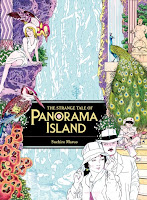
Starting off with a publisher we don’t often talk about. But Last Gasp has not one, but two manga releases out this week. First off is The Strange Case of Panorama Island, which is an adaptation of a famous Edogawa Rampo novel by underground manga artist Suehiro Maruo. Now admittedly, most of the indie manga fans grabbed this at TCAF already. Let’s get it more widely read.

MJ: I’m definitely interested, and I wasn’t at TCAF, so count me in!

MICHELLE: Ooh, finally! This one has been on my Amazon wishlist for ages!

ANNA: How many years ago was this announced? I’m glad that Strange Case of Panorama Island is coming out finally, I am very curious about it.

SEAN: And there’s also the 2nd volume of the cute yet disturbing Little Fluffy Gigolo Pelu, the first volume of which came out back in 2009. It’s a Junko Mizuno title, so be prepared for strangeness.

MJ: At long last! I still have the first volume that I borrowed from Michelle ages ago, so I guess I’d best reread and send back to her so that she can do the same!

MICHELLE: !!!!! I genuinely had no idea the second volume of this was on the horizon! It might be time to bust out my seldom-seen happy dance!

ANNA: I had no idea either! This is exciting.

SEAN: Seven Seas has a quintet of releases. Alice in the Country of Clover: Cheshire Cat Waltz hits its fifth volume, and continues to feature Alice’s love relationship with Boris.

MICHELLE: I have a tendency to start each new “Alice in the Country of” series, but then never go back to them. That’s the case with this one, too.

SEAN: Gunslinger Girl finally comes to an end with this volume, and if I’ve guessed correctly it will probably not involve everyone living happily ever after and there being punch and pie. Still, it’s a beloved series, and will no doubt be heartwarmingly bleak and tragic.

There’s also the 3rd omnibus of I Don’t Like You At All, Big Brother!!. I think this actually catches us up with Japan, given it’s an omnibus. As such, it may be a while before I have to talk about it again.

The same cannot be said for Mayo Chiki, which resists all my voodoo doll poking at it. Vol. 3 is out next week.

MJ: I can’t tell you how little interest I have in these things.

MICHELLE: *snerk*

SEAN: Lastly, and if I’m honest most interesting, is the debut of a new series, World War Blue. It’s basically the Nintendo/Sega console wars, only with human personifications. I find the premise intriguing, and it does not seem, on first glance, to be filled with moe incest, so it’s my Seven Seas pick this week.

MJ: I agree, that does sound interesting. May be a rare Seven Seas winner for me.

MICHELLE: Huh.

wolfsmund

SEAN: Vertical has a debut this week as well, though it’s a much darker series. Wolfsmund comes from the folks at Enterbrain, home to A Bride’s Story, and is a brutal examination of the Middle Ages. It’s supposed to be really excellent, but honestly may be too dark for me.

MJ: “Dark” has never scared me away, so bring it on!

ANNA: This sounds a bit odd and potentially interesting.

SEAN: And what would a first week of the month be without Viz? Bleach 57 gives you 57 varieties of plot, 3 speeds (slow, very slow, and stop), and 3,249 characters.

MICHELLE: And again I snerk.

SEAN: Blue Exorcist hits double digits, and I believe finally heads back to Academy life, though who knows how long that will last.

MICHELLE: I need to catch up on this one.

ANNA: Me too.

SEAN: A new 3-in-1 omnibus, for those who missed it the first time. Like me. D.Gray-Man 1-3 gives us an introduction to this series that started off in Jump before moving to Square (for the artist’s health reasons, I believe). It’s the series about exorcists that didn’t become a monstrous hit (see above for the other one).

Jiu Jiu finishes with its 5th volume, and I’m so relieved that I believe I will actually read it.

MJ: Heh.

MICHELLE: Jiu Jiu is over now? Hallelujah! I expected it to keep limping on indefinitely.

ANNA: I’m probably not going to read this, but I’m relieved that the series is wrapping up. Viz is also going to be releasing infinitely more interesting shoujo/josei very soon.

natsume14

SEAN: Natsume’s Book of Friends is always welcome in my house, even if it likely won’t feature my OT3 again. But Vol. 14 will be filled with melancholy, gentle humor, and piles and piles of yokai.

MJ: I haven’t checked in with this series in a while, but it was always a favorite, so perhaps now’s the time to catch up!

MICHELLE: I heart it!

ANNA: I have a stash of volumes somewhere I need to catch up on!

SEAN: Oresama Teacher is one of my top 5 comedy mangas right now, and Vol. 14 will be read as soon as it is in my hot little hands. I love it to bits. (Yes, yes, but I loved The Magic Touch, I’ve heard that before…)

MICHELLE: Usually episodic comedies don’t do much for me, but I frequently enjoy Oresama Teacher.

ANNA: I like this series a bunch. It might not always make sense, but the ridiculous situations are part of its charm.

SEAN: Psyren 11 will, I hope, go deeper into the question of Sakurako’s personality disorder, or at least not feature 200 pages of nothing but psychic battles again.

MICHELLE: I need to catch up on this one, too.

SEAN: Skip Beat! gets its 5th 3-in-one, and I seem to recall this would put it right in the middle of the Dark Moon arc. If you haven’t read it yet, why are you reading this? Read Skip Beat!

MICHELLE: Do!

ANNA: Skip Beat! is so good, and unlike most other long-running series it doesn’t seem to slow down or have less interesting storylines.

SEAN: And lastly, in Strobe Edge 5, everyone will be sad. This is not so much a prediction as a premonition.

MJ: I’m totally on board with this kind of sadness.

ANNA: So am I. This series has really gotten better as it develops.

MICHELLE: Me, too. I like Strobe Edge very much.

SEAN: So what appeals to you on this 4th of July week? (Or, if you aren’t American, this generic week?)

Filed Under: FEATURES, manga the week of

Wandering Son, Vol. 4

June 27, 2013 by Sean Gaffney

By Shimura Takako. Released in Japan by Enterbrain, serialization ongoing in the magazine Comic Beam. Released in North America by Fantagraphics.

In my last review, I noted that all the characters were just starting to reach that age where love would come into the picture, and wondered what would happen when it arrived. Well, that moment is here, and the answer is simple: a trainwreck of feelings and emotions. There’s actually not as much regarding Nitori and Takatsuki’s gender identity disorder here, but there doesn’t need to be. Takako-san has set up all the characters’ wants and needs in the first three volumes, and now can send them careening everywhere confident that we’ll follow along.

wanderingson4

This is not to say that everyone is embracing these new-found feelings. Nitori and Anna’s feelings for each other, for example, almost read like they’re out of Bob’s Big Book Of Manga Cliches. Anna is clearly attracted to Nitori, but is still a bit weirded out by Notori’s gender issues, so this tends to come out as abuse. Honestly, I wasn’t expecting Anna to be as utterly tsundere as she is here, given this is a very realistic, subtle work. And Nitori is also attracted to Anna, but she’s sending all the wrong signals, so he just ends up frustrated. And then there’s Takatsuki to consider…

Sometimes friends fall out, particularly in the elementary school/middle school years. The tragedy of what happens with Saori is that she can see it – hell, she excoriates herself for it, quoting from Anne of Green Gables again – but still can’t help what her heart feels, and this causes her to lash out at Takatsuki. Meanwhile, Takatsuki’s relationship with Nitori is all over the school – there’s a rumor they were seen kissing, and it won’t quite die down. It’s getting to the point where Nitori and Takatsuki are starting to dream of each other… erotic dreams. Takako-san’s subtleties excel here, as you clearly know that we’re seeing wet dreams without there being anything racy or suggestive.

In the end, almost everyone ends up unhappy or unfulfilled here, which is not a surprise given the age of the protagonists. Saori seems to have shut down (the unwanted attention she’s getting from a male friend at church isn’t helping), and the others are simply trying to keep it together. The other friend in their little group, Sasa, barely appears, but it’s noted a couple of times they want to try to stay on an even keel for her – she seems to be the heart of the group. There is, however, one romance that does work out, and fittingly, it’s for a slightly older couple. Maho is finally able to get over her own shyness and panic, and she and Seya become a couple. (His own feelings for Nitori-as-a-girl are still an issue, of course.)

So another solid volume that really makes me love these characters even more. My favorite part of the entire book was probably a chapter where Nitori, frustrated by his sister, Anna, and everything going on at school, decides to run away. Not being able to afford to go anywhere, though, as the day progresses Nitori just ends up at a zoo. In the end, the day passes and on Nitori’s return, no one realizes he’s even been gone. Nitori’s imagination and emotions are further along than his maturity level, and it’s causing him great pain. Will middle school help to guide him? Can’t wait to find out.

Filed Under: REVIEWS

GA: Geijutsuka Art Design Class, Vol. 5

June 25, 2013 by Sean Gaffney

By Satoko Kiyuduki. Released in Japan by Houbunsha, serialization ongoing in the magazine Manga Time Kirara Carat. Released in North America by Yen Press.

As I have mentioned before, there are an awful lot of 4-koma series coming out featuring a bunch of eccentric, yet cute and lovable girls around high school age. Indeed, most of them are also being put out by Yen. And yet I’ve always enjoyed reading GA the most, particularly as it rewards detail-observant readers. There’s a lot going on here, not least of which is how much this series has taught me about art. And about how to draw a panda properly.

Kiyuduki_GA_V5

Actually, much of this volume takes place over the summer break, meaning we get the opportunity to observe the girls outside of the school environment. (Though this does mean we get less of the ‘B’ cast, i,e, Awara and company.) We even get to see a couple more family members, particularly Namiko’s sister, who turns out to be the sort of aggressively good at everything big sister that would drive Namiko insane (which is indeed what happens). We also get a brief view (back only) of Noda’s gorgeous big sister of legend. The siblings in GA tend to show off a lot of that ‘we can’t stand each other, but love each other deep down’ dynamic you like to see in comics like these.

The ‘art’ parts of the volume focus on the four seasons, and how you get your piece to show off what spring means, or summer, etc. This includes several examples of works that do precisely thins, both Western and Japanese, so you can go to Google and look up paintings like ‘Autumn in the Village’ by Marc Chagall or ‘Beach Baskets in Holland’ by Wassily Kandinsky. The art actually helps you to understand the girls better, as you see how they might see the world, and what kind of canvas they want to create with it.

The girls, by the way, are exceedingly cute here, as you would expect. A trip to a summer festival is enlivened by a fox spirit briefly taking the place of one of the girls (Kisaragi being Kisaragi, she goes to the fox shrine the day after to thank them for having fun with the rest of the girls). A trip means postcards, which the girls hand-draw, and discussion of how to balance picture and words (it also shows Namiko and Noda talking about getting married one day – sorry, yuri fans!). Perhaps the most poignant chapter shows Noda unknowingly showing up for school the first day of summer break, and having lunch while pretending her friends are there around her. Noda surrounded by people is the best Noda, I think we all agree.

As ever, if you’re looking for a deep manga with a lot to say about the human condition, this isn’t the one for you. It’s a 4-koma about cute high school kids, and no amount of praise from me is going to change that. If you do enjoy this genre, however, GA is fantastic, balancing humor, cuteness, and an appreciation of art, even if you aren’t artistic. It doesn’t come out very often (it’s caught up with Japan), but is always recommended.

Filed Under: REVIEWS

Bookshelf Briefs 6/24/13

June 24, 2013 by Michelle Smith, Sean Gaffney and Anna N 2 Comments

This week, Michelle, Sean, and Anna look at recent releases from Viz Media, Seven Seas, and Yen Press.


bloodlad3Blood Lad, Vol. 3 | By Yuuki Kodama | Yen Press – Blood Lad remains the frontrunner for the “Surprise Favorite of 2013” award in my book. True, I could not possibly be less interested in the machinations of Staz’s dastardly older brother, Braz, but there are plenty of characters that I unexpectedly like quite a lot, including Staz’s little sister, Liz, who is like the Yotsuba of the demon world, and the slouchy, laid-back dragon in this volume, who ends up steering our leads onto a new and intriguing path. And true, the fanservice is not my style, but the humor usually is. Also, I especially like that the series goes places I don’t expect—we begin the volume with Fuyumi (the ghost of a human) having been kidnapped, and I was all set for some demon power struggle to ensue, but that is actually not where things go at all. I look forward to more! – Michelle Smith

demon3Demon Love Spell, Vol. 3 | By Mayu Shinjo | Viz Media – I have to admit, Shinjo is doing a really good job making me sympathize with the incubus here, particularly in the first half of this volume. In particular, the confrontation between Kagura and Miko regarding her semi-arranged marriage is one of the best scenes so far, really laying out how conflicted Miko is, but also that how she’s handling it is absolutely the wrong way to go about things. As for Kagura, while he admits to pretending to be weaker than he is so that he can get more from Miko, he’s actually being fairly considerate given his creator. I’m not sure if we’ll be seeing his “human” self again, though. The second half is less interesting, but still pretty solid, and shows why these two haven’t gone further in their relationship – Miko’s feelings are still too fragile. Good stuff. – Sean Gaffney

Haganai3Haganai: I Don’t Have Many Friends, Vol. 3 | By Yomi Hirasaka and Itachi | Seven Seas – This volume exists pretty much to introduce the rest of the main cast. Maria, the 10-year-old nun who’s somehow supposed to be their faculty advisor, is there to be adorable and brattish, just like a typical 10-year-old, and piss off Kodaka’s little sister. That said, I am so grateful Kadota continues to treat both his sister and Maria as cute little kids rather than the manga getting into lolicon areas. Well done. Then again, with a new character like Rika, is more sexual talk really needed? Adding her to the cast is like throwing a bomb into a room, and while she’ll best be remembered in this volume for the mech-on-mech BL doujinshi she shows the others (which is indeed the highlight of the volume), I’m more interested in what her presence will do to Kodaka, Sena and Yozora’s friendship. – Sean Gaffney

librarywars10Library Wars, Vol. 10 | by Kiiro Yumi | Viz Media – This volume wraps up the somewhat silly banned words storyline and sends Kasahara on a mission in her hometown to protect freedom of expression in an art exhibit. There are catty librarians and subverted organizational hierarchies to deal with! In addition, Kasahara’s secret of being a combat member of the Library Defense Force may be exposed to her family. The feelings between Kasahara and Dojo are growing, and it is fun seeing how capable and mature Kasahara has become as she manages to handle a bad hazing incident all by herself. This was a solid volume in the Library Wars series, with a bit more emotional depth than usual. – Anna N

nura15Nura: Rise of the Yokai Clan, Vol. 15 | By Hiroshi Shiibashi | Viz Media – The good news it it looks like the Kyoto arc will wrap up with the next volume. The bad news is that it’s still going on in THIS one, meaning there’s a lot of fighting, and a lot of minor villains whose faces I struggle to remember. That said, there is one very interesting thing going on here: the villains appear to be winning. Even if they may not destroy Kyoto, I’m pretty sure they’re going to pull off their resurrection no matter how much Rikuo tries to get Hagoromo-Gitsune to remember who she really is. As for the fights themselves, they look OK, but can be pretty chaotic – and honestly, I’m not reading Nura for the fights. Let’s finish up the equipping and fearing and get back to more slice-of-life yokai plots, as this arc is trying my patience. – Sean Gaffney

tigerbunny2Tiger & Bunny, Vol. 2 | By Mizuki Sakakibara, et al. | Viz Media – Although it feels nearly as much like a Saturday morning cartoon as the first volume, the second installment of Tiger & Bunny at least gives readers a few welcome glimpses into the life of a corporate Hero and fleshes out its supporting cast a little bit. Unfortunately, I find practically all of the supporting cast more interesting than the lead characters—veteran Hero Kotetsu (a.k.a. Wild Tiger) and his newcomer partner Barnaby (unwillingly nicknamed “Bunny”)—and their relationship, which is characterized by much repetitive bickering and questioning whether their company-mandated partnership can really work. Even giving Barnaby some dead parents and a shadowy organization to seek out can’t make him compelling, but maybe it means we’re in for a storyline deeper than “Oh noes, a gang of thieves stole a diamond from a museum!” Here’s hoping. – Michelle Smith

toriko16Toriko, Vol. 16 | By Mitsutoshi Shimabukuro | Viz Media – As opposed to Nura, Toriko’s arcs are usually just about the right length: Mellow Cola wraps up here, after a suitable amount of fighting and cooking, and we’re off on new adventures. I like the way Komatsu, despite remaining a non-combatant, is being worked into the fights in ways that don’t involve him just constantly being rescued. His use of the ancient cookbook to tell Toriko and Zebra how to stop the Salamander Sphinx. That said, the lack of major females in this series tends to mean that Komatsu serves that purpose as well – it’s hard not to hear Toriko and Zebra arguing about who’ll partner with him and not think of various BL answers. Still, Toriko and Komatsu are more concerned with the return of Starjun, and what evil he’s going to be bringing to the table. Not the best, but still good. – Sean Gaffney

Filed Under: Bookshelf Briefs

Higurashi: When They Cry, Vol. 22

June 23, 2013 by Sean Gaffney

Story by Ryukishi07; Art by Karin Suzuragi. Released in Japan as “Higurashi no Naku Koro ni: Matsuribayashi-hen” by Square Enix, serialized in the magazine Gangan Joker. Released in North America by Yen Press.

And so, finally, welcome to the Good End, as well as the longest of the arcs – it’s 8 volumes, or 4 omnibuses. We’ve come a long way to get to this point, seeing most of the main characters at their worst, and then later seeing them at their best. Well, mostly. The adults in Higurashi haven’t really gotten a good backstory yet. Particularly the villain of the piece. We knows that she’s insane and sociopathic – witness her face at the end of the Massacre Arc, as well as the plot she’s cooked up – but “she’s evil like that” is not a motivation, and Ryukishi07 has gone to great pains in previous arcs to show us how important someone’s past and the way their life unfolded can be to the actions they may take in the future. So, what’s Miyo Takano’s past?

Ryukishi07_Higurashi_22_CVR

Well, it starts with a little girl named Miyoko Tanashi. That’s her on the cover, isn’t she a cutie? She lives with a loving mother and father, and her hobbies are collecting flags of the world from a local restaurant chain. She is living a great childhood. Then… there’s a train accident. Miyoko went out to play with her friends instead of going shopping with her parents. From that, comes one of the most horrific childhoods we’ve seen in all of Higurashi, even managing to top Satoko and Rena’s. Miyoko’s father, before he dies, tries to get Miyoko to contact a researcher friend of his, but to no avail – Miyoko is sent to the local orphanage instead.

Orphanages in fiction are usually never a good deal, but this one goes above and beyond. (I have no idea if this is what orphanages in Japan were like in the early 60s – I hope it’s heavily exaggerated for dramatic effect.) It’s a prison camp for children, with daily beatings and abuse. Then comes the most striking scene of the volume, where Miyoko and her three other friends make an escape attempt from the orphanage – led by Eriko, who has heard there’s another orphanage a few miles away that’s loving and happy. What follows is… bad. They don’t escape – indeed, the whole “other orphanage” doesn’t seem to even exist. They are taken back. Eriko is tortured and killed by having her unconscious body tied down and covered in chicken feed, so she is basically pecked to death. I mention this as a spoiler because it’s so grotesque and graphic – everyone who reads the manga remembers this. The other two girls are rolled into a mat (which is then beaten with sticks) or put into a metal shower cage (and then beaten with sticks till they go deaf).

As for Miyoko, before capture she was able to accomplish a few things. First, she found a phone and managed to call her father’s friend. More importantly to the story, though, she screams at God to kill her, and a lightning bolt then comes down… directly behind her, missing her body. She takes this as a sign. It doesn’t go into effect right away – I won’t spoil her punishment, except that it’s the ugliest of the four, and the only reason she isn’t killed is that her father’s friend, Hifumi Takano, shows up to adopt her. (Note there is no suggestion the orphanage is ever shut down or stopped – only Miyoko is saved. I am reminded of the fact that everyone accepts Mion will be a yakuza head when she grows up. Morality in Higurashi can be starkly realistic when it wants to be.)

So, ten points to Hifumi for rescuing Miyoko, who changes her name to Miyo Takano. However, just putting her in a loving home and having her help with his research into brain parasites is not going to do the trick. Miyo clearly has post-traumatic stress disorder – we see her reliving the events of the orphanage more than once – and really should be getting therapy that she never gets. As a result, the PTSD will never really leave her, and drives her actions and descent into madness. Especially when the government mock and ridicule his research into parasites, and this drives him into deep despair. And so Miyo makes it her life’s dream to prove her father’s research is correct and that he was right all along. His research… into Hinamizawa Syndrome.

That leads us to the second half of the omnibus, where an adult Miyo is putting all her pieces into place. She’s not going to be stopped by some nasty old government officials – indeed, at one point, she believes that bullets won’t kill her (flashing back to the lightning bolt missing her as a sign). She delves further into his research, and also makes connections, showing that she’s an up-and-coming woman whose drive is not merely frivolous. (We briefly see her fighting a bit of “but gosh, why is a girl interested in parasites?” male doctors.) And finally, she gets what she wants – a research facility in Hinamizawa, with a helpful doctor in Kyousuke Irie, and a liaison in Jiro Tomitake. she notes Tomitake looks like an easy sucker, something that does not bode well for their relationship.

Irie is more complicated, though, and our sympathy shifts to him in this second half as Takano starts to slip deeper into madness. Turns out Irie, due to his parent”s crumbling marriage after his father had a head injury, has made it his life’s work to study brain injuries. Unfortunately, he was doing this around the time lobotomies were discredited, and therefore his career was somewhat ruined. Here in Hinamizawa, he’s trying to start over – being a nice helpful doctor, encouraging a young and stress-out Satoshi to take an interest in baseball – while also researching Hinamizaqwa Syndrome and trying to stop it. He’s a good guy, mostly.

Then they bring in a live specimen. The murderer of the dam construction manager, who is at Level 5 and trying to claw out his throat. And Takano blackmails Irie into dissecting his brain – while he’s alive. This really doesn’t bode well for Satoko Hojo, as she’s also showing signs of Hinamizawa Syndrome, and her parents fell off of a bridge just now in a very suspicious manner. Miyo isn’t too bothered – more live dissections! – but with Irie draw the line and cutting open a little girl?

As you can see, there’s a lot of backstory here, but it’s presented with a lot of dramatic effect – indeed, one might argue too much at times. This is really over the top grotesque in places, and the images of Eriko, and later the live dissections, are some of the more nightmare inducing of the entire series. That said, I think we can now see how Miyo Takano got to be the way she is, even if we can’t sympathize with her. Irie’s role in the series expanding is also a good thing, taking him away from “comedy lolicon doctor” and into a man trying to hold onto his ethics while still doing surgery FOR SCIENCE.

Karin Suzuragi did the Keiichi and Rena arcs, and her art is back as well for the final arc. It’s not my favorite of the artists, but it’s pretty good – although she’s not good at showing younger versions of our leads. Satoko in 1980 looks exactly the same as Satoko in 1983, and given that’s going between age 8 and age 12 or so, I’m not sure I buy that. Overall, though, for an omnibus whose job is to pour out backstory and explanations, this remains an amazingly gripping read, though of course I only recommend it for fans who’ve read the other books.

Filed Under: REVIEWS

Adventures in the Key of Shoujo: Sailor Moon, Vol. 8

June 22, 2013 by Phillip Anthony 1 Comment

sailormoon8Pretty Guardian Sailor Moon, Vol. 8 | By Naoko Takeuchi | Kodansha Comics | Rated: T (13+)

And the hits just keep on rolling in this volume. After the hellfire brought down by the destruction of, well, the whole district, the Sailor Senshi find themselves facing down the remains of Hotaru’s body as it takes on the form of one of Pharaoh 90’s creatures. Meanwhile Chibi-Usa’s body remains in a critical condition. If they’re not going to be destroyed by this creature, then the newest member of the Senshi, Sailor Saturn, will finish them off.

On one hand, I’m fine with this volume because we finally get to end the ridiculous Pharaoh 90 story arc. I know I should expect these arcs since they are the meat and potatoes of the whole gig. But I find myself trying to invent reasons to be excited about them. I suspect it’s the fact that, after eight volumes, I want something else to happen. I want some kind of overarching villain to appear; I want some kind of “There’s a reason all of this is happening.” But every time, the Senshi just battle just another group who want to suck the energy/emotions/blood/flesh or whatever other substitute the story requires out of people to go to Valhalla/Eden/7-Eleven or whatever other substitute the villain requires. I swear to Jiminy nobody even says out loud that it’s awful suspicious that all these groups keep attacking the girls and don’t seem to have an overarching agenda.

I don’t know, readers, I feel like I am not skilled enough to figure out the appeal of watching the same fight happen to the same team in every volume. Yes, the appeal is that the gang gets to have an adventure, but it’s getting kind of repetitious. I want to know more about the team—yes, even Usagi. We do get snippets, but for the last few volumes there seems to be some kind of attempt to answer the question of what happens when Chibi-Usa goes back home to the future? Takeuchi is going for an idea of domesticity between Mamoru, Usagi and Chibi-Usa. But it only comes out when there’s no fighting going, so you can pretty much guess how often this happens.

What is weird about reading this volume, and indeed the rest of the volumes, is that I want something closer in tone to Codename: Sailor V than what’s presented here. In Sailor V, when Minako had to fight a different foe, at least it wasn’t relentless. Foes, who are about as thin as anything that Sailor Moon comes up with, were dispatched, sure. But at least it was over and done in two volumes. This has been going on in Sailor Moon for eight volumes and I really hope that things change in the run up to the end.

So at the halfway point in the volumes, am I happy? Well, yes and no. On the one hand, I’ve gotten to watch as Takeuchi paints a pretty epic canvas taking ordinary girls and making them responsible for people’s safety, even those they don’t know. I never get a sense that they don’t take their duties seriously. As they struggle to beat every adversary that stands against them, they have their moments of indecision but they always overcome them and find inner resolve to succeed. I’m a sucker for story dynamics like these. Plus for all her insufferable points, Usagi is a good leader who cares about her flock.

Where the series lets her down is when she reverts back to type and becomes an airhead after saving the world. I could buy that for the first couple of volumes but now I have to wonder if the author is deliberately sabotaging her lead because if she became more confident then there wouldn’t be much tension. The only way to stop that would be if the author actually wanted to make the kinds of changes that would simultaneously improve and ruin the tempo already set. Heaven and hell, I suppose.

On the other hand, the series seems to be incapable of letting the story go out on a limb and have more serious stakes. When the characters risk their lives, I’m never in any doubt they will make it through. When Mamoru was facing against his old friends, there was a real sense of danger and the gang had to fight to save themselves from being destroyed. But now it’s become so par for the course that I’m not even worried about them.

The team really must work on their tactics because they get hit again by the bad guys and spend a good portion of the initial battle—you guessed it—knocked unconscious. I shouldn’t be surprised, but still I have to stare at the page and say “What, again?” The promise of the Outer Senshi returning for the next volume intrigues me as their departure from the roster is not done with any finality, but in a manner that suggests when they do return it will be interesting to see how the Inner Senshi treat them.

Again, I find myself locating genuine problems that I have with the series, but they are not enough to stop my enjoyment of the proceedings. My worry is that when the final volume comes, it will be another cases of fighting yet another unknown boss and then that’s it, we’re out of time here folks.

Filed Under: Adventures in the Key of Shoujo Tagged With: kodansha, shojo, shoujo

  • « Go to Previous Page
  • Page 1
  • Interim pages omitted …
  • Page 383
  • Page 384
  • Page 385
  • Page 386
  • Page 387
  • Interim pages omitted …
  • Page 551
  • Go to Next Page »
 | Log in
Copyright © 2010 Manga Bookshelf | Powered by WordPress & the Genesis Framework