• Skip to primary navigation
  • Skip to main content
  • Skip to primary sidebar
  • Home
  • About Us
    • Privacy Policy
    • Comment Policy
    • Disclosures & Disclaimers
  • Resources
    • Links, Essays & Articles
    • Fandomology!
    • CLAMP Directory
    • BlogRoll
  • Features & Columns
    • 3 Things Thursday
    • Adventures in the Key of Shoujo
    • Bit & Blips (game reviews)
    • BL BOOKRACK
    • Bookshelf Briefs
    • Bringing the Drama
    • Comic Conversion
    • Fanservice Friday
    • Going Digital
    • It Came From the Sinosphere
    • License This!
    • Magazine no Mori
    • My Week in Manga
    • OFF THE SHELF
    • Not By Manga Alone
    • PICK OF THE WEEK
    • Subtitles & Sensibility
    • Weekly Shonen Jump Recaps
  • Manga Moveable Feast
    • MMF Full Archive
    • Yun Kouga
    • CLAMP
    • Shojo Beat
    • Osamu Tezuka
    • Sailor Moon
    • Fruits Basket
    • Takehiko Inoue
    • Wild Adapter
    • One Piece
    • After School Nightmare
    • Karakuri Odette
    • Paradise Kiss
    • The Color Trilogy
    • To Terra…
    • Sexy Voice & Robo
  • Browse by Author
    • Sean Gaffney
    • Anna Neatrour
    • Michelle Smith
    • Katherine Dacey
    • MJ
    • Brigid Alverson
    • Travis Anderson
    • Phillip Anthony
    • Derek Bown
    • Jaci Dahlvang
    • Angela Eastman
    • Erica Friedman
    • Sara K.
    • Megan Purdy
    • Emily Snodgrass
    • Nancy Thistlethwaite
    • Eva Volin
    • David Welsh
  • MB Blogs
    • A Case Suitable For Treatment
    • Experiments in Manga
    • MangaBlog
    • The Manga Critic
    • Manga Report
    • Soliloquy in Blue
    • Manga Curmudgeon (archive)

Manga Bookshelf

Discussion, Resources, Roundtables, & Reviews

Features & Reviews

It Came from the Sinosphere: The Crane-Iron Pentalogy (Part 2)

July 16, 2013 by Sara K. 12 Comments

I actually do not think this image from the manhua is quite in the spirit of the original novels, but it's still pretty.

I actually do not think this image from the manhua is quite in the spirit of the original novels, but it’s still pretty.

Read Part 1

The Development of a Pentalogy

Though the internal chronology is Crane Frightens Kunlun / Precious Sword, Golden Hairpin / Sword Force, Pearl Shine / Crouching Tiger, Hidden Dragon / Iron Rider, Silver Vase, the first novel to be written/published was the central one, Sword Force, Pearl Shine, followed by Precious Sword, Golden Hairpin, with Crane Frightens Kunlun.

In other words, Wang Dulu first went back in time, and then decided to go back forward in time.

Sword Force, Pearl Shine is the shortest of the five novels, and I suspect that it was originally intended to be a stand-alone novel. However, being shorter, it is also a little less developed than the other novels. This underdevelopment may have been a blessing in disguise, for I suspect it led Wang Dulu to ask himself about Yu Shulien and Li Mubai’s origins, which inspired Precious Sword, Golden Hairpin, and then he asked himself about Southern Crane, which led to writing Crane Frightens Kunlun. Crane Frightens Kunlun itself has a loose end, and tying that up leads to the creation of a key character (Yu Jiaolong) and much of the plot of Crouching Tiger, Hidden Dragon. Whether that loose end was put in Crane Frightens Kulun on purpose because Wang Dulu was already planning to write Crouching Tiger, Hidden Dragon, I do not know. I strongly suspect, however, that Wang Dulu did deliberately write that open-ended finale ine Crouching Tiger, Hidden Dragon because he was already planning to write Iron Rider, Silver Vase.

The point is, Wang Dulu did not have a master-plan when he was writing the pentalogy. He let it unfold organically, one book at a time, and even he probably didn’t know where the story was going to go more than a book in advance. The novels are much better because of this.

The scriptwriter Brian McDonald says that storytellers should be the slaves, not the masters, of their stories. To me, it seems that Wang Dulu was not the master of his stories, and I mean that in a good way. On the surface, they seem quite humble and not at all impressive, but they prove to be surprisingly powerful.

About the 2000 Ang Lee Film

Nowadays, even in the Chinese-speaking world, most people know about the Crane-Iron Pentalogy thanks to the 2000 film Crouching Tiger, Hidden Dragon. So how does it compare?

Crouching_tiger_hidden_dragon_poster

The film simplifies the story. A lot. It has to. It’s only two hours long, and most of the audience is not familiar with the events of Crane Frightens Kunlun / Precious Sword, Golden Hairpin / Sword Force, Pearl Light.

While I love the Crane-Iron Pentalogy as a whole, Crouching Tiger, Hidden Dragon is the novel I love the least. Unlike the other novels, I felt CTHD has some rather long, tedious sections. The film, quite wisely, leaves out all of the tedious stuff, while keeping the most interesting parts.

Of course, while the movie leaves out a lot detail, it certainly drops quite a few hints. For example, one of the major characters is Cai Xiangmei, a girl who performs acrobatics on the street, yet the only reference to her in the entire movie is a single shot showing a girl performing acrobatics on the street. I think this is Ang Lee’s way of saying ‘Yes, I read the novel, but I simply do not have the screen time to include this character’s story’. I do not think people who haven’t read the novels are consciously aware of these little hints throughout the movie … but I suspect they can still feel that this is just part of a broader story.

Ultimately, the feel of the movie is not the same as the novels. That does not make it a bad movie – in fact, it probably would have been a worse movie if it had tried to stick too close to the novel. I have trouble imagining the subtle psychological tug-and-pull in the novels translating well into film, and of course the gorgeous cinematography of the film is totally absent in the novels.

It’s a good movie, and I recommend it. But…

The Thing Which Bothers Me About the Movie

I am going to be a bit vague to avoid spoilers.

The message of the movie is that you need to recognize, pursue, and consummate (romantic) love before it’s too late. That’s not the message of the original novel, but that is not a problem, nor is it a problem that the movie changes the ending to pull this off. The movie implies that a certain couple never got married because they did not realize how much they loved each other / did not have the courage to pursue their love, and that they regret this. That is also not a problem. The problem is … the couple used to demonstrate this point is Character Y and Character Z (I said I was going to be vague).

In the novels, Y and Z know that they love each other, and they didn’t remain unmarried because of a lack of courage. They stayed unmarried because they decided they did not want to marry. While one could have a great discussion about why they make this choice, it clearly is a deliberate choice on their part.

And they put up with quite a bit of nonsense from other people because of this.

Years after they have made their decision clear, their friends are still scheming up ways to get them married. They get kicked out of shelter onto the street in the middle of the night because of their unmarried status. At one point, someone practically orders them to get married.

But the movie glosses all over this. If two people who are in love with each other refuse marriage, there simply must be a problem, they cannot just be mature adults making thought-out choices about their own personal lives.

I think that’s rather insulting to Character Y and Z, and I think it contradicts the point the novels try to make about freedom in personal relationships. I really wish the movie had found a different way to make this point.

About the New Movie

The word is that Yuen Wo Ping, who was the action choreographer for the Ang Lee film, will be directing the new movie, which I’ve seen titled as both Iron Rider, Silver Vase and Crouching Tiger, Hidden Dragon 2 – the Green Destiny.

My guess is that it will be even less faithful to the original novels than the Ang Lee film, but will probably incorporate at least parts of the story of Iron Rider, Silver Vase. Personally, as long as they make a good movie which does not do anything too irritating, I’ll be happy. That said, I do hope they will include Han Tiefang and not change him too much, since he’s one of my favorite characters in the pentalogy.

The Heart of Wuxia

One of the things which strikes me about wuxia is the emphasis on the characters’ thoughts, feelings, and relationships with each other. This introspective emphasis is much heavier in wuxia than in western speculative fiction (with some exceptions). That’s not to say that wuxia is better than western speculative fiction, since western speculative fiction explores plenty of other things. Nonetheless, the emphasis on feelings and relationships makes wuxia stories (particularly novels) sometimes feel more like romance fiction than the speculative fiction I grew up with.

The Taiwanese edition of Precious Sword, Golden Hairpin

The Taiwanese edition of Precious Sword, Golden Hairpin

I have not read many of the old (as in written before 1950) wuxia novels, so I cannot make my own analysis, but I’ve read that the older wuxia novels are full of lots of exciting, magical, action-packed adventures, and contain not so much psychology. The claim is that Wang Dulu, and the Crane-Iron Pentalogy in particular, changed that.

Now, anybody reading the Crane-Iron Pentalogy for the fights and action sequences is going to be disappointed. It’s not that it’s badly written, it’s just that all of the ‘action’ parts are really brief. Wang Dulu always uses violence/action as a tool to get the characters where they need to go, and never as an end in itself.

Some say Wang Dulu brought the wuxia genre to maturity. His wuxia-romances certainly became very popular very quickly, and I can tell that he has a strong influence on later writers. Based on what I know, it seems that his major contribution is putting the ‘heart’ – the passion, the introspection, the intense human relationships – into wuxia.

Availability in English

Simon and Schuster acquired the English translation rights to Crouching Tiger, Hidden Dragon, and possibly the other novels as well, and then did … nothing.

The 2001 Ang Lee movie, the 2004 movie, and manhua which bear the name Crouching Tiger, Hidden Dragon are all available in English. I haven’t seen the 2004 movie, though generally it’s considered inferior to the Ang Lee film. I have also yet to read the manhua, but the word is that the first two volumes are actually based on Precious Sword, Golden Hairpin, and that starting around volume 3 the story gets further and further away from the novels.

The manhua, again.

The manhua, again.

Conclusion

I love the Crane-Iron Pentalogy. I’m still left with a sense that there is something wonderful about the stories which I have totally failed to convey in these two posts.

My love, as you may have gathered, is not equally distributed among the novels. Crouching Tiger, Hidden Dragon gets the least love from me, whereas my favorites are Iron Rider, Silver Vase and Precious Sword, Golden Hairpin. Particularly Precious Sword, Golden Hairpin. It is a beautiful novel which swept me up and then left me in tears. Part of me wishes they would adapt Precious Sword, Golden Hairpin into a movie, and part of me cannot imagine any movie adaptation being as moving as the original.

Next Time: Starry Starry Night (movie)


Sara K. worked on this post as Typhoon Soulik made its way across Taiwan. Soulik managed to greatly annoy Sara K., but it did not do her any major harm.

Filed Under: It Came From the Sinosphere Tagged With: Chinese, Crane Frightens Kunlun, Crouching Tiger Hidden Dragon, Iron Rider Silver Vase, Iron-Crane, Novel, Precious Sword Golden Hairpin, Sword Force Pearl Shine, Wang Dulu, wuxia

Guest Contribution: A Letter to Yun Kouga

July 15, 2013 by Sarah Ash 4 Comments

A Letter to Yun Kouga (written with love, respect, and bafflement.)

Dear Kouga-sensei,

Way back in 2006, I reviewed the first volume of your new series Loveless:

Seimei, Aoyagi Ritsuka’s older brother, has been murdered. Ritsuka, who has been suffering from amnesia for two years, is left to live with his abusive and disturbed mother who keeps demanding that he return the ‘real’ Ritsuka to her. Loveless, by Yun Kouga, is a twisted tale of loss, awakening desire, and magic. In this alternate version of our own present, children are born with cat’s ears and tails which disappear when they lose their virginity. (Ritsuka’s teacher, Shinonome-sensei, still has her ears and tail, which causes some comment in the school corridors.)

On the first day at his new school, the aloof and prickly Ritsuka is adopted by Yuiko, a sweet but needy latch-key child, tall and well-developed for her age, who constantly refers to herself in the third person. Yuiko may seem a bit of an airhead but she is quick to notice that Ritsuka is skilled at presenting a cheerful front to the teachers. ‘Sorry. I just can’t stand when people worry about me,’ he tells her to which she says, ‘You’re weird. Like you live a double life.’

On leaving school, Ritsuka is met by a good-looking stranger who introduces himself as Soubi – and tells Ritsuka that he was Seimei’s friend. Ritsuka instantly demands that Soubi go with him to ‘make some memories’ and proceeds to take photographs. ‘We have to take pictures or you’ll forget all about me.’ When they are alone together in the park, Soubi begins to behave very strangely and having assured Ritsuka that he won’t do anything to him, kisses him. Now Ritsuka finds himself bound to Soubi in an intense and dangerous world of spell battles against Septimal Moon, the mysterious organisation that killed his brother.

Yun Kouga reveals this perverse and compelling tale through her beautiful and evocative artwork; two colour pages are a bonus, further demonstrating her range as an artist. If any readers feel uncomfortable with the underlying implications of this work, especially the developing relationship between the student Soubi and twelve-year-old Ritsuka, they should first read the fascinating epilogue by adaptor Christine Boylan, ‘Words as Spells in Loveless.’ The first volume leaves the reader desperately eager to unravel the mysteries surrounding Ritsuka; will he and Soubi track down Seimei’s killers? What happened to Ritsuka two years ago? Can Soubi be trusted? Excellent, distinctive artwork conveying a compelling piece of fantasy story-telling: Loveless is manga at its best. Volume 2 is promised in June…

Obviously, I was smitten. Love at first sight! And I continued to follow Loveless faithfully through the anime adaptation as well as the subsequent volumes of the manga. But something has gone wrong. Here we are, ten+ years on, and, Sensei, you’re still – sporadically – producing chapters of Loveless. In the meantime, you’ve done the character designs for two major anime: Gundam Mobile Suit 00 and Un Go. You’re also working on another ongoing shoujo series Blood High School which is now being turned into an anime. Great! I don’t blame you, Sensei, for working on several projects at once; it’s a tough old world out there and mangaka, like other authors, have to seize every opportunity that comes along.

So what’s so compelling about Loveless? The art, for starters. No other mangaka can draw eyes quite as eloquently as you, Kouga-sensei. Your gorgeous colour pages are an added bonus. Storywise, you deliver a dark and disturbing tale that – in those early volumes – resonates with passionate and forbidden feelings. Yet you also have a gift for delightfully quirky yet believable character interactions; for example, any time Natsuo and Youji (the Zero boys) show up, their outrageously unconventional and unpredictable approach to life always enlivens the action. Then there are the spell battles, the intriguing concept of ‘fated partners’ and the mysterious Fighters and their Sacrifices. You’re not afraid to deal with serious issues either: child abuse; obsession; identity. I could – maybe should – devote paragraphs to the shota conundrum: is Soubi’s relationship with Ritsuka inappropriate? Nothing is ever that straightforward in your work; we learn that Soubi was an abused child and, even though he may be an adult in years, Ritsuka is often depicted as the more mature of the two. And even though you tease us with suggestively Boys’ Love situations (and you obviously have fun doing it!) the complex web of feelings that binds Soubi and Ritsuka together can’t be so easily labelled and packaged; you’re too subtle and original a writer to resort to clichés.

But when it comes to the questions that you set up to tantalize us in the first volume, alas, very little has been answered. In fact, everything about the way your manga has (slowly) been evolving suggests a haphazard, scattershot approach. As more plot tendrils are introduced and go merrily shooting off in all kinds of random directions, the strong story at the heart begins to fade and die. Too many new teams of fighters ending in ‘less’ (all with emotional baggage and back-stories) resulting in ‘I could care…less.’

I find myself faced with a fundamental issue about the function of plot, or story, if you will, that crops up time and again in manga. Even though many eminent nineteenth century European novelists like Dickens and Dumas also produced their work as serials, in regular instalments, they usually brought their novels to a satisfying conclusion, and resolved the conflicts and mysteries they had set up to hook their readers in. But the mangaka working for a monthly magazine like Zero Sum can go on indefinitely – or so it seems – with no other impetus than to produce yet another chapter to advance the story, but not to resolve it. For a reader, though, this eventually becomes a turn-off; the everyday interactions between Yuiko, Yayoi, and Ritsuka that once seemed both cute and pertinent (such as the discussion on what they’ll do when they grow up in Chapter 5 of #6) now seem like pointless filler (‘A Guppy’s Observation Log’ in #11.)

Some of the basic questions that you really need to answer are:

  • Assuming that the Loveless name will appear somewhere soon on Ritsuka’s body (as it should according to the rules set out in the story) – who is the other Loveless fighter?
  • What was Ritsu’s connection with Soubi’s mother? (And if it isn’t relevant, why was it so strongly flagged?)
  • What’s going on with Kio and his (twin?) sister?
  • Why did Ritsuka lose his memory two years ago? What will happen when/if he gets it back?
  • Where is Aoyagi père? And the social services? (Ok, wipe that last question, even if it’s set in the present, it’s an alternative fantasy present…)
  • Who is Madam Chiyako? Is she connected with Septimal Moon?
  • What is Septimal Moon and why do they hold spell battles?
  • And… why does Ritsuka look younger in recent volumes than in the earlier ones? It’s as if, Kouga- sensei, you’ve unconsciously altered the way you portray him; surely he should be showing signs of growing older by now? Does time pass differently in this world of cats’ ears and tails? He also seems to be behaving in a much younger way; the sullen, strong, angry Ritsuka (skilled at concealing his vulnerability) that we met in the earlier volumes is now depicted as a much more passive, dependent child. I wondered if this might be because you wanted to show Ritsuka at a loss when he learns the truth about Seimei… Or is this the ‘old’ Ritsuka who ‘disappeared’ two years earlier? If so, it needs flagging more clearly, so that the reader can reflect on what might have precipitated this change.

I’d love to hope that you will answer these questions – and many more – when you bring Loveless to a conclusion. But I suspect that – as your attentions are diverted elsewhere again – the once urgent need to resolve Ritsuka’s tale has faded. The intensity of those early volumes has just…melted away. This may well be because the anime version created a resolution (of sorts) based on the material you had produced at that time and now you’ve simply moved on and lost interest in working with these characters. (sob)

Is the much-desired commissioning of a TV anime series the kiss of death? The pages of Zero Sum have spawned several anime other than Loveless: 07-Ghost, Karneval, Amatsuki, and now Makai Ouji; Devils and Realist. Smaller in scale than ongoing shounen sagas like Naruto, the makers of these TV series have to devise an ending even when the mangaka is nowhere near reaching a conclusion. I can’t help wondering whether – once the anime series is done – somehow the material doesn’t seem like the mangaka’s ‘own’ work anymore and she/he loses some of the creative impetus to finish it (because someone else has already ‘finished’ it for them.)

Before the handsome new Viz volumes came out (and they are very handsome) I had resigned myself to never seeing a conclusion to Loveless. I had decided to appreciate the plus points and try to forget the minuses. I was ready to admire again the accurate way that you depict children on the verge of adolescence (and their teachers!) capturing the cruelty and the intensity of their interactions. Your damaged adults are just as fascinating: Soubi grimly painting the butterflies he says he hates so much because they’re stupid enough to let themselves be caught and killed. Shinonome-sensei breaking down in tears in class when one of her class answers back, unwittingly using the same words Soubi has used to reject her.

My frustration as a reader stems, I guess, from the fact that there was – is – such potential in Loveless that I can’t bear to see it being frittered away. It could have been so good. But by Volumes 10 and 11, the vital spark seems to have faded and that compelling intensity seems to have been significantly diluted. Such a shame…because Loveless is special to me. Different. Perhaps my suspicions are unfounded. Perhaps you will answer all those questions of mine (and many more.) You would make your readers all over the world so very happy!

Sarah (AnimeUKNews reviewer) www.animeuknews.net


To submit your contributions to the Yun Kouga MMF for inclusion in this month’s archive, please send your links by email to mj@mangabookshelf.com or via Twitter to @mjbeasi between now and Saturday, July 20th. If you would like your contribution(s) to be hosted at Manga Bookshelf, please email them to MJ, along with any included images. Contributions to the Yun Kouga MMF will be archived here.

Filed Under: FEATURES & REVIEWS Tagged With: loveless, Manga Moveable Feast, MMF, Yun Kouga

My Week in Manga: July 8-July 14, 2013

July 15, 2013 by Ash Brown

My News and Reviews

Last week I posted two reviews. The first was for The Vast Spread of the Seas, the third novel in Fuyumi Ono’s fantasy series The Twelve Kingdoms. I’ve really been enjoying reading The Twelve Kingdoms and this volume was no exception. I also reviewed Jen Lee Quick’s Off*Beat, Volume 1. Originally published by Tokyopop, the recently established Chromatic Press has rescued the series and I couldn’t be happier. The new Chromatic editions also include some additional bonus content as well.

Elsewhere online: Xavier Guilbert has published his interview with Taiyo Matsumoto from the 2013 Toronto Comic Arts Festival. The most recent episode of the Comic Books Are Burning In Hell podcast focuses on Suehiro Maruo. Kodansha Comics is offering two digital samplers containing the complete first chapters of many of its series. The Real sampler collects chapters from Kodansha’s “real-life” manga: Arisa, Bloody Monday, Danza, Genshiken, Genshiken: Second Season, I Am Here, Kitchen Princess, Missions of Love, and Vinland Saga. The Unreal sampler includes chapters from Kodansha’s fantasy, science fiction, and supernatural series: @ Full Moon, Attack on Titan, Cage of Eden, Fairy Tail, Mardock Scramble, Ninja Girls, No. 6, Sankarea: Undying Love, and Until the Full Moon.

Finally, this week is the Yun Kouga Manga Moveable Feast! MJ of Manga Bookshelf is hosting this round and has already posted a marvelous introduction. For my contribution to the Feast I’ll be reviewing the first Loveless omnibus later this week. Loveless was originally published in English by Tokyopop, but Viz Media rescued the license last year (which made me very happy.) Although I enjoy Loveless, I haven’t actually read any of Kouga’s other manga. I look forward to seeing what everyone else has to say about her work.

Quick Takes

Dog X Cat, Volume 1Dog X Cat, Volumes 1-3 by Yoshimi Amasaki. Junya and Atsu have been friends since they were young. They’re in college now and their friendship becomes a little more complicated when Junya lets it slip that he’s actually in love with Atsu. Dog X Cat might not have the most original plot–I’ve seen the friends becoming lovers storyline many a time–but the two young men have a charming relationship with each other and a lot of sex. (Dog X Cat is part of Digital Manga’s more explicit 801 imprint, after all.) Some chapters are told from Junya’s perspective while others are from Atsu’s. It’s nice to see both sides of their story. Dog X Cat is an ongoing series; the fourth volume is scheduled to be released in English in 2014.

Mardock Scramble, Volume 5Mardock Scramble, Volumes 5-7 by Yoshitoki Oima. I’ve read Tow Ubukata’s original Mardock Scramble, but somehow managed to forget how pivotal child and sexual abuse was to the plot. The manga handles it fairly well and hasn’t turned it into something titillating. One thing that I didn’t forget from the novels was the lengthy casino scene. In particular, nearly two hundred pages worth of Blackjack which sorely tried my patience. Although some of the finer details and plot complications are glossed over in Oima’s adaptation, I much preferred reading the two volumes of manga covering the same material. This left one volume for Oima to bring everything to a quickly paced, action-packed close. For the most part, Oima’s interpretation of Mardock Scramble largely succeeds.

No. 5, Volume 1No. 5, Volumes 1-2 by Taiyo Matsumoto. Only two volumes of No. 5 were ever released in English in print. However, the entire series is now available digitally (on a platform I can’t use). I’ve come to love Matsumoto’s work in general and I particularly enjoy No. 5. The story follows Number Five, a member of the Rainbow Council of the International Peackeeping Forces, a small group of people with superhuman abilities. He’s fallen in love and gone rogue and now his teammates must hunt him down. While Number One and the rest of the Rainbow Council try to maintain control of the situation, there are others who are making the argument that the group is obviously dangerous and should no longer exist.

Black Lagoon, Episodes 13-24 directed by Sunao Katabuchi. Although I still enjoyed the second half of Black Lagoon anime, for some reason that I can’t identify I didn’t like it quite as much as the first. The anime follows the manga fairly closely, but takes a few of its own liberties while keeping the same tone as the original. I do think that I still prefer the manga slightly more than the anime, but the anime is entertaining as well. Additionally, the action is a little clearer and easier to follow in the anime. And I continue to be impressed by the sound design. The Black Lagoon anime tends to be violent and bloody and even the protagonists aren’t really “good guys.” They can be just as vicious as the other people they come up against.

Filed Under: My Week in Manga Tagged With: anime, black lagoon, Dog X Cat, manga, mardock scramble, No. 5, Taiyo Matsumoto, Yoshimi Amasaki, Yoshitoki Oima

Bookshelf Briefs 7/5/13

July 15, 2013 by Sean Gaffney, Anna N and MJ Leave a Comment

This week, Sean, Anna, & MJlook at six recent releases from Viz Media.


blexorcist10Blue Exorcist, Vol. 10 | By Kazue Kato | Viz Media – As you would expect after the end of a long arc, a lot of this volume is taking a breather while setting things up for the arcs to come (such as the Gehenna Gate). So we see Rin back to school, and dealing with his normal, non-exorcist classmates. Except it turns out that one of then is starting to not be normal, and it’s slowly driving him insane. There’s a lot more silliness here as well, as our heroes are tasked with taking care of the 7 School Mysteries, all of whom are demonic, of course. Cue cross-dressing ghosts, bitchy grudges, and lots of amusing yet broad shonen gags. There’s also a pile of extras, something becoming quite common in these volumes – a short side-story focusing on Renzo, and lots of 4-koma gags drawn by Kato’s assistants. Not as mind-blowing as the last few volumes, but still fun. – Sean Gaffney

devil9A Devil and Her Love Song, Vol. 9 | By Miyoshi Tomori | Viz Media – The first part of this volume deals with the unwanted attentions of Shintaro, a first-year student who has a crush on Maria. As always, Maria has a way of coming at a problem with a different perspective than other people. While Shintaro’s over the top flirting is annoying to almost everybody, Maria comments that it is just the way he communicates, and gives him the teasing nickname “Eros.” Shin attempts to take a step forward by performing again, but his habit of keeping his distance from Maria to preserve her fragile emotional state may just backfire, as she becomes more and more comfortable with Yusuke being her best friend. The drama in this series continues to be executed with unexpected plot twists, which means that it isn’t getting stale as it nears the 10th volume. – Anna N

jiujiu5Jiu Jiu, Vol. 5 | By Touya Tobina | Viz Media – There is a certain about of subterfuge in this volume that is deliberate on the author’s part. I get that. The true identity of Takayuki, who is the person who father’s Takamichi’s child (not a spoiler, it’s on the cover). That’s fine. The main issue is that everything else doesn’t make sense to me as well. Some series read badly chapter to chapter, and I’m sure that if I read Jiu Jiu in one big 5-volume chunk, I might get more out of it than I did. But I’ve no desire to. This frustrating series kept trying to figure out whether it was epic or not, what its art style was, and if it was going to risk offending people with a romantic pairing that was… problematic, to say the least. It did avoid that last one. But all in all, everything in Jiu Jiu was more annoying than endearing. If you like supernatural stuff, it may be for you. read it all at once, though. – Sean Gaffney

Psyren11Psyren, Vol. 11 | By Toshiaki Iwashiro | Viz Media – This volume manages to spend a large amount of time focused on the villains, and not a moment of it is wasted. I was apprehensive at first – I like our heroes. But this was easily one of the most terrifying volumes the series has ever had, with the battle on the docks between Miroku and Grigori winning the biggest awards (and killing off the most people – being an innocent bystander in Psyren is lethal). I was also fascinated with the subplot of rescuing Riko, where our heroes totally lose – she’s abducted by the bad guys (she’s probably that mini-boss we saw drawing in Psyren world a while ago). Add this to the continuing issues of Ahega and his father, and Miroku making his threat to the world much earlier than expected, and you have a series that still knows how to ramp up the tension. – Sean Gaffney

strobeedge5Strobe Edge, Vol. 5 | By Io Sakisaka | Viz Media – I suspect that we won’t be seeing that much more of Mayuka after this volume. If that’s the case, what a way to go out. I loved everything about her arc, from her close observation and realization about Ren once her brother points out the obvious, to the acceptance she has regarding her parents’ divorce, and acceptance that’s shocking to her, and how it finally allows her to realize that she has to accept that Ren’s heart has moved on as well. It’s astonishingly mature, and in marked contrast to Ando, whose own past is shown here. No matter how much he acknowledges he’s being immature, I still want to belt him for it. And in the middle we have Ninako, who knows what she doesn’t want, but can’t quite get past not being able to get what she wants. Absolutely riveting shoujo soap. – Sean Gaffney

tigerbunny2Tiger & Bunny, Vol. 2 | By Mizuki Sakakibara, Sunrise, & Masafumi Nishida | Viz Media – Manga adaptations of anime series tend to be a sketchy prospect for me. Generally speaking, I’ve found that anime rarely translates well to paper, especially in terms of visual power (see Puella Magi Madoka Magica), and it’s difficult to understand the point. Why take the time to create something that is doomed to be nothing more than a clunky, cardboard version of its source material? Tiger & Bunny‘s weakness, however, may be that it resembles its source just a little too much. It’s breezy, action-packed, and easy to follow—often major stumbling blocks when adapting from the screen—and it’s definitely attractive to the eye. Unfortunately, it’s really not much more, and each volume of manga flies by with the emotional impact of a Saturday morning cartoon. This light, glossy series is undoubtedly fun to watch, but its move to print only accentuates how little lurks beneath the surface shine. – MJ

Filed Under: Bookshelf Briefs

Don’t Tell My Husband, Vol. 1

July 14, 2013 by Anna N

Don’t Tell My Husband, Vol. 1 by Kei Kousaki

This volume is available from emanga.com

I have to admit that one of my main criteria for buying romance manga is often the title. So when I saw that Don’t Tell My Husband was josei manga, I decided to give it a whirl on my kindle paperwhite. This is a fairly hilarious housewife escape fantasy title that reminded me a little bit of Lady, Lady and the movie The Heroic Trio, just because the main character’s appearance is completely at odds with her inner resources and actions.

Minano spends her days as a sheltered housewife, practicing traditional Japanese skills like flower arranging. The first story features her going out to shop for dinner, over her husband’s objections. She goes to a bank where she’s taken hostage. Instead of panicking, she coolly manages the situation, giving first aid to a shooting victim and talking about the situation with the bank robbers. When one of the robbers slaps a bank clerk, Minano bashes his skull in with a pipe while commenting that she can’t stand men who hit women. Minano comments to her fellow hostage with a small smile that she’s “Just gotten a little angry.” She then proceeds to execute a divide and conquer strategy on the bank robbers, splitting them up and confiscating their weapons. The police detective on the scene is an old boyfriend who comments that “I bet you surprised everyone with your fragile housewife persona.”

The other chapters in this book follow the same general outline of Minano using her amazing abilities to perform sophisticated cat burglary and rescues a woman injured in the mountains with some impressive impromptu snowboarding skills. Minano’s antics are superhuman and the contrast between her meek persona and her actual abilities is pretty funny. This is definitely a manga to read for story and characters over the art. Kousaki has basically only two character types, and since almost everyone in the manga is blond it is sometimes really tricky to keep track of who is speaking. Minano’s husband basically looks identical to all the other men she encounters, so when he actually has a conversation with another man I was a bit confused as to who was saying what. There’s some slight weirdness about the noses of the characters in full face views that looked a bit odd. Overall, I enjoyed the story and the situations very much. The $7.99 price tag on this is a bit of a stretch given the quality of the art, although I realize that it costs just as much to translate manga with not-so-great art as it does a much more elaborately drawn title. If the first and second volumes were priced at the under $4.00 range of much of the digitally available Harlequin manga, I probably would have picked up both volumes and enjoyed them as a fun, disposable summer read.

Filed Under: REVIEWS Tagged With: digital manga publishing, dmg, emanga.com

Oresama Teacher, Vol. 14

July 14, 2013 by Sean Gaffney

By Izumi Tsubaki. Released in Japan by Hakusensha, serialization ongoing in the magazine Hana to Yume. Released in North America by Viz.

One problem with licensing manga in North America is that when you see a series that gets insanely popular, the gut reaction is to go back and find earlier works by the author. And this can often lead to disappointment, as you realize that the series you love was the point where the author really took off, and the work they did before just doesn’t quite measure up. Fruits Basket is an excellent example, as it’s Tokyopop’s biggest hit, but Tsubasa: Those With Wings and Phantom Dream did not have nearly the same sales, because, well, they weren’t as good. But with Oresama Teacher, we’ve already gotten the early series out of the way. The Magic Touch came out here first, and even though it had only one fan (me), it still made it through nine volumes. And now we see the successor, Oresama Teacher, which is, in most ways, a better series overall.

oresama14

This isn’t to say the manga is perfect. The fact that you need TWO cast sheets is a big clue that there are simply too many people in this manga, and it requires referring back and forth sometimes to remember who the more minor characters are. Indeed, one of the cadre of ‘bad guys’ laments the fact that she’s bored, and wonders when she’ll be able to have a role in this series. Every time we return to Mafuyu’s old school (including in this volume), things seem to drag a little more. And for readers of Shojo Beat, it might be a little odd seeing a series like this, filled with gang wars, goofy comedy, and a complete lack of romantic hijinks. But to me that’s what makes it better. Let’s face it, if Hakusensha had a shonen magazine, this series would be in it. But it doesn’t, it has Hana to Yume.

And so when we see our heroes going off to rescue Kanon, they do so by kicking as much ass as possible. In fact, part of the thrill of these first two chapters is seeing just how intelligent everyone is in regards to fighting, particularly Mafuyu. She’s good at being a gang leader for many reasons. She’s strong, and has endurance. She plans ahead, or at least tries to. And the guys who make up run of the mill henchmen help her by being idiots. Seeing her use one as a ventriloquist dummy, or making a deal so that they won’t open the door for 30 seconds when she’s running from them… it’s hilarious, but also showcases that she’s not merely the main character because it’s a shoujo manga.

The other thing I loved about Kanon’s rescue arc was that it showed that the whole “boys bully the girl they like” attitude that elementary schoolkids are supposed to have is simply pure bullying, full stop. And that, while you can’t change the past, you can try to move past your actions. Kento’s plan was quite stupid, but it does end up leading him to what he needs to do: he needs to apologize to Kanon for everything he did back then. It’s his realization o this that’s the climax of this arc, and I am relieved that, while accepting his apology, Kanon continues to not give two shits about him.

The other plot point that’s come up over and over again is Mafuyu’s memory loss, and we see a chapter devoted to that in this volume. Since it’s clear she can remember things when prompted (even if she doesn’t want to, as they’re always humiliating to her high school self), it would appear that there’s some major event in her past that caused her to repress everything involving Takaomi – and that he is not ready to tell her what that is. Indeed, it’s not even clear if he knows what that is – he’s been surprised once or twice at her lack of memory. It can be a bit discomfiting seeing that she and Takaomi are still the closest thing to a potential couple in this manga – indeed, we see scenes here of their childhood selves play-acting a rather disturbing family – especially given that Takaomi has to a certain extent raised Mafuyu to be the badass she is today. Still, would not be the first older man/younger woman shoujo manga ending if it does happen.

We seem to be gearing up for a new arc here, as Mafuyu and company are going on a class trip that I suspect will take all of Vol. 15 and more. But I don’t know if I’m all that invested in the major plot points behind Oresama Teacher, even as I go on about them in my review. This is a fun title with badass characters and a tendency towards hilarity. Movement of the plot is simply gravy at this point.

Filed Under: REVIEWS

MMF: Introduction to Yun Kouga

July 14, 2013 by MJ 6 Comments

gestalt-pervert23“I wonder, does that make me a pervert?”

When one of Gestalt‘s dual protagonists, Ouri, asks this question in volume four, it’s impossible not to wonder if the series’ author is really talking about herself. And as a reader, it’s pretty difficult not to apply this to oneself as well, because if there is one thing Yun Kouga excels at, it is creating characters whom we will find surprisingly relatable and endlessly fascinating, even as we’re exploring the darkest corners of their hearts and minds.

And it’s not only her characters’ minds that Yun Kouga seems intent on exploring. Her awareness of and ability to express her characters’ darkest desires, simply and without apology, also serves as an exceptionally unflattering mirror for the reader. Her characters are so real and so human in both their complexity and their selfishness, it’s impossible to ignore the reality staring us in the face.

Those deep, dark thoughts you were sure nobody else shared? Those self-destructive urges you’ve (mostly) controlled all these years? That private fantasy you keep quietly to yourself? That thing you always do when you need to hide your real feelings? Yun Kouga’s got your number. And she’s got no mercy.

“I keep thinking of all these different things I want to do with you. Like this… and that… But that’s okay, right? As long as I’m just thinking about it, it’s not wrong. I haven’t done anything yet.”

– Hisayoshi Tajima, Crown of Love

While undeniably attractive, super-confident teen stalker Hisayoshi is carrying on this conversation with himself, we’re thinking, “God, he’s creepy!” and then, “Well… I guess it’s not wrong just to think about things…” and finally, “I had almost that exact thought that time when… oh, fuck.”

And there she leaves us. Yun Kouga just leaves us like that, permanently, irretrievably stuck with the cognitive dissonance and muddy morality that simply is grown-up human life—no excuses, no justifications. It’s not pretty, but it’s effective, and I find myself thinking about a Yun Kouga manga (and the emotional chaos it brings along with it) long after I’ve finished reading.

fear-sm2But if she leaves us unable to deny our darker impulses, she at least doesn’t leave us alone. There’s a sense, always, that Kouga loves her characters fully and without conditions, even when they’re at their worst. We’re all ugly and beautiful in Yun Kouga’s world, and there’s nothing to do but to try to navigate the mess as best we can.

“Mess” is a key word here, and though Kouga-sensei’s artwork is a consistent highlight—genuinely gorgeous and a real treat to behold—one might say that her greatest talent is in making a mess. She writes messy characters in messy relationships, and if these are often accompanied by some messy plotting as well, perhaps that’s an unavoidable side-effect.

Not that the messiness is wholly unintentional, or even close.

“I forgive you, Seimei!” and “I’m mad at you, Seimei!” young Ritsuka shouts in the same panel in volume 8 of Loveless.

We may not quite be with him (at least on the first bit), but we surely understand, because we’ve been there and back, over and over again, about someone (everyone?), most likely in the same chapter, and definitely in the same story.

Kouga’s messiness extends not only to her characters and their relationships, but also to the way we feel about them as they draw us in. We love them, we hate them, we’re angry, we’re confused, we identify with them when we least want to, and all we can really count on is that it’ll all get significantly messier before the day is done.

loveless-normal-crop3 Fortunately, “messier” is just the way I like it.

There’s a passion to Kouga’s messiness and to her willingness to jump head first into it all that reminds me less of the polished world of publishing and more of the best parts of fandom, where rabidly pulling apart characters and their motivations is largely the point. And though any speculation on my part about the influence of Kouga’s doujinshi roots would be simply that, it should be understood that, in my view, it’s a compliment that it even came to mind.

Unlike her characters, Kouga’s plotting generally begins with grand disorder and tidies itself up over time, especially in her earlier series, and wading through the initial flurry of chaos is, in my experience, always worthwhile.

Despite a rather hefty catalogue, ranging from RPG-style shounen fantasy, to josei romance, to boys’ love, and even to parts of the Gundam franchise, only four of Kouga’s series (and a single chapter in Dark Horse’s Neon Genesis Evangelion: Comic Tribute) have been published in English to date.

These series include Earthian (BLU/Digital Manga Publishing), Gestalt (Viz Media), Crown of Love (Viz Media), and Loveless (Viz Media).

Here’s a brief introduction to each:

earthiancover Earthian
4 volumes, complete (BLU/Digital Manga Publishing)


From the pages of Shinshokan’s idiosyncratic shoujo magazine Wings, and originally translated in print for Tokyopop’s BL imprint, BLU, this tale of angels in crisis is the earliest of Yun Kouga’s works currently available in English. And available it is, despite BLU’s demise, thanks to digital re-licensing by Digital Manga Publishing, though only three volumes are available for sale at this time. It is also the only translated series of hers that I haven’t read.

I’ll be introducing myself to the series this week, and I’m counting on Yun Kouga’s special talents to win me over, despite the fact that David Welsh once credited it with awakening him to the fact that he “never needed to consume another piece of romantic fiction featuring an angel.” For a more favorable opinion, try Riyka’s Reviews.

Previews of the first three (DRM-free) volumes are available at eManga.

(click image to enlarge – images read right-to-left)

Earthian, Vol. 3 © Yun Kouga


Earthian, Vol. 3 © Yun Kouga


gestaltGestalt
8 volumes, complete (Viz Media)


Originally serialized in the pages of Square Enix’s female-friendly shounen magazine GFantasy and later distributed under Ichijinsha’s Zero Sum imprint, this quirky fantasy follows the adventures of roving priest Olivier and mysterious slave Ouri, as they quest to Gestalt, a remote island supposedly cursed by the gods.

From Gestalt, Vol. 2:
“Another charming element is the series’ complete and utter honesty about the fact that it is playing out an RPG. The straightforward announcement of each character’s race, skills, and magical level continues, and in this volume they even visit a local shop to purchase magically-enhanced weaponry. It really seems like this kind of structure should be tedious but it’s hard to be irritated when the author is so up-front about it, and with a story so light and breezy, how can one complain? Humor is key in this series and there is never a moment in which things are allowed to become serious enough to obscure that.”

(click image to enlarge – images read right-to-left)

Gestalt, Vol. 1 © Yun Kouga


Gestalt, Vol. 1 © Yun Kouga

Other articles at Manga Bookshelf:
Gestalt, Vol. 1
Fanservice Friday: A Girl’s (G)Fantasy, including Gestalt

crownoflove Crown of Love
4 volumes, complete (Viz Media)


This josei series from Shueisha’s Comic Crimson (marketed as shoujo here in North America) follows the story of Hisayoshi, a rising teen idol who entered show business in order to become closer to Rima, a struggling idol he falls in love with at first sight. As he works to manipulate his circumstances and fights his jealousy over Rima’s crush on her (married) former manager, Rima fights hers over Hisayoshi’s seemingly effortless rise to stardom.

From Crown of Love, Vol. 2:
“This series’ hero, Hisayoshi, continues to be both intensely creepy and surprisingly relatable. It’s a combination guaranteed to make most readers uncomfortable, but it’s also one of the series’ greatest strengths. Watching Hisayoshi perilously straddle the line between crushing teenager and bona fide stalker quickly becomes a rather terrifying series of ‘There, but for the grace of God,’ moments for anyone who has experienced unrequited love (in other words, roughly everyone). His inner thoughts echo the kind of late-night self-confessions that rarely see the light of day, tucked firmly away in those dark, hidden corners where shame and denial conveniently coexist.”

(click image to enlarge – images read right-to-left)

Crown of Love, Vol. 1 © 1998 Yun Kouga


Crown of Love, Vol. 1 © 1998 Yun Kouga

Other articles at Manga Bookshelf:
Off the Shelf: Too Many Books, featuring Crown of Love, Vol. 4
Off the Shelf: Six for Six!, featuring Crown of Love, Vol. 3
Crown of Love, Vol. 1


loveless5-6Loveless
11 volumes, ongoing (Viz Media)


From the pages of Ichijinsha’s Comic Zero Sum, this supernatural fantasy revolves around 12-year-old Ritsuka, whose brother’s death sweeps him into a world of magical fighting teams who use the power of words to disable, injure, or even kill their opponents. Now bound to 21-year-old “fighter” Soubi, Ritsuka is determined to uncover the truth about his brother’s death.

From Fanservice Friday: Lovesick over Loveless:
“The truth is, Yun Kouga’s work (and Loveless in particular) hits so many of my personal storytelling kinks in so many instances, it would be prohibitively time-consuming to catalogue them all. But perhaps more significantly, she manages to address several of my usual turn-offs (and at least one known deal-breaker) in a way that makes them somehow palatable, even to me. As a result, my reaction to Loveless has begun to resemble nothing more than a kind of romantic longing, characterized by ever-wandering thoughts and a persistent love-struck haze. in short, I’m lovesick over Loveless. ”

(click image to enlarge – images read right-to-left)

Loveless, Vol. 8 © 2008 Yun Kouga


Loveless, Vol. 8 © 2008 Yun Kouga

Other articles at Manga Bookshelf:
My Week in Manga: Episode 6, featuring Loveless, Vols. 3-4
Off the Shelf: Off the Shelf: Loveless, Puzzles, Infernal Devices, featuring Loveless, Vols. 1-2


Obviously I’m a fan of Kouga’s work, and I’ll continue to talk about why as the week continues, but whether you’re a fan, an anti-fan, or somewhere in-between, all discussion is welcome at the Manga Moveable Feast!

To submit your contributions to the Yun Kouga MMF for inclusion in this month’s archive, please send your links by email to mj@mangabookshelf.com or via Twitter to @mjbeasi between now and Saturday, July 20th. If you would like your contribution(s) to be hosted at Manga Bookshelf, please email them to MJ, along with any included images. Contributions to the Yun Kouga MMF will be archived here.

Let the Feast begin!


Disclosure: MJ is currently under contract with Digital Manga Publishing’s Digital Manga Guild, as necessitated for her ongoing report Inside the DMG. Any compensation earned by MJin her role as an editor with the DMG will be donated to the Comic Book Legal Defense Fund. Juné, 801 Media, DokiDoki and Digital Manga Guild are all imprints produced by Digital Manga Publishing or their parent company, Digital Manga, Inc.

Filed Under: FEATURES & REVIEWS Tagged With: crown of love, earthian, gestalt, loveless, Manga Moveable Feast, MMF, Yun Kouga

D.Gray-Man, Vols. 1-3

July 13, 2013 by Sean Gaffney

By Katsura Hoshino. Released in Japan by Shueisha, serialized originally in Weekly Shonen Jump, currently ongoing in Jump Square. Released in North America by Viz Media.

I’ve often felt that the most popular Jump series in the West, the ones with the most fanatical followings, are ones where no one noticed them until 10 volumes in, when they hit a groove. Suddenly, word of mouth is telling everyone “Oh man, you have to read this awesome series! Don’t worry, it gets better!” With that relief in mind, the reader powers through however many volumes are at the start, secure in their knowledge that they will reach the really good bit. Kenshin has its Kyoto arc, One Piece has Arlong Park, Bleach has Soul Society. This even applies to unlicensed titles, such as Medaka Box and the Student Council Battle arc (notably, most fans were frustrated as this is exactly where the anime stopped).

dgrayman

I bring this up because D.Gray-Man seems to be falling into the same groove as most other popular Jump series, in that it’s a slow starter. There’s nothing bad or boring about this omnibus; I found it quite entertaining. But there’s nothing in it, aside from maybe the pretty young men, that makes you go “Oh, that’s why it has a big fanbase here.” Indeed, it’s not even the most popular exorcist series in Jump Square, its current home – Blue Exorcist has that won hands down. The series starts the way most do in Jump (where it ran for years before the author’s health caused it to move to the monthly title) – with a series of one-shot battles followed by a couple of brief, volume-long arcs that introduce us slowly to each member of the main cast, particularly our hero, Allen Walker.

I’ll be honest here – it’s hard for me to read this series and not see Hayate Ayasaki in the lead. Shonen Sunday’s Combat Butler shares many traits with D.Gray-Man’s Exorcist, be it a similar appearance, tremendously tragic backstory, heroic self-deprecation, a desire to save everyone, or just the ability to do one-fingered push-ups. Allen’s rather mild-mannered compared to the loud boisterous Jump heroes we’re used to, and the series itself also seems to run in more muted tomes. That said, the quieter nature of this series does help to emphasize the series’ biggest strength, and the thing I ended up enjoying most: the horror.

This can get quite scary when it wants to. The art is grotesque and bishonen in almost equal amount, and the villain is straight out of the “monster clown” handbook. but it’s not just scary images; the first chapter points out how absolutely horrific an Akuma is, and how its creation and ongoing life involves the eternal torment of an innocent soul. Allen, indeed, feels this torment more than his colleagues do, which can sometimes put him at odds with the standoffish Kanda or the matter-of-fact Lenalee. (Lenalee, sadly, was one of the weaker parts of the book for me, partly as she’s quite similar to Allen in temperament and partly as she didn’t do much but kick things and get captured. I hope that improves.)

D.Gray-Man has been running since 2005, and is up to 23 volumes, so it seems odd to come at it from a newbie perspective as I am. But that’s how I’m seeing it. It’s a promising new series to me, with some good characters, some characters who could be good with more effort, a diffuse plot that could use more direction, some decent goofy humor, and some very nice art. Oh yes, and a BL fandom that is one of the largest of all modern BL Jump fandoms, up there with Reborn! and Prince of Tennis. It didn’t reach out and shake me by the shirt, but I will definitely try a 2nd omnibus.

(Dull cover, though. That black border does it no favors at all.)

Filed Under: REVIEWS

Off the Shelf: Shoujo Fantasy Catch-Up

July 13, 2013 by MJ and Michelle Smith 2 Comments

MJ: Good morning, Michelle! It’s been a while since we got together to talk about manga, but we’re certainly going to make up for it this week!

MICHELLE: Indeed we are! I’m excited that the e-publication of older shoujo titles on VIZManga gives us the opportunity to have columns like this one, in which we’re basically gonna check back in with a couple of series we previously discussed and see how they’re faring.

MJ: I second your excitement, that’s certain!

Back in March, we took at look at the beginnings of two shoujo fantasy series from the 1990s, Chie Shinohara’s Red River, and Kyoko Hikawa’s From Far Away, both currently in digital re-release. Only two volume in, I think we’d both picked a favorite, but I’m interested to see whether things have changed at all on that front, now that we’ve delved in further.

Michelle, would you like to get us started?

MICHELLE: Sure!

thumb-7141-RED_10_webSo, as a reminder, Red River is about a modern-day Japanese schoolgirl named Yuri who is transported to the Hittite Empire by the scheming queen, who intends to use Yuri in a curse against the other princes so that the queen’s son may ascend to the throne. Very quickly she meets Prince Kail and becomes known as his concubine.

As the story develops, Yuri is eventually hailed as the incarnation of Ishtar, goddess of war. At first, Kail just makes this up in order to have an excuse to keep Yuri with him when he rides off to war, but there are a few suggestions in the story that this might actually be true. The queen cooks up a variety of schemes designed to get rid of Kail and/or Yuri, and so our heroes spend most of their time trying to foil her plots, but have a hard time proving she was ultimately responsible for them. Meanwhile, their romantic feelings for each other grow, but Kail holds back because he believes Yuri really wants to go home, and Yuri holds back because she believes that Kail is going to have to marry a suitable queen someday and that he can never really be hers.

MJ: I will be the first to admit that, though I liked Red River from the start, I was less than enthused about its general plotting and its romantic trajectory and certainly held it in somewhat lower regard that I did From Far Away. Now, ten volumes in, things have changed dramatically, at least as far as Red River is concerned.

It’s hard to believe now that I was once dismayed by what felt like too-easy plotting and wearied by Kail’s “rake” persona, as I’ve been swept up completely by both at this point. And I think that Yuri’s characterization deserves credit for both of these things, as it’s her strength and general awesomeness that makes the whole story work for me. She’s transformed from simply “plucky” to “thoughtful and inspiring,” and she’s transformed those who remain near her, including Kail.

MICHELLE: Yuri has definitely changed a lot and become a genuine asset to Kail. Things were still a little problematic in earlier volumes—in which she becomes a sword badass pretty much instantly, or conveniently overhears enemy plotting but then blows her cover by both a) stepping on a twig in the middle of the desert and b) sneezing—and I rolled my eyes a lot, but she does eventually do awesome things, like when she has the presence of mind to prevent anyone from removing an arrow with which she’s been shot because she knows its markings will be crucial evidence. Of course, a bevy of dudes express interest in her, but it’s mostly because she’s bewitched them by doing something impressive. (She still gets on my nerves occasionally, though!)

Another aspect of the story that’s developed a lot is the political scheming. I also really like Ilbani, who is Kail’s… chief-of-staff or something. He originally counseled Kail against marrying a mere concubine, but once he saw how great Yuri would be as queen, he changed his tune, and has actually been conspiring to keep her from returning home to Japan.

MJ: I think maybe the political scheming has had a lot to do with my change of heart on the plotting as well, because it keeps the story’s very black-and-white villainess (formerly the queen, now the dowager) from becoming too one-note to be interesting. Yes, she’s only got one real objective—increasing her power by making her son king—but there are a lot of obstacles in her way, and her path isn’t simple by any means. Also, her son is a truly lovely character who, though too young to be an effective king, is at least no Joffery Baratheon. That’s a nice touch.

I have to say, though, that Yuri has never gotten “on my nerves.” I genuinely adore her, and that feeling is only increasing as the story continues. But perhaps my perspective is a little different than yours, because I admit that when you said that she’s become a genuine asset to Kail, I was thinking, “No, it’s that Kail has become a genuine asset to her!” Heh. I especially appreciate the fact that she’s adjusted to her environment enough to understand, from a cultural standpoint, how the results of her actions in this world would differ from those in her old world, and tries hard to make adjustments with that in mind. And her decisions during the Hittites’ war against the Mitanni really show her true colors. Her heart and her bravery ring true even when she’s being handed some unbelievable abilities, and that’s ultimately what’s important to me.

MICHELLE: I suppose the reason why I phrased it that way is because Kail has some clearly defined goals as to what he’s trying to accomplish long-term, and Yuri doesn’t. That said, she does take on and successfully complete various short-term projects, and having his backing is indeed an asset there. And I do assume that she will eventually develop long-term goals of her own.

One random thing I wanted to mention is… isn’t Kail supposed to be some awesome sorcerer? He’s got the capability to send Yuri home again, but we never see him work any magic! You’d think he’d be able to devise something to actually catch the queen in the act!

MJ: You know, I admit I hadn’t really thought about it! In a way, though, I’m glad he hasn’t been performing any sorcery, because I feel like that would be just another checkmark on the list of “things that are too easy in Red River,” and watching him deal with things with only the power of politics and personal strategy is much more compelling. After all this time, I think I’d just sort of assumed that he can help Yuri get back because of the magical power in the particular time and place rather than because of his awesome personal power. And maybe I’m not so far off, really. Even the queen is limited to what she can do with what’s at hand. She can create a potion with mind-controlling properties, but it’s not like she can wave her arms and make someone into her slave or turn them into a goat or something.

I think the limited magic makes the story work a whole lot better, even if it means sloppiness in other plotting areas.

MICHELLE: Perhaps we’re back to the one point where we often seem to differ: tolerance of sloppy plotting when there is character goodness at hand. I have some degree of it, but you’ve got more. :)

MJ: You speak the truth. As always.

MICHELLE: Heh. So, want to catch us up a bit on From Far Away?

MJ: Okay!

ffa8Like Red River, From Far Away sends a Japanese high school student on an epic journey, but one through space/dimension rather than time.

Noriko’s increasingly strange dreams become reality, as a seemingly random act of terror plunges her into another world in which she is identified as “The Awakening,” a supernatural being prophesied to bring forth the Sky Demon—a legendary evil that grants ultimate power to any nation that controls it. True to prophesy, Noriko’s first encounter is with a warrior named Izark, who is soon revealed to be the yet unawakened Sky Demon.

Aware of his destructive potential, Izark’s original intention is to destroy The Awakening before it can transform him into the monster he’s sure to become, but as he gets to know Norkio, he finds himself unable to do so, and decides instead to distance himself from her, in hopes that this will be enough to keep tragedy at bay. But prophecy being what it is, even this is too much to hope for, and he finds himself drawn back to Noriko despite himself.

Further in (we’ve both now read through volume 8), the two, now deeply in love, have finally become resigned to their mutual plight, and have decided to travel together, hoping against hope that they can somehow alter their fate.

MICHELLE: I have to say that From Far Away started off as my favorite of the pair and remains that way. I have a very strong compulsion to compare the series, but probably I should give FFA some praise on its own merits first.

I love the real adventure feeling of From Far Away. By this I don’t mean the various monsters the characters encounter, or the strange beasts, or the political scheming (yes, there’s a bit of that here, as well), or Izark’s supernatural powers. More, I mean the assembly of a hodge-podge group of friends who are traveling together in pursuit of a big, epic goal. In volume three, Izark leaves Noriko in the care of Gaya, someone he befriended two years ago and trusts. It’s revealed later in a bonus story that she was the one who taught Izark to use a sword, and I absolutely LOVE that a plump, unattractive, middle-aged woman gets to be such an unabashed heroic badass. Later, Noriko meets Agol and Geena, a former mercenary and his seven-year-old daughter, whilst Izark initially fights against and later recruits Barago, a hard-faced warrior who soon grows ashamed of his service to a corrupt lord and decides to make amends by aiding Izark.

There are some other supporting characters, too, but these are the ones who particularly stand out for me. In fact, I totally ship Gaya and Barago—Baragaya!—and was kinda dismayed to see on an age chart that he is supposed to be 25 (he looks 45!) and she’s 53. Still, I’m sure that those crazy kids can make it work!

Anyway, by this point in the story, Noriko and Izark have been outed and have distanced themselves from their friends in order to not bring harm upon them. But it’s not like their friends are now lost and aimless—they’re going to be working to find a lot of honorable leaders that have been ousted by corrupt ones in hopes of eventual overthrow.

I’ve got more to say about Noriko and Izark’s relationship, too, but perhaps I should pause here, as this was possibly sufficient gushing.

MJ: From Far Away is still my favorite as well, and I think what I particularly love about it (besides the things you already mentioned) is that we aren’t left long in that Twilight-esque “I love you but I can’t be with you” place. Though both Izark and Noriko must individually confront the ramifications of their relationship and they struggle with that in their own ways, they ultimately decide that they are better off together than apart, even if it creates a greater danger in their lives and in the world as a whole. Yes, Izark goes through a phase where he’s deliberately standoffish with Noriko (somehow this is always the way), but he gets over it faster than I’ve become accustomed to in the treacherous waters of YA fiction.

MICHELLE: Another thing that I really love is our degree of access to Izark’s thoughts. He may have great physical prowess, but we get to see that he’s awkward and anxious, and regards himself as not being strong at all in terms of controlling his emotions. I’m sure I can’t be the only one reminded of Kyo and Tohru here, also. The first time Noriko sees the transformed Izark, she’s not concerned with how he looks, but only sorry that she saw something he didn’t want her to see and worried that he’s going to go away again. It eventually becomes clear that harm befalling her has the capacity to awaken the Sky Demon, but, more than that, she’s the person who can heal his emotional wounds and bring him back to himself.

MJ: I had, indeed, thought of Kyo and Tohru, and thankfully that’s not a bad thing at all! This moment is expertly written, as well. Though Noriko’s reaction could so easily have played out as an unbelievable mix of selflessness and obliviousness, it truly reads like love, plain and simple. And it makes her role as The Awakening feel all the more important and grounded in emotional truth.

MICHELLE: Definitely. And there’s been such lovely buildup to that moment from Izark’s side—”Am I afraid of the day when The Awakening turns me into a real monster? Or do I fear the day when Noriko will see me as a monster and leave me?”—that the significance of what her acceptance means to him is just about palpable. It is no lie that I have geekbumps right now as I type this.

I love how he begins to change once he accepts her love, and I love their sense of partnership in this. This does bring up a comparison with Red River, where the threats are generally coming from one source (the queen) and which the audience doesn’t really believe will succeed in killing either of the two leads. In From Far Away, danger is everywhere, and it seems a lot more conceivable (though still probably unlikely) that one of the leads could be forced to do something awful because of who they are.

MJ: I am in agreement on all points! I really can’t wait to continue with this series (and Red River, too). And I’m sure we’ll take a look at more of these digital re-releases in later columns as well!

MICHELLE: I am on a personal mission to get you to read Kaze Hikaru, so yes, I’d say we will!

Filed Under: OFF THE SHELF Tagged With: from far away, red river

Soulless: The Manga Vol. 1

July 11, 2013 by Anna N


Soulless: The Manga by Gail Carriger and Rem

I generally tend to steer clear of manga adaptations of books I’ve already read. I have read the first three books of Gail Carriger’s Parasol Protectorate series, and then I stopped following it, because of plot element that I usually find extremely annoying in romance novels. I spotted this manga version recently at my local library and decided to give it a try.

Soulless the book is a witty take on the steampunk/paranormal/historical romance genre. Heroine Alexia Tarabotti is a bit of a black sheep in her own family due to her intelligence and looks taking after her father instead of her mother. She’s also a unique and rare specimen of supernatural being because she’s a preturnatural, someone born without a soul. This gives her immunity to vampires and werewolves, which comes in handy as Victorian era London is overrun by supernatural beings.

Alexia has an encounter with a rather stupid vampire after she ducks out of a party in an attempt to find something decent to eat. This doesn’t sit well with the overbearing werewolf Lord Conall Macon, who is working for the government. Alexia and Conall insult each other and stalk off, only to find themselves thrown together again as unusual things begin to happen with the local London vampires. As a heroine, Alexia is very entertaining. She doesn’t hesitate to rescue herself by staking the odd vampire, and her status as a spinster ensures that she’s going to speak her mind without much regard for social conventions. On the other hand she has a hard time believing that anyone, even a werewolf would be attracted to her, because she’s been the topic of frequent put-downs by her family.

It is difficult to adapt an almost 400 page book into a 225 page manga. A certain amount of world building and character development does get lost in the process. The book goes into much more depth with Alexia’s relationships with the foppish vampire Akeldama and Ivy, Alexia’s good friend with horrific taste in hats. Some of the details about what exactly a preturnatural is and the more steampunkish aspects of this particular London were glossed over. But the essential plot and the developing romance between Alexia and Conall was maintained, so overall I can’t really quibble with the adaptation choices.

The art by Rem is detailed and fluid, with distinct designs for each character. The occasional lapse into chibi/wolf puppy style when Conall was in the grips of werewolf emotion was funny, and overall the art was extremely appealing. The illustrations did a good job at portraying the humorous reactions the characters have to each other even while they are dealing with plenty of suspicious supernatural incidents. Overall, I thought that this adaptation was one that fans of the book would enjoy. It also reminded me of what I liked about the prose series, so I might give the fourth book a try now.

Filed Under: REVIEWS Tagged With: Soulless, yen press

Manga the Week of 7/17

July 11, 2013 by Sean Gaffney, Michelle Smith, MJ and Anna N 4 Comments

SEAN: Standard ‘Diamond is sending me Yen Press a week early’ warning. I’m not quite sure why they do this, it seems to only be the the Northeast Corridor. Ironically, years ago, I used to get my manga a week later than others, again just the Northeast Corridor was affected. In any case, my list is hefty this week.

Dark Horse has the 4th volume of Gate 7, a title that has completely failed to keep me interested in any way. But there are some fans of it, particularly those of a historical bent.

MICHELLE: I feel bad that this one didn’t particularly grab me, but… it didn’t.

MJ: Gate 7 *did* grab me right away, but then the heavy concentration of unfamiliar historical references kinda bogged me down. Fortunately, I found a helpful guide to carry me through! So I’m looking forward to this new volume with only the slightest sense of bog.

SEAN: Kodansha has the 4th volume of Missions of Love. You know, when I was first promoting this title as an interesting little shoujo love triangle, I wasn’t aware that it was going to turn into the Gakuen Prince of 2013. Let’s see how saucy it will get this time.

MICHELLE: I read a couple of volumes of this, but I think I didn’t like any of the characters enough to continue.

ANNA: Knowing now that it turns into the Gakuen Prince of 2013, I’m glad I didn’t start reading this.

sailormoon12

SEAN: Many are calling the 12th Sailor Moon volume the final one, and it’s true that the main story wraps up here. However, this re-release stripped out all the short stories that had originally been interspersed in the volumes, and has given them two separate books of their own. So fear not! Soon you will be able to learn if Rei farts.

MICHELLE: Yay?

SEAN: Viz has the 5th volume of 07-Ghost, a series I’ve fallen behind on. Anyone else?

MICHELLE: I’m behind, too. I’ll catch up one day.

MJ: Same here, and that’s really a shame.

ANNA: I’ve read through volume four, and I like this series! But I’m predisposed to enjoy any manga that involves fighting priests.

SEAN: They also have the 5th and final volume of I’ll Give It My All… Tomorrow, a SigIkki series. I found the protagonist too annoying to continue the series, but then, that was sort of the point, and I know a lot of people identified with his situations.

MJ: I can’t say that I identify with him, but I do feel like I know him, and that is enough to keep me interested in his plight.

SEAN: The rest is all Yen. We have the 14th volume of Black Butler, which I’m sure is sexy as hell, at least according to the Tumblrs I see. Or perhaps smexy.

MICHELLE: I am old, because I just had to look up what “smexy” means.

MJ: Smexy or not, I just… can’t get into it.

ANNA: I read the first volume, and that was enough for me.

bookgirl7

SEAN: This isn’t a manga, but I don’t care. The Book Girl light novel series has hit its endgame, and Book Girl and the Scribe Who Faced God is a 2-parter it’s so big. Part 1 drops this week, and we will finally get to focus on Tohko.

The 2nd and final Doubt omnibus is out, which will no doubt kill off most of the rest of the cast. If you’re a fan, good news: its spiritual sequel Judge is coming soon.

Is This A Zombie? 5 proves that it’s not just Seven Seas’ moe titles that make me sigh and rub my forehead. Congrats to Yen, I guess?

MJ: Heh.

SEAN: K-On! had a sweet, definitive ending, but it was also wildly popular, and you know what companies think about wildly popular finished titles. So K-On! College is the first of two sequels that continue the story, this one following Yui, Mio, Ritsu and Mugi in higher education.

Nabari no Ou is the last title we have this week that is ending, showing us that you can succeed as a ninja manga and not be Naruto. Though I’m sure it would have appreciated Naruto’s sales…

MICHELLE: This title isn’t one of my favorites, but it’s been interesting enough to keep me reading, so I’m looking forward to reaching the conclusion.

MJ: This title is one of my favorites, so I’m looking forward to it!

orikomagica1

SEAN: Madoka Magica prints money, let’s have more of it! Puella Magi Oriko Magica is another spinoff series, and I believe it’s the darker of the two that Yen is putting out.

Soul Eater 15 shows us barreling to a climax, though things have started to go badly for some of our heroes. Poor Kid!

Lastly, we have a 4th omnibus of Until Death Do Us Part, which doesn’t remind me of the way Glenn Miller played at all. (Seven Degrees of Pun Bacon there.)

MICHELLE: I would feel so proud of myself if I could get the reference.

MJ: That’s what Google is for, Michelle!

SEAN: Even Google might not help. Till Death Do Us Part -> Till Death Us Do Part -> All In The Family -> “Those Were The Days” -> “Boy, the way Glenn Miller played…” Welcome to Sean’s mind. Don’t stay long.

MJ: I guess we’ll have to wait until someone develops a search engine for Sean’s brain. It’s sure to happen. Someday.

SEAN: What manga are you beating the heat with?

Filed Under: FEATURES, manga the week of

Bringing the Drama: Flower Boy Next Door

July 10, 2013 by Anna N, Emily Snodgrass, Eva Volin, Michelle Smith and Nancy Thistlethwaite 8 Comments

ANNA: Flower Boy Next Door has a bit of a quirky premise for a k-drama. Go Dok-Mi (Park Shin-hye) has a severe case of agoraphobia, doing her editing work from her home, and almost never venturing outside. Her main outlet is spying on her handsome neighbor in the next building. Go Dok-Mi finds herself taken out of her familiar surroundings when she encounters Enrique Geum (Yoon Shi-yoon), a famous video game designer who spots her spying on his brother. Go Dok-Mi’s neighbor webtoon artist Oh Jin-Rak (Kim Ji-hoon) silently watches over her, and attempts to make sure her emotional equilibrium as a shut-in isn’t disturbed. Rounding out the cast are Cha Do-Hwi who is Go Dok-mi’s friend turned enemy from high school and Oh Dong-Hoon the assistant webtoon artist.

Flower Boy Next Door is available for streaming on Dramafever.

What did you think of this drama?

Flower Boy Next Door!

Flower Boy Next Door!

EMILY: I’ve really enjoyed this show. It has a very different look and feel to it than many other dramas I’ve seen. There is sort of a low key indie vibe to the production. I guess I’m used to seeing shows where there are chaebol/CEO type guys driving around in luxury cars and everyone has perfect hair and nice clothes (even the characters who are supposed to be poor). In this case, the drama feels a little more gritty. While many k-drama heroines face extreme hardship or past trauma, for the most part, they remain plucky and cute. Here we have a heroine who is actually damaged. She experienced past trauma, and it actually had an effect on her personality and how she lives. She didn’t just ‘try her best’ and keep cheerfully forging on; she shut herself in and hid from the world. Therefore, her character feels more realistic to me than other heroines. Her hair isn’t always perfect (or artfully disheveled) and she wears messy clothing. Her apartment is cluttered.

Bundling up in one's apartment saves money!

Bundling up in one’s apartment saves money!

As for the guys, while their occupations are a bit less realistic, at least they aren’t living like perfect rich guys either. Mr. Webtoon artist has a whole pile of issues of his own, and Enrique also has a failed romance. I really enjoyed watching these three interact and change after meeting each other.

MICHELLE: I love this drama with every fiber of my being. I love that it doesn’t follow the usual Guy #1 (he’s kind of a jerk but you know he’ll ultimately get the girl) and Guy #2 (he’s super nice and therefore you know he’s got no chance) formula. True, Enrique is rich, but he’s also goofy and has uncanny insight into Go Dok-Mi’s true thoughts. He challenges her, and she needs this. Jin-Rak is nice and handsome (and played by someone who’s been Guy #1 in the past) and considerate to Dok-Mi’s plight, but he puts her on a pedestal and indulges her eccentricities in a way that isn’t helping her.
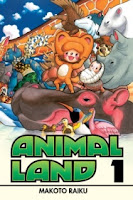
I haven’t finished the series yet, but this is one love triangle that I don’t find predictable in the slightest. It’s so well-done, with more subtlety and depth than the other dramas I have seen (which admittedly is a very small sliver of the population).

ANNA: I liked the series very much but I had a more measured reaction. I thought that the innovative cinematography and storytelling were a bit front-loaded onto the earlier episodes, but I did enjoy the more realistic and gritty vibe of the show. I was genuinely uncertain for a little bit who the heroine would end up with! One storytelling element that I liked a lot was how transparent Cha Do-Hwi’s manipulations were and how quickly the men saw through some of them. Usually no one but another woman would detect the evil strategies of the female antagonist. It was pretty hilarious that after Cha Do-Hwi engineered a broken heel in proximity to Oh Jin-rak in order to have an excuse to summon his assistance, the webtoon assistant Oh Doog-Hoon immediately comments that it was interesting that all her clothes were from the current season, but her broken shoe was so last year in style.

I was also a big fan of the cranky, sleep-deprived webtoon editor.

The artists share a moment with their editor.

The artists share a moment with their editor.

EVA: As usual, I went the other way. I was really turned off by the series at first (slow, plodding character, same things happening over and over, the obviousness of Cha Do-Hwi), but as I’ve gone on (I’m currently on episode 10), I’ve grown to like the characters, I care more about their issues, and I’m loving the non-K-Dramaness (that indie vibe Emily talked about). I LOVE that no one here is living in an inappropriately posh apartment or on somebody’s roof. I LOVE that Oh Jin-Rak’s webtoon editor is an overworked, exhausted crackpot. I LOVE that none of the romances are proceeding smoothly towards a finish line. And I especially love that (with the exception of Cha Do-Hwi, of course) people who say they care actually do care and try to help. It’s refreshing and lovely and I wish more tv shows (American included) were like this.

ANNA: I thought that the reliance on Enrique’s crazy fans as a plot element bogged down the middle part of the series a little bit. Also, I thought that Enrique was cute, but the romance between Go Dok-Mi and Enrique was a bit like showing what would happen if a woman fell in love with cute teddy bear. I much preferred Oh Jin-Rak, but perhaps I just find cranky men attractive.

Keeping tabs on his neighbor.

Keeping tabs on his neighbor.

MICHELLE: Jin-Rak is, by far, the studlier of the two, but I think Enrique is healthier for her. But, that said, he could probably have as good of an influence if he were just to remain her friend. Jin-Rak seems willing to be friends, but it’s more from a place of “it will stress her out if I confess” than any real feeling of contentment with that role in her life.

NANCY: I would watch this drama just for the stressed-out webtoon editor. She was by far my favorite. I liked how this series started out, and the characters were well developed, but I did have issues as the series went on. At first this drama shows a very personal view of a woman’s struggle to rejoin society, and then towards the end we are merely watching from the outside, wondering what her motivations are. They shut us out from the shut-in!! Plus there are many gimmicks used in the last (and first) few minutes of each episode to create false cliffhangers. They have nothing to do with the main plot and actually lessen the integrity of the characters in some cases. I’m also going to show my support for Enrique–this drama would have been unbearable without him.

Everybody's favorite webtoon editor!

Everybody’s favorite webtoon editor!

EVA: Stressed-out webtoon editor is the character I’d be if I were in this series. Her bits of comic relief are some of the best laughs I’ve gotten from this show.

I’ve made it through episode twelve and, yay for man-tears and dry kisses! But, yeah. I hear what you’re saying, Nancy. Go Dok-Mi’s internal monologue and/or the narration of her journal writing gives us an entry point to how she feels about her life as a shut-in, how her expectations have contracted, and how willing to compromise her own desires she is if it means she doesn’t have to confront the world. I’ve enjoyed having that window during the last few episodes I’ve seen.

Also, for the first time in this series, I missed the ubiquitous bitch slap/coffee toss. I wanted more drama during the confrontations between Go Dok-Mi and Cha Do-Hwi. Instead we got silent tears, some fainting, and an unsatisfactory blame toss. These two have history and I wanted to see what happened. But nothing happened! Bah. I’ll keep watching, if only because I hope to see more of a closure to this relationship than we’ve been given so far.

ANNA: I liked the way stressed-out webtoon editor managed to be both hilarious and poignant at the same time. She ends up in a very nice place at the end of the drama, which was nice to see.

MICHELLE: Speaking of hilarity, there were quite a few bits on Flower Boy Next Door that made me laugh out loud, and I’m not the easiest person to make laugh. There’s that absurd moment in which Enrique catches Dok-Mi spying on his brother’s apartment… whilst clad in some weird furry panda hat/cape thing. Or the scene where a drunken Jin-Rak—who I am still used to as the humorless lawyer from Stars Falling from the Sky—decides to go to sleep amidst the building’s recyclables, at which point Dong-Hoon thoughtfully covers him with a stray piece of cardboard. I guess when I describe them, these don’t seem like the most clever jokes ever, but they certainly appealed to my sense of humor.

Enrique busts out his Detective Conan cosplay. As one does.

Enrique busts out his Detective Conan cosplay. As one does.

ANNA: I also loved the bit where the men were all pretending to be Spanish-speaking Italian mafia in order to punk Jin-Rak’s estranged family.

So, check out Flower Boy Next Door if you are interested in a k-drama with a slightly different sensibility than you might be used to. The combination of a gritty setting, camera techniques that evoke indie films, and some engaging characters in unusual situations make this a drama that is well worth watching.

Filed Under: Bringing the Drama, Dramas

It Came From the Sinosphere: The Iron-Crane Pentalogy (Part 1)

July 9, 2013 by Sara K. 1 Comment

Book cover for 'Precious Sword, Golden Hairpin'

Book cover for ‘Precious Sword, Golden Hairpin’

The Iron-Crane Pentalogy is not just one of the most influential works of wuxia ever written, it’s possibly the most well-known work of wuxia outside of the Chinese-speaking world. In fact, many Manga Bookshelf readers have already heard of it.

Before you think “Hey, I’m a Manga Bookshelf reader, and I’ve never heard of the Iron-Crane Pentalogy,” look at the titles of the five novels:

1. Crane Frightens Kunlun
2. Precious Sword, Golden Hairpin
3. Sword Force, Pearl Shine
4. Crouching Tiger, Hidden Dragon
5. Iron Rider, Silver Vase

The name “Crane-Iron” comes from the titles of the first and final novels.

If you have never heard of a single one of these stories, then okay, you’ve never heard of the Iron-Crane Pentalogy.

The Story

Book cover for 'Crane Frightens Kunlun'

Book cover for ‘Crane Frightens Kunlun’

There is an old man who is the master of the world’s most awesome martial arts. He has two disciples, the older of whom is a mute (and nobody know his name), and the younger of whom is eventually known to the world as “Southern Crane.” Both the mute and Southern Crane transmit their martial arts knowledge to future generations. The Crane-Iron Pentalogy is about the marital artists who learn these awesome technqies.

The first novel, Crane Frightens Kunlun, is about the boyhood of Southern Crane, who was born as Jiang Xiaohe. Jiang Xiaohe centers his youth around getting revenge on Bao “Kunlun” for the murder of his father and forced separation from his mother. Jiang Xiaohe also wants to marry Master Bao’s granddaughter, Bao Ahluan, and it never occurs to him than she might object to him killing her grandfather. Xiaohe’s rashness and anger is an irresistable force, and Bao ‘Kunlun’s narrowmindedness and refusal to openly acknowledge the wrongs he has committed is an immovable object. Irresistable force + immovable object = tragic consequences.

In the second novel, Precious Sword, Golden Hairpin, Li Mubai, the son of two characters in Crane Frightens Kunlun, falls in love with Yu Shulien, whose beauty is only surpassed by her peerless sword-fighting skills and sense of honor. However, it turns out that Yu Shulien already has a fiance, Meng Sizhao. BUMMER! Li Mubai goes to Beijing, where, in his attempt to get over his heartbreak, he gets into a romantic relationship with a prostitute called Xie Cuiqian, who might secretly be a vigilante who rescues innocent girls. Meanwhile, Meng Sizhao’s greedy older brother has forced him to go into exile so he can have the family property all to himself, and Yu Shulien has to deal with her father’s very powerful enemies.

In the third novel, Sword Force, Pearl Light, Southern Crane tells Li Mubai to fix the mess that is his life. Later, people try to get some pearls, people are murdered, a girl gets kidnapped, Yu Shulien gets involved…

In the fourth novel, Crouching Tiger, Hidden Dragon, and important sword goes missing, and it seems the thief is an expert at martial arts. Did Cai Xiangmei, an acrobat girl who has recently agreed to work as a servant for Yu Jiaolong (daughter of a very high-ranking offical) steal it? Also, we learn that the family who was murdered/kidnapped because of that set of pearls in the third novel has a secret family member, called Lo Xiaohu, who, not knowing his true family origins, is a bandit…

In the fifth novel Iron Knight, Silver Vase, Han Tiefang, who grew up in an official’s family, abandons everything he has to find his mother, who had been kidnapped long ago. Meanwhile, a young martial artist, Chun Xueping, knows almost nothing about her family…

Background

Book cover for 'Sword Force, Pearl Shine'

Book cover for ‘Sword Force, Pearl Shine’

The Iron-Crane Pentalogy was originally published in the 1930s and 1940s, and was one of the most popular works of Chinese fiction in that era.
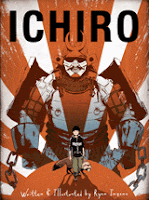
The writer, Wang Dulu, had a strong interest in psychology (for example, he read many of Freud’s works). Before writing wuxia, Wang Dulu was a romance novelist, though apparently many of his ‘romance’ novels were as much about sons clashing with their fathers as they were about romance. And it really shows in the Iron-Crane Pentalogy that Wang Dulu was a romance novelist, since the martial arts are just a plot device, and much more attention is paid to the characters’ romantic feelings.
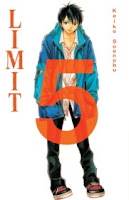
The “Northern School” and the “Southern School” are the two sets of novelists who are considered responsible for defining the wuxia genre in the 1920s, 30s, and 40s. Wang Dulu is considered one of the key writers from the ‘Northern School’.

I also must note that these novels were just after the first part of the Chinese Civil War, and during the Japanese invasion of China, in other words, China as a state was unravelling. I think this helps explain much of the bleakness and antagonism found in the novels.

Practically every major wuxia writer after 1950 was heavily influenced by Wang Dulu, and the Iron-Crane Pentalogy in particular. I will write more about that later.

Just Enough to Convey the Feeling

Book cover for 'Iron Rider, Silver Vase'

Book cover for ‘Iron Rider, Silver Vase’

As you can tell by reading the above attempt at a plot summary, the plot is actually rather complicated … but it feels simple when you read it. In fact, it feels so simple that it’s only after the fact that I realized how many of the subtleties I had absorbed, particularly the little ripples of the characters’ consciousness.

For example, there is a scene (I’m changing the characters’ names to avoid spoilers) where Character A is grieving over the death of Character B. A and B were lovers, and even had a child together, but B left A almost two decades ago, and A never went to find her until it was too late. A is feeling intense grief, not only because B is dead, but because he never said goodbye.

Enter Character C.

C at first is moved by A’s very sincere grief, and his first impulse is to comfort A. Then he holds himself back. C has a great deal of respect for B, and feels that A is no where close to being worthy of her. Furthermore, the fact that A and B had sex and a child out of wedlock was a great stain on B’s honor. Therefore, C decides to torment A, by essentially saying ‘you did not see her for almost twenty years, and now you’re crying because she’s gone. What kind of man are you? A real man would not be weeping over this.’

A replies “You’re right.” Then he says “I am only thinking of her so much because you remind me of her.”

What A and C do not know – but the reader knows – is that C is A and B’s biological son. That makes this little scene all the more poignant.

The novels are full of this subtle little emotional back-and-forth. Wang Dulu states just enough for the reader to understand what is happening, and no more. Unlike many dramatic stories which try to squeeze more dramatic juice than the pulp of the story can supply, Wang Dulu squeezes out just enough dramatic juice to demonstrate just how juicy the story is.

And it works because it feels true. People really do have these emotional entanglements.

If I can use the word “image” to describe something that is emotional rather than visual, then these novels have plenty of striking emotional images.

The Freedom to Define Intimate Relationships

Book cover for 'Crouching Tiger, Hidden Dragon'

Book cover for ‘Crouching Tiger, Hidden Dragon’

One consistent theme in the pentalogy is that trying to force people to make their intimate relationships fit “socially-acceptable” forms leads to a lot of suffering. For example, Southern Crane’s father was killed because he pursued sex with a woman other than his wife. Is having extramarital sex without some form of agreement from one’s spouse right? No, but adultery does not justify murder, and forcing Southern Crane’s mother to remarry and separate her from her son because it’s the socially appropriate thing to do causes Southern Crane to have an extremely unhappy childhood (also, note that Southern Crane’s mother, even with the adultery, did not want her husband to get get killed).

Another example: Han Tiefang, under pressure from his family, got married when he was only 15 years old … and his marriage is very unsatisfying. Since his wife hasn’t done anything wrong, he doesn’t want to divorce her (and thereby deprive her of economic support), so instead he leaves town forever (or at least that’s what he thinks) to look for his mother.

This happens again and again throughout the pentalogy. Intimate relationships which do not follow narrowly defined social norms (which is quite a few of the intimate relationships in the pentalogy) get heavily policed.

The pentalogy also shows quite a range of intimate relationships. Some women who are unmarried and not prostitutes choose to have sex (SHOCK). Some people love and want to marry women who are not virgins (SHOCK). Some people even love and want to marry prostitutes (SHOCK). Sometimes people in intimate relationships are not having sex with each other (SHOCK). Sometimes people in intimate relationships do not want to marry each other (SHOCK).

The stories are heteronormative, but considering they were written in 1930s/40s China, I would have been extremely surprised if they were not.

One of the more subtle points is that, for intimate relationships to be satisfying, people need time. Most of all, they need time to figure themselves out, and discover who they are and what they want, before they can build a mature intimate relationship. This is exactly why pressuring people to marry young (a pressure that most of the characters feel) can lead to disaster.

And there’s more…

The Iron-Crane Pentalogy is one of my favorite works of Chinese fiction, so of course I’m not done discussing it. Come back next week for Part II.


Sara K. loves fresh lychee fruit. She ate some right before working on this post.

Filed Under: It Came From the Sinosphere Tagged With: Chinese, Crouching Tiger Hidden Dragon, Iron-Crane, Novel, Wang Dulu, wuxia

World War Blue, Vol. 1

July 9, 2013 by Sean Gaffney

By Anastasia Shestakova and Crimson. Released in Japan as ‘Aoi Sekai no Chūshin de’ by Micro Magazine, serialized on a mobile service. Released in North America by Seven Seas.

I wasn’t quite sure what to expect of this series going in. Its author is supposedly Russian (though that feels like a pen name), and it originally ran in Japan, as far as I can tell, as a cellphone manga. Those are a lot bigger there than they are here, and it’s gotten up to nine volumes. The gimmick, as it were, is that this is a shonen fantasy re-imagining of the console wars between Sega and Nintendo in the 1980s, with our heroes on the Sega side battling the evil Nintendo Empire. (I do admit this does not look good for our heroes, if we stick to established history…) I know a little bit about gaming, but not much. So how confusing would this title be to me?

worldwarblue1

The answer is not very. Honestly, if it weren’t for the obvious Kingdom names – “Segua” vs. “Ninteldo” – and the author’s interspersed notes giving a brief history of gaming in the 80s, I may not even have noticed the metaphor. The leads are supposed to represent a different game – Gear, the hero, is Sonic the Hedgehog; his childhood friend Nel is Phantasy Star 2; his tsundere love interest Opal is Fantasy Zone, etc. I didn’t know this until the notes told me. More importantly, these are stock shonen characters – the author even admits she created Gear to be a shonen manga role model, and that he is.

Because when it gets right down to it, this isn’t really for fans of computer games as much as it is fans of Fairy Tail. Gear is a fast fighter who wants to avenge the death of his friend. He goes to the capital city and joins the army by means of simply defeating everyone in it. Opal is even more stock character, immediately hating and challenging the young man who appears out of nowhere, but falling for him the second she is defeated. Even the perverse mentor who shows our heroes how to get stronger while constantly making suggestive remarks feels right out of Dragon Ball.

This has the feel of a Magazine title more than Jump, mostly due to the sexual overtones. There’s actually very little fanservice so far (much to my surprise), but the aforementioned perverse mentor (who’s meant to be Tetris, I think) keeps talking about plugging the gaping holes in everyone’s defenses with his rod, and also gropes the heroine to teach her a lesson after she’s magically exhausted. And the army commander, Ramses (she’s meant to be Columns, I guess?) gets sexually aroused seeing Gear fight (we see her naked, in the one piece of fanservice in the volume) and is describes as having ‘unspeakable hobbies’. But again, these types of sexualized ‘guy jokes’ would not be out of place in Magazine or Champion.

In all honesty, this is pretty generic shonen. I’m interested in seeing how Ninteldo (which is, of course, led by Mario) looks once we see them in action as more than just evil guys. That said, I am totally behind Seven Seas licensing this and putting out more of it, for one very good reason: it’s nothing like anything else they publish. Seven Seas is trying to expand a bit away from their mainstay market of ‘otaku fanboys’, as we’ve seen with the female-oriented Alice spinoffs. This is another step in that direction, showing off a series that appeals to the shonen boy in all of us; a young man vowing to fight for his country against the bad guys, using powerful moves. Let’s see how Gear can differentiate himself from Luffy or Natsu.

Filed Under: REVIEWS

Kaze Hikaru, Vol. 21

July 8, 2013 by Anna N


Kaze Hikaru Volume 21 by Taeko Watanabe

Kaze Hikaru is one of those titles that makes me feel happier just because it exists. The new volumes come out very slowly now, so when one appears it is always a good excuse to celebrate! This volume was particularly rewarding for any long-time reader of the series, as Sei and Soji begin to acknowledge their feelings about each other although they remain very much constrained by Sei’s disguise as a male Shinsengumi recruit and the customs of the times.

In the aftermath of Sei’s mission, it is announced that she’s going to be reassigned to Saito’s troop. Soji decides to create more distance between him and his young protegee by telling her that he requested the transfer and abruptly ordering her to leave him alone, saying “I got sick of your chasing me around like a girl.” Sei assumes that Soji thinks her feelings are burdensome and decides to run away. She leaves, fortunately during her rest period so she won’t be executed for desertion. Soji is relaxing, assuming that he’s fixed everything but he’s alarmed when Saito informs him that he’s in love with Sei.

Sei travels to a nunnery where she’s taken refuge before, learning about village healing from the head nun Suigetsuni. Sei has decided to sever the ties to her old life and join a nunnery, because it is the only way to sever her ties with her previous life. Soji becomes more and more worried as he realizes that no one knows where Sei is, and with his position in the Shinsengumi he can do nothing but sit, wait, and be forced to execute her for desertion if she doesn’t come back. The parallel stories shifting back and forth between the couple were particularly effective in this volume, as Soji’s growing concern forces him to confront his own feelings about Sei, and Sei grapples with her thoughts about healing and death as she learns more about Suigetsuni’s life story.

Watanabe is a master at spinning out a story, as 21 volumes into Kaze Hikaru, I’m in no hurry to see it wrapped up. Even though so much of this manga revolves around the characters being unable to express their emotions to each other, it is easy to see just how much Sei and Soji have changed each other through their unconventional friendship. As always, the author notes manage to distill an incredible amount of research into a few pages focusing on an element from the historical setting of the manga. This volume focuses on clothing and her reasons for depicting the Shinsengumi a certain way. If you aren’t reading this manga yet, give it a try! This is such a thoughtful, well-executed historical series that really stands out as having much more substance than most shoujo manga.

Filed Under: REVIEWS Tagged With: kaze hikaru, shojo beat, viz media

  • « Go to Previous Page
  • Page 1
  • Interim pages omitted …
  • Page 382
  • Page 383
  • Page 384
  • Page 385
  • Page 386
  • Interim pages omitted …
  • Page 551
  • Go to Next Page »
 | Log in
Copyright © 2010 Manga Bookshelf | Powered by WordPress & the Genesis Framework