• Skip to primary navigation
  • Skip to main content
  • Skip to primary sidebar
  • Home
  • About Us
    • Privacy Policy
    • Comment Policy
    • Disclosures & Disclaimers
  • Resources
    • Links, Essays & Articles
    • Fandomology!
    • CLAMP Directory
    • BlogRoll
  • Features & Columns
    • 3 Things Thursday
    • Adventures in the Key of Shoujo
    • Bit & Blips (game reviews)
    • BL BOOKRACK
    • Bookshelf Briefs
    • Bringing the Drama
    • Comic Conversion
    • Fanservice Friday
    • Going Digital
    • It Came From the Sinosphere
    • License This!
    • Magazine no Mori
    • My Week in Manga
    • OFF THE SHELF
    • Not By Manga Alone
    • PICK OF THE WEEK
    • Subtitles & Sensibility
    • Weekly Shonen Jump Recaps
  • Manga Moveable Feast
    • MMF Full Archive
    • Yun Kouga
    • CLAMP
    • Shojo Beat
    • Osamu Tezuka
    • Sailor Moon
    • Fruits Basket
    • Takehiko Inoue
    • Wild Adapter
    • One Piece
    • After School Nightmare
    • Karakuri Odette
    • Paradise Kiss
    • The Color Trilogy
    • To Terra…
    • Sexy Voice & Robo
  • Browse by Author
    • Sean Gaffney
    • Anna Neatrour
    • Michelle Smith
    • Katherine Dacey
    • MJ
    • Brigid Alverson
    • Travis Anderson
    • Phillip Anthony
    • Derek Bown
    • Jaci Dahlvang
    • Angela Eastman
    • Erica Friedman
    • Sara K.
    • Megan Purdy
    • Emily Snodgrass
    • Nancy Thistlethwaite
    • Eva Volin
    • David Welsh
  • MB Blogs
    • A Case Suitable For Treatment
    • Experiments in Manga
    • MangaBlog
    • The Manga Critic
    • Manga Report
    • Soliloquy in Blue
    • Manga Curmudgeon (archive)

Manga Bookshelf

Discussion, Resources, Roundtables, & Reviews

Features & Reviews

My Week in Manga: October 21-October 27, 2013

October 28, 2013 by Ash Brown

My News and Reviews

Last week I reviewed Takako Shimura’s Wandering Son, Volume 5. The series is personally very important to me, so I’m always happy when a new volume is released. Sadly, we probably won’t see the next volume until next year. Last week I also posted Discovering Manga: Podcasts Redux. It’s a quick update on some of the podcasts that I’ve listened to and written about in the past. It also outlines my plan to write more podcast posts since my previous ones seem to have been fairly popular. If you have a manga podcast that you think I should check out, do let me know!

On to good stuff found online! A commenter on my recent post Random Musings: Queer Theory, Japanese Literature, and Translation linked to a fascinating article from earlier this year: Talking about (a)sexuality in Japanese. Over at Publishers Weekly, Deb Aoki has a great recap of Manga at New York Comic Con. Misaki C. Kido gives seven reasons Why Felipe Smith Is the Only Mangaka from America (So Far). And some of the most interesting news from last week: Crunchyroll will begin to digitally distribute Kodansha manga, providing access to new chapters the same day they are released in Japan. (Including some titles not previously available in English!) It should be interesting to see how this venture develops.

Quick Takes

Attack on Titan, Volume 8Attack on Titan, Volume 8 by Hajime Isayama. The mystery of the Female Titan has been solved! Or, at least one of the mysteries–the identity of the person is who is controlling it. The reasons behind why and for what purpose are still unknown. For every question that is answered in Attack on Titan it seems as though there are even more to be asked. This particular volume includes a huge (dare I say titanic?) plot reveal which ends with a fantastic confrontation between Hanji and Minister Nick. (As an aside, I love that Hanji is a canonically gender ambiguous character.) One of the major secrets dealing with the walls is literally uncovered, but has yet to be fully explained. Attack on Titan continues to get stranger and stranger. For those who have been watching the Attack on Titan anime but who have thus far been avoiding the manga for one reason or another (I know plenty of people who can’t get past the terribly inconsistent artwork), the eighth volume is where you’ll want to pick the series up if you want to see any more of the story any time soon.

Knights of Sidonia, Volume 4Knights of Sidonia, Volumes 4-5 by Tsutomu Nihei. I am still enjoying Knights of Sidonia, but it frequently strikes me as a peculiar mix of science fiction horror and romantic comedy. But whatever genre it falls into at any given time, I do think the manga is Nihei’s most accessible work to date. Occasionally I still miss his grittier style of illustration, but the cleaner and somewhat simpler artwork in Knights of Sidonia has really grown on me. One of the things that amuses me tremendously is that Nagate is frequently seen stuffing food into his face. This emphasizes how much of an oddity he is compared to the rest of society on the Sidonia. And he is rather odd. His social interactions can be very awkward and often he is completely oblivious to his faux pas until it’s too late. (Let’s just say that it’s fortunate that he heals quickly.) The Gauna continue to be daunting adversaries. While at first they were terrifying enigmas, over the course of the series they have adapted and evolved and have even adopted (or at least mimicked) human technology and tactics, making them even more frightening.

Monster Musume, Volume 1Monster Musume: Everyday Life with Monster Girls, Volume 1 by Okayado. Monster Musume is a harem series that attempts to distinguish itself by featuring monster girls. There is absolutely no question that Monster Musume is an ecchi manga, so unsurprisingly there are a lot of boobs and other bits. (I’m still trying to figure out how a snake can have a camel toe.) Kurusu Kimihito is an average guy who was “volunteered” for an exchange program between human and part-human species. He has become the host family for Miia, a lamia who is overly fond of him (inter-species canoodling is forbidden). Overwhelmed, he is constantly in a state of near-panic. As the first volume of Monster Musume progresses, bad puns and groan-inducing wordplay become increasingly prominent. (I’m one of those odd people who actually appreciates this sort of intentionally and ridiculously terrible dialogue, though.) It’s not at all a deep story–and I do wonder where all the monster boys are–but Monster Musume can actually be rather entertaining on occasion.

Filed Under: FEATURES, My Week in Manga Tagged With: attack on titan, Hajime Isayama, knights of sidonia, manga, Monster Musume, Okayado, Tsutomu Nihei

Sweet Rein Vol 1

October 27, 2013 by Anna N

Sweet Rein Vol 1 by Sakura Tsukuba

I had totally forgotten that Sweet Rein was coming out, so when I saw it I got to be pleasantly surprised all over again. Sakura Tsukuba had two series published by CMX, Penguin Revolution and Land of the Blindfolded. Both of these series fit well into the low-fi, cozy vibe that was characteristic of many of CMX’s fantasy series. I was very happy to read Sweet Rein, and I’m calling it now – this is the perfect feel-good shoujo for the holiday season.

Sweet Rein has the sort of premise that is most enjoyed when the reader doesn’t think about it too hard. Kurumi is walking along alone when she bumps into a boy. Kurumi and the boy are suddenly tethered together, and he rushes up to her and yells “Master!” He then proceeds to explain “I’m your reindeer and you’re my Santa Claus!” It turns out that mystical reindeer with the power to take human form are bonded forever to a human Santa Claus, who is the only person who can release the reindeer’s magical powers. Kaito comes from a family of magical reindeer, and he cheerfully and happily fulfills all of Kurumi’s commands. Kurumi is extremely dubious about the invisible tether that connects them and also is very uncomfortable with the idea that she has any form of power over another being. Kaito is just happy that his Santa Claus is a nice and cute girl who is so concerned for him.

Kaito being at Kurumi’s beck and call is played more for gentle laughs than anything else, as he shoots away from her in the air when she yells “Get off of me!” and promptly appears outside her window when she wishes for his presence. Kurumi is genuinely kind, and Kaito’s presence eases her loneliness. She’s extremely careful not to get entangled in a romantic relationship with him, because she doesn’t want to abuse her power over him. In the meantime, Kaito’s enthusiasm serves as a counterpoint to Kurumi’s introspection, and it is clear that he’s fallen in love with her almost immediately.

For a manga dealing with Santa Claus and reindeer, it is actually a bit surprising how many stories in this volume take place in the spring or summer. Kurumi does deliver presents on Christmas Eve, but much of the manga is centered around Kurumi fulfilling a wish for a sick boy she encounters while on summer vacation. Readers also get a glimpse of Kaito’s extended magical reindeer family. I was actually a bit disappointed that a there was a lengthy vampire back up story, not because it was poorly executed, but I wanted to read a bit more of the main story. Tsukuba’s light and playful illustrations complement the story, ably depicting Kaito flying through the air or swooping in to comfort Kurumi. In the hands of a creator with less of a deft touch, the master/servant relationship in the manga might have seemed a bit off-putting or odd, but here it just seems like a way for two people to slowly discover how much they care about each other.

Filed Under: REVIEWS Tagged With: shojo beat, shoujo, sweet rein, viz media

Off the Shelf: Two from Vertical

October 27, 2013 by MJ and Michelle Smith 3 Comments

MICHELLE: One of us is sad and one of us is sick, but we’re still putting our woes aside to talk about some new manga this morning. I guess that makes us troopers, huh?

MJ: Or masochists, one of the two.

MICHELLE: I… had not thought about that possible interpretation.

MJ: That’s what I’m here for!

MICHELLE: MJ, dispensing disturbing interpretations since the 1970s!

MJ: You know it!

tropic-220x300We’ve been away from this column for a while, for various reasons, and to crank things back up again, we thought we’d take a look at a couple of recent releases from one of our favorite publishers, Vertical, Inc. First on the docket is a rare classic from the late Satoshi Kon, Tropic of the Sea, written while Kon was still a college student, and first published in Japan over twenty years ago.

Yosuke is the teenaged son of a village priest, whose family has long guarded the secret of a mermaid’s egg, which was reportedly entrusted to his forebears in return for the continuing safety and bounty of their small fishing community. According to legend, the egg must be protected and watered regularly for sixty years, at which point it is returned to its home and replaced by a new one. As the next in line to care for the egg, Yosuke is charged with bringing fresh seawater up to the shrine in which it is kept, which he does both out of duty and a lingering fondness for the legend he believed as a child.

When Yosuke discovers that his father has sold out their family secret to land developers seeking to transform the village into a sprawling resort, he is mildly appalled, but not nearly so much as his grandfather, who, enraged by his son’s hubris, risks his life in an attempt to return the egg to the mermaids as promised. Meanwhile, the villagers wage their own battle with the land developers whose promises of luxury and prosperity threaten their way of life. As the volume continues, Yosuke must decide what he believes and what is really important as he watches his community and his family being torn apart over their land and the mysterious egg.

MICHELLE: Usually, stories about families who stop honoring their contracts with supernatural beings never end well, but I was pleased that this story took a slightly different route. That said, I often times found the pacing disjointed. Perhaps Kon was trying to cram as much story as possible into a limited number of chapters, but there were a few transitions that puzzled me. And in the end, it all just seems to zip by so quickly, and I got a much firmer sense of the awesomeness of Yosuke’s dog (Fujimaru) than many of the human characters.

MJ: I realize that it might be the decongestants slowing me down, I didn’t have quite the same experience. While some sections did feel a bit zippy—particularly the final confrontation and chase with the land developers, I appreciated way Kon slowly and quietly revealed his characters’ truths, particularly Yosuke’s. For instance, while it’s clear early on that Yosuke has some kind of painful past association with the water that makes him reluctant to swim, Kon avoids the sort of carefully manipulated drama that would normally accompany a hero’s childhood trauma. There’s obviously an issue—one that his close friends are distractedly aware of—but it results in none of the kind of drama I’d expect from most stories.

First of all, Yosuke is uncomfortable with swimming, but he still *does* it when he needs to, without any tortured posturing. Then, later, when we finally figure out what it’s all about, the drama of the reveal is overshadowed by the larger problems at hand. I found this somehow refreshing.

MICHELLE: I’m glad that it read a bit differently for you. I wonder if part of the problem for me is that I am usually a slow reader, but the art style (which I loved) and paneling and everything made it possible for me to read this much more quickly than usual. Whereas you’re used to reading stuff quickly. I dunno.

But I absolutely agree about the low-key approach to Yosuke’s trauma. I also really loved the final page of the volume, which would be an absolutely ordinary image to anyone who hadn’t read the story to learn its full significance.

MJ: I love the subtlety of that final image, too, and the way Kon consistently lets his artwork do the storytelling. And while I think that this strong instinct to “show, not tell” is probably part of what made it read so quickly for you, it’s also his greatest strength here. I’m not saying that I think this is a perfect work, by any means, and even as much as I enjoyed it, it very much feels like an artist’s early work. But I found a lot to appreciate in it.

So, would you like to introduce our second selection?

helterskelterMICHELLE: Alrighty!

Helter Skelter is another one-shot from Vertical, and another sort of cautionary tale, as well. Currently popular model Liliko is much talked about but also, as we soon see, a wretched person. She’s obligated to her agency’s president, whom she calls “Mama,” who helped to transform her from an unattractive and overweight girl into a celebrity with a perfect, but nearly entirely fake, body. Liliko sought fame and adulation and made this choice herself, but is soon disillusioned with the life and dissatisfied with the work and yet terrified of the moment that it all ends. “What happens when I stop being sellable?” she wonders. “Everyone who pampers me now will leave me.”

Meanwhile, a prosecutor named Asada and his assistant are investigating the clinic where Liliko’s procedures were performed as well as a string of suicides committed by former patients.

MJ: Liliko makes for a troublesome heroine, as her disillusionment and fear has created in her a level of cynicism and raw desire that would ruin even the purest soul (which she is decidedly not). In a frantic bid to keep control of someone, even as she’s (literally) falling to pieces, she calls upon her remaining allure in order to emotionally enslave both an eager assistant and the assistant’s boyfriend. She’s cruel, manipulative, and every bit as terrifying as the technology that led her there. Yet, even as we witness her careful destruction of those around her, it’s impossible not to understand her. And perhaps that’s the most terrifying thing of all.

MICHELLE: I thought Okazaki did a great job at making Liliko sympathetic and understandable even while she’s doing utterly horrible things, like ensnaring/tainting Hada (the assistant) and Okumura (her boyfriend). She interrupts them together right after she learns that “Mama” has never sent money back home to her family as promised, and the narration makes it clear that there’s a direct correlation between the discovery and her subsequent actions. And later, after she has “punished” Hada for wanting to quit, she thinks, “I just want to play with bodies. And have fun wrecking others. How can I help it? Aren’t others making a wreck of me?”

And, of course, her jealousy of newcomer teen model Kozue is completely understandable, especially considering that Kozue has come by all of her beauty naturally and is able to be herself in public in a way that Liliko can never be. (One of the things that intrigues the prosecutor about her, after all, is that her responses in interviews are completely devoid of any hint of her actual personality or upbringing.) We can even understand why she might lash out at the woman who ended up marrying the rich guy Liliko had pegged for her safety net, though it’s less easy to understand why Hada and Okumura might do her bidding in actually carrying out an attack on the woman.

MJ: I admit I found them understandable as well, though identifying at all with them may actually be more disturbing than understanding Liliko. Their own relationship is so dysfunctional and lacking, I think harboring mutual shame becomes a sort of sick bonding experience for them. They’ll continue down their road with Liliko, because any attempt to go back only forces them to confront what their relationship has become, which is somehow more uncomfortable than just doing what they’re told. The deeper in they get, the less they resemble themselves, and this is actually a plus for them. That’s my interpretation, anyway.

You know, I was thinking as I read this… I’m always anxious for more josei manga, but I’ll admit that there’s a part of me that bristles at the notion that good stories for adult women must be those that prove that the world is a horrible place filled with horrible people. It’s an ugly, cynical view that doesn’t generally resonate with me at all. But though Helter Skelter is exactly that kind of manga, there’s an honest fury to it that makes me somehow thrilled that it exists. As disillusioned and cynical as Liliko is, Okazaki’s take on her circumstances reads to me as just plain angry. To her, Liliko matters, and as awful as she’s become, Okazaki is still furious on her behalf. Is that a strange thing to say? And my feelings about this were reinforced a million-fold by the way she ends the story.

MICHELLE: No, I think you’re spot-on with that. This isn’t an indictment of Liliko; it’s an indictment of the culture of disposable, commodified celebrity that helped create and destroy her. One of my very favorite pages is quite near the end, where the babble of fans/consumers is now obsessed with obtaining “That.” This just reinforces the idea that Liliko was never a person to them; just a thing to be interested in for a while until the next thing comes along.

And wow, that ending was so unexpected! I wonder whether we’re to take the “to be continued” literally, as in that Okazaki really will pick up the story again later, or if we’re only to take that as a sign that Liliko’s “curious journey of adventure” will continue.

MJ: I selfishly hope for the former, but my hopes may be in vain!

MICHELLE: I don’t know whether I want a sequel or not; I kind of like the ambiguous ending as it is. We will, at least, be getting more Okazaki in English soon, as Vertical will be releasing Pink next month!

MJ: I’m certainly looking forward to it!

Filed Under: OFF THE SHELF Tagged With: helter skelter, tropic of the sea, vertical

Weekly Shonen Jump Recap: October 7, 2013

October 27, 2013 by Derek Bown Leave a Comment

October 7 CoverIt’s always interesting to get a new series in Weekly Shonen Jump. Though in the case of monthly series the experience is altered a little bit. Rather than spending every week wondering if the series will get cancelled, we find ourselves not even considering that because there are already several months worth of chapters that have been published in Japan. But, as Cross Manage proved, just because something hasn’t been cancelled in Japan yet doesn’t mean a Western audience will like it, and vice versa. So let’s take a gander at the newest series and the rest of the issue.

Seraph of the End Ch. 1
If this magazine was aimed at adults there is no way a series like this would fly. And considering how many adults read the magazine (unless I’m the only one) then I can’t say this series will be very well received. Why? Because for starters the creepy overtones I got from the one vampire made me think we needed to get Chris Hansen on standby. Now there’s a manga idea, “Chris Hansen: Pedo-Vampire Slayer”. And then there’s the climax of the chapter where a baker’s dozen’s worth of children get massacred by one of the vampires. Now, if any of you didn’t feel uncomfortable during this segment then I must ask you to stay well away from my family.

The idea of children fighting vampires had potential, uncomfortable potential, but still potential. But that is immediately undermined when at the end of the chapter we discover that not all adults died. Only those in Japan apparently. So the first promise the series makes is already broken. I can’t say I hold high hopes for the rest of it.

Worst of all is the tonal shifts. I admit to not knowing many orphans, but I refuse to believe any of them could talk about how their parents died, often in horrible ways, with any kind of smile on their face. I call all kinds of bullshit on every single element of the main character’s backstory. This is a problem throughout the whole story, where we switch from typical shonen enthusiasm to incredibly dark events. It’s just that one scene in the orphanage encapsulates the entire problem. I know manga likes to make these kind of tonal jumps, but it doesn’t always work, and in this case it most definitely doesn’t work.

I’m probably being harsher than I need to be, but that tends to happen when I’m made to read the wholesale slaughter of a bunch of twelve and youngers. I may not have my own children, but I’m certainly at the point where I feel protective of those hobbit sized humans. So this was not the best way to endear a new manga to me.

Seraph of the End

One Piece Ch. 723
Oh One Piece, at least you only mentally scar your children instead of outright murdering them. Sadly there are only so many ways I can say this series is awesome without growing repetitive. Perhaps that’s why so many reviewers, and I myself, fall into the routine of writing bad reviews. But don’t think I’m trying to put a negative twist on a great series by trying to find some kind of fault with it. Even if that fault is me complaining about how I can’t find any fault with it. Okay so that may actually be me trying to do what I said I wasn’t doing. But can you blame me? Most of the time One Piece is so perfect and I’m such a fanboy that I’m probably the worst person to be analyzing it.

At least this chapter finally gives Sanji a chance to show his badass self. Even if we all know he’s going to get his butt kicked next chapter. But with plenty of comedy, and a great climax I have to say that One Piece is as amazing as ever. But when one always excels it becomes harder and harder to stand out. And I fear that One Piece has been at risk of this for the past couple years. We’re so used to expecting amazing things, and while One Piece has been amazing it feels like it hasn’t exceeded any expectations it’s just been meeting them. And as much as I love this series it feels like the chapters just continue to be amazing rather than wowing me like they did a couple years ago.

Naruto Ch. 649
Oh Naruto, you’re my favorite series that I don’t actually like. Why? Because I can find so many things wrong with every single chapter. Usually. Sometimes you just bore me and I can’t find the will to even bother complaining. This week I don’t have as much material, but there are a couple bones I feel the need to pick.

It constantly surprises me how big of a fanbase this manga continues to have, despite the fact that Kishimoto has shown himself incapable of writing characters beyond their base stereotypes. Such as several chapters ago when Ino showed that she’s just as terrible a character as she was at the start of the series. Maybe even more so. Don’t get me wrong, stereotypes can be very useful, very powerful tools. The thing is that when writing characters you need to expand beyond the initial stereotype, not constantly bring it back to that original stereotype without any further development. For example, when the Mizukage was introduced her gimmick was that she was an unmarried woman approaching middle age who just wanted to get married, and was very sensitive about the subject, to the point where she would make threats against people for the most innocent of comments. Not the most progressive portrayal but amusing enough. Any other writer would use that character trait as a bouncing off point towards character development. Maybe she would find a man, maybe she would realize that she didn’t need a man, maybe she’d realize she liked women instead. Or maybe she’d come to realize that real relationships take a lot of work but are ultimately more rewarding than the fairy tail romance she’d built up in her mind. But since this is a shonen action series and not a romantic comedy, that would never happen. So instead she’s the exact same character she was before. Why do I make such a big deal about this? Because with her comment about not being married this chapter I once again am reminded that Kishimoto does not write character traits, he writes gags that are confused as character traits. Rather than actually giving us any kind of satisfying development his characters stay in the same limbo they were at their introduction and we end up with nothing but a bunch of uninteresting characters cracking unfunny jokes.

Fortunately Shikamaru still has a semblance of a character and is actually undergoing some growth. And I’m not about to cry sexism since so many of the female characters remain unrealized, because Kiba shows us this chapter that he hasn’t developed in the slightest either. So yay, some semblance of equality, even if it’s equality in mediocrity.

Naruto

Bleach Ch. 551
You know, it doesn’t make villains any smarter when they point out the abject stupidity of the protagonists. The whole “You should have taught this skill to others” isn’t so much a keen villainous insight as it is an exercise in the basic mental faculties of any human being whose brain is still capable of breathing. And Nanao is supposed to be one of the smart ones! And here she didn’t consider that maybe, just maybe this ultimate barrier spell would be useful elsewhere as well. It’s really hard to root for the good guys when I’m too busy praying they don’t accidentally hurt themselves with the swords they’re carrying. The intelligence displayed by these characters would make me think twice before letting them have safety scissors let alone weapons.

And of course rather than building up the tension for a bit longer we discover that Urahara has a way to win back their bankai. Well isn’t that just convenient.

Bleach

Nisekoi Ch. 93
Whether you like this chapter depends entirely on what your views are in regards to female stereotypes. Are you the kind that becomes enraged when a girl worries about her weight? Possibly consider avoiding this chapter. Unless you like getting angry, like me. If you don’t mind it then read on. It’s plenty funny and plenty cute, but not the most outstanding chapter in this series. Though the punchline at the end of the chapter is well worth the chapter.

Toriko Ch. 252
The majority of this chapter is made up of small montages. While these are enjoyable enough I can’t help but feel like this is all something that needs to be expanded upon. And maybe if we were living a couple decades in the past we’d get a full flashback. But for now I guess I can just look forward to the anime expanding on everything that happened in this chapter.

Though I have one complaint. Under what circumstances is it realistic for a starving person to have the gall to ask for better food? I know there are some people out there with an amazing amount of gall, but the segment where Froese was feeding the hungry felt so unrealistic it dragged me out of the story. And I know, I know, there’s plenty of other more unbelievable things happening in this series. But for the most part they make sense in the context of the series. But what cannot be treated subjectively is how people act. Even in the most outlandish series there needs to be some sense that people still follow understandable human logic. And a starving person asking for better food just doesn’t make any sense.

Toriko

One-Punch Man Ch. 28
The one thing I really appreciated in this chapter was the end. Saitama getting promoted was all good and fine, but I’m glad to see that Mumen Rider made another appearance, possibly as a future friend and ally of Saitama. I’m partly glad that my earlier prediction was right, but for the most part I just think he’s a fun character that I hope we will get to see more of.

World Trigger Ch. 33
Well, at least this arc isn’t a straight up tournament just yet. By which I mean at least the candidates aren’t all just fighting each other. That would be cliche and boring. Too bad most of this chapter is spent explaining things with very little actual payoff. This series has been somewhat getting better, but it’s far from being any kind of favorite of mine. It’s just really dull, and I’m pretty enraged that the series is doing so well in Japan when better series have been cancelled. No, I don’t ever intend to let Cross Manage’s cancellation go.

Blue Exorcist Ch. 50
I have to give Blue Exorcist props for pulling off a character betrayal while retaining that character’s personality. It’s so easy to have an established character turn into a traitor and then completely change their personality, turning them into a total villain. Shima on the other hand is still the same person he was before, he just has different loyalties now.

Shiemi being a bad cook is a manga trope, but at least in her case it makes sense. Too often the joke is played as “Look at these people putting disparate ingredients into their food!” in a way that makes no sense whatsoever. Any intelligent human being knows that you don’t put curry powder in cookies! But rather than mix ingredients that clearly don’t go together Shiemi tries to make healthy food and ends up making it really bland. That works for me because it’s more realistic than mixing ingredients that clearly don’t belong. \

Dragonball Z Ch. 34
I must confess. Dragonball Z is not the most engaging manga to be writing about. Let’s just say Goku and Vegeta fought and leave it at that. Though, it is worth pointing out that this chapter we get to see the first part of Goku falling so in love with fighting that he makes terrible decisions in the future.


And that’s our reviews for the week. Some decent chapters, but nothing that really stood out. Though, once again, that might have something to do with my unreasonable expectations.

If you want to hear more, check out the Manga^3 Podcast Archives.

Filed Under: FEATURES & REVIEWS, WSJA Recaps Tagged With: bleach, blue exorcist, Dragon Ball Z, Jako The Galactic Patrolman, naruto, nisekoi, One Piece, one punch man, toriko, world trigger

Manga the Week of 10/30

October 24, 2013 by Sean Gaffney, Ash Brown, MJ and Michelle Smith 3 Comments

SEAN: Oh. My. God. Sooooooooo much stuff. Let’s break it down.

watergod14

Because the Manga Bookshelf Team demanded it, Dark Horse is bringing you Vol. 14 of Bride of the Water God. I should probably read it at some point – I wonder if there are digital plans.

ASH: I have yet to actually read this, but the artwork is lovely.

MJ: The artwork is certainly the highlight of this series, which can be a bit of a mess at times, otherwise, but I’m very happy to see that Dark Horse continues to put it out. It would, indeed, be a great candidate for digital release, especially as it’s gotten so long! I’ll be picking this up for sure.

SEAN: Also from Dark Horse is Vol. 29 of Gantz, which I’ve run out of things to say about, but apparently it sells really well to the direct market. (stares at cast in latex rubber-style combat suits) For some reason.

Speaking of things I’ve run out of words for – and indeed speaking of Volume 29s – we have Air Gear from Kodansha.

Attack on Titan 8 is where those who have only seen the anime should start off, as towards the end of the volume we start treading into unanimated waters. Also, the first spoiler that everyone knows gets revealed here. I’ve discussed it here.

ASH: I’m glad that Kodansha was able to speed up the release for this series.

MJ: After NYCC, I’m even more torn over having left this series behind after the first volume. I feel like I’ve missed hopping on the greatest bandwagon of all time.

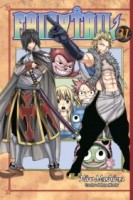
SEAN: Fairy Tail 31 shows how much of a pain in the ass a time skip can be, and starts a tournament arc.

MICHELLE: All this stuff, and so far there’s a bunch of series I haven’t read and one that I am terribly, terribly far behind on.

SEAN: In case, for some bizarre reason, you did not buy Sailor Moon Vol. 7-12 the moment it hit bookstores and devoured every single page with your eyes, there is now a box set for you to crack open and engulf.

ASH: It also comes with stickers!

MJ: Ooooo… stickers…

SEAN: Sankarea Vol. 3 continues to walk a fine line between servicey romantic comedy and disturbing zombie manga, and to my surprise doesn’t do that bad a balancing job.

ASH: I’ve actually been pretty surprised by Sankarea as well.

I may not have really been tempted to get Wolfsmund from Vertical, but buzz from the not-mes has been excellent. They’ll appreciate that Vol. 2 is due out this week.

MICHELLE: I have volume one; I just need to find the time to actually read it.

ASH: I really enjoyed the first volume. I think it’s definitely worth checking out for people who enjoy historically inspired manga like Vinland Saga.

MJ: I never picked up the first volume, but I guess I should!

Kiyohara_Another_TP

SEAN: Another of those giant done-in-one omnibuses that Yen has favored lately, here’s the complete Another manga, based on the light novels that Yen released digitally this summer. Creepy high school horror catch your eye? This is for you. Also, as a bonus, I’m pretty sure it doesn’t have any survival games.

MJ: Heh. I suppose I’ll read it, then.

SEAN: Yen has licensed some interesting stuff lately, probably thanks to the success of Black Butler, which has Vol. 15 drop this week. Is the entire cast damned yet?

Higurashi is in its final arc, but it’s the longest one yet. Vol. 2 of Festival Accompanying Arc contains Vols. 3 and 4 of the Japanese release, and also has my vote for the most horrifying scene in the entire series (it involves Rika’s mother).

Inu x Boku SS is the first of two Yen debuts this week, and has yokai demons and bodyguards, thus allowing me to add another series to my ‘look how popular yokai are in North America now’ list.

ASH: Yokai are the best!

SEAN: Is This A Zombie? 6 is coming out. So there’s that.

K-On! finally wraps up with its High School manga, hoping that fans are as interested in Azusa trying to keep the light music club alive as they were in the original cast’s college adventures.

The Melancholy of Haruhi Suzumiya’s manga adaptation finally gets to one of the most interesting novels, as Sasaki and company debut here.

MICHELLE: Another whole mess of stuff I have nothing to say about. Bad manga reviewer! Bad!

MJ: Hmmm… perhaps this is the time for me to pick this adaptation back up again.

SEAN: Oh god, don’t read the mediocre adaptation, read the original novels! Books 9-11 are this arc. 10 and 11 come out here next month.

watamote1

As featured on a giant banner at New York Comic Con, Yen’s other big release this week is No Matter How I Look At It, It’s You Guys’ Fault I’m Not Popular!, Vol. 1. Just call it WataMote like everyone else. I discussed Vol. 1 here.

ASH: I’m looking forward to giving this series a try, even though I can never seem to remember the title.

SEAN: Pandora Hearts 18. MJ?

MICHELLE: Finally, something to go “woo” over!

MJ: Oh, Pandora Hearts, dear, heart-stomping Pandora Hearts. It just won’t be satisfied until I’ve been utterly destroyed. This, of course, is awesome.

SEAN: Puella Magi Oriko Magica wraps up, I believe, with this second volume. But don’t fear, I’m sure there are other Madoka Magica spinoffs out there to have cute girls suffering for your enjoyment.

Lastly, there is Vol. 4 of Triage X. I used up my lack of enthusiasm with Is This A Zombie?, so this can’t even get that much.

Surely with all this, there must be something you want. What is it? (And be warned, it gets no better the week after.)

Filed Under: FEATURES, manga the week of

From the New World, Vol. 1

October 24, 2013 by Sean Gaffney

By Yusuke Kishi and Toru Oikawa. Released in Japan as “Shin Sekai Yori” by Kodansha, serialization ongoing in the magazine Bessatsu Shonen Magazine. Released in North America by Kodansha Comics.

The question of “how much fanservice is too much” has come up often in discussion of manga in North America, and it’s usually the case that we have a lower tolerance of it than Japan does. That said, there’s simply so much of it, particularly in Kodansha’s Weekly Magazine and its monthly spinoff, that sometimes you just have to smile and nod at the boobs and move on. I review Fairy Tail every month, and Negima back when it ran, and rarely commented on the fact that every 4 or 5 chapters would just be a blatant “look at all the naked women” bath scene or shower scene or whatever. It was rarely connected too much to the plot, so could easily be edited out of my memory.

newworld1

It’s impossible to do that with From the New World, whose fanservice goes above and beyond the call of duty. The series has an intriguing post-apocalyptic premise, which a town teaching kids magic and the kids then going over the fence to explore the forbidden countryside. There is some horror thrown into the mix, as one of the lead characters gets unpersoned about 1/3 of the way through, to such an extent that the others don’t even remember she existed – that was handled quite well. And the action scenes, when they do come, are pretty decent. The story starts with a “here is how everything fell apart” flashforward, so no doubt we will soon see the entire world destroyed or something like that.

But it needs to be said: Saki and Maria (and Reiko when she was with them) have naked bathtime fun, with groping. There’s jealousy of the guys in the group, which leads to “you must THINK ONLY OF ME” and more groping. And then at the end it goes above and beyond, and there’s a full-on lesbian sex scene. I expect hot springs nudity from my Kodansha titles, but this boggled my mind, and compared to the prior mood of the series seemed so utterly jarring. I’ve no doubt that part of this was on purpose, but only part – I think a great deal of this series sells on guys buying it to see girls having hot lesbian sex. (FYI for yuri fans, think Kannazuki no Miko more than Maria-sama Ga Miteru.)

So I went to research what the hell was up with this… and wish I hadn’t. The manga is based on an award-winning novel, and also has an anime to its name. Apparently there is a vague plot-related reason for the hot lesbian sex, which I sort of guessed. But apparently two of the guys are also supposed to be in a relationship with each other. This was made clear in the novels, and toned down but kept there in the anime. The manga seems to have removed the male relationship entirely. And from what I can gather, the yuri fanservice gets even more blatant as the series goes on. I guess the editors know what sort of audience they want the series to connect to.

If you can get past the sex scenes and nudity, there’s a dark and twisted science fiction story here that might eventually pay off. I just found it impossible to do so. Which, given the amount of manga I read with nudity and yuri in it, says a lot.

Filed Under: REVIEWS

Wandering Son, Vol. 5

October 23, 2013 by Ash Brown

Wandering Son, Volume 5Creator: Takako Shimura
U.S. publisher: Fantagraphics Books
ISBN: 9781606996478
Released: September 2013
Original release: 2006

The fifth volume of Takako Shimura’s manga series Wandering Son was originally published in Japan in 2005 while the English-language edition of Wandering Son, Volume 5 was published by Fantagraphics in 2013. The entire series is being released in English as beautiful hardcovers; Fantagraphics’ treatment of the manga is simply lovely. Wandering Son is a series that has come to mean a tremendous amount to me on a very personal level. I am very grateful to Fantagraphics for pursuing the manga in English. Wandering Son is a wonderful story about growing up and personal identity with a very sincere and sensitive look at gender and sexuality. The series started out strong and it continues to be a powerful work. Although reading it can sometimes be traumatic for me because the story touches on issues that hit so close to home, I always look forward to reading the next volume of Wandering Son. I wish I didn’t have to wait for so long between volumes, but it’s always worth it.

With the beginning of seventh grade students are faced with a new school, new teacher, new classmates, and maybe even a few new crushes. In some ways junior high is a chance for a new start, but some problems are carried over from middle school. Shuichi’s close circle of friends has started to fall apart as romantic feelings get in the way and cause a fair amount of tension within the group. The rift between Takatsuki and Chiba has grown particularly wide. It seems as though the two of them may never be able to make up, despite the pain that their falling out has caused for the rest of their friends. Though they are still very close, things have become rather awkward between Shuichi and Takatsuki as well after Shuichi declared having feelings for Takatsuki and Takatsuki gently rejected them. Fortunately, Shuichi has Mako as a source of comfort and reason. It’s a good thing, too, as junior high and puberty have their own challenges; having someone to commiserate with is invaluable. Making new friends doesn’t hurt either, although sometimes that just complicates matters even further.

While the focus of Wandering Son, Volume 5 is still on Shuichi and Takatsuki and their families and friends, it’s interesting to see part of the manga being told from the perspective of their new teacher Manabu Saisho. It actually happens to be his first year teaching. He’s inexperienced and easily flustered, and his eagerness may end up getting him into trouble, but so far I (like Mako) find him charming. But as volatile as junior high and his students can be, I do worry for him a bit. And I worry for Shuichi and the others as well. Adolescence is upon them as are all the changes that entails, most of which cannot be ignored. Mortified after being publicly called out by the basketball coach, Takatsuki is faced with the embarrassing prospect of bra shopping while Shuichi and Mako are trying to come to terms with the fact that their voices will soon be changing. Even seemingly benign statements such as “they’ve grown taller again” are painfully bittersweet reminders of what is in store for them as they continue to physically mature.

Shimura does a fantastic job of layering the textual narrative of Wandering Son with its artwork. The manga’s composition is excellent. There is a particularly effective scene fairly early on in the fifth volume that takes place during the academic year’s opening ceremonies–the commencement speaker expresses the desire for everyone to talk together and encourage one another while the illustration clearly shows that Shuichi and the others can hardly bear to look at one another and that some of them aren’t even on speaking terms. Wandering Son is filled with deceptively simple moments like these in which the artwork and the text express far more together than they ever would alone. Wandering Son is told in such a way that it comes across as a sequence of closely related impressions or vignettes rather than a single, rigidly structured storyline. It’s quite effective in conveying the manga’s more emotive and introspective qualities. I continue to be impressed by Shimura’s work in Wandering Son and look forward to the next volume a great deal.

Filed Under: REVIEWS Tagged With: Fantagraphics Books, manga, Takako Shimura, Wandering Son

Attack on Titan, Vol. 8

October 22, 2013 by Sean Gaffney

By Hajime Isayama. Released in Japan by Kodansha, serialization ongoing in the magazine Bessatsu Shonen Magazine. Released in North America by Kodansha Comics.

This review has spoilers for the big reveal that everyone on the internet already knows.

The eighth volume of Attack on Titan begins in a very interesting place, as we start off with a day in the life of Annie and her fellow military police. As you can imagine, they’re just as quirky a squad as our heroes, in their own way, but their bosses are no Erwin Smith – you sense a certain uncaring laziness to them. Annie gets into an interesting philosophical discussion on the nature of idealism and power, and I certainly get her point that at times it can be terrifying to have a true believer in charge of things. All this is upended, however, when she runs into Armin, freshly returned from the outside. Eren is about to be captured/dissected, and he has a plan…

attack8

Of course, all this is a ruse, as Armin has merely figured out what the rest of us suspected two volumes ago: Annie is the female titan. From the moment that we saw Eren could become a Titan, we wondered if it was something unique to him (likely due to his father), or if other titans had similar secret identities. There’s a rather amusing joke here where Armin describes the various subtle clues he discovered that led him to think Annie was the culprit, and then Mikasa chimes in “plus they look alike”. (Speaking of Mikasa, there’s an undertone of jealousy in her conversations about Annie I didn’t really like. I know she and Eren are close, but I really don’t want to see their relationship go down a romantic road.)

So there’s a big, city-destroying battle between Eren-Titan and Annie-Titan that ends with Annie encasing herself in amber in order to avoid getting captured and tortured. More importantly, we know certain Titans now have motivation beyond “kill and eat”. Certainly Annie, as a Titan, took delight in killing, particularly with Levi’s team members. But she also seems to have a troubled past with her own father (more similarities to Eren), and a deeper reason exists here. As for everyone else, the rest of the 104th squad are quickly quarantined in case, y’know, Titanism is contagious, but they all seem to be OK.

Then there’s the other big reveal in this episode (which is right about where the anime ended, if you want to start reading from that point on). In the fight with Annie, Mikasa destroyed a chunk of the outer wall. Inside… is a Titan, in suspended animation. A Colossal Titan. The revelation that the walls are full of Titans sort of waiting patiently for something is rather mind-boggling, and I wonder if the obviousness of the Annie reveal was to make this plot twist more impressive. It also finally ties in with the religious leaders who have popped up occasionally throughout this series, and who were clearly aware of the secret of the walls. Bringing devout believers into a series like this is unnerving – on purpose – but not quite as unnerving as seeing the formerly eccentric and happy Hange almost murder a man in cold blood. War does things to people,’s psyches, and war secrets do not help all that much.

The cliffhanger announces that Wall Rose has now been breached by Titans, so I presume Vol. 9 will have a lot more action. There’s many places this story could go from here, a pivotal volume in the series.

(Also, go look for the “Annie Are You OK” video on Youtube, and you will never get Smooth Criminal out of your head while reading this.)

Filed Under: REVIEWS

My Week in Manga: October 14-October 20, 2013

October 21, 2013 by Ash Brown

My News and Reviews

It was another two-review week last week. My Blade of the Immortal review project continues with Hiroaki Samura’s Blade of the Immortal, Volume 26: Blizzard. The volume includes the conclusion to the battle between Manji and Shira and it does not disappoint. The second review posted last week was for Tomoyuki Hoshino’s novel Lonely Hearts Killer. It’s not easy reading, and I didn’t like it quite as well as Hoshino’s collection of short fiction We, the Children of Cats, but I found it to be an intriguing work.

Last week I also had the opportunity to attend a fascinating lecture on queer theory, Japanese literature, and translation. I decided to share some of my random musings on the topics. So far the post seems to have been well received, which makes me pretty happy.

There were a couple of particularly interesting posts by Erica Friedman over at Yuricon last week. Her New York Comic Con report includes more information about One Peace Books’ licensing of Takashi Ikeda’s yuri manga Whispered Words. (I’m looking forward to the release of Whispered Words a great deal.) Also interesting was her post A Very Important Thing About Licensing Manga Fans Don’t Really Understand which explains a few of the complexities involved in licensing manga for English-reading audiences.

Quick Takes

Children of the Sea, Volume 5Children of the Sea, Volume 5 by Daisuke Igarashi. In Japan, the fifth and final volume of Children of the Sea was released three years after the fourth volume was published. The English-language edition of the series likewise followed suit. But the end is finally here! I was actually surprised that the fifth volume was the conclusion of the series. To me it felt as though Igarashi had much more in store for Children of the Sea. I don’t know the circumstances surrounding the series’ end, but I am a little sad that he wasn’t able to develop it further. However, almost everything is tied up satisfactorily plot-wise and the series’ sense of mystery and awe remains intact. Children of the Sea is like modern myth. There is relatively little dialogue and narration in the fifth volume; Igarashi’s artwork really carries the manga at this point. And that artwork is absolutely beautiful. The attention given to the realistic details of the water and sea-life is stunning.

Devil's InfirmaryDevil’s Infirmary by Aco Oumi. Asakura is a physician at an all boys’ school who is not above accepting sexual advances from the students. Things get a little more complicated when Higurashi walks in on Asakura getting a blow job, but Asakura has a few compromising photographs with which to blackmail Higurashi into keeping quiet about it. Supposedly Asakura is in love with Higurashi, but I’m really not convinced. Their relationship is a very inappropriate one and Asakura, though he has a few redeeming qualities, is actually kind of creepy. (But Higurashi’s pretty cute.) At the same time, there are some legitimately funny and occasionally even hilarious moments in Devil’s Infirmary, too. One of Higurashi’s closest friends has a “sparkle problem” that unfortunately brings him unwanted attention from a few of the other students. It’s rather entertaining to see Higurashi try to pose as his boyfriend to deflect some of that interest. And then there’s Asakura’s mother who bribes her gay son into buying her yaoi manga.

Eyeshield 21, Volume 24Eyeshield 21, Volumes 24-27 written by Riichiro Inagaki and illustrated by Yusuke Murata. By this point I am no longer surprised that I enjoy Eyeshield 21. I still don’t have a particular interest in American football (and I doubt I ever will even considering the number of years I spent in marching band), but the characters, comedy, and art in the series are great. These four volumes are devoted to the Kanto Tournament game between the Deimon Devil Bats and the Ojo White Knights, both teams fighting to advance one step closer to the Christmas Bowl. The Devil Bats are considered to have one of the best offenses in the tournament but the White Knights are considered to have the best defense. The White Knights also have Seijuro Shin–as perfect a player as there can be. The game ends up being very close, and therefore very exciting; Inagaki keeps the readers guessing right up to the very last second. Murata’s dynamic artwork continues to be one of the highlights of the series. His creative imagery is a little more restrained in these volumes, focusing more on the action of the game and slightly less on its psychological impact, but it’s definitely still there.

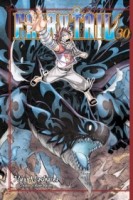
Fairy Tail, Volume 30Fairy Tail, Volume 30 by Hiro Mashima. With these volumes, Fairy Tail launches into a new story arc. The technique that Mashima uses–a time skip–isn’t all that unusual for a lengthy shounen manga series. What makes it different, and something that I personally haven’t encountered before, is that only part of the cast jumps ahead while most of the main characters are stuck in time. It makes it a little more interesting when returning after seven years that they have to come to terms with the fact that so many of their friends (and enemies) have changed and grown more powerful. The time skip also serves the purpose of “resetting” the story–Fairy Tail is once again one of the weakest guilds and has to fight its way back to the top. But instead of facing off with evil wizards and guilds, this time they’ll be competing in the Grand Magic Games. Honestly, I’m not quite as interested in this particular turn of events, but at least there should be some entertaining trials and competitions as a result.

The Spectral EngineThe Spectral Engine by Ray Fawkes. I am not especially familiar with Ray Fawkes–an award-winning and frequently award-nominated Canadian creator–and so I was unaware of the upcoming release of The Spectral Engine. Happily, a review copy unexpectedly showed up in the mail. Otherwise, I would probably have completely missed it and that would have been a shame. The Spectral Engine is a great graphic novel and I’m glad I had the opportunity to read it. The artwork in particular is excellent, using dark, dripping lines and ink spatter reminiscent of the smoke and grime of the titular engine to effectively create an unnerving atmosphere appropriate for the ghost stories being told. The Spectral Engine weaves together thirteen tragic historic events from many different time periods and locations across Canada. These retellings are paired with their related modern-day hauntings and reports of unexplained phenomena. In many cases the names and lives of the dead have been forgotten, but their stories and legends live on.

AkagiAkagi, Episodes 14-26 directed by Yuzo Sato. While the first half of Akagi had several different mahjong matches, the second half focuses on one: Akagi Shigeru versus Washizu Iwao. It also features a very special and slightly terrifying version of mahjong in which three-quarters of the tiles are transparent (which are beautifully animated). This reveals more of the players’ hands and greatly changing the dynamics of the game. (Though initially a fictional game, Washizu Mahjong sets now really do exist.) The game with Washizu also provides Akagi with something that he’s been looking for–a literal death match. Instead of money, he’s gambling with his blood and therefore his life. Akagi is a fearless and fearsome player and the game is ridiculously intense as a result. There’s skill, and there’s luck, but even more important are the psychological attacks used to provoke and manipulate the other players. Even when most of the tiles can been seen there’s still plenty of room for bluffing . I love mahjong and unsurprisingly I loved Akagi, too.

Filed Under: FEATURES, My Week in Manga Tagged With: Aco Oumi, Akagi, anime, children of the sea, comics, Daisuke Igarashi, Eyeshield 21, Fairy Tail, Hiro Mashima, manga, Ray Fawkes, Riichiro Inagaki, Yusuke Murata

Bookshelf Briefs 10/21/13

October 21, 2013 by Sean Gaffney, Michelle Smith and Anna N 2 Comments

This week, Sean, Michelle, & Anna look at recent and upcoming releases from Seven Seas, Vertical, Inc., and Viz Media.


clover-cheshire-6Alice in the Country of Clover: Cheshire Cat Waltz, Vol. 6 | By QuinRose and Mamenosuke Fujimaru | Seven Seas – Despite the fact that once again this is half the main story and half a side story, it feels like a complete book because the side story also features Alice and Boris, rather than Crimson Empire. As for the main story, as always Ace steals every scene that he’s in. Ace and Boris contrast very well here, given that Boris, despite his jealousy, just wants Alice to be happy and at peace. Whereas, as Ace says flat out, he finds Alice most interesting when she’s stressed, vacillating, and indecisive. If you recall that this manga is sourced from a visual novel, this works quite well: Boris (and some of the others) want Alice to finish the game and find an ending, Ace wants anything but that. We’ll see how this resolves in 7, the final volume. – Sean Gaffney

devil11A Devil And Her Love Song, Vol. 11 | By Miyoshi Tomori | Viz Media – I had thought that the issues with Maria’s voice would be easily solved at the start of this volume, but nope. This volume turns out to be the one where most of the plot ends regarding Maria’s past are tied up, as we see that the tragedy in her past that has caused her such pain has also effected everyone else connected to that tragedy – her father, her grandparents, everyone. I found the way the last name “Cross” was tied into the plot to be a bit mind-numbingly coincidental, but hey, it’s a shoujo manga. So with Maria’s issues now mostly resolved, and Shin finally realizing that he can’t keep using his hand with it injured like that, we wrap up here, right? Wrong. Two volumes to go, and the cliffhanger for this one, with Maria saying “nothing can possibly go wrong now”, is very ominous. – Sean Gaffney

happymarriage2Happy Marriage?!, Vol. 2 | By Maki Enjoji | Viz Media – The line between miscommunication being a necessary tool to tell the plot of your shoujo manga and miscommunication being the last straw that makes your reader give up and drop the title can be very fine indeed, and the fact that I’m only 2 volumes into a 10-volume series and already vacillating on it doesn’t bode well. Not that I don’t understand the characters. Despite being husband and wife, it’s a paper marriage, so there’s that sense of ‘I should give her some space’ on Hokuto’s part – which is easy for him anyway, as he’s the sort to be very subtle and oblique. Meanwhile, Chiwa’s idea of working for another company isn’t bad, but one run by a former flame? That’s bad. This is the volume where Happy Marriage?! had to make its plot longer, and sometimes you can see the stretching. – Sean Gaffney

midnight2Midnight Secretary, Vol. 2 | by Tomu Ohmi | Viz Media – I’m still enjoying this supernatural romance about Kaya, an unusually dedicated secretary and her developing feelings for her vampire boss Kyohei. This volume centers around Kaya acknowledging her feelings for her boss and deciding to pull away, because there’s probably not much future for a woman with extra tasty blood and a man who regards human women largely as snacks. This doesn’t go well, as Kyohei likes to have Kaya around for more reasons than he is willing to admit to himself. The woman brimming with emotions and her emotionally withholding target of affection is a fairly common romance scenario, but the moody art, emotional turmoil, and paranormal elements combine to make this manga very enjoyable. – Anna N.

sickness2Sickness Unto Death, Vol. 2 | By Hikaru Asada and Takahiro Seguchi | Vertical, Inc. – Well, that didn’t go the way I expected at all. Which was, of course, the point. One of the best things about this serieds is the way it sets up situations and then pulls the rug out from under you. There’s also some really terrific analysis of coping with trauma, and I like how it shows Kazuma trying to help as a therapist but still being far too close to the situation (there’s really an awful lot of sex in this book, probably to attract Young Animal readers). As for the ending, I found it rather disquieting, and it made me ask lots of questions I’m not sure I wanted the answers to. Which I’m pretty sure is absolutely 100% intentional. I’m not sure this is a series that can be easily loved, but I think it has a high reread quality, and I’m very pleased Vertical put it out. – Sean Gaffney

strobeedge7Strobe Edge, Vol. 7 | by Io Sakisaka | Viz Media – This is really one of my favorite currently running shoujo series, with sympathetic characters and an engaging supporting cast that helps divert me from noticing that the relationship between naive Ninako and super-popular and enigmatic Ren is developing very slowly. Now that Ren is no longer in his previous relationship and Ninako, Ren, and Ando are all in the same classroom at school the potential for love triangle developments is high. This volume focuses a bit more on Sayuri and her old boyfriend, who it turns out was Yutaro, Much of the volume deals with Ninako’s struggles with continuing to relate to Ren as a friend only, while Sayuri and Yutaro finally achieve a bit of unexpected but welcome closure. – Anna N

sweetreinSweet Rein, Vol. 1 | By Sakura Tsukuba | Viz Media – If the name Sakura Tsukuba looks familiar, that’s because CMX published two of her series (Land of the Blindfolded and Penguin Revolution) back in the day. And that probably explains why Sweet Rein feels kind of like CMX shoujo to me. It’s a short series (complete in three volumes, it looks like) that works for all ages and has some fluffy fantasy elements, but which is still a little off the beaten path. For example, the leads in this series are a bonded Santa/reindeer pair. Yup. So far, drama comes from sad little kids with cancer in need of miracles and bishounen grandpa ghosts warning the reindeer boy that what he feels for his master isn’t genuine love. It may inspire mockery, but the overall feel so far is kind of cozy and old-school and the chibi reindeer are insanely cute. I think that’s enough to sustain me for three volumes. – Michelle Smith

Filed Under: Bookshelf Briefs

Lonely Hearts Killer

October 18, 2013 by Ash Brown

Lonely Hearts KillerAuthor: Tomoyuki Hoshino
Translator: Adrienne Carey Hurley
U.S. publisher: PM Press
ISBN: 9781604860849
Released: November 2009
Original release: 2004

After reading Tomoyuki Hoshino’s collection of short fiction We, the Children of Cats, I knew that I wanted to read more of his work. And so I turned to the novel Lonely Hearts Killer, Hoshino’s first and currently only other volume available in English. Lonely Hearts Killer was originally published in Japan in 2004, making it a later work than most of the stories collected in We, the Children of Cats. Adrienne Carey Hurley’s translation of Lonely Hearts Killer was released in 2009. She initially had a difficult time finding a publisher for the novel. However, like We, the Children of Cats, Lonely Hearts Killer was ultimately released by PM Press under its Found in Translation imprint. Because We, the Children of Cats left such a huge impression on me, I was especially curious to read a long-form work by Hoshino.

When a young and popular emperor unexpectedly dies with only his sister to succeed him, the country is left stunned and directionless. Some people are so affected by his death that they are “spirited away,” a phenomenon which leaves them in a near catatonic state. Shōji Inoue is not one of those people. A young and privileged experimental filmmaker living off his parents, he is fascinated by society’s reaction to the emperor’s death. When he learns that Mikoto, the boyfriend of Iroha–a former classmate, fellow filmmaker, and friend–is among the group of people to have suffered a breakdown, he is intensely curious. But Inoue and Mikoto’s meeting triggers an even greater tragedy and Iroha is left behind to deal with the aftermath. Years later Iroha is working at a remote lodge owned by her friend Mokuren, away from the prying eyes of the mass media which blames her in part for the epidemic of suicides and murders that have swept the country. At the same time, the mass media is one of her only remaining ties to the rest of the world.

Lonely Hearts Killer is told in three parts by three different narrators, each building on and critiquing those that precede them. “The Sea of Tranquility” is seen from Inoue’s perspective, “The Love Suicide Era” is Iroha’s response, and Mokuren’s commentary concludes the novel in “Subida Al Cielo.” Each chapter leads further away from the initial incident in both time and association while simultaneously providing more information about it and capturing the escalation of fear and death. Lonely Hearts Killer is a chronicle of the end of an era; the world is turned upside down and society’s values are inverted. The novel can be both disconcerting and disorienting. People become so consumed by a culture of fear that they come to rely and depend on it. Any challenge to the system is seen as dangerous and the media’s role in its perpetuation is largely ignored by the general population. Things become so twisted around and perverted that it is those who would try to refuse to participate in the violence around them who are deemed abnormal and deviants by society at large.

In addition to the novel itself, the English edition of Lonely Hearts Killer also includes an introduction by the translator and a newly written preface by the author as well as a question and answer session between the two. I found this material to be particularly valuable in putting the work into a greater context. The death of an emperor and the demise of the emperor system is a rare topic in Japanese literature. Lonely Hearts Killer is a very political work although much of its message is left up to the readers’ individual interpretations. The novel has the potential for multiple analyses, including both anarchist and pacifist readings. I personally appreciate this ambiguity; it’s one of the reasons that I find Hoshino’s work as a whole to be so interesting. As I’ve come to expect, Hoshino’s writing requires active engagement and thought on the part of his readers. The novel isn’t particularly easy reading, but the ideas, concepts, and themes that Hoshino deals with in Lonely Hearts Killer are incredibly unsettling, intriguing, and fascinating.

Filed Under: REVIEWS Tagged With: Found in Translation, Novels, PM Press, Tomoyuki Hoshino

Manga the Week of 10/23

October 17, 2013 by Sean Gaffney, Michelle Smith, MJ and Ash Brown 2 Comments

SEAN: Be thankful for the small amount of manga coming out this week. The three weeks after this are absolutely brutal, with over 15-20 titles each week from various companies. But this week — lull!

juicyciderWe welcome back Digital Manga Publishing with some new BL fare. Unfortunately, Juicy Cider’s synopsis sounds so mind-numbingly generic that I can barely stay away to get through its four lines. There’s childhood friends, unrequited crushes, and from the looks of the cover one quiet and serious boy in glasses and one happy go lucky boy. Which sounds nothing like any other BL title ever.

Priceless Honey is the other DMP offering, being a collection of short stories that are “steamy”, and where the happy go lucky boy has been replaced by a smirking, slightly older guy.

MICHELLE: I wish I had something to say about either of these two, but alas, I do not.

MJ: I admit they don’t look promising to me. Not promising at all.

ASH: Like Juicy Cider, it would appear that Priceless Honey has a megane danshi as well. Shiuko Kano has had a lot of her manga released in English by multiple publishers, so I assume that she has at least a small following.

SEAN: I probably should not mock DMP’s yaoi given that I’m still enjoying Kodansha’s Missions of Love. It’s such a guilty pleasure – Volume 5’s cover looks more like softcore porn than any of the previous ones, making me continue to boggle that this runs in Nakayoshi. But as long as the cast continues to be unlikeable, I’ll continue to be fascinated. It’s like the opposite of everything else I enjoy.

No. 6, Vol.3 continues to confuse numerologists and bookstore shelvers everywhere. It’s also Kodansha. Between this title and Disgaea 3, my ability to make World Cup jokes will live on forever.

summerwars1MICHELLE: I didn’t hate the first volume, but I somehow never managed to buy/read volume two.

ASH: I’m actually rather fond of No. 6 and its leads. I found the second volume to be better than the first, so I hope the trend continues with the third!

SEAN: Lastly, Vertical debuts another manga based on a movie, with the first volume of Summer Wars, from the creators of The Girl Who Leapt Through Time. Vertical had a lot of success with 5 Centimeters Per Second, so it’s no surprise they’d get this. I personally hope it’s less melancholy.

MJ: I’m looking forward to this for sure. I loved The Girl Who Leapt Through Time, and though I wasn’t necessarily crazy about the manga adaptations of the same story, the fact that I haven’t actually seen this movie may help me on that front. And y’know, I trust Vertical. I really enjoyed the manga adaptation of 5 Centimeters Per Second, so I’m counting on their good taste to bring us a winner.

SEAN: Taking a week off before the deluge? Or trying out something new?

Filed Under: FEATURES, manga the week of

Sherlock Bones, Vol. 1

October 17, 2013 by Sean Gaffney

By Yuma Ando and Yuki Sato. Released in Japan as “Tanteiken Sherdock” by Kodansha, serialized in the magazine Weekly Shonen Magazine. Released in North America by Kodansha Comics.

It’s a rather odd time here in North America, where we have had a series of Sherlock Holmes adaptations of various stripes over the last couple of years. JManga had a Holmes volume up that was sort of supernatural horror with bishonen Holmes. Young Miss Holmes pays close attention to the canon even as it welds in a precocious niece. And now we have Sherlock Bones, where Sherlock is reincarnated as a dog in modern-day Japan, and fights crime with the help of a young boy who gets to be his Doctor Watson. As you can imagine, this one is geared more towards younger readers, but certainly it’s not juvenile. We’re dealing with murders here.

sherlockbones1

The author is used to this type of detective mystery, of course, being the creator of Kindaichi Case Files under another pseudonym. The story is the important thing here, and Sherlock’s presence is merely a vehicle for it (as well as for a few weak “Sherlock is a dog now” jokes). Unlike Young Miss Holmes, so far the creators seems to have very little use for the Watson canon, only using the broadest strokes such as Sherlock’s pipe. As for Watson, or rather Takeru Wajima, he’s a typical shonen protagonist, bieng fairly normal but with a stubborn stick-to-it-ivness that will serve him well in dealing with Sherlock’s whims.

The book starts us off with a fairly easy attempted murder where the clues are all laid out in the open, before moving on to the main story involving a crime where the murderer is fairly obvious, but we have to figure out motive, means, etc. Indeed, motive proves to be the key here, as we learn that the culprit isn’t just evil like that but has a deeply tragic reason for committing the crime. It helps that the victim isn’t that nice a kid – but he’s still a KID, so there’s not that much sympathy.

This runs in Shonen Magazine, so the mysteries aren’t meant to be all that hard to solve, and you can usually come up with the solution at the same time as Sherlock does. Of course, since it does run in Shonen Magazine, there’s also a bit of fanservice focus on boobs ‘n butts, though certainly less than you’d see in Fairy Tail or Negima. In the end, this is a mystery anthology series along the lines of Case Closed or Kindaichi, with “Sherlock Holmes is a dog” as the gimmick. We do see a girl who’s meant to be a love interest of some sort, though given the nature of the series she could easily be killed off in Volume 2 for all I know. But for the most part I expect this to be episodic, which makes it a good series to dip in and out of without worrying too much about missing anything. It’s cute and fun, if not all that gripping.

Filed Under: REVIEWS

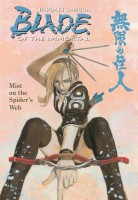
Blade of the Immortal, Vol. 26: Blizzard

October 16, 2013 by Ash Brown

Blade of the Immortal, Volume 26Creator: Hiroaki Samura
U.S. publisher: Dark Horse
ISBN: 9781616550981
Released: March 2013
Original release: 2009
Awards: Eisner Award, Japan Media Arts Award

Blizzard is the twenty-sixth volume in the English-language edition of Hiroaki Samura’s long-running, award-winning manga series Blade of the Immortal. Dark Horse originally released Blade of the Immortal by story arc rather than by number of chapters, so the volumes in the English-language release are slightly different from those in the original Japanese edition. Blizzard was published by Dark Horse in 2013 and is equivalent to the twenty-fifth volume of the Japanese series which was released in 2009. Blizzard takes place during the final major story arc of Blade of the Immortal and includes one of the series’ most important climaxes. I consider Blizzard to be a companion volume to the previous collection Snowfall at Dawn which leaves off partway through the battle between Shira and Manji. By the end of Snowfall at Dawn things aren’t looking at all good for Rin and Manji, so I was anxious to read Blizzard.

With Manji and Rin sunk beneath the pond’s freezing surface, Shira returns to the roadside where he left Magatsu incapacitated. Shira is not yet through with Manji, but he wants revenge against the young Ittō-ryū fighter as well and intends on making the most of their chance meeting. Magatsu is surprised to see Shira, too, having previously sent the sadistic killer plummeting from the top of a cliff during their last encounter. Shira once again finds himself interrupted when he is challenged by Meguro, one of Habaki’s shinobi. She has little hope of defeating Shira, especially now that he is semi-immortal, but her attack serves as a distraction. Shira isn’t aware of it, but back at the pond Meguro’s companion Tanpopo is doing all that she can to rescue and revive both Rin and Manji. At this point Manji is the only person who has even a slight chance of stopping Shira, but as Manji’s condition continues to deteriorate his success seems increasingly unlikely.

The beginning of Manji and Shira’s confrontation in Snowfall at Dawn was relatively subdued, focusing more on the psychological aspects of Shira’s attack and less on the physical combat. The conclusion of their battle in Blizzard is what I was really expecting and waiting for from their showdown. With two near immortals battling it out the damage that they inflict on each other is tremendous. Others can only look on astounded at the viciousness and brutality of the bloodbath occurring in front of them. Describing Manji and Shira’s final fight as intense would be putting it very mildly. At times it is difficult to see through all of the blood and guts as the two opponents literally rip each other apart. Samura’s artwork is unflinching and captures the entirety of their exceptionally violent battle as well as its bloody aftermath. Blizzard is extreme and gruesome and even those who make it through to the end of the volume barely survive.

While the duel between Shira and Manji is certainly the focus of Blizzard it isn’t the only important development in Blade of the Immortal to occur in the volume. I was happy to see Tanpopo and Meguro take on a more active role in the series. Up until this point in the manga they have generally been part of the series’ comedic relief–Meguro in particular frequently comes across as rather ditsy–but the women are shown to be quite capable martially in Blizzard. Another important development in the volume has to do with Renzō. His father, a member of the Ittō-ryū, was killed fairly early on by Manji in Blade of the Immortal. Since then Renzō has led a very difficult life, eventually becoming a broken and damaged young man partly due to the abuse he suffered at Shira’s hands and partly because he can’t forgive what happened to his father. His struggle isn’t over, but his story does begin to find a satisfying resolution in Blizzard.

Filed Under: REVIEWS Tagged With: Blade of the Immortal, Dark Horse, Eisner Award, Hiroaki Samura, Japan Media Arts Award, manga

Weekly Shonen Jump Recap: September 30, 2013

October 15, 2013 by Derek Bown 1 Comment

September 30 Cover PageAll I can say is, “Yowza” this was one heck of a week to be a manga fan. Even the series I don’t like didn’t do anything beyond continuing to be disappointments. It’s so rare to see everyone in top form that I can’t remember the last time this really happened. And, now this is the exciting part, we’re getting a new series next week. I’m pretty sure it’s going to be a brand new series so I’m not even going to bother trying to guess since I don’t know what the most recent series are.

Huh, guess that isn’t a great thing to admit as a self proclaimed expert on shounen manga. Well then…

World Trigger Ch. 032
This chapter raised my “cancellation alarm” (Trademark). Not necessarily because it’s been dropping in rankings (which it hasn’t, I’ve given up trying to understand the Japanese readers), but rather because of the pacing. This time around we skip right forward to the Border recruitment tournament. I still think this is a terrible idea, but World Trigger has been doing pretty well the past couple weeks so maybe I’ll be pleasantly surprised. But considering even seasoned writers have trouble making tournament arcs interesting I’m not holding my breath here.

World Trigger

Jaco The Galactic Patrolman Ch. 11
You don’t have to be a Dragon Ball fan to enjoy Jaco. But this chapter you really needed at least a working knowledge of that legendary manga series. I’m impressed that Toriyama kept all his references in the bag until the last chapter, and while I loved seeing how it all ties in to Dragon Ball I have to say it served the series overall a lot more by letting it stand on its own. I’d heard the rumors that Jaco was a Dragon Ball prequel, but even so the reveal was well done and exciting. I got chills when Jaco described the invading alien.

The one problem I have is that since Tights is revealed to be Bulma’s older sister we now have to wonder why she was never mentioned in the main series. Of course she was never mentioned because Toriyama hadn’t invented her yet. Which makes introducing a character with such a close relation to one of the main characters in the “sequel” series a tricky endeavor. Sure it can be fun, but we’re always left wondering after that, did Bulma just hate her sister? Is that why she never talked about her?

Speaking of which, why is Bulma so much more competent in one chapter, and as a five year old, than she ever was in Dragon Ball?

Nisekoi Ch. 092
Well, I called it. It’s not official, but all hints point towards another girl being introduced. On the one hand I trust Naoshi to get it right. On the other hand I don’t think another love interest is what Nisekoi needs right now. Maybe the next girl turns out to be the girl Rakku made his promise with, but she’s forgotten and ends up having the hots for Shu instead. Now THAT would be a twist.

Other than that I can’t say this chapter was all that great. There wasn’t that much comedy, and the focus was on just wrapping up this last arc and introducing a new twist into the plot. Though it did make me look up if children actually changed their eye color, which it turns out does happen but usually it goes from light to dark rather than the other way around.

One Piece Ch. 722
Some weeks I find myself with little to say because the manga I talk about has little substance. This week I’m having the opposite problem. I’ve got so much I want to say, but I can’t figure out how to say it without making this review three times the length it should be and half as coherent as it needs to be. I guess a chronological approach would be best, and while it isn’t my style to talk about everything that happens in a chapter I might have to make an exception this week.

First off, I loved seeing how Luffy’s beef with the people yelling at Rebecca because of what her grandfather allegedly did. And while I do think we can be trusted to remember that Luffy doesn’t like being judged for what his grandpa did without the need of their faces in the background, I love how this is one of those rare times that Luffy goes beyond his happy go luck persona and actually gets invested in someone’s backstory. Usually we never get to really see Luffy react to someone’s backstory, since he tends to either wander off or fall asleep. What this means about Rebecca’s future in the series I can’t comment, but when you consider that we didn’t get to see him react like this to say, Nami’s backstory, perhaps it might be significant?

Cavendish gets his moment in the sun, and while his character building isn’t as awesome as Bartolomeo’s he still gets enough added to his basic persona that he’s a lot more interesting than some main characters from other series that I could mention but won’t.

Zoro’s comment to Sanji when Violet comes back is priceless. And a sign of excellent writing, since it was set up months ago.

Brooke has been getting some great moments the past several arcs, to make up for missed chances before the crew was split up I imagine. This chapter also features the best skull joke I’ve seen out of the entire series.

And of course, Doflamingo’s reveal. While we knew the basic idea behind the founding of the world government, actually getting even a single page tease of what happened during the void century is enough to have me go into a fanboy frenzy. There was much flailing of arms after this chapter.

One Piece

Toriko Ch. 251
I couldn’t shake the strongest feeling of deja-vu this chapter. I don’t know why, but for some reason I swear I’ve seen this chapter before. Or something very similar to it. But, that aside, while there wasn’t much action this chapter I think I liked this one a lot more than most of the chapters I’ve read recently. I’ve got something for backstory, and seeing Acacia for the first time was brilliant. It’s also nice to see that Shimabukuro is feeling comfortable enough that he’s actually drawing more women.

Naruto Ch. 648
Sir Isaac Newton? What are you doing in Naruto? Wouldn’t it be amazing, if Naruto turns out to be a sequel to Vision of Escaflowne? All would be forgiven then.

I may love backstory, but I think Hashirama and the other Hokages are starting to outlive their welcome. I’ve said the same thing about the series as a whole, and this chapter really didn’t do anything to change my mind. But it wasn’t the worst chapter of Naruto I’ve ever read. But it didn’t really give me anything I haven’t seen before. What would it take to make me love Naruto again? Well, a complete 180 in the direction the manga is taking might be nice.

Naruto

One-Punch Man Ch. 027
This was easily the most heroic thing I’ve seen from any hero. Including most mainstream western superheroes. And even though it’s something as mundane as lying to protect others, the reaction from the crowd makes it all the more heroic, even if Saitama doesn’t actually care. Though the crowd is getting on my nerves. They make the people of Springfield seem reasonable. And what is it about even the most blatant parody of a Neet Otaku that pisses me off?

Bleach Ch. 550
So far so good. A bit formulaic, but at least Kubo is determined not to make the battle too easy for the Soul Reapers. But, because I feel Bleach still isn’t anywhere near where it was at its peak I can’t really lavish any praise beyond mentioning that it isn’t doing anything wrong. Which seems like poor praise for a series that used to be my favorite.

Dragon Ball Z Ch. 033
The best thing that ever happened to the character of Nappa was Dragon Ball Z Abridged. Still, coming back to the original version of the character is a bit disappointing. I still like Dragon Ball, I’m not the biggest fan, but each chapter is still very enjoyable. It’s just that right now the chapters are good, but without anything major that really needs to be discussed.


Aside from some great chapters, the big news is definitely the new series coming out next week. And while the Shonen Jump Podcast hinted at what it could be, I don’t think we have enough information to decide what it is. While it may be a brand new series, which currently running series would you like to see in WSJ?

If you want to hear more, check out the Manga^3 Podcast Archives.

Filed Under: FEATURES & REVIEWS, WSJA Recaps Tagged With: bleach, blue exorcist, Dragon Ball Z, Jako The Galactic Patrolman, naruto, nisekoi, One Piece, one punch man, toriko, world trigger

  • « Go to Previous Page
  • Page 1
  • Interim pages omitted …
  • Page 373
  • Page 374
  • Page 375
  • Page 376
  • Page 377
  • Interim pages omitted …
  • Page 551
  • Go to Next Page »
 | Log in
Copyright © 2010 Manga Bookshelf | Powered by WordPress & the Genesis Framework