• Skip to primary navigation
  • Skip to main content
  • Skip to primary sidebar
  • Home
  • About Us
    • Privacy Policy
    • Comment Policy
    • Disclosures & Disclaimers
  • Resources
    • Links, Essays & Articles
    • Fandomology!
    • CLAMP Directory
    • BlogRoll
  • Features & Columns
    • 3 Things Thursday
    • Adventures in the Key of Shoujo
    • Bit & Blips (game reviews)
    • BL BOOKRACK
    • Bookshelf Briefs
    • Bringing the Drama
    • Comic Conversion
    • Fanservice Friday
    • Going Digital
    • It Came From the Sinosphere
    • License This!
    • Magazine no Mori
    • My Week in Manga
    • OFF THE SHELF
    • Not By Manga Alone
    • PICK OF THE WEEK
    • Subtitles & Sensibility
    • Weekly Shonen Jump Recaps
  • Manga Moveable Feast
    • MMF Full Archive
    • Yun Kouga
    • CLAMP
    • Shojo Beat
    • Osamu Tezuka
    • Sailor Moon
    • Fruits Basket
    • Takehiko Inoue
    • Wild Adapter
    • One Piece
    • After School Nightmare
    • Karakuri Odette
    • Paradise Kiss
    • The Color Trilogy
    • To Terra…
    • Sexy Voice & Robo
  • Browse by Author
    • Sean Gaffney
    • Anna Neatrour
    • Michelle Smith
    • Katherine Dacey
    • MJ
    • Brigid Alverson
    • Travis Anderson
    • Phillip Anthony
    • Derek Bown
    • Jaci Dahlvang
    • Angela Eastman
    • Erica Friedman
    • Sara K.
    • Megan Purdy
    • Emily Snodgrass
    • Nancy Thistlethwaite
    • Eva Volin
    • David Welsh
  • MB Blogs
    • A Case Suitable For Treatment
    • Experiments in Manga
    • MangaBlog
    • The Manga Critic
    • Manga Report
    • Soliloquy in Blue
    • Manga Curmudgeon (archive)

Manga Bookshelf

Discussion, Resources, Roundtables, & Reviews

Features & Reviews

Quantum Devil Saga: Avatar Tuner, Vol. 1

November 28, 2014 by Ash Brown

Quantum Devil Saga: Avatar Tuner, Volume 1Author: Yu Godai
Translator: Kevin Frane
U.S. publisher: Bento Books
ISBN: 9781939326003
Released: July 2014
Original release: 2011

Quantum Devil Saga: Avatar Tuner, Volume 1, a novel written by Yu Godai, was originally published in Japan in 2011. The English-language edition of the volume, translated by Kevin Frane, was released in 2014 by Bento Books. It is the first book in a five-volume series which is further divided into three parts. (The first volume consists of the first half of the first part.) Those familiar with the video game series Digital Devil Saga: Avatar Tuner, a spinoff of the Shin Megami Tensei games, will find Quantum Devil Saga to be familiar as well. The series isn’t a novelization of the video games, but it is based on the same original story created by Godai which became the underlying framework for Digital Devil Saga. Although I was aware of Shin Megami Tensei, which has quite a following, and Digital Devil Saga specifically,  I’ve never actually played any of the games myself. Even so, I was still very interested in reading Quantum Devil Saga, Godai’s first written work to appear in English.

The denizens of the Junkyard exist to die in battle only to be born again in a never-ending struggle to reach the promised paradise of Nirvana. The Junkyard is divided into seven territories, one held by the Church of the Arbiters of Karma while the other six are the domain of rival tribes of skilled fighters. Only when one group is able to obtain complete control of the entire Junkyard will the gates to Nirvana be opened. Serph is the leader of the Embryon, a small tribe that has quickly gained strength, numbers, and territory. During the Embryon’s confrontation with the Vanguards tribe, an unidentifiable device appears on the battlefield which dramatically changes the balance of power in the Junkyard, unleashing the combatants’ darker selves and transforming them into demons. Suddenly, the very laws that governed the world in which they live have changed. Established systems have begun to fracture, the cycle of reincarnation is interrupted, and the quest for Nirvana has become deadlier than ever.

Quantum Devil Saga isn’t a video game novelization, nor does it read like one. However, it is quite easy to see how the story and scenario could be suited for or smoothly adapted as a game. The narrative is fairly linear, generally following Serph’s point of view as he and his comrades strive to understand everything that has happened. The way that the transformations are handled and how skills and knowledge are gained in the novel could sometimes be reminiscent of game play or mechanics. The characters fight in a series of battles with increasingly high stakes and difficulty levels, ultimately ending with what cold be considered a boss battle. It’s clearly not the final boss, though, seeing as the first volume concludes with something of a cliffhanger. But none of these similarities are actually bad things and despite them Quantum Devil Saga doesn’t feel overly game-like. It is entirely its own work and exceptionally engaging one at that. The action is exciting and clear, the characters’ philosophical and psychological development is fascinating, and the translation is great, too. Once I started reading Quantum Devil Saga, I didn’t want to put it down.

What made Quantum Devil Saga particularly interesting and intriguing for me was its setting and atmosphere. The world-building of the series is heavily informed by Hindu and Buddhist cosmology and symbolism. (There is also at least one example of Mayan influence, but I found its inclusion to be rather strange given the context of the rest of the novel.) At first it seems as though these concepts are mostly used as a source of aesthetic inspiration, but they actually run fairly deep. However, readers don’t necessarily need to be acquainted with Hinduism or Buddhism to enjoy the story, although those who are will probably get even more out of an already great novel. The overall tone of Quantum Devil Saga is fairly dark. The demonic transformations that the characters are subject to have horrific and unsettling implications. Some of them wholeheartedly embrace their new powers and forms while others are desperate to hold on to the shreds of their humanity. They are forced to face their true selves and struggle with what they see. I enjoyed the first volume of Quantum Devil Saga immensely and can’t wait for the second volume to be released.

Filed Under: REVIEWS Tagged With: Bento Books, Novels, Quantum Devil Saga, Shin Megami Tensei, Yu Godai

Manga the Week of 12/3

November 27, 2014 by Sean Gaffney, Ash Brown, MJ, Anna N and Michelle Smith Leave a Comment

SEAN: December begins, and that can only mean one thing: More piles of manga.

Dark Horse has the 3rd volume of the New Lone Wolf and Cub, with whitewall tires and everything.

Who said DC Comics doesn’t release manga anymore? The Jiro Kuwata Bat-Manga is 350 pages of 60s shonen Bat-goodness, and looks to be amazing.

ASH: This is a really interesting bit of manga history. I was really surprised (and happy) to see DC pick it up!

MJ: Oh, wow, I had no idea this was in the works. Count me in!

ANNA: This sounds great. Really looking forward to it.

SEAN: Sankarea is almost finished, with the penultimate volume shipping next week. Will more main cast members die before this zombie romantic comedy staggers to its conclusion?

We get the 2nd volume of the Nightmare Trilogy from the Alice in the… series.

Is the harem complete in Knights of Sidonia 12? Or are more women waiting in the wings? Oh yes, and science fiction mecha battle horror manga as well.

MICHELLE: I am ashamed to admit that I have failed to catch up on Sidonia. I’m still buying it, though. That counts for something!

ASH: I like saving up a few volumes to read at a time; I’m about ready for another binge.

MJ: More Sidonia is always welcome!

ANNA: My Thanksgiving plans include a bit of a marathon read of Sidonia to get more caught up.

assclass1

SEAN: On the Viz side, we have the manga they said couldn’t be released! No, the Jump editors had literally said this could not be released in North America. But times have changed, there’s an anime on the way, and here we are. Assassination Classroom may have a scary name, but at heart it’s a classic ‘teacher gets class full of misfits and teaches them how to band together’ sort of title. Kind of like GTO, if Onizuka were an alien with a smiley face for a head. I cannot wait for this.

MICHELLE: Huh, interesting! I am intrigued.

ASH: Looking forward to it!

MJ: Same!

ANNA: Really, I would buy the first volume for the title alone. I want to check this out.

SEAN: Dragon Ball gets its 7th 3-in-1 omnibus.

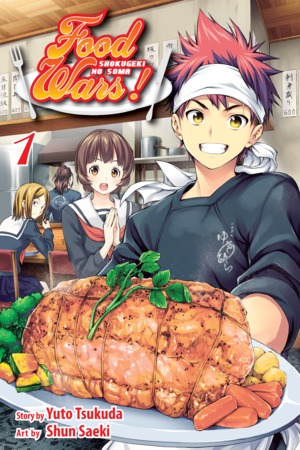
I enjoyed the second volume of Food Wars! and I think have gotten over its appalling first few pages. So let’s have more exciting shonen foodie manga with Vol. 3.

MICHELLE: I really am enjoying this one.

ASH: As am I.

ANNA: I’m a bit more on the fence about this title, but it does have an interesting premise and storyline to balance out the fanservice.

SEAN: Another penultimate volume (look, I just like saying penultimate, OK?), as Happy Marriage?! 9 inches closer to answering the question mark in its title.

ASH: Penultimate is a great word. I… like saying it, too.

ANNA: I feel like this series has fallen off in quality a bit, but I still enjoy reading it.

SEAN: The second Honey Blood is apparently the last of the main series, though there’s a side volume due out in February. Short shoujo supernatural goodness.

MICHELLE: Or not-so-goodness, as the case may be.

MJ: Heh.

ANNA: Aww, that’s too bad. I usually do enjoy shoujo supernatural titles. I think I will check it out though.

SEAN: Kimi ni Todoke… I feel kind of churlish for saying this, but does it feel we’re dragging our feet a little as the series hits Vol. 20? I do still like it, but wish the end was in sight.

MICHELLE: There is always something very satisfying when long, beloved manga series end. I still love Kimi ni Todoke, but I know what you mean, too.

ANNA: Nothing wrong with a consistently good long running shoujo title.

SEAN: Millennium Snow comes to an end with its 4th volume, and will hopefully manage to resolve the whole “impending death” thing once and for all.

ANNA: I want to go back and reread the first two volumes, then read the new releases. I did enjoy it when it first came out.

naruto68

SEAN: Naruto may have finished in chapter format, but the collected volumes live on! Here’s the 68th.

Nura: Rise of the Yokai Clan is still marching towards its ending with the 24th volume.

There is also the 3rd Seraph of the End.

ANNA: I like this series! Not only due to the vampires, but because the light novel origins of the series ensures that there will actually be a decent amount of worldbuilding and backstory for the characters.

SEAN: If Food Wars! seems to mild and sedate for you, Toriko is always ready to take it one level higher, and its 25th volume drops next week.

In case you already miss Vampire Knight, Fleeting Dreams is a short story collection based on the series.

Voice Over! has come to the 8th volume, and is romance finally starting to stroll leisurely towards the reader?

MICHELLE: I find that I would kind of love for that to happen.

MJ: Sometimes the stroll is a bit too leisurely.

ANNA: I liked the first volume of this more than I expected to, but I don’t think I’ll be investing in reading more of the series. I think it might be good for younger teens though, and series like that are always welcome.

SEAN: Three volumes of World Trigger means I’m 3 volumes behind. Need to check this series out.

ANNA: I was lukewarm about the first couple volumes, but I can certainly see how someone else might enjoy the series.

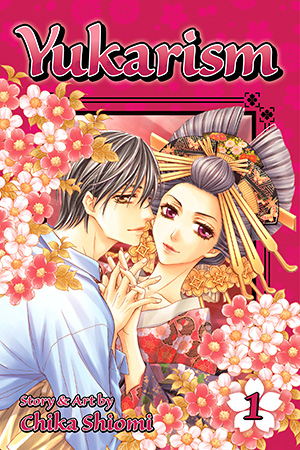
SEAN: And a new shoujo series from Betsuhana, as we get the first volume of Yukarism. If you enjoyed Yurara, this is by the same creator.

MICHELLE: I’m really curious about this one! I haven’t read nearly as much Chika Shiomi as I should’ve. (But I bought all her stuff! That counts for something, right?)

ASH: I’m actually very excited for this one! Gender-bending, time travel, historical romance… this should be good.

MJ: I am so on board for this. I actually never read Yurara, but I loved Rasetsu, which stood better on its own than I ever expected.

ANNA: I REALLY like Chika Shiomi series. The art is great, and often there are some darker themes in her paranormal romance series that are quite intriguing. My favorite of her series so far is Night of the Beasts that was released by Go!Comi back in the day.

SEAN: What appeals to you in this rather large list?

Filed Under: FEATURES, manga the week of

A Certain Magical Index, Vol. 1

November 27, 2014 by Sean Gaffney

By Kazumi Kamachi and Kiyotaka Haimura. Released in Japan as “To Aru Majutsu no Index” by ASCII Mediaworks. Released in North America by Yen Press.

I’ll be honest with you, I’ve read this one in fan translation. Twice. This was before it was licensed, and there was a very good reason for that: I never, ever thought this would be licensed. The main series is 22 volumes + two short story volumes, and the ‘sequel’ is 11 volumes and counting. And while I knew Yen On was starting, I hadn’t suspected this. But here we are, with certainly one of the most demanded light novel series of all, now out in the West to supplement the already popular Railgun series that spun off from it. What’s it like to read, particularly for a fan who’s already possibly seen the anime it’s based on?

index1

First off, I want to try an amusing experiment, based on the fact that this has one of the casts from Hell.

Introduced in this volume: Touma Kamijou, Index Librorum Prohibitorum, Mikoto Misaka, Stiyl Magnus, Kaori Kanzaki, Komoe Tsukiyomi, “blue-haired guy”, “frog-faced doctor” (the latter two have no official names). For Railgun readers, this takes place during the “Level Upper” arc.

There’s no question that this volume is absolutely tailor-fit to be a franchise. This volume wastes no time in stripping Index naked, there’s a typical “everyman” hero who’s actually super amazing but has fairly low self-worth (though compared to Hiroyuki from Accel World, Touma is an egotist). There’s a grumpy tsundere who shouts at the hero, though due to his nature she doesn’t hit him; instead the job of physical abuse goes to Index. Oh, and there’s a 35-year-old teacher who looks 12, chain smokes, and wears bunny footy pajamas. If you can get past the cliches, what you have here is a novel that examines the different “rules” of magic and science, and what would happen if they crossed paths. If your answer was “lots of cool fights and near-death experiences”, step to the top of the class.

It’s worth noting that when I first read the fan translation, I felt the style was overly complex and verbose, but put it down to translation issues. No, as the Yen Press version makes clear, Kamachi’s style is overly complex and verbose. Certain phrases are bolded, which appears to not signify anyone is shouting, but merely to note that something important has just been said or revealed. There’s also some expletives, which surprised me, but fit the emotions of the speaker. As you’d expect for a first novel, some of the characterization is still forming. Index is quite snarky in her first scene, and doesn’t really become the Index we know till she is healed after her injuries (specifically, as they walk to the baths, she seems to spontaneously become Index in front of our eyes). Even for someone who is “pretending to be a villain for her sake”, Stiyl is over the top in his attempts to kill Touma. And given how insanely popular she became, it’s surprising how little Mikoto appears in this first book, serving merely as a plot device to show off Touma’s abilities.

It’s hard for me to judge how well this would read to a new reader, since I’m so familiar with it. I think the translation reads as smoothly as it can given the author, and that fans of anime will certainly enjoy it. That said, it’s a slow start, despite all the battles, and you really need to be prepared for a lot of talking and explaining – yes, even more than the average. If you’re interested in seeing why the series really took off, I’d wait till the third volume, but this is certainly a solid beginning.

Filed Under: REVIEWS

Manga Giveaway: Seven Seas Sampler

November 26, 2014 by Ash Brown

The end of the month draws near, so it’s once again time for another manga giveaway at Experiments in Manga! As is tradition, November’s giveaway features multiple volumes. This month you will all have a chance to win a sampling of some of Seven Sea’s manga releases, both old and new: A Centaur’s Life, Volume 1 by Kei Murayama; Dictatorial Grimoire, Volume 1: Cinderella by Ayumi Kanou; Gakuen Polizi, Volume 1 by Milk Morinaga; and Kashimashi: Girl Meets Girl, Omnibus 1 written by Satoru Akahori and illustrated by Yukimaru Katsura. And as always, the giveaway is open worldwide!

A Centaur's Life, Volume 1Dictatorial Grimoire, Volume 1: CinderellaGakuen Polizi, Volume 1Kashimashi: Girl Meets Girl, Omnibus 1

It used to be that I didn’t pay much attention to Seven Seas. It had a smallish catalog and I wasn’t particularly interested in most of the series it was publishing at the time. But with the success of Monster Musume and the various Alice series, Seven Seas has really taken off in recent years. And increased sales mean even more manga licenses. Seven Seas has been making a particular point to diversify its offerings lately. It has helped revive interest in yuri manga in English. A range of genres are being released, including slice-of-life, comedy, fantasy, horror, mystery, and science fiction among others. There are otome manga as well as quirky shounen series.  Ecchi and fanservice manga features heavily, but there are more wholesome titles, too. Seven Seas really is trying to have a little something of everything and a little something for everyone. I might not personally be interested in every license the publisher picks up, but I do like seeing the variety of works. You’ve caught my attention, Seven Seas. Now show me what you can do.

So, you may be wondering, how can you win a Seven Seas Sampler?

1) In the comments below, tell me a little about your favorite manga released or licensed by Seven Seas if you have one. (If you don’t have a favorite or haven’t read any of Seven Seas manga, just mention that.)
2) If you’re on Twitter, you can earn a bonus entry by tweeting, or retweeting, about the contest. Make sure to include a link to this post and @PhoenixTerran (that’s me).

It’s as easy as that. Each person can earn up to two entries for this giveaway. As usual, participants will have one week to submit comments. Entries can also be sent via e-mail to phoenixterran(at)gmail(dot)com which I will then post in your name. The giveaway winner will be randomly selected and announced on December 3, 2014. Happy feasting!

VERY IMPORTANT: Include some way that I can contact you. This can be an e-mail address in the comment form, a link to your website, Twitter username, or whatever. If I can’t figure out how to get a hold of you and you win, I’ll just draw another name.

Contest winner announced–Manga Giveaway: Seven Seas Sampler Winner

Filed Under: FEATURES Tagged With: Ayumi Kanou, Centaur's Life, Dictatorial Grimoire, Gakuen Polizi, Kashimashi, Kei Murayama, manga, milk morinaga, Satoru Akahori, Yukimaru Katsura

Gou-dere Sora Nagihara, Vol. 1

November 25, 2014 by Sean Gaffney

By Suu Minazuki. Released in Japan as “Gou-dere Bishoujo Sora Nagihara” by Hakusensha, serialized in various Young Animal spinoffs. Released in North America by Yen Press.

I tend to try to read a lot of Volume 1s that are released by manga companies, even if the premise makes me sort of rear back a bit. Sometimes I find I’m pleasantly surprised, such as, say, Haganai. Sometimes I can’t quite make it through the volume, as happened with Monster Musume. And then there’s this title, where I made it through the volume out of sheer morbid fascination at how appalling it was going to get, and whether it could keep up its pace of sexual assault jokes with no breathing space. Unfortunately, the answer is “not really”, but it made a valiant effort, at least.

gou-dere1

The creator is better known over here for a series called Sora no Otoshimono, and I’ve no doubt fans would rather be seeing that series, but it’s 20 volumes, while this is four. This particular series revolves around a young nebbish man who spends most of his life being sexually attracted to the girls in his bishoujo magazines, particularly the star of Tama x Kiss (a thinly veiled parody of Kimi x Kiss and all those other ecchi visual novels), Sora Nagihara. Then suddenly, for reasons that are still not particularly clear, Sora comes out of the magazine and appears in his lap. Only this is not the cute, shy, soon to die heroine he’s familiar with. She’s a Gou-dere, which I think is a tsundere-esque word that means she’s crude and appalling (with a hidden depressive side, which we see towards the end of this volume). She desires to have her new “master” rule the world by sleeping with every girl around him.

And here’s where the part of this book that’s an over the top parody and satire comes in, as she proceeds to kidnap, strip, and sexually assault young women for her so-called master (who then gets the blame, arrested, and beaten half to death by the police officers in town). The assault *is* the point of the manga – the heroine is constantly carrying around little packages of milk in order to allow her to create “facial’ shots as she finds a new victim. There is a childhood friend of the hero’s, naturally, who is appalled at what’s happening but mostly just yells and screams at the hero to stop Sora. The other girl on the cover is the president of the boxing club, who is assigned to destroy our hero (he has a name, but makes so little an impression I feel reluctant to use it), and who Sora ends up magically giving huge breasts, because of course she does.

As I said, the key here is over the top. This is not particularly meant to be titillating, it’s meant to make your jaw drop. When it’s at its most appalling, I admit I had to admire its sheer effort. Unfortunately, it also tries to have a typical harem plot while also parodying it, and that’s a high wire act it can’t quite achieve. I don’t buy that all these girls are in love with this guy for any reason other than “the plot says so.” There’s also a hint towards the end that even Sora herself may have a more serious storyline in her, and I don’t really want serious stories in this series. It makes the service harder to take.

If you’re a young man, and want to see what a parody of the typical “ecchi Japanese harem” series is like (and most North American examples we’ve seen over here are far less explicit than this), then you may want to pick this up. For people who really like fanservice no matter what, definitely pick this up. For everyone else… I don’t think the parody is good enough to justify buying it.

Filed Under: REVIEWS

Black Rose Alice Vol 2

November 24, 2014 by Anna N

Black Rose Alice Volume 2 by Setona Mizushiro

If you had asked me where Black Rose Alice was headed after reading the first volume, I would not have replied “slice of life reverse harem story about vampires running a cafe” and yet that was what ended up happening in the second volume. I thought that after establishing Dimitri’s past and the troubled present lives of the teacher Azusa and her doomed relationship with her student Koya, I was expecting a bit more fallout after Azusa agreed to trade her soul to Dimitri in exchange for Koya’s life. There are a few hints of Azusa’s past feelings in the second volume, but the bulk of the story is spent establishing her new existence inhabiting Agnieszka’s body and what exactly happens when she wakes up as the object of affection for four vampires that all want to continue their species. Azusa takes on the name Alice in her new incarnation.

Dimitri has surrounded himself with vampire companions. There’s the twins Reiji and Kai, who are a bit young (for vampires) and naive. Leo, who is more sophisticated dedicates himself to waging a calculated campaign for Alice’s affections. In an interesting twist on the reverse harem scenario, Alice is going to be the only way for the young vampires to extend the life of their line, but it is up to her to make a choice about who she wants to end up with. Dimitri is determined to hold himself aloof from the new soul inhabiting Agnieeszka’s body, but he finds himself drawn to Alice despite himself.

While the first volume had more of a tumult of emotions, this second volume was much more even in tone and had some vampire-centric slice of life moments as Alice slowly gets used to her new identity. Alice has an imperious streak that comes out from her former habits of managing a classroom. There are still a few moments of the surreal body horror that made the first volume more distinctive, but not nearly as many random tarantulas spewing from a given vampire’s mouth. It isn’t often that I put down the second volume of manga feeling genuinely surprised about the direction and tone, but I finished up this volume feeling more intrigued than I did after reading the first. This series seems to be shaping up to be quite quirky and unique, which is just the type of thing that I’m currently most interested in reading.

Filed Under: REVIEWS Tagged With: Black Rose Alice, shojo beat, shoujo, VIZ

Bookshelf Briefs 11/24/14

November 24, 2014 by Sean Gaffney and Michelle Smith Leave a Comment

This week, Sean and Michelle look at recent releases from Viz Media and Kodansha Comics.

blexorcist12Blue Exorcist, Vol. 12 | By Kazue Kato | Viz Media – This volume essentially has two functions, both of which it performs very well. It gives some backstory and depth to Izumo, who has had a lot to do but whose past has been unclear to us. We get a big flashback here, and no surprises: her past was horrible. Now she’s been captured by the latest big villains, which include a surprising member. This betrayal comes as something of a surprise, and there’s no real sense yet that it’s for show and said person will really turn good later, so you can sympathize with everyone’s frustration. We also briefly see Lucifer, who makes a big impression by being able to terrify even Mephisto. Blue Exorcist continues to be one of the jewels in Viz’s shonen crown.-Sean Gaffney

cageofeden16Cage of Eden, Vol. 16 | By Yoshinobu Yamada | Kodansha Comics – I’ve always sort of sighed and shook my head at this series’ fanservice, but the cover of this volume actually caused me to let out an annoyed grunt. Women tied up and in peril while our heroes stand shocked and the villain sneers. Must we? Luckily, the content continues to be better once you get past this, as we continue to fight the evil doctor and discover more about the island – it’s seemingly near Japan, and the prehistoric animals we’ve seen (remember them?) all may have actually been part of a giant experiment. That said, we haven’t had a main cast death in a while, and it’s worrying. Is Kurusu-sensei the next one to go? Or will they be able to defeat their tormentor once more? Soap opera fun with much service.-Sean Gaffney

nisekoi6Nisekoi: False Love, Vol. 6 | By Naoshi Komi | Viz Media – Harem manga that are as balanced as this one are something of a rarity. While you get the vague sense that Chitoge will wind up the winner simply due to narrative structure and Japan’s love of tsunderes, it’s not obvious every single chapter like it is in many other series such as Love Hina. Chitoge may get to play Juliet in the end, but it’s Onodera who gets the bit rooftop romantic scene at the end. Speaking of Chitoge, her realization that she loves Raku leads to their biggest fight, as he hasn’t realized much of anything, so can’t understand why his words are hurting her. There’s nothing new and unique here, but it’s well-written and makes you like everyone, which is always nice to see in a romantic comedy like this. – Sean Gaffney

oresama17Oresama Teacher, Vol. 17 | By Izumi Tsubaki | Viz Media – The last few volumes of Oresama Teacher have been consistently good—maybe it’s time to officially come down in favor of the series. In volume seventeen, Yui has been blackmailing members of the Public Morals Club in order to get them to quit, and eventually realizes he’s been using Miyabi’s orders as an excuse not to have to think for himself. Honestly, it was predictable that Yui would repent and seek to rejoin his friends in the club, but that didn’t make it any less satisfying. Plus, there was pigeon symbolism! Too, I like that Miyabi seems to actively be trying to help the members of the student council change. Could he actually be a decent person? His cryptic warning about Hayasaka is pretty durn intriguing, too. Translation: bring on volume eighteen! – Michelle Smith

rin-ne16Rin-Ne, Vol. 16 | By Rumiko Takahashi | Viz Media – As Rin-Ne heads towards its anime, which is finally happening sometime next year, the plot seems to be moving slower than ever. Is there even a plot? Most of the volumes have included something that advances plot and characterization even if it’s only in a token way, but this one consists entirely of unconnected one-shots. They’re well-written – Takahashi may be trying to be a hack here, but she can’t quite pull it off – and I enjoyed the humor, but it’s telling that this review sounds exactly the same as the last 10 reviews of Rin-Ne I’ve written. At least the anime won’t have to worry too much about ending differently than the canon – judging by this volume, any resolution is a long way away. – Sean Gaffney

spell2Spell of Desire, Vol. 2 | By Tomu Ohmi | Viz Media – I ended up liking the first volume of Spell of Desire more than I expected, and it’s probably because of that that I ended up being disappointed by volume two. There’s just not a lot of plot here, until the very end when Kaoruko and Kaname are summoned before the black witches coven. Before that, it’s pages upon pages of Kaoruko reflecting rhapsodically—usually with teary, heavy-lidded eyes—upon Kaname’s kisses and trying to convince herself that what she feels for him is due to the magic power compelling her to reciprocate. When she finally admits to herself that she loves him, it’s a relief rather than any sort of revelation. I suppose something more interesting could happen in the next volume, but now I really wouldn’t bet on it. At least this series is only five volumes long. – Michelle Smith

uq3UQ Holder, Vol. 3 | By Ken Akamatsu | Kodansha Comics -Akamatsu may begun this sequel to Negima by telling fans most of the girls they loved were dead, but that doesn’t mean he’s totally moving on. His grandson here shows off his new use of Magia Erebea, Negi’s signature powers, and though he has no idea what they are he can use them instinctively. Meanwhile, one of the villains turns out to be a frustrated idealist who found he couldn’t compete with the ungodly powers of Negi’s generation – watch for silhouettes, fans of Zazie, Mana and Chachamaru. That said, this is still Tota’s story, and he gets to show off, while Kuromaru continues to wrestle with gender issues and Karin faces a villain who can be very clever about getting rid of her. Good action shonen. – Sean Gaffney

Filed Under: Bookshelf Briefs

My Week in Manga: November 17-November 23, 2014

November 23, 2014 by Ash Brown

My News and Reviews

Two reviews were posted last week at Experiments in Manga, and a little something else as well! The first review was for the second part of Boogiepop Returns: VS Imaginator, the third volume in Kouhei Kadono’s Boogiepop light novel series. Boogiepop is a rather peculiar series, but I’ve really been enjoying it. And speaking of series that I enjoy, I also reviewed the fifth omnibus of Vinland Saga by Makoto Yukimura. Vinland Saga is an epic work of historical fiction, and one of my favorite manga series currently being released in English. And, as promised, last week I also posted a poll so that readers of Experiments in Manga can help pick my next monthly manga review project. I’ve narrowed the choices down to five horror manga options, and now it’s up to you to vote. The poll will be open through the end of November.

A few things of note that I encountered online last week: It was brought to my attention that Akino Kondoh’s collection Nothing Whatsoever All Out in the Open is now available to order. Publishers Weekly has a great list of 12 Awesome Comics about Outer Space compiled by Matt White which includes Makoto Yukimura’s Planetes, Chūya Koyama’s Space Brothers, and Yukinobu Hoshino’s 2001 Nights, which are all excellent choices. Finally, Johanna Draper Carlson has a nice recap of the recent Digtial Manga Tezuka Kickstarter debacle/failure over at Manga Worth Reading.

Quick Takes

Angel Sanctuary, Volume 6Angel Sanctuary, Volumes 6-10 by Kaori Yuki. Halfway through the series, and I still find Angel Sanctuary a bit frustrating and confusing. It’s difficult to follow because there is so much going and and there are so many characters, with even more being introduced in these volumes Angel Sanctuary is incredibly ambitious, but I’m afraid that Yuki has bitten off too much to chew; the series would be stronger with a little more focus. Even though it seems like Yuki is making things up as she goes along, her author’s notes would seem to indicate that she actually does have a plan and even the major plot twists were developed well in advance. To the reader, though, it feels like they come out of nowhere. If anything, it should be very clear by this point in the series that you really can’t trust any of the characters. They all have their own ambitions and motivations, so it’s almost impossible for any of them to be considered allies for a long period of time. I can’t deny that Angel Sanctuary is extraordinarily dramatic, and a string of betrayals continues to up the stakes. And even though the story is all over the place, I do still really enjoy Yuki’s gothic artwork.

Barakamon, Volume 1Barakamon, Volume 1 by Satsuki Yoshino. Seishuu Handa is a young, award-winning calligrapher who, after handling a critique of his work quite poorly, has been encouraged by his father to at least temporarily retire to the remote Gotō Island. Thus begins Barakamon, a fairly low-key comedy that’s part slice of life and part gag manga. Much of the humor either revolves around Seishuu, a city boy, being so out-of-place in the countryside, or Naru, a young, energetic troublemaker who’s grown rather attached to “Sensei.” Though generally amusing, Barakamon is never quite as funny as I actually want it to be. I’ll admit though, since I grew up in a rural village myself, I couldn’t help but feel a little bit satisfied when Seishuu gets shown up by the island’s residents, especially because he thinks so little of them to begin with. I can appreciate Seishuu’s struggles as an artist, too, though I can’t say that I like him very much as a person, yet. But, I suspect that’s what Barakamon is in part about–Seishuu becoming a better person after some much-needed self-reflection. While no means exceptional in art or story, I did largely enjoy the first volume of Barakamon and plan on continuing the series for a least another few volumes.

Smut Peddler 2014Smut Peddler 2014 by Various. After being revived in 2012, Smut Peddler is back again in 2014 with a second collection of short, erotic comics. Some of the contributors are new to Smut Peddler while others are returning to the series. Smut Peddler 2014 includes twenty-five comics from thirty-two artists and writers. Although some of the individual comics are phenomenal, overall I think the first collection is the stronger of the two. Even so, Smut Peddler remains one of the best series for diverse, sex-positive, lady-friendly, queer-friendly, kink-friendly erotic comics. There’s straight sex, and queer sex. There’s modest sex and flamboyant sex. Sweet sex and spicy sex. Sex with humor and sex with solemnity. And there’s everything in between, too. With the inclusion of a few science fiction and fantasy tales, there’s also alien and inter-species sex, which is always fun. I was particularly pleased to see how many transgender and/or nonbinary narratives were included in the 2014 edition of Smut Peddler. The sheer variety of genres, styles, characters, and stories found in Smut Peddler is one of the highlights of the series. The fact that the creators are just as diverse as their comics makes it even better.

Filed Under: FEATURES, My Week in Manga Tagged With: angel sanctuary, Barakamon, comics, Kaori Yuki, manga, Satsuki Yoshino, Smut Peddler

Higurashi: When They Cry, Vol. 26

November 23, 2014 by Sean Gaffney

Story by Ryukishi07; Art by Karin Suzuragi. Released in Japan as “Higurashi no Naku Koro ni: Saikoroshi-hen” by Square Enix, serialized in the magazine Gangan Joker. Released in North America by Yen Press.

As the readers of Higurashi plowed their way through the series, they gradually began to notice that the protagonist was changing before their eyes. At the start, this looked like a typical datesim variant, albeit a dark one, and therefore Keiichi Maebara was clearly the hero. After all, in the visual novels he didn’t even have a sprite. But as we got deeper into the plot, we realized who was really the driving forced behind this: Rika Furude, the young shrine maiden who was the only person who could remember all the past worlds. Indeed, she seemed at times to be much older than her unstated tween age, having lived her life till getting killed June 1983 over and over again. The main series, being more concerned with figuring out why this was happening and how to stop it, rarely stopped to consider the psychological implications of this. This epilogue, the “Dice-Killing Arc”, is here to do that.

higurashi26

The basic premise is simple enough: Rika, who is no longer threatened by impending death, becomes too careless when biking down a seldom-used hill and is struck by a truck. She wakes up in a world unlike all the others she’d been reliving over and over again. Keiichi isn’t here, Satoshi is alive, and so are her parents. In this new world, all the horrible things that happened in everyone’s pasts seem to have been avoided. It’s a “sinless world”… but is there a place for Rika in it? Can she return to the Higurashi world we know and love? And who is Rika Furude anyway?

As Ryukishi07 wrote this, he was also writing and planning his next series, Umineko: When They Cry, so it’s unsurprising that elements of that are seen in this. Most obvious is Rika feeling disassociated with her child self – she’s lived so many lives by now that she doesn’t feel like Rika Furude anymore, and when she makes the transition into this world she feels like she’s possessed the real Rika Furude. In a drunken stupor (we’ve seen Rika dilute wine and get drunk on it before, and she does here as well – be warned) she stares at the label on her father’s wine bottle and declares that her alternate self is actually Frederica Bernkastel.

As if this wasn’t disturbing enough, Rika’s mental state really takes a nosedive in this world. Satoko supposedly hates her and the others are mostly indifferent to her. Her parents are alive, but this doesn’t cheer her up – she simply regards them as nuisances. It all comes to a head when she’s sitting in class trying to work out how to return to her own world and Satoko decides to bully her a little too much – she snaps and punched Satoko, then starts to beat her over and over with a chair. “Fans” of Higurashi who saw this in the anime tended to be a little too happy over this scene, feeling Satoko “got what she deserved”. First of all, if you feel anyone in Higurashi gets what they deserved, stop following the series. Secondly, this scene is meant to be HORRIBLE. It’s preceded by a scene where Hanyuu (communicating with Rika via a relic) states that she may have to kill someone to get back to her world, and Rika hopes it’s her parents, as she has no attachment to them. It’s truly chilling.

What ends up happening, thankfully, is that Rika slowly understands this isn’t just her correct world and a “wrong” world, but two unique worlds with their own virtues. She starts to rebuild a relationship with her mother, who had always been upset at Rika seemingly knowing how to do things (due to the loops) and showing little affection; Rika also tries to remember what being a child who loves her parents was like in the first place. Likewise, Satoshi, Reina and the others help her to realize she can forge new bonds here, and maybe try to be friends with Satoko again. In the end, Rika makes the decision to stay in this world and not kill her mother…

A decision that turns out to perhaps be irrelevant, as she wakes up (after being in a coma for a month) back in the Higurashi world we know and love, with everything seemingly having been a “dream”. This ending is somewhat debated in Higurashi fandom, mostly as it’s implied it was a dream Hanyuu deliberately forced on Rika in order to get her to properly remember and grieve for her parents (and also possibly remind her not to bike into traffic). This would probably read better if Hanyuu had been better characterized throughout the series – we’re not even sure why she’s incorporeal again.

So not without its faults – there’s also a long expodump between Reina (who kept the i in this world) and Rika explaining the differences that’s almost painful – but it’s a story I’m happy we got, as it reminds us that even if there is a happy ending for everyone, lives still go on, and Rika has to make the decision to go forward at last, and not let herself be bound by her repeated loops and assumptions. I’m not sure if we’ll see more Higurashi manga after this (Daybreak and Bus Stop are still out there if Yen is interested), but as epilogues go, this is a fitting ending for the series.

Filed Under: REVIEWS

Vinland Saga, Vol. 5

November 22, 2014 by Ash Brown

Vinland Saga, Omnibus 5Creator: Makoto Yukimura
U.S. publisher: Kodansha
ISBN: 9781612624242
Released: October 2014
Original release: 2010-2011
Awards: Japan Media Arts Award, Kodansha Manga Award

Makoto Yukimura’s award-winning manga Vinland Saga, an epic and thoroughly researched work of historical fiction, has quickly become one of my favorite series currently being released in English. I was very happy when Kodansha Comics initially licensed Vinland Saga, but with each new volume that is published my excitement increases. The English-language edition of Vinland Saga is being printed as a series of hardcover omnibuses, each containing two volumes of the manga as originally released in Japan. The fifth omnibus, published by Kodansha in 2014, collects the ninth and tenth volumes of the Japanese edition of the series which were published in 2010 and 2011 respectively. It also includes a section of questions and answers exclusive to the English-language edition in which Yukimura discusses some of the inspirations for and creative processes behind Vinland Saga. I already enjoy Vinland Saga immensely, but greatly appreciate of this sort of bonus material.

Ever since his father was killed in front of his eyes, Thorfinn has devoted his life to one thing–seeking revenge against Askeladd, the man he holds responsible for his father’s death. But when Askeladd takes King Sweyn’s head and doesn’t survive the resulting skirmish, suddenly Thorfinn is left directionless and without purpose. Despondent and empty, he ends up a slave on an expansive wheat farm in Denmark. There he really only goes through the motions of living, suffering silently under the humiliation, discrimination, and torment inflicted by the farm hands and hired guards. It’s not until Einar arrives at the farm that Thorfinn is slowly drawn out of his despondency. Of the two, Einar is much more lively and still chafes at his enslavement. And, unlike Thorfinn, he actually knows a thing or two about farming. As difficult as it will be to achieve, those are skills that could conceivably help them earn back their freedom.

The amount of research and historic detail that Yukimura has put into both the artwork and the narrative of Vinland Saga has always been impressive, and that hasn’t changed with the fifth omnibus. Vinland Saga incorporates the politics and social structures of the time period directly into the story in a very engaging way, making them critical issues that the characters must deal with and which greatly impact their lives. At this point in the series, the manga has largely moved from the battlefield to the wheat field, but it still retains its intensity. Farming, like war, is also a life and death struggle which requires men and women to submit themselves to arduous and unforgiving tasks for the smallest chance of survival. The main difference is that raising crops is a creative act while battle is a destructive one. It seem appropriate then that Thorfinn’s labouring in the fields might actually help to bring him some healing, especially since in his past he was part of a force that would raze farms and villages when needed or convenient.

Much of the fifth omnibus of Vinland Saga is devoted to Thorfinn and Einar and the system of slavery that they are now a part of. A great deal of focus is given to Thorfinn and his psychological development in particular. In addition to historical accuracy, Yukimura also excels at creating realistically complex and well-defined characters in Vinland Saga who change and are affected by the events around them. And in some cases, they are the ones to bring great change to the world in which they exist. One of the characters that has transformed the most is Canute, the younger son of King Sweyn. Out of the entire omnibus, only two chapters show what has become of him, but they leave a tremendous impact. Once a seemingly weak and timid young man he has shown incredible fortitude and strength. Where Thorfinn has lost his purpose, Canute has found his. Canute’s ambitions and his willingness to do anything it takes to forge his kingdom will have far-reaching implications.

Filed Under: REVIEWS Tagged With: Japan Media Arts Award, kodansha, Kodansha Comics, Kodansha Manga Award, Makoto Yukimura, manga, Vinland Saga

Ani-Imo, Vol. 1

November 21, 2014 by Sean Gaffney

By Haruko Kurumatani. Released in Japan by Kodansha, serialization ongoing in the magazine Aria. Released in North America by Yen Press.

The inside color pages of this book helpfully reveal that the title is short for “Big Brother Becomes Little Sister, Little Sister Becomes Big Brother”, which should help to explain why Yen went for the shorter version. The author, Haruko Kurumatani, has bounced around the shoujo world for many years, usually in Shogakukan’s Shoujo Comic, but I believe this is her first North American license. A quick visit to a page listing her works might tell you why – they’re all riding the edge of what’s appropriate for that age group, and they all seem to focus on ‘forbidden’ passions, particularly between siblings. And that’s what we have here, even though the story makes it clear right away that they are only stepsiblings – in fact, that’s the discovery that drives the plot.

aniimo1

But there’s a twist, as this isn’t just a romantic comedy about pseudo-incest, it’s also a bodyswap comedy. We meet our hero, Youta, as the older brother of a set of “twins”, and he’s the sort of over-the-top “I love my sister so much” type we’ve seen time and again in these sorts of manga. His sister Hikaru is another type, though they aren’t usually paired together – she’s introverted to the point where her mere presence terrifies her family, and seems a bit overattached to her brother, the only one who “gets” her. The twist is that when the stepsiblings reveal comes, Youta is the only one in the family who didn’t know about it… and Hikaru is horrified to find he really *does* only love her like a sister. She then runs off to get hit by a car, he tries to save her, they end up in the hospital, and well, yeah. Bodyswap.

If you’re thinking this sounds out of place in a shoujo manga, you’re not alone, but pseudo-incest in shoujo has been around forever – anyone remember Marmalade Boy? – and Aria is somewhat ‘edgy’ for a shoujo title. In any case, that’s all in Chapter 1, and the rest of the volume is the fallout from what turns out to be the actual big reveal: Hikaru, now in Youta’s body, doesn’t want to switch back, really wants to have sex with her “sister”, and is something of a sadist (in other words, Youta’s personality now matches the character design he’s gotten). He’s helped along by a somewhat perverse doctor (who reminds me of the doctor from Excel Saga in some ways) and the girl in school that Youta always had a crush on, who turns out to be sadistic as well – and gay, with designs on Hikaru’s body. (The character design is also worth noting – the girls look extra young, appearing to be in elementary school even though they’re all high schoolers.)

How much you like this depends on how much you like comedy with overtones of creepy humiliation. I won’t deny there are a few situations here where the sheer ridiculousness of what was happening made me smile, but in the end, I couldn’t help but feel that everyone in the book bar Youta was terrible – and Youta’s a siscon! (I was highly amused at the girls in school noting he’s attractive and nice, and they all just avoided him as his obsession with his sister was beyond creepy.) Take these terrible people and turn them loose in a manga which once again has the offputting “once siblings find out they’re not related, it’s totally OK for them to bang” vibe and you have, oddly, a shoujo manga that I would only recommend to young men who like this sort of vaguely sexual comedy.

Filed Under: REVIEWS

Manga the Week of 11/26

November 20, 2014 by Sean Gaffney, Ash Brown, MJ, Anna N and Michelle Smith 1 Comment

SEAN: The last week of the month is usually a nice breather after the deluge of the previous three weeks, giving us a chance to catch up on the piles of manga still out there. But there are still a few tasty bits of manga for (American) Thanksgiving.

opus

We’ll start with the tastiest, the long-awaited release from Dark Horse of Satoshi Kon’s Opus. It’s an omnibus of the original 2-volume Japanese release, and also apparently fairly metatextual. It’s also by Satoshi Kon, which is reason enough to buy it.

ASH: Oh! I knew this one was in the works, but hadn’t realized it was being released so soon!

MJ: Wow, this snuck up on me!

ANNA: This does sound interesting.

SEAN: From the sublime to the ridiculous, as Kodansha has the 2nd omnibus release of Attack on Titan Junior High. A lot of fans of the regular Titan series I think found this humor a bit too broad for their tastes, but I loved it, and appreciated the focus it gave to some of the minor characters from the main series. For anyone who likes comedy gag manga.

ASH: I agree. The first omnibus was surprisingly entertaining.

SEAN: Fairy Tail has its 44th volume, and we’re only 4 months behind Japan now!

There’s also the 2nd volume of xxxHOLIC Rei, where I keep hoping they’ll ignore that something is clearly wrong with this universe and keep giving me wonderful short unconnected supernatural stories.

MJ: I’m totally on board with whatever is wrong with this universe, and definitely looking forward to this volume! Hurray!

SEAN: If Syaoran shows up, I’m blaming you.

ANNA: I never thought the day would come when I would be very ambivalent about a CLAMP book, but here we are.

MICHELLE: I’m not exactly ambivalent about it, but I never finished the first xxxHOLiC, so Rei is sort of putting the cart before the horse for me.

SEAN: Cardfight!! Vanguard has its fourth volume come out from Vertical Comics. I hear the manga and anime are quite different.

Lastly, we have a digital only release (the physical volume is out in February), but it’s one we have been waiting almost 20 years for. The final volume of Neon Genesis Evangelion drops next week, and fans keep wondering if its finale will be slightly less apocalyptic and bleak than the anime or movies. We’ll find out soon.

Anything whet your appetite as you wait for all that turkey?

Filed Under: FEATURES, manga the week of

Review: Barakamon, Vol. 1

November 19, 2014 by Katherine Dacey

Yoshino_Barakamon_V1_TPBarakamon, Vol. 1
By Satsuki Yoshino
Rated T, for Teens
Yen Press, $15.00

Barakamon is a textbook fish-out-of-water story: an impatient city slicker finds himself in the country where life is slower, folks are simpler, and meaningful lessons abound. Its hero, Seishuu Handa, is a calligrapher whose fiery temper and skillful but unimaginative work have made him a pariah in Tokyo. His foils are the farmers and fishermen of Gotou, a small island on the southwestern tip of Japan that’s inhabited by an assortment of eccentrics, codgers, and naifs.

If this all sounds a little too familiar, it is; you’ve seen variations on this story at the multiplex, on television, and yes, in manga. (I think I liked it better when it was called Cold Comfort Farm, and starred Kate Beckinsale and Rufus Sewell.) Satsuki Yoshino does her best to infuse the story with enough humor and warmth to camouflage its shopworn elements, throwing in jokes about internet pornography, dead frogs, and bad report cards whenever the story teeters on the brink of sentimentality. The mandates of the genre, however, demand that Handa endure humiliations and have epiphanies with astonishing regularity—1.5 times per chapter, by my calculations.

From time to time, however, Yoshino finds fresh ways to show us Handa’s slow and fitful progress towards redemption. The first chapter provides an instructive example: Handa angrily dismisses his six-year-old neighbor Naru when she declares his calligraphy “just like teachers write.” After seeing Naru’s wounded expression, Handa chastises himself for lashing out at a kid. Handa never musters an apology to Naru, but makes restitution by joining her for a series of small adventures. The experience of swimming in the ocean, scrambling over a wall, and watching a sunset prove liberating, leading Handa to an explosive outburst of creativity punctuated by a few high-flying kicks. (Now that’s what I call action painting.) The results are messy, but the message is clear: Handa has the potential to be a genuine artist if he can connect with his playful side.

Like the story, the artwork is serviceable if not particularly distinctive. Yoshino creates enough variety in her character designs that the reader can easily distinguish one islander from another—an important asset in a story with many supporting players. Yoshino’s grasp of anatomy, however, is less assured. When viewed from the side, for example, Handa’s Tokyo nemesis has a cranium like a gorilla’s and a chest to match; when viewed from above, however, the Director appears small and wizened. Other characters suffer from similar bodily distortions that exaggerate their necks, arms, and torsos, especially when Yoshino attempts to draw them from an unusual vantage point.

Yoshino is more successful at creating a sense of place. Through a few simple but evocative images of the harbor and coastline, she firmly establishes the seaside location. She also uses architectural details to suggest how old the village is; though locals enjoy such modern conveniences as television, their homes look otherwise untouched by modernity. Yoshino is less successful in creating a sense of space, however. It’s unclear, for example, if Naru lives a stone’s throw from Handa’s house—hence her frequent intrusions—or if she lives a mile down the road.

The dialogue, too, plays an important role in establishing the setting. Faced with the difficult task of rendering the Gotou dialect, translators Krista and Karie Shipley chose a broad Southern accent for the local population. That decision neatly illustrates the cultural divide between Handa and his neighbors, but at the cost of nuance; a few jokes that hinge on vocabulary simply can’t be conveyed by this particular adaptation strategy. (The Shipleys’ translation notes are helpful in demystifying these exchanges.) Most of the punchlines, however, need no such editorial interventions to enjoy; certain elements of city slicker/country bumpkin humor transcend culture.

My verdict: Barakamon has enough charm and energy to engage the reader, even if the story isn’t executed with enough precision or subtlety to transcend the basic requirements of the fish-out-of-water genre.

Filed Under: MANGABLOG, REVIEWS Tagged With: Barakamon, yen press

Boogiepop Returns: VS Imaginator, Part 2

November 19, 2014 by Ash Brown

Boogiepop Returns: VS Imaginator, Part 2Author: Kouhei Kadono
Illustrator: Kouji Ogata

Translator: Andrew Cunningham
U.S. publisher: Seven Seas
ISBN: 9781933164236
Released: October 2006
Original release: 1998

Boogiepop Returns: VS Imaginator, Part 2 is the third volume in the Boogiepop light novel series written by Kouhei Kadono and illustrated by Kouji Ogata. It is also the third out of four Boogiepop novels to have been released in English. Translated by Andrew Cunningham, the second part of Boogiepop Returns was published by Seven Seas in 2006. In Japan, the volume was released in 1998, the same year as the first two books in the series. Boogiepop Returns is actually a two-part story, and so after reading the first novel in the arc I was particularly anxious to read the second. With all of the setup and steadily increasing tension in the first part, the story needed a conclusion and the final volume of the arc promised to deliver just that. Boogiepop is kind of an odd series which freely mixes the surreal with the real, making use of multiple genres in the process. But it’s also a series that I find peculiarly appealing because of that and because of its willingness to explore the more troubling aspects of the psyche.

A year ago a young woman committed suicide under the influence of an entity known only as the Imaginator. Her life was ended when, being pursued by Boogiepop, the Imaginator failed to change the world through her. But now the Imaginator has returned to inspire yet another person, this time with much greater success. Asukai Jin, with the Imaginator as a catalyst, has begun to use his unique abilities to not only read the hearts of other people but to manipulate them as well. Meanwhile, the mysterious Towa Organization also has a vested interest in the direction humankind is taking. Spooky E, a synthetic human and one of its agents, is actively hunting Boogiepop in order to prevent the spirit’s interference with the organization’s affairs. In an effort to draw Boogiepop out, he has arranged for the love-besotted Taniguchi Masaki to serve as a decoy by impersonating Boogiepop. Masaki didn’t initially realize he was being used as a pawn, and even if he had there was very little he could do to stop the developing crisis.

Despite the title being Boogiepop Returns, the real Boogiepop actually plays a very small albeit very important role in the two novels and is mostly relegated to the edges of the narrative while the other players take center stage. Granted, when Boogiepop finally does make an entrance during the second volume’s finale, it’s pretty spectacular. But until then the story largely follows the more mundane characters, the seemingly normal teenagers who have been caught up in the battle over the fate of humanity and who frequently are the victims of the supernatural and superhuman forces at work. At the same time, they are also dealing with their own personal issues and troubled relationships. In many ways I actually found these smaller struggles to be more emotionally immediate than the novel’s grander schemes, probably because they’re more relatable and the more realistic elements help to ground the stranger aspects of the Boogiepop series.

The doomed love story between Masaki and the girl he likes, Orihata Aya, has always been an important part of Boogiepop Returns but it become especially prominent in the second volume. It is because of his love for her that he “becomes” Boogiepop, his feelings and the burgeoning romance becoming closely entwined with the larger events of the novel. The second part of Boogiepop Returns has some fantastic fights and action sequences, but the  novel also has deeper contemplative and philosophical aspects to it as well. Employing the trappings of science fiction and the supernatural, the Boogiepop novels explore thought-provoking themes of free will, personal identity, the individual’s place within society, sacrifice, and what it truly means to be human. The characters are all damaged or suffering in some way but it’s how they choose to live their lives despite that pain that makes them who they are and makes Boogiepop Returns such an interesting and at times even compelling story.

Filed Under: REVIEWS Tagged With: Boogiepop, Kouhei Kadono, Kouji Ogata, Light Novels, Novels, Seven Seas

Lucifer and the Biscuit Hammer, Vols. 1-2

November 18, 2014 by Sean Gaffney

By Satoshi Mizukami. Released in Japan by Shonen Gahosha, serialized in the magazine Young King Ours. Released in North America by Seven Seas.

(This review contains spoilers.)

I reviewed the first half (i.e., Volume 1) of this series when it was digitally released by JManga a while back, but want to revisit it. It’s a new translation, and we get the addition of the 2nd volume, where things start getting a lot more serious. But also it’s a story that really holds up well when you reread it. What appears to be a standard story of superheroes uniting to defend the planet has a lot more going on under the hood, and you wonder if our hero and heroine are actually the least trustworthy people in the entire book… or if they’re just angsty teenagers dealing with life for the first time.

lucifer1

Yuuhi is a really fascinating and messed up character. The second time around I wasn’t as fond of the resolution of his past childhood traumas, which seemed a bit too pat to me, but then that was the point – Yuuhi was so angry that all the hardships he grew up with that twisted him into what he currently is could be resolved without his input or presence. He’s clever and calculating, and has latched onto Samidare in order to gain a tether he lost when his grandfather apologized, but there’s also a lack of an emotional center in the young man, something the series will slowly draw out of him, starting with the shocking events at the end of the first omnibus.

Biscuit Hammer is hardly the first series to introduce an amazingly cool and competent cast member and then kill them off – it’s actually a very common Japanese trope – but all the beats are handled well, including his nascent romance with Samidare’s sister (who is fantastic throughout) and the mere fact that he’s so powerful – he’s a giant threat to Yuuhi’s plans of world destruction, and thus his death settles on Yuuhi like a giant ball of guilt (with, of course, perfect timing in his younger brother immediately showing up). For the audience, the death of Hangetsu lets us know this series is going to be more seinen than shonen, and that we shouldn’t get too attached to our main cast.

As for Samidare herself, she’s just as screwed up as Yuuhi, but in a more extroverted way. Fatalistic due to her illness and its remission while she has powers, she’s determined to make the most of her short life, and one of the best (and most chilling) moments in the book is when she turns to Yuuhi, smiling, and asks him to die with her. It’s especially chilling as she’s such a great person otherwise – gung ho, cheerful, smart – and you can absolutely see why Yuuhi has started to fall for her.

There’s a lot more to discuss, such as the fact that the Yuuhi and Samidare that show up in dreams seem to be entirely different characters to their waking selves, or the suffering that is Noi’s daily life, where he deals with the fact that a talking lizard is the only sane character in this series – but again, that’s the beauty of a series like this. It has enough complexity to reward a reader more than just on a first read through. I suspect we’ll be seeing a lot more Knights in the next omnibus, and that makes me happy. Enjoy this twisted take on superheroes saving the Earth.

Filed Under: REVIEWS

  • « Go to Previous Page
  • Page 1
  • Interim pages omitted …
  • Page 327
  • Page 328
  • Page 329
  • Page 330
  • Page 331
  • Interim pages omitted …
  • Page 538
  • Go to Next Page »
 | Log in
Copyright © 2010 Manga Bookshelf | Powered by WordPress & the Genesis Framework