• Skip to primary navigation
  • Skip to main content
  • Skip to primary sidebar
  • Home
  • About Us
    • Privacy Policy
    • Comment Policy
    • Disclosures & Disclaimers
  • Resources
    • Links, Essays & Articles
    • Fandomology!
    • CLAMP Directory
    • BlogRoll
  • Features & Columns
    • 3 Things Thursday
    • Adventures in the Key of Shoujo
    • Bit & Blips (game reviews)
    • BL BOOKRACK
    • Bookshelf Briefs
    • Bringing the Drama
    • Comic Conversion
    • Fanservice Friday
    • Going Digital
    • It Came From the Sinosphere
    • License This!
    • Magazine no Mori
    • My Week in Manga
    • OFF THE SHELF
    • Not By Manga Alone
    • PICK OF THE WEEK
    • Subtitles & Sensibility
    • Weekly Shonen Jump Recaps
  • Manga Moveable Feast
    • MMF Full Archive
    • Yun Kouga
    • CLAMP
    • Shojo Beat
    • Osamu Tezuka
    • Sailor Moon
    • Fruits Basket
    • Takehiko Inoue
    • Wild Adapter
    • One Piece
    • After School Nightmare
    • Karakuri Odette
    • Paradise Kiss
    • The Color Trilogy
    • To Terra…
    • Sexy Voice & Robo
  • Browse by Author
    • Sean Gaffney
    • Anna Neatrour
    • Michelle Smith
    • Katherine Dacey
    • MJ
    • Brigid Alverson
    • Travis Anderson
    • Phillip Anthony
    • Derek Bown
    • Jaci Dahlvang
    • Angela Eastman
    • Erica Friedman
    • Sara K.
    • Megan Purdy
    • Emily Snodgrass
    • Nancy Thistlethwaite
    • Eva Volin
    • David Welsh
  • MB Blogs
    • A Case Suitable For Treatment
    • Experiments in Manga
    • MangaBlog
    • The Manga Critic
    • Manga Report
    • Soliloquy in Blue
    • Manga Curmudgeon (archive)

Manga Bookshelf

Discussion, Resources, Roundtables, & Reviews

My Week in Manga

My Week in Manga: December 9-December 15, 2013

December 16, 2013 by Ash Brown

My News and Reviews

Last week I posted the first review in my new monthly review project, A Year of Yuri. This project will focus on comics and manga with yuri and lesbian themes. For this month’s review, I took a closer look at June Kim’s debut graphic novel 12 Days which was even better than I remembered it being. It’s a beautiful work that addresses the complexities of grief, family, love, and loss.

Also last week, I wrote a post that focused on how to find manga in libraries–Finding Manga: Library Love. The post is sort of a combination of two of my semi-regular features–Finding Manga and Library Love. (I’ve actually decided to retire Library Love, so the post was also a way for me to give the feature a nice send-off.) It’s a pretty long post; if you don’t feel like reading the whole thing, you can always just skip to the quick tips at the end.

As for interesting things found online: The Pew Research Center coincidentally posted its report on How Americans Value Public Libraries in Their Communities the same day I was expressing my own love of libraries; over at Geekscape, Kari Lane discussed yaoi with Jennifer LeBlanc, SuBLime’s editor; and Erica Friedman talked about some of the differences between the U.S. and Japanese comic book industries on Quora.

Quick Takes

Fake FurFake Fur by Satomi Yamagata. For a boys’ love manga, Fake Fur is surprisingly realistic in its portrayal of Yamashita–a young man who in high school is just starting to come to terms with his sexuality and homosexuality. The manga follows him as he becomes aware that he is in love with his close friend Kubo and how he handles the aftermath of that realization and his changing relationships. Fake Fur deals with both physical and romantic desire and how those two aspects of love can often be in conflict with each other. In some cases, sex and physical pleasure is used as a replacement for true affection. For Yamashita and several of the other characters in Fake Fur, this is something that is both comforting and heartbreaking. On the other hand, for better or for worse, physical intimacy can naturally lead to emotional intimacy. After all, a sexual relationship is still a relationship. In Fake Fur Yamashita and the others grapple with this, hoping to find love but also recognizing that there is more than one way to be close to another person.

Sankarea: Undying Love, Volume 4Sankarea: Undying Love, Volume 4 by Mitsuru Hattori. The covers for the English-language edition of the Sankarea manga tend to focus on the horror elements of the series. While that horror is certainly a part of Sankarea, I still see it as more of a romantic comedy than anything else. Granted, it is a very strange romantic comedy with even stranger characters. I like the series best when it’s focusing on the relationship between Chihiro and the recently zombified Rea, which has some interesting developments in this volume. For one, Rea continues to become more zombie-like, her cravings for flesh barely being held in check by her natural inhibitions. However, I was less impressed with the mostly unnecessary scene between Chihiro and Rea’s mother in which she drunkenly and nakedly propositions him. Apparently the volume’s fanservice quota needed to be met somehow. My favorite part of this volume was actually the side-comic “I Am Also…A Zombie…” which is told from the perspective of Chihiro’s pet cat (and zombie) Bub. Bub is the greatest.

Showa1Showa: A History of Japan, 1926-1939 by Shigeru Mizuki. Originally published in Japan as an eight-volume series, Drawn & Quarterly’s edition of Showa: A History of Japan is being released in four, two-volume omnibuses. Japan’s Showa era, corresponding to Emperor Hirohito’s reign, lasted from December 25, 1926 to January 7, 1989. In the introduction to the first volume of Showa, Frederik L Schodt describes the Showa era as one of “the most tumultuous, violent, and tragic” periods in Japan’s history. There are actually two intertwining stories contained in Mizuki’s Showa: the factual history of the country as a whole at that time and Mizuki’s personal history as someone who lived through it. Mizuki’s artwork also reflects these two different portrayals of the Showa era. The illustrations range from the highly detailed and realistic, based on news and photographs from that period, to the more free-form and cartoonish. Showa is an informative read. I’m personally more familiar with the late Showa era, so I appreciated being able to learn more about early Showa in such an engaging format.
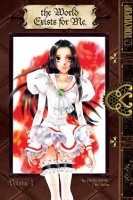
The World Exists for Me, Volume 1The World Exists for Me, Volumes 1-2 written by Be-Papas and illustrated by Chiho Saito. The literal translation of the Japanese title for The World Exists for Me would actually be The World of S and M. Though I’m sure it was intentionally chosen, it’s a rather peculiar title for a rather peculiar manga. Only two volumes were ever published, but I get the feeling that The World Exists for Me was originally conceived of as a much longer work. The ending comes very suddenly and very little, if anything, is actually resolved. The series definitely had some potential–I found its use of time travel, destiny, and historical figures and events to be interesting–but the story never quite pulls together as something particularly coherent. It’s a bit of a mess, really. While it can be enjoyable, it doesn’t really make much sense at all. The World Exists for Me was developed by the same creators involved with the Revolutionary Girl Utena manga. Some similarities can be seen between the two series, but I much prefer Utena.


Filed Under: FEATURES, My Week in Manga Tagged With: Be-Papas, Chiho Saito, manga, Mitsuru Hattori, Sankarea, Satomi Yamagata, Shigeru Mizuki, Showa: A History of Japan, World Exists for Me

My Week in Manga: December 2-December 8, 2013

December 9, 2013 by Ash Brown

My News and Reviews

I posted two reviews here at Experiments in Manga last week. The honor of the first in-depth manga review for December goes to Yoshikazu Yasuhiko’s Mobile Suit Gundam: The Origin, Volume 3: Ramba Ral. The fourth volume in the series is scheduled to be released this month, so I wanted to make sure to catch up with my reviews. Though I wouldn’t call myself a Gundam fan, I’m still really enjoying The Origin manga. The second review was for Ivan Morris’ The Nobility of Failure: Tragic Heroes in the History of Japan. Originally published in 1975, the work was recently brought back into print by Kurodahan Press. It’s an extremely illuminating and fascinating volume. I also announced the Fairy Tail Feast Winner last week. In case you’re looking for some epic manga to read, the post also includes a list of series that have had at least thirty volumes published in English.

I’ve come across quite a few manga-related things online recently. Sadly, that includes the news that PictureBox will no longer be releasing any new titles. PictureBox had some fantastic manga releases this year, including the start of the Ten-Cent Manga and Masters of Alternative Manga series. It also released The Passion of Gengoroh Tagame. PictureBox’s closing means that the previously announced anthology Massive: Gay Erotic Manga And The Men Who Make It, originally scheduled for release in 2014, is now in limbo.

In happier news, Manga Bookshelf’s MJ was interviewed at Diamond Bookshelf–Understanding Manga: Editor MJ Discusses CBLDF Presents Manga. I thought that Manga: Introduction, Challenges, and Best Practices was a great resource when I read it, so it was interesting to hear about some of the behind-the-scenes work that went into it.

And speaking of interesting interviews, Organization Anti-Social Geniuses has been Talkin’ Seven Seas and Manga Business With Conner Crooks. Crooks is the Social Media Manager at Seven Seas, which has been having a very good year. Part 1 and Part 2 of the interview series are currently available. Part 3 should be posted on Tuesday.

Continuing on with the Seven Seas theme, Sean Gaffney took a look at the publisher’s recently announced licenses over at A Case Suitable for Treatment. And if you’re interested in all of the anime, manga, artbook, and light novels that were licensed in 2013 (as well as related successful crowdfunding projects), Reverse Thieves has you covered with All the Titles Fit to License, 2013 Edition.

Quick Takes

Hero Heel, Volume 2Hero Heel, Volumes 2-3 by Makoto Tateno. Out of the boys’ love manga by Tateno that I have so far read, I think that Hero Heel is probably one of her better works. At least it has some of the most interesting and believable character development. Although that being said, I’m not sure that I’m entirely convinced by the ending, but that might just be because I feel bad for Katagiri. Minami in particular goes through a lot of change as the series progresses. In the first volume he’s almost the villain of the story, blackmailing and forcing his feelings on Sawada. By the end of Hero Heel he’s a much more sympathetic character and has matured significantly. As for Sawada, he comes across as rather harsh from the start, though how much of an asshole he really is isn’t revealed until later. The themes of hero and villain and what it means to be a good person are very prominent in Hero Heel. It’s interesting to see the parallels between the characters that Minami and Sawada play on the superhero show they costar in and their lives off the set.

Pretty Guardian Sailor Moon: Short Stories, Volume 2Pretty Guardian Sailor Moon: Short Stories, Volume 2 by Naoko Takeuchi. For the most part, I think I probably enjoyed the second (and final) volume of Sailor Moon short stories more than I did the first. In general, they don’t rely as heavily on knowledge of the main series; a basic understanding of the Sailor Moon universe is sufficient to follow the short manga in the second collection of stories. Well, at least that’s true for the first two stories. The third short manga “Parallel Sailor Moon” requires a bit more, and even then it’s a really strange, almost nonsensical piece. I much preferred the first two stories in the collection. “Princess Kaguya’s Lover” is the longest and most involved, basically amounting to a one-sided love story between Luna and Dr. Ohzora, an astronomy professor. It has space and astronauts, which I’ll admit to having a fondness for, so that made me happy. (Takeuchi even visited the Kennedy Space Center on a research trip for the story.) “Casa Blanca Memory” is a shorter work featuring Rei, which also made me pretty happy.

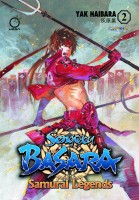
Sengoku Basara: Samurai Legends, Omnibus 2Sengoku Basara: Samurai Legends, Omnibus 2 (equivalent to Volumes 3-4) by Yak Haibara. I get a huge kick out of the Sengoku Basara: Samurai Legends manga. I’ve never played Sengoku Basara 2–the video game on which it is directly based (it hasn’t been released in North America)–nor have I seen any of the Sengoku Basara anime (though I may make a point to check it out now), but I do have some familiarity with the Warring States period. Because of the number of characters, battles, alliances, castles and such to keep track of in Samurai Legends, which are all based on historical figures and events, that familiarity has come in handy. Overall, I think the first omnibus of Samurai Legends was a little stronger than the second omnibus. The last half of the series has a few continuity problems in the artwork, and there are some characters who are introduced more because they are a part of the franchise than because they had an important role to play in the manga, but it was still a lot of fun. I really enjoy the series’ over-the-top fights, characters, and dialogue.

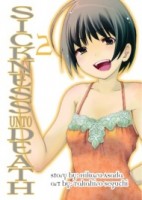
Sickness Unto Death, Volume 2Sickness Unto Death, Volume 2 written by Hikari Asada and illustrated by Takahiro Seguchi. Probably because it doesn’t employ nearly as many clichés, the second volume of Sickness Unto Death is much better than the first. Granted, the first volume was needed to set it up the whole scenario; I just think it could have been handled better. But the payoff is mostly satisfying. Even so, the manga still makes me vaguely uncomfortable, and not in the way I think it was intended to. The problem I have with the story of Sickness Unto Death stems from the way Emiru’s case is handled. That Kazuma wants to help and treat her I’m fine with. In fact, there’s some really interesting conflicts of interest and ethical and philosophical questions that arise because of it. At its best, Sickness Unto Death has some marvelously dark psychological elements to it. What particularly bothers me about the series is that Kazuma’s continued “treatment” of Emiru is actually encouraged by his professor, which is highly irresponsible not to mention unprofessional.

Filed Under: FEATURES, My Week in Manga Tagged With: Hero Heel, Hikari Asada, Makoto Tateno, manga, Naoko Takeuchi, sailor moon, Sengoku Basara, Sickness Unto Death, Takahiro Seguchi, Yak Haibara

My Week in Manga: November 25-December 1, 2013

December 2, 2013 by Ash Brown

My News and Reviews

To start things off, I would like to thank everyone who voted in the poll to pick my next monthly review project. I am very pleased to announce that over the next year I will have a series of reviews that focuses on yuri and lesbian comics and manga. A Year of Yuri took an early lead in the poll and earned just under half of the votes. I’m now in the process of determining exactly which comics I’ll be reviewing for this project. Nothing has been finalized yet, but ideally there will be a good variety of both old and new titles. I’d also like to thank those of you who took time to comment on the poll as well. I was sincerely interested in reviewing all of the choices; taking into consideration all of your input and suggestions, I’m currently working on other ways to review some of the manga outside of a monthly review project. I had fun with the poll, so thank you again for indulging me!

There was a mix of different posts at Experiments in Manga last week. Of particular note, the monthly manga giveaway–a Fairy Tail Feast–is currently in progress. I completely underestimated the popularity of Fairy Tail; I’ve never had so many people turn out for a giveaway before. Not even for Tezuka. There’s still time to enter for a chance to win volumes thirty, thirty-one, and thirty-two of Hiro Mashima’s Fairy Tail manga. And as a bonus the winner of the giveaway will also receive a copy of the anime movie Fairy Tail: Phoenix Priestess! November’s Bookshelf Overload was also posted last week as was my review for Ichiya Sazanami’s manga Black Bard. It’s a bit of a mess, but I still had a lot of fun reading it; I couldn’t resist the combination of music and magic.

Since last week was Thanksgiving here in the United States (my favorite holiday!) I was doing quite a bit of traveling. So, I probably missed out on a lot of the week’s manga news. But there are still a couple of links that I’d like to mention here: The most recent Speakeasy Podcast focused on Crunchyroll’s new manga project. And over at Manga Bookshelf proper, MJ posted a Status Update & Station Identification which includes a shout-out to Experiments in Manga which joined the Manga Bookshelf family a few months ago. (She also described my mind as “deeply eloquent” which absolutely made my day. Hopefully I can continue to live up to her expectations!)

Quick Takes

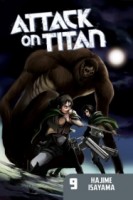
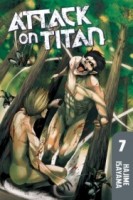
Attack on Titan, Volume 9Attack on Titan, Volume 9 by Hajime Isayama. The mysteries keep piling up in Attack on Titan. It makes me wonder how long Isayama will be able to keep the series going without it collapsing under its own weight. The more ideas and plot twists he adds to the story, which can admittedly be very exciting, the less focused Attack on Titan becomes. I have no idea how much Isayama has thought through to the end or how much he is making up as he goes. It’s very possible that he could he write himself into some sort of absurd corner. That being said, I am hooked on the series and I really want to know what’s going on. This particular volume reveals more about some of the secondary characters, especially Sasha, Connie, Krista, and Ymir. It also provides the setup for what will be some very big plot reveals. The artwork in Attack on Titan continues to be incredibly uneven, which is unfortunate. There are a few brilliant panels and the titans are appropriately disconcerting, but the artwork remains one of the manga’s weakest points.

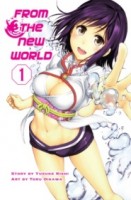
From the New World, Volume 1From the New World, Volume 1 written by Yusuke Kishi and illustrated by Toru Oikawa. Honestly, I am more interested in reading Kishi’s original From the New World novel (and I’m still hoping that it will one day be licensed), but it’s the anime and manga adaptations that are currently available in English. After reading the first volume of the manga, I want to read the original novel more than ever. From the New World has a fantastically dark ambiance. I also have an established fondness for dystopias and tales of survival. Unfortunately, the level and intensity of fanservice in the manga feels out of place distracts from what could be an extremely intriguing premise. Saki’s clothing choices in particular are ridiculous and could hardly be described as functional. (Bizarrely enough, some of the outfits aren’t really all that attractive, either.) I’m not even going to try to explain Maria’s underwear. Still, all of the moments in between the nonsensical bath and sex scenes are legitimately engrossing. I do plan on continuing on with From the New World for at least a little longer.

Gold Pollen and Other StoriesGold Pollen and Other Stories by Seiichi Hayashi. The first volume in PictureBox’s Masters of Alternative Manga, Gold Pollen and Other Stories collects four of Hayashi’s short manga from the late sixties and early seventies–“Dwelling in Flowers,” “Red Dragonfly,” “Yamanba Lullaby,” and the three chapters from the unfinished “Gold Pollen”–in addition to an autobiographical essay by Hayashi and an essay by the series’ editor Ryan Holmberg. I am particularly grateful for the inclusion of these essays for they reveal some of the semi-autobiographical aspects of Hayashi’s manga that I would have otherwise missed. It is clear that his mother and the concept of what a mother should be influenced him greatly. Each of the manga included in the volume deals with motherhood at least tangentially if not directly. While the manga share some similar characteristics and themes, each is distinctive in both storytelling and art style. Hayashi’s use of color is also rather striking. Gold Pollen and Other Stories is an excellent start to the series; I’m looking forward to future volumes a great deal.

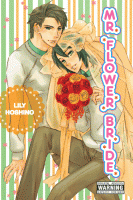
Mr. Flower BrideMr. Flower Bride / Mr. Flower Groom by Lily Hoshino. The powerful Souda family has an unusual marriage custom–in order to prevent disputes over inheritance, the younger sons in the family are partnered with male brides. The basic premise of the two Mr. Flower volumes could have easily been the basis for a comedy manga. But instead, Hoshino plays it straight, honestly addressing the personal challenges and issues that the characters have to deal with in regards to arranged marriage with the additional twist that they both happen to be the same sex. Mr. Flower Bride and Mr. Flower Groom follows two related couples with similar plots–both brides are already in love with their reluctant husbands and both pairs have to navigate jealousy and come to terms with their developing relationships. However, the stories do play out differently. The two Mr. Flower manga end up being rather sweet and even a little lovey-dovey in places, which is not to say that the newlyweds do not have their problems. I enjoyed both volumes, but Mr. Flower Groom has the more interesting gender dynamics of the two.

Kaiji: Against All RulesKaiji: Against All Rules directed by Yūzō Satō. If I had to choose, I think I enjoyed the first Kaiji anime series slightly more, though I liked the second one, as well. The stakes in the first series were incredibly high–the gamblers were literally risking their lives. To some extent this is still true in the second series, but for the most part the large amounts of money involved have become more prominent than life and limb. The ways of cheating, counter-cheating, and general manipulation of the games in the second series also tend to be much more outlandish, convoluted, and unbelievable than in the first. However, it is impressive for how long, and for how many episodes, a single pachinko game can be stretched. By the end of the series I was starting to anticipate some of the major plot twists and developments before they actually happened which unfortunately made the big reveals much less effective. Even so, there were still a few surprises in store and Kaiji remains an incredibly intense and dramatic anime.

Filed Under: FEATURES, My Week in Manga Tagged With: anime, attack on titan, From the New World, Hajime Isayama, Kaiji, Lily Hoshino, manga, Masters of Alternative Manga, Mr. Flower, Seiichi Hayashi, Toru Oikawa, Yusuke Kishi

My Week in Manga: November 18-November 24, 2013

November 25, 2013 by Ash Brown

My News and Reviews

I’ve never run a poll before, so I’m probably more excited about this than I should be, but you all currently have the opportunity to vote on my next monthly manga review project. I’ve narrowed it down to five different options–a mix of individual series and thematic collections–and am letting readers decide which manga I will be focusing on next. Check out the post for all the details. The poll will run through the end of November, so please come and vote!

Last week I posted my review of Hinoki Kino’s manga No. 6, Volume 3. I am very happy to be able to say that the series continues to improve. I’m really looking forward to the next volume. And for your reading pleasure, here are a couple of interesting articles that I happened across online last week: A Short History Of Japanese Sign Language (with a fascinating connection to manga) and Are Comics Too Hot For Apple?, about the impact of Apple’s inconsistent policies when it comes to digital comics, including manga.

Quick Takes

Darkside BluesDarkside Blues written by Hideyuki Kikuchi and illustrated by Yuho Ashibe. I think I’ve suspected it for a while, but reading Darkside Blues seems to confirm it–Kikuchi may have some great ideas and settings for his stories, but he can’t quite seem to focus long enough to pull them all together into something coherent. Darkside Blues features many of the elements that I’ve come to expect from Kikuchi’s work: a mix of near-future technology, magic, and bizarre horror; evil organizations bent on taking over the world, crushing those that would stand in their way; a tall, dark, and handsome (well, androgynously beautiful) anti-hero. I’m fairly certain the manga is related to Kikuchi’s Demon City universe, or at least it makes reference to it. There are some great scenes here and there, but the story as a whole is a mess and doesn’t make much sense. Kikuchi claims that the story is complete, but it feels like a small part of something much larger. However, I did like Ashibe’s artwork, and so will probably look into tracking down Bride of Deimos because of that.

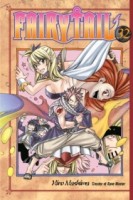
Fairy Tail, Volume 32Fairy Tail, Volume 32 by Hiro Mashima. Now that the preliminaries are over, the Grand Magic Games proper have begun. Eight teams will be competing in the Games which consists of a mix of event challenges and battles. The teams themselves represent guilds that have been encountered in the series before as well as a few new ones. One thing that irked me a little was that there are actually two teams from Fairy Tail participating. That in itself didn’t bother me, but the fact that it was played up as a surprise (to both the readers and the characters) was unconvincing. Also, it has been established that Fairy Tail has always been one of the weakest guilds to participate in the Games, so I find it a little difficult to believe that not one but two teams made it past preliminaries this year. That annoyance aside, the event challenge in this volume was actually pretty interesting. I appreciate that the players have to put some actual thought and strategy into it instead of simply relying on who can out-magic the other. Magical skill certainly helps, but being clever is important, too.

I'll Be Your SlaveI’ll Be Your Slave by Miki Araya. I’ll admit it. I laughed. Several times. Out loud, even. I’ll Be Your Slave is so incredibly ridiculous, and intentionally so, that I just couldn’t help it. Moriya is having a difficult time finding the perfect model for his project when he happens across Ouno, a beautiful but extraordinarily lazy teenager. Fortunately, Ouno’s job will basically amount to him sitting around and looking pretty. He’s easily tired and loses interest in things quickly, but if he doesn’t want to put the effort into doing something he simply lets someone else do it for him. (This even includes walking from place to place.) Moriya is more than willing to pamper Ouno. Mopping up sweat? Check. Foot massages? Check. Sex? Sure, why not! I’ll Be Your Slave is definitely more of a comedy than it is a romance. The humor is great and the over-the-top reaction shots–complete with dramatic poses and bursts of sparkles–are hilarious. The characters admittedly don’t have much depth to them, but that’s also part of what makes the manga so funny.

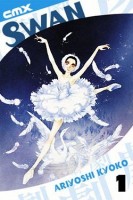
Swan, Volume 1Swan, Volumes 1-3 by Kyoko Ariyoshi. While I appreciate and admire dance and dancers, and even watch dance performances from time to time, I’ve never had a particular interest in ballet. That’s probably the primary reason that it took me so long to get around to reading Swan. (It’s also out of print and some of the volumes can be a little hard to find.) But, I kept hearing how wonderful Swan was, so I finally made a point of seeking it out. I should have done it sooner, because it really is a fantastic series. I may not be a dancer but I am a trained musician; there are many parallels between the two arts seen in Swan with which I can personally identify. The importance of basics. The grueling practices that push the body, mind, and soul to their breaking points. The good-natured competition and the vicious rivalries. The passion, drama, frustration, and desire that go hand in hand with creative expression. The complete joy experienced with success and the utter despair felt at failure. Swan is incredible; I can’t wait to read more.

Filed Under: FEATURES, My Week in Manga Tagged With: Darkside Blues, Fairy Tail, Hideyuki Kikuchi, Hiro Mashima, Kyoko Ariyoshi, manga, Miki Araya, swan, Yuho Ashibe

My Week in Manga: November 11-November 17, 2013

November 18, 2013 by Ash Brown

My News and Reviews

Last week was apparently “Blade of the Immortal Week” here at Experiments in Manga. I finally got around to reading and reviewing Blade of the Immortal: Legend of the Sword Demon, a novel written by Junichi Ohsako with illustrations by Hiroaki Samura, which is a re-imagining of the early part of the manga series. Honestly, I was disappointed with it and would only recommend the novel to fellow Blade of the Immortal completists. I also reviewed Blade of the Immortal, Volume 27: Mist on the Spider’s Web. With that review, I have now caught up with the English released of the Blade of the Immortal manga series. And so, I wrote some random musings on Wrapping Up the Blade of the Immortal Monthly Review Project.

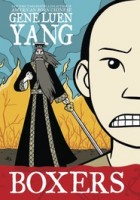
And now for a few interesting things found online last week. SciFi Japan has a great interview with Zack Davisson, the translator for the recently released Showa: A History of Japan by Shigeru Mizuki. The School Library Journal’s Good Comics for Kids has an interesting roundtable on Gene Luen Yang’s Boxers & Saints. Takako Shimura’s Wandering Son, Volume 4 is one of the nominees for the 2014 Rainbow Book List. (As is Julie Maroh’s Blue Is the Warmest Color, for that matter.) And finally, Kodansha Comicss participated in Reddit’s Ask Me Anything. I haven’t had the chance to read through all of the comments yet, but what I’ve read so far has been interesting.

Quick Takes

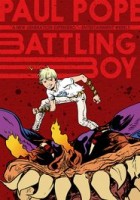
Battling BoyBattling Boy by Paul Pope. I have enjoyed Paul Pope’s work in the past and so I was very excited for the release of Battling Boy, his most recent graphic novel. What I didn’t realize was that it was the first volume in what will be at least a two-volume series, not including the recently announced prequel The Rise of Aurora West. It was a little frustrating to reach the end of Battling Boy just when things were really starting to pull together only to discover that it stops without any sort of conclusion and not even much of a cliffhanger. Still, Battling Boy is a tremendous amount of fun and I did enjoy it. I appreciate Pope’s offbeat humor and slightly surreal and absurd storytelling. The artwork’s pretty great, too. Following the eponymous demigod Battling Boy as he struggles to complete his coming-of-age ceremony and become a hero, the graphic novel is Pope’s original take on the superhero origin story. While he brings his own touch to the genre, there are plenty of influences from other comics (such as Batman and Thor to name two) that can be seen in the work.

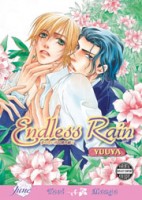
Endless RainEndless Rain by Yuuya. I’ve not had particularly good luck with the boys’ love that I’ve been reading recently and Endless Rain hasn’t changed that. I can’t say that I enjoyed this one-shot much at all. Despite having a happy ending (which I am not at all convinced would happen) the manga isn’t particularly pleasant and includes what basically amounts to forced prostitution. The plotting is sloppy, the narrative is difficult to follow and at times doesn’t make any sense, and the characterization is inconsistent. With Hyougami’s vendetta against the Kasuga family and the bad blood between Akira Kasuga and his father Endless Rain had some potential, but Yuuya doesn’t quite pull it off. Maybe if the manga was a little longer it wouldn’t have been such a mess. As it is, Yuuya tries to cram in too much and it ends up rushed. The only part of Endless Rain that I really liked was Iwao–a scarred and severe-looking yakuza who dotes on Akira’s younger brother. Contrary to his appearance, he’s actually a very sweet guy. Unfortunately, he only briefly shows up as a side character.

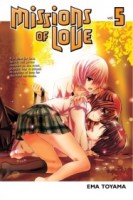
Missions of Love, Volume 5Missions of Love, Volume 5 by Ema Toyama. Although I am familiar with the basic premise of Missions of Love, I haven’t actually read any of the series until this volume. When I heard the manga described it seemed so trope-filled that I just couldn’t muster up any interest in it despite the rather provocative covers. But now I’m kind of sorry that I missed out on the earlier volumes. Yes, there are quite a few tropes being used, but the twisted romantic relationships are mesmerizing even if they aren’t particularly healthy. None of the characters are really very nice people and their interactions are a mess of lies and manipulation. Missions of Love is very suggestive and scandalous even though all that really happens in this volume (well, except for the emotional exploitation) is a bit of ear nibbling. I can see why others call Missions of Love addicting; I know that I want to read more. The only thing that really annoyed me about Missions of Love is how Yukina’s glasses are drawn (or rather how the aren’t drawn)–the lines used are so minimal that they barely seem to exist at all.

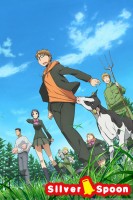
Silver SpoonSilver Spoon directed by Tomohiko Ito. Based on the award-winning manga series Silver Spoon by Hiromu Arakawa (which was in part inspired by her experiences growing up on dairy farm), the Silver Spoon anime adaptation is quite well done. The series is very forthright and honest about where food comes from, including the raising and slaughtering of animals for meat. I know that particular subject will distrub some viewers, but I think it is something that is important for people to understand and the anime does handle it very well. Many of its characters are also conflicted over it. One of the major story lines of Silver Spoon has to do with Hachiken, the protagonist, trying to come to terms with what it is he eats. However, life and the taking of it is treated with immense respect in the series. I myself grew up in a farming community among the cows, corn, and soybeans (my neighbors actually happened to be dairy farmers), and so I could appreciate Silver Spoon‘s realistic portrayal of the challenges faced by those who make their living caring for animals and crops.

Filed Under: FEATURES, My Week in Manga Tagged With: anime, Battling Boy, comics, Ema Toyama, manga, missions of love, Paul Pope, Silver Spoon, Yuuya

My Week in Manga: November 4-November 10, 2013

November 11, 2013 by Ash Brown

My News and Reviews

Last week I announced the winner of the Sankarea manga giveaway. The post also includes a list of zombie manga that has been licensed in English, for those who might be interested. Considering the recent popularity of zombies, I was actually a little surprised to discover there weren’t more. I also posted two reviews last week. The first was for Makoto Kobayashi’s What’s Michael, Book Two, a fantastic cat manga sent to me by a Manga Bookshelf reader for review. My second review from last week was for Coffinman: The Journal of a Buddhist Mortician by Shinmon Aoki, which was the inspiration for Yōjirō Takita’s award-winning film Departures.

And now for a few things that I’ve come across online over the last couple of weeks. Crunchyroll Manga is now up and running. Deb Aoki wrote a good article about it for Publishers Weekly–Kodansha, Crunchyroll Talk Global ‘Simulpub’ Manga . At A Case Suitable for Treatment, Sean took a quick look at the manga series currently being offered through the platform–Kodansha and Crunchyroll Partnership: What Are We Getting?. Mostly unrelated, Kodansha posted on its Tumblr account a great summary of why some manga may never be licensed in North America, even if it’s really good. Rob Vollmar’s essay for World Literature Today “Dark Side of the Manga: Tezuka Osamu’s Dark Period” is actually from last year, but was recently brought to my attention again. And finally, the Comic Book Legal Defense Fund focused on Gene Luen Yang’s Boxers & Saints (which I think is one of the best comics to be released this year) as part of its Using Graphic Novels in Education column.

Quick Takes

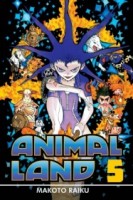
Animal Land, Volume 5Animal Land, Volumes 5-8 by Makoto Raiku. It took a few volumes for Animal Land to really grow on me, but now that it has I find that I quite like the series. The occasional focus on scatological humor feels a bit out-of-place to me, though it seems to have become less common as the series progresses. The artwork in Animal Land is a little strange–a combination of realism and anthropomorphism–but generally engaging. The characters, particularly Taroza, are very likeable. I have enjoyed watching him grow up. A newborn at the beginning of the series, by the end of the eighth volume he has become a young man who has had to face the hard truths about his idealism. Taroza wants to put an end to the cycle of killing and eating, but to do so will require him to throw all of Animal Land into turmoil. He is not the only one who has an interest in shifting the power dynamics of the world–four other humans have made themselves known and have their own ideas about how things should be. I was a little surprised to see a bit of science fiction and time travel work its way into Animal Land, but I am very curious to see how things continue to develop.

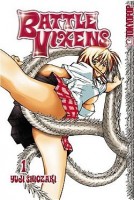
Battle Vixens, Volume 1Battle Vixens, Volume 1 by Yuji Shiozaki. Supposedly, Battle Vixens (aka Ikki Tousen) is somehow based on, or at least inspired by the classic Chinese historical novel Romance of the Three Kingdoms. Had I not known this going into the series, I’m not sure I really would have picked it up from reading the first volume. As far as I can tell, the references are barely there. (Which reminds me, I really do need to get around to finishing Romance of the Three Kingdoms.) What is readily apparent from the first page of the manga is that the English title, Battle Vixens was aptly chosen. The series is all about the fights and the fan service. There might be some sort of plot, too, but after only one volume I am still incredibly confused as to what is actually supposed to be going on. Basically there’s this girl, Hakufu Sonsaku, with a sizable chest and the penchant for getting into brawls. Towards what end? I am unsure. She simply seems predisposed to violence and having her clothes ripped off of her in the process. For a series based on fights the action unfortunately tends to be somewhat difficult to follow, but some of the panels have great composition.

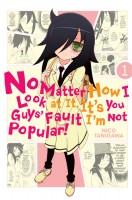
Watamote, Volume 1No Matter How I Look at It, It’s You Guys’ Fault I’m Not Popular!, Volume 1 by Nico Tanigawa. Okay, I’m just going to refer to this series by its Japanese abbreviation WataMote because I can never seem to remember the title in its entirety. (Plus, it’s really long.) WataMote is simultaneously one of the most funny and depressing manga that I’ve read recently. The story follows Tomoko Kuroki, an extraordinarily awkward and socially inept young woman who has just started high school. Most of her “life experience” has come from reading manga and playing video games, which may explain why she has difficulty interacting with her classmates. They mostly just ignore her or at least tolerate her existence. Occasionally she tries to be more than the weirdo in the corner, but it doesn’t often turn out well for her. I care about Tomoko and find her to be a sympathetic character which is why her trials and errors, though humorous, can also be a bit painful to watch. WataMote isn’t exactly mean-spirited, but it’s not particularly pleasant either. Her interactions with her younger brother are fantastically awkward (granted, all of Tomoko’s relationships are awkward), but there are some glimpses of familial love, too.

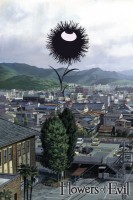
Flowers of EvilFlowers of Evil directed by Hiroshi Nagahama. Based on the manga series by Shuzo Oshimi, the Flowers of Evil anime series is a phenomenal adaptation. It’s one of the rare cases where I might actually prefer the anime over the original manga. That being said, the anime is definitely not a series that everyone will be able to enjoy. First of all, the pacing is excruciatingly slow. It worked for me and I think it creates marvelous tension, but someone who needs a bit more action and forward movement from their anime will be very frustrated. Not much actually happens from episode to episode; the focus is more on the inner turmoil and crises of the characters. The animation also relies heavily on rotoscoping techniques, resulting in a style that doesn’t personally bother me, but I know plenty of people who can’t stand it. I think it was suitable for Flowers of Evil, creating a slightly disconcerting and surreal mood that fits the unsettling atmosphere and darker nature of the series. The use of music and silence in the series is also quite remarkable. The twisted triangle of a relationship between Kasuga, Nakamura, and Saeki is intense. The Flowers of Evil anime captures it perfectly using art film-like sensibilities.

Filed Under: FEATURES, My Week in Manga Tagged With: animal land, anime, Battle Vixens, Flowers of Evil, Makoto Raiku, manga, Nico Tanigawa, Watamote, Yuji Shiozaki

My Week in Manga: October 28-November 3, 2013

November 4, 2013 by Ash Brown

My News and Reviews

I have been so incredibly busy recently (which is why I don’t have any fun online discoveries to share with you all this week) but I was still somehow able to post a few things here at Experiments in Manga. The most recent manga giveaway is underway and there is still time to enter for a chance to win Sankarea: Undying Love, Volume 1 by Mitsuru Hattori. For those of you interested in the absurd amount of manga that make its way onto my bookshelves, October’s Bookshelf Overload was also posted. And finally, I reviewed the second edition of Hedi Varian’s The Way of Taiko. I myself am a taiko player, and there are very few books in English devoted to taiko, so I am very happy to see the volume back in print in a new edition.

Quick Takes

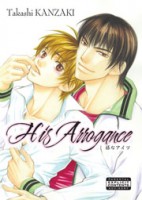
His ArroganceHis Arrogance by Takashi Kanzaki. Despite being part of Digital Manga’s 801 Media imprint, His Arrogance isn’t exceptionally explicit. It’s also not very interesting and I found myself bored with both the story and the characters. Even the artwork, while fairly solid, wasn’t particularly outstanding or noteworthy. Although, occasionally Kanzaki would capture a look of utter adoration that was delightful to see. Ryou’s father established a modeling agency specifically to aid Ryou’s older brother Tomohito in his career. In addition to helping out with the company, Ryou also lives in the dorms with the models. Kazuto is one of those models, one of Ryou’s classmates, and the self-proclaimed rival of Tomohito. I think I would have enjoyed His Arrogance more if Kanzaki would have kept the manga’s focus on Ryou and Kazuto’s relationship. Instead, Ryou’s rather bizarre and vaguely incestuous bond with his brother severely encroaches upon the story. Perhaps it was supposed to be played as comedy, but it just ends up being kind of weird and awkward.

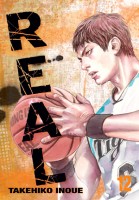
Real, Volume 12Real, Volume 12 by Takehiko Inoue. Many people assume that Inoue’s masterpiece Vagabond would be my favorite of his manga, but that honor probably goes to his series Real. I absolutely love Real, and I’m not even a huge fan of basketball. Although the sport is certainly an incredibly important part of the series, to me Real is much more about the characters themselves, their internal and external struggles, and their development as people. While the previous volume had a particular focus on Nomiya and his tryout for the Tokyo Lightnings, the twelfth volume turns its attention to Togawa and his efforts to become a better team player–something that is extremely difficult for him. Despite of or maybe because of his natural skill as an athlete, Togawa has always been very critical, harsh, and demanding of his fellow players. If there is a theme to Real, Volume 12, I would say that it is change, and specifically the need, desire, and willingness for change. Several of the manga’s characters must make important decisions about who they are and who they want to be in this volume.

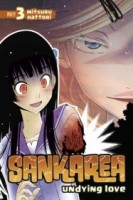
Sankarea: Undying Love, Volume 3Sankarea: Undying Love, Volume 3 by Mitsuru Hattori. The best thing about the third volume of Sankarea? Rea’s father isn’t in it. (That guy is an utter creep.) Hattori also introduces an important new character–Darin Arciento Kurumiya, who is very interested in zombies and therefore very interested in Rea. She also brings along with her a marvelously ridiculous zombie owl. In addition to Kurumiya’s introduction, this particular volume also focuses on Rea and her attempt to return to school after her zombification. There are some challenges, to say the least. Her body continues to decay and fall apart and since she doesn’t really feel pain anymore she has a tendency to overtax herself physically. I was a little surprised to see how toned-down the extraneous fanservice was in this volume. It’s still there, but it’s not nearly as prominent or distracting as it once was. I am honestly enjoying Sankarea much more than I ever expected that I would. It’s a very odd series with very odd characters and I can appreciate its quirkiness. Rea and Chihiro are both weirdos, but they make a cute not-quite-couple.

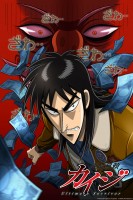
KajiUltimateSurvivorKaiji: Ultimate Survivor directed by Yūzō Satō. After watching and enjoying Akagi, watching Kaji seemed to be a natural choice. It’s another anime series based on a manga Nobuyuki Fukumoto featuring some exceptionally intense and legitimately life-threatening gambles. But whereas Akagi is calm, cool, and collected, Kaiji is hot-blooded and frenetic. (The actor who voiced Akagi also voiced Kaiji; I was quite impressed by his range and how differently he was able to play the two characters.) Kaiji also has extremely bad luck. His troubles really begin when a friend defaults on a loan that Kaiji agreed to co-sign. A man comes to collect but Kaiji, himself in debt, has no way to repay the loan. But he is given an extraordinary opportunity to clear the debt by participating in a series of absurd and increasingly dangerous gambles. Kaiji is incredibly intense and occasionally disturbing with a huge focus on the psychological aspects of the story and the mental torment and despair of its characters. Even a seemingly simple game of rock-paper-scissors can be a traumatic experience.

Filed Under: FEATURES, My Week in Manga Tagged With: anime, Kaiji, manga, Mitsuru Hattori, real, Sankarea, Takashi Kanzaki, Takehiko Inoue

My Week in Manga: October 21-October 27, 2013

October 28, 2013 by Ash Brown

My News and Reviews

Last week I reviewed Takako Shimura’s Wandering Son, Volume 5. The series is personally very important to me, so I’m always happy when a new volume is released. Sadly, we probably won’t see the next volume until next year. Last week I also posted Discovering Manga: Podcasts Redux. It’s a quick update on some of the podcasts that I’ve listened to and written about in the past. It also outlines my plan to write more podcast posts since my previous ones seem to have been fairly popular. If you have a manga podcast that you think I should check out, do let me know!

On to good stuff found online! A commenter on my recent post Random Musings: Queer Theory, Japanese Literature, and Translation linked to a fascinating article from earlier this year: Talking about (a)sexuality in Japanese. Over at Publishers Weekly, Deb Aoki has a great recap of Manga at New York Comic Con. Misaki C. Kido gives seven reasons Why Felipe Smith Is the Only Mangaka from America (So Far). And some of the most interesting news from last week: Crunchyroll will begin to digitally distribute Kodansha manga, providing access to new chapters the same day they are released in Japan. (Including some titles not previously available in English!) It should be interesting to see how this venture develops.

Quick Takes

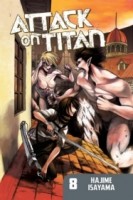
Attack on Titan, Volume 8Attack on Titan, Volume 8 by Hajime Isayama. The mystery of the Female Titan has been solved! Or, at least one of the mysteries–the identity of the person is who is controlling it. The reasons behind why and for what purpose are still unknown. For every question that is answered in Attack on Titan it seems as though there are even more to be asked. This particular volume includes a huge (dare I say titanic?) plot reveal which ends with a fantastic confrontation between Hanji and Minister Nick. (As an aside, I love that Hanji is a canonically gender ambiguous character.) One of the major secrets dealing with the walls is literally uncovered, but has yet to be fully explained. Attack on Titan continues to get stranger and stranger. For those who have been watching the Attack on Titan anime but who have thus far been avoiding the manga for one reason or another (I know plenty of people who can’t get past the terribly inconsistent artwork), the eighth volume is where you’ll want to pick the series up if you want to see any more of the story any time soon.

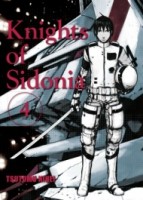
Knights of Sidonia, Volume 4Knights of Sidonia, Volumes 4-5 by Tsutomu Nihei. I am still enjoying Knights of Sidonia, but it frequently strikes me as a peculiar mix of science fiction horror and romantic comedy. But whatever genre it falls into at any given time, I do think the manga is Nihei’s most accessible work to date. Occasionally I still miss his grittier style of illustration, but the cleaner and somewhat simpler artwork in Knights of Sidonia has really grown on me. One of the things that amuses me tremendously is that Nagate is frequently seen stuffing food into his face. This emphasizes how much of an oddity he is compared to the rest of society on the Sidonia. And he is rather odd. His social interactions can be very awkward and often he is completely oblivious to his faux pas until it’s too late. (Let’s just say that it’s fortunate that he heals quickly.) The Gauna continue to be daunting adversaries. While at first they were terrifying enigmas, over the course of the series they have adapted and evolved and have even adopted (or at least mimicked) human technology and tactics, making them even more frightening.

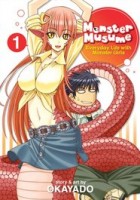
Monster Musume, Volume 1Monster Musume: Everyday Life with Monster Girls, Volume 1 by Okayado. Monster Musume is a harem series that attempts to distinguish itself by featuring monster girls. There is absolutely no question that Monster Musume is an ecchi manga, so unsurprisingly there are a lot of boobs and other bits. (I’m still trying to figure out how a snake can have a camel toe.) Kurusu Kimihito is an average guy who was “volunteered” for an exchange program between human and part-human species. He has become the host family for Miia, a lamia who is overly fond of him (inter-species canoodling is forbidden). Overwhelmed, he is constantly in a state of near-panic. As the first volume of Monster Musume progresses, bad puns and groan-inducing wordplay become increasingly prominent. (I’m one of those odd people who actually appreciates this sort of intentionally and ridiculously terrible dialogue, though.) It’s not at all a deep story–and I do wonder where all the monster boys are–but Monster Musume can actually be rather entertaining on occasion.

Filed Under: FEATURES, My Week in Manga Tagged With: attack on titan, Hajime Isayama, knights of sidonia, manga, Monster Musume, Okayado, Tsutomu Nihei

My Week in Manga: October 14-October 20, 2013

October 21, 2013 by Ash Brown

My News and Reviews

It was another two-review week last week. My Blade of the Immortal review project continues with Hiroaki Samura’s Blade of the Immortal, Volume 26: Blizzard. The volume includes the conclusion to the battle between Manji and Shira and it does not disappoint. The second review posted last week was for Tomoyuki Hoshino’s novel Lonely Hearts Killer. It’s not easy reading, and I didn’t like it quite as well as Hoshino’s collection of short fiction We, the Children of Cats, but I found it to be an intriguing work.

Last week I also had the opportunity to attend a fascinating lecture on queer theory, Japanese literature, and translation. I decided to share some of my random musings on the topics. So far the post seems to have been well received, which makes me pretty happy.

There were a couple of particularly interesting posts by Erica Friedman over at Yuricon last week. Her New York Comic Con report includes more information about One Peace Books’ licensing of Takashi Ikeda’s yuri manga Whispered Words. (I’m looking forward to the release of Whispered Words a great deal.) Also interesting was her post A Very Important Thing About Licensing Manga Fans Don’t Really Understand which explains a few of the complexities involved in licensing manga for English-reading audiences.

Quick Takes

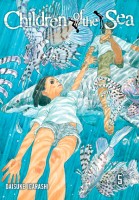
Children of the Sea, Volume 5Children of the Sea, Volume 5 by Daisuke Igarashi. In Japan, the fifth and final volume of Children of the Sea was released three years after the fourth volume was published. The English-language edition of the series likewise followed suit. But the end is finally here! I was actually surprised that the fifth volume was the conclusion of the series. To me it felt as though Igarashi had much more in store for Children of the Sea. I don’t know the circumstances surrounding the series’ end, but I am a little sad that he wasn’t able to develop it further. However, almost everything is tied up satisfactorily plot-wise and the series’ sense of mystery and awe remains intact. Children of the Sea is like modern myth. There is relatively little dialogue and narration in the fifth volume; Igarashi’s artwork really carries the manga at this point. And that artwork is absolutely beautiful. The attention given to the realistic details of the water and sea-life is stunning.

Devil's InfirmaryDevil’s Infirmary by Aco Oumi. Asakura is a physician at an all boys’ school who is not above accepting sexual advances from the students. Things get a little more complicated when Higurashi walks in on Asakura getting a blow job, but Asakura has a few compromising photographs with which to blackmail Higurashi into keeping quiet about it. Supposedly Asakura is in love with Higurashi, but I’m really not convinced. Their relationship is a very inappropriate one and Asakura, though he has a few redeeming qualities, is actually kind of creepy. (But Higurashi’s pretty cute.) At the same time, there are some legitimately funny and occasionally even hilarious moments in Devil’s Infirmary, too. One of Higurashi’s closest friends has a “sparkle problem” that unfortunately brings him unwanted attention from a few of the other students. It’s rather entertaining to see Higurashi try to pose as his boyfriend to deflect some of that interest. And then there’s Asakura’s mother who bribes her gay son into buying her yaoi manga.

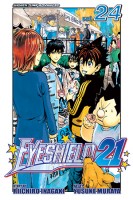
Eyeshield 21, Volume 24Eyeshield 21, Volumes 24-27 written by Riichiro Inagaki and illustrated by Yusuke Murata. By this point I am no longer surprised that I enjoy Eyeshield 21. I still don’t have a particular interest in American football (and I doubt I ever will even considering the number of years I spent in marching band), but the characters, comedy, and art in the series are great. These four volumes are devoted to the Kanto Tournament game between the Deimon Devil Bats and the Ojo White Knights, both teams fighting to advance one step closer to the Christmas Bowl. The Devil Bats are considered to have one of the best offenses in the tournament but the White Knights are considered to have the best defense. The White Knights also have Seijuro Shin–as perfect a player as there can be. The game ends up being very close, and therefore very exciting; Inagaki keeps the readers guessing right up to the very last second. Murata’s dynamic artwork continues to be one of the highlights of the series. His creative imagery is a little more restrained in these volumes, focusing more on the action of the game and slightly less on its psychological impact, but it’s definitely still there.

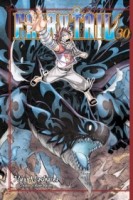
Fairy Tail, Volume 30Fairy Tail, Volume 30 by Hiro Mashima. With these volumes, Fairy Tail launches into a new story arc. The technique that Mashima uses–a time skip–isn’t all that unusual for a lengthy shounen manga series. What makes it different, and something that I personally haven’t encountered before, is that only part of the cast jumps ahead while most of the main characters are stuck in time. It makes it a little more interesting when returning after seven years that they have to come to terms with the fact that so many of their friends (and enemies) have changed and grown more powerful. The time skip also serves the purpose of “resetting” the story–Fairy Tail is once again one of the weakest guilds and has to fight its way back to the top. But instead of facing off with evil wizards and guilds, this time they’ll be competing in the Grand Magic Games. Honestly, I’m not quite as interested in this particular turn of events, but at least there should be some entertaining trials and competitions as a result.

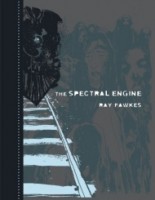
The Spectral EngineThe Spectral Engine by Ray Fawkes. I am not especially familiar with Ray Fawkes–an award-winning and frequently award-nominated Canadian creator–and so I was unaware of the upcoming release of The Spectral Engine. Happily, a review copy unexpectedly showed up in the mail. Otherwise, I would probably have completely missed it and that would have been a shame. The Spectral Engine is a great graphic novel and I’m glad I had the opportunity to read it. The artwork in particular is excellent, using dark, dripping lines and ink spatter reminiscent of the smoke and grime of the titular engine to effectively create an unnerving atmosphere appropriate for the ghost stories being told. The Spectral Engine weaves together thirteen tragic historic events from many different time periods and locations across Canada. These retellings are paired with their related modern-day hauntings and reports of unexplained phenomena. In many cases the names and lives of the dead have been forgotten, but their stories and legends live on.

AkagiAkagi, Episodes 14-26 directed by Yuzo Sato. While the first half of Akagi had several different mahjong matches, the second half focuses on one: Akagi Shigeru versus Washizu Iwao. It also features a very special and slightly terrifying version of mahjong in which three-quarters of the tiles are transparent (which are beautifully animated). This reveals more of the players’ hands and greatly changing the dynamics of the game. (Though initially a fictional game, Washizu Mahjong sets now really do exist.) The game with Washizu also provides Akagi with something that he’s been looking for–a literal death match. Instead of money, he’s gambling with his blood and therefore his life. Akagi is a fearless and fearsome player and the game is ridiculously intense as a result. There’s skill, and there’s luck, but even more important are the psychological attacks used to provoke and manipulate the other players. Even when most of the tiles can been seen there’s still plenty of room for bluffing . I love mahjong and unsurprisingly I loved Akagi, too.

Filed Under: FEATURES, My Week in Manga Tagged With: Aco Oumi, Akagi, anime, children of the sea, comics, Daisuke Igarashi, Eyeshield 21, Fairy Tail, Hiro Mashima, manga, Ray Fawkes, Riichiro Inagaki, Yusuke Murata

My Week in Manga: October 7-October 13, 2013

October 14, 2013 by Ash Brown

My News and Reviews

I posted two in-depth reviews last week, one manga and one not. The first review was for Makoto Yukimura’s Vinland Saga, Omnibus 1. I was trying coordinate my review with the manga’s release, but unfortunately there was a delay through some distributors so not all of the books have yet arrived where they should. I’ve been hoping that Vinland Saga would be licensed in English for years. I wasn’t disappointed by the first omnibus and am looking forward the next one a great deal. The second review posted last week was for Laura Joh Rowland’s The Shogun’s Daughter. The novel is the seventeenth volume in her series of Tokugawa-era mystery and crime novels but the first one that I’ve actually read. I was annoyed by parts of the novel but the use of actual Japanese history is quite clever in The Shogun’s Daughter.

As for fun things found online, the most recent column of The Mike Toole Show, “Tiles Against Humanity,” focuses on mahjong anime and manga, particularly Akagi and Kaiji. I’ve professed my love of mahjong here at Experiments in Manga, so I’m always happy to come across others writing about the subject. This past weekend was the New York Comic Con and there were quite a few announcements to come out of it. My Manga Bookshelf cohorts have write-ups of the panels they attended: MJ’s can be found under the NYCC tag and Sean’s are listed in the NYCC/NYAF category.

Some of the licenses at NYCC that particularly caught my attention include (but are certainly not limited to) Black Rose Alice by Setona Mizushiro, Terra Formars, and the Battle Royale side story Angels’ Border from Viz (which should go nicely with Haikasoru’s recently announced Battle Royale materials); Kodansha picked up two Attack on Titan spin-offs, Before the Fall and No Regrets (yup, the shoujo one) in addition to the Attack on Titan Junior High gag manga and the guidebooks; Vertical is also getting in on the Attack on Titan action, picking up the Before the Fall light novel series, and has also licensed Moyoco Anno’s manga In the Clothes Named Fat.

Quick Takes

Nana, Volume 19Nana, Volumes 19-21 by Ai Yazawa. Wow, this is one heck of a place for Nana to leave off–the tragedy that has been alluded to for so long has finally occurred and it is absolutely devastating. More and more of the series has actually been devoted to the incident’s aftermath and how it continues to affect the characters even years later, but the twenty-first volume is all about its immediate consequences. Heartbreaking only begins to describe it. Nana is a phenomenal series with fantastic characterizations. After Shin’s arrest, both the Black Stones and Trapnest begin to fall apart and the band members’ individual problems start to spin out of control. It’s very dramatic but the progression of the story feels natural and the characters’ development, reactions, and behaviour are all believable. Even if the series is never finished, Nana is well worth reading. I continue to be extremely impressed by Yazawa’s work. I wish her all the best as she continues to recover her health.

Pretty Guardian Sailor Moon: Short Stories, Volume 1Pretty Guardian Sailor Moon: Short Stories, Volume 1 by Naoko Takeuchi. Though it is not my favorite series, I enjoy Sailor Moon and am happy to see it doing so well. Kodansha released the main series in twelve volumes and is collecting the related short stories and bonus manga into two additional volumes. That being said, the short stories don’t really stand on their own very well. Fans of Sailor Moon will definitely be interested in them, but their appeal probably won’t extend very far beyond that. The stories in the first volume all tend towards the sillier, more lighthearted side of the series, focusing more on the characters’ everyday lives and less on their monumental confrontations with those who would destroy humanity. Although, there is a some of that, too. And the Sailor Guardian’s daily lives can be pretty hectic. I found the first volume of short stories to be mostly entertaining, but I would sigh a little bit to myself every time there was a dig at someone becoming “chunky.”

Sengoku Basara: Samurai Legends, Omnibus 1Sengoku Basara: Samurai Legends, Omnibus 1 (equivalent to Volumes 1-2) by Yak Haibara. I tend to be fairly wary of video game manga and so I ended up enjoying the first omnibus of Sengoku Basara: Samurai Legends far more than I ever expected. Samurai Legends is based on Sengoku Basara 2, the second game in the Sengoku Basara series, but no prior knowledge of the franchise is needed to enjoy the manga. Inspired by prominent historical events and figures of the Warring States Period, the story begins with the death of Oda Nobunaga at the burning of Honnou Temple and then follows the resulting power struggle. With marvelously over-the-top and dynamic battles and duels, humorous anachronisms, larger-than-life characters, and attractive artwork and designs, Samurai Legends is a tremendous amount of fun. There’s even a tiny bit of legitimate history, too. Samurai Legends is pretty great; I’ll definitely be picking up the second and final omnibus.

Yuri Monogatari, Volume 3Yuri Monogatari, Volumes 3-4 by Various. Although it was the third Yuri Monogatari collection that was nominated for a Lambda Literary Award, out of these two volumes I actually much prefer the fourth. Yuri Monogatari is an anthology that collects short, lesbian-themed comics from Japan, America, and Europe. I am glad to have discovered Yuri Monogatari for no other reason than the series has introduced me to the work of Althea Keaton–whose contributions continue to be some of my favorites–but I enjoy the other comics included as well. I was particularly fond of Tomomi Nakasora’s “Kissing the Petal” which not only features an endearing lesbian couple but also their close friend Chii, a transman who’s looking for a girlfriend. Yuri Monogatari has a nice mix of speculative fiction as well as pieces that are based in reality. The artwork isn’t always the strongest, but the stories are consistently engaging. Some are sweet while others are more sorrowful, but they’re all generally positive in tone.

Attack on TitanAttack on Titan directed by Tetsurō Araki. I’m not at all surprised that Hajime Isayama’s manga Attack on Titan was selected for an anime adaptation–it almost seems to be begging for it. For people who can’t get past the varying quality of Isayama’s artwork but who are still interested in the series’ story, the anime makes a good alternative and the animation is much more consistent. Some of the events are revealed in a slightly different order–the anime tends to be more chronological and employs fewer extended flashbacks than the manga–but otherwise the anime series is a very faithful adaptation of the original. Established fans of the manga will find things to like, too. It’s very cool to see the three-dimensional maneuvering gear in action, which something that the manga can’t convey to the same extent. The music in the Attack on Titan anime is also suitably epic with sweeping orchestral and choral pieces effectively increasing the drama of the humans’ confrontations with the titans.

Filed Under: FEATURES, My Week in Manga Tagged With: Ai Yazawa, anime, attack on titan, comics, manga, nana, Naoko Takeuchi, sailor moon, Sengoku Basara, Yak Haibara, yuri monogatari

My Week in Manga: September 30-October 6, 2013

October 7, 2013 by Ash Brown

My News and Reviews

It’s the beginning of one month and the end of another, which means it’s one of the slower weeks here at Experiments in Manga. I announced the winner of the Arisa manga giveaway. The post also includes a list of some of the manga available in English that feature twins. For those of you who are interested in the absurd amount of manga and other related materials that make their way into my home, September’s Bookshelf Overload was also posted. Finally, the honor of the first in-depth manga review for October goes to Satoshi Kon’s Tropic of the Sea. I thought it was fantastic. Hopefully it does well and more of Kon’s manga will be able to be released in English.

For anyone looking for more anime and manga blogs to follow, CryMore.Net (formerly known as Whiners.Pro) has put together the most comprehensive list of active sites that I’ve seen. (And yes, Experiments in Manga is included.) If you’re interested in yokai, Matthew Meyer recently launched a Kickstarter project for his most recent artbook/guide The Hour of Meeting Evil Spirits. It’s already met its goal (and I was one of the people to support it), but it’s still worth checking out if you like yokai. I reviewed Meyer’s previous book (also funded through Kickstarter) The Night Parade of One Hundred Demons: A Field Guide to Japanese Yokai and really enjoyed it. I’m looking forward to seeing more of his work in print.

Quick Takes

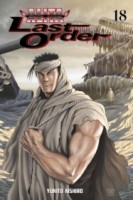
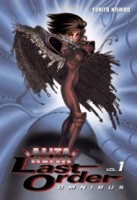
Battle Angel Alita: Last Order, Volume 18Battle Angel Alita: Last Order, Volume 18 by Yukito Kishiro. I could be wrong since I haven’t read the entire series, but I believe that the eighteenth volume of Battle Angel Alita: Last Order is the first volume to prominently feature Figure Four (the burly dude on the cover). A love interest in the original Battle Angel Alita manga, up until this point in Last Order he’s been mostly relegated brief references. The eighteenth volume concludes the fallout from the ZOTT combat tournament with the series’ titular chapter “Last Order” before jumping nearly a year back in time to follow Figure for the rest of the volume. He’s hard at work training in anti-cyber martial arts when he learns that Alita may be dead and so goes searching for both her and the truth. Sechs makes a brief, but important appearance in the volume, which made me happy since Sechs is one of my favorite characters in the series. And as a side note, Kishiro designs some really creepy cyborgs.

Dengeki Daisy, Volume 9Dengeki Daisy, Volumes 9-12 by Kyousuke Motomi. It’s been a while since I’ve read any of Dengeki Daisy. I’d forgotten how much I enjoy the series. Dengeki Daisy is kind of a strange manga, mixing rather mundane school life with hackers and cyber espionage, but I am consistently and highly entertained by it. I really like the quirkiness of characters in Dengeki Daisy. Motomi calls Dengeki Daisy a love comedy, which I suppose in the end it is, but in addition to being funny and occasionally romantic, the series also has a lot of action and drama. Kurosaki’s past and his guilt over it continues to be a major driving force behind the story. His disappearance is resolved fairly quickly, which surprised me, but that fact emphasizes how much he cares for Teru and how much Teru and the others care about him. Motomi has a tendency to use stereotypical shoujo plot devices but then completely turns them on their head. The fake-outs are both effective and refreshing.

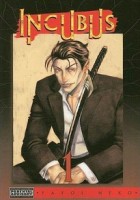
Incubus, Volume 1Incubus, Volumes 1-3 by Yayoi Neko. The mythology in Incubus is fairly complex and the comic’s exposition can be somewhat long-winded, but I overall I’m liking this yaoi series. It has humor and drama, and I’m rather fond of the two leads–a college student named Judas and the surprisingly endearing half-demon Lennial. Judas’ dream sequences are great. In them, the different sides of his psyche try to make sense of what is going on around him as he is repeatedly confronted by demonic powers. The results are often amusing, but his emotional struggles can be heartbreaking. Judas has a very troubled past and what little good there was in it has been torn from him. Not everything has been revealed about his and Lenniel’s history together, but Neko seems to have a firm grasp on the series’ direction. Incubus is currently on hiatus due to the creator’s health–the first three volumes only cover the first half or so of the story–but I look forward to reading more of it if she is ever able to continue the series.

Sickness Unto Death, Volume 1Sickness Unto Death, Volume 1 written by Hikari Asada and illustrated by Takahiro Seguchi. I didn’t know much about Sickness Unto Death before picking it up, but I’m willing to give anything released by Vertical a try. Emiru is a frail young woman suffering from despair–a sickness of the spirit that is causing her body to fail. Kazuma has recently enrolled in college to pursue a career in clinical psychology. When he meets Emiru he not only wants to do all that he can to help her, but he falls in love with her as well. I found the manga’s basic premise intriguing, but in the end I was largely disappointed with the first volume of Sickness Unto Death, though I can’t seem to quite pinpoint why. However, I am still interested in reading the second half. The big reveal as to the cause of Emiru’s despair has been set up and I am very curious about it. I’ll admit that don’t have a lot of confidence, but I am hoping that it will be worth it and that it won’t be something too absurd or overblown.

FreeFree!: Iwatobi Swim Club directed by Hiroko Utsumi. I really enjoyed Free!, finding it to be both a fun and funny series. At times it even manages to be rather touching. The anime has a lot of self-aware goofiness in addition to a decent story and great animation. The swimming in particular is beautifully animated and, for the most part, realistically portrayed. (This also means that there are plenty of muscles to appreciate.) Although it is an important part of the series, Free! is actually less about swimming than it is about the relationships between its characters and their personal struggles and doubts. They all have their own reasons for swimming, but ultimately what brings them together is their desire to connect with one another–swimming just happens to be the way they go about doing it. A second season has been hinted at for the series; I certainly wouldn’t mind seeing more of Free! I’d also love to see it licensed for a physical release.

Filed Under: FEATURES, My Week in Manga Tagged With: anime, Battle Angel Alita, comics, Dengeki Daisy, Free, Hikari Asada, Incubus, Kyousuke Motomi, manga, Sickness Unto Death, Takahiro Seguchi, Yayoi Neko, Yukito Kishiro

My Week in Manga: September 23-September 29, 2013

September 30, 2013 by Ash Brown

My News and Reviews

There were a few different things going on at Experiments in Manga last week. First off is the Arisa manga giveaway. The winner will be announced on Wednesday, so you still have a little time to enter for a chance to win the first and eleventh volumes of Natsumi Ando’s Arisa. The most recent Library Love feature was posted last week, too, which is basically a collection of quick takes of manga that I’ve borrowed from my local library. My quest to read all of Edogawa Rampo’s material available in English also continued. This time I took a look at The Edogawa Rampo Reader, which is a nice introduction to his life and work. The volume collects eighteen of his short stories and essays from over a span of thirty years.

A few interesting things found online: Brigid Alverson interviewed Charles Brownstein of the Comic Book Legal Defense Fund about its new manga guide which will be released later this year. (I reviewed Manga: Introduction, Challenges, and Best Practices not too long ago and found it to be a great resource.) And speaking of the CBLDF, Keiji Nakazawa’s Barefoot Gen was recently highlighted as part of the Using Graphic Novels in Education feature. Finally, Vertical made some licensing announcements at Anime Weekend Atlanta: Tetsuya Tsutui’s manga Prophecy (interestingly enough, Tsutui approached Vertical directly about the license) and Shinobu Hashimoto’s biographical novel Compound Cinematics: Akira Kurosawa and I.

Quick Takes

Arisa, Volume 8Arisa, Volumes 8-11 by Natsumi Ando. The true King has been revealed! As has that person’s motivations and back story, which are suitably dark and dramatic. Arisa and its characters are all pretty twisted–the King isn’t the only one with serious issues. The most stable character in Arisa is probably Tsubasa, but sometimes I wonder about her, too. It’s not just anyone who would pretend to be someone else, after all. At times Arisa can be extraordinarily over the top with its action and melodrama, but that’s probably one of the reasons I find the series so absorbing. Some of it comes across as unintentionally ridiculous, though. But for every development that’s laughable, there’s another that is effectively disturbing. Arisa is a series that’s really easy to tear through. Despite all of the twists and turns in its plot (or maybe because of them) the manga reads very quickly. With only one volume left to go in the series, I’m very curious to see how things will play out.

Black Jack, Volume 7Black Jack, Volumes 7-9 by Osamu Tezuka. Every once in a while I get the urge to read a bunch of Black Jack. Since the series is fairly episodic, it’s easy to pick up even if it’s been a while since I’ve read any of the manga. There were a couple of things that particularly struck me about these volumes. First of all, Black Jack should really stay away from cliffs as he seems to have a habit of falling off of them. Secondly, since Black Jack is an unlicensed doctor, it probably shouldn’t be too surprising that he would have a tendency to become involved with criminals. Often this works out quite well for him–he is able to demand his high prices and the other parties want to keep things quiet, too. However, on occasion Black Jack’s association with organized crime comes back to bite him and he ends up a little worse for wear. As always, I adore Black Jack as a character. I enjoy how much of a bastard he can be while still maintaining a strong sense of integrity.

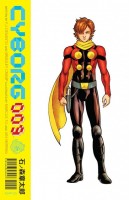
Cyborg 009Cyborg 009 written by F. J. DeSanto and Bradley Cramp and illustrated by Marcus To and Ian Herring. Working closely with Ishimori Productions, Cyborg 009 is a single-volume, hardcover graphic novel adapting Shotaro Ishinomori’s Cyborg 009 manga with a Western audience in mind published by Archaia. The comic is in full-color with updated character designs closer to some of the more recent anime adaptations than the original manga. Actually, the artwork was one of my favorite things about the Cyborg 009 graphic novel. Story-wise it would have benefited from either being a little more focused or a little bit longer. As it is, the graphic novel is very compressed and not all of the plot lines introduced are adequately developed. But it is fun and quickly paced, not to mention beautifully presented; hopefully it will encourage readers to seek out the original material. Also of note: the back cover indicates that Cyborg 009 is “Ishimori Universe Book 1.” I know that I’d be very interested in seeing more collaborations between Archaia and Ishimori.

The Day I Become a ButterflyThe Day I Become a Butterfly by Sumomo Yumeka. Although The Day I Become a Butterfly was released under Digital Manga’s Juné imprint, two of the six collected stories aren’t at all boys’ love and a few of the others could be argued not to be as well. Yumeka describes the short manga in The Day I Become a Butterfly as inexplicable (she also admits to not liking them), but I think I would call them poetic. Instead of being straightforward narratives, the stories are quiet and almost impressionistic. They tend to be fairly introspective and melancholy; the desire for acceptance from others is a recurring theme throughout the volume. Yumeka’s artwork is lovely, although some of the character designs seem to be reused from one story to the next. Normally this might not be much of a problem, but because some of the stories in The Day I Become a Butterfly are interrelated it was sometimes confusing when the characters from an unrelated story looked like some of the recurring characters.

AkagiAkagi, Episodes 1-13 directed by Yuzo Sato. I love mahjong and Akagi is one of the mahjong series. I was thrilled when Crunchyroll picked up the anime for streaming. (I hold no illusions–mahjong manga and anime is very niche and unlikely to ever receive a physical release in North America.) Watching Akagi has actually improved my game a bit. It has also taught me how to cheat…not that I would. People who are at least vaguely familiar with mahjong will probably get more out of Akagi than those who aren’t, but it’s not necessary to understand the minutia of mahjong to enjoy the anime. The series can be surprisingly brutal at times and the games are intense–high stakes, crooked cops, yakuza, violence, manipulation. A huge emphasis is put on the psychological elements of the game. Akagi is a brilliant player and absolutely ruthless, both at the table and away from it. He seems to be afraid of nothing and is extremely ballsy. I’m really looking forward to watching the series’ second half.

Filed Under: FEATURES, My Week in Manga Tagged With: Akagi, anime, arisa, black jack, Bradley Cramp, comics, Cyborg 009, F. J. DeSanto, Ian Herring, manga, Marcus To, Natsumi Ando, Osamu Tezuka, Sumomo Yumeka

My Week in Manga: September 16-September 22, 2013

September 23, 2013 by Ash Brown

My News and Reviews

Well, I somehow managed to post three reviews last week. This is a little unusual for me as normally I only have one or two ready to go. The first review was for Hinoki Kino’s No. 6, Volume 2. The pacing, characterization, and world-building improves on the first volume, which I was very glad to see. (I’m really hoping that the manga will have a better ending than the anime.) The second review was for Yoshiyuki Tomino’s Mobile Suit Gundam: Awakening, Escalation, Confrontation, an omnibus of a trilogy of early Gundam novels–the first part of the Gundam franchise to be officially released in English. (To be honest, though, I much prefer Yoshikazu Yasuhiko’s manga series Mobile Suit Gundam: The Origin.) I also reviewed Sherlock Bones, Volume 1 by Yuma Ando and Yuki Sato. I was very skeptical going into the series, but found the first volume of the manga to be surprisingly entertaining.

As for a few interesting things found online: Comic Natalie has announced the winners of its first annual manga awards. If you don’t read Japanese and can’t identify manga by their covers, Vertical compiled a list of the winners currently avilable in English (in addition to posting a hint for an as of yet unannounced Vertical license.) As reported by the Business Standard, Viz Media is apparently entering the market in India–Top Manga publisher set to make India entry. And if the relationship between Kodansha Comics, Del Rey/Del Rey Manga, and Random House has you confused, Kodansha posted a brief explanation/clarification of the situation on its Tumblr account.

Quick Takes

Attack on Titan, Volume 7Attack on Titan, Volume 7 by Hajime Isayama. The terror in Attack on Titan has started to shift. At the beginning of the series the fear was much more about the unknown–the titans were these terrifying creatures beyond comprehension. But now the fear is coming from the knowledge that other humans may very well have a hand in what is happening. There have been plenty of deaths in Attack on Titan, but when those deaths involve characters who you’ve gotten a chance to know instead of just being nameless faces, suddenly the casualties carry even more weight. It makes the terror, frustration, and utter despair experienced by the characters even more palpable. Attack on Titan is dark, and it has been from the start, but the developments in the seventh volume pack quite a punch. I’ve had my doubts about the series in the past, and the artwork is still terribly inconsistent and occasionally difficult to follow, but I am hooked on it.

BoxersBoxers & Saints written and illustrated by Gene Luen Yang, colors by Lark Pien. Boxers & Saints is easily one of the best comics that I’ve read this year. The two graphic novels that make up the duology can be read separately, but together they are even more powerful. The work is a retelling of the Boxer Rebellion–a violent uprising against foreign and Christian influence in northern China that took place at the turn of the 20th century. Boxers follows the life of a young man who becomes one of the leaders of the rebellion while Saints shows the conflict from the perspective of a young Chinese woman who converted to Christianity. Although very different in their details and narrative style, the two volumes follow a similar story arc as the characters come of age and find something to believe in, but are then challenged by those beliefs and conflicted over their decisions and actions. The Boxer Rebellion was a complicated and tragic event for both sides of the dispute. Boxers & Saints is a fictional account, but Yang put in a tremendous amount of research into the work. Highly, highly recommended.

Genshiken: Second Season, Volume 1Genshiken: Second Season, Volumes 1-3 by Shimoku Kio. The Genshiken has turned into a fujoshi club. This doesn’t really bother me (I also enjoy BL and yaoi), but to an extent I do miss the greater variety of otaku that were represented in the original series. Still, even the fujoshi have their quirks and differences–the Genshiken has always attracted weirdos. And then there’s the cross-dressing Hato-kun, who for me is really stealing the show in the second season of Genshiken. The only male first-year to join the club, he’s created a very complete and convincing female persona. I find him to be the most interesting new character in the new series and he seems to be the focal point for much of the drama. I’m also particularly enjoying Yajima’s character development. She is uncomfortable with Hato’s cross-dressing but becomes very protective of him. As for the older characters, I was very happy to see Madarame return as he remains one of my favorites. Put him and Hato together in a scene and it’s just perfect.
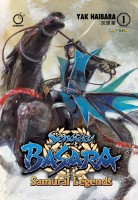
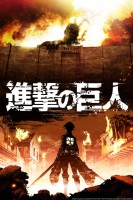
Library Wars, Volume 9Library Wars: Love & War, Volumes 9-10 by Kiiro Yumi. Perhaps it’s because I’m a librarian, but I can’t help but be fond of Library Wars even when it’s not always the strongest series. Sometimes the characters and their interactions are fantastic, and sometimes it seems as if they’re all acting like a bunch of high school students when they’re supposed to be mature, capable adults. Granted, there are some delightfully awkward scenes now that Iku has come to the realization that Dojo is her “prince.” He’s known for quite a while, but he doesn’t know that she knows, yet. It’s all rather amusing. I am very glad that Iku seems to be more competent now than she was at the beginning of the series. I don’t care how enthusiastic a person is, if they don’t have the needed skills for the job there’s not much hope for them. Library Wars is a fantasy, but it actually does address some real issues encountered in the library world. Censorship is the biggest one and at the core of the series, but things like sexual harassment and dealing with inappropriate patron behavior come up, too.

Totally Peeking Under the Sheets, Volume 1Totally Peeking Under the Sheets, Volumes 1-2 by Hajin Yoo. Totally Peeking Under the Sheets is a collection of side stories relating to Yoo’s boys’ love manwha Totally Captivated. It’s definitely intended for those who have read and enjoyed the original series. The first volume contains quite a few short manhwa, some of them only a few pages long. Many of these stories emphasize the more humorous aspects of Totally Captivated and its characters. And as might be expected from the title Totally Peeking Under the Sheets, several stories are also rather racy–what little plot there is is used to get Ewon and Mookyul into bed with each other. (Not that that’s very difficult.) The focus of the second volume is a much longer sequel manhwa called “The Final Chapter.” Although there were some great character moments, the story felt forced to me. Ewon suddenly has to deal with his family, particularly the mother who abandoned him. I’m not sure the situation would have really played out in the way that Yoo presents it. Overall, I much preferred the first volume.

Fist of the North Star, Collection 2Fist of the North Star: The TV Series, Volume 2 (Episodes 37-72) directed by Toyoo Ashida. While the first collection of the Fist of the North Star anime series had quite a bit of filler, the second collection starts to really dig into the plot and characters. The series is much better for it. Plus, the anime has now reached a point in the story beyond the manga that was released in English. Some of the fights do still get to be a little repetitive, especially when the protagonists face off against large groups of unnamed bad guys and minions, but there’s always something about each battle that makes it stand out from the rest. The best fights, though, are those that occur between two martial arts masters. But Fist of the North Star isn’t just about power, skill, and strength (although that’s certainly an important part of it). The series is also about destiny, loyalty, friendship, and love. Kenshiro is a tragic hero who continues to lose those who are close to him. Fist of the North Star is a post-apocalyptic martial arts epic, and I’m loving it.

Filed Under: FEATURES, My Week in Manga Tagged With: anime, attack on titan, Boxers and Saints, comics, Fist of the North Star, Gene Luen Yang, Genshiken, Hajime Isayama, Kiiro Yumi, Lark Pien, library wars, manga, manhwa, Shimoku Kio, totally captivated

My Week in Manga: September 9-September 15, 2013

September 16, 2013 by Ash Brown

My News and Reviews

I posted two reviews here at Experiments in Manga last week. The first was for Yusuke Kishi’s novel of horror and survival The Crimson Labyrinth. Currently The Crimson Labyrinth is the only work by Kishi available in English, but Vertical will begin releasing the manga adaptation of his novel From the New World later this year. (The same From the New World recently had an anime adaptation, too.) I also posted my latest Blade of the Immortal review–Blade of the Immortal, Volume 25: Snowfall at Dawn. The last few volumes of Blade of the Immortal have been building up to the showdown between Shira and Manji; finally the time has arrived when they face each other.

There were a couple of interesting things that I came across online last week. First, there was an interview with Annaliese Christman, a freelance letterer for Viz Media. I didn’t know much about lettering, so I found it to be a very interesting read. The other item I wanted to mention was Dan Kanemitsu’s examination of the impact the upcoming Tokyo Olympics may have on censorship in Japan–Fear and Loathing in the Bold New Olympic Era. (Too long, didn’t read? CBLDF has a nice overview of the article with some additional commentary–Tokyo Olympics Emboldens Censors.)

Quick Takes

Fairy Tail, Volume 29Fairy Tail, Volume 29 by Hiro Mashima. This is only the second volume of Fairy Tail that I’ve had the opportunity to read in its entirety. At this point my general impression is that it’s a fun, but rather generic series. I just can’t seem to shake the feeling that I’ve seen it all before. I do like the variety of magic styles, though. Most of the twenty-ninth volume focuses on the battle between five young members of the Fairy Tail guild and Hades, the guild’s former grandmaster. Although not entirely unexpected, there were some great moments during fight that really show off the group’s teamwork. Fairy Tail moves along quickly with plenty of battles and action sequences. For the most part, Mashima’s art works nicely. However, all of the cuts and scratches that the characters end up with over the course of their fights make them look like they all have scales, which is a little odd. Although for some characters, like Natsu with his dragon abilities, it’s rather appropriate.

Nana, Volume 16Nana, Volumes 16-18 by Ai Yazawa. The more of Yazawa’s manga that I read, the more I am impressed by it. Nana is a fantastic series. The characters are complex and multilayered; the story is dramatic and absorbing without being overwrought. These particular volumes deal just a little less with the music industry and the bands as a whole. Instead, they delve more into the characters’ personal lives. Particularly important is the revelation of Nana and Shin’s pasts as well as their less than ideal family circumstances–something that proves to be very problematic. Also included in these volumes are two lengthy side stories. One shows Nobu and Nana’s relationship back when they were in school together. Similarly, Takumi’s complicated feelings for Reira is the focus of the other. The side stories are a really nice addition to Nana, giving the story even more depth. They show the importance of the characters’ relationships and how they developed over time to become what they are in the series proper. I’m really looking forward to reading the rest of Nana.

Saiyuki Reload, Volume 7Saiyuki Reload, Volumes 7-9 by Kazuya Minekura. While the early part of the series seemed directionless, by the end of Saiyuki Reload Minekura has a great narrative drive going. Some of the plot elements and storylines do unfortunately seem to have been dropped or forgotten (though perhaps she pulls them all back in for the finale) but the manga does benefit from having a stronger focus. What is particularly interesting about these volumes is that the yokai’s side of the conflict is shown in more detail. Although there have been exceptions, for the most part the yokai have simply been the series’ monsters. Minekura makes it very clear here that the yokai are really not all that different from humans and that it is the humans who are sometimes the real monsters. Looking back, this has actually been one of the recurring themes in the series. Although Saiyuki Reload is ten volumes long, only nine volumes were ever released in English. It’s particularly tragic since the ninth volume ends on one heck of a cliffhanger.

Smut PeddlerSmut Peddler by Various. Smut Peddler had its beginnings as a three-issue indie minicomic series back in 2003. In 2012, Smut Peddler returned as a full-length anthology collecting twenty-six short erotic comics. Smut Peddler is a phenomenal collection of sex-positive, lady- and queer-friendly comics. I was particularly happy to see the diversity included in the anthology, not only in terms of the characters’ various identities but in genre as well. Smut Peddler contains science fiction and fantasy as well as reality-based works, both historical and contemporary. The stories are short, sexy, and sweet. Some are more serious and others are more humorous, but they are all heartfelt. I was previously familiar with and already follow the work of many of the creators included in the anthology, but there were plenty of artists and writers who I was encountering for the first time. (I now have even more creators I want to seek out.) Work has already begun on a second Smut Peddler anthology, currently scheduled for release in 2014. I can’t wait.

Velveteen & MandalaVelveteen & Mandala by Jiro Matsumoto. Reading Velveteen & Mandala was a rather odd experience for me. I was consistently engaged while I was reading it, but I wasn’t sure that I actually liked it. But after finishing Velveteen & Mandala I couldn’t seem to get it out of my head which to me is a sign of a good manga. The more I think about it, the more I want to read it again–it’s like a lingering and intense fever-dream (or nightmare.) Velveteen & Mandala is a very strange horror manga with strong psychological elements, extremely black humor, frequent pop culture references, and characters who all seem to be at least slightly insane. The ending’s big twist was something that I suspected from the very beginning of Velveteen & Mandala but that doesn’t make it any less effective. Velveteen & Mandala easily earns it’s 18+ rating–it’s gruesome, violent, and sexually explicit. The manga’s off-beat, weird, and bizarre horror and humor definitely aren’t for everyone, but if you can stomach it Velveteen & Mandala is a strangely intriguing work.

Filed Under: FEATURES, My Week in Manga Tagged With: Ai Yazawa, comics, Fairy Tail, Hiro Mashima, Jiro Matsumoto, kazuya minekura, manga, nana, Saiyuki, Smut Peddler

My Week in Manga: September 2-September 8, 2013

September 9, 2013 by Ash Brown

My News and Reviews

Last week I announced the Blood Lad Giveaway Winner. The post also includes a list of manga licensed in English that feature vampires, too, if you’re looking for something to sink your teeth into. I posted two reviews last week in addition to the giveaway announcement. The honor of the first in-depth manga review for September goes to Shigeru Mizuki’s Kitaro. The manga collects stories from the first three volumes of Mizuki’s yokai classic GeGeGe no Kitaro. I absolutely loved it. I also reviewed Manga: Introduction, Challenges, and Best Practices, edited by Manga Bookshelf’s own MJ and presented by the Comic Book Legal Defense Fund. It’s a great resource and recommended for anyone wanting to learn a bit more about manga. The book’s general release is in December, but it is possible to purchase an early copy directly from CBLDF.

Elsewhere online, Vertical’s licensing and reader survey is now open and will close on September 25. It’s a great way to let Vertical know what you’re reading. If you want you can even suggest manga you’d like to see Vertical publish in English. Related to Vertical manga, Matt Cycyk at Matt Talks About Manga has a nice post about Knights of Sidonia and why fans of Attack on Titan might want to check the series out–Attack on Sidonia: Selling Knights of Sidonia to Attack on Titan Fans. And speaking of manga, I was amused to come across the article Attack on Titan’s author causes a stir with his less-than-stellar sketches at RocketNews24. (Amused since I’m used to hearing complaints about the artwork in Attack on Titan and didn’t realize it was something so shocking.)

Quick Takes

Battle Angel Alita: Last Order, Omnibus 1Battle Angel Alita: Last Order, Omnibus 1-2 (equivalent to Volumes 1-6) by Yukito Kishiro. Although I have been aware of Battle Angel Alita for quite some time I haven’t read any of the manga until now. Last Order is the original series’ immediate successor, serving as a sort of alternate ending. It’s still ongoing in Japan. The manga is a little difficult to jump into without already having some familiarity with the franchise; I frequently found myself confused why certain characters were important to the story and what their motivations were. But by the time I reached the second omnibus I had started to settle into the series and even began to enjoy myself. I like Last Order best when Kishiro isn’t trying to be too serious with the story and focuses more on the action–cyborg battles, ancient Martian martial arts, space karate, and so on. Alita is an appealing lead, but at the moment I think I like the more erratic and unruly supporting character Sechs even better.

Chi's Sweet Home, Volume 10Chi’s Sweet Home, Volume 10 by Konami Kanata. I can always count on Chi’s Sweet Home to bring a smile to my face. Kanata’s color work is lovely and Chi is adorable. I grew up around a lot of cats and continue to be surrounded by them, so I can particularly appreciate Chi’s antics. And with the tenth volume of Chi’s Sweet Home, there are even more kittens romping around–Cocchi and Chi have befriended a pair of sibling kittens. Kanata captures the attitudes and behavior of cats perfectly. Chi has finally come to the realization that she’s a not a human, but she still has a far way to go before mastering all the skills expected of a feline. In many ways Chi’s Sweet Home is very episodic, but there’s also the underlying story of Chi being separated from her original family. By the end of the tenth volume it looks as though she may be getting closer to finding her mother. (She’s easily distracted, though.) Generally the series is funny and sweet, but there’s a bit of sadness and drama, too.

Diary of SangchulDiary of Sangchul by Hajin Yoo. Two side stories from Yoo’s Totally Captivated boys’ love manhwa were released in English. One of those is Diary of Sangchul, which is a prequel to the main series. It’s not absolutely necessary to have read Totally Captivated in order to enjoy Diary of Sangchul, but the manhwa will probably appeal most to those who have. The majority of the volume is devoted Sangchul’s story through which is shown Mookyul’s rise to power and how he earns the respect of the men who work under him. Dairy of Sangchul also reveals more about Mookyul’s relationship with the Chairman (who looks a lot younger here than he does in the original series.) Diary of Sangchul dovetails quite nicely with Totally Captivated. There is also a short manhwa about Mookyul and the Chairman’s first meeting included in the volume. In the epilogue Yoo goes on to outline the rest of their story. I’m not sure if she ever drew it, but I’m okay if she didn’t–it’s extraordinarily melodramatic.

Helter Skelter: Fashion UnfriendlyHelter Skelter: Fashion Unfriendly by Kyoko Okazaki. I’m always happy to see more josei released in English, but I was especially excited for Okazaki’s debut. Okazaki is a particularly influential josei artist. (The marvelous Moyoco Anno even once worked as her assistant.) The award-winning Helter Skelter is a harsh and brutal tale about the darker side of the entertainment industry. Thanks to drastic and repeated plastic surgery, Liliko is enjoying the height of her career as a celebrity but the operations can only take her so far. As her body begins to deteriorate her life begins to spin out of control. Her obsessions and society’s unrealistic expectations drive her to extremes; in the end she isn’t the only one ruined. Helter Skelther is an startling work. Even though the characters are often unlikeable, the manga is extremely engaging; it’s hard to look away from their unraveling. Helter Skelter works simply as fiction, but it can also be read as a deeper criticism of celebrity culture.

Filed Under: FEATURES, My Week in Manga Tagged With: Battle Angel Alita, chi's sweet home, Hajin Yoo, Konami Kanata, Kyoko Okazaki, manga, manhwa, totally captivated, Yukito Kishiro

  • « Go to Previous Page
  • Page 1
  • Interim pages omitted …
  • Page 13
  • Page 14
  • Page 15
  • Page 16
  • Page 17
  • Go to Next Page »
 | Log in
Copyright © 2010 Manga Bookshelf | Powered by WordPress & the Genesis Framework