• Skip to primary navigation
  • Skip to main content
  • Skip to primary sidebar
  • Home
  • About Us
    • Privacy Policy
    • Comment Policy
    • Disclosures & Disclaimers
  • Resources
    • Links, Essays & Articles
    • Fandomology!
    • CLAMP Directory
    • BlogRoll
  • Features & Columns
    • 3 Things Thursday
    • Adventures in the Key of Shoujo
    • Bit & Blips (game reviews)
    • BL BOOKRACK
    • Bookshelf Briefs
    • Bringing the Drama
    • Comic Conversion
    • Fanservice Friday
    • Going Digital
    • It Came From the Sinosphere
    • License This!
    • Magazine no Mori
    • My Week in Manga
    • OFF THE SHELF
    • Not By Manga Alone
    • PICK OF THE WEEK
    • Subtitles & Sensibility
    • Weekly Shonen Jump Recaps
  • Manga Moveable Feast
    • MMF Full Archive
    • Yun Kouga
    • CLAMP
    • Shojo Beat
    • Osamu Tezuka
    • Sailor Moon
    • Fruits Basket
    • Takehiko Inoue
    • Wild Adapter
    • One Piece
    • After School Nightmare
    • Karakuri Odette
    • Paradise Kiss
    • The Color Trilogy
    • To Terra…
    • Sexy Voice & Robo
  • Browse by Author
    • Sean Gaffney
    • Anna Neatrour
    • Michelle Smith
    • Katherine Dacey
    • MJ
    • Brigid Alverson
    • Travis Anderson
    • Phillip Anthony
    • Derek Bown
    • Jaci Dahlvang
    • Angela Eastman
    • Erica Friedman
    • Sara K.
    • Megan Purdy
    • Emily Snodgrass
    • Nancy Thistlethwaite
    • Eva Volin
    • David Welsh
  • MB Blogs
    • A Case Suitable For Treatment
    • Experiments in Manga
    • MangaBlog
    • The Manga Critic
    • Manga Report
    • Soliloquy in Blue
    • Manga Curmudgeon (archive)

Manga Bookshelf

Discussion, Resources, Roundtables, & Reviews

Katherine Dacey

7 Essential VIZ Signature Manga

April 26, 2012 by Katherine Dacey

Are you an adult reader new to manga? Or a librarian who’s looking to add more graphic novels to your adult collection? Then this list is for you! The VIZ Signature imprint is one of the best resources for adults who read — or are curious about — manga. All of the Signature titles originally appeared in Japanese magazines that cater to grown-up tastes. As a result, the Signature line has broader appeal than many of VIZ’s other imprints, offering something for manga lovers who have “aged out” of Naruto as well as general interest readers who are more likely to discover a graphic novel through The New York Times than The Comics Journal.

Below, I’ve compiled a list of seven titles that best represent the VIZ Signature catalog. In choosing manga for this list, I was less concerned about identifying the “best” titles and more concerned with steering readers towards stories that resonate with their taste in movies, television, and comics. I’ve also focused on more recent series, as some of the line’s older titles — Monster, Sexy Voice and Robo, Phoenix — are out of print. Manga fans are strongly encouraged to add their recommendations in the comments section!

All My Darling Daughters
By Fumi Yoshinaga • 1 volume

The five vignettes in All My Darling Daughters depict women negotiating difficult personal relationships: a daughter confronts her mother about mom’s new, much younger husband; a college student seduces her professor, only to dump him when he tries to court her properly; a beautiful young woman contemplates an arranged marriage. Like all of Yoshinaga’s work, the characters in All My Darling Daughters love to talk. That chattiness isn’t always an asset to Yoshinaga’s storytelling, but here the dialogue is perfectly calibrated to reveal just how complex and ambivalent these relationships really are. Yoshinaga’s artwork is understated but effective, as she uses small details — how a character stands or carries her shoulders — to offer a more complete and nuanced portrait of each woman. (One of my picks for Best New Manga of 2010.)

Recommended for: Readers who liked Drinking at the Movies, Dykes to Watch Out For, Make Me a Woman, and other graphic novels exploring the everyday lives of women; readers who are reluctant to commit to a multi-volume series.

Biomega
By Tsutomu Nihei • 6 volumes
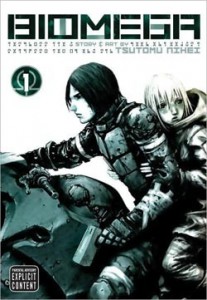
In this sci-fi/horror hybrid, an outbreak of a mysterious virus turns all but one resident of an island colony into zombies. Zoichi Kanoe, a corporate bounty hunter, is sent to retrieve that survivor, only to discover that she’s being guarded by a talking, gun-toting bear. Tsutomu Nihei has the artistic chops to pull off some outlandish stuff, including a rooftop chase scene that borrows a few pages from Bullitt and a spooky Martian prologue that would do John Carpenter proud. Nihei also has the good sense to exercise restraint — if one can describe an apocalyptic zombie scenario with pistol-packing grizzlies as “restrained” — revealing key bits of information only as the characters learn them. The result is a lean, fast-paced shoot-em-up that has just enough thought behind it to make it plausible but not so much that it seems ham-fistedly allegorical. (Reviewed at The Manga Critic on 2/14/10.)

Recommended for: Readers who like science fiction with elements of horror (e.g. Alien, John Carpenter’s The Thing); readers who like zombie fiction, comics, and movies.

Detroit Metal City
By Kiminori Wakasuhi • 10 volumes
Satirizing death metal is a bit like shooting fish in a barrel: how hard can it be to parody a style associated with bands named Cannibal Corpse or Necrophagia? Poking fun at death metal while respecting the sincerity of its followers, however, is a much more difficult trick to pull off, yet Kiminori Wakasugi does just that in Detroit Metal City, ridiculing the music — the violent lyrics, the crudely sexual theatrics — while recognizing the depth of DMC fans’ commitment to the metal lifestyle. Though the musical parodies are hilarious, the series’ funniest moments arise from classic fish-out-of-water situations: Negishi driving a tractor on his parent’s farm while dressed as alter ego Lord Krauser (complete with makeup, fright wig, and platform boots), Negishi bringing a fruit basket to a hospitalized DMC fan while dressed as Krauser… you get the idea. The series begins to run out of gas around volume six, but has the decency not to overstay its welcome. (Reviewed at The Manga Critic on 5/28/09.)

Recommended for: Readers who love musical parodies (e.g. This Is Spinal Tap, South Park, Flight of the Conchords); readers who have fond memories of attending KISS or GWAR concerts back in the day.

House of Five Leaves
By Natsume Ono • 8 volumes
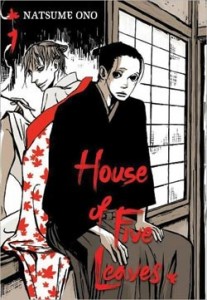
Timid ronin Akitsu Masanosuke can’t hold a steady job, despite his formidable swordsmanship. When a businessman approaches him with work, Masanosuke readily accepts, not realizing that his new employer, Yaichi, runs a crime syndicate that specializes in kidnapping. Masanosuke’s unwitting participation in a blackmailing scheme prevents him from severing his ties to Yaichi; Masanosuke must then decide if he will join the House of Five Leaves or bide his time until he can escape. Though Toshiro Mifune and Hiroyuki Sanada have made entire careers out of playing characters like Masanosuke, Natsume Ono makes a persuasive case that you don’t need a flesh-and-blood actor to tell this kind of story with heartbreaking intensity; she can do the slow-burn on the printed page with the same skill as Masaki Kobayashi (Hara Kiri, Samurai Rebellion) and Yoji Yamada (The Twilight Samurai) did on the big screen. (Reviewed at The Manga Critic on 8/20/10.)

Recommended for: Kurosawa junkies; readers who like costume dramas; readers with an interest in Japanese history.

Oishinbo a la Carte
Story by Tetsy Kariya, Art by Hanasaki Akira • 7 volumes
Equal parts Iron Wok Jan, Mostly Martha, and The Manga Cookbook, this educational, entertaining series explores Japanese cuisine at its most refined — sake, seabream sashimi — and its most basic — rice, pub food. The stories fall into two categories: stories celebrating the important role of food in creating community, and stories celebrating the culinary expertise of its principal characters, newspaperman Yamaoka Shiro and his curmudgeonly father Kaibara Yuzan. (Fun fact: Yuzan is such a food snob that he drove Yamaoka’s mother to an early grave, causing an irreparable break between father and son.) Though the competition between Yamaoka and Yuzan yields some elegant, mouth-watering dishes, Oishinbo is at its best when it focuses on everyday food in everyday settings, shedding light on how the Japanese prepare everything from bean sprouts to ramen. Warning: never read on an empty stomach! (Reviewed at The Manga Critic on 6/24/09.)

Recommended for: Foodies, gourmets, and other people who like to watch the Food Network (or have daydreamed about becoming a restaurant critic); readers who enjoy The Drops of God.

Real
By Takehiko Inoue • 15 volumes (ongoing)
In lesser hands, REAL might have been an Afterschool Special in manga form, an earnest, uplifting story about disabled teens who find a new sense of purpose on the basketball court. Takehiko Inoue, however, steers clear of easy sentiment; his characters are tough, competitive, and profane, occasionally self-pitying, and fiercely determined to create a space for themselves that’s theirs—and theirs alone. Though the court scenes are brief (at least by shonen sports manga standards, where matches can take several volumes to unfold), Inoue captures the speed and energy of his athletes with consummate skill. A funny, honest, and sometimes rueful series that works equally well for teens and adults. (My choice for Best New Manga of 2008 at PopCultureShock; reviewed at The Manga Critic on 5/3/09.)

Recommended for: Basketball enthusiasts; readers who enjoy sports stories with a human interest angle.

20th Century Boys
By Naoki Urasawa • 24 vols.
Naoki Urasawa’s 20th Century Boys tells a twisty, layered story about ordinary people saving the world from annihilation. Other auteurs have explore similar turf — Tim Kring’s Heroes comes to mind — but Urasawa manages to sustain the reader’s interest without succumbing to cliche or unduly testing our patience. The key to Urasawa’s success is strong script with vivid characters and a clear sense of purpose, reassuring the reader that all the plot strands are just that: strands, not loose threads. Crisp, detailed artwork helps sell the more ludicrous aspects of the story, and distinguish the sprawling cast from one another. (Reviewed at The Manga Critic on 1/9/10.)

Recommended for: Conspiracy theory buffs; readers who enjoy television programs that blend elements of science fiction, suspense, and paranoia (e.g. Alcatraz, Heroes, Lost).

Filed Under: Manga, Manga Critic, Recommended Reading Tagged With: Cooking and Food, Drama, fumi yoshinaga, Horror/Supernatural, Naoki Urasawa, Natsume Ono, Sci-Fi, Sports Manga, Tsutomu Nihei, VIZ, VIZ Signature

The Best Manga You’re Not Reading: I’ll Give It My All… Tomorrow

April 25, 2012 by Katherine Dacey 2 Comments

I’m not a big fan of squirm-inducing comedies like The Office; it’s hard to root for a loser who makes everyone uncomfortable with his general lack of self-awareness and humility. Yet The Office was undeniably compelling, even if it was sometimes hard to watch. The genius was in Ricky Gervais’ performance: he embodied a type that we’ve all encountered in our working lives, someone who felt small but used his job to make himself seem bigger or more important than he really was. Gervais never tried to make his character appealing in his vulnerability, and in so doing, forced the audience to confront the fundamental falseness of the lovable loser stereotype; we may feel better about ourselves for identifying with a decent underdog, but we probably have more in common with David Brent than we’d care to admit.

I’ll Give It My All… Tomorrow, an unsparing farce about a forty-year-old father who quits his job to become a manga artist, inspires a similar mixture of love and squick. Shunjo Aono makes no effort to endear his protagonist to readers; Shizuo is a loser with big dreams but terrible follow-through. Like many daydreamers, Shizuo failed to realize that his fantasy job would be just as grueling as the one he quit, a revelation that sends him into a tailspin of binge drinking, prostitution, and video gaming. The first volume’s blunt, unsparing tone yields some squirm-inducing moments that are just a little too truthful to be funny, such as when Shizuo bumps into his eighteen-year-old daughter at a love hotel or parties with younger colleagues.

As the story progress, however, Shizuo spends less time pretending to be twenty and more time writing stories. Volume two opens with a scene of Shizuo pitching an ill-advised story Murakami, the one editor at EKKE magazine who can tolerate Shizuo. Following the dictum of “write what you know,” Shizuo has penned “The History of Me,” an autobiographical comic depicting Shizuo’s ongoing struggle to find his true gift, the thing that, in his own words, makes him “different from other people.” It’s an exquisitely uncomfortable scene, as Murakami must endure Shizuo’s pompous editorializing, making it almost inevitable that Shizuo’s work will be rejected swiftly. Worse still, Shizuo’s journey of self-discovery is anything but; he’s failed at everything he’s tried — street tough, folk singer, salary man — yet hasn’t abandoned the delusion that he’s “too big” for the “little” opportunities he’s been given thus far.

In subsequent volumes, Shizuo’s progress remains fitful, impeded by his ego and his inexperience. When he does have an epiphany, it’s usually because he’s failed spectacularly and must rationalize the choices he’s made. In volume four, for example, Shizuo is assigned to a new editor, Aya Unami. After reading his latest excruciatingly autobiographical manuscript, “Live to 300,” she promptly tells him, “I think you need to know when to give up.” Oguro is initially stunned, but soon realizes that Aya might be the only person with the vision and honesty to help him improve. Whether she’s willing to coach him, and whether he can accept her guidance, however, are a different story; it’s hard to imagine Aono treating this moment as a major breakthrough in Shizuo’s journey from amateur to professional, the first meeting between a gifted natural and the coach who will lead him to stardom.

The artwork mirrors Shizuo’s skill level and emotional maturity: the lines are thick and imperfect, the shapes are basic, and the characters’ bodies are awkwardly proportioned. Shizuo has an enormous, round head that seems ill-suited for his body, and tiny eyes that remind us just how myopic he is in every aspect of his life. (See “bumping into teenage daughter at a love motel,” above.) In a particularly skillful touch, Shizuo’s own drawing mirrors that of Aono’s, only executed with less command of line and form — a subtle reminder that the prevailing aesthetic of both stories is meant to reflect how Shizuo sees the world, not an artistic failing on Aono’s part.

I’m probably making I’ll Give It My All… Tomorrow sound like a colossal downer; after all, it’s hard to laugh at a character who seems so pitiful. Yet for all Shizuo’s self-aggrandizement, there’s something honest about his efforts, and that’s what makes this squirm-inducing comedy readable. We may do our best to be responsible — to hold good-paying jobs, pay our mortgages, and raise our children to be good students and citizens — but for many of us, a soft, nagging voice asks, “Is that all there is?” Shizuo’s decision to act on that doubt isn’t wise or noble, but it’s testament to a deeply human need: to create meaning out of our experiences, and to find proof that our lives are intrinsically interesting to other people. Recommended, though you may want a stiff drink afterwards.

This is an expanded version of reviews that previously appeared at The Manga Critic on 8/20/09, 11/08/10, and 11/28/11.

Filed Under: Manga Critic Tagged With: Manga Movable Feast, Shunju Aono, SigIKKI, VIZ, VIZ Signature

The Best Manga You’re Not Reading: I’ll Give It My All… Tomorrow

April 25, 2012 by Katherine Dacey

I’m not a big fan of squirm-inducing comedies like The Office; it’s hard to root for a loser who makes everyone uncomfortable with his general lack of self-awareness and humility. Yet The Office was undeniably compelling, even if it was sometimes hard to watch. The genius was in Ricky Gervais’ performance: he embodied a type that we’ve all encountered in our working lives, someone who felt small but used his job to make himself seem bigger or more important than he really was. Gervais never tried to make his character appealing in his vulnerability, and in so doing, forced the audience to confront the fundamental falseness of the lovable loser stereotype; we may feel better about ourselves for identifying with a decent underdog, but we probably have more in common with David Brent than we’d care to admit.

I’ll Give It My All… Tomorrow, an unsparing farce about a forty-year-old father who quits his job to become a manga artist, inspires a similar mixture of love and squick. Shunjo Aono makes no effort to endear his protagonist to readers; Shizuo is a loser with big dreams but terrible follow-through. Like many daydreamers, Shizuo failed to realize that his fantasy job would be just as grueling as the one he quit, a revelation that sends him into a tailspin of binge drinking, prostitution, and video gaming. The first volume’s blunt, unsparing tone yields some squirm-inducing moments that are just a little too truthful to be funny, such as when Shizuo bumps into his eighteen-year-old daughter at a love hotel or parties with younger colleagues.

As the story progress, however, Shizuo spends less time pretending to be twenty and more time writing stories. Volume two opens with a scene of Shizuo pitching an ill-advised story Murakami, the one editor at EKKE magazine who can tolerate Shizuo. Following the dictum of “write what you know,” Shizuo has penned “The History of Me,” an autobiographical comic depicting Shizuo’s ongoing struggle to find his true gift, the thing that, in his own words, makes him “different from other people.” It’s an exquisitely uncomfortable scene, as Murakami must endure Shizuo’s pompous editorializing, making it almost inevitable that Shizuo’s work will be rejected swiftly. Worse still, Shizuo’s journey of self-discovery is anything but; he’s failed at everything he’s tried — street tough, folk singer, salary man — yet hasn’t abandoned the delusion that he’s “too big” for the “little” opportunities he’s been given thus far.

In subsequent volumes, Shizuo’s progress remains fitful, impeded by his ego and his inexperience. When he does have an epiphany, it’s usually because he’s failed spectacularly and must rationalize the choices he’s made. In volume four, for example, Shizuo is assigned to a new editor, Aya Unami. After reading his latest excruciatingly autobiographical manuscript, “Live to 300,” she promptly tells him, “I think you need to know when to give up.” Oguro is initially stunned, but soon realizes that Aya might be the only person with the vision and honesty to help him improve. Whether she’s willing to coach him, and whether he can accept her guidance, however, are a different story; it’s hard to imagine Aono treating this moment as a major breakthrough in Shizuo’s journey from amateur to professional, the first meeting between a gifted natural and the coach who will lead him to stardom.

The artwork mirrors Shizuo’s skill level and emotional maturity: the lines are thick and imperfect, the shapes are basic, and the characters’ bodies are awkwardly proportioned. Shizuo has an enormous, round head that seems ill-suited for his body, and tiny eyes that remind us just how myopic he is in every aspect of his life. (See “bumping into teenage daughter at a love motel,” above.) In a particularly skillful touch, Shizuo’s own drawing mirrors that of Aono’s, only executed with less command of line and form — a subtle reminder that the prevailing aesthetic of both stories is meant to reflect how Shizuo sees the world, not an artistic failing on Aono’s part.

I’m probably making I’ll Give It My All… Tomorrow sound like a colossal downer; after all, it’s hard to laugh at a character who seems so pitiful. Yet for all Shizuo’s self-aggrandizement, there’s something honest about his efforts, and that’s what makes this squirm-inducing comedy readable. We may do our best to be responsible — to hold good-paying jobs, pay our mortgages, and raise our children to be good students and citizens — but for many of us, a soft, nagging voice asks, “Is that all there is?” Shizuo’s decision to act on that doubt isn’t wise or noble, but it’s testament to a deeply human need: to create meaning out of our experiences, and to find proof that our lives are intrinsically interesting to other people. Recommended, though you may want a stiff drink afterwards.

This is an expanded version of reviews that previously appeared at The Manga Critic on 8/20/09, 11/08/10, and 11/28/11.

Filed Under: Manga, Manga Critic, Recommended Reading, REVIEWS Tagged With: Manga Movable Feast, Shunju Aono, SigIKKI, VIZ, VIZ Signature

Bookshelf Briefs 4/23/12

April 23, 2012 by Sean Gaffney, Katherine Dacey and Michelle Smith 1 Comment

This week, Sean, Kate, & Michelle look at recent releases from Viz Media, Kodansha Comics, Dark Horse, and JManga.


Blue Exorcist, Vol. 7 | By Kazue Kato | VIZ Media – With this volume, we catch up with Japan, so it will be a while before we get 8. Which is a shame, as there’s once again lots to love here.Blue Exorcist being in Jump Square means it gets 35-40 pages per chapter rather than 20, which I think really helps its pacing. The bad guy is definitely on the rise now, as the true moles have been ferreted out (though the sympathetic one is already regretting her actions). Meanwhile, it seems only Rin can save them – but Rin doesn’t trust his self-control, so is useless. Luckily, Shiemi, in her best scene to date, helps him realize that he’s more than just ‘Satan’s kid with fire that kills’. There’s nothing really original here (this is Jump, let me remind you), but the pieces combine very well, and the action and infodumps do as well (though a few too many flashbacks). This is a solid series that rewards the reader. Now to wait for Vol. 8. –Sean Gaffney

Bono Bono, Vol. 1 | By Mikio Igarashi | JManga – I’m on record as being an animal sap, so it should come as no surprise to anyone that I snapped up volume one of Bono Bono, an award-winning manga about a sea otter and his woodland pals. (No, that’s not a typo. More on the squirrels in a minute.) Much as I like the *idea* of a cute animal comic, however, I didn’t like the comic itself; I felt as if the jokes and philosophical musings were tepid at best. The characters, too, were a disappointment. I don’t mind an artist taking creative liberties with his talking animals, but the juxtaposition of forest- and ocean-dwellers is never rationalized; you’d be forgiven for thinking that Mikio Igarashi settled on bears and chipmunks because he couldn’t muster a decent sea lion. About the best I can say for Bono Bono is that Igarashi’s primitive-cute style has genuine charm; he draws his characters as outlines, rather than fully realized, three-dimensional objects, imbuing the stories with a child-like quality. -Katherine Dacey

Cage of Eden, Vol. 5 | By Yoshinobu Yamada | Kodansha Comics – Perhaps I’ve just gotten used to it, but it felt like there was less blatant fanservice this volume. Of course, it could be that there was simply no time for that sort of thing – half the volume is spent trying to escape a cave filled with murderous teens, and the other half showing that pretending that everything’s the same as always isn’t going to work. More to the point, however, the three focus characters here are all male. Seeing Akira’s bond with Kohei makes the reality that much more tragic (and I appreciated that they noted Kohei could not be forgiven for the murders he’d committed, just understood), and Yarai shows off his utter badass nature while finally being impressed with what Akira can do. His suggestion is a good one – they need a home base, a “country” – and I wonder if it will be taken up in the future. Still good adventure manga writing, if overly focused on the busty female form. –Sean Gaffney

Oh My Goddess!, Vol. 41 | By Kosuke Fujishima | Dark Horse Comics – This volume is back up to a normal page count, but still feels like it’s over too quickly. Of course, that’s because we’re in the middle of a Journey to the Center of Hell – there’s no time for stopping to take in the sights. Keiichi continues to be the brains behind the three goddesses’ brawn, and while I could have done without Belldandy’s “apologize for now saying how awesome Keiichi is” near the end, he has shown himself to be more than just Bell’s morality chain. I also very much liked Thrym, who is a huge powerful bodybuilder girl, and her strength is shown in loving detail. Fujishima’s love of powerful machines extends at times to powerful goddesses/demons, and you can see he had fun drawing Thrym – who, like most of the ‘evil’ cast, is not *really* evil. Recommended for Oh My Goddess readers only, of course. –Sean Gaffney

Skip Beat!, Vol. 27 | By Yoshiki Nakamura | VIZ Media – What a gold mine Yoshiki Nakamura hit when she created the character of Lory Takarada, the eccentric (and that’s putting it mildly) president of the talent agency to which Kyoko and Ren belong. With his quirks well established, it’s perfectly in character for him to dream up kooky schemes to pair up the two leads, and with his position of authority, they can’t exactly refuse. His latest idea is for them to masquerade as a pair of punk rock siblings (in preparation for Ren’s latest role), which involves them living together in a hotel room so that Kyoko can make sure Ren remembers to eat. Ren, predictably, soon starts coming undone with all this close proximity, and in some unexpected ways that offer hints about his past. Kyoko is oblivious as usual, but perhaps not quite as much as she lets on to Ren. It’s good stuff! – Michelle Smith

Filed Under: Bookshelf Briefs

Pick of the Week: Centaurs & More

April 23, 2012 by MJ, Michelle Smith, Sean Gaffney and Katherine Dacey 3 Comments

It’s a sparse week at Midtown Comics, but there’s always something to buy. Check out the Battle Robot’s picks below!


MJ: Okay, I’ll just say it. There’s almost nothing shipping in to Midtown Comics this week. And though volume twelve of GTO: The Early Years is a strong choice by all accounts, I feel rather disingenuous picking it, since I haven’t yet read volume 11. Instead, I’m turning my attention to JManga, which has been putting out some pretty exciting releases lately, including two new volumes from one of my long-time favorites, est em, Apartments of Calle Feliz and Working Kentauros. Though Apartments is the volume *I* covered in yesterday’s Going Digital, the one I’ve really got my eye on now is Working Kentauros, described by Michelle as “Highly, highly recommended.” Salaryman centaurs? BL salaryman centaurs?? Sign me up!

MICHELLE: I suppose it goes without saying that, with an endorsement like that, Working Kentauros is my pick of the week, as well! It’s quirky, charming, and moving, just like one would expect from est em.

SEAN: Um, well. There’s two titles, and I don’t read one of them, so hey, it’s the other one! Admittedly, there’s a good chance I would have chosen GTO: The Early Years, Vol. 12 regardless. As with most of this series (and indeed GTO and 14 Days in Shonan, albeit from a different ‘perspective’, this is about life as a teenager, where you feel no one understands you, where your family is uncaring, where all you have are your friends. Admittedly, it’s still a shonen manga, so there are perhaps a few more drag races, violent punchouts, and moral messages than I recall in my own teenage years, but that’s because Eikichi and Ryuuji are more interesting than I was. It’s actually astonishing how retro this title now seems, given it ran in the early to mid 1990s. Old school is 1995 now? Really?

KATE: “The angst of being a teen. The thrill of being a boat!” So goes the tagline for Dave Roman’s latest project, Teen Boat. Like Astronaut Academy, the premise of Roman’s comic is neatly — one might even say baldly — encapsulated in the title. Teen Boat is a teen who can transform into… well, a boat. If that doesn’t sound like the most fruitful idea for a comic, never fear: Roman brings his trademark wit to the proceedings, poking fun at YA cliches, action-movie tropes, nautical lore, and whatever else pops into his head. John Green’s smart, stylish artwork is the perfect complement to Roman’s script, helping sell the Teen Boat idea at its most ludicrous. And really, how can you *not* like a comic about a boat who loves a girl named Nina Pinta Santa Maria?


Readers, what looks good to you this week?

Filed Under: PICK OF THE WEEK

MMF: An Introduction to the VIZ Signature Imprint

April 22, 2012 by Katherine Dacey 15 Comments

If TOKYOPOP was the company that first embraced the teen market, licensing Sailor Moon and bringing manga to big chain stores, then VIZ was the company that first wooed adult readers, using distinctive packaging and punchy trade names to help older manga fans distinguish stories about boy ninjas from stories about disillusioned samurai. VIZ wasn’t the only company courting older fans, of course; Dark Horse has been synonymous with manly-man manga for most of its licensing history, while TOKYOPOP made several unsuccessful forays into ladies’ comics. VIZ, however, has done more than any major American publisher to create a market for titles like Oishinbo and 20th Century Boys, seinen works that appeal equally to male and female readers in their twenties, thirties, and beyond.

One of VIZ’s first branding experiments was its short-lived Spectrum Editions line (1990-91). VIZ published three seinen titles in a prestige format with vinyl dust jackets, high-quality paper, and a large trim size. Those titles — Natsuo Sekikawa and Jiro Taniguchi’s Hotel Harbour View, Yukinobu Hoshino’s Saber Tiger, and Yu Kinutani’s Shion: Blade of the Minstrel — didn’t make much of a splash in the market, but they anticipated some of the design choices that VIZ would make with its Editor’s Choice and Signature imprints a decade later.

Another important precedent for the VIZ Signature line was PULP: The Manga Magazine. First launched in 1997, VIZ billed its monthly anthology as “manga for grownups,” and featured edgier stories than its companion magazines Animerica and Manga Vizion. Titles such as Banana Fish, Bakune Young, Dance Til Tomorrow, Even a Monkey Can Draw Manga, Short Cuts, Strain, and Uzumaki debuted in PULP before they were collected into graphic novels that bore the magazine’s name.

After struggling to find an audience, PULP was canceled in 2002. The significance of PULP wasn’t lost on its editors, however; when the magazine ceased production, they issued the following statement, summarizing their achievement:

PULP was the first English-language magazine to run the kind of manga that make comics a mass medium for ordinary adults in Japan, from dynamic action narratives to avant-garde ventures, when it debuted in December 1997… PULP offered readers a Japanese comics contrast to both the superhero genre that typifies American comics and the stereotypical “anime-esque” manga often offered to U.S. readers.

After VIZ phased out the magazine, several PULP titles — Dance Til Tomorrow, No. 5 — found a home at the newly created Editor’s Choice imprint. Like PULP, the Editor’s Choice line was designed to appeal to older readers, featuring titles such as Maison Ikkoku, Nausicaa of the Valley of the Wind, Phoenix, and Saikano. The Editor’s Choice imprint had something else in common with PULP: it was short-lived. By 2006, VIZ had rebranded the catalog with the VIZ Signature name, using it to help adult readers distinguish Naoki Urasawa’s Monster from Naruto.

In its six years of existence, the VIZ Signature line has been steadily diversifying to serve a wider audience. Speaking to Publisher’s Weekly in 2009, VIZ Managing Editor Leyla Ayker explained that one of the goals of the line was “to create a balance between the more ‘literary’ works that would appeal to readers of Western graphic novels like Fun Home or Asterios Polyp and the more ‘action’ works that would appeal to readers of American superhero comics and genre fiction.” To that end, VIZ has been licensing a mixture of highbrow titles — All My Darling Daughters, Oishinbo A La Carte, Pluto: Urasawa x Tezuka — and pulp fiction for mature readers — Black Lagoon, Biomega, Dogs: Bullets and Carnage.

The Signature line was never tied to a print magazine, but in 2009, VIZ launched an ambitious collaboration with the Japanese anthology IKKI: select IKKI titles would be serialized online, allowing North American readers to read free monthly updates of series such as I’ll Give It My All… Tomorrow and Saturn Apartments. VIZ would then publish those series as part of its Signature line, with a special logo to distinguish the IKKI titles from other Signature manga. For a year and a half, the site flourished, offering readers a mixture of new comics and feature articles: an interview with Q Hayashida (Dorohedoro), a comic drawn by one of the VIZ designers. By the end of 2011, however, regular updates to the site had ceased, prompting speculation about the future of the project.

Whatever the future of SigIKKI, the project epitomizes what the VIZ Signature line does best: publishing high-quality manga that appeal to a wide spectrum of adult readers As Leyla Aker explained to Publisher’s Weekly:

The reason why IKKI and Signature are such a good fit is because their objectives are the same: to publish series that offer a diverse range of content but that are all marked by creative excellence. Another factor is that both lines are gender-neutral, so to speak; their content is aimed at both adult men and women, which is fairly unusual for manga.

And that, in a nutshell, is the VIZ Signature imprint: 43 titles that run the gamut from kitchen-sink drama (All My Darling Daughtes, Gente: The People of Ristorante Paradiso) to horror stories (Cat-Eyed Boy, Uzumaki), sword-and-sandal epics (Vagabond), science fiction (Bokurano: Ours, Saturn Apartments), thrillers (Black Lagoon, Monster), romances (Ristorante Paradiso), mysteries (not simple, Sexy Voice and Robo), and fantasies (Dorohedoro, GoGo Monster).

N.B. VIZ began designing a new Signature website which remains unfinished as of 4/22/12. In the comments below, reader Eric Rupe notes that VIZ doesn’t seem to have made much progress on the site; links redirect the reader to an empty product page at viz.com.

* * * * *

The goal of this month’s Manga Movable Feast is to create a place where grown-ups can discuss their favorite — or least favorite — VIZ Signature manga. Anyone can contribute: all you need to do is send me a link to an essay, podcast, or review about a VIZ Signature title, and I’ll feature it in one of my daily round-ups. (Email or Twitter are the best way to submit links; Twitter submissions should be directed to @manga_critic.) Note that the feast runs from today (Sunday, April 22nd) through Saturday (April 28th). For more information, please visit the VIZ Signature MMF archive.

Filed Under: Manga Critic Tagged With: Manga Movable Feast, Seinen, SigIKKI, VIZ, VIZ Signature

An Introduction to the VIZ Signature Imprint

April 22, 2012 by Katherine Dacey

If TOKYOPOP was the company that first embraced the teen market, licensing Sailor Moon and bringing manga to big chain stores, then VIZ was the company that first wooed adult readers, using distinctive packaging and punchy trade names to help older manga fans distinguish stories about boy ninjas from stories about disillusioned samurai. VIZ wasn’t the only company courting older fans, of course; Dark Horse has been synonymous with manly-man manga for most of its licensing history, while TOKYOPOP made several unsuccessful forays into ladies’ comics. VIZ, however, has done more than any major American publisher to create a market for titles like Oishinbo and 20th Century Boys, seinen works that appeal equally to male and female readers in their twenties, thirties, and beyond.

One of VIZ’s first branding experiments was its short-lived Spectrum Editions line (1990-91). VIZ published three seinen titles in a prestige format with vinyl dust jackets, high-quality paper, and a large trim size. Those titles — Natsuo Sekikawa and Jiro Taniguchi’s Hotel Harbour View, Yukinobu Hoshino’s Saber Tiger, and Yu Kinutani’s Shion: Blade of the Minstrel — didn’t make much of a splash in the market, but they anticipated some of the design choices that VIZ would make with its Editor’s Choice and Signature imprints a decade later.

Another important precedent for the VIZ Signature line was PULP: The Manga Magazine. First launched in 1997, VIZ billed its monthly anthology as “manga for grownups,” and featured edgier stories than its companion magazines Animerica and Manga Vizion. Titles such as Banana Fish, Bakune Young, Dance Til Tomorrow, Even a Monkey Can Draw Manga, Short Cuts, Strain, and Uzumaki debuted in PULP before they were collected into graphic novels that bore the magazine’s name.

After struggling to find an audience, PULP was canceled in 2002. The significance of PULP wasn’t lost on its editors, however; when the magazine ceased production, they issued the following statement, summarizing their achievement:

PULP was the first English-language magazine to run the kind of manga that make comics a mass medium for ordinary adults in Japan, from dynamic action narratives to avant-garde ventures, when it debuted in December 1997… PULP offered readers a Japanese comics contrast to both the superhero genre that typifies American comics and the stereotypical “anime-esque” manga often offered to U.S. readers.

After VIZ phased out the magazine, several PULP titles — Dance Til Tomorrow, No. 5 — found a home at the newly created Editor’s Choice imprint. Like PULP, the Editor’s Choice line was designed to appeal to older readers, featuring titles such as Maison Ikkoku, Nausicaa of the Valley of the Wind, Phoenix, and Saikano. The Editor’s Choice imprint had something else in common with PULP: it was short-lived. By 2006, VIZ had rebranded the catalog with the VIZ Signature name, using it to help adult readers distinguish Naoki Urasawa’s Monster from Naruto.

In its six years of existence, the VIZ Signature line has been steadily diversifying to serve a wider audience. Speaking to Publisher’s Weekly in 2009, VIZ Managing Editor Leyla Ayker explained that one of the goals of the line was “to create a balance between the more ‘literary’ works that would appeal to readers of Western graphic novels like Fun Home or Asterios Polyp and the more ‘action’ works that would appeal to readers of American superhero comics and genre fiction.” To that end, VIZ has been licensing a mixture of highbrow titles — All My Darling Daughters, Oishinbo A La Carte, Pluto: Urasawa x Tezuka — and pulp fiction for mature readers — Black Lagoon, Biomega, Dogs: Bullets and Carnage.

The Signature line was never tied to a print magazine, but in 2009, VIZ launched an ambitious collaboration with the Japanese anthology IKKI: select IKKI titles would be serialized online, allowing North American readers to read free monthly updates of series such as I’ll Give It My All… Tomorrow and Saturn Apartments. VIZ would then publish those series as part of its Signature line, with a special logo to distinguish the IKKI titles from other Signature manga. For a year and a half, the site flourished, offering readers a mixture of new comics and feature articles: an interview with Q Hayashida (Dorohedoro), a comic drawn by one of the VIZ designers. By the end of 2011, however, regular updates to the site had ceased, prompting speculation about the future of the project.

Whatever the future of SigIKKI, the project epitomizes what the VIZ Signature line does best: publishing high-quality manga that appeal to a wide spectrum of adult readers As Leyla Aker explained to Publisher’s Weekly:

The reason why IKKI and Signature are such a good fit is because their objectives are the same: to publish series that offer a diverse range of content but that are all marked by creative excellence. Another factor is that both lines are gender-neutral, so to speak; their content is aimed at both adult men and women, which is fairly unusual for manga.

And that, in a nutshell, is the VIZ Signature imprint: 43 titles that run the gamut from kitchen-sink drama (All My Darling Daughtes, Gente: The People of Ristorante Paradiso) to horror stories (Cat-Eyed Boy, Uzumaki), sword-and-sandal epics (Vagabond), science fiction (Bokurano: Ours, Saturn Apartments), thrillers (Black Lagoon, Monster), romances (Ristorante Paradiso), mysteries (not simple, Sexy Voice and Robo), and fantasies (Dorohedoro, GoGo Monster).

N.B. VIZ began designing a new Signature website which remains unfinished as of 4/22/12. In the comments below, reader Eric Rupe notes that VIZ doesn’t seem to have made much progress on the site; links redirect the reader to an empty product page at viz.com.

* * * * *

The goal of this month’s Manga Movable Feast is to create a place where grown-ups can discuss their favorite — or least favorite — VIZ Signature manga. Anyone can contribute: all you need to do is send me a link to an essay, podcast, or review about a VIZ Signature title, and I’ll feature it in one of my daily round-ups. (Email or Twitter are the best way to submit links; Twitter submissions should be directed to @manga_critic.) Note that the feast runs from today (Sunday, April 22nd) through Saturday (April 28th). For more information, please visit the VIZ Signature MMF archive.

Filed Under: Manga, Manga Critic Tagged With: Manga Movable Feast, Seinen, SigIKKI, VIZ, VIZ Signature

Manga Artifacts: Love Song

April 19, 2012 by Katherine Dacey 13 Comments

Back in the 1990s, Matt Thorn labored hard to make Keiko Nishi a household name among American manga readers, translating six of her stories for VIZ. Two appeared in Four Shojo Stories alongside work by Moto Hagio and Shio Sato, and four appeared in a stand-alone volume called Love Song.

VIZ made a conscious effort to present Nishi’s work not just as comics, but as literature. Love Song boasted fancy endpapers — the kind you might find in the Everyman’s edition of Middlemarch — and a back cover blurb that defined shojo manga as “a literary genre of Japanese comics in which the relationships between characters are as meticulously crafted as the story’s action.” Lest the reader interpreted that statement to mean, “Here be romance comics,” the editor optimistically declared that shojo manga was “created by women for everyone!”

Though Nishi didn’t catch on with Western readers, it’s easy to see why Thorn championed her work: she’s a terrific, versatile storyteller, equally capable of writing light-hearted fantasies and character studies of deeply damaged people. Of the four stories that appear in Love Song, two are standouts: “Jewels of the Seaside,” a black comedy about three sisters who compete for the same man’s affection, with disastrous results, and “The Skin of Her Heart,” a sci-fi tale about a young woman torn between what she wants and what her mother wants for her. The other two stories — “Love Song” and “The Signal Goes Blink, Blink” — are also strong, if more conventional. “Love Song” focuses on an angry young woman who dominates her saintly boyfriend, while “The Signal Goes Blink, Blink” explores how fame transforms the life of a bullied teen.

Common to all four stories is a palpable sense of longing. The characters desperately seek human connection, but face genuine obstacles to their happiness. Yoshio Yamada, hero of “Signal,” is a perfect example: he’s the kind of small, quiet person whose shyness makes him a natural target for other kids’ scorn. (Even his own family detests him for his weakness.) When his newly discovered healing abilities land him television appearances, he worries what will happen if his powers fail him — not because he fears the stigma of being discredited, but because he fears being alone. “I’m afraid that if I lose this power, I’ll just go back to being a nobody again,” he tells his agent. “Are those people going to play with me? Will they come to school with me?”

The female protagonists of “Love Song” and “Skin of Her Heart” are also dissatisfied, though neither can fully articulate what they want. Saki, the heroine of “Love Song,” is perplexed by the intensity of her anger; though she readily admits that she was scarred by her first romantic experience, that alone cannot explain the cruel delight she takes in manipulating her current boyfriend. Lin-Lin, protagonist of “Skin,” also has difficulty pinpointing the source of her frustration, rejecting a suitor who could solve all of her financial and family problems. Only in the final pages of the story does she realize that moving to another space colony might change her life in ways that would help her “learn to open my heart to someone.”

Even the “Seaside” sisters are prisoners of their own desires. All three fancy their cousin Daniel, a handsome, polite young man, but each secretly worries that she compares unfavorably with her siblings. Their desperation is played for macabre laughs — poison factors into the narrative — but each sister’s pain and fear of rejection is very real; the punchline of the story is simultaneously amusing and horrifying, as we realize the true cost of their insecurities.

Nishi’s artwork is the perfect vehicle for such nuanced character studies, at times precise, elegant, and naturalistic, and at times loose and sketchy, with the white of the page playing an important role in underscoring the emotional distance between her characters. Her minimalist approach won’t be to every shojo fan’s liking, but she demonstrates that it’s perfectly possible to convey the interior lives of her characters without resorting to the kind of visual shorthands — flowers, sweatdrops, nosebleeds — that have been overused in contemporary shojo manga.

Readers wishing to track down a copy of Love Song should know that the title is officially out of print. (You won’t find it listed anywhere on the VIZ website.) Unlike Four Shojo Stories or A, A’, however, Love Song is still relatively easy to obtain through online retailers like Amazon, Barnes and Noble, and eBay. Highly recommended.

Manga Artifacts is a monthly feature exploring older, out-of-print manga published in the 1980s and 1990s. For a fuller description of the series’ purpose, see the inaugural column.

LOVE SONG • BY KEIKO NISHI • VIZ • 208 pp. • NO RATING

Filed Under: Manga Critic Tagged With: Keiko Nishi, matt thorn, shojo, VIZ

Manga Artifacts: Love Song

April 19, 2012 by Katherine Dacey

Back in the 1990s, Rachel Thorn labored hard to make Keiko Nishi a household name among American manga readers, translating six of her stories for VIZ. Two appeared in Four Shojo Stories alongside work by Moto Hagio and Shio Sato, and four appeared in a stand-alone volume called Love Song.

VIZ made a conscious effort to present Nishi’s work not just as comics, but as literature. Love Song boasted fancy endpapers — the kind you might find in the Everyman’s edition of Middlemarch — and a back cover blurb that defined shojo manga as “a literary genre of Japanese comics in which the relationships between characters are as meticulously crafted as the story’s action.” Lest the reader interpreted that statement to mean, “Here be romance comics,” the editor optimistically declared that shojo manga was “created by women for everyone!”

Though Nishi didn’t catch on with Western readers, it’s easy to see why Thorn championed her work: she’s a terrific, versatile storyteller, equally capable of writing light-hearted fantasies and character studies of deeply damaged people. Of the four stories that appear in Love Song, two are standouts: “Jewels of the Seaside,” a black comedy about three sisters who compete for the same man’s affection, with disastrous results, and “The Skin of Her Heart,” a sci-fi tale about a young woman torn between what she wants and what her mother wants for her. The other two stories — “Love Song” and “The Signal Goes Blink, Blink” — are also strong, if more conventional. “Love Song” focuses on an angry young woman who dominates her saintly boyfriend, while “The Signal Goes Blink, Blink” explores how fame transforms the life of a bullied teen.

Common to all four stories is a palpable sense of longing. The characters desperately seek human connection, but face genuine obstacles to their happiness. Yoshio Yamada, hero of “Signal,” is a perfect example: he’s the kind of small, quiet person whose shyness makes him a natural target for other kids’ scorn. (Even his own family detests him for his weakness.) When his newly discovered healing abilities land him television appearances, he worries what will happen if his powers fail him — not because he fears the stigma of being discredited, but because he fears being alone. “I’m afraid that if I lose this power, I’ll just go back to being a nobody again,” he tells his agent. “Are those people going to play with me? Will they come to school with me?”

The female protagonists of “Love Song” and “Skin of Her Heart” are also dissatisfied, though neither can fully articulate what they want. Saki, the heroine of “Love Song,” is perplexed by the intensity of her anger; though she readily admits that she was scarred by her first romantic experience, that alone cannot explain the cruel delight she takes in manipulating her current boyfriend. Lin-Lin, protagonist of “Skin,” also has difficulty pinpointing the source of her frustration, rejecting a suitor who could solve all of her financial and family problems. Only in the final pages of the story does she realize that moving to another space colony might change her life in ways that would help her “learn to open my heart to someone.”

Even the “Seaside” sisters are prisoners of their own desires. All three fancy their cousin Daniel, a handsome, polite young man, but each secretly worries that she compares unfavorably with her siblings. Their desperation is played for macabre laughs — poison factors into the narrative — but each sister’s pain and fear of rejection is very real; the punchline of the story is simultaneously amusing and horrifying, as we realize the true cost of their insecurities.

Nishi’s artwork is the perfect vehicle for such nuanced character studies, at times precise, elegant, and naturalistic, and at times loose and sketchy, with the white of the page playing an important role in underscoring the emotional distance between her characters. Her minimalist approach won’t be to every shojo fan’s liking, but she demonstrates that it’s perfectly possible to convey the interior lives of her characters without resorting to the kind of visual shorthands — flowers, sweatdrops, nosebleeds — that have been overused in contemporary shojo manga.

Readers wishing to track down a copy of Love Song should know that the title is officially out of print. (You won’t find it listed anywhere on the VIZ website.) Unlike Four Shojo Stories or A, A’, however, Love Song is still relatively easy to obtain through online retailers like Amazon, Barnes and Noble, and eBay. Highly recommended.

Manga Artifacts is a monthly feature exploring older, out-of-print manga published in the 1980s and 1990s. For a fuller description of the series’ purpose, see the inaugural column.

LOVE SONG • BY KEIKO NISHI • VIZ • 208 pp. • NO RATING

Filed Under: Manga, Manga Critic, REVIEWS Tagged With: Keiko Nishi, Rachel Thorn, shojo, VIZ

The Apartments of Calle Feliz

April 16, 2012 by Katherine Dacey 7 Comments

The Apartments of Calle Feliz begins with a scene cribbed from an Audrey Tatou flick. Luca, a struggling writer, has a terrible day: he breaks up with his boyfriend, then fights with his editor, who chastises him for writing “dark” endings. (“Nobody wants to read your sad story during a recession,” he tells Luca.) Desperate for a new place to live, Luca answers an ad in the paper for an apartment on — irony alert! — Calle Feliz (a.k.a. Happy Street), in a building affectionately known as “Final Feliz,” or “Happy End.” Javi, the landlord, offers Luca a couch, rent-free, until Luca can get back on his feet. At Javi’s urging, Luca decides to pen a novel about the other tenants.

Somewhere in the middle of the prologue, my Geiger counter began registering dangerous levels of whimsy: impossible coincidences! unnatural and impulsive behavior! a character who wants to fix other people’s lives! It’s a measure of just how much I like est em that I continued reading; she’s one of a handful of authors I trust to turn such a cutesy premise into a compelling story.

What follows is a series of vignettes about Luca’s new neighbors. In the first story, for example, we meet Dino, a designer, and Salvador, his boyfriend, who are slowly drifting apart, thanks to Salvador’s eccentric behavior: he declines all social invitations, preferring instead to wander around their apartment in the nude. Though they have maintained an uneasy truce for years, an upcoming business trip threatens to destroy their relationship. Dino and Salvador’s inevitable confrontation is heartbreaking; as silly as the plot may be — doesn’t Salvador ever get cold? what about crumbs? — Salvador’s pain is real, as is Dino’s inability to understand Salvador’s unusual strategy for coping with fear of loss and change.

Other stories illustrate similar themes of loss and estrangement. In chapter four, for example, Pepe, a dollmaker, befriends Matias, a lonely teen. Matias has become painfully self-conscious about his voice; once a source of pride, the onset of puberty has lowered and coarsened it, making him ashamed to sing in public. Only his visits to Pepe give him a sense of purpose, as Pepe’s dolls provide Matias an outlet for ventriloquizing his feelings about his mother’s recent death, and about the changes to his voice.

These stories succeed in spite of their art-movie preciousness largely on the strength of est em’s artwork. Like many boys’ love artists, she draws characters with sharp features and lean, angular bodies. est em softens those shapes with energetic, scribbly linework that helps individualize her characters, whether she’s adding a bump to a long nose or deepening the circles under an older man’s eyes. These subtle imperfections help make the characters’ interior states more accessible to the reader, helping us understand how each character inhabits his skin; when Pepe or Dino stares into the distance, we can practically see what they’re thinking. Even when we’re asked to accept an outlandish premise — a man who falls in love with identical twins, a transvestite who lives with a troupe of noisy circus musicians — the characters’ reactions to one another register as true to life; we appreciate the degree to which routine, silence, and complacency erode human connection and exact a toll on the body and spirit.

est em demonstrates a similar talent for resolving her stories in a nuanced fashion. Some endings are sad, some funny; some are surprising, while others seem inevitable. Whatever happens at the end of each story feels right for the characters and their situations, however; there’s never a moment of sitcom cuteness or sentimentality.

So if you can tolerate a bit of forced whimsy, The Apartments of Calle Feliz offers bountiful rewards: elegant artwork, memorable characters, and happy endings that are neither predictable nor pat. Recommended.

THE APARTMENTS OF CALLE FELIZ • EST EM • CITRON COMICS/JMANGA • 190 pp. • NO RATING (BEST FOR MATURE READERS)

Filed Under: Manga Critic Tagged With: est em, JManga, Yaoi

Pick of the Week: Dorohedoro, Durarara!!, X

April 16, 2012 by Sean Gaffney, Michelle Smith, MJ and Katherine Dacey 4 Comments

There’s quite a bit to choose from this week at Midtown Comics. What will the Battle Robot be buying this week? See below!


SEAN: There are many, many worthy titles this week, which is why I’m glad we have multiple folks picking them out. For myself, I will go with the 6th volume of Dorohedoro, Viz’s comedic fantasy action mystery manga thing. As you might guess by that description, this is an Ikki title. This volume promises to finally give us some answers regarding Nikaido and her sorcery, as well as more insight on En. And of course I’m expecting more of what I love about Dorohedoro: complicated artwork that I love to revisit; crackling dialogue with lots of Pulp Fiction-esque conversations. And Shin and Noi, who would merit a fantastic manga if it was only them, but here are merely part of a cast of great characters. Also, this volume has all new never-before-on-the-web chapters! (OK, that’s because SigIkki seems to be dead, but hey…)

KATE: I only have eyes for one title this week: X. Of all CLAMP’s early works, X has held up the best, even if the artwork is pure 1990s, with cascades of feathers and shoulder pads worthy of Crystal Carrington. One of the things I like best about X is its moral ambiguity; I’m never entirely certain who I’m supposed to be rooting for: Kamui? Fuma? The Earth? The other thing I like about X is the elegant way in which CLAMP uses the visual language of shojo manga to tell a story that could just as easily be at home in a shonen or seinen magazine. The new VIZ edition is a marked improvement over the last; the oversized trim and full-color plates give CLAMP’s elaborate battle scenes more room to breathe.

MJ: Though I’m not quite with Kate on CLAMP’s early works (I’m still a much bigger fan of Tokyo Babylon, and likely always will be), I’m completely with her on X as this week’s must-buy manga. As I mentioned back in November, though Viz’s new-and-improved omnibus release hasn’t quite yet made me *love* X, it’s definitely given me a deeper appreciation for it, in a way that suggests that true love could be on the horizon. In any case, I’m determined to find out. This week, it’s X all the way.

MICHELLE: I’m going with the second volume of Durarara!!, from Yen Press. “Weird but intriguing” was my verdict for the first volume, which managed to convey a lot of information without overwhelming the reader. I still feel like I know next to nothing about the series, and am really looking forward to seeing where it goes from here.


Readers, what looks good to you this week?

Filed Under: PICK OF THE WEEK

Bookshelf Briefs 4/16/12

April 16, 2012 by MJ, Katherine Dacey, Michelle Smith and Sean Gaffney 6 Comments

This week, MJ, Michelle, Kate, & Sean look at new releases from Viz Media, Kodansha Comics, and Seven Seas.


Bakuman, Vol. 10 | By Tsugumi Ohba & Takeshi Obata | VIZ Media – Tension is high as this volume begins, with Mashiro and Takagi’s career on the line—or at least their future with Weekly Shonen Jump. Developing their latest series for a win-or-die serialization meeting dominates the bulk of this volume, and the overwhelming intensity Ohba and Obata are able to bring to this process is a prime example of Bakuman at its best. Volume ten is irresistibly compelling, in exactly the way its protagonists are struggling to achieve with their own work, making it pretty much the perfect meta-manga. Even its personal relationships—usually the series’ weak point—hold up fairly well in this volume, especially those between the two protagonists and their rivaling editors, Miura and Hattori. I’ve had some shaky moments with this series, but even I couldn’t put this volume down. Rock on, Bakuman, rock on. – MJ

Itsuwaribito, Vol. 5 | By Yuuki Iinuma | VIZ Media – Oh, Itsuwaribito, you had such promise! Your hero travels in appealing company. He tangles with villains of every stripe, using verbal acrobatics to defeat them. And he has a compelling reason for using his unique verbal gifts. Unfortunately, Utsuho’s story has proved oddly unengaging; as the fifth volume of Itsuwaribito demonstrates, author Yuuki Iinuma has a tin ear and terrible sense of pacing. These tendencies come to the fore whenever he introduces a new character: Iinuma can’t resist giving every villain, hero, and traveling companion a Tragic Past that needs to be explained in excruciating detail. The result is a story that’s fitfully engaging, roaring to life only when Utsuho and his companions stumble into a new situation. – Katherine Dacey

Kimi ni Todoke: From Me to You, Vol. 13 | By Karuho Shiina | VIZ Media – As much as it has been truly wonderful to see Sawako and Kazehaya finally become a couple, I’ve lately become fascinated by Sawako’s friend, Ayane Yano, and wanted to know more about her. I seem to be getting my wish, as volume thirteen finds Ayane agreeing to date a boy she wasn’t even previously aware of, partly to have fun on the school trip to Okinawa and partly, perhaps, in hopes of making a connection that isn’t as easy for her to make as it is for others. Her reaction when Sawako assumes she must’ve liked the boy for a long time is priceless and highlights how different she is from her friends and many shoujo heroines. Ayane isn’t openly emotional and pure-hearted. Instead, she’s private and considers herself to be calculating, even though she acts in her friends’ best interests time and time again. You’ve got to love a series with such a complicated secondary character! – Michelle Smith

Negima! Magister Negi Magi Omnibus, Vol. 4 | By Ken Akamatsu | Kodansha Comics – These three volumes of Negima – Vols. 10-12 – are when fandom really began to explode in North America, and it’s not hard to see why. The school festival is where everything starts to come together – the tournament shows off Akamatsu’s desire for shonen fighting, there’s still plenty of cute girls being nearly naked all the time for his old-school fans, and the plot kicks into overdrive with Asuna’s past, the appearance of “Ku:nel Sanders”, and most of all the revelation of Chao as this arc’s big villain. Plus it has the return of Chisame, who is my second favorite character, doing what she does best – boggling in disbelief that everyone is accepting this. A terrific read, provided as always you don’t mind Akamatsu getting his “fanservice” chapters in every once in a while. –Sean Gaffney

Tegami Bachi: Letter Bee, Vol. 9 | By Hiroyuki Asada | VIZ Media – I stand by initial assessment of Tegami Bachi: it’s one of the best-looking titles in the Shonen Jump line, even if the story isn’t on par with, say, One Piece. The latest volume introduces a conspiracy theory that adds a badly needed element of complexity to the central narrative. As Lag is dismayed to learn, his old hero Gauche Suede has become an outlaw and adopted a new name. Lag rescues Gauche, only to discover that the government is intent on removing Gauche from Letter Bee headquarters. The battle scenes that follow are beautifully staged, striking a fine balance between action and reflection; only Niche’s aversion to underpants spoils the mood. After several ho-hum volumes, volume nine reaffirms the promise of the very first chapters — a fancy way of saying that I’m officially hooked on Tegami Bachi again. -Katherine Dacey

Toradora!, Vol. 4 | By Yuyuko Takemiya and Zekkyo | Seven Seas – I have to hand it to the authors, they really know how to take Taiga’s frustratoin and ramp it up to eleven. Everything that she’s dealing with goes wrong here – her issues with her small, undeveloped body; her growing feelings for Ryuuji (“RYUUJI IS MINE!”) and jealousy of Ami wanting to ‘take him’; and of course her ability to be angry at everything, whether deserved or not. It’s a miracle that she’s sympathetic, but of course she is, and that’s what gives this manga its heart. There’s less Minori this time around (except for a priceless final gag regarding underwear choice), but I can deal with that. The only downside continues to be Ryuuji’s mother, who is meant to be a stereotypical ‘blonde bimbo’, but is so utterly stereotypical that she gets on your nerves – and not in the good way that Taiga does. –Sean Gaffney

Toriko, Vol. 9 | By Mitsutoshi Shimabukuro | VIZ Media – In terms of plot, this is an entire volume of shonen battle. Of course, this being Toriko, half of the ‘battle’ is against thee environment – it’s rather startling how many deaths we see here just form the cold conditions. Of course, that’s not to say there’s no fighting at all. Tommyrod and Bogie are possibly the creepiest villains we’ve seen yet, and the artist is determined to make you squirm, especially if body horror is not your thing. Of course, this is still a Jump title, so there’s plenty of humor as well – the new guy, whoever he may be, is a stitch when talking to himself – and even a cute mascot of sorts as Komatsu bonds with a baby penguin. Still, overall this volume was very much ‘get closer to goal while stopping to fight people who want to stop us getting to goal’, like many well-done shonen manga. I wonder if we’ll reach the goal next time? –Sean Gaffney

Filed Under: Bookshelf Briefs

Pick of the Week: Cross Game & More

April 9, 2012 by Michelle Smith, Sean Gaffney, Katherine Dacey and MJ 4 Comments

There’s plenty to choose from at Midtown Comics this week. Check out the Battle Robot’s picks below!


MICHELLE: Decisions, decisions. I will definitely be picking up the latest volumes of Arisa and Itazura Na Kiss, and I’m tempted by the second volume of Countdown 7 Days, as well. But really, the one absolutely can’t miss release for next week is volume seven of Cross Game. This, the penultimate volume of VIZ two-in-one release, contains volumes fourteen and fifteen of the original series, and is sure to be chock full of baseball and slice-of-life relationship goodness. I shamelessly implore everyone to buy Cross Game so that we may see more Adachi released here in future!

SEAN: For those of you who might have been living in a cave for the past couple of years, I will tell you that my pick this week is Volume 23 of Rikdo Koshi’s bubble economy sentai satire Excel Saga. It only comes out once a year now (and the liner notes indicates that isn’t going to change even now that it’s done in Japan, as it says “see you in 2013”), but that just makes it an event, and in the past few volumes we’ve seen the author pull out all the stops and keep developing the actual plot he’s had going. (Yes, anime fans, the manga has a plot. I realize that may be off-putting to you.) An incredibly underrated series, buy it today and make Carl Horn smile. You want to see Carl smile, right?

KATE: I heartily second all of Michelle’s selections, but ultimately cast my vote for Rohan at the Louvre. Like Glacial Period, Sky Over the Louvre, and On the Odd Hours, this manga takes the famous museum’s immense collection as its starting point, building a story around a mysterious, 200-year-old painting. The author is Hirohiko Araki — he of JoJo’s Bizarre Adventure — and the lead character a minor character from the JoJo universe. From the summary at the NBM site, I don’t think prior knowledge of JoJo is a prerequisite for enjoying the story, which makes this a great, commitment-free way to get acquainted with Araki’s work.

MJ: I’ll admit that my top choice this week is probably the same as Kate’s, Rohan at the Louvre, and my second is Michelle’s, Cross Game (and yes, I do want to see Carl Horn smile), but since these have already been praised, I have the chance to throw my vote elsewhere. So with that in mind, I’ll name volume two of Dark Horse’s omnibus edition of Magic Knight Rayearth. Though I’m certainly a CLAMP fan, I’ll admit this is one series I’ve never actually read, and with the CLAMP MMF looming up in July, it’s time for me to study up! The fact that Kate chose this edition as a runner-up in her Best Manga of 2011 gives me a lot of confidence that catching up with Magic Knight Rayearth will be worth my while. I look forward to discussing it in July!


Readers, what looks good to you this week?

Filed Under: PICK OF THE WEEK

Bookshelf Briefs 4/9/12

April 9, 2012 by Sean Gaffney, Katherine Dacey and Michelle Smith 1 Comment

This week, Sean, Michelle, and Kate look at recent releases from JManga, Viz Media, Dark Horse, and Vertical, Inc.


Ekiben Hitoritabi, Vol. 2 | By Jun Hayase | JManga – If you read volume one of Ekiben Hitoritabi, then you know what to expect from volume two. In this volume, middle-aged bento shop proprietor Daisuke Nakahara continues to travel around Japan by rail, acquiring two new companions who are initially reserved but eventually succumb to his relentless enthusiasm for railway facts and train station bentos. It’s fairly formulaic, but the panoramic vistas and detailed food drawings are still enjoyable, and dialogue like, “This whole shrimp is pretty lavish! It’s large and filling” inspires indulgent amusement rather than mean-spirited snickering. I even got a little verklempt during the chapters where Daisuke takes a boy on the train journey promised by his now-deceased father. It may not be the most exciting manga ever published, but it’s certainly got its own unique, leisurely charm. Thank you, JManga! – Michelle Smith

GTO: 14 Days in Shonan, Vol. 2 | By Toru Fujisawa | Vertical, Inc. – After unexpectedly enjoying the first volume of GTO: 14 Days in Shonan, I was really looking forward to the second. Happily, it did not disappoint. In fact, I liked it even better than the first as, aside from a gag wherein our protagonist’s nether-regions are the target of a swarm of ants, it’s more serious, focusing on Onizuka’s attempts to not only rescue Miki Katsuragi, the rebellious teen who’s caused him so much trouble, from a kidnapper but to get her police chief dad to realize that she’s been acting out in a desperate bid for his attention. Because we are privy to Onizuka’s more bumbling moments, his clear-eyed, rule-defying pursuit seems even more impressive and heroic by comparison. Okay, maybe there’s a little blatant heartstring-pulling here, with the whole “all of us worked as one” search party, but you know what? I don’t care. It’s effective. Bring on volume three! – Michelle Smith

GTO: 14 Days in Shonan, Vol. 2 | By Toru Fujisawa | Vertical, Inc. – For all that GTO can be moralistic in its “life isn’t as bad as you think it is” ways, there’s no denying that it shows life can be pretty damn bad. These kids aren’t just cynical teenagers with no worries – they deal with abuse, gang culture, and as we see here, kidnappers drugging them into online prostitution. That said, the basic theme of “children act up as the adults have abandoned them” reappears here, and we see how “The Girl Who Cried Wolf” isn’t as much fun when taken seriously. Luckily we have Onizuka, who can be a complete idiot much of the time but has the strength to back it up, both physically and mentally. Gang culture is so omnipresent in Onizuka’s world as it’s the closest thing to family for most of these kids, and seeing that family rally to save one of their own is heartwarming. Plus, car chases! –Sean Gaffney

Kamisama Kiss, Vol. 8 | By Julietta Suzuki | Viz Media – The beauty of Karakuri Odette was twofold: it was a medium length series of six volumes, and its romantic focus was small. These end up being a weakness, unfortunately in her new series. Much of the recent volumes of Kamisama Kiss have been taken up with wondering how long we can drag out the on-again, off-again romance/servant relationship between Nanami and Tomoe. It can be frustrating. On the up side, we do see Nanami’s cleverness here in escaping the World of the Dead, and she has improved greatly as a God. The big emotional drama in this volume, though, is saved for the end, where Nanami meets Mikage once more, who shows us why Tomoe has gaps in his memory – and why he wants Nanami to fill them. If you accept this is taking forever, it’s a good fantasy romance series.-Sean Gaffney

Kurosagi Corpse Delivery Service, Vol. 12 | Story by Eiji Otsuka, Art by Housui Yamazaki | Dark Horse – In the latest volume of KCDS, the Embalming Gang — as I like to call them — enter Second Life in search of a corpse, match wits with a girl who can leave her own body, and help a dollmaker say good-bye to the sister he lost during the 1945 Tokyo Fire Raids. The first story is the weakest of the three. Though Eiji Otsuka makes a game effort to explain how the gang’s powers work in virtual reality, the material never gels; the story feels like an grab bag of plot points from The Matrix, Invasion of the Body Snatchers, and a furry snuff film. The other two, however, are more successful, offering just the right mixture of morbid jokes, spooky surprises, and poignant moments between the living and the dead. As always, Carl Horn’s exhaustive editorial notes are a boon to the curious reader, explaining cultural references, in-jokes, and sound effects in detail. –Katherine Dacey

The Story of Saiunkoku, Vol. 6 | By Kairi Yura and Sai Yukino | Viz Media – As you would expect, just because Shurei has passed the exam to become a civil servant (which she does, in a quickly elided few pages) doesn’t mean that she gets accepted by one and all. Resented for being female, she is quickly assigned to the worst tasks in the ministry go to her (we’re talking cleaning the toilets here), and those who were bullied in school may find this volume disquieting. Like most Japanese manga dealing with bullying, it rides a fine line between “she must get stronger on her own” and “why aren’t we stopping this?”. On the bright side, I like the relationship between her and the Emperor more and more, and his sneaking off to ‘be her bodyguard’ is very clever – especially since it’s becoming harder and harder to see her otherwise. With this series, the long, drawn-out romance is justified by history and events.-Sean Gaffney

Filed Under: Bookshelf Briefs

Show Us Your Stuff: Morgan’s Reading Rainbow

April 6, 2012 by Katherine Dacey 20 Comments

Apologies for the late posting — yesterday was very hectic! This week’s featured collector is Morgan, a.k.a. ZepysGirl, a manga lover whose tastes run the gamut from CLAMP to Akira Toriyama. She attributes the size of her impressive library to her nose for deals; as she explains below, she rarely spends more than $5.40 on a volume of manga, even though she usually buys her books new or slightly used. Read on for her excellent shopping and organizational tips! – Katherine Dacey

Hi! I’m Morgan, aka ZepysGirl, and this is my manga collection. I’m a senior in college, planning to graduate soon and enter the industry. I’m kind of “in it” already: I work as a typesetter for the Digital Manga Guild group Purple Prose Killers. I would really love to spend all of my days surrounded by manga, and that’s reflected in my room. When we moved into this house, I declared that I would have a “Manga Wall” — and now I have two! My favorite genres are definitely fantasy and comedy, and I tend to skew more toward shojo than anything else.

How long have you been collecting manga?
I’ve been collecting since near the end of my freshman year in high school, so that would make it spring of 2005. So, about seven years! And everyone thought I would grow out of it…

What was the first manga you bought?
I was somewhere online when I came across a picture of the main characters from DN Angel. I couldn’t get the picture or the name out of my head, so I went on the hunt. At that point in time, I had no idea what manga or even anime was (I knew I liked Digimon, but had no idea it came from Japan. The search for DN Angel led me to a Waldenbooks, where I found a whole wall of manga! I bought up everything of DN Angel that was out at the time, then started moving through other series. I was so cute in those days; for a while, I honestly believed the only place you could buy manga was Waldenbooks!

There’s something ironic about the first series I ever started being one of the ones least likely to actually finish here any time soon…

How big is your collection?
I’m over 2,000 volumes; I’m edging into the territory where I just say “a lot” whenever people ask me.

What is the rarest item in your collection?
I tend to avoid looking up my out-of-print series on Amazon, but it’s probably a volume from one of those. I’d rather not know how expensive a book is on the secondary market, because I have no intention of selling any of them. The ones I like, I want to keep. Oh, and it’s not manga, but the “rarest” item is probably an art book I have for RG Veda. It’s a really nice hardcover book — complete with obi! — and it’s all in Japanese. I looked it up on Amazon once and it was going for $80. I bought it at a Half Price Books for $20!

What is the weirdest item in your collection?
Probably my German edition of Wild Rock. I honestly didn’t know it was German when I ordered it (you have to watch out for that with The Book Depository), and so the first time I opened it was quite a shock. A hilarious shock. I can’t even be annoyed with myself, it’s so entertaining.

How has your taste in manga evolved since you started your collection?
Not much. The series that I loved when I was younger are still some of my favorites now. One thing I have noticed, though, is that I tend to be more discriminating when deciding whether or not to continue/pick up a series (I know it might not seem like it, but it’s true!). A big factor of this is that I know my own tastes better now, and I’ve broken myself of the “But I already have the first volume… maybe it gets better!” mindset. Back in the beginning, I was buying almost at random because I was in love with the medium. Nowadays, I know the difference between “I like it” and “it’s okay” and adjust my buying habits accordingly.

Who are your favorite comic artists?
So many! So first, the people with their own shelves: Fumi Yoshinaga (love her stories!), You Higuri (love her art!), and CLAMP (love the stories AND art!).

There’s also Matsuri Hino, Yoshihiro Togashi, Sakura Tsukuba, Julietta Suzuki, Mizuho Kusanagi, Kaori Yuki (who really should have her own shelf), Karakara Kemuri, Matsuri Akino, Natsuki Takaya, Nari Kusakawa, Bisco Hatori, Yun Koga, Kyousuke Motomi, Svetlana Chmakova, Wann, Arina Tanemura, Usamaru Furuya, and Kazuya Minekura!

Okay! I… I think that’s all of them? You can see why I end up with so much manga, when I have so many manga-ka that I like…

What series are you actively collecting right now?
Ah heck, this is going to be even longer than the last list. Get ready, y’all: 13th Boy, Air Gear, Alice in the Country of Hearts/Clover, Arata: The Legend, Arisa, Black Butler, Blue Exorcist, Bride of the Water God, Countdown 7 Days, D.Gray-man, Dawn of the Arcana, Dengeki Daisy, The Drops of God, Fairy Tail, Fushigi Yugi: Genbu Kaiden, Gate 7, Goong, Hunter x Hunter, the InuYasha VIZBIGs, Itsuwaribito, Jack Frost, Kamisama Kiss, Kekkaishi, Kimi ni Todoke, La Corda d’Oro, Loveless, Maoh: Juvenile Remix, Mardock Scramble, the Maximum Ride manga, Naruto, Natsume’s Book of Friends, Nura: Rise of the Yokai Clan, Oresama Teacher, Ouran High School Host Club, Pandora Hearts, Psyren, Replica, Sailor Moon, Sakura Hime, Shugo Chara Chan, Skip Beat!, Soul Eater, Tegami Bachi, Tenjo Tenge, The Melancholy of Haruhi Suzumiya, The Story of Saiunkoku, Vampire Knight, and The Wallflower.

So… around 50 series? And that’s not counting the new series I’m most likely going to start (A Devil & Her Love Song, Durarara!!, etc…) or the older ones I’m finishing up (The Antique Gift Shop, Gimmick!). See, this is the main reason why I have this many manga: I like too many series!

Out of all that I’m collecting at the moment, my favorites are Skip Beat, Dengeki Daisy, and Oresama Teacher! I read new volumes of those as soon as I get them, which is unusual for me; normally I wait until I have a big chunk before diving back in. My favorite “new” series (well, new to ME) is Gimmick! — and no, that’s not Hot Gimmick. Gimmick! is the type of series that I want to throw at anyone and everyone! It’s rare that I get this in love with a series, but I am definitely in the honeymoon stage with Gimmick! I can’t even think about it critically because my brain just keeps stuttering “WOW. I did not even KNOW I wanted this!” Yes, boys and girls, read Gimmick!: it will reduce you to a blathering fangirl/fanboy in the best possible way. I dare you not to squee.

Do you have any tips for fellow collectors (e.g. how to organize a collection, where to find rare books, where to score the best deals on new manga)?
Oh gosh, I could talk forever about how to find the cheap stuff!

Finding good deals on manga is what I live for. It’s almost to the point where I’ve been thinking about asking to guest-blog somewhere about how to shop for manga. More people should know the tricks to getting $2 manga, I say! Seriously, though: I only have so many manga because I’m very good at shopping for them. My average price per volume is $4.50, so it’s no joke when I say I’d only have half of what I do if I’d paid full price. Sales and coupons are very important, young Manga Padawan.

This is entirely too abbreviated, but:

  • General Organization & Deals: Amazon.com
  • Used Manga: GoHastings.com (sometimes Amazon as well)
  • New Manga: Right Stuf & Midtown Comics (and GoHastings, but only if there’s a book I have to have RIGHT THIS SECOND!)
  • Yaoi: Akadot Retail
  • Honorable Mentions: PaperbackSwap.com, The Book Depository

As far as rare books go, I’ve actually had some success finding them in physical stores, so check out your local half-price bookstore or comic shop. The comic shops ESPECIALLY because those guys never seem to realize what they have! As far as online shops go, I’ve had some luck finding OOP books at both The Book Depository and Midtown Comics.

And for organizing… there are many ways to organize, so just choose what works best for you. My manga are currently alpha-by-title, with a few exceptions. CLAMP is separate to ease lending those books out to other people. I’ve met a lot of people who have only read the popular CLAMP series and haven’t even heard of some of the shorter stuff. The yaoi is off by itself because most of them are one-shots and would get lost in the library otherwise. Oversized books get their own shelf because they simply don’t fit on half of the shelves (the wall-shelves are custom designed for normal manga size). And Fumi Yoshinaga and You Higuri only got their own space because I am severely lacking room in the over-sized bookshelf. I kind of have a shelf of what I need to read next, but that gets oft neglected and I end up reading something completely different. Also: rainbow-order looks really awesome, but you can’t find anything that way. It was short-lived.

To view Morgan’s entire album of pictures, click here.

Show Us Your Stuff is a regular column in which readers share pictures of their manga collections and discuss their favorite series. If you’d like to see your manga library featured here, please follow the directions on this page.

Filed Under: Manga Critic Tagged With: Awesome Manga Collections

  • « Go to Previous Page
  • Page 1
  • Interim pages omitted …
  • Page 53
  • Page 54
  • Page 55
  • Page 56
  • Page 57
  • Interim pages omitted …
  • Page 89
  • Go to Next Page »
 | Log in
Copyright © 2010 Manga Bookshelf | Powered by WordPress & the Genesis Framework