• Skip to primary navigation
  • Skip to main content
  • Skip to primary sidebar
  • Home
  • About Us
    • Privacy Policy
    • Comment Policy
    • Disclosures & Disclaimers
  • Resources
    • Links, Essays & Articles
    • Fandomology!
    • CLAMP Directory
    • BlogRoll
  • Features & Columns
    • 3 Things Thursday
    • Adventures in the Key of Shoujo
    • Bit & Blips (game reviews)
    • BL BOOKRACK
    • Bookshelf Briefs
    • Bringing the Drama
    • Comic Conversion
    • Fanservice Friday
    • Going Digital
    • It Came From the Sinosphere
    • License This!
    • Magazine no Mori
    • My Week in Manga
    • OFF THE SHELF
    • Not By Manga Alone
    • PICK OF THE WEEK
    • Subtitles & Sensibility
    • Weekly Shonen Jump Recaps
  • Manga Moveable Feast
    • MMF Full Archive
    • Yun Kouga
    • CLAMP
    • Shojo Beat
    • Osamu Tezuka
    • Sailor Moon
    • Fruits Basket
    • Takehiko Inoue
    • Wild Adapter
    • One Piece
    • After School Nightmare
    • Karakuri Odette
    • Paradise Kiss
    • The Color Trilogy
    • To Terra…
    • Sexy Voice & Robo
  • Browse by Author
    • Sean Gaffney
    • Anna Neatrour
    • Michelle Smith
    • Katherine Dacey
    • MJ
    • Brigid Alverson
    • Travis Anderson
    • Phillip Anthony
    • Derek Bown
    • Jaci Dahlvang
    • Angela Eastman
    • Erica Friedman
    • Sara K.
    • Megan Purdy
    • Emily Snodgrass
    • Nancy Thistlethwaite
    • Eva Volin
    • David Welsh
  • MB Blogs
    • A Case Suitable For Treatment
    • Experiments in Manga
    • MangaBlog
    • The Manga Critic
    • Manga Report
    • Soliloquy in Blue
    • Manga Curmudgeon (archive)

Manga Bookshelf

Discussion, Resources, Roundtables, & Reviews

Ash Brown

Manga the Week of 12/25

December 19, 2013 by Sean Gaffney, Ash Brown, Anna N, Michelle Smith and MJ Leave a Comment

SEAN: For the most part, it’s a Merry Christmas and not a lot of manga, as most publishers take the holidays off. We do have a couple of titles trickling in, however…

sankarea4

Kodansha has the 4th volume of Sankarea, which continues to walk the line between harem romance and horror movie. As you can see from the cover art seen here, Kodansha is gunning more for the latter.

ASH: Sankarea is such a strange manga. I’m enjoying it more than I thought I would, but some of the fanservice really detracts from the series’ quirky charms.

SEAN: And Seven Seas has the 3rd and final volume of Crimson Empire. I really like the heroine and basic premise of this series, but I admit I have not really enjoyed the manga as much as I have the author’s Alice series. Perhaps the otome game plays out better, or perhaps this volume will give us a big finish.

ANNA: I actually enjoyed the first volume of Crimson Empire quite a bit, and was planning on picking up subsequent volumes but hadn’t got around to it yet. Perhaps I’m just easily amused by the idea of an assassin maid in a reverse harem series.

SEAN: That’s it. Either of these under your stocking?

MICHELLE: Not for me, this time.

MJ: Sadly, I’m with Michelle, in that neither of these titles is for me. But that doesn’t mean I’m not buying this week! So much to catch up on…

Filed Under: FEATURES, manga the week of

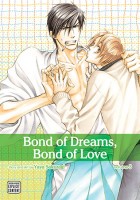
Bond of Dreams, Bond of Love, Vol. 3

December 18, 2013 by Ash Brown

Bond of Dreams, Bond of Love, Volume 3Creator: Yaya Sakuragi
U.S. publisher: Viz Media
ISBN: 9781421549781
Released: February 2013
Original release: 2010

Yaya Sakuragi has had several of her boys’ love manga released in English. Bond of Dreams, Bond of Love was the second of her series to be licensed. Bond of Dreams, Bond of Love is loosely connected to her earlier series Tea for Two. Reading Tea for Two isn’t at all necessary to understand Bond of Dreams, Bond of Love, but it does provide more details about one of the character’s back stories. Sakuragi was actually my introduction to yaoi and boys’ love manga and I continue to be very fond of her work. I like her particular sense of humor and lanky character designs. Bond of Dreams, Bond of Love isn’t my favorite of her works, but I’m still largely enjoying the manga; it’s a rather goofy series. The third volume of Bond of Dreams, Bond of Love was originally published in Japan in 2010. The English-language edition was released in 2013 by Sublime Manga, the boys’ love imprint associated with Viz Media.

There are some big changes occurring in Ao’s life. One of the biggest is that he might be moving out of his grandmother’s place and transferring schools in order to live with his mother and his twin brother Aka. Ao’s not too keen on the idea, especially since it would mean he would see Ryomei less, but more than one person has encouraged him to make the move, believing it to be in his best interest. Even though Ao’s life has been thrown into turmoil his preoccupation with Ryomei is still foremost on his mind. He somehow even manages to convince the older man to go on a date with him, though it doesn’t exactly turn out how either of them expected it would. As for Ryomei, he continues to be somewhat baffled by and conflicted over Ao’s advances. He’ trying to work out just what his feelings really are for the younger man, but it hasn’t been an easy process. And with Ao potentially moving away, Ryomei had better figure it out sooner rather than later.

Bond of Dreams, Bond of Love started with a wet dream (Ao’s, to be specific) and dreams and daydreams have continued to be a recurring element in the series. But now with the third volume, Ryomei has to deal with them, too. It’s a nice way to tie the narrative together and show the parallels between Ryomei and Ao’s feelings as the develop. Another way that Sakuragi show these parallels is through Ryomei and Ao’s not-quite-date, which is handled exceptionally well in the manga. Though the two of them are on the same outing they are experience it very differently. As a reader it’s interesting to be able to simultaneously see and compare their thoughts and reactions while they themselves are completely unaware of how the other person is interpreting the events. It’s a situation in which the lack of communication is completely believable. Both Ao and Ryomei are holding back, but for different reasons–Ao is worried about scaring Ryomei off while Ryomei is understandably concerned about his changing feelings for Ao.

For me, Bond of Dreams, Bond of Love works best as a comedy and shouldn’t be taken too seriously, which is not to say there aren’t some genuinely touching and occasionally bittersweet moments. However, the series excels in its humor and reaction shots. In general the characters’ faces are all very expressive and dynamic, but Ryomei, who tries so hard to be serious and reserved, has some of the best expressions. He has become hyper-aware of how he interacts with Ao and it shows. Despite the focus of Bond of Dreams, Bond of Love being on Ao and Ryomei, the series actually has a fairly large cast of secondary characters who all have their roles to play, too. This includes a fair number of important female characters, which can be a rarity in boys’ love manga. However, it’s Ao’s best friend Shunpei who remains one of my favorites. (Shunpei is also the character from Tea for Two; I’d love to see him get his own series at some point.) Ao’s twin brother Aka, who is constantly on edge, can be pretty entertaining, too. With its slightly ridiculous and over-the-top characters and interactions, Bond of Dreams, Bond of Love has really grown on me, and there’s still one more volume to go.

Filed Under: REVIEWS Tagged With: Bond of Dreams Bond of Love, manga, Sublime Manga, viz media, Yaya Sakuragi

Pick of the Week: Pandora Hearts & More

December 16, 2013 by MJ, Michelle Smith, Sean Gaffney, Anna N and Ash Brown 1 Comment

potw-12-16MJ: I know there’s a lot of manga on tap this week, but I can’t help it… my heart belongs to Pandora Hearts, and I fear it always will. Volume 18 hurt me as cruelly as it could, and as it turns out, that’s just the way I like it. More, more, more, please. I gotta have my fix.

MICHELLE: Ooh, how do you like your love? o/~ (I hope I’m not the only one who instantly got that song in my head!) Anyway, I’m definitely with MJ on this. The cliffhanger ending of volume 18 was too cruel to pass up on the 19th, though, now that I think about it, it’s all too likely that only more sorrow awaits.

SEAN: My pick this week is the 2nd and final volume of Summer Wars, which was a big surprise hit for me this fall. Combining rural love comedy with technopocalypse is not something you see every day, and it has some likeable, fallible lead characters. It’s also not afraid to go into dark places when it has to. If Vol. 2 is as good as Vol. 1, we’re in for a real treat.

ANNA: I’m going to have to go with Gundam: The Origin Vol. 4. I love this series, and I love Vertical for bringing it out in a deluxe hardcover edition.

ASH: Gundam: The Origin has consistently been one of my favorite releases this year, but my pick of the week goes to the eleventh volume Q Hayashida’s delightfully weird and strange manga series Dorohedoro. With its dark humor and quirky characters, Dorohedoro somehow manages to be incredibly violent and incredibly charming all at the same time.

What looks good to you this week?

Filed Under: PICK OF THE WEEK

My Week in Manga: December 9-December 15, 2013

December 16, 2013 by Ash Brown

My News and Reviews

Last week I posted the first review in my new monthly review project, A Year of Yuri. This project will focus on comics and manga with yuri and lesbian themes. For this month’s review, I took a closer look at June Kim’s debut graphic novel 12 Days which was even better than I remembered it being. It’s a beautiful work that addresses the complexities of grief, family, love, and loss.

Also last week, I wrote a post that focused on how to find manga in libraries–Finding Manga: Library Love. The post is sort of a combination of two of my semi-regular features–Finding Manga and Library Love. (I’ve actually decided to retire Library Love, so the post was also a way for me to give the feature a nice send-off.) It’s a pretty long post; if you don’t feel like reading the whole thing, you can always just skip to the quick tips at the end.

As for interesting things found online: The Pew Research Center coincidentally posted its report on How Americans Value Public Libraries in Their Communities the same day I was expressing my own love of libraries; over at Geekscape, Kari Lane discussed yaoi with Jennifer LeBlanc, SuBLime’s editor; and Erica Friedman talked about some of the differences between the U.S. and Japanese comic book industries on Quora.

Quick Takes

Fake FurFake Fur by Satomi Yamagata. For a boys’ love manga, Fake Fur is surprisingly realistic in its portrayal of Yamashita–a young man who in high school is just starting to come to terms with his sexuality and homosexuality. The manga follows him as he becomes aware that he is in love with his close friend Kubo and how he handles the aftermath of that realization and his changing relationships. Fake Fur deals with both physical and romantic desire and how those two aspects of love can often be in conflict with each other. In some cases, sex and physical pleasure is used as a replacement for true affection. For Yamashita and several of the other characters in Fake Fur, this is something that is both comforting and heartbreaking. On the other hand, for better or for worse, physical intimacy can naturally lead to emotional intimacy. After all, a sexual relationship is still a relationship. In Fake Fur Yamashita and the others grapple with this, hoping to find love but also recognizing that there is more than one way to be close to another person.

Sankarea: Undying Love, Volume 4Sankarea: Undying Love, Volume 4 by Mitsuru Hattori. The covers for the English-language edition of the Sankarea manga tend to focus on the horror elements of the series. While that horror is certainly a part of Sankarea, I still see it as more of a romantic comedy than anything else. Granted, it is a very strange romantic comedy with even stranger characters. I like the series best when it’s focusing on the relationship between Chihiro and the recently zombified Rea, which has some interesting developments in this volume. For one, Rea continues to become more zombie-like, her cravings for flesh barely being held in check by her natural inhibitions. However, I was less impressed with the mostly unnecessary scene between Chihiro and Rea’s mother in which she drunkenly and nakedly propositions him. Apparently the volume’s fanservice quota needed to be met somehow. My favorite part of this volume was actually the side-comic “I Am Also…A Zombie…” which is told from the perspective of Chihiro’s pet cat (and zombie) Bub. Bub is the greatest.

Showa1Showa: A History of Japan, 1926-1939 by Shigeru Mizuki. Originally published in Japan as an eight-volume series, Drawn & Quarterly’s edition of Showa: A History of Japan is being released in four, two-volume omnibuses. Japan’s Showa era, corresponding to Emperor Hirohito’s reign, lasted from December 25, 1926 to January 7, 1989. In the introduction to the first volume of Showa, Frederik L Schodt describes the Showa era as one of “the most tumultuous, violent, and tragic” periods in Japan’s history. There are actually two intertwining stories contained in Mizuki’s Showa: the factual history of the country as a whole at that time and Mizuki’s personal history as someone who lived through it. Mizuki’s artwork also reflects these two different portrayals of the Showa era. The illustrations range from the highly detailed and realistic, based on news and photographs from that period, to the more free-form and cartoonish. Showa is an informative read. I’m personally more familiar with the late Showa era, so I appreciated being able to learn more about early Showa in such an engaging format.

The World Exists for Me, Volume 1The World Exists for Me, Volumes 1-2 written by Be-Papas and illustrated by Chiho Saito. The literal translation of the Japanese title for The World Exists for Me would actually be The World of S and M. Though I’m sure it was intentionally chosen, it’s a rather peculiar title for a rather peculiar manga. Only two volumes were ever published, but I get the feeling that The World Exists for Me was originally conceived of as a much longer work. The ending comes very suddenly and very little, if anything, is actually resolved. The series definitely had some potential–I found its use of time travel, destiny, and historical figures and events to be interesting–but the story never quite pulls together as something particularly coherent. It’s a bit of a mess, really. While it can be enjoyable, it doesn’t really make much sense at all. The World Exists for Me was developed by the same creators involved with the Revolutionary Girl Utena manga. Some similarities can be seen between the two series, but I much prefer Utena.

Filed Under: FEATURES, My Week in Manga Tagged With: Be-Papas, Chiho Saito, manga, Mitsuru Hattori, Sankarea, Satomi Yamagata, Shigeru Mizuki, Showa: A History of Japan, World Exists for Me

12 Days

December 13, 2013 by Ash Brown

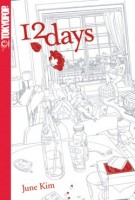
12 DaysCreator: June Kim
Publisher: Tokyopop
ISBN: 9781598166910
Released: November 2006

June Kim is a Korean-born comics artist and illustrator who currently lives and works in the United States. Although some of her short comics had previously been collected in various anthologies, 12 Days was her first and, as far as I know, only graphic novel to have been published. What I can say for certain is that 12 Days was my introduction to Kim and her work. 12 Days was released by Tokyopop in 2006. The book’s cover design is really quite lovely with silver foil line work and striking red accents. Tokyopop didn’t always take such care with the presentation of its releases, so this was nice to see. 12 Days is at least partially based on a true story–a sad tale that a stranger told to Kim about her ex-girlfriend. Kim herself originally developed the story of 12 Days while getting over a breakup in her sophomore year of college. However, it wasn’t until 12 Days was picked up by Tokyopop that she completed the graphic novel.

On the way back from her honeymoon, Noah was in a lethal car accident. That was a month ago. Noah’s death hits her ex-girlfriend Jackie hard. Already a wreck from their breakup, Jackie is faced with the reality that she has now completely lost the love of her life. And so she devises a way to forget and finally let go. Over the course of twelve days she will drink Noah’s ashes as part of a personal ritual. Somehow Jackie convinces Nick, Noah’s half-brother, to steal some of his sister’s ashes for her from the urn on his parents’ mantle. It’s under these strange circumstances that the two most important people in Noah’s life meet. Nick and Jackie are each struggling to accept and cope with Noah’s death in their own ways. Their shared experience becomes a source of comfort as much as it is a source of pain. They both loved Noah dearly and it will take far more than twelve days to ever change that.

Kim’s style in 12 Days is influenced by both manga and manhwa as well as by independent comics. A prominent theme in both the artwork and narrative of 12 Days is reflection. This can be seen in Kim’s use of mirrors in the graphic novel, but also in the page layouts and panel composition. Jackie and Nick’s actions and how they are captured in the artwork often parallel or echo each other, providing yet another tenuous connection between the two of them. The narrative itself isn’t linear. Much of the story is told through the flashbacks, dreams, and memories that intrude upon Nick and Jackie’s lives. It’s as if a mirror containing all of their thoughts of Noah has been shattered and they are left picking up the pieces–a fitting metaphor for the grieving process. Some of the transitions can be a little difficult to follow at first, but overall it as a remarkably effective approach.

As a whole 12 Days is a very reflective and introspective work. There is intensity and drama but it’s not overblown; the graphic novel tends to be rather intimate and quiet. Despite the realistic portrayal of the complexities of grief, family, love, and loss, 12 Days is not overwhelmingly bleak or depressing. The graphic novel can certainly be heartbreaking considering Noah’s death, the circumstances surrounding her and Jackie’s breakups, and some of society’s prevailing attitudes towards same-sex love, but there is also a fair amount of humor in 12 Days that keeps things from getting too heavy or dark. Even while dealing with the tragedies in their lives, Jackie and Nick, who are both endearingly eccentric, are still able to joke around and tease each other. Sometimes that humor can be a bittersweet reminder of what they have lost, though. 12 Days is a work that holds extraordinarily up well to multiple readings. In fact, I think I enjoyed and appreciated its subtleties even more after reading it several times.

Filed Under: REVIEWS Tagged With: comics, June Kim, Tokyopop, Year of Yuri

Manga the Week of 12/18

December 13, 2013 by Sean Gaffney, Ash Brown, MJ, Anna N and Michelle Smith 2 Comments

SEAN: Just before Christmas, we have a fairly big week with lots of stuff to give folks for the holidays (or request for your own present.)

First off, another “Sean missed this” entry. Since I go by Amazon now, I forgot that Right Stuf shipped Hetalia Axis Powers Vols. 4 and 5 and left them off last week’s list. I’ve already devoured my own copies, and can safely assure Hetalia fans these are well worth picking up. Non-Hetalia fans likely find the whole phenomenon baffling.

ASH: I’m hoping that Hetalia continues to do well (at least I think it’s doing well) so that Right Stuf will be able to expand it’s print-on-demand program.

MJ: I’ve never been able to muster interest in Hetalia, but hearing that you’re so hooked on it, Sean, makes me feel foolish. So. Hm.

SEAN: It’s definitely not for everyone… Hetalia requires a love of World War II-era history and at the same time an ability to completely disassociate the atrocities of that period from the characters that represent each country. It’s pure fluff, and just the idea that it’s pure fluff really bothers folks – and rightly so. That said, if you can bend your brain that way, there are a lot of fun stereotypes here that are all done with a kind, loving heart.

Dark Horse’s Evangelion spinoff, The Shinji Ikari Raising Project, is getting close to actually surpassing the main manga series in terms of volume count. Vol. 13 hits next week, and promises an actual plot!

The fourth volume of No. 6 comes out from Kodansha. Is the BL tease in this series the same as the yuri tease in series like Sunshine Sketch?

ASH: I haven’t read Sunshine Sketch to be able to compare, but I am enjoying the development of Rat and Shion’s relationship in No. 6.

smuggler

SEAN: One Peace has an omnibus collection of Smuggler, a seinen series that ran in Kodansha’s Afternoon back in 2000. Tokyopop apparently released this before, but I have no recollection of it at all. More seinen is always good, especially from a new-ish publisher.

ASH: One Peace tends to license some interesting manga. I’m particularly curious about this rescue since I missed Smuggler the first time around.

MJ: Ditto!

SEAN: Vertical has a new hardcover edition of Gundam The Origin, the 4th. It’s subtitled Jaburo, and I presume it will keep the stellar quality of the previous releases. Must buy.

ANNA: The world is a better place due to the existence of this glorious manga. And Char Aznable.

ASH: The Origin is definitely one of the highest quality releases of manga in English right now.

SEAN: There’s also the 2nd and final volume of Summer Wars. I was surprised how much I enjoyed the first one of this series – far more than I expected – and look forward to the 2nd with bated breath.

MJ: I’m looking forward to this as well!

SEAN: Viz has the 11th volume of one of my pet favorites, Dorohedoro. It can be hard to dip in and out of, but it’s a series that rewards close reading and re-reading. Plus it’s filled with awesome characters.

ASH: I’m always excited to see a new volume of Dorohedoro! It also makes me want to eat mushroom gyoza.

SEAN: And then there’s a giant pile of Yen. The 3rd volume of Are You Alice? continues the Alice trend we’ve seen all year, which looks to pile up even more titles in 2014.

bloodycross

Bloody Cross is one of those series that cried out to be licensed. Vampires, demons, hot guys, hot girls… all this and it runs in Shonen Gangan, a magazine with a very good reputation to exciting series. This should be fun.

MJ: I’m cautiously optimistic.

SEAN: High School of the Dead is still popular enough to get those giant full-color omnibuses, and here is the 2nd.

The Melancholy of Haruhi Suzimiya manga is wrapping up soon, mostly as the novel author hasn’t written new material. The final arc continues in this 17th manga volume.

Pandora Hearts 19. I think that says it all.

MICHELLE: Pandora (Will Break Your) Hearts!

MJ: Yes, it really will. In the best way possible. *heart*

SEAN: Puella Magi Kazumi Magica has its 3rd volume coming out. The movies have made this franchise even more popular, though I am also hearing talk of a backlash against the darkness. Will this manga make things even bigger?

The 10th Spice & Wolf novel continues to combine fantasy, moe, economics and confusing people who buy it thinking it’s the manga. This is the novel.

Sunshine Sketch not only has its 7th volume ship to stores, but it also has all 7 volumes available in ebook format next week! Great news. As for whether Sae and Hiro finally graduate and the title is forced to continue without them… I suspect that may get dragged out a bit longer.

Finally, Until Death Do Us Part has its 5th omnibus arrive. Mamoru has been having a rough time of it lately, and this volume is not likely to help him in any way.

MICHELLE: I really need to catch up on this one; I definitely liked the first omnibus more than I’d expected to.

SEAN: Deck the halls with volumes of manga! What’cha getting?

Filed Under: FEATURES, manga the week of

Finding Manga: Library Love

December 11, 2013 by Ash Brown

Support manga, support your library!

National Library SymbolI recently came to the decision to retire my bimonthly Library Love feature. With the slogan “Support manga, support your library!,” Library Love was a way for me to highlight manga that I was borrowing and reading from my local libraries. It’s time for me to finally say goodbye to Library Love in order to make room at Experiments in Manga for other features and reviews. In the future, I will be including my thoughts on my library manga finds in the “Quick Takes” section of the My Week in Manga feature. As I say my final farewell to Library Love (the feature, not my actual love for libraries which is eternal), I wanted to make one last special Library Love post that focused on actually finding manga in libraries. What I’ll have to say specifically applies to libraries in the United States and Canada since those are what I am most familiar with, but hopefully my comments will apply to library systems in other countries as well.

I adore libraries and I have since I was very young. I don’t think anyone was really very surprised when I fell into librarianship as a career. There are many, many reasons that I’m thankful for libraries which I won’t get into here, but I would like to say this: If it wasn’t for libraries, I would not have become the manga fanatic that I am now. When I first started reading manga, it was all borrowed from libraries. For one thing, collecting manga requires both money and space. Making use of libraries that are already doing some of that collecting is a good thing. It benefits you and it benefits libraries, too. Manga and comics tend to circulate well, and good circulations statistics help libraries in a variety of ways. Plus, by supporting manga at your library, you are also supporting the creators and publishers of that manga.

Manga can be found in all types of libraries: public, academic, school, special. Archives and museums get in on the manga action, too. It’s somewhat difficult to make generalizations regarding how to find manga in libraries because each library is different and serves a different population. Broadly speaking, libraries are organized in the way that best serves its patrons, which means that the same manga found in one library may be shelved in another area entirely at a different library. Some libraries will shelve manga and other comics by subject, mixed in with the rest of the collection. Other libraries will have an entire section devoted specifically to manga and graphic novels. In some cases, a library may divide materials by age group. There any number of ways to organize a collection, and each library is different. Familiarize yourself with your library’s system and be aware that you may need to look in multiple places to find all of the manga.

One of the benefits of a library is that it is a physical location that you can visit.  After you figure out where the manga is shelved, take time to browse! It’s a quick and easy way of determining what sorts of manga your library collects and sampling what it has. There’s also this wonderful phenomena called serendipity–you might discover manga that you didn’t even know you wanted to read. But don’t limit yourself to what you can see on the shelf, because the library will always have more manga available. Be sure to make use of the library’s catalog, too. Most libraries have an online catalog that supports searches by title, creator, subject, ISBN, general keyword, and more. Some libraries are even beginning to explore digital options for manga and comics, too.

Finding manga through a library doesn’t stop there, either. Many libraries participate in interlibrary loan programs which allow one library to borrow materials that another library owns. This is a fantastic way to track down copies of hard-to-find or out-of-print manga to read. Many libraries also accept and pursue purchase suggestions from their patrons. If there’s a manga you’d like to read or that you think would be a good fit for your library, let someone know! Generally, libraries want to provide access to the materials that people want or are excited about; they want to spend money on materials that will actually be used. Which brings me to my final point about manga in libraries: Don’t be afraid to talk with the librarians and other library workers! Make suggestions, ask questions, and give feedback. We really are here to help.

Quick Tips for Finding Manga in Libraries
1) Manga might be kept in multiple areas, you may need to look around
2) Browse the shelves, but search the catalog, too
3) Check to see if your library participates in an interlibrary loan program
4) Many libraries accept purchase suggestions. Don’t see what you want? Ask for it!
5) Don’t be afraid of the librarians and other library workers (We’re here to help!)

Filed Under: FEATURES Tagged With: manga

Pick of the Week: Men, Magi, & Mecha

December 9, 2013 by Ash Brown, Anna N, Sean Gaffney, Michelle Smith and MJ 1 Comment

potw-12-9ASH: It’s a somewhat quieter week for manga releases, but there’s still some good stuff coming out. I’m tempted to select the most recent volume of Tsutomu Nihei’s Knight’s of Sidonia as my pick of the week; the series has turned out to be great mix of sci-fi, horror, and romance. But I’ll have to admit, the manga that I’m probably most excited about this week is SuBLime’s rerelease of Ayano Yamane’s Crimson Spell. Occasionally I just really want to read some nicely drawn, smutty fantasy goodness.

ANNA: I’ll have to go with Knights of Sidionia, as I feel obligated to support awesome manga about mecha fighting aliens in space.

SEAN: I’ll go with Magi, the latest Shonen Sunday hit from Viz. It’s looking good so far, with this Arabian Nights adventure being exciting, heartwarming and funny.

MICHELLE: Since Knights of Sidonia has been safely covered, I’m also going to pick Magi. I enjoyed it from the beginning, but the interesting developments at the end of volume two sealed the deal. This could turn out to be a real favorite.

MJ: And I’ll circle partway back, at least. Though I’m interested in both Magi and Crimson Spell, I’m joining Anna this week in her support for volume six of Knights of Sidonia. I’ve never been a major fan of mecha, but this series has blown me away with its intense poignance and gorgeous artwork. I’m more than hooked.


What looks good to you this week?

Filed Under: PICK OF THE WEEK

My Week in Manga: December 2-December 8, 2013

December 9, 2013 by Ash Brown

My News and Reviews

I posted two reviews here at Experiments in Manga last week. The honor of the first in-depth manga review for December goes to Yoshikazu Yasuhiko’s Mobile Suit Gundam: The Origin, Volume 3: Ramba Ral. The fourth volume in the series is scheduled to be released this month, so I wanted to make sure to catch up with my reviews. Though I wouldn’t call myself a Gundam fan, I’m still really enjoying The Origin manga. The second review was for Ivan Morris’ The Nobility of Failure: Tragic Heroes in the History of Japan. Originally published in 1975, the work was recently brought back into print by Kurodahan Press. It’s an extremely illuminating and fascinating volume. I also announced the Fairy Tail Feast Winner last week. In case you’re looking for some epic manga to read, the post also includes a list of series that have had at least thirty volumes published in English.

I’ve come across quite a few manga-related things online recently. Sadly, that includes the news that PictureBox will no longer be releasing any new titles. PictureBox had some fantastic manga releases this year, including the start of the Ten-Cent Manga and Masters of Alternative Manga series. It also released The Passion of Gengoroh Tagame. PictureBox’s closing means that the previously announced anthology Massive: Gay Erotic Manga And The Men Who Make It, originally scheduled for release in 2014, is now in limbo.

In happier news, Manga Bookshelf’s MJ was interviewed at Diamond Bookshelf–Understanding Manga: Editor MJ Discusses CBLDF Presents Manga. I thought that Manga: Introduction, Challenges, and Best Practices was a great resource when I read it, so it was interesting to hear about some of the behind-the-scenes work that went into it.

And speaking of interesting interviews, Organization Anti-Social Geniuses has been Talkin’ Seven Seas and Manga Business With Conner Crooks. Crooks is the Social Media Manager at Seven Seas, which has been having a very good year. Part 1 and Part 2 of the interview series are currently available. Part 3 should be posted on Tuesday.

Continuing on with the Seven Seas theme, Sean Gaffney took a look at the publisher’s recently announced licenses over at A Case Suitable for Treatment. And if you’re interested in all of the anime, manga, artbook, and light novels that were licensed in 2013 (as well as related successful crowdfunding projects), Reverse Thieves has you covered with All the Titles Fit to License, 2013 Edition.

Quick Takes

Hero Heel, Volume 2Hero Heel, Volumes 2-3 by Makoto Tateno. Out of the boys’ love manga by Tateno that I have so far read, I think that Hero Heel is probably one of her better works. At least it has some of the most interesting and believable character development. Although that being said, I’m not sure that I’m entirely convinced by the ending, but that might just be because I feel bad for Katagiri. Minami in particular goes through a lot of change as the series progresses. In the first volume he’s almost the villain of the story, blackmailing and forcing his feelings on Sawada. By the end of Hero Heel he’s a much more sympathetic character and has matured significantly. As for Sawada, he comes across as rather harsh from the start, though how much of an asshole he really is isn’t revealed until later. The themes of hero and villain and what it means to be a good person are very prominent in Hero Heel. It’s interesting to see the parallels between the characters that Minami and Sawada play on the superhero show they costar in and their lives off the set.

Pretty Guardian Sailor Moon: Short Stories, Volume 2Pretty Guardian Sailor Moon: Short Stories, Volume 2 by Naoko Takeuchi. For the most part, I think I probably enjoyed the second (and final) volume of Sailor Moon short stories more than I did the first. In general, they don’t rely as heavily on knowledge of the main series; a basic understanding of the Sailor Moon universe is sufficient to follow the short manga in the second collection of stories. Well, at least that’s true for the first two stories. The third short manga “Parallel Sailor Moon” requires a bit more, and even then it’s a really strange, almost nonsensical piece. I much preferred the first two stories in the collection. “Princess Kaguya’s Lover” is the longest and most involved, basically amounting to a one-sided love story between Luna and Dr. Ohzora, an astronomy professor. It has space and astronauts, which I’ll admit to having a fondness for, so that made me happy. (Takeuchi even visited the Kennedy Space Center on a research trip for the story.) “Casa Blanca Memory” is a shorter work featuring Rei, which also made me pretty happy.

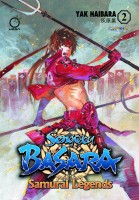
Sengoku Basara: Samurai Legends, Omnibus 2Sengoku Basara: Samurai Legends, Omnibus 2 (equivalent to Volumes 3-4) by Yak Haibara. I get a huge kick out of the Sengoku Basara: Samurai Legends manga. I’ve never played Sengoku Basara 2–the video game on which it is directly based (it hasn’t been released in North America)–nor have I seen any of the Sengoku Basara anime (though I may make a point to check it out now), but I do have some familiarity with the Warring States period. Because of the number of characters, battles, alliances, castles and such to keep track of in Samurai Legends, which are all based on historical figures and events, that familiarity has come in handy. Overall, I think the first omnibus of Samurai Legends was a little stronger than the second omnibus. The last half of the series has a few continuity problems in the artwork, and there are some characters who are introduced more because they are a part of the franchise than because they had an important role to play in the manga, but it was still a lot of fun. I really enjoy the series’ over-the-top fights, characters, and dialogue.

Sickness Unto Death, Volume 2Sickness Unto Death, Volume 2 written by Hikari Asada and illustrated by Takahiro Seguchi. Probably because it doesn’t employ nearly as many clichés, the second volume of Sickness Unto Death is much better than the first. Granted, the first volume was needed to set it up the whole scenario; I just think it could have been handled better. But the payoff is mostly satisfying. Even so, the manga still makes me vaguely uncomfortable, and not in the way I think it was intended to. The problem I have with the story of Sickness Unto Death stems from the way Emiru’s case is handled. That Kazuma wants to help and treat her I’m fine with. In fact, there’s some really interesting conflicts of interest and ethical and philosophical questions that arise because of it. At its best, Sickness Unto Death has some marvelously dark psychological elements to it. What particularly bothers me about the series is that Kazuma’s continued “treatment” of Emiru is actually encouraged by his professor, which is highly irresponsible not to mention unprofessional.

Filed Under: FEATURES, My Week in Manga Tagged With: Hero Heel, Hikari Asada, Makoto Tateno, manga, Naoko Takeuchi, sailor moon, Sengoku Basara, Sickness Unto Death, Takahiro Seguchi, Yak Haibara

The Nobility of Failure: Tragic Heroes in the History of Japan

December 8, 2013 by Ash Brown

The Nobility of FailureAuthor: Ivan Morris
Publisher: Kurodahan Press
ISBN: 9784902075502
Released: September 2013
Original release: 1975

In some ways, Ivan Morris’ The Nobility of Failure: Tragic Heroes in the History of Japan could be considered a companion of sorts to his earlier work The World of the Shining Prince: Court Life in Ancient Japan. While The World of the Shining Prince explores the beauty of court culture in Japan, The Nobility of Failure addresses the country’s more tragic history. Originally published in 1975, The Nobility of Failure has been out of print for years. Happily, Kurodahan Press was able to rerelease the volume in 2013 with a newly added preface by Juliet Winters Carpenter. Happier still, I was selected to receive a review copy of the new edition of The Nobility of Failure through LibraryThing’s Early Reviewers program. The Nobility of Failure is an important work that examines the cultural and historical background of some of the tragic heroes who continue to influence the modern Japanese psyche. I am very glad that I, and others, once again have the opportunity to read it.

While not unheard of in Western tradition, Japan has a particular, and some might call peculiar, predilection for the tragic or failed hero. They are admired for their sincerity and loyalty even when their causes were meet with failure and their goals could be considered traitorous. Above all else, those heroes adhered to their ideals, especially in the face of their own destruction. In The Nobility of Failure, Morris traces Japan’s tradition of the tragic hero back to the fourth century and the archetype of Prince Yamato Takeru. The following chapters explore the lives and influences of Japan’s legendary and historic failed heroes found throughout the centuries: Yorozu, Arima no Miko, Sugawara no Michizane, Minamoto no Yoshitsune, Kusunoki Masashige, Amakusa Shirō, Ōshio Heihachirō, and Saigō Takamori. The volume culminates in an examination of the World War II kamikaze fighters–an unprecedented development in modern warfare which for most countries would have been unimaginable.

One thing that I didn’t realize about The Nobility of Failure before reading the book was how much of an influence Yukio Mishima had on its creation. Morris and Mishima were friends and the book was at least in part written in order to put Mishima’s act of ritual suicide in 1970 into historical context. The volume is even dedicated to his memory. Since I happen to have a particular fascination with Mishima, I found this connection to be especially interesting. Many of the heroes who are the focus of The Nobility of Failure (tragic heroines are only mentioned in passing) were men that Mishima personally admired, but they are also generally recognized as important to Japan as a whole and are even considered to be inspirational figures to some. Japan’s tragic heroes carry immense psychological and cultural significance; their role in Japanese history was crucial to the development of Japan’s national character, perspective, and worldview.

The Nobility of Failure is an extremely illuminating volume. It’s readily clear that Morris put a tremendous amount of thought and research into the volume. In fact, the endnotes, bibliography, and index make up approximately a third of the books’ length. Morris draws upon both primary and secondary materials, including literature, poetry, and theatrical interpretations of the heroes’ stories found in kabuki and Noh. Using a combination of sources, excerpts, and retellings, Morris reveals both the mythic and legendary basis of Japan’s tragic heroes as well as their historical reality and how they have influenced Japan’s culture and psyche. This is particularly evident in the chapter about the kamikaze fighters in which Morris ties in everything that had previously been examined. Even though The Nobility of Failure was written nearly forty years ago, it is still a valuable and fascinating work. Morris’ compassionate analysis deserves to remain in print.

Thank you to Kurodahan Press for providing a copy of The Nobility of Failure for review.

Filed Under: REVIEWS Tagged With: Ivan Morris, Kurodahan Press, Nonfiction

Mobile Suit Gundam: The Origin, Vol. 3: Ramba Ral

December 6, 2013 by Ash Brown

Mobile Suit Gundam: The Origin, Volume 3: Ramba RalCreator: Yoshikazu Yasuhiko
Original story: Yoshiyuki Tomino and Hajime Yatate

U.S. publisher: Vertical
ISBN: 9781935654971
Released: September 2013
Original release: 2007

Although I have been aware of the massively popular and influential Gundam franchise for quite some time, my first real introduction to Gundam was through Yoshikazu Yasuhiko’s manga series Mobile Suit Gundam: The Origin. The manga is a reimagining of the 1979 anime series Mobile Suit Gundam which launched the franchise. Yasuhiko was one of the creators heavily involved in the visual development of the original series, so it is particularly interesting to see his personal take on the story. Part of The Origin was initially released by Viz Media in the early 2000s. However, the series is now being published by Vertical in a beautiful deluxe release based on the Japanese collector’s edition. Ramba Ral is the third volume in that series, first published in Japan in 2007 and released in English in 2013. This particular volume also includes delightful contributions from Shimoku Kio, the creator of Genshiken, as well as additional Gundam color illustrations by Yasuhiko.

After the overly ambitious Garma Zabi, the youngest scion of the Principality of Zeon’s ruling family, is killed in battle, his brother Gihren resolves to use his death to rally support for Zeon’s fight, going against the wishes of his father. Garma’s sister Kycilia isn’t about to let the opportunity be wasted, either. Zeon may not have access to the same amount of resources available to the Earth Federation, but it has a cause, charismatic leaders, and more advanced technology. Now that the battle of Los Angeles is over, the Federation’s White Base carrier, along with the newly developed Gundam mobile suit, are en route to Jaburo. Its young crew is closer to reaching the Earth Federation’s headquarters, making resupply easier, but Zeon is more determined than ever to either capture or destroy the Gundam. To make matters even worse for White Base, tension continues to mount between the civilians and the military personnel on the ship, making their mission even more challenging.

One of the biggest problems that the crew of White Base faces is that they are both young and inexperienced. In some cases they are rather immature as well. With all of the excitement and battles going on in The Origin, it can be easy to forget just how young many of the characters actually are. Ramba Ral serves as a good reminder, especially when it comes to Amuro Ray, the Gundam’s pilot. He’s only fifteen–an age at which he is easily distracted and flustered by members of the opposite sex–and he makes some extremely poor decisions in this volume of The Origin. His selfishness and petulance puts everyone on White Base in danger. Amuro may be the person in the best position to save his friends, but his immaturity is what put them at risk to begin with. While I can understand where he’s coming from, I found myself rather annoyed with Amuro in Ramba Ral and wanted to shake some sense into him. Unsurprisingly, many of his cohorts harbor some very similar feelings to mine.

While the crew of White Base is inexperienced, the Zeon forces in pursuit are anything but. In particular, the titular Ramba Ral is shown to be a very capable commander in this volume. He may not have the same arrogant elegance that the dreaded Char Aznable exhibits–Ral is much more down-to-earth and straightforward in how he fights–but he is very good at what he does. He’s not afraid to personally enter the fray and takes a very hands-on approach to battle. Ral’s men are extremely loyal and gladly follow him. Ral and Zeon also have an advantage over the Federation forces. While the Gundam is representative of the pinnacle of the Federation’s technology, Zeon continues to research and improve its own weapons and mobile suits. Combined with skilled and experienced pilots and commanders, Zeon’s military can be devastatingly effective. The arms race shows no signs of slowing in the series; the development of weapons is an important aspect of any war, and so it makes sense that it would be an important part of The Origin as well.

Filed Under: REVIEWS Tagged With: Gundam, Hajime Yatate, manga, vertical, Yoshikazu Yasuhiko, Yoshiyuki Tomino

Manga the Week of 12/11

December 5, 2013 by Sean Gaffney, Michelle Smith, MJ, Anna N and Ash Brown 6 Comments

SEAN: A fairly quiet Week 2 for this last month of 2013, with just a few tasty morsels of manga to take in while you drink eggnog.

MICHELLE: Mmm, eggnog.

MJ: Gimme.

ANNA: Woo hoo!

SEAN: If you like all the wacky misunderstandings, school romance, and tsunderes of shoujo manga, but would like it with BL flavoring, well, here’s Vol. 4 of Awkward Silence, whose cover resembles Ouran High School Host Club if they ditched Haruhi.

crimson1Meanwhile, if you want a fantasy sword and sorcery title with demons who insatiable lust for young men knows no bounds, well, SubLime has you covered there as well, with Vol. 1 of Crimson Spell, from the author of Finder.

ASH: Crimson Spell is actually my favorite manga by Ayano Yamane. Only two volumes were released by Media Blasters back in the day, so I’m very excited that SuBLime rescued the series.

MJ: i am really looking forward to reading this. I missed it originally, and it’s so well-loved.

ANNA: Hmm, I’m looking forward to hearing what you guys think about this!

SEAN: Fairy Tail 33 was actually out 12/4, but I forgot about it, possibly as 32 only came out two weeks ago. There’s speedup and then there’s ridiculous.

I will admit, the body horror scene in the last volume of Knights of Sidonia still freaks me out. That said, I’m totally on board with this series now, which hopefully will try not to kill off its entire cast by the time it finishes. Vol. 6 is coming out this week.

ASH: Body horror, mecha battles, and romantic comedy all in one convenient package!

MICHELLE: Not to mention Tsutomu Nihei’s atmospheric art. I still prefer BLAME! for sheer landscape awesomeness, but Sidonia comes close and is far more accessible.

MJ: Yes! I can’t wait to read this!

ANNA: Such a great series, I need to get caught up.

SEAN: Arata the Legend is up to Vol. 16, which means only 2 more volumes and it’s as long as Fushigi Yuugi, which is the series everyone remembers its author for. At least for now. Arata’s day in the sun is coming!

magi3MICHELLE: This is a fun series. I’ll be catching up soon!

Itsuwaribito has wrapped up in Japan recently, but we have a long way to go here in North America. But at least Vol. 10 gets us into double digits. Wikipedia links to some pretty brutal reviews, to be honest. Perhaps a reassessment is needed?

Magi 3 will send us into the manga’s second story arc, and I have been very pleased with what I’ve read so far. I don’t expect that to change.

MICHELLE: Same here! I really like the direction the plot seems to be heading at the end of volume two, and am looking forward to seeing how the story develops from here.

MJ: I’m late beginning this, but it sounds like this is a good time to start.

SEAN: Lastly, the Tiger & Bunny series, like Code Geass, has led to an ongoing series of doujinshi anthologies, which likely lends itself more towards the deep male bonding most fans of this series want to see. (Still clean, though – c’mon, this is being put out by Viz.) We get the 2nd anthology this week.

What appeals to you in this list?

Filed Under: FEATURES, manga the week of

Manga Giveaway: Fairy Tail Feast Winner

December 4, 2013 by Ash Brown

Fairy Tail, Volume 30Fairy Tail, Volume 31Fairy Tail, Volume 32Fairy Tail: Phoenix PriestessAnd the winner of the Fairy Tail Feast is…Janaye!

As the winner, Janaye will be receiving copies of volumes thirty, thirty-one, and thirty-two of Hiro Mashima’s manga series Fairy Tail as well as a copy of the movie Fairy Tail: Phoenix Priestess. Since Fairy Tail recently reached thirty volumes in English, I asked everyone participating in the giveaway to give me their opinions on long-running manga series. For all of the responses, do check out the Fairy Tail Feast comments. Much like a long-running series, you may be reading for a while since there were so many comments–I had the biggest turnout ever for one of my giveaways. A huge thank you to everyone who stopped by and took time to participate!

Manga with thirty or more volumes licensed in English:
Air Gear by Oh!Great
Berserk by Kentaro Miura
Blade of the Immortal by Hiroaki Samura
Bleach by Tite Kubo
Boys Over Flowers by Yoko Kamio
Case Closed by Gosho Aoyama
Eyeshield 21 written by Riichiro Inagami, illustrated by Yusuke Murata
Fairy Tail by Hiro Mashima
Flame of Recca by Nobuyuki Anzai
Gantz by Hiroya Oku
GTO: The Early Years by Tohru Fujisawa
Hunter x Hunter by Yoshihiro Togashi
Initial D by Shuichi Shigeno
InuYasha by Rumiko Takahashi
Kekkaishi by Yellow Tanabe
Negima! by Ken Akamatsu
Naruto by Masashi Kishimoto
Oh My Goddess! by Kosuke Fujishima
One Piece by Eiichiro Oda
The Prince of Tennis by Takeshi Konomi
Ranma 1/2 by Rumiko Takahashi
Rave Master by Hiro Mashima
Samurai Deeper Kyo by Akimine Kamijyo
Shaman King by Hiroyuki Takei
Skip Beat! by Yoshiki Nakamura
Slam Dunk by Takehiko Inoue
Vagabond by Takehiko Inoue
Yu-Gi-Oh! by Kazuki Takahashi
The Wallflower by Tomoko Hayakaya

Okay…I cheated a little with the above list. A few of the series, like Blade of the Immortal, haven’t officially reached thirty volumes yet in English. But just you wait, they most certainly will! Until then, there are plenty of epic, long-running manga that have been licensed. Happy reading, and I hope to see you all again for the next giveaway!

Filed Under: UNSHELVED Tagged With: anime, Fairy Tail, Hiro Mashima, manga

Pick of the Week: Stack o’ Viz

December 2, 2013 by MJ, Sean Gaffney, Michelle Smith, Anna N and Ash Brown Leave a Comment

potw-viz-12-2SEAN: There are a large number of things to pick from (even larger if you realize I forgot to add Fairy Tail 33 to that list – whoops) – and I think I will make my choice Volume 32 of Skip Beat!. It’s quite impressive how invested the author has kept her readers in Kyoko’s success, given that this is well over the average length of a shoujo series, and we’re still only slowly edging towards romance. And yet it’s addicting. Once you start reading, it’s very hard to stop. So I’ll keep reading.

MICHELLE: My passionate love for Skip Beat! is thoroughly well documented by now, so instead of seconding Sean this time I will take my final chance to recommend Slam Dunk, whose 31st and final volume comes out on Tuesday. This is the quintessential sports manga, with an uncouth hero who finds the place he belongs, a place to be needed, and eventually becomes a real asset to his teammates. I’m going to be sad when this one is over.

ANNA: I love Skip Beat! too, but I’m going to have to join Michelle with picking the final volume of Slam Dunk. This is a special series, and I’m grateful I got to read it in English despite the fact that sports manga generally don’t sell all that well.

ASH: Skip Beat! and Slam Dunk are both fantastic choices that I could easily get behind, but I’ll think I’ll mix it up a bit by picking Dengeki Daisy this week. The series is a peculiar amalgam of romance, comedy, and cyber espionage, but I’ve become rather fond of it and look forward to the release of each new volume.

MJ: I’m going to add to the Vizfest we have here this week, with a rather surprising pick. I thought initially I’d be putting my hat in for Mayu Shinjo’s delightful Demon Love Spell, which has been a favorite for me since its launch. Instead, I find myself gravitating towards an unlikely choice—volume two of Maki Minami’s Voice Over! Seiyu Academy. After having registered my dread of its second volume just last week, I picked up my early copy and read it. As it turns out, the end of volume two features a shift in premise that suddenly commands my interest. It’s nothing new—just another well-worn shoujo trope—but one that is executed with the style and panache of, say, an addictive K-drama. Count me in!

What looks good to you this week?

Filed Under: PICK OF THE WEEK

My Week in Manga: November 25-December 1, 2013

December 2, 2013 by Ash Brown

My News and Reviews

To start things off, I would like to thank everyone who voted in the poll to pick my next monthly review project. I am very pleased to announce that over the next year I will have a series of reviews that focuses on yuri and lesbian comics and manga. A Year of Yuri took an early lead in the poll and earned just under half of the votes. I’m now in the process of determining exactly which comics I’ll be reviewing for this project. Nothing has been finalized yet, but ideally there will be a good variety of both old and new titles. I’d also like to thank those of you who took time to comment on the poll as well. I was sincerely interested in reviewing all of the choices; taking into consideration all of your input and suggestions, I’m currently working on other ways to review some of the manga outside of a monthly review project. I had fun with the poll, so thank you again for indulging me!

There was a mix of different posts at Experiments in Manga last week. Of particular note, the monthly manga giveaway–a Fairy Tail Feast–is currently in progress. I completely underestimated the popularity of Fairy Tail; I’ve never had so many people turn out for a giveaway before. Not even for Tezuka. There’s still time to enter for a chance to win volumes thirty, thirty-one, and thirty-two of Hiro Mashima’s Fairy Tail manga. And as a bonus the winner of the giveaway will also receive a copy of the anime movie Fairy Tail: Phoenix Priestess! November’s Bookshelf Overload was also posted last week as was my review for Ichiya Sazanami’s manga Black Bard. It’s a bit of a mess, but I still had a lot of fun reading it; I couldn’t resist the combination of music and magic.

Since last week was Thanksgiving here in the United States (my favorite holiday!) I was doing quite a bit of traveling. So, I probably missed out on a lot of the week’s manga news. But there are still a couple of links that I’d like to mention here: The most recent Speakeasy Podcast focused on Crunchyroll’s new manga project. And over at Manga Bookshelf proper, MJ posted a Status Update & Station Identification which includes a shout-out to Experiments in Manga which joined the Manga Bookshelf family a few months ago. (She also described my mind as “deeply eloquent” which absolutely made my day. Hopefully I can continue to live up to her expectations!)

Quick Takes

Attack on Titan, Volume 9Attack on Titan, Volume 9 by Hajime Isayama. The mysteries keep piling up in Attack on Titan. It makes me wonder how long Isayama will be able to keep the series going without it collapsing under its own weight. The more ideas and plot twists he adds to the story, which can admittedly be very exciting, the less focused Attack on Titan becomes. I have no idea how much Isayama has thought through to the end or how much he is making up as he goes. It’s very possible that he could he write himself into some sort of absurd corner. That being said, I am hooked on the series and I really want to know what’s going on. This particular volume reveals more about some of the secondary characters, especially Sasha, Connie, Krista, and Ymir. It also provides the setup for what will be some very big plot reveals. The artwork in Attack on Titan continues to be incredibly uneven, which is unfortunate. There are a few brilliant panels and the titans are appropriately disconcerting, but the artwork remains one of the manga’s weakest points.

From the New World, Volume 1From the New World, Volume 1 written by Yusuke Kishi and illustrated by Toru Oikawa. Honestly, I am more interested in reading Kishi’s original From the New World novel (and I’m still hoping that it will one day be licensed), but it’s the anime and manga adaptations that are currently available in English. After reading the first volume of the manga, I want to read the original novel more than ever. From the New World has a fantastically dark ambiance. I also have an established fondness for dystopias and tales of survival. Unfortunately, the level and intensity of fanservice in the manga feels out of place distracts from what could be an extremely intriguing premise. Saki’s clothing choices in particular are ridiculous and could hardly be described as functional. (Bizarrely enough, some of the outfits aren’t really all that attractive, either.) I’m not even going to try to explain Maria’s underwear. Still, all of the moments in between the nonsensical bath and sex scenes are legitimately engrossing. I do plan on continuing on with From the New World for at least a little longer.

Gold Pollen and Other StoriesGold Pollen and Other Stories by Seiichi Hayashi. The first volume in PictureBox’s Masters of Alternative Manga, Gold Pollen and Other Stories collects four of Hayashi’s short manga from the late sixties and early seventies–“Dwelling in Flowers,” “Red Dragonfly,” “Yamanba Lullaby,” and the three chapters from the unfinished “Gold Pollen”–in addition to an autobiographical essay by Hayashi and an essay by the series’ editor Ryan Holmberg. I am particularly grateful for the inclusion of these essays for they reveal some of the semi-autobiographical aspects of Hayashi’s manga that I would have otherwise missed. It is clear that his mother and the concept of what a mother should be influenced him greatly. Each of the manga included in the volume deals with motherhood at least tangentially if not directly. While the manga share some similar characteristics and themes, each is distinctive in both storytelling and art style. Hayashi’s use of color is also rather striking. Gold Pollen and Other Stories is an excellent start to the series; I’m looking forward to future volumes a great deal.

Mr. Flower BrideMr. Flower Bride / Mr. Flower Groom by Lily Hoshino. The powerful Souda family has an unusual marriage custom–in order to prevent disputes over inheritance, the younger sons in the family are partnered with male brides. The basic premise of the two Mr. Flower volumes could have easily been the basis for a comedy manga. But instead, Hoshino plays it straight, honestly addressing the personal challenges and issues that the characters have to deal with in regards to arranged marriage with the additional twist that they both happen to be the same sex. Mr. Flower Bride and Mr. Flower Groom follows two related couples with similar plots–both brides are already in love with their reluctant husbands and both pairs have to navigate jealousy and come to terms with their developing relationships. However, the stories do play out differently. The two Mr. Flower manga end up being rather sweet and even a little lovey-dovey in places, which is not to say that the newlyweds do not have their problems. I enjoyed both volumes, but Mr. Flower Groom has the more interesting gender dynamics of the two.

Kaiji: Against All RulesKaiji: Against All Rules directed by Yūzō Satō. If I had to choose, I think I enjoyed the first Kaiji anime series slightly more, though I liked the second one, as well. The stakes in the first series were incredibly high–the gamblers were literally risking their lives. To some extent this is still true in the second series, but for the most part the large amounts of money involved have become more prominent than life and limb. The ways of cheating, counter-cheating, and general manipulation of the games in the second series also tend to be much more outlandish, convoluted, and unbelievable than in the first. However, it is impressive for how long, and for how many episodes, a single pachinko game can be stretched. By the end of the series I was starting to anticipate some of the major plot twists and developments before they actually happened which unfortunately made the big reveals much less effective. Even so, there were still a few surprises in store and Kaiji remains an incredibly intense and dramatic anime.

Filed Under: FEATURES, My Week in Manga Tagged With: anime, attack on titan, From the New World, Hajime Isayama, Kaiji, Lily Hoshino, manga, Masters of Alternative Manga, Mr. Flower, Seiichi Hayashi, Toru Oikawa, Yusuke Kishi

  • « Go to Previous Page
  • Page 1
  • Interim pages omitted …
  • Page 129
  • Page 130
  • Page 131
  • Page 132
  • Page 133
  • Interim pages omitted …
  • Page 140
  • Go to Next Page »
 | Log in
Copyright © 2010 Manga Bookshelf | Powered by WordPress & the Genesis Framework