• Skip to primary navigation
  • Skip to main content
  • Skip to primary sidebar
  • Home
  • About Us
    • Privacy Policy
    • Comment Policy
    • Disclosures & Disclaimers
  • Resources
    • Links, Essays & Articles
    • Fandomology!
    • CLAMP Directory
    • BlogRoll
  • Features & Columns
    • 3 Things Thursday
    • Adventures in the Key of Shoujo
    • Bit & Blips (game reviews)
    • BL BOOKRACK
    • Bookshelf Briefs
    • Bringing the Drama
    • Comic Conversion
    • Fanservice Friday
    • Going Digital
    • It Came From the Sinosphere
    • License This!
    • Magazine no Mori
    • My Week in Manga
    • OFF THE SHELF
    • Not By Manga Alone
    • PICK OF THE WEEK
    • Subtitles & Sensibility
    • Weekly Shonen Jump Recaps
  • Manga Moveable Feast
    • MMF Full Archive
    • Yun Kouga
    • CLAMP
    • Shojo Beat
    • Osamu Tezuka
    • Sailor Moon
    • Fruits Basket
    • Takehiko Inoue
    • Wild Adapter
    • One Piece
    • After School Nightmare
    • Karakuri Odette
    • Paradise Kiss
    • The Color Trilogy
    • To Terra…
    • Sexy Voice & Robo
  • Browse by Author
    • Sean Gaffney
    • Anna Neatrour
    • Michelle Smith
    • Katherine Dacey
    • MJ
    • Brigid Alverson
    • Travis Anderson
    • Phillip Anthony
    • Derek Bown
    • Jaci Dahlvang
    • Angela Eastman
    • Erica Friedman
    • Sara K.
    • Megan Purdy
    • Emily Snodgrass
    • Nancy Thistlethwaite
    • Eva Volin
    • David Welsh
  • MB Blogs
    • A Case Suitable For Treatment
    • Experiments in Manga
    • MangaBlog
    • The Manga Critic
    • Manga Report
    • Soliloquy in Blue
    • Manga Curmudgeon (archive)

Manga Bookshelf

Discussion, Resources, Roundtables, & Reviews

Ash Brown

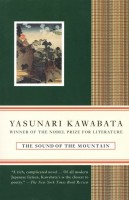
The Sound of the Mountain

January 31, 2015 by Ash Brown

The Sound of the MountainAuthor: Yasunari Kawabata
Translator: Edward G. Seidensticker
U.S. publisher: Alfred A. Knopf
ISBN: 9780679762645
Released: May 1996
Original release: 1954
Awards: National Book Award

Prior to reading The Sound of the Mountain I had only read one other novel by the distinguished Japanese author Yasunari Kawabata–Thousand Cranes, one of the three works to have been cited when Kawabata became the first Japanese recipient of the Nobel Prize for Literature. I enjoyed Thousand Cranes and have been meaning to read more of Kawabata’s work for quite some time now. Although it probably isn’t his best known work to have been translated, The Sound of the Mountain does have the distinction of being one of Kawabata’s longest novels. The volume was completed in Japan in 1954 after having been serialized for five years. Also in 1954, the novel was adapted as a live-action film directed by Mikio Naruse. The Sound of the Mountain was first translated into English by Edward G. Seidensticker in 1970 for which he won the National Book Award for Translation.

Shingo Ogata is an aging businessman in postwar Japan. His memory has started to fail him, his hair turns whiter as each day passes, many of his friends and acquaintances have already died, and he begins to be plagued by peculiar dreams. There is nothing he can do to halt the steady decline of his mind and health, but what concerns him most is the decline of his family and the unraveling of his children’s marriages. The philandering ways of Shingo’s son Shuichi are an open secret but his son’s wife Kikuko remains devoted to him, although perhaps even more so to Shingo. Shingo’s daughter, too, is having marital problems. The situation may or may not be temporary, but she has left her husband and is currently living in her parent’s home along with her young children. The house is full, the family’s relationships are strained, and Shingo is conflicted over what he should be doing about it all and over his developing feelings for Kikuko.

The Sound of the Mountain is a relatively quiet novel. Shingo has his personal struggles and internal strife, and there is plenty of family drama, but the work largely consists of snippets of the everyday lives of the Ogata household. None of the characters in The Sound of the Mountain are particularly exceptional in any sort of way. Their lives and their troubles, while certainly having a great impact on those around them, are mundane. Kawabata’s characterization of the individual family members is often very subtle and nuanced, as is his portrayal of the intricacies of their interpersonal relationships. As much as The Sound of the Mountain is about Shingo growing older, it’s just as much about the transformation of his family. All things must inevitably come to an end. Shingo knows this, and knows that his life, too, will eventually end, but he still feels guilty about and responsible for the direction his family and his children are heading.

It’s been a few years since I’ve read it, but overall I think I probably prefer Thousand Cranes over The Sound of the Mountain. However, the two novels do share some similarities: a focus on people and how they interact, a sparse writing style laden with symbolism, and so on. In the case of Thousand Cranes it was the Japanese tea ceremony that provided an underlying framework for the narrative while in The Sound of the Mountain it’s Shingo’s dreams and the change of the seasons–the steady progression of time. The Sound of the Mountain has a resigned, melancholic air to it. The novel isn’t particularly uplifting, but in some ways it can be comforting to see a realistic depiction of a family trying to come to terms with the changes both in their lives as individuals and in their relationships to one another. The Sound of the Mountain captures those fleeting moments of joy and of unrest, revealing that in any stage of life people are at least partially defined by those closest to them.
Filed Under: REVIEWS Tagged With: National Book Award, Novels, Yasunari Kawabata

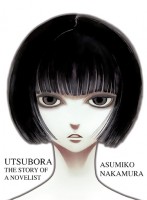
Utsubora: The Story of a Novelist

January 30, 2015 by Ash Brown

Utsubora: The Story of a NovelistCreator: Asumiko Nakamura
U.S. publisher: Vertical
ISBN: 9781935654766
Released: June 2013
Original release: 2010-2012

Although several of Asumiko Nakamura’s manga have been licensed for digital release, Utsubora: The Story of a Novelist is currently her only work that has been translated into English and made available in print. I truly hope it isn’t the last to be seen from her; although I was already familiar with Nakamura’s distinctive art style, Utsubora was my introduction to her manga and I loved it, and with each rereading love it even more. With the arrival of the Female Goth Mangaka Carnival, I was inspired to take another, deeper look at the manga. In Japan, Utsubora was a short, two-volume series published between 2010 and 2012. The English-language edition of the manga was released in 2014 by Vertical and collects the entire series in a single volume. Due to its mature themes and its erotic content, Utsubora is one of Vertical’s relatively few manga specifically intended for an audience of adults who are at least eighteen years of age.

Although Shun Mizorogi is still considered to be a successful and respected author, it has been quite some time since he has written anything of note. As a result, he has become withdrawn and is tormented by his lack of ability. Finally, his most recent work Utsubora shows great promise. A return to his roots as an author, Mizorogi has given his fans and critics what they have been waiting for. But when a young woman plummets from the top of a building to her death, the apparent suicide somehow connect to Mizorogi, the authorship of Utsubora begins to be called into question. Both Mizorogi’s close friend and fellow author Yatabe and his newly appointed editor Tsuji suspect something. Even Mizorogi’s niece Koyomi, who lives with and adores him, is able to recognize that her uncle has been behaving out of the ordinary. Utsubora and a young woman named Sakura Miki are the only remaining connections Mizorogi has to the death of Aki Fujino, and they are consuming him.

Utsubora is a dark and twisting tale. Nakamura’s distinctive artwork is exceptionally effective in adding to the manga’s moody, erotically charged, and slightly disconcerting atmosphere. The lines of her illustrations are very thin, creating at the same time a sense of sharpness and focus as well as a feeling of softness as they cut and curve across the page. Nakamura’s art in Utsubora is undeniably sensual and arresting. The eyes of her characters are particularly expressive and draw attention to themselves. The artwork of Utsubora, much like the manga’s story, can simultaneously be vaguely ominous and oddly beautiful. It’s really quite stunning and Nakamura is incredibly skilled. Through her artwork and through the body language of her characters, she is able to convey their uncertainties and their desires, their inner turmoil as well as their outward actions. Overall, Utsubora is an intense and even compelling work.

The plot of Utsubora is complex, the relationships and connections between the characters forming a tangled knot that is drawn tighter and tighter. The manga can be confusing and there is quite a bit of ambiguity that is never completely resolved. The only person who really understands everything that is going on is Sakura, and she is deliberately manipulating the situation, mixing together both truths and lies in order to influence those around her. She can’t control everything, though, and some matters in Utsubora are only tangentially related to what she is trying to accomplish. Although sometimes obscured by layers formed by the other characters’ personal struggles and pasts, the core of Utsubora is the despair surrounding Aki, Sakura, and Mizorogi. Granted, most of the characters are reaching their breaking points and are in danger of losing themselves completely; Aki’s death was simply the catalyst that triggered a dramatic sequence of events from which very few will emerge unscathed.

Filed Under: REVIEWS Tagged With: Asumiko Nakamura, manga, vertical

Manga the Week of 2/4

January 29, 2015 by Sean Gaffney, Ash Brown, Anna N, Michelle Smith and MJ 3 Comments

SEAN: Did you enjoy your quiet month? Good, cause February is back to business as usual, and every week has some chunky bites of manga. Let’s look at next week. FYI, Diamond Comics has every Viz title coming out 1-2 weeks earlier than usual, for some reason – I’m ignoring that. And JoJo’s was delayed.

ASH: Oh, no! JoJoooooo!

ANNA: I do not approve of this.

bbb7

SEAN: Dark Horse has the 7th Blood Blockade Battlefront, which I understand has an anime coming out soon.

Seven Seas gives us a 5th volume of oddball slice-of-A Centaur’s Life.

And the 10th volume of Haganai, whose cast still doesn’t have many friends.

The rest is all Viz. We have a new Assassination Classroom, filled with attempted death and heartwarming lessons.

ANNA: Bring it on!

SEAN: We have a 3rd volume of Black Rose Alice, and I’d like to remind the Manga Bookshelf team that they can’t pick it two weeks in a row. :)

MICHELLE: I won’t, but I am still super happy to see it!

ASH: I’m happy to see it, too!

ANNA: I might pick it again! You can’t stop me!

MJ: Heh. I didn’t pick it last time, so it’s up for grabs!

SEAN: Bleach 63 features, I’m guessing, fights.

Food Wars 4 also features fights, but of a culinary kind. Save the Megumi!

MICHELLE: I have developed a serious fondness for Food Wars.

ANNA: I do not yet have a serious fondness, but I like it much more than I expected to.

SEAN: The 10th and final volume of Happy Marriage?! wraps up next week. It’s been a very up and down series, but overall I’ve enjoyed it.

MICHELLE: It’s not something I can picture myself rereading, but it has been entertaining.

ANNA: Me too. I’m glad to have read it, but I don’t think I’ll be rereading it.

hsd5

SEAN: High School Debut has its 5th and final omnibus. The big news is that it has lots of material that never came out in print before – I believe Vols. 14 and 15 are unique to this volume! It’s also print-only, so go get it.

MICHELLE: !!!!!!!!!!!!1 (Heh, I swear that typing that 1 was legitimately an accident, but I’m leavin’ it!)

ANNA: Woah! I’ve got to pick this up!

MJ: Ooooooooooh.

SEAN: If you thought Honey Blood was over last time, well… it was. But Tale Zero is an epilogue, or prologue, or pilot. Or something? In any case, this is the last Honey Blood-related product.

MICHELLE: I have a vague memory of one of the author’s note sections during the series proper mentioning that this would contain the original oneshot. Not sure about that, though.

ANNA: I’d like to see more from this author eventually.

SEAN: We have the 25th and final volume of Nura: Rise of the Yokai Clan. I enjoyed this a lot more than I’d expected, and probably more than it really deserved, but way to go, mid-range Shonen Jump title. You were licensed when many other 20-30 volume Jump series were not.

One Piece has its 11th omnibus. It’s in Water Seven now, one of its best arcs.

Spell of Desire hits Vol. 3, and I hope manages to resolve the rather icky cliffhanger Vol. 2 left us with.

Voice Over has its 9th volume, and seems to be slowly, very slowly, meandering towards its climax.

MICHELLE: Here’s another title I’ve grown to love unexpectedly.

MJ: I need to check back in with this series.

SEAN: World Trigger has Vol. 4, and is another on the list of ‘series I should know more about’.

Did you miss Yu-Gi-Oh! the first time around? Here’s an omnibus to catch up on.

And Yu-Go-Oh Zexal 6 gives you more Yu-Gi-Oh than human nature can possibly stand.

There’s a lot of ‘meat and potatoes’ shonen and shoujo here. What suits your fancy?

Filed Under: FEATURES, manga the week of

Manga Giveaway: Cinderalla Giveaway

January 28, 2015 by Ash Brown

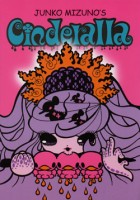
It’s the end of the month which means it’s time for another manga giveaway! Because the Female Goth Mangaka Carnival is currently underway (featuring the work of Kaoru Fujiwara, Maki Kusumoto, Mitsukazu Mihara, Junko Mizuno, Asumiko Nakamura) I decided to do a tie-in giveaway. This month you all have a chance to win a copy of Junko Mizuno’s Cinderalla as published by Viz Media. And as always, the giveaway is open worldwide! (However, you must be at least eighteen years old to enter.)

Cinderalla

Way back in 2010, I had the opportunity to attend the Best Manga You’re Not Reading panel at the American Library Association’s annual conference. It was there that I was introduced to the work of Junko Mizuno, and specifically to her manga Cinderalla—a psychedelic retelling of the classic tale of Cinderella with zombies, yakitori, and pop idols added in for good measure. I had never seen anything like it before and I loved it. Mizuno’s brightly colored artwork in Cinderalla shows her mastery of a very distinctive and even beautifully stunning creepy-cute aesthetic. Quite a few of Mizuno’s manga have been released in English—and I’ve enjoyed many of them—but I will always remember Cinderalla as being my first.

So, you may be wondering, how can you win a copy of Cinderalla?

1) Have you ever read anything by Kaoru Fujiwara, Maki Kusumoto, Mitsukazu Mihara, Junko Mizuno, or Asumiko Nakamura? If so, tell me what you thought in the comments below. (And if you haven’t, you can simply mention that.)
2) If you’re on Twitter, you can earn a bonus entry by tweeting, or retweeting, about the contest. Make sure to include a link to this post and @PhoenixTerran (that’s me).

And there you have it. For this giveaway, each person can earn up to two entries and has one week to submit them. If needed or preferred, comments can also be sent directly to me via e-mail at phoenixterran(at)gmail(dot)com. I will then post them here in your name. The giveaway winner will be randomly selected and announced on February 4, 2015. Meanwhile, I hope you enjoy the Carnival!

VERY IMPORTANT: Include some way that I can contact you. This can be an e-mail address in the comment form, a link to your website, Twitter username, or whatever. If I can’t figure out how to get a hold of you and you win, I’ll just draw another name.

Contest winner announced—Manga Giveaway: Cinderalla Giveaway Winner

Filed Under: FEATURES Tagged With: Junko Mizuno, manga

Pick of the Week: Third Volumes

January 26, 2015 by MJ, Michelle Smith, Ash Brown, Anna N and Sean Gaffney Leave a Comment

potwMJ: Okay, I’ll admit there’s not a lot calling to me this week, but I can express genuine enthusiasm for the third omnibus of Whispered Words, apparently shipping this week from One Peace. This is a really charming story, and I’m so happy to see it—and specifically happy to see it coming from One Peace, who tend to fly under the radar of a lot of fans. I’m hoping this release has made a decent splash for them. It certainly should have. This is a title that should not be missed.

MICHELLE: Since MJhas campaigned so ably for Whispered Words and because I already know what my pick is going to be next week (I’ve only been waiting for it for years!), I thought I would instead highlight something else coming out next week, which would be the third volume of Black Rose Alice. Combining a unique spin on vampires with adept storytelling and compelling characters, this series really isn’t to be missed!

ASH: I’m right there with MJthis week. I’m really looking forward to reading the rest of Whispered Words and am very glad that the series was released in English! (And that the editing seems to have improved since the first omnibus.)

ANNA: I’ll have to go for the third volume of Black Rose Alice too. It really is one of the more unique shoujo titles currently coming out.

SEAN: Whispered Words all the way for me.

What looks good to you this week?

Filed Under: PICK OF THE WEEK

My Week in Manga: January 19-January 25, 2015

January 26, 2015 by Ash Brown

My News and Reviews

Last week I posted a review of Chōhei Kambayashi’s award-winning novel Good Luck, Yukikaze. Because I had enjoyed Yukikaze, the first novel in the series, I was looking forward to reading its sequel. Sadly, although there is some tremendously thought-provoking material in Good Luck, Yukikaze, I found it to be incredibly frustrating as a novel. Also posted last week was my first (and what will probably be my most substantial) contribution to the Female Goth Mangaka Carnival: a spotlight on Mitsukazu Mihara. I’ve previously written a little about her manga series The Embalmer, but this time I took a brief look at all of her manga that was released in English and examined some of the recurring themes found in her work.

Speaking of the Carnival, the hosts at The Beautiful World posted an excellent introduction which includes biographical information of the featured artists as well as an overview of gothic fashion and literary themes. Elsewhere online, Mangabrog has translated a conversation between Hiroaki Samura and Masashi Kishimoto. Chromatic Press has some additional comments on making Sparkler Monthly back issues free to read. (Most importantly, the magazine needs 1,000 subscribers by the end of July 2015 to ensure it survives into its third year.) And some great news from France, Jiro Taniguchi and Baku Yumemakura’s manga series The Summit of the Gods (a favorite of mine) is being adapted as an animated film.

Quick Takes

Corto Maltese: Under the Sign of CapricornCorto Maltese: Under the Sign of Capricorn by Hugo Pratt. A portion of Corto Maltese, a seminal comic created by Italian artist Hugo Pratt in 1967, was previously translated into English, however that release was criticized for its use of altered and reformatted page layouts among other things. Under the Sign of Capricorn is technically the third Corto Maltese collection, but it’s the first volume to be released in the series’ new English-language edition from EuroComics, IDW’s newest imprint. The goal is to release the entire twelve-volume series using the original artwork and oversized format over the next few years. Under the Sign of Capricorn is a great looking comic, the high-quality paper and large trim size shows off Pratt’s superb black and white artwork. The titular Corto Maltese is a sea-captain who, though he claims to have no enemies and to live only for himself, frequently finds his life in danger as he tends to side with the underdogs in their battles against those who hold power over them. (He’s a fantastic character.) Under the Sign of Capricorn is a collection of connected adventure stories, many with a slight touch of the supernatural and a lot more humor than I was anticipating. I’m looking forward to reading more of the series.

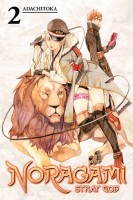
Noragami: Stray God, Volume 2Noragami: Stray God, Volumes 2-3 by Adachitoka. It took a little while for the first volume of Noragami to settle on its tone, but these two volumes have managed to achieve an excellent balance between the series’ humor and drama. They also explore more of the manga’s worldbuilding and delve more deeply into the mechanics of the gods’ relationships with their shinki. New characters and adversaries have been introduced as well. I initially thought that Noragami might be an episodic series–it certainly has a setup that would lend itself well to that format–but it looks like the manga will have an ongoing and increasingly complex plot. In a series about a low-level god of war who is trying to raise his status and gain followers, it’s not too surprising that other Japanese deities make an appearance in Noragami. However, some of them are portrayed very differently than their traditional counterparts. I was greatly amused by this, but then I already have some knowledge of Japanese religion and mythology. There are translation notes provided for readers who aren’t as familiar, but the delightful incongruities probably won’t be as effective without some prior understanding. However, overall enjoyment of Noragami doesn’t rely on esoteric expertise.

Tough Love BabyTough Love Baby by Shiuko Kano. While it’s not an exceptional boys’ love one-shot, Tough Love Baby was actually fairly solid. This was a pleasant surprise, especially considering my frustrations with some of Kano’s other early works. (And Tough Love Baby is one of her earliest.) Another pleasant surprise–since I’m into that sort of thing–was the somewhat reversible nature of two of the characters. Despite being the secondary couple, I was actually much more interested in the relationship between Tamotsu and Sora than I was in the relationship between Yoshino and Sachi. This was mostly because I ended up particularly liking Sora. (Tamotsu can be a bit of a jerk, though on occasion he does try not to be.) Sora is diminutive throughout high school, but undergoes a tremendous growth spurt upon entering college. Even though he’s much taller than everyone one else, adorable is still the best word to describe him. In some ways, Sora’s story actually parallels Sachi’s. After a three-year absence, Yoshino returns to discover that the cute thirteen-year-old boy he had developed feelings for has grown up to become a juvenile delinquent. Tamotsu is one of Sachi’s friends and a fellow tough guy, but he happens to be in love with Sachi, too. Which brings the story back to Sora, who greatly admires and falls for Tamotsu.

Filed Under: FEATURES, My Week in Manga Tagged With: Adachitoka, comics, Corto Maltese, Hugo Pratt, Noragami, Shiuko Kano

Random Musings: Spotlight on Mitsukazu Mihara

January 23, 2015 by Ash Brown

For the last two weeks of January 2015, the Female Goth Mangaka Carnival is focusing on the works of Kaoru Fujiwara, Maki Kusumoto, Mitsukazu Mihara, Junko Mizuno, Asumiko Nakamura. While I’ve read and enjoyed manga created by almost all of those women, Mihara is the mangaka that I’ve read the most of and am most familiar with out of the group. (Granted, that may in part be due to the fact that of the five she has had the most manga licensed and released in English.)

The Creator

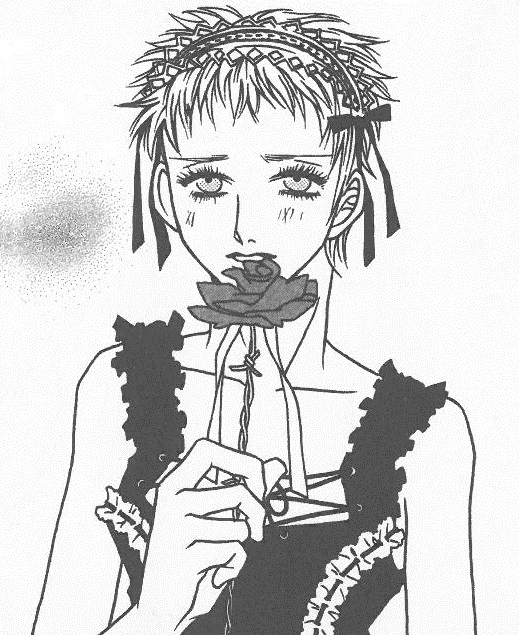
Mitsukazu MiharaSadly, there doesn’t actually seem to be very much information available in English about Mitsukazu Mihara beyond a few well-established facts. She was born in Hiroshima, Japan on October 17, 1970 and for a long time was based in Osaka. (I believe she may now be working out of Tokyo.) She made her manga debut in 1994 and has been writing and illustrating ever since. Mihara is often credited as being particularly influential in refining the Gothic Lolita sensibility and she frequently served as a featured illustrator for the Gothic & Lolita Bible magazine.

Between 2004 and 2007, Tokyopop released many of Mihara’s works in English, beginning with her series Doll. Mihara is particularly known for her short manga with twists–even her long-form works tend to be fairly episodic–and she frequently employs darker themes and includes heavy psychological elements in her stories. Her manga is influenced and inspired by the problems and issues that she sees in society as well as by her own personal traumas. As she states in an interview from 2008 in the debut issue of the North American edition of Gothic & Lolita Bible, “Often, my greatest work is born during the bad times.”

The Manga

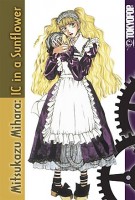
IC in a SunflowerAlthough IC in a Sunflower (1997) contains some of Mitsukazu Mihara’s earliest work, the volume was actually the last of her manga to be licensed in English. A collection of seven unrelated short manga, the volume includes her award-winning debut “Keep Those Condoms Away from Our Kids.” Another of the collected stories, “The Sunflower Quality of an Integrated Circuit,” would later be tied into her series Doll.

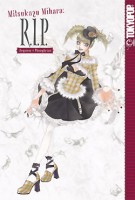
R.I.P.: Requiem in Phonybrian While there is some absurdity and black humor in R.I.P.: Requiem in Phonybrian (2000), the volume’s darker elements take precedent. The manga follows the angel Transylvanian Rose who has rescued the soul of a suicide, but he isn’t particularly happy about this turn of events, nor is he particularly interested in his new responsibilities of cleansing other souls. The manga starts out fairly episodic but quickly coalesces.

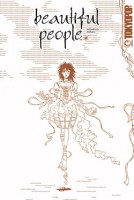
Beautiful PeopleBeautiful People (2001) is another collection of Mihara’s short manga and includes six unrelated stories. The volume features a range of genres and sub-genres including science fiction, fantasy, magical realism, post-apocalyptic fiction, contemporary drama, and suspense. In general, like much of Mihara’s work, the manga included in the volume tend to be darker in tone, but there are moments of brightness as well.

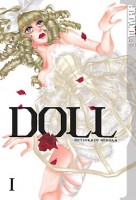
Doll, Volume 1The manga that Mihara is probably most well-known for, at least in English, is her six-volume Doll (2000-2002). The manga is a series of loosely interconnected stories of androids and angst that are tied together by the end of the final volume. Although the Dolls are an important part of the series, the focus of the manga is much more on the humans and their relationships to the Dolls and to each other.

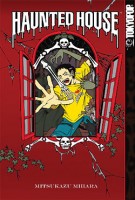
Haunted HouseBecause it’s primarily a comedy, Haunted House (2002) stands out from the rest of Mihara’s manga available in English. Granted, it still has elements of horror in an Addams Family sort of way. Sabato Obiga is a teenager who desperately wants two things in his life: a girlfriend and a normal family. Unfortunately, the eccentricities and occult interests of his “death flavored” relatives would seem to make both an impossibility.

The Embalmer, Volume 1My introduction to Mihara’s work was through her series The Embalmer (2003-2013) and it remains my personal favorite of her manga. Sadly, only four of the series’ seven volumes were released in English. I’ve actually written a little about the series before, specifically in regards to the main character and the role of embalming in the story. Less fantastic than many of Mihara’s other manga, the series has a strong grounding in reality.

The Themes

Princess White SnowThere are many themes and variations upon them that appear and reappear throughout Mitsukazu Mihara’s work. One of the most prominent elements in Mihara’s manga is the inclusion of families. Even Haunted House, which is so unlike many of her other works, has a family at its core. The families in Mihara’s manga are often broken and in need of healing, but underlying all that turmoil and trauma is an understanding of the immense importance of family and the profound influence, both positive and negative, that a family has on its individual members.

Similarly, there is an intense longing for love and connection that pervades Mihara’s work. Her characters are searching for someone they can be close to, someone they can trust, someone they can reach out to. Sometimes this is found within their families, and sometimes they are forced to look outside of them to satisfy those needs. Love takes on many different forms in Mihara’s stories, and its potential to end in tragedy is just as real as its potential to end in redemption.

Maturer themes dealing with sex and sexuality have been present in Mihara’s work since the very beginning. Her debut manga “Keep Those Condoms Away from Our Kids” (collected in IC in a Sunflower Circuit) tells the story of a near-future Japan in which the birthrate has plummeted because younger generations have completely lost interest in sex. In the post-apocalyptic vision of “World’s End” (collected in Beautiful People), a peculiar twist of fate means that a lesbian and a gay man may be the only survivors. Perversion, fetishism, bondage, and sadomasochism can be seen in much of Mihara’s work as well, but perhaps most obviously in Doll.

Although frequently viewed through the lens of speculative fiction, Mihara isn’t afraid to look at the harsher realities of life and the darker sides of human nature. Abuse, obsession, sexual violence, and other harmful deviant behaviors can all readily be found within her work. Many of Mihara’s characters are suffering, whether from the actions of others or from their own personal demons and psychological disturbances. There is tragedy, sadness, and pain in both their lives and their relationships. Life isn’t always pretty, and Mihara doesn’t shy away from that fact in her manga.

People can be cruel and are capable of terrible things. As is seen again and again in Mihara’s work, it takes a human to be inhumane. The monsters in her stories are often the ones showing the most empathy and caring for others. Sometimes those monsters are literal–like the vampire in “Blue Sky” (collected in Beautiful People). Sometimes they are beings of human design–like the clones in “Alive” (collected in IC in a Sunflower) or the Dolls. And sometimes they are other people who are for one reason or another shunned, abandoned, or reviled by the rest of society. But there is some hope in humanity that remains–people are changed, often for the better, by their interactions with those “monsters.”

The EmbalmerDeath and dying are themes that frequently make an appearance in Mihara’s work, but at the same time an immense respect and reverence for life can always be seen. Matters of life and death are most realistically examined by Mihara in The Embalmer, the series focusing on those left behind to grieve the deaths of their loved ones. The characters must respond to that loss of life in a very personal way and their relationship with death is constantly changing as a result. Requiem in Phonybrian and many of Mihara’s short manga take a more fantastic approach to death and the afterlife, but emotionally it is all still very real.

Mihara’s manga deal extensively with dualities. This is visually epitomized in the Gothic Lolita aesthetic which Mihara frequently incorporates into her work, but it is also present in the narrative themes that she explores. Light and darkness. Beauty and ugliness. Innocence and perversion. Love and hate. Purity and corruption. Human and inhuman. Hope and despair. Life and death. They are pairs of concepts that are so closely intertwined that it is simply impossible for them to be separated from each other.

They are all also qualities that exist simultaneously within a single person or a single story. Although often viewed as positive or negative characteristics, Mihara’s work shows that they aren’t necessarily inherently good or bad. Rather, it’s a fixation on a particular ideal or other imbalance in those qualities that truly causes harm. Mihara’s stories, just like individuals, contain many complexities, contradictions, and layers. They can be shocking and surprising and may often have more depth to them than might first appear.

Filed Under: FEATURES Tagged With: Doll, Embalmer, manga, Mitsukazu Mihara

Manga the Week of 1/28

January 21, 2015 by Sean Gaffney, Michelle Smith, Ash Brown, MJ and Anna N Leave a Comment

SEAN: The final week of January, and a quiet, peaceful time for books. After last week, that’s a relief.

(Note: Diamond Comics is shipping some Viz stuff to me 1-2 weeks early; I’m assuming that’s them and going with the official release dates, so they’ll be in upcoming posts. I’m also getting Soul Eater late. Diamond gonna Diamond.)

gantz34

Dark Horse has the 34th volume of Gantz, which despite my occasional mockery has done very well for them, as can be seen by their license of another series by the same author. Still no HEN, though. Or even Hen.

Kodansha has a new Fairy Tail, the 46th. After this one, we go from monthly to bimonthly, so the Fairy Tail catchup seems to have finally slowed down. Kudos to all who stayed caught up.

MICHELLE: Which wasn’t me!

SEAN: I didn’t think Whispered Words’ 3rd omnibus was coming out from One Peace books till late March, but it was shipped to me last week, so yay for early bird releases. I’ve already reviewed it here.

ASH: My copy arrived early, too! I’m looking forward to finishing the series.

MJ: This is definitely something to look forward to!

MICHELLE: I haven’t checked back in with this title since the first omnibus, so an early conclusion is definitely an incentive.

SEAN: One Peace also has the 3rd through 5th volumes of Raqiya also coming out, which I believe completes the series.

ASH: It does indeed.

SEAN: Lastly, Diamond Comics has started shipping print copies of the final volume of Neon Genesis Evangelion, so even though I highlighted in in November when it came out digitally I will mention it again here.

Do you see something here you want? Or are you taking the week off?

ANNA: I’m taking the week off! More of an opportunity to make some headway with all the stacks of unread manga piled up in my house.

Filed Under: FEATURES, manga the week of

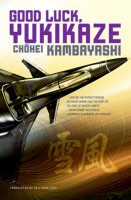
Good Luck, Yukikaze

January 21, 2015 by Ash Brown

Good Luck, YukikazeAuthor: Chōhei Kambayashi
Translator: Neil Nadelman
U.S. publisher: Viz Media
ISBN: 9781421539010
Released: July 2011
Original release: 1999
Awards: Seiun Award

Good Luck, Yukikaze is Chōhei Kambayashi’s second Yukikaze novel as well as his second novel to be released in English. A sequel to Yukikaze–which was originally written in 1984 before later being revised–Good Luck, Yukikaze was published in Japan in 1999 after being serialized between 1992 and 1999. Like Yukikaze, Good Luck, Yukikaze was translated into English by Neil Nadelman and released by Haikasoru, Viz Media’s speculative fiction imprint. The English edition of the novel was published in 2011 and also includes a concluding essay with commentary by Maki Ohno. The Yukikaze novels are some of Kambayashi’s most well-known and respected works. Yukikaze wold earn Kambayashi a Seiun Award when it was first written and Good Luck, Yukikaze would receive the same honor after its publication as well. I found the first Yukikaze novel to be thought-provoking and so looked forward to reading its sequel. A third volume in the series also exists, Unbroken Arrow, however it has yet to be translated into English.

Despite humanity’s best efforts the war against the JAM, a mysterious alien force, has continued for more than three decades. Although the end of the fighting is nowhere in sight, some progress has been made, especially in regards to the technology, computers, and weapons that humans employ. But those advances could possibly lead to humanity’s obsolescence and are a threat to its existence. Rei Fukai was one of the best pilots in the Special Air Force, but he was left in a coma after his highly advanced fighter plane Yukikaze took the initiative and ejected him during battle against his will. Eventually he awakens, bu he continues to suffer from the immense psychological blow–Yukikaze was the only thing beyond himself that he trusted and he was betrayed and discarded; he struggles to come to terms with all that has happened to him. Meanwhile the war goes on, as does Rei’s personal battle against the JAM. Like it or not, he and Yukikaze have caught the invaders’ attention.

When I read Yukikaze it took a few chapters before the novel was able to completely engage me, and so I wasn’t initially concerned when Good Luck, Yukikaze failed to immediately grab my attention. I kept waiting and waiting for the moment when it would finally all come together for me, but that moment never seemed to arrive. In fact, I found myself growing more and more frustrated with Good Luck, Yukikaze as a novel the more that I read. If I hadn’t already had some investment in the story and characters from reading the previous novel, I’m not sure Good Luck, Yukikaze would have been something that I would have been interested in–at least as fiction. The problem was that, despite a few intense action scenes, very little actually happens in Good Luck, Yukikaze. The characters seem to spend most of their time talking in circles, over and over again, interrupting the flow of the narrative. I approached Good Luck, Yukikaze expecting a novel, not a philosophical treatise.

Even though Good Luck, Yukikaze can be a bit of a slog at times, and even though I didn’t particularly enjoy it as a fictional narrative, the tremendous ideas, concepts, psychologies, and philosophies that Kambayashi explores through the novel are undeniably fascinating and thought-provoking. Good Luck Yukikaze challenges the characters’ and readers’ understanding of the nature of reality and what it means to exist. In the novel, Kambayashi examines the often tumultuous relationship humanity has with the technology and it has created, and speculates on the direction that relationship is taking as humans struggle to maintain control and autonomy. Computers have become so incredibly advanced that the line between true consciousness and artificial intelligence is blurring. One of the central questions posed by Good Luck, Yukikaze is if it even matters if there is or isn’t a difference between the two, or if functionally it’s simply the next logical evolutionary step.

Filed Under: REVIEWS Tagged With: Chōhei Kambayashi, Haikasoru, Novels, Seiun Award, viz media, Yukikaze

Pick of the Week: Mostly Manhwa

January 19, 2015 by Sean Gaffney, Michelle Smith, MJ, Anna N and Ash Brown 1 Comment

potwSEAN: I am aware that I will be in the minority this week, as the rest of the Manga Bookshelf team has Korean product on its mind, be it Goong or Milkyway Hitchhiking. I am also aware that it is a bit wearying for me to continue being fascinated with Sword Art Online. But I find the premise of this new manga, Sword Art Online: Progressive to be fascinating: go back to your most famous product years later and rewrite it to be better and have more detail and depth. I’m excited.

MICHELLE: Well, you certainly have me pegged. Goong all the way!

MJ: Goong is a long-time favorite, no doubt about it. And I’m actually interested in more Sword Art Online! But there’s no getting around the fact that my heart has been irretrievably captured by the odd and adorable Milkyway Hitchhiking. Its first volume was as whimsical and beautifully drawn as One Fine Day, plus full color and a time-traveling cat. What’s not to love? Milkyway Hitchhiking owns my soul. Must have more. Like. Now.

ANNA: I’m going to have to go with Goong, even though I’m really curious about Milkyway Hitchhiking now!

ASH: I was tempted to choose something else just to be contrary, but my heart is with Milkyway Hitchhiking. The first volume was lovely, with gorgeous artwork and almost poetic storytelling; I’m looking forward to the next installment a great deal.

What looks good to you this week?

Filed Under: PICK OF THE WEEK

My Week in Manga: January 12-January 18, 2015

January 19, 2015 by Ash Brown

My News and Reviews

I posted two reviews at Experiments in Manga last week. The first review was of Manazuru, Hiromi Kawakami’s first novel to be translated into English. It’s a slightly surreal but moving work about memory, loss, letting go, and moving on. I had previously read and enjoyed some of Kawakami’s short stories, but Manazuru is her first long-form work that I’ve read. The other review posted last week was a part of my monthly horror manga review project. In December I took a look at took a look at Setona Mizushiro’s After School Nightmare, Volume 1, but this month I started digging into Yuki Urushibara’s award-winning Mushishi, which happens to be one of my favorite manga series. (Next month will be After School Nightmare‘s turn once again, and I’ll continue to alternate between the series.)

On to other interesting news and reading! Sparkler Monthly has a new subscription model for the new year, which means even more of its content is now free. (But if you like what you see, please consider becoming a member!) Kodansha Comics announced several new licenses, including a new series from Blade of the Immortal‘s Hiroaki Samura among other intriguing manga. Amazon leaked Vertical Comics’ most recent acquisition announcement, Hajime Segawa’s Tokyo ESP. And speaking of Vertical, here’s a list of Vertical manga that may be going out of print in the near future. And completely unrelated, Gayumbos has an interview with Kazuhide Ichikawa, one of the creators featured in Massive: Gay Erotic Manga and the Men Who Make It.

Finally, I wanted to draw everyone’s attention to the Female Goth Mangaka Carnival which is currently under way and will continue through the end of January. Hosted by the The Beautiful World, which previously hosted the Kaori Yuki Manga Moveable Feast, the Carnival is focusing on Fujiwara Kaoru, Kusumoto Maki, Mitsukazu Mihara, Junko Mizuno, Asumiko Nakamura and their works. I have a few things in mind for the Carnival, including a spotlight on Mitsukazu Mihara, a manga giveaway that ties into the Carnival, and a review of Asumiko Nakamura’s Utsubora. Assuming all goes according to plan, my Carnival posts should start showing up by Friday.

Quick Takes

Ani-Imo, Volume 1Ani-Imo, Volume 1 by Haruko Kurumatani. I often enjoy body-swap manga, but I was somewhat wary of Ani-Imo. I’ll admit, the first volume actually wasn’t as terrible as I anticipated it would be. There were even parts of it that I legitimately liked. Still, overall I really can’t say that I enjoyed the manga. There’s a lot about Ani-Imo that frankly makes me uncomfortable. I’m actually not bothered by the potential incest itself (although the manga’s excuse that makes it not really incest seems awfully convenient and not particularly believable). However, I intensely disliked the doctor in the manga. He comes across as extremely predatory and unfortunately his bisexuality is used to emphasize that point. Also, the young women in the series, despite being high schoolers, look more like elementary grade students, which makes the sexual overtones of Ani-Imo even harder to take. Some of the manga’s creepiness I’m sure is intentional, but since the series seems to be trying to be a comedy. The balance of the series’ tone doesn’t seem quite right and the manga ends up being a bit off-putting.

Manga Dogs, Volume 2Manga Dogs, Volume 2 by Ema Toyama. Since Manga Dogs is more of a gag manga than anything else, there isn’t really much of a driving plot to the series. Instead there’s the initial setup (a high school with a new, but abysmally supported manga program) and the introduction of the main players (Tezuka and the three classmates who have attached themselves to her, as well as a small handful of supporting cast members) which serve as the starting point for all of the hijinks in the series. I’m not really sure where Manga Dogs is heading, or even if it is heading anywhere, but I do find it amusing. Granted, much of the humor depends on a reader having a deeper interest in and understanding of manga and its creation than the casual fan might generally possess. The other major source of the series’ comedy are the goofball antics of Tezuka’s enthusiastic yet delusional devotees–Specs, Prince, and Dream Kid. But, surprisingly enough, although they’re usually air-headed idiots, every once in a while the three of them actually do exhibit some common sense.

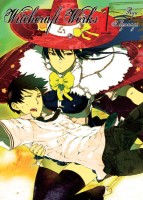
Witchcraft Works, Volume 1Witchcraft Works, Volumes 1-2 by Ryu Mizunagi. Witches seem to be showing up in anime and manga more and more often these days, but I don’t have a particular interest in them. I almost passed over Witchcraft Works because of that. But since it’s a manga being released by Vertical Comics, I was a little more inclined to check it out. That and I generally liked the artwork; the cover in particular is striking, but the interior art looks great, too (even if some of the character designs tend to be absurdly buxom). So far, Witchcraft Works is a delightfully strange and quirky manga, it’s ridiculousness and weirdness making it a lot of fun. I’m especially enjoying the reversals in the usual gender roles–Honoka, the male lead, is the one who needs saving and protecting while Ayaka, the female lead, is the strong and stoic hero. (I also love that she’s at least a head taller than him.) Ayaka is an incredibly powerful fire witch which means many of the action sequences are done and over with before they’ve really had the chance to begin, but at least she puts an end to things with flair. And often literally with flare.

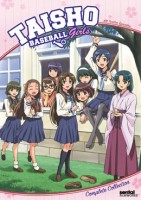
TaishoBaseballGirlsTaisho Baseball Girls directed by Takashi Ikehata. Although I’ve discovered that I generally enjoy sports anime, I was particularly interested in Taisho Baseball Girls because of its historical setting. Not many series take place during the Taisho era, a time period in which Japan was becoming increasingly Westernized and there was some societal anxiety caused by that. Although the twelve-episode anime is based on an ongoing series of light novels written by Atsushi Kagurazaka, it tells a complete and very satisfying story. A group of nine high school girls band together to form a baseball team in order to challenge an all-boys team and prove that women’s place in the world shouldn’t be and isn’t limited to the household. The problem is that very few of the girls actually have any experience playing baseball. Taisho Baseball Girls is a charming and heartwarming series without being overly sentimental. Some of the girls’ family members, friends, and teachers oppose what they’re doing and their unladylike behavior while others are incredibly supportive of them and their hard work.

Filed Under: FEATURES, My Week in Manga Tagged With: Ani-Imo, anime, Ema Toyama, Haruko Kurumatani, manga, Manga Dogs, Ryu Mizunagi, Taisho Baseball Girls, Witchcraft Works

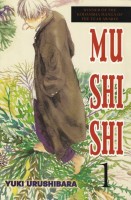
Mushishi, Vol. 1

January 16, 2015 by Ash Brown

Mushishi, Volume 1Creator: Yuki Urushibara
U.S. publisher: Del Rey
ISBN: 9780345496218
Released: January 2007
Original release: 2000
Awards: Japan Media Arts Award, Kodansha Manga Award

I no longer remember what first led me to pick up Yuki Urushibara’s debut manga Mushishi. It was probably mostly coincidence: the series started being released in English around the same time I started to really get into manga and was trying all sorts of things. I’m grateful for whatever reason it was that convinced me to read Mushishi because it became one of my favorite manga series. I love its quiet creepiness and beautiful storytelling. Mushishi was well-received both in Japan and abroad by both fans and critics. Among other recognitions and honors, Mushishi has earned a Japan Media Arts Award as well as a Kodansha Manga Award. Mushishi, Volume 1 was originally published in Japan in 2000. The English-language edition was initially released by Del Rey Manga in 2007 and, sadly, has since gone out of print. Happily, in 2014, Kodansha Comics released a digital edition of Mushishi in English.

Mushi–a category of primordial beings fundamental to the living world which may take on many forms. Truly understood by very few people, they are studied by mushishi, or mushi masters. Ginko is one such mushishi, making his living by traveling across the Japanese countryside, learning all that he can about mushi, and attempting to help those unfortunate enough to have come under the creatures’ influence. Mushi are often to blame for unusual natural phenomena and strange, otherwise unexplainable illnesses. Ginko is an expert, but even he is faced with circumstances beyond his knowledge and control; where mushi are involved, nothing is ever entirely certain. Sometimes the harm caused by the mushi has already been done and is irreversible, leaving humans to deal with the aftermath. They must learn to coexist or else risk their lives or sanity.

Although there is some continuity between the stories, Mushishi is largely episodic and each chapter in the first volume of the series stands well on its own. “The Green Gathering” introduces the concept of mushi while Ginko investigates a young man with the power to grant life to the things he draws. In “The Soft Horns” Ginko aids the residents of a snowbound village suffering from a peculiar kind of hearing loss. Mushi have invaded the dreams of a man in “The Pillow Path” with devastating and dire consequences. Urushibara’s award-winning “The Light in the Eyelids” was actually the very first Mushishi manga. The story follows a young girl whose eyes have become so painfully sensitive to light that she has been blindfolded and shut away by her family in a dark storehouse. The final story in Mushishi, Volume 1 is “The Traveling Bog” in which a swamp disappears and then reappears again and again, drawing ever closer to the sea each time.

Urushibara was influenced tremendously by older Japanese folk stories, but in developing Mushishi she draws on that inspiration to create a world and mythology of her own. Although the tales in Mushishi, Volume 1 are new, they still have a very familiar, traditional feeling to them that I find immensely appealing. I also enjoy the subtle horror present in many of the stories in Mushishi. While occasionally the manga and its imagery is disconcerting or even disturbing, Mushishi isn’t overly graphic or violent. Instead its creepiness derives from the fear of the unknown or the unknowable and the close intertwining of life and death. Mushi do not always bring misfortune, they can also be a benevolent force, but they are something beyond the understanding  and power of most humans, and that can be frightening. In Mushishi, Volume 1 Ginko is shown trying to bridge the gap that exists between mushi and humans, but he often struggles to find the perfect balance between sharing his knowledge and protecting life.

Filed Under: REVIEWS Tagged With: del rey, Japan Media Arts Award, Kodansha Manga Award, manga, mushishi, Yuki Urushibara

Manga the Week of 1/21

January 15, 2015 by Sean Gaffney, Ash Brown, MJ, Michelle Smith and Anna N 2 Comments

SEAN: Remember how I said that January was quiet? That does not apply to next week, which is simply a ton of stuff.

It’s even bigger as I missed some titles last week. Basically, I get street dates from Amazon, mostly. The exceptions are Dark Horse and DMP (and sometimes One Peace or Gen), which ship to comic shops 2 weeks before bookstores, so I use Diamond Comics’ street dates then. I forgot to check last week, and there was a pile of DMP stuff. So here it is:

There’s a sequel to Apple & Honey called His Rose-Colored Life.

Does the Flower Blossom? has its first volume. It seems to involve an ad man trying to get past a broken heart.

ASH: This series is from Blue Morning‘s Shoko Hidaka, so I’ll definitely be checking it out.

MJ: Oh, yes!

SEAN: In non-BL news, we have the 3rd volume of the quirky Hentai Prince and the Stony Cat.

Lastly, we have Murmur of the Heart, whose… sequel came out two weeks ago? In any case, it’s by the author of Blue Sheep Reverie.

missions10

Now, on to the giant pile actually out NEXT week. Kodansha has the 10th volume of addictive and frustrating shoujo potboiler Missions of Love.

ASH: So, so addictive.

SEAN: My Little Monster’s cast is equally screwed-up, but I scream at them a little less in the 6th volume. Only a little, though.

MICHELLE: I’m looking forward to this one!

SEAN: And there’s a third volume of fantasy series Noragami.

ASH: I’ve been rather enjoying Noragami thus far.

SEAN: From Seven Seas, we have a third volume of Arpeggio of Blue Steel, whose gritty SF-ness has helped to overcome its ‘cute girls are battleships’-ness.

There’s a 4th omnibus of wacky pseudo-incest comedy I Don’t Like You At All, Big Brother!!.

And a 2nd of the straight up horror of Magical Girl Apocalypse.

And the final volume of Zero’s Familiar Chevalier, which I suspect may be the last in the franchise given the death of its creator.

Speaking of final volumes, From the New World ends for Vertical with its 7th volume next week.

Viz has the 3rd omnibus of Urasawa’s Monster, which does not star either Godzilla OR Gamera. Human monsters are enough here.

ASH: Still very happy this series is getting a re-release.

ANNA: Me too! I need to finally read it.

SEAN: There’s a 2nd volume of the Resident Evil tie-in manga.

And a 4th Terra Formars.

akame1

A new series debuts from Yen, and if you’re tired of the ‘dark fantasy’ genre, well, you’re in a very small minority. Akame Ga Kill! isn’t a title I know much about, but it had a popular anime, and has a striking young woman with a sword on its cover. I look forward to checking it out.

ASH: I have yet to tire of dark fantasy, which means I’ll be giving Akame Ga Kill! a look.

We’ve mostly caught up with Black Butler in Japan, so a new release isn’t as common as it once was. Here’s the 19th volume.

MICHELLE: I always seem to read these, even if I’m not terribly enthusiastic about the series.

SEAN: Who likes Goong? Who wants a 17th omnibus? Is it you? It is!

MICHELLE: It’s meeeeeeeee!

ANNA: I WANT IT!

MJ: And me! Me! Me!

SEAN: Inu x Boku SS spent much of its last volume reinventing itself, and I’m hoping things start moving a bit faster with this 6th one.

I keep forgetting Kingdom Hearts exists – Amazon doesn’t code it with the other manga. They’re up to the 5th volume of 358 / 2 Days, which is not 179 for reasons that I’m sure would make sense if I read it.

I’m not sure how much longer The Melancholy of Suzumiya Haruhi-chan can keep toddling along, especially now that it’s gotten to Sasaki, but I’m always happy to see a new volume, as it’s simply funny – and better characterized than the main manga, oddly enough.

Milkyway Hitchhiking was a popular title when the first volume came out, so I suspect the Manga Bookshelf team is looking forward to Vol. 2 twice as much!

MICHELLE: I may actually (gasp) write a long review of volumes one and two!

ASH: The first volume was lovely!

ANNA: This was not on my radar too, but if it is good enough to get Michelle to write a long review, I want to read it!

MJ: I will be talking about this a lot, soon! I finally have my first volume and I’m already in love.

SEAN: Watamote hits its 6th volume, and I still really hate typing out its full title. Even Diamond just solicits it as ‘I’m Not Popular’.

secret1

Did you like Doubt? And Judge? Or do you just like people in animal masks? Well, you’re in luck! Secret will give you as much survival game as you want. It’d been coming out digitally in chapter form for some time, now here’s the first collected volume.

I can’t believe this 24th volume is the second to last Soul Eater. It’s been a fun ride. And hey, the covers are still pitch black.

Sword Art Online’s Aincrad was an awesome world, which makes it a shame that its plot was resolved in one book. That’s why we now have Sword Art Online Progressive, which goes back and retells the story at a more relaxed, in-depth pace. It also places far more emphasis on Asuna. This is Vol. 1 of the manga; the novel’s Vol. 1 ships in March.

Ubel Blatt Vol. 1, the 2nd omnibus of Ubel Blatt put out by Yen, collects the Japanese Vol. 2 and 3. I originally tried to make that more confusing for humor value, but really, it speaks for itself.

ASH: That it does.

SEAN: Omnibus #2 is the 3rd and last one for Umineko When They Cry: Alliance of the Golden Witch. Will Ange manage to save her brother in 1986 even though she’s in 1998? Don’t get your hopes up. After this, we’ll be halfway through the eight arcs!

And lastly, Omnibus #3 gives us another volume of Until Death Do Us Part.

MICHELLE: I liked the first omnibus more than I expected to, and I keep meaning to get back to it. One of these days!

SEAN: Surely there is something here for everyone. What’s for you?

Filed Under: FEATURES, manga the week of

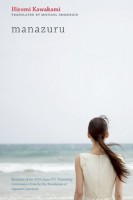
Manazuru

January 14, 2015 by Ash Brown

ManazuruAuthor: Hiromi Kawakami
Translator: Michael Emmerich
U.S. publisher: Counterpoint
ISBN: 9781582436005
Released: August 2010
Original release: 2006
Awards: Art Encouragement Prize, Japan-U.S. Friendship Commission Prize

My introduction to the work of Hiromi Kawakami was through the annual literary journal Monkey Business: New Writing from Japan which regularly features her short fiction. In fact, her quirky series of vignettes, “People from My Neighborhood,” is one of the recurring selections that I most look forward to from issue to issue. Recently I was reminded that some of her long form work had also been translated, most notable her award-winning novels The Briefcase and Manazuru. Of the two, Manazuru was the first to be released in English. The novel, originally published in Japan in 2006, was selected for the Japanese Literary Publishing Project and has also been translated into several other languages, including French, German, and Russian. Michael Emmerich’s English translation of Manazuru was published by Counterpoint Press in 2010 and received a Japan-U.S. Friendship Commission Prize. Manazuru was also very well received in Japan; Kawakami was awarded an Art Encouragement Prize from the Ministry of Education for the novel’s literary achievements.

Over a decade ago, Kei Yanagimoto’s husband Rei disappeared without a trace. No one seems to know what happened to him or where he went, why he abandoned Kei and their three-year-old daughter Momo, or if he is alive or dead. But life continues on for Kei. She and Momo now live together with her aging mother and she’s even having an affair with Seiji, a married man she met through her work as a freelance writer. But she still misses Rei tremendously and she feels his absence daily. As Momo grows older and matures she becomes more distant and Kei is afraid that she may lose her daughter as well. Kei has yet to come to terms with Rei’s disappearance and struggles to remember and to forget at the same time. When Kei discovers “Manazuru” written in a diary that Rei left behind she finds herself compelled to return to that seaside town again and again, chasing after some sort of long-lost memory. Manazuru holds meaning for Kei, for her past and for her future, if only she can open herself to discover it.

Manazuru is a poetic and atmospheric novel with a touch of the surreal. The narrative is told entirely from Kei’s perspective in an almost stream-of-conscious fashion as she moves from moment to moment in her life and from memory to memory. There is an intense sense of longing present in Manazuru. It is very clear that Kei loves and adores Rei. His disappearance is difficult for Kei to accept but even more difficult is not knowing the reasons why he is gone; Kei’s internal self is understandably in turmoil. As the novel progresses, and as Kei searches her very soul for answers and remembers more and more about herself and about her husband, what is real and what is imagined begin to increasingly blur together. Kei’s perception of the truth unravels and frays, lending a dreamlike quality to Manazuru, only to be woven together again as she forms a new understanding and acceptance of everything that has passed.

Overall, Manazuru is quiet, ethereal, and melancholic. The slow and subdued drive of the novel comes almost exclusively from Kei’s thoughts and feelings rather than from outside of herself. More than it is about an action-heavy plot, Manazaru is about Kei’s relationship with and to others, especially her family and her lover, but that doesn’t mean that the novel is lacking in drama. Kei’s mother never liked Rei to begin with; Momo starts to look more and more like her father; Seiji is Rei’s complete opposite, but that only serves to repeatedly remind Kei of her husband. Although Rei is missing, he is very much the largest presence in Kei’s life, a shadow that haunts her and that obscures the people around her. The more Kei tries to remember the more she forgets and the more she tries to forget the more she remembers. Manazuru is a meditation on memory, loss, and letting go. It’s a beautifully poignant and moving work.

Filed Under: REVIEWS Tagged With: Art Encouragement Prize, Hiromi Kawakami, Japan-U.S. Friendship Commission Prize, Novels

Pick of the Week: My Neighbor Seki

January 12, 2015 by Ash Brown, Sean Gaffney, Michelle Smith, MJ and Anna N 1 Comment

seki1ASH: There may not be many manga shipping out this week, but one of those volumes just so happens to be the debut of a series that I’m particularly looking forwad to–My Neighbor Seki. If I recall correctly, Vertical was initially planning on releasing “best of” collections, but happily plans changed and we should get to see the entire series. The anime adaptation was marvelous, so I’m very glad to get a chance to read the original manga.

SEAN: SekiSekiSekiSekiSekiSekiSeki…

MICHELLE: Couldn’t have said it better myself, Sean.

MJ: I’m in complete agreement with everyone here. Seki all the way.

ANNA: I have to agree with everyone! Seki sounds like the most interesting title by far shipping this week.

What looks good to you this week?

Filed Under: PICK OF THE WEEK

  • « Go to Previous Page
  • Page 1
  • Interim pages omitted …
  • Page 112
  • Page 113
  • Page 114
  • Page 115
  • Page 116
  • Interim pages omitted …
  • Page 145
  • Go to Next Page »
 | Log in
Copyright © 2010 Manga Bookshelf | Powered by WordPress & the Genesis Framework