• Skip to primary navigation
  • Skip to main content
  • Skip to primary sidebar
  • Home
  • About Us
    • Privacy Policy
    • Comment Policy
    • Disclosures & Disclaimers
  • Resources
    • Links, Essays & Articles
    • Fandomology!
    • CLAMP Directory
    • BlogRoll
  • Features & Columns
    • 3 Things Thursday
    • Adventures in the Key of Shoujo
    • Bit & Blips (game reviews)
    • BL BOOKRACK
    • Bookshelf Briefs
    • Bringing the Drama
    • Comic Conversion
    • Fanservice Friday
    • Going Digital
    • It Came From the Sinosphere
    • License This!
    • Magazine no Mori
    • My Week in Manga
    • OFF THE SHELF
    • Not By Manga Alone
    • PICK OF THE WEEK
    • Subtitles & Sensibility
    • Weekly Shonen Jump Recaps
  • Manga Moveable Feast
    • MMF Full Archive
    • Yun Kouga
    • CLAMP
    • Shojo Beat
    • Osamu Tezuka
    • Sailor Moon
    • Fruits Basket
    • Takehiko Inoue
    • Wild Adapter
    • One Piece
    • After School Nightmare
    • Karakuri Odette
    • Paradise Kiss
    • The Color Trilogy
    • To Terra…
    • Sexy Voice & Robo
  • Browse by Author
    • Sean Gaffney
    • Anna Neatrour
    • Michelle Smith
    • Katherine Dacey
    • MJ
    • Brigid Alverson
    • Travis Anderson
    • Phillip Anthony
    • Derek Bown
    • Jaci Dahlvang
    • Angela Eastman
    • Erica Friedman
    • Sara K.
    • Megan Purdy
    • Emily Snodgrass
    • Nancy Thistlethwaite
    • Eva Volin
    • David Welsh
  • MB Blogs
    • A Case Suitable For Treatment
    • Experiments in Manga
    • MangaBlog
    • The Manga Critic
    • Manga Report
    • Soliloquy in Blue
    • Manga Curmudgeon (archive)

Manga Bookshelf

Discussion, Resources, Roundtables, & Reviews

Ash Brown

My Week in Manga: December 1-December 7, 2014

December 8, 2014 by Ash Brown

My News and Reviews

There were a few different things posted at Experiments in Manga last week. First up was the announcement of the Seven Seas Sampler manga giveaway winner. The post also includes a list of some favorite titles published or soon to be published by Seven Seas. The honor of the first in-depth manga review for December goes to Mobile Suit Gundam: The Origin, Volume 7 by Yoshikazu Yasuhiko. Even if you’re not particularly interested in Gundam (I’ll readily admit to not being a devotee of the franchise, myself), I’d still highly recommend the series to readers looking for some great science fiction manga. The Origin is consistently great, and Vertical’s edition remains one of the best-looking manga releases in English. Also, over the weekend, I posted November’s Bookshelf Overload for those of you interested in what made it onto my shelves last month. (Granted, it doesn’t all actually fit on my shelves at the moment, thus the “overload.” There are a few strategically placed piles and boxes in my room, too…)

Elsewhere online, Digital Manga has a survey soliciting Tezuka Kickstarter Feedback. According to a recent e-mail newsletter, Digital Manga is expecting to launch a Kickstarter project sometime in 2015 to reprint Unico, Swallowing the Earth, and Barbara, all of which have previously been Kickstarted. Philip of Eeeper’s Choice expresses some of the concerns over these recent developments. Also interesting, a Publishers Weekly article about Digital Manga’s recent Kickstarter efforts notes that Digital Manga is apparently not planning on actually distributing the Tezuka manga outside of direct sales and the library market. This means that individuals who want the manga will either have to back a successful Kickstarter project, or purchase them directly from the publisher. I’ve been extremely busy at work lately (my immediate supervisor retired on Friday, which more or less leaves me in charge of my unit for the time being), so I wasn’t able to follow much more than the Digital Manga drama, but I did see that Viz made a new license announcement: Junji Ito’s Fragments of Horror! And speaking of licenses, Reverse Thieves has compiled a list of all of the manga, light novels, and anime licenses that were announced in 2014.

Quick Takes

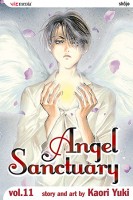
Angel Sanctuary, Volume 11Angel Sanctuary, Volumes 11-15 by Kaori Yuki. It took more than half of the series, but Angel Sanctuary has finally grabbed a hold of me. I’ve enjoyed Yuki’s artwork since the beginning, I’ve always liked the series’ exploration of overarching themes of love, destiny, and personal responsibility, and I can certainly appreciate the tremendous amount of research Yuki has put into creating her mythology, but the story itself has been somewhat of an unfocused mess up until this point. Now things are starting to pull together in a very satisfying way though. I’m actually looking forward to reading the conclusion of Angel Sanctuary instead of just feeling obligated to finish the manga. It’s getting really good and the drama is epic. Yuki still has the tendency to be a little haphazard in her narrative structure, but the series has become much easier to follow. It probably helps that her editors wouldn’t allow her to introduce any more new characters. The cast of Angel Sanctuary is huge, and so it’s understandably challenging to present all of their backstories while maintaining the series’ forward momentum. Fortunately, as it approaches its turbulent end, Angel Sanctuary seems to have found its center and drive.

Manga Dogs, Volume 1Manga Dogs, Volume 1 by Ema Toyama. Up until now, the only other manga that I’ve read by Toyama is her ongoing series Missions of Love, so I wasn’t quite sure what to expect from Manga Dogs. Turns out it’s a very different series, probably best described as gag manga about making manga and the manga industry. While for me it was never laugh-out-loud hilarious, I was generally amused and consistently entertained by the first volume of Manga Dogs. It’s silly fun. Even though she’s only fifteen, Kanna Tezuka recently made her manga debut. Granted, her series isn’t doing so well and is in danger of cancellation. Her high school has a new major specializing in manga, though it’s incredibly poorly run, which is where three pretty boys attach themselves to her. Fumio Akatsuka, Fujio Fuji, and Shota Ishinomori are more interested in the fame and fortune they associate with successful mangaka rather than the sweat and stress it takes to get there, though. As can be seen with the characters’ names, Manga Dogs has plenty of nods and references to established mangaka, but most of the humor comes from the three young men’s misguided efforts to become famous artists without actually putting in any effort.

Prophecy, Volume 1Prophecy, Volume 1 by Tetsuya Tsutsui. Before reading the first volume of Prophecy I actually didn’t know much about the manga except that Vertical was approached to publish it directly by the author. Prophecy is a mature, chilling, and realistic series dealing with cyber crime, social media, how quickly people can turn on one another, and the terrible things that can be done under the guise of anonymity. A small group of vigilantes are taking matters into their own hands, viciously striking out against those who have trespassed against others online. While their methods are extreme, their motivation is easy to understand and even empathize with; the world can be a cruel, cruel place. It’s an entirely different sort of case than the members Anti Cyber Crimes Division of the Metropolitan Police are usually involved in. Specializing in internet crime, they more commonly deal with copyright and intellectual property infringement. But in this particular war of information, people’s lives are at stake, not just their livelihoods. The first volume of Prophecy was exceptional. In my opinion, it’s one of the strongest series to debut this year. I’ll definitely be picking up the rest of the manga.

Filed Under: FEATURES, My Week in Manga Tagged With: angel sanctuary, Ema Toyama, Kaori Yuki, manga, Manga Dogs, Prophecy, Tetsuya Tsutsui

Bookshelf Overload: November 2014

December 7, 2014 by Ash Brown

Once again, November mostly brought preorders and a few review copies to my doorstep, but I also made a point of picking up some first volumes of older series that I’ve been meaning to try, like Pandora Hearts, Bakuman, and Oresama Teacher. As for the preorders I was particularly happy to see arrive, there was the penultimate volume of Blade of the Immortal by Hiroaki Samura, Kaoru Mori’s A Bride’s Story, Volume 6, and Takehiko Inoue’s Real, Volume 13. I also picked up a couple of alt-manga releases: Akino Kondoh’s Nothing Whatsoever All Out in the Open and Masahiko Matsumoto’s The Man Next Door. It was a good month for fans of Fumi Yoshinaga, too; both Ōoku: The Inner Chambers, Volume 10 and What Did You Eat Yesterday?, Volume 5 are now available. But the release that I was probably most excited about in November wasn’t actually even manga. The Early Cases of Akechi Kogoro by Edogawa Rampo, a collection of four stories featuring one of Rampo’s most famous characters, has been published by Kurodahan Press!

Manga!
Ani-Imo, Volume 1 by Haruko Kurumatani
Assassination Classroom, Volume 1 by Yusei Matsui
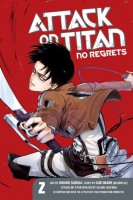
Attack on Titan: No Regrets, Volume 2 by Hikaru Suruga
Barakamon, Volume 1 by Satsuki Yoshino
Bakuman, Volumes 1-2 written by Tsugumi Ohba, illustrated by Takeshi Obata
Blade of the Immortal, Volume 30: Vigilance by Hiroaki Samura
A Bride’s Story, Volume 6 by Kaoru Mori
Clamp School Detectives, Volumes 1-3 by CLAMP
Devils and Realist, Volume 3 written by Madoka Takadono, illustrated by Utako Yukihiro
Food Wars!: Shokugeki no Soma, Volume 3 written by Yuto Tsukuda, illustrated by Shun Saeki
Gangsta, Volume 4 by Kohske
The Garden of Words written by Makoto Shinkai, illustrated by Midori Motohashi
Genshiken: Second Season, Volume 5 by Shimoku Kio
Love in Hell, Volume 1 by Reiji Suzumaru
Lucifer and the Biscuit Hammer, Omnibus 1 by Satoshi Mizukami
The Man Next Door by Masahiko Matsumoto
Manga Dogs, Volume 1 by Ema Toyama
Missions of Love, Volumes 8-9 by Ema Toyama
No Matter How I Look at It, It’s You Guys’ Fault I’m Not Popular!, Volume 5 by Nico Tanigawa
Nothing Whatsoever All Out in the Open by Akino Kondoh
Ōoku: The Inner Chambers, Volume 10 by Fumi Yoshinaga
Oresama Teacher, Volume 1 by Izumi Tsubaki
Pandora Hearts, Volume 1 by Jun Mochizuki
Prophecy, Part 1 by Tetsuya Tsutsui
President Momoi-Kun by Higashi Nishida
Real, Volume 13 by Takehiko Inoue
Sense and Sexuality by You Higashino
Showa: A History of Japan, 1944-1953 by Shigeru Mizuki
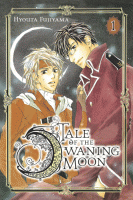
Tale of the Waning Moon, Volume 1 by Hyouta Fujiyama
Terra Formars, Volume 3 written by Yu Sasuga, illustrated by Ken-ichi Tachibana
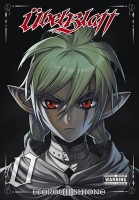
Ubel Blatt, Omnibus 0 by Etorouji Shiono
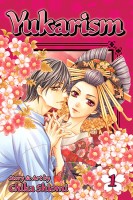
Yukarism, Volume 1 by Chika Shiomi
What Did You Eat Yesterday?, Volume 5 by Fumi Yoshinaga

Manhwa!
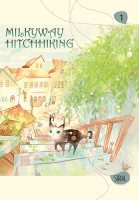
Milkyway Hitchhiking, Omnibus 1 by Sirial

Comics!
Hotblood!: A Centaur in the Old West, Volume 2 by Toril Orlesky
Oglaf, Book Two by Doug Bayne and Trudy Cooper
Open Spaces and Closed Places, Parts 1-6 by saicoink
Outwards by Elephant Wendigo
The Tribute Album: An Authorized Less Than Epic Adventures of TJ & Amal Fan Artbook

Collections!
The Early Cases of Akechi Kogoro by Edogawa Rampo
Season of Infidelity: BDSM Tales from the Classic Master by Oniroku Dan

Filed Under: Bookshelf Overload, UNSHELVED

Mobile Suit Gundam: The Origin, Vol. 7: Battle of Loum

December 5, 2014 by Ash Brown

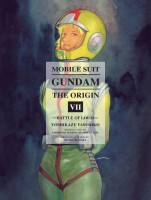
Mobile Suit Gundam: The Origin, Volume 7: Battle of LoumCreator: Yoshikazu Yasuhiko
Original story: Yoshiyuki Tomino and Hajime Yatate

U.S. publisher: Vertical
ISBN: 9781939130679
Released: September 2014
Original release: 2011

Battle of Loum is the seventh volume in Yoshikazu Yasuhiko’s manga series Mobile Suit Gundam: The Origin, a reimagining of the original 1979 anime series Mobile Suit Gundam which launched the massive Gundam franchise. The Origin provides an excellent entry point into the rather daunting Gundam universe for those who don’t know where to start with it. I’d even recommend the manga to readers who don’t have a particular interest in Gundam but who are looking for a great military science fiction series or space opera. Generally, I would consider myself a part of that latter group, though after reading The Origin I find that I am more curious about Gundam as a whole than I previously was. I have thoroughly been enjoying Vertical’s deluxe release of the The Origin which is based on the Japanese collectors’ edition. The seventh volume, originally published in Japan in 2011, was released in English in 2014 and includes additional commentary from Mamoru Nagano as well as the extra chapter “On the Eve” as bonus content.

After the Republic of Munzo declared itself the independent Principality of Zeon, political tensions continued to mount between it and the Earth Federation until an all-out war between the two groups ignited. Some of the other space colonies rally under Zeon’s flag, demanding their autonomy and freedom from the Federation’s rule. Others support the Federation and its efforts to keep humanity united. Neither side of the conflict is entirely in the wrong, but as the war continues so do the crimes against innocent civilians and colonists, many of which are manufactured by members of Zeon’s ruling House Zabi who would use the war for their own designs. There are warmongers to be found among the Federation’s ranks as well, though. But then Zeon does something unconscionable. Supposedly in an effort to end the war quickly and decisively, an entire space colony is crashed into the planet and the effects are devastating.

Battle of Loum recounts two of the most pivotal events of the war between the Federation and Zeon. The first chapter or so is devoted to the colony drop of Side 2 and the massacre of the colonists that precede its ultimate destruction. It is an appalling tragedy and the number of casualties is enormous, both of Side 2’s residents and the worldwide population of Earth. Yasuhiko’s stunning portrayal of the colony drop is extraordinarily effective. In addition to the showing astonishing damage inflicted, he explores the motivations behind it, the controversy and doubt surrounding the act, and how individuals respond and react to the plan and its execution. The colony drop is nothing short of an atrocity. It’s chilling to see the propaganda touting the glory of war contrasted with the very grim reality and horror of it all. The images of the colony breaking apart and smashing into Earth and the resulting devastation and loss of life are haunting.

As can be assumed by the title of the seventh volume, the Battle of Loum is the other major incident of the war upon which Yasuhiko turns his attention. Although the Federation has the advantage of numbers and resources, it is outmatched strategically and technologically as Zeon proves just how powerful and versatile the newly developed mobile suits can be. The Battle of Loum is a turning point in the war. Neither side comes out of it unscathed, but the Federation suffers a major defeat. The seventh volume of The Origin is very dramatic, with intense space battles and devious political machinations. There are those who honestly desire peace, but there are also those on both sides of the conflict who seek war. The inclusion of “On the Eve” brings the narrative full circle to the events that begin the series. The Origin is a magnificent piece of science fiction. It’s scope is epic, but Yasuhiko never forgets the very personal human drama that underlies it all.

Filed Under: REVIEWS Tagged With: Gundam, Hajime Yatate, manga, vertical, Yoshikazu Yasuhiko, Yoshiyuki Tomino

Manga the Week of 12/10

December 5, 2014 by Sean Gaffney, Ash Brown, MJ, Anna N and Michelle Smith Leave a Comment

SEAN: The second week in December brings us a wide variety of manga for perusing, but is already dominated by something that Fantagraphics released THIS week and I am therefore behind on.

massive

Massive is an anthology of gay manga that, from what I hear, can be judged very well by its cover: if the idea of large, muscley men having sex with each other intrigues you, then this is an absolute must buy. It’s always great to see this sort of manga over here.

ASH: The release date kept moving around for this one, so don’t feel too bad. I’m thrilled that it’s finally here, though! Massive is one of my most anticipated releases for 2015. It includes manga, interviews, essays, and more. I can’t wait to get my hands on a copy!

MJ: Same here.

ANNA: I probably won’t be reading this, but I think it is very cool that it is being published.

SEAN: Kodansha has a third volume of Attack on Titan: Before the Fall. This is the manga, not the novel, for those who may be confused.

There’s also a fifth Battle Angel Alita: Last Order omnibus.

Seven Seas hopes you still like Wonderland (not to be confused with the Country of Hearts) with the 2nd volume of I Am Alice: Bodyswap in Wonderland.

Vertical gives us two types of supernatural action manga. The 2nd volume of Ajin possibly has less romantic comedy than I expect Witch Craft Works 2 will have, though I’ve been wrong about that sort of thing before.

ASH: I think you’re probably right this time.

SEAN: Arata the Legend has reached 20 volumes, which means if it weren’t licensed already, it would be totally unlicensable by now. But it is! Rejoice, Arata fans.

MICHELLE: I do like Arata, but I kind of can’t believe it’s gone on longer than Fushigi Yuugi. I guess that’s what happens when it’s shounen.

ANNA: I do have a deep and unwavering affection for Fushigi Yuugi. Sorry Arata!

dw6

SEAN: Deadman Wonderland has its sixth volume next week as well.

ASH: Tokyopop only made it to five volumes; Viz is starting to get into new material, now.

MICHELLE: Yep! I always think of this series in the same thought as the other final straggly releases TOKYOPOP managed to get out, including a volume of The Stellar Six of Gingacho. Probably no one will ever rescue that one, so I has a sad.

MJ: I’ve been kinda iffy on this series, but I am pretty happy that TP series’ are getting picked back up, so I consider it a win.

ANNA: I will pause to evoke the late, lamented series Demon Sacred and Sky Blue Shore

And there’s a 13th Itsuwaribito, and I begin to despair about this long string of worthy Viz shonen I don’t really follow.

And I am rewarded with a 9th volume of Magi, which I do follow, and which is excellent.

MICHELLE: It is. We need to start a campaign to get MJto read it.

MJ: Heh.

ANNA: I am hoarding stray volumes of this and do mean to read it one day.

SEAN: Are you getting a massive amount of manga next week? Or just Massive?

Filed Under: FEATURES, manga the week of

Manga Giveaway: Seven Seas Sampler Winner

December 3, 2014 by Ash Brown

A Centaur's Life, Volume 1Dictatorial Grimoire, Volume 1: Cinderella
Gakuen Polizi, Volume 1Kashimashi: Girl Meets Girl, Omnibus 1

And the winner of the Seven Seas Sampler manga giveaway is…Karen Swartz!

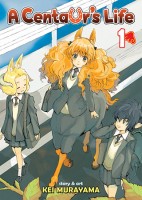
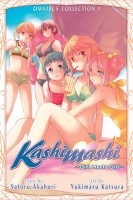
As the winner, Karen will be receiving A Centaur’s Life, Volume 1 by Kei Murayama; Dictatorial Grimoire, Volume 1: Cinderella by Ayumi Kanou; Gakuen Polizi, Volume 1 by Milk Morinaga; and Kashimashi: Girl Meets Girl, Omnibus 1 written by Satoru Akahori and illustrated by Yukimaru Katsura. Over the last couple of years, Seven Seas has really taken off, adding more licenses than ever before and diversifying its catalog. So, for this giveaway, I asked people tell me a little about some of their favorite manga released by Seven Seas. I’ve compiled a list below (those with an asterisk were mentioned by more than one person), but be sure to check out the Seven Seas Sampler comments for more details.

Some favorite Seven Seas titles:
Afro Samurai by Takashi Okazaki
Alice in the Country of created by Quin Rose
Amazing Agent Luna written by Nunzio DeFillippis, Christina Weir, illustrated by Shiei
Blood Alone by Masayuki Takano
Boogiepop created by Kouhei Kadono
A Centaur’s Life by Kei Murayama
A Certain Scientific Railgun written by Kazuma Kamachi, illustrated by Motoi Fuyukawa
Citrus by Saburouta
*D-Frag! by Tomoya Haruno
Dance in the Vampire Bund by Nozomu Tamaki
*Devils and Realist written by Utako Yukihiro, illustrated by Madoka Takadono
Dragonar Academy written by Ran, illustrated by Shiki Mizuchi
Freezing by Kwang-Huyn Kim
Gakuen Polizi by Milk Morinaga
*Girl Friends by Milk Morinaga
*Gunslinger Girl by Yu Aida
*Haganai: I Don’t Have Many Friends written by Yomi Hirasaka, illustrated by Itachi
Haven’t You Heard? I’m Sakamoto by Nami Sano
Hayate X Blade by Shizuru Hayashiya
Inukami! written by Mamizu Arisawa, illustrated by Mari Matsuzawa
Kisses, Sighs, and Cherry Blossom Pink by Milk Morinaga
Kokoro Connect written by Sadanatsu Anda, illustrated by CUTEG
*Lizzie Newton: Victorian Mysteries written by Hey-jin Jeon, illustrated by Ki-ha Lee
Love in Hell by Reiji Suzumaru
*Lucifer and the Biscuit Hammer by Satoshi Mizukami
Magical Girl Apocalypse by Kentaro Sato
Strawberry Panic written by Sakurako Kimino, illustrated by Takuminamuchi
*Toradora! written by Yuyuko Takemiya, illustrated by Zekkyou
Witch Buster by Jung-man Cho
*Young Miss Holmes by Kaoru Shintani
Zero’s Familiar written by Noboru Yamaguchi, illustrated by Nana Mochizuki

Thank you to everyone who participated in the giveaway and shared some of your favorites; I hope to see you all again for the next one!

Filed Under: UNSHELVED Tagged With: Ayumi Kanou, Centaur's Life, Dictatorial Grimoire, Gakuen Polizi, Kashimashi, Kei Murayama, manga, milk morinaga, Satoru Akahori, Yukimaru Katsura

Pick of the Week: Torn Between Two Manga

December 1, 2014 by Sean Gaffney, Michelle Smith, Ash Brown, Anna N and MJ Leave a Comment

Feeling like a fool.

potwSEAN: There’s a really obvious pick for me this week, as I already mentioned in my Manga the Week of. I’m a sucker for stories where groups of delinquents and misfits are given reasons to fight back and find worth in themselves, and if it’s an alien smiley-face teacher who’s also a bit of a pervert, so much the better. Assassination Classroom is a long awaited addition to the Jump line, and I can’t wait to dig into it.

MICHELLE: I was all set to pick Yukarism here, and I really do look forward to that one, but Sean, you really got me with the description of delinquents/misfits finding worth in themselves. I love stories where kids like that find somewhere they belong, or a passion that they can excel in. It’s a huge reason that I love Slam Dunk so much. And so, I guess I’m picking Assassination Classroom, too!

ASH: Assasination Classroom is one of the manga I’m most curious about this week, too, but since it already has such strong support, I’m going to go ahead and pick the debut of Yukarism. I haven’t read any of the mangaka’s previous works, but the art looks beautiful and I’m intrigued by the story’s premise.

ANNA: I join with Ash in also being intrigued by Assasination Classroom, but as someone who has read all of Chika Shiomi’s other works, I have to pick Yukarism as the manga I am most looking forward to this week.

MJ: Oh dear, oh dear. Well. Though I am feeling the same torment as everyone else here, I will also side with Yukarism in the end. My love for Rasetsu coupled with the rather adorable nature of the title compels me. Yes, indeed it does. Yukarism FTW!

What looks good to you this week?
Filed Under: PICK OF THE WEEK

My Week in Manga: November 24-November 30, 2014

December 1, 2014 by Ash Brown

My News and Reviews

Last week was a busy week for me as I was traveling and such for the Thanksgiving holiday, but Experiments in Manga had quite a few things going on, too. The most recent manga giveaway was posted and there’s still time to enter for a chance to win a Seven Seas Sampler–four first volumes of some of Seven Seas’ manga series. I also posted two reviews last week. First up was Yu Godai’s novel Quantum Devil Saga: Avatar Tuner, Volume 1 which I loved. It’s based on the same story as Digital Devil Saga, a spinoff of the Shin Megami Tensei video game series. I also reviewed Ryosuke Takeuchi and Takeshi Obata’s All You Need Is Kill manga adaptation of Hiroshi Sakurazaka’s original All You Need Is Kill novel. I think the novel is the stronger of the two, but I enjoyed the manga as well. Last week I also joined in with the other Manga Bookshelf bloggers for a roundtable on food manga over at MangaBlog.

I should also probably mention that the votes have been tallied for my next monthly manga review project. After School Nightmare took an early lead, but it ended up being a very close contest between it and Dorohedoro and Mushishi. And in the end, After School Nightmare and Mushishi actually tied with each other! So, I’ve decided to review both manga. There are a few different ways to approach this, but beginning with After School Nightmare, each month I’ll alternate between the two series. If everything goes according to schedule, it should take me a year and a half to complete the review project. Thank you to everyone who participated in the poll! I was very glad to see interest expressed in all of the series to which I had narrowed down the vote. I’ll be sure to keep in mind the other series that were strongly supported and try to feature them as best as I can, too. I wish that I had more time to read and write!

Elsewhere online, Organization Anti-Social Geniuses had a couple of posts that I found particularly interesting last week–an interview with Abigail Blackman, one of Yen Press’ editors and letterers, and a discussion of some of the fears of buying manga from U.S. publishers. Digital Manga has launched yet another Osamu Tezuka manga Kickstarter, though one that seems much more reasonable than the last failed project. This time, Digital Manga is trying to raise funding for the publication of Tezuka’s Ludwig B, an unfinished manga series about Beethoven. (In part because of my background in music, I’m actually really interested in Ludwig B.) I’d also like to bring a little attention to an effort started by Becca Hillburn–a group for Western Shoujo Comic Artists. More about it and the endeavor to create a network of support for manga-influenced artists can be read at Hillburn’s website Nattosoup: Solidarity and the American Shoujo/Josei Comic Scene.

Quick Takes

Alice in the Country of Hearts, Omnibus 1Alice in the Country of Hearts, Omnibus 1 (equivalent to Volumes 1-2) by Soumei Hoshino. Based on an otome game by Quin Rose, Hoshino’s Alice in the Country of Hearts is one of many manga adaptations and spinoffs. Originally the series was partially released in English by Tokyopop, but the license was later rescued by Yen Press. Despite hearing good things about Alice in the Country of Hears, one of the reasons it took me so long to give the manga a try was the sheer number of volumes associated with the franchise. I’m glad that I finally got around to reading the first omnibus, though, because I loved it. At first, Alice in the Country of Hearts seems like a fairly straightforward re-imagining of Lewis Carroll’s Alice’s Adventures in Wonderland. (Granted, many of the characters are now bishōnen of various types.) But it soon becomes clear that something very ominous and disconcerting is brewing under the story’s surface. Alice has been transported to Wonderland and if she ever wants to return home she will have to get to know its residents better. Although they are participating in some sort of game to win her affections, those who live in Wonderland are prone to violence and have a very different sense of what is normal.

Milkyway Hitchhiking, Omnibus 1Milkyway Hitchhiking, Omnibus 1 (equivalent to Volumes 1-2) by Sirial. Although occasionally the same characters make an appearance in multiple stories, Milkyway Hitchhiking is generally an episodic manhwa. The only thing that really ties the volume together is the presence of Milkyway, a beautiful cat who can apparently travel through space and time. She may or may not actually play an active role in the stories being told. Sometimes she’s just an observer and sometimes she’s a participant. Sometimes she’s a focal point of a tale and sometimes she simply happens to be present while events unfold around her. The most striking thing about Milkyway Hitchhiking is its beautiful, full-color artwork. Some of the individual illustrations are simply stunningly gorgeous. A variety of color palettes are used to lovely effect. While I particularly appreciate Milkyway Hitchhiking for Sirial’s art, I also enjoyed the individual episodes, too. The stories range from the fantastical to those grounded in reality. Some feel very much like something out of a fairy tale while others are contemporary slice-of-life or historical in nature. At times heartwarming and at times heartbreaking, I very much enjoyed Milkyway Hitchhiking and look forward to reading more of the series.

Tale of the Waning Moon, Volume 1Tale of the Waning Moon, Volume 1 by Hyouta Fujiyama. I have a tendency to forget that Yen Press releases boys’ love series. Tale of the Waning Moon is one of those manga. Fujiyama has had quite a few of her works released in English, but I haven’t read any until now. Tale of the Waning Moon is pretty ridiculous. Ryuka is a young man whose girlfriend recently left him for another man. While drowning his sorrows Ryuka accidentally calls upon Ixto, the spirit of the last quarter moon, to grant him true love. The twist is that all of the eligible candidates that Ixto comes up with are men, which doesn’t particularly appeal to Ryuka. The real problem is that when Ryuka rejects those options, he comes under Ixto’s spell and is therefore compelled to leave his village on a quest to reunite with the spirit. From there, Ryuka sets of on his journey, unintentionally amassing an adventuring party of sorts in the process. Tale of the Waning Moon has sex (not all of it consensual) and silliness, magic and mayhem. Inspired and heavily influenced by fantasy RPGs, the manga is definitely more of a comedy than it is a romance. Tale of the Waning Moon is a short series–only four volumes–and the first installment entertained me well enough, so I’ll probably get around to picking up the rest at some point.

Ubel Blatt, Omnibus 0Übel Blatt, Omnibus 0 (equivalent to Volumes 0-1) by Etorouji Shiono. Übel Blatt, which translates as “evil blade,” has a lot going for it that generally appeals to me–a dark fantasy setting, a tale of revenge, epic battles, and so on–but for some reason, the first omnibus (the zeroth omnibus?) didn’t quite grab me as much as I expected it to. I’m not really sure why, since it seems like a series that should interest me. In fact, overall I actually did like the story. I even like many of the characters, especially its lead. But there were a few little (and big) things here and there that just didn’t work for me. For one, the sexual content and rape in the volume seems entirely unnecessary. It comes across as a superfluous attempt to add more edginess as opposed to being important to the story. Most of the female characters don’t fare particularly well, either. Occasionally there’s a little bit of hope that they’ll overcome their scantily clad fantasy tropes, but it never quite seems to happen. At this point, many of the antagonists in Übel Blatt seem fairly one-dimensional, too, though I suspect that this will change as the series progresses. All that being said, Übel Blatt does feature some excellent fight sequences and scenes of destruction. And while I’m not desperate to read the next volume, the series does show potential.

Filed Under: FEATURES, My Week in Manga Tagged With: Alice in the Country of, Etorouji Shiono, Hyouta Fujiyama, manga, manhwa, Milkyway Hitchhiking, Sirial, Soumei Hoshino, tale of the waning moon, Ubel Blatt

All You Need Is Kill

November 30, 2014 by Ash Brown

All You Need Is KillAuthor: Ryosuke Takeuchi
Illustrator: Takeshi Obata
Original story: Hiroshi Sakurazaka

U.S. publisher: Viz Media
ISBN: 9781421576015
Released: November 2014
Original release: 2014

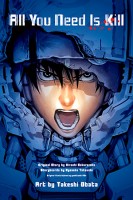
It’s been a few years since I’ve read Hiroshi Sakurazaka’s novel All You Need Is Kill but I distinctly remember enjoying it, perhaps even more than I initially thought that I would. And so, I was very excited to learn that Takeshi Obata would be working on the manga adaptation not only because I like the original All You Need Is Kill but because I also enjoy Obata’s illustrations. (Hikaru no Go, which he worked on, actually happens to be one of my favorite manga series.) I was even more excited when Viz Media licensed the All You Need Is Kill manga for an English-language release. In Japan, the series was published in 2014 in two volumes. Viz’s digital release was also two volumes, but its 2014 print edition was released as a single-volume omnibus under the Shonen Jump Advanced imprint complete with color pages and a larger trim size. While Obata provided the artwork for the manga adaptation of All You Need Is Kill, it was Ryosuke Takeuchi who outlined the script and storyboards.

Humankind has been at war with the Mimics for years, but it seems like it may be a losing battle. The Mimics, alien creatures that continue to evolve with each confrontation, have begun to close in on Japan, the only country remaining that has the ability to produce the high-tech battle jackets used in the war. If Japan is lost, the rest of the world will soon follow. Keiji Kiriya is a young jacket jockey about to face his first battle. He, like so many others, is killed in action, except that he then revives in his bunk, thirty hours before his death. At first Keji thinks he’s dreaming, but then it happens again. And then again. Time after time, Keiji lives and dies fighting against the Mimics. Doing all that he can to survive just a little bit longer each round, Keiji focuses part of his attention on Rita Vrataski, considered to be the best jacket solider in the world. Following her example, Keiji might actually have a chance to escape the time loop alive.

Because I haven’t recently read Sakurazaka’s original All You Need Is Kill it is difficult for me to make a detailed comparison between it and the manga adaptation. Generally though, I feel that the novel is the stronger work of the two, but the manga has quite a bit going for it as well. Most of the resigned humor and social commentary found in the novel and even Keiji’s internal development have been downplayed in the manga in favor of the story’s external spectacle, action, and battles. As manga is a visual medium it makes sense to have this slight change of focus, but as a result All You Need Is Kill does lose some of its emotional impact. As for the artwork itself, Obata does an excellent job conveying the drama of the plot. The jackets and heavy action sequences look great, too. The Mimics’ design does leave something to be desired though–they aren’t as terrifying as they should be–and some readers may find the occasional fanservice more distracting than anything else.

Although it may not have the same substantive weight of the original, All You Need Is Kill makes for an entertaining and exciting, action-packed manga that reads quickly. Though not without flaws, it succeeds well as an adaptation and as its own work. Particularly effective is how Obata emphasizes the time loop by utilizing very similar panels but with slightly different page layouts with each rewind, keeping the manga from becoming too repetitive. The way Obata draws Keiji changes as well. The young soldier becomes stronger and harder with each loop, but also more haunted and battle-weary. An explanation for the time abnormality is eventually given that at least makes sense superficially and sets up a nice plot twist, but it starts to fall apart if given too much critical thought. Still, the All You Need Is Kill is a great read for anyone interested in military science fiction and action. For the most part I was pleased with the adaptation; I’d still recommend that readers give the original novel a try, too, though.

Filed Under: REVIEWS Tagged With: All You Need Is Kill, Hiroshi Sakurazaka, manga, Ryosuke Takeuchi, Shonen Jump, Takeshi Obata, viz media

Quantum Devil Saga: Avatar Tuner, Vol. 1

November 28, 2014 by Ash Brown

Quantum Devil Saga: Avatar Tuner, Volume 1Author: Yu Godai
Translator: Kevin Frane
U.S. publisher: Bento Books
ISBN: 9781939326003
Released: July 2014
Original release: 2011

Quantum Devil Saga: Avatar Tuner, Volume 1, a novel written by Yu Godai, was originally published in Japan in 2011. The English-language edition of the volume, translated by Kevin Frane, was released in 2014 by Bento Books. It is the first book in a five-volume series which is further divided into three parts. (The first volume consists of the first half of the first part.) Those familiar with the video game series Digital Devil Saga: Avatar Tuner, a spinoff of the Shin Megami Tensei games, will find Quantum Devil Saga to be familiar as well. The series isn’t a novelization of the video games, but it is based on the same original story created by Godai which became the underlying framework for Digital Devil Saga. Although I was aware of Shin Megami Tensei, which has quite a following, and Digital Devil Saga specifically,  I’ve never actually played any of the games myself. Even so, I was still very interested in reading Quantum Devil Saga, Godai’s first written work to appear in English.

The denizens of the Junkyard exist to die in battle only to be born again in a never-ending struggle to reach the promised paradise of Nirvana. The Junkyard is divided into seven territories, one held by the Church of the Arbiters of Karma while the other six are the domain of rival tribes of skilled fighters. Only when one group is able to obtain complete control of the entire Junkyard will the gates to Nirvana be opened. Serph is the leader of the Embryon, a small tribe that has quickly gained strength, numbers, and territory. During the Embryon’s confrontation with the Vanguards tribe, an unidentifiable device appears on the battlefield which dramatically changes the balance of power in the Junkyard, unleashing the combatants’ darker selves and transforming them into demons. Suddenly, the very laws that governed the world in which they live have changed. Established systems have begun to fracture, the cycle of reincarnation is interrupted, and the quest for Nirvana has become deadlier than ever.

Quantum Devil Saga isn’t a video game novelization, nor does it read like one. However, it is quite easy to see how the story and scenario could be suited for or smoothly adapted as a game. The narrative is fairly linear, generally following Serph’s point of view as he and his comrades strive to understand everything that has happened. The way that the transformations are handled and how skills and knowledge are gained in the novel could sometimes be reminiscent of game play or mechanics. The characters fight in a series of battles with increasingly high stakes and difficulty levels, ultimately ending with what cold be considered a boss battle. It’s clearly not the final boss, though, seeing as the first volume concludes with something of a cliffhanger. But none of these similarities are actually bad things and despite them Quantum Devil Saga doesn’t feel overly game-like. It is entirely its own work and exceptionally engaging one at that. The action is exciting and clear, the characters’ philosophical and psychological development is fascinating, and the translation is great, too. Once I started reading Quantum Devil Saga, I didn’t want to put it down.

What made Quantum Devil Saga particularly interesting and intriguing for me was its setting and atmosphere. The world-building of the series is heavily informed by Hindu and Buddhist cosmology and symbolism. (There is also at least one example of Mayan influence, but I found its inclusion to be rather strange given the context of the rest of the novel.) At first it seems as though these concepts are mostly used as a source of aesthetic inspiration, but they actually run fairly deep. However, readers don’t necessarily need to be acquainted with Hinduism or Buddhism to enjoy the story, although those who are will probably get even more out of an already great novel. The overall tone of Quantum Devil Saga is fairly dark. The demonic transformations that the characters are subject to have horrific and unsettling implications. Some of them wholeheartedly embrace their new powers and forms while others are desperate to hold on to the shreds of their humanity. They are forced to face their true selves and struggle with what they see. I enjoyed the first volume of Quantum Devil Saga immensely and can’t wait for the second volume to be released.

Filed Under: REVIEWS Tagged With: Bento Books, Novels, Quantum Devil Saga, Shin Megami Tensei, Yu Godai

Manga the Week of 12/3

November 27, 2014 by Sean Gaffney, Ash Brown, MJ, Anna N and Michelle Smith Leave a Comment

SEAN: December begins, and that can only mean one thing: More piles of manga.

Dark Horse has the 3rd volume of the New Lone Wolf and Cub, with whitewall tires and everything.

Who said DC Comics doesn’t release manga anymore? The Jiro Kuwata Bat-Manga is 350 pages of 60s shonen Bat-goodness, and looks to be amazing.

ASH: This is a really interesting bit of manga history. I was really surprised (and happy) to see DC pick it up!

MJ: Oh, wow, I had no idea this was in the works. Count me in!

ANNA: This sounds great. Really looking forward to it.

SEAN: Sankarea is almost finished, with the penultimate volume shipping next week. Will more main cast members die before this zombie romantic comedy staggers to its conclusion?

We get the 2nd volume of the Nightmare Trilogy from the Alice in the… series.

Is the harem complete in Knights of Sidonia 12? Or are more women waiting in the wings? Oh yes, and science fiction mecha battle horror manga as well.

MICHELLE: I am ashamed to admit that I have failed to catch up on Sidonia. I’m still buying it, though. That counts for something!

ASH: I like saving up a few volumes to read at a time; I’m about ready for another binge.

MJ: More Sidonia is always welcome!

ANNA: My Thanksgiving plans include a bit of a marathon read of Sidonia to get more caught up.

assclass1

SEAN: On the Viz side, we have the manga they said couldn’t be released! No, the Jump editors had literally said this could not be released in North America. But times have changed, there’s an anime on the way, and here we are. Assassination Classroom may have a scary name, but at heart it’s a classic ‘teacher gets class full of misfits and teaches them how to band together’ sort of title. Kind of like GTO, if Onizuka were an alien with a smiley face for a head. I cannot wait for this.

MICHELLE: Huh, interesting! I am intrigued.

ASH: Looking forward to it!

MJ: Same!

ANNA: Really, I would buy the first volume for the title alone. I want to check this out.

SEAN: Dragon Ball gets its 7th 3-in-1 omnibus.

I enjoyed the second volume of Food Wars! and I think have gotten over its appalling first few pages. So let’s have more exciting shonen foodie manga with Vol. 3.

MICHELLE: I really am enjoying this one.

ASH: As am I.

ANNA: I’m a bit more on the fence about this title, but it does have an interesting premise and storyline to balance out the fanservice.

SEAN: Another penultimate volume (look, I just like saying penultimate, OK?), as Happy Marriage?! 9 inches closer to answering the question mark in its title.

ASH: Penultimate is a great word. I… like saying it, too.

ANNA: I feel like this series has fallen off in quality a bit, but I still enjoy reading it.

SEAN: The second Honey Blood is apparently the last of the main series, though there’s a side volume due out in February. Short shoujo supernatural goodness.

MICHELLE: Or not-so-goodness, as the case may be.

MJ: Heh.

ANNA: Aww, that’s too bad. I usually do enjoy shoujo supernatural titles. I think I will check it out though.

SEAN: Kimi ni Todoke… I feel kind of churlish for saying this, but does it feel we’re dragging our feet a little as the series hits Vol. 20? I do still like it, but wish the end was in sight.

MICHELLE: There is always something very satisfying when long, beloved manga series end. I still love Kimi ni Todoke, but I know what you mean, too.

ANNA: Nothing wrong with a consistently good long running shoujo title.

SEAN: Millennium Snow comes to an end with its 4th volume, and will hopefully manage to resolve the whole “impending death” thing once and for all.

ANNA: I want to go back and reread the first two volumes, then read the new releases. I did enjoy it when it first came out.

naruto68

SEAN: Naruto may have finished in chapter format, but the collected volumes live on! Here’s the 68th.

Nura: Rise of the Yokai Clan is still marching towards its ending with the 24th volume.

There is also the 3rd Seraph of the End.

ANNA: I like this series! Not only due to the vampires, but because the light novel origins of the series ensures that there will actually be a decent amount of worldbuilding and backstory for the characters.

SEAN: If Food Wars! seems to mild and sedate for you, Toriko is always ready to take it one level higher, and its 25th volume drops next week.

In case you already miss Vampire Knight, Fleeting Dreams is a short story collection based on the series.

Voice Over! has come to the 8th volume, and is romance finally starting to stroll leisurely towards the reader?

MICHELLE: I find that I would kind of love for that to happen.

MJ: Sometimes the stroll is a bit too leisurely.

ANNA: I liked the first volume of this more than I expected to, but I don’t think I’ll be investing in reading more of the series. I think it might be good for younger teens though, and series like that are always welcome.

SEAN: Three volumes of World Trigger means I’m 3 volumes behind. Need to check this series out.

ANNA: I was lukewarm about the first couple volumes, but I can certainly see how someone else might enjoy the series.

SEAN: And a new shoujo series from Betsuhana, as we get the first volume of Yukarism. If you enjoyed Yurara, this is by the same creator.

MICHELLE: I’m really curious about this one! I haven’t read nearly as much Chika Shiomi as I should’ve. (But I bought all her stuff! That counts for something, right?)

ASH: I’m actually very excited for this one! Gender-bending, time travel, historical romance… this should be good.

MJ: I am so on board for this. I actually never read Yurara, but I loved Rasetsu, which stood better on its own than I ever expected.

ANNA: I REALLY like Chika Shiomi series. The art is great, and often there are some darker themes in her paranormal romance series that are quite intriguing. My favorite of her series so far is Night of the Beasts that was released by Go!Comi back in the day.

SEAN: What appeals to you in this rather large list?

Filed Under: FEATURES, manga the week of

Manga Giveaway: Seven Seas Sampler

November 26, 2014 by Ash Brown

The end of the month draws near, so it’s once again time for another manga giveaway at Experiments in Manga! As is tradition, November’s giveaway features multiple volumes. This month you will all have a chance to win a sampling of some of Seven Sea’s manga releases, both old and new: A Centaur’s Life, Volume 1 by Kei Murayama; Dictatorial Grimoire, Volume 1: Cinderella by Ayumi Kanou; Gakuen Polizi, Volume 1 by Milk Morinaga; and Kashimashi: Girl Meets Girl, Omnibus 1 written by Satoru Akahori and illustrated by Yukimaru Katsura. And as always, the giveaway is open worldwide!

A Centaur's Life, Volume 1Dictatorial Grimoire, Volume 1: CinderellaGakuen Polizi, Volume 1Kashimashi: Girl Meets Girl, Omnibus 1

It used to be that I didn’t pay much attention to Seven Seas. It had a smallish catalog and I wasn’t particularly interested in most of the series it was publishing at the time. But with the success of Monster Musume and the various Alice series, Seven Seas has really taken off in recent years. And increased sales mean even more manga licenses. Seven Seas has been making a particular point to diversify its offerings lately. It has helped revive interest in yuri manga in English. A range of genres are being released, including slice-of-life, comedy, fantasy, horror, mystery, and science fiction among others. There are otome manga as well as quirky shounen series.  Ecchi and fanservice manga features heavily, but there are more wholesome titles, too. Seven Seas really is trying to have a little something of everything and a little something for everyone. I might not personally be interested in every license the publisher picks up, but I do like seeing the variety of works. You’ve caught my attention, Seven Seas. Now show me what you can do.

So, you may be wondering, how can you win a Seven Seas Sampler?

1) In the comments below, tell me a little about your favorite manga released or licensed by Seven Seas if you have one. (If you don’t have a favorite or haven’t read any of Seven Seas manga, just mention that.)
2) If you’re on Twitter, you can earn a bonus entry by tweeting, or retweeting, about the contest. Make sure to include a link to this post and @PhoenixTerran (that’s me).

It’s as easy as that. Each person can earn up to two entries for this giveaway. As usual, participants will have one week to submit comments. Entries can also be sent via e-mail to phoenixterran(at)gmail(dot)com which I will then post in your name. The giveaway winner will be randomly selected and announced on December 3, 2014. Happy feasting!

VERY IMPORTANT: Include some way that I can contact you. This can be an e-mail address in the comment form, a link to your website, Twitter username, or whatever. If I can’t figure out how to get a hold of you and you win, I’ll just draw another name.

Contest winner announced–Manga Giveaway: Seven Seas Sampler Winner

Filed Under: FEATURES Tagged With: Ayumi Kanou, Centaur's Life, Dictatorial Grimoire, Gakuen Polizi, Kashimashi, Kei Murayama, manga, milk morinaga, Satoru Akahori, Yukimaru Katsura

Pick of the Week: Opus & More

November 24, 2014 by MJ, Ash Brown and Sean Gaffney 1 Comment

potwMJ: My pick this week is probably pretty obvious, but I’ll put it out there anyway. Not only was I a well-documented fan of CLAMP’s xxxHolic, but I was also one of the few people who did not hate the end of the series. That xxxHolic: Rei seems to be starting off as though much of that ending didn’t happen, I admit I’m kind of hoping it’s got a lot more up its sleeve, and I’m willing to wait to find out. Meanwhile, I’m enjoying the continuing adventures of the series’ original cast. So, yeah. I’ll be buying up the second volume with no hesitation whatsoever. Bring it on.

ASH: Even though it’s a smaller shipping list this week, there are still quite a few manga in which I’m interested. But, there’s only one that stands out for me as an immediate must-buy and that’s Satoshi Kon’s Opus. I’m very happy that his works are being released in English. I enjoyed Tropic of the Sea and am looking forward to reading more of his manga a great deal.

SEAN: The obvious choice would be Opus, but Ash already got that, so instead I will go with the final Neon Genesis Evangelion volume (available 11/25). I’ve been reading this series since Viz was putting it out in flipped 32-page comic books, and am ready to see if the ending will keep the main themes but avoid some of the depressing nihilism of the TV series.

What looks good to you this week?

Filed Under: PICK OF THE WEEK

My Week in Manga: November 17-November 23, 2014

November 23, 2014 by Ash Brown

My News and Reviews

Two reviews were posted last week at Experiments in Manga, and a little something else as well! The first review was for the second part of Boogiepop Returns: VS Imaginator, the third volume in Kouhei Kadono’s Boogiepop light novel series. Boogiepop is a rather peculiar series, but I’ve really been enjoying it. And speaking of series that I enjoy, I also reviewed the fifth omnibus of Vinland Saga by Makoto Yukimura. Vinland Saga is an epic work of historical fiction, and one of my favorite manga series currently being released in English. And, as promised, last week I also posted a poll so that readers of Experiments in Manga can help pick my next monthly manga review project. I’ve narrowed the choices down to five horror manga options, and now it’s up to you to vote. The poll will be open through the end of November.

A few things of note that I encountered online last week: It was brought to my attention that Akino Kondoh’s collection Nothing Whatsoever All Out in the Open is now available to order. Publishers Weekly has a great list of 12 Awesome Comics about Outer Space compiled by Matt White which includes Makoto Yukimura’s Planetes, Chūya Koyama’s Space Brothers, and Yukinobu Hoshino’s 2001 Nights, which are all excellent choices. Finally, Johanna Draper Carlson has a nice recap of the recent Digtial Manga Tezuka Kickstarter debacle/failure over at Manga Worth Reading.

Quick Takes

Angel Sanctuary, Volume 6Angel Sanctuary, Volumes 6-10 by Kaori Yuki. Halfway through the series, and I still find Angel Sanctuary a bit frustrating and confusing. It’s difficult to follow because there is so much going and and there are so many characters, with even more being introduced in these volumes Angel Sanctuary is incredibly ambitious, but I’m afraid that Yuki has bitten off too much to chew; the series would be stronger with a little more focus. Even though it seems like Yuki is making things up as she goes along, her author’s notes would seem to indicate that she actually does have a plan and even the major plot twists were developed well in advance. To the reader, though, it feels like they come out of nowhere. If anything, it should be very clear by this point in the series that you really can’t trust any of the characters. They all have their own ambitions and motivations, so it’s almost impossible for any of them to be considered allies for a long period of time. I can’t deny that Angel Sanctuary is extraordinarily dramatic, and a string of betrayals continues to up the stakes. And even though the story is all over the place, I do still really enjoy Yuki’s gothic artwork.

Barakamon, Volume 1Barakamon, Volume 1 by Satsuki Yoshino. Seishuu Handa is a young, award-winning calligrapher who, after handling a critique of his work quite poorly, has been encouraged by his father to at least temporarily retire to the remote Gotō Island. Thus begins Barakamon, a fairly low-key comedy that’s part slice of life and part gag manga. Much of the humor either revolves around Seishuu, a city boy, being so out-of-place in the countryside, or Naru, a young, energetic troublemaker who’s grown rather attached to “Sensei.” Though generally amusing, Barakamon is never quite as funny as I actually want it to be. I’ll admit though, since I grew up in a rural village myself, I couldn’t help but feel a little bit satisfied when Seishuu gets shown up by the island’s residents, especially because he thinks so little of them to begin with. I can appreciate Seishuu’s struggles as an artist, too, though I can’t say that I like him very much as a person, yet. But, I suspect that’s what Barakamon is in part about–Seishuu becoming a better person after some much-needed self-reflection. While no means exceptional in art or story, I did largely enjoy the first volume of Barakamon and plan on continuing the series for a least another few volumes.

Smut Peddler 2014Smut Peddler 2014 by Various. After being revived in 2012, Smut Peddler is back again in 2014 with a second collection of short, erotic comics. Some of the contributors are new to Smut Peddler while others are returning to the series. Smut Peddler 2014 includes twenty-five comics from thirty-two artists and writers. Although some of the individual comics are phenomenal, overall I think the first collection is the stronger of the two. Even so, Smut Peddler remains one of the best series for diverse, sex-positive, lady-friendly, queer-friendly, kink-friendly erotic comics. There’s straight sex, and queer sex. There’s modest sex and flamboyant sex. Sweet sex and spicy sex. Sex with humor and sex with solemnity. And there’s everything in between, too. With the inclusion of a few science fiction and fantasy tales, there’s also alien and inter-species sex, which is always fun. I was particularly pleased to see how many transgender and/or nonbinary narratives were included in the 2014 edition of Smut Peddler. The sheer variety of genres, styles, characters, and stories found in Smut Peddler is one of the highlights of the series. The fact that the creators are just as diverse as their comics makes it even better.

Filed Under: FEATURES, My Week in Manga Tagged With: angel sanctuary, Barakamon, comics, Kaori Yuki, manga, Satsuki Yoshino, Smut Peddler

Vinland Saga, Vol. 5

November 22, 2014 by Ash Brown

Vinland Saga, Omnibus 5Creator: Makoto Yukimura
U.S. publisher: Kodansha
ISBN: 9781612624242
Released: October 2014
Original release: 2010-2011
Awards: Japan Media Arts Award, Kodansha Manga Award

Makoto Yukimura’s award-winning manga Vinland Saga, an epic and thoroughly researched work of historical fiction, has quickly become one of my favorite series currently being released in English. I was very happy when Kodansha Comics initially licensed Vinland Saga, but with each new volume that is published my excitement increases. The English-language edition of Vinland Saga is being printed as a series of hardcover omnibuses, each containing two volumes of the manga as originally released in Japan. The fifth omnibus, published by Kodansha in 2014, collects the ninth and tenth volumes of the Japanese edition of the series which were published in 2010 and 2011 respectively. It also includes a section of questions and answers exclusive to the English-language edition in which Yukimura discusses some of the inspirations for and creative processes behind Vinland Saga. I already enjoy Vinland Saga immensely, but greatly appreciate of this sort of bonus material.

Ever since his father was killed in front of his eyes, Thorfinn has devoted his life to one thing–seeking revenge against Askeladd, the man he holds responsible for his father’s death. But when Askeladd takes King Sweyn’s head and doesn’t survive the resulting skirmish, suddenly Thorfinn is left directionless and without purpose. Despondent and empty, he ends up a slave on an expansive wheat farm in Denmark. There he really only goes through the motions of living, suffering silently under the humiliation, discrimination, and torment inflicted by the farm hands and hired guards. It’s not until Einar arrives at the farm that Thorfinn is slowly drawn out of his despondency. Of the two, Einar is much more lively and still chafes at his enslavement. And, unlike Thorfinn, he actually knows a thing or two about farming. As difficult as it will be to achieve, those are skills that could conceivably help them earn back their freedom.

The amount of research and historic detail that Yukimura has put into both the artwork and the narrative of Vinland Saga has always been impressive, and that hasn’t changed with the fifth omnibus. Vinland Saga incorporates the politics and social structures of the time period directly into the story in a very engaging way, making them critical issues that the characters must deal with and which greatly impact their lives. At this point in the series, the manga has largely moved from the battlefield to the wheat field, but it still retains its intensity. Farming, like war, is also a life and death struggle which requires men and women to submit themselves to arduous and unforgiving tasks for the smallest chance of survival. The main difference is that raising crops is a creative act while battle is a destructive one. It seem appropriate then that Thorfinn’s labouring in the fields might actually help to bring him some healing, especially since in his past he was part of a force that would raze farms and villages when needed or convenient.

Much of the fifth omnibus of Vinland Saga is devoted to Thorfinn and Einar and the system of slavery that they are now a part of. A great deal of focus is given to Thorfinn and his psychological development in particular. In addition to historical accuracy, Yukimura also excels at creating realistically complex and well-defined characters in Vinland Saga who change and are affected by the events around them. And in some cases, they are the ones to bring great change to the world in which they exist. One of the characters that has transformed the most is Canute, the younger son of King Sweyn. Out of the entire omnibus, only two chapters show what has become of him, but they leave a tremendous impact. Once a seemingly weak and timid young man he has shown incredible fortitude and strength. Where Thorfinn has lost his purpose, Canute has found his. Canute’s ambitions and his willingness to do anything it takes to forge his kingdom will have far-reaching implications.

Filed Under: REVIEWS Tagged With: Japan Media Arts Award, kodansha, Kodansha Comics, Kodansha Manga Award, Makoto Yukimura, manga, Vinland Saga

Random Musings: Picking My Next Monthly Review Project

November 21, 2014 by Ash Brown

Now that I’ve wrapped up my Year of Yuri monthly review project, it’s time for me to decide which manga I’ll focus on next. Like last time, in order to help me choose another monthly manga review project, I wanted to get some input from the readers of Experiments in Manga. So, once again, I’m putting it to a vote. Recently, I’ve been in the mood for horror manga. Using a fairly broad definition of horror, I’ve narrowed down my options to five (technically six) manga series that I would be interested in reviewing. After the fact, I noticed that the horror manga that made the final cut coincidentally all had something in common–the creators all happen to be women. (Well, except maybe for Shin Mashiba, whose gender I’m uncertain of, but whose manga has a shoujo flair to it.) For my next monthly review project, I will be tackling one of the following series:

After School Nightmare by Setona Mizushiro
After School Nightmare, Volume 1Unlike the other completed options on this list, I haven’t actually finished reading After School Nightmare. I initially borrowed the first few volumes of the manga from my local library and on the strength of those volumes alone I sought out and purchased the entire series. So why did I never finish reading it? Honestly, I’m not sure, but I think I might have actually been afraid to since some of the themes are pretty hard-hitting. Published in English by Go! Comi, all ten volumes of After School Nightmare are now out of print, but fortunately they are still relatively easy to find.

Dorohedoro by Q Hayashida
Dorohedoro, Volume 2Dorohedoro is a very strange and weird manga, but one that I enjoy immensely. It’s a series that somehow manages to be both gruesome and charming all at the same time. Dorohedoro is violent and graphic, dark and grimy, but also incredibly goofy with an exceptionally black sense of humor and a cast of absurdly quirky characters. I’ve previously reviewed the first volume of Dorohedoro, so this option will include in-depth reviews of the remaining volumes currently available in English as well as any future volumes that are released.

Mushishi by Yuki Urushibara
Mushishi, Volume 1 Mushishi was one of the first manga series that I made a point to collect in its entirety, but because it was released before I started blogging at Experiments in Manga, I’ve never really written much about it. I love the series (the anime adaptation is a favorite, too), and find its quiet, contemplative creepiness to be especially appealing. Mushishi was initially published by Del Rey manga and is out of print (some of the volumes are now very expensive), but happily the entire series is now available digitally from Kodansha Comics.

Nightmare Inspector: Yumekui Kenbun by Shin Mashiba
Nightmare Inspector, Volume 1Nightmare Inspector began serialization in a shoujo magazine, but when it folded the manga was moved to a shounen monthly. Initially it seems to be episodic, but by the end of the series a heartrending overarching story emerges. With its dark, melancholic atmosphere, Nightmare Inspector is a manga that I am particularly fond of. I wrote a little about the series as a whole for the Horror Manga Moveable Feast a few years ago, but I’ve always wanted to go back and revisit Nightmare Inspector again in order to really dig into the individual volumes.

Tokyo Babylon/X by CLAMP
Tokyo Babylon, Omnibus 1The first time I tried reading X, I didn’t actually like it much at all and gave up after only one volume. But then I tried reading it again when the omnibus edition was released and promptly became hooked. Tokyo Babylon, to which X is a sequel of sorts, also took a while to really grow on me. So I’ve been wondering if, like X, I might appreciate Tokyo Babylon more if I gave it a second chance. This option will include in-depth reviews of the two Tokyo Babylon omnibuses from Dark Horse as well as the six X omnibuses from Viz Media.

So, what’ll it be? My fate is in your hands.

(The poll will be open through the end of November!)

Filed Under: UNSHELVED Tagged With: manga

  • « Go to Previous Page
  • Page 1
  • Interim pages omitted …
  • Page 110
  • Page 111
  • Page 112
  • Page 113
  • Page 114
  • Interim pages omitted …
  • Page 140
  • Go to Next Page »
 | Log in
Copyright © 2010 Manga Bookshelf | Powered by WordPress & the Genesis Framework