• Skip to primary navigation
  • Skip to main content
  • Skip to primary sidebar
  • Home
  • About Us
    • Privacy Policy
    • Comment Policy
    • Disclosures & Disclaimers
  • Resources
    • Links, Essays & Articles
    • Fandomology!
    • CLAMP Directory
    • BlogRoll
  • Features & Columns
    • 3 Things Thursday
    • Adventures in the Key of Shoujo
    • Bit & Blips (game reviews)
    • BL BOOKRACK
    • Bookshelf Briefs
    • Bringing the Drama
    • Comic Conversion
    • Fanservice Friday
    • Going Digital
    • It Came From the Sinosphere
    • License This!
    • Magazine no Mori
    • My Week in Manga
    • OFF THE SHELF
    • Not By Manga Alone
    • PICK OF THE WEEK
    • Subtitles & Sensibility
    • Weekly Shonen Jump Recaps
  • Manga Moveable Feast
    • MMF Full Archive
    • Yun Kouga
    • CLAMP
    • Shojo Beat
    • Osamu Tezuka
    • Sailor Moon
    • Fruits Basket
    • Takehiko Inoue
    • Wild Adapter
    • One Piece
    • After School Nightmare
    • Karakuri Odette
    • Paradise Kiss
    • The Color Trilogy
    • To Terra…
    • Sexy Voice & Robo
  • Browse by Author
    • Sean Gaffney
    • Anna Neatrour
    • Michelle Smith
    • Katherine Dacey
    • MJ
    • Brigid Alverson
    • Travis Anderson
    • Phillip Anthony
    • Derek Bown
    • Jaci Dahlvang
    • Angela Eastman
    • Erica Friedman
    • Sara K.
    • Megan Purdy
    • Emily Snodgrass
    • Nancy Thistlethwaite
    • Eva Volin
    • David Welsh
  • MB Blogs
    • A Case Suitable For Treatment
    • Experiments in Manga
    • MangaBlog
    • The Manga Critic
    • Manga Report
    • Soliloquy in Blue
    • Manga Curmudgeon (archive)

Manga Bookshelf

Discussion, Resources, Roundtables, & Reviews

Archives for December 2010

Manhwa Monday: Enter the Dae-Bon-So

December 13, 2010 by MJ Leave a Comment

Welcome to another Manhwa Monday! Our featured article this week comes from the iSeeToon blog, where Jeong-Woo Seon (aka “mirugi”) continues to explain the Korean manhwa industry to its English-speaking audience, this time delving into manhwa created for the Dae-Bon-So, an old school manhwa rental system.

The article goes on to name some series that were specifically created for the Dae-Bon-So, including one of my personal favorites, Kyungok Kang’s sci-fi girls’ manhwa, In the Starlight, available in English from NETCOMICS.

From the article: “History of ‘Dae-Bon-So Manhwa’ was not clear exactly, however it begun after Korean War in 1950’s. ‘Dae-Bon-Son Manhwa’ was welcomed in 1960’s, while Korean culture is improving. There were very few TVs at then, ‘Dae-Bon-So’ was only 1 place to enjoy culture content with cheap price. ”

As with their earlier articles, iSeeToon has promised a future rewrite with more polished English, but what’s there now still makes for an interesting and informative read. Read the full article here!

This week in reviews, at Manga Maniac Cafe, Julie takes a look at volumes four and five of Goong and volume four of Jack Frost (all from Yen Press). At Mania.com, Kate O’Neil reviews volume four of Time and Again (Yen Press). Michelle Smith discusses that volume as well over at Soliloquy in Blue, along with the final volume of Moon Boy (Yen Press). Over at LiveJournal, user driftingsong talks about an untranslated series, My Lovable Fatty. And last week at Manga Bookshelf, I take a look at Korean-created March Story in our latest Off the Shelf column.

That’s all for this week!

Is there something I’ve missed? Leave your manhwa-related links in comments!

Filed Under: Manhwa Bookshelf, Manhwa Monday

Not Love But Delicious Foods Make Me So Happy!

December 12, 2010 by Katherine Dacey

My Dinner With Fumi: that’s what I would have called the English-language edition of Not Love But Delicious Foods Make Me So Happy! The fifteen stories contained within this slim volume celebrate good food and good conversation, documenting Yoshinaga’s interactions with friends, assistants, and fellow artists at real restaurants around Tokyo. No culinary stone goes unturned, as Yoshinaga — or, as her fictional alter ego is called, Y-naga — visits a Korean restaurant, a French bistro, an Italian trattoria, a sushi joint, an all-you-can-eat dim sum buffet, and a bakery famous for its bagels. (Bagels in Tokyo? Call me a recovering New Yorker, but that sounds horribly wrong, especially since Y-naga views the absence of a hole in a the middle as a sign of quality.)

I can think of few mediums less suited to showcasing food than manga, but Yoshinaga’s drawings of steaming dumplings, seafood stews, and sashimi are convincing, despite the absence of color. She renders the food’s textures and shapes in meticulous detail, in the process suggesting the care with which each item was prepared. Her characters’ obvious enjoyment of the meals also helps sell the conceit; watching them rhapsodize over rare ingredients or extol the virtues of dessert makes the reader feel like another member of the party.

Much as I enjoyed the foodie shop-talk, what really sold me on Not Love But Delicious Foods was Yoshinaga’s willingness to poke fun at herself. Y-naga is a sartorial disaster, wearing a frumpy headband, thick glasses, and a scowl as she toils over her comics; only the prospect of a restaurant meal can persuade her to trade her sweatpants for a dress and to comb her hair. Once transformed, however, Y-naga is just as uncouth as her work attire would suggest, spilling copious amounts of food and wine on herself, talking with her mouth full, and flirting aggressively with a handsome dinner companion after drinking too much wine. Yet Y-naga’s dinner conversations reveal that she isn’t a buffoon; she’s surprisingly self-aware, rejecting one potential boyfriend because he’s indifferent to food (he doesn’t like to talk about it the way she does), farming out an incompetent assistant to other artists so that he can improve his skills, and apologizing profusely to a gay friend for “paying my rent by drawing manga with gay themes,” even though her books contain “no real gay themes.”

And that, I think, is the real strength of Not Love But Delicious Foods: the people remain central to the story, even though the Tokyo restaurant scene is the ostensible subject of the manga. As the characters chatter enthusiastically about what they’re eating, we realize that Yoshinaga’s real objective is showing us the important role that food plays in bringing people together, drawing them out, and cementing friendships. It’s a sentiment that’s expressed throughout the manga, as characters find common ground in their mutual enthusiasm for creme brulee and osso bucco. One contentious conversation even prompts the omniscient narrator to praise good food for its diplomatic value; in Yoshinaga’s world, detente is just a dish away. “But through the power of skirt steak, their hearts resumed beating as one,” the narrator observes. Couldn’t have said it better myself.

Review copy provided by Yen Press. Not Love But Delicious Foods Make Me So Happy! will be released on December 21, 2010.

NOT LOVE BUT DELICIOUS FOODS MAKE ME SO HAPPY! • BY FUMI YOSHINAGA • YEN PRESS • 160 pp. • RATING: OLDER TEEN (16+)

Filed Under: Manga, Manga Critic Tagged With: Cooking and Food, fumi yoshinaga, yen press

Not Love But Delicious Foods Make Me So Happy!

December 12, 2010 by Katherine Dacey

My Dinner With Fumi: that’s what I would have called the English-language edition of Not Love But Delicious Foods Make Me So Happy! The fifteen stories contained within this slim volume celebrate good food and good conversation, documenting Yoshinaga’s interactions with friends, assistants, and fellow artists at real restaurants around Tokyo. No culinary stone goes unturned, as Yoshinaga — or, as her fictional alter ego is called, Y-naga — visits a Korean restaurant, a French bistro, an Italian trattoria, a sushi joint, an all-you-can-eat dim sum buffet, and a bakery famous for its bagels. (Bagels in Tokyo? Call me a recovering New Yorker, but that sounds horribly wrong, especially since Y-naga views the absence of a hole in a the middle as a sign of quality.)

I can think of few mediums less suited to showcasing food than manga, but Yoshinaga’s drawings of steaming dumplings, seafood stews, and sashimi are convincing, despite the absence of color. She renders the food’s textures and shapes in meticulous detail, in the process suggesting the care with which each item was prepared. Her characters’ obvious enjoyment of the meals also helps sell the conceit; watching them rhapsodize over rare ingredients or extol the virtues of dessert makes the reader feel like another member of the party.

Much as I enjoyed the foodie shop-talk, what really sold me on Not Love But Delicious Foods was Yoshinaga’s willingness to poke fun at herself. Y-naga is a sartorial disaster, wearing a frumpy headband, thick glasses, and a scowl as she toils over her comics; only the prospect of a restaurant meal can persuade her to trade her sweatpants for a dress and to comb her hair. Once transformed, however, Y-naga is just as uncouth as her work attire would suggest, spilling copious amounts of food and wine on herself, talking with her mouth full, and flirting aggressively with a handsome dinner companion after drinking too much wine. Yet Y-naga’s dinner conversations reveal that she isn’t a buffoon; she’s surprisingly self-aware, rejecting one potential boyfriend because he’s indifferent to food (he doesn’t like to talk about it the way she does), farming out an incompetent assistant to other artists so that he can improve his skills, and apologizing profusely to a gay friend for “paying my rent by drawing manga with gay themes,” even though her books contain “no real gay themes.”

And that, I think, is the real strength of Not Love But Delicious Foods: the people remain central to the story, even though the Tokyo restaurant scene is the ostensible subject of the manga. As the characters chatter enthusiastically about what they’re eating, we realize that Yoshinaga’s real objective is showing us the important role that food plays in bringing people together, drawing them out, and cementing friendships. It’s a sentiment that’s expressed throughout the manga, as characters find common ground in their mutual enthusiasm for creme brulee and osso bucco. One contentious conversation even prompts the omniscient narrator to praise good food for its diplomatic value; in Yoshinaga’s world, detente is just a dish away. “But through the power of skirt steak, their hearts resumed beating as one,” the narrator observes. Couldn’t have said it better myself.

Review copy provided by Yen Press. Not Love But Delicious Foods Make Me So Happy! will be released on December 21, 2010.

NOT LOVE BUT DELICIOUS FOODS MAKE ME SO HAPPY! • BY FUMI YOSHINAGA • YEN PRESS • 160 pp. • RATING: OLDER TEEN (16+)

Filed Under: Manga Critic Tagged With: fumi yoshinaga, yen press

Saturday Morning Cartoon: Last Exile

December 11, 2010 by Anna N

For this week’s Saturday Morning Cartoon, let’s enjoy the goggles, billowing coats, and steampunk airships of Last Exile:

Filed Under: UNSHELVED

Follow Friday: Braaaaaains

December 10, 2010 by MJ 5 Comments

Some bloggers and twitterati are must-follows quite specifically for their wealth of knowledge about manga, various genres of manga, and/or the the history and workings of the Japanese manga industry. There’s a lot of range to be found here, of course, and some are more useful than others. Sure, manga luminaries like Fred Schodt can be found on Twitter, but most of the time you can be certain that a guy who follows only 31 people is unlikely to have a conversation with you.

Since, for me, the internet is about conversation, whether it be the direct back-and-forth of Twitter, or the never-ending meta discussion that carries on, blog-to-blog, I find the most delicious brains are the ones who are not only willing to engage readers, but who are driven and energized by doing so. Fortunately, there are a lot of very knowledgeable people who fall into this category. I’ll name here just a few.

Erica Friedman of Okazu is not only the go-to blogger for yuri manga, but also quite knowledgeable about the industry as a whole, both in the US and Japan. She’s also an avid Twitterer, which means that readers have the opportunity to converse with her in a casual setting about nearly anything at all.

Sean Gaffney‘s fairly casual, under-the-radar blog can be a bit deceptive. He’s a guy who reads a lot of manga, both in English and in Japanese, and has a breadth of knowledge about the industry that I’ve certainly turned to for help from time to time. Sean, too, is very active on Twitter, where he’s always willing to share what he knows about manga.

Though professional duties take precedence nowadays, Ed Chavez the blogger is not dead. He may not have the same time to devote to keeping us up-to-date on the latest doujinshi and other news from Japan, he’s still a guy who knows more than most of the rest of us put together. Keep up with him on Twitter for whatever he’s got time to share.

For in-depth thought on the state of the American manga market, career bookseller Matt Blind is the guy you want to befriend. Though his blogging has taken a hit lately, thanks to a whoooole lot less available time, he still shows up on Twitter as often as he can.


That’s just the tip of the iceberg, of course. The are a whole lot of brains out there to be tasted and enjoyed. Where do you find some of your favorite brains?

Filed Under: Follow Friday

Kamisama Kiss Volume 1

December 10, 2010 by Anna N

Kamisama Kiss Volume 1 by Julietta Suzuki

Karakuri Odette was such a pleasant surprise when I first started reading it, I have been eagerly waiting for another Suzuki series to be translated. I was excited to see that the Shojo Beat line was adding her series about yokai, Kamisama Kiss. Much like Karakuri Odette, Kamisama Kiss takes a premise that might initially seem to be a bit worn out and makes it absolutely charming.

Nanami is a fairly typical heroine. She’s bright and enthusiastic but she’s dealing with a horrible home life. Her father is a hopeless gambler, and in the first few pages of the manga he announces that they’re broke again and vanishes while leaving a terse note behind. The eviction people are knocking on the door and Nanami soon finds herself homeless, railing at her situation in a park. She’s distracted from her own grumbling when she sees that a dog has treed a strange man. Nanami chases off the dog and finds herself talking to a man who admits that he’s a runaway too. He says something about how she’ll be a better master for his house, kisses her on the forehead and hands her a map.

Nanami checks out her new home, which turns out to be a seemingly deserted shrine. She’s attacked by Tomoe, a fox spirit who initially mistakes her aura for his missing master. Nanami is now the god of the shrine, and she has to deal with two tiny spirit servants as well as figuring out how to make Tomoe help her with her new duties. Nanami soon finds out that being in charge of a shrine involves a backbreaking amount of work, and her human nature means that she isn’t very good at using her new mystical powers. Tomoe and Nanami quickly develop the “they are bickering because they are secretly attracted to each other” type of relationship that is fairly typical in shoujo manga. But as I expected from Suzuki, there are many quirky touches that make Kamisama Kiss interesting.

While drawing a human doesn’t necessarily give Suzuki the free range in expressing slightly strange body language that she exercises in Karakuri Odette, I’m still drawn in by the facial expressions of the characters. Suzuki seems to be able to create incredibly lively people with ease. None of her characters seem stiff or have dead eyes, which is quite an achievement when you consider that Nanami’s Onibi-warashi servant duo only appear with masks on their faces. Tomoe spends most of his time looking fiendish with occasional lapses into sympathy as he finds himself liking Nanami despite his professed intentions of not accepting her as his new master. Kamisama Kiss isn’t as purely episodic as Karakuri Odette, but it manages to cover plenty of ground for a first volume as Nanami settles in to her new life, attempts to practice magic, visits the spirit world, and attempts to help another local deity with her love life.

I enjoyed Suzuki’s character designs for her yokai, as she managed to make everyone look both creepy and cute. When a swamp goddess visits Nanami she’s drawn to look like a heavily-made up lizard with saucer eyes and tiny webbed structures taking the place of her ears. While plenty of manga show girls disappearing into a fantasy world, towards the end of the volume Nanami goes back to town and she’s struck by the contrast of the modern town with her new life. This was a detail I appreciated, since usually heroines of this type of manga don’t seem to be able to move between both worlds with ease. I also liked the way Nanami was able to stand up to Tomoe. While he kept declining to help her in order to prove a point, she managed to work around him due to the strength of her stubborn personality. I’m happy that as many of the series I’ve been following are winding down or stalled, there are some fun fantasy series like Kamisama Kiss starting up.

Review copy provided by the publisher.

Filed Under: UNSHELVED

3 Things Thursday: Brrrrrrr

December 9, 2010 by MJ 22 Comments

It’s suddenly cold here in western Massachusetts, and even though I know it’s only going to get colder as the winter revs up, my body is rebelling in many uncomfortable ways. My hands are dry and cracked, the air is increasingly difficult to breathe, and I’ve had a headache for the past three days.

With this in mind, I’m going to take a moment on this 3 Things Thursday to ponder three manga that evoke thoughts of cold weather, even if it’s just a particular scene that sticks with me from some point in the series. You’d think I’d choose obvious things like, oh, The Summit of the Gods. But no.

Shall we proceed?

3 manga that remind me of winter (click images for a larger view)

1. NANA | Ai Yazawa | Viz Media – It can’t be just me, can it? When I think of snow in manga, this is the first scene that springs to mind–a snowy evening where Nana’s entire life is thrown out of balance as her boyfriend announces he’s leaving. This kind of cold-weather upset happens more than once to Nana over the course of the manga, and I wonder if it’s just that she’ll never quite shake the snow-covered world of her hometown, no matter how hard she tries. Of course, the next page is really much worse.

“I’m going to Tokyo.” *shiver* For me, this scene is cold in more ways than one.

– NANA, volume 1, chapter 2, “Nana Osaki”

2. Fullmetal Alchemist | Hiromu Arakawa | Viz Media – Another frozen tundra that always comes to mind for me is the area around Fort Briggs in Fullmetal Alchemist. I remember feeling that the cold was palpable in the scenes that take place there, and there’s a sense that everyone is just always cold (perhaps not unlike its commander’s demeanor), yet this somehow makes their group only more tight-knit. Of course the scene that stands out for me most vividly is Ed & Al’s initial arrival to the area, when they are immediately overtaken by the Briggs Mountain Patrol. Brrrrr.

– Fullmetal Alchemist, volume 16, chapter 64, “The Northern Wall of Briggs”

3. Otomen | Aya Kanno | Viz Media – Okay, maybe “cold” is not so much the thing here as a general sense of the season, but I can’t possibly let a December go by without bringing up Asuka’s incredibly strange and charming obsession with the yule log he imagines as the centerpiece of his romantic holiday celebration with Ryo. The fact that, out of all the bits of holiday cheer he originally imagines, the yule log is what he fixates on, time and time again… oh, it’s just the most delightful and hilarious thing.

Michelle, this one’s for you.

-Otomen, volume 2, chapter 6… no known title


So, readers, what are your favorite cold-weather manga?

Filed Under: 3 Things Thursday Tagged With: fullmetal alchemist, nana, otomen

Off the Shelf: Dream sweet dreams for you

December 8, 2010 by MJ and Michelle Smith 16 Comments

Welcome to another edition of Off the Shelf with MJ & Michelle! I’m joined, as always, by Soliloquy in Blue‘s Michelle Smith.

This week, Michelle wraps up her look at the end of Del Rey Manga, while I dig into some new volumes from Viz Media and Vertical, Inc.


MJ: Brrrrrrr. That’s all I really have to say tonight. Brrrrrr.

MICHELLE: People are saying “Brrrrrr” even down here! I am also adding my chorus of personal grumbles because I hate wearing bulky clothes, but that is really not relevant to this column, is it?

MJ: I guess not. Though for the record, I *love* wearing bulky clothes. :D

MICHELLE: I have this one coat that is so pooftacular that no strap will stay on one’s shoulder. It’s supremely frustrating!

Anyway, on with the program! This is my third and final week of Del Rey appreciation/mourning, and this week I am turning my attention to a couple of recent shounen releases. The first is the twelfth volume of Fairy Tail, a fantasy adventure series about which I have some pretty mixed feelings.

The main characters of Fairy Tail are members of a wizard guild by the same name, and undertake various jobs for monetary reward. Over the course of the series several wizards have formed a team, including Natsu, an insanely powerful “dragon slayer” with fire-based magic; Gray, a wizard with ice powers; Lucy, who wears insanely skimpy outfits and can call celestial beings to do her bidding; and Erza, an extremely powerful wizard with the ability to equip herself with all manner of armor and swords. Erza has always been somewhat of a mystery, and a story arc began in volume ten to tell the story of her childhood, culminating in a final battle here in volume twelve.

I wish I could say that I like the result, but I am unable to resist comparing it to the Water Seven arc in One Piece which I’ve been reading recently. Both stories feature a crew of sorts with one powerful, more mature female character that generally keeps to herself. She is in trouble, and though she attempts to undertake an act of self-sacrifice to protect her friends, they refuse to allow her to do so. Aside from these similarities, the differences between the two are profound. Characterization runs a hell of a lot deeper in One Piece, for one thing, and the world-building is much more imaginative. Emotional scenes in One Piece feel earned and can leave one a pile of sniveling goo. There is no chance of that happening in Fairy Tail.

Part of the problem, I think, is that mangaka Hiro Mashima admits that he’s making things up as he goes along, whereas Eiichiro Oda is notorious for having planned large quantities of One Piece well in advance. The result is a story that feels slapdash—this particular volume includes a clumsy retcon to explain why Erza did not recognize that a person in her present looks exactly like someone from her past. Also, even though Oda’s work is full of buxom ladies, they generally wear a lot more clothes than the females in Fairy Tail, and when they get into fights their opponents do not immediately target their bodices with the aim of getting a look at their boobs.

I know, I know, I’m supposed to be celebrating Del Rey here, but I can’t help but be rather disappointing in the execution of a story that could have been so much more.

MJ: Making things up as he goes along??? This is perhaps unfair of me, but I really have difficulty respecting that kind of process. How can you build anything meaningful into the story if you aren’t actually, you know, telling a story? I’m sure some people can pull it off, and sometimes things like that can start out okay, but in the end… they just turn into Twin Peaks.

MICHELLE: Yeah, I much prefer series where it’s evident that the mangaka has a clear goal in sight. In Mashima’s defense, he also says that he didn’t expect the series to go on for so long, so perhaps its longevity has outlasted his original ideas. I’ll still keep reading it, but it’s definitely something I check out from the library rather than purchase.

What’ve you got for us this week?

MJ: I read a whole stack of manga in a hurry this weekend, in order to prepare myself for my gift guide, including a couple of series that are simply too much a matter of taste for me to recommend them as gifts, despite the fact that I enjoyed them both quite a lot. Coincidentally, they are both also from non-Japanese artists, though they are both published in Japan.

The first of these is March Story, written by Korean manhwa-ga Hyung Min Kim and Kyung Il Yang. It’s a supernatural horror manga about a character named March who is among the Ciste Vihad–supernaturally gifted warriors who hunt and exorcise nasty demons known as “Ill.” The Ill hide themselves in beautiful objects with the purpose of tempting humans into allowing themselves to be possessed. Once invited into a human consciousness, the Ill turn their hosts into murderous beasts.

Though beautifully drawn from the very start, the series begins in a fairly clichéd and tedious fashion. March travels around, observing the foolish vanity of humans, occasionally warning them against the evils of the Ill, and ultimately being forced to save them from their own greedy mistakes. Even the gorgeous artwork is not enough to shine up this tired trope.

Fortunately it doesn’t have to, because just as you’re about to give up on the dull melodrama of it all, the creators start to really dig into the their protagonist’s origin story, which is definitely more interesting than most.

As I mentioned, the artwork is quite stunning, in a sort of creepy Lewis Carroll/Arthur Rackham-ish kind of way, which at first feels fairly shallow alongside such empty content. By the end, however, it all comes together beautifully, and to great effect. It was enough, honestly, that by the time I finished the volume, I’d forgotten that I ever thought it was lame at all, and in the span of about thirty minutes, that’s no small feat. As it is, I can’t wait to get ahold of the next volume to see where the series goes. I suspect things are going to get even creepier, to which I certainly have no objection.

MICHELLE: I meant to tell you I enjoyed your gift guide!

I’m glad to hear that you enjoyed March Story, because most of what I’ve read about it so far hasn’t been very enthusiastic. I’d be interested to learn more about the publishing history of this title, and why it ended up being published in Japan and not Korea. I don’t suppose there are any notes to that effect included in VIZ’s packaging.

MJ: Thanks!

I’m fairly certain that both the writer and the artist live in Japan and have for some time. The artist, at least, also works on a manga called Defense Devil, which is currently running in Weekly Shonen Sunday. I suspect this manga was conceived entirely between its creators and their editor in Japan, so I doubt there was ever any possibility of it being put out by a Korean publisher. Probably, their stories aren’t that much different than that of the second artist I’ll be discussing tonight, or really any artist who has journeyed to Japan with hopes of breaking into the industry there.

MICHELLE: That all sounds plausible.

MJ: I’m happy to have enjoyed March Story, too. It was David Welsh’s review that inspired me to really give it a chance, and I’m glad that I did. I’m looking forward to more.

So what’s next for you on this chilly evening?

MICHELLE: My second pick is the second volume of of Akimine Kamijyo’s C0de:Breaker. In the first volume—which has one of the most awesome opening scenes I’ve seen in a long time, I must note—we are introduced to Ogami, wielder of deadly flame and member of an organization “that punishes the evil the law fails to punish,” and Sakura, a strong-minded girl who is determined not to let Ogami go around killing people.

Volume two builds upon this dynamic, with Sakura testing out her idealistic approach on one of Ogami’s would-be victims, with dissatisfying results. Still, she’s convinced by random acts of kindness that Ogami still possesses a human heart, and pledges not to give up on getting through to him. The addition of Toki, another Code:Breaker with the ability to push Ogami’s buttons in a major way, interferes in some respect, but also brings to light some tantalizing hints about Ogami’s past, including the possibility that he committed patricide.

There are a few things about C0de:Breaker that I’m not too keen on. In order to keep Ogami sympathetic, for example, all of the villains are incredibly over the top, like the corrupt politician who harvests organs from unwilling donors and sells them to wealthy clients. Suddenly, too, Sakura is repeatedly the victim of boob groping. Is a real shame to see her objectified in this way because she’s otherwise such a strong heroine.

On the positive side, the story is really interesting and I’ll be truly saddened if Kodansha doesn’t continue the series. I am also loving the injection of cute provided by Puppy, the offspring of the dog whose violent demise you warned me of in volume one. I’m really glad to see that the horrific incident wasn’t simply forgotten and that taking care of Puppy is important to both Ogami and Sakura in the wake of what happened to his mother.

MJ: Aaaaah, the story’s shounen roots finally begin to show. The boob groping is especially unfortunate. I’m glad to hear that Puppy is so charming, though. I haven’t read this volume, but I really enjoyed the first, as you know, so I’m glad that there’s still enough of what made that volume compelling to balance some of the less desirable elements.

MICHELLE: Oh, definitely. The first volume is tighter and better-paced, but it seems that—unlike Hiro Mashima—Kamijyo knows where he wants his story to go, so there’s definitely a good bit of forward momentum here.

MJ: That’s always a plus.

MICHELLE: Forsooth! So, who’s this other foreigner making good in Japan? I bet I can hazard a guess!

MJ: My second book from a non-Japanese creator this week is the third (and, unfortunately, final) volume of Peepo Choo, from American manga artist Felipe Smith. Again, this is a series that is not quite appropriate for inclusion in a gift guide, but it’s one that I’ve grown to like more and more with each new volume.

There are two main storylines going on in Peepo Choo. First is the story of Milton, a young otaku from Chicago who adores a rather surreal anime series called, “Peepo Choo,” and who dreams of visiting Japan, where everyone shares his passion for the series and its message of happiness and goodwill. Second, is that of Morimoto, a Yakuza upstart who idolizes the members of a fictional Chicago street gang whose exploits he’s followed by way of imported films.

Milton wins a trip to Japan, and it isn’t long before he discovers the heart-wrenching truth. Not only are otaku nearly as much of a minority in Japan as they are over here, but almost no one has ever heard of Peepo Choo, which was a major flop in its home country (and a super-cheap license for the American publisher who imported it over).

Milton’s heartbreak is substantial, but he does make some real friends on his overseas journey, most notably a Japanese gravure model who is in as much need of an identity breakthrough as poor Milton. Meanwhile, Morimoto crosses paths with Milton’s traveling companion, Jody, whom he mistakes for a fellow “gangsta,” and eagerly welcomes him into his circle.

Though the first volume didn’t quite hold together, the second was strong enough to compel me to jump right on this one pretty much the moment it arrived in my mailbox. And by the end volume, I was honestly heartbroken that the series had been canceled. Smith is able to wrap up a couple of his major plot arcs (more or less), but there’s so much left unexplored, and these characters really deserve the life Smith gave them. They deserve the chance to live those lives out, fully, on the page for us to see. It’s really a shame.

Everything in Peepo Choo is painfully vivid. Violence, sex, humiliation, joy, sorrow, misunderstanding, and even its humor are so sharp and pointed, it can be difficult to handle at times. That a silent, colorless medium could be capable of creating such extreme sensory overload is something I never would have expected when I first started reading manga. But this extreme sensibility is what really drives Peepo Choo and cements it into the senses of the reader. It’s not pretty by any means, and not even always coherent, at least in its early chapters, but it’s something that compels attention–an attention that, by the end of its third volume, it has definitely more than earned.

This is an incredibly crude and violent manga, so it’s definitely not for everyone (probably including you), but it’s got a lot to say to American manga fans, and I’d recommend it to anyone who can stomach its more vulgar elements.

MICHELLE: Yeah, I admit that I tried to read the first volume and only got a couple of pages in before I realized it was really not my cup of tea. Maybe it’s my British genes acting up, but when something is this raw and unabashed, I just can’t take it. I realize this limits me as a reader, but I can’t shake it.

MJ: I think there are some elements of the third volume, in particular, that you would really like a lot, but it’s hard for me to imagine you actually getting that far. :) There’s some imagery in the first volume–gross-out stuff for the most part–that was tough for me to stomach, and I think I’ve got a higher tolerance than you do to begin with.

MICHELLE: Maybe it needs a Reader’s Digest Condensed Version for Prudes or something!

MJ: I’m trying to imagine the editors at Reader’s Digest even *reading* Peepo Choo and it’s pretty entertaining, let me tell you.

MICHELLE: Oh, dear. I’m sure many palpitations would ensue.


In Memoriam

Filed Under: OFF THE SHELF Tagged With: Code: Breaker, Fairy Tail, march story, peepo choo

Bunny Drop, Vols. 1-2

December 8, 2010 by Katherine Dacey

Fictional bachelor dads come in two flavors. The first is easily flummoxed by diapers, sippy cups, tantrums, and stomach aches, reacting in abject horror to bodily functions and extreme emotions (see Three Men and a Baby), while the second behaves more like a stand-up comedian than an engaged parent, commenting wryly on his charges’ behavior without doing much to guide or correct them (see Yotsuba&!). Daikichi, the singleton hero of Bunny Drop, is a pleasant corrective to these familiar stereotypes: he’s a sensitive, well-meaning thirty-year-old who steps up to the plate when his grandfather dies, leaving behind an illegitimate six-year-old daughter.

What begins as an impulsive decision — Daikichi is offended by his family’s reluctance to accept responsibility for gramps’ kid — quickly evolves into a serious commitment. Daikichi is humble enough to realize his limitations as a father, enlisting help from co-workers, friends, and family members in his efforts to find day care for Rin and impose some structure on her life, even though he isn’t entirely certain what kind of boundaries and routines are appropriate for a six-year-old. Yumi Unita wrings some humor out of Daikichi’s attempt to understand Rin’s unique point of view, but steers clear of easy laughs and easy victories. The early moments of rapport between Daikichi and Rin feel earned, not contrived, while Rin’s quirks reflect the bizarre circumstances of her early upbringing, as well as her deep fear of being abandoned.

Though Unita’s character designs are highly stylized and her panels free of busy detail, the spare, unfussy quality of her artwork is deceptive; her seemingly simple faces and bodies actually speak volumes about each character’s personality and history. The few lines on Daikichi’s face, for example, not only establish his age and his homeliness, they also give readers a window into his relationship with Rin. We see his growing attachment to the girl through the softening of his brow and jawline, and note the tension in his face when trying to negotiate new office hours for himself. (His co-workers are puzzled and angered by Daikichi’s decision to take care of Rin. “Just because it’s a relative’s child,” one underling complains, “why must you be the sacrifice, Kawachi-San?”)

With Rin, Unita focuses as much on the character’s body language as on her facial expressions. In the first volume, Rin appears closed off from everyone: rounded shoulders, downcast eyes, pursed lips, and folded arms. As Rin begins to trust Daikichi, however, her face and posture change: her limbs unfurl and her eyes brighten, and her repertory of faces soon includes pouty defiance and bravado. That same attention to detail extends to supporting cast members as well. Rin’s mother, whom Daikichi meets in volume two, comes across as impossibly young, swimming in an outfit too big for her slight frame, and fidgeting throughout her conversation with Daikichi, twisting her hair and avoiding eye contact in the manner of a sullen teenager.

The introduction of Rin’s mother suggests that future installments of Bunny Drop will continue to focus complex issues — what constitutes a family? who has the right to call himself a parent? what’s in the best interest of a damaged child? — in lieu of sitcom ones. (See sippy cups, bad dreams, and the stomach flu, above.) That Unita can take such potentially overwrought material and fashion a thoughtful, funny, and honest look at child-rearing is testament to her skill as a storyteller and — one suspects — as a parent. Easily one of 2010’s best new titles.

BUNNY DROP, VOLS. 1-2 • BY YUMI UNITA • YEN PRESS • RATING: TEEN (13+)

Filed Under: Manga, Manga Critic, REVIEWS Tagged With: Drama, yen press

Bunny Drop, Vols. 1-2

December 8, 2010 by Katherine Dacey

Fictional bachelor dads come in two flavors. The first is easily flummoxed by diapers, sippy cups, tantrums, and stomach aches, reacting in abject horror to bodily functions and extreme emotions (see Three Men and a Baby), while the second behaves more like a stand-up comedian than an engaged parent, commenting wryly on his charges’ behavior without doing much to guide or correct them (see Yotsuba&!). Daikichi, the singleton hero of Bunny Drop, is a pleasant corrective to these familiar stereotypes: he’s a sensitive, well-meaning thirty-year-old who steps up to the plate when his grandfather dies, leaving behind an illegitimate six-year-old daughter.

What begins as an impulsive decision — Daikichi is offended by his family’s reluctance to accept responsibility for gramps’ kid — quickly evolves into a serious commitment. Daikichi is humble enough to realize his limitations as a father, enlisting help from co-workers, friends, and family members in his efforts to find day care for Rin and impose some structure on her life, even though he isn’t entirely certain what kind of boundaries and routines are appropriate for a six-year-old. Yumi Unita wrings some humor out of Daikichi’s attempt to understand Rin’s unique point of view, but steers clear of easy laughs and easy victories. The early moments of rapport between Daikichi and Rin feel earned, not contrived, while Rin’s quirks reflect the bizarre circumstances of her early upbringing, as well as her deep fear of being abandoned.

Though Unita’s character designs are highly stylized and her panels free of busy detail, the spare, unfussy quality of her artwork is deceptive; her seemingly simple faces and bodies actually speak volumes about each character’s personality and history. The few lines on Daikichi’s face, for example, not only establish his age and his homeliness, they also give readers a window into his relationship with Rin. We see his growing attachment to the girl through the softening of his brow and jawline, and note the tension in his face when trying to negotiate new office hours for himself. (His co-workers are puzzled and angered by Daikichi’s decision to take care of Rin. “Just because it’s a relative’s child,” one underling complains, “why must you be the sacrifice, Kawachi-San?”)

With Rin, Unita focuses as much on the character’s body language as on her facial expressions. In the first volume, Rin appears closed off from everyone: rounded shoulders, downcast eyes, pursed lips, and folded arms. As Rin begins to trust Daikichi, however, her face and posture change: her limbs unfurl and her eyes brighten, and her repertory of faces soon includes pouty defiance and bravado. That same attention to detail extends to supporting cast members as well. Rin’s mother, whom Daikichi meets in volume two, comes across as impossibly young, swimming in an outfit too big for her slight frame, and fidgeting throughout her conversation with Daikichi, twisting her hair and avoiding eye contact in the manner of a sullen teenager.

The introduction of Rin’s mother suggests that future installments of Bunny Drop will continue to focus complex issues — what constitutes a family? who has the right to call himself a parent? what’s in the best interest of a damaged child? — in lieu of sitcom ones. (See sippy cups, bad dreams, and the stomach flu, above.) That Unita can take such potentially overwrought material and fashion a thoughtful, funny, and honest look at child-rearing is testament to her skill as a storyteller and — one suspects — as a parent. Easily one of 2010’s best new titles.

BUNNY DROP, VOLS. 1-2 • BY YUMI UNITA • YEN PRESS • RATING: TEEN (13+)

Filed Under: Manga Critic Tagged With: Josei, yen press

Some Graphic Novel and Manga Bargains

December 7, 2010 by Anna N

One of my favorite places to shop for steeply discounted manga is BookCloseOuts.com. For a long time they have mainly stocked older Tokyopop titles, but they’ve recently beefed up their selection of manhwa and manga.

There are many Yen Press titles stocked. One of my favorites is Goong, but you can often find many other titles. I think they recently started carrying First Second remainders, as there are a ton of graphic novels from that publisher now available. There are often scattered Del Rey Manga titles listed too, but it makes sense to search for those by series title, as they are often listed under the umbrella publisher Random House. Between all the manga and fiction titles, it won’t be too hard to hit the $35 required for free shipping. Just thought I’d pass it along in case you need to be thrifty about your holiday shopping.

Filed Under: UNSHELVED

Pick of the Week: Rasetsu

December 7, 2010 by MJ 5 Comments

With the December holidays rapidly approaching, I find myself drifting backwards in time, recalling the places I’ve been, the people I’ve loved, and the many variations of myself that have existed over the course of forty-something Decembers.

It’s no small joy, then, that one of this week’s new releases brings me vividly back to my early teens, when I would have loved nothing more than to be a girl with great spiritual powers, a terrifying foe to fight, and two dreamy love interests to distract me from my fate. I’m speaking, of course, of Rasetsu, from mangaka Chika Shiomi, available in English from Viz Media’s Shojo Beat imprint.

Here’s what I said about volume six:

What keeps this series compelling is that it is profoundly unsettled, and this applies to both the hearts of its characters and to their individual circumstances. There’s more to everyone than meets the eye. Furthermore, though each of the story’s characters is deeply conflicted, they still manage to band together into an unexpectedly warm, self-made family unit.

The love triangle between Kuryu, Rasetsu, and Yako may not be anything new to shojo manga, but it is played out in an unusually poignant manner. Each party’s strengths and weaknesses is being brought painfully to the fore, with no obvious resolution in sight.

Though this series gets off to a lukewarm start, over the course of six volumes it has become one of my favorite of Viz’s shojo series currently in release. Recommended.

It’s easy for a slow-burning series like Rasetsu to get lost in a market full of showier shoujo manga, but this would be a terrible shame. I’ve had a peek at volume seven, and things are definitely ramping up! Feed your hungry inner teen. Check out Rasetsu!

Filed Under: PICK OF THE WEEK Tagged With: rasetsu

The Best Manga of 2010: The Manga Critic’s Picks

December 6, 2010 by Katherine Dacey

For all the upheaval within the manga industry — the demise of CMX, Del Rey, and Go! Comi, the layoffs at VIZ — 2010 proved an exceptionally good year for storytelling. True, titles like Black Butler, Naruto, and Nabari no Ou dominated sales charts, but publishers made a concerted effort to woo grown-ups with vintage manga — Black Blizzard, A Drunken Dream and Other Stories — edgy sci-fi — Biomega, 7 Billion Needles — underground comix — AX: A Collection of Alternative Manga, The Box Man — and good old-fashioned drama — All My Darling Daughters, Bunny Drop. I had a hard time limiting myself to just ten titles this year, so I’ve borrowed a few categories from my former PCS cohort Erin Finnegan, from Best New Guilty Pleasure to Best Manga You Thought You’d Hate. Please feel free to add your own thoughts: what titles did I unjustly omit? What titles did I like but you didn’t? Inquiring minds want to know!

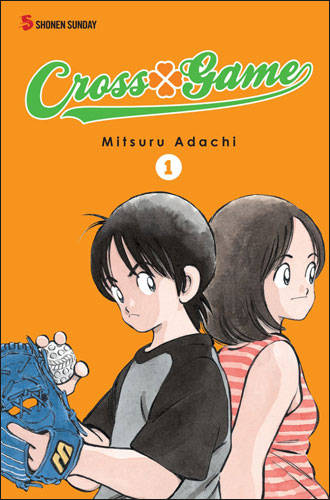
10. Cross Game
By Mitsuri Adachi • VIZ Media
In this sometimes funny, sometimes melancholy coming-of-age story, a family tragedy brings teenager Ko Kitamura closer to neighbor Aoba Tsukishima, with whom he has a fraught relationship. Though the two bicker with the antagonistic gusto of Beatrice and Benedict, their shared love of baseball helps smooth the course of their budding romance. To be sure, Cross Game can’t escape a certain amount of sports-manga cliche, but Mitsuri Adachi is more interested in showing us how the characters relate to each other than in celebrating their amazing baseball skills. (Not that he skimps on the game play; Adachi clearly knows his way around the diamond.) The result is an agreeable dramedy that has the rhythm of a good situation comedy and the emotional depth of a well-crafted YA novel, with just enough shop-talk to win over baseball enthusiasts, too.

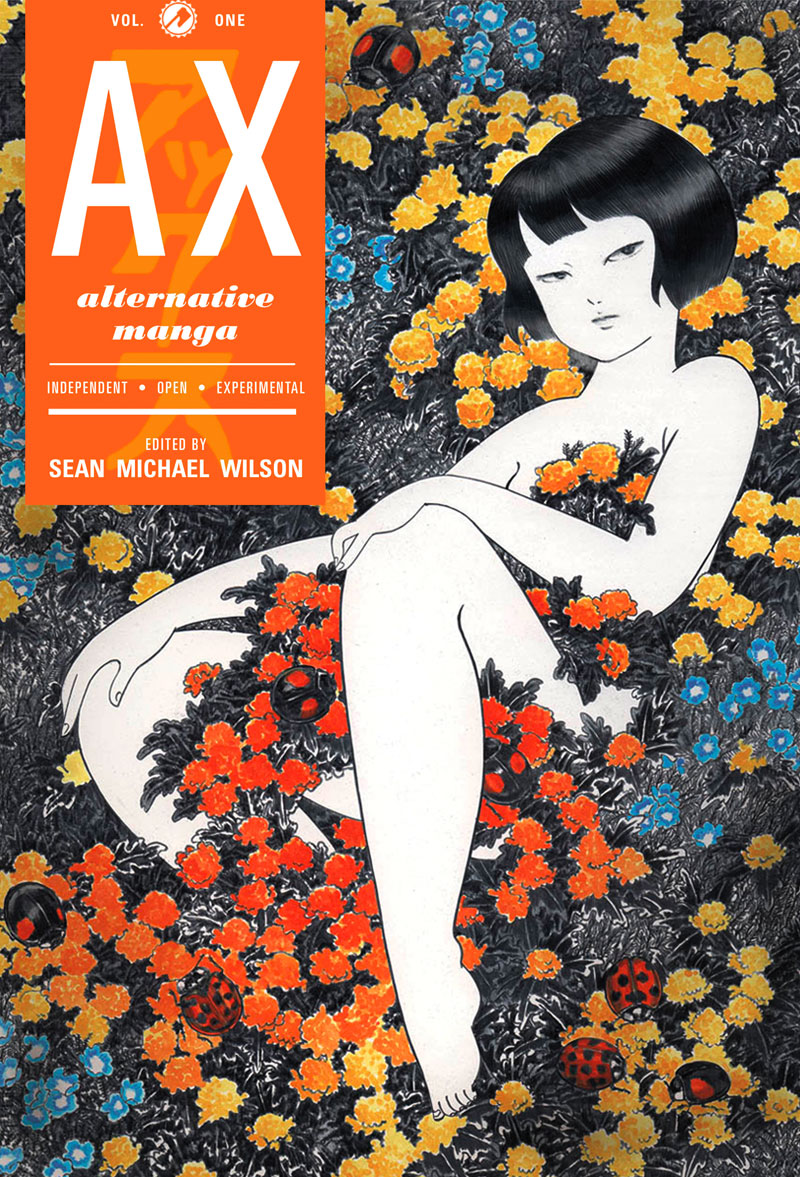
9. AX: A Collection of Alternative Manga
Edited by Sean Michael Wilson • Top Shelf
The next time someone dismisses manga as a “style” characterized by youthful-looking, big-eyed characters with button noses, I’m going to hand them a copy of AX, a rude, gleeful, and sometimes disturbing rebuke to the homogenized artwork and storylines found in mainstream manga publications. No one will confuse AX for Young Jump or even Big Comic Spirits; the stories in AX run the gamut from the grotesquely detailed to the playfully abstract, often flaunting their ugliness with the cheerful insistence of a ten-year-old boy waving a dead animal at squeamish classmates. Nor will anyone confuse Yoshihiro Tatsumi or Einosuke’s outlook with the humanism of Osamu Tezuka or Keiji Nakazawa; the stories in AX revel in the darker side of human nature, the part of us that’s fascinated with pain, death, sex, and bodily functions. Like all anthologies, the collection is somewhat uneven, with a few too many scatological tales for its own good, but the very best stories — “The Hare and the Tortoise,” “Push Pin Woman,” “Six Paths of Wealth,” “Puppy Love,” “Inside the Gourd” — attest to the diversity of talent contributing to this seminal manga magazine. —Reviewed at The Manga Critic on 5/21/10

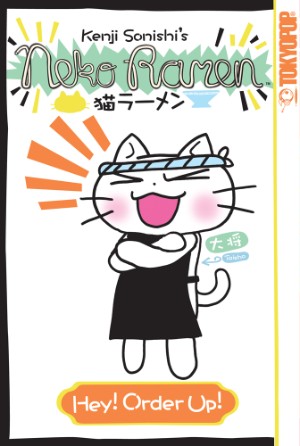
8. Neko Ramen
By Kenji Sonishi • Tokyopop
If you’ve ever lived with a cat or dog, you know that no meal is complete without a pet hair garnish. Now imagine that your beloved companion actually prepared your meals instead of watching you eat them: what sort of unimaginable horrors might you encounter beyond the stray hair? That’s the starting point for Neko Ramen, a 4-koma manga about a cat whose big dream is to run a noodle shop, but author Kenji Sonishi quickly moves past hair balls and litter box jokes to mine a richer vein of humor, poking fun at his cat cook’s delusions of entrepreneurial grandeur. Taisho is the Don Quixote of ramen vendors, dreaming up ludicrous giveaways and unappetizing dishes in an effort to promote his business, never realizing that he is the store’s real selling point. The loose, sketchy artwork gives the series an improvisational feel, while the script has the pleasant, absurdist zing of an Abbott and Costello routine. —Reviewed at The Manga Critic on 6/2/10

7. Ayako
By Osamu Tezuka; Vertical, Inc.
Combining the psychological realism of Dostoevsky with the social consciousness of Tolstoy and Zola, Osamu Tezuka uses conflicts within the once-powerful Tenge clan to dramatize the social, political, and economic upheaval caused by the American occupation of post-war Japan. No subject is off-limits for Tezuka: the Tenge commit murders, spy for the Americans, join the Communist Party, imprison a family member in an underground cell, and engage in incest. It’s one of Tezuka’s most sober and damning stories, at once tremendously powerful and seriously disturbing, with none of the cartoonish excess of Ode to Kirihito or MW. The ending is perhaps too pat and loaded with symbolism for its own good, but like Tezuka’s best work, Ayako forces the reader to confront the darkest, most corruptible corners of the human soul. As with Apollo’s Song, Black Jack, and Buddha, Vertical has done a superb job of making Tezuka accessible to Western readers with flipped artwork and a fluid translation.

6. Bunny Drop
By Yumi Unita; Yen Press
Stop me if you’ve heard this one before: a thirty-something bachelor unexpectedly becomes a parent to a cute little girl, leading to hijinks, misunderstandings, and heart-tugging moments. That’s a fair summary of what happens in Bunny Drop, but Yumi Unita wisely avoids the pitfalls of the single-dad genre — the cheap sentiment, the unfunny scenes of dad recoiling in horror at diapers, runny noses, and tears — instead focusing on the unique bond between Daikichi and Rin, the six-year-old whom he impetuously adopts after the rest of the family disavows her. (Rin is the product of a liaison between Daikichi’s grandfather and a much younger woman.) Though Daikichi struggles to find day care, buy clothes for Rin, and make sense of her standoffish behavior, he isn’t a buffoon or a straight man for Rin’s antics; Unita portrays him as a smart, sensitive person blessed with good instincts and common sense. Clean, expressive artwork and true-to-life dialogue further inoculate Bunny Drop against a terminal case of sitcom cuteness, making it one of the most thoughtful, moving, and adult manga of the year.

5. Black Blizzard
By Yoshihiro Tatsumi • Drawn & Quarterly
Written in just twenty days, this feverish pulp thriller plays like a mash-up of The Fugitive, The 39 Steps, and The Defiant Ones as two convicts — one a hardened criminal, the other a down-on-his luck musician — go on the lam during a blinding snowstorm. The heroes are more archetypes than characters, drawn in bold strokes, but the interaction between them crackles with antagonistic energy; they’re as much enemies as partners, roles that they constantly renegotiate during their escape. Evocative artwork — slashing lines, dramatic camera angles, images of speeding trains — infuses Black Blizzard with a raw, nervous energy that nicely mirrors the characters’ internal state. Only in the final, rushed pages does manga-ka Yoshihiro Tatsumi falter, tidily resolving the story through an all-too-convenient plot twist that hinges on coincidence. Still, that’s a minor criticism of a thoroughly entertaining story written during a crucial stage of Tatsumi’s artistic development. —Reviewed at The Manga Critic on 9/9/10

4. House of Five Leaves
By Natsume Ono • VIZ Media
Timid ronin Akitsu Masanosuke can’t hold a steady job, despite his formidable swordsmanship. When a businessman approaches him with work, Masanosuke readily accepts, not realizing that his new employer, Yaichi, runs a crime syndicate that specializes in kidnapping. Masanosuke’s unwitting participation in a blackmailing scheme prevents him from severing his ties to Yaichi; Masanosuke must then decide if he will join the House of Five Leaves or bide his time until he can escape. Though Toshiro Mifune and Hiroyuki Sanada have made entire careers out of playing characters like Masanosuke, Natsume Ono makes a persuasive case that you don’t need a flesh-and-blood actor to tell this kind of story with heartbreaking intensity; she can do the slow-burn on the printed page with the same skill as Masaki Kobayashi (Hara Kiri, Samurai Rebellion) and Yoji Yamada (The Twilight Samurai) did on the big screen. —Reviewed at The Manga Critic on 8/20/10

3. Twin Spica
By Kou Yaginuma • Vertical, Inc.
Asumi Kamogawa is a small girl with a big dream: to be an astronaut on Japan’s first manned space flight. Though she passes the entrance exam for Tokyo Space School, she faces several additional hurdles to realizing her goal, from her child-like stature — she’s thirteen going on eight — to a faculty member who blames her father for causing a fiery rocket crash that claimed hundreds of civilian lives. Yet for all the setbacks she’s experienced, Asumi proves resilient, a gentle girl who perseveres in difficult situations, offers friendship in lieu of judgment, and demonstrates a preternatural awareness of life’s fragility. Twin Spica follows Asumi through every stage of training, from physics lectures to zero-G simulations, showing us how she befriends her fellow cadets and gradually learns to rely on herself, rather than her imaginary friend, Mr. Lion. Though Twin Spica was serialized in a seinen magazine, it works surprisingly well for young adults, too, an all-too-rare example of a direct, heartfelt story that’s neither saccharine nor mawkish.  —Reviewed at The Manga Critic on 5/3/10

2. All My Darling Daughters
By Fumi Yoshinaga • VIZ Media
The five vignettes in All My Darling Daughters depict women negotiating difficult personal relationships: a daughter confronts her mother about mom’s new, much younger husband; a college student seduces her professor, only to dump him when he tries to court her properly; a beautiful young woman contemplates an arranged marriage. Like all of Yoshinaga’s work, the characters in All My Darling Daughters love to talk. That chattiness isn’t always an asset to Yoshinaga’s storytelling (see Gerard and Jacques), but here the dialogue is perfectly calibrated to reveal just how complex and ambivalent these relationships really are. Yoshinaga’s artwork is understated but effective, as she uses small details — how a character stands or carries her shoulders — to offer a more complete and nuanced portrait of each woman. Quite possibly my favorite work by Yoshinaga.

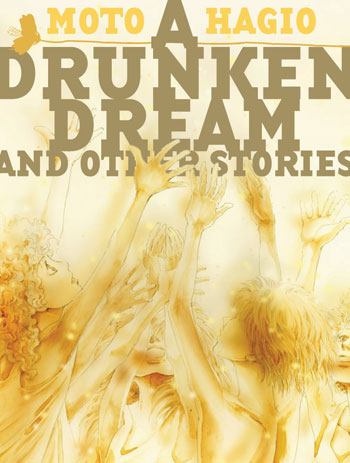
1. A Drunken Dream and Other Stories
By Moto Hagio • Fantagraphics
Not coincidentally, A Drunken Dream and Other Stories was my nomination for Best New Graphic Novel of 2010 as well. Here’s what I had to say about the title over at Flashlight Worthy Books:

Moto Hagio is to shojo manga what Will Eisner is to American comics, a seminal creator whose distinctive style and sensibility profoundly changed the medium. Though Hagio has been actively publishing stories since the late 1960s, very little of her work has been translated into English. A Drunken Dream, published by Fantagraphics, is an excellent corrective — a handsomely produced, meticulously edited collection of Hagio’s short stories that span her career from 1970 to 2007. Readers new to Hagio’s work will appreciate the inclusion of two contextual essays by manga scholar Matt Thorn, one an introduction to Hagio and her peers, the other an interview with Hagio. What emerges is a portrait of a gifted artist who draws inspiration from many sources: Osamu Tezuka and Shotaro Ishimonori, Ray Bradbury and Isaac Asimov, Frances Hodgson Burnett and L.M. Montgomery.

For the complete list — including nominations from David “Manga Curmudgeon” Welsh, Brigid “MangaBlog” Alverson, Lorena “i heart manga” Ruggero, and Matthew “Warren Peace Sings the Blues” Brady — click here. To read my full review of A Drunken Dream, click here.

HONORABLE MENTIONS
Done because there are too menny… great manga, that is, to confine myself to a traditional top ten list. With apologies to Thomas Hardy, here are some of the other titles that tickled my fancy in 2010:

  • Other Awesome Debuts: Not Love But Delicious Foods Make Me Happy (Yen Press), Saturn Apartments (VIZ), 7 Billion Needles (Vertical, Inc.)
  • Best Continuing Series: Itazura na Kiss (DMP), Ooku: The Inner Chambers (VIZ), Suppli (Tokyopop), 20th Century Boys (VIZ)
  • Best New All-ages Manga: Chi’s Sweet Home (Vertical, Inc.)
  • Best New Series That’s Already on Hiatus: Diamond Girl (CMX), Stolen Hearts (CMX)
  • Best New Guilty Pleasure: Demon Sacred (Tokyopop), Dragon Girl (Yen Press)
  • Best Reprint Edition: Cardcaptor Sakura (Dark Horse), Little Butterfly Omnibus (DMP)
  • Best Manga I Thought I’d Hate: Higurashi When They Cry: Beyond Midnight Arc (Yen Press)
  • Best Finale: Pluto: Tezuka x Urasawa (VIZ)

Filed Under: Manga, Manga Critic, Recommended Reading Tagged With: cmx, Dark Horse, DMP, Drawn & Quarterly, fantagraphics, fumi yoshinaga, moto hagio, Naoki Urasawa, Osamu Tezuka, SigIKKI, Tokyopop, Top Shelf, Vertical Comics, VIZ, yen press, Yoshihiro Tatsumi

The Best Manga of 2010: The Manga Critic’s Picks

December 6, 2010 by Katherine Dacey 16 Comments

For all the upheaval within the manga industry — the demise of CMX, Del Rey, and Go! Comi, the layoffs at VIZ — 2010 proved an exceptionally good year for storytelling. True, titles like Black Butler, Naruto, and Nabari no Ou dominated sales charts, but publishers made a concerted effort to woo grown-ups with vintage manga — Black Blizzard, A Drunken Dream and Other Stories — edgy sci-fi — Biomega, 7 Billion Needles — underground comix — AX: A Collection of Alternative Manga, The Box Man — and good old-fashioned drama — All My Darling Daughters, Bunny Drop. I had a hard time limiting myself to just ten titles this year, so I’ve borrowed a few categories from my former PCS cohort Erin Finnegan, from Best New Guilty Pleasure to Best Manga You Thought You’d Hate. Please feel free to add your own thoughts: what titles did I unjustly omit? What titles did I like but you didn’t? Inquiring minds want to know!

10. CROSS GAME (Mitsuri Adachi; VIZ)

In this sometimes funny, sometimes melancholy coming-of-age story, a family tragedy brings teenager Ko Kitamura closer to neighbor Aoba Tsukishima, with whom he has a fraught relationship. Though the two bicker with the antagonistic gusto of Beatrice and Benedict, their shared love of baseball helps smooth the course of their budding romance. To be sure, Cross Game can’t escape a certain amount of sports-manga cliche, but Mitsuri Adachi is more interested in showing us how the characters relate to each other than in celebrating their amazing baseball skills. (Not that he skimps on the game play; Adachi clearly knows his way around the diamond.) The result is an agreeable dramedy that has the rhythm of a good situation comedy and the emotional depth of a well-crafted YA novel, with just enough shop-talk to win over baseball enthusiasts, too.

9. AX: A COLLECTION OF ALTERNATIVE MANGA (Various Artists; Top Shelf)

The next time someone dismisses manga as a “style” characterized by youthful-looking, big-eyed characters with button noses, I’m going to hand them a copy of AX, a rude, gleeful, and sometimes disturbing rebuke to the homogenized artwork and storylines found in mainstream manga publications. No one will confuse AX for Young Jump or even Big Comic Spirits; the stories in AX run the gamut from the grotesquely detailed to the playfully abstract, often flaunting their ugliness with the cheerful insistence of a ten-year-old boy waving a dead animal at squeamish classmates. Nor will anyone confuse Yoshihiro Tatsumi or Einosuke’s outlook with the humanism of Osamu Tezuka or Keiji Nakazawa; the stories in AX revel in the darker side of human nature, the part of us that’s fascinated with pain, death, sex, and bodily functions. Like all anthologies, the collection is somewhat uneven, with a few too many scatological tales for its own good, but the very best stories — “The Hare and the Tortoise,” “Push Pin Woman,” “Six Paths of Wealth,” “Puppy Love,” “Inside the Gourd” — attest to the diversity of talent contributing to this seminal manga magazine. –Reviewed at The Manga Critic on 5/21/10

8. NEKO RAMEN (Kenji Sonishi; Tokyopop)

If you’ve ever lived with a cat or dog, you know that no meal is complete without a pet hair garnish. Now imagine that your beloved companion actually prepared your meals instead of watching you eat them: what sort of unimaginable horrors might you encounter beyond the stray hair? That’s the starting point for Neko Ramen, a 4-koma manga about a cat whose big dream is to run a noodle shop, but author Kenji Sonishi quickly moves past hair balls and litter box jokes to mine a richer vein of humor, poking fun at his cat cook’s delusions of entrepreneurial grandeur. Taisho is the Don Quixote of ramen vendors, dreaming up ludicrous giveaways and unappetizing dishes in an effort to promote his business, never realizing that he is the store’s real selling point. The loose, sketchy artwork gives the series an improvisational feel, while the script has the pleasant, absurdist zing of an Abbott and Costello routine. –Reviewed at The Manga Critic on 6/2/10

7. AYAKO (Osamu Tezuka; Vertical, Inc.)

Combining the psychological realism of Dostoevsky with the social consciousness of Tolstoy and Zola, Osamu Tezuka uses conflicts within the once-powerful Tenge clan to dramatize the social, political, and economic upheaval caused by the American occupation of post-war Japan. No subject is off-limits for Tezuka: the Tenge commit murders, spy for the Americans, join the Communist Party, imprison a family member in an underground cell, and engage in incest. It’s one of Tezuka’s most sober and damning stories, at once tremendously powerful and seriously disturbing, with none of the cartoonish excess of Ode to Kirihito or MW. The ending is perhaps too pat and loaded with symbolism for its own good, but like Tezuka’s best work, Ayako forces the reader to confront the darkest, most corruptible corners of the human soul. As with Apollo’s Song, Black Jack, and Buddha, Vertical has done a superb job of making Tezuka accessible to Western readers with flipped artwork and a fluid translation.

6. BUNNY DROP (Yumi Unita; Yen Press)

Stop me if you’ve heard this one before: a thirty-something bachelor unexpectedly becomes a parent to a cute little girl, leading to hijinks, misunderstandings, and heart-tugging moments. That’s a fair summary of what happens in Bunny Drop, but Yumi Unita wisely avoids the pitfalls of the single-dad genre — the cheap sentiment, the unfunny scenes of dad recoiling in horror at diapers, runny noses, and tears — instead focusing on the unique bond between Daikichi and Rin, the six-year-old whom he impetuously adopts after the rest of the family disavows her. (Rin is the product of a liaison between Daikichi’s grandfather and a much younger woman.) Though Daikichi struggles to find day care, buy clothes for Rin, and make sense of her standoffish behavior, he isn’t a buffoon or a straight man for Rin’s antics; Unita portrays him as a smart, sensitive person blessed with good instincts and common sense. Clean, expressive artwork and true-to-life dialogue further inoculate Bunny Drop against a terminal case of sitcom cuteness, making it one of the most thoughtful, moving, and adult manga of the year.

5. BLACK BLIZZARD (Yoshihiro Tatsumi; Drawn & Quarterly)

Written in just twenty days, this feverish pulp thriller plays like a mash-up of The Fugitive, The 39 Steps, and The Defiant Ones as two convicts — one a hardened criminal, the other a down-on-his luck musician — go on the lam during a blinding snowstorm. The heroes are more archetypes than characters, drawn in bold strokes, but the interaction between them crackles with antagonistic energy; they’re as much enemies as partners, roles that they constantly renegotiate during their escape. Evocative artwork — slashing lines, dramatic camera angles, images of speeding trains — infuses Black Blizzard with a raw, nervous energy that nicely mirrors the characters’ internal state. Only in the final, rushed pages does manga-ka Yoshihiro Tatsumi falter, tidily resolving the story through an all-too-convenient plot twist that hinges on coincidence. Still, that’s a minor criticism of a thoroughly entertaining story written during a crucial stage of Tatsumi’s artistic development. –Reviewed at The Manga Critic on 9/9/10

4. HOUSE OF FIVE LEAVES (Natsume Ono; VIZ)

Timid ronin Akitsu Masanosuke can’t hold a steady job, despite his formidable swordsmanship. When a businessman approaches him with work, Masanosuke readily accepts, not realizing that his new employer, Yaichi, runs a crime syndicate that specializes in kidnapping. Masanosuke’s unwitting participation in a blackmailing scheme prevents him from severing his ties to Yaichi; Masanosuke must then decide if he will join the House of Five Leaves or bide his time until he can escape. Though Toshiro Mifune and Hiroyuki Sanada have made entire careers out of playing characters like Masanosuke, Natsume Ono makes a persuasive case that you don’t need a flesh-and-blood actor to tell this kind of story with heartbreaking intensity; she can do the slow-burn on the printed page with the same skill as Masaki Kobayashi (Hara Kiri, Samurai Rebellion) and Yoji Yamada (The Twilight Samurai) did on the big screen. –Reviewed at The Manga Critic on 8/20/10

3. TWIN SPICA (Kou Yaginuma; Vertical, Inc.)

Asumi Kamogawa is a small girl with a big dream: to be an astronaut on Japan’s first manned space flight. Though she passes the entrance exam for Tokyo Space School, she faces several additional hurdles to realizing her goal, from her child-like stature — she’s thirteen going on eight — to a faculty member who blames her father for causing a fiery rocket crash that claimed hundreds of civilian lives. Yet for all the setbacks she’s experienced, Asumi proves resilient, a gentle girl who perseveres in difficult situations, offers friendship in lieu of judgment, and demonstrates a preternatural awareness of life’s fragility. Twin Spica follows Asumi through every stage of training, from physics lectures to zero-G simulations, showing us how she befriends her fellow cadets and gradually learns to rely on herself, rather than her imaginary friend, Mr. Lion. Though Twin Spica was serialized in a seinen magazine, it works surprisingly well for young adults, too, an all-too-rare example of a direct, heartfelt story that’s neither saccharine nor mawkish.  –Reviewed at The Manga Critic on 5/3/10

2. ALL MY DARLING DAUGHTERS (Fumi Yoshinaga; VIZ)

The five vignettes in All My Darling Daughters depict women negotiating difficult personal relationships: a daughter confronts her mother about mom’s new, much younger husband; a college student seduces her professor, only to dump him when he tries to court her properly; a beautiful young woman contemplates an arranged marriage. Like all of Yoshinaga’s work, the characters in All My Darling Daughters love to talk. That chattiness isn’t always an asset to Yoshinaga’s storytelling (see Gerard and Jacques), but here the dialogue is perfectly calibrated to reveal just how complex and ambivalent these relationships really are. Yoshinaga’s artwork is understated but effective, as she uses small details — how a character stands or carries her shoulders — to offer a more complete and nuanced portrait of each woman. Quite possibly my favorite work by Yoshinaga.

1. A DRUNKEN DREAM AND OTHER STORIES (Moto Hagio; Fantagraphics)

Not coincidentally, A Drunken Dream and Other Stories was my nomination for Best New Graphic Novel of 2010 as well. Here’s what I had to say about the title over at Flashlight Worthy Books:

Moto Hagio is to shojo manga what Will Eisner is to American comics, a seminal creator whose distinctive style and sensibility profoundly changed the medium. Though Hagio has been actively publishing stories since the late 1960s, very little of her work has been translated into English. A Drunken Dream, published by Fantagraphics, is an excellent corrective — a handsomely produced, meticulously edited collection of Hagio’s short stories that span her career from 1970 to 2007. Readers new to Hagio’s work will appreciate the inclusion of two contextual essays by manga scholar Matt Thorn, one an introduction to Hagio and her peers, the other an interview with Hagio. What emerges is a portrait of a gifted artist who draws inspiration from many sources: Osamu Tezuka and Shotaro Ishimonori, Ray Bradbury and Isaac Asimov, Frances Hodgson Burnett and L.M. Montgomery.

For the complete list — including nominations from David “Manga Curmudgeon” Welsh, Brigid “MangaBlog” Alverson, Lorena “i heart manga” Ruggero, and Matthew “Warren Peace Sings the Blues” Brady — click here. To read my full review of A Drunken Dream, click here.

HONORABLE MENTIONS

Done because there are too menny… great manga, that is, to confine myself to a traditional top ten list. With apologies to Thomas Hardy, here are some of the other titles that tickled my fancy in 2010:

  • OTHER AWESOME DEBUTS: Not Love But Delicious Foods Make Me Happy (Yen Press), Saturn Apartments (VIZ), 7 Billion Needles (Vertical, Inc.)
  • BEST CONTINUING SERIES: Itazura na Kiss (DMP), Ooku: The Inner Chambers (VIZ), Suppli (Tokyopop), 20th Century Boys (VIZ)
  • BEST NEW ALL-AGES MANGA: Chi’s Sweet Home (Vertical, Inc.)
  • BEST NEW SERIES THAT’S ALREADY ON HIATUS: Diamond Girl (CMX), Stolen Hearts (CMX)
  • BEST NEW GUILTY PLEASURE: Demon Sacred (Tokyopop), Dragon Girl (Yen Press)
  • BEST REPRINT EDITION: Cardcaptor Sakura (Dark Horse), Little Butterfly Omnibus (DMP)
  • BEST MANGA I THOUGHT I’D HATE: Higurashi When They Cry: Beyond Midnight Arc (Yen Press)
  • BEST FINALE: Pluto: Tezuka x Urasawa (VIZ)

Filed Under: Manga Critic Tagged With: cmx, Dark Horse, DMP, Drawn & Quarterly, fantagraphics, fumi yoshinaga, moto hagio, Naoki Urasawa, Osamu Tezuka, SigIKKI, Tokyopop, Top Shelf, vertical, VIZ, yen press, Yoshihiro Tatsumi

Manhwa Monday: December Preview

December 6, 2010 by MJ 1 Comment

Welcome to another Manhwa Monday! First off, we’ll take a look at some upcoming manhwa releases.

Only Yen Press has new manhwa slated for this month, and just three volumes at that. Fortunately, this includes the latest omnibus release of Park SoHee’s Goong, a beautifully drawn cinderella story with a modern-day sensibility. Though this double-sized volume is number ten for Yen Press, thanks to the series’ new omnibus format, it actually contains Korean volumes 11-12.

Other releases this month include the 13th (and final) volume of Angel Diary and volume four of horror manhwa Jack Frost.

In other news this month, The Korean of Ask a Korean is asking for manhwa recommendations for one of his readers. Kate Dacey makes some suggestions in comments. Why not follow her lead?

Metanorn’s Manga Digest column takes a break from the usual to focus on some manhwa.

Over at LiveJournal, walkwithheroes asks, “What manga, manhua, and manhwa do you want to see on TV?”

And at the iSeeToon blog, we’re introduced to Jeong-Woo Seon (aka “mirugi”), who will be leading up their new informational manhwa feature. He starts off with an explanation of what makes manhwa different. Though the translation is a little rough at this time, it’s definitely readable, and very informative for manga fans especially, who may not realize how little the South Korean comics business resembles Japan’s.

This week in reviews, Kate Dacey lists Goong among her current reads at the latest Reading Pile at Good Comics for Kids. And at Kuriousity, Lissa Pattillo checks out two recent releases from Yen Press, volume ten of Legend and volume 11 of Black God.

That’s all for this week!

Is there something I’ve missed? Leave your manhwa-related links in comments!

Filed Under: Manhwa Bookshelf, Manhwa Monday

  • « Go to Previous Page
  • Page 1
  • Page 2
  • Page 3
  • Page 4
  • Page 5
  • Go to Next Page »
 | Log in
Copyright © 2010 Manga Bookshelf | Powered by WordPress & the Genesis Framework