• Skip to primary navigation
  • Skip to main content
  • Skip to primary sidebar
  • Home
  • About Us
    • Privacy Policy
    • Comment Policy
    • Disclosures & Disclaimers
  • Resources
    • Links, Essays & Articles
    • Fandomology!
    • CLAMP Directory
    • BlogRoll
  • Features & Columns
    • 3 Things Thursday
    • Adventures in the Key of Shoujo
    • Bit & Blips (game reviews)
    • BL BOOKRACK
    • Bookshelf Briefs
    • Bringing the Drama
    • Comic Conversion
    • Fanservice Friday
    • Going Digital
    • It Came From the Sinosphere
    • License This!
    • Magazine no Mori
    • My Week in Manga
    • OFF THE SHELF
    • Not By Manga Alone
    • PICK OF THE WEEK
    • Subtitles & Sensibility
    • Weekly Shonen Jump Recaps
  • Manga Moveable Feast
    • MMF Full Archive
    • Yun Kouga
    • CLAMP
    • Shojo Beat
    • Osamu Tezuka
    • Sailor Moon
    • Fruits Basket
    • Takehiko Inoue
    • Wild Adapter
    • One Piece
    • After School Nightmare
    • Karakuri Odette
    • Paradise Kiss
    • The Color Trilogy
    • To Terra…
    • Sexy Voice & Robo
  • Browse by Author
    • Sean Gaffney
    • Anna Neatrour
    • Michelle Smith
    • Katherine Dacey
    • MJ
    • Brigid Alverson
    • Travis Anderson
    • Phillip Anthony
    • Derek Bown
    • Jaci Dahlvang
    • Angela Eastman
    • Erica Friedman
    • Sara K.
    • Megan Purdy
    • Emily Snodgrass
    • Nancy Thistlethwaite
    • Eva Volin
    • David Welsh
  • MB Blogs
    • A Case Suitable For Treatment
    • Experiments in Manga
    • MangaBlog
    • The Manga Critic
    • Manga Report
    • Soliloquy in Blue
    • Manga Curmudgeon (archive)

Manga Bookshelf

Discussion, Resources, Roundtables, & Reviews

Archives for December 2010

The Best Manga You’re Not Reading: Gun Blaze West

December 31, 2010 by Katherine Dacey 6 Comments

Let me begin this review with a disclaimer: Ken Burns would not approve of the historical liberties taken by Gun Blaze West creator Nobuhiro Watsuki. The dialogue, for example: the characters speak in a distinctly modern patois, filled with phrases never uttered by Sitting Bull or General Custer. The scenery, for another: verdant Eastern forests abut rugged desert canyons, even though the story begins in Illinois. (I particularly liked Watsuki’s rendering of Saint Louis as a kind of Budapest on the Mississippi, complete with majestic buildings.) Even the saloon names feel a little off-kilter, as one group of outlaws patronize a joint called Bella Donna. Such incongruities may offend Mr. Burns, but they’re just part of this boisterous series’ charm. (Did I mention the knife-throwing samurai girl? Oh, Mr. Burns, the horror!)

Gun Blaze West focuses on Viu Bannes, a ten-year-old boy who dreams of visiting Gun Blaze West, a mythical city populated by the world’s greatest gunslingers. (On the map, it appears to be located in Seattle, making me wonder if Gun Blaze West is, in fact, populated by the West’s most caffeinated gunslingers.) When a down-on-his-luck cowboy wanders into town, Viu pesters him for shooting lessons. Marcus reluctantly agrees to show Viu the gunslinging ropes, but before Viu can complete his training, the notorious Kenbrown gang arrives in Winston Town, terrorizing the citizens and threatening Viu’s older sister. Viu and Marcus’s standoff with the Kenbrown gang ends with an unexpected turn of events — one that sets the stage for Viu’s subsequent cross-country odyssey.

As in many shonen adventure series, the hero is the least interesting member of the cast. Viu seems to have been ordered straight from the SJ catalog: he’s fast, strong, and so single-minded in pursuit of his dreams that he often comes across as stupid. He also spends a lot of time declaring that he’ll “do his best” and extolling the value of friendship — two other perennial Shonen Jump themes.

In spite of the numerous capitulations to formula, however, Gun Blaze West is one of the most enjoyable shonen titles that VIZ has published. The Western setting proves a welcome change of pace from feudal Japan, modern-day Tokyo, and fantasy realms where teens go mano-a-mano with demons and undead souls. Though the characters possess exaggerated skill and strength, there’s nothing supernatural about Viu and his friends; they come by their talents honestly, through practice, hard work, and mistakes. The story, too, proves surprisingly adult at times, exploring the consequences of violence and rash behavior more realistically than many titles in the Shonen Jump canon.

What really makes Gun Blaze West tick, however, is its playful intermingling of shonen and Western tropes. Gun Blaze West actually feels like a Western, minus some of the obvious anachronisms and geographical gaffes. Marcus is a classic oater type, the gunslinger who’s developed a strong distaste for violence; he’s reluctant to participate in a shoot-out of any kind, adopting a foolish persona to camouflage his skill. When the bullets start flying — and there several lengthy gun battles sprinkled throughout the series — the tone shifts dramatically to underscore Marcus’ abhorrence of fighting. The supporting cast, too, is filled with familiar Wild West archetypes: salty saloon keepers, feisty young women, straight-arrow lawmen, sadistic villains, and traveling circus performers. Even the plots stick closely to the John Ford playbook, whether a small town is under siege from criminals or a local business owner is being harassed by a rival’s private army of thugs.

If you’re a fan of Buso Renkin or Rurouni Kenshin, you know what to expect from Watsuki’s art: dynamic fight scenes, villains with memorable mugs, and nonstop sight gags. The art’s relentless, antic quality wears a little thin towards the end of the series; I found myself wishing that Watsuki would pause to savor the landscape or linger at the sight of a lonely gunslinger’s tombstone instead of uncorking another fart joke or chase scene. Yet for all the artwork’s implied dynamism, the images themselves are never too busy; like Eiichiro Oda and Akira Toriyama, Watsuki relies primarily on lines and evocative shapes to convey the physicality of the people and objects in his stories, rather than heavy patches of screentone. Watsuki isn’t quite Oda or Toriyama’s peer when it comes to backgrounds and peripheral characters — his repertory of towns and bit players is more limited — but his pages exude the same boisterous energy as theirs do.

Best of all, Gun Blaze West is short, clocking in at just three volumes. Given how many shonen titles overstay their welcome with repetitive, drawn-out story arcs, that kind of brevity is admirable; that Gun Blaze West finishes on a high note makes its brevity seem like a stroke of creative genius.

This is an expanded version of a review that originally appeared at PopCultureShock on 3/31/08.

GUN BLAZE WEST, VOLS. 1-3 • BY NOBUHIRO WATSUKI • VIZ • RATING: TEEN (13+)

Filed Under: Manga Critic Tagged With: Shonen, Shonen Jump, VIZ, Western

MJ’s Best of 2010

December 31, 2010 by MJ 6 Comments

With so much great manga filling the shelves this year, picking out a small batch of the “Best” is an especially daunting task. Even now, I feel a strong sense of mourning for titles that haven’t made the list (some of which you can track down in my 2010 Gift Guide). Yet after much deliberation, I’ve managed to choose just ten, divided into demographic categories to ease the pain of choosing.


Best New Shoujo of 2010:


The Story of Saiunkoku (Viz Media)
The Secret Notes of Lady Kanoko (TOKYOPOP)

Though this was a competitive category this year, what pushed these two series above the rest for me is what they most have in common: smart, independently-minded heroines I’d be proud to share with any teen girl. Though shoujo heroines don’t need to be role models in order to be enjoyable to read about, and sometimes they’re more relatable when they’re not, it’s certainly a great pleasure when they happen to be both.

Best New Shounen of 2010:

Code: Breaker (Del Rey Manga)
Bakuman (Viz Media)

Unlike 2010’s shoujo catalogue, the year’s shounen offerings were a weak point for me, making this category tough in a very different way. Still, there were two shounen series that especially caught my interest, if not always is the most flattering way. Regardless of any quibbles, however, what these two series have in common is that they’ve compelled me to want to read more of them, which is not something I can say for most of this year’s new shounen series.

Best New Josei of 2010:

All My Darling Daughters (Viz Media)
Bunny Drop (Yen Press)

What a pleasure it is to have such choices amongst this year’s new josei releases! What’s particularly notable about both these manga is how deeply they speak to the experiences of women. Even Bunny Drop‘s male protagonist is living out a struggle between parenthood and career generally allotted only to women, even today. Both of these titles are thoughtful, warm, and emotionally complex–basically my ideal recipe for satisfying manga.

Best New Seinen of 2010:

Twin Spica (Vertical, Inc.)
House of Five Leaves (Viz Media)

Though these series may appear to have little in common, and perhaps that’s true, what they do both offer is careful characterization and an otherworldly tone, each different than the other. Both Asumi’s rich inner life and Masa’s avoidance of his own provide a glimpse into the human heart and mind I find especially appealing, earning them both, perhaps, the title of Favorite Manga of the Year.

Best Classic Manga of 2010:

A Drunken Dream and Other Stories (Fantagraphics)
Ayako (Vertical, Inc.)

2010 was a great year for re-issues, but it also offered up a number of wonderful older manga, published in English for the very first time. Both Moto Hagio’s collection of short manga and Osamu Tezuka’s post-war epic focus particularly on issues of family, delving deep into some of the ugliest impulses of our biological tribes and the damage they can do to their least valued members, if from wildly different perspectives.


For some alternate picks, take a look at these lists from Manga Critic Katherine Dacey and Manga Curmudgeon David Welsh. Or for a wider look at this year’s critical consensus, check out Deb Aoki’s 2010 Critics’ Choice roundup.

Filed Under: FEATURES Tagged With: best of 2010, best of the year

3 Things Thursday: Resolutions

December 30, 2010 by MJ 39 Comments

With the holidays finally over and our excess cookie weight staring up at us from the bathroom scale, we’ve reached that very special time when we look back at the year behind us and think about all the things we’ve failed to accomplish. New Year’s resolutions may be a time-honored tradition, but they’re also a time-honored source of depression and guilt, so I like to keep mine as realistic as possible. Fortunately, if there’s one thing I can count on doing every year, it’s reading a whole lot of manga, so it’s not too ridiculous to hope that I might finally get around to some important series I’ve continuously let slide.

As a relative n00b to the manga scene, I started out with a huge amount of catching up to do. And though I’ve accomplished quite a bit of reading over the past three-and-a-quarter years, there are still quite a number of previously-released series I’ve embarrassingly held out on, whether for lack of time, money, or organizational skills.

Since most of these series are must-reads for anyone hoping to be respected as a manga critic, I’d like to make a resolution to read at least three of them this year. So let’s make a list, shall we?

3 series I resolve to finally read in 2011:

1. Buddha | Osamu Tezuka | Vertical, Inc. – Though I’ve come a long way with Tezuka over the past year or so, when my best friend mentioned that her pre-teen daughter was reading (and loving) Buddha, a series I’ve never even started, I felt quite keenly that I’d hit a very special low. Though I tend to leave much of the serious criticism to those more knowledgeable than I, there’s no excuse for not reading a classic like this.

Fortunately, Vertical’s paperback editions are fairly easy on the pocketbook, and I got some Borders gift cards for Christmas. I may be slow, but there’s hope for me yet!

2. Fushigi Yûgi | Yuu Watase | Viz Media – What kind of self-proclaimed shoujo fan hasn’t read Fushigi Yûgi? This kind, apparently. Though I’m a fan of this series’ prequel, Genbu Kaiden, I’ve never actually picked up the original, despite any number of chances to do so. Sure, I’ve been told not to expect a lot from the story’s female lead, and I’ve read enough about it to know that I’m unlikely to enjoy it quite as much as Watase’s more recent work, it’s still fairly unbelievable that I’ve never read a shoujo series as popular and iconic as this one.

Lucky for me, the very awesome Michelle Smith gifted me with the first two VIZBIG editions as a Christmas present this year, so I’ve no longer got any excuse to put it off. Fushigi Yûgi, this will be the year!

3. One Piece | Eiichiro Oda | Viz Media – Though I have indeed read the first three volumes of this series (again, thanks to the urging of Michelle Smith), popular opinion suggests that I’ve never gotten far enough in for it to truly grab me, and with brilliant folks such as David Welsh and Erica Friedman singing its praises, further reading is not merely warranted, but downright required. Sadly, the series’ recent appearance at the Manga Moveable Feast turned out to be badly timed for me (and my sluggish library system), and I let yet another opportunity slide.

At 60 volumes and counting, it’s a daunting task for sure. Thank goodness for omnibus editions?


So, readers, what are your manga resolutions, if any, for 2011?

Filed Under: 3 Things Thursday

This year, next year

December 30, 2010 by David Welsh

The indefatigable Deb (About.Com) Aoki has rounded up and ranked critics’ choices for the Best Manga of 2010, and it’s a fine and varied list. I’d also like to point you to Deb’s picks for Best Continuing Manga of 2010, since there’s a lot of overlap between her favorites and mine. I’m particularly pleased by her inclusion of Kaoru Tada’s Itazura na Kiss (Digital Manga); I did some catch-up reading on that one over the weekend, and it just gets better as it goes along.

Looking at Deb’s previews of promising manga due in 2011, I can’t help but pick the five that sound best to me, even if some of them counted as my most anticipated in 2010:

and one that wasn’t on Deb’s list, but I’m very eager to read:

Did some of your favorites from this year not make the critics’ round-up or Deb’s list of ongoing series? What about exciting books due in 2011?

Filed Under: Link Blogging, NEWS

Off the Shelf: First reads, second chances

December 29, 2010 by Michelle Smith and MJ 2 Comments

Welcome to another edition of Off the Shelf with MJ & Michelle! I’m joined, as always, by Soliloquy in Blue‘s Michelle Smith.

We’ve got another Tokyopop debut series to look at this week, and a mix of debuts and continuing series from Yen Press and Viz Media as well.


MJ: I like fruitcake.

MICHELLE: You have my deepest condolences.

MJ: Hater.

MICHELLE: I tend to generally not like bread-like items with things in them. That said, I was a kid the last time I tried it so would give it another chance.

Can you say the same about the manga you read this week?

MJ: Hmmmm, well, not quite. Or, I should say, “not necessary.” But I’m guessing you can?

MICHELLE: More like a “probably not” and a “this one was on its third chance already” kind of thing. :) But first, the former!

I really wanted to like AiON, TOKYOPOP’s new series by Yuna Kagesaki, the creator of Chibi Vampire. The cover is pretty attractive, after all (if you can get past the moe factor), and shows off the publisher’s snazzy new trim dress. Plus, the back cover blurb starts with six tantalizing words I never expected to see strung together in this order: “Mermaids and mind-controlling parasites wage war…”

Unfortunately, despite the cracktastic potential suggested by that phrase, the story as presented in the first volume is exceedingly dull. Wealthy Tatsuya Tsugawa has lost both his parents the week before, and yet seems largely unaffected by this aside from trying to live up to his dying father’s wish that he become a great man. This compels him to intervene when he notices a classmate, Miyazaki, being bullied. She tells him several times that she wants the bullying to continue, but he can’t leave her alone and eventually learns that she was purposely antagonizing the bully the better to extract a parasite that was infecting her.

Perhaps the story doesn’t seem so boring in summary form, but it really, really is. I lay most of the blame at the feet of Tsugawa, who is just so utterly generic that the only thing remarkable about him is the extent of his blandness. At the halfway point, when he questions why Miyazaki’s opinion matters to him and wonders if this means that he likes her, I quite literally set the book aside and had a brief nap. That’s how believable and meaningful the scene was.

Tsugawa and Miyazaki interact a few more times, with the inevitable result that she winds up moving in with him. Love and parasites will surely ensue, but man, I can’t imagine sitting through a second volume.

MJ: I’ll admit the story doesn’t sound *so* boring in summary form, but your nap anecdote is difficult to ignore. Also, where are the mermaids?

MICHELLE: An excellent question! I don’t recall a single mention of them. More vividly, I recall the half dozen grammar errors that plague the text. All in all, it’s not a very auspicious debut.

Did you fare better with your picks this week?

MJ: I did, particularly with my first selection, which I found quite charming. This week, I finally got around to picking up Julietta Suzuki’s Kamisama Kiss, a supernatural romantic comedy from Viz’s Shojo Beat imprint.

Like AION, this series begins with its protagonist, Nanami, being essentially orphaned, though in this case our teenaged heroine’s father has not actually died but skipped town to avoid his gambling debts, leaving his daughter to face the collectors all alone. Once she’s been evicted from her apartment, Nanami ends up in the park where she meets a strange man who offers her his home if she’ll take over his job. Before she knows what’s happening, he’s sent her on her way, but when Nanami reaches the home that’s been promised her, it turns out to be a shrine–of which she’s just been made god!

An argument could be made that this premise sounds much less interesting than AION‘s as you’ve described it, but fortunately this one is well-executed and genuinely fun.

Nanami’s cut from pretty standard shoujo cloth–a spunky young woman with no obvious talent aside from her determined optimism, but she’s got a great foil in the form of Tomoe, a fox (the supernatural kind, though the other kind too) who served the shrine’s former kami and who is beyond dismayed to find himself bound to someone like Nanami. Tomoe is catty and cynical but excellent at his job, and watching him work and argue with Nanami is the source of most of this volume’s charm.

What I especially appreciate about this series, is that regardless of Tomoe’s tremendous superiority complex, he’s far too lazy to be controlling like so many shoujo love interests, and even his surliness is kept staunchly at bay thanks to Nanami’s power of kotodama, which forces him to do her bidding whether he wants to or not. In a way, Kamisama Kiss is everything that Black Bird could have been if not for its heavy misogynist overtones. Like Misao, Nanami’s surrounded by yokai who would just as soon eat her if they had the chance, but unlike Misao, Nanami has agency, and that makes all the difference in the world.

MICHELLE: It’s interesting that you mention Black Bird, because I did the same in my recent review of Kamisama Kiss, though mine was more in the context of being worried about some of Tomoe’s comments as contrasted by his kindliness. You’re right about the kotodama giving Nanami an advantage, though—actually, this combined with Tomoe’s white ears puts me in mind of Kagome’s ability to compel InuYasha‘s titular hero to “Sit!”—so perhaps I oughtn’t be so concerned.

MJ: It’s interesting to me that you had that concern, because this series didn’t ping me that way at all, and not just because of Nanami’s kotodama. Tomoe may be surly and condescending, but he’s expressed zero sexual interest in Nanami so far, and he thankfully lacks Kyo’s predatory lust and possessiveness, which is what makes Kyo so controlling and repulsive. Tomoe’s neither as clingy nor as abusive as Kyo, and though it seems clear that Tomoe and Nanami are being set up for romance, I feel like they’re starting on even ground, thanks to their individual strengths and weaknesses.

MICHELLE: Yeah, you’re right. And it wasn’t so much that I thought there relationship was like the one in Black Bird, but more that it made me think of Black Bird, which is usually not a good sign! :)

MJ: Yeah, I can relate to that. :D

So what else have you been reading this week?

MICHELLE: You’ll be pleased to hear that the series to which I gave a third chance is Nabari No Ou! It’s very rare that you and I should disagree about a series, but it happened with this tale of a reluctant ninja. I found the first two volumes to be mighty boring, but I’m happy to report that things pick up a lot in volume three and stay pretty interesting through volume five!

The basic gist of the plot is that a middle schooler named Miharu Rokujou is inhabited by an immense power known as the “Shinra Banshou,” and two factions of ninja clans are fighting over him. Both are after a set of five scrolls containing the “secret arts” of the various ninja clans, though one group thinks they can use these scrolls to dispel Shinra Banshou while the other seeks to activate it. In volume three, Miharu and his protectors (they of the “dispel” camp) accept a job to assassinate a scientist in exchange for one such scroll, which leads Miharu’s protector Kumohira-sensei to question his convictions and ultimately, to a chilling culmination of the assignment. Volumes four and five deal primarily with the backstory for one of the characters’ brothers, and manage to sustain much of the momentum gained in volume three.

Don’t get me wrong, I still yawn when reading about the squabbling clans or the all-powerful scrolls, but the characters and their relationships are what have piqued my interest at last. Largely this is facilitated by the head of a rival clan—the one who hired them for the assassination job—who possesses the ability to read minds and threatens to reveal everyone’s “grave secrets.” This gets everyone suspicious of one another, with some pretty dramatic results. I’m most interested in the dynamic between Miharu and Kumohira, because the latter seeks to obtain the former’s trust while revealing as little as possible about what he remembers of some cataclysmic past event, but I also quite like scenes between Miharu and Yoite, another young man who should be Miharu’s enemy but for whom he seems willing to do just about anything. I’m sure there is loads of fanfic written about these two.

Anyway, I am finally on board the Nabari train.

MJ: I am very pleased to hear this! I feel like this series has been the skeleton in the closet of our friendship! Or something like that.

I agree that it’s the relationships that really make this series come alive, though I liked them earlier on than you did. Or maybe I just liked Miharu so much, I felt more patient about the rest. He’s the kind of enigma I enjoy most. I haven’t fully dug in to volume five yet, but now I’m really looking forward to it.

I feel like I should have many smart questions to ask you, now that you’ve read further into the series, but I find I mainly just agree, particularly on your feelings about where the most interesting relationship drama currently resides.

MICHELLE: I found Miharu petulant at first, but once the mind-reader arrived and saw that his indifference is just a front, I found him more appealing. I must say, it is somewhat of a relief for us to be on the same page at last! :)

What else have you been reading this week?

MJ: I’m a bit tardy on this one, but I’ve just finished the second volume of Shunjo Aono’s I’ll Give It My All… Tomorrow from Viz’s SigIKKI line.

I enjoyed the first volume of this series, but my greatest concern at the time was that the series might quickly become unreadable if something didn’t change for its painfully lost protagonist. Fortunately, that pitfall has not yet come to pass, though not for the reasons one might imagine.

The second volume finds Shizuo still plugging along in his half-hearted, humiliating way, creating bad manga that may never be accepted for publication, imagining romantic interest from a woman who is merely kind to him, and imposing on the few people who inexplicably care for him, including his daughter and his younger friend, Shuichi. A bit of backstory helps to put his stunted personality in perspective, but it’s truly agonizing to watch him fumble through life, especially should one catch a glimpse of oneself in Shizuo’s plight, which, believe you me, is uncomfortably easy for many of us to do.

What really saves this volume, however, is that it miraculously develops a hero, and that hero is, surprisingly, Shuichi. Here’s a quiet, pretty much expressionless guy, who manages somehow in the least likely arena to display the kind of compassion and fearlessness one might expect from a shounen battle hero. I won’t spoil you by telling you what happens, but I will say that I actually cheered audibly at one point in this volume. Being a melancholy seinen comedy, Shuichi’s heroism doesn’t get him much but a messed up face and the loss of his job, but it’s still a damn good read.

Of course, Shuichi isn’t actually the hero of this manga, and even now I find myself wondering how long the story’s premise can last without becoming too depressing to bear. But Aono’s won my confidence enough to compel me towards volume three, and that’s no small feat.

MICHELLE: I haven’t even been able to work up the desire to give this series a first chance, much less a second or third. It just sounds so… horribly frustrating and bound to leave the reader depressed. Maybe it’s shallow of me, but I’d much rather read something utterly frivolous.

MJ: It’s not necessarily an easy read, that’s for sure, though it is genuinely a comedy. It’s not self-consciously dark.

MICHELLE: Yeah, but I have a history of finding unfunny series that others find very amusing, like Detroit Metal City. I think I’ll continue to stay away from this one.

MJ: Probably a good call. Though I hope you’ll give fruitcake another try someday. ;)

MICHELLE: It might take some time to muster up the nerve.

MJ: So it’s often been said.

MICHELLE: Many times, many ways?

MJ: “Merry fruitcake… to yoooooou.”

MICHELLE: *pachi pachi*


Many thanks to Michelle for indulging me in 22 installments of this feature since we first began back in August! Join us again in the new year for an all new Off the Shelf!

Filed Under: OFF THE SHELF Tagged With: aion, I'll give it my all... tomorrow, kamisama kiss, nabari no ou

The Seinen Alphabet: V

December 29, 2010 by David Welsh

“V” is for… well, not very much, when you make a conscious choice to ignore “Vampire” and “Virgin,” but that’s just how I roll.

Vagabond (Viz), written and illustrated by Takehiko Inoue. This is one of those Japanese comics that’s highly regarded both by manga devotees and by comics omnivores, though I think that’s generally true of all of Inoue’s work. Vagabond, which is still running in Kodansha’s Morning, though I believe it’s on hiautus, tells the tale of the “quintessential warrior-philosopher.”

Mizu Sahara adapted a one-volume manga of Makoto Shinkai’s animated film, The Voices of a Distant Star. The manga was originally published in Kodansha’s Afternoon, and it was later published in English by Tokyopop.

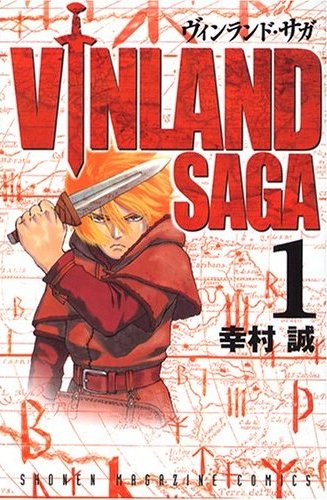
Lots of people would love for someone to publish Makoto (Planetes) Yukimura’s Vinland Saga, myself included. This sprawling tale of Vikings is still running in Kodansha’s Afternoon.

“V” is also for Viz, obviously, still barreling along as North America’s major manga publisher. It’s jointly owned by Shogakukan and Shueisha, and Viz makes a great deal of seinen manga available for free online in the form of its SigIKKI initiative.

And nobody should ever overlook Vertical, which initially made its manga name by focusing on classic works by Osamu Tezuka and Keiko Takemiya, but has recently begun publishing more contemporary (but still excellent) works, in addition to its prose fiction and non-fiction catalog.

Update:

On Twitter, Scott Green reminded me of Voyeurs, Inc. (Viz), written and illustrated by Hideo Yamamoto. It follows the misadventures of a group of surveillance experts. It originally ran in Shogakukan’s Young Sunday.

Filed Under: FEATURES

Upcoming 12/29/2010

December 28, 2010 by David Welsh

I’m still decompressing upon reentry to normal world as opposed to holiday sparkle world, and, to be honest, looking at this week’s ComicList is roughly akin to trying to read something written in ancient possum. My brain just isn’t there yet. I’ll rely instead on two trustworthy souls, and take their recommendation to seek out a copy of The Secret Notes of Lady Kanako (Tokyopop), written and illustrated by Ririko Tsujita. I’ve been excited about this since MJ(Manga Bookshelf) discussed it with Michelle Smith in a recent Off the Shelf column. And Sean (A Case Suitable for Treatment) Gaffney points out that it’s from Hakusensha’s LaLa DX, which is a fine font of manga even by Hakusensha’s generally excellent standards.

I’m coherent enough to enjoy the writing of other bloggers, even if I can’t yet conjure the mental acuity to formulate a shopping list. First up are the new inductees to Kate (The Manga Critic) Dacey’s Manga Hall of Shame. And, as usual, there’s a lot of overlap between my favorites and the Best Manga of 2010 list at Manga Worth Reading.

Filed Under: Link Blogging

Chi’s Sweet Home 4 by Konami Kanata: B+

December 28, 2010 by Michelle Smith

From the back cover:
Welcome to the neighborhood, Chi and family! Now in her new residence, Chi will be introduced to many friends of the furry and feathery kind. With so many fresh smells to investigate, endless adventures await. So settle in, because here pets will never be chased… unless they are chasing each other.

Review:
Chi’s Sweet Home is one of those series that goes to the top of the to-read pile whenever a new volume is released. It’s always a true pleasure to read, with colorful cuteness guaranteed on every page.

This volume focuses mostly on the Yamada family’s move to a new, pet-friendly apartment complex and Chi’s reactions to her new environment. I love that so much time is devoted to her acclimation, and how familiar smells gradually embolden her enough to rub herself all over all the new stuff and proclaim it to be hers, too. She also meets a few animals at the new place, though more of her interactions so far have been with a gregarious (but well-trained) dog named David than with snooty long-haired kitty, Alice.

As usual, mangaka Konami Kanata perfectly captures several moments that ought to be familiar to cat owners: the pitiful mewling and pawing at a door that separates the kitty from its people, the inability to fathom what a scratching post is for, and the perils of claw trimming. In fact, I think this last was actually understated; I’ve had cats practically all my life and I still feel unqualified to attempt this task!

It’s not all cuteness, though. Chi’s Sweet Home has occasionally had some bittersweet moments—early volumes contrasted Chi’s cozy new home to her fading memories of her mother and siblings—and this volume is no exception. It’s sad to see how much confusion human-induced change causes to poor Chi and how baffled she is by her friend Blackie’s abrupt departure. I don’t know whether to hope and/or expect that a reunion will be forthcoming or to admire this slightly darker streak in the story.

We’re getting close to being caught up with the series in Japan. The fifth volume is due in February and then, after being spoiled on a bimonthly release schedule, we will suddenly be called upon to wait much longer for our Chi fix. I guess we could always turn to Crunchyroll for solace.

Review copy provided by the publisher.

Filed Under: REVIEWS Tagged With: vertical

Pick of the Week: Lady Kanoko

December 28, 2010 by MJ 3 Comments

Having spent much of 2010 championing comics for women and girls here at Manga Bookshelf, it gives me a lot of pleasure to be able to choose a new shoujo title for the year’s final Pick of the Week. It’s a title that I think holds appeal for both teens and adults, and may very well qualify as one of my favorite shoujo debuts of the year, along with a number of Shojo Beat series, including Natsume’s Book of Friends, The Story of Saiunkoku, and Seiho Boys’ High School!, as well as TOKYOPOP’s Demon Sacred.

This title, too, comes from TOKYOPOP. I’m speaking, of course, of The Secret Notes of Lady Kanoko, created by Ririko Tsujita. Here’s some of what I had to say about its debut volume in a recent installment of Off the Shelf:

The series’ title refers to Kanoko, a third year junior high school student who prides herself on perfect objectivity. To maintain this emotional purity, she spurns any kind of social interaction with her classmates, preferring to simply observe (and, of course, take copious notes). When her interest is piqued by a classroom love triangle, Kanoko is shocked to find herself somehow drawn into the fray by each of the parties involved, and even more so to find herself accidentally befriending them.

My experience with this manga was a bit of a roller-coaster ride. I was immediately drawn in by Kanoko and the gloriously idiosyncratic friendships she develops against her will. Then, amidst a deep sigh of contentment, I was jerked right out of my shoujo-induced bliss by the volume’s second chapter, which begins with Kanoko having transferred to a new school, leaving everything I’d just learned to care about abruptly behind. My dissatisfaction continued through at least two more chapters before I finally realized that this is actually the premise of the series. That’s also when I realized that it’s brilliant.

Using Kanoko’s impossibly frequent school transfers as a structural conceit, Tsujita sets herself free from the bothersome constraints of reality, while also weaving in some of the most wonderfully real characterization I’ve seen in a manga comedy. It’s as though some sleep-deprived manga editor spliced together pages of Kimi ni Todoke with Sayonara, Zetsubou-Sensei, absent-mindedly inventing a new and delicious flavor of shoujo satire that manages to consistently maintain the gag while telling an unexpectedly heartwarming story at the same time …

The real secret to the story’s success, however, is Kanoko herself. She’s smart, hilarious, and even kind of heroic, like a super-hero version of Harriet the Spy. She wards off bullies by genuinely not caring what they think of her, and blows off “friendly” saboteurs with little more than a sneer. I seriously wanted to applaud several times during the first chapter alone. She’s also deeply damaged and a complete mess, but even that’s not overplayed. It’s astonishingly well done.

Kanoko is smart, funny, and a whole lot of fun. Buy the first volume and see for yourself!

Filed Under: PICK OF THE WEEK Tagged With: The Secret Notes of Lady Kanoko

Manhwa Monday: Quick roundup

December 27, 2010 by MJ Leave a Comment

Welcome to another Manhwa Monday! Here’s a quick round-up of manhwa-related news and reviews from the past two weeks.

The folks at Dramabeans report that popular drama Secret Garden is going to be made into both a novel and a girls’ manhwa series.

At Funky Doodle Donkey, Mireille shares her love for Korean icon Pucca.

The iSeeToon blog has been a busy place, as Jeong-Woo Seon continues their series on types of Korean manhwa, with an entry on Jab-Ji Manhwa (Manhwa for magazine). Check out the entire series here. In other iSeeToon news, they’ve uploaded a YouTube video to demonstrate their Magician iOS app. They’ve also started a Facebook page.

New in reviews, Anime Maki’s Todd Douglass takes a look at a handful of Yen Press manhwa. Both Lori Henderson and Michelle Smith review volume four of Time and Again (Yen Press) at Comics Village and Soliloquy in Blue, respectively. Michelle also checks out the final volumes of Angel Diary (Yen Press) in our latest Off the Shelf column at Manga Bookshelf. And Lori gives us the rundown on the latest issue of Yen Plus at Manga Xanadu. At Kuriousity, Andre Paploo looks at volume four of Raiders (Yen Press). At Slightly Biased Manga, Connie talks about volume five of Sugarholic (Yen Press).

If anyone happened to notice the predominance of manhwa from a single publisher in this week’s review roundup, it’s a pretty good indication of the state of the American manhwa industry over the past year. Though the year’s most promising new series, There’s Something About Sunyool, came to us from NETCOMICS, only Yen Press maintained a significant print release schedule for manhwa. And even from Yen, we saw many more series endings than beginnings this year. What will 2011 bring us? Stay tuned as we find out!

That’s all for this week!

Is there something I’ve missed? Leave your manhwa-related links in comments!

Filed Under: Manhwa Bookshelf, Manhwa Monday

Highschool of the Dead, Vol. 1

December 27, 2010 by Katherine Dacey

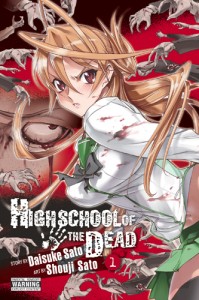
A poor man’s Dawn of the Dead — that’s how I’d describe Highschool of the Dead, a slick, violent zombie story that borrows shamelessly from the George Romero canon. Whether that’s a good thing depends a lot on your relationship with Romero. If you thought Dawn of the Dead was a sly poke at American society — its consumerism, class divisions, and latent racism — Daisuke Sato and Shouji Sato’s manga will seem awfully thin, as the authors are more concerned with dishing out panty shots than revealing how threadbare the social fabric really is. If you found Romero’s film unnecessarily burdened with subtext, however, you might just cotton to the Satos’ ultra-violent update.

As the title implies, the story begins at an ordinary high school in Tokyo. When the staff contract a mysterious disease that transforms them into zombies, they wreak havoc, infecting hundreds of other people as they chomp, rend, and tear their way through campus. A small band of students take refuge on the roof, hoping for a helicopter rescue. What they discover, however, is that the entire city has descended into chaos, leaving them little choice than to find a safer place to wait out the crisis.

From a narrative point of view, Highschool of the Dead follows the zombie playbook to the letter. The zombies are slow and shambling; the the story takes place in a closed environment where the zombies’ sheer numbers give them a decided advantage; and the characters can barely stand each other, setting aside their mutual contempt only for the zombie-fighting cause. But while Romero made the most of his film’s shopping mall setting, the Satos treat their high school’s corridors and classrooms as just another indoor space filled with convenient weapons. (Call me crazy, but I don’t remember nail guns lying around the Newton North science labs.) The fight scenes are choppy and poorly staged, giving little indication of how the characters are moving through the space or where, exactly, they are in relation to the school’s main entrance. Even the violence-porn flourishes lack imagination: zombies die by baseball bat, power drill, broom handle, sword, and fire hose, but none of the characters improvises an interesting weapon out of something unique to the school.

The script is as predictable and clumsy as the fight scenes; the characters speak in exposition-heavy soundbites that bear little resemble to real conversation. (Sample: “Rumor has it that your childhood girlfriend ended up in your class when she stayed back and is going out with Igou now, right?”) Daisuke Sato assigns each character a few defining personality traits, raising the possibility that the characters’ economic and social disparities might inform the way they interact. The characterizations are so meager and inconsistent, however, that it’s tough to remember who’s who; I learned more from reading the Wikipedia article on Highschool of the Dead than from the manga itself, never a good sign when the characters, in fact, do have important backstories that shape their opinions of one another.

The biggest problem with Highschool of the Dead is its relentless commitment to cheesecake. The Satos work fanservice into as many scenes as possible, taking full advantage of every stairwell, fight, fall, and female death to flash derrieres and panties; only an episode of Strike Witches has more up-skirt imagery. Adding insult to injury is Shouji Sato’s willful disregard for basic female anatomy. Several of the female characters’ bust lines are so monstrously distended that it would be impossible for the characters to actually stand up and walk in real life, let alone fight zombies. (Hint to aspiring manga artists: large breasts do not look like grossly misshapen lemons or balloon animals.) I realize that costume failures and nubile girls are a staple of horror movies, but when the cheesecake is so poorly done, it’s hard to imagine who would find it arousing; the Satos could take a few tips from Robert Rodriguez on how to incorporate plausible, sexy women into a monster flick.

And when the scariest thing about a zombie story is the way the female characters’ breasts are drawn, well… I’d say the creators have fallen down on the job. The bottom line: unless you’re a die-hard zombie fan or panty-shot connoisseur, you’re better off seeking undead thrills elsewhere.

Review copy provided by Yen Press. Volume one of Highschool of the Dead will go on sale January 25, 2011.

HIGHSCHOOL OF THE DEAD, VOL. 1 • STORY BY DAISUKE SATO, ART BY SHOUJI SATO • YEN PRESS • 160 pp. • RATING: MATURE (18+)

Filed Under: Manga, Manga Critic, REVIEWS Tagged With: Horror/Supernatural, yen press, Zombies

Highschool of the Dead, Vol. 1

December 27, 2010 by Katherine Dacey

A poor man’s Dawn of the Dead — that’s how I’d describe Highschool of the Dead, a slick, violent zombie story that borrows shamelessly from the George Romero canon. Whether that’s a good thing depends a lot on your relationship with Romero. If you thought Dawn of the Dead was a sly poke at American society — its consumerism, class divisions, and latent racism — Daisuke Sato and Shouji Sato’s manga will seem awfully thin, as the authors are more concerned with dishing out panty shots than revealing how threadbare the social fabric really is. If you found Romero’s film unnecessarily burdened with subtext, however, you might just cotton to the Satos’ ultra-violent update.

As the title implies, the story begins at an ordinary high school in Tokyo. When the staff contract a mysterious disease that transforms them into zombies, they wreak havoc, infecting hundreds of other people as they chomp, rend, and tear their way through campus. A small band of students take refuge on the roof, hoping for a helicopter rescue. What they discover, however, is that the entire city has descended into chaos, leaving them little choice than to find a safer place to wait out the crisis.

From a narrative point of view, Highschool of the Dead follows the zombie playbook to the letter. The zombies are slow and shambling; the the story takes place in a closed environment where the zombies’ sheer numbers give them a decided advantage; and the characters can barely stand each other, setting aside their mutual contempt only for the zombie-fighting cause. But while Romero made the most of his film’s shopping mall setting, the Satos treat their high school’s corridors and classrooms as just another indoor space filled with convenient weapons. (Call me crazy, but I don’t remember nail guns lying around the Newton North science labs.) The fight scenes are choppy and poorly staged, giving little indication of how the characters are moving through the space or where, exactly, they are in relation to the school’s main entrance. Even the violence-porn flourishes lack imagination: zombies die by baseball bat, power drill, broom handle, sword, and fire hose, but none of the characters improvises an interesting weapon out of something unique to the school.

The script is as predictable and clumsy as the fight scenes; the characters speak in exposition-heavy soundbites that bear little resemble to real conversation. (Sample: “Rumor has it that your childhood girlfriend ended up in your class when she stayed back and is going out with Igou now, right?”) Daisuke Sato assigns each character a few defining personality traits, raising the possibility that the characters’ economic and social disparities might inform the way they interact. The characterizations are so meager and inconsistent, however, that it’s tough to remember who’s who; I learned more from reading the Wikipedia article on Highschool of the Dead than from the manga itself, never a good sign when the characters, in fact, do have important backstories that shape their opinions of one another.

The biggest problem with Highschool of the Dead is its relentless commitment to cheesecake. The Satos work fanservice into as many scenes as possible, taking full advantage of every stairwell, fight, fall, and female death to flash derrieres and panties; only an episode of Strike Witches has more up-skirt imagery. Adding insult to injury is Shouji Sato’s willful disregard for basic female anatomy. Several of the female characters’ bust lines are so monstrously distended that it would be impossible for the characters to actually stand up and walk in real life, let alone fight zombies. (Hint to aspiring manga artists: large breasts do not look like grossly misshapen lemons or balloon animals.) I realize that costume failures and nubile girls are a staple of horror movies, but when the cheesecake is so poorly done, it’s hard to imagine who would find it arousing; the Satos could take a few tips from Robert Rodriguez on how to incorporate plausible, sexy women into a monster flick.

And when the scariest thing about a zombie story is the way the female characters’ breasts are drawn, well… I’d say the creators have fallen down on the job. The bottom line: unless you’re a die-hard zombie fan or panty-shot connoisseur, you’re better off seeking undead thrills elsewhere.

Review copy provided by Yen Press. Volume one of Highschool of the Dead will go on sale January 25, 2011.

HIGHSCHOOL OF THE DEAD, VOL. 1 • STORY BY DAISUKE SATO, ART BY SHOUJI SATO • YEN PRESS • 160 pp. • RATING: MATURE (18+)

Filed Under: Manga Critic Tagged With: yen press, Zombies

The 2010 Manga Hall of Shame Inductees

December 24, 2010 by Katherine Dacey

While there’s no shortage of boring or cliche manga available in English — even with fewer titles being released this year — grade-A turkeys are going the way of the dodo. I had so much difficulty compiling this year’s Manga Hall of Shame Nominees, in fact, that I turned to Twitter for help. Some folks named The Melancholy of Suzumiya Haruhi-chan for being dull and incomprehensible; others fingered Saving Life for unsexy fanservice and dopey characters; one person chastised You Higuri for foisting Nighthead Genesis on the world; and one brave soul bucked conventional wisdom by naming AX: A Collection of Alternative Manga as her Worst of 2010. (You can see more reader nominations at #badmanga2010.) The conversation made me laugh, but it also helped me clarify my own thinking about the subject. Common to all five titles on this year’s list is a flagrant disregard for the reader; no matter how interesting the initial premise, these stories derailed quickly, thanks to lousy artwork, disjointed storytelling, and/or a juvenile fixation on body parts and bodily functions.

5. Che Guevara: A Manga Biography
By Kiyoshi Konno and Chie Shimano • Penguin Books
In the opening pages of Che Guevara: A Manga Biography, the creators promise to reveal the flesh-and-blood person behind the iconic images on t-shirts and posters. The authors never deliver on that promise, however, instead relying heavily on Guevara’s own self-promoting essays for most of their information. That commitment to primary sources might be laudable if the authors made any effort to reveal the inconsistencies in Guevara’s beliefs, but Guevara’s heroism is never in doubt; he’s always portrayed as brave, strong, and capable, even when abandoning his first family or serving in Fidel Castro’s administration. (The authors also gloss over Guevara’s enthusiasm for the Stalinist regime, perhaps because it’s hard to put a positive spin on anyone or anything associated with that period in Soviet history.) More frustrating still is how choppy and uneven the manga is; the authors compress major battles and periods of Guevara’s life into one or two pages, leaving no room for them to explore these events with any nuance. Clumsy character designs and endless talking-head scenes complete the not-so-pretty picture.

4. Scarlet
By Hiro Madarame • BLU Manga
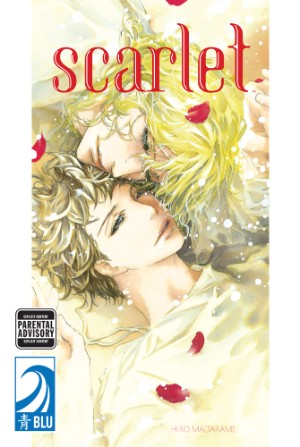
Hiro Madarame may draw achingly pretty manga, but her stories are surprisingly ugly and unpleasant, filled with Tragically Gay Characters and manipulative, shrewish women who drive men to homosexuality. The nadir of this slim anthology is the titular story, which includes a brutal rape scene that’s disturbing both for its sadism (it wouldn’t be out of place in David Fincher’s ultra-gory Seven) and for the speed with which the victim and the attacker reconcile. It’s true that many domestic abuse victims go through cycles of leaving and reuniting with their tormentors, but Madarame presents this act of violence as testament to her characters’ deep attachment to one another, rather than evidence of their pathologically unhealthy relationship. Call me a curmudgeonly old feminist if you must, but romanticizing rape and possessive behavior — no matter what the gender or sexual orientation of the parties involved — just isn’t very sexy. —Reviewed at The Manga Critic, 8/31/10

3. Pink Innocent
By Kotori Momoyuki • Del Rey
The title screams soft-core porn, but Pink Innocent is, in fact, G-rated shojo comedy. The story revolves around Kotona, a ditzy rich girl who stalks and smothers Reiji, a befuddled nerd who finds Kotona almost as annoying as readers will. The jokes are profoundly unfunny: Kotona destroys Reiji’s computers, burns down his apartment, and stars in her class production of Romeo and Juliet so that she can woo him. (One shudders to think what she’ll do in future volumes: carpet bomb his home by accident? Run over his brother with a car?) Adding insult to injury is the artwork: it’s sub-par Arina Tanemura, with sparkles on top of sparkles, and a heroine so saucer-eyed she resembles a chibi squid. Unless Orange Planet was a bigger hit than I remembered, it’s hard to fathom what inspired Del Rey to license Pink Innocent; shojo fans deserve better than this dumb, repetitive stinker.

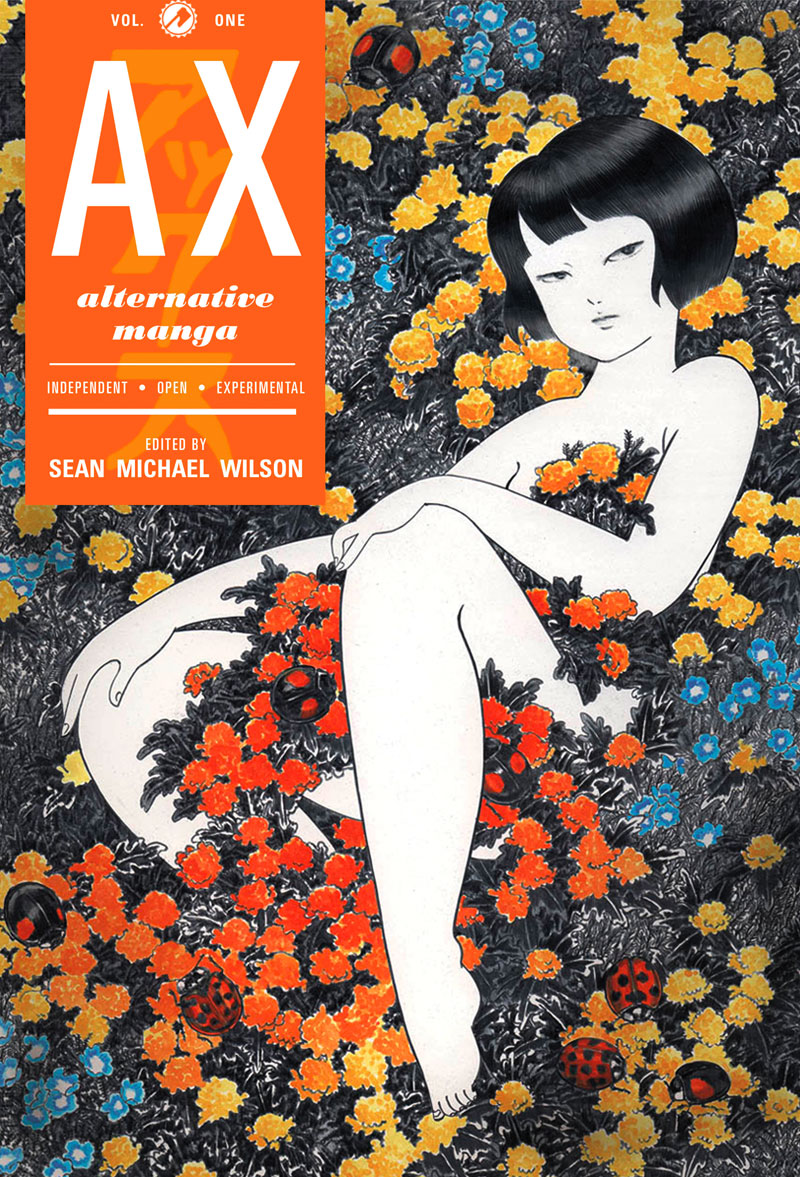
2. “Black Sushi Party Piece” and “Arizona Sizzlet,” AX: An Alternative Collection of Manga
Edited by Sean Michael Wilson • Top Shelf
David Welsh said it best when he declared, “While AX is one of the books I’m happiest to have bought this year, it does contain some seriously bad manga.” Many of the stories in AX push the boundaries of good taste, aesthetic and otherwise, but the best of them — “Puppy Love,” “Six Paths of Wealth,” “Push-Pin Woman” — are genuinely thought-provoking. Two, however, earn demerits for their sheer pointlessness. The first, “Black Sushi Party Piece,” is a festival of excrement, anuses, and Butt Head-ugly character designs, with no real ambition other than to turn the stomach. The second, “Arizona Sizzler,” features a desert showdown between an irritated young woman and an enormous set of genitals. I have no doubt that in the hands of someone like Terry Gilliam this kind of cock-and-balls story might be funny, but the crudeness of the execution robs “Sizzler” of any potential playfulness; instead, it seems like a dumb joke dragged out to epically unfunny lengths, the manga equivalent of a Benny Hill sketch. —Reviewed at The Manga Critic, 5/21/10

1. The Qwaser of Stigmata
Story by Hiroyuki Yoshino • Art by Kenetsu Satō • Tokyopop
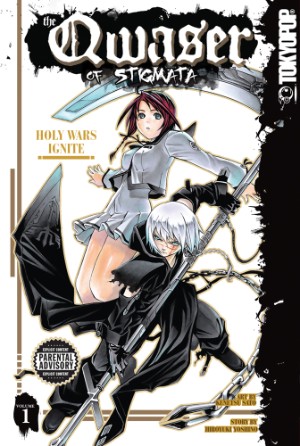
The creators of Qwaser of Stigmata have erected a sturdy framework on which to hang boobs and bishonen: their story takes place at a parochial boarding school filled with nubile teens, allowing them to indulge every manner of fetish, from schoolgirls in short skirts to hotties of the cloth. Alas, Hiroyuki Yoshino and Kenetsu Sato’s only novel idea was to substitute Russian Orthodoxy for Catholicism, the go-to religion of manga-ka in search of cool outfits and arcane rituals. The rest of the story is a fever-dream of incoherent fight scenes, topless girls, and… breast feeding. (That’s the source of the characters’ super-strength: breast milk. I’m not making this up. Really.) The central plot, which revolves around a Russian icon, makes even less sense than the fight scenes; I’m not an expert on any form of Eastern Orthodoxy, but I don’t think it’s a stretch to say that an observant person would find it offensive. (Or silly.) The saddest part is that an imaginative artist could write a boffo manga about the Russian Orthodox Church, which has a long and rich history, filled with mystics, heretics, and believers so hard core they’d set fire to themselves before accepting small changes to the liturgy. —Reviewed at The Manga Critic, 8/11/10

So… I turn the floor over to you: what titles do you think belong in this year’s Manga Hall of Shame?

Filed Under: Manga, Manga Critic

The 2010 Manga Hall of Shame Inductees

December 24, 2010 by Katherine Dacey 34 Comments

While there’s no shortage of boring or cliche manga available in English — even with fewer titles being released this year — grade-A turkeys are going the way of the dodo. I had so much difficulty compiling this year’s Manga Hall of Shame Nominees, in fact, that I turned to Twitter for help. Some folks named The Melancholy of Suzumiya Haruhi-chan for being dull and incomprehensible; others fingered Saving Life for unsexy fanservice and dopey characters; one person chastised You Higuri for foisting Nighthead Genesis on the world; and one brave soul bucked conventional wisdom by naming AX: A Collection of Alternative Manga as her Worst of 2010. (You can see more reader nominations at #badmanga2010.) The conversation made me laugh, but it also helped me clarify my own thinking about the subject. Common to all five titles on this year’s list is a flagrant disregard for the reader; no matter how interesting the initial premise, these stories derailed quickly, thanks to lousy artwork, disjointed storytelling, and/or a juvenile fixation on body parts and bodily functions.

5. CHE GUEVARA: A MANGA BIOGRAPHY (Penguin)

In the opening pages of Che Guevara: A Manga Biography, the creators promise to reveal the flesh-and-blood person behind the iconic images on t-shirts and posters. The authors never deliver on that promise, however, instead relying heavily on Guevara’s own self-promoting essays for most of their information. That commitment to primary sources might be laudable if the authors made any effort to reveal the inconsistencies in Guevara’s beliefs, but Guevara’s heroism is never in doubt; he’s always portrayed as brave, strong, and capable, even when abandoning his first family or serving in Fidel Castro’s administration. (The authors also gloss over Guevara’s enthusiasm for the Stalinist regime, perhaps because it’s hard to put a positive spin on anyone or anything associated with that period in Soviet history.) More frustrating still is how choppy and uneven the manga is; the authors compress major battles and periods of Guevara’s life into one or two pages, leaving no room for them to explore these events with any nuance. Clumsy character designs and endless talking-head scenes complete the not-so-pretty picture.

4. SCARLET (BLU Manga)

Hiro Madarame may draw achingly pretty manga, but her stories are surprisingly ugly and unpleasant, filled with Tragically Gay Characters and manipulative, shrewish women who drive men to homosexuality. The nadir of this slim anthology is the titular story, which includes a brutal rape scene that’s disturbing both for its sadism (it wouldn’t be out of place in David Fincher’s ultra-gory Seven) and for the speed with which the victim and the attacker reconcile. It’s true that many domestic abuse victims go through cycles of leaving and reuniting with their tormentors, but Madarame presents this act of violence as testament to her characters’ deep attachment to one another, rather than evidence of their pathologically unhealthy relationship. Call me a curmudgeonly old feminist if you must, but romanticizing rape and possessive behavior — no matter what the gender or sexual orientation of the parties involved — just isn’t very sexy. –Reviewed at The Manga Critic, 8/31/10

3. PINK INNOCENT (Del Rey)

The title screams soft-core porn, but Pink Innocent is, in fact, G-rated shojo comedy. The story revolves around Kotona, a ditzy rich girl who stalks and smothers Reiji, a befuddled nerd who finds Kotona almost as annoying as readers will. The jokes are profoundly unfunny: Kotona destroys Reiji’s computers, burns down his apartment, and stars in her class production of Romeo and Juliet so that she can woo him. (One shudders to think what she’ll do in future volumes: carpet bomb his home by accident? Run over his brother with a car?) Adding insult to injury is the artwork: it’s sub-par Arina Tanemura, with sparkles on top of sparkles, and a heroine so saucer-eyed she resembles a chibi squid. Unless Orange Planet was a bigger hit than I remembered, it’s hard to fathom what inspired Del Rey to license Pink Innocent; shojo fans deserve better than this dumb, repetitive stinker.

2. “BLACK SUSHI PARTY PIECE” AND “ARIZONA SIZZLER,” FROM AX: AN ALTERNATIVE COLLECTION OF MANGA (Top Shelf)

David Welsh said it best when he declared, “While AX is one of the books I’m happiest to have bought this year, it does contain some seriously bad manga.” Many of the stories in AX push the boundaries of good taste, aesthetic and otherwise, but the best of them — “Puppy Love,” “Six Paths of Wealth,” “Push-Pin Woman” — are genuinely thought-provoking. Two, however, earn demerits for their sheer pointlessness. The first, “Black Sushi Party Piece,” is a festival of excrement, anuses, and Butt Head-ugly character designs, with no real ambition other than to turn the stomach. The second, “Arizona Sizzler,” features a desert showdown between an irritated young woman and an enormous set of genitals. I have no doubt that in the hands of someone like Terry Gilliam this kind of cock-and-balls story might be funny, but the crudeness of the execution robs “Sizzler” of any potential playfulness; instead, it seems like a dumb joke dragged out to epically unfunny lengths, the manga equivalent of a Benny Hill sketch. –Reviewed at The Manga Critic, 5/21/10

1. THE QWASER OF STIGMATA (Tokyopop)

The creators of Qwaser of Stigmata have erected a sturdy framework on which to hang boobs and bishonen: their story takes place at a parochial boarding school filled with nubile teens, allowing them to indulge every manner of fetish, from schoolgirls in short skirts to hotties of the cloth. Alas, Hiroyuki Yoshino and Kenetsu Sato’s only novel idea was to substitute Russian Orthodoxy for Catholicism, the go-to religion of manga-ka in search of cool outfits and arcane rituals. The rest of the story is a fever-dream of incoherent fight scenes, topless girls, and… breast feeding. (That’s the source of the characters’ super-strength: breast milk. I’m not making this up. Really.) The central plot, which revolves around a Russian icon, makes even less sense than the fight scenes; I’m not an expert on any form of Eastern Orthodoxy, but I don’t think it’s a stretch to say that an observant person would find it offensive. (Or silly.) The saddest part is that an imaginative artist could write a boffo manga about the Russian Orthodox Church, which has a long and rich history, filled with mystics, heretics, and believers so hard core they’d set fire to themselves before accepting small changes to the liturgy. –Reviewed at The Manga Critic, 8/11/10

So… I turn the floor over to you: what titles do you think belong in this year’s Manga Hall of Shame?

Filed Under: Manga Critic Tagged With: Bad Manga

Silver Diamond Volumes 6 and 7

December 24, 2010 by Anna N

Silver Diamond is one of those series I think of as being a bit under the radar. I don’t see many posts about it on manga blogs, and this shonen ai manga itself is a bit odd, since it focuses on the adventures of a boy who can magically grow plants as he journeys to another world and all the cute men who enjoy hugging him. Sometimes I’m not sure if I can hang on for another 13+ volumes, but then I pick up a volume of this manga and I’m reminded again how much I like Sugiura’s creative world building and cozy atmosphere.

Silver Diamond Volume 6 by Shiho Sugiura

The sixth volume of this manga shows the demonic ayame prince (who looks suspiciously like green-thumbed hero Rakan) issuing a new prophecy: a god of death will bring new calamities on the desert world, but the people will persevere as long as they continue supporting him. The prophecy is issued as a response to the presence of Rakan, whose sanome powers to make plants grow have the potential to make the world green again. Rakan and his companions are journeying with a group of lost boys who were cast off from their families. Rakan is furious at the implied threat from the prince, and his anger manifests itself as a field of glowing flowers. Cut off from their new followers, Rakan, Senroh, Narushige, and Tohno continue to march towards the capital.

Silver Diamond Volume 7 by Shiho Sugiura

I liked the seventh volume a little more just because there was more wacky plant action and hugging, which are the main features I have come to expect from Silver Diamond. Rakan wakes up to find Narushige holding his hand, telling him to “get out of there.” The “there” in question is Senroh’s arms, who calmly announces that he decided to be Rakan’s pillow. The group is taking shelter in a storehouse with some unique seeds. Rakan is able to create plant-fences and plant-spiral-staircases with some of the preserved seeds. The domestic idyll ends quickly when an assassin from the prince sends in lizard-dogs made of stone and controlled by mystical garnets to kill Rakan.

Senroh takes care of things, aided by a plant rifle that Rakan grows quickly. One of the nice things about Silver Diamond is the cool action scenes. It was fun to see Senroh spring into action as a sniper with his dark glasses and vine entwined rifle. The stone lizard-dogs look appropriately mindless and creepy. The assassin confronts the group, and we see that there is at least one person Rakan can fail to charm. Finally, we get a female to join Rakan’s revolution as a giant stone-eating wolf decides to take up with the group after she dines on the assassin’s lizard dogs. Rakan welcomes her with the same openness that has won over his other companions in the past. Cute animal sidekicks is a plot element that Sugiura seems to specialize with. I wonder how the cynical snake Koh will get along with Kuro, who just seems to have a crush on every human boy she meets.

Even though Rakan and his companions are launching a rebellion against a prince and his cronies who have mystical powers of their own, Silver Diamond has a certain lack of urgency that I find relaxing as opposed to boring. The constant affirmation of friendship and the unique details of Sugiura’s fantasy world remain interesting, even if the general plot might be a little less drawn-out if this manga was being produced by a different author.

Filed Under: UNSHELVED

  • Page 1
  • Page 2
  • Page 3
  • Interim pages omitted …
  • Page 5
  • Go to Next Page »
 | Log in
Copyright © 2010 Manga Bookshelf | Powered by WordPress & the Genesis Framework