• Skip to primary navigation
  • Skip to main content
  • Skip to primary sidebar
  • Home
  • About Us
    • Privacy Policy
    • Comment Policy
    • Disclosures & Disclaimers
  • Resources
    • Links, Essays & Articles
    • Fandomology!
    • CLAMP Directory
    • BlogRoll
  • Features & Columns
    • 3 Things Thursday
    • Adventures in the Key of Shoujo
    • Bit & Blips (game reviews)
    • BL BOOKRACK
    • Bookshelf Briefs
    • Bringing the Drama
    • Comic Conversion
    • Fanservice Friday
    • Going Digital
    • It Came From the Sinosphere
    • License This!
    • Magazine no Mori
    • My Week in Manga
    • OFF THE SHELF
    • Not By Manga Alone
    • PICK OF THE WEEK
    • Subtitles & Sensibility
    • Weekly Shonen Jump Recaps
  • Manga Moveable Feast
    • MMF Full Archive
    • Yun Kouga
    • CLAMP
    • Shojo Beat
    • Osamu Tezuka
    • Sailor Moon
    • Fruits Basket
    • Takehiko Inoue
    • Wild Adapter
    • One Piece
    • After School Nightmare
    • Karakuri Odette
    • Paradise Kiss
    • The Color Trilogy
    • To Terra…
    • Sexy Voice & Robo
  • Browse by Author
    • Sean Gaffney
    • Anna Neatrour
    • Michelle Smith
    • Katherine Dacey
    • MJ
    • Brigid Alverson
    • Travis Anderson
    • Phillip Anthony
    • Derek Bown
    • Jaci Dahlvang
    • Angela Eastman
    • Erica Friedman
    • Sara K.
    • Megan Purdy
    • Emily Snodgrass
    • Nancy Thistlethwaite
    • Eva Volin
    • David Welsh
  • MB Blogs
    • A Case Suitable For Treatment
    • Experiments in Manga
    • MangaBlog
    • The Manga Critic
    • Manga Report
    • Soliloquy in Blue
    • Manga Curmudgeon (archive)

Manga Bookshelf

Discussion, Resources, Roundtables, & Reviews

yen press

The Best and Worst Manga of 2023

January 9, 2024 by Katherine Dacey

This weekend’s Nor’easter provided me a swell opportunity to finish my long-gestating Best and Worst Manga list for 2023. One of the things that tripped me up was the sheer volume of new work published last year; when I first started reviewing manga in 2006, it was hard to imagine a market that offered a title for every conceivable reader, from the Chainsaw Man enthusiast to the the romantic, the oenophile, the foodie, the soccer fan, the gore hound, the isekai buff, and even the middle-aged manga critic. Though I made a concerted effort to be as thorough as possible, I freely admit that my picks barely capture the sheer quantity and diversity of last year’s new releases. Instead, I focused on the titles that stayed with me weeks and months after I first read them, from the exuberant One Hundred Tales to the unnerving The Summer Hikaru Died. For additional perspective on 2023’s best and worst manga, I encourage you to check out the well curated lists at Anime News Network, Anime UK News, Asian Movie Pulse, The Beat, The Comics Journal, From Cover to Cover, Okazu, and The School Library Journal.
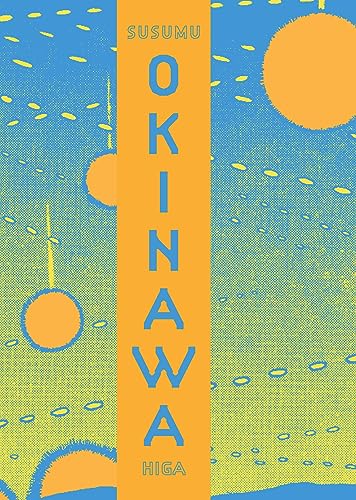
Best New Manga: Okinawa
Story and Art by Susumu Higa • Translated by Jocelyne Allen • Lettering by Patrick Crotty and Kayla E. • Fantagraphics
There are books that critics like, and books that readers like. I’d put Okinawa squarely in the first category, as it has all the hallmarks of a Serious Manga™: slightly naïve artwork, historically important events seen through the eyes of ordinary people, and detailed footnotes explaining the story’s cultural and linguistic nuances. If I sound a little cynical, I was; I put off reading Okinawa for months after its release because so many reviewers rehearsed the same talking points about how “harrowing,” “heartbreaking,” “complex,” and “haunting” it was. After reading Okinawa, however, I have to admit the critics were right: Okinawa is a deeply moving exploration of the island’s fraught relationship with Japan and the United States. It’s also a tribute to Susumu Higa’s parents, whose memories of World War II pervade many of Okinawa’s most affecting stories; a celebration of Okinawan resilience and spirituality; and the best manga I read in 2023.

Best New Drama: River’s Edge“Story and Art by Kyoko Okazaki • Translated by Alexa Frank • Vertical Comics
River’s Edge offers a gritty portrait of adolescence before chat rooms, cell phones, and social media, focusing on the slackers and misfits at a Tokyo high school. Haruna Wakakusa, the protagonist, is caught between her fierce sense of justice and her ambivalent feelings towards her on-again, off-again boyfriend Kannonzaki, a horny, hot-headed loser who bullies weaker classmates. Over the course of the story, Haruna forges an unlikely friendship with one of Kannonzaki’s targets, an aloof young man whose popularity with the girls belies his true sexual orientation. Okazaki’s spare, stylish linework is ideally suited to the material, as the character’s exaggerated facial features and ungainly proportions remind the reader of how confusing, weird, and uncomfortable it is to be on the physical cusp of adulthood. Okazaki also nails the casual cruelty and cluelessness of adolescence: her characters’ impulsiveness, selfishness, and inexperience often compel them to betray each other in small (and big) ways that feel true to life even when the plot teeters on the brink of melodrama.

Best Classic Title: One Hundred Tales
Story and Art by Osamu Tezuka • Translated by Iyasu Adair Nagata • Lettering by Aidan Clarke • ABLAZE
Over the course of his long career, Osamu Tezuka published three series based on the legend of Doctor Faustus, among them One Hundred Tales (1971), which ran in Weekly Shonen Jump. Tezuka takes a few liberties with the original story: his hero is not a brilliant scholar in search of knowledge but a lowly samurai who’s been sentenced to death for his employer’s misdeeds. In a fit of desperation, he sells his soul to a witch and is reborn as Fuwa Usuto, a dashing young man who wants two things: love and power. What follows is a rowdy picaresque, as Fuwo ventures into the lair of an alluring demon, saves his daughter from an arranged marriage, and insinuates himself into the house of a foolish daimyo in his quest to become more worldly and powerful. These episodes provide Tezuka ample opportunity to insert pop-cultural sight gags—Christopher Lee and Astro Boy both make fleeting appearances—but they also showcase Tezuka’s flair for character design and panel structure; the artwork is fluid and playful, equally suited to moments of exquisite silliness and heartbreaking sadness as Fuwo stumbles towards transcendence.

Best New Horror Series: The Summer Hikaru Died
Story and Art by Mokumokuren • Translated by Ajani Oloye • Lettering by Abigail Blackman • Yen Press
The Summer Hikaru Died begins with a familiar scene: two high school buddies are clowning around outside a convenience store, trading good-natured barbs. But something’s off, and midway through a seemingly ordinary conversation Yoshiki realizes that he’s talking to an impostor who’s the spitting image of his friend Hikaru. Though the mystery of what happened to the real Hikaru is resolved quickly, many questions remain: is it possible for Yoshiki to befriend “Hikaru” even though he has no real memories of their relationship? And what, exactly, is “Hikaru”? Mokumokuren resists the temptation to provide simple answers, relying instead on suggestion to create a tense, atmospheric story that skillfully blends elements of body horror, BL, and fantasy in a fresh, unsettling way.

Best New Cat Manga: Nights With a Cat
Story and Art by Kyuryu Z • Translated by Stephen Paul • Lettering by Lys Blakesly • Yen Press
Though there are dozens of great pet manga now available in English, Nights with a Cat has something genuinely new to offer: simple, observational storytelling that doesn’t shamelessly tug on the heartstrings or anthropomorphize our furry companions. The series explores the relationship between Fuuta and Kyuruga, his roommate’s cat. As someone who’s never lived with a cat before, Fuuta is fascinated by Kyuruga, marveling at Kyuruga’s anatomy—his pupils, his sandpaper tongue, his retractable claws—as well as Kyuruga’s ability to silently materialize in surprising places. Kyuryu Z doesn’t play these moments for laughs, choosing instead to emphasize how strange and amazing cats really are with illustrations that capture the fluidity of Kyuruga’s movements and the changeability of his moods. Recommended for new and long-time cat owners alike. (Reviewed at Manga Bookshelf on 5/21/23)

Best Ongoing Series: Go With the Clouds, North by Northwest
Story and Art by Irie Aki • Translated by David Musto • Vertical Comics
After a two-year wait, a new installment of Go With the Clouds, North by Northwest arrived in stores this fall, demonstrating once again why this odd, delightful, and occasionally thrilling story deserves a bigger audience. Strictly speaking, Go With the Clouds is a murder mystery, but Aki Irie refuses to observe the basic tenets of the genre, frequently interrupting her story for interesting diversions: a fitful romance between supporting characters, a brief lesson on Icelandic geography, a casual conversation between Kei, the main protagonist, and his trusty jeep. What prevents the story from being twee or mannered is its matter-of-fact tone. In the first chapter of volume six, for example, Kei uses ESP to track a kidnapping victim through the streets of Reykjavik by chatting up parked cars around the city, a goofy gambit that works thanks to Irie’s superb pacing and commitment to character development; Kei’s methodical approach suggests that his ESP is something he uses on an everyday basis, not something that manifests per the plot’s demands. Swoon-worthy art and twisty plotting add to the series’ considerable appeal. (Volumes one and two reviewed at The Manga Critic on 8/30/19).

Most Disappointing New Series: #DRCL: Midnight Children
Story and Art by Shin’ichi Sakamoto • Based on Bram’s Stoker’s Dracula • Translation Caleb Cook • Touch-Up & Lettering by Brandon Hull • VIZ Media
Let’s face it: Bram Stoker’s Dracula sucks, marred by turgid prose and a convoluted form. In the hands of other creators, however, Stoker’s ideas have thrilled, titillated, and shocked six generations of horror buffs. The introduction to #DRCL: Midnight Children suggests that Shin’ichi Sakamoto might be one of those creators, as he offers the reader a claustrophobic, suspenseful riff on Dracula‘s most famous chapter, “The Voyage of the Demeter.” The rest of volume one, by contrast, is a fever dream of short, incoherent scenes that bump up against each other like commuters on a rush-hour train. Anyone familiar with Stoker’s original novel will recognize the characters’ names but wonder why Sakamoto re-imagined Renfield as a nun who’s chained up in a dormitory room or Mina Murray as a short, scrappy redhead who’s an expert wrestler. (Also: a dead ringer for Anne of Green Gables.) It’s a pity that the story is so fragmented and overripe, as Sakamoto has a fertile imagination; the first volume is filled with hauntingly beautiful renditions of Dracula himself that instill a sense of awe and fear that’s missing from the rest of the story.

Filed Under: Manga, Manga Critic, Recommended Reading, REVIEWS Tagged With: ABLAZE, Aki Irie, Bad Manga, BEST MANGA, Cats, fantagraphics, Kyoko Okazaki, Mokumokuren, Osamu Tezuka, Shin'ichi Sakamoto, Susumu Higa, Vertical Comics, VIZ, yen press

Tsubaki-chou Lonely Planet Vols 1 and 2

February 5, 2023 by Anna N

Tsubaki Chou Lonely Planet Volumes 1 and 2 by Mika Yamamori

I enjoyed Yamamori’s Daytime Shooting Star, even though I spent many volumes deeply concerned about the resolution of the age-gap romance in the manga. I can experience those feelings all over again, as the heroine in Tsubaki-chou Lonely Planet seems to be headed in that direction as well. Will the charming character designs and humor in this title cause me to tamp down my uneasy feelings about power dynamics in shoujo manga? Quite possibly!

Parents in manga have a lot to answer for, what with their habits of abruptly marrying people who come burdened with incredibly cute and charismatic new step-siblings, or their tendency of suddenly abandoning their children for endless overseas trips, or manifesting total financial instability that causes their high-school age children to get a job to fend off terrible loan sharks.

Tsubaki-chou Lonely Planet

In the first few panels of Tsubaki-chou Lonely Planet thrifty and responsible Fumi Ohno learns that her father is shipping off to sea to become a fisherman in order to pay off the aforementioned loan sharks. She’s being kicked out of her apartment, right when she was on the verge of being able to buy a new vacuum with the money she’s been saving from stretching the household grocery budget! She concludes that her only option is to become a live-in housekeeper to an author. Dazzled by the thought of free room and board, Fumi shows up at her new workplace only to discover that instead of the bespectacled old man with a mustache she’s imagining, her new boss is a floppy-haired young man who seems to be in the habit of passing out in his front hallway. Akatsuki Kibikino writes historical novels and lives in an incredibly untidy house. He’s not happy that a young girl showed up to clean and make his meals (he thought only grandmas were named Fumi) but after hearing that she’s totally alone in the world, he decides that maybe having a clean house and homemade meals would be a good idea after all. Akatsuki informs her that if she’s his housekeeper, it is also his duty to protect her, and he follows up on this promise.

A new transfer student shows up at Fumi’s school and makes a point of singling her out. However Isshin Imamura is harboring a decade-long grudge because Fumi beat him in a race in elementary school. Fumi begins struggling with her feelings towards her employer, and they become a bit closer just with their daily interactions. They have fateful encounters like going grocery shopping for rice. Fumi tends to be a bit naive about the world, throwing herself into some potentially unsavory situations when she hears that her father is having money troubles again, but Akatsuki has a tendency to show up just in time to rescue her. Isshin also becomes more sympathetic and has some blunt assessments about Fumi’s emotions that cause her to reflect on her feelings.

There’s plenty of humor in this series, mainly due to Fumi’s genuine skill and enthusiasm for homemaking pursuits like cooking, maintaining a coupon book, and being willing to battle it out at grocery stores for discounted vegetables. Akatsuki is grumpy and doesn’t take care of himself at all, but when he senses that something’s amiss he springs into action to help Fumi, even if it might take him a little while to realize what’s happening. Yamamori’s art is engaging, highlighting the occasional moments of emotional revelation that occur as the characters get to know each other better. After reading the first couple volumes, I’m invested in seeing how Fumi is going to make her way in the world, and I hope for the best for her. Fans of Daytime Shooting Star will find plenty to like about Tsubaki-chou Lonely Planet

Filed Under: Manga Reviews, REVIEWS Tagged With: shoujo, Tsubaki Chou Lonely Planet, yen press

Honey Lemon Soda Vol 1 by Mayu Murata

January 22, 2023 by Anna N

Honey Lemon Soda Volume 1 by Mayu Murata

I was aware that there was a great deal of anticipation when Honey Lemon Soda was licensed, and the first volume lived up to the hype! Popular boy inexplicably adopting an incredibly awkward girl is a familiar plot in most shoujo manga, but Honey Lemon Soda takes this premise and runs with it, making the reader feel instantly sympathetic with the introverted heroine in question. Uka Ishimori’s gets in the way of an errant blast of lemon soda wielded by Kai Miura. She freezes up and is unable to respond to his friends’ expressions of concern and she runs away when Miura apologizes to her. His friends comment “It’s kinda like she’s living out a different genre than the rest of us” which is a good way of summarizing how disconnected Uka is from people her own age.

Honey lemon soda 1

In middle school, Uka was bullied, with classmates calling her “Rocky” due to her last name and stony expression. She’s determined to make friends and change in high school, and picked a school to go to based on its more laid back and flashy reputation instead of going to a school where people are devoted to studying. Every possible social interaction has Uka caught up in her anxious thoughts, as she has to force herself to offer to help a classmate with the answer to a question. Miura starts taking an interest, coaching Uka through some basic greetings. When she actually calls on him for help, he leaps in and defends her from some of her former middle school bullies. Uka starts expressing herself more often, although sometimes she’s so tense about communicating with others that her thoughts come out more like yelling accidentally.

Miura might look super cool with his effervescent blond hair, but he also seems to have more compassion than is typical in a shoujo hero, and he keeps dropping comments designed to help Uka become more comfortable with herself. Murata’s character designs are attractive, and there are plenty of dynamic panel layouts as the characters make their way through emotionally fraught situations. After reading the first volume, I am eager to see how Uka changes on her journey to break out of her shell and express herself more.

Filed Under: Manga Reviews, REVIEWS Tagged With: honey lemon soda, shoujo, yen press

The Best and Worst Manga of 2022

January 1, 2023 by Katherine Dacey

When I sat down to compose my Best of 2022 list, I was certain I’d compiled a similar one as recently as 2017, only to discover that I hadn’t done so in almost seven years. In looking over some of my earlier efforts, I hardly recognize myself: who was this person with the energy to review 40 or 50 books in a year? Or who thought that Yowamushi Pedal was the best new series of 2015? It felt a little daunting to revisit those lists, honestly, as I’ve often let my blog lie fallow for months at a stretch as I adjusted to a more demanding teaching schedule or a longer commute; I’ve been vowing to “bring back” The Manga Critic for years. Reading other bloggers’ year-end lists, however, inspired me to get back in the saddle and take stock of the manga I loved—and didn’t—in 2022.

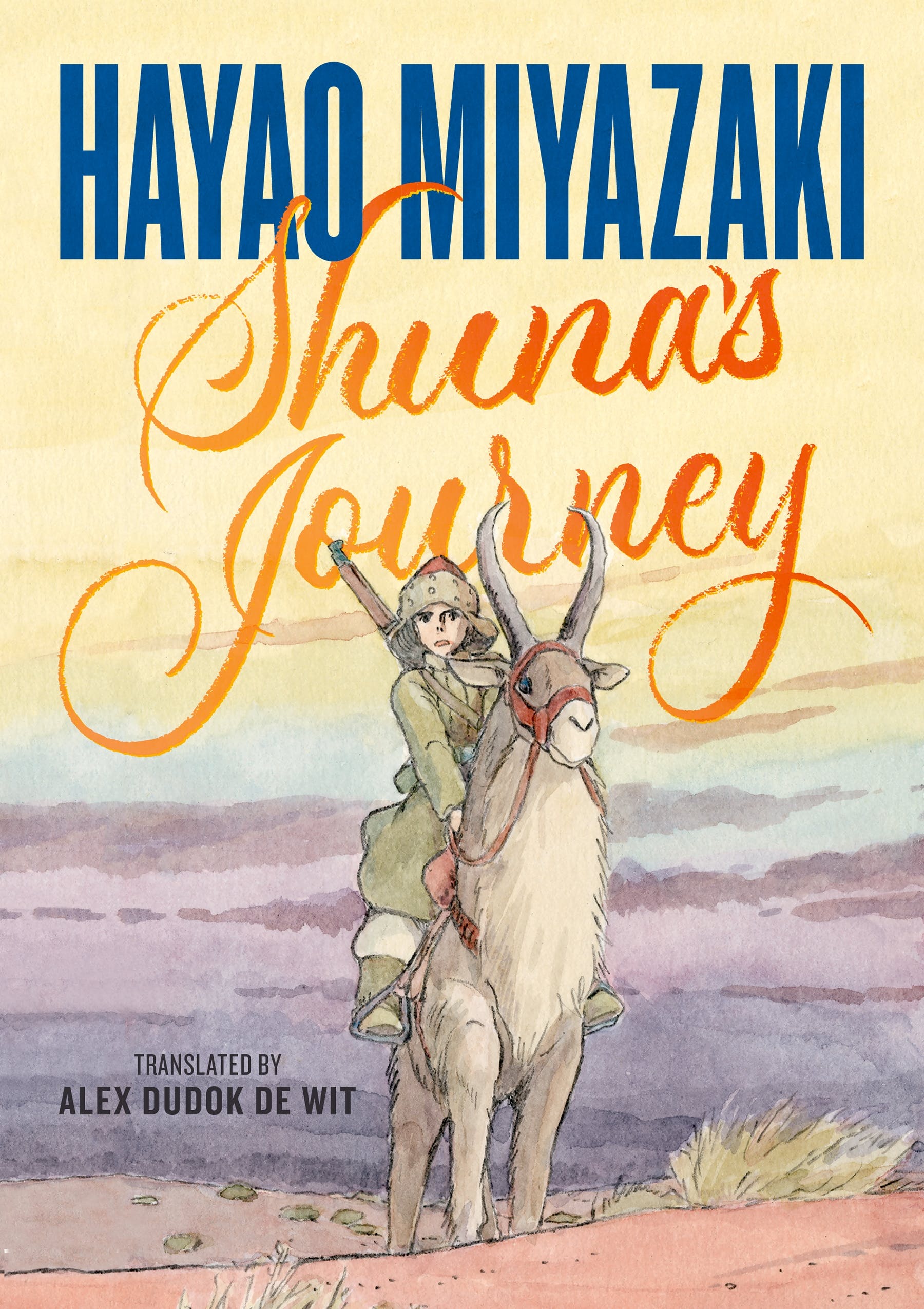
Best New Manga: Shuna’s Journey
By Hayao Miyazaki • Translated by Alex Dudok de Wit • First Second
In this deceptively simple work, Hayao Miyazaki creates a richly detailed world filled with beautiful, strange imagery that invites the reader to contemplate where and when the story takes place without definitively answering those questions. Miyazaki’s hero is just as mysterious as the landscapes he crosses; Shuna’s odyssey is not a journey of self-discovery but a practical quest that, despite its myriad hardships, leaves him fundamentally unchanged. Is a he a folkloric hero or a witness to environmental catastrophe? Miyazaki leaves that question unanswered as well, creating a work that’s more ambiguous and less didactic than Nausicaä of the Valley of the Wind or Princess Mononoke, but similar in its emphasis on the complex relationship between humans and the natural world.

Best Archival Project: Talk to My Back
By Yamada Murasaki • Translated by Ryan Holmberg • Drawn & Quarterly
“For six years now, I’ve never walked at a pace that was mine,” notes Chiharu, the protagonist of Yamada Murasaki’s sharply observed Talk to My Back. First published in the 1980s, Murasaki’s thirty-six vignettes chronicle the small pleasures and intense disappointments of a middle-class Japanese housewife. Through spare linework and judicious use of blank space, Murasaki conveys Chiharu’s quest to define herself outside the role of mother and wife, documenting Chiharu’s anger, frustration, and alienation in a restrained fashion that suggests how stifled and powerless Chiharu often feels. In a thorough, thoughtful companion essay, translator Ryan Holmberg explores Murasaki’s trailblazing role as an alt-manga creator; Murasaki was one of the first women artists to be featured in the pages of COM and Garo magazines, opening the door for creators such as Akino Kondo and Junko Mizuno. Here’s hoping that Drawn & Quarterly decides to publish more of Murasaki’s work in English.

Best New Sci-Fi Manga: Yokohama Kaidashi Kikou
By Hitoshi Ashinano • Translated by Daniel Komen • Adapted by Dawn Davis • Seven Seas
I’m not sure if I would have been as receptive to Yokohama Kaidashi Kikou five or ten years ago, as its low-key depiction of life in the aftermath of an environmental catastrophe might have struck me as hopelessly twee. With the worst of the pandemic behind us, however, I found the series’ emphasis on small, everyday moments more resonant; Hitoshi Ashinano convincingly evokes the rhythm of everyday life in a world of scarcity, minus the Hobbesian emphasis on violent competition. Alpha, the main character, is an android who divides her time between running a small cafe and roaming the coastline on her scooter, photographing the empty roads and submerged towns as well as the small, vibrant communities where people still find time to hold rowdy association meetings and stage elaborate firework displays. Her efforts to document humanity’s final chapter offer a wistful—and hopeful—meditation on what it means to persevere in the face of uncertainty and change.

Best New Romance: Kowloon Generic Romance
By Jun Mayuzuki • Translated by Amanda Haley • Yen Press
The aesthetic of Kowloon Generic Romance is pure 80s manga—think City Hunter or RG Veda—but the story and characters suggest the work of filmmaker Wong Kar-Wai, as Kowloon focuses on an intense but unconsummated flirtation between Reiko, a real estate agent, and Kudou, her brash, horny colleague. Like Kar-Wai, manga-ka Jun Mayuzuki is as enamored of settings as she is of characters, leading the reader on a languid tour of Kowloon’s shopping districts, cafes, back alleys, and apartment blocks, conveying how densely settled this city-within-a-city truly is. Though there are some minor elements of science fiction in play, the main attraction is the artwork and pacing; Mayuzuki devotes an entire chapter to depicting, in rapturous detail, Reiko’s evening ritual of enjoying a cigarette on her flat’s meager balcony, allowing the reader to experience the moment as Reiko does: a brief, wordless respite from the hustle and bustle of Kowloon.

Best New Comedy: Phantom of the Idol
By Hijiki Isoflavone • Translated by Max Greenway • Kodansha
In this delightfully bonkers series, a grumpy male pop star swaps bodies with the ghost of a former teen idol whose discipline and talent help transform Yuya into a charismatic, telegenic performer. The twist? Yuya’s been possessed by Asahi Mogami, a perky girl whose budding career was cut short by a car accident. The physical slapstick takes the humor in some unexpected directions as Asahi navigates the complexities of inhabiting the lazy Yuya’s body, while the dialogue offers plenty of sly pokes at the music industry, as well as some not-so-subtle reminders that pop stardom can be as grueling as it is exhilarating.

Best Manga I Thought I’d Hate: The Men Who Created Gundam
By Hideki Ohwada, Hajime Yatate, and Yoshiyuki Tomino • Translated by Jason Moses • Denpa
Of all the ways you could tell the story of Japan’s most famous robot franchise, it seems only right that Gundam creators Hideki Ohwada and Yoshiyuki Tomino opted for an over-the-top manga that dramatically recreates key moments in the series’ early history. The prevailing tone is reminiscent of a VH-1 Behind the Music special, complete with sudden reversals and last-minute triumphs; every line of dialogue is delivered with the kind of urgency usually reserved for a nuclear crisis, even when the conversation is focused on the more mundane aspects of creating a hit television show. Interspersed among the chapters are brief but useful essays connecting the storylines to real events, offering readers a more nuanced explanation of how Gundam helped the create the template for modern pop-cultural fandoms around the globe.

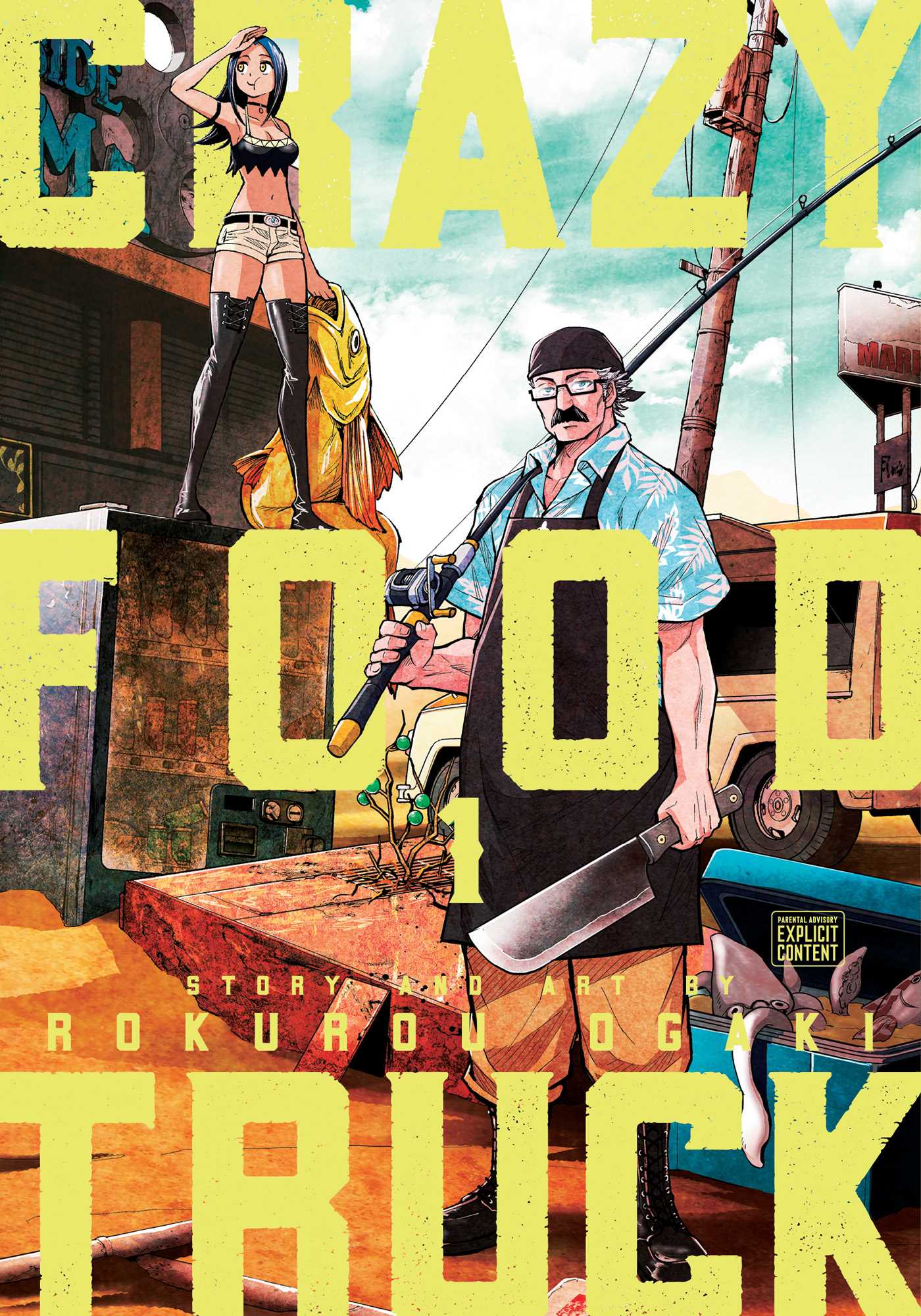
Worst Manga I Thought I’d Love: Crazy Food Truck
By Rokurou Ogaki • Translated by Amanda Haley • VIZ Media
On paper, Crazy Food Truck sounded like a blast, a cross between Mad Max: Fury Road and The Great Food Truck Race. In practice, however, Crazy Food Truck was surprisingly dull, serving up fight sequences as unimaginative as the food its hero serves his few paying customers. The central joke might be funnier if Gordon’s menu was so good that people would risk life and limb for his gourmet sandwiches, but when a BLT with mustard is his signature dish, it seems more like a failure of imagination than a real attempt at humor, especially when creator Rokurou Ogaki frequently reminds us that Gordon has mounted a cannon on top of his truck to ward off bad guys. Gordon’s sidekick Anisa is a one-note character, inserted into the narrative primarily for fan service that’s so indifferently executed it’s hard to muster any outrage over her penchant for nudity. I have no doubt this series rocked some reader’s world, but I found it flavorless. (Reviewed at The Manga Critic on 6/7/22)

Worst Manga I Read in 2022: Rooster Fighter
By Sou Sakuratani • Translated by Jonah Mayahara-Miller • VIZ Media
Rooster Fighter is a disappointment: the premise is too slight to sustain a long series, the script is strenuously unfunny, and the storylines are numbingly predictable. In every chapter, the nameless hero wanders into a new town, antagonizes and befriends the locals in equal measure, then kills a grotesque demon that’s been terrorizing the community. About the only good joke in whole series is how the rooster kills demons; anyone who’s lived on or near a farm will enjoy a rueful laugh or two at the hero’s superpower. Otherwise, this series is a total Cock-a-Doodle-Don’t. (Reviewed at Manga Bookshelf on 8/16/22)

Filed Under: Manga, Manga Critic, Recommended Reading, REVIEWS Tagged With: Bad Manga, BEST MANGA, Denpa Books, Drawn & Quarterly, First Second, Gundam, Hayao Miyazaki, Hijiki Isoflavone, Hitoshi Ashinano, Jun Mayuzuki, Kodansha Comics, Seven Seas, Yamada Murasaki, yen press

The Manga Review, 9/16/22

September 16, 2022 by Katherine Dacey 1 Comment

In an essay for The Nation, author Viken Berberian explains how manga became one of the world’s favorite forms of entertainment. He notes that in 2021, “manga made up 76.1 percent of overall graphic novel sales in the adult fiction category in the United States,” and almost a quarter of the overall French book market. And while I might quibble with some of his historical points–Moto Hagio is clearly a pioneer, but not “the mother of shojo manga”–my bigger concern about the article is tone. There’s a strong undercurrent of condescension in his prose, as he bemoans the fact his tweenage sons would rather read Jujutsu Kaisen than The Metamorphosis, and reassures the reader that “the hegemony of manga” has not “come at the expense of highbrow comics that wrestle with thorny autobiographical and political issues.” Though he ultimately acknowledges the power of manga to tell compelling stories, his praise for Shigeru Mizuki’s Onwards Toward Our Noble Deaths feels tepid at best. Caveat lector!
NEWS

Conceptual artist Ilan Manouach just unveiled his latest project: a limited edition “book” that collects all 21,450 pages of One Piece. The press release for ONEPIECE suggests the work will encourage “artists to think [about] comics in different scales and temporalities,” though they’ll need a cool $2,000 to acquire their own copy. [The Beat]

In licensing news, Yen Press will be releasing Mokumokuren’s horror series The Summer Hikaru Died. No release date has been announced. [Anime News Network]

Also making licensing news is Seven Seas, which added My New Life as a Cat, Cinderella Closet, and Soloist in a Cage to its spring 2023 line-up. [Seven Seas]

If you’re planning to attend NYCC this year, bring a mask. [ICv2]

Brigid Alverson sifts through the August 2022 NPD Bookscan numbers, and observes that “the manga chart is very driven by new releases, much more so than the others, and you can see it here with the newest volume of Jujutsu Kaisen at the top. Altogether there are eight August 2022 releases on the chart, all new volumes in ongoing series, plus a handful of first and second volumes.” [ICv2]

FEATURES, PODCASTS, AND INTERVIEWS

Scholar Eike Exner, author of Comics and the Origins of Manga: A Revisionist History, offers a thoughtful re-appraisal of the Euro-American influence on manga. “Comics historiography is plagued by two fundamental misunderstandings regarding the history and nature of the medium,” he argues. “The first is the notion that comics in different countries are best understood through the lens of the nation, as the offspring of individual national traditions. The second is the idea that comics are the result of a gradual ‘integration of text and image’ culminating in the combination of both in a single image space (the panel).” [The Comics Journal]

Cami traces the development of Italy’s small but dedicated BL fandom. [Anime Herald]

Here’s something with licensing potential: EVOL, “an anti-superhero book that is definitely reminiscent of The Boys,” with “fast and bold” pacing “like an action-packed capes comic, but coming from the other side of the equation.” [Brain vs. Book]

In the latest episode of Shojo & Tell, Ashley and Asher tackle one of CLAMP’s most controversial series: Chobits. [Shojo & Tell]

One of the most talked-about pieces of the week was Colleen’s “Misogyny in the Manga Community,” which delves into the long history of sexism in manga fandom:

Yui Kashima interviews Fumi Yoshinaga about how she got started in comics. “I think it was when I was in my third year of college,” Yoshinaga recalls. “A friend recommended me to read SLAM DUNK, and when I saw Kogure and Mitsui, I just came up with the idea of making their story (laugh). I couldn’t stay away from that idea and decided to publish a doujinshi.” And the rest, as they say, is history. [Tokion]

REVIEWS

In this week’s must-read reviews, Erica Friedman and Johanna Draper Carlson explain why you should be reading Yokohama Kaidashi Kikou. “The dialogue is simple, the scenarios are wholly about experiencing and feeling,” Friedman notes. “There is no plot here. Just have a seat and a cup of coffee and watch the grass. At the end of the world, that’s all that’s left, anyway.” Draper Carlson expresses similar sentiments: “The appeal of this series is twofold: lovely art and an acceptance of the joy of existence… It’s very Japanese in tone, but it also evokes Walden: the idea that a return to nature is soul-cleansing, and that small, everyday events are worth capturing.”

You’ll also find brief reviews at Women Write About Comics, where Masha Zhdanova critiques three new releases from VIZ, and at Beneath the Tangles, where the gang reviews a mixture of new and ongoing titles.

New and Noteworthy

  • A Life Turned Upside Down: My Dad’s an Alcoholic (A Library Girl’s Familiar Diversions)
  • Chainsaw Man, Vol. 1 (A Library Girl’s Familiar Diversions)
  • Look Back (Danica Davidson, Otaku USA)
  • Look Back (Josh Piedra, The Outerhaven)
  • The Men Who Created Gundam (Ollie Barder, Forbes)
  • My Happy Marriage, Vol. 1 (darkstorm, Anime UK News)
  • My Happy Marriage, Vol. 1 (A Library Girl’s Familiar Diversions)
  • My Maid, Miss Kishi, Vol. 1 (King Baby Duck, Boston Bastard Brigade)
  • One-Sided Love Paradise, Vol. 1 (Krystallina, Daiyamanga)
  • World End Solte, Vol. 1 (Al’s Manga Blog)
  • Young, Alive and In Love, Vol. 1 (Danica Davidson, Otaku USA)

Ongoing and Complete Series

  • Blue Period, Vols. 6-7 (Helen, The OASG)
  • The Great Jahy Will Not Be Defeated!, Vol. 3 (Justin, The OASG)
  • Haganai: I Don’t Have Many Friends (Megan D. The Manga Test Drive)
  • Jujutsu Kaiden, Vols. 16-17 (King Baby Duck, Boston Bastard Brigade)
  • Kurosagi Corpse Delivery Service Omnibus, Vol. 5 (James Hepplewhite, Bleeding Cool)
  • La Magnifique Grande Scène (Krystallina, Daiyamanga)
  • Lost Lad London, Vol. 2 (Sarah, Anime UK News)
  • Love and Heart, Vol. 5 (Josh Piedra, The Outerhaven)
  • Spy x Family, Vol. 8 (Josh Piedra, The Outerhaven)
  • Summertime Rendering, Vol. 3 (Helen, The OASG)
  • Welcome Back, Alice, Vol. 3 (Demelza, Anime UK News)

Filed Under: FEATURES Tagged With: BL, clamp, fumi yoshinaga, Manga Sales, NYCC, One Piece, Seven Seas, yen press

The Manga Review, 7/15/22

July 15, 2022 by Katherine Dacey Leave a Comment

Do you know about Azuki? This year-old company is working hard to make it easy for you to read your favorite manga on a phone, tablet, or laptop. Founded by a quartet of manga enthusiasts, Azuki currently offers a variety of titles from Kodansha as well as smaller publishers such as Glacier Bay Books, Kaiten Books, Star Fruit Books, and SOZO Comics. Best of all, it’s free to get started; all you need is a little patience with pop-up advertisements. Folks who want ad-free, unlimited access to Azuki’s growing library can sign up for a monthly membership that costs about the same as a grande Frappucino.

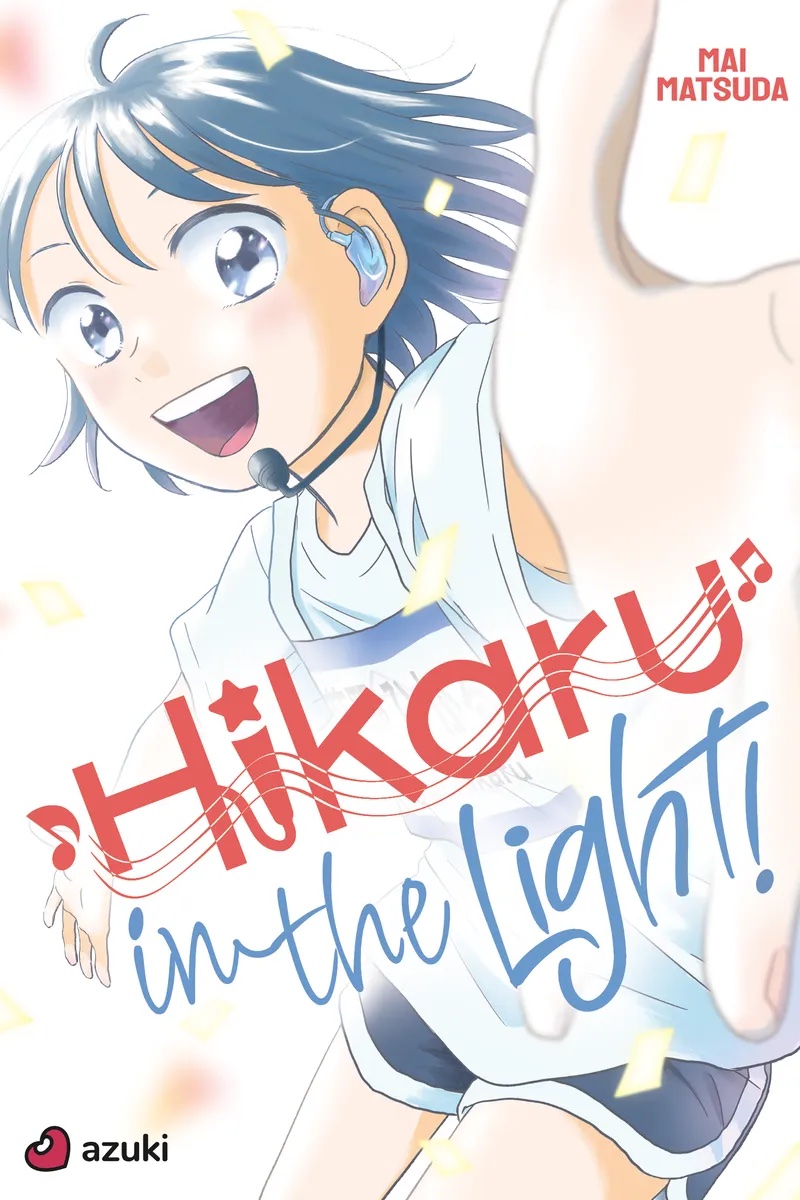
Wondering what to read? I highly recommend Pop Life, a short series about two single mothers who create their own blended family. In a 2020 review, Morgana Santilli praised Pop Life for being a “gentle, down-to-earth manga, happy and meandering. It takes women thrown into a difficult situation, one that is likely a blow to their self-confidence and ideas of self-sufficiency, and proves that they can overcome hardship by helping each other.” For younger readers, Hikaru in the Light! is great choice, offering tweens a first-hand look at what it takes to become an idol. The series is refreshingly honest about how cutthroat the music industry is, and how much hard, unglamorous work goes into being a popular entertainer. Hikaru is a little too tame for the 13+ set—how ya gonna keep ’em down on the farm when they’ve read Hot Gimmick?—but for kids in grades 5-7, it’s just right. (Special thanks to Azuki for sending me a review copy!)

NEWS

Love Hina creator Ken Akamatsu will be joining Japan’s House of Councillors (the upper chamber of the Japanese Diet) this summer. Akamatsu has been an outspoken critic of proposed changes to Japanese copyright law, as well as a critic of various anti-pornography measures. [Anime News Network]

ICv2 just published its quarterly list of the Top Manga Franchises. Not surprisingly, Demon Slayer, Chainsaw Man, and Spy x Family made the cut, as did perennial favorites Attack on Titan and My Hero Academia. [ICv2]

At its Anime Expo panel, Yen Press unveiled an extensive list of new acquisitions including Your Forma, Kakifly, Honey Lemon Soda, and Doomsday with My Dog. [Yen Press]

In other licensing news, Azuki announced that it would be adding three new titles to its catalog: Turning the Tables on the Seatmate Killer!, a romantic comedy; My Dear Detective: Mitsuko’s Case Files, a Taisho-era mystery; and Invisible Parade, a short-story collection by MISSISSIPPI. [Azuki]

Jennifer De Guzman offers an in-depth look at Tuttle Publishing’s efforts to bring Filipino komiks to American readers. Over the next four months, Tuttle will publish seven graphic novels by Filipino creators, from Arnold Arre’s The Mythology Class, “a foundational work of contemporary Filipino comics ,” to The Lost Journal of Alejandro Pardo, a collaborative work that focuses on the “dark creatures of Phillipine mythology.” [Publishers Weekly]

FEATURES AND PODCASTS

Over at The Comics Journal, readers can preview the third volume of of Glaeolia, “a curated variety of compelling, stylistically varied, and completely self-contained (at least, so far) works, many from artists that have never before had their work read or published outside of Japan and their local small press scene… Glaeolia 3 contains stories reacting to very contemporary circumstances such as the early pandemic regulations and BLM protests or unexpected pregnancy, SF-tinged comics in uncertain worlds, surreal dramas about grief, coming of age, love, and beyond.”  [The Comics Journal]

Also worth a look: Sean McTiernan’s lengthy essay on the weird beauty of Taiyo Matsumoto’s No. 5. [The Comics Journal]

Ashley and Dee discuss The Story of Saiunkoku, “a semi-supernatural, extremely feminist manga adaptation of a light novel series” set in a fictionalized version of Ming Dynasty China. [Shojo & Tell]

Elliot and Andy devote the latest episode of Screentone Club to Ciguatera and Sensei’s Pious Lie. [Screentone Club]

This week’s Mangasplaining podcast focuses on Hiroki Endo’s All-Rounder Meguru, a manga about two childhood friends who become bitter rivals in the world of mixed martial arts. [Mangasplaining]

REVIEWS

Manga Librarian Ashley Hawkins is pleasantly surprised by the first volume of Yashahime: Princess Half-Demon. “I expected this manga to be bad,” she notes. “But what this manga does is that it basically takes the character designs and essential threads of the show, and fixes a lot of the problems with the anime.” Writing for No Flying No Tights, fellow librarian Adam gives Samurai Deadpool mixed marks, observing that “this particular book makes a very odd choice: it takes an incredibly simple story that would be a great entry point for newer/younger readers and then adds just enough violent gore to make this book inaccessible to that age group.”

At Women Write About Comics, Masha Zhdanova posts brief reviews of Kaiju No. 8, My Love Mix-Up!, and Devil’s Candy, while the Beneath the Tangles crew weigh in on the latest volumes of Frieren: Beyond Journey’s End, Penguin & House, and A Silent Voice.

  • The Apocathecary Diaries, Vol. 5 (Helen and Krystallina, The OASG)
  • Beauty and the Feast, Vol. 3 (Krystallina, The OASG)
  • Black Butler, Vol. 31 (Krystallina, The OASG)
  • Catch These Hands!, Vol. 2 (Erica Friedman, Okazu)
  • Don’t Toy With Me, Miss Nagatoro, Vol. 10 (King Baby Duck, Boston Bastard Brigade)
  • The Great Jahy Will Not Be Defeated!, Vol. 3 (Demelza, Anime UK News)
  • Hinowa ga CRUSH!, Vol. 6 (Richard Gutierrez, The Fandom Post)
  • The Holy Grail of Eris, Vol. 1 (Krystallina, The OASG)
  • I Want to Be a Wall, Vol. 1 (Library Girl, A Library Girl’s Familiar Diversions)
  • Kubo Won’t Let Me Be Invisible, Vol. 2 (Jos Piedra, The Outerhaven)
  • Lost Lad London, Vol. 1 (Rebecca Silverman, Anime News Network)
  • Maniac Road (Megan D. The Manga Test Drive)
  • Mieruku-chan, Vol. 5 (Justin, The OASG)
  • MonsTABOO, Vol. 1 (Rebecca Silverman, Anime News Network)
  • Murciélago, Vols. 18-19 (Erica Friedman, Okazu)
  • The Music of Marie (Helen Chazan, The Comics Journal)
  • The Music of Marie (Jeff Provine, Blog Critics)
  • My Isekai Life: I Gained a Second Character Class and Became the Strongest Sage in the World!, Vol. 2 (Demelza, Anime UK News)
  • My Next Life As a Villainess Side Story: Girls Patch (Erica Friedman, Okazu)
  • Orient, Vol. 6 (Onosume, Anime UK News)
  • Otaku Elf (Megan D., The Manga Test Drive)
  • Soul Eater: Perfect Edition, Vol. 7 (Krystallina, The OASG)
  • Talk To My Back (Ashley Hawkins, Manga Librarian)
  • Talk to My Back (Jeff Provine, Blog Critics)
  • Welcome Back, Alice, Vol. 2 (Demelza, Anime UK News)
  • The Witch and the Beast, Vol. 8 (Sarah, Anime UK News)
  • Yuri Espoir, Vol. 2 (Matt Marcus, Okazu)

Filed Under: FEATURES Tagged With: Akiko Higashimura, Azuki, Glacier Bay Books, Kaiten Books, komiks, SOZO Comics, Star Fruit Books, Taiyo Matsumoto, Tuttle, yen press

The Manga Review, 6/17/22

June 17, 2022 by Katherine Dacey Leave a Comment

Big news from Yen Press: the publisher is launching IZE Press, a new imprint dedicated to Korean webnovels and webtoons. The imprint will debut this fall with three series created by HYBE and global pop stars BTS, as well as six additional titles: Tomb Raider King, The World After the Fall, The Boxer, My Gently Raised Beast, The Remarried Empress, and Villains Are Destined to Die. Explains JuYoun Lee, the Deputy Publisher and Editor-in-Chief of Yen Press, “we couldn’t be more excited to get a chance to really open up the doors to put these beautiful books in the hands of English-language readers.” I’m still a little salty that the original manhwa boom went bust–remember Dokebi Bride or Goong?–but optimistic that the current market will be more receptive to Korean comics.

NEWS

Are you looking for a job in the publishing field? Yen Press is currently advertising a range of editorial, marketing, and accounting positions. [Yen Press]

The May NPD Bookscan numbers are in, and manga made a strong showing on the Top 20 Author Graphic Novels chart , with volumes of Solo Leveling occupying four of six top slots. Spy x Family continues to dominate the Top 20 Manga chart, though Death Note Short Stories and Toilet-Bound Hanako-kun also posted strong sales. [ICv2]

Justin Lin–best known for his work on the Fast & Furious franchise–has been hired to direct a live-action adaptation of One-Punch Man. [Deadline]

FEATURES, INTERVIEWS, AND PODCASTS

In honor of Pride Month, Latonya Pennington has posted a thoughtful exploration of the last 100 years of queer representation in manga. “A hundred years after the debut of the first yuri novel and twenty years after the publication of Wandering Son, LGBTQ+ manga has greatly matured in terms of their creators, content, and its subgenres,” she notes. “When it comes to manga with transgender characters and themes, there are more options than ever before… On the yuri and yaoi side of manga, both subgenres have moved beyond the teenaged schoolyard romances that were present at the genre’s inception. There are not only gay and lesbian manga featuring adult main characters, but also manga in different fictional genres.” [Popverse]

What LBGTQ+ manga would you like to see adapted into an anime? [Anime Feminist]

And speaking of queer manga, Kory, Helen, and Apryll discuss the merits of two recent titles: BL Fans LOVE My Brother?!, a done-in-one story from Tokyopop, and Even Though We’re Adults, an ongoing yuri series published by Seven Seas. [The Taiiku Podcast]

The latest Manga Machinations episode looks at 10 Dance, Classmates, and Ruri Dragon. [Manga Machinations]

Ashley and Asher investigate Flower in a Storm, a short romantic comedy about a super-rich boy and a headstrong girl. [Shojo & Tell]

The gang at Honey’s Anime compile a list of manga that they didn’t see through to the end. [Honey’s Anime]

Brigid Alverson interviews Seven Seas’ Lianne Sentar and Lissa Pattillo about the challenges and rewards of bringing Asian webtoons to the US market. “I think a huge factor is the convenience of the format,” they note. “Do you have a smartphone and an Internet connection? Here: endless comics to scroll through (discreetly!) during your lunch break, wherever you are. If you look at Asian markets like Japan and Korea, there’s a huge audience of people reading comics on their phones while commuting in public transit like trains. I think newer generations in particular are adding comic reading to the many other leisure activities they do on their phone, and in North America, the boom in Middle Grade comics over the last 5-10 years has seeded millions of new readers who are comfortable reading long-form, sequential comics the way they would ingest other media (prose, TV, etc.).” [ICv2]

REVIEWS

Over at Anime UK News, Sarah posts a glowing review of Gengoroh Tagame’s Our Colors, while No Flying No Tights declares Junji Ito’s Deserter a mixed bag. “That’s not to say this is a bad collection, but Ito has such wonderfully scary other pieces that many in this volume fell flat for me,” Kris notes. The latest Reader’s Corner is up at Beneath the Tangles, with brief reviews of Alice in Borderland, Golden Gold, and To Strip the Flesh.

  • Adachi and Shimamura, Vol. 3 (Jaime, Yuri Stargirl)
  • Aria The Masterpiece, Vol. 1 (HWR, Anime UK News)
  • Cat + Gamer, Vol. 1 (Justin, The OASG)
  • Chainsaw Man, Vol. 11 (Josh Piedra, The Outerhaven)
  • Crazy Food Truck, Vol. 1 (Christopher Farris, Anime News Network)
  • Creature! (Krystallina, Daiyamanga)
  • Ghost Reaper Girl, Vol. 1 (Dallas Marshall, CBR)
  • Hard-Boiled Cop & Dolphin, Vols. 2-3 (King Baby Duck, Boston Bastard Brigade)
  • Heterogenia Linguistico, Vol. 1 (Jennifer, No Flying No Tights)
  • I Think Our Son Is Gay, Vols. 1-2 (Andy Oliver, Broken Frontier)
  • I Want to Be a Wall, Vol. 1 (Josh Piedra, The Outerhaven)
  • Ima Koi: Now I’m In Love, Vol. 2 (Rebecca Silverman, Anime News Network)
  • Jujutsu Kaisen, Vol. 16 (Marina Z., But Why Tho?)
  • Lost Lad London, Vol. 1 (Kevin Rodriguez, The Fandom Post)
  • Mashle: Magic and Muscles, Vols. 5-6 (King Baby Duck, Boston Bastard Brigade)
  • The Masterful Cat Is Depressed Again, Today, Vol. 3 (Johanna Draper Carlson, Comics Worth Reading)
  • My Dress-Up Darling, Vol. 1 (SKJAM, SKJAM! Reviews)
  • My Love Mix-Up, Vol. 4 (Kate Sánchez, But Why Tho?)
  • Nightfall Travelers: Leave Only Footprints, Vol. 1 (Al, Al’s Manga Blog)
  • Reign of the Seven Spellblades, Vol. 5 (Antonio Mireles, The Fandom Post)
  • Run on Your New Legs, Vol. 1 (Rebecca Silverman, Anime News Network)
  • Something’s Wrong With Us, Vol. 1 (Kaley Connell, Yatta-Tachi)
  • Something’s Wrong With Us, Vols. 7-8 (Demelza, Anime UK News)
  • Summertime Rendering, Vols. 1-2 (Helen Chazan, The Comics Journal)
  • That Time I Got Reincarnated as a Slime: The Ways of the Monster Nation, Vol. 7 (Josh Piedra, The Outerhaven)
  • Total Eclipse of the Eternal Heart (Megan D., The Manga Test Drive)
  • What Did You Eat Yesterday?, Vol. 18 (Johanna Draper Carlson, Comics Worth Reading)
  • Wotakoi: Love Is Hard for Otaku, Vol. 6 (Johanna Draper Carlson, Comics Worth Reading)
  • Yashahime: Princess Half-Demon, Vol. 1 (Nick Smith, ICv2)

Filed Under: FEATURES Tagged With: LBGTQ Manga, Manga Industry Jobs, Manga Sales Analysis, manhwa, one punch man, Seven Seas, Shojo & Tell, webtoons, yen press

The Manga Review, 5/13/22

May 13, 2022 by Katherine Dacey Leave a Comment

April sales figures are in, and manga continues to dominate the NPD Adult Graphic Novels list. Though the list includes some perennial favorites–Berserk, Demon Slayer, My Hero Academia—Spy x Family saw a big jump in sales after its anime debuted on Crunchyroll last month. ICv2’s Brigid Alverson points out that  “April marks the fourth consecutive month that manga has completely filled the chart of the top 20 Adult graphic novels in the book channel.” Manga sales aren’t quite as robust in comic book stores, but three titles made ComicsHub’s Top 20 Graphic Novels for April: Chainsaw Man (4), Kaiju No. 8 (16), and Spy x Family (20). For additional insights into the current state of the manga, check our Madeline Dunnett’s recent post at Anime News Network.

MANGA NEWS

Kodansha just announced the winners of its 46th annual Manga Awards. [Anime News Network]

With less than three weeks to go, Sam Sattin and Guruhiru’s Kickstarter campaign for Unico: Awakening has exceeded its pledge goal of $50,000. The story is “an homage to the God of Manga’s original messaging of social welfare and eco-consciousness.” [Kickstarter]

Good news for Moto Hagio fans: Fantagraphics will be re-printing the first volume of The Poe Clan this summer. While there’s no official release date for the new edition, the long-awaited second volume will be released on July 26, 2022. [Fantagraphics]

Drawn and Quarterly will be publishing Nejishiki, an anthology of short stories by Yoshiharu Tsuge. Look for it in stores in April 2023. [Drawn and Quarterly]

Earlier this week, Yen Press announced that it will publish Sho Harusono’s Hirano and Kaguira, a spin-off of Sasaki and Miyano. [Yen Press]

Brace yourself: Seven Seas just announced even more new manga licenses! Among the most promising are Polar Bear Café: Collector’s Edition and Ex-Yakuza and Stray Kitten, which is pretty much what it sounds like: a former mobster indulges his softer side by rescuing a cat from the streets. [Seven Seas]

Over at The OASG, Justin and Helen round up the latest anime, manga, and licensing news. [The OASG Podcast]

FEATURES AND INTERVIEWS

Patricia Thang takes issue with the marketing label “manga-inspired,” arguing that “To call a comic ‘manga-inspired’ is akin to me saying, ‘Here’s a painting I did! It’s art-inspired! You’d think (or at least hope) I was joking, right? Because what in the fuck would that even mean?!” [Book Riot]

On the most recent Manga in Your Ears podcast, Kory, Helen, and Apryl dissect two manga by Naoki Urasawa: Sneeze, a short story anthology, and Asadora!, his latest series. [Manga in Your Ears]

Andy and Elliot dedicate the latest episode of the Screentone Club to City Hunter and Goodbye-Eri. [Screentone Club]

Walt Richardson and Emily Myers review the April issue of Shonen Jump. [Multiversity Comics]

The Mangasplainers turn their attention to Kakegurui: Compulsive Gambler, “the smash hit seinen manga that pits trust-fund-teens against one another in battles that cause embarrassment and ecstasy, skirting the line between schadenfreude and sadism!” [Mangasplaining]

As the spring anime season kicks into gear, Silvana Reyes Lopez recommends fifteen “unmissable” manga adaptations, from Chainsaw Man to Kakegurui Twin. [Book Riot]

Wondering what to read after Black Clover wraps up later this year? Christian Markle has a few recommendations. [Honey’s Anime]

Brianna Lawrence argues that Death Note Short Stories is more than just a sequel or a companion to the original series; it’s a thoughtful exploration of “how the government would react if such a terrifying weapon was available.” [The Mary Sue]

In an interview with TCJ’s Alex Deuben, Ken Niimura discusses his latest work, Never Open It: The Taboo Trilogy, which re-tells three of Japan’s most famous folk tales. “What I like about these stories… is that they’re pretty open ended,” Niimura explains. “They can be interpreted in many different ways. For example, there’s what’s considered to be the standard version of ‘The Crane Wife,’ but there are actually different versions depending on the region, the era, with many differences to the characters, the ending, etc…” [The Comics Journal]

REVIEWS

Readers in search of “hallucinogenic” stories might want to check out Keiichi Koike’s Heaven’s Door: Extra Works. “In some of these stories, the scale is pure Akira, but the detail and fluidness of the line are absolutely Moebius,” reviewer James Hepplewhite opines. Speaking of over-the-top manga, Megan D. revisits one of the most ludicrous series Tokyopop ever published: The Qwaser of Stigmata. (No, really; this manga goes to eleven.)

  • After School!, Vols. 1-2 (Krystallina, Daiyamanga)
  • Apollo’s Song (SKJAM, SKJAM! Reviews)
  • A Bride’s Story, Vol. 13 (Sakura Aries, The Fandom Post)
  • Bungo Stray Dogs Wan!, Vol. 1 (Rebecca Silverman, Anime News Network)
  • A Centaur’s Life (Megan D., The Manga Test Drive)
  • Dead Mount Death Play, Vol. 7 (Josh Piedra, The Outerhaven)
  • Death Note Short Stories (Joseph Luster, Otaku USA)
  • Death Note Short Stories (Kate Sánchez, But Why Tho?)
  • Dissolving Classroom (King Baby Duck, Boston Bastard Brigade)
  • Dr. STONE, Vol. 21 (Marina Z., But Why Tho?)
  • Eclair Bleue, Eclair Rouge, and Eclair Orange (Jaime, Yuri Stargirl)
  • Hinowa ga CRUSH!, Vol. 6 (Josh Piedra, The Outerhaven)
  • Hinowa ga CRUSH!, Vol. 6 (Krystallina, The OASG)
  • I Want to Be a Wall, Vol. 1 (Danica Davidson, Otaku USA)
  • Little Miss P: The Fourth Day (Demelza, Anime UK News)
  • Love of Kill, Vol. 7 (Krystallina, The OASG)
  • Made in Abyss (Harry, Honey’s Anime)
  • Magic Artisan Dahlia Wilts No More, Vol. 1 (Justin, The OASG)
  • The Magical Revolution of the Reincarnated Princess and the Genius Young Lady, Vol. 1 (Sakura Eries, The Fandom Post)
  • Marionette Generation (Megan D., The Manga Test Drive)
  • Moriarty the Patriot, Vols. 6-7 (King Baby Duck, The Boston Bastard Brigade)
  • The Music of Marie (Krystallina, Daiyamanga)
  • Our Colors (Publisher’s Weekly)
  • Our Teachers Are Dating, Vol. 4 (Erica Friedman, Okazu)
  • Our Teachers Are Dating, Vol. 4 (Jaime, Yuri Stargirl)
  • The Royal Tutor, Vol. 16 (Sakura Eries, The Fandom Post)
  • Seimaiden (Megan D., The Manga Test Drive)
  • Spy x Family, Vol. 7 (Rebecca Silverman, Anime News Network)
  • The Transcendent One-Sided Love of Yoshida the Catch, Vol. 1 (Rebecca Silverman, Anime News Network)
  • Walkin’ Butterfly (Megan D., The Manga Test Drive)

Filed Under: FEATURES Tagged With: death note, Drawn and Quarterly, Fantagraphics Books, Manga Sales Analysis, moto hagio, Naoki Urasawa, Osamu Tezuka, Seven Seas, Shonen Jump, The Poe Clan, Unico, yen press

Days on Fes, Vol. 1

April 9, 2021 by Katherine Dacey

Like many Gen-Xers, I cut my musical teeth at rock concerts. I didn’t have much experience going to festivals—they were rare in the 1980s—but I did catch the first Lollapalooza tour as it passed through the Boston area in 1991. My memories of that day are impressionistic; it was hot, dirty, and loud, and I considered leaving when I learned that Siouxsie and the Banshees had cancelled their appearance. I’m glad I didn’t, though, as the festival helped expand my musical horizons, introducing me to the sound of rap-metal and the Rollins Band, and reminding me just how phenomenal Living Colour was. Reading Days on Fes reminded me of that formative experience, though not in the way I’d expected. I imagined that a manga about rock festivals would focus on the music, but Days on Fes is equally concerned with food stalls, merch, and concert-going logistics, even dedicating one chapter to finding the perfect campsite at an outdoor festival.

The first volume follows two characters: Otoha, a goofy high school student, and Gaku, her thirty-something brother. In the first half of the book, Otoha persuades her classmate Kanade to attend the Meteorock Festival with her, while in the second Gaku drags his Eeyore-esque employee Ritsuru to the Fries & Sushi Festival. Both siblings face predictable hurdles in getting to the venue, from lack of interest—Kanade confesses that she doesn’t like rock—to lack of funds—Ritsuru bemoans the fact that he’s too poor to afford a ticket. Once at the festivals, however, both Kanade and Ritsuru succumb to the excitement of eating good food, wandering the grounds, drinking beer, sleeping under the stars, and—yes—hearing some concerts.

The most satisfying passages in volume one focus on getting ready for a festival. Oka vividly captures the feeling of pre-concert anticipation, carefully documenting the small but important rituals that festival-goers observe, from picking out an outfit to deciding what to bring; he even includes a two-page spread detailing the contents of Kanade and Otoha’s backpacks. Though this illustration serves a legitimate educational purpose, showing the festival n00b what they’ll need—suncreen, snacks—it also speaks volumes about the two girls’ personalities and expectations for the festival itself. Less satisfying are the performances. Oka relies on reaction shots and close-ups of musicians’ faces to convey the excitement of hearing live music, but the blandness of the illustrations undercuts the efficacy of this time-honored strategy for showing what can’t be heard: whoops, claps, whistles, boos, sing-alongs. The dialogue provides the only clue that these performances were good; characters spend more time talking and thinking about how the music effects them then they do listening to music.

For anyone old enough to remember the original Lollapalooza tour, the contrast between the lackluster performance scenes and the rhapsodic discussions of festival foods may be jarring; it often feels like Oka has channeled too much energy into depicting the things you can buy and do at a festival rather than what you might hear. For younger readers, however, Days on Fes offers a safe but tantalizing glimpse of what it might be like to attend Coachella or Bonnaroo, as well as a down-to-earth reminder that festivals are an expensive habit—a message that’s sure to be music to parents’ ears.

DAYS ON FES, VOL. 1 • ART AND STORY BY KANAKO OKA • TRANSLATED BY AJANI OLOYE • LETTERING BY ALEXIS ECKERMAN • YEN PRESS • RATED TEEN • 208 pp.

Filed Under: Manga, Manga Critic, REVIEWS Tagged With: Musical Manga, Rock, yen press

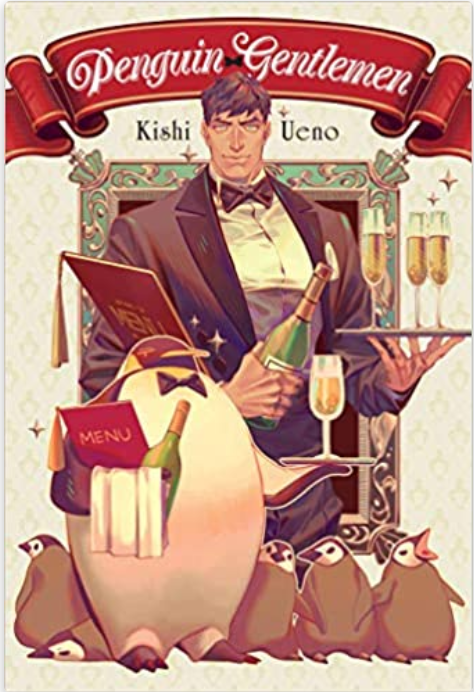
Penguin Gentlemen

April 7, 2021 by Anna N

Penguin Gentlemen by Kishi Ueno

The premise of this manga – penguins who happen to run a cafe where they are all very buff men wearing tuxedos – seemed so ridiculous I couldn’t help wanting to check it out. This single volume manga certainly gets the deluxe treatment, with a hardcover edition and plenty of color pages. Now and then I really enjoy a didactic manga, and that’s what Ueno delivers. I was a little disappointed that there wasn’t more of a storyline focusing on penguin cafe work, because I enjoy a good food manga as well, but for readers who want to dramatically up their knowledge of penguin behavior, species variants, and random facts about penguin habitats this is the book for you!

Penguin Gentlemen

The character designs are one of the most amusing aspects of the book, as Ueno showcases differences in penguin markings and size into the hair styles and tuxedo uniforms of all the waiters. The main boss of the cafe is the King penguin, who is dwarfed in size by the stoic Emperor penguin who looms over everyone. The penguin gentlemen discuss their characteristics in the setting of the cafe, with plenty of comedic bits. The characters switch back and forth often between their anthropomorphic human forms and their natural states as penguins, but Ueno is great at rendering the heightened emotions of the characters even when they are in bird form. I read this book in several sittings, simply because I was not able to absorb all the information about penguin egg hatching, body language, and markings without a break here and there. The last section of the book that focuses on penguin courtship rituals is particularly hilarious. If someone wants to learn many scientific facts about penguins and be entertained along the way, Penguin Gentlemen certainly delivers.

Filed Under: Manga Reviews, REVIEWS Tagged With: penguin gentlemen, yen press

King of Eden, Vol. 1

November 11, 2020 by Katherine Dacey

Is it too soon to enjoy a pandemic-themed manga? That question was foremost in my mind as I read King of Eden, a new thriller that pits a group of globe-trotting scientists against an assortment of terrorist organizations that have weaponized a lethal virus. I’m happy to report that King of Eden didn’t remind me of the COVID crisis, but it did something arguably worse: it bored me.

The dullness of the story is all the more surprising for a series written by Takashi Nagasaki, Naoki Urasawa’s collaborator on such entertaining pot-boilers as Monster, Master Keaton, and 20th Century Boys. All of Nagasaki’s worst tendencies are on display in King of Eden: there are pointless flashbacks to the main characters’ childhoods, solemn monologues about the Old Testament, long-winded conversations about global terrorism, and an interminable lecture on the ancient Scythians that name-checks Herodotus because… why not? Though the first volume introduces a dizzying number of characters, Nagasaki barely fleshes them out. Even leads Rua Itsuki and Teze Yoo feel more like skill sets than actual people, as evidenced by an on-the-nose exchange in which a bureaucrat recites Dr. Itsuki’s resume and reminds her that she “hold[s] a black belt in Tae Kwon Do” and is “proficient in the Israeli martial art of Krav Maga” as if she didn’t know these things about herself.

None of this would matter, of course, if King of Eden were entertaining, but Nagasaki is so intent on world-building that he overwhelms the reader with information, all delivered in such earnest, exhaustive detail it saps the narrative momentum. Itsuki and Yoo cross paths with MI-6 agents, WHO officials, IRA terrorists, crazy archaeologists, Interpol officers, and zombies—ZOMBIES, for Pete’s sake!—yet none of these encounters are memorable. Had Nagasaki placed more trust in artist SangCheol Lee (a.k.a. Ignito), King of Eden might have been a brisker, more imaginative entry in the zombie canon.

The first chapter offers a tantalizing glimpse of that potential partnership. Gone are the long-winded speeches; instead, Lee drops the reader into the action alongside two police officers who stumble across a baffling, gruesome scene. After the officers arrest a potential suspect, Lee skillfully cross-cuts between two spaces at the local precinct—an interrogation room and the morgue—allowing us to glimpse what’s unfolding in each room, and to feel the policemen’s growing unease. Lee’s crack pacing keeps the reader invested in the characters’ fate, building to a satisfying reveal of the carnage’s true source: a hideous, lantern-jawed creature that’s part werewolf, part zombie.

Alas, that cinematic flair disappears as soon as the characters begin talking; the next two chapters consist of information dumps punctuated by the occasional fist fight or car chase. By the time Nagasaki and Lee introduce a vampire arms dealer near the end of volume one, it barely registers as a major development. And that, in a nutshell, is what’s wrong with King of Eden: the story is so overstuffed with characters and events that I couldn’t muster the energy for another 15 or 100 chapters of talking heads explaining zombie behavior or Scythian culture just to figure out who this vampire is, and why he matters.

Yen Press provided a review copy of volume one.

KING OF EDEN, VOL. 1 • STORY BY TAKASHI NAGASAKI • ART BY IGNITO • TRANSLATED BY CALEB COOK • LETTERING BY ABIGAIL BLACKMAN • RATED OLDER TEEN (16+) • 384 pp.

Filed Under: Manga, Manga Critic, REVIEWS Tagged With: Horror/Supernatural, Takashi Nagasaki, yen press, Zombies

Skull-Face Bookseller Honda-san, Vol. 1

January 4, 2020 by Katherine Dacey

If you’ve ever worked a thankless retail job, you’ll appreciate Skull-Face Bookseller Honda-san, a candid, fitfully funny series about working in the customer service industry. The titular character works in the manga section of a large Tokyo bookstore, helping buyers find the perfect series, taking inventory, and meeting with representatives from major publishers.

Some of her adventures are genuinely amusing, as when a handsome male customer requests explicit doujinshi for his daughter, or an American fujoshi explains her penchant for a particular seme-uke dynamic; other chapters are more matter-of-fact, conveying the difficulties of keeping popular titles in stock, or documenting the social and professional interactions among the staff members. Though none of its is laugh-out-loud funny, the artwork is terrific, capturing Honda-san’s sweaty anxiety every time a customer or colleague makes an uncomfortable request of her—no mean feat, given that the artist has depicted herself with a skeleton head and androgynous, apron-clad body. (Her colleagues’ identities have been camouflaged in a similar fashion: one has a paper bag for a head, and another wears a gas mask.) Amanda Haley’s thoughtful translation complements Honda’s crisp illustrations, offering useful context for understanding the unique challenges of selling manga to the general public, and plenty of footnotes to decode the insider shop-talk.

Yet for all the craft with which Skull-Face Bookseller is written, I never fully succumbed to its charms. I found the pacing uneven and the publishing-focused chapters long-winded, especially when contrasted with the snappy staging of Honda-san’s encounter with the international BL brigade. I’m still curious about the series, but would put Skull-Face Bookseller in the same category as Saint Young Men: a comedy that’s better in principle than in practice. Your mileage may vary.

SKULL-FACE BOOKSELLER HONDA-SAN, VOL. 1 • STORY AND ART BY HONDA • TRANSLATION BY AMANDA HALEY • YEN PRESS • NO RATING • 166 pp.

Filed Under: Manga, Manga Critic, REVIEWS Tagged With: Comedy, Skull-Face Bookseller, yen press

Short Takes: Museum and Phantom Tales of the Night

October 6, 2019 by Katherine Dacey

I have a confession: I am a complete chicken when it comes to horror movies. I watched Alien through my fingers and made it to the end of Fright Night by staring at the ingredient list on a candy wrapper; even the hot vampires of The Lost Boys weren’t soulful or shirtless enough to fully hold my gaze. But horror manga is another story, as I count Mermaid Saga, Gyo, Tomie, The Kurosagi Corpse Delivery Service, and PTSD Radio among my favorites series. I can’t explain why horror manga doesn’t affect me the same way that movies do–no soundtrack, perhaps?–but I’m glad that I’ve found the intestinal fortitude to read Junji Ito and Kazuo Umezu’s work. Alas, I had less patience with the two most recent horror series I read: Museum, a digital-only offering from Kodansha, and Phantom Tales of the Night, a cautionary tale about a mysterious innkeeper.

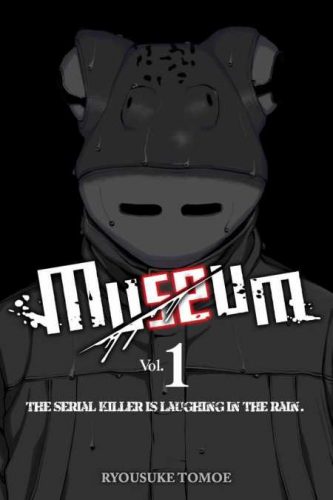
Museum, Vol. 1
Story and Art by Ryosuke Tomoe
Kodansha Comics
Rated M, for Mature (graphic violence)

Stop me if you’ve heard this one before: a mask-wearing vigilante kidnaps and tortures his victims in grotesque fashion–feeding them to dogs, severing their ears, tying them to toilets–then leaves cryptic notes that characterize each act as a “punishment,” daring the authorities to catch him. The mystery of who the vigilante is and what motivates him is the main driving force behind Museum, but you might not want to soldier through the carnage for answers to those questions since Ryosuke Tomoe can’t decide if his vigilante is a hero or a monster. Tomoe depicts the violence with such fetishistic detail that the reader is invited to admire the killer’s technique rather than meditate on the true horror of what the character has done. The ugly, utilitarian artwork and  relentlessly dour tone are the nails in the proverbial coffin, underscoring just how unpleasantly banal Museum really is. Not recommended.

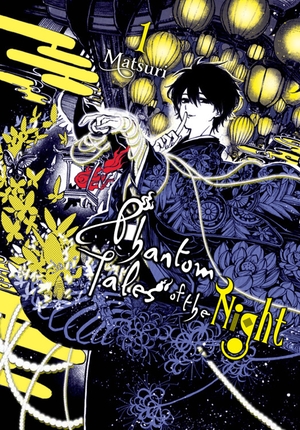
Phantom Tales of the Night, Vol. 1
Story and Art by Matsuri
Yen Press
Rated OT, for Older Teens (violence and sexual themes)

Phantom Tales of the Night is the kind of bad manga that’s difficult to review: it isn’t offensive or ineptly drawn, but it’s a chore to read thanks to its poor plotting, muddled characterizations, and maddeningly opaque dialogue. Ostensibly, the series focuses on the Murakamo Inn, where the demonic host cajoles his guests into revealing their secrets. The rules governing how the Murakamo Inn operates, however, are in a constant state of flux, making it hard to pin down what, exactly, Phantom Tales is about. In some chapters, characters share their secrets with the inn’s owner in exchange for having a wish fulfilled, while in others, characters learn a terrible secret about themselves. The later chapters hint at a potentially longer, more complex arc that will play out over several volumes, but the set-up is so abrupt and confusing that it robs the final pages of their full impact–a pity, since Matsuri has a flair for drawing genuinely creepy monsters. Perhaps the most damning thing about Phantom Tales of the Night is that the characters talk incessantly about “secrets” but lack a basic understanding of what a secret really is or why it holds such power—a key failing in a series that is predicated on the idea that secrets are a kind of supernatural currency. Not recommended.

Filed Under: Manga, Manga Critic, REVIEWS Tagged With: Horror/Supernatural, Kodansha Comics, yen press

Chio’s School Road, Vol. 1

September 4, 2018 by Katherine Dacey

With the new school year underway, now seemed like the ideal time to review Chio’s School Road, a gag manga about an average teen with a rich imagination and a talent for getting into trouble. Think of it as a female answer to My Neighbor Seki or Haven’t You Heard? I’m Sakamoto!!, two similar comedies in which a high school student turns out to have some truly astonishing skills.

Chio’s School Road is built on a simple but sturdy premise: Chio Miyamo, an average high school student, goes to comic lengths to avoid embarrassment. And by “comic lengths,” I mean diving into dumpsters, hiding in a tree, and giving her best friend a passionate kiss to conceal the fact they were eavesdropping on the popular kids. To be sure, these kind of scenarios are standard comic fodder, but Tadataka Kawasaki takes the gags in such unpredictable directions that the payoffs are fresh and funny without frustrating the reader’s desire to see the dignity-challenged Chio prevail.

In chapter three, for example, Chio stumbles into an alley blocked by members of a biker gang. Her attempt to slip past them goes awry, leading to confrontation in which Chio inadvertently escalates the situation with a nervous stutter. “You pick a fight and then laugh? You got some balls!” the head biker declares, prompting Chio to reveal her “true” identity as Bloody Butterfly, an assassin who’s “out every night packing heat” in the mean streets of Tokyo. The joke, of course, is that Chio is recycling bits of dialogue from her favorite first-person shooter game, delivering her lines with the swagger of a yakuza foot solider — a swagger she can’t sustain as soon as she arrives on school grounds.

The only strike against Chio’s School Road is the fan service. In one particularly egregious sequence, Kawasaki draws a woman’s chest as if two balloon animals were tussling under her sweater. (Seriously, folks: breasts do not look like balloon animals. Not even on a braless woman. No, really.) These panels are noticeable in part because his draftsmanship is otherwise crisp and convincing, creating a vivid sense of the urban neighborhood where Chio attends school, and strong sense of the characters’ personalities. Still, I wouldn’t hesitate to recommend Chio’s School Road to fans of My Neighbor Seki and Haven’t You Heard? I’m Sakamoto!, as it delivers a steady stream of amusing, weird, and well-executed jokes. Better still, Chio earns its laughs honestly by reminding us that Chio isn’t ordinary at all; she’s just striving to be. Recommended.

Chio’s School Road, Vol. 1
Art & Story by Tadataka Kawasaki
Translated by Alexander Keller-Nelson
Yen Press, 160 pp.
Rated OT, for Older Teens (Sexual and bathroom humor; fan service)

Filed Under: Manga, Manga Critic, REVIEWS Tagged With: Chio's School Road, Comedy, Seinen, Tadataka Kawasaki, yen press

Laid-Back Camp, Vol. 1

August 14, 2018 by Katherine Dacey

Laid-Back Camp may be the most quintessentially Japanese thing I’ve read this year: it features cute girls doing cute things while imparting information about camping gear. There’s no real plot to speak of, just a meet-cute in the first chapter that introduces seasoned camper Rin to enthusiastic newbie Nadeshiko. Through one of those only-in-manga coincidences, Rin and Nadeshiko attend the same school, where two other girls — Aoi and Chiaki — are struggling to recruit members for their Outdoor Exploration Club. You can guess what happens next: Nadeshiko joins the club and, by dint of her Golden Retriever personality, brings the skeptical Rin into the fold.

Each chapter is built around a skill, a piece of equipment, or a location. In “Mount Fuji and Cup Ramen,” for example, Rin explains how to build the perfect campfire, calling dried pine cones “nature’s premier fire starter,” while in “You Can Only Go Camping If You Have the Gear,” the Outdoor Exploration Club pores over catalogs, debating the merits of down and synthetic sleeping bags. These passages are deftly woven into the fabric of each story, playing a natural part of the girls’ conversations as they plan camping trips. Dashes of humor and breath-taking scenery add welcome nuance to the storytelling, preventing it from tipping into edu-manga dullness or yon-koma hijinks. Best of all, Rin is a genuinely interesting character, a small, self-sufficient kid who likes solo camping trips. Though volume one doesn’t explain how she caught the camping bug, author Afro has done such a good job of fleshing out Rin it doesn’t matter; we can see how someone so introspective and independent would welcome the opportunity to be alone in nature. Recommended, even for those who prefer the Great Indoors.

Laid-Back Camp, Vol. 1
Story and Art by Afro
Translation by Amber Tamosaitis
Yen Press, 178 pp.
Rated T, for Teen

Filed Under: Manga, Manga Critic, REVIEWS Tagged With: Afro, Comedy, Laid-Back Camp, Seinen, yen press

  • Page 1
  • Page 2
  • Page 3
  • Interim pages omitted …
  • Page 10
  • Go to Next Page »
 | Log in
Copyright © 2010 Manga Bookshelf | Powered by WordPress & the Genesis Framework