• Skip to primary navigation
  • Skip to main content
  • Skip to primary sidebar
  • Home
  • About Us
    • Privacy Policy
    • Comment Policy
    • Disclosures & Disclaimers
  • Resources
    • Links, Essays & Articles
    • Fandomology!
    • CLAMP Directory
    • BlogRoll
  • Features & Columns
    • 3 Things Thursday
    • Adventures in the Key of Shoujo
    • Bit & Blips (game reviews)
    • BL BOOKRACK
    • Bookshelf Briefs
    • Bringing the Drama
    • Comic Conversion
    • Fanservice Friday
    • Going Digital
    • It Came From the Sinosphere
    • License This!
    • Magazine no Mori
    • My Week in Manga
    • OFF THE SHELF
    • Not By Manga Alone
    • PICK OF THE WEEK
    • Subtitles & Sensibility
    • Weekly Shonen Jump Recaps
  • Manga Moveable Feast
    • MMF Full Archive
    • Yun Kouga
    • CLAMP
    • Shojo Beat
    • Osamu Tezuka
    • Sailor Moon
    • Fruits Basket
    • Takehiko Inoue
    • Wild Adapter
    • One Piece
    • After School Nightmare
    • Karakuri Odette
    • Paradise Kiss
    • The Color Trilogy
    • To Terra…
    • Sexy Voice & Robo
  • Browse by Author
    • Sean Gaffney
    • Anna Neatrour
    • Michelle Smith
    • Katherine Dacey
    • MJ
    • Brigid Alverson
    • Travis Anderson
    • Phillip Anthony
    • Derek Bown
    • Jaci Dahlvang
    • Angela Eastman
    • Erica Friedman
    • Sara K.
    • Megan Purdy
    • Emily Snodgrass
    • Nancy Thistlethwaite
    • Eva Volin
    • David Welsh
  • MB Blogs
    • A Case Suitable For Treatment
    • Experiments in Manga
    • MangaBlog
    • The Manga Critic
    • Manga Report
    • Soliloquy in Blue
    • Manga Curmudgeon (archive)

Manga Bookshelf

Discussion, Resources, Roundtables, & Reviews

VIZ

A Devil and Her Love Song, Vol. 4

September 19, 2012 by Katherine Dacey 7 Comments

A Devil and Her Love Song has been one of 2012’s best surprises. Though the series uneven — and sometimes a little silly — its heroine is one of the most memorable in the Shojo Beat canon. Maria Kawai looks like a mean girl on the surface: she’s pretty and unsparingly blunt, pointing out her classmates’ insecurities with all the delicacy of Dr. Phil. Yet Maria’s bull-in-a-china-shop demeanor reflects her own uncertainty about how to be the kind of person who’s liked for who she is, not the kind of person who’s admired for telling unpleasant truths. And that makes her interesting.

Early in volume four, for example, Maria confronts queen bee Ayu in the bathroom, where she finds Ayu primping for the television cameras. When Maria questions Ayu’s behavior — “But you look the same,” she tells Ayu — Ayu is furious. Maria, however, persists — not because she wants the embarrass a rival, but because she wants to share a hard-won piece of advice. “If someone likes you, or wants to get to know you, it’s not because of how you look,” she tells Ayu. “It’s because you show them how you feel.”

Ayu’s subsequent behavior, however, points to one of the series’ weaknesses: characters have epiphanies with whiplash-inducing frequency. (Saul would never have made it to Damascus if he fell off his donkey as many times as Maria’s classmates do.) Though some of these epiphanies feel genuine, many are contrived: would an alpha girl suddenly confess her feelings to a cute boy in front of all her friends, risking public rejection? Or the class darling admit that she’s actually a nasty manipulator, risking her popularity? Those are nice fantasies, but not very plausible ones; Tomori is working too hard to convince us that Maria’s classmates secretly wish they could be more like her, and not giving group-think and fear enough due.

The series also relies heavily on shopworn gimmicks to advance the plot. The arrival of a television crew in volume three, for example, serves no useful purpose; they disappear for long stretches at a home, only to materialize when the plot demands that someone bear witness to the class’ antics. Maria’s long-running feud with her teacher, too, feels more like an editor’s suggestion than an original idea. To be sure, a student as outspoken as Maria might infuriate a certain kind of adult, but her teacher’s cartoonish behavior renders him ineffective; his actions seem too obvious, too ripe for exposure, for him to pose a real threat to Maria.

Where A Devil and Her Love Song shines is in Maria’s one-on-one interactions with other students. These scenes remind us that everyone is wearing a mask in high school — even Maria, whose sharp comments are as much a pose as Hana’s forced cheerfulness. Though Tomori nails the mean-girl dynamic in all its exquisite awfulness, the best of these exchanges belong to Maria and Shin. Their will-they-won’t-they tension is certainly an effective narrative hook, but what makes these scenes compelling is their honesty. Tomori captures her characters’ body language and fitful conversations, which unfold in fragments, silences, and sudden bursts of feeling, rather than eloquent declarations.

I don’t know about you, but that’s how I remember high school, as a time when I had flashes of insight and bravery, but a lot more moments of cringe-inducing stupidity, cowardice, or tongue-tied helplessness. That Tomori captures adolescence in all its discomfort while still writing a romance that’s fun, readable, and sometimes endearingly silly, is proof of her skill. Now if she could just ditch the television crew and the evil teacher…

Review copy provided by VIZ Media.

A DEVIL AND HER LONG SONG • BY MIYOSHI TOMORI • VIZ MEDIA • 200 pp. • RATING: TEEN (13+)

Filed Under: Manga Critic Tagged With: Miyoshi Tomori, shojo, shojo beat, VIZ

A Devil and Her Love Song, Vol. 4

September 19, 2012 by Katherine Dacey

A Devil and Her Love Song has been one of 2012’s best surprises. Though the series uneven — and sometimes a little silly — its heroine is one of the most memorable in the Shojo Beat canon. Maria Kawai looks like a mean girl on the surface: she’s pretty and unsparingly blunt, pointing out her classmates’ insecurities with all the delicacy of Dr. Phil. Yet Maria’s bull-in-a-china-shop demeanor reflects her own uncertainty about how to be the kind of person who’s liked for who she is, not the kind of person who’s admired for telling unpleasant truths. And that makes her interesting.

Early in volume four, for example, Maria confronts queen bee Ayu in the bathroom, where she finds Ayu primping for the television cameras. When Maria questions Ayu’s behavior — “But you look the same,” she tells Ayu — Ayu is furious. Maria, however, persists — not because she wants the embarrass a rival, but because she wants to share a hard-won piece of advice. “If someone likes you, or wants to get to know you, it’s not because of how you look,” she tells Ayu. “It’s because you show them how you feel.”

Ayu’s subsequent behavior, however, points to one of the series’ weaknesses: characters have epiphanies with whiplash-inducing frequency. (Saul would never have made it to Damascus if he fell off his donkey as many times as Maria’s classmates do.) Though some of these epiphanies feel genuine, many are contrived: would an alpha girl suddenly confess her feelings to a cute boy in front of all her friends, risking public rejection? Or the class darling admit that she’s actually a nasty manipulator, risking her popularity? Those are nice fantasies, but not very plausible ones; Tomori is working too hard to convince us that Maria’s classmates secretly wish they could be more like her, and not giving group-think and fear enough due.

The series also relies heavily on shopworn gimmicks to advance the plot. The arrival of a television crew in volume three, for example, serves no useful purpose; they disappear for long stretches at a home, only to materialize when the plot demands that someone bear witness to the class’ antics. Maria’s long-running feud with her teacher, too, feels more like an editor’s suggestion than an original idea. To be sure, a student as outspoken as Maria might infuriate a certain kind of adult, but her teacher’s cartoonish behavior renders him ineffective; his actions seem too obvious, too ripe for exposure, for him to pose a real threat to Maria.

Where A Devil and Her Love Song shines is in Maria’s one-on-one interactions with other students. These scenes remind us that everyone is wearing a mask in high school — even Maria, whose sharp comments are as much a pose as Hana’s forced cheerfulness. Though Tomori nails the mean-girl dynamic in all its exquisite awfulness, the best of these exchanges belong to Maria and Shin. Their will-they-won’t-they tension is certainly an effective narrative hook, but what makes these scenes compelling is their honesty. Tomori captures her characters’ body language and fitful conversations, which unfold in fragments, silences, and sudden bursts of feeling, rather than eloquent declarations.

I don’t know about you, but that’s how I remember high school, as a time when I had flashes of insight and bravery, but a lot more moments of cringe-inducing stupidity, cowardice, or tongue-tied helplessness. That Tomori captures adolescence in all its discomfort while still writing a romance that’s fun, readable, and sometimes endearingly silly, is proof of her skill. Now if she could just ditch the television crew and the evil teacher…

Review copy provided by VIZ Media.

A DEVIL AND HER LONG SONG • BY MIYOSHI TOMORI • VIZ MEDIA • 200 pp. • RATING: TEEN (13+)

Filed Under: Manga, Manga Critic, REVIEWS Tagged With: Miyoshi Tomori, shojo, shojo beat, VIZ

Dawn of the Arcana, Vols. 3-5

August 1, 2012 by Katherine Dacey 4 Comments

On the surface, Dawn of the Arcana looks like a Harlequin romance. Its flame-haired heroine is feisty and impetuous, torn between her feelings for the man who raised her and the man she was forced to marry. Both men are keen to “own” her — their word, not mine — and are willing to go to ridiculous extremes to prove their devotion, even setting aside their differences to honor her requests. And true to Harlequin form, the heroine frequently struggles to reconcile the circumstances of her marriage and her growing feelings for her jailer-husband.

Peer beneath its romance-novel trappings, however, and it quickly becomes clear that manga-ka Rei Toma is actually writing a pretty nifty fantasy-adventure as well, one with interesting moral dilemmas, parallels with contemporary geopolitics, and multi-layered characters whose behavior frequently deviates from the Harlequin playbook.

In volume three, for example, Nakaba’s mother-in-law attempts to dye her hair black, lest visiting dignitaries realize that the new Belquat princess hails from Senan. Toma might have used this scene to provide Caesar an opportunity to publicly declare his feelings for Nakaba, or demonstrate Nakaba’s ability to endure hazing with noble forbearance. Instead, Toma transforms this act of fairy-tale cruelty into a moment of self-actualization: Nakaba seizes a sword and defiantly gives herself a fabulous pixie cut — er, short, boyish locks — denying the queen the satisfaction of humiliating her in front of the royal family.

That act resonates throughout the next three volumes, as Nakaba sheds her girlish braid and girlish indignation in favor of a stronger, more active role in defeating Belquat’s royal family. Though Nakaba’s new ‘do leads to some predictable exchanges about “looking like a boy,” both Loki and Caesar admire her determination: red hair symbolizes more than just her country of origin, but also the struggles that helped define her as a person.

As appealing as such scenes may be, they highlight the series’ main drawback: the artwork is too plain and spare for a story with such vivid characters. Though the principal characters’ costumes are rendered in considerable detail, the supporting cast resemble Renfair extras, with faintly old-timey clothing and long tresses. Worse still are the backgrounds: with their perfect right angles and unvaried lines, they look like stills from an ancient Nintendo game, rather than a representation of a specific time and place. That sterility isn’t a deal-breaker, but it does reinforce the impression that Toma hasn’t quite developed the artistic chops to fully realize her vision.

Despite its artistic shortcomings, Dawn of the Arcana remains an appealing mixture of fantasy and romance, offering just enough sword fights, scenes of female empowerment, and emotional entanglements to appeal to fans of both genres.

Review copies provided by VIZ Media, LLC.

DAWN OF THE ARCANA, VOLS. 3-5 | BY REI TOMA | VIZ MEDIA | RATING: TEEN (13+)

Filed Under: Manga Critic Tagged With: Rei Toma, shojo, shojo beat, VIZ

Dawn of the Arcana, Vols. 3-5

August 1, 2012 by Katherine Dacey

On the surface, Dawn of the Arcana looks like a Harlequin romance. Its flame-haired heroine is feisty and impetuous, torn between her feelings for the man who raised her and the man she was forced to marry. Both men are keen to “own” her — their word, not mine — and are willing to go to ridiculous extremes to prove their devotion, even setting aside their differences to honor her requests. And true to Harlequin form, the heroine frequently struggles to reconcile the circumstances of her marriage and her growing feelings for her jailer-husband.

Peer beneath its romance-novel trappings, however, and it quickly becomes clear that manga-ka Rei Toma is actually writing a pretty nifty fantasy-adventure as well, one with interesting moral dilemmas, parallels with contemporary geopolitics, and multi-layered characters whose behavior frequently deviates from the Harlequin playbook.

In volume three, for example, Nakaba’s mother-in-law attempts to dye her hair black, lest visiting dignitaries realize that the new Belquat princess hails from Senan. Toma might have used this scene to provide Caesar an opportunity to publicly declare his feelings for Nakaba, or demonstrate Nakaba’s ability to endure hazing with noble forbearance. Instead, Toma transforms this act of fairy-tale cruelty into a moment of self-actualization: Nakaba seizes a sword and defiantly gives herself a fabulous pixie cut — er, short, boyish locks — denying the queen the satisfaction of humiliating her in front of the royal family.

That act resonates throughout the next three volumes, as Nakaba sheds her girlish braid and girlish indignation in favor of a stronger, more active role in defeating Belquat’s royal family. Though Nakaba’s new ‘do leads to some predictable exchanges about “looking like a boy,” both Loki and Caesar admire her determination: red hair symbolizes more than just her country of origin, but also the struggles that helped define her as a person.

As appealing as such scenes may be, they highlight the series’ main drawback: the artwork is too plain and spare for a story with such vivid characters. Though the principal characters’ costumes are rendered in considerable detail, the supporting cast resemble Renfair extras, with faintly old-timey clothing and long tresses. Worse still are the backgrounds: with their perfect right angles and unvaried lines, they look like stills from an ancient Nintendo game, rather than a representation of a specific time and place. That sterility isn’t a deal-breaker, but it does reinforce the impression that Toma hasn’t quite developed the artistic chops to fully realize her vision.

Despite its artistic shortcomings, Dawn of the Arcana remains an appealing mixture of fantasy and romance, offering just enough sword fights, scenes of female empowerment, and emotional entanglements to appeal to fans of both genres.

Review copies provided by VIZ Media, LLC.

DAWN OF THE ARCANA, VOLS. 3-5 | BY REI TOMA | VIZ MEDIA | RATING: TEEN (13+)
Filed Under: Manga, Manga Critic, REVIEWS Tagged With: Rei Toma, shojo, shojo beat, VIZ

Adventures in the Key of Shoujo: X, Vol. 1

July 26, 2012 by Phillip Anthony 2 Comments

X, Vol. 1: 3-in-1 | By CLAMP | Published by VIZ Media | Rated: T, Ages 13+

CLAMP might be the first manga artists I became aware of back in the day. While Sailor Moon and its risable dub didn’t interest me, the dubbed version of Cardcaptor Sakura, or Cardcaptors as it was known, was interesting. Knowledge that was based on a Japanese manga sent me to the old MIXX edition of the book. So I knew they existed. A few years go by and I own smatterings of Legal Drug, xxxHolic, Tsubasa Chronicle, Magic Knight Rayearth and a few others. But strangely, it was the discovery of an anime version of one of CLAMP’s bigger properties that would start over ten years of frustration. The title? X.

X tells the story of Kamui, a young high school-going boy who returns to Tokyo after the violent death of his mother. Childhood friends, Fuma and Kotori, are of course delighted to see him again. However, things cannot be as they once were. Kamui seems to be pursued by people who want to possess him and his psychic powers. One one side, Princess Hinoto who only wants Kamui for noble purposes and on the other, Kanoe, her sister, who only wants Kamui for destructive reasons. Every physical conflict in the story is settled by psychic battles that take place inside barriers. No battle can damage the real world while it happens inside the barrier but once a combatant dies, the damage becomes real. Now the countdown is on to 1999 and the day of reckoning.

Wow, CLAMP’s serious stuff always reads like a 70’s disaster movie starring Cary Grant and Ava Gardner. It sounds goofy as anything but once into the nuts and bolts, it really has legs to run with. X, I’ve known about since watching the Rintaro-directed movie from the mid-90’s. And of course, the TV series from Yoshiaki Kawajiri, I’ve not seen but heard about. But you see, the most famous thing about one of CLAMP’s biggest titles is that it was never finished. The team just stopped working on it (for particulars, see the Wikpedia article on it) and have never gone back to it. I guess being successful means you don’t have to be consistent. The movie and the TV show had to craft their own endings so your milage will seriously vary. But the manga is good, I have to say. After reading about the books for a while, I picked up the VIZ omnibus edition of volume 1. I’ll try not to spoil the other versions too much for you.

Kamui might be the most annoying CLAMP creation I’ve seen. He’s the lead, the hero, the chosen one—but by God, he’s so confident in his own abilities, it borders on arrogance. He fights anyone at the drop of a pin, which since he’s a psychic warrior, means the bar repair bill is going to be high. He’s angry, moody and pushy. He’s haunted by his last night in Tokyo before he and his mother had to flee. It’s so hard to see into his character in this volume. I get the sense that the manga version of Kamui cares about his childhood friends and normal people but psychic fighters, he couldn’t care less about, like they are fair game since he’s the king of the junkyard dogs. This is inconsistent with his promise to his mother to live long enough to see the year 1999. He’s fighting anybody without regard for his safety. What does this mean? The authors aren’t saying. Kotori is a typical non-leading female character from CLAMP in that she’s a frail, fragile girl who just wishes, darn it, can’t we all just get along? She clearly has fuzzy feelings for Kamui but he’s shutting her out to protect her. Fuma, well, is a nice guy who loves his sister Kotori and tries to shield her from the childhood trauma of finding their mother butchered, together. He loves his friend Kamui and would never hurt him but he’s being pushed to choose whom to protect. I’m not talking about the rest of the characters because you should find out yourself.

I like the set up of this first volume. You get a sense that something is coming from Hinoto’s apocalyptic visions to the way in which Kanoe is moving and maneuvering her own players. Kamui knows, just knows, something bad is after him and he tries shutting out Fuma and Kotori to protect both of them from whatever it is that pursues him. There are unintended fights between him and Hinoto’s people but the real fight is yet to happen. Another thing is, and this is one of CLAMP’s major strengths, that all the cast get a chance to explain themselves to the audience, and in doing so engage in exposition. It’s a really interesting technique to observe. If anyone else did it, I’d roll my eyes but CLAMP always make it seem natural. Even the antagonists get a chance to do this. It’s doesn’t make them any nicer people but at least I understand their motivations a bit better now. Finally, there seems to be a conscious choice to set the fights during the night. Nothing bad really happens in the day and in this volume the daytime is associated with Kamui’s arrival in school, and public, for the first time when he arrives in Kotori’s field of vision out of a school window as if heaven sent. Interesting concept, since later in the day, Kamui tries to coldy dismiss Kotori (of course we know he’s trying to protect her). Dining on ashes at the end of the day, before the eternal night, perhaps?

Talking about a CLAMP book means talking about artwork and this work benefits from VIZ selecting a larger format book size. Every ink brush stroke, every pencil line is detailed and prominent, every character is clear. The work in here has an almost dream-like quality with long elegant lines and weird tilted camera angles. CLAMP aren’t really urban or technological artists, but when they do decide to do that type of work, it’s always refreshing to see it on display. Trying to pin down their technology style is a bit difficult. It’s one part Shirow Masamune, one part Michael Okuda, how’s that? And the character designs are, as always, varied and function oriented. Everyone looks like what they wear suits them.

I have never liked the anime ending to the X movie. But while I’m resigned to the fact that CLAMP might never finish their popular series, at least it looks good, is written smartly and has enough steam to see me through to X Omnibus vol.2. For newcomers to CLAMP, it’s a good place to start and a good book to own. For veterans, well. You’re already trapped in the hole, so keep going, huh?


To submit your contributions to the CLAMP MMF for inclusion in this month’s archive, please send your links by email to mj@mangabookshelf.com or via Twitter to @mjbeasi. If you would like your contribution(s) to be hosted at Manga Bookshelf, please email them to MJ, along with any included images.


Filed Under: Adventures in the Key of Shoujo Tagged With: clamp, manga, shojo, VIZ

My 5 Favorite CLAMP Manga

July 24, 2012 by Katherine Dacey 19 Comments

I’ve read almost every CLAMP title available in English, from X (or X/1999, as we called it in back in the day) to Gate 7, and while I can’t claim to love them all, there is a core group of manga that I’ve read, re-read, and recommended to other fans. I make no special claims of excellence for these series, though I will say that these manga impressed me with their technical brilliance, genre-bending narratives, and beautiful artwork, if not their stellar endings.

MAGIC KNIGHT RAYEARTH (Dark Horse; 2 volumes)

It’s easy to forget that Magic Knight Rayearth ran in the pages of Nakayoshi, as it adheres so closely to the friendship-effort-victory template that it almost passes for a Shonen Jump title. A careful reading of MKR, however, reveals it to be a unique fusion of shojo and shonen storytelling practices. On a moment to moment basis, MKR reads like shojo: the heroines denigrate their academic prowess, swoon over the only cute boy to cross their path, and extol the value of “heart” in defeating their enemies. The intense and protracted battle scenes, however, scream Naruto — or maybe Gundam — as the girls are pushed to their physical and emotional limits while casting spells, swinging swords, and piloting giant robots. That CLAMP reconciles such tonally different genres into a coherent whole is an impressive narrative feat; no matter how many times the heroines utter dippy or painfully sincere sentiments, their tenacity in combat makes them every bit as bad-ass as Naruto, InuYasha, or Ichigo Kurasaki. -Reviewed at The Manga Critic on July 22, 2011.

LEGAL DRUG (Tokyopop; 3 volumes)

I hesitate to use the word “intertextual” to describe Legal Drug, as that term is so heavily freighted with academic associations. But intertextual it is, as Legal Drug takes place in a universe that’s been carefully mapped out in prior works such as Angelic Layer, Cardcaptor Sakura, and Suki. Major and minor characters from Chobits and Suki wander in and out of the story, providing comic relief and commentary on the budding relationship between Rikuo and Kazahaya, two handsome young errand boys for the Green Drugstore. As in xxxHolic — a series in which Rikuo and Kazahaya make guest appearances — the supernatural frequently intrudes on mundane existence, giving rise to scenes of sublime comedy and surreal grace. An odd mixture of melancholy and whimsy, with a soupçon of shonen-ai.

CLOVER (Dark Horse; 1 volume)

Clover is a gorgeous train wreck, an unholy marriage of shojo, steampunk, and science fiction that almost — almost — gels into a coherent story. The plot revolves around a class of psychically gifted individuals known as Clovers, who have been rounded up, tested, and sorted into categories based on their abilities. The most powerful — Three- and Four-Leaf Clovers — have been imprisoned, as they pose a threat to humanity.

In the small fragment of story that CLAMP completed, the Clovers’ abilities are hastily sketched; the few demonstrations of their powers are less-than-awe-inspiring, and the government’s reasons for fearing them poorly explained. But oh, the atmosphere! Anyone who remembers what it felt like to be fourteen will recognize the Clovers’ magnificent isolation, as they struggle with feelings of loneliness, rejection, and desire; that they’ve been singled out for being different (and special!) only heightens the emotional intensity of their dilemma. The artwork, too, is a feast for the eyes, with inventive layouts and sensual character designs that rank among CLAMP’s finest. Even CLAMP’s use of soggy, overwrought song lyrics as a narrative device contributes to the story’s moody beauty, if not the pantheon of great love songs.

SHIRAHIME-SYO: SNOW GODDESS TALES (Tokyopop; 1 volume)

Shirahime-Syo: Snow Goddess Tales is testament to CLAMP’s Borg-like ability assimilate any genre or artistic style and make it into their own. The three stories that comprise this slim volume are folkloric in tone and subject-matter, but expressed in a visual language that’s a beautiful synthesis of shojo manga and ukiyo print-making; the characters — with their pointy chins and artfully tousled hair — inhabit stark landscapes reminiscent of the Kishi and Shijo schools. If the overall mood is more subdued than xxxHolic or Tokyo Babylon, the stories are nonetheless moving in their directness and simplicity. The first, “On Wolf Mountain,” is the strongest of the three, exploring how one girl’s quest for revenge is transformed by the discovery that her enemy is, in fact, more courageous and generous than she ever imagined. The other stories — “The Ice Flower” and “Hiyoku no Tori” — read more like entries in Lafcadio Hearn’s Kwaidan and Other Strange Stories, but are nonetheless effective parables about sacrifice. An out-of-print gem.

X (VIZ; 6 volumes)

On many levels, X is a bad manga: the characters are underwritten, the storytelling is lazy, and the dialogue is comically awful. (Don’t believe me? Check out Party Like It’s 1999, a Tumblr blog dedicated to exploring X on a page-by-page basis.) If you can look past the 90s hair and the tin-eared dialogue, however, what you’ll discover is a fierce apocalyptic drama that boasts some of the best end-of-the-world imagery in any manga not written by Katsuhiro Otomo. Oh, and blood. Buckets of blood.

The battle scenes are kinetic and violent, executed with a gory zest that’s difficult to resist. The dream sequences, too, are suitably shocking: characters are dismembered, crucified, impaled, and engulfed in flames, often right before their loved ones’ eyes. I hesitate to suggest that X‘s body count is a victory for women, but it is a sharp and welcome rebuke to the idea that female readers strongly prefer conversation and character development to butt-kicking and carnage. – Reviewed at The Manga Critic on 10/16/11.

So, readers, I turn the floor over to you: what are your favorite CLAMP titles? Which manga do you recommend to friends and new fans? Inquiring minds want to know!

Filed Under: Manga Critic Tagged With: clamp, Clover, Dark Horse, legal drug, Magic Knight Rayearth, Shirahime-Syo, shojo, Tokyopop, VIZ, X/1999

Jiu Jiu, Vol. 1

July 4, 2012 by Katherine Dacey 11 Comments

My childhood bookshelves were filled with stories about wolves and the girls who loved them, so Jiu Jiu sounded like pure Kate Bait. Not only did Jiu Jiu feature wolves — two, to be exact — it also featured the kind of angry, conflicted heroine familiar to me from years of reading books like Sasha, My Friend. As an added bonus, Takamichi, the heroine, wasn’t just a frustrated teen adjusting to a new school and new classmates; she was a demon hunter who dispatched ghouls with the chilly efficiency of a robot, aided by Snow and Night.

But oh, the execution! Jiu Jiu is a riotously busy manga, with layouts that look more like a junior high school student’s scrapbook than a conscious ordering of panels. Author Touya Tobina draws cute wolf pups, but her command of human anatomy is poor; her characters’ rubbery limbs barely seem anchored to their torsos, resulting in odd pretzel configurations whenever they embrace or fight. Her use of screentone and pattern is similarly problematic: though the dark palette helps dramatize Takamichi’s inner turmoil, it also obscures many nicely observed moments, seldom allowing those images to stand alone, unadorned, for the reader to contemplate.

The other problem is the ever-present threat of romance. Snow and Night aren’t ordinary wolves; they’re shape-shifters who transform into handsome teenage boys. As much as they view Takamichi as their mother and mistress, there’s a strong whiff of eroticism in their interactions with her. Takamichi, of course, doesn’t yet perceive her pups’ romantic designs on her, though it doesn’t take a great leap of imagination to see that living with two attractive wolf-men might  invite emotional and physical entanglements beyond the occasional game of fetch. By placing so much emphasis on Snow and Night’s hotness, however, author Tobina seems to be laying the foundation for a much less interesting story, one in which the heroine must chose between two cute guys, rather than forge her own destiny.

Where Jiu Jiu redeems itself is in the individual characterizations. Takamichi, for example, reminded me a lot of how I was at sixteen: moody, isolated, and eager to mask my insecurities with belligerence and swagger. Her hot-and-cold relationship with Snow and Night also rings with truth, as she vacillates between nurturing them and sternly rejecting them, re-enacting her fraught relationship with her father in the process. Snow and Night, too, are a marked improvement on the standard-issue shojo prince. Yes, one is blonde and outgoing while the other is bespectacled and introspective, but both characters’ personalities betray their canine DNA; who but a dog would think a frisbee was the ideal birthday present for a human?

For all the skill with which these characters are realized, however, Jiu Jiu still frustrates more than it entertains. The author’s visually frenzied layouts and frequent recourse to emotional manipulation make volume one a bumpy ride, with too many unwarranted shifts between comedy and heart-tugging drama. (Does anything say “emotional manipulation” quite like the sight of a whimpering puppy?) I’m still clinging to the hope that Jiu Jiu will improve in future chapters, if for no other reason that I haven’t outgrown my love of stories about tough girls who run with wolves.

Review copy provided by VIZ Media LLC.

JIU JIU, VOL. 1 • BY TOUYA TOBINA • VIZ MEDIA • 200 pp. • RATING: OLDER TEEN (16+)

Filed Under: Manga Critic Tagged With: shojo, shojo beat, Touya Tobina, VIZ

Vagabond, Vols. 1-3

July 1, 2012 by Michelle Smith

By Takehiko Inoue | Published by VIZ Media (first VIZBIG edition)

One of my goals for this Manga Moveable Feast was to finally read some of Vagabond. I’ve been collecting the VIZBIG editions since they started coming out, which means there were ten of these on my shelf (with their spines forming a group portrait) unread. Now that I finally have read some of Vagabond, I’ve found it so different from the Inoue I’m familiar with—and yet containing some of the same themes—that I’m rather at a loss for words.

Shinmen Takezo is the son of a legendary swordsman, though we don’t really find that out until volume three. Since the age of thirteen, when he killed a man who came to Miyamoto village looking to challenge its strongest occupant, he’s been ostracized by all save a couple of childhood friends and he’s recently been off to battle with one of them, Hon’iden Matahachi. They both survive a bloody battle, but Matahachi takes up with a thieving widow, leaving Takezo to return to Miyamoto with tidings of Matahachi’s survival.

To make a long story very short: Takezo meets with an unfriendly welcome and is manipulated by a clever monk named Takuan into reevaluating his life. Four years later, now going by the name Miyamoto Musashi, he shows up in Kyoto looking to challenge the head of the Yoshioka sword school, and though he defeats many of their members, he learns there are still those stronger than him. A drunken Matahachi accidentally sets the blaze that allows Musashi to escape, and the VIZBIG ends with him realizing that the old friend he left for dead might actually have survived.

Even though I knew this was about swordsmen, I somehow didn’t expect it to be as gory as it is. There are a lot of death blows being dealt here, as Musashi is obsessed with measuring/proving his strength against others and willing to sacrifice his life to this aim. That said, at times the art is absolutely gorgeous, and there are a few color pages that look like bona fide paintings. The scope, layout, and pacing of the story all lend it a cinematic feel that is genuinely impressive. There’s one scene early on, when Musashi turns around to face the one opponent left standing and it’s genuinely terrifying.

But yet, I mostly found it unaffecting. I expect there will be more insight into the main character as time progresses, but for now he’s so closed off, so proud of his strength and being hailed a demon that I can’t grow fond of him or endorse his goals. I have a feeling I’m not supposed to. I did identify with Matahachi a lot, though, especially his inferiority complex in regards to his friend and his inability to follow through with the heroic deeds he imagines himself performing. I like Otsu, the fiancée Matahachi left behind, and I’m intrigued by Takuan, the monk. I’ll keep reading for them, if nothing else.

One thing about Musashi reminds me a lot of Hisanobu Takahashi in Real. As a child, Hisanobu was attempting to master a particular basketball move that his father showed him. He worked very hard on it, but was never able to show his father because the latter abandoned the family. Musashi has also been abandoned by his mother and shunned by his father, and part of his drive to test himself seems due to the desire to show them his strength, show them that he doesn’t need to depend on anyone else. Musashi is a real historical figure, not a character Inoue created, but it seems like he’s drawn to these confident yet wounded types.

Ultimately, I can see why Vagabond is hailed as a masterpiece, and I will certainly keep reading it, but my heart will always belong to Inoue’s sports manga, Slam Dunk in particular. The heart wants what the heart wants!

Vagabond is published in English by VIZ Media. Single volumes up through 33 have been published, as well as ten “VIZBIG” editions comprised of three volumes each. An eleventh VIZBIG edition is scheduled to be released in December. Inoue has recently resumed the series in Japan, so the upcoming release of volume 34 (October) will be the first new Vagabond released in English in two years.

Filed Under: REVIEWS Tagged With: Takehiko Inoue, VIZ

Let’s Get Visual: Takehiko Inoue

June 30, 2012 by Michelle Smith and Anna N

MICHELLE: It’s been a while, but Let’s Get Visual has awoken from its hibernation in time to celebrate the Takehiko Inoue Manga Moveable Feast. Joining me for this occasion is special guest host Anna Neatrour, who is also co-hosting the MMF with me! Welcome, Anna!

ANNA: Thank you! I am excited to join in on a Let’s Get Visual post for Takehiko Inoue, because I think he is one of the top contemporary manga artists. He has an incredibly detailed and realistic style that really sets his manga apart from other series.

MICHELLE: I just started reading Vagabond the other day, and there was one close-up picture of Takezo drawn with extreme care and obvious skill, and I thought, “Y’know, this should be the image that all manga fans carry around to immediately dispel the misconceived notion that all manga looks alike and/or involves big, sparkly eyes.”

ANNA: I think that Inoue’s style (particularly in Real and Vagabond) is probably more reader-friendly to Western comics fans who haven’t read much manga before.

MICHELLE: Yeah, probably so. I’ve often thought that Western comic fans would probably like a bunch of seinen manga if they’d give it a chance.

Anyways, I suppose we should proceed to get visual! The images I’ve chosen are the very first pages in the very first volume of Real.

Real, Vol. 1 (VIZ Media)

I chose these images because they demonstrate how well Inoue is able to communicate Togawa’s character here without needing any words at all. Okay, sure, this guy is in a wheelchair, but he’s clearly driven. He’s pushing himself, possibly to the point of pain (if that’s what that one black panel represents). He has bulging muscles, so he’s clearly been at this a while. He’s moving fast. He may have a disability, but it doesn’t mean that he can’t take being an athlete seriously.

And then you turn the page and see that he is all alone. Inoue pulls back to show the entirety of the gym to emphasize Togawa’s solitude, and if that wasn’t enough, we get a glimpse of the empty school campus, as well. This sets the stage for what we later learn (which you mention in your review)—that Togawa’s attitude toward his wheelchair basketball team does not mesh well with his hobbyist teammates. Here’s a guy who is giving it his all, and he is the only one.

There’s just so much we can tell from this elegant introduction that it kind of blows me away.

ANNA: I agree that one of the things I like best about Inoue’s art is how much the images are able to contribute to the storytelling of his manga without overtly telling the audience anything. The themes touched on in the images you showed are addressed again later in the manga. Togawa’s ego and isolation contribute to his central struggle in the manga, and at the same time his willingness to practice all by himself shows just how dedicated he is to his sport.

MICHELLE: I will always, always be a big fan of nonverbal storytelling, so Inoue really wins my heart here by going above and beyond impressive art.

Want to tell us about the images you picked?

ANNA: The panels I chose were from Volume 26 of Vagabond, collected in the ninth VIZBIG edition of the series.

Vagabond, Vol. 26 (VIZ Media)

One of the reasons why I love Vagabond so much is that the fight scenes are never merely about two people fighting. There’s always a psychological or philosophical element involved. We see Miyamoto Musashi in a midst of battle against 70 members of the Yoshioka sword school, an ambush he willingly walked into. As he battles, he’s focused on centering himself and living in the moment. The close-up panels of his face show the process of self-reflection even as he is mowing down his opponents.

MICHELLE: That’s a really striking sequence. I like how he seems to be looking off into the horizon as he tells himself to have no aspirations for the future, as if to acknowledge the existence of other paths that he’s not allowing himself to take. Granted, I’ve not read the series that far—I’m barely on volume two—but it almost seems to me like he could walk away from this fight if he wanted to, but he’s not letting himself do it. Is that anywhere near the case?

ANNA: I don’t think Musashi is capable mentally of walking away from a fight like this. There are a lot of things that lead up to this sequence of many chapters where Musashi takes on the entire sword school, but one thing that struck me about the battle as a whole is that while you see Musashi getting beaten down and injured, towards the end Inoue almost has the reader concluding that it was really unfair to the 70 men who were planning on ambushing and attacking Musashi from behind that they had to go up against this one particular single opponent. Vagabond’s
fight scenes are always interesting, even when they stretch on for hundreds of pages, simply because the exquisitely rendered battles are contrasted with the internal struggles of the people who are fighting. Battle is as much of a mental exercise as it is a physical one.

MICHELLE: That’s an interesting point! So far I’ve only seen a few fights, and there hasn’t been much on Takezo’s (as Musashi is known at that point in the story) mental state yet. But I definitely admired the pacing and structure of Inoue’s artistic approach to battle—even watching Takezo just turn around and notice one opponent still standing becomes something frankly terrifying.

ANNA: One the things I enjoy about Vagabond is seeing the way Musashi changes over time. The man fighting the sword school in these panels has a measured sense of self and an inner stillness as he fights opponent after opponent. This is totally different from the way Takezo is portrayed in the earlier volumes, where he is more arrogant and animalistic.

MICHELLE: I definitely look forward to seeing how he gets from point A to point B. I admit, I still prefer Inoue’s sports-related series, but there’s just no denying that Vagabond is a masterpiece.

Thanks to everyone for reading, and we hope we’ve inspired you to check out some Inoue!

Filed Under: Let's Get Visual Tagged With: Takehiko Inoue, VIZ, VIZ Signature

7 Essential VIZ Signature Manga

April 26, 2012 by Katherine Dacey 10 Comments

Are you an adult reader new to manga? Or a librarian who’s looking to add more graphic novels to your adult collection? Then this list is for you! The VIZ Signature imprint is one of the best resources for adults who read — or are curious about — manga. All of the Signature titles originally appeared in Japanese magazines that cater to grown-up tastes. As a result, the Signature line has broader appeal than many of VIZ’s other imprints, offering something for manga lovers who have “aged out” of Naruto as well as general interest readers who are more likely to discover a graphic novel through The New York Times than The Comics Journal.

Below, I’ve compiled a list of seven titles that best represent the VIZ Signature catalog. In choosing manga for this list, I was less concerned about identifying the “best” titles and more concerned with steering readers towards stories that resonate with their taste in movies, television, and comics. I’ve also focused on more recent series, as some of the line’s older titles — Monster, Sexy Voice and Robo, Phoenix — are out of print. Manga fans are strongly encouraged to add their recommendations in the comments section!

ALL MY DARLING DAUGHTERS

FUMI YOSHINAGA • 1 VOLUME

The five vignettes in All My Darling Daughters depict women negotiating difficult personal relationships: a daughter confronts her mother about mom’s new, much younger husband; a college student seduces her professor, only to dump him when he tries to court her properly; a beautiful young woman contemplates an arranged marriage. Like all of Yoshinaga’s work, the characters in All My Darling Daughters love to talk. That chattiness isn’t always an asset to Yoshinaga’s storytelling, but here the dialogue is perfectly calibrated to reveal just how complex and ambivalent these relationships really are. Yoshinaga’s artwork is understated but effective, as she uses small details — how a character stands or carries her shoulders — to offer a more complete and nuanced portrait of each woman. (One of my picks for Best New Manga of 2010.)

Recommended for: Readers who liked Drinking at the Movies, Dykes to Watch Out For, Make Me a Woman, and other graphic novels exploring the everyday lives of women; readers who are reluctant to commit to a multi-volume series.

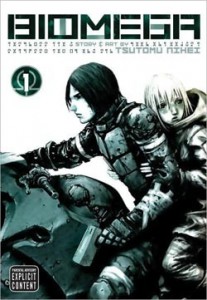
BIOMEGA

TSUTOMU NIHEI • 6 VOLUMES

In this sci-fi/horror hybrid, an outbreak of a mysterious virus turns all but one resident of an island colony into zombies. Zoichi Kanoe, a corporate bounty hunter, is sent to retrieve that survivor, only to discover that she’s being guarded by a talking, gun-toting bear. Tsutomu Nihei has the artistic chops to pull off some outlandish stuff, including a rooftop chase scene that borrows a few pages from Bullitt and a spooky Martian prologue that would do John Carpenter proud. Nihei also has the good sense to exercise restraint — if one can describe an apocalyptic zombie scenario with pistol-packing grizzlies as “restrained” — revealing key bits of information only as the characters learn them. The result is a lean, fast-paced shoot-em-up that has just enough thought behind it to make it plausible but not so much that it seems ham-fistedly allegorical. (Reviewed at The Manga Critic on 2/14/10.)

Recommended for: Readers who like science fiction with elements of horror (e.g. Alien, John Carpenter’s The Thing); readers who like zombie fiction, comics, and movies.

DETROIT METAL CITY

KIMINORI WAKASUHI • 10 VOLUMES

Satirizing death metal is a bit like shooting fish in a barrel: how hard can it be to parody a style associated with bands named Cannibal Corpse or Necrophagia? Poking fun at death metal while respecting the sincerity of its followers, however, is a much more difficult trick to pull off, yet Kiminori Wakasugi does just that in Detroit Metal City, ridiculing the music — the violent lyrics, the crudely sexual theatrics — while recognizing the depth of DMC fans’ commitment to the metal lifestyle. Though the musical parodies are hilarious, the series’ funniest moments arise from classic fish-out-of-water situations: Negishi driving a tractor on his parent’s farm while dressed as alter ego Lord Krauser (complete with makeup, fright wig, and platform boots), Negishi bringing a fruit basket to a hospitalized DMC fan while dressed as Krauser… you get the idea. The series begins to run out of gas around volume six, but has the decency not to overstay its welcome. (Reviewed at The Manga Critic on 5/28/09.)

Recommended for: Readers who love musical parodies (e.g. This Is Spinal Tap, South Park, Flight of the Conchords); readers who have fond memories of attending KISS or GWAR concerts back in the day.

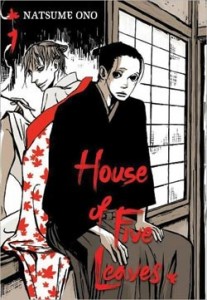
HOUSE OF FIVE LEAVES

NATSUME ONO • 7 VOLUMES, ONGOING (8 TOTAL)

Timid ronin Akitsu Masanosuke can’t hold a steady job, despite his formidable swordsmanship. When a businessman approaches him with work, Masanosuke readily accepts, not realizing that his new employer, Yaichi, runs a crime syndicate that specializes in kidnapping. Masanosuke’s unwitting participation in a blackmailing scheme prevents him from severing his ties to Yaichi; Masanosuke must then decide if he will join the House of Five Leaves or bide his time until he can escape. Though Toshiro Mifune and Hiroyuki Sanada have made entire careers out of playing characters like Masanosuke, Natsume Ono makes a persuasive case that you don’t need a flesh-and-blood actor to tell this kind of story with heartbreaking intensity; she can do the slow-burn on the printed page with the same skill as Masaki Kobayashi (Hara Kiri, Samurai Rebellion) and Yoji Yamada (The Twilight Samurai) did on the big screen. (Reviewed at The Manga Critic on 8/20/10.)

Recommended for: Kurosawa junkies; readers who like costume dramas; readers with an interest in Japanese history.

OISHINBO A LA CARTE

STORY BY TETSY KARIYA, ART BY HANASAKI AKIRA • 7 VOLUMES

Equal parts Iron Wok Jan, Mostly Martha, and The Manga Cookbook, this educational, entertaining series explores Japanese cuisine at its most refined — sake, seabream sashimi — and its most basic — rice, pub food. The stories fall into two categories: stories celebrating the important role of food in creating community, and stories celebrating the culinary expertise of its principal characters, newspaperman Yamaoka Shiro and his curmudgeonly father Kaibara Yuzan. (Fun fact: Yuzan is such a food snob that he drove Yamaoka’s mother to an early grave, causing an irreparable break between father and son.) Though the competition between Yamaoka and Yuzan yields some elegant, mouth-watering dishes, Oishinbo is at its best when it focuses on everyday food in everyday settings, shedding light on how the Japanese prepare everything from bean sprouts to ramen. Warning: never read on an empty stomach! (Reviewed at The Manga Critic on 6/24/09.)

Recommended for: Foodies, gourmets, and other people who like to watch the Food Network (or have daydreamed about becoming a restaurant critic); readers who enjoy The Drops of God.

REAL

TAKEHIKO INOUE • 10 VOLUMES, ONGOING

In lesser hands, REAL might have been an Afterschool Special in manga form, an earnest, uplifting story about disabled teens who find a new sense of purpose on the basketball court. Takehiko Inoue, however, steers clear of easy sentiment; his characters are tough, competitive, and profane, occasionally self-pitying, and fiercely determined to create a space for themselves that’s theirs—and theirs alone. Though the court scenes are brief (at least by shonen sports manga standards, where matches can take several volumes to unfold), Inoue captures the speed and energy of his athletes with consummate skill. A funny, honest, and sometimes rueful series that works equally well for teens and adults. (My choice for Best New Manga of 2008 at PopCultureShock; reviewed at The Manga Critic on 5/3/09.)

Recommended for: Basketball enthusiasts; readers who enjoy sports stories with a human interest angle.

20TH CENTURY BOYS

NAOKI URASAWA • 20 VOLUMES, ONGOING (24 TOTAL)

Naoki Urasawa’s 20th Century Boys tells a twisty, layered story about ordinary people saving the world from annihilation. Other auteurs have explore similar turf — Tim Kring’s Heroes comes to mind — but Urasawa manages to sustain the reader’s interest without succumbing to cliche or unduly testing our patience. The key to Urasawa’s success is strong script with vivid characters and a clear sense of purpose, reassuring the reader that all the plot strands are just that: strands, not loose threads. Crisp, detailed artwork helps sell the more ludicrous aspects of the story, and distinguish the sprawling cast from one another. (Reviewed at The Manga Critic on 1/9/10.)

Recommended for: Conspiracy theory buffs; readers who enjoy television programs that blend elements of science fiction, suspense, and paranoia (e.g. Alcatraz, Heroes, Lost).

Filed Under: Manga Critic Tagged With: Cooking and Food, Drama, fumi yoshinaga, Horror/Supernatural, Naoki Urasawa, Natsume Ono, Sci-Fi, Seinen, Sports Manga, Tsutomu Nihei, VIZ, VIZ Signature

7 Essential VIZ Signature Manga

April 26, 2012 by Katherine Dacey

Are you an adult reader new to manga? Or a librarian who’s looking to add more graphic novels to your adult collection? Then this list is for you! The VIZ Signature imprint is one of the best resources for adults who read — or are curious about — manga. All of the Signature titles originally appeared in Japanese magazines that cater to grown-up tastes. As a result, the Signature line has broader appeal than many of VIZ’s other imprints, offering something for manga lovers who have “aged out” of Naruto as well as general interest readers who are more likely to discover a graphic novel through The New York Times than The Comics Journal.

Below, I’ve compiled a list of seven titles that best represent the VIZ Signature catalog. In choosing manga for this list, I was less concerned about identifying the “best” titles and more concerned with steering readers towards stories that resonate with their taste in movies, television, and comics. I’ve also focused on more recent series, as some of the line’s older titles — Monster, Sexy Voice and Robo, Phoenix — are out of print. Manga fans are strongly encouraged to add their recommendations in the comments section!

All My Darling Daughters
By Fumi Yoshinaga • 1 volume

The five vignettes in All My Darling Daughters depict women negotiating difficult personal relationships: a daughter confronts her mother about mom’s new, much younger husband; a college student seduces her professor, only to dump him when he tries to court her properly; a beautiful young woman contemplates an arranged marriage. Like all of Yoshinaga’s work, the characters in All My Darling Daughters love to talk. That chattiness isn’t always an asset to Yoshinaga’s storytelling, but here the dialogue is perfectly calibrated to reveal just how complex and ambivalent these relationships really are. Yoshinaga’s artwork is understated but effective, as she uses small details — how a character stands or carries her shoulders — to offer a more complete and nuanced portrait of each woman. (One of my picks for Best New Manga of 2010.)

Recommended for: Readers who liked Drinking at the Movies, Dykes to Watch Out For, Make Me a Woman, and other graphic novels exploring the everyday lives of women; readers who are reluctant to commit to a multi-volume series.

Biomega
By Tsutomu Nihei • 6 volumes
In this sci-fi/horror hybrid, an outbreak of a mysterious virus turns all but one resident of an island colony into zombies. Zoichi Kanoe, a corporate bounty hunter, is sent to retrieve that survivor, only to discover that she’s being guarded by a talking, gun-toting bear. Tsutomu Nihei has the artistic chops to pull off some outlandish stuff, including a rooftop chase scene that borrows a few pages from Bullitt and a spooky Martian prologue that would do John Carpenter proud. Nihei also has the good sense to exercise restraint — if one can describe an apocalyptic zombie scenario with pistol-packing grizzlies as “restrained” — revealing key bits of information only as the characters learn them. The result is a lean, fast-paced shoot-em-up that has just enough thought behind it to make it plausible but not so much that it seems ham-fistedly allegorical. (Reviewed at The Manga Critic on 2/14/10.)

Recommended for: Readers who like science fiction with elements of horror (e.g. Alien, John Carpenter’s The Thing); readers who like zombie fiction, comics, and movies.

Detroit Metal City
By Kiminori Wakasuhi • 10 volumes
Satirizing death metal is a bit like shooting fish in a barrel: how hard can it be to parody a style associated with bands named Cannibal Corpse or Necrophagia? Poking fun at death metal while respecting the sincerity of its followers, however, is a much more difficult trick to pull off, yet Kiminori Wakasugi does just that in Detroit Metal City, ridiculing the music — the violent lyrics, the crudely sexual theatrics — while recognizing the depth of DMC fans’ commitment to the metal lifestyle. Though the musical parodies are hilarious, the series’ funniest moments arise from classic fish-out-of-water situations: Negishi driving a tractor on his parent’s farm while dressed as alter ego Lord Krauser (complete with makeup, fright wig, and platform boots), Negishi bringing a fruit basket to a hospitalized DMC fan while dressed as Krauser… you get the idea. The series begins to run out of gas around volume six, but has the decency not to overstay its welcome. (Reviewed at The Manga Critic on 5/28/09.)

Recommended for: Readers who love musical parodies (e.g. This Is Spinal Tap, South Park, Flight of the Conchords); readers who have fond memories of attending KISS or GWAR concerts back in the day.

House of Five Leaves
By Natsume Ono • 8 volumes
Timid ronin Akitsu Masanosuke can’t hold a steady job, despite his formidable swordsmanship. When a businessman approaches him with work, Masanosuke readily accepts, not realizing that his new employer, Yaichi, runs a crime syndicate that specializes in kidnapping. Masanosuke’s unwitting participation in a blackmailing scheme prevents him from severing his ties to Yaichi; Masanosuke must then decide if he will join the House of Five Leaves or bide his time until he can escape. Though Toshiro Mifune and Hiroyuki Sanada have made entire careers out of playing characters like Masanosuke, Natsume Ono makes a persuasive case that you don’t need a flesh-and-blood actor to tell this kind of story with heartbreaking intensity; she can do the slow-burn on the printed page with the same skill as Masaki Kobayashi (Hara Kiri, Samurai Rebellion) and Yoji Yamada (The Twilight Samurai) did on the big screen. (Reviewed at The Manga Critic on 8/20/10.)

Recommended for: Kurosawa junkies; readers who like costume dramas; readers with an interest in Japanese history.

Oishinbo a la Carte
Story by Tetsy Kariya, Art by Hanasaki Akira • 7 volumes
Equal parts Iron Wok Jan, Mostly Martha, and The Manga Cookbook, this educational, entertaining series explores Japanese cuisine at its most refined — sake, seabream sashimi — and its most basic — rice, pub food. The stories fall into two categories: stories celebrating the important role of food in creating community, and stories celebrating the culinary expertise of its principal characters, newspaperman Yamaoka Shiro and his curmudgeonly father Kaibara Yuzan. (Fun fact: Yuzan is such a food snob that he drove Yamaoka’s mother to an early grave, causing an irreparable break between father and son.) Though the competition between Yamaoka and Yuzan yields some elegant, mouth-watering dishes, Oishinbo is at its best when it focuses on everyday food in everyday settings, shedding light on how the Japanese prepare everything from bean sprouts to ramen. Warning: never read on an empty stomach! (Reviewed at The Manga Critic on 6/24/09.)

Recommended for: Foodies, gourmets, and other people who like to watch the Food Network (or have daydreamed about becoming a restaurant critic); readers who enjoy The Drops of God.

Real
By Takehiko Inoue • 15 volumes (ongoing)
In lesser hands, REAL might have been an Afterschool Special in manga form, an earnest, uplifting story about disabled teens who find a new sense of purpose on the basketball court. Takehiko Inoue, however, steers clear of easy sentiment; his characters are tough, competitive, and profane, occasionally self-pitying, and fiercely determined to create a space for themselves that’s theirs—and theirs alone. Though the court scenes are brief (at least by shonen sports manga standards, where matches can take several volumes to unfold), Inoue captures the speed and energy of his athletes with consummate skill. A funny, honest, and sometimes rueful series that works equally well for teens and adults. (My choice for Best New Manga of 2008 at PopCultureShock; reviewed at The Manga Critic on 5/3/09.)

Recommended for: Basketball enthusiasts; readers who enjoy sports stories with a human interest angle.

20th Century Boys
By Naoki Urasawa • 24 vols.
Naoki Urasawa’s 20th Century Boys tells a twisty, layered story about ordinary people saving the world from annihilation. Other auteurs have explore similar turf — Tim Kring’s Heroes comes to mind — but Urasawa manages to sustain the reader’s interest without succumbing to cliche or unduly testing our patience. The key to Urasawa’s success is strong script with vivid characters and a clear sense of purpose, reassuring the reader that all the plot strands are just that: strands, not loose threads. Crisp, detailed artwork helps sell the more ludicrous aspects of the story, and distinguish the sprawling cast from one another. (Reviewed at The Manga Critic on 1/9/10.)

Recommended for: Conspiracy theory buffs; readers who enjoy television programs that blend elements of science fiction, suspense, and paranoia (e.g. Alcatraz, Heroes, Lost).

Filed Under: Manga, Manga Critic, Recommended Reading Tagged With: Cooking and Food, Drama, fumi yoshinaga, Horror/Supernatural, Naoki Urasawa, Natsume Ono, Sci-Fi, Sports Manga, Tsutomu Nihei, VIZ, VIZ Signature

The Best Manga You’re Not Reading: I’ll Give It My All… Tomorrow

April 25, 2012 by Katherine Dacey 2 Comments

I’m not a big fan of squirm-inducing comedies like The Office; it’s hard to root for a loser who makes everyone uncomfortable with his general lack of self-awareness and humility. Yet The Office was undeniably compelling, even if it was sometimes hard to watch. The genius was in Ricky Gervais’ performance: he embodied a type that we’ve all encountered in our working lives, someone who felt small but used his job to make himself seem bigger or more important than he really was. Gervais never tried to make his character appealing in his vulnerability, and in so doing, forced the audience to confront the fundamental falseness of the lovable loser stereotype; we may feel better about ourselves for identifying with a decent underdog, but we probably have more in common with David Brent than we’d care to admit.

I’ll Give It My All… Tomorrow, an unsparing farce about a forty-year-old father who quits his job to become a manga artist, inspires a similar mixture of love and squick. Shunjo Aono makes no effort to endear his protagonist to readers; Shizuo is a loser with big dreams but terrible follow-through. Like many daydreamers, Shizuo failed to realize that his fantasy job would be just as grueling as the one he quit, a revelation that sends him into a tailspin of binge drinking, prostitution, and video gaming. The first volume’s blunt, unsparing tone yields some squirm-inducing moments that are just a little too truthful to be funny, such as when Shizuo bumps into his eighteen-year-old daughter at a love hotel or parties with younger colleagues.

As the story progress, however, Shizuo spends less time pretending to be twenty and more time writing stories. Volume two opens with a scene of Shizuo pitching an ill-advised story Murakami, the one editor at EKKE magazine who can tolerate Shizuo. Following the dictum of “write what you know,” Shizuo has penned “The History of Me,” an autobiographical comic depicting Shizuo’s ongoing struggle to find his true gift, the thing that, in his own words, makes him “different from other people.” It’s an exquisitely uncomfortable scene, as Murakami must endure Shizuo’s pompous editorializing, making it almost inevitable that Shizuo’s work will be rejected swiftly. Worse still, Shizuo’s journey of self-discovery is anything but; he’s failed at everything he’s tried — street tough, folk singer, salary man — yet hasn’t abandoned the delusion that he’s “too big” for the “little” opportunities he’s been given thus far.

In subsequent volumes, Shizuo’s progress remains fitful, impeded by his ego and his inexperience. When he does have an epiphany, it’s usually because he’s failed spectacularly and must rationalize the choices he’s made. In volume four, for example, Shizuo is assigned to a new editor, Aya Unami. After reading his latest excruciatingly autobiographical manuscript, “Live to 300,” she promptly tells him, “I think you need to know when to give up.” Oguro is initially stunned, but soon realizes that Aya might be the only person with the vision and honesty to help him improve. Whether she’s willing to coach him, and whether he can accept her guidance, however, are a different story; it’s hard to imagine Aono treating this moment as a major breakthrough in Shizuo’s journey from amateur to professional, the first meeting between a gifted natural and the coach who will lead him to stardom.

The artwork mirrors Shizuo’s skill level and emotional maturity: the lines are thick and imperfect, the shapes are basic, and the characters’ bodies are awkwardly proportioned. Shizuo has an enormous, round head that seems ill-suited for his body, and tiny eyes that remind us just how myopic he is in every aspect of his life. (See “bumping into teenage daughter at a love motel,” above.) In a particularly skillful touch, Shizuo’s own drawing mirrors that of Aono’s, only executed with less command of line and form — a subtle reminder that the prevailing aesthetic of both stories is meant to reflect how Shizuo sees the world, not an artistic failing on Aono’s part.

I’m probably making I’ll Give It My All… Tomorrow sound like a colossal downer; after all, it’s hard to laugh at a character who seems so pitiful. Yet for all Shizuo’s self-aggrandizement, there’s something honest about his efforts, and that’s what makes this squirm-inducing comedy readable. We may do our best to be responsible — to hold good-paying jobs, pay our mortgages, and raise our children to be good students and citizens — but for many of us, a soft, nagging voice asks, “Is that all there is?” Shizuo’s decision to act on that doubt isn’t wise or noble, but it’s testament to a deeply human need: to create meaning out of our experiences, and to find proof that our lives are intrinsically interesting to other people. Recommended, though you may want a stiff drink afterwards.

This is an expanded version of reviews that previously appeared at The Manga Critic on 8/20/09, 11/08/10, and 11/28/11.

Filed Under: Manga Critic Tagged With: Manga Movable Feast, Shunju Aono, SigIKKI, VIZ, VIZ Signature

The Best Manga You’re Not Reading: I’ll Give It My All… Tomorrow

April 25, 2012 by Katherine Dacey

I’m not a big fan of squirm-inducing comedies like The Office; it’s hard to root for a loser who makes everyone uncomfortable with his general lack of self-awareness and humility. Yet The Office was undeniably compelling, even if it was sometimes hard to watch. The genius was in Ricky Gervais’ performance: he embodied a type that we’ve all encountered in our working lives, someone who felt small but used his job to make himself seem bigger or more important than he really was. Gervais never tried to make his character appealing in his vulnerability, and in so doing, forced the audience to confront the fundamental falseness of the lovable loser stereotype; we may feel better about ourselves for identifying with a decent underdog, but we probably have more in common with David Brent than we’d care to admit.

I’ll Give It My All… Tomorrow, an unsparing farce about a forty-year-old father who quits his job to become a manga artist, inspires a similar mixture of love and squick. Shunjo Aono makes no effort to endear his protagonist to readers; Shizuo is a loser with big dreams but terrible follow-through. Like many daydreamers, Shizuo failed to realize that his fantasy job would be just as grueling as the one he quit, a revelation that sends him into a tailspin of binge drinking, prostitution, and video gaming. The first volume’s blunt, unsparing tone yields some squirm-inducing moments that are just a little too truthful to be funny, such as when Shizuo bumps into his eighteen-year-old daughter at a love hotel or parties with younger colleagues.

As the story progress, however, Shizuo spends less time pretending to be twenty and more time writing stories. Volume two opens with a scene of Shizuo pitching an ill-advised story Murakami, the one editor at EKKE magazine who can tolerate Shizuo. Following the dictum of “write what you know,” Shizuo has penned “The History of Me,” an autobiographical comic depicting Shizuo’s ongoing struggle to find his true gift, the thing that, in his own words, makes him “different from other people.” It’s an exquisitely uncomfortable scene, as Murakami must endure Shizuo’s pompous editorializing, making it almost inevitable that Shizuo’s work will be rejected swiftly. Worse still, Shizuo’s journey of self-discovery is anything but; he’s failed at everything he’s tried — street tough, folk singer, salary man — yet hasn’t abandoned the delusion that he’s “too big” for the “little” opportunities he’s been given thus far.

In subsequent volumes, Shizuo’s progress remains fitful, impeded by his ego and his inexperience. When he does have an epiphany, it’s usually because he’s failed spectacularly and must rationalize the choices he’s made. In volume four, for example, Shizuo is assigned to a new editor, Aya Unami. After reading his latest excruciatingly autobiographical manuscript, “Live to 300,” she promptly tells him, “I think you need to know when to give up.” Oguro is initially stunned, but soon realizes that Aya might be the only person with the vision and honesty to help him improve. Whether she’s willing to coach him, and whether he can accept her guidance, however, are a different story; it’s hard to imagine Aono treating this moment as a major breakthrough in Shizuo’s journey from amateur to professional, the first meeting between a gifted natural and the coach who will lead him to stardom.

The artwork mirrors Shizuo’s skill level and emotional maturity: the lines are thick and imperfect, the shapes are basic, and the characters’ bodies are awkwardly proportioned. Shizuo has an enormous, round head that seems ill-suited for his body, and tiny eyes that remind us just how myopic he is in every aspect of his life. (See “bumping into teenage daughter at a love motel,” above.) In a particularly skillful touch, Shizuo’s own drawing mirrors that of Aono’s, only executed with less command of line and form — a subtle reminder that the prevailing aesthetic of both stories is meant to reflect how Shizuo sees the world, not an artistic failing on Aono’s part.

I’m probably making I’ll Give It My All… Tomorrow sound like a colossal downer; after all, it’s hard to laugh at a character who seems so pitiful. Yet for all Shizuo’s self-aggrandizement, there’s something honest about his efforts, and that’s what makes this squirm-inducing comedy readable. We may do our best to be responsible — to hold good-paying jobs, pay our mortgages, and raise our children to be good students and citizens — but for many of us, a soft, nagging voice asks, “Is that all there is?” Shizuo’s decision to act on that doubt isn’t wise or noble, but it’s testament to a deeply human need: to create meaning out of our experiences, and to find proof that our lives are intrinsically interesting to other people. Recommended, though you may want a stiff drink afterwards.

This is an expanded version of reviews that previously appeared at The Manga Critic on 8/20/09, 11/08/10, and 11/28/11.

Filed Under: Manga, Manga Critic, Recommended Reading, REVIEWS Tagged With: Manga Movable Feast, Shunju Aono, SigIKKI, VIZ, VIZ Signature

MMF: An Introduction to the VIZ Signature Imprint

April 22, 2012 by Katherine Dacey 15 Comments

If TOKYOPOP was the company that first embraced the teen market, licensing Sailor Moon and bringing manga to big chain stores, then VIZ was the company that first wooed adult readers, using distinctive packaging and punchy trade names to help older manga fans distinguish stories about boy ninjas from stories about disillusioned samurai. VIZ wasn’t the only company courting older fans, of course; Dark Horse has been synonymous with manly-man manga for most of its licensing history, while TOKYOPOP made several unsuccessful forays into ladies’ comics. VIZ, however, has done more than any major American publisher to create a market for titles like Oishinbo and 20th Century Boys, seinen works that appeal equally to male and female readers in their twenties, thirties, and beyond.

One of VIZ’s first branding experiments was its short-lived Spectrum Editions line (1990-91). VIZ published three seinen titles in a prestige format with vinyl dust jackets, high-quality paper, and a large trim size. Those titles — Natsuo Sekikawa and Jiro Taniguchi’s Hotel Harbour View, Yukinobu Hoshino’s Saber Tiger, and Yu Kinutani’s Shion: Blade of the Minstrel — didn’t make much of a splash in the market, but they anticipated some of the design choices that VIZ would make with its Editor’s Choice and Signature imprints a decade later.

Another important precedent for the VIZ Signature line was PULP: The Manga Magazine. First launched in 1997, VIZ billed its monthly anthology as “manga for grownups,” and featured edgier stories than its companion magazines Animerica and Manga Vizion. Titles such as Banana Fish, Bakune Young, Dance Til Tomorrow, Even a Monkey Can Draw Manga, Short Cuts, Strain, and Uzumaki debuted in PULP before they were collected into graphic novels that bore the magazine’s name.

After struggling to find an audience, PULP was canceled in 2002. The significance of PULP wasn’t lost on its editors, however; when the magazine ceased production, they issued the following statement, summarizing their achievement:

PULP was the first English-language magazine to run the kind of manga that make comics a mass medium for ordinary adults in Japan, from dynamic action narratives to avant-garde ventures, when it debuted in December 1997… PULP offered readers a Japanese comics contrast to both the superhero genre that typifies American comics and the stereotypical “anime-esque” manga often offered to U.S. readers.

After VIZ phased out the magazine, several PULP titles — Dance Til Tomorrow, No. 5 — found a home at the newly created Editor’s Choice imprint. Like PULP, the Editor’s Choice line was designed to appeal to older readers, featuring titles such as Maison Ikkoku, Nausicaa of the Valley of the Wind, Phoenix, and Saikano. The Editor’s Choice imprint had something else in common with PULP: it was short-lived. By 2006, VIZ had rebranded the catalog with the VIZ Signature name, using it to help adult readers distinguish Naoki Urasawa’s Monster from Naruto.

In its six years of existence, the VIZ Signature line has been steadily diversifying to serve a wider audience. Speaking to Publisher’s Weekly in 2009, VIZ Managing Editor Leyla Ayker explained that one of the goals of the line was “to create a balance between the more ‘literary’ works that would appeal to readers of Western graphic novels like Fun Home or Asterios Polyp and the more ‘action’ works that would appeal to readers of American superhero comics and genre fiction.” To that end, VIZ has been licensing a mixture of highbrow titles — All My Darling Daughters, Oishinbo A La Carte, Pluto: Urasawa x Tezuka — and pulp fiction for mature readers — Black Lagoon, Biomega, Dogs: Bullets and Carnage.

The Signature line was never tied to a print magazine, but in 2009, VIZ launched an ambitious collaboration with the Japanese anthology IKKI: select IKKI titles would be serialized online, allowing North American readers to read free monthly updates of series such as I’ll Give It My All… Tomorrow and Saturn Apartments. VIZ would then publish those series as part of its Signature line, with a special logo to distinguish the IKKI titles from other Signature manga. For a year and a half, the site flourished, offering readers a mixture of new comics and feature articles: an interview with Q Hayashida (Dorohedoro), a comic drawn by one of the VIZ designers. By the end of 2011, however, regular updates to the site had ceased, prompting speculation about the future of the project.

Whatever the future of SigIKKI, the project epitomizes what the VIZ Signature line does best: publishing high-quality manga that appeal to a wide spectrum of adult readers As Leyla Aker explained to Publisher’s Weekly:

The reason why IKKI and Signature are such a good fit is because their objectives are the same: to publish series that offer a diverse range of content but that are all marked by creative excellence. Another factor is that both lines are gender-neutral, so to speak; their content is aimed at both adult men and women, which is fairly unusual for manga.

And that, in a nutshell, is the VIZ Signature imprint: 43 titles that run the gamut from kitchen-sink drama (All My Darling Daughtes, Gente: The People of Ristorante Paradiso) to horror stories (Cat-Eyed Boy, Uzumaki), sword-and-sandal epics (Vagabond), science fiction (Bokurano: Ours, Saturn Apartments), thrillers (Black Lagoon, Monster), romances (Ristorante Paradiso), mysteries (not simple, Sexy Voice and Robo), and fantasies (Dorohedoro, GoGo Monster).

N.B. VIZ began designing a new Signature website which remains unfinished as of 4/22/12. In the comments below, reader Eric Rupe notes that VIZ doesn’t seem to have made much progress on the site; links redirect the reader to an empty product page at viz.com.

* * * * *

The goal of this month’s Manga Movable Feast is to create a place where grown-ups can discuss their favorite — or least favorite — VIZ Signature manga. Anyone can contribute: all you need to do is send me a link to an essay, podcast, or review about a VIZ Signature title, and I’ll feature it in one of my daily round-ups. (Email or Twitter are the best way to submit links; Twitter submissions should be directed to @manga_critic.) Note that the feast runs from today (Sunday, April 22nd) through Saturday (April 28th). For more information, please visit the VIZ Signature MMF archive.

Filed Under: Manga Critic Tagged With: Manga Movable Feast, Seinen, SigIKKI, VIZ, VIZ Signature

An Introduction to the VIZ Signature Imprint

April 22, 2012 by Katherine Dacey

If TOKYOPOP was the company that first embraced the teen market, licensing Sailor Moon and bringing manga to big chain stores, then VIZ was the company that first wooed adult readers, using distinctive packaging and punchy trade names to help older manga fans distinguish stories about boy ninjas from stories about disillusioned samurai. VIZ wasn’t the only company courting older fans, of course; Dark Horse has been synonymous with manly-man manga for most of its licensing history, while TOKYOPOP made several unsuccessful forays into ladies’ comics. VIZ, however, has done more than any major American publisher to create a market for titles like Oishinbo and 20th Century Boys, seinen works that appeal equally to male and female readers in their twenties, thirties, and beyond.

One of VIZ’s first branding experiments was its short-lived Spectrum Editions line (1990-91). VIZ published three seinen titles in a prestige format with vinyl dust jackets, high-quality paper, and a large trim size. Those titles — Natsuo Sekikawa and Jiro Taniguchi’s Hotel Harbour View, Yukinobu Hoshino’s Saber Tiger, and Yu Kinutani’s Shion: Blade of the Minstrel — didn’t make much of a splash in the market, but they anticipated some of the design choices that VIZ would make with its Editor’s Choice and Signature imprints a decade later.

Another important precedent for the VIZ Signature line was PULP: The Manga Magazine. First launched in 1997, VIZ billed its monthly anthology as “manga for grownups,” and featured edgier stories than its companion magazines Animerica and Manga Vizion. Titles such as Banana Fish, Bakune Young, Dance Til Tomorrow, Even a Monkey Can Draw Manga, Short Cuts, Strain, and Uzumaki debuted in PULP before they were collected into graphic novels that bore the magazine’s name.

After struggling to find an audience, PULP was canceled in 2002. The significance of PULP wasn’t lost on its editors, however; when the magazine ceased production, they issued the following statement, summarizing their achievement:

PULP was the first English-language magazine to run the kind of manga that make comics a mass medium for ordinary adults in Japan, from dynamic action narratives to avant-garde ventures, when it debuted in December 1997… PULP offered readers a Japanese comics contrast to both the superhero genre that typifies American comics and the stereotypical “anime-esque” manga often offered to U.S. readers.

After VIZ phased out the magazine, several PULP titles — Dance Til Tomorrow, No. 5 — found a home at the newly created Editor’s Choice imprint. Like PULP, the Editor’s Choice line was designed to appeal to older readers, featuring titles such as Maison Ikkoku, Nausicaa of the Valley of the Wind, Phoenix, and Saikano. The Editor’s Choice imprint had something else in common with PULP: it was short-lived. By 2006, VIZ had rebranded the catalog with the VIZ Signature name, using it to help adult readers distinguish Naoki Urasawa’s Monster from Naruto.

In its six years of existence, the VIZ Signature line has been steadily diversifying to serve a wider audience. Speaking to Publisher’s Weekly in 2009, VIZ Managing Editor Leyla Ayker explained that one of the goals of the line was “to create a balance between the more ‘literary’ works that would appeal to readers of Western graphic novels like Fun Home or Asterios Polyp and the more ‘action’ works that would appeal to readers of American superhero comics and genre fiction.” To that end, VIZ has been licensing a mixture of highbrow titles — All My Darling Daughters, Oishinbo A La Carte, Pluto: Urasawa x Tezuka — and pulp fiction for mature readers — Black Lagoon, Biomega, Dogs: Bullets and Carnage.

The Signature line was never tied to a print magazine, but in 2009, VIZ launched an ambitious collaboration with the Japanese anthology IKKI: select IKKI titles would be serialized online, allowing North American readers to read free monthly updates of series such as I’ll Give It My All… Tomorrow and Saturn Apartments. VIZ would then publish those series as part of its Signature line, with a special logo to distinguish the IKKI titles from other Signature manga. For a year and a half, the site flourished, offering readers a mixture of new comics and feature articles: an interview with Q Hayashida (Dorohedoro), a comic drawn by one of the VIZ designers. By the end of 2011, however, regular updates to the site had ceased, prompting speculation about the future of the project.

Whatever the future of SigIKKI, the project epitomizes what the VIZ Signature line does best: publishing high-quality manga that appeal to a wide spectrum of adult readers As Leyla Aker explained to Publisher’s Weekly:

The reason why IKKI and Signature are such a good fit is because their objectives are the same: to publish series that offer a diverse range of content but that are all marked by creative excellence. Another factor is that both lines are gender-neutral, so to speak; their content is aimed at both adult men and women, which is fairly unusual for manga.

And that, in a nutshell, is the VIZ Signature imprint: 43 titles that run the gamut from kitchen-sink drama (All My Darling Daughtes, Gente: The People of Ristorante Paradiso) to horror stories (Cat-Eyed Boy, Uzumaki), sword-and-sandal epics (Vagabond), science fiction (Bokurano: Ours, Saturn Apartments), thrillers (Black Lagoon, Monster), romances (Ristorante Paradiso), mysteries (not simple, Sexy Voice and Robo), and fantasies (Dorohedoro, GoGo Monster).

N.B. VIZ began designing a new Signature website which remains unfinished as of 4/22/12. In the comments below, reader Eric Rupe notes that VIZ doesn’t seem to have made much progress on the site; links redirect the reader to an empty product page at viz.com.

* * * * *

The goal of this month’s Manga Movable Feast is to create a place where grown-ups can discuss their favorite — or least favorite — VIZ Signature manga. Anyone can contribute: all you need to do is send me a link to an essay, podcast, or review about a VIZ Signature title, and I’ll feature it in one of my daily round-ups. (Email or Twitter are the best way to submit links; Twitter submissions should be directed to @manga_critic.) Note that the feast runs from today (Sunday, April 22nd) through Saturday (April 28th). For more information, please visit the VIZ Signature MMF archive.

Filed Under: Manga, Manga Critic Tagged With: Manga Movable Feast, Seinen, SigIKKI, VIZ, VIZ Signature

  • « Go to Previous Page
  • Page 1
  • Interim pages omitted …
  • Page 3
  • Page 4
  • Page 5
  • Page 6
  • Page 7
  • Interim pages omitted …
  • Page 26
  • Go to Next Page »
 | Log in
Copyright © 2010 Manga Bookshelf | Powered by WordPress & the Genesis Framework