• Skip to primary navigation
  • Skip to main content
  • Skip to primary sidebar
  • Home
  • About Us
    • Privacy Policy
    • Comment Policy
    • Disclosures & Disclaimers
  • Resources
    • Links, Essays & Articles
    • Fandomology!
    • CLAMP Directory
    • BlogRoll
  • Features & Columns
    • 3 Things Thursday
    • Adventures in the Key of Shoujo
    • Bit & Blips (game reviews)
    • BL BOOKRACK
    • Bookshelf Briefs
    • Bringing the Drama
    • Comic Conversion
    • Fanservice Friday
    • Going Digital
    • It Came From the Sinosphere
    • License This!
    • Magazine no Mori
    • My Week in Manga
    • OFF THE SHELF
    • Not By Manga Alone
    • PICK OF THE WEEK
    • Subtitles & Sensibility
    • Weekly Shonen Jump Recaps
  • Manga Moveable Feast
    • MMF Full Archive
    • Yun Kouga
    • CLAMP
    • Shojo Beat
    • Osamu Tezuka
    • Sailor Moon
    • Fruits Basket
    • Takehiko Inoue
    • Wild Adapter
    • One Piece
    • After School Nightmare
    • Karakuri Odette
    • Paradise Kiss
    • The Color Trilogy
    • To Terra…
    • Sexy Voice & Robo
  • Browse by Author
    • Sean Gaffney
    • Anna Neatrour
    • Michelle Smith
    • Katherine Dacey
    • MJ
    • Brigid Alverson
    • Travis Anderson
    • Phillip Anthony
    • Derek Bown
    • Jaci Dahlvang
    • Angela Eastman
    • Erica Friedman
    • Sara K.
    • Megan Purdy
    • Emily Snodgrass
    • Nancy Thistlethwaite
    • Eva Volin
    • David Welsh
  • MB Blogs
    • A Case Suitable For Treatment
    • Experiments in Manga
    • MangaBlog
    • The Manga Critic
    • Manga Report
    • Soliloquy in Blue
    • Manga Curmudgeon (archive)

Manga Bookshelf

Discussion, Resources, Roundtables, & Reviews

VIZ

My 10 Favorite Spooky Manga

October 24, 2010 by Katherine Dacey

Whether by accident or design, the very first manga I read and liked were horror titles: “The Laughing Target,” Mermaid Saga, Uzumaki. I’m not sure why I find spooky stories so compelling in manga form; I don’t generally read horror novels, and I don’t have the constitution for gory movies. But manga about zombies? Or vampires? Or angry spirits seeking to avenge their own deaths? Well, there’s always room on my bookshelf for another one, even if the stories sometimes feel overly familiar or — in the case of artists like Kanako Inuki and Kazuo Umezu — make no sense at all. Below is a list of my ten favorite scary manga, which run the gamut from psychological horror to straight-up ick.
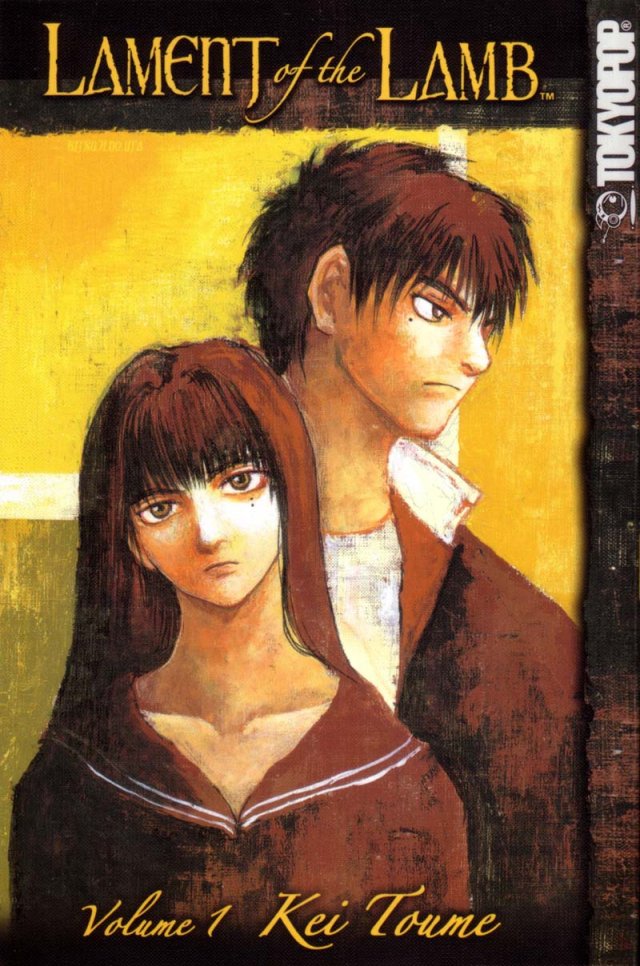
10. Lament of the Lamb
By Kei Toume • Tokyopop • 7 volumes
Kei Toume puts a novel spin on vampirism, presenting it not as a supernatural phenomenon, but as a symptom of a rare genetic disorder. His brother-and-sister protagonists, Kazuna and Chizuna, begin exhibiting the same tendencies as their deceased mother, losing control at the sight or suggestion of blood, and enduring cravings so intense they induce temporary insanity. Long on atmosphere and short on plot, Lament of the Lamb won’t be every vampire lover’s idea of a rip-snortin’ read; the manga focuses primarily on the intense, unhealthy relationship between Kazuna and Chizuna, and very little on blood-sucking. What makes Lament of the Lamb so deeply unsettling, however, is the strong current of violence and fear that flows just beneath its surface; Kazuna and Chizuna may not be predators, but we see just how much self-control it takes for them to contain their bloodlust.
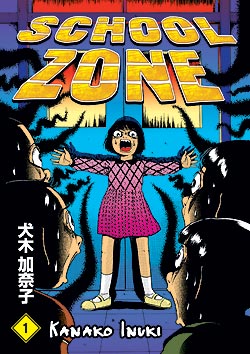
9. School Zone
By Kanako Inuki • Dark Horse • 3 volumes
In this odd, hallucinatory, and sometimes very funny series, a group of students summon the ghosts of people who died on school grounds, unleashing the spirits’ wrath on their unsuspecting classmates. School Zone is as much a meditation on childhood fears of being ridiculed or ostracized as it is a traditional ghost story; time and again, the students’ own response to the ghosts is often more horrific than the ghosts’ behavior. Inuki’s artwork isn’t as gory or imaginative as some of her peers’, though she demonstrates a genuine flair for comically gruesome thrills: one girl is dragged into a toilet, for example, while another is attacked by a scaly, long-armed creature that lives in the infirmary. Where Inuki really shines, however, is in her ability to capture the primal terror that a dark, empty building can inspire in the most rational person. Even when the story takes one its many silly detours — and yes, there are many WTF?! moments in School Zone — Inuki makes us feel her characters’ vulnerability as they explore the school grounds after hours. —Reviewed at The Manga Critic on 10/29/09

8. Mail
By Housui Yamazaki • Dark Horse • 3 volumes
If you like you horror neat with a twist, Mail might be your kind of manga: a meticulously crafted selection of short, spooky tales in which a handsome exorcist goes toe-to-toe with all sort of ghosts. The stories are a mixture of urban legend and folklore: a GPS system which directs a woman to the scene of a crime, an accident victim who haunts the elevator shaft where he died, a possessed doll. Through precise linework and superb command of light, Hosui Yamakazi transforms everyday situations — returning home from work, logging onto a computer — into extraordinary ones in which shadows and corners harbor very nasty surprises. Best of all, Mail never overstays its welcome; it’s the manga equivalent of the Goldberg Variations, offering a number of short, trenchant variations on a single theme and then wrapping things up neatly.

7. After School Nightmare
By Setona Mizushiro • Go! Comi • 10 volumes
Masahiro, a charming, popular high school student, harbors a terrible secret: though he appears to be male, the lower half of his body is female. At a nurse’s urging, he agrees to visit the school infirmary for a series of dream workshops in which he interacts with classmates who are also grappling with serious problems, from child abuse to pathological insecurity. The students’ collective dreams are vivid and strange, unfolding with the peculiar, fervid logic of a nightmare; buildings flood, stairwells lead to dead ends, and characters undergo sudden, dramatic transformations. Making the dream sequences extra creepy is the way Setona Mizushiro renders the students, choosing an avatar for each that represents their true selves: a black knight, a faceless body, a long, disembodied arm that grasps and slithers. Attentive readers will be rewarded for their patient observation with an unexpected but brilliant twist in the very final pages.
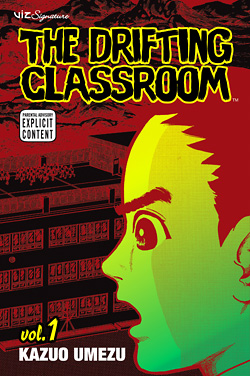
6. The Drifting Classroom
By Kazuo Umezu • VIZ Media • 11 volumes
It’s sorely tempting to compare The Drifting Classroom to The Lord of the Flies, as both stories depict school children creating their own societies in the absence of adult authority. But Kazuo Umezu’s series is more sinister than Golding’s novel, as Classroom‘s youthful survivors have been forced to band together to defend themselves from their former teachers, many of whom have become unhinged at the realization that they may never return to their own time. (Their entire elementary school has slipped through a rift in the space-time continuum, depositing everyone in the distant future.) The story is as relentless as an episode of 24: characters are maimed or killed in every chapter, and almost every line of dialogue is shouted. (Sho’s petty arguments with his mother are delivered as emphatically as his later attempts to alert classmates to the dangers of their new surroundings.) Yet for all its obvious shortcomings, Umezu creates an atmosphere of almost unbearable tension that conveys both the hopelessness of the children’s situation and their terror at being abandoned by the grown-ups. If that isn’t the ultimate ten-year-old’s nightmare, I don’t know what is. —Reviewed at PopCultureShock on 10/15/06
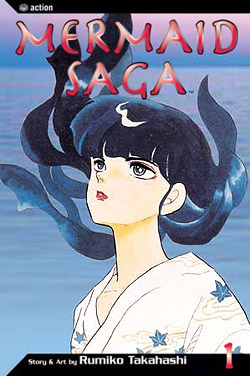
5. Mermaid Saga
By Rumiko Takahashi • VIZ Media • 4 volumes
This four-volume series ran on and off in Shonen Sunday for nearly ten years, chronicling the adventures of Yuta, a fisherman who gained immortality by eating mermaid flesh. Desperate to live an ordinary existence, Yuta spends five hundred years wandering Japan in search of a mermaid who can restore his mortality, crossing paths with criminals, immortals, and “lost souls,” people reduced to a monstrous condition by the poison in mermaid flesh. Though the stories follow a somewhat predictable pattern, Takahashi’s writing is brisk and assured, propelled by snappy dialogue and genuinely creepy scenarios. The imagery is tame by horror standards, but Takahashi doesn’t shy away from the occasional grotesque or gory image, using them to underscore the ugly consequences of seeking immortality. —Reviewed at The Manga Critic on 10/29/09.
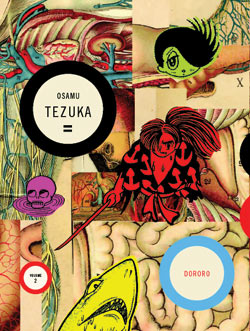
4. Dororo
By Osamu Tezuka • Vertical, Inc. • 3 volumes
The next time you feel inclined to criticize your parents, remember Hyakkimaru’s plight: his father pledged Hyakkimaru’s body parts to forty-eight demons in exchange for political power, leaving his son blind, deaf, and limbless at birth. After being rescued and raised by a kindly doctor, Hyakkimaru embarks on a quest to reclaim his eyes and ears, wandering across a war-torn landscape where demons take advantage of the chaos to prey on humans. Some of these demons have obvious antecedents in Japanese folklore (e.g. a nine-tailed fox), while others seem to have sprung full-blown from Tezuka’s imagination (e.g. a shark who paralyzes his victims with sake breath). Though the story ostensibly unfolds during the Warring States period, Dororo wears its allegory lightly, focusing primarily on swordfights, monster lairs, and damsels in distress while using its historical setting to make a few modest points about the corrosive influence of greed, power, and fear. For my money, one of Tezuka’s best series, peroid. —Reviewed at The Manga Critic on 7/27/09
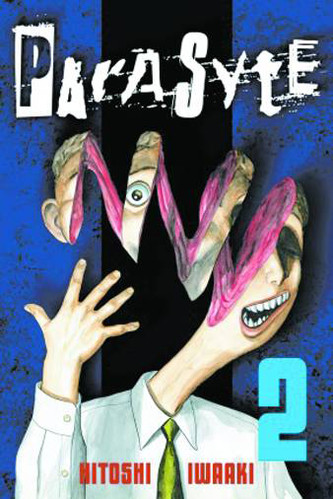
3. Parasyte
By Hitoshi Iwaaki • Del Rey • 8 volumes
Part The Defiant Ones, part Invasion of the Body Snatchers, Parasyte focuses on the symbiotic relationship between Shin, a high school student, and Migi, the alien parasite that takes up residence in his right hand after failing to take control of Shin’s brain. The two go on the lam after another parasite kills Shin’s mother — and makes Shin and Migi look like the culprits. If the human character designs are a little blank and clumsy, the parasites are not; Hitoshi Iwaaki twists the human body into some of the most sinister-looking shapes since Pablo Picasso painted Dora Maar. The violence is graphic but not sadistic, as most of the action takes place between panels, with only the grisly aftermath represented in pictorial form. The best part of Parasyte, however, is the script; Shin and Migi trade barbs with the antagonistic affection of Oscar Madison and Felix Unger, revealing Migi to be smarter and more objective than his human host. Shin and Migi’s banter adds an element of levity to the story, to be sure, but their heated debates about survival are also a sly poke at the idea that human beings’ intellect and emotional attachments place them squarely atop the food chain. —Reviewed at The Manga Critic on 7/2/10

2. The Kurosagi Corpse Delivery Service
By Eiji Otsuki and Housui Yamakazi • Dark Horse • 13+ volumes
The Kurosagi Corpse Delivery Service is comprised of five members: Karatsu, a monk-in-training; Numata, a hipster with an encyclopedic knowledge of pop culture; Yata, an odd duck who communicates primarily through a puppet that he wears on his left hand; Makino, a chatty embalmer; and Sasaki, a hacker with an entrepreneurial streak. Working as a team, the quintet helps the dead cross over, using their myriad talents to locate bodies, speak with ghosts, and resolve the spirits’ unfinished business. The set-up is pure gold, giving the episodic series some structure, while allowing Eiji Otsuka and Housui Yamakazi the flexibility to stage grisly murders and discover corpses in a variety of unexpected places. Think Scooby Doo with less wholesome protagonists and scarier spooks and you have a good idea of what makes this offbeat series tick. And yes, the gang even has their own van. —Reviewed at The Manga Critic on 6/24/09

1. Gyo
By Junji Ito • VIZ Media • 2 volumes
From the standpoint of craft, Uzumaki is a better manga, but it’s hard to top the sheer creepiness factor of Gyo, which taps into one of the most primordial of fears: being eaten! Here’s how I explained its appeal to David Welsh at The Comics Reporter:

Like many other children of the 1970s, Jaws left an indelible impression on me. I wasn’t just terrified of swimming in the ocean, I was reluctant to immerse myself in any standing body of water — swimming pools, bathtubs, ponds — that might conceivably harbor a shark. That irrational fear of encountering a great white somewhere it’s not supposed to be even led me to wonder what it might be like to bump into one on land — could I outrun it?

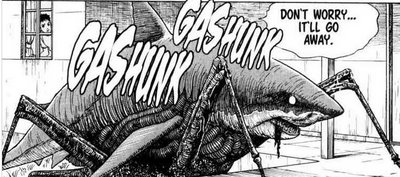
I’m guessing Junji Ito also suffers from icthyophobia, because Gyo looks like my worst nightmare, a world in which hideously deformed fish crawl out of the sea on mechanical legs and terrorize humans, spreading a disease that quickly jumps species. As horror stories go, many of Gyo‘s details aren’t terribly well explained — how, exactly, the fish acquired legs remains unclear despite talk of military experiments gone awry — but the imaginative artwork appeals on a visceral level. Gyo‘s highpoint comes midway through volume one, when a great white shark chases the hero and his girlfriend through a house, even scaling the stairs (no pun intended) in pursuit of its next meal. The scene is utterly ridiculous, but it works — for a few terrible, thrilling pages I learned the answer to my long-standing question, What would it be like to be chased by a shark on land? In a word: scary.

In other words, this is my worst nightmare:
So those are ten of my favorite spooky manga! What horror manga are on your top-ten list? Inquiring minds want to know!

Filed Under: Manga, Manga Critic, Recommended Reading Tagged With: Dark Horse, del rey, Eiji Otsuka, Go! Comi, Hitoshi Iwaaki, Horror/Supernatural, Junji Ito, Kanako Inuki, Kazuo Umezu, Kei Toume, Osamu Tezuka, Rumiko Takahashi, Setona Mizushiro, Tokyopop, Vertical Comics, VIZ

Cross Game 1 by Mitsuru Adachi: A-

October 20, 2010 by Michelle Smith

When the first volume of Cross Game arrived at my house, I’m pretty sure my exact words were, “Eee!” Happily, I liked it every bit as I thought I would.

The back cover really says it best: “Cross Game is a moving drama that is heartfelt and true, yet in the brilliant hands of manga artist Mitsuru Adachi, delightfully flows with a light and amusing touch. The series centers around a boy named Ko, the family of four sisters who live down the street and the game of baseball. This poignant coming-of-age story will change your perception of what shonen manga can be.”

Warning: it’s impossible to discuss one of the nicest aspects of this series without revealing a major spoiler. Proceed at your own risk.

The first of the three volumes of Cross Game that VIZ has bundled together in an attractive omnibus serves as a prologue, of sorts. We meet protagonist Ko Kitamura when he’s in fifth grade, a mischievous and lazy kid whose parents run a sporting goods shop. Nearby, Mr. Tsukishima runs a batting center and his four daughters are a part of Ko’s life, though none more so than sunny Wakaba, who was born the same day as Ko and who alone has the power to motivate him. She’s a very special girl, with a knack for befriending other kids despite their appearance or reputation; the influence her acceptance has on her classmate Akaishi, commonly regarded as somewhat of a hoodlum, is destined to be lifelong.

Tragedy strikes at swimming camp when Wakaba attempts to save someone else and ends up drowning herself. Despite her physical absence from the story after this point, Wakaba’s presence remains a palpable one. As the story jumps ahead four years, we find Ko still continuing to perform the daily workout he promised her he would do as a means of improving his baseball skills and Akaishi leading the junior high baseball team (and staying out of trouble). Ko hasn’t joined the team because of some jerks that were on it when he was a first year, but once Akaishi tells him that on the last morning of her life, Wakaba passed by his parents’ store and mentioned that she’d dreamed about Akaishi and Ko going to Koshien together, he begins training without another word necessary. Ko may be a slacker if left to his own devices, but if it’s something Wakaba wanted, he is going to make sure it becomes reality, no matter what. It’s clear Akaishi feels the same.

The boys move into high school, where the interim principal has hired an unprincipled baseball coach with a good record at Koshien. Ko, Akaishi, and their friend Nakanishi don’t want to play for such a fellow and opt to remain on the junior varsity team; as the volume ends they’re preparing to show up the varsity team in an upcoming scrimmage game. Tying in with this is the sad story of Aoba, Wakaba’s younger sister. Aoba is passionate about baseball and is even the captain of the junior high team. Unfortunately, because she’s a girl she can only ever pitch in practice games and can never be deemed more than a devoted fan. Aoba and Ko clash personally, as well, as she still resents him for the closeness he shared with Wakaba, though it’s clear they’re destined to end up together.

Cross Game is a pretty low-key story that’s part slice-of-life and part sports manga. Typically, the protagonists in the latter don’t have such a touching reason for wanting to excel at their sport, and neither do they feature two guys nurturing a bittersweet memory of the same beloved girl in their hearts. The characters really grow on you—Ko seems a little bratty at first, but shows time and again that he’s a good person, particularly in how he treats Momiji, Wakaba and Aoba’s little sister—and I love that Ko’s two best friends are kind of burly and unattractive. You don’t see that a lot in manga.

I have two minor complaints, but I’ve been given to understand that they’re both common attributes of Mitsuru Adachi’s manga. The first is that some of the character designs—particularly of children—are positively dumpy. Too, a lot of the recurring characters have faces that are difficult to remember, though this is not the case at all for the primary players. Secondly, the fourth wall gets broken all the time. Adachi himself appears and the characters are often shown reading his manga. The story doesn’t take itself too seriously, so this is not as glaring as similar moments in NANA, for example, but I found it kind of irksome all the same.

The second omnibus of Cross Game, this time containing volumes four and five of the original Japanese releases, is due in January. I am looking forward to that scrimmage game—and Ko finally getting to show off his amazing baseball abilities—so much that it isn’t even funny.

Cross Game is published in English by VIZ, who is bundling the seventeen-volume series into eight chunky tomes. This one is comprised of the first three volumes and the others will contain two each.

This review was originally published at Comics Should Be Good.

Review copy provided by the publisher.

Filed Under: Manga, Shounen Tagged With: Mitsuru Adachi, shonen sunday, VIZ

Tidbits: Shonen Jumping for Joy

October 17, 2010 by Michelle Smith

Welcome back to Tidbits, a new feature for shorter reviews! This time I take a look at three continuing series from VIZ’s Shonen Jump imprint. First up, it’s volumes 28-31 of One Piece, followed by volumes 9-12 of Slam Dunk and a single volume (the third) of the aesthetically pleasing Tegami Bachi: Letter Bee.

One Piece 28-31 by Eiichiro Oda: B+
Volumes 28-30 consist almost entirely of fighting, as the forces of the all-powerful “Kami” of Skypiea, Eneru, clash with the Shandians (fighting to regain their lost city), while the Straw Hat pirates (just lookin’ for some gold) are caught in the middle. Eneru, as it turns out, has staged the whole thing as a survival game, and figures that after three hours, only five of the original 81 combatants will survive. After this, we get periodic updates as to how many remain, a device I found strangely satisfying.

Although some of the battles are between characters we’ve never seen before, those encounters are usually brief. While Luffy spends the entirety of volume 29 stuck inside a giant serpent, many of the other Straw Hats get a chance to shine, especially Chopper and Robin, whose battles with Eneru’s minions show off the versatility of their respective powers. Nami, too, gets more experience using her new weapons and Conis, a resident of Skypiea, marshals her courage to defy the Kami and warn the people of his plans to destroy the island. There’s been some discussion lately about manga that passes the Bechdel Test, and these volumes exemplify why One Piece does so with flying colors.

Speaking of Robin, I am liking her more and more. This is the first time we’ve really seen her on her own and though it’s always been evident how intelligent and competent she is, it’s nice to see she’s also trustworthy and kind of a badass. She’s generally reserved but is passionate about archaeology, and through her we begin to get hints about a 100-year gap in the history of the world, something that could turn out to be huge. At one point she references “the unspoken history that the land below has ceased to talk about,” and later discovers that Shandora “fought against the enemy.” Thirty volumes in and we’re just starting something so big and potentially awesome? Oda, I think I love you.

After Eneru puts in motion his plan to destroy Skypiea, a mass exodus of its residents ensues. Volume 31 departs from the present panic to flesh out the history of the island and how it ties in with Mont Blanc Noland. This is actually the best part of the Skypiea arc so far and explains quite a few things while being a durn good story in and of itself. The arc doesn’t quite wrap up here, but now that I fully understand the significance of the golden bell in the city of Shandora, I care a lot more about the outcome than I have done in recent volumes!

Slam Dunk 9-12 by Takehiko Inoue: B+
It takes some willpower not to devour each new release of Slam Dunk, but it’s so immensely satisfying to read multiple volumes back-to-back that the wait is worth it!

Volume nine marks the start of the Kanagawa Prefectural Tournament, in which the Shohoku team is able to take part thanks to Hanamichi’s friends taking responsibility for the on-court brawl that occurred in the previous volume. Shohoku is underestimated at first, but the return of Miyagi and Mitsui to the team—both of whom are greeted with somewhat awed recognition from the crowd—makes them a force to be reckoned with. They progress steadily through the tournament, eventually ending up in the final four against Kainan, a school that has made it to Nationals sixteen years in a row.

Hanamichi is his usual annoying self to begin with, demanding that the ball be passed to him and proclaiming himself a genius at every opportunity. After fouling out in each of the first four games, and after recognizing the skills and strengths of his teammates, he finally realizes that he’s not such hot stuff after all. Despite occasional relapses, this marks a real turning point for Hanamichi, as he is able to accept tutelage more readily and function better as a part of the team. For example, though he originally harbored dreams of outscoring Rukawa, once he makes snagging rebounds his focus instead, he’s able to contribute a great deal to Shohoku’s success. His progress and maturation combined with a slightly more humble attitude go a long way toward making him more likable, and it’s quite touching when he gets his first rousing cheer from the crowd.

Structurally, Slam Dunk is very similar to The Prince of Tennis. Though I love the latter a lot, Slam Dunk is the more exciting read, a fact I’d chalk up to the nature of the sport. In tennis, our lead characters battle either singly or in pairs against their foes, while the rest are relegated to commentary until it’s their turn. Here, all the principle characters are on the court at the same time, which gives more immediacy to the way they’re able to motivate each other. True, the characters in Eyeshield 21 all play simultaneously, too, but because basketball moves at a faster pace than football, the effect here is exhilarating, bordering on addictive.

Unfortunately, there’s no more Slam Dunk due until December! Perhaps I’ll investigate whether Inoue’s more dramatic basketball manga, REAL, can help stave off the cravings.

Tegami Bachi: Letter Bee 3 by Hiroyuki Asada: C+
Tegami Bachi: Letter Bee is the story of Lag Seeing, a twelve-year-old boy who has just become a Letter Bee (government mail carrier) in the perpetually dark country of Amberground, inspired by Gauche Suede, a Letter Bee he met five years ago. Lag had hoped to reunite with Gauche, but after learning that his hero disappeared six months after he last saw him, he meets with Gauche’s sister, Sylvette, and promises to find out what happened to her brother.

Gauche was by far the more interesting of the two characters featured in volume one, so it’s nice to get a few glimpses of him here. These tibits—and the bonus story about reuniting an aging dingo (animal companion) with the Letter Bee he faithfully served—are the best things about the volume. Lag is still not a very interesting protagonist and I’ve grown to pretty much hate his dingo, Niche. I’m sure she’s intended to be comic relief, but the story would be better served by cutting her unfunny antics and devoting that page space to clarifying the narrative, which is still going on and on about the importance of “heart.”

Back in January when I reviewed volume two, I said I’d give Tegami Bachi one more chance to win me over. As problematic as the series continues to be, after what we learn about Gauche’s disappearance and mysterious memory loss in this volume, I can’t imagine myself stopping without learning what happened to him. I don’t think this counts as “won over” so much as “minimally intrigued,” but either way, I’ll probably keep reading.

Review copies for volumes nine, eleven, and twelve of Slam Dunk provided by the publisher.

Filed Under: Manga, Shounen, Tidbits Tagged With: Eiichiro Oda, Hiroyuki Asada, Shonen Jump, Takehiko Inoue, VIZ

Summer, Fireworks, and My Corpse

October 14, 2010 by Katherine Dacey 6 Comments

At some point in your travels through high school English, a teacher probably made you read Shirley Jackson’s “The Lottery,” a short story about a rural community that routinely sacrifices one its members to ensure a good harvest. I remember writing a paper about “The Lottery” my freshman year. Like many of my classmates, I critiqued the story’s dramatic aspects — the shocking twist, the ethics of the townspeople’s ritual — and neglected to say much about Jackson’s prose. Re-reading “The Lottery” as an adult, it’s obvious what I missed the first time around: Jackson’s singular ability to make the banal sinister through the selective presentation and repetition of seemingly inconsequential details.

Consider “The Summer People,” a short story from 1950. Jackson lavishes considerable attention on the title characters’ day-to-day activities such as buying groceries in town; one might reasonably infer it was a slice-of-life story about New Yorkers experiencing mild culture shock in backwoods New England. By the story’s end, however, it becomes clear why Jackson documented the Allisons’ routine in such detail; the townspeople have been observing the Allisons, viewing every gesture or action as a further violation of the unspoken agreement between residents and summer people that the out-of-towners go home by Labor Day. We don’t know what, exactly, happens to the Allisons for breaking the contract — Jackson leaves that to the readers’ imagination — but we’re left feeling deceived and unsettled, as if we ourselves had been the target of the year-rounders’ wrath.

It seems fitting, then, that Japanese horror novelist Otsu-ichi was nominated for the 2009 Shirley Jackson Award, as he has a similar flair for transforming ordinary situations into extraordinary ones. In “Yuko,” the second entry in Summer, Fireworks, and My Corpse, for example, a young woman takes a job working for a childless couple, one of whom is bedridden. A small but noticeable change in their nightly dinner routine arouses her suspicion that something is amiss between her employers, setting in motion a chain of events that culminate in a scene of comic horror.

The title story, too, pivots on a few carefully chosen details, as two children conspire to hide the corpse of a playmate who fell to her death. Throughout the story, Otsu-ichi describes the children eating ice cream, a simple motif that seems, at first, to be offered as evidence of the children’s struggle to conceal their guilt by engaging in normal activities. In the final pages of the story, however, that seemingly benign habit is cast in an entirely different light, forcing us to reconsider everything we’d believed about one of the story’s secondary characters.

Only the third and final story of the collection, “Black Fairy Tale,” deviates from this pattern, instead offering a mixture of urban legend and B-movie horror in book form. It’s an ambitious story, with several interlaced threads, including a dark fable about a crow who befriends a blind girl, and a teenager who loses her eye and her memory in an accident, only to have them replaced with a murder victim’s. There’s also a subplot involving a serial killer who carries out ghastly experiments on people, transforming them into monsters and holding them captive in his basement. Though Otsu-ichi skillfully maneuvers among the various storylines, maintaining sufficient suspense throughout the story, “Black Fairy Tale” is a less rewarding read than “Summer, Fireworks, and My Corpse” or “Yuko,” both of which rely more on psychological manipulation than cheap shock tactics to scare the reader; Otsu-ichi’s descriptions of the killer’s surgeries elicit a visceral, immediate response, to be sure, but prove less unsettling or memorable than the behavior of “Summer”‘s true villain.

Good horror operates on a deeper level as well, showing us how greed, hypocrisy, and conformity tear at the very fabric of society. I think that’s one of the reasons we continue to read Jackson’s work; stories like “The Lottery” and “The Summer People” offer a window into the conservative, conformist culture of the 1950s, that brief moment before the Civil Rights Movement, feminism, the Pill, and the Vietnam War radically altered the American landscape. Jackson’s characters live in terror of upsetting the status quo; their greatest fear is to be exposed as an outsider or an outlier of any kind.

The pressure to conform to parental and peer expectations — a frequent motif in contemporary Japanese comics, cinema, and literature — plays a similar role in Otsu-ichi’s “Black Fairy Tale.” Nami, its amnesiac heroine, is an obvious example. Before her accident, she was a model student, musician, and daughter, basking in others’ approbation; when a head injury robs her of the the ability to do well in school or play a Chopin ballad, her peers and parents begin to ostracize her, writing her off as a shy, inept loser. Throughout the story, she wrestles with her desire to reconcile her new and old personalities; only by embracing and acting on the memories left behind by her left eye’s previous owner — a loner and a college dropout — does she begin to appreciate the possibility of living the life she chooses, rather than the one her parents had planned for her.

Would Jackson have recognized the parallels between her work and Otsu-ichi’s? Aside from Otsu-ichi’s occasional detour into Clive Barker-esque excess, I’d say yes; Summer, Fireworks, and My Corpse is a solidly crafted collection of psychological horror stories, the best of which prove as spooky and thought-provoking as “The Lottery” and “The Summer People,” not least for the way in which Otsu-ichi finds the uncanny in the everyday.

Review copy provided by VIZ Media, LLC.

SUMMER, FIREWORKS, AND MY CORPSE • BY OTSU-ICHI, TRANSLATED BY NATHAN COLLINS • VIZ (HAIKASORU) • 300 pp.

Filed Under: Manga Critic Tagged With: Haikasoru, Otsuichi, VIZ

Summer, Fireworks, and My Corpse

October 14, 2010 by Katherine Dacey

At some point in your travels through high school English, a teacher probably made you read Shirley Jackson’s “The Lottery,” a short story about a rural community that routinely sacrifices one its members to ensure a good harvest. I remember writing a paper about “The Lottery” my freshman year. Like many of my classmates, I critiqued the story’s dramatic aspects — the shocking twist, the ethics of the townspeople’s ritual — and neglected to say much about Jackson’s prose. Re-reading “The Lottery” as an adult, it’s obvious what I missed the first time around: Jackson’s singular ability to make the banal sinister through the selective presentation and repetition of seemingly inconsequential details.

Consider “The Summer People,” a short story from 1950. Jackson lavishes considerable attention on the title characters’ day-to-day activities such as buying groceries in town; one might reasonably infer it was a slice-of-life story about New Yorkers experiencing mild culture shock in backwoods New England. By the story’s end, however, it becomes clear why Jackson documented the Allisons’ routine in such detail; the townspeople have been observing the Allisons, viewing every gesture or action as a further violation of the unspoken agreement between residents and summer people that the out-of-towners go home by Labor Day. We don’t know what, exactly, happens to the Allisons for breaking the contract — Jackson leaves that to the readers’ imagination — but we’re left feeling deceived and unsettled, as if we ourselves had been the target of the year-rounders’ wrath.

It seems fitting, then, that Japanese horror novelist Otsu-ichi was nominated for the 2009 Shirley Jackson Award, as he has a similar flair for transforming ordinary situations into extraordinary ones. In “Yuko,” the second entry in Summer, Fireworks, and My Corpse, for example, a young woman takes a job working for a childless couple, one of whom is bedridden. A small but noticeable change in their nightly dinner routine arouses her suspicion that something is amiss between her employers, setting in motion a chain of events that culminate in a scene of comic horror.

The title story, too, pivots on a few carefully chosen details, as two children conspire to hide the corpse of a playmate who fell to her death. Throughout the story, Otsu-ichi describes the children eating ice cream, a simple motif that seems, at first, to be offered as evidence of the children’s struggle to conceal their guilt by engaging in normal activities. In the final pages of the story, however, that seemingly benign habit is cast in an entirely different light, forcing us to reconsider everything we’d believed about one of the story’s secondary characters.

Only the third and final story of the collection, “Black Fairy Tale,” deviates from this pattern, instead offering a mixture of urban legend and B-movie horror in book form. It’s an ambitious story, with several interlaced threads, including a dark fable about a crow who befriends a blind girl, and a teenager who loses her eye and her memory in an accident, only to have them replaced with a murder victim’s. There’s also a subplot involving a serial killer who carries out ghastly experiments on people, transforming them into monsters and holding them captive in his basement. Though Otsu-ichi skillfully maneuvers among the various storylines, maintaining sufficient suspense throughout the story, “Black Fairy Tale” is a less rewarding read than “Summer, Fireworks, and My Corpse” or “Yuko,” both of which rely more on psychological manipulation than cheap shock tactics to scare the reader; Otsu-ichi’s descriptions of the killer’s surgeries elicit a visceral, immediate response, to be sure, but prove less unsettling or memorable than the behavior of “Summer”‘s true villain.

Good horror operates on a deeper level as well, showing us how greed, hypocrisy, and conformity tear at the very fabric of society. I think that’s one of the reasons we continue to read Jackson’s work; stories like “The Lottery” and “The Summer People” offer a window into the conservative, conformist culture of the 1950s, that brief moment before the Civil Rights Movement, feminism, the Pill, and the Vietnam War radically altered the American landscape. Jackson’s characters live in terror of upsetting the status quo; their greatest fear is to be exposed as an outsider or an outlier of any kind.

The pressure to conform to parental and peer expectations — a frequent motif in contemporary Japanese comics, cinema, and literature — plays a similar role in Otsu-ichi’s “Black Fairy Tale.” Nami, its amnesiac heroine, is an obvious example. Before her accident, she was a model student, musician, and daughter, basking in others’ approbation; when a head injury robs her of the the ability to do well in school or play a Chopin ballad, her peers and parents begin to ostracize her, writing her off as a shy, inept loser. Throughout the story, she wrestles with her desire to reconcile her new and old personalities; only by embracing and acting on the memories left behind by her left eye’s previous owner — a loner and a college dropout — does she begin to appreciate the possibility of living the life she chooses, rather than the one her parents had planned for her.

Would Jackson have recognized the parallels between her work and Otsu-ichi’s? Aside from Otsu-ichi’s occasional detour into Clive Barker-esque excess, I’d say yes; Summer, Fireworks, and My Corpse is a solidly crafted collection of psychological horror stories, the best of which prove as spooky and thought-provoking as “The Lottery” and “The Summer People,” not least for the way in which Otsu-ichi finds the uncanny in the everyday.

Review copy provided by VIZ Media, LLC.

SUMMER, FIREWORKS, AND MY CORPSE • BY OTSU-ICHI, TRANSLATED BY NATHAN COLLINS • VIZ (HAIKASORU) • 300 pp.

Filed Under: Books, Manga Critic, REVIEWS Tagged With: Haikasoru, Horror/Supernatural, Otsuichi, Short Stories, VIZ

Bakuman。 2 by Tsugumi Ohba and Takeshi Obata: B+

October 11, 2010 by Michelle Smith

From the back cover:
Average student Moritaka Mashiro enjoys drawing for fun. When his classmate and aspiring writer Akito Takagi discovers his talent, he begs Moritaka to team up with him as a manga-creating duo. But what exactly does it take to make it in the manga-publishing world?

After Moritaka and Akito collaborate on a manga together, they venture to publishing house Shueisha in hopes of capturing an editor’s interest. As much potential as these two rookies have, will their story impress the pros and actually get printed?

Review:
The second volume of Bakuman。 picks up where the first left off, with artist Moritaka Mashiro and writer Akito Takagi taking the final draft of their one-shot manga to Jump headquarters for consideration. This kicks off a series of fascinating meetings (spanning from summer vacation to the start of the next school year the following spring) in which the boys receive feedback from their editor, Hattori, and try to create a story that will be popular enough to merit serialization.

I loved all the meetings with Hattori, especially how specific he was about story and art requirements for Jump and how, as the boys improved, he went over their storyboards panel-by-panel with useful suggestions. As befits shounen protagonists, Mashiro and Akito are both very talented, but they’re not instantly the best around and go through many ideas and an immense amount of work before they’re able to craft something that is worth publishing.

When they finally do manage to get a story published, it takes third place in the popularity poll for that issue. The winner is Eiji Nizuma, a fifteen-year-old mangaphile who has been drawing since the age of six and practically does nothing else. He’s an exceedingly weird kid, but he fulfills the Akira Toya role here of “genius rival of comparable age.” He’s the first obstacle our leads will have to overcome, and I think it’s pretty fun how this is shaping up to be a sort of tournament manga.

Unfortunately, I’m still bored and fairly annoyed by Mashiro’s relationship with classmate Miho Azuki. They’ve pledged to marry once their dreams come true, but in the meantime aren’t even going to date. To some extent I understand—it’s suggested that Miho’s in favor of this because she wants to be able to focus on her dream without being distracted by Mashiro—but they still hardly know each other. Thankfully, Miho’s friend, Miyoshi, finds this just as bizarre. Also, while the overt, spoken sexism is absent from this volume it’s not exactly absent from the characters’ behavior. At one point Mashiro informs Miho that they’re going to be together when he becomes a manga artist, whether she’s realized her dream (to be a voice actress) or not. Nice, kid.

Though Bakuman。 has some flaws, it’s still an utterly captivating look at the manga-creating experience. I can overlook a banal relationship plotline if it means getting a glimpse inside the editorial process at Jump!

Review copy provided by the publisher.

Filed Under: REVIEWS Tagged With: Shonen Jump, Takeshi Obata, VIZ

Cat-Eyed Boy, Vols. 1-2

October 3, 2010 by Katherine Dacey 4 Comments

Kazuo Umezu’s writing defies easy categorization. His horror stories unfold in an almost haphazard fashion, seldom offering Western readers the kind of inevitable showdown between supernatural menace and righteous avenger that’s de rigeur in grindhouse flicks. In a less charitable mood, I might suggest that Umezu was simply making it up as he went along, adding whatever Grand Guignol flourishes tickled his fancy; in a more critically responsible frame of mind, I’d argue that Umezu uses non-sequitors, heightened realism, and Freudian imagery to create a hallucinatory atmosphere that thumbs its nose at logic or teleology.

In the afterword to Cat-Eyed Boy, artist Mizuho Hiroyama offers a more geneorus assessment of Umezu’s approach to storytelling:

But just what is this unforgettable bizarreness that lies at the core of Umezu’s world? Is it a child’s nightmare? I think that this probably the best way to describe it. It’s simply fear. The escalating fear and imagination of a child who is unable to fall asleep in a pitch-dark room late at night, thinking about the worst-case scenarios and wondering, “What would I do if this happened?”

I think Hiroyama is on to something here: as anyone who’s read The Drifting Classroom knows, that entire series reads like a child’s nightmare, filled with terrifying monsters, barren wastelands, and irresponsible, ineffectual adults whose inability to save the day forces the stranded students to rely on themselves.

These same motifs recur throughout Umezu’s oeuvre. The eleven stories that comprise Cat-Eyed Boy, for example, are chock-full of demons — some grotesque, some comic — vengeful spirits, dead parents, and spiteful adults. Cat-Eyed Boy, a child-like creature who’s half-human, half-demon, finds himself relegated to the margins of both worlds, making him especially vulnerable to predation, in spite of his obvious strength and cunning. Like Sho and his Drifting Classroom peers, Cat-Eyed Boy must frequently outsmart unscrupulous adults (and a few monsters) to save his own skin.

Cat-Eyed Boy’s role varies from story to story: in some, he’s an active participant, a trickster figure who cajoles or deceives, while in others, he’s an observer. The strongest entry of the collection, “The Tsunami Summoners,” is, not coincidentally, the one in which Umezu portrays his odd little hero as a truly grotesque figure, one whose liminal status arouses genuine pity in readers. On one level, “Summoners” is an origin story, explaining where Cat-Eyed Boy came from, how he was exiled from the demon world, and why humans greet him with such suspicion, despite his frequent efforts to intervene on their behalf. On another, it’s a superb example of Umezu-style comeuppance theater, as a small coastal village is punished not only for mistreating one of their own members but for ignoring an ancient warning about a sea-borne menace. Everything about the story works beautifully: the crack pacing, the unforeseen plot twists, and the genuine pathos of Cat-Eyed Boy’s situation as he tries to protect the same villagers who tormented his sole human friend. The summoners are a particularly effective menace, as their initial appearance is relatively benign – they look like brain-shaped rocks, perfect for building walls and houses – allowing them to insinuate themselves into every aspect of the villagers’ lives before anyone is aware of the danger they pose.

Other standouts include “The One-Legged Monster of Ondai,” a cautionary tale about the evils of lepidoptery; “The Thousand-Handed Demon,” a blood bath in which a evil spirit possesses a statue of the Buddhist deity Kwannon; and “The Stairs,” a story about a boy so eager to be see his late mother that he ignores all warnings about the perils of crossing between the lands of the living and the dead.

Several stories were simply too long or scattershot to leave much of an impression. The chief offender is “The Band of One Hundred Monsters,” a rambling tale in which a group of hideously deformed humans aspire to become demons. I thought it was going to be an extended riff on the creative process, as the story initially focuses on the interaction between the “monsters” and a manga-ka known for his bizarre horror tales. Instead, Umezu quickly dispatches the manga-ka and steers the narrative in a wholly unanticipated direction, with the Band of One Hundred murdering pretty yet soulless people. That narrative u-turn does little to bind the two halves of the story together, nor does it take the story in a particularly interesting direction; the notion that beauty is only skin-deep has been explored in countless horror stories to better effect, as Umezu’s earlier work “The Mirror” attests.

Viz presents Cat-Eyed Boy in two generously sized volumes, totaling almost 1,000 pages of story. Both are beautifully packaged, with French flaps, creamy paper stock, and color pages. I particularly liked the endpapers, which catalog the various demons found in both volumes. And what a rogue’s gallery it is — these monsters are considerably more grotesque than anything Umezu conjured for earlier series, sporting myriad eyes, warty skin, tentacles, and grossly misshapen bodies. Most of the stories aren’t terribly spooky or shocking by contemporary standards, but the sheer oddness of the character designs will get under your skin like images from a particularly vivid nightmare.

This is a revised version of a review that appeared at PopCultureShock on August 12, 2008.

CAT-EYED BOY, VOLS. 1 – 2 • BY KAZUO UMEZU • VIZ • RATING: OLDER TEEN (16+)

Filed Under: Manga Critic Tagged With: Classic, Kazuo Umezu, Shonen, VIZ

Cat-Eyed Boy, Vols. 1-2

October 3, 2010 by Katherine Dacey

Kazuo Umezu’s writing defies easy categorization. His horror stories unfold in an almost haphazard fashion, seldom offering Western readers the kind of inevitable showdown between supernatural menace and righteous avenger that’s de rigeur in grindhouse flicks. In a less charitable mood, I might suggest that Umezu was simply making it up as he went along, adding whatever Grand Guignol flourishes tickled his fancy; in a more critically responsible frame of mind, I’d argue that Umezu uses non-sequitors, heightened realism, and Freudian imagery to create a hallucinatory atmosphere that thumbs its nose at logic or teleology.

In the afterword to Cat-Eyed Boy, artist Mizuho Hiroyama offers a more geneorus assessment of Umezu’s approach to storytelling:

But just what is this unforgettable bizarreness that lies at the core of Umezu’s world? Is it a child’s nightmare? I think that this probably the best way to describe it. It’s simply fear. The escalating fear and imagination of a child who is unable to fall asleep in a pitch-dark room late at night, thinking about the worst-case scenarios and wondering, “What would I do if this happened?”

I think Hiroyama is on to something here: as anyone who’s read The Drifting Classroom knows, that entire series reads like a child’s nightmare, filled with terrifying monsters, barren wastelands, and irresponsible, ineffectual adults whose inability to save the day forces the stranded students to rely on themselves.

These same motifs recur throughout Umezu’s oeuvre. The eleven stories that comprise Cat-Eyed Boy, for example, are chock-full of demons — some grotesque, some comic — vengeful spirits, dead parents, and spiteful adults. Cat-Eyed Boy, a child-like creature who’s half-human, half-demon, finds himself relegated to the margins of both worlds, making him especially vulnerable to predation, in spite of his obvious strength and cunning. Like Sho and his Drifting Classroom peers, Cat-Eyed Boy must frequently outsmart unscrupulous adults (and a few monsters) to save his own skin.

Cat-Eyed Boy’s role varies from story to story: in some, he’s an active participant, a trickster figure who cajoles or deceives, while in others, he’s an observer. The strongest entry of the collection, “The Tsunami Summoners,” is, not coincidentally, the one in which Umezu portrays his odd little hero as a truly grotesque figure, one whose liminal status arouses genuine pity in readers. On one level, “Summoners” is an origin story, explaining where Cat-Eyed Boy came from, how he was exiled from the demon world, and why humans greet him with such suspicion, despite his frequent efforts to intervene on their behalf. On another, it’s a superb example of Umezu-style comeuppance theater, as a small coastal village is punished not only for mistreating one of their own members but for ignoring an ancient warning about a sea-borne menace. Everything about the story works beautifully: the crack pacing, the unforeseen plot twists, and the genuine pathos of Cat-Eyed Boy’s situation as he tries to protect the same villagers who tormented his sole human friend. The summoners are a particularly effective menace, as their initial appearance is relatively benign – they look like brain-shaped rocks, perfect for building walls and houses – allowing them to insinuate themselves into every aspect of the villagers’ lives before anyone is aware of the danger they pose.

Other standouts include “The One-Legged Monster of Ondai,” a cautionary tale about the evils of lepidoptery; “The Thousand-Handed Demon,” a blood bath in which a evil spirit possesses a statue of the Buddhist deity Kwannon; and “The Stairs,” a story about a boy so eager to be see his late mother that he ignores all warnings about the perils of crossing between the lands of the living and the dead.

Several stories were simply too long or scattershot to leave much of an impression. The chief offender is “The Band of One Hundred Monsters,” a rambling tale in which a group of hideously deformed humans aspire to become demons. I thought it was going to be an extended riff on the creative process, as the story initially focuses on the interaction between the “monsters” and a manga-ka known for his bizarre horror tales. Instead, Umezu quickly dispatches the manga-ka and steers the narrative in a wholly unanticipated direction, with the Band of One Hundred murdering pretty yet soulless people. That narrative u-turn does little to bind the two halves of the story together, nor does it take the story in a particularly interesting direction; the notion that beauty is only skin-deep has been explored in countless horror stories to better effect, as Umezu’s earlier work “The Mirror” attests.

Viz presents Cat-Eyed Boy in two generously sized volumes, totaling almost 1,000 pages of story. Both are beautifully packaged, with French flaps, creamy paper stock, and color pages. I particularly liked the endpapers, which catalog the various demons found in both volumes. And what a rogue’s gallery it is — these monsters are considerably more grotesque than anything Umezu conjured for earlier series, sporting myriad eyes, warty skin, tentacles, and grossly misshapen bodies. Most of the stories aren’t terribly spooky or shocking by contemporary standards, but the sheer oddness of the character designs will get under your skin like images from a particularly vivid nightmare.

This is a revised version of a review that appeared at PopCultureShock on August 12, 2008.

CAT-EYED BOY, VOLS. 1 – 2 • BY KAZUO UMEZU • VIZ • RATING: OLDER TEEN (16+)

Filed Under: Manga, Manga Critic, REVIEWS Tagged With: Classic, Horror/Supernatural, Kazuo Umezu, VIZ

Harmony

September 4, 2010 by Katherine Dacey

In 2009, VIZ launched its Haikasoru imprint with the goal of bringing Japan’s best speculative fiction to the US. Haikasoru’s debut titles — All You Need Is Kill and The Lord of the Sands of Time — introduced Americans to two award-winning sci-fi authors whose work had previously been unavailable in English. As the line as grown, so, too, has the diversity of its offerings, which run the gamut from horror to teen-friendly fantasy and science fiction. Harmony, the newest Haikasoru title, falls on the softer end of the sci-fi continuum, depicting a world in which “admedistrative” societies are the new empire-builders.

Harmony takes place in the late twenty-first century, fifty years after a nuclear holocaust destroys North America. Countries which successfully developed a cure for radiation sickness have supplanted the old superpowers, while less scientifically advanced societies have descended into a perpetual state of guerilla warfare. Keeping the peace is the World Health Organization (WHO), which is tasked with monitoring world’s well-being. Their mission sounds benign, but WHO’s “peacekeeping” efforts smack of Big Brother: they use WatchMe, an elaborate system that keeps tabs on what people eat, do, and say while providing the government a steady stream of data about a person’s medical condition.

Harmony is told through the point of view of Tuan Kirie, a twenty-eight-year-old WHO agent tasked with solving the mystery behind an “outbreak” of suicide — an action that, in theory, should be impossible under the WatchMe system. Tuan is an appealing narrator, at once tough and funny, a natural contrarian who smokes and drinks and defies authority yet nonetheless treats her mission with the utmost seriousness. The story moves fluidly between past and present, using Tuan’s childhood memories to shed light on her conflicted, often subversive, behavior.

Until the third act, the pacing is brisk and the dialogue crisp. As Tuan draws closer to finding out what prompted the wave of suicides, however, the story begins to sag under the weight of turgid conversations about free will and psychology, a flaw that the frequent changes of setting can’t conceal. It’s a shame these discussions are so pedestrian, as author Keikaku “Project” Itoh has devised a nifty set-up for examining the boundaries between public and private life, imagining a world in which the government’s desire to collect data and enforce civility goes well beyond speech, belief, and association — all manifestations of conscious thought — to the level of neural transmissions and body chemistry. Though Tuan yearns for the physical and social freedom less technologically advanced societies enjoy, the persistence of armed conflict in the developing world is a potent reminder of why so many people willingly submit to the benevolent totalitarianism of the WatchMe system.

VIZ has done an excellent job of adapting Harmony for English-speaking audiences. Translator Alexander O. Smith, in particular, deserves praise for the smooth, idiomatic voicing of Tuan’s thoughts in language that captures the heroine’s fierce personality. Smith also navigates passages of scientific shoptalk and historical description with ease, producing a highly readable text that lacks any of the tell-tale signs of translation: awkward turns of phrase, confusing use of pronouns.

Aside from a few third-act hiccups, Harmony is a solidly entertaining book, offering a judicious mixture of globe-trotting action, social commentary, and suspense to engage all but the hardest science fiction fans, and a surprise ending that neatly resolves the main plot while raising new, thought-provoking questions. Recommended.

Review copy provided by VIZ Media, LLC.

HARMONY • BY PROJECT ITOH, TRANSLATED BY ALEXANDER O. SMITH • VIZ • 252 pp.

Filed Under: Manga Critic Tagged With: Haikasoru, VIZ

Harmony

September 4, 2010 by Katherine Dacey

VIZ launched its Haikasoru imprint in 2009, with the goal of bringing Japan’s best speculative fiction to the US. Haikasoru’s debut titles — All You Need Is Kill and The Lord of the Sands of Time — introduced Americans to two award-winning sci-fi authors whose work had previously been unavailable in English. As the line as grown, so, too, has the diversity of its offerings, which run the gamut from horror (e.g. Otsuichi’s ZOO) to teen-friendly fantasy (e.g. Miyuki Miyabe’s Brave Story and The Book of Heroes) to science fiction (e.g. Issui Ogawa’s The Next Continent and Hosume Nojia’s Usurper of the Sun). Harmony, the newest Haikasoru title, falls on the softer end of the sci-fi continuum, depicting a world in which “admedistrative” societies — that is, countries that operate by rule of medicine, rather than rule of law — are the new empire-builders.

Harmony takes place in the late twenty-first century, fifty years after nuclear holocaust destroyed North America and destabilized the international balance of power by flooding the Third World with an abundant supply of nuclear weapons. In the chaos that ensued, countries which successfully developed the medical technology to treat radiation sickness supplanted the old superpowers, while less scientifically advanced nations descended into guerilla warfare. The new admedistrative powers transformed the World Health Organization (WHO) into a global peacekeeping force tasked with monitoring other nations’ ability to “ensure their populace a lifestyle that [is] sufficiently healthy and human.” The key to that lifestyle is WatchMe, an elaborate system that keeps close watch over individuals’ health, guiding them away from potentially harmful choices — fatty food, alcohol, cigarettes, distressing literature — repairing cellular damage, and providing the government a steady stream of data about a person’s behavior and current medical condition.

<!—more—>

Harmony is told through the point of view of Tuan Kirie, a twenty-eight-year-old WHO agent tasked with solving the mystery behind an “outbreak” of suicide — an action that, in theory, should be impossible under the WatchMe system. Tuan is an appealing narrator, at once tough and funny, a natural contrarian who smokes and drinks and defies authority yet nonetheless treats her mission with the utmost seriousness. The story moves fluidly between past and present, using Tuan’s childhood memories to shed light on her conflicted, often subversive, behavior. Until the third act, the pacing is brisk and the dialogue crisp; as Tuan draws closer to finding out what prompted the wave of suicides, however, the story begins to sag under the weight of turgid conversations about free will and psychology, a flaw that the frequent changes of setting can’t conceal.

It’s a shame these third-act discussions are so pedestrian, as author Keikaku “Project” Itoh has devised a nifty set-up for examining the boundaries between public and private life, imagining a world in which the government’s desire to collect data and enforce civility goes well beyond speech, belief, and association — all manifestations of conscious thought — to the level of neural transmissions and body chemistry. For most of the book, Itoh manages to dramatize the conflict between public and private without speechifying or shortcuts, using Tuan’s role as a WHO agent to explore the nature of admedistrative rule. Though Tuan yearns for the physical and social freedom less technologically advanced societies enjoy, the persistence of armed conflict in the developing world is a potent reminder of why so many people willingly submit to the benevolent totalitarianism of the WatchMe system.

VIZ has done an excellent job of adapting Harmony for English-speaking audiences. Translator Alexander O. Smith, in particular, deserves praise for the smooth, idiomatic voicing of Tuan’s thoughts in language that captures the heroine’s fierce personality. Smith also navigates passages of scientific shoptalk and historical description with ease, producing a highly readable text that lacks any of the tell-tale signs of translation: awkward turns of phrase, confusing use of pronouns.

Aside from a few third-act hiccups, Harmony is a solidly entertaining book, offering a judicious mixture of globe-trotting action, social commentary, and suspense to engage all but the hardest science fiction fans, and a surprise ending that neatly resolves the main plot while raising new, thought-provoking questions. Recommended.

Review copy provided by VIZ Media, LLC.

HARMONY • BY PROJECT ITOH, TRANSLATED BY ALEXANDER O. SMITH • VIZ • 252 pp.

Filed Under: Books, Manga Critic, REVIEWS Tagged With: Haikasoru, Novel, Post-Apocalyptic Sci-Fi, VIZ

Bakuman。1 by Tsugumi Ohba and Takeshi Obata: B+

September 3, 2010 by Michelle Smith

Moritaka Mashiro is bored. For his fourteen years of life he’s merely gone along with the flow, a path which is destined to end with him becoming a normal white-collar worker. He doesn’t want this, but sees no alternative until Akito Takagi, the top student in class, notices Moritaka’s artistic skills and proposes that the two team up to create a manga. Moritaka is resistant at first—he’d much rather loaf around and play video games—but when the object of his affections (and aspiring voice actress), Miho Azuki, agrees to marry him when his manga becomes an anime, he is suddenly unstoppable.

Moritaka expects resistance from his family—after all, his uncle essentially killed himself by trying to become a successful manga artist—but they’re surprisingly supportive and it turns out that his uncle’s studio has been preserved, untouched, since his death. I absolutely adore the chapter where Moritaka and Akito rush to the studio for the first time—it is seriously a manga-lover’s dream. Not only are there plenty of artistic supplies, but there are shelves upon shelves of manga (“for reference”) as well as neatly organized boxes of storyboards and final drafts. All of the scenes with the boys working on their story—they decide to submit a final draft for consideration by the end of summer break—are absolutely fascinating and bring home just how grueling creating comics can be.

There are a couple of problematic things about Bakuman, however. Moritaka and Azuki’s pledge to get married when they achieve their dreams—without dating in the meantime—is pretty silly, but not out-of-character for a couple of fourteen-year-olds. The fact that they’ll be encouraging each other via e-mail, just like Moritaka’s uncle was encouraged by letters from his classmate, who just so happens to be Azuki’s mother, is a coincidence I could’ve done without. In general, this whole subplot failed to interest me; I was much more interested in the boys’ efforts to get their manga off the ground, but I suppose listless Moritaka needed to find motivation somewhere.

More significantly, many reviewers have taken issue with the displays of sexism in Bakuman. Having now read it for myself, I get the impression that certain characters are sexist but I’d stop short of applying that label to the series as a whole. This makes me wonder, though… why, when characters in Bakuman say things like “She knows by instinct that the best thing for a girl is to get married and become somebody’s wife” or “Men have dreams that women will never be able to understand” does it not piss me off as righteously as when characters make very similar comments in The Color Trilogy by Kim Dong Hwa?

I think it depends, for me, on who’s saying it. If, as in the case of The Color Trilogy, a male author puts such words into the mouths of female characters, I can’t seem to help getting peeved about it. In Bakuman, the speaker of the first line above is Akito—in other words, just an overconfident teen who thinks he knows everything. He goes on to say he doesn’t like a particular girl in class because she’s proud of how well she does in school, but when Azuki’s mother later tells him she doesn’t like smart guys, he flails about and says, “But that’s just your taste.” Perhaps what he earlier presented as deep insight about Azuki was really his own taste coming through. The second line above, about men’s dreams, though technically spoken by Moritaka’s mother, is actually a quote from his off-camera father and was easy for me to dismiss as, “Oh, he’s just an older man with outdated opinions.”

I’m not trying to argue that these characters aren’t sexist, but they don’t succeed in getting my dander up and certainly will not deter me from reading more of the series.

Bakuman is published in English by VIZ. One volume’s been released here so far, while the ninth volume of this still-running series came out in Japan last month.

This review was originally published at Comics Should Be Good.

Review copy provided by the publisher.

Filed Under: Manga, Shounen Tagged With: Shonen Jump, Takeshi Obata, VIZ

Let’s Get Visual: Warm-Up Exercises

August 28, 2010 by Michelle Smith

MICHELLE: Welcome to a brand-new Feature here at Soliloquy in Blue: Let’s Get Visual! Each month, Manga Bookshelf‘s MJ and I will select a page or sequence of pages from our recent manga reads that we find intriguing and attempt to develop our visual-critiquing muscles by sharing our thoughts about it. Neither of us is particularly adept at this, but it’s our hope that by a little regular exercise, we’ll get better.

MJ: Should we talk a little about why we each decided to do this?

MICHELLE: Personally, I’ve always felt that my attempts to discuss comic or manga art have been desultory at best. Usually, they take the form of an afterthought paragraph tacked at the end of the review after I’ve said everything I have to say about the plot and characters. I’ve read a few things about pacing and paneling online and, in general, would simply like to be stronger in this area and train myself to think more about it while I read.

MJ: I think my motivation is very similar. I know what works for me as a reader and I can even take a stab at expressing why, but I don’t really have the vocabulary necessary for discussing the visual aspects of comics, despite my love for them. I’m hoping I’ll get some help with that from the folks who read this column, and that it might give me a greater understanding of this medium that I spend so much of my time thinking and talking about.

MICHELLE: Yes, I’m hoping we’ll get some (hopefully benevolent) guidance, too! With that, shall we get started?

MJ: Yes, let’s!

MICHELLE: For our first attempt, we’ve started simply; I’ve picked one page from volume three of Rei Hiroe’s Black Lagoon while MJhas chosen a sequence of pages from the game-changing fifteenth volume of Yumi Hotta and Takeshi Obata’s Hikaru no Go. All images can be enlarged by clicking on them.

Black Lagoon, Volume 3, Chapter 17, Page 112 (VIZ Media)

MICHELLE: A little background information is required to explain why I found this page from Black Lagoon so interesting. The protagonists of this series are the Lagoon Traders, operating in the waters of South Asia. They routinely accept dangerous jobs, but the one they’re currently on—attempting to deliver detailed Hezbollah plans to a CIA agent—is more fraught with peril than most. They’re being pursued by a number of other vessels and their chances of getting away are slim.

The basic layout of this page—two long horizontal pages on top, one long vertical column on the far right, then some shorter panels on the bottom left—is one that Hiroe has used a few times in the series so far. What struck me in this particular instance is how the flow of the panels directs one’s eye, and how that direction mirrors the characters’ spirits.

In that vertical panel in the bottom right, Rock is dejected. He has finally acknowledged that they’re doomed, and the trailing bottom edge of that panel and placement of Dutch’s dialogue bubble pulls our eyes just about as low as they can go, just like Rock’s hopes. But then Revy has an idea, and our eyes locate her halfway up the page, like a cautious rebound of hope. The rest of the page involves the whole team expanding upon her plan, including the mention of the explosives that will be their ticket to escape.

This may look like a very simple page, but its execution is nothing short of elegant.

MJ: Oh, that is nicely done! I’ll make a comparison here using a medium I do have the vocabulary to discuss intelligently. Your observation here reminds me of something I frequently talk about with my voice students (I used to be a singer, and I still teach) regarding various composers’ level of skill in writing for singers. The best composers tell you everything you need to know about what you should be feeling in any particular moment—whether you’re singing opera, art song, musical theater, whatever—using music only. Pitch, rhythm, dynamics–everything is there if you just pay enough attention, and as long as you use those tools given to you, your audience will understand, whether they speak the language you’re singing in or not.

This visual language reminds me very much of that, and I feel like even if we were looking at this in Japanese, though we’d certainly lack specifics, we’d still comprehend the emotional trajectory of the story here.

MICHELLE: That’s a very apt comparison. Rock’s body language being so easy to read helps, too.

MJ: So, what else do you like about this? I was wondering if you had particular thoughts about the final panel, which suddenly zooms high above them.

MICHELLE: I think this is meant to emphasize how much of a team solution it is. I also love that although the original suggestion about the Semtex does not have a tag on it to designate the speaker, the way everyone else is turned toward Revy suggests that she was the one who spoke.

MJ: Oh, you’re much smarter than I am, though I did have a thought as well. I was thinking about what you said in your original paragraph about the rest of the panels being about the whole team expanding on Revy’s idea, and I thought “expand” was just the word I’d use to describe that final panel. Most of the rest of the page is made up of close-ups, and then that one just zooms way out, suddenly lending a real sense of space.

MICHELLE: Ooh, that’s a very clever point! Go you! Anyway, that’s all I’ve got this time. Why don’t you tell us about the pages you chose?

Hikaru no Go, Volume 15, Chapter 124, Pages 74-77 (VIZ Media)

MJ: Okay, so I’m not even going to introduce these pages, because part of what I think is so brilliant about them is that I don’t have to.

So, you’ve got Hikaru, who is obviously really tired, in that sort of raw way that can only really exist when you’re forcing yourself to be awake. His entire body expresses this, and he’s pretty much holding up his head with his hand. Someone’s talking to him (readers of the series will understand it to be Sai), but Hikaru’s so out of it, he’s not even really with him. Hikaru’s unmoving, frame after frame, in a kind of zone of nothingness.Then something happens at the bottom of the first page and *wham* the door behind Hikaru is sharp again, like the world has shifted from a half-dream state into the harsh light of day.

The real awakening, though, happens on the next page, when Obata widens the lens to make the empty space in the room the focus of panel. This is accented perfectly by the curtains blowing the breeze and the bright sun lighting up the room. Everything is set to evoke a feeling of wide, empty space in this tiny little room. I can almost hear the sounds of everyday life outside that might be wafting in to this quiet room through Hikaru’s open window.

My favorite touch, though, is the way this ends. That wide shot could have easily been the last image in the chapter, and probably it would have had even more impact if it had been. But rather than leave readers with the dramatic lack of Sai, the next two panels bring us back to the *presence* of Hikaru. He’s small, he’s bewildered, and he’s just been awakened in a really harsh way, but there’s a warmth and poignancy in those last two panels that reminds me why I love this series so much.

MICHELLE: There are two things in what you’ve said that really resonate with me. Firstly, I’m struck with the import of the door. I almost feel like I’m back in tenth grade, analyzing poetry, but now that you’ve mentioned its abrupt clarity, I’m convinced that there’s some pretty heavy symbolism behind that door being so conspicuously and firmly shut.

Also, I had the exact same reaction to the open window and billowing curtain—I felt like I could hear the sounds of everyday life carrying on even after something immense has happened. This reminds me of the scene in “The Body,” the fifth-season Buffy the Vampire Slayer episode in which Buffy comes home to find her mother dead on the couch. At one point she steps outside and there’s the world, carrying on as normal while she is going through something devastating.

Lastly, the one thing in that scene that draws my attention in a strange way is the reflection of the books on the floor opposite Hikaru. It’s such a small detail, yet it seems to emphasize the emptiness even more.

MJ: I actually thought of that scene from “The Body” when I was writing here, and I wondered if you’d bring it up! Yes, that’s exactly the kind of thing I mean. I love your observations about the door and the reflection of the books, too. I think you’re absolutely right on both counts.

MICHELLE: I can always be counted on to reference Buffy! It’s interesting that we both chose examples wherein someone has their back to the audience; it seems like that’s something that may not happen too often, though I’ll have to pay more attention from now on to see whether that’s really true. Why do you think Obata decided not to show Hikaru’s expression right away?

MJ: I think he didn’t need to. I think Hikaru and the reader are feeling the same thing in that moment, so illustrating it is totally unnecessary, and doing so might actually lessen the panel’s impact.

MICHELLE: I think so, too. It would place a limit on Hikaru’s comprehension of the situation, as well.

MJ: I also like the fact that when we do see Hikaru’s face in the next panel, it’s not straight-on. The vantage point and slight distance makes it clear that he’s still processing what’s in front of him (or not) . It also makes him appear small and vulnerable, but not in an overly cartoonish way. It’s perfect.

MICHELLE: I agree! Well, how do you think we did, our first time out? We might be a bit sore tomorrow, but it certainly felt good to stretch some little-used muscles.

MJ: I think we did all right… hopefully scoring relatively low on the scale for potential embarrassment. Heh. I’m really looking forward to seeing what kind of wisdom we might glean from our more knowledgeable readers!

MICHELLE: As am I. We look forward to your feedback, and hope that you’ll join us again next month for the next installment of Let’s Get Visual!

Filed Under: FEATURES Tagged With: Takeshi Obata, VIZ

Gente and House of Five Leaves

August 20, 2010 by Katherine Dacey

I find Natsume Ono’s work rewarding and maddening in equal measure. On the plus side, I love her idiosyncratic style; her panels are spare and elegantly composed, with just enough detail to convey the story’s time and place. Her character designs, too, are a welcome departure from the youthful, homogenized look of mainstream shojo and shonen manga. Her people have sharp features and rangy bodies, yet inhabit their skins as comfortably as the proverbial pair of old shoes; it’s rare to see middle age depicted so gracefully. And speaking of middle age, her characters’ maturity is another plus, as they grapple with the kind of real-world problems — failed marriages, aging parents, child-rearing — that are almost never addressed in manga licensed for the US market.

On the minus side, Ono’s artwork is an acquired taste; the reader sometimes has to take it on faith that a particular character is handsome or pretty, as Ono’s children and twenty-somethings are less persuasively realized than her older characters. Then, too, Ono’s fondness for depicting everyday moments can rob her stories of any meaningful dramatic shape, creating long, meandering stretches where very little happens and even less is revealed about the characters. More frustrating still is her tendency to vacillate between allowing readers to interpret events for themselves and slapping readers across the face with a pointed observation, as if she doesn’t trust the audience to read the scene properly without a little authorial intervention.

…

Read More

Filed Under: Manga Critic Tagged With: Natsume Ono, Samurai, Seinen, SigIKKI, VIZ

Gente and House of Five Leaves

August 20, 2010 by Katherine Dacey

I find Natsume Ono’s work rewarding and maddening in equal measure. On the plus side, I love her idiosyncratic style; her panels are spare and elegantly composed, with just enough detail to convey the story’s time and place. Her character designs, too, are a welcome departure from the youthful, homogenized look of mainstream shojo and shonen manga. Her people have sharp features and rangy bodies, yet inhabit their skins as comfortably as the proverbial pair of old shoes; it’s rare to see middle age depicted so gracefully. And speaking of middle age, her characters’ maturity is another plus, as they grapple with the kind of real-world problems — failed marriages, aging parents, child-rearing — that are almost never addressed in manga licensed for the US market.

On the minus side, Ono’s artwork is an acquired taste; the reader sometimes has to take it on faith that a particular character is handsome or pretty, as Ono’s children and twenty-somethings are less persuasively realized than her older characters. Then, too, Ono’s fondness for depicting everyday moments can rob her stories of any meaningful dramatic shape, creating long, meandering stretches where very little happens and even less is revealed about the characters. More frustrating still is her tendency to vacillate between allowing readers to interpret events for themselves and slapping readers across the face with a pointed observation, as if she doesn’t trust the audience to read the scene properly without a little authorial intervention.

VIZ has been lobbying hard to make Ono’s name familiar to American readers, first with not simple, a story about an abused young drifter, and then with Ristorante Paradiso, a dramedy exploring the complicated relationship between Nicoletta, a twenty-something woman, and Olga, the mother who abandoned her. This fall, VIZ will release two more works by Ono: Gente: The People of Ristorante Paradiso (August) and House of Five Lives (September). Gente, the weaker of the two, is a three-volume prequel to Ristorante Paradiso that focuses less on Nicoletta and Olga and more on the bespectacled waitstaff at Cassetta dell’Orso, the trattoria owned by Olga’s husband. House of Five Leaves is a very different beast, a historical drama reminiscent of such films as Hara Kiri and The Twilight Samurai. Its hero, Akitsu Masanosuke, is a timid ronin who can’t hang on to a job; when a businessman approaches him with work, Masanosuke readily accepts, not realizing that Yaichi, his new employer, runs a crime syndicate that specializes in kidnapping.

Though Gente can be read independently of Ristorante Paradiso, readers unfamiliar with the earlier work may feel like they’ve walked into a party that’s already in progress, as many of the stories assume that the reader will be familiar with — and therefore interested in — Cassetta dell’Orso’s employees. One of the few chapters that works well for newbies and fans alike is “Luciano,” which explores the relationship between a widower and his daughter. The story succeeds because the dynamic between them feels authentic; the daughter’s persistence and gentle needling about finding a new partner is met with equally quiet resistance from her father.

Other stories, however, preserve the rhythms of everyday life with a little too much fidelity to be interesting. “Un giornata di Vito,” for example, consists primarily of a man talking, shopping, and doing crossword puzzles with an architecture student half his age, while “Il primo anniversario” depicts a luncheon for the restaurant’s employees; in the chapter’s only dramatic moment, a waiter injures his back and retires to the kitchen to lie down. A good author doesn’t need to contrive a Big Event to enliven a slice-of-life vignette, of course, but compelling dialogue helps, and it’s here that both stories stumble. The conversation tends towards the earnest and dull, with characters occasionally stating things about themselves in a bald, unnatural fashion that seems fundamentally at odds with Ono’s desire to let us learn about her characters from watching them walk through their daily routines.

house5House of Five Leaves, too, focuses less on Big Events and more on everyday activity, but in Leaves, Ono’s restraint serves an important dramatic purpose: she’s showing us events through Masanosuke’s eyes, as he tries to reconcile the bandits’ seemingly ordinary lives with their extraordinary behavior. Making the reader‘s task more difficult is that Masanosuke isn’t very astute. He tends to focus on a kind gesture or a friendly conversation, missing many of the important aural and visual cues that might enable him to understand what’s happening — a trait that the group exploits. In one chapter, for example, Yaichi encourages Masanosuke to accept a job as a bodyguard for a merchant family while the group plans its next kidnapping. Masa befriends his new employer’s son, never realizing that his true assignment is to infiltrate the target’s household so that Yaichi’s minions can snatch the boy for ransom.

Whether Masa will harden over time or cling to his desperate belief that the Five Leaves are engaged in an honorable enterprise remains to be seen. What is apparent, however, is that this naive, self-effacing man will eventually be provoked to violence. And when that happens, we’ll appreciate the meticulous way in which Ono has been building to that moment, as we’ll at have real sense of who Masa is, and why he’s been reluctant to pick up a sword. Though Toshiro Mifune and Hiroyuki Sanada have made entire careers out of playing characters like Masanosuke, Ono makes a persuasive case that you don’t need a flesh-and-blood actor to tell this kind of story with heartbreaking intensity; she can do the slow-burn on the printed page with the same skill and intensity as Masaki Kobayashi and Yoji Yamada did on the big screen.

Review copies provided by VIZ Media, LLC. Gente is available now; volume one of House of Five Leaves will be released on September 21, 2010. House of Five Leaves is currently being serialized on the SigIKKI website.

GENTE: THE PEOPLE OF RISTORANTE PARADISO, VOL. 1 • BY NATSUME ONO • VIZ • 176 pp. • RATING: OLDER TEEN (16+)

HOUSE OF FIVE LEAVES, VOL. 1 • BY NATSUME ONO • VIZ • 208 pp. • RATING: OLDER TEEN (16+)

Filed Under: Manga, Manga Critic, REVIEWS Tagged With: Natsume Ono, Samurai, Seinen, SigIKKI, VIZ

Manga Artifacts: Lycanthrope Leo

August 15, 2010 by Katherine Dacey

lycanthrope1Back in the 1980s and 1990s, before publishers realized that they could sell manga to teenagers through Borders and Books-A-Million, VIZ and Dark Horse actively courted the comic-store crowd with blood, bullets, and boobs. It was a golden age for manly-man manga — think Crying Freeman and Hotel Harbor View — but it was also a period in which publishers licensed some bad stuff. And when I say “bad stuff,” I mean it: I’m talking ham-fisted dialogue, eyeball-bending artwork, and kooky storylines that defy logic. Lycanthrope Leo (1997), an oddity from the VIZ catalog, is one such manga, a horror story with a plot that might best be described as Teen Wolf meets The Island of Dr. Moreau with a dash of WTF?!

The Leo of the title is Leo Takizawa, a high school student with a cute girlfriend and a gruff father. In the days leading up to his seventeenth birthday, he surprises his track teammates with an astonishing, world-record performance in the hundred-meter dash. Dad, noticing Leo’s dramatic transformation from speedy string-bean to Carl Lewis challenger, realizes that his worst fear is coming true: Leo is on the verge of turning into a lycanthrope, a powerful shape-shifter capable of rending a man limb from limb. So Dad does what all caring, self-respecting parents in his situation would do: he lures his son into an abandoned cabin in the woods, then attempts to shoot him with a fancy crossbow — but not before he gives a long, impassioned speech explaining what Leo is and why lycanthropes are mankind’s avowed enemy. Dad’s garrulousness proves his undoing; like so many villains, he spends too much time delivering an expository monologue and not enough time getting down to business, thus providing Leo opportunity to assume his true form and take Dad out with one blow of his werelion’s paw.

Yes, you read that right: Leo is a werelion. I admit the idea has potential; it liberates the author Kengo Kaji from the conventions of Western were-lore — the silver bullets and full moons and gypsies — while allowing him to milk the human/animal dichotomy for its full dramatic potential. Alas, Kaji extends the were-concept to other, less majestic animals for a subplot involving a centuries-old conflict between carnivore and herbivore lycanthropes. (The meat-eaters favor wiping out mankind; the cud-chewers prefer peaceable co-existence.) The nadir of the anything-is-more-awesome-in-were-form, however, is Mayuko Asuka, a sexy young teacher who turns out to be… a were-flying squirrel. And an evil were-flying squirrel, I might add, one who isn’t above seducing a seventeen-year-old or attacking a lycanthrope who threatens to reveal too much of the carnivores’ world-domination plans.

Kenji Okamura’s artwork is awe-inspiring and awful simultaneously. On the one hand, he draws amazingly detailed monsters, rendering their fur and claws and muscle-bound chests with exquisite care, even when they’re ripping each other to pieces; imagine Sylvester Stallone in werewolf drag, and you have some idea of what the male lycanthropes look like in their animal forms. On the other hand, Okamura’s human characters look like they belong in a Fernand Léger painting, with their plastic, impassive faces. Okamura struggles to convey emotion convincingly; about the best he can do is depict Leo sweating profusely. (By my count, Leo loses twenty to thirty pounds of water weight over the course of the first volume.) Worse still, Okamura frames almost every scene from an odd vantage point that distorts the characters’ anatomy, making them look ridiculously stumpy or leggy; I honestly thought Leo was being bullied by a midget in several scenes, thanks to the extreme angle at which we view Leo’s tormentor.

If you’re wondering why you haven’t heard more about Lycanthrope Leo, that’s because VIZ suspended production on the series after just one volume, citing poor sales. It’s not hard to imagine why Leo didn’t connect with American readers; the art has a throwback-to-the-eighties look, while the story is so preposterous and self-serious that it doesn’t work as straight horror or camp. From a reader’s standpoint, the most disappointing thing about Leo is the abruptness with which the English edition ends; Kaji introduces a key character in the final chapters of volume one, leaving readers to wonder whether the carnivores and herbivores eventually achieve detente. Of course, you probably won’t care if they do, considering all the sweaty, frantic silliness that precedes the introduction of the wise were-buffalo; for all the howling and “unsheathing of steel claws,” Lycanthrope Leo is about as scary as a kitten.

Manga Artifacts is a monthly feature exploring older, out-of-print manga published in the 1980s and 1990s. For a fuller description of the series’ purpose, see the inaugural column.

LYCANTHROPE LEO, VOL. 1 • STORY BY KENGO KAJI, ART BY KENJI OKAMURA • VIZ COMMUNICATIONS • 224 pp. • NO RATING (GRAPHIC VIOLENCE, NUDITY, STRONG LANGUAGE)

Filed Under: Manga Critic Tagged With: Seinen, VIZ

  • « Go to Previous Page
  • Page 1
  • Interim pages omitted …
  • Page 9
  • Page 10
  • Page 11
  • Page 12
  • Page 13
  • Interim pages omitted …
  • Page 26
  • Go to Next Page »
 | Log in
Copyright © 2010 Manga Bookshelf | Powered by WordPress & the Genesis Framework