• Skip to primary navigation
  • Skip to main content
  • Skip to primary sidebar
  • Home
  • About Us
    • Privacy Policy
    • Comment Policy
    • Disclosures & Disclaimers
  • Resources
    • Links, Essays & Articles
    • Fandomology!
    • CLAMP Directory
    • BlogRoll
  • Features & Columns
    • 3 Things Thursday
    • Adventures in the Key of Shoujo
    • Bit & Blips (game reviews)
    • BL BOOKRACK
    • Bookshelf Briefs
    • Bringing the Drama
    • Comic Conversion
    • Fanservice Friday
    • Going Digital
    • It Came From the Sinosphere
    • License This!
    • Magazine no Mori
    • My Week in Manga
    • OFF THE SHELF
    • Not By Manga Alone
    • PICK OF THE WEEK
    • Subtitles & Sensibility
    • Weekly Shonen Jump Recaps
  • Manga Moveable Feast
    • MMF Full Archive
    • Yun Kouga
    • CLAMP
    • Shojo Beat
    • Osamu Tezuka
    • Sailor Moon
    • Fruits Basket
    • Takehiko Inoue
    • Wild Adapter
    • One Piece
    • After School Nightmare
    • Karakuri Odette
    • Paradise Kiss
    • The Color Trilogy
    • To Terra…
    • Sexy Voice & Robo
  • Browse by Author
    • Sean Gaffney
    • Anna Neatrour
    • Michelle Smith
    • Katherine Dacey
    • MJ
    • Brigid Alverson
    • Travis Anderson
    • Phillip Anthony
    • Derek Bown
    • Jaci Dahlvang
    • Angela Eastman
    • Erica Friedman
    • Sara K.
    • Megan Purdy
    • Emily Snodgrass
    • Nancy Thistlethwaite
    • Eva Volin
    • David Welsh
  • MB Blogs
    • A Case Suitable For Treatment
    • Experiments in Manga
    • MangaBlog
    • The Manga Critic
    • Manga Report
    • Soliloquy in Blue
    • Manga Curmudgeon (archive)

Manga Bookshelf

Discussion, Resources, Roundtables, & Reviews

manga

My Week in Manga: April 10-April 16, 2017

April 17, 2017 by Ash Brown

My News and Reviews

Last week at Experiments in Manga was relatively quiet, but I did post the Bookshelf Overload for March. As mentioned in that post (and I think sometime prior to that as well), I’m currently in the process of changing jobs, so I’ve been a bit preoccupied to say the least. (If you follow me on Twitter, this largely explains my sporadic appearances there.) This week is my last week in my current position, so I’m understandably pretty busy with meetings and tying up loose ends and such. I still plan on finishing up and posting my review of the first volume of Nagabe’s The Girl from the Other Side sometime this week, but it will probably be towards the end.

Over the last week, Seven sees announced a couple more new licenses: Yoshikazu Takeuchi’s Perfect Blue novels (which were the basis for Satoshi Kon’s anime film of the same name) as well as Jin and Sayuki’s manga series Nirvana. Yen Press also had a slew of announcements: Natsume Ono’s ACCA 13 (probably the one I’m most excited about), Kudan Naduka and Nakoto Sanada’s Angel of Slaughter, Matoba’s As Miss Beelzebub Likes, Rihito Takarai’s Graineliers, Afro’s Laid-Back Camp?, Mufirushi Shimazaki’s The Monster Tamer Girls, Koromo’s A Polar Bear in Love, Matcha Hazuki’s One Week Friends, Fuse’s Regarding Reincarnating as Slime light novel (Kodansha Comics has licensed the manga), both the light novel and manga of Carlo Zen’s The Saga of Evil Tanya, Okina Baba’s light novel So I’m a Spider, So What?, Keiichi Shigusawa and Tadadi Tamori’s Sword Art Online: Alternative Gun Gale Online, Abec’s Sword Art Online Artworks artbook, Reki Kawahara and Shii Kiya’s Sword Art Online: Calibur, Mai Tanaka’s Terrified Teacher at Ghoul School, Kakashi Oniyazu’s Though You May Burn to Ash, and Ryousuke Asakura’s Val X Love.

As for crowdfunding efforts, Digital Manga will be launching its most recent Juné Kickstarter sometime later today in an effort to publish print editions of some of Psyche Delico’s manga which were previously only released digitally. (This is in addition to recently announced print licenses of Psyche Delico’s Even a Dog Won’t Eat It and Choco Strawberry Vanilla.) Another Kickstarter project to keep an eye on is Retrofit Comic’s Spring 2017 collection which includes Yuichi Yokoyama’s Iceland. (In general Retrofit Comics releases some great books, but this will be the publisher’s first manga to be translated.) Finally, the wonderful people behind Queer Japan are currently raising funds for the film’s post-production as well as some of the non-profit organizations featured in the documentary.

Quick Takes
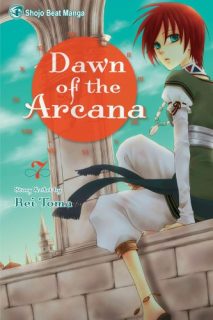
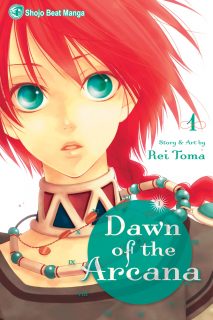
Dawn of the Arcana, Volume 7Dawn of the Arcana, Volumes 7-13 by Rei Toma. I enjoyed the first part of Dawn of the Arcana a great deal and so was looking forward to reading the rest of the series. As the manga progresses it becomes less reliant on the standard fantasy tropes that form its base, although it never escapes them entirely. However, even considering this, Dawn of the Arcana is still a satisfying and enjoyable series. The story’s most dramatic plot twist I guessed at long before it was actually revealed, but there were still developments and directions that the story took that managed to surprise me. At times it felt like Dawn of the Arcana was only scratching the surface, as if the manga was only providing a summary version of a much more complicated narrative. The characters and story have depth to them, but not everything is thoroughly and completely explored, much of the more nuanced interpretations being left to the readers to form. I really liked Dawn of the Arcana. It can be heartbreaking–the characters’ struggling with circumstances that have no easy resolutions–but also thrilling as they find ways to take control of their own fates.

Murciélago, Volume 1Murciélago, Volume 1 by Yoshimurakana. I was forewarned about the violence, gore, and otherwise explicit nature of Murciélago, so I was well aware of what I was getting myself into by picking up the manga. Murciélago is ridiculous, absurd, extreme, over-the-top, and a great deal of fun if someone doesn’t have a problem with the series’ aforementioned blood and brutality. Interestingly, the risqué lesbian sex scenes which both open and close the first volume, while being deliberately lewd, scandalous, and outrageous are also entirely consensual and in a way are bizarrely one of the more wholesome aspects of the manga. The lead of Murciélago is Kuroko Koumori, a dangerous, murderous, and lecherous woman who has been sentenced to death for her crimes. Kuroko is a monster and is portrayed as such. (She’s an awful person, but I really like her as a character.) The only reason that she’s still alive is that the police have indefinitely postponed her execution in order to take advantage of her impressive skills as an assassin. So, yeah, Murciélago definitely isn’t a series for everyone, but I certainly plan on reading more of it.
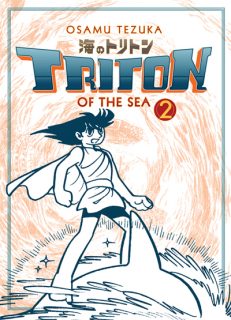
Triton of the Sea, Omnibus 2Triton of the Sea, Omnibus 2 (equivalent to Volumes 3-4) by Osamu Tezuka. It has been a very long time since I read the first half of Triton of the Sea. So long ago in fact that I had forgot that I hadn’t actually finished the series yet. Fortunately, the manga was pretty easy to pick up again. I seem to like Triton of the Sea best when the story centers its focus on family. In the first omnibus, it was Triton’s relationships with his human family that really captured my attention and in the second it was his experiences as a new father that most delighted me. (It probably didn’t hurt that the baby merfolk were super cute.) Triton of the Sea is also a story of revenge. Triton is determined destroy the Poseidon clan for the sake of his people who have been nearly driven to extinction, his desire for retribution blinding him from seeing other courses of action that might allow the two clans to establish a lasting peace. This of course only serves to continue the cycle of violence that puts him and his loved ones in danger. Triton of the Sea isn’t Tezuka’s strongest or most notable work, but I did appreciate the themes that Tezuka was exploring with the series.
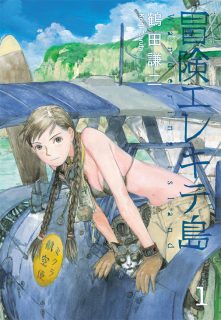
Wandering Island, Volume 1Wandering Island, Volume 1 by Kenji Tsuruta. The premise of Wandering Island is fairly simple: Mikura Amelia is a pilot for an air delivery service based in the Izu Islands that she and her grandfather established together. When he unexpectedly passes away, she understandably takes it pretty hard. While in mourning she discovers package among her grandfather’s belongings with an address on it that shouldn’t exist, leading Mikura to become obsessed with a search for a mysterious, disappearing island. Although there are some wonderful scenes of Mikura in flight, there’s not really much action in Wandering Island. Instead, the manga is rather leisurely paced with a contemplative and melancholic feel to it. Wandering Island is also beautifully illustrated, Tsuruta’s artwork being one of the series’ highlights. I love how Tsuruta is able to capture a sense of place and the people who live there. I’m not sure when or if the second volume of Wandering Island will be published in English (the Japanese edition itself isn’t even scheduled to be released until next month), but I would definitely like to see it translated.
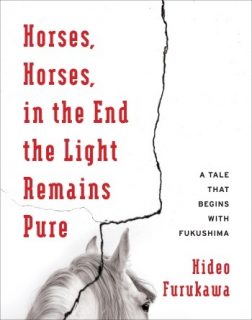
Horses, Horses, in the End the Light Remains PureHorses, Horses, in the End the Light Remains Pure: A Tale That Begins with Fukushima by Hideo Furukawa. Fukushima has been on my mind lately which reminded me of the fact that I had yet to read Furukawa’s Horses, Horses, in the End the Light Remains Pure, one of the first major literary responses to the earthquake, tsunami, and nuclear disasters associated with March 11, 2011. The work is rather curious, but it’s also worthwhile and powerful. In part it’s a sequel of sorts to Furukawa’s novel Seikazoku (The Holy Family), which hasn’t actually been released in English. However, familiarity with that earlier work isn’t at all necessary. Horses, Horses, in the End the Light Remains Pure also delves into the history of Fukushima as a whole, both before and after 2011. But perhaps most importantly, it’s an incredibly personal memoir. Though he was away at the time, Furukawa was originally from Fukushima. Soon after the disasters struck, he traveled back to the area in order to witness the aftermath of the events himself. A fair amount of the volume is devoted to Furukawa’s profound experiences while on that trip, combining fiction, history, and biography in a compelling way.

Filed Under: FEATURES, My Week in Manga Tagged With: dawn of the arcana, Hideo Furukawa, Kenji Tsuruta, manga, Murciélago, Nonfiction, Novels, Osamu Tezuka, Rei Toma, Triton of the Sea, Wandering Island, Yoshimurakana

My Week in Manga: April 3-April 9, 2017

April 10, 2017 by Ash Brown

My News and Reviews

Last week at Experiments in Manga the winner of the Miss Kobayashi’s Dragon Maid manga giveaway was announced. The post also includes a list of some of the manga available in print in English which feature dragons. Also posted last week was a guest review by my friend Jocilyn. She was inspired to write about Canno’s Kiss & White Lily for My Dearest Girl, Volume 1, the most recent yuri manga to be released by Yen Press. As mentioned previously, I’m currently working on my own in-depth review of the first volume of The Girl from the Other Side: Siúil, A Rún by Nagabe. It looks like I should be on track to post it sometime next week.

Elsewhere online, Seven Seas has completely revamped its website, adding new features like browsing by genre, launching a newsletter, and so on. It looks great and what’s more, there will be a regular survey which provides readers an opportunity to give feedback and submit license requests. As part of the launch of the new website, Seven Seas also announced a few new licenses: Touki Yanagimi and Youhei Yasumura’s Anti-Magic Academy: The 35th Test Platoon, Shin Mashiba’s Yokai Rental Shop (I loved Mashiba’s Nightmare Inspector, so I’m really looking forward this one), and an omnibus of Fumiyo Kouno’s In This Corner of the World (Kouno is the creator of Town of Evening Calm, Country of Cherry Blossoms which is also excellent).

In other publishing news, some of Kodansha Comics digital-only titles were recently called digital-first, so there may yet be hope for print editions of some of the manga. I missed (or maybe forgot about) the initial announcement, but Titan Comics will be releasing Ravina the Witch? by Junko Mizuno in English later this year. (Ravina the Witch? was originally released in French in 2014.) In sadder news, Bruno Gmünder recently announced its bankruptcy (again). I’m not entirely sure what this will mean for the publisher’s past and future comics releases, including the Gay Manga line, but they might not stay in print long. (I’ve featured some of Bruno Gmünder’s releases here before; I’ll be sad to see them go if the publisher folds.)

As for a few of the interesting Kickstarters that I’ve discovered lately: Emily Cheeseman is raising funds to release the print edition of Gawain and the Green Knight, a beautiful webcomic that she’s been working on since 2015. I wasn’t previously familiar with the work of Elise Schuenke, but Living Space looks like it should be another great queer-themed comic. And speaking of queer-themed comics, the initial campaign for the Tabula Idem tarot anthology wasn’t successful but the creative team has revised and relaunched the project. Finally, anyone interested in Weird Al may be curious about Kelly Phillips’ comic memoir Weird Me about her experiences as the webmaster of a Weird Al fan site in her teens. (Weird Al’s music was a major touchstone for me growing up.)

Quick Takes

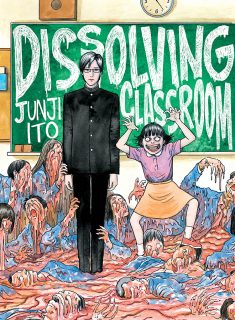
Dissolving ClassroomDissolving Classroom by Junji Ito. Lately there has been a resurgence in manga by Ito being released in English. In many cases they’ve actually been re-releases, but there have been a few newly-translated manga being published as well, Dissolving Classroom from Vertical Comics being the most recent example. I love Ito’s brand of horror manga and Dissolving Classroom was originally serialized in a josei magazine, so the volume was an obvious candidate for one of my most anticipated releases of the year. As expected, I thoroughly enjoyed the manga, but Dissolving Classroom didn’t end up leaving as strong of an impression on me as some of Ito’s earlier works. The loosely connected stories in Dissolving Classroom follow the demise of the people who meet Yuuma, a young man whose constant apologizing will literally make a person’s brain melt, and his incredibly creepy little sister Chizumi. Neither of the siblings are quite what they initially seem. Yuuma in particular comes across as a troubled but largely benign individual; very few people actually realize what’s going wrong before it’s too late. Dissolving Classroom is bizarre but certainly not the strangest manga that Ito has created. The visuals aren’t as shockingly memorable as some of Ito’s other series either, but they are still successfully disconcerting.

Everyone's Getting Married, Volume 1Everyone’s Getting Married, Volume 1 by Izumi Miyazono. While josei manga have recently become more common in translation (a trend that I would love to see continue), there still aren’t all that many to be found. I’ve generally enjoyed the josei manga that I’ve read in the past and I like to show my support for new releases, so I made a point to try Everyone’s Getting Married. Asuka is well-admired for her successful career, but what she really wants in life is to get married and become a housewife. When her boyfriend of five years unexpectedly dumps her, she suddenly finds herself looking for a new long-term relationship. That proves to be more difficult than she expected and unfortunately for her most likely candidate is Ryu, a man who has made it very clear that he has no interest in marriage. I’ve growing a little weary of high school romances, so I found Everyone’s Getting Married to be a wonderfully refreshing change of pace; I enjoyed reading about adults and their lives and relationships for once. I also like Asuka a great deal. She’s independent, knows what she wants out of life, and is willing to work hard for what is important to her. I’m looking forward to reading more about her and reading more of Everyone’s Getting Married.

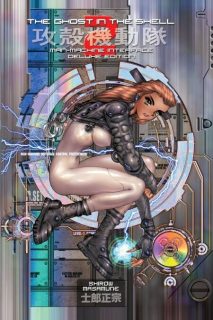
Ghost in the Shell, Volume 1.5: Human-Error ProcessorGhost in the Shell, Volume 1.5: Human-Error Processor by Masamune Shirow. While I had previously read the first and second volumes of Ghost in the Shell, I had never actually read the manga’s third volume, something that I didn’t realize until Kodansha Comics recently re-released the entire series in a deluxe, hardcover edition. Even though it was the third volume of Ghost in the Shell to be collected and released, the events of Human-Error Processor take place between the first and second volumes (thus being numbered 1.5). The episodic chapters focus almost entirely Section 9 and the cases that group is investigating. A few intriguing new characters are introduced, but sadly the Major only makes the occasional guest appearance. Out of the three Ghost in the Shell volumes, Human-Error Processor is the most straightforward and easy to follow. While that’s something that I would generally welcome, the volume was somehow less interesting as a result even if it was more readable. As with the previous volumes in the series, some of the most interesting parts of the world-building in Human-Error Processor are actually only found in the footnotes instead of being directly incorporated into the manga.

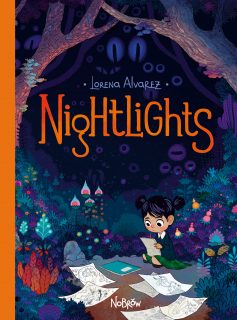
NightlightsNightlights by Lorena Alvarez. It was the bold, vibrant colors and gorgeous illustrations of Nightlights that initially caught my attention. Alvarez is a Columbian illustrator; Nightlights is her first comic and my introduction to her work. Nightlights is about a little girl, Sandy, whose imagination takes flight at night. She gathers together small, mysterious, glowing lights and uses them to create anything that she can dream of. Come the day, she spends her time alone drawing what she has seen. It’s an innocent enough premise, but Nightlights can actually be pretty dark and some of the comic’s themes are fairly heavy. Nightlights could be described as an all-ages comic, but some younger readers might find it scary in places. There is also a depth and nuance to the comic and its narrative that only more mature readers will likely pick up on. Although the stories are notably different, Nightlights actually reminded me a little bit of the animated film The Secret of Kells which I likewise greatly enjoyed. Each in their own way the works are fairytale-like, telling stories about imagination, creation, and the unknown. Nightlights was a beautiful comic and I sincerely hope to see more work from Alvarez in the future.

Gone: A Girl, a Violin, a Life UnstrungGone: A Girl, a Violin, a Life Unstrung by Min Kym. In 2010, Kym’s Stradivarius was stolen from her in a London cafe. The violin was an integral part of her identity, not just as a musician but as a person, and its loss was devastating. Her burgeoning career as a soloist came to a sudden halt. The violin was recovered three years later, but circumstances didn’t allow Kym to reclaim the instrument as her own. Ultimately she had to put it up for auction, losing it once again. In part, Kym’s memoir Gone was written in an attempt to process these traumatic events, rediscover who she is, and move forward with her life. Telling her side of the story she recounts growing up as a child prodigy–as the youngest daughter, her family’s devotion to her talent as a violinist was at odds with their South Korean heritage–her development as a musician, and her relationships with the Stradivarius and the people around her. Gone is an incredibly heartfelt and personal memoir but it can be somewhat discursive; Kym’s style of writing is very informal and at times even chaotic. Her voice as an author isn’t as clear as her voice as a violinist, but her passion and pain resonates throughout Gone. Complementing the release of Kym’s memoir is a companion album available from Warner Classics.

Filed Under: FEATURES, My Week in Manga Tagged With: comics, everyone's getting married, Ghost in the Shell, Izumi Miyazono, Junji Ito, Lorena Alvarez, manga, Masamune Shirow, Min Kym, Nonfiction

Kiss & White Lily for My Dearest Girl, Vol. 1

April 7, 2017 by Jocilyn Wagner

It’s been some time since Experiments in Manga has hosted a guest post, but my friend Jocilyn was once again inspired and is back to review one of the more recently released yuri manga, the first volume of Canno’s Kiss & White Lily for My Dearest Girl. (Also if you’re interested, you can find some of Jocilyn’s non-manga writings over at her delectable tea blog Parting Gifts!)

* * *

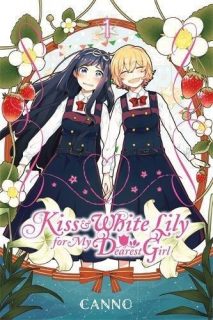
Kiss & White Lily for My Dearest Girl, Volume 1Seeing Canno’s name on the cover of a book in English feels like quite the sea change. Not only is she somewhat obscure with only one full manga series and a couple of one-offs and anthology contributions to her name, her writing style also leans heavily toward the heart-throbbingly romantic yuri (which English publishers have traditionally avoided as being too risky/niche). Also, although not an uncommon setting for yuri manga, Canno’s Kiss & White Lily for My Dearest Girl is the first genre title in English in a decade (i.e. Hakamada Mera’s Last Uniform and Hayashiya Shizuru’s Hayate X Blade, neither of which are exactly realistic), to give us a long look at dorm-life in a prestigious all-girls’ school. Finally, in case those weren’t enticing enough reasons, “Ano Kiss” has been translated by the matchless Jocelyne Allen, easily the most talented and enjoyable manga translator in the industry (and kind of my personal heroine). Hands down, Kiss & White Lily was my most anticipated manga of the year, and it has not disappointed.

To briefly summarize the plot, Ayaka Shiramine was told as a child that a 95/100 was an unacceptably low grade and ever since has never settled for anything less than no.1 in her class. Enter Yurine Kurosawa, a genius transfer student who can work academic and PE miracles with seemingly zero effort, who’s constantly seen sleeping in class. Indignant of the presumptuous upstart, Shiramine tries even harder than usual but still only manages second place on their midterms. In a fit of pique, Shiramine rips up her 98/100 test in front of Kurosawa declaring “It’s no good unless it’s perfect. If only you weren’t here, I would still be no.1” Kurosawa who had initially been impressed and quite smitten with Shiramine, amps up the rivalry and lords her superiority over Shiramine as a means to get closer to her. Before long Kurosawa has stolen Shiramine’s first kiss and being somewhat tsundere, Shiramine goes into total denial mode before being caught in a compromising position by her roommate cousin. Naturally, being a yuri manga, the cousin represents a B-story involving the boyish star of the track team and a hotly akogared sempai. Yada Yada Yada.

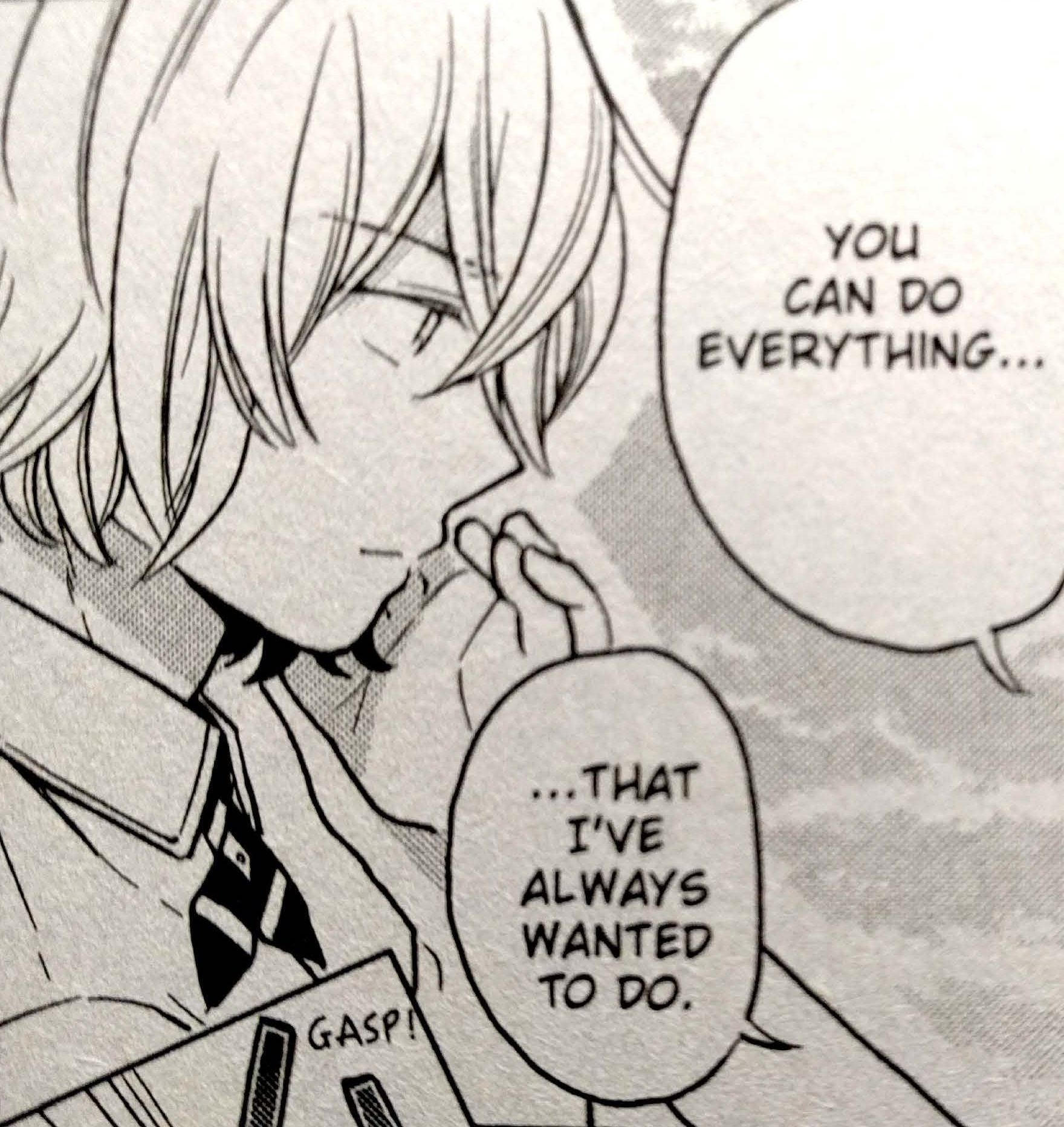
Kiss & White Lily for My Dearest Girl, Volume 1, Chapter 2I won’t belabor the obvious parallel to Kare Kano in overall plot. Kurosawa’s utter genius and complete ambivalence to nearly everything that doesn’t involve Shiramine is oddly cute and compelling. One scene that paints Kurosawa as particularly superhuman had me in stitches for a while the first time I read it, but I won’t spoil it for you here. Although Shiramine might be outwardly cool and dissembling toward Kurosawa, when they’re alone together she manages to unwittingly send all the right signals. As with its inspiration, the honor students’ relationship is all blushes and awkward but swoon-worthy and adorable.

Kiss & White Lily variously waxes exciting shoujo romance and lighthearted school girl fun in an enticing mixture. Although Canno does tend to use a lot of screen tones to the point of necromancing Kare Kano, her art style is very cute and emotive, moreso reminiscent of Shimura Takako. I very much enjoyed the gorgeous full-color introductory pages Yen was good enough to reproduce. Naturally Kiss & White Lily’s translation is nigh seamless perfection. I honestly cannot produce a single gripe this time. A thoroughly fabulous read!

Filed Under: FEATURES, Guest Posts Tagged With: Canno, Kiss and a White Lily for My Dearest Girl, manga, yen press

Manga Giveaway: Miss Kobayashi’s Dragon Maid Giveaway Winner

April 5, 2017 by Ash Brown

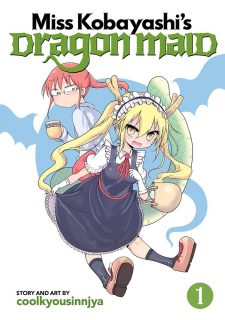
Miss Kobayashi's Dragon Maid, Volume 1And the winner of the Miss Kobayashi’s Dragon Maid manga giveaway is… Kate!

As the winner, Kate will be receiving the delightful Miss Kobayashi’s Dragon Maid, Volume 1 by Coolkyousinnjya as published in English by Seven Seas. At first I was a little hesitant about reading Miss Kobayashi’s Dragon Maid, but ultimately I couldn’t deny the allure of dragons. And so for this giveaway, I asked that participants tell me a little about their favorite dragons from manga. I’ve collected some of the manga mentioned in the list below (along with some others), but be sure to check out the giveaway comments for everyone’s detailed responses.

Some of the manga with dragons available in English:
Akame ga Kill! written by Takahiro, illustrated by Tetsuya Tashiro
The Ancient Magus Bride by Kore Yamazaki
The Betrayal Knows My Name by Hotaru OdagiriCirque du Freak by Takahiro Arai
A Certain Magical Index written by Kazuma Kamachi, illustrated by Chuya Kogino
Crimson Spell by Ayano Yamane
Delicious in Dungeon by Ryoko Kui
The Demon Prince of Momochi House by Aya Shouoto
Dragon Ball by Akira Toriyama
Dragon Drive by Kenichi Sakura
Dragon Half by Ryusuke Mita
Dragon Knights by Mineko Ohkami
Dragonar Academy written by Ran, illustrated by Shiki Mizuchi
Fairy Tail by Hiro Mashima
Fruits Basket by Natsuki Takaya
From Far Away by Kyoko Hikawa
Fushigi Yûgi by Yuu Watase
Gate: Where the JSDF Fought written by Takumi Yanai, illustrated by Satoru Sao
High School DxD by Hiroji Mishima
The Key to the Kingdom by Kyoko Shitou
Kiss of the Rose Princess by Aya Shouoto
The Legend of Zelda: Ocarina of Time by Akira Himekawa
Legendz written by Rin Hirai, illustrated by Makoto Haruno
Lord Marksman and Vanadis written by Tsukasa Kawaguchi, illustrated by Nobuhiko Yanai
Magic Knight Rayearth by CLAMP
Miss Kobayashi’s Dragon Maid by Coolkyousinnjya
Natsume’s Book of Friends by Yuki Midorikawa
Negima! by Ken Akamatsu
Petshop of Horrors by Matsuri Akino
Princess Mermaid by Junko Mizuno
Rave Master by Hiro Mashima
Read or Dream written by Hideyuki Kurata, illustrated by Ran Ayanaga
Record of Lodoss War: The Lady of Pharis written by Ryo Mizuno, illustrated by Akihiro Yamada
St. Dragon Girl by Natsumi Matsumoto
Tales of Zestiria by Shiramine
Tenryu: The Dragon Cycle by Sanami Matoh
That Time I Got Reincarnated as a Slime written by Fuse, illustrated by Taiki Kawakami
Time Stranger Kyoko by Arina Tanemura
Two Flowers for the Dragon by Nari Kusakawa
X by CLAMP
Übel Blatt by Etorouji Shiono
Yona of the Dawn by Mizuho Kusanagi
Zero’s Familiar written by Noboru Yamaguchi, illustrated by Nana Mochizuki

Well now, that ended up being a fairly lengthy list, and I know that it’s not comprehensive, but it’s certainly a start. Whether they’re familiars, sidekicks, primary characters, or the stuff of legend, all sorts of dragons can be found in all sorts of manga. Thank you to everyone who took the time to share your favorite dragons with me! I hope to see you all again for the next giveaway.
Filed Under: Giveaways, Lists, UNSHELVED Tagged With: Coolkyousinnjya, manga, Miss Kobayashi's Dragon Maid

My Week in Manga: March 27-April 2, 2017

April 3, 2017 by Ash Brown

My News and Reviews

As regular readers of Experiments in Manga know, on the last Wednesday of every month I host a giveaway of some sort (usually manga-related) for which participants have a week to submit their entries. This time around the monthly giveaway is for the first volume of Coolkyousinnjya’s surprisingly delightful Miss Kobayashi’s Dragon Maid. The winner will be announced this coming Wednesday, so you can still enter for a chance to win if you haven’t already. Also later this week, look for another guest review by my friend and fellow yuri manga fan Jocilyn. Elsewhere in the Manga Bookshelf sphere of blogs, The Manga Critic has started a monthly manga review index. There have been similar features in the past, perhaps most notably at MangaBlog, and I’ve always found them incredibly useful and valuable, so I’m glad to see Kate Dacey taking it on. Also in general, I highly recommend the content at The Manga Critic–Kate’s actually one of my major inspirations when it comes to manga blogging.

As for other interesting things I’ve come across recently: Chic Pixel’s Anne Lee has posted a really fantastic list of bibliographic resources for those curious about the academic study of boys’ love. (I’ve read quite a few books and articles myself, and even reviewed Jeffery Angles’ Writing the Love of Boys: Origins of Bishōnen Culture in Modernist Japanese Literature at Experiments in Manga a few years ago.) And if that’s not enough of BL studies for you, J. R. Brown has posted the slides from her Anime Boston panel “Boys’ Love, Otome Culture, and Gender” which covers everything from the origin of shoujo manga to gay comics and more. On their own the slides are fairly informative, but I’m looking forward to seeing the annotated version, too.

Also at Anime Boston, Viz Media made quite a few licensing announcements. Some were digital-only while others were digital-first or print-only. Here’s a quick list of the books that will eventually make their way into print: Kenta Shinohara’s Astra Lost in Space, Abi Umeda’s Children of Whales (I’m particularly curious about this series), an omnibus edition of Tsugumi Ohba and Takeshi Obata’s Death Note collecting the entire series and a bonus epilogue in a single volume, Nisioisin’s Hikaru Nakamura’s novel Juni Taisen: Zodiac Warriors (I’m not familiar with the novel, but the creators involved have certainly caught my attention), Kenji Taira’s Naruto: Chibi Sasuke’s Sharingan Legend, Kaiu Shirai and Posuka Demizu’s The Promised Neverland (which is supposed to be fantastic), a collection of nine Junji Ito stories and accompanying material selected by Ito himself called Shiver (always glad to see more Ito being released in English), Maki Enjoji’s SP Baby, and Sui Ishida’s artbook Tokyo Ghoul Illustrations.

A couple of Kickstarter projects recently launched which may be of interest as well: All the Anime/Anime Limited is joining forces with Studio 4°C to create a home video release of Masaaki Yuasa’s directorial debut Mind Game. Digital Manga has entered the fray again with a campaign to release more of Osamu Tezuka’s manga in print: Ambassador Magma, Dust 8, The Euphrates Tree, Metamorphose, Say Hello to Bookila, The Thief Inoue Akikazu, Wonder 3, and Yakeppachi’s Maria. It looks as though the print runs will be very limited and Kickstarter may be the only way to get a hold of some of the titles. (I have to admit, I certainly have my qualms about Digital Manga’s business practices in general and over-reliance on crowdfunding specifically. The quality of Digital Manga’s releases has really gone downhill over the last few years, too. Honestly, I’ve lost most of my confidence in the company as a publisher, but it’s managed not to completely go under yet.)

Quick Takes

Dawn of the Arcana, Volume 1Dawn of the Arcana, Volumes 1-6 by Rei Toma. I generally enjoy epic fantasy of the shoujo variety, so I’m not entirely sure why it’s taken me so long to finally get around to reading Dawn of the Arcana. So far, I’m enjoying the manga tremendously. Nakaba is a princess who has been married off to a prince of the neighboring kingdom despite her questionable ancestry in a half-hearted attempt to secure peace between the two countries. But instead, gifted with the ability to see both into the past and into the future, Nakaba may find herself in the unlikely position of leading a revolution. Dawn of the Arcana does come across as a rather typical example of high fantasy–all the way down to the heroine’s fiery red hair–but even though it hasn’t really made itself stand out yet, the manga is a solid series. I greatly enjoyed the manga’s mix of court and political intrigue, action, and complicated interpersonal relationships. Much like the story, the artwork tends to be somewhat standard although attractive. Toma’s backgrounds are generally fairly sparse, but the details put into things like the characters’ clothing is lovely. I definitely look forward to reading more of Dawn of the Arcana in the very near future.

Hana & Hina After School, Volume 1Hana & Hina After School, Volume 1 by Milk Morinaga. I believe that Morinaga is currently the most well-represented yuri manga creator available in English. So far, five of Morinaga’s manga have been translated, the most recent being Hana & Hina After School. Interestingly, in Japan the manga was serialized in a magazine aimed at a general audience rather than one specifically catering to yuri fans. The titular Hana and Hina are two young women working part time at a store specializing in cute character goods even though their high school forbids its students from holding jobs. The story follows their relationship as they become friends and slowly realize that their feelings may evolve into something else. Like most of Morinaga’s other manga that I’ve read, Hana & Hina After School tends to be rather cute and sweet. The series is enjoyable and pleasant even if it is at times a little silly and somewhat unbelievable. However, the end of the first volume does introduce some sobering concerns when Hina is confronted by a few of her classmates homophobia, an unfortunate reality that many yuri manga tend to gloss over or ignore entirely in favor of pure fantasy. (Granted, that fantasy is important to have, too.)

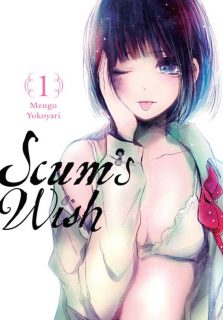
Scum's Wish, Volume 1Scum’s Wish, Volumes 1-2 by Mengo Yokoyari. I wasn’t initially planning to pick up Scum’s Wish, but after reading a few positive reviews of the series I decided to give it a try after all. The cover art of the first volume is deliberately provocative, but the manga isn’t nearly as salacious as it might imply. In fact, the series can actually be surprisingly contemplative. Scum’s Wish is a manga about unrequited love. Almost every character in the series is pining for someone with whom an involved romance would seem to be impossible or at least inadvisable, resulting in a complex web of personal relationships fraught with loneliness and anguish. (There is one heck of a love polygon going on in Scum’s Wish and nearly everyone who is introduced is connected to it somehow.) Hanabi is in love with Narumi, her childhood friend who now also happens to be her homeroom teacher. Mugi is in love with Akane, a music instructor who used to be his tutor. Recognizing that they are suffering under very similar circumstances and hoping to ease some of the pain, Hanabi and Mugi agree to find comfort in a relationship together. Neither one of them is in love with the other, but they are both aware of and take advantage of that fact.

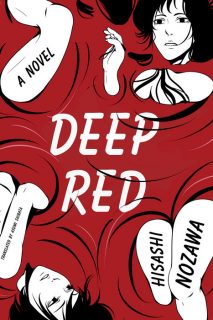
Deep RedDeep Red by Hisashi Nozawa. Although perhaps best known as a screenwriter, Nozawa was also recognized as an accomplished novelist. Deep Red, which earned Nozawa an Eiji Yoshikawa Prize in 2001, is his first novel to be released in English. Kanako is the only survivor of the mass murder of her family, simply because she happened to be away on a school trip when her parents and two younger brothers were killed. Understandably, their deaths have left a great wound, but Kanako isn’t the only one left troubled and hurt–the life of Miho, the daughter of the murderer, has also been irrevocably changed. At times, Deep Red is uncomfortably voyeuristic and there’s a peculiar fixation on Kanako’s body and sex life with her boyfriend. I was never entirely convinced by Kanako as a character, either. However, Deep Red does provide an interesting psychological exploration of hate, anger, and misplaced revenge. The novel is instantly engaging. However, the middle portion of the narrative is repetitive and does drag a fair bit; I admittedly started to lose my interest and patience with the story. But once Kanako becomes obsessed with and decides to pursue Miho, Deep Red picks up speed again and the novel’s ending is very satisfying.

Filed Under: FEATURES, My Week in Manga Tagged With: dawn of the arcana, Hana and Hina After School, Hisashi Nozawa, manga, Mengo Yokoyari, milk morinaga, Novels, Rei Toma, Scum's Wish

Manga Giveaway: Miss Kobayashi’s Dragon Maid Giveaway

March 29, 2017 by Ash Brown

It’s the last Wednesday of March and you know what that means! It’s once again time for a giveaway at Experiments in Manga! This month you all have the opportunity to win the first volume in Coolkyousinnjya’s surprisingly sweet and charming manga series Miss Kobayashi’s Dragon Maid as published in English by Seven Seas. And as usual, the giveaway is open worldwide.

Miss Kobayashi's Dragon Maid, Volume 1

Ever since I was little, I’ve loved dragons. While I’m not quite as obsessed with them as I once was, I’ve never grown out of my affection for dragons. And so when there’s a manga series that features dragons in some way–like Miss Kobayashi’s Dragon Maid–I can’t help but give it a try. I’ll admit, despite my established interest in dragons, I was initially a little wary of Miss Kobayashi’s Dragon Maid and was surprised by how much I enjoyed the first volume. The series has a few missteps, but overall it’s great fun and has some fantastic characters. And with the anime adaptation that’s currently airing, even more people are now aware of the charms of Miss Kobayashi’s Dragon Maid. Hopefully as a result they’ll be encouraged to seek out the original, too!

So, you may be wondering, how can you a copy of the Miss Kobayashi’s Dragon Maid, Volume 1?

1) In the comments below, tell me a little about one of your favorite dragons from a manga. (If you don’t have a favorite or don’t know of any, simply mention that.)
2) If you’re on Twitter, you can earn a bonus entry by tweeting, or retweeting, about the contest. Make sure to include a link to this post and @PhoenixTerran (that’s me).

It’s as easy as that! Participants in the giveaway have one week to submit comments and can earn up to two entries. If you have trouble with the comment form, or if preferred, entries can also be sent directly to phoenixterran(at)gmail(dot)com. I will then post those comments here in your name. The giveaway winner will be randomly selected and announced on April 5, 2017. Best of luck to you all!

VERY IMPORTANT: Include some way that I can contact you. This can be an e-mail address in the comment form, a link to your website, Twitter username, or whatever. If I can’t figure out how to get a hold of you and you win, I’ll just draw another name.

Contest winner announced–Manga Giveaway: Miss Kobayashi’s Dragon Maid Giveaway Winner

Filed Under: FEATURES, Giveaways Tagged With: Coolkyousinnjya, manga, Miss Kobayashi's Dragon Maid

My Week in Manga: March 20-March 26, 2017

March 27, 2017 by Ash Brown

My News and Reviews

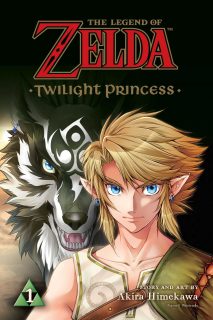
I actually managed to post another review at Experiments in Manga last week! That makes two weeks in a row, which hasn’t happened in a very long time. My goal of writing one review every month still remains, but when a month with five Wednesdays (like March this year) comes along, I’m going to try to do a second in-depth review or feature. That way, every week will have at least two posts, the usual My Week in Manga along with another feature of some sort. Anyway, as for the review that was posted last week, I took a look at Akira Himekawa’s The Legend of Zelda: Twilight Princess, Volume 1 which I enjoyed a great deal. The manga stands well on its own so someone doesn’t have to be familiar with the original video game it’s based on to enjoy it. The manga series is also notably darker than Himekawa’s previous all-ages adaptations of The Legend of Zelda video games.

Elsewhere online, I came across a few interesting interviews to read. Over at Viz Media’s blog, speculative fiction author Taiyo Fujii talks a little about Orbital Cloud, his most recent novel to be translated into English. (I previously read and reviewed Gene Mapper, Fujii’s debut work of fiction which I rather enjoyed, so I’m looking forward to reading the award-winning Orbital Cloud.) Through the Painting is in the process of translating a 2013 Tokyo Manga Lab interview with Haruko Kumota, creator of the manga series Descending Stories: Showa Genroku Rakugo Shinju. (Kodansha Comics is releasing the series in English; it’s one of my most anticipated debuts of the year.) Finally, on the occasion of Yen Press’ recent release of Canno’s Kiss and White Lily for My Dearest Girl, Brigid Alverson interviewed Erica Friedman about yuri manga for Barnes & Noble. And speaking of Yen Press, the publisher announced a few manga licenses last week: Re:ZERO -Starting Life in Another World, Chapter 3: Truth of Zero by Tappei Nagatsuki, Shinichirou Otsuka, Daichi Matsuse; Is It Wrong to Try to Pick Up Girls in a Dungeon?: Sword Oratoria by Fujino Omori, Takashi Yagi; Hybrid x Heart by Masamune Kuji, Riku Ayakawa; and Gabriel Dropout by Ukami.

Quick Takes

The Ghost in the Shell, Volume 2: Man-Machine InterfaceThe Ghost in the Shell, Volume 2: Man-Machine Interface by Masamune Shirow. It’s been well over a decade since I first read Masamune’s The Ghost in the Shell manga. While I had vague memories of the first volume, I remembered virtually nothing about the second. Kodansha Comics’ recent re-release of the series in a deluxe, hardcover edition provided an ideal opportunity for me to revisit the manga. (The deluxe edition presents the manga in right-to-left format with the original Japanese sound effects for the first time; it’s also supposed to have bonus content, but I’m not exactly sure what that additional material is supposed to be in second volume.) Upon rereading the second volume of The Ghost in the Shell, I think I know why I had trouble recalling anything about it–the manga seems to be more show than substance. At times I would find that I had stopped reading the seemingly nonsensical text entirely and was just turning pages and looking the artwork, much of which is in color. There is a story in there somewhere, as well as some interesting worldbuilding and philosophizing, but most of that seems to be happening in the copious footnotes rather than in the manga proper.

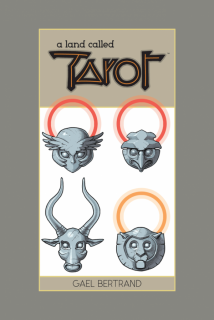
A Land Called TarotA Land Called Tarot by Gael Bertrand. Originally serialized in the Island comics anthology, A Land Called Tarot was recently released in a standalone hardcover collection with additional content. Except for a few sound effects, A Land Called Tarot is actually a wordless comic. There is no dialogue or narration, so readers must rely entirely on Bertrand’s artwork to interpret the characters, story, and setting. Fortunately, Bertrand is more than up to the task. The artwork in A Land Called Tarot is absolutely gorgeous. The cover design is actually somewhat misleading–the interior illustrations are marvelously detailed and beautifully colorful. The lack of words in the comic invites readers to pay even more attention to the artwork and to explore the nuances of the fantastic world that Bertrand has created. The comic follows an adventurous hero, the Knight of Swords, as he travels across the land and meeting its people, his journey taking him through both time and space. There are moments of action and battle, but there are also moments that are peaceful and serene and sometimes even little lonely. A Land Called Tarot is a wondrous delight. I unequivocally loved the comic hope to see more work by Bertrand in the future.

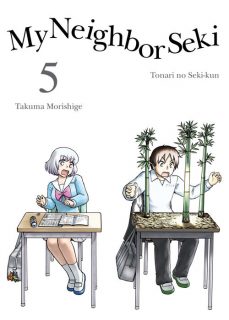
My Neighbor Seki, Volume 5My Neighbor Seki, Volumes 5-7 by Takuma Morishige. I’m not really sure why I’ve fallen behind reading of My Neighbor Seki because I enjoy the series a great deal. The manga remains consistently delightful and is wonderfully charming. My introduction to the series was through its anime adaptation; the chapters in these three volumes happen to be released or serialized around the same time that the anime was being produced. The author’s notes seem to imply that the manga wasn’t initially anticipated to become as long as it now has (the series is actually still ongoing, as far as I can tell) but the anime understandably revitalized interest in My Neighbor Seki. I like both versions of My Neighbor Seki, but there’s more in the manga that was never adapted. I continue to be impressed by Morishige’s inventiveness and imagination in creating new and clever scenarios for the series’ characters. Not much has changed from the beginning of My Neighbor Seki, although occasionally Seki isn’t the only one actively participating in the games he plays instead of paying attention in class. His mother has been introduced, too. I hope to see her again as one of the recurring characters.

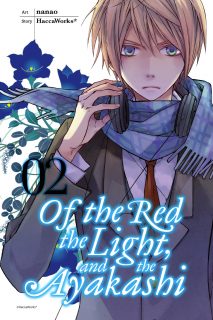
Of the Red, the Light, and the Ayakashi, Volume 2Of the Red, the Light, and the Ayakashi, Volumes 2-3 by Nanao. While I enjoyed the first volume of Of the Red, the Light, and the Ayakashi, especially its ominous atmosphere and the sense of foreboding it inspired, it’s taken me quite a while to finally get around to reading more of the series. Now I’m regretting my delay, because the next two volumes are just as enticing as the first, if not more so, and if anything the series is getting stronger as a whole. Granted, there’s still some annoying awkwardness surrounding some of the characters’ conversations in which they seem to talk around important topics and information simply because the reader isn’t supposed to know the details about them yet. But even with this fault, Of the Red, the Light, and the Ayakashi manages to remain engaging. Part of this is due to the series’ air of mystery and the way in which Nanao is able to stretch out the story without being manipulative. For example, an important reveal in the second volume which in many other stories would have been the major plot twist is simply one in a longer string of steady developments. Several more questions are raised for every one that is answered in the series; I am incredibly curious to learn more.

Filed Under: FEATURES, My Week in Manga Tagged With: comics, Gael Bertrand, Ghost in the Shell, manga, Masamune Shirow, My Neighbor Seki, Nanao, Of the Red the Light and the Ayakashi, Takuma Morishige

The Legend of Zelda: Twilight Princess, Vol. 1

March 23, 2017 by Ash Brown

The Legend of Zelda: Twilight Princess, Volume 1Creator: Akira Himekawa
Translator: John Werry
U.S. publisher: Viz Media
ISBN: 9781421593470
Released: March 2017
Original run: 2016

Akira Himekawa is the joint pen name of A. Honda and S. Nagano, two women who have been collaborators for over thirty years. The two-person creative team is probably best known for their work on the manga adaptations of The Legend of Zelda series of video games, although some North American readers may associate Himekawa with the Avatar: The Last Airbender comics as well. Despite being a fan of both franchises, I actually hadn’t made a point to read any of Himekawa’s work until after meeting the two women briefly at the Toronto Comic Arts Festival in 2014. Twilight Princess is the most recent entry in Himekawa’s series of The Legend of Zelda adaptations. Initially Twilight Princess was intended to be a children’s series, but when the original 2006 video game it was to be based on became the first in the franchise to be rated for teens, plans for that manga were cancelled. It wasn’t until 2016 that Himekawa would begin serializing Twilight Princess digitally, the first volume subsequently being released in Japan in print later that year. Viz Media’s English-language edition of Twilight Princess debuted in print in 2017.

Link is a young man trying to outrun his past. A year and a half ago he wandered into the border village of Ordon, hiding his personal history in hopes of establishing a new life for himself. Ordon is idyllic, seemingly a perfect place for Link to retreat. The land is said to have been blessed by the spirits and the village is well-known for its bountiful harvests. Although Link arrived as a stranger, he was warmly welcomed by the villagers and has since become an integral part of the community. Link loves Ordon and its people, but there’s always a small part of him that feels like he doesn’t quite belong. He is still plagued by guilt over the tragedies of his past, dealing with a weighty feeling of responsibility which is impossible to ignore. Having experienced disaster before, Link may be one of the few who can prevent it from happening again. Most of the other people in the sacred kingdom of Hyrule are unaware of the looming threat that the long-forgotten Twilight Realm poses. It’s a danger that grows even greater when the ambitions of one man to rule both the light and the dark begin to come to fruition. As the shadows of darkness gather around Ordon, Link will have to face his past and his fears, confronting the possibility that he will once again lose everything that he holds most dear.

The Legend of Zelda: Twilight Princess, Volume 1, page 122Although I’ve played some of the original Twilight Princess, familiarity with the video game is not at all necessary to enjoy Himekawa’s adaptation. At least so far, the series can stand on its own as a work–the manga largely comes across as a freely-developed fantasy rather than a strict reimagining of a video game. Himekawa’s narrative in Twilight Princess is streamlined and quickly paced, incorporating elements of the original game in clever ways. Some of the wonder of having a world to leisurely explore and discover is lost as Twilight Princess is adapted into a different medium, but in exchange the manga emphasizes depth of characterization. As the protagonist, Link is generally the most fully-realized character. I really like Himkeawa’s multi-faceted interpretation of Link in Twilight Princess. While at heart Link is a troubled and brooding hero, he also exhibits happiness and joy and there are moments in the manga when his good-natured goofiness shines through. The Twilight Princess manga, much like the video game itself, is intended for a more mature audience than many of the previous incarnations of The Legend of Zelda. The story tends to be fairly dark and can be strikingly violent at times.

One of the things that I appreciate the most about Himekawa’s work on The Legend of Zelda manga is the creators’ ability to adjust their tone and style to fit the requirements of a given series. Himekawa’s skill and flexibility as artists can be seen as they move from one adaptation to the next, but can also be exhibited within a single manga. In Twilight Princess specifically there is a wonderful contrast between the serene, pastoral setting of Ordon and the ominous darkness and shadowy creatures encroaching upon it. The artwork in Twilight Princess is beautifully executed, ranging from the gorgeous to the grotesque as demanded by the story. In comparison, the storytelling itself isn’t nearly as strong. The first chapter of Twilight Princess in particular suffers from some awkward exposition and Link has a tendency to ask questions that he should already know the answers to having lived in Ordon for so long. Still, I do like the story, characters, and settings of Twilight Princess. In the past, Himekawa’s The Legend of Zelda manga have only been one or two volumes long. I would be surprised if Twilight Princess could end satisfactorily in such a short span, so I hope that the series will be longer to allow the story to unfold more naturally; I enjoyed the first volume of Twilight Princess a great deal and look forward to reading more.

Thank you to Viz Media for providing a copy of The Legend of Zelda: Twilight Princess, Volume 1 for review.

Filed Under: REVIEWS Tagged With: Akira Himekawa, Legend of Zelda, manga, viz media

My Week in Manga: March 13-March 19, 2017

March 20, 2017 by Ash Brown

My News and Reviews

Last week at Experiments in Manga I posted an in-depth review of Ichi-F: A Worker’s Graphic Memoir of the Fukushima Nuclear Power Plant by Kazuto Tatsuta. It’s an important and fascinating manga which reveals the day-to-day lives and work of the people who are directly involved with the ongoing cleanup following the 2011 earthquake, tsunami, and nuclear disasters in Japan. On a related note, a while back I also reviewed Lucy Birmingham and David McNeill’s Strong in the Rain: Surviving Japan’s Earthquake, Tsunami, and Fukushima Nuclear Disaster which provides a fairly comprehensive and approachable overview of the disasters themselves as well as some of the initial recovery efforts. As for future in-depth reviews, I’m currently working on one for Akira Himekawa’s The Legend of Zelda: Twilight Princess, Volume 1 which I hope to post sometime later this week. (That would mean two reviews from me this month!) Initially I was planning to write a quick take on Nagabe’s The Girl from the Other Side, Volume 1 for today’s post, but I loved it so much that I want to delve into it more deeply, so expect to see a more comprehensive review for that manga in the relatively near future as well.

Quick Takes

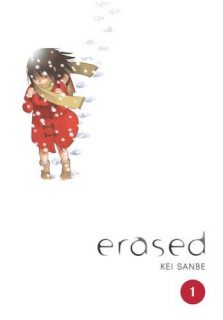
Erased, Omnibus 1Erased, Omnibus 1 (equivalent to Volumes 1-2) by Kei Sanbe. Although I haven’t actually watched it yet, Sanbe’s Erased manga was first brought to my attention due to its recent anime adaptation. I’ve heard very good things about it and so when Yen Press started releasing the original manga in a hardcover, omnibus edition it immediately caught my attention. Satoru Fujinuma has a peculiar ability which causes him to spontaneously travel back in time. Usually it happens just before some tragedy is about to occur, allowing him to try to prevent it, although doing so can sometimes cause problems for him personally. When a particularly traumatic event occurs, Satoru unexpectedly finds himself nearly two decades in his past, giving him the opportunity to try to stop a series of kidnappings and murders that haunted his childhood. While I found the story’s premise intriguing from the very start, it actually took me a little while to get into Erased. But by the end of the first volume I was hooked and by the end of the first omnibus I couldn’t wait to read more. (Also, fun fact!: Sanbe was one of Hirohiko Araki’s assistants and worked on JoJo’s Bizarre Adventure.)

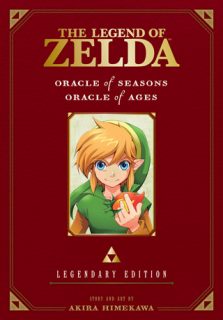
The Legend of Zelda: Oracle of Seasons/Oracle of AgesThe Legend of Zelda: Oracle of Seasons/Oracle of Ages by Akira Himekawa. Despite being a fan of The Legend of Zelda, I haven’t actually read very many of the video games’ manga adaptations. However, the Legendary Edition of Himekawa’s The Legend of Zelda manga that Viz Media has recently begun releasing may very well change that. With the handsome book designs, larger trim, color pages, and previously unreleased material, the new edition of the series is tremendously appealing. Oracle of Seasons/Oracle of Ages is the second volume in the Legendary Edition to be released, adapting the two linked video games of the same name. I haven’t actually played the Oracle games so I can’t comment on the adaptation itself, but the manga is fun and energetic. The series is aimed at younger readers which isn’t inherently a bad thing, but the story and characters can occasionally come across as somewhat simplistic as a result. The antagonists in particular seem to lack nuance and tend to be evil for evil’s sake. But as a whole the Oracle manga are enjoyable adventures, following a young Link, a warrior of destiny but still a knight-in-training, as he tries to figure out what he wants to do with his life even while he’s saving the kingdom.

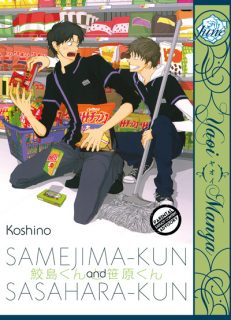
Samejima-kun and Sasahara-kunSamejima-kun and Sasahara-kun by Koshino. Currently, Samejima-kun and Sasahara-kun is the only boys’ love manga by Koshino to have been released in English in print, but I enjoyed it so much that I hope there will one day be more translated. For a while there Samejima-kun and Sasahara-kun had gone out-of-print, but it’s more-or-less available again. (Digital Manga seems to be using some sort of print-on-demand service to restock titles lately; sadly, though adequate, the production quality isn’t quite as good.) Samejima and Sasahara are both college classmates and coworkers at a convenience store. Everything seemed to be going along fine  between them until Samejima confesses that he has fallen in love with Sasahara, thereby putting their friendship in danger. At first Sasahara tries to ignore the development, wanting to just remain friends, but he comes to realize he enjoys the attention, if only he could get Samejima to believe him. Their relationship (as well as the eventual sex they have together) is endearingly awkward–Samejima obviously cares about Sasahara and vice versa, but they also annoy the hell out of each other in a way that only the closest friends can do. They’re an argumentative couple, but the manga’s humor makes it work.

Now with Kung Fu Grip!: How Bodybuilders, Soldiers and a Hairdresser Reinvented Martial Arts for AmericaNow with Kung Fu Grip!: How Bodybuilders, Soldiers and a Hairdresser Reinvented Martial Arts for America by Jared Miracle. It would be understandable, if inaccurate, to assume from its title and description that Miracle’s Now with Kung Fu Grip! is a work of popular history. I personally found the subject matter to be interesting and learned quite a bit, however the book is difficult to recommend to a casual reader. While Miracle’s style of writing isn’t overly academic, it is incredibly dense and as a whole the volume seems unfocused. Most people will do well to simply read the book’s conclusion which provides an adequate summary, foregoing the rest of the content unless more explicit detail is desired. The cover image, taken from the Chinese martial arts film Fearless, is somewhat misleading as well as the book is almost exclusively devoted to Japanese martial arts and the ways in which they’ve been incorporated into American culture. Now with Kung Fu Grip! is less about martial arts themselves and more about their social and historical contexts and the mythologies and stories that practitioners construct around them. In particular, Miracle ties the evolution of Japanese martial arts traditions in America to their commercialization and to the changing interpretations and expectations of idealized American masculinity over time.

Filed Under: FEATURES, My Week in Manga Tagged With: Akira Himekawa, Erased, Jared Miracle, Kei Sanbe, Koshino, Legend of Zelda, manga, Nonfiction

Ichi-F: A Worker’s Graphic Memoir of the Fukushima Nuclear Power Plant

March 16, 2017 by Ash Brown

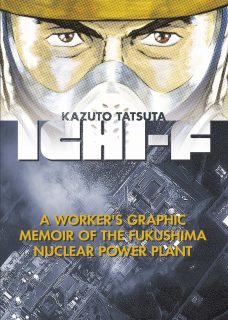
Ichi-F: A Worker’s Graphic Memoir of the Fukushima Nuclear Power PlantCreator: Kazuto Tatsuta
Translator: Stephen Paul
U.S. Publisher: Kodansha
ISBN: 9781632363558
Released: March 2017
Original release: 2014-2015
Awards: Manga Open

Although Ichi-F: A Worker’s Graphic Memoir of the Fukushima Nuclear Power Plant isn’t Kazuto Tatsuta’s first manga, it is very likely the one for which he will be best known. Based on his experiences as a worker at the Fukushima Daiichi Nuclear Plant, the memoir provides an important and highly personal perspective on the ongoing recovery efforts following Japan’s combined earthquake, tsunami, and nuclear disasters of March 2011. Initially submitted as an amateur work, Ichi-F won the Manga Open Grand Prize in 2013 which led to its continuation as a three-volume series published between 2014 and 2015. The English-language edition of Ichi-F was released by Kodansha Comics in March 2017. The entire series, including Tatsuta’s original one-shot, has been collected into a single, massive omnibus formatted to read left-to-right. Also included is an introduction by the journalist Karyn Nishimura-Poupée and an exclusive interview with the creator. A tremendous amount of work from the translator Stephen Paul and others at Kodansha has gone into Ichi-F in an effort to make the manga as accurate and as widely accessible as possible.

On March 11, 2011 a massive earthquake centered off of the northeast coast of Japan triggered a devastating tsunami which ultimately lead to multiple meltdowns at the Fukushima Daiichi Nuclear Power Plant. Many people in Fukushima were required to evacuate and have yet been able to return to their homes due to the radiation levels in the area. Cleanup and recovery work, including the decommissioning of the plant, continues to this day and will continue for quite some time. Most of the people directly involved in the work are from the Fukushima area but others like Tatsuta (a pen name taken from the region for purposes of anonymity) are outsiders drawn by the promise of high wages, personal curiosity, and altruism. Despite the need for workers, it took Tatsuta more than a year after the disaster to secure clearance for employment at Ichi-F, one of the local names for the Fukushima Daiichi plant. Initially he was assigned to a shelter where he helped to manage a rest area for the construction workers, but eventually he would become one of those construction workers himself, at one point even serving on a team working inside one of the plant’s reactor buildings.

Ichi-F, page 39Ichi-F is primarily about the day-to-day lives and work of those employed at the nuclear power plant but Tatsuta also addresses some of the related recovery efforts and the issues caused by them in the Fukushima region as well as the some of the complications surrounding the publication of his memoir. In part the manga was created in response to the misleading, sensationalistic, and often inaccurate way that Fukushima and the surrounding areas are portrayed in the media. This is not to say there haven’t been problems with the decommissioning and cleanup–even Tatsuta’s account reveals social conflicts and questionable employment practices, not to mention that exposure to high levels of radiation is inherently dangerous–but some of Fukushima’s poor representation is due to ignorance and fearmongering. In fact, excepting the radiation concerns, much of the work outlined in Ichi-F, while being incredibly important, is outright mundane. Tatsuta explains in detail the safety procedures and regulations intended to protect the workers at the plant, showing just how difficult, time-consuming, and challenging the cleanup efforts are. Careful vigilance, caution, and concerted effort are absolutely necessary, especially to counter desensitization to the dangers involved, and there is always room for improvement.

Tatsuta’s own personal experiences while working in Fukushima are what inform Ichi-F. As such, it cannot provide a comprehensive look at the disaster and recovery efforts as a whole, but it does offer an individual perspective critical to the larger context. Tatsuta is an insider telling a story that’s often left untold because it isn’t particularly dramatic or exciting–the manga is a thorough, informative account of the work being done to decommission the Fukushima Daiichi Nuclear Power Plant. The manga can be a bit text-heavy at times, and the way that it has been modified to read left-to-right occasionally interrupts the narrative’s visual flow, but the memoir is both fascinating and accessible. Ichi-F is also the story of the people involved in the cleanup and the close relationships that Tatsuta develops while in Fukushima. What in many ways started out as just a job ends with Tatsuta caring deeply about and for his colleagues at the plant, the locals and residents of Fukushima, and the area itself. While the lasting effects of the nuclear disaster in Fukushima are tragic and some areas remain incredibly hazardous, conditions are slowly improving and recovery and revitalization is happening partly thanks to the efforts of Tatsuta and the other workers shown in Ichi-F.

Filed Under: REVIEWS Tagged With: Ichi-F, Kazuto Tatsuta, kodansha, Kodansha Comics, manga, Manga Open, Nonfiction

My Week in Manga: March 6-March 12, 2017

March 13, 2017 by Ash Brown

My News and Reviews

Every month I post a Bookshelf Overload feature which takes a quick look at some of the manga and other media that make their way onto my shelves at home. And so last week I published February’s Bookshelf Overload. As I mentioned in that post, I’m currently working on an in-depth review of Kazuto Tatsuta’s Ichi-F: A Worker’s Graphic Memoir of the Fukushima Nuclear Power Plant. I expect that it should be ready to post later this week (that’s my intention anyway), but I’m also incredibly busy right now getting ready to change jobs. Taiko performance season is also steadily ramping up, and the Lion Dance troupe is still getting regular performance requests, so I’ve had a bunch of extra rehearsals and less downtime in general, too. Still, the writing is slowly but surely happening!

Despite being so busy and not being online as much as usual, I did come across a few interesting reads last week. Jennifer Robertson (who I’ve actually briefly met before) recently wrote for Salon about Japan’s long history of blurred sexualities and gender-bending. Brian Hibbs takes his annual look at the BookScan numbers for comics and graphic novels for The Beat. The analysis includes a section specifically devoted to the manga being released in English. Finally, in what I think is terrific news, more of Yen Press’ digital-only titles will now be getting print editions, too! Look out later this year for Homura Kawamoto and Toru Naomura’s Kakegurui: Compulsive Gambler, Higasa Akai’s The Royal Tutor, and Sakurako Gokurakuin’s Sekirei. Finally, a Kickstarter campaign was launched to publish anime director Yasuhiro Irie’s manga Halloween Pajama in English.

Quick Takes

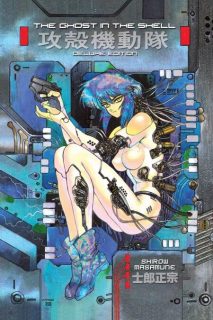
Ghost in the Shell, Volume 1The Ghost in the Shell, Volume 1 by Masamune Shirow. It’s been a long time since I’ve read Shirow’s The Ghost in the Shell. The series was actually among one of the first manga that I encountered. My introduction to the franchise was through Mamorou Oshii’s animated film Ghost in the Shell which probably remains my favorite interpretation of the story and characters. I actually often find the manga to be very difficult to follow. Shirow has some great, thought-provoking and intriguing ideas, but the flow of the story can be extremely disjointed at times. A live-action American Ghost in the Shell film will soon be hitting theaters, so it makes sense that Kodansha Comics would take advantage of the opportunity to re-release the original The Ghost in the Shell manga in a beautifully-produced deluxe hardcover edition. This “definitive” version is being presented in right-to-left format with Japanese sound effects for the first time. I’m fairly certain there are more color pages included, too, but the volume does lack some of the additional textual content found in previous English editions. The controversial lesbian sex scene has also been excluded at the creator’s request which does cause some slight narrative confusion.

Monthly Girls' Nozaki-kun, Volume 5Monthly Girls’ Nozaki-kun, Volumes 5-6 by Izumi Tsubaki. I love Monthly Girls’ Nozaki-kun so incredibly much. This series, along with My Love Story!!, is something that I can always count on to make me happy. I find myself constantly smiling while reading Monthly Girls’ Nozaki-kun and on more than one occasion have even caught myself laughing out loud. At this point the manga series is far enough along that almost all of the content is new to me. (My introduction to Monthly Girls’ Nozaki-kun was through the anime adaptation which is likewise an absolutely wonderful series.) There are new scenarios and even new characters–Nozaki’s younger brother and his judo teammates have become more prominent as one example–but those that were previously established are never forgotten. The good-natured humor in Monthly Girls’ Nozaki-kun remains consistent throughout the manga. Most of the hilarity is the result of the fact that none of the characters quite manage to be on the same page as any of the others and the ridiculousness that ensues because of it. The quirky characters themselves are incredibly endearing, too, even if they’re not particularly nuanced.

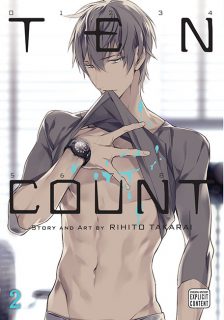
Ten Count, Volume 2Ten Count, Volume 2-3 by Rihito Takarai. Well now, that escalated quickly. From the very first volume Ten Count presented itself as a dark psychological drama, but if anything its intensity only increases as the series progresses. The relationship between Shirotani and Kurose is an incredibly unhealthy one which only becomes more troubling as sexual elements are introduced to it. Kurose, whether or not he realizes it or intends to be, is abusive, manipulative, and controlling. He pushes Shirotani, often without consent or consideration, to his limits and beyond. Shirotani does have some personal breakthroughs but heartbreaking glimpses into his past and into his current emotional and mental states reveal a man who is conflicted and struggling with his own self-worth. Frankly, I find Ten Count to be disturbing and unsettling, verging on psychological horror rather than romance. At this point I can’t really envision things turning out well. (Honestly, I’d probably feel disappointed or even somewhat betrayed if Takarai manages some sort of romanticized happy ending.) To me Ten Count is still immensely engrossing, but I certainly can’t blame anyone who would want to avoid the series.

Dragnet GirlDragnet Girl by Yasujiro Ozu. I recently had the opportunity to see Ozu’s silent film Dragnet Girl in a theater narrated by a professional benshi and accompanied by music cued by a prominent local DJ. There was even a brief lecture beforehand which I wasn’t expecting but found interesting. I enjoyed the production as a whole immensely–it was one of those once-in-a-lifetime events–but I also specifically enjoyed the film itself. (I really ought to seek out more of Ozu’s work.) Dragnet Girl is a gangster film which largely follows Tokiko and her boyfriend Joji, a retired boxing champion and current small-time crime boss. Hiroshi, a promising young hoodlum, joins the boxing gym and their gang. His older sister Kazuko worries about him and so tries to convince Joji to make her brother leave. Some romantic entanglements and turmoil ensue, but eventually Tokiko and Joji decide to leave their life of crime together but only after they pull off one last heist for the sake of Kazuko. Dragnet Girl is available from Criterion, collected together with two more of Ozu’s silent crime films, Walk Cheerfully and That Night’s Wife. It won’t quite be the same as watching it “live,” but it’s wonderful that there’s a home release readily available at all.

Filed Under: FEATURES, My Week in Manga Tagged With: film, Ghost in the Shell, Izumi Tsubaki, manga, Masamune Shirow, Monthly Girls' Nozaki-kun, Rihito Takarai, Ten Count

My Week in Manga: February 27-March 5, 2017

March 6, 2017 by Ash Brown

My News and Reviews

Last week at Experiments in Manga the winner of the Tokyo ESP manga giveaway was announced. The post also includes a list of some of the manga available in English about psychics and/or espers. That was it for the blog, but as I previously mentioned, I had an all-day job interview last week which took up a fair amount of my time and attentions. Well, it turns out that they liked me, and I liked them, so it looks like I’ll be starting in a new position at a different library in May. It’s both very exciting and very nerve-wracking, but I think (hope!) it’s a good move for me. My day job will still have absolutely nothing to do with manga, though.

Elsewhere online last week there was ICv2’s annual Manga Week. A number of interesting manga-focused articles and interviews were posted, including a mention of some of Vertical Comics’ most recent licensing announcements: Arakawa Under the Bridge by Hikari Nakamura (the one I’m most excited for), Gundam Wing: The Glory of Losers by Tomofumi Ogasawara, Helvetica Standard by Keiichi Arawi, and Voices of a Distant Star by Makoto Shinkai and Mizu Sahara (technically a rescue as the manga was originally published in English by TokyoPop back in the day). Kodansha Comics recently made some announcements at ECCC. In addition to adding even more fantastic series to its digital initiative, Kodansha Comics is working on a Ghost in the Shell anthology similar to the Attack on Titan Anthology released last year. Should be interesting!

Quick Takes

Anonymous Noise, Volume 1Anonymous Noise, Volume 1 by Ryoko Fukuyama. I will pretty much give any manga a try if it’s even tangentially related to music, so it shouldn’t be too much of a surprise that I would be interested in Anonymous Noise. The series follows Nino Arisugawa (called Alice, by some) who loves to sing. Expressing herself through music is an important part of who she is, but perhaps more importantly it’s how she connects to the people who mean the most to her. First there was Momo, Nino’s close childhood friend with a proclivity for making bad puns, and then there was Yuzu, who helped soothe Nino’s heartbreak with his own music when Momo’s family unexpectedly moves away. But after developing feelings for Nino, Yuzu suddenly disappears from her life, too. Fast forward a few years and the three of them are attending the same high school, although initially they don’t realize it. Most of the first volume feels like a prologue more than anything else, so I’m curious to see the direction the story proper will take from here. In addition to music, it seems that unrequited love will also be a major theme of Anonymous Noise. Complicated feelings of love, longing, loss, and loneliness set the tone for the series.

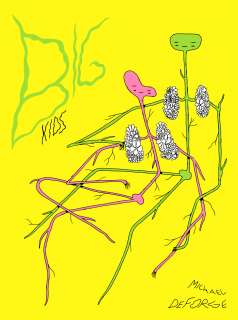
Big KidsBig Kids by Michael DeForge. Due to my interest in alternative and independent comics, I’ve been aware of DeForge’s work for quite some time. However, I’ve never actually read any of DeForge’s comics until picking up Big Kids. To be honest, I think I was probably a little intimidated since DeForge is such a highly acclaimed and well-regarded artist. I recently came across Big Kids on display at my local comic book shop where flipped through a few pages before putting it back. But I couldn’t stop thinking about it and so ultimately brought a copy home with me. The small volume’s bright yellow cover burned itself onto my retinas, and it’s content has burned itself onto my soul. I’ve read through the comic several times now and I still can’t stop thinking about it. I don’t know that I completely understand everything about it, but Big Kids is a work that is both surreal, verging on abstract, and powerful. In part, the comic about growing up. After being dumped by his boyfriend, Adam wakes up one day to discover that he has become a tree. The world itself is still the same, it’s just that Adam now views it from a vastly different perspective. But while being a tree has its benefits, there’s also a sense of sadness and loss associated with it.

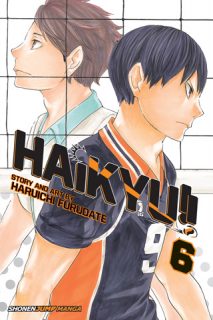
Haikyu!!, Volume 6Haikyu!!, Volumes 6-9 by Haruichi Furudate. Out of all of the sports manga currently being released in print in English, Haikyu!! is definitely one of my favorites. Admittedly, I was a little worried that as the series entered its first tournament arc and became more focused on the games themselves I would lose some of my enthusiasm (I’m not especially interested in volleyball), but my fears appear to have been mostly unfounded. Occasionally Haikyu!! will get a little bogged down in the particulars of volleyball, but this is usually completely offset by the series’ incredibly engaging characters. I’m immensely enjoying seeing them grow and evolve not just as players, but as people. I absolutely love the manga’s approach to and emphasis on teamwork. Some of the characters are prodigies, but it is made very clear that a single person cannot win on their own. Often it’s the unassuming, “ordinary” players who dramatically shift the course and tone of a game. Everyone has their own talents and abilities and everyone has an important role to play. Haikyu!! may be a series about volleyball, but its themes and message are much more universal than that. The manga has great positivity and energy which makes it fun to read, too.

Filed Under: FEATURES, My Week in Manga Tagged With: Anonymous Noise, comics, Haikyu!!, Haruichi Furudate, manga, Michael DeForge, Ryoko Fukuyama

Manga Giveaway: Tokyo ESP Giveaway Winner

March 1, 2017 by Ash Brown

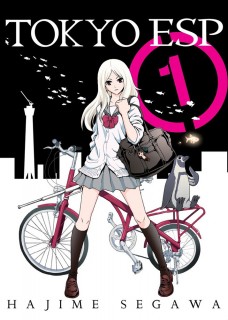
Tokyo ESP, Omnibus 1And the winner of the Tokyo ESP manga giveaway is… AshLynx!

As the winner, AshLynx will be receiving the first omnibus in Hajime Segawa’s manga series Tokyo ESP as published in English by Vertical Comics. Tokyo ESP is a relatively recent example of a manga that’s about psychics and espers. The subgenre doesn’t seem to be quite as common as it once was in translation, but it’s certainly still around. And so for this giveaway, I asked that participants tell me a little about their favorite espers and psychics from manga. Mob from Mob Psycho 100 was mentioned the most frequently (I really hope an English-language publisher will license that series soon!), but there are other really great characters mentioned in the giveaway comments, too!

Some of the psychic/esper manga available in English:
A, A’ by Moto Hagio
Akira by Otomo Katsuhiro
Alive: The Final Evolution written by Tadashi Kawashima, illustrated by Adachitoka
Baoh by Hirohiko Araki
Betrayal Knows My Name by Hotaru Odagiri
Beyond the Blindfold by Sakura Tsukuba
A Certain Magical Index written by Kazuma Kamachi, illustrated by Chuya Kogino
A Certain Scientific Accelerator written by Kazuma Kamachi, illustrated by Yamaji Arata
A Certain Scientific Railgun written by Kazuma Kamachi, illustrated by Motoi Fuyukawa
Clover by CLAMP
Descendants of Darkness by Yoko Matsushita
Drug & Drop by CLAMP
Domu by Otomo Katushiro
ES: Eternal Sabbath by Fuyumi Soryo
From the New World written by Yusuke Kishi, illustrated by Toru Oikawa
Ghost Hunt by Shiho Inada
Hands Off! by Kasane Katsumoto
I.O.N. by Arina Tanemura
Jihai by Toshimi Nigoshi
Kimagure Orange Road by Izumi Matsumoto
Kurosagi Corpse Delivery Service written by Eiji Otsuka, illustrated by Housui Yamazaki
Legal Drug by CLAMP
Lucifer and the Biscuit Hammer by Satoshi Mizukami
Mai, the Psychic Girl written by Kazuya Kudo, illustrated by Ryoichi Ikegami
Maoh: Juvenile Remix by Megumi Osuga
Mistress Fortune by Arina Tanemura
The Melancholy of Haruhi Suzumiya written by Nagaru Tanigawa, illustrated by Gaku Tsugano
Night Head Genesis by You Higuri
Please Save My Earth by Saki Hiwatari
Psychic Power Nanaki by Ryo Saenagi
Psycho Busters written by Tadashi Agi, illustrated by Akinari Nao
Psyren by Toshiaki Iwashiro
Rasetsu by Chika Shiomi
Spiritual Police by Youka Nitta
Telepathic Wanderers written by Yasutaka Tsutsui, illustrated by Sayaka Yamazaki
To Terra… by Keiko Takemiya
Tokyo ESP by Hajime Segawa
Tokyo Babylon by CLAMP
Wild Com. by Yumi Tamura
X by CLAMP
Yurara by Chika Shiomi
YuYu Hakusho by Yoshihiro Togashi

That’s quite a list, and I’m certain that’s not all of the manga with psychics and espers to have been released in English. Even so, I think there’s a nice variety of genres and even types of psychics represented, and you’ve got to start somewhere. Thank you to everyone who participated and shared your favorite espers with me. I hope to see you again for the next giveaway!

Filed Under: Giveaways, Lists, UNSHELVED Tagged With: Hajime Segawa, manga, Tokyo ESP

My Week in Manga: February 20-February 26, 2017

February 27, 2017 by Ash Brown

My News and Reviews

In a few more days and March will be here and in a few more days the winner of the Tokyo ESP manga giveaway will be announced. Never fear though, there’s still a little time left to enter for a chance to win the first omnibus in the series! Simply tell me a little about a favorite psychic/esper from a manga. (A quick note: Normally I announce giveaway winners on Wednesday mornings but, because I have an all-day job interview on the 1st, this time the announcement will likely be made sometime on Wednesday evening instead.)

As for some interesting things I came across last week: The National Museum of Modern Art in Tokyo has created an online archive of early Japanese animation. An English-language version of the site is currently in the works, but even if you can’t read Japanese if you click around enough you’ll find the some of the videos available for viewing. The University of Michigan’s Center for Japanese Studies recently hosted two master rakugo artists–Yanagiya Sankyo and Yanagiya Kyonosuke–and has posted a video of one of their events. The video includes a brief introduction to rakugo, a demonstration and performance, and a question and answer session.

There are also a few podcasts worth mentioning (though I haven’t actually had the opportunity to listen to most of them yet): The most recent episode of Comic Books Are Burning in Hell is devoted to the late Jiro Taniguchi. Tofugu started a podcast not too long ago and recently talked with Alexander O. Smith about What Makes a Good Japanese Translator? (Smith does a fair amount of video game translation but translates novels and manga as well. He’s also one of the founders of Bento Books.) Vertical Comics recently started a podcast, too, and the first episode of the Mangocast is now available for listening.

As for crowdfunding efforts for queer comics, the end of February has seen quite a few Kickstarter projects launch: The Husband & Husband campaign is hoping to publish the first volume of the cute and funny webcomic in print. The Dates anthology, which focuses on queer historical fiction, is back for a second volume. (Though I haven’t written a quick take for it yet, I have the first volume and it’s great.) The Go Get a Roomie! project is raising funds to print the second volume and reprint the first volume of the webcomic. And finally, Digital Manga’s most recent Kickstarter has launched–Juné Manga is working with Velvet Toucher, a Japanese artist living in the United States, to release Eden’s Mercy.

Quick Takes

Guardians of the LouvreGuardians of the Louvre by Jiro Taniguchi. I’ve read most but not quite all of Taniguchi’s manga that has been released in English, but his recent passing reminded me that I hadn’t yet read Guardians of the Louvre, the latest one to have been released. One of the most remarkable things about Guardians of the Louvre is its full-color artwork. The volume is actually part of the “Louvre Collection,” a series of comics commissioned by the Louvre that feature the museum and its collections. (Hirohiko Araki’s Rohan at the Louvre is part of the same series.) Taniguchi is an extremely versatile creator; while some of his manga are action-packed, others are more introspective. Guardians of the Louvre is definitely one of the latter. The story is a quiet and contemplative exploration of art and inspiration, following a manga creator who is visiting Paris on his own for a few days. He falls ill soon after he arrives but pushes through in order to visit the Louvre. And so when he seems to start slipping through time, meeting artists and historical figures associated with the museum, not to mention the embodiments of some of the works housed there, he’s never quite sure how much of his visit is based in reality and how much is a fever dream.

He's My Only Vampire, Volume 1He’s My Only Vampire, Volumes 1-3 by Aya Shouoto. While I don’t actively avoid vampire manga, I also don’t actively seek it out. Usually there has to be something a little “extra” to catch my attention. In the case of He’s My Only Vampire, I had decided to seek out more of Shouoto’s work available in English while waiting for more of The Demon Prince of Momochi House to be released. He’s My Only Vampire is kind of an odd series and at this point the manga doesn’t seem to have a clear direction. It’s as if Shouoto is either trying to do too much at once with the story or hasn’t quite decided where it should go yet. It can still be pretty entertaining from time to time, though. Shouoto’s artwork, even though anatomy seems to occasionally go out the window, can be lovely and sensual, too. So far the best part of the manga is the three main characters–Kana, the strong and spunky heroine, Aki, the titular vampire and Kana’s long-lost childhood friend, and Jin, a high-school delinquent who has recently discovered that he is at least part werewolf. Personality-wise and the relationship-wise they’re all sort of goofy and their interactions can be quite amusing. The story is taking some darker turns, but I think I prefer its humor.

Magi: The Labyrinth of Magic, Volume 1Magi: The Labyrinth of Magic, Volumes 1-4 by Shinobu Ohtaka. I know quite a few people who love Magi and have heard plenty of great things about the series but despite those facts it’s still taken me this long to finally get around to reading the manga. Magi more or less starts out as a dungeon crawl which, while highly entertaining, isn’t exactly the most compelling narrative for a series that’s already over thirty volumes and still ongoing. But after the first dungeon crawl (and I suspect that there will likely be more of those in the future) Ohtaka begins delving into the characters and their motivations while exploring the vast world in which the live. In part Magi is inspired by One Thousand and One Nights but Ohtaka does not strictly adhere to those stories and characters, instead creating a complex world that is reminiscent of but distinct from that work. Magi really is a great series, with plenty of magic, mystery, and adventure; I can easily understand why it’s so well-loved. The artwork is clear and attractive, the settings and characters are interesting and well-realized, and the story, worldbuilding, and action are engaging. I also particularly appreciate that the women can be just as badass as the men in the series and in some cases are even more so.

NewsPrintsNewsPrints by Ru Xu. My introduction to Xu’s work was through the beautifully illustrated webcomic Saint for Rent. However, NewsPrints is her debut graphic novel. Published by Scholastic the comic is aimed towards middle grade readers but it can be appreciated by older readers, too. NewsPrints, while still being very approachable, actually tackles some pretty weighty subject matter–war, propaganda, identity, and so on. The comic is about Blue, an orphan who is hiding the fact that she is a girl so that she can work as a newsboy for the Bugle, one of the only newspapers that actually reports the truth. The Bugle has taken in and cares for other orphans as well, but Blue is afraid that she won’t be able to hide her secret much longer and may lose her newfound family because of it. The city she lives in has very firmly entrenched ideas about what is and is not appropriate for girls to do. Blue is embroiled in an extremely dangerous situation when she meets and becomes friends with Crow who is also hiding a secret, one that could greatly influence the course of the war. Though NewsPrints tells a complete story the ending is left fairly open. Apparently a sequel is currently in the works; I’m very curious to see where Xu takes the comic next.

Filed Under: FEATURES, My Week in Manga Tagged With: Aya Shouoto, comics, He's My Only Vampire, Jiro Taniguchi, magi, manga, Ru Xu, Shinobu Ohtaka

Manga Giveaway: Tokyo ESP Giveaway

February 22, 2017 by Ash Brown

The end of February is almost here which means it’s yet again time for another giveaway at Experiments in Manga. This month everyone will have the opportunity to win the first omnibus of Hajime Segawa’s manga series Tokyo ESP. (Published in English by Vertical Comics, the omnibus collects the first two volumes of the original Japanese edition.) As always, the giveaway is open worldwide!

Tokyo ESP, Omnibus 1

Growing up I absolutely loved stories about psychic powers. (Did anyone else read The Girl with the Silver Eyes Willo Davis Roberts? That was a favorite of mine and I frequently reread it.) I no longer deliberately seek out that particular subgenre in the same way that I used to, but I do continue to enjoy stories with ESP as a prominent feature. At one point in time, it actually seemed like it was impossible to get away from manga series revolving around characters with psychic powers. While they don’t seem to be nearly as common as they once were, manga with psychics and espers are still regularly released in English, Tokyo ESP being just one example

So, you may be wondering, how can you a copy of the first Tokyo ESP omnibus?

1) In the comments below, tell me a little about one of your favorite psychics or espers from a manga. (If you don’t have a favorite or don’t know of any, simply mention that.)
2) If you’re on Twitter, you can earn a bonus entry by tweeting, or retweeting, about the contest. Make sure to include a link to this post and @PhoenixTerran (that’s me).

That’s pretty straightforward, right? Everyone participating has one week to submit comments and can earn up to two entries for the giveaway. Comments can also be sent directly to phoenixterran(at)gmail(dot)com if needed or preferred. Those entries will then be posted here in your name. The giveaway winner will be randomly selected and announced on March 1, 2017. Good luck, everyone!

VERY IMPORTANT: Include some way that I can contact you. This can be an e-mail address in the comment form, a link to your website, Twitter username, or whatever. If I can’t figure out how to get a hold of you and you win, I’ll just draw another name.

Contest winner announced–Manga Giveaway: Tokyo ESP Giveaway Winner

Filed Under: FEATURES, Giveaways Tagged With: Hajime Segawa, manga, Tokyo ESP

  • « Go to Previous Page
  • Page 1
  • Interim pages omitted …
  • Page 3
  • Page 4
  • Page 5
  • Page 6
  • Page 7
  • Interim pages omitted …
  • Page 60
  • Go to Next Page »
 | Log in
Copyright © 2010 Manga Bookshelf | Powered by WordPress & the Genesis Framework