• Skip to primary navigation
  • Skip to main content
  • Skip to primary sidebar
  • Home
  • About Us
    • Privacy Policy
    • Comment Policy
    • Disclosures & Disclaimers
  • Resources
    • Links, Essays & Articles
    • Fandomology!
    • CLAMP Directory
    • BlogRoll
  • Features & Columns
    • 3 Things Thursday
    • Adventures in the Key of Shoujo
    • Bit & Blips (game reviews)
    • BL BOOKRACK
    • Bookshelf Briefs
    • Bringing the Drama
    • Comic Conversion
    • Fanservice Friday
    • Going Digital
    • It Came From the Sinosphere
    • License This!
    • Magazine no Mori
    • My Week in Manga
    • OFF THE SHELF
    • Not By Manga Alone
    • PICK OF THE WEEK
    • Subtitles & Sensibility
    • Weekly Shonen Jump Recaps
  • Manga Moveable Feast
    • MMF Full Archive
    • Yun Kouga
    • CLAMP
    • Shojo Beat
    • Osamu Tezuka
    • Sailor Moon
    • Fruits Basket
    • Takehiko Inoue
    • Wild Adapter
    • One Piece
    • After School Nightmare
    • Karakuri Odette
    • Paradise Kiss
    • The Color Trilogy
    • To Terra…
    • Sexy Voice & Robo
  • Browse by Author
    • Sean Gaffney
    • Anna Neatrour
    • Michelle Smith
    • Katherine Dacey
    • MJ
    • Brigid Alverson
    • Travis Anderson
    • Phillip Anthony
    • Derek Bown
    • Jaci Dahlvang
    • Angela Eastman
    • Erica Friedman
    • Sara K.
    • Megan Purdy
    • Emily Snodgrass
    • Nancy Thistlethwaite
    • Eva Volin
    • David Welsh
  • MB Blogs
    • A Case Suitable For Treatment
    • Experiments in Manga
    • MangaBlog
    • The Manga Critic
    • Manga Report
    • Soliloquy in Blue
    • Manga Curmudgeon (archive)

Manga Bookshelf

Discussion, Resources, Roundtables, & Reviews

Reviews

Tearmoon Empire, Vol. 9

January 11, 2023 by Sean Gaffney

By Nozomu Mochitsuki and Gilse. Released in Japan as “Tearmoon Teikoku Monogatari” by TO Books. Released in North America by J-Novel Club. Translated by David Teng.

I’m not sure how long Tearmoon Empire is supposed to be, or even if the author has an ending in mind. Certainly Vol. 12 is due out in Japan soon, so we’re not anywhere close to the end at the moment. And yet it feels that we have at least started to hit the back half of the series, if only because we’re getting flash forwards that aren’t always depressing nightmares. The last couple of volumes of Tearmoon Empire have shown us glimpses of the main cast in the original world after Mia is executed, and this volume has one as well. It’s meant to show us all the good that Mia has done her second time around, even when she doesn’t always realize it. But here we also start to see flashforwards that seem to be the ACTUAL happy future, showing us an older Mia still happily running rings around everyone even if the narrator insists that she’s being a selfish coward. I really enjoyed reading them.

We pick up right where we left off at the end of the previous book, with Mia and company trying to stop Prince Sion from being poisoned by his younger brother. They succeed at this… accidentally, but the actual poisoning that happens is much worse, and requires everyone (but particularly Tiona and Citrina) being incredibly quick-witted. After the fallout from this, there’s still a massive party with nobles to attend to, so Sion and Abel decide to fight for Mia’s hand once and for all in a sword duel. Which comes as a big surprise to Mia, who as usual in matters of the heart seems to act like a girl her age. That said, when Sion actually confesses to her, she knows that this isn’t something she can actually brush off or deflect, and gives him an honest, sincere answer. Even the narrator is (mostly) silent here.

Tiona spent most of the start of this series either absent or barely appearing, which was a surprise given the role that she had in Mia’s original timeline. But gradually she’s grown in importance as a character, and here we see what Mia’s actions have wrought, which is that she and Sion have now had enough character development that they can genuinely confide in each other. While Tearmoon Empire isn’t quite a “villainess” book per se, and is not derived from an otome game, Tiona absolutely fulfills the “heroine of an otome game” archetype, including being able to see past noble bullshit and get to the heart of the matter. As for Mia, she’s getting smarter by the book. I especially loved when Citrina praised her for her foresight in finding the antidote mushroom, and Mia briefly debated taking credit for it, but decided to tell Citrina that it really was just pure coincidence. I’m hoping that in future books we can see her be even more honest with others about her real motives, though the basic premise of the book tells me I won’t see it too often.

This was an absolute banger of a book, wrapping up this arc in fine fashion, and with several real dramatic moments. Next time we’ll be going to The Valley of Horses, but hopefully not in a Jean M. Auel way, and presumably we will slowly set up the next arc but not pay it off. These books are long, as are the arcs.

Filed Under: REVIEWS, tearmoon empire

Adachi and Shimamura, Vol. 10

January 10, 2023 by Sean Gaffney

By Hitoma Iruma and raemz. Released in Japan by Dengeki Bunko. Released in North America by Seven Seas. Translated by Molly Lee.

Finally, after two volumes with illustrations ranging from minimal to none, we have a new artist. I had speculated last time that Non, the old artist, had left the title as they were ill, but I’ve since found out that it’s more “they are shifting their career goals”, i.e. they’re only drawing BL now. Which is fine. Replacing them is raemz, who is best known over here for the gorgeous illustrations for Chitose Is in the Ramune Bottle. So things are back to normal with this series… for the most part. This volume, following up on the 8th book, spends far more time in the future with Adachi and Shimamura moving in with each other after graduating and getting jobs. Iruma has never really been all that fond of linear storytelling, so I’m not too surprised, but it does also remind you that the series is winding down. Indeed, the author states in the afterword that the 8th book was the “final” one, and the four to follow are afterwords. And Dengeki confirmed 12 will be the last.

As noted, the book is divided into ‘present’ and ‘future’ sections, with the former narrated by Shimamura and the latter mostly by Adachi. In the present, now that Adachi and Shimamura are dating, and given that the author is not really going to do anything with Hino and Nagafuji here after they got a major spotlight last time, there’s really only one plot thread to wrap up. Or rather, to cut. Tarumi is still around, still has a major unstated crush on Shimamura, and still wants to hang out with her. And credit to Shimamura, here we see what all this interaction with Adachi and Yashiro has wrought, as she decides to deal with the issue head on telling Tarumi that she’s dating Adachi now. The scene is meant to be heartbreaking, but sadly, most of Shimamura’s narration still puts a layer of gauze over everything, so I think it’s merely bittersweet.

There’s quite a bit of Yashiro in this book, as she spends most of it dressed up in onesies of various kinds of animals. I’ve joked before about how I’m the only fan of the series who likes Yashiro, but I do think that her role in the story is very important. First of all, she deserves just as much credit as Adachi for getting Shimamura out of her passive daze and forcing her to take a good long look at herself. Adachi does this directly by being a vibrating ball of gay, but Yashiro always does it indirectly, so it’s harder to spot. She also gives Adachi and Shimamura a gravitas that they would not otherwise have. The idea from prior books that there are many alternate universes, and that all of them have Adachi finding Shimamura in them, is a nice one that distracts you from the fact that these books can be very, very dull if you let them. Future Shimamura also seems to realize that even after they’ve moved to a different city, Yashiro is gonna show up anyway. She’s the spice.

Adachi and Shimamura 11 just came out in Japan last month, so it will no doubt be a while before we see it here. Till then, enjoy the present, as Shimamura cuts ties with an old friend, and the future, as Adachi and Shimamura move in together and share a bed but are quite asexual about it all.

Filed Under: adachi and shimamura, REVIEWS

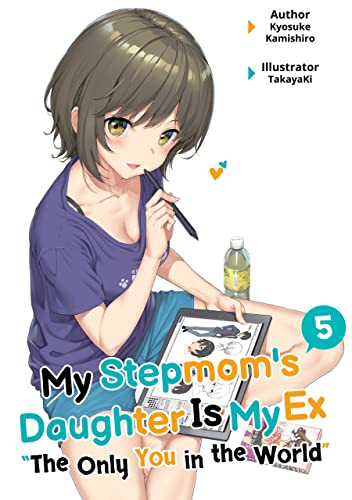
My Stepmom’s Daughter Is My Ex: “The Only You in the World”

January 9, 2023 by Sean Gaffney

By Kyosuke Kamishiro and TakayaKi. Released in Japan as “Mamahaha no Tsurego ga Motokano datta” by Kadokawa Sneaker Bunko. Released in North America by J-Novel Club. Translated by Gierrlon Dunn.

This series is definitely one which enjoys being for otaku nerds, and expects its readers to keep up. Fortunately, it also has Yume, who is not an otaku nerd, and who sometimes needs things explained. (There’s a Haruhi Suzumiya joke here, and it’s remarked on how old that series is.) It also leans heavily on the sort of stereotypes such fans enjoy. And Isana Higashira leans heavily into those stereotypes. She’s the weird one. She talks like she’s from the 19th century. She’s got a really big chest. The whole nine yards. She’s also a hoot to read. I was quoting this book on Twitter while I read it, and everything I was quoting was one of her lines. That said, there’s a reason why, despite her plotline supposedly wrapping up in the second volume, the author came back to look at her in more depth. It’s because real life is not like light novels, and people don’t really get over being rejected by their first love that easily.

Mizuto and Yume return from their trip worse off than before, thanks mostly to Yume’s inability to spit her feelings out and Mizuto’s talent for rationalizing anything as “not in love with me”. They’re back home, though, which means that Isana can come over. A lot. And hang out with Mizuto, and get in compromising situations with Mizuto, and go out on a date with Mizuto (and Yume, who invites herself along), and introduce Mizuto to her mother. It should not really come as a surprise that, when school finally goes back into session, the rumor among the class is that Mizuto and Isana are dating. And Yume, trapped by her own inability to get her own feelings across, can’t say anything. Unfortunately, suddenly being the center of attention, and having the reason for that be a lie that everyone believes, makes Isana very unhappy.

The subtitle of this volume comes from Isana’s awesome mom, who sounds like she starred in a light novel series of her own as a teen. Isana suffers from an inability to read social cues, and when she asks things that to her are not obvious, she binds that everyone gets upset and she’s isolated. Mizuto is the first person her own age she’s met who not only does not get upset by her but is able to interact with her as a friend. This is why she fell for him so hard, and it’s also why, despite everything she’s told him, she can’t get past being rejected quite yet. The author mentions in the afterword that he originally ended the volume with Mizuto being more cool and dramatic, but that Isana was telling him that something wasn’t working there, so he went back and wrote the ending we have now, which feels more in character.

Yume will still eventually get together with Mizuto, of course, whenever this series ends. That said, I can understand why the author says Yume “feels like she’s losing” after this book. Isana, if nothing else, deserves her own spinoff.

Filed Under: my stepmom's daughter is my ex, REVIEWS

The Drab Princess, the Black Cat, and the Satisfying Break-Up, Vol. 2

January 8, 2023 by Sean Gaffney

By Rino Mayumi and Machi. Released in Japan as “Jimihime to Kuroneko no, Enman na Konyaku Haki” by M Novels F. Released in North America by Cross Infinite World. Translated by Evie Lund.

Last time, I mentioned that we’d gone an entire novel without having the satisfying break-up of the title. Well, I’ve just finished the second volume, and I have some bad news for you. Now, this is not entirely bad. The scenes dealing with Prince Helios, how Seren thinks he feels about her and Marietta, how he *actually* feels about her and Marietta, and the fact that he’s really starting to mature and come into his own now lend a nice air of anticipatory horror to the whole thing. Helios isn’t a bad guy, just a teen who was overheard once at the exact wrong time and it’s going to destroy his life. That said, that’s about 15% of this book. The other 85% is Serena and Viol being adorable at each other while he teaches her magic. Don’t get me wrong, it’s cute, and they make a good not-yet-couple. It’s just compared to the underlying tension it feels a bit… dull?

The exam to become a High Mage is not that far away, so it’s time for Viol (or his alternate self/cat familiar Vi) to train Marietta to do better and better things. It helps that she’s a complete genius who picks up on everything much faster than he anticipates, to the point where he has to forbid her from learning how to FLY for fear she’ll try too hard and injure herself. Instead, they sneak out of her mansion and go to find magical beasts to destroy, so that she can gain experience. Which is good, because she really does show off that she’s unused to this, being terrified on her first encounter with one, and her magic therefore not being as strong as usual. But she improves, very quickly, and all is going well. Including her feelings for Viol, and Viol’s feelings for her. Now if they could only tell each other…

So yeah, it turns out that what this really is is one of the current genre of “sweet and syrupy romance” books, with a side order of magical creatures. Seren can’t stop staring at Viol, or thinking about how to please him, and near the end of this book realizes that she’s fallen in love with him. She’s also fully made her decision to become a High Mage and not the Queen, which is all very well and good but she really needs to tell someone about it. Viol loves Seren and sweets, in that order, and sort of suspects that Helios still likes her, but is certainly not going to try to fix things on his own. The result is a book where the high tension is surrounded by fluff. That said, I do really like the minor subplot of bringing more women into the “salons” that the noble men attend. Even if Seren does misread the reason, it’s good to see that for once we have a group of nobles and none of them are sexist dickheads! What are the odds?

There’s certainly more to this story – the author is still writing it as a webnovel. That said, these are the only two books to come out in print in Japan – two more seem to be digital-only. In any case, I really, REALLY hope that the break-up is dealt with in Book 3, because there’s only so many times I can read about these two eating sweets, y’know?

Filed Under: drab princess black cat and satisfying break-up, REVIEWS

The Saga of Tanya the Evil: Alea Iacta Est

January 7, 2023 by Sean Gaffney

By Carlo Zen and Shinobu Shinotsuki. Released in Japan as “Youjo Senki” by Enterbrain. Released in North America by Yen On. Translated by Richard Tobin.

For most of this light novel series, there has bee one character pushing back against its main premise: Colonel Lergen. He’s been the one to boggle at the fact that a child is behind most of their major battles, and he also is able to see the terrifying soullessness that Tanya’s combination of military training and past-life management memories can do. We sympathize with him as the lone voice of reason. As such, the scene near the start of this book where he tries to “negotiate” peace with Ildoa is absolutely jaw-dropping. No one in the Empire (except Zettour and Tanya) is really aware of exactly how badly they’re losing the war, and nobody (including Tanya) is quite aware of exactly what the rest of the world thinks of the Empire as a nation. Actually, Rudersdorf may realize this as well. But his solution to the problem is not one that even the Empire can tolerate, and thus Zettour and Tanya are forced to once again make the title of the light novel be as accurate as possible.

For a series with the title The Saga of Tanya the Evil (or, for that matter, The Military Chronicles of a Little Girl), Tanya is not in this book as much as previous volumes. Huge chunks of the volume are dedicated to Lergen’s negotiation with the Ildoans,. and later with his leading the attack on those same Ildoans. We get lots of Zettour here, as he attempts to persuade his friend that he’s being stupid, and then, persuasion having failed, is reduced to assassination. But even this goes pear-shaped, because the Empire’s foreign office is so bad at everything that the Commonwealth use this opportunity to put in their own assassination attempt. As for Tanya, she’s still trying to think of ways that she and her unit can defect (and kudos to her for actually thinking of the unit here at all), but that’s getting more and more difficult.

I want to take some time to talk about the artwork of Shinobu Shinotsuki, which tends to run to two different kinds. There’s the overdramatic gorgeous pictures, such as the ones we see in the color pages. And there’s the ones that look like a total cartoon. Sometimes literally, as one shot of Lergen and Calandro screaming at each other shows drops of snot coming from one nose as if they’re Crayon Shin-chan, while the background has cute l’il caricatures of Tanya and Visha. (Visha also gets a picture of the volume’s funniest moments, trying to eat as much as possible as quickly as possible because they finally have good food and will never get more of it.) The most telling moment, though, is when we read, in Tanya’s matter-of-fact narration, about her idea for an initiative, along with her misgivings about it, and the illustration shows her laughing maniacally as if she’s just shot a dog. One wonders how much of this chronicle can be trusted.

Good news, we get the 12th volume in a few months. Bad news, that’s the latest from Japan, and it came out three years ago. That said, we have a long ways to go before the Empire finally falls, so strap in.

Filed Under: REVIEWS, saga of tanya the evil

Der Werwolf: The Annals of Veight, Vol. 15

January 5, 2023 by Sean Gaffney

By Hyougetsu and Nari Teshima. Released in Japan by SQEX Novels. Released in North America by J-Novel Club. Translated by Ningen.

This is a perfectly decent volume of Der Werwolf. There’s lots of politicking, and there’s a big fight against a danger to every country towards the end of it. Fans should be pleased. That said, when the author stated in the afterword that the 16th volume would be the final one, it was hard not to think “Thank God”. It’s gotten harder these days to end popular series, and Der Werwolf is a classic example. I enjoy the next generation, but it really isn’t doing much beyond the same things that the previous one did. Indeed, Friede gets less page time here than in the two prior books, and Veight once again takes center state. This is partly because Friede doesn’t travel to a new foreign country, but the foreign country comes to Friede. But it’s also because Friede is her dad, only with “bright-eyed young woman” added to it. Even other characters note that they’re the same. When you’re just writing the same things over and over again (much like this review), it’s probably time to call it quits.

Meraldia is visited by the crown prince of Kuwol, Shumar, who gets off to a very bad start with Friede due to cultural differences, but seems a pretty nice guy at heart. He’s unlikely to be added to Friede’s group of friends anytime soon, though. Veight, meanwhile, is starting to think of the future, specifically what will happen to the world after he and those of his generation pass on, so he’s trying to explain the differences between Monarchy and a Parliamentary Democracy to that next generation, with limited success. Unfortunately, disaster soon arrives in the form of a massive dragon, apparently powered by mana, which is slowly making its way out of the woods and towards the other countries. Parker is send to investigate… and is incinerated into bone dust. Can anything defeat it?

‘Dragon’ isn’t one of the fantasy creatures we’ve seen in Der Werwolf. The reason for that is that we already have reptilian humanoids, and they pretty much fit in that little block next to the werewolves and vampires. This, though, is not so much a dragon as a kaiju – instead of fire, it fires off laser beams from its mouth, which reminds me of several Gamera films. Given that it absorbs mana, most of the traditional ways this series fights things don’t work at all. One interesting thing that comes up is that the dragon needs to be stopped before it evolves into a Hero. We haven’t really dealt with Heroes since the very beginning of this series, and it’s worth remembering that, to Veight and the others, a Hero is the worst thing that could happen to the world. Fortunately, Veight is able to use the power of diplomacy plus the power of being a one-man fighting machine to help take the dragon down, helped in the end by his daughter.

I’m not sure what the final volume will give us – retirement? I highly doubt it ends years in the future with Veight’s death. Mostly as it’s hard to imagine him ever dying. But Vol. 16 is not out in Japan yet, so we’ll have to wait to find out.

Filed Under: der werwolf, REVIEWS

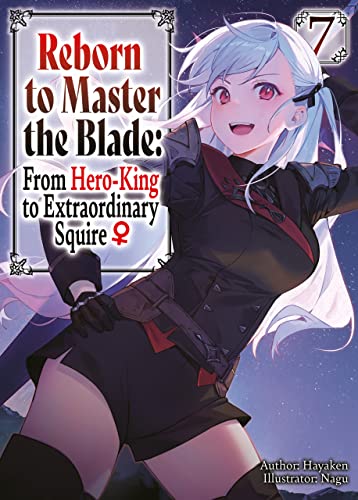
Reborn to Master the Blade: From Hero-King to Extraordinary Squire, Vol. 7

January 3, 2023 by Sean Gaffney

By Hayaken and Nagu. Released in Japan as “Eiyu-oh, Bu wo Kiwameru tame Tensei su. Soshite, Sekai Saikyou no Minarai Kisi ♀” by HJ Bunko. Released in North America by J-Novel Club. Translated by Mike Langwiser.

This is getting an anime starting in a few days, and it will be interested to see what sort of tone it takes. I suspect it will be more towards the light-hearted end, because there’s just no other way to see Inglis and Rafinha otherwise, but there is a lot of darkness and tragedy in this series as well… which is frequently glossed over, let’s be honest. In any case, the anime will likely adapt at least three books and possibly four, because these books are short and read very fast. They are not interested in stopping to think about what happens to the people left behind, or to the buildings destroyed in Inglis’ fights, they are moving on to the next fight. That may change in Book 8, though, as the cliffhanger to this book is a nasty one, and is bringing the “let’s kill generic monsters” part of these volumes a lot closer to home.

Believe it or not, things happen away from Inglis as well, and the first third or so of this book shows us Rafael, Eris and Ripple trying to combine fighting a war with fighting monsters and getting very frustrated that they’re the only side that wants to call off the first part because of the danger of the second part. The enemy commander is very determined to destroy Karelia, and he has a somewhat naive but deeply besotted hieral menace to help him. Fortunately, when all seems lost, along comes Inglis to save the day… mostly because saving the day, for once, involves fighting a really strong opponent and going all out. Yes, for once, everyone’s interests align with hers, and only Rafinha seems to care that this is merely Inglis doing what she would have done anyway.

The front of the book is interesting as it reminds us that there are normal people in this world doing things sensibly. Rafael, Rafinha’s brother, is an upright, honest young man, who spends much of this book infuriated that people are not fighting honestly or sensibly. Eris and Ripple are both there to essentially hold him back from the last ditch move that he has against horrible threats, which does resolve the threat but also kills him. They’re all good people, and I’d say that they deserve a book of their own, but it would probably be very dull, because we’re reading this for our meathead heroine and her total lack of common sense. Heck, even her bad habits save the day here – not only her fighting, but also the fact that she and Rafinha brought along a huge chunk of ancient dragon meat, which turns out to have healing properties. Yes, Inglis has now combined her fighting and eating to have infinite fighting without having to worry about killing her opponent. Tremble in fear.

And then there’s that nasty cliffhanger… theoretically. This series is on the lighter end of the spectrum, despite all the bad things happening, so I suspect the answer to “is this reversible” will be “yes”, but you never know. Till then, enjoy the fighting.

Filed Under: reborn to master the blade, REVIEWS

Loner Life in Another World, Vol. 4

January 2, 2023 by Sean Gaffney

By Shoji Goji and Saku Enomaru. Released in Japan as “Hitoribocchi no Isekai Kouryaku” by Overlap Bunko. Released in North America by Seven Seas. Translated by Eric Margolis. Adapted by Veles Svitlychny.

Welcome back to another volume of “Unreliable Narrators: The Light Novel”. Most of this is due to the presence of Haruka, who deliberately obfuscates his own activities to be extremely annoying, obnoxious, or (most often) both, but also in how he describes the activities of everyone else in the series. In fact, the most important parts of the book are probably not his rambling descriptions and horny fantasies, but the “Interlude” chapters from other points of view – especially Class Rep, who I’m not certain is 100% reliable either, but is certainly better than Haruka. What he describes as the sports jocks out “playing tag with kobolds” because they can only relate to folks as dumb as they are, Class Rep describes as going out every day to grind and level to try to get stronger. Haruka will talk about his creating new Japanese food and having the girls all fight over it, Class Rep will talk about the fact that they sob as they eat it because they miss home so much. This series has layers.

Even the cover art has layers – the cover seen here features the Princess of the kingdom looking cool and noble, but turn to the color pages and you’ll see her half-naked and broken. This is, of course, due to Haruka, no matter how much he insists that it’s not really his fault. Most of the first half of the book is spent in the dungeons, with Haruka and the girls taking on a dungeon and finding a lot of useful books. Haruka also acquires tentacles (just like Maple – is this a thing now?), which he uses mostly to sew clothing for the girls with multiple appendages, though it’s implied that Angelica sees a more traditional use in their bedroom activities. He’s also been busy trying to kick start the Industrial Revolution in their frontier city, to the point where the kingdom sends its Royal Guard (led by the Princess) to put them down. Of course, she knows this is wrong, but she has to obey their commends… something she rapidly regrets.

There is a lot of goofy humor, over the top happenings, and sheer horniness in these books – the girls all level up Sense Presence in this book, it’s heavily implied so they can hear what Haruka and Angelica do every night), but it’s also a lot darker than you’d expect – and darker than its manga equivalent, which makes Haruka more tolerable but also less interesting. Class Rep here doesn’t go into detail, but mentions twice how his entire family in Japan is dead, and she also talks about how she would break completely if he dies. What Haruka sees as the girls stubbornly throwing themselves into danger they’re not capable of handling, they see as trying desperately to level up enough so they can protect HIM – he has a low level, and can’t rely on what everyone else does, so could easily die at any moment, despite his belittling of this. The book, like Haruka, is actively trying to drive the reader away from it, but the rewards are also great.

That said, you will need to sit through several mentions of his exhausting Angelica so much in the evenings he gets lectured the next day. For fans who were already gonna read this only.

Filed Under: loner life in another world, REVIEWS

The Best and Worst Manga of 2022

January 1, 2023 by Katherine Dacey

When I sat down to compose my Best of 2022 list, I was certain I’d compiled a similar one as recently as 2017, only to discover that I hadn’t done so in almost seven years. In looking over some of my earlier efforts, I hardly recognize myself: who was this person with the energy to review 40 or 50 books in a year? Or who thought that Yowamushi Pedal was the best new series of 2015? It felt a little daunting to revisit those lists, honestly, as I’ve often let my blog lie fallow for months at a stretch as I adjusted to a more demanding teaching schedule or a longer commute; I’ve been vowing to “bring back” The Manga Critic for years. Reading other bloggers’ year-end lists, however, inspired me to get back in the saddle and take stock of the manga I loved—and didn’t—in 2022.

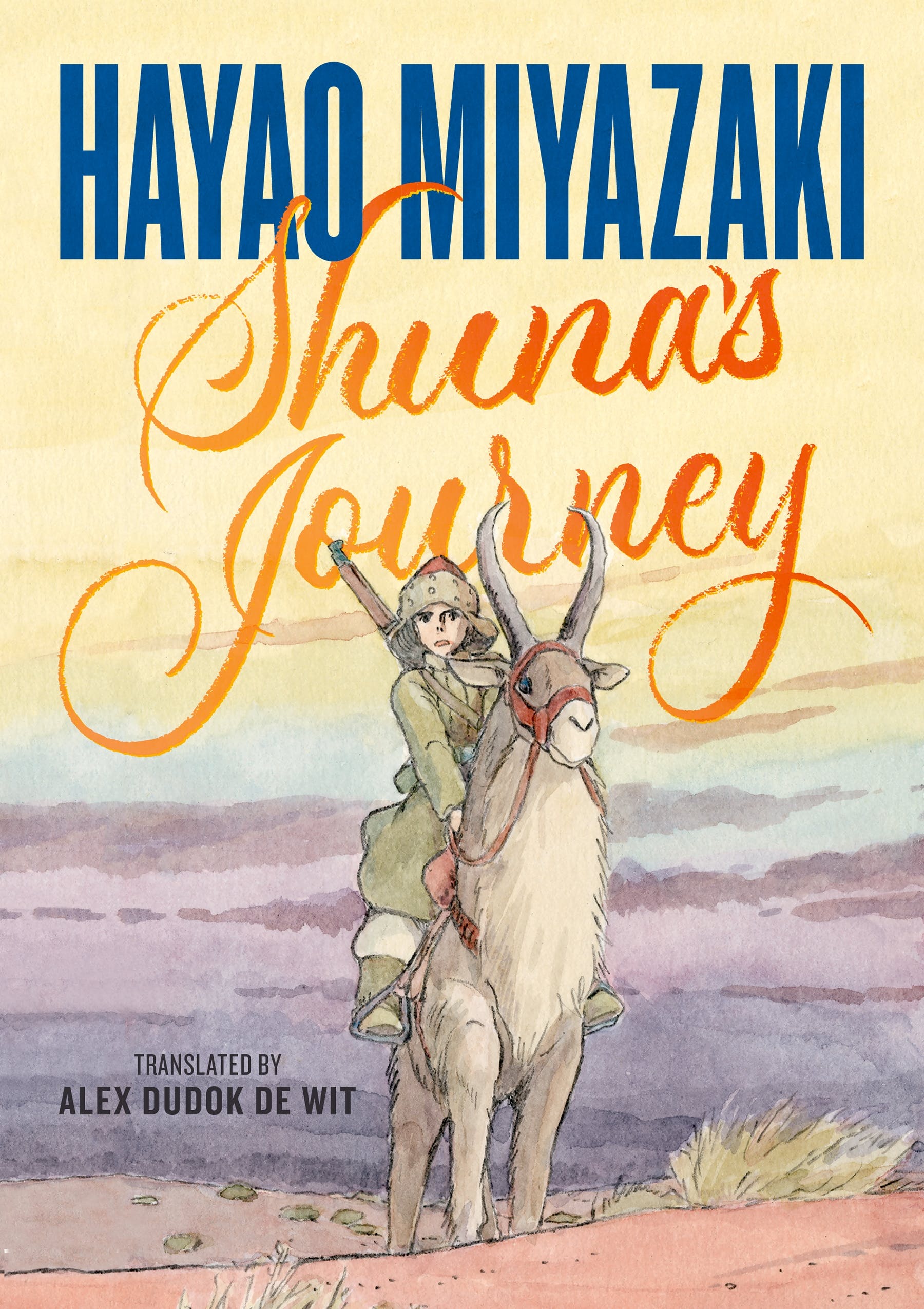
Best New Manga: Shuna’s Journey
By Hayao Miyazaki • Translated by Alex Dudok de Wit • First Second
In this deceptively simple work, Hayao Miyazaki creates a richly detailed world filled with beautiful, strange imagery that invites the reader to contemplate where and when the story takes place without definitively answering those questions. Miyazaki’s hero is just as mysterious as the landscapes he crosses; Shuna’s odyssey is not a journey of self-discovery but a practical quest that, despite its myriad hardships, leaves him fundamentally unchanged. Is a he a folkloric hero or a witness to environmental catastrophe? Miyazaki leaves that question unanswered as well, creating a work that’s more ambiguous and less didactic than Nausicaä of the Valley of the Wind or Princess Mononoke, but similar in its emphasis on the complex relationship between humans and the natural world.

Best Archival Project: Talk to My Back
By Yamada Murasaki • Translated by Ryan Holmberg • Drawn & Quarterly
“For six years now, I’ve never walked at a pace that was mine,” notes Chiharu, the protagonist of Yamada Murasaki’s sharply observed Talk to My Back. First published in the 1980s, Murasaki’s thirty-six vignettes chronicle the small pleasures and intense disappointments of a middle-class Japanese housewife. Through spare linework and judicious use of blank space, Murasaki conveys Chiharu’s quest to define herself outside the role of mother and wife, documenting Chiharu’s anger, frustration, and alienation in a restrained fashion that suggests how stifled and powerless Chiharu often feels. In a thorough, thoughtful companion essay, translator Ryan Holmberg explores Murasaki’s trailblazing role as an alt-manga creator; Murasaki was one of the first women artists to be featured in the pages of COM and Garo magazines, opening the door for creators such as Akino Kondo and Junko Mizuno. Here’s hoping that Drawn & Quarterly decides to publish more of Murasaki’s work in English.

Best New Sci-Fi Manga: Yokohama Kaidashi Kikou
By Hitoshi Ashinano • Translated by Daniel Komen • Adapted by Dawn Davis • Seven Seas
I’m not sure if I would have been as receptive to Yokohama Kaidashi Kikou five or ten years ago, as its low-key depiction of life in the aftermath of an environmental catastrophe might have struck me as hopelessly twee. With the worst of the pandemic behind us, however, I found the series’ emphasis on small, everyday moments more resonant; Hitoshi Ashinano convincingly evokes the rhythm of everyday life in a world of scarcity, minus the Hobbesian emphasis on violent competition. Alpha, the main character, is an android who divides her time between running a small cafe and roaming the coastline on her scooter, photographing the empty roads and submerged towns as well as the small, vibrant communities where people still find time to hold rowdy association meetings and stage elaborate firework displays. Her efforts to document humanity’s final chapter offer a wistful—and hopeful—meditation on what it means to persevere in the face of uncertainty and change.

Best New Romance: Kowloon Generic Romance
By Jun Mayuzuki • Translated by Amanda Haley • Yen Press
The aesthetic of Kowloon Generic Romance is pure 80s manga—think City Hunter or RG Veda—but the story and characters suggest the work of filmmaker Wong Kar-Wai, as Kowloon focuses on an intense but unconsummated flirtation between Reiko, a real estate agent, and Kudou, her brash, horny colleague. Like Kar-Wai, manga-ka Jun Mayuzuki is as enamored of settings as she is of characters, leading the reader on a languid tour of Kowloon’s shopping districts, cafes, back alleys, and apartment blocks, conveying how densely settled this city-within-a-city truly is. Though there are some minor elements of science fiction in play, the main attraction is the artwork and pacing; Mayuzuki devotes an entire chapter to depicting, in rapturous detail, Reiko’s evening ritual of enjoying a cigarette on her flat’s meager balcony, allowing the reader to experience the moment as Reiko does: a brief, wordless respite from the hustle and bustle of Kowloon.

Best New Comedy: Phantom of the Idol
By Hijiki Isoflavone • Translated by Max Greenway • Kodansha
In this delightfully bonkers series, a grumpy male pop star swaps bodies with the ghost of a former teen idol whose discipline and talent help transform Yuya into a charismatic, telegenic performer. The twist? Yuya’s been possessed by Asahi Mogami, a perky girl whose budding career was cut short by a car accident. The physical slapstick takes the humor in some unexpected directions as Asahi navigates the complexities of inhabiting the lazy Yuya’s body, while the dialogue offers plenty of sly pokes at the music industry, as well as some not-so-subtle reminders that pop stardom can be as grueling as it is exhilarating.

Best Manga I Thought I’d Hate: The Men Who Created Gundam
By Hideki Ohwada, Hajime Yatate, and Yoshiyuki Tomino • Translated by Jason Moses • Denpa
Of all the ways you could tell the story of Japan’s most famous robot franchise, it seems only right that Gundam creators Hideki Ohwada and Yoshiyuki Tomino opted for an over-the-top manga that dramatically recreates key moments in the series’ early history. The prevailing tone is reminiscent of a VH-1 Behind the Music special, complete with sudden reversals and last-minute triumphs; every line of dialogue is delivered with the kind of urgency usually reserved for a nuclear crisis, even when the conversation is focused on the more mundane aspects of creating a hit television show. Interspersed among the chapters are brief but useful essays connecting the storylines to real events, offering readers a more nuanced explanation of how Gundam helped the create the template for modern pop-cultural fandoms around the globe.

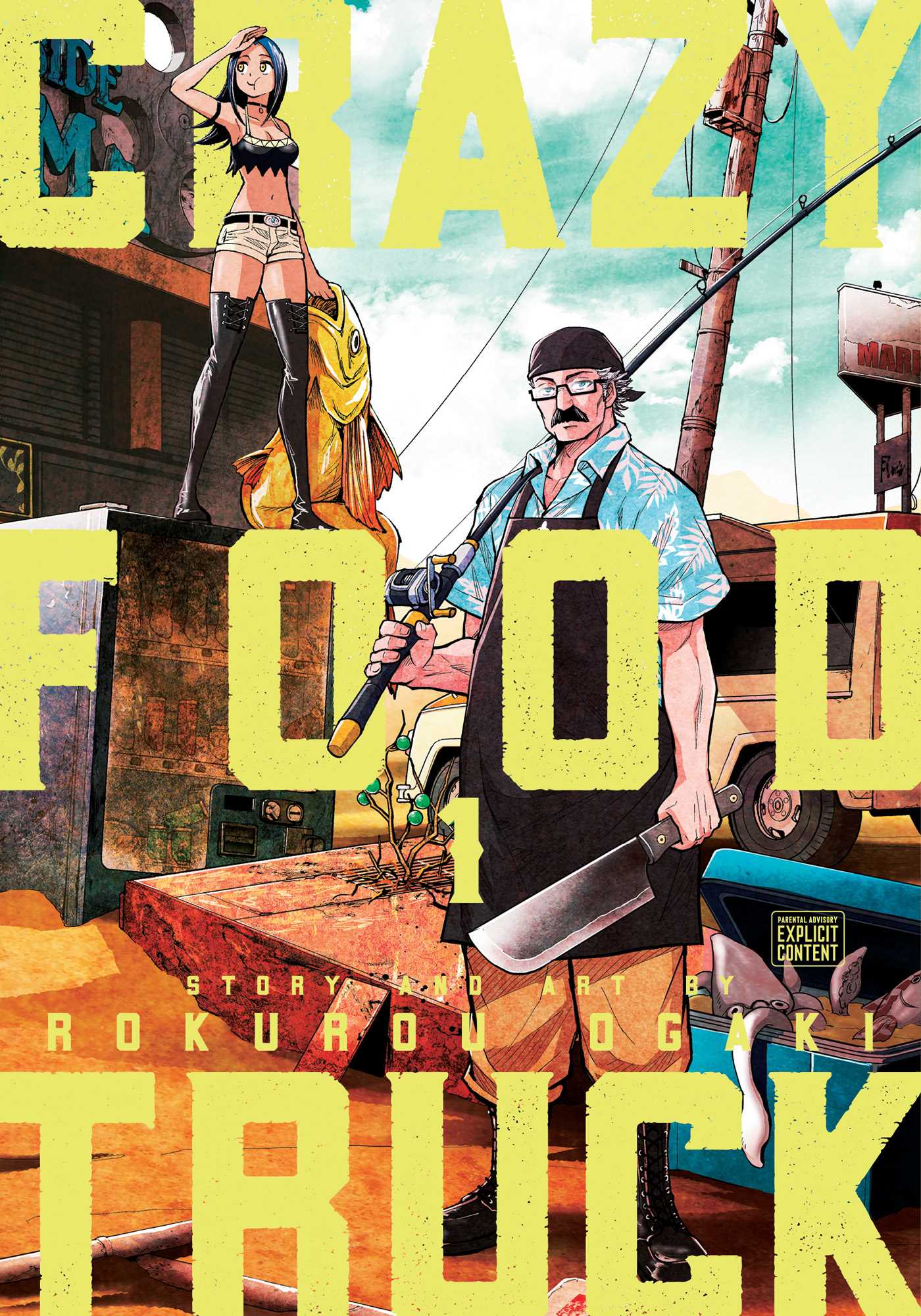
Worst Manga I Thought I’d Love: Crazy Food Truck
By Rokurou Ogaki • Translated by Amanda Haley • VIZ Media
On paper, Crazy Food Truck sounded like a blast, a cross between Mad Max: Fury Road and The Great Food Truck Race. In practice, however, Crazy Food Truck was surprisingly dull, serving up fight sequences as unimaginative as the food its hero serves his few paying customers. The central joke might be funnier if Gordon’s menu was so good that people would risk life and limb for his gourmet sandwiches, but when a BLT with mustard is his signature dish, it seems more like a failure of imagination than a real attempt at humor, especially when creator Rokurou Ogaki frequently reminds us that Gordon has mounted a cannon on top of his truck to ward off bad guys. Gordon’s sidekick Anisa is a one-note character, inserted into the narrative primarily for fan service that’s so indifferently executed it’s hard to muster any outrage over her penchant for nudity. I have no doubt this series rocked some reader’s world, but I found it flavorless. (Reviewed at The Manga Critic on 6/7/22)

Worst Manga I Read in 2022: Rooster Fighter
By Sou Sakuratani • Translated by Jonah Mayahara-Miller • VIZ Media
Rooster Fighter is a disappointment: the premise is too slight to sustain a long series, the script is strenuously unfunny, and the storylines are numbingly predictable. In every chapter, the nameless hero wanders into a new town, antagonizes and befriends the locals in equal measure, then kills a grotesque demon that’s been terrorizing the community. About the only good joke in whole series is how the rooster kills demons; anyone who’s lived on or near a farm will enjoy a rueful laugh or two at the hero’s superpower. Otherwise, this series is a total Cock-a-Doodle-Don’t. (Reviewed at Manga Bookshelf on 8/16/22)

Filed Under: Manga, Manga Critic, Recommended Reading, REVIEWS Tagged With: Bad Manga, BEST MANGA, Denpa Books, Drawn & Quarterly, First Second, Gundam, Hayao Miyazaki, Hijiki Isoflavone, Hitoshi Ashinano, Jun Mayuzuki, Kodansha Comics, Seven Seas, Yamada Murasaki, yen press

Hell Mode ~ The Hardcore Gamer Dominates in Another World with Garbage Balancing, Vol. 2

January 1, 2023 by Sean Gaffney

By Hamuo and Mo. Released in Japan as “Hell Mode – Yarikomi Suki no Gamer wa Hai Settei no Isekai de Musō Suru” by Earth Star Novels. Released in North America by J-Novel Club. Translated by Taishi.

Having now circled back to read the 2nd book in this series, which came out about a year ago, I find that I will be struggling to write a review of it, because so many of the strengths and weaknesses in the book are the same as the previous volume. In general, whenever Allen is NOT using his summons to fight things, I am reasonably entertained. It’s an interesting reincarnation fantasy where we’re learning about the world at the same time as the main character is, and the climax of the book is action that is actually exciting and cool. Unfortunately, the weakness of this book is that it’s still written for game heads, and I do not give a rat’s ass about how many summons it takes to screw in an orc’s lightbulb this time around. Plus, this is a one-man series still. Cecil plays slightly more of a role here than Krena did in the first, but sadly most of that role is to run away or get kidnapped.

After the events of the first book, Allen is now at a Baron’s house, serving as the servant to the young lady of the house, Cecil. Of course, we don’t really see much of his servant duties. Instead, we see him leaving the city to go out and hunt monsters, experimenting with different types of birds, beasts, stone creatures, and even fish that can buff you. He also starts taking out goblins, then moves up to orcs, which gains him the attention of the local soldiers, who see that he is clearly not Talentless but turn a blind eye. Things change when (it’s implied because pf Allen’s activities) the local dragon moves to the other side of his mountain, meaning that the poor city will soon be able to be rich again. Unfortunately, there are evil nobles who want to change that reality.

The last quarter of the book really is the best part. Allen and Cecil’s escape from what amounts to a dirigible is exciting and also ludicrous (break both legs? Use a leaf and heal myself instantly!). You’d think someone who was a 2-level magic user might try to contribute a bit, but I’ll put it down to Cecil being sheltered. We also get a much better look at the world itself, as after saving his daughter the baron tells Allen the real secrets about this world… and how it ties into his Japanese self selecting “hell Mode” in the first place. Of course, what this ends up meaning is that we’re going to be going to a different locale for the third book in a row, though at least Cecil will be coming along (and I suspect we’ll see Krena again too). I really enjoy the plot, and wish that I didn’t have to wade through 150 pages of experimentation to get to it.

The series is out up to Book 5, but I’m taking a break here so I can read in increments another book people have been demanding I try. In any case, recommended for those who enjoy books with lots of gaming talk in them, as well as books where the hero is not immediately OP but has to work to be OP.

Filed Under: hell mode, REVIEWS

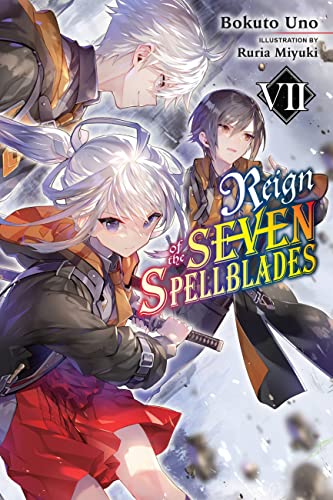
Reign of the Seven Spellblades, Vol. 7

December 31, 2022 by Sean Gaffney

By Bokuto Uno and Miyuki Ruria. Released in Japan as “Nanatsu no Maken ga Shihai suru” by Dengeki Bunko. Released in North America by Yen On. Translated by Andrew Cunningham.

This is not, in general, a light and fluffy series in the least. However, with the exception of the start and final pages of this volume, this is definitely one that is on the lighter side. For one thing, our main group of six are now in their third year, and we’re long past their finding out how this school works – they know it well by now. Everyone (except Chela, who is sadly ignored for almost this entire volume, and who I hope gets some nice plot bits in 8 to make up for it) gets a chance to show off, especially Pete, Guy and Katie, who each get a nice bit at the start that allows them to be the elder student advising the newbies. This is especially welcome for Guy, who has honestly the least character development of the six. As for Oliver and Nanao, well, they get the bulk of the book to themselves, as always. Everyone is a protagonist, but some are more protagonist than others.

This book is the start of what amounts to a Tournament Arc, as there’s a Combat League competition coming up, and since there’s so no real stand-out winner in the election yet, it’s going to be a factional battle. Fortunately, the initial stages are grouped by year, meaning Oliver and company don’t have to fight Seventh-Years. That said, he and Nanao will need a third, as Chela’s dad clearly designed this year’s complicated rules, so she wants to keep a low profile. Fortunately, they have everyone’s favorite ball of sunshine, Yuri, to be on their team. (Guy, Katie and Pete also form a team, and get a chunk of the book to show off as well.) Their team will be up against three others that they’re unfamiliar with, which is a pain. Oh yes, and a seventh-year student is stealing other student’s bones.

That last bit is what forms the serious part of this book, and it is quite creepy, though it remains unclear how much permanent damage it actually does… or what the end goal is. It does show off Yuri’s worrying tendency to go after mysteries the way that the Scooby Doo gang do, and Oliver has to be the voice of reason multiple times throughout trying to keep him from haring off and getting himself killed. Other than that, this book is mostly here to show off everyone’s cool magic fighting. It does a very good job, and there are lots of interesting applications, but Oliver and Nanao are leagues above everyone else in their year, and that fact does not change with anything that we see in this volume. We also get to see the 4th/5th year and 6th/7th year fights, the latter of which is most interesting as it shows off Vanessa Aldiss, who loves to fight and who clearly is not above killing people if there aren’t rules in place. It’s clearly meant to show readers that the next Oliver v. teacher battle will be even harder and more vicious.

So yes, good volume. Needs More Chela. Not much to say.

Filed Under: reign of the seven spellblades, REVIEWS

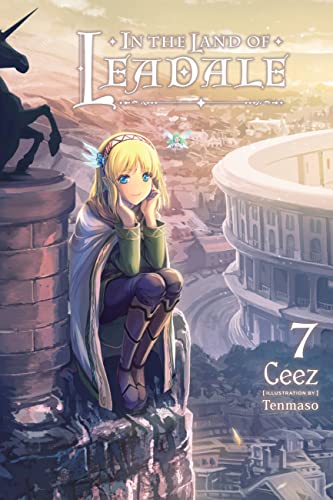
In the Land of Leadale, Vol. 7

December 30, 2022 by Sean Gaffney

By Ceez and Tenmaso. Released in Japan as “Leadale no Daichi nite” by Famitsu Bunko. Released in North America by Yen On. Translated by Jessica Lange.

One of the main reasons to read the Leadale series is to see the dissonance between Cayna as a centuries-old high elf who has great-grandchildren and can casually wipe out a continent with Cayna, who is a teenager who spent almost her entire life in a hospital bed and is still learning how to act like a normal person while also having the aforementioned massive power. That dissonance is felt keenly in this volume. At least twice in the book, Cayna overreacts to a situation so much that she causes terror in those around her. She claims that Opus is the dangerous loose cannon, but he (and the reader) know the actual truth. Watching the anime recently helped remind me of this, as there were a lot of viewers who could not get past Cayna’s “comedic violence” towards people, and the violence is no longer quite as comedic. She needs to get a handle on herself, especially now that she knows the true nature of where she is.

Cayna and Opus spend a lot of the start of the book looking around for the magic projector that will allow them to livestream the upcoming fighting tournament, which results in a sort of mini-tour of all the previous towers and shows off the eccentricities of the people who own them. This includes moving the giant turtle so it looks slightly less like it’s about to destroy the nearby city… as well as running into another relative, an elf queen who is rather enthusiastic about meeting Cayna. Unfortunately, now that Opus and Cayna are walking around together, her kids are starting to notice that Opus sounds exactly like who she said their dad was, which requires some last-second lying to avoid the topic. And then we get the tourney itself, which Cayna sits out but even so manages to accidentally ruin.

The world in general seems to treat Cayna as a natural disaster, and honestly the world isn’t wrong. She doesn’t react to things the way anyone would expect, mostly as she’s a teenager who never had a normal life being forced to deal with things that worry, upset, or embarrass her. She also looks like a cute l’il elf girl, so can occasionally be underestimated, though any of the players actually in this world who are able to see (or more accurately not see) her stats will be running away fast. She’s smart enough to know not to enter the tourney, but she then goes and gives Shining Saber one of her ludicrous monster swords, which results in the entire arena getting destroyed as he fights his opponent so hard that no one can continue. The reason I harp on this is because, unfortunately, I don’t think we’re going to see a lot of development with Cayna maturing. The series realizes that her overreactions are funny. So I will attempt to not take it too seriously. There are many funny bits here, which helps.

Leadale is never going to be great, but it’s always entertaining, and it’s a good read if you like fun fantasy with OP girls.

Filed Under: in the land of leadale, REVIEWS

Rascal Does Not Dream of a Knapsack Kid

December 29, 2022 by Sean Gaffney

By Hajime Kamoshida and Keji Mizoguchi. Released in Japan as “Seishun Buta Yarou wa Randoseru Girl no Yume wo Minai” by Dengeki Bunko. Released in North America by Yen On. Translated by Andrew Cunningham.

My favorite episode of Urusei Yatsura (the original, not the 2022 reboot) has Lum end up in various alternate universes and unable to get back to the correct one. We see one where everyone is the opposite gender, one where her father actually invaded and everyone hates her, etc. Towards the end, she finds a world where everything seems to be absolutely perfect… including an Ataru who actually looks to be as handsome as she sees him, saying that he loves her. The look on her face when she hears “I love you” and knows that it’s the wrong world again may be the most heartbreaking moment in the series, topped only by her little “bye bye” as she flees, trying again to get back to HER Ataru. If you’re wondering what all this has to do with Rascal Does Not Dream, then I urge you to read this volume, which may be Sakuta’s best to date.

Things are going reasonably well for Sakuta. He’s still studying hard so he can go to college with Mai, Kaede has decided to start high school at the remote learning place, and he and Mai remain lovey-dovey (or at least as lovey-dovey as Mai ever gets). There’s even more good news coming – Sakuta and Kaede’s mother is getting released from the hospital and being allowed to go home, and she wants to see Kaede. Sakuta is naturally worried about how things will go, and does his best to be a good big brother and strong grownup for his sister. And indeed, things go very well. The reunion is a big success! The only trouble is that Sakuta is still running into the little girl version of Mai. Oh, yes, and one other problem – no one can see him anymore.

The callback to the very first book (though Sakuta does not wear a bunny girl outfit, or even consider it, which makes me sad) is appropriate given that this book pretty much resolves all the major plot points that were outstanding in the series to date. Sakuta’s parents were a constant invisible pressure on the series, but we only saw his father rarely, and we never saw his mother till this book. The middle part of this book is hideously depressing, especially when (helped by the child Mai) he does get back to a world where people can see him… but it’s the wrong one, and just makes him feel inadequate. Fortunately, Rio and Mai are the same no matter what universe, and give him some support… but unfortunately, the solution is something Sakuta will have to work out on his own.

This is not the final book in the series, but it feels like it is, with Sakuta’s entire third year being skipped as we jump to his graduation. There is more to come, and indeed there are teases for future books in this one, including a new character from Sakuta’s past. For this book, though, it’s all Sakuta. He ma never get a cover picture because of the genre he’s in, but if he did, this would be the book. Also: “Other Sakuta: fix your shit” is hilarious.

Filed Under: rascal does not dream, REVIEWS

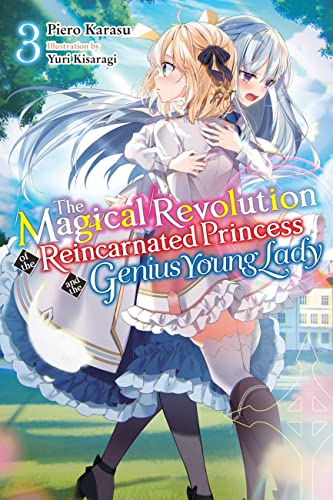
The Magical Revolution of the Reincarnated Princess and the Genius Young Lady, Vol. 3

December 28, 2022 by Sean Gaffney

By Piero Karasu and Yuri Kisaragi. Released in Japan as “Tensei Oujo to Tensai Reijou no Mahou Kakumei” by Fujimi Fantasia Bunko. Released in North America by Yen On. Translated by Haydn Trowell.

In my review of the 2nd volume I mentioned that it wrapped up the first arc in the series, to which I can only say: oops. That said, I am absolutely not complaining. This may not be the final book in the series (there’s at least two more out in Japan), but it’s definitely The Payoff. Following directly on from events in the last book, it has tons of conflict, but it’s all character-based and 100% understandable. It gets into worries about isekai/reincarnation journeys that I always love to see in those books, and also delves into the past of this kingdom and why trying to change it in the future is something that’s going to be very hard and yet absolutely necessary. Basically, this book is everything you wanted to see in this series wrapped up. Anisphia has come a long way from the Chaos Gremlin of the first book. (Not to worry, the anime starts next week, and from what I’ve seen, they’re hammering on that aspect.)

After the events of the last book, Algard has been sent off into exile, meaning that there’s only one really obvious candidate in line for the throne: Anisphia. She proceeds to put on a brave face, buckle down, and accept her fate in a way that devastates everyone around her, because they all know her far too well. This includes Euphyllia, who knows her better than anyone and refuses to accept Anisphia giving up her happiness and becoming a shell of her former self. To that end, she goes searching for a way to bypass Anisphia and find another heir to the throne… and finds there is another way, but it would involve a ton of sacrifice of her own. With both Anisphia and Euphyllia playing a weird game of chicken in trying to sacrifice their own love and joy for the sake of each other, who’s going to blink first?

As I mentioned above, my favorite part of the book was the look at Anisphia’s interiority, particularly something that she’s been half in denial about this entire time. She may have abdicated early in her life, but being a Princess is a very important part of her, and a reason that she’s constantly working herself to death. She also finally confesses to Euphyllia that she’s a reincarnation, and talks about her life back in her other world… as well as what that means to her current self. We’ve seen reincarnation isekai (particularly “villainess” titles) have our reincarnated heroine “overwrite” the original personality when they regain their memories, but here we see Anisphia’s horror at the very idea of doing that. And there’s also the fact that she was reincarnated as a royal that needs to use magic to rule but one who can’t use magic. That unfairness drives her, and also nearly breaks her. Spoiler: there’s a lot of crying in this.

But there’s kissing as well, and I was amused at the book dancing around the fact that the obvious solution is joint rule, but that would involve the country acknowledging their relationship, and I don’t think we’re quite there yet. That said, this was the best in the series by far. I don’t know if I want to see it adapted in the anime – if it is, the anime will have been quite rushed – but it’s a must-read for yuri fans.

Filed Under: magical revolution of reincarnated princess and genius young lady, REVIEWS

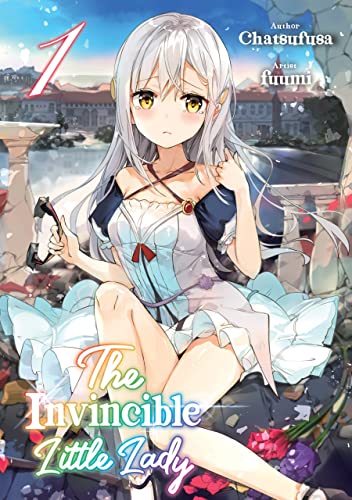
The Invincible Little Lady, Vol. 1

December 27, 2022 by Sean Gaffney

By Chatsufusa and fuumi. Released in Japan as “Dōyara Watashi no Karada wa Kanzen Muteki no Yō Desu ne” by GC Novels. Released in North America by J-Novel Club. Translated by Roman Lempert.

I’ve talked before about the fact that I think avoiding cliches is an overrated issue. There have been several fantastic light novels and manga out there that use the same old thing: reincarnated in another world, noble’s daughter publicly shamed, let’s start a new high school club, etc. But as long as they keep the audience’s interest and have a good story to tell using those same old hoary elements, that’s fine. That said… I have my limits. I like to think that the artist read a bunch of popular webnovels and thought to themselves “now here’s MY spin on this idea!”. Sometimes, though, I don’t get that impression. I get the impression that the writer really has no goal or desire beyond “get clicks, get published”. And unfortunately that’s the impression I got with The Invincible Little Lady, a novel that doesn’t really put a foot wrong when it comes to fun characters and amusing scenes, but which feels like it lacks a soul.

Stop me if you’ve heard this one before: a Japanese person lives their life weak and sickly, never leaving the hospital. As they finally pass on, they desperately wish for a strong body that will never lose to anything. Amazingly, God then announces that their wish is granted. Now she’s Mary Regalia, a duke’s daughter and the apple of her father’s eye, in a fantasy land of magic, monsters and swords. As she grows older, she starts to realize that God did the job a little too well. She’s immortal, can’t be harmed, and her strength is off the charts. Same with magic. She needs a maid to cater to her every whim… because if she puts on her own clothes, she tears them, and teacups shatter in her hands if she’s not careful. These are the stats of a great hero! But all she wants to do is life a quiet, peaceful life!

So yeah, if you thought of In the Land of Leadale, or Didn’t I Say to Make My Abilities Average?, you aren’t alone. The author said in the afterword that they had read a bunch of webnovels and just sat down and started banging out one of their own, so it’s not surprising. And to be fair, it’s much better than it should be. The book for the most part avoids sexual assault, slavery, or the other isekai pitfalls. There’s not much fanservice aside from (sigh) Mary bemoaning her small chest and commenting on the chest size of others. It even attempts to have an in-world explanation for why she’s so ludicrously strong – she comes from a family that has ludicrous strength in it already, so no one is surprised. It ticks all the right boxes. But… why should I read more? What is the purpose of the series? I can’t find an answer after the first volume, and that’s a big flaw.

So yes, Sean vs. GC Novels has led to another loss for Sean. This is a well-written book that should appeal to those who want something to read on a plane or the beach. But I want more.

Filed Under: invincible little lady, REVIEWS

  • « Go to Previous Page
  • Page 1
  • Interim pages omitted …
  • Page 66
  • Page 67
  • Page 68
  • Page 69
  • Page 70
  • Interim pages omitted …
  • Page 346
  • Go to Next Page »
 | Log in
Copyright © 2010 Manga Bookshelf | Powered by WordPress & the Genesis Framework