• Skip to primary navigation
  • Skip to main content
  • Skip to primary sidebar
  • Home
  • About Us
    • Privacy Policy
    • Comment Policy
    • Disclosures & Disclaimers
  • Resources
    • Links, Essays & Articles
    • Fandomology!
    • CLAMP Directory
    • BlogRoll
  • Features & Columns
    • 3 Things Thursday
    • Adventures in the Key of Shoujo
    • Bit & Blips (game reviews)
    • BL BOOKRACK
    • Bookshelf Briefs
    • Bringing the Drama
    • Comic Conversion
    • Fanservice Friday
    • Going Digital
    • It Came From the Sinosphere
    • License This!
    • Magazine no Mori
    • My Week in Manga
    • OFF THE SHELF
    • Not By Manga Alone
    • PICK OF THE WEEK
    • Subtitles & Sensibility
    • Weekly Shonen Jump Recaps
  • Manga Moveable Feast
    • MMF Full Archive
    • Yun Kouga
    • CLAMP
    • Shojo Beat
    • Osamu Tezuka
    • Sailor Moon
    • Fruits Basket
    • Takehiko Inoue
    • Wild Adapter
    • One Piece
    • After School Nightmare
    • Karakuri Odette
    • Paradise Kiss
    • The Color Trilogy
    • To Terra…
    • Sexy Voice & Robo
  • Browse by Author
    • Sean Gaffney
    • Anna Neatrour
    • Michelle Smith
    • Katherine Dacey
    • MJ
    • Brigid Alverson
    • Travis Anderson
    • Phillip Anthony
    • Derek Bown
    • Jaci Dahlvang
    • Angela Eastman
    • Erica Friedman
    • Sara K.
    • Megan Purdy
    • Emily Snodgrass
    • Nancy Thistlethwaite
    • Eva Volin
    • David Welsh
  • MB Blogs
    • A Case Suitable For Treatment
    • Experiments in Manga
    • MangaBlog
    • The Manga Critic
    • Manga Report
    • Soliloquy in Blue
    • Manga Curmudgeon (archive)

Manga Bookshelf

Discussion, Resources, Roundtables, & Reviews

Features & Reviews

Bookshelf Briefs 10/5/15

October 5, 2015 by Michelle Smith and Sean Gaffney Leave a Comment

Sean and Michelle present another round of Bookshelf Briefs!

assclass6Assassination Classroom, Vol. 6 | By Yusei Matsui | Viz Media – It’s unsurprising that there are people in Class E who are somewhat resentful of what Koro-sensei is trying to do. The entire class, as we’ve seen, is not of one mind, and Terasaka is perfectly happy scraping along at the bottom. Of course, Koro-sensei can win anyone over, though it also takes some tough love from Karma as well. Things are going pretty well for our heroes, though, which is why it’s time to introduce a new villain—this one the son of our main villain, the school principal. Asano is there to ensure that Class E does not make headway in the school exams. I’m not sure if he’ll succeed, as the class making headway would result in their promotion, which would make it hard to continue the series. Good stuff. – Sean Gaffney

onlyvampire4He’s My Only Vampire, Vol. 4 | By Aya Shouoto | Yen Press – Aki’s pursuit of the seven stigmas needed to gain the power to wake his slumbering brother continues, despite the objections of a pair of angels, culminating in the acquisition of a third stigma and the apprehension of the serial killer who’s been on the periphery since the beginning of the series. This is an entertaining volume, largely due to some manipulation of shoujo tropes. A classmate goes missing, and ordinarily we would expect the heroine and friends to succeed in rescuing her, but that does not happen. Then we get the “our leads fill in for a school drama performance” plot, including Aki in drag, but this old idea is made fresh by the lurking supernatural menace. Of the three Aya Shouoto series coming out presently, I like He’s My Only Vampire the best. The tone is darker and more consistent and plotting feels more sure-footed as well. Recommended! – Michelle Smith

kokoro5Kokoro Connect, Vol. 5 | By Sadanatsu Anda and CUTEG | Seven Seas – Being an ongoing light novel series whose manga was going to end here, I’m not surprised that Kokoro Connect has a very open ending that doesn’t really resolve the main love triangle or Heartseed. But it does continue to do what it does well, which is put its cast through the wringer—particularly Inaba, whose self-loathing turns out to be just as bad if not worse than Iori’s sense of self issues. The weak link here is Taichi, whose “knight complex” gets called out here without nearly as much development in the narrative. Still, it’s a solid ending that leaves things open for a second series (though one hasn’t happened as of yet in Japan). A surprisingly emotional romantic comedy with psychological underpinnings. – Sean Gaffney

lovefourteen4Love at Fourteen, Vol. 4 | By Fuka Mizutani | Yen Press – As the focus expands slightly to show us other students in this series, it’s clear that not only do Kazuki and Kanata have the whole ‘mature’ thing going for them, but their own love affair is the only one that’s going relatively smoothly. There are issues like a need for closeness and face time, but given they’re both fourteen that’s understandable. To contrast this, we have the ongoing teacher/student relationship that knows it’s wrong but just can’t stop itself, the yuri writer whose Kanata fantasies are getting more robust, and the standard “why the hell won’t he notice me, dammit” girl who’s growing her hair out for the clueless guy she likes. Honestly, the main couple is the main reason to read this—the rest grates. – Sean Gaffney

qqsweeper1QQ Sweeper, Vol. 1 | By Kyousuke Motomi | VIZ Media – Stop me if you’ve heard this one before. Here we have a Kyousuke Motomi shoujo manga featuring a custodian with past trauma for which he blames himself and the plucky orphan who is recruited to work alongside him. Happily, while there are obvious similarities to Dengeki Daisy, the tone of QQ Sweeper distinguishes itself nicely and its lead characters are distinct, as well. (Also, while Kyutaro describes himself as “the custodian of the Genbu Gate,” it’s not really a janitorial position.) I particularly like Fumi, both in character design and personality, especially her unabashed pursuit of a rich husband but unwillingness to get in the way of true love. I’m still positive she and Kyutaro will end up together, but for now I love that she’s not even considering him romantically, despite telling him “you’re special to me.” I really enjoyed this debut and look forward to more! – Michelle Smith

Filed Under: Bookshelf Briefs

My Week in Manga: September 28-October 4, 2015

October 5, 2015 by Ash Brown

My News and Reviews

A few different things were posted at Experiments in Manga last week. First of all, it’s time for the most recent monthly giveaway. The winner will be announced on Wednesday, so you all still have a chance to enter to win the first volume of Madoka Takadono and Utako Yukihiro’s Devils and Realist. The honor of the first in-depth review for October goes to Jim Zub and Steve Cummings’ Wayward, Volume 2: Ties That Bind, which continues to successfully meld the history and legends surrounding yokai with a brand new story. The series, which I’m thoroughly enjoying, would probably make a great entry point for manga fans who would be interested in exploring American-style comics. Finally, over the weekend I posted September’s Bookshelf Overload.

As for some of the interesting things that caught my attention elsewhere online last week: Foreign Policy has a nice piece about evolving LGBT rights in Japan and the role that manga like Wandering Son and boys’ love has played in it; Otaku USA has an interview with the (in)famous mangaka and tentacle master Toshio Maeda; it looks as though Masahiko Matsumoto’s long-awaited Cigarette Girl is currently scheduled for release in 2016 by Top Shelf; and Digital Manga, despite the trouble it seems to be having actually publishing anything in print these days, has launched its newest Tezuka Kickstarter aiming to release Wonder 3 and, as a stretch goal, The Film Lives On.

Quick Takes

The DivineThe Divine by written by Boaz Lavie and illustrated by Asaf Hanuka and Tomer Hanuka. The striking color artwork of The Divine is what first caught my attention. (It looked vaguely familiar, and indeed, it turns out that Tomer created the cover art for Haikasoru’s recent Battle Royale releases.) The graphic novel follows Mark, an explosives expert, who travels to a remote Southeast Asian country on a military contract. The mission seems relatively straightforward—blowing up a mountain, supposedly to help the locals gain better access to its rich mineral resources—but Mark ends up caught up in the local civil war when he’s captured by a group of young rebels. Mixing mythology and modern warfare and the supernatural with man-made terrors, the comic is graphic in its blood and violence. The artwork is consistently great, but I found the narrative to be a little uneven and none of the characters are particularly likeable. The Divine was in part inspired by a photograph of the twelve-year-old Htoo twins from Burma, the leaders of the God’s Army guerrilla group in the 1990s. Although I did enjoy The Divine, I think I’d actually be even more interested in seeing a direct retelling of their story.

Inuyashiki, Volume 1Inuyashiki, Volume 1 by Hiroya Oku. It’s been a long while since I’ve read any of Gantz, the series that Oku is most well-known for, but I was still curious about Inuyashiki, his most recent series to be released in English. Almost unheard of in manga available in translation, which largely tends to be targeted at a younger audiences, one of lead characters, the titular Ichiro Inuyashiki, is nearly sixty years old. In fact, he looks even older than that. The first volume of Inuyashiki seems to mostly be a prologue for the rest of the series, establishing the premise of the manga and introducing the characters who will become the major players. Oku makes a point to emphasize just how sad and miserable Inuyashiki’s life is before killing him and another innocent bystander off in a freak accident. Granted, they are then both resurrected as extraordinarily powerful, weaponized cyborgs. In the case of Inuyashiki, he’s using his new-found abilities for good, and in spectacular fashion, too. As for the other victim, I don’t expect that he’ll be quite as magnanimous. Inuyashiki, as ridiculous as its setup is, has a promising start. I’m rather curious to see the direction Oku will be taking the series.

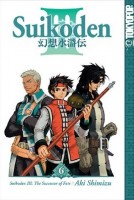
Suikoden III: The Successor of Fate, Volume 1Suikoden III: The Successor of Fate, Volumes 1-5 by Aki Shimizu. Although I am aware of the RPG series, I haven’t actually played any of the Suikoden video games. I was specifically interested in the Suikoden III manga adaptation for two reasons: the entire Suikoden series is loosely based on the Chinese classic Water Margin, and I generally enjoy Shimizu’s work (which also tends to have a Chinese influence). An overview of the previous two Suikoden stories is provided before the manga gets underway; it’s a nice, but largely unnecessary addition. The Successor of Fate seems to stand well on it own, so far. The manga doesn’t really feel like a video game adaptation, either, which I was happy to discover. References are made to past events (and past games, technically), but for the characters that history is shrouded in myth and legend. At this point The Successor of Fate hasn’t really made itself stand out from most other epic fantasy series, but its a solid beginning and, despite a few infodumps, there are plenty of things to like: a large cast of characters (including quite a few women in prominent roles), prophecies and magic, politics and intrigue, battles that rely on strategy as much as strength, and so on.

Filed Under: FEATURES, My Week in Manga Tagged With: Aki Shimizu, Asaf Hanuka, Boaz Lavie, comics, Hiroya Oku, Inuyashiki, manga, Suikoden, Tomer Hanuka

QQ Sweeper, Vol. 1

October 4, 2015 by Sean Gaffney

By Kyousuke Motomi. Released in Japan by Shogakukan, serialization ongoing in the magazine Bessatsu Comic (“Betsucomi”). Released in North America by Viz.

I was a big fan of Dengeki Daisy, Motomi’s previous series, which ended up being a technological thriller as much as it was a shoujo romance. Thus I was quite excited to learn of the license of her new series. There are certain similarities between the two titles – the comedy is much the same, our heroine is a spunky orphan, and there seems to be a lot of janitorial work. But whereas Daisy was grounded in tech, QQ Sweeper looks to be more of a fantasy, with owl familiars, doors leading into people’s inner hearts, and creepy black thoughts turning into bugs. It’s a solid first volume, though, and we also have a hero who seems more stoic than Kurosaki was, which leads to a different vibe between the lead couple.

qqsweeper1

Actually, I’m wondering if the lead couple will actually be the focus of the series, as this has the potential to be something of an anthology, with our heroes solving the personal problems of various classmates. The first volume gives us Sakaguchi, a baseball star who was injured and now takes his self-loathing out on everyone around him, including his childhood friend who also feels inadequate. This is the sort of series that makes you want to invite these sweepers into your own life, to be honest, as despite the disturbing mental imagery, things seem to work out for the best – and it’s also shown that it’s not just the “cleaning” that did it, but the affected parties also have to make an effort. I look forward to seeing more of these sorts of stories.

As for Fumi, it’s quite refreshing seeing a girl who is honest and upfront about wanting to date a guy solely for his money – the catch is that she’s ALSO searching for a Prince Charming, and won’t actually get in the way of true love. Her love dreams of rich handsome young men are a comedic high point to this series. Her mysterious past, though, is what will likely carry over to future volumes. Well, I say “mysterious”, but I will be very surprised if there’s not a connection between Kyutaro’s tragic past with Fuyu and Fumi – betcha Fuyumi us her real first name, in fact. Kyutaro himself is the brooding sort, but not in a grumpy or overly sadistic way like a lot of other shoujo manga – though he does admit to Fumi going to far when she overwhelms him with how happy she is at the end of Volume 1. Oh, and his obsession with cleaning provides his own comedic highs – I bet he’d get along great with Levi from Attack on Titan.

This is a new series that could go in several directions, but the first volume is strong enough that the reader is willing to go along with any of them. I look forward to seeing how it develops.

Filed Under: REVIEWS

The Manga Revue: Say I Love You

October 2, 2015 by Katherine Dacey

This week, I’m catching up with Say I Love You, a shojo romance that’s been garnering strong reviews here and elsewhere since Kodansha began publishing it last August.

sayiloveyou3Say I Love You, Vols. 1-3
By Kanae Hazuki
Rated OT, for older teens
Kodansha Comics, $10.99

Back in the 1980s, filmmaker John Hughes peddled an intoxicating fantasy to thirteen-year-old girls: you might be the class misfit–the kid who wore the “wrong” clothes, listened to the “wrong” music, and had the “wrong” friends–but the hottest guy in school could still fall for you. Better still, he’d like you for being a “real” person, unlike the two-faced girls who inhabited his social circle. You’d have a bumpy road to your happily-after-ever, of course, since his friends felt compelled to say that you weren’t in his league, but in the end, your sincerity and quirkiness would prevail.

Say I Love You reads a lot like a manga version of Pretty in Pink or Some Kind of Wonderful, right down to the meet-cute between Mei, a moody loner, and Yamato, the most popular guy in school. Mei mistakenly believes that Yamato tried to peek up her skirt, and responds with a powerful roundhouse kick. Though Yamato’s friends demand an apology from her, Yamato is intrigued by Mei’s display of bravado and asks her out.

Mei is initially bewildered by Yamato’s courtship: why would someone as outgoing, handsome, and well regarded find her interesting? (You, dear reader, may also wonder why Yamato pursues Mei, given her generally sullen demeanor.) As Mei soon discovers, however, Yamato’s dating history is more complicated than she assumed; his good looks belie an earnest, thoughtful person who lost his virginity before he met someone he really cared about. He’s willing to endure a few tearful outbursts–not to mention some mixed signals–if it means he’ll get to know the real Mei before they go all the way.

And speaking of mixed signals, Say I Love You is refreshingly honest in acknowledging the full spectrum of teenage desire. Some characters embrace their feelings in healthy ways; others use sex to fill a void in their emotional lives; and still others are just beginning to explore their sexuality. Though many of the sexual encounters in the series are ill-advised, the teenage logic that underpins them rings true; an adult may feel an uncomfortable pang of recognition while reading Say I Love You.

The series’ greatest strength, however, is that author Kanae Hazuki is unusually generous with her supporting players. We’re privy to both Mei and Yamato’s thoughts, of course, but Hazuki also pulls the curtain back on other characters’ interior lives. In volume two, for example, mean girl Aiko becomes the temporary focus of the story, narrating her own transformation from a plump, pretty girl to a skinny, angry young woman who is furious that Yamato doesn’t like her. Her blunt self-criticism and body hang-ups remind younger readers that everyone wears a mask in high school; even students who seem outwardly blessed with good looks or talent are wrestling with the familiar demons of self-doubt and self-loathing.

If I had any criticism of Say I Love You, it’s that the plot twists are a little too by-the-book, with beach visits, Valentine’s Day agita, and misunderstandings of the “I saw you kiss her!” variety. In volume three, for example, Hazuki introduces Megumi, a model who’s hell-bent on making Yamato her boyfriend. When a direct approach doesn’t work–Yamato, of course, rebuffs Meg’s initial proposition–Meg transfers schools and ropes Yamato into becoming a model himself. I realize that “model,” “celebrity,” or “singer” epitomize a thirteen-year-old’s dream job, but the artifice and obviousness of diving into the modeling world feels like an unnatural direction for such a finely observed romance.

Perhaps the best compliment I could pay Say I Love You is that it has all the virtues of Pretty in Pink and Some Kind of Wonderful: it’s got a proud, tough heroine who’s skeptical of the popular kids, a sincere hot guy who can see past her bluster, and a veritable Greek chorus of peers who chart the ups and downs of their relationship. All it needs is a killer soundtrack.

Reviews: At Brain vs. Book, Joceyln Allen sings the praises of Takehiko Moriizumi’s Mimi wa Wasurenai, an untranslated short story collection. “It’s okay if you don’t read Japanese,” she explains, “you can just stare at the beauty on every page. Moriizumi makes manga like nothing I’ve ever seen before.” Go see for yourself!

Saeyong Kim on vol. 1 of 21st Century Boys (No Flying No Tights)
Jessikah Chautin on Awkward (No Flying No Tights)
SKJAM on vols. 1-2 of Captain Ken (SKJAM! Reviews)
Kat Stark on vol. 1 of Devil Survivor (AiPT!)
Jessikah Chautin on vol. 1 of Durarara!! Yellow Scarves Arc (No Flying No Tights)
SKJAM on Gimmick! (SKJAM! Reviews)
Kat Stark on vol. 1 of Kiss Him, Not Me! (AiPT!)
Ian Wolf on vol. 1 of the Kurosagi Corpse Delivery Service Omnibus (Anime UK News)
David Brooke on vol. 1 of Ninja Slayer Kills (AiPT!)
Anna N. on vol. 2 of Requiem of the Rose King (The Manga Report)
Ian Wolf on vol. 2 of Requiem of the Rose King (Anime UK News)
Rebecca Silverman on vol. 1 of Rose Guns Days, Season One (Anime News Network)
Marissa Lieberman on vol. 1 of Seraph of the End (No Flying No Tights)
Sean Gaffney on vol. 11 of Umineko: When They Cry (A Case Suitable for Treatment)
Ash Brown on vol. 2 of Wayward: Ties That Bind (Experiments in Manga)
Ken H. on vol. 3 of Yamada-kun and the Seven Witches (Sequential Ink)

Filed Under: MANGABLOG, REVIEWS Tagged With: Kodansha Comics, Manga Review, Say I Love You, shojo

Wayward, Vol. 2: Ties That Bind

October 2, 2015 by Ash Brown

Wayward, Volume 2: Ties That BindCreator: Jim Zub and Steve Cummings
Publisher: Image Comics
ISBN: 9781632154033
Released: August 2015
Original run: 2015

Ties That Bind is the second volume of the American comic series Wayward, created by Jim Zub and Steve Cummings and released by Image Comics. Anything having to do with yokai immediately catches my attention, and I had previously read and enjoyed some of Zub’s earlier work, so I was very interested in reading Wayward. I thoroughly enjoyed the first collected volume in the series, String Theory, meaning that there was absolutely no question that I would be picking up the second, too. (Well, at least that was the case before I learned that a deluxe omnibus edition was going to be released—then there was a difficult choice to be made.) Ties That Bind, published in 2015, collects the sixth through tenth issues of Wayward which were originally serialized between March and July 2015. Also included is an introduction by Charles Soule as well as several yokai essays by Zack Davisson which I especially appreciate. For this particular volume, Zub is credited for the story and Cummings for the line art while the credit for the color art goes to Tamara Bonvillain and color flats to Ludwig Olimba.

Emi Ohara’s life follows a simple, predictable routine. Without much variation from day to day she wakes up, goes to school, and returns home. But Emi yearns to have the exciting lives that the heroines of her favorite shoujo manga enjoy. Little does she know that she’ll get what she wished for, but not at all in the way that she expected—Emi discovers she has the ability to manipulate her body and the materials around her in astonishing ways. Suddenly, among other strange developments, her touch is able to melt and mold plastic and her arm can take on the characteristics of metal and glass. At first she thinks it’s all a dream, but then she is chased down by a group of monstrous kitsune only to be rescued by Ayane and Nikaido, two young people who have their own special powers and who are also the yokai’s targets. It’s been three months since the other members of their group, Rori and Shirai, disappeared during the chaos of an epic confrontation with a faction of yokai. At this point Ayane and Nikaido are welcoming any allies they can find, and that includes Emi.

Wayward, Volume 2, page 40Whereas String Theory largely followed Rori’s perspective of the supernatural events unfolding in Tokyo, much of the focus of Ties that Bind is on Emi. Some of the contrasts between the young women as two of the leads in the story are particularly interesting. Rori, who is half-Japanese and half-Irish, is often considered to be an outsider within Japanese society. Emi, on the other hand, is a “proper Japanese girl,” dutiful and obedient even though she finds that role to be increasingly suffocating. Rori is a Weaver with the ability to alter reality and change a person’s fate. (Just how incredibly powerful and far-reaching her talents truly are is still in the process of being revealed, but the continuing development and evolution of her skills in Ties That Bind is impressive.) However, Emi, who like Rori is sensitive to patterns and seems to be able to at least partially identify the course of fate and destiny, feels trapped and unable to make meaningful choices or to change the direction of those events that have already been set in motion.

At times, Wayward can be an extremely violent series. Ayane’s way of taking charge of the situation is to go on the attack, dragging Nikaido and Emi along with her. The yokai, threatened by the very existence of the supernaturally-gifted teens, are more than willing to fight back. The resulting battles are intense, bloody, and even gruesome. But the yokai aren’t united in their efforts—Ties That Bind introduces the tsuchigumo, or dirt spiders, who would seem to have their own agenda. I love that Wayward incorporates the lore and, especially in the case of the dirt spiders, the history surrounding yokai. The series’ interpretation of yokai and traditional tales is its own and is closely integrated with an entirely new, contemporary story. Wayward effectively creates a cohesive and compelling narrative that can be enjoyed by readers who are already familiar with yokai as well as by those who are not. Ties That Bind brings together new characters, new conflicts, and new plot threads while expanding and further developing those that had already been established. Wayward is an excellent series with great art, characters, and story; I’m definitely looking forward to the next volume.

Filed Under: REVIEWS Tagged With: comics, Image Comics, Jim Zub, Steve Cummings, Wayward

Manga the Week of 10/7

October 1, 2015 by Sean Gaffney, Ash Brown, MJ, Anna N and Michelle Smith 2 Comments

SEAN: First week of October, and therefore hope you like Viz. But first:

omg48

Diamond Comics has been messing with me, saying this wasn’t coming out and then saying it was. Amazon says 10/21, but they’re usually behind Diamond by 2 weeks. I don’t know when it’s actually coming out (this makes me nostalgic for Dark Horse releases days past). But it’s Oh My Goddess 48, the final, very last Oh My Goddess, except for all the omnibus releases. I’ll miss it.

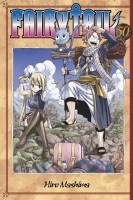
Kodansha hits a milestone with the 50th volume of Fairy Tail, which I’ll be honest I’m just following on Tumblr for Gajeel/Levy moments.

Genshiken 2nd Season Vol. 7 continues to show us the world’s most unlikely harem comedy.

ASH: I’ve been enjoying this one! Hato is the best.

SEAN: One Peace gives us a 4th volume of Aquarion EVOL.

Seven Seas has the 5th and final volume of Kokoro Connect, a series I’ve greatly enjoyed. Given there are many light novels after the two that were adapted, my guess is the ending will be somewhat open.

And there’s a 5th volume of gore-filled Magical Girl Apocalypse, for those who felt Madoka Magica didn’t go far enough.

Vertical Comics have a new series debuting. Tokyo ESP, about a girl who suddenly finds she has… well, ESP. And she lives in Tokyo. Sometimes titles write themselves. This also had an anime last year.

MJ: I’m a sucker for ESP stories. So, yeah. This one’s for me.

And now here’s Viz. Assassination Classroom gets a 6th volume, and introduces the chief villain’s villainous son.

ANNA: Wow, I am so far behind with this series, even though I quite like it!

SEAN: Two big Viz shonen series come to an end next week, and sadly I expect this is the one folks won’t be talking about as much. But Claymore has been quietly awesome for some time, and the 27th volume is definitely worth a look.

MICHELLE: Some day I really will read all the volumes of Claymore that I have accumulated.

MJ: Yes! So happy to see this!

SEAN: The Demon Prince of Momochi House has a 2nd volume.

claymore27

ASH: If nothing else, the first volume was pretty!

ANNA: It was! Even though it seems a bit too similar to Kamisama Kiss, I found it enjoyable.

SEAN: And Food Wars! is up to Volume 8, and still in the midst of its tournament arc, though there’s still time for teaching little kids to make food as well.

MICHELLE: Yay Food Wars!.

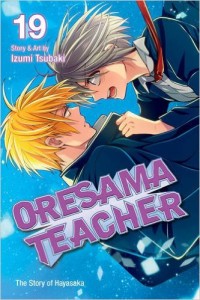
SEAN: Kamisama Kiss is at volume 19, and is edging towards romantic resolution, possibly? Have I said that before?

MICHELLE: It certainly feels that way.

ANNA: Such a good series! I hope this isn’t the last Julietta Suzuki we see over here.

ASH: I still actually need to read Kamisama Kiss.

SEAN: Library Wars: Love & War has its penultimate volume out next week, and I can confirm it DOES have quite a payoff, though it’s still not quite resolved.

MICHELLE: So much good stuff this week!

ASH: Penultimate volume! I hadn’t realized that.

ANNA: Library Wars! I love it so! I am also stoked that the anime has been licensed.

ASH: YES!!

SEAN: My Love Story!! is up to Volume 6, and still adorable.

MICHELLE: Like this!

ASH: Yes!

ANNA: YAY!

MJ: Same.

naruto72

SEAN: Naruto has come to an end with its 72nd volume, though there are six novels and several spinoffs still to come. The ending was… controversial among fandom. Should be interesting.

A new debut from the creator of Dengeki Daisy, one of my favorite Shojo Beat series. QQ Sweeper has a bit more of a supernatural flair to it, but the sense of humor and “plucky heroine” style is the same.

MICHELLE: I’m curious about this one, definitely.

ASH: Same here.

ANNA: It is good!

MJ: I really enjoyed this first volume—hit all the sweet spots!

SEAN: So Cute It Hurts!! only has two exclamation marks, despite this being Vol. 3.

ANNA: Call me a sucker for fluffy shoujo series, but I like this. We haven’t had many cross-dressing shoujo series recently, so it certainly serves that niche.

SEAN: Toriko 30 has what many saw as one of the biggest surprises of the entire series, though no surprise as to what it entailed – it involves romance.

Twin Star Exorcists gives us a 2nd volume as well.

World Trigger has a 7th volume, and is doing far better than I expected it to based on the first few chapters.

Lastly, Yu-Gi-Oh 5Ds 8 continues to look like some bizarre library indexing system.

What are you planning to get next week?

Filed Under: FEATURES, manga the week of

Umineko: When They Cry, Vol. 11

October 1, 2015 by Sean Gaffney

Story by Ryukishi07; Art by Akitaka. Released in Japan in two separate volumes as “Umineko no Naku Koro ni: End of the Golden Witch” by Square Enix, serialized in the magazine Gangan Joker. Released in North America by Yen Press.

Umineko has a problem that Higurashi never really had, which is the fact that it is far more of an intellectual exercise. With Higurashi you had the mystery aspect of it you were trying to solve, but the primary focus was “oh my God, these poor kids, how will they avoid a tragic fate?”. Umineko has made it increasingly clear that there is no avoiding of any tragic fates, but more importantly, it’s become clearer that so much of what we’re seeing – all the meta, the increasingly ludicrous fantasy creatures and special effects shonen battles – is completely and totally bogus. Not just the “is it really witches” question, but the entire narrative.

umineko5-2

The end of this omnibus features the witches in charge, Lambdadelta and Bernkastel, sweeping all the ‘pieces’ off the board entirely, to do the rest of the arc as a mock trial to show off how guilty Natsuhi is. The cast sits there like robots (with the exception of Battler, Natsuhi, and the witches), not really caring much about anything till they have to. It can be… hard to get invested in a plot like this. This is probably why Natsuhi made the best focus for this arc. Given choices of the other adult women we’ve seen, Rosa is a child abuser, Eva is also a child abuser (see: Ange), and Kyrie, aside from being a yakuza daughter, simply isn’t the sort who has emotional collapses. Natsuhi, who came into the Ushiromiya household as a fragile flower and has had every single one of her nerves shredded over the years, can give us realistic hysteria.

As you might gather from the cover, we get a few more new characters this time around as well. I love Dlanor – her name is a reversal of Ronald Knox, a classic mystery writer who gave us Knox’s Decalogue, a list of 10 rules that must be obeyed in mystery stories. (Yen does not explain either of those points, a shame as this series does have endnotes.) Dlanor, though, is a tiny, haughty minister of justice, here to make sure that everyone follows the RULES. Ah yes, she also has an odd Japanese verbal TIC. I was pleased to see that the official translation stuck with what Witch Hunt had done in the VN translation and gave her ending words CAPITALIZATION (or, given that comic fonts are always capitalized, BOLDNESS). It’s an excellent way to show off her ODDITY.

Dlanor is also far more sympathetic to us than Erika, despite being on her side. Of course, having spent most of the first volume letting us hate her guts, we see Erika start to lose it here. as Battler runs rings around her logic (arguably this is Lambda using Battler as her mouthpiece, but let’s let him have his fun), and many of her theories are smashed into bits. This allows her to be abused by Bernkastel, who is truly terrifying here, possibly as Erika is supposed to be her own self-insert there in Rokkenjima, and she’s humiliating the author. Erika then takes it out on Dlanor’s subordinates, of course, because where would Umineko be without cycles of abuse?

As for the standard murder mystery, it’s still not solved as of the cliffhanger, though I can give you some pretty good guesses. One thing for sure, it’s not Natsuhi, who everyone is gleefully setting up to look as guilty as possible. Not that Natsuhi is totally innocent – she has been faking Kinzo’s death for the last two years, after all, and the whole “Man from 19 Years Ago” thing does not sound done to me either despite supposedly only being Natsuhi’s guilt for wishing a baby dead followed by it happening. Assuming you don’t mind that the characters you’re invested in are frequently revealed to be the fiction they actually are, this remains an excellent series.

Filed Under: REVIEWS

Manga Giveaway: Devils and Realist Giveaway

September 30, 2015 by Ash Brown

The end of September doesn’t just approach, it’s here! And because it’s the end of the month, it’s also time for another giveaway at Experiments in Manga. This month you all will have the chance to win a copy of Devils and Realist, Volume 1 written by Madoka Takadono, illustrated by Utako Yukihiro, and published in English by Seven Seas. And, as always, the giveaway is open worldwide!

Devils and Realist, Volume 1

I always find it interesting when manga incorporates Western settings, religions, and mythologies. In some cases they aren’t used as much more than an aesthetic (I’m looking at you X), but in other cases the mangaka have clearly done their research. Legends surrounding angels and demons seem to be a particularly rich source of inspiration. Series like Devils and Realist take that inspiration, but then spins the stories and their interpretations to create something entirely different. The results can often be entertaining.

So, you may be wondering, how can you win Devils and Realist, Volume 1?

1) In the comments below, tell me a little about your favorite manga featuring devils or demons. (Don’t have one? Simply mention that.)
2) If you’re on Twitter, you can earn a bonus entry by tweeting, or retweeting, about the contest. Make sure to include a link to this post and @PhoenixTerran (that’s me).

There it is! Everyone has one week to submit comments and can earn up to two entries for this giveaway. If needed or preferred, comments may also be sent to me directly at phoenixterran(at)gmail(dot)com. The comments will then be posted here in your name. The giveaway winner will be randomly selected and announced on October 7, 2015. Good luck!

VERY IMPORTANT: Include some way that I can contact you. This can be an e-mail address in the comment form, a link to your website, Twitter username, or whatever. If I can’t figure out how to get a hold of you and you win, I’ll just draw another name.

Contest winner announced–Manga Giveaway: Devils and Realist Giveaway Winner

Filed Under: FEATURES, Giveaways Tagged With: Devils and Realist, Madoka Takadono, manga, Utako Yukihiro

Requiem of the Rose King Vol 2

September 29, 2015 by Anna N

Requiem of the Rose King Volume 2 by Aya Kanno

This has been one of the manga series that I’ve been anticipating very impatiently, I enjoyed the first volume very much, and was eager to see how the story would develop in the second volume. Kanno is still in the initial stages of developing the story, but this volume provides more insight into the psychological pressures afflicting the people who rule during the Wars of the Roses.

If Richard didn’t have enough to deal with in the first volume, his situation grows even more unbearable when his beloved father is captured by the House of Lancaster and tortured horribly. Richard is left behind by his family’s army, left alone to deal with the torment of knowing his father has been captured. He crosses a line when he realizes that murder is the only way for him to gain the disguise and weapons he needs to journey behind enemy lines. Richard encounters Henry again when he’s struggling with the emotional aftermath of his actions. While Richard deals with his problems by enduring horrible visions and taking violent action, Henry’s passivity and desire to escape his responsibilities serves as a strong contrast to Richard’s more decisive nature. While Richard is clearly heading down a path of madness and despair, it also seems like his actions are going to have a strong impact on the world around him. Henry just wants to withdraw and allow his insane wife Margaret to make all his decisions for him.

roseking2

When Richard discovers his father’s fate, Kanno’s paneling decisions underscore the emotional impact. Richard’s face is shown with a blank expression with his eyes hidden to underscore the shock he initially feels, followed by single panels showing his whole face, zooming in on his surprised eyes and clenched mouth as he confronts his father’s death. Richard begins a transformation into the monster that people have labeled him as before, as he’s absolutely consumed by the need for vengeance. As the events later in the volume unfold, Richard is portrayed in a more and more stylized fashion, becoming a living embodiment of a curse and less like the tortured human the reader encountered in the first volume.

The emotional stakes have certainly been raised in this volume, and Kanno’s illustration style is really stretched way beyond what I expected from the author of Otomen. There’s certainly more and more tragedy ahead, but Kanno’s take on the story of Richard the Third is a fresh and incredibly interesting adaptation. The tragedy and emotional trauma feels entirely justified and in service to the plot Kanno is developing. If you haven’t checked out this series yet, now is a great time to jump on and read two volumes with no waiting.

Filed Under: REVIEWS Tagged With: a devil and her love song, Aya Kanno, requiem of the rose king

Rose Guns Days Season 1, Vol. 1

September 29, 2015 by Sean Gaffney

Story by Ryukishi07; Art by Soichiro. Released in Japan by Square Enix, serialized in the magazine Gangan Joker. Released in North America by Yen Press.

Fans of Ryukishi07’s work know that he is very fond of moments of what can best be termed ‘shonen drama’, which features all the characters being as cool as possible. The difficulty is that he’s rarely able to take full advantage of that, as his stories have involved murder mysteries and psychological horror first and foremost, so the cool moments have had to be undercut. Now, with his first series that isn’t a mystery and isn’t part of the When They Cry style, he can allow himself to open the throttle and just do a straight up action adventure which consists, seemingly, of nothing *but* cool people being cool. The result is highly variable, but it certainly has style.

roseguns1

The premise of this book is that, due to a natural disaster during WWII, Japan has been taken over by America and China, with the Japanese still living in cities second-class citizens who mostly join yakuza groups in order to avoid starvation. Our hero, Leo, is a former soldier who’s arrived back in Japan after a long exile. He finds himself saving the madam of a high-class brothel, Primavera, and after a few more adventures she takes him on as a bodyguard. The rest of the book is about Primavera’s attempts to avoid getting taken over by the mob, and various fighting sequences. Oh yes, and like Tezuka’s ‘star system’, Ryukishi is reusing characters again – Meryl will remind many people of Satoko/Lambdadelta, and Stella might be a lot taller and bustier than Rika will ever be, but she makes it clear when she starts rubbing heads and pitying people where her origins really lie.

It’s refreshing reading a Ryukishi07 book where you don’t have to pay close attention to try to figure out little bits of the mystery, a la Umineko. Rose Guns Days is very straightforward, sometimes to a fault. Yen Press decided not to omnibus this series, so we only have the one normal volume to go on, and so we haven’t quite hit the ‘character depth’ point of the series yet. Leo and Rose particularly suffer from this – Leo is cool and smug, and can back up that smugness with his fists, but his tragic past that was hinted at in the visual novel hasn’t shown up here yet. As for Rose, what a girl as innocent as her is doing as the head of a group o prostitutes is baffling, given she’s so shiny and pure it’s possible she can be seen from space. Soichiro’s art also doesn’t help – this time around the character designs for the VN were by the manga artist, rather than Ryukishi07 himself, but that means that the manga itself tends to get stuck in a lot of ‘default sprite expression’ poses.

I suspect this is the sort of series where we won’t really have a feel of how it’s going to go till a few books in. Still, if you like fistfights and cool posing, and enjoy Ryukishi’s writing with the ‘irony’ filter turned off, Rose Guns Days is a lot of fun.

Filed Under: REVIEWS

My Week in Manga: September 21-September 27, 2015

September 28, 2015 by Ash Brown

My News and Reviews

Apparently, considering the two in-depth reviews that I posted, Experiments in Manga was all about dynastic struggles and warfare last week. Ken Liu is an author that I’ve started to follow since reading one of his short stories in The Future is Japanese. His debut novel, Grace of Kings, was released this year and I absolutely loved it. It’s the first book in The Dandelion Dynasty, a fantasy epic which is inspired by and reimagines Chinese history and legends, such as Romance of the Three Kingdoms (which I really need to get around to finishing). I also reviewed Aya Kanno’s Requiem of the Rose King, Volume 2. So far, I’m really liking the series which takes its inspiration from William Shakespeare’s plays dealing with the Wars of the Roses. I think the second volume of Requiem of the Rose King improves on the first and is generally a little easier to follow as well. I continue to love the manga’s dark atmosphere and theatrical nature. Fortunately, the wait won’t be quite as long for the release of the next volume.

Quick Takes

Gangsta, Volume 4Gangsta, Volumes 4-6 by Kohske. I intentionally saved up a few volumes of Gangsta to read all at once, but somehow during that time I’d forgotten how much I enjoy the series. I love the diverse cast of characters, the gritty setting, and the action and intrigue of the story. In addition to an escalation in the conflicts between “normals” and Twilights, these particular volumes of Gangsta include significant plot developments as well as more character development. For one, Alex’s memories are slowly returning, revealing small fragments of her past which should have major implications as the series progresses. Her younger brother even enters the scene. While Gangsta can be an extremely violent, brutal, and cruel manga, Kohske remembers to include quieter and more lighthearted moments to provide a contrast to the series’ intensity. Granted, they also serve to emphasize the manga’s tragic turns. Kohske isn’t afraid of killing off characters, either. With all of the battles going on between exceptionally skilled and powerful fighters, it’s probably not too surprising that there will be death, severe injury, and tremendous suffering involved.

Hard RockHard Rock by Akane Abe. Because of my interest in and love of music, I have a tendency to seek out related manga (no matter how tangential), which is how I initially came across the boys’ love one shot Hard Rock. The manga follows four young men who started a band together. However, the volume actually begins with the band’s breakup and not much time is spent on music at all. Instead, Hard Rock focuses on the former bandmates’ changing friendships and relationships. There’s an underlying tangle of crushes, angst, and unrequited love, but relatively little romance, most of the major developments occurring off panel between chapters. With the exception of one page in the epilogue manga, close physical intimacy in Hard Rock is almost nonexistent beyond an occasional kiss or even rarer groping. The young men are just as likely to punch one another as they are to hug. Thus, readers looking for steamy bedroom scenes will probably be disappointed. Personally, I actually liked and appreciated the understated romance; Abe makes it work. Although Hard Rock ended up having very little to do with music, I still enjoyed it quite a bit.

Ultraman, Volume 1Ultraman, Volume 1 by Eiichi Shimizu and Tomohiro Shimoguchi. I’ve watched and enjoyed a little over a dozen episodes of the live-action Ultraman series from the 1960s and so was curious about Shimizu and Tomohiro’s addition to the incredibly successful franchise. Readers who aren’t familiar with the original needn’t fear—the first chapter of the sequel has a tremendous amount of exposition crammed into it. While this does quickly establish the premise of the manga, it’s not the most effective or enjoyable introduction. However, the narrative of the following chapters quickly improves and the volume ends with a great hook. The manga takes place a generation after the end of the Ultraman television series and focuses on Shinjiro Hayata who, as the son of the original Ultraman, has inherited superhuman powers. He becomes the target of an alien attack which leads him to accept the role of the new Ultraman. However, instead of transforming into a powerful giant, Shinjiro uses an exo-suit to enhance his abilities. So far, the Ultraman manga is shaping up to be more serious and a fair amount darker than the original series.

Filed Under: FEATURES, My Week in Manga Tagged With: Akane Abe, Eiichi Shimizu, Gangsta, Kohske, manga, Tomohiro SHimoguchi, Ultraman

Bookshelf Briefs 9/28/15

September 28, 2015 by Sean Gaffney and Michelle Smith Leave a Comment

Sean tackles a big pile of briefs and Michelle… doesn’t.

chocolatecosmosChocolate Cosmos, Vol. 1 | By Nana Haruta | VIZ Media (digital only) – Judging by the title, you might assume that Chocolate Cosmos has something to do with desserts, but so far, that does not appear to be the case. Instead, readers are introduced to high school first year Sayuki Sakurai, an academic slacker with an unfortunate case of resting bitch face, who just wants to experience a “heartwarming” kind of love, like she’s read about. It would seem luck is on her side when she meets a cute, sweet guy at the beach, but alas, he turns out to be a teacher at her school, Katsuya Hagiwara. The entire second half of the volume is Sayuki and friends trying to establish a club with Hagiwara as their advisor. As much as I generally don’t care for student-teacher romances, this one is chaste enough—and more of an ensemble piece—to be appealing in a comfort-food shoujo kind of way. I will probably keep reading it. – Michelle Smith

haganai12Haganai: I Don’t Have Many Friends, Vol. 12 | By Yomi Hirasaka and Itachi | Seven Seas – Once again I am impressed by how far this series will go to remind us how screwed up its main cast is, particularly Yozora, who undercuts what should be a really awesome moment with unrepentant theft. Even when a character is shown to be better off than we expect, such as Kobato being admired and respected by her classmates, it’s something that Kobato herself can’t accept, preferring to drench herself in fantasy and attacks on Maria, who is fast becoming her best friend. Oh yes, and Sena and Kadota are engaged, in a scene in a church so drenched with awkward sexual tension that even Christ himself tells them off. Still a hilarious comedy with dark undertones. – Sean Gaffney

onlyvampire4He’s My Only Vampire, Vol. 4 | By Aya Shouoto | Yen Press – I will give the author credit for at last attempting to keep the ‘they still have to go to school everyday’ aspect of this increasingly dark and twisted manga going, and there are some standard ‘manga’ plots such as Kana having to stand in for the drama club when one of their members goes missing. That said, it’s the aforementioned dark, twisted bits that make this volume more interesting to me—said missing girl ends up as part of a surprisingly high body count, the Angels who oppose Aki are, unsurprisingly for Japanese manga, rather unholy, and the stigma of Lust carries a whole barrel of unhealthy implications in its story. Don’t let the fluffy cover fool you—this is pretty dark vampire action stuff. – Sean Gaffney

todoke22Kimi Ni Todoke: From Me to You, Vol. 22 | By Karuho Shiina | Viz Media – Shiina’s series began by discussing how difficult it was to make your feelings known to a person that you love—or even a close friend—and even now twenty-two volumes later, with half the cast finally hooking up, communication troubles still drive the majority of the plot. Kento has now been told what Ayano wants to do, and realizes he’s been selfish, but that doesn’t necessarily translate into a full reversal. Likewise, Chizu and Kazehaya are facing a separation from the person they love that is devastating each of them in its own way. Add to this some wonderful scenes with Sawako and Kurumi inspiring each other, and a Big Damn Kiss, and this ends up being another fantastic volume. – Sean Gaffney

seki4My Neighbor Seki, Vol. 4 | By Takuma Morishige | Vertical Comics – As this series goes on, it is starting to slowly expand its universe, although the majority of the volume is still ‘what is Seki doing in class and what is Yokoi’s reaction.’ Yokoi’s impulsive actions end up inadvertently causing her to end up in Seki’s bedroom, and we get to see more of his sister. We also once again see that to the rest of the class, it’s Yokoi who’s the weird one—a reputation not exactly helped by Goto’s somewhat obsessive artwork depicting the many faces of Yokoi. As for Seki himself, what amuses me most is just how often his flights of fancy end up coming back to bite him in the end—it’s not just Yokoi, though she helps. Sometimes it’s his own karma. – Sean Gaffney

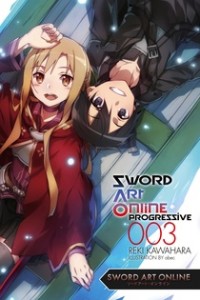
swordart3Sword Art Online: Progressive (manga), Vol. 3 | By Reki Kawahara and Kiseki Himura | Yen Press – The pointless fanservice that is a mild part of the novels is given a tremendous amount of focus in the manga, leading to Kirito being out of character (the underwear gag) or just pure otaku pandering (the cream-bun bukkake scene). This is irritating, because when the manga decides to use the novel as a stepping stone to tell its own story, it does a very good job. Argo continues to be a major part of this story, which is good as I love her character, and I also like how it fits in the side story ‘The Reason for the Whiskers’ in its own continuity. Still, overall the fanservice left such a bad taste in my mouth that I’d recommend the novel unless you enjoy service for service’s sake. – Sean Gaffney

Filed Under: Bookshelf Briefs

Kagerou Daze II: A Headphone Actor

September 27, 2015 by Sean Gaffney

By Jin (Shinzen no Teki-P) and Sidu. Released in Japan by Enterbrain. Released in North America by Yen On.

I had talked a bit last time about trying to balance a series based on something else – be it a game, visual novel, or in this case a series of music videos – between fans who already had a grasp of the story and new readers who didn’t really know what was going on. After reading this second volume, I feel it safe to say that the Kagerou Daze series is very much biased in favor of the former. I was confused after the first novel, and so decided to spoil myself a bit on what’s actually going on. (Those who know me will be surprised I waited that long.) It definitely helped, and I was able to make a few connections I might not have, but it’s still a fact that the Kagerou Daze light novels will appeal most to hardcore Kagerou Daze fans.

kagerou2

Honestly, I think the biggest problem I have with the second book is the story order. After the last volume ends on a vague cliffhanger, we get 120 pages of what appears at first to be a completely different story, involving a grumpy, introverted girl and the guy that she can’t really admit she likes making a homebrew video game for the school festival. It’s only when Kido and Kano show up to play and Kido uses her “out of sight, out of mind” cheat that we realize this is actually taking place a year or two before the first book. This is helped further when we see Shintaro, the supposed hero, show up… and he’s a horrible jerk, even worse than the histrionic but basically harmless shut in we’re used to. We now want to see what led to him shutting himself away.

The most interesting parts of the book are Ayano, Shintaro’s scarf-wearing not-girlfriend who appears to have no self-worth at all, and of course Takane Enomoto, who actually does turn out to have been in the first book after all. This is what I was talking about when I said that it felt like this book came out in the wrong order. I think it would have a much stronger, more devastating ending if the amusement park fluff had come first and then we’d seen Ene’s backstory. After 3/4 of a book where nothing really happens, there’s a series of horrible events starting with Haruka’s collapse that take the reader down a well-earned path of ‘what the hell? No seriously, what the hell???’.

Aside from the devastating bits, there really isn’t much happening here beyond character development, but that is what these novels are for. They’re taking the characters from the music videos and showing us what their hopes, dreams, and motivations are. And, of course, spelling out what’s hard to say in a video. The “Headphone Actor” in the original video was Takane, but in the novel it appears to be Haruka as well, and I have a sneaking suspicion his fate is going to be as dark as hers is. I’m still pretty confused, but I’ll definitely be reading the third volume early next year.

Filed Under: REVIEWS

The Manga Revue: Rose Guns Days Season One

September 25, 2015 by Katherine Dacey

In principal, a video game or visual novel ought to be a solid foundation on which to build a manga: the designers have already done the hard work of creating characters, endowing them with powers (or weapons), and setting them loose in a richly detailed environment. In practice, however, many game-franchises-cum-manga are a dreary affair, with thin plots and two-dimensional characters. I’ve largely sworn off the genre, but when my Manga Bookshelf colleague Sean Gaffney sang the praises of Rose Guns Days Season One, I thought I’d take it for a test drive.

Ryukishi07_RoseGunDays_1Rose Guns Days Season One, Vol. 1
Story by Ryukishi07, Art by Soichiro
Rated OT, for older teens
Yen Press, $13.00

Rose Guns Days has an intriguing premise: what if Japan had surrendered to the Allied Forces in 1944 instead of fighting until the bitter end? In Ryukishi07’s scenario, American and Chinese troops occupy Japan, carving out distinct spheres of influence while rebuilding the country in their respective images. Japanese citizens, meanwhile, are struggling to get by: work and food are scarce, creating an environment in which smuggling and prostitution flourishes.

Sounds interesting, no? If only the story was as compelling as the universe in which it unfolds! A close examination of Leo Shisigami, the principal character, offers insight into why Rose Guns Days reads like a pale imitation of better series. Shisigami’s got the skinny suit, tousled hair, and dangling cigarette made famous by Cowboy Bebop‘s Spike Spiegel, but their resemblance is pure surface; Leo is a cheerful blank whose only quirk–if it can be called that–is a fondness for pasta. After a meet-cute that’s shown not once but twice, Leo becomes a bodyguard for Rose Haibana, a pretty madam whose establishment caters to foreigners. The next 100 pages are a riot of kidnappings, fisticuffs, and golden-hearted hookers–no cliche goes unturned.

The artwork is similarly pedestrian. Though the supporting characters are rendered with loving attention to costumes, facial features, and body types, Rose looks like something pilfered from a twelve-year-old’s Deviant Art account: she barely has a nose or mouth, and her face is framed by two immobile locks of hair. The backgrounds, too, run the gamut from meticulously rendered to barely-there. Only a few panels capture the disruption and poverty caused by the occupying forces; most scenes appear to be taking place in a no man’s land of Photoshop fills and traced elements. What’s most disappointing, however, is that the artwork does nothing to bring depth or nuance to the original visual novel concept. Each scene feels like a collection of artful poses, rather than a dynamic presentation of a story with fistfights and car chases. With so little effort to adapt the material for a different medium, it begs the question, Why bother?

The verdict: Unless you’re a devotee of the visual novel series on which Rose Guns Days is based, skip it.

Reviews: Seth Hahne posts an in-depth assessment of Ikigami: The Ultimate Limit, while Erica Friedman reviews the Japanese edition of Rose of Versailles. Over at Snap30, Frank Inglese test drives the new Weekly Shonen Jump series Samon the Summoner, which debuted on September 21st.

Mark Pelligrini on vol. 1 of AKIRA (AiPT!)
Tyler Sewell on Bat-Manga! The Secret History of Batman in Japan (AiPT!)
Michael Burns on vol. 1 of Black Bullet (AniTAY)
Connie on vol. 31 of Blade of the Immortal (Slightly Biased Manga)
Rebecca Silverman on vol. 1 of Chiro: The Star Project (Anime News Network)
Lori Henderson on vol. 1 of The Complete Chi’s Sweet Home (Good Comics for Kids)
ebooksgirl on Cromartie High School (Geek Lit Etc.)
Vernieda Vergara on Gangsta (Women Write About Comics)
Patrick Moore on Fragments of Horror (Bento Byte)
Erica Friedman on vol. 2 of Iono The Fanatics, Special Edition (Okazu)
Helen on King’s Game: Origin (Organization Anti-Social Geniuses)
Jennifer Wharton on vol. 1 of Kiss of the Rose Princess (No Flying No Tights)
Kristin on vol. 1 of Komomo Confiserie (Comic Attack)
Megan R. on La Esperanca (The Manga Test Drive)
Thomas Maluck on The Legend of Zelda: A Link to the Past (No Flying No Tights)
Nic Wilcox on vol. 1 of Log Horizon (No Flying No Tights)
Amy McNulty on vol. 71 of Naruto (Anime News Network)
Sean Gaffney on vols. 1-2 of One-Punch Man (A Case Suitable for Treatment)
Connie on vol. 5 of Phantom Thief Jeanne (Slightly Biased Manga)
Ian Wolf on vol. 2 of Requiem for the Rose King (Anime UK News)
Jordan Richards on vol. 1 of Rose Guns Days Season One (AiPT!)
Karen Maeda on vol. 1 of Ultraman (Sequential Tart)
Austin Lanari on issue #43 of Weekly Shonen Jump (Comic Bastards)
Adam Capps on vol. 6 of Witchcraft Works (Bento Byte)
Connie on vol. 4 of X: 3-in-1 Edition (Slightly Biased Manga)
Lori Henderson on vol. 1 of Yu-Gi-Oh: 3-in-1 Edition (Good Comics for Kids)

Filed Under: MANGABLOG, REVIEWS Tagged With: Manga Review, Rose Gun Days, yen press

Requiem of the Rose King, Vol. 2

September 25, 2015 by Ash Brown

Requiem of the Rose King, Volume 2Creator: Aya Kanno
U.S. publisher: Viz Media
ISBN: 9781421580906
Released: September 2015
Original release: 2014

Aya Kanno has had several of her manga series released in English in the past—Soul Rescue, Blank Slate, and Otomen—all of which were quite different from one another. One of the things that I appreciate most about Kanno is the versatility apparent in the range of her work. I was especially looking forward to her most recent series Requiem of the Rose King and was thrilled when Viz Media licensed for an English-language release. The manga is loosely inspired by William Shakespeare’s historical plays Henry VI (in its various parts) and Richard III which are in turn a dramatization of England’s Wars of the Roses. As a fan of Shakespeare and as a fan of Kanno, I was very interested in seeing her interpretation. Although upon initial reading the first volume of Requiem of the Rose King could occasionally be somewhat confusing—visions, nightmares, and reality all bleeding into one another—I loved its dark atmosphere, theatrics, and dramatic nature. I was very glad when Requiem of the Rose King, Volume 2, initially published in Japan in 2014, was translated into English in 2015.

The bloody struggle for England’s throne continues. The Lancasters executed King Richard II for treason and has now ruled the country for three generations. However, there are many who still view the Lancasters as usurpers and who support the House of York’s claim to the throne. Richard, the Duke of York, is poised to become the next monarch after King Henry VI is captured and coerced into relinquishing the crown in order to end the bloodshed. But then Queen Margaret takes command of the King’s military forces, unwilling to let power to slip from her and her family’s hands. The resulting conflict does not go well for the Duke and with this turn of events the dynastic war escalates. During this time, both Henry and the Duke’s youngest son Richard are imprisoned in a tower, unaware of the battle’s progress and the changing tides of war. Richard is utterly devoted to his father and wants to see him crowned as England’s king. Thus, the Duke’s death on the battlefield will set into motion a tragic series of events for his son and for the entire kingdom as the darkness that resides within Richard is unleashed.

Requiem of the Rose King, Volume 2, page 96In part, the first two volumes of Requiem of the Rose King have been a prologue to the rest of the series. The stage, characters, and mood have now been fully set for the unfolding drama and tragedy. There is a huge psychological element to Requiem of the Rose King. Kanno draws parallels between Henry and Richard which emphasize that, especially in regards to their mental states. Both men are touched by madness, but it manifests in vastly different ways. Henry’s insanity seems to be fairly benign although it does cause significant political turmoil. It also provides a way for him to escape from his responsibilities as a ruler and to avoid a very violent reality. Richard’s madness, on the other hand, is the result of facing that same reality head on. He becomes utterly consumed by rage and a desire for vengeance. Compared to Henry’s passivity and what could be described as harmlessness, Richard takes on a much more active and venomous role. The contrast between Henry and Richard and light and dark extends beyond their characterizations and is captured visually as well; Richard’s black hair and clothing consistently set him apart from everything else.

Anno’s Richard is both a tragic and terrifying figure. The beginning of Requiem of the Rose King shows the creation of a monster—a young man who is forcefully taking ownership of his own destiny after being irrevocably scarred emotionally and psychologically. Since his birth, Richard has been labeled as a demon child and a harbinger of death. He initially struggles against this stigma, but has now begun to embrace his own darkness. His father, the one person he loved and admired the most is dead; his mother has abandoned him multiple times; Richard sees very little incentive to retain his humanity if everything he truly cares about will be torn from him and he is already viewed as an abomination. The second volume of Requiem of the Rose King is defining for Richard. Among the chaos, violence, and death of war, he loses what little innocence and hope that he might have had. Although many of the surrounding circumstances were beyond his control, ultimately the choice to become a villain is his own. He is driven by despair, madness, and rage, willing to do anything to ensure his own future and the downfall of the Lancasters and anyone else who would stand in his way.

Filed Under: REVIEWS Tagged With: Aya Kanno, manga, requiem of the rose king, viz media

  • « Go to Previous Page
  • Page 1
  • Interim pages omitted …
  • Page 314
  • Page 315
  • Page 316
  • Page 317
  • Page 318
  • Interim pages omitted …
  • Page 551
  • Go to Next Page »
 | Log in
Copyright © 2010 Manga Bookshelf | Powered by WordPress & the Genesis Framework