• Skip to primary navigation
  • Skip to main content
  • Skip to primary sidebar
  • Home
  • About Us
    • Privacy Policy
    • Comment Policy
    • Disclosures & Disclaimers
  • Resources
    • Links, Essays & Articles
    • Fandomology!
    • CLAMP Directory
    • BlogRoll
  • Features & Columns
    • 3 Things Thursday
    • Adventures in the Key of Shoujo
    • Bit & Blips (game reviews)
    • BL BOOKRACK
    • Bookshelf Briefs
    • Bringing the Drama
    • Comic Conversion
    • Fanservice Friday
    • Going Digital
    • It Came From the Sinosphere
    • License This!
    • Magazine no Mori
    • My Week in Manga
    • OFF THE SHELF
    • Not By Manga Alone
    • PICK OF THE WEEK
    • Subtitles & Sensibility
    • Weekly Shonen Jump Recaps
  • Manga Moveable Feast
    • MMF Full Archive
    • Yun Kouga
    • CLAMP
    • Shojo Beat
    • Osamu Tezuka
    • Sailor Moon
    • Fruits Basket
    • Takehiko Inoue
    • Wild Adapter
    • One Piece
    • After School Nightmare
    • Karakuri Odette
    • Paradise Kiss
    • The Color Trilogy
    • To Terra…
    • Sexy Voice & Robo
  • Browse by Author
    • Sean Gaffney
    • Anna Neatrour
    • Michelle Smith
    • Katherine Dacey
    • MJ
    • Brigid Alverson
    • Travis Anderson
    • Phillip Anthony
    • Derek Bown
    • Jaci Dahlvang
    • Angela Eastman
    • Erica Friedman
    • Sara K.
    • Megan Purdy
    • Emily Snodgrass
    • Nancy Thistlethwaite
    • Eva Volin
    • David Welsh
  • MB Blogs
    • A Case Suitable For Treatment
    • Experiments in Manga
    • MangaBlog
    • The Manga Critic
    • Manga Report
    • Soliloquy in Blue
    • Manga Curmudgeon (archive)

Manga Bookshelf

Discussion, Resources, Roundtables, & Reviews

Features & Reviews

My Week in Manga: June 29-July 5, 2015

July 6, 2015 by Ash Brown

My News and Reviews

Once again, I was actually away for most of the week last week. The taiko ensemble I that primarily play with had a series of performances, a mini taiko tour of sorts, so I was traveling. We had a great time; I only wish I that could make my living in music! (Who knows, maybe in the future I’ll be able to make it work. You know, once the mountain of student loans has been paid back.) Although I fell behind in my reading and writing, I did have a few things in queue to post at Experiments in Manga. First, the Assassination Classroom Giveaway Winner was announced. The post also includes a list of manga available in English that feature teachers. I’m a couple of volumes behind in my reviews for the series, but the honor of the first in-depth manga review for July goes to Fumi Yoshinaga’s What Did You Eat Yesterday?, Volume 7. Kenji finally has the chance to meet Shiro’s parents and it’s great. Finally, over the weekend, I posted June’s Bookshelf Overload. Most notably, I found an entire set of the tragically out-of-print Banana Fish that I didn’t have to trade a kidney to obtain!

Because I was away from the Internet for so many days, I didn’t really stumble across any articles that I found particularly interesting. However, Anime Expo was held last week, and there were a ton of licensing announcements. (Manga Bookshelf cohort Sean has a nice roundup.) Kodansha has Akiko Higashimura’s Princess Jellyfish (I’m thrilled!), Shizumu Watanabe and Okushō’s Real Account, and Hoshino Taguchi’s Magatsuki. Haikasoru has the first three novels of Yoshiki Tanaka’s Legend of the Galactic Heroes (hooray!), and Sentai licensed the anime series. Shojo Beat picked up Matsuri Hino’s Shuriken and Pleats and Bisco Hatori’s Behind the Scenes. Seven Seas licensed Angel Beats!: Heaven’s Door. Tokyopop returns to manga publishing in 2016, but no specific titles have yet been mentioned. Vertical will be releasing Keiichi Arawi’s Nichijō, and Kanata Konami’s FukuFuku: Kitten Tales among other things. Yen Press announced a slew of manga and light novel acquisitions, too, including the mahjong manga Saki! (Sadly, it’s currently only a digital release.) I’m sure I’ve missed something, so please let me know what exciting news or reading I should be aware of!

Quick Takes

The Ancient Magus' Bride, Volume 1The Ancient Magus’ Bride, Volume 1 by Kore Yamazaki. Apparently, The Ancient Magus’ Bride started as a one-shot doujin before catching the eye of an editor. It’s a curious and atmospheric manga, mostly set in current-day England, albeit it’s a world in which magic and alchemy take their place alongside science. Although magic use seems to be fading away, fae are still very real and a few humans show rare talent for the craft. Chise is one of those humans. Sold into slavery, she is purchased and perhaps rescued by a Elias, a powerful mage who wants her to become his apprentice. He also mentions something about Chise becoming his bride, too, though she can’t quite tell if he’s being serious or not. Granted, it’s a little difficult to read a person with an animal skull for a head. Yokai exist in The Ancient Magus’ Bride as well (they can be seen in the background of some of Chise’s memories), but so far it appears as though the manga will be focusing on Europe’s fantastical and legendary creatures. I enjoyed the first volume of The Anceint Magus’ Bride a great deal and look forward to reading more of the series.

An Entity Observes All ThingsAn Entity Observes All Things by Box Brown. I was already curious about An Entity Observes All Things, but after briefly meeting Brown at TCAF I knew that I wanted to read it. The volume includes nine of Brown’s short, alternative comics, three of which were previously published elsewhere while I believe the other six are new for the collection. Though for the most part the comics are unrelated to each other—they don’t really share characters, plots, or settings and even their color palettes are different—in general, the short works fall into the category of science fiction and deal with themes of exploration, specifically of the world and of the self. They all tend to be fairly quirky, too, and can often be rather humorous without necessarily being comedies. I enjoyed An Entity Observes All Things quite a bit. As with most collections, some of the individual comics worked for me more than others, but overall I found the selections to be engaging. Sometimes funny and sometimes sad, the comics are all somewhat strange, and that’s something that I particularly appreciate about An Entity Observes All Things.

Man of Many Faces, Volume 1Man of Many Faces, Volumes 1-2 by CLAMP. I largely enjoy manga by CLAMP, but if I’m going to be honest, I was primarily interested in Man of Many Faces due to its loose connection to the works of Edogawa Rampo. For the most part, the Rampo references are limited to the characters’ names and roles. There’s the titular “Twenty Faces,” a skilled thief in both Rampo and CLAMP’s creations, a young man by the name of Kobayashi who chases after him, and even Akechi-sensei, although he’s a school doctor rather than a detective in the manga. Man of Many Faces is one of CLAMP’s earliest professional works and it is very, very silly, the more absurd elements being lampshaded and intentionally left unexplained. However, the manga ends up being rather sweet and charming, too. Twenty Faces is a third grader who has taken on the role of the gentleman thief in the absence of his father. Akira steals things according to the whims of his two eccentric mothers in addition to doing all of the cooking and housework. Although the story at first focuses on the various heists, ultimately Man of Many Faces is about romantic love.

Filed Under: FEATURES, My Week in Manga Tagged With: Ancient Magus' Bride, Box Brown, clamp, comics, Kore Yamazaki, Man of Many Faces, manga

Sword Art Online: Progressive, Vol. 2

July 5, 2015 by Sean Gaffney

By Reki Kawahara and abec. Released in Japan by ASCII Mediaworks. Released in North America by Yen On.

One of the problems with a series that’s narrated in first person, which Sword Art Online is (yes, sorry, Asuna fans, this is again all Kirito), is that it can be harder to see the flaws inherent in the protagonist, since you have to remove yourself from the narrative voice to see what’s really going on. Last time we saw Asuna starting out in Aincrad trying to find a noble way to die, and Kirito had to show her that there are better things to try for than that. But he has issues of his own – he’s bad at dealing with people, as he both admits himself and we see time and time again, making bad jokes in order to try to get past the fact that he finds it hard to gauge what others are thinking. And while I think he’s right that Asuna could grow to be a great inspiration to others trapped in the game, I worry he may be putting her on a bit of a pedestal, particularly as he tries to ensure the other players don’t see her as a villain.

saop2

Kirito is also having to have genuine interaction more than he expected, as the elf that they meet up with, Kizmel, not only doesn’t die – as she did in the beta Kirito played – but proves to be far more well-rounded and realistic than any NPCs he’s come across before. Both he and Asuna over the course of the book are amazed at how Kizmel grieves for the sister she lost, has mysterious, prophetic dreams, and seems to be having flashbacks to the beta test that Kirito participated in. This helps to show how SAO is not just another game, but it also lends a bit of intrigue to the series going forward, as this isn’t really explained much beyond “wow, Kayaba was a better programmer than we thought”. Luckily, without spoiling much, I will note that Kizmel survives, and I expect we’ll see her again in Book 3.

The other big focus of the book is the reveal of Morte, and what kind of player he is. Fans of the SAO anime and Japanese fans who read the books in order may be a bit ahead of those coming at the novels in NA-publishing order, as they are aware of the guild called ‘Laughing Coffin’. I’m pretty sure that’s what we’re seeing the genesis of here, as Kirito chillingly runs into a player who simply has the desire to kill, because he realizes that he can do it here and get away with it. The duel itself is the high point of the novel, menacing, action packed, and a bit terrifying. After that, we get a fight that doesn’t arise, as Kirito (and Asuna, who thankfully tails after him when he’s being a loner idiot) talks down two nascent guilds from fighting against each other and helps them realize the goal is for everyone to work to escape the game.

As for my review, those who read me regularly know the less I talk about the actual qualities of the book and the more I theorize, the better I like it. Sword Art Online Progressive’s prose is more mature than the original works, its steady pace (we only get one floor this time around) allows it to grow more naturally, and Kirito and Asuna are clearly destined for each other but are both in denial, which is cute. (For a killer drinking game, try drinking every time Asuna elbows Kirito in the gut. Actually, don’t do this.) Honestly, I’d recommend this series to an SAO newbie first, even if it does have a lot of callbacks. Probably my favorite SAO novel to date.

Filed Under: REVIEWS

The Manga Revue: A Silent Voice and Your Lie in April

July 3, 2015 by Katherine Dacey

It’s been a while since I checked in with Kodansha, so this week I reviewed two recent additions to the KC catalog: A Silent Voice, which explores the complex relationship between a bully and his victim, and Your Lie in April, which focuses on a piano prodigy who flamed out at an early age.

A Silent VoiceA Silent Voice, Vol. 1
By Yoshitoki Oima
Rated T, for Teens
Kodansha Comics, $10.99

Thirteen-year-old Shouya Ishida is at loose ends: he’s a mediocre student, a latch-key kid, and a thrill-seeker who goads his friends into dangerous stunts. When deaf girl Shoko Nishimiya joins Ishida’s class, however, Ishida’s recklessness shades into cruelty. He orchestrates a systematic campaign of harassment against her, mocking her speech, stealing her hearing aides, and blaming her for “ruining” the class.

As manga-ka Yoshitoki Oima capably shows, Ishida’s inability to control his worst impulses stems from a toxic mixture of loneliness, frustration, and immaturity. Oima resists the urge to blame Ishida’s mother for her son’s behavior, portraying her as a hard-working, decent woman who’s struggling to run a business and raise two children on her own. Instead, Oima zeroes in the complex dynamic between Ishida and his classmates, acknowledging the degree to which their own hostility towards Nishimiya validates–and encourages–Ishida’s cruelty.

In one scene, for example, the teacher calls on Nishimiya to read a passage out loud. Her words are labored and difficult to understand, prompting uncomfortable stares from the class. When Ishida is asked to do the same, he’s emboldened by his peers’ response. “Uwah! Uwoh! Argle! Bargle!” he declares, feasting on the giggles and snickers his impression elicits. Though the teacher issues Ishida a stern warning, Mr. Takeuchi’s own contempt for Nishimiya seeps into their conversation, granting Ishida further license to harass his classmate.

I’d be the first to admit that A Silent Voice is a difficult read, not least for the scenes in which Ishida torments Nishimiya; Nishimiya’s crestfallen expressions will rip your heart out. It’s a worthwhile series, however, for its truthful exploration of adolescent cruelty, and for its steadfast refusal to paint its troubled protagonist as a monster–or a victim.

your_lie_april_EnglishYour Lie in April, Vol. 1
By Naoshi Arakawa
Rated T, for Teens
Kodansha Comics, $10.99

Your Lie in April follows the budding relationship between Kosei Arima, a piano prodigy, and Kaori Miyazono, a violinist who plays by her own rules. When Arima first meets Miyazono, he’s so crippled by his own perfectionism that he can’t play in public. Miyazono, on the other hand, is fearless, giving messy but emotionally authentic performances that irk judges and wow audiences. Miyazono has an equally messy personality–she’s impetuous, petulant, and bossy–but captivates Arima with the sheer force of her enthusiasm.

I’ll be honest: I’d like Your Lie in April a lot more if it focused on a drama troupe or a sports team. That may seem like an odd admission from a musicologist, but Miyazono’s character embodies what I dislike most about popular depictions of classical music. Her eclectic performances are offered as evidence of her “true” musical ability, while the judges’ disapproval is portrayed as a failure of imagination–it’s like Shine in manga form, and boy howdy, did I hate Shine. Why? Because a score isn’t a loose set of guidelines to be followed at the musician’s whim; it’s an explicit representation of the composer’s intentions. Willfully ignoring tempo markings, dynamics, and phrasing misses the entire point of musical notation. Miyazono may make Beethoven’s Kreutzer sonata “unequivocally her own,” but is she really capturing the spirit of the piece by taking so many liberties with it?

Given my own bias, I don’t know if I can give Your Lie in April a fair shake. I found the artwork clean and expressive, and the dynamic between Arima and his non-musical friend Tsubaki Sawabe true to life. (In contrast to Miyazono, Sawabe is not simply a vehicle for the hero’s self-actualization, but a character in her own right.) I also enjoyed the program notes at the end of every chapter–a nice touch for readers who recognize Saint-Saens’ name, but can’t quite tie him to a specific composition or stylistic period. I’m not sure these small pleasures are enough inducement for me to pick up volume two, but a less fussy music lover might well enjoy this coming-of-age drama.

Reviews: Bust out your handkerchief–the final installment of House of 1000 Manga has been posted! Jason Thompson takes a few minutes to reflect on the column, list his ten favorite manga, and discuss what he’ll be doing next. Like many of ANN’s regular readers, I will miss House of 1000 Manga dearly; Shaenon and Jason did a terrific job of sharing their knowledge of and enthusiasm for manga with readers in a consummately effortless style.

Courtney Sanders on vol. 16 of 07-Ghost (Three If By Space)
Connie on vol. 2 of Alice in the Country of Clover: Knight’s Knowledge (Slightly Biased Manga)
Connie on vol. 3 of Alice in the Country of Clover: Cheshire Cat Waltz (Slightly Biased Manga)
Al Sparrow on vol. 1 of The Ancient Magus’ Bride (ComicSpectrum)
Ken H. on vol. 4 of Attack on Titan: Before the Fall (Sequential Ink)
Erica Friedman on Awajime Hyakkei (Okazu)
Connie on vol. 18 of Black Bird (Slightly Biased Manga)
Kate O’Neil on vol. 10 of Black Lagoon (The Fandom Post)
Connie on vol. 28 of Blade of the Immortal (Slightly Biased Manga)
Helen on Cardcaptor Sakura (Organization Anti-Social Geniuses)
Connie on vol. 1 of Citrus (Slightly Biased Manga)
TSOTE on vol. 29 of C.M.B. (Three Steps Over Japan)
Connie on vol. 2 of Demon Love Spell (Slightly Biased Manga)
Rebecca Silverman on Dream Fossil (ANN)
Holly Saiki on Fragments of Horror (Examiner)
Courtney Sanders on Fragments of Horror (Three If By Space)
Ken H. on In Clothes Called Fat (Sequential Ink)
Luke Halliday on vol. 2 of JoJo’s Bizarre Adventure: Phantom Blood (Snap 30)
Rebecca Silverman on vol. 18 on Kamisama Kiss (ANN)
Sakura Eries on vol. 4 of Kiss of the Rose Princess (The Fandom Post)
Johanna Draper Carlson on vol. 14 of The Kurosagi Corpse Delivery System (Comics Worth Reading)
Connie on vol. 5 of Love Pistols (Slightly Biased Manga)
Kristin on vol. 3 of Master Keaton (Comic Attack)
Lesley Aeschliman on vol. 3 of Master Keaton (WatchPlayRead)
Anna N. on vol. 2 of Meteor Prince (The Manga Report)
Sean Gaffney on vol. 1 of Non Non Biyori (A Case Suitable for Treatment)
Al Sparrow on Panty & Stocking with Garterbelt (ComicSpectrum)
TSOTE on vol. 1 of Q.E.D. iff (Three Steps Over Japan)
Matthew Alexander on vol. 9 of Sankarea (The Fandom Post)
Megan R. on Seraph of the End (The Manga Test Drive)
Al Sparrow on vol. 1 of A Silent Voice (ComicSpectrum)
Connie on vol. 34 of Skip Beat! (Slightly Biased Manga)
L.B. Bryant on vol. 1 of So Cute It Hurts! (ICv2)
Matthew Alexander on vol. 9 of Triage X (The Fandom Post)
Connie on vol. 16 of We Were There (Slightly Biased Manga)
Ash Brown on vol. 7 of What Did You Eat Yesterday? (Experiments in Manga)

Filed Under: MANGABLOG, REVIEWS Tagged With: A Silent Voice, Kodansha Comics, Manga Review, Your Lie in April

What Did You Eat Yesterday?, Vol. 7

July 3, 2015 by Ash Brown

What Did You Eat Yesterday?, Volume 7Creator: Fumi Yoshinaga
U.S. publisher: Vertical
ISBN: 9781941220221
Released: March 2015
Original release: 2012

What Did You Eat Yesterday? incorporates so many things that I love—the work of Fumi Yoshinaga, food, queer life, and so on—that it’s really not too much of a surprise that I enjoy the manga series. Yoshinaga has had many of her manga released in English. I have always been particularly impressed by the subtle complexities of her characterizations. Her skill at writing people is especially important for a series like What Did You Eat Yesterday? in which a tremendous amount of focus is given to the characters themselves rather than to an intricate, overarching plot, at least when the manga’s not focusing on food. The characters in What Did You Eat Yesterday?, likeable or not, are all very realistically portrayed, which is one of the things that I appreciate most about the series. What Did You Eat Yesterday?, Volume 7 was originally published in Japan in 2012. The English-language edition, released by Vertical, was published in 2015.

Shiro and Kenji have been living together for years, but it’s only recently that Shiro has managed to get up the courage to actually introduce his long-term boyfriend to his parents. It’s a momentous albeit awkward occasion, but Kenji at least is thrilled by the prospect. Shiro’s family has known he was gay for quite some time, however they are still coming to terms with exactly what that means. Happily, sharing a good meal can go a long way to help acceptance and understanding grow. Food has helped to improve and stabilize Kenji and Shiro’s relationship as well—Shiro enjoys cooking and Kenji is usually more than happy to accommodate his boyfriend, not to mention eat the fruits of his efforts—which is why when work interferes with their dinner dates at home it’s particularly vexing. The salon that Kenji works at is undergoing renovations and staffing changes while the law office where Shiro is employed is inundated with bankruptcy cases. Both men have been very busy of late, but they are still ready to support each other both inside the kitchen and outside of it.

What Did You Eat Yesterday, Volume 7, page 24Food, and the preparation and consumption of said food, is a major component of What Did You Eat Yesterday?. A majority of the seventh volume, if not the entire series, is spent either cooking in a kitchen or eating around a table. While other aspects of Yoshinaga’s artwork are rather simple, she puts a tremendous amount of detail into the various dishes that are featured in the manga—the food in What Did You Eat Yesterday? is beautifully illustrated. The recipes in the series tend to be fairly detailed as well. It is entirely possible for an experienced cook to successfully recreate many of the courses. I’ve even been tempted to try a few myself. (The tea sorbet from the seventh volume sounds especially appealing to me.) Occasionally, the focus on food in What Did You Eat Yesterday? can get in the way of the stories being told, but sometimes it’s expertly integrated.

As much as I enjoy all of the food and eating What Did You Eat Yesterday? (and I certainly do), what really makes the series work for me are its characters and the realistic portrayal of their lives. I have come to love and care for the characters in the series a great deal in spite of, or maybe because of, their very human flaws. They all come across as real people with both good traits and bad. I enjoy seeing their relationships evolve and change, and I enjoy seeing them continue to grow as people well into their adulthood. The individual chapters of What Did You Eat Yesterday? provide small snapshots of the characters’ everyday lives. Sometimes the events shown are fairly ordinary or mundane, such as grocery shopping followed by a quick stop at a cafe, while others are more momentous, like meeting the parents of an established partner for the first time. But even the seemingly small and quiet moments in What Did You Eat Yesterday? are important, carrying signficant meaning and impact, and showing just how skilled a writer Yoshinaga can be.

Filed Under: REVIEWS Tagged With: fumi yoshinaga, manga, vertical, what did you eat yesterday?

Manga the Week of 7/8

July 2, 2015 by Sean Gaffney, Ash Brown, Michelle Smith, MJ and Anna N 5 Comments

SEAN: It’s a new fiscal year, and that brings a new pile of books, mostly from Viz. What have we got?

DMP print release dates give me a migraine. Twittering Birds Never Fly 2? I guess?

ASH: I can never tell when something will actually be released by DMP anymore.

MICHELLE: Me, neither. I’ll perk up when Itazura Na Kiss 11 gets here.

SEAN: Kodansha gives us a 5th volume of Ken Akamatsu’s immortals fighting each other manga UQ Holder.

centaur6

Seven Seas has a trio of books. The second volume of 12 Beast is minimally interesting to me, but may interest those who like fantasy and harems.

ASH: It should at least hopefully be a hit with the Monster Musume crowd.

SEAN: Oddball slice-of-fantasy-life manga A Centaur’s Life is up to Volume 6.

Pandora in the Crimson Shell combines one of my favorite authors with one of my favorite artists, but I have heard the result is… well. We shall see. I expect I will not love this as much as Excel Saga.

MJ: I dunno, the title just makes me feel like I should be reading something by Jun Mochizuki.

SEAN: The ninth volume of What Did You Eat Yesterday? will, I suspect, have far less fanservice than Pandora in the Crimson Shell, unless you count food as fanservice.

ASH: The food definitely counts as fanservice.

MICHELLE: Oh, I had forgotten this was coming out so soon! Yay!

ANNA: Woo hoo!

MJ: This, this, this this, THIS.

SEAN: The rest is Viz, starting with Vol. 64 of Bleach. Bleach has gone from one of the big 3 shonen series to a series where even fans are screaming “Just die already!”, but it seems to still sell well.

ANNA: That is certainly many, many volumes. I did enjoy the first 13 volumes of Bleach.

MJ: Every once in a while I think it might be fun to check out what’s happening in Bleach these days. And then I don’t.

SEAN: So well that we are getting another giant Bleach box set, with Vol. 22 through Vol. 48. Use it as a very short pole vault!

D.Gray-Man has its 7th 3-in-1 omnibus as well.

momochi1

As if two series weren’t enough, there’s more Aya Shouoto starting next week, with The Demon Prince of Momochi House. Like Kiss of the Rose Princess, this ran in Kadokawa’s Asuka magazine.

ASH: The cover is pretty, and there are yokai!

MICHELLE: That looks like Tomoe from Kamisama Kiss!

ANNA: Is there a shoujo series featuring yokai? SIGN ME UP!

MJ: Okay, yes.

SEAN: And Kiss of the Rose Princess is exactly like Kiss of the Rose Princess, unsurprisingly. Here’s the 5th volume.

ANNA: I like it. I will not claim it is profound, but it is a good manga to read when I do not feel like thinking very hard.

SEAN: My Love Story!! has shot up in popularity thanks to its anime, and the 5th volume hopefully translates into even more manga sales.

ASH: It wasn’t popular before?! It should be. Still loving this series.

MICHELLE: Yay, again! I had no idea there was an anime.

ANNA: Such a great series! I hope the anime inspires more people to check out the manga.

MJ: Same here!

SEAN: Naruto also has a giant box out next week, with Vol. 28-48.

Nisekoi, one of my favorite modern harem comedies, hits double digits.

And with the 11th 3-in-1 of Skip Beat!, I think we’ve caught up with the single volumes.

MICHELLE: Just about. Volume 34 came out in April.

tse1

SEAN: We’ve just heard that Sunny will be ending in Japan soon, but in the meantime, enjoy its 5th volume. (Lotta 5th volumes next week.)

ASH: Viz has been doing a really lovely job with this series.

MICHELLE: I need to get caught up on Sunny.

ANNA: I’m glad VIz still breaks out the impressive packaging and design for series like this that totally deserve it.

MJ: This is such a beautiful series.

SEAN: Twin Star Exorcists is the newest Jump Square series, from the author of popular yet unlicensed Binbougami-ga!. I’ll let you guess what it’s about.

World Trigger is up to Volume 6, meaning it’s passed the 2-3 volume ‘culling’ stage of many Jump series.

Lastly, get in touch with your past life with the 3rd Yukarism.

MICHELLE: Yay, yet again. I wasn’t sold on this series after the first volume, but enjoyed the second a great deal.

ANNA: I like anything by Chika Shiomi and this series is no exception.

MJ: I’m with Anna here.

SEAN: Do you have manga for your summer vacation?

Filed Under: FEATURES, manga the week of

Non Non Biyori, Vol. 1

July 2, 2015 by Sean Gaffney

By Atto. Released in Japan by Media Factory, serialization ongoing in the magazine Comic Alive. Released in North America by Seven Seas.

There is, as most fans know by now, a large market in Japan, and a smaller one in the West, for manga for grown men that involve groups of young girl students doing cute things in a comedic and laid-back way. K-On! is perhaps the most obvious example, but there’s also Sunshine Sketch, GA Art Design Class, etc. Most of them tend to involve ‘girls in school doing activity X’. Non Non Biyori (Biyori is ‘weather’, but I think the title is meant to sound nonsensical) doesn’t even get to that point – the series features a group of four girls, and occasionally their teacher, in a country school far removed from anywhere in particular, doing adorable things. That’s the plot.

nnb1

The girls are all eccentric, to varying degrees. Hotaru is the ‘normal’ one, being the transfer student just moved from the city, but she’s got quirks too; she’s 11 years old but looks about 17, and she has a big crush on another girl, Komari, though as is standard in these sorts of titles the yuri is one-sided and is there for humor and not much else. Komari is Hotaru’s opposite, as shes 14 but short and childlike. She tries to act the older sister, but her personality keeps failing her. Her younger sister, Natsumi, is 13. She’s the troublemaker, bad at school and tends to try to get a rise out of everyone else, particularly her sister. And Renge, who is 6, is precocious but strange, with that triangle mouth that Lucky Star readers will recognize (and that’s another series that this manga is like.)

You won’t find much originality here (even the teacher, Renge’s older sister, is the usual ‘laid back, one of the girls’ types we’ve seen in Azumanga, etc.), but it succeeds in its one goal, which is being cute as a button. Each short chapter involves an amusing situations, and the laughs come naturally from it. The class rabbit has escaped its hutch and must be captured. The teacher tricks the class into working on her family’s rice field for a day. Komari watches a horror movie and gets scared, so Natsumi trolls her. It fulfills its demographic target amiably. There’s also a minimum of fanservice, with no bath scenes or underwear shots that I could spot. Given this runs in Comic Alive, I’ll consider that a big victory.

There’s a short, unrelated manga at the end that involves a girl who dreams of being in a dream, which is even weirder than the main manga but also probably the weakest part of the volume. Best to stick with the main series. Honestly, this is the sort of series that, based on its premise, you’d automatically assume was a 4-koma – just like every other series above that I compared it to. But no, it’s fashioned like a regular manga, which means you don’t get the gag at the end of every page feel. It allows the humor to be more laid-back and relaxed. Which is a good description for the entire volume.

Filed Under: REVIEWS

Tales of the Shiny, Princess Magazine

July 1, 2015 by Erica Friedman Leave a Comment

PrincessWe’ve had kings galore here on Magazine no Mori, with Young King Ours and Dengeki Daioh, and we’ve met the Queen of all Shoujo, Nakayoshi, so it seems fitting that we’ll spend some time with a princess or two. In Monthly Princess (プリンセス) magazine, everyone is royalty.

Princess magazine is wall-to-wall stories about the rich, the powerful, the magical, and the beautiful orphaned daughters of dukes with whom they fall in love. The stories may take place in far-off places and times, fantasy settings, or may be set in current school or office, but the concepts are the same. The woman (who is no longer always in need of rescuing) will be the center of attention. Ironically, the series pictured on the cover of this issue never originally ran in the pages of Princess. Hosokawa Chieko’s “Hakushaku Reijou” was a series that ran in Hitomi Comics, from 1979-1987, but which has been resurrected here to celebrate the Takarazuka version of this oh-so-classically shoujo manga series about an orphan who is actually a duke’s daughter, the powerful man who saves her life, but lies to her, and her cat, Mimi. (A performance that I was honored to be able to see in person and my goodness, was it chockful of shoujo tropes!)

The Princess website instilled in me a sense of deep cognitive dissonance. On the one hand, the  page lists Princess, Princess Gold, Elegance Eve, Petit Princess and other wholly girly magazines, but just above them are listings for the Champion family of magazines, including Champion Red, which is openly women-loathing and misogynistic in ways that make my jaw ache.  The fact that these are all bunched together almost makes me suspect of Princess and it’s apparently-wholesome-but-actually-not-at-all obsession with love. Romance, it seems to say, is the opium of the female masses. The website itself is more informative than interactive. Akita Shoten, perhaps more used to selling to hardcore otaku, doesn’t seem to want to look you in the eye as it talks.

Princess monthly has been published since 1974 and reading it gives one a sensation of stepping into a more innocent past. And only a very few of the titles that have run in Princess have skipped to other media – they are few, far between and unknown here in the west. At 630 yen ($5.30 USD at time of writing) per issue, for about 600 pages, you’re getting a lot of fantasy bang for your buck.

Monthly Princess from Akita Shoten: http://www.akitashoten.co.jp/princess

Filed Under: Magazine no Mori Tagged With: Akita Shoten, Erica Friedman, Magazine no Mori, Manga Magazine

Meteor Prince Vol. 2

June 30, 2015 by Anna N

Meteor Prince Volume 2 by Meca Tanaka

I enjoyed the first volume of Meteor Prince very much, and after reading the second, I’ve found it to be a great, self-contained two volume series. Sometimes shorter series suffer a bit from having an unfinished feeling, with an abrupt final chapter, but Meteor Prince pulls off the trick of telling a short, self-contained story with a satisfying conclusion. After the perpetually enthusiastic alien prince Io and earth girl with bad luck Hako got together in the first volume, it is time for some additional obstacles to be thrown in their path.

Io’s intended alien fiancee abruptly appears on earth to claim her man, and she is not happy that Io has pledged himself to a human. Tania’s flowing hair and imperious attitude, combined with her tendencies to transform into a giant ape-like creature makes her a formidable opponent. Tania’s relentless approach to winning Io back doesn’t fare well when faced with the strength of the couple’s bond, and she ends up reduced to lurking in the background and plotting slightly more quietly.

The next trial for Io and Hako is when he meets her parents and her extremely protective younger brother. There’s plenty of cuteness and comedy when Io makes some over the top attempts to be extremely polite to his future wife’s parents. The family issues don’t stop there, as Io’s younger brother Yuro decides that the best way of getting his older brother back is to come to earth and disintegrate everything.

Tanaka’s facility with art portraying both wacky alien landscapes and blushing high school students in the first stages of romance ensures that Meteor Prince is whimsical without being overly wacky or too sweet. She balances heartwarming moments with humor, making this a great feel-good short series. I would have been happy to read several more volumes of Io and Hako’s adventures, but the last volume wrap up the storyline nicely. Highly recommended for people who enjoy their shoujo with a bit of humor.

Filed Under: REVIEWS Tagged With: meteor prince, shojo beat, shoujo, viz media

The Isolator, Vol. 1

June 30, 2015 by Sean Gaffney

By Reki Kawahara and Shimeji. Released in Japan by ASCII Mediaworks. Released in North America by Yen On.

You have to figure that Reki Kawahara is definitely listening to his critics. Sword Art Online features Kirito, who does have deeper issues than people give him credit for, but in the end is pretty much defined by how cool he is. Accel World has Haruyuki, designed to be different, a short, pudgy guy who’s spent much of his life being bullied and has low self-esteem. And now with The Isolator, we have Minoru, whose entire family was massacred while he was hidden in the pantry, tries to live his life in a constant state of the present by never thinking about any past memories, and is, as we see towards the end of the book, actively suicidal much of the time. When Yen talks about angst on the back cover, it’s not kidding.

isolator1

The girl that you see on the cover is not, of course, the star. Indeed, posing demurely on a chair in the middle of what seems to be a garden of some sort does not actually happen in this book. Instead, Yumiko seems to serve as a sort of inspiration and mentor for Minoru, showing up to save him and being a member of a shadowy organization dedicated to fighting evil. You get the sense that most of her backstory and depth is being held for future volumes. Alas, she’s probably the best developed female character here. The other two, Minoru’s new friend Tomomi and adopted big sister Norie, are there to serve as bait in order to spur our hero onward and nothing more. A pity, we’re seen Kawahara can write better women if he tries.

The villain fares better – a lot better. One of my biggest criticisms of Fairy Dance was the two-dimensional patheticness of its antagonist. The Biter may in fact remind a few people of Sugou, but he’s a lot scarier, a lot more dangerous, and his backstory lets you know where he’s coming from. Indeed, his memories of his stressful childhood and the damage it did to his teeth are harrowing, some of the best writing in the book. That said, he’s also a terrifying psychopath, particularly when combined with the red gem possessing him, and seeing how much he Just Won’t Die forms much of the climax of the book.

As with most Kawahara books, the action may be the biggest reason to read. There are two main fight scenes, and each are told crisply and with care to detail, thrilling the reader into continuously turning the page. In between, we mostly get Minoru’s POV, which can be… disheartening. He’s a messed-up young man, clearly suffering from bad PTSD that is not particularly being treated. It’s realistic yet horribly sad that his goal is to have the chief of the organization he joins at the end (who can erase memories with consent) erase the memory of his existence from everyone who knew him. And his life goals seem to have progressed from ‘I will throw myself in the river and rejoin my dead family’ to ‘I will die nobly in battle and rejoin my dead family.’ It’s scary. Even his superpower is related to cutting himself off from everything.

The second volume only just came out in Japan this February, so don’t expect it till at least next spring. Still, fans of Kawahara’s other works, particularly those who like to see young men shouting at each other and fighting with supernatural powers, will enjoy this.

Filed Under: REVIEWS

My Week in Manga: June 22-June 28, 2015

June 29, 2015 by Ash Brown

My News and Reviews

Last week, the most recent manga giveaway at Experiments in Manga was posted. The winner will be announced on Wednesday, so there are still a couple of days left to enter for a chance to win the first volume of Assassination Classroom. All you have to do is tell me about your favorite teacher from a manga. I also posted two reviews last week. The first review was of Yaya Sakuragi’s boys’ love manga Hide and Seek, Volume 2. The series continues to be one of her strongest; I’m really enjoying it. The second review was of Taiyo Fujii’s novel Gene Mapper, the most recent release from the Haikasoru. Gene Mapper is a great example of realistic near future science featuring thought-provoking information and bio-technologies.

Organization Anti-Social Geniuses has been posting some great manga-related content recently, including a conversation with manga translator Amanda Haley about Book Walker and the translation field. A new manga feature at OASG was announced for the summer as well: Shoujo You Should Know, the first column focusing on CLAMP’s short series Wish. And speaking of shoujo manga, Shojo Beat is celebrating its tenth anniversary. Among other thing, the imprint is posting brief interviews with some of its creators. First up was Maki Minami followed by Yun Kouga. Over at Things We Lost at Dusk, Alicia posted and interesting essay about gender, identity, and language, specifically in regards to Moto Hagio’s manga They Were Eleven.

Last but not least, I would like to draw everyone’s attention to Chromatic Press’ Kickstarter project to help support and fund Sparkler Monthly‘s third year. I am a huge fan of Sparkler Monthly and everything else that Chromatic Press is doing. (Experiments in Manga’s Chromatic Press tag is filled with my love, reviews, and features.) The content, creators, and everyone else involved are all fantastic. So, please check out Sparkler Monthly. Most of the comics, prose, and audio, is currently available for free online. And if you like what you see, please consider pledging to the Sparkler Monthly Kickstarter project if you can. Every little bit helps. The work being done at Chromatic Press is spectacular; I sincerely hope that Sparkler Monthly and the publisher’s other efforts are able to continue.

Quick Takes

Awkward Silence, Volume 4Awkward Silence, Volume 4 by Hinako Takanaga. Some of the very first boys’ love manga that I ever read we’re by Takanaga. I soon began counting her among my favorite creators working in the genre and so was quite pleased when Sublime licensed Awkward Silence. The fourth volume in the series was actually released in English quite a while ago, but I only recently realized that I hadn’t actually read it yet, probably because Awkward Silence isn’t particularly memorable. It’s not a bad manga, and there are plenty of things that I like about it—Takanaga’s artwork is great, for one, as are some of the characters—but overall, Awkward Silence somehow manages to come across as generic. For the most part it’s enjoyable and sometimes even sweet, but the series just doesn’t stand out. Initially, I was under the impression that the fourth volume was the end, but apparently it’s an ongoing series. Being something of a Takanaga completist I’ll likely read any subsequent volumes, but otherwise I don’t know that I would feel compelled to seek the series out.

Just So HappensJust So Happens by Fumio Obata. Originally published in the United Kingdom in 2014, Just So Happens was recently released in North America. Yumiko is a designer who left Japan to study and work in London. From time to time she returns to Japan to visit her family, but she is largely satisfied with her life in England. But Yumiko’s most recent trip to Japan is different. Her father unexpectedly died in a mountain climbing accident and she wants and needs to be there for his funeral. In part drawing inspiration from the imagery and symbolism of Noh theater, Just So Happens is a beautiful and subtle work about family, grief, identity, and coming to terms with past decisions. Obata’s watercolor illustrations are absolutely lovely and very effective in conveying the work’s quiet, introspective atmosphere. The story itself is fairly simple and is emotionally resonant without being overly dramatic. Much like Yumiko, Obata is himself a Japanese artist who has made England his home, so while the graphic novel isn’t necessarily autobiographical, Just So Happens still feels very personal.

Servamp, Volume 1Servamp, Volumes 1-2 by Strike Tanaka. From my admittedly limited exposure, my impression of manga originating from Comic Gene is that they tend to have a lot of style without necessarily making a lot of sense. So far, that seems to be the case with Servamp as well. The first two volumes are entertaining, even enjoyable, but I’d be hard pressed to actually explain everything that is going on in the manga. Granted, Mahiru, the series protagonist, doesn’t really know what’s going on either, and the characters who do aren’t being particularly forthcoming. Mahiru likes to keep things simple, which basically means that he ends up doing up anything and everything himself rather than involving other people. And so he’s more or less taken on the responsibility of saving the world, or at least saving humans from the vampires who would kill them all. Mahiru does have some help though, namely an exceptionally lazy but supposedly extremely powerful vampire known as Sleepy Ash, as well as a few other allies. Though it has yet to be seen just how far those allies can really be trusted.

Ubel Blatt, Omnibus 1Übel Blatt, Omnibus 1 (equivalent to Volumes 2-3) by Etorouji Shiono. Although there was a fair amount that bothered me about the initial omnibus of Übel Blatt, the series still showed some potential and I was curious to see where it might go. I am happy to be able to say that the most recent omnibus is an improvement. There’s still gratuitous nudity and sexual content, but it doesn’t seem nearly as out-of-place as it was at the beginning of the series. The fact that many of women are dressed in ridiculously revealing and impractical clothing is even lampshaded at one point when Peepi celebrates the fact that she gets to wear “normal clothes.” In general, the female characters actually are treated a little better and are slightly more developed as individuals in Übel Blatt, Omnibus 1, but sadly not to the extent that I really want to see. To be fair, though, most of the characters seem to lack depth. The action sequences and artwork remain fairly strong, and I do largely like the lead, but for the most part Übel Blatt just isn’t connecting with me. This does surprise me somewhat as I usually really enjoy dark fantasy and tales of revenge.

Filed Under: FEATURES, My Week in Manga Tagged With: awkward silence, comics, Etorouji Shiono, Fumio Obata, Hinako Takanaga, manga, Servamp, Strike Tanaka, Ubel Blatt

The Kurosagi Corpse Delivery Service, Vol. 14

June 28, 2015 by Sean Gaffney

By Eiji Otsuka and Housui Yamazaki. Released in Japan as “Kurosagi Shitai Takuhaibin” by Kadokawa Shoten, serialization ongoing in the magazine Young Ace. Released in North America by Dark Horse.

It’s been a long time since the last volume – two and a half years, in fact – even though the manga is still clipping along at a reasonable pace in Japan. Sadly, the reasons for this are the same reasons that we aren’t seeing Eden: It’s an Endless World or Translucent. Kurosagi Corpse Delivery Service doesn’t sell well enough to justify its continuing expense. That said, Dark Horse are certainly giving it more chances than the other two (the potential movie rights help a lot), and Carl Horn talks about the Omnibus Editions coming out in the fall – specifically, that we should get folks to buy them if we want to see Vol. 15. Like corpse delivery, manga can be a cutthroat business.

kcds14

What we get from this volume are 3 solid stories, all of varying types, which show us why this series is such a hit. The first is one that cries out to my Higurashi loving soul, as the premise is a corrupt politician who is trying to get a dam put in that will destroy a backwater town, and the dam protests that happen as a result. Of course, this politician is taking care of the problem in a more murderous way, the better to involve our heroes. What’s more important here is the introduction of a new sort-of antagonist, who has created an app that lets him find corpses and see their thoughts, and thus creates his own fake Corpse Delivery Service to lure out the real one. This series is fond of picking up plot arcs and dropping them, so I suspect he may not show up for a bit. He certainly makes himself known, though, casually solving the murder of Numata’s family just to show off.

The second story explains the title portraits, drawn in a simplified “western” style. We get a couple of chapters of what the series would look like transplanted to America, with a bit more snark and grotesqueries, but the same old horrible murders, this one of a couple with a fancy tattoo cut off of their bodies. It was cute, but honestly made the least impression on me, and I felt the comedy ending was a bit forced.

The last part gets back into the dangerous political waters this series is also known for – it’s courted controversy several times, bringing up stuff the government would rather the Japanese people forget. There’s no real-life comparison here, but certainly it’s a great example of bureaucracy taken to fatal extremes, particularly when up against a politician trying to cut down on wasteful practices. Ranou’s death is sudden and horrific, made all the more tragic by the fact that we actually meet and sympathize with her first – she’s someone Sasaki can intern for, so we know she’s respectable. She gets the last word, but sadly only in the way all the dead people in this series do.

This was a good, solid volume of the series that will make fans happy it came out. As for those who haven’t read the series – please, I beg you, get the first omnibus when it comes out this September.

Filed Under: REVIEWS

Gene Mapper

June 27, 2015 by Ash Brown

Gene MapperAuthor: Taiyo Fujii
Translator: Jim Hubbert
U.S. publisher: Viz Media
ISBN: 9781421580272
Released: June 2015
Original release: 2013

Gene Mapper is Taiyo Fujii’s debut work as an author. Originally, he was employed in design and software development, a background that to some extent informs Gene Mapper. In 2012, he self-published the novel as an ebook and it became a bestseller, catching the attention of Hayakawa Publishing, a major Japanese publisher of science fiction. Fujii subsequently expanded and revised Gene Mapper for release by Hayakawa in 2013. It was this edition of Gene Mapper that became the basis for Jim Hubbert’s English translation of the novel released by Viz Media’s speculative fiction imprint Haikasoru in 2015. In addition to being a bestseller, Gene Mapper has also been critically well-received. Although ultimately the novel didn’t win, Gene Mapper was nominated for both a Seiun Award and a Nihon SF Taisho Award (which Fujii would later earn for his second novel Orbital Cloud). I was thus very happy to have the opportunity to read an early review copy of Gene Mapper.

Mamoru Hayashida is a gene mapper specializing in style sheets for color expression and design. Although he works as a freelancer, many of his recent projects have been for L&B, one of the leaders in distilled crops, a science in which plants have been designed from their DNA up to produce bountiful harvests with high nutritional value that are resistant to disease and pests. The problem of world hunger has been solved because of distilled crops, but there continue to be people who are skeptical of these synthetic creations, believing them to be unnatural, unethical, and unsafe. When SR06, an advanced strain of Super Rice that Hayashida helped to design, begins to inexplicably mutate, it seems as though those criticisms may be justified. In order to investigate and hopefully put a stop to the impending crisis before the media and the rest of the world finds out about it, Hayashida is first sent to Ho Chi Minh City to hire Yagodo, an expert Internet salvager, and then to the SR06 fields in Cambodia along with his agent Kurokawa. It’s only after they are there that they discover just how dire, and dangerous, the situation really is.

Gene Mapper falls into the category of realistic near future science fiction and it is an excellent example of that subgenre. A few elements initially drew me to the novel, specifically the developments and applications of new agricultural and biotechnologies, but the more I read the more I found to capture my interest, such as the implications of the collapse of the Internet (an event that occurred before the beginning of the story proper) and the prevalent use of augmented realities of varying types. Some of those new technologies and systems are unnecessarily over-explained towards the beginning of the novel, bogging down the story, but soon the details become better integrated into the narrative and Gene Mapper begins moving along quite quickly. Although human society in Gene Mapper is still believably imperfect, Fujii’s vision of the future and the role of technology in it is largely a positive and optimistic one. While the potential for technological developments to be used for great harm is a recognized concern in the novel, those same advancements are also shown have the potential to be used to greatly benefit humanity. The tension between those two possibilities is one of the driving forces behind the novel.

What makes Gene Mapper such a thought-provoking and engaging work is the importance placed by Fujii on technology and science and how people interact with them. The novel’s exploration of the tremendous potential presented by new technologies as well as it’s examination of related concerns and fears is extremely relevant to issues being discussed even today. I grew up in a farming community and so am well aware of the debates and controversies surrounding the use of genetically modified crops and other advanced agricultural technologies. Gene Mapper presents one plausible future based on logical extensions of current genetic, agricultural, and information technologies without ignoring the dangers that they present or how they impact society in both positive and negative ways. Just as in reality, scientific advances in Gene Mapper don’t exist in a vacuum. There are personal and societal interests as well as business and commercial interests at work in the direction that the future will take. Missteps have been and will be made, but innovations will continue as long as humanity is able to survive them. Gene Mapper argues that in time solutions will be found to old problems and new challenges will arise as a result.

Thank you to Viz Media for providing a copy of Gene Mapper for review.

Filed Under: REVIEWS Tagged With: Haikasoru, Novels, Taiyo Fujii, viz media

The Manga Revue: Alice in Murderland and Demon From Afar

June 26, 2015 by Katherine Dacey

Reading Kaori Yuki is a little bit like eating a bag of Pop Rocks and washing it down with a can of Tab: the rush is undeniable, but the aftertaste is pretty gnarly. I swore off her manga years ago–too much stimulation for my taste–but her two latest series looked so snazzy I couldn’t resist giving her work a second chance.

AliceinMurderlandv1Alice in Murderland, Vol. 1
By Kaori Yuki
Rated OT, for Older Teens
Yen Press, $17.00

Nine Is Enough might be a better title for Alice in Murderland, as it neatly summarizes the main plot: per their mother’s orders, the nine Kuonji children must fight to the death to determine who will inherit the family fortune. Of course, if you’ve read Godchild or Angel Sanctuary, you know that even Kaori Yuki’s most basic story ideas are complicated by a profusion of subplots and supporting characters. Alice in Murderland is no exception: Yuki introduces over thirty people in volume one, each of whom has a stake in the outcome of the Kuonji Battle Royale.

The characters are so hastily conceived, however, that their behavior makes no sense; when they turn on each other, those reversals register not as betrayals but as speed bumps on the road to the next gruesome showdown. Even the revelation that the Kuonji matriarch is a bandersnatch–no, really–barely makes an impression, as her breathless monologue about demonic powers is no more shocking or ridiculous than the violent melodrama that precedes it. (On the plus side, it does explain her rotten parenting skills.) The artwork, though attractive, barely hangs together; small wonder that Yuki relies so heavily on dialogue to plug the holes in her storytelling.

The verdict: No amount of Lewis Carroll references can disguise the fact the Alice in Murderland is a flaming hot mess.

Yuki_DemonFromAfarV1_HCDemon From Afar, Vol. 1
By Kaori Yuki
Rated T, for Teens
Yen Press, $18.00

In contrast to Alice in Murderland, Demon From Afar has a discernible storyline and real characters. Three teens–Sorath, Garan, and Kiyora–live on the estate of the wealthy, ruthless Baron Kamichika. As children, they found solace in each others’ company; as young adults, however, they unwittingly become pawns in their guardian’s elaborate scheme to achieve immortality.

Though Kaori Yuki can’t help but populate the fringes of the story with beautiful, inscrutable figures, the main narrative never loses it focus on Sorath, Garan, and Kiyora’s increasingly tenuous allegiance. The supernatural elements–another potential distraction–prove organic to the story as well; from the very first pages, it’s clear that Sorath possesses unusual powers, though we don’t see them fully manifested in volume one. Only Yuki’s decision to invoke Walpurgisnacht raises a few eyebrows: surely there was a Japanese festival or tradition that would have made more sense in the context of the Taisho-era setting. (The story takes place shortly after the Great Kanto Earthquake of 1923.) Faust tributes aside, Demon From Afar manages the difficult feat of juggling many stylistic sensibilities–horror, romance, teen angst–without sacrificing coherence or pacing.

The verdict: Demon From Afar won’t win the Tezuka Prize, but it scores points for readability and visual flair.

Reviews: Sad news for fans of ANN’s House of 1000 Manga: Jason Thompson and Shaenon Garrity have announced that their final column will run next week. To mark the occasion, Shaenon counts down her ten favorite manga from the House archives.

Deionte Coates on vol. 5 of Cardfight!! Vanguard (BentoByte)
Megan R. on City Hunter (The Manga Test Drive)
Lori Henderson on vol. 1 of Demon From Afar (Manga Xanadu)
Adam Caps on Dream Fossil (BentoByte)
Holly Saiki on Dream Fossil (Examiner)
Leroy Douresseaux on Fragments of Horror (Comic Book Bin)
Sean Gaffney on Fragments of Horror (A Case Suitable for Treatment)
Orrin Gray on Fragments of Horror (Innsmouth Free Press)
Vernieda Vergara on vols. 1-3 of The Heroic Legend of Arslan (Women Write About Comics)
Ash Brown on vol. 2 of Hide and Seek (Experiments in Manga)
Alice Vernon on Judge (Girls Like Comics)
Nic Wilcox on Kisses, Sighs, and Cherry Blossom Pink: The Complete Collection (No Flying No Tights)
Sarah on vol. 1 of Love Stage! (Anime UK News)
Wolfen Moondaughter on vol. 5 of Seraph of the End: Vampire Reign (Sequential Tart)
Ken H. on vols. 5-8 of The Seven Deadly Sins (Sequential Ink)
Paige Sammartino on vol. 1 of A Silent Voice (Women Write About Comics)
Johanna Draper Carlson on vol. 1 of So Cute It Hurts! (Comics Worth Reading)
Richard Eisenbeis on vols. 1-2 of Sword Art Online: Girls’ Ops (Kotaku)
Thomas Maluck on vol. 1 of Sword Art Online: Progressive (No Flying No Tights)
Karen Maeda on vol. 6 of Terraformars (Sequential Tart)
Ian Wolf on Tony Takezaki’s Neon Genesis Evangelion (Anime UK News)
Sean Gaffney on vol. 7 of Toradora! (A Case Suitable for Treatment)
Sheena McNeil on vol. 28 of Toriko (Sequential Tart)
Rob Clough on Trash Market (High-Low)
James Hadfield on Trash Market (The Japan Times)
L.B. Bryant on vol. 1 of Trinity Seven: The Seven Magicians (ICv2)

Filed Under: MANGABLOG, REVIEWS Tagged With: Alice in Murderland, Demon From Afar, Kaori Yuki, Manga Review, yen press

Hide and Seek, Vol. 2

June 26, 2015 by Ash Brown

Hide and Seek, Volume 2Creator: Yaya Sakuragi
U.S. publisher: Viz Media
ISBN: 9781421558585
Released: March 2014
Original release: 2013

Hide and Seek is a three-volume boys’ love manga series by Yaya Sakuragi. The manga is a direct spinoff of another of Sakuragi’s boys’ love series, Bond of Dreams, Bond of Love, which is itself tangentially related to her series Tea for Two. All three series can be read and enjoyed separately from one another, but there are some shared characters and references. Both Bond of Dreams, Bond of Love and Hide and Seek were licensed and released in English by Sublime Manga, the boys’ love imprint associated with Viz Media. (Tea for Two was published by Tokyopop’s Blu Manga imprint back in the day.) Hide and Seek, Volume 2 was originally released in Japan in 2013 while the English-language edition was released in 2014. I began following Sakuragi’s work in translation after encountering her boys’ love one-shot Hey, Sensei?. I’ve continued to enjoy and read her manga, but I find Hide and Seek to be particularly good.

It was supposed to be a simple fling, an uncomplicated relationship to enjoyably pass the time with no expectations that it would develop into something more serious. Except that Shuji, who generally isn’t interested in other men, is falling more and more for the young neighborhood doctor Saji. Though he’s slow to admit that he’s in love, Shuji can’t deny the jealously he experiences when he sees another man kiss Saji. Those feelings intensify when he discovers that the man, Yuki, used to date Saji and due to various unfortunate circumstances is currently staying at the doctors’ home. Saji picks up on some of that jealousy, but he has already resigned himself to a fleeting relationship with Shuji. He would certainly be interested in a more devoted partnership, but he’s been burned so many times in the past that he’s trying no to get his hopes up. And with neither man being completely honest with the other about his feelings, any sort of relationship will be difficult to maintain.

Hide and Seek, Volume 2, page 107While Hide and Seek definitely has its humorous moments, overall it tends to be a much more serious, and to some extent much more realistic, manga than its immediate predecessor Bond of Dreams, Bond of Love ever was. Likewise, Shuji, the main connecting character between the two series, is significantly more developed and complex in Hide and Seek. Although at heart he hasn’t really changed much from who he was in Bond of Dreams, Bond of Love, in part due to the tone of Hide and Seek his character has now become convincingly believable instead of being intentionally comedic and shallow. Shuji amused me greatly in Bond of Dreams, Bond of Love, but I really like Hide and Seek‘s more nuanced version of him. He is much more considerate and much less self-centered than his outward demeanor would initially lead one to assume (as well a more responsible and mature), and he’s honestly concerned for the well-being of those he cares most about, including Saji.

Overall, the characterization in Hide and Seek is excellent, particularly that of Shuji, but Saji is also a realistically complicated individual. I’ve enjoyed watching their relationship evolve and develop over the course of Hide and Seek and look forward to seeing how things turn out for them in the final volume. Shuji and Saji’s relationship isn’t in danger because they’re incompatible. In fact, the two men are surprisingly well-suited for each other. It’s actually because they care so much for each other and are trying not to force their feelings on, take advantage of, or hurt the other person that their relationship has the potential to dissolve. Although they do misinterpret the meaning and motivations behind some of each others’ words and actions, and make some inaccurate assumptions as a result, Shuji and Saji do communicate with each other, something that is absolutely critical for any relationship to succeed. Granted, they still need to learn to open up to each other a little more if they’re going to make things work in the long-term.

Filed Under: REVIEWS Tagged With: Hide and Seek, manga, Sublime Manga, viz media, Yaya Sakuragi

Manga the Week of 7/1

June 26, 2015 by Sean Gaffney, Ash Brown, Michelle Smith, Anna N and MJ Leave a Comment

SEAN: Since next week is a light week (despite being July 1st, it doesn’t count as a first week of July), I thought I’d do the manga in reverse order. And hey, coincidentally, that makes the image line up properly, too! Funny, that.

So we start with Vertical, who have the 5th volume of fanservice and ladies being awesome fantasy Witchcraft Works.

ASH: I’m a bit behind in this series, but I did enjoy the first few volumes.

SEAN: Seven Seas finally have a 7th volume of Toradora! for us (blame Japan, the series comes out very slowly over there), which resolves the horrible cliffhanger from… February 2014. Ah, the joys of monthly series that are caught up. I’ve reviewed it here.

nnb1

The Seven Seas debut this week is Non Non Biyori, a sweet city-girl meets countryside story that I’ve heard described as Higurashi without all the murder and conspiracy, and seemingly light on fanservice. I’m looking forward to this a great deal.

MICHELLE: Hmm.

ASH: I know quite a few people looking forward to this manga.

ANNA: I don’t know. I will wait and see what the early reviewers say about this one.

MJ: Also “Hmm.”

SEAN: And there can’t be a month going by without an Alice in the Country of Hearts, this one a short story collection called Junk Box.

ANNA: I really liked the first Alice series and have just resigned myself to the fact that the spin-offs are not going to be as good as the main series.

SEAN: Attack on Titan is such a big seller for Kodansha that even the non-fiction books are getting licensed (almost unheard of after a few character guides bombed over here). This one is The Science of Attack on Titan. The author apparently specializes in looking at fantasy worlds and figuring out how they would work. Also, vampi—I mean, Titans!

ASH: Attack on Titan is the only series that has been able to convince Kodansha to break its “manga only” rule.

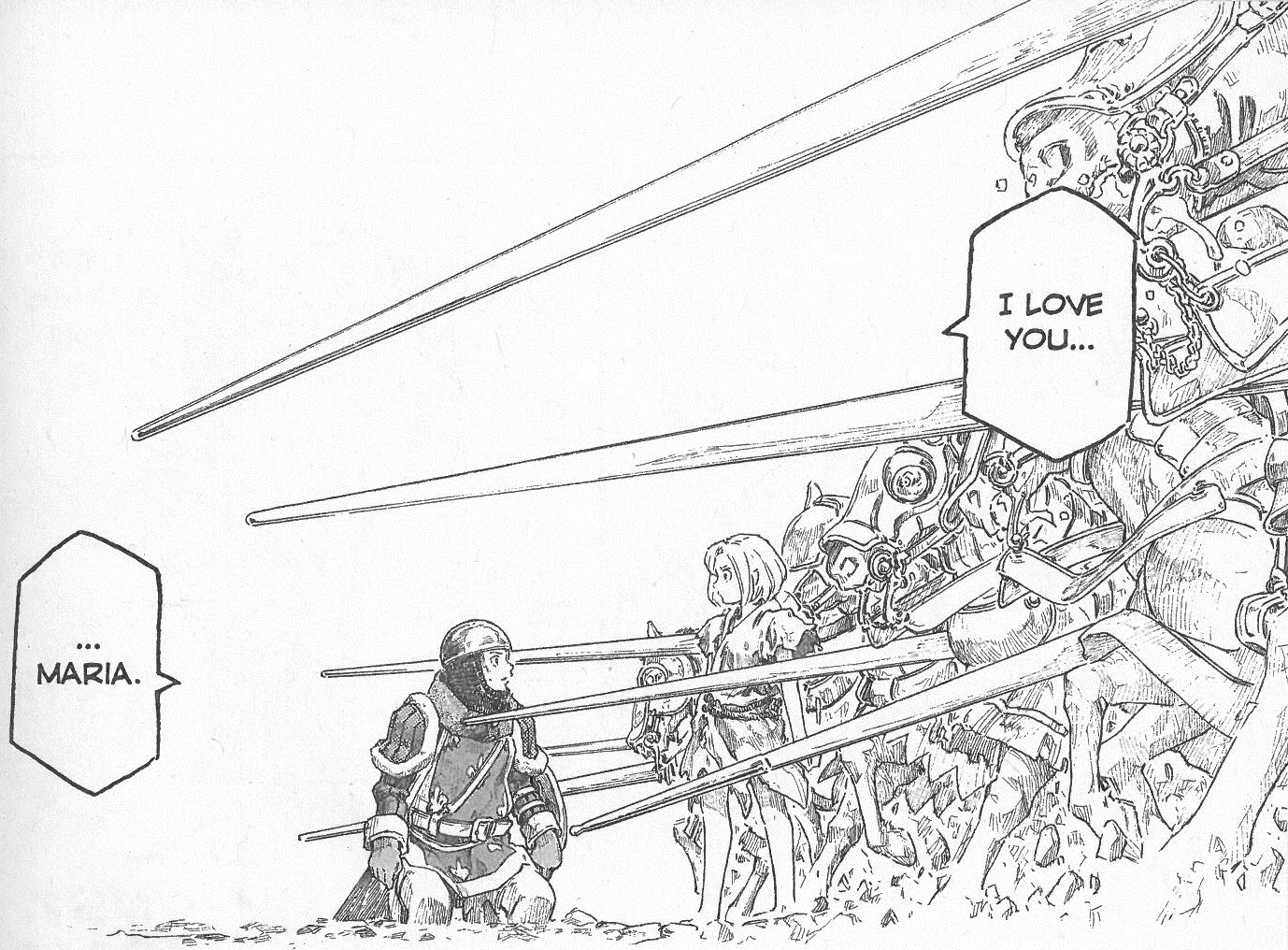
SEAN: And we have the third and final volume of Maria the Virgin Witch. There’s a one-shot collection of side stories in Japan, but I’m not sure Kodansha has picked that up.

ASH: Kodansha has! Exhibition is currently scheduled to be released in August.

SEAN: Finally, there’s the 9th Lone Wolf & Cub omnibus from Dark Horse, who curse the fact that I’m not starting with them as always.

Did reversing this make something stand out more for you?

MICHELLE: Alas, no. Just one thing to anticipate your review of!

ASH: Reversing the order made me realize that there was an actual order…

ANNA: I’m happy that this week is so light, because maybe I can catch up on my stacks and stacks of unread manga.

MJ: I can do nothing but be miffed on Lone Wolf and Cub’s behalf.

Filed Under: FEATURES, manga the week of

  • « Go to Previous Page
  • Page 1
  • Interim pages omitted …
  • Page 309
  • Page 310
  • Page 311
  • Page 312
  • Page 313
  • Interim pages omitted …
  • Page 538
  • Go to Next Page »
 | Log in
Copyright © 2010 Manga Bookshelf | Powered by WordPress & the Genesis Framework