• Skip to primary navigation
  • Skip to main content
  • Skip to primary sidebar
  • Home
  • About Us
    • Privacy Policy
    • Comment Policy
    • Disclosures & Disclaimers
  • Resources
    • Links, Essays & Articles
    • Fandomology!
    • CLAMP Directory
    • BlogRoll
  • Features & Columns
    • 3 Things Thursday
    • Adventures in the Key of Shoujo
    • Bit & Blips (game reviews)
    • BL BOOKRACK
    • Bookshelf Briefs
    • Bringing the Drama
    • Comic Conversion
    • Fanservice Friday
    • Going Digital
    • It Came From the Sinosphere
    • License This!
    • Magazine no Mori
    • My Week in Manga
    • OFF THE SHELF
    • Not By Manga Alone
    • PICK OF THE WEEK
    • Subtitles & Sensibility
    • Weekly Shonen Jump Recaps
  • Manga Moveable Feast
    • MMF Full Archive
    • Yun Kouga
    • CLAMP
    • Shojo Beat
    • Osamu Tezuka
    • Sailor Moon
    • Fruits Basket
    • Takehiko Inoue
    • Wild Adapter
    • One Piece
    • After School Nightmare
    • Karakuri Odette
    • Paradise Kiss
    • The Color Trilogy
    • To Terra…
    • Sexy Voice & Robo
  • Browse by Author
    • Sean Gaffney
    • Anna Neatrour
    • Michelle Smith
    • Katherine Dacey
    • MJ
    • Brigid Alverson
    • Travis Anderson
    • Phillip Anthony
    • Derek Bown
    • Jaci Dahlvang
    • Angela Eastman
    • Erica Friedman
    • Sara K.
    • Megan Purdy
    • Emily Snodgrass
    • Nancy Thistlethwaite
    • Eva Volin
    • David Welsh
  • MB Blogs
    • A Case Suitable For Treatment
    • Experiments in Manga
    • MangaBlog
    • The Manga Critic
    • Manga Report
    • Soliloquy in Blue
    • Manga Curmudgeon (archive)

Manga Bookshelf

Discussion, Resources, Roundtables, & Reviews

Features & Reviews

Kindred Spirits on the Roof

April 17, 2016 by Sean Gaffney

By Liar Soft. Released in Japan as “Okujou no Yurirei-san”. Released in North America by Mangagamer, also available on the Steam app.

In general I don’t review visual novels on this site, but I’d heard a lot about this one. First of all, it was hyped as being “uncensored” on Steam’s site, as if it was supposed to have a ton of porn in it. (Spoilers: there’s not much here TO censor.) Secondly, it was hyped as being a ‘yuri’ game that wasn’t marketed to the male otaku market – indeed, it reads a lot of the time as if it’s meant for female readers. But most importantly, it has strong plot and character development, is amusing and as realistic as you can get for a game starring two ghosts, and you just like it a lot.

Kindred_Spirits_on_the_Roof_Logo

The premise is that our heroine, Yuna, spends much of her time on the roof avoiding socialization due to a trauma from her past. While on the roof, though, she finds who ghosts (only she can see them), who are able to convince her through a mixture of politely asking and being excited about the whole thing (as well as a few veiled threats) to help the two of them hook up various female couples at the school. The goal is that when they hook up, they’ll get it on in the school itself. Since the ghosts can’t leave the campus, this is the only way they can really see how girls “do it”.

After typing that out, I realize that those who read me talking about a realistic, well-developed game are pointing and laughing by now. But it actually does a good job. Most of the cast get backstories that help make sense of their character and show why they have their various personality quirks. Two of the girls are already a couple before the series begins, and two of the girls, against all odds, don’t hook up with anyone. (It’s a very linear visual novel – you can’t make choices that really influence the game). As for the couples themselves, they’re not all the same types.

While the word ‘lesbian’ is not explicitly used, it’s made clear throughout that these are meant to be real relationships that last beyond high school. Some of the girls are thinking about their future plans as a couple, or how to explain things to their parents. One even explicitly says that she’s always been attracted to women, which helpfully avoids the “what is this strange feeling in my chest?” cliche, though we get that as well.

We get three types of ‘scenes’ we can read. The main one has a bear icon, and is Yuna going through her school life and attempting to make vague efforts to help the ghosts hook people up (though, by her own admission, her role is very passive) while also moving past her middle school trauma, embracing the fact that she’s really a take-charge leader sort, and finding her own love she was totally unaware of (it was under her nose all along! – the game is still filled with cliches, fear not). As the plot moves along, you get ‘cherry’ scenes, which are from the POV of the various other girls, showing us scenes that happens when Yuna isn’t there.

Speaking of which, several of those scenes involve sex. That said, though there is mild nudity (a few breasts) and some explicit terminology, anyone who buys this for the “good bits” will regret it immensely. As for the sex writing, it’s not horrible, but also not great – the post-coital pillow talk is usually more important.

After you complete the game’s main “plot”, you unlock various ‘apple’ marked scenes, and can unlock more by going back to the game and making the pointless choice you didn’t make before. (As I said, nothing affects the main plot, so you mostly just get briefly different dialogue). The ‘apple’ scenes are basically the same as the ‘cherry’ scenes, only they tend to involve spoilers – i.e., the characters reflect on things the reader was unaware of at the time. This can occasionally be harmful to the game itself – Hina gets most of her development in these apple scenes, as the game wanted her to be the stoic girl whose thoughts were a mystery to us. Which is fine, and she’s one of my favorites, but this led to her being undercharacterized for most of the game itself.

There are elements that don’t work. I mentioned Hina’s development already. Another character, Ano, has two conflicting sides that don’t always mesh very well together in the writing. There is also a teacher/student relationship, which is handled as well as can be expected, but I’d still rather have done without, especially as the teacher is the standard ‘looks like a little kid’ type. And of course, being a visual novel, you’d better be prepared for reading a whole lot of text, with repetitive music. The game is partially voiced, piping up for important scenes.

Overall, I’m pleased that I got this game, which ended up being better than I expected. The girls are all fairly intelligent, or at least idiotic in a fun, amusing way. The pairings all make sense. There’s a lot of content to justify its somewhat expensive price. And it treats its sexuality seriously, and has the girls thinking seriously about it. (Indeed, one of the two ‘unpaired’ girls, Nena, could easily be asexual and aromantic judging from the text.) If you’re curious about this sort of thing, it’s definitely recommended.

Filed Under: REVIEWS

Manga the Week of 4/20

April 14, 2016 by Sean Gaffney, Michelle Smith, Anna N, Ash Brown and MJ 1 Comment

SEAN: There’s a lot of variety out next week. Something from almost every major publisher.

lheartdk4

Kodansha gives us a fourth volume of L♥DK, everyone’s favorite “what is this thing you call consent?” shoujo romance.

MICHELLE: *snerk*

SEAN: And Noragami’s monthly release schedule chugs along with lucky Vol. 13.

Also reaching Vol. 13 is Say “I Love You”, which was introduced at the same time as My Little Monster but has zoomed past it, moving on to new volumes and new complications.

MICHELLE: I’m glad that one of them at least is still going to be around a while!

ANNA: So far behind on this, I feel guilty.

SEAN: And there’s the penultimate 6th volume of A Silent Voice, which ended with a hell of a cliffhanger last time, so I’m expecting some very good resolution from it.

ASH: I’m a few volumes behind, but this is such a great series.

SEAN: One Peace has the 2nd volume of the manga adaptation of Rise of the Shield Hero (they call it a “manga companion”, but I think it’s just a standard adaptation of the light novel).

ASH: I’m pretty sure you’re correct.

SEAN: Seven Seas has enjoyed giving us some bleak horror lately, and for those who love it, here’s a 7th Magical Girl Apocalypse.

I was surprised by how much I enjoyed the first volume of My Monster Secret, and so look forward to the second.

godslie

Vertical debuts a one-shot called The Gods Lie, which they are touting as a sports manga license. I suspect their tongue is firmly in their cheek, but either way it will be worth your time.

MICHELLE: I’m looking forward to reading this one.

ASH: As am I! I loved Immortal Rain, so I’m glad to see more of Ozaki’s work being released in English.

MICHELLE: Oh, I hadn’t made that connection! Awesome!

ANNA: What!!!! I have the first two volumes of Immortal Rain and am sad I didn’t pick up the whole series when it was in print. This is now in my Amazon cart!

MJ: Oh, this is exciting!

SEAN: And there’s a 4th Ninja Slayer volume. Are there ninjas? Will they slay? Read on to find out!

Who’s the cool seinen manga that’s got all the indie comic artists raving? Dorohedoro? Damn right. Vol. 18 drops next week.

ASH: Yeah!

SEAN: There’s also an 8th volume of the Perfect Edition of Monster.

And a 6th Tokyo Ghoul, which everyone loves but which I am strangely indifferent to.

MJ: If it makes you feel better, I haven’t gotten into it, either.

SEAN: Yen, meanwhile, is releasing its light novels a week before its other stuff, which is nice of them. That means we get a 3rd volume of Black Bullet, with its loli killers.

There’s a 4th volume of “what if Satan worked at McDonald’s” favorite The Devil Is A Part-Timer!. And if you like digital titles (as I do), Vols. 1-4 will be available digitally next week as well.

irregular1

The Irregular at Magic High School finally debuts, and it’s apparently one of the most polarizing titles in Western anime fandom. I’ve heard it called “Batman at Hogwarts”, myself. Also, is the term Mary Sue – or in this case Gary Stu – even relevant anymore?

And there’s a 5th volume of Is It Wrong To Try To Pick Up Girls In A Dungeon?, and its title continues to be the worst thing about it – I am eager for more.

Spice & Wolf comes to an end with its 17th novel, proving that you can combine cute wolf girls and economic theory if you try.

ASH: I stopped reading about half-way through, but I am glad to see that Yen was able to publish the entire series.

SEAN: Lastly, the 7th Sword Art Online novel, Mother’s Rosary, is widely considered one of its best, possibly as Kirito plays only a minor role. Asuna fans should be very happy.

MJ: I’m down for this.

SEAN: Which titles make your pure maiden’s heart tremble?

Filed Under: FEATURES, manga the week of

Midnight Stranger, Vol. 1

April 14, 2016 by Ash Brown

Midnight Stranger, Volume 1Creator: Bohra Naono
U.S. publisher: Viz Media
ISBN: 9781421579689
Released: April 2016
Original release: 2013

Midnight Stranger is the third boys’ love manga and the first series by Bohra Naono to be released in English. Naono’s first manga to be translated was Yokai’s Hunger which was initially released in print by Media Blasters but is now available digitally through Sublime Manga, the boys’ love line associated with Viz Media. Sublime also released Naono’s second manga in translation, Three Wolves Mountain, which along with Norikazu Akira’s Honey Darling was actually one of the publishers’ debut titles. Midnight Stranger is a short, two-volume series, the first of which was published in Japan in 2013. In English, Midnight Stranger, Volume 1 was released by Sublime in 2016. Like Naono’s other translated manga, Midnight Stranger has strong supernatural elements which can be fun but rather peculiar, a fair amount of comedy, and Naono’s penchant for older men. I’ve enjoyed Naono’s work in the past, so I was very glad to have the opportunity to receive a copy of the first volume of Midnight Stranger for review.

Midnight Stranger, Volume 1 contains two major storylines which aren’t directly related to each other but which could conceivably take place in the same setting. The volume opens with the titular “Midnight Stranger” and its followup chapter “Love-Hate” which are about Roitschaggata, a minor goat spirit, and Xiuhtecuhtli, an old and powerful god of fire. (The two are also the focus of the volume’s bonus chapter, “The Point of a Day Off.”) Centuries ago, due to the ugliness of his original form, Roi was mistaken for a monster rather than the benevolent spirit of healing that he is. He was nearly burned alive by a mob of humans, but was saved and granted more appealing looks by Xiu. The two of them now live together in modern-day Japan—Roi utterly devoted to his god, and Xiu oddly fond and possessive of his adoring servant. The second storyline collected in Midnight Stranger, and the basis for the four-panel comics included at the volume’s end, is “Hollow Romance,” a manga about a seemingly innocent young man named Takara Mori who is both more and less than he seems and the literal demons surrounding him.

Midnight Stranger, Volume 1, page 25Although I’ve somewhat come to expect it from Naono’s manga, the supernatural aspects of Midnight Stranger are all over the place and the worldbuilding isn’t necessarily cohesive. Xiu is based on an Aztec deity, Roi I believe is inspired by Swiss traditions, “Hollow Romance” incorporates Nordic legends, and there is a variety of other mythological beings present in the manga as well. It’s never really explicitly explained why all of these deities, demons, spirits, and legends from vastly different cultures and geographies are interacting with one another, but clearly in Midnight Stranger gods and beliefs aren’t restricted by countries or borders. The unexpected combinations, while seemingly haphazard, can be surprisingly entertaining, though. But while Naono has taken inspiration from multiples sources, which is something that I enjoy about her work, her interpretations are very much her own and frequently very little of the original tales remain. Xiu, for example, retains his name and has an appropriately fiery temper and flashy personality, but otherwise his connection to Mesoamerica is largely nonexistent.

Humor is also prominent in Midnight Stranger, though in tone the manga does shift between comedic and ominous. Granted, there is plenty to find amusing or ridiculous in Midnight Stranger, such as Xiu making his living in the mortal world as an idol or Roi gaining a young boy he cured as a best friend and confidant. Roi is actually the source of quite a bit of the humor in Midnight Stranger. He has a complex about his appearance, not realizing how adorable his new goat form is or how attractive he is as a human. He’s also apparently a little slow in recognizing that Xiu has feelings for him—readers aren’t privy to the hundreds of years of the extremely tedious evolution of their relationship, just the time period in which Roi finally figures it out and the heated sex that follows. Whereas Roi and Xiu’s story becomes more comedic as it progresses, Naono takes the opposite approach with “Hollow Romance” which becomes increasingly darker and grotesque, all while still maintaining a sense of humor. I particularly liked “Hollow Romance,” but I am curious to see what lies in store for Roi and Xiu in the next volume of Midnight Stranger.

Thank you to Viz Media for providing a copy of Midnight Stranger, Volume 1 for review.

Filed Under: REVIEWS Tagged With: Bohra Naono, manga, Midnight Stranger, Sublime Manga, viz media

UQ Holder!, Vol. 7

April 12, 2016 by Sean Gaffney

By Ken Akamatsu. Released in Japan by Kodansha, serialization ongoing in the magazine Weekly Shonen Magazine. Released in North America by Kodansha Comics.

Seven volumes into UQ Holder, and again I’m asking the question I’ve wondered about since it started: who is this meant to be for, exactly? I don’t know how Japanese fans of Negima reacted when it came to its messy end, but the Western fans were appalled and angry, for the most part. And after seemingly destroying his own series due to an argument with the parent company (details will likely remain forever sketchy), Akamatsu has now leaped 80 years into the future, helpfully thus losing most of the main cast of Negima, and begun what seemed like a spiritual sequel but has now amounted to a direct sequel. And just as Negima was able to ditch some of the wacky comedy and naked fanservice of Love Hina in favor of fighting and battles, UQ Holder takes it further, and you can almost safely read this in public.

uqholder7

I know that there are readers of this series who have not read Negima, having picked up the series via Crunchyroll or Kodansha, and are purely interested in the new story and new generation of characters. This volume must be particularly frustrating to them, as almost all of it features old Negima cast members, old Negima plots that never got resolved, and teases of Negima characters long-dead doing badass things. As a Negima fan, I admit it’s nice to see Mana again, and even if it was just a tiny flashback, the idea of Ku Fei and Yue teaming up to win the Grand Magic Games tournament is both hilarious and awesome. And, of course, we have the major UQ Holder characters who *are* carryovers from Negima: Yukihime (aka Evangeline) and Fate.

This leads to what is probably the most interesting part of the volume, when touching an application for Tota to do the Grand Magic Games triggers a booby trap that shows them a vision of Negi, Nagi… and the Mage of the Beginning, who is delighted to see Evangeline again, and (it’s implied) Tota as well. The reason this is the most interesting part of the volume are Eva and Fate’s reactions, which are desperate and yearning, the most emotion we’ve seen from either of them this entire series. Eva’s love for both Negi and Nagi was a significant part of Negima, and now in UQ Holder it seems it hasn’t diminished.

Of course, this leads to what kickstarts the next arc, as after this she realizes (I assume, motives are murky) that Tota is in danger if he’s near her, and forbids him from fighting in the tournament, or even leaving headquarters. Needless to say, all this does is spur him on to try harder. And it also spurs the author on to work in more Negima references. Not only can Tota seemingly use Dark Magic Erebea, but he is revealed to literally be a clone of Negi, which will no doubt lead to some excellent soul-searching and character development on his end, but from a meta perspective is both hilarious and sad.

I enjoy UQ Holder for what it is, but then I’ve read Negima, and have gotten over my grudge. For anyone else trying this series, I imagine it must seem like the image of Negi we see in this volume: a cool image surrounded by the dark, binding tentacles that make up its past.

Filed Under: REVIEWS

Bookshelf Briefs 4/11/16

April 11, 2016 by Sean Gaffney and Michelle Smith 1 Comment

assclass9Assassination Classroom, Vol. 9 | By Yusei Matsui | Viz Media – There’s a lot packed into this volume, ranging from showing how much more Class E is actually learning from Koro-sensei, to kicking off some romantic ship tease between Irina and Karasuma (good to see his the typical romantically clueless male). But the most important part of the volume discusses what it actually means to be an assassin, and how it’s different from being a soldier, or being a fighter. Koro-sensei is teaching the class the skills they need at assassination, but do any of the kids really have the desire to kill someone? (Or even the tragic background that we see Irina has here.) But, most importantly, will Kayano ever get to do anything ever? We may at least find that out next time. – Sean Gaffney

golden3Golden Time, Vol. 3 | By Yuyuko Takemiya and Umechazuke | Seven Seas – Any chance at romantic moves forward is shut down in the first few pages—Kaga rejects Banri’s confession, but hopes they can be friends. Honestly, it’s for the best for both of them. Banri is still dealing with his amnesia—and judging by the flashback we see, was quite different back then from his present self. Kaga, meanwhile, is still a hot mess of issues, which she handles in the most extroverted, aggravating way possible. Then there’s the added issue of Linda, who clearly knew Banri in the past—and he is aware of this—but is keeping it from him for some unknown reason. Essentially, we continue barrelling along far too fast, and the ensuing car crash, when it comes, will be awful in the best way. – Sean Gaffney

honeysweet2Honey So Sweet, Vol. 2 | By Amu Meguro | Viz Media – Now that we have resolved the whole “he’s really mean” plot that kicked this off, and Nao is able to realize that she does not, in fact, have romantic feelings for her uncle after all, the series can go on to do what it does very well, which is be sweet and charming. When you have two very awkward leads (and their awkward friend—Yashiro is really the odd one out here), there’s usually a lot of cute blushing, awkward almost missed dates, and apologies. Of course, as we find near the end, Taiga can’t quite get away from the fact that everyone still views him as a thug. And there’s also the dreaded new guy who enters the picture at the end of the volume. Enemy? New love interest? Ah well, at least it will be sweet. – Sean Gaffney

honorstudent2The Honor Student at Magic High School, Vol. 2 | By Tsutomu Sato and Yu Mori | Yen Press – I don’t think I even reviewed the first volume of this. When the Irregular volume was delayed from November to April, its spinoff manga was left in place, sadly. As a result, we see an alternate telling of a story I haven’t read yet, told from the perspective of the sister of the main novel character. On the plus side, the world is well-formed, and should please those who like ‘magic academy’ series in general. On the minus side, the heroine seems to be flawless with the exception of her massive brother complex, and anyone reading this had better have a very high tolerance for incestuous feelings of yearning. I suspect this series will work better after the novel comes out next month. – Sean Gaffney

mlm13My Little Monster, Vol. 13 | By Robico | Kodansha Comics – The thirteenth and final volume of My Little Monster includes assorted goodies for the die-hard fan. There are a few chapters from the point of view of characters whose perspectives we don’t generally see, a lovely wedding ceremony (with Nagoya the chicken included!), quite a lot of 4-koma, some character profiles, fanbook excerpts, even a maze. I’d say we did learn a few new things about some characters, and even though I wish for more detail about Natsume and Sasayan’s future, the glimpse we get here will sustain me. It says a lot about this series that Robico’s joke sequel announcement at the end of the volume made me go, “I’d read that!” Any chance to spend a little more time with these characters was and will always be welcome. – Michelle Smith

ph24Pandora Hearts, Vol. 24 | By Jun Mochizuki | Yen Press – One of these days, I’ll have to read Pandora Hearts straight through because I am still forgetting things in between volumes. As a result, some of what happens in this final volume is rather confusing. The basic gist, however, is that the world the characters inhabit is crumbling, and our heroes must find a way to stabilize their existence without changing the past. The characters are well-served here—I was happy to see the living draw upon their memories of the departed when deciding which side they were on and the ending also delivers major feels. Happy, sad, lovely and bittersweet, it’s everything I could’ve wanted the conclusion of this story to be. Well done, Mochizuki-sensei. – Michelle Smith

Filed Under: Bookshelf Briefs

My Week in Manga: April 4-April 10, 2016

April 11, 2016 by Ash Brown

My News and Reviews

In case anyone was wondering just how much I was looking forward to seeing Akiko Higashimura’s Princess Jellyfish released in English, I apparently ended up devoting an entire week to it at Experiments in Manga. (Sort of.) First was the announcement of the winner of the Princess Jellyfish giveaway, which also includes a list of upcoming manga releases that I and the giveaway participants are especially looking forward to. (Yes, Princess Jellyfish was mentioned multiple times, and not just by me.) The honor of the first in-depth manga review for April goes to the first Princess Jellyfish omnibus which I (unsurprisingly) loved. I’m enjoying the manga immensely, but I’m especially looking forward to getting to the point in the series where the anime adaptation left off. Princess Jellyfish even got a specific mention in March’s Bookshelf Overload, which was posted over the weekend.

There were a few manga-related things caught my eye last week. Brigid Alverson’s article on the state of the North American manga industry, which focuses on the impact of a few of the top-selling series, is now free to read at Publishers Weekly. The translation and quality of Digital Manga’s original release of the first volume of Kou Yoneda’s Twittering Birds Never Fly drew a fair amount of criticism from fans, so much so that the publisher decided to completely revise and re-release it. Apparently 200 of the 223 pages were redone in some fashion. The new edition should be available sometime in late May or early June. Also, Vertical launched it’s most recent licensing and readership survey for anyone who might have any manga or light novel requests. And last but certainly not least—Kodansha Comic’s will be releasing more of Vinland Saga!

Quick Takes

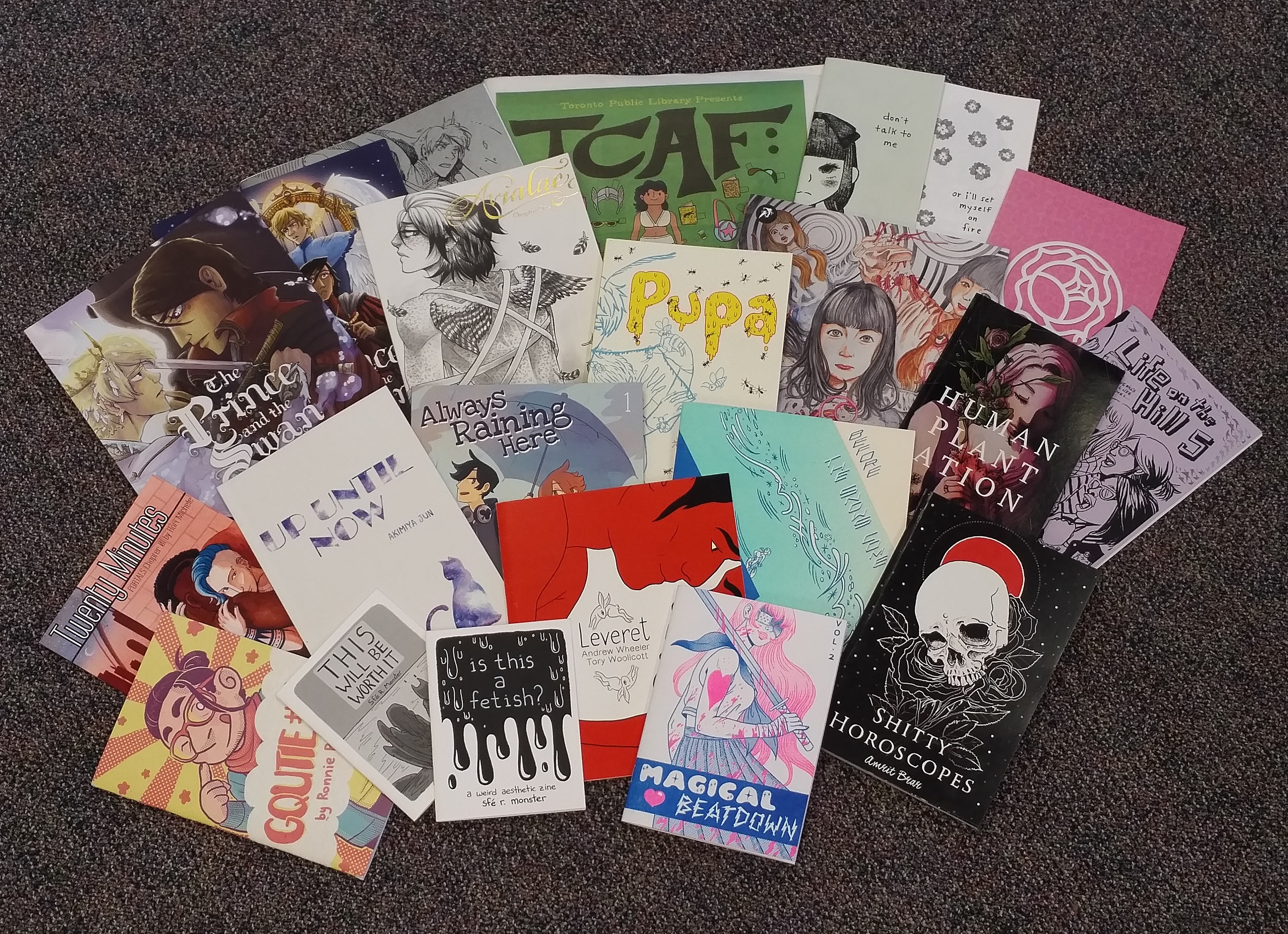
Beyond: The Queer Sci-Fi & Fantasy Comic AnthologyBeyond: The Queer Sci-Fi & Fantasy Comic Anthology edited by Sfé R. Monster. A fair number of independent queer comics anthologies have been released relatively recently, but I’m always happy to see more. Beyond collects twenty works from twenty-seven creators. I was previously familiar with a few of the contributors, but most of them were actually new to me. Overall, it’s a strong, well-thought-out collection.  The anthology shows a wonderful range of stories and characters, but I was especially happy to see a wide variety of diverse trans identities represented. While many of the works in Beyond include some romantic elements, romance isn’t at all at the forefront of the collection. Instead, the stories tend towards science fictional and fantastical adventures—space exploration, battles against monsters, survival in strange worlds, and so on—in which queer characters are not only the protagonists but the heroes of their stories. A second Beyond anthology focusing on urban fantasy and post-apocalyptic worlds is currently in the works; I’m looking forward to it a great deal and will definitely be picking it up.

Goodnight Punpun, Omnibus 1Goodnight Punpun, Omnibus 1 by Inio Asano. The first omnibus of Goodnight Punpun is one of the manga that has left the greatest impression on me so far this year, though I have difficulty coherently explaining why I find it so extraordinary. The series has been described as a surreal and dark coming-of-age story, which is accurate but doesn’t quite capture the intense experience of actually reading the manga. Punpun is the titular character, an elementary school student who, along with the rest of his family, is portrayed as a bird-like creature. This perhaps slightly softens the blows of the story. In addition to dealing with the normal sorts of problems associated with getting older, Punpun’s family is also violently falling apart. And if growing up wasn’t terrifying enough, most of the adults in Goodnight Punpun seem to be on the verge of insanity if they haven’t already succumbed to it. Although there are wonderful moments of hope and humor, the worldview presented in Goodnight Punpun is a pessimistic one and Punpun is learning some very hard truths. Goodnight Punpun is heart-wrenching, but very good.

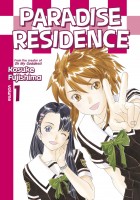
Paradise Residence, Omnibus 1Paradise Residence, Volume 1 by Kosuke Fujishima. Oh My Goddess! has been one of the mainstays of the North American manga industry, so it’s probably no too surprising that one of Fujishima’s most recent series, Paradise Residence, was licensed. I’m not entirely sure if the series is being released in an omnibus edition or not, but the first volume from Kodansha Comic’s also includes Volume 0 as bonus material at the end. I would actually recommend reading Volume 0 first as some of the jokes and characterization in Volume 1 make much more sense with more context. This is important because the humor, which can be legitimately if inconsistently funny, tends to be based on the characters’ personalities. Despite some of the more outrageous scenarios in Paradise Residence, the comedy is actually fairly subdued. Paradise Residences is a largely episodic manga about dorm and school life at an all-girls boarding school. At times Paradise Residence can be a really sweet and charming series, but every once in a while some nonsensical fanservice is thrown in that’s more distracting than anything else.

Filed Under: FEATURES, My Week in Manga Tagged With: Beyond, comics, Goodnight Punpun, Inio Asano, Kosuke Fujishima, manga, Paradise Residence

Demon Prince of Momochi House, Vol 4

April 10, 2016 by Anna N

Demon Prince of Momochi House Volume 4 by Aya Shouoto

I’ve been enjoying this series, although I have to admit if I was forced to recommend only one manga about an ordinary girl who finds herself heir to a house inhabited by ayakashis, I’d go with Kamisama Kiss. That being said, this volume of Demon Prince of Momochi House represents a high point for the series so far, with a story that was surprisingly emotional.

Aoi’s symbiotic relationship with Momochi house means that he’s trapped, with the memories of his previous life wiped from the minds of anyone who knew him in the human world. When Yukari goes to school wearing a 4 leaf clover ring that Aoi made for her, one of her classmates suddenly demands to know where she got it. When she tells the boy that a family member made it and her name is Momochi, he wanders off. Yukari learns that the boy is named Hidaka, he’s a loner, and has a reputation of being cursed. There’s a legend that his family is descended from fox shape-shifters, so Yukari wonders if there’s a connection to Aoi. As she investigates she learns that Hidaka and Aoi were best friends when they were younger.

Aoi doesn’t directly share his feelings with Yukari, but she senses that he feels a bit of regret and doesn’t want to risk rejection. As she learns more about the curse of the fox spirits that is affecting Hidaka, she begins to realize that the curse itself is keeping Hidaka’s memories of his friendship with Aoi alive, making him feel constantly guilty and unsettled. Aoi as the Nue has to intervene, and while he is able to cause a resolution to the situation, one final link to the outside world for Aoi is severed. The story is very bittersweet and filled with a sense of nostalgia, as memories are shown to be insubstantial. The last part of the manga turns to a gathering of akashi and hints of a creepy storyline in the next volume. Shouoto continues to make the backgrounds of Momochi house interesting with gatherings of tiny ayakashi in strange shapes, and there’s are general hints of menace in some of the characters’ facial expressions and reactions. This is all blended with a few moments of humor here and there as Aoi’s random attempts to get closer to Yukari don’t get him very far. Overall I was very pleasantly surprised by this volume, and I hope this series which was already enjoyable continues to improve.

demonprince4

Filed Under: REVIEWS Tagged With: demon prince of momochi house, shojo beat, shoujo, viz media

Attack on Titan, Vol. 18

April 10, 2016 by Sean Gaffney

By Hajime Isayama. Released in Japan by Kodansha, serialization ongoing in the magazine Bessatsu Shonen Magazine. Released in North America by Kodansha Comics.

Attack on Titan has never really been a laugh riot to begin with, but you get the sense that the fun is over with this volume. There’s one last effort to have wacky survey corps times here, with Sasha going completely bugfuck over meat, and Eren and Jean having a nostalgic fistfight, but it feels a bit out of place and wrong, and just makes the reader realize that those times are probably gone for good. A feeling that only intensifies as the volume goes on and we reach Wall Maria, where Reiner and Bertholt (OK, mostly Reiner) as well as the Beast Titan await, luring our heroes into a trap that they’re mostly aware of and walking into willingly. I suspect the volume after this will be wall-to-wall action.

titan18

Meanwhile, the flashback with Instructor Shadis gives us the longest look yet we’ve had of Eren’s parents, and also discusses the mindset that the Survey Team needs to have to function properly, a mindset that some people (like Shadis himself) struggle and ultimately fail to find. Eren’s father Grisha is found outside the walls, and it’s implied came from even further outside. He’s able to find his calling in life, though, and it’s not the Survey Corps but medicine. As we see Shadis desperately attempting to prove that he’s special, that he’s better than everyone else and failing, we see Grisha fall in love, get married, have a family… and do scientific experiments on his children, of course, though this volume doesn’t get into that.

Nietzsche’s concept of the Übermensch has never really resonated with me, and Attack on Titan plays with the concept without choosing sides. Certainly we have characters throughout the series who seem to succeed with what appears to be a minimum of effort and looking cool while doing it – Mikasa, Levi – but Eren, who’s support to be the most special of them all, is seen constantly struggling and failing. He notes in this volume he’s not special – just the son of a special man. Shadis gives up command of the Survey Corps because he has a crisis of confidence and supposedly”realizes” that he’s not special while someone like Erwin is. But Hange, correctly in my opinions, calls that simple cowardice. Again, the ambiguity is discomfiting but appreciated.

Speaking of people struggling with being special, Armin has found that being the idea guy is not all it’s cracked up to be when time is running short and you can’t explain your ideas very well beyond “it’s a hunch”. Eren, Mikasa and Armin function best as a threesome because each one of them has something the other two lack, and I enjoyed the flashback to their youth as probably my favorite scene in the entire volume. Sadly, as I said, the volume ends with Reiner making his appearance, and even though he’s almost beheaded he isn’t quite, so I’m sure he’ll be back before you know it. Attack on Titan can be a struggle, but always makes you think and question why you’re making choices. That’s a big reason it sells as well as it does.

Filed Under: REVIEWS

Princess Jellyfish, Vol. 1

April 8, 2016 by Ash Brown

Princess Jellyfish, Omnibus 1Creator: Akiko Higashimura
U.S. publisher: Kodansha
ISBN: 9781632362285
Released: March 2016
Original release: 2009
Awards: Kodansha Manga Award

Akiko Higashimura’s Kodansha Manga Award-winning Princess Jellyfish wasn’t a manga series that I expected would be licensed for an English-language release. Anecdotally, josei manga hasn’t historically done particularly well in the North American market. And on top of that, Princess Jellyfish is a longer series, currently ongoing at more than fifteen volumes, which can also make licensing prohibitive. When Kodansha Comics announced that it would be publishing Princess Jellyfish in print in English, fulfilling the hopes of many fans, I was thrilled. My knowledge of Princess Jellyfish stems from the 2010 anime adaptation directed by Takahiro Omori which I thoroughly enjoyed. However, as the anime only adapted a small portion of the series, it left me wanting more, so I am very excited to see the original Princess Jellyfish manga available in translation. Kodansha’s release of the series is an omnibus edition with a larger trim size and color pages included. The first omnibus, published in 2016, collects the first two volumes of the series as released in Japan in 2009.

Tsukimi is the youngest resident of Amamizukan in Tokyo, a communal apartment building catering to a particular type of woman who is completely and utterly devoted to her specific interests despite societal expectations—the fujoshi. Chieko, the manager of Amamizukan, collects traditional Japanese dolls and kimono. Mayaya is obsessed with Romance of the Three Kingdoms. Jiji has an intense appreciation for older, distinguished gentleman. Banba is fixated on trains. Mejiro is a reclusive boys’ love mangaka. And as for Tsukimi, ever since her mother took her to an aquarium as a child, she has adored jellyfish. Tsukimi’s love of jellyfish is one of her remaining ties to her mother who died of illness many years ago. It’s also that passion that leads to her chance encounter with Kuranosuke, the illegitimate son of a prominent politician who she initially assumes is a stylish and fashionable young woman due to the way he was dressed at the time. Their meeting will not only have a great impact on Tsukimi, but on everyone living at Amamizukan.

Princess Jellyfish, Omnibus 1, page 227Like the residents of Amamizukan, Kuranosuke goes against society’s set roles and expectations, but in his case he’s doing it deliberately rather than it being an unintentional side effect of an obsession. Princess Jellyfish plays with the notions of outward appearance and self-expression in some really interesting and satisfying ways. I’m generally skeptical of stories that put an emphasis on beauty and looks or that make use of dramatic makeovers (for various reasons, Tsukimi and the rest of the Amamizukan fujoshi become targets of Kuranosuke’s enthusiasm for fashion and makeup), but Princess Jellyfish is a series that recognizes that a person’s appearance is only one part of an extremely complicated whole and that attractiveness is much more than skin deep. It also recognizes that there is tremendous power in someone being able to influence other people’s perceptions of who they are and that first impressions are often rightly or wrongly based on what can be visibly seen. Kuranosuke understands this and uses that knowledge to his advantage, as does the series antagonist Inari—a woman paving the way to the demolition of Amamizukan to make way for new urban development. Through blackmail and her own sex appeal, she leverages the importance placed on appearances and society’s inherent sexist prejudices for her own benefit, often finding the circumstances to be distasteful but the feeling of being in control of them intoxicating.

While it is the impetus for much of the story’s forward movement in the first omnibus, the threat of losing Amamizukan is only one of many intertwined plot threads in Princess Jellyfish. Tsukimi’s maturation as she continues to deal with the pain of her mother’s death and begins to fall in love for the first time is very important to the series as is Kuranosuke’s complicated family history and relationships. Although Kuranosuke is heterosexual, considering his custom of dressing as a woman his presence in the manga brings additional elements of queerness and gender fluidity to the series which I especially enjoy. (Also worth mentioning: the Princess Jellyfish translation notes are very thorough and valuable in explaining some of the nuances of Japanese word usage and terminology in regards to various gender and queer identities, which can be quite different from their Western counterparts.) Princess Jellyfish incorporates a fair amount of comedy which is one of the reasons the manga has such charm. But while Kuronosuke’s fashion choices and gender performance can result in humorous situations, the series treats him as a person and not as a joke, which I greatly appreciate. In fact, Princess Jellyfish has an entire cast full of wonderful characters which is perhaps the series’ greatest strength.

Filed Under: REVIEWS Tagged With: Akiko Higashimura, kodansha, Kodansha Comics, Kodansha Manga Award, manga, Princess Jellyfish

Manga the Week of 4/13

April 7, 2016 by Sean Gaffney, Michelle Smith, Anna N, Ash Brown and MJ Leave a Comment

SEAN: Technically, this is the smallest week of the month. That does not mean there aren’t a lot of titles, just slightly less than the deluge of the other weeks.

hero1

I Am A Hero has been a long-awaited title here, and Dark Horse has it. It’s not just a zombie apocalypse manga, it’s a multiple award-winning zombie apocalypse manga, which runs in Big Comic Spirits (yes, that means it’s another seeming Viz title that went to Dark Horse – possibly for aesthetic reasons, like Gantz). This is an omnibus of the first two volumes.

MICHELLE: I’m eager to see reviews of this, as I can’t tell yet whether it’s something I’d like.

ANNA: I’m also intrigued by this series.

ASH: I’m very excited for this one, even considering that I’m a bit burned out on zombies.

SEAN: And while one popular title begins, another ends, as we see the last Lone Wolf and Cub omnibus, Vol. 12. But fear not, New Lone Wolf and Cub is still around.

ASH: I’m so glad that Lone Wolf and Cub is back in print in its entirety in an edition that doesn’t cause as much eyestrain.

SEAN: And we have a giant omnibus of the Evangelion spinoff Campus Apocalypse, which is a sort of shoujo-ish BL-ish mystery-ish take on the series. Ish.

ASH: Ish, eh?

SEAN: Kodansha theoretically gives us a 34th volume of Air Gear. I say theoretically as of all the titles that have sliding release dates, Air Gear’s has been the most egregious – don’t blame me if it’s delayed till August by next week.

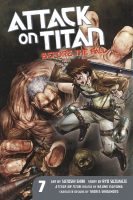
Attack on Titan: Before the Fall turns out to be a much longer spinoff than I expected, as we’re at 7 volumes and still running.

Fairy Tail 53 continues… some plot, I guess, I’m about 20 volumes behind by now, alas. There will be fights and nudity, no doubt. The staple of all Shonen Magazine series.

And Tsubasa World Chronicle 2… I got nothin’, sorry. MJ?

MJ: I… don’t either. I admit I haven’t been reading this, and suddenly I’m feeling kinda guilty.

MICHELLE: I can’t remember whether I didn’t know this existed or whether I did and promptly forgot. Which is worse? I dunno; I guess I’ve still got CLAMP fatigue.

SEAN: Seven Seas has the 4th volume of dark romantic fantasy The Ancient Magus’ Bride, which I quite like.

ASH: As do I!

SEAN: And there’s a 3rd volume of awkward college romance Golden Time.

And also a 3rd of Monster Guy gag manga Merman In My Tub.

midnight1

SubLime has a new debut, the first volume of Midnight Stranger, which apparently involves goat demons? I assume they’re sexy goat demons.

MJ: Goat demons do not sound promising.

ASH: Of course they’re sexy goat demons, Sean.

SEAN: Udon has the 3rd volume of Steins;Gate and its damned semicolon of awful.

Viz gives us a 58th volume of Case Closed, which is a lot.

And a 17th Itsuwaribito, which is another series that turns out to be much longer than I had originally expected.

There’s also a 17th Magi, but I’m absolutely delighted that it’s running this long. I still boggle this is written by the same person who gave us Sumomomo Momomo.

MICHELLE: It is?! I never noticed.

SEAN: Lastly, there’s a new manga debut with Monster Hunter: Flash Hunter, which I think is primarily for the PokeMarket, though I could be wrong.

As with many 2nd weeks of the month, it’s very much a hodgepodge of stuff. What catches your eye?

Filed Under: FEATURES, manga the week of

Not Lives, Vol. 1

April 7, 2016 by Sean Gaffney

By Wataru Karasuma. Released in Japan by ASCII Mediaworks, serialization ongoing in the magazine Dengeki Daioh. Released in North America by Seven Seas.

Once you see something make it big, be it here or in Japan, you’re going to see variations on the same basic theme in the hopes that a company can get some of that sweet profit. Be it vampires, zombies, Alices, or whatever, the media are ready to give you something that’s essentially the same with a few palette swaps. Even better is if you can mash more than one genre together – you get the chance to try to court multiple markets. Enter Not Lives, whose cover screams out that its’ a date sim, complete with an actual dialogue box, but it also ends up being ‘person ends up in a game world’ as well as the ever popular ‘survival game’ genre. The result isn’t terrible, but it feels like a title where stuff is thrown at the wall to see what sticks.

notlives1

Oddly, despite being the most obvious thanks to the cover, the datesim/high school romance part is the least developed of the bunch. Our hero, for a change, is rather extroverted and talkative, and also has a genius for making and marketing games of any kind, but is somewhat useless about matters of the heart – not realizing that his long-suffering childhood friend is in love with him, for instance. One day he accidentally gets a copy of a mysterious game called Not Lives, and when he tries to play it it loads itself into his chest rather than the CD drive, downloading him into a VR game where he’s playing a young woman. The catch being that the young woman actually exists, and is rather frustrated with this newbie losing in his very first game.

So far so cute, but the survival game aspect takes precedence as the series goes on, and we discovers the players are trapped in a rather nasty way. First time losers become ‘avatars’, i.e. somewhat less than human, and are forced to recruit other players. If the avatar then loses again… they’re ‘deleted’, which seems to involve severed body parts. Needless to say, things get a bit cutthroat, especially since it becomes apparent that some of the players/avatars can use game powers in the REAL world to, say, throw a bunch of thugs in front of a truck and kill them all. Our hero may be a genius gamer, but will he be able to level up and beat this game where the rules are still a bit vague? Especially once his avatar ends up transferring to his class, thus neatly taking us back to the datesim in the very end.

There’s nothing overtly wrong with this – there’s some fanservice, but honestly I was expecting worse, and the avatar, Kyouko, manages to be emotionally repressed without being a stoic robot. That said, nothing in it screamed that I absolutely had to get the next volume. It plays to folks who like “trapped in a game” (me), “survival game” (not me), and “dateim romance” (it depends). My main concern is the 2nd, as I worry that, like almost all survival game titles, we’ll be introduced to likeable, sympathetic people who will then meet horrible ends. Childhood friend, I’m very worried for your future…

Filed Under: REVIEWS

Bookshelf Briefs 4/6/16

April 6, 2016 by Michelle Smith and Sean Gaffney Leave a Comment

Presented with apologies for the delay.

bloody2Bloody Mary, Vol. 2 | By Akaza Samamiya | VIZ Media – For a moment there, I thought I could grow to really like Bloody Mary. Perhaps it was all the slashy situations that were happening, but the atmosphere briefly coalesced into something equal parts nifty and creepy. Unfortunately, this didn’t last long, and I was soon irritated by the nebulous nature of the narrative. Perhaps just a couple more explanatory panels would help, as I kept going, “Wait, why are they breaking into that mansion again?” Why is this happening? Why is that happening? A revelation that should be big lands with a squelchy plop. There’s potential here, for sure, and I’m not ready to give up, but I’m still underwhelmed for the time being. – Michelle Smith

haganai13Haganai: I Don’t Have Many Friends, Vol. 13 | By Yomi Hirasaka and Itachi | Seven Seas – The latter half of this book is merely OK, setting up what promises to be the next big arc by introducing a student council girl with a grudge against Sena, and teasing Sena and Kodaka’s engagement. But let’s face it, this volume’s big, big reason to read it is that first chapter with Rika, as we hear her run up against Kodaka’s hardcore determination to ignore any forward development in this series, and it nearly causes her to snap. The elephants in the room—that the group is already friends (and thus the club’s purpose is complete), and that he has at least 3 girls in love with him, is something Kodaka is desperately trying to forget, and it can’t last much longer. Very well done. – Sean Gaffney

onlyvamp6He’s My Only Vampire, Vol. 6 | By Aya Shouoto | Yen Press – I have to admit, Aya Shouoto continues to have a slight pacing problem that I can’t quite put my finger on but bothers me. I think it’s typified in this volume by Kana’s escape and training, which happens completely offscreen through a character we had no idea was on her side. Sadly, we don’t see that; we see Aki angst instead. Which is fine, I mean, it’s quality angst, but I have to admit I wanted to read something different than the author was giving me. Kana does get more to do in the second half, but for the wrong reasons—amnesia has reared its ugly head, as it always does whenever a shoujo couple dares to resolve its feelings before the series can end. This is still good, but highly uneven. – Sean Gaffney

lw15Library Wars: Love & War, Vol. 15 | Original Concept by Hiro Arikawa, Story and Art by Kiiro Yumi | VIZ Media – Library Wars hasn’t been the most brilliant series ever, but its characters consistently put a smile on my face. That is especially true of this satisfying final volume, in which Iku completes a solo mission admirably well (while drawing on the attributes of her team for comfort and inspiration) and finally clearly communicates her feelings to Dojo. A three-year fast-forward shows us some glimpses of what’s become of the cast, and it’s all pretty great. (Avoiding most spoilers, I will only say the photograph at the end cracked me up.) There is a spinoff/sequel of sorts out there, and I really hope VIZ licenses it at some point, because these are characters I’d like to revisit someday. – Michelle Smith

mlm13My Little Monster, Vol. 13 | By Robico | Kodansha Comics – Let’s face it, this manga is a victory lap. But it’s well-deserved, and I greatly enjoyed most of it (the fanbook section, while nice to have, featured a lot of 4-komas and profiles that didn’t add much.) Loved the Natsume and Sasayan story, of course, but Iyo’s was also very good. I was less enamored with Oshima and Takaya, but you can’t say it wasn’t signposted. Best of all, though, we get a wedding, which I figured after the ending to twelve would get skipped over. It’s almost a sideplot to Takaya trying to get his love taken seriously, but Shizuka is amazing as always—the shot of her in her bridal gown chugging tea is marvelous. I will miss you, My Little Shoujo Series. Though at thirteen volumes, not too little. – Sean Gaffney

ofthered2Of the Red, the Light, and the Ayakashi, Vol. 2 | By nanao and HaccaWorks* | Yen Press – The pacing of this second volume is somewhat slow, and at times it becomes easy to tell that this is based off a visual novel, and is trying to keep a lot of the basics. I also admit that I have trouble telling two of the three leads apart, both being blonds with hair about the same length. That said, as with the first volume, the title works best when establishing a creepy and unsettling mood, as you gradually realize that this is not your typical Japanese town, and that a lot of people know what’s going on here more than our three heroes. I’m not sure how well this will end—certainly if the cute little sister gets ‘erased’ I think I’m out—but right now it’s intriguing enough to keep going. – Sean Gaffney

rosegun1-3Rose Guns Days Season One, Vol. 3 | By Ryukishi07 and Soichiro | Yen Press – Well, I suppose I asked for this, as I said last time that I wish Rose’s shiny idealism would get some more depth. And so we get this volume, in which all is in ruins, our heroes are scattered to the four winds, and Rose is literally tortured for her beliefs, and emerges almost completely broken. The keyword being almost, of course—she still has Leo and a few others, and even Stella and Meryl admit that while they were planning on double-crossing Rose before, that’s not happening now. I expect the final volume of this ‘season’ will be wall-to-wall action, but how cynical will Rose get? We shall see. Also, see if you can spot the Higurashi in-jokes this time. Recommended only for fans of Ryukishi07’s work. – Sean Gaffney

Filed Under: Bookshelf Briefs

Shoulder-a-Coffin Kuro, Vol. 5

April 5, 2016 by Sean Gaffney

By Satoko Kiyuduki. Released in Japan as “Hitsugi Katsugi no Kuro – Kaichu Tabi no Wa” by Houbunsha, serialization ongoing in the magazine Manga Time Kirara. Released in North America by Yen Press.

It can at times be rather hard to believe that this mostly dark and surreal fantasy series can come from the same author as GA Art Design Class, a 4-koma series about the adventures of five girls in art college. But there are moments when the two series seem to connect more than you’d expect. Kiyuduki frequently believes in “show, don’t tell” in regards to not only her plot but also her characterization, leaving the reader to guess much of what’s going on; we sometimes see this with The Professor in GA. Likewise, Kisaragi’s surreal and sometimes unnerving dream sequences could easily fit into Kuro – indeed, Kisaragi and Kuro look similar enough that you could headcanon this as one long nightmare she’s having. Because it does feel more and more like a nightmare – Kuro’s not getting as many fluffy stories as it did back in Volume 1.

kuro5

Part of the reason for that might be that this volume gives us a lot more background on the witch that has supposedly cursed Kuro – we see what may be a sort of origin story for her, and a story where we see her own journeys, which appropriately mirror Kuro’s. But I think it’s simply that almost all the stories in this volume deal with death and being unable or unwilling to move on. Three very different young women meet unfortunate ends but want to leave something behind. A balloon race seems to literally end up in heaven. Kuro, Nijuku and Sanju end up in a valley where perspective and illusions seem like an optional extra, and Kuo once again cannot let go of what she regards as the things that make her what she is – her hat and coffin. Even the happiest story in this volume involves a cursed painter whose subjects all seem to die right after they’re painted. Luckily, Kuro can’t seem to die, so that’s one problem solved.

The second half of the book gets even more chilling, at times almost seeming to descend into pure horror. Two sisters are offered a grim bargain by the Witch, and Kuro has to deal with the consequences, once again taking on someone else’s suffering into her own body. b The last story introduces us to what seems like another in Kuro’s long line of spunky female merchant girls she seems to run into, only to find that reality is murderously different. And this also gives us the reason for Kuro’s journey. Yes, she’s trying to seek death, but in order to do that, she has to take in life as well, because without life death is meaningless. It’s something that the witch doesn’t quite understand, and even Kuro isn’t really confident in her feelings till the end of this book. But it’s true, and also a reminder of the depth and quality of the stories in this volume. Anyone who likes dark, thoughtful fantasy should be reading this, no exceptions.

Filed Under: REVIEWS

My Week in Manga: March 28-April 3, 2016

April 4, 2016 by Ash Brown

My News and Reviews

A couple of different things were posted at Experiments in Manga last week. For starters, since it’s the end of one month and the beginning of another, it’s time for another manga giveaway! There’s still an opportunity to enter for chance to win the first omnibus of Akiko Higashimura’s wonderful Princess Jellyfish. I also posted an in-depth review last week of The Autobiography of Yukichi Fukuzawa, which is an engaging work in addition to being surprisingly entertaining and humorous. Fukuzawa helped to shape modern-day Japan; I was inspired to pick up his autobiography after reading Minae Mizumura’s The Fall of Language in the Age of English.

Quite a few Kickstarter projects have caught my attention over the last week or so. I’m especially excited to see that Sparkler Monthly has launched a campaign to release the first volume of Jenn Doyle’s Knights-Errant in print. The Comic Book Legal Defense Fund launched a project for She Changed Comics, a book that will profile women comics creators from around the world, including Moto Hagio, Machiko Hasegawa, Rumiko Takahashi, the Year 24 Group, and others. There’s an illustration zine inspired by and dedicated to gay manga called Burl & Fur that looks like it will be amazing. As promised, Digital Manga’s most recent classic manga Kickstarter is for a non-Tezuka title—Izumi Matsumoto’s Kimagure Orange Road. Finally, I wanted to take the opportunity to mention the campaign for the North American release of the Skip Beat! anime again. The series needs financial support in order to be dubbed, which is a requirement by the licensor for its release.

Quick Takes

CaramelCaramel by Puku Okuyama. The cover art of Caramel makes it look like a cute and sweet boys’ love one-shot, and at times that’s exactly what it is, but there’s enough about the story and the leads’ relationship that’s dubious and questionable that overall I can’t say that I really enjoyed it all that much. Part of the point of Caramel is the contrast between the two main characters, Roku and Iori, each of whom is childish in his own way. Roku is a successful businessman who is afraid of the dark and picky about his food. Iori has just moved to Tokyo to begin his first year of university, and being younger has had less experience in life and love. I think most of my annoyance with Caramel stems from Roku—I have little patience for and a difficult time sympathizing with adults who exhibit such an astounding lack of self-responsibility, not to mention that he’s an utter creep at first. I have no idea how he even survived before Iori became his roommate and eventual lover. Iori, on the other hand, I found to be much more likeable. He’s the oldest of four siblings and so has developed into a very responsible young adult. Iori also loves to cook and I liked how food was incorporated into Caramel.

Livingstone, Volume 1Livingstone, Volume 1-2 written by Tomohiro Maekawa and illustrated by Jinsei Kataoka. I’m not especially familiar with Maekawa, a respected playwright and director, but I recognized Kataoka as one of the creators of the manga series Deadman Wonderland. One of Maekawa’s short plays provides the inspiration for Livingstone, a largely episodic manga exploring themes of life, death, and the human soul. The series follows Sakurai and Amano who help to collect and preserve psycholiths, stones that are the physical manifestations of human souls after they have left their respective bodies. Though at this point frustratingly incomplete, I find the worldbuilding in Livingstone to be one of the most fascinating aspects of the manga, especially in regards to souls. There are a limited number of souls and the world is beginning to run out so that some people, like Amano, are born without them, which is one reason that the work of psycholith collectors is so important. Additionally, souls that are irrevocably damaged at the end of a person’s life will shatter, leaving behind psychic stains that will continue to contaminate others unless the cycle can be stopped.

Lucifer and the Biscuit Hammer, Omnibus 3Lucifer and the Biscuit Hammer, Omnibuses 3-4 (equivalent to Volumes 5-8) by Satoshi Mizukami. I’m definitely behind in reading Lucifer and the Biscuit Hammer but I do enjoy the manga. It’s a rather peculiar series with oddball characters who are in the position to either save the world or destroy it—the line between heros and villains can be very thin. Most of the characters have something dark or tragic about their pasts, so their feelings about the world and the other people in it are understandably conflicted. Tragedy isn’t limited to their pasts, either. These two omnibuses include multiple deaths that have great impact, as well as other moments of pain and devastation. But the characters also grow and overcome many of these challenges, becoming stronger mentally and emotionally as well as physically. There are betrayals, both real and imagined, as well as love confessions as friendships and relationships change, some characters drifting apart while others are realizing that people might not be so bad after all. All of this interpersonal drama plays out against the backdrop of a literal battle against monsters as the series ramps up the danger in preparation for its finale.

Filed Under: FEATURES, My Week in Manga Tagged With: Jinsei Kataoka, Livingstone, Lucifer and the Biscuit Hammer, manga, Puku Okuyama, Satoshi Mizukami, Tomohiro Maekawa

Library Wars: Love & War, Vol 15

April 3, 2016 by Anna N

Library Wars: Love & War Volume 15 by Kiiro Yumi and Hiro Arikawa

When I started reading this series, I admit I was drawn to it more due to the premise than the execution, because it is a rare thing for there to be a manga about librarians organized as a fighting force to combat censorship. But as the series continued to grow, the simple slowly developing romance between Kasahara and Dojo became more and more interesting, and the supporting characters began to be more multidimensional, causing Library Wars to be one of the most emotionally satisfying Shojo Beat series, even if it doesn’t have terribly flashy art.

There’s never really any question where this series will end up, and with the ending telegraphed from the start the focus is much more on how the characters all get a version of a happy ending. For a character that struggles with being competent, with her main advantage being on improvisation and action, Kasahara’s strategic thinking is the main focus of the final story as she ably plots a way for an author to defect and save himself from censorship. She’s all alone, and manages her mission capably, finally showing that she’s grown up and can take care of herself and others. It is fitting that the final romantic confession and resolution only happens after Kasahara has fully realized her true potential.

lw15

The resolution is everything that fans of the series would have hoped for, and there are enough cameo appearances from the supporting cast that everything feels nicely wrapped up. Library Wars will always have a special place on my bookshelf not only for the awesome but slightly silly images of librarians fighting off censorship with automatic weapons, but also because the romance in the manga is genuinely heartwarming.

Filed Under: REVIEWS Tagged With: library wars, shojo beat, shoujo, viz media

  • « Go to Previous Page
  • Page 1
  • Interim pages omitted …
  • Page 286
  • Page 287
  • Page 288
  • Page 289
  • Page 290
  • Interim pages omitted …
  • Page 538
  • Go to Next Page »
 | Log in
Copyright © 2010 Manga Bookshelf | Powered by WordPress & the Genesis Framework