• Skip to primary navigation
  • Skip to main content
  • Skip to primary sidebar
  • Home
  • About Us
    • Privacy Policy
    • Comment Policy
    • Disclosures & Disclaimers
  • Resources
    • Links, Essays & Articles
    • Fandomology!
    • CLAMP Directory
    • BlogRoll
  • Features & Columns
    • 3 Things Thursday
    • Adventures in the Key of Shoujo
    • Bit & Blips (game reviews)
    • BL BOOKRACK
    • Bookshelf Briefs
    • Bringing the Drama
    • Comic Conversion
    • Fanservice Friday
    • Going Digital
    • It Came From the Sinosphere
    • License This!
    • Magazine no Mori
    • My Week in Manga
    • OFF THE SHELF
    • Not By Manga Alone
    • PICK OF THE WEEK
    • Subtitles & Sensibility
    • Weekly Shonen Jump Recaps
  • Manga Moveable Feast
    • MMF Full Archive
    • Yun Kouga
    • CLAMP
    • Shojo Beat
    • Osamu Tezuka
    • Sailor Moon
    • Fruits Basket
    • Takehiko Inoue
    • Wild Adapter
    • One Piece
    • After School Nightmare
    • Karakuri Odette
    • Paradise Kiss
    • The Color Trilogy
    • To Terra…
    • Sexy Voice & Robo
  • Browse by Author
    • Sean Gaffney
    • Anna Neatrour
    • Michelle Smith
    • Katherine Dacey
    • MJ
    • Brigid Alverson
    • Travis Anderson
    • Phillip Anthony
    • Derek Bown
    • Jaci Dahlvang
    • Angela Eastman
    • Erica Friedman
    • Sara K.
    • Megan Purdy
    • Emily Snodgrass
    • Nancy Thistlethwaite
    • Eva Volin
    • David Welsh
  • MB Blogs
    • A Case Suitable For Treatment
    • Experiments in Manga
    • MangaBlog
    • The Manga Critic
    • Manga Report
    • Soliloquy in Blue
    • Manga Curmudgeon (archive)

Manga Bookshelf

Discussion, Resources, Roundtables, & Reviews

Features & Reviews

Brave Chronicle: The Ruinmaker

December 6, 2016 by Sean Gaffney

By Kenya Atsui and Saori Toyota. Released in Japan as “Kimi Kara Uketsugu Brave Chronicle” by Overlap, Inc. Released in North America digitally by J-Novel Club. Translated by Dan Luffey.

As regular readers of my site may have noticed, I tend mostly to review things that I enjoy in some way. It’s easier to write about things I like for the most part, and with titles that I don’t like I have a tendency not to finish them, which makes things easier. But I do tend to give a lot of first volumes a try, which inevitably means running into some clinkers. And this is a new publisher, so I wanted to give them an honest shot. And I did positively review one of their other titles, so don’t have to feel too guilty. All this is a preamble for what you’ve likely suspected: Brave Chronicle is terrible.
bravechronicle

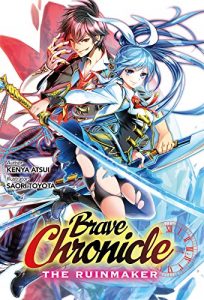
With a title like Brave Chronicle, I was expecting something a bit more fantasy oriented, but it actually takes place at a school for students adept at magic. Our heroine is the top student at the Academy and one of the most magically gifted students in the world, to the point where she’s not only a student, she’s also the headmaster. Our hero is her childhood friend and the number two in the school, who has minimal magic power but manages to kick ass in almost every fight anyway – except, of course, for her, who he has never beaten in 999 tries. Our hero is also a pervert who enjoys going on about his little sister, who has large breasts and a petite body, something he will remind you about endlessly. That said, his little sister is also a massive superweapon that can decide wars – and now an opposing world has come to take it.

The first third of this book is the worst, as it tries to do a daily slice-of-life, which means that we get the hero going on and on about his sister’s breasts, sometimes for pages at a time – note to authors, you’re only allowed to do that if you write as well as Nisioisin, and this guy does not. Despite all the seeming incest fetishism, it is never not clear that he’s in love with the heroine (whose name is Yukihime, just in case you wanted to see something else completely unoriginal. Did I mentioned she uses ice powers? Oh, you guessed, huh?). After a while, the book settles into serious mode and we are treated to a series of endless fights, which is actually a step up as I was merely bored and not disgusted. Oh yes, and I should mention that, unlike most light novels these days, this is complete in one volume. That did allow it to pull off an ending that I can honestly say I wasn’t expecting, which should technically be praised if it didn’t leave such a bad taste in my mouth due to being carried out in the most cliched manner possible – I was genuinely disappointed the hero did not scream “NOOOOOOOOOOO!” at the sky, which would have completed the bingo card.

I try to be nice to cliched series, and I do enjoy quite a few of them. But this series was so derivative, and offered so few genuine good points, that it was a struggle to get through it, and the reward at the end was bittersweet. J-Novel Club does have some other interesting series on their site for you to try, so try them, and don’t feel too bad by giving this a miss. Absolutely dire.
Filed Under: REVIEWS

My Week in Manga: November 28-December 4, 2016

December 5, 2016 by Ash Brown

My News and Reviews

November may have come and gone, but there’s still time to enter November’s manga giveaway for a chance to win the first volumes of Shuzo Oshimi’s Happiness, Hiroyuki Takei’s Nekogahara: Stray Cat Samurai, Hico Yamanaka’s The Prince in His Dark Days, and Tomo Takeuchi’s Welcome to the Ballroom. The winner will be announced on Wednesday, so get those entries in! Other than the monthly giveaway, last week continued to be rather quiet at Experiments in Manga. Happily though, I was able to make some progress on my feature for Ichigo Takano’s Orange.

In case you’re looking for more giveaways, Manga Test Drive’s annual holiday giveaway is currently underway. (Also, if you’re looking for some great manga reviews, Manga Test Drive is well-worth checking out.) As for other interesting things online: Vertical has posted its novel survey which includes the opportunity to make a license request; Justin at The OASG has compiled a list of Princess Jellyfish‘s chapter title pop culture references; and the final part of The Sparkling World of 1970s Shojo Manga has been posted at The Lobster Dance.

Quick Takes

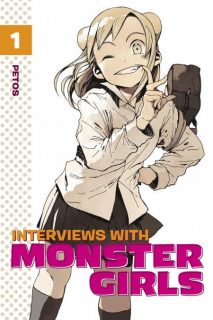
Interviews with Monster Girls, Volume 1Interviews with Monster Girls, Volume 1 by Petos. I’ve come to associate monster girl manga with Seven Seas and so initially I was a little surprised to learn that Interviews with Monster Girls was actually being released by Kodansha Comics. Of course, there’s nothing wrong with another publisher giving a recently but immensely popular niche some attention! Tetsuo Takahashi, a high school biology teacher, has both a personal and professional interest in demi-humans. He has always wanted to meet one but has never had the opportunity until he suddenly and unexpectedly encounters not one but four demi at his school. Three are students–an energetic vampire, a lonely dullahan, and a meek yuki onna–while the fourth is both a succubus and one of the school’s math teachers. One thing that’s different in Interviews with Monster Girls from many of the other monster girl manga that I’ve read is that the demi don’t seem to be a separate species from humans but are instead a sort of spontaneous, rare genetic mutation. So far, Interviews with Monster Girls is fairly innocuous. The story tends to be fairly quiet and even introspective with touches of humor, focusing on the daily lives, troubles, and worries of the young demi women.

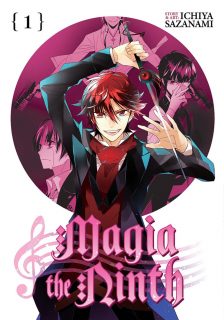
Magia the Ninth, Volume 1Magia the Ninth, Volume 1 by Ichiya Sazanami. I had previously read and enjoyed Sazanami’s earlier series Black Bard which would have been enough to interest me in Magia the Ninth but when I heard that the series was about magic-wielding, demon-hunting, bishonen composers I knew that I wouldn’t be able to resist it. The manga follows Takeru, a young man whose parents were killed by demons. He wants revenge and so seeks the aid of  the magia, a group of people imbued with the souls of classical composers who use musical masterpieces as exorcism tools. Specifically, he tries to convince Beethoven to make him his apprentice. Honestly, at times Magia the Ninth is barely coherent. The worldbuilding is a mess and the story nearly nonexistent. The manga is a spectacle without being spectacular but even so, I absolutely loved the first volume. It’s an absurd but highly entertaining and energizing manga. And due to my classical training, I’m in a position to appreciate Sazanami’s nods to the personal quirks and histories of the original composers. Apparently Magia the Ninth is actually only two volumes long. I don’t know if Sazanami planned it to be that short or if the series was canceled early (which wouldn’t surprise me), but I definitely plan on reading the second half.

Prison School, Omnibus 3Prison School, Omnibus 3-5 (equivalent to Volumes 5-10) by Akira Hiramoto. I’m not sure if Prison School could be any more different than Me and the Devil Blues, currently the only other manga by Hiramoto to have been licensed in English. The only immediate similarity between the two series is Hiramoto’s exceptional artwork. Many people will find Prison School appalling and rightly or at least understandably so, especially if they’re expecting something more akin to Hiramoto’s earlier work. Prison School is blatant in its highly sexualized and fetishized characterizations, story, and illustrations. The fanservice is frequently so extreme as to be grotesque. But it’s all done deliberately–Prison School is so absolutely ridiculous and over-the-top that it’s impossible to take seriously. While it’s not exactly a parody, it is a romantic comedy of sorts. Assuming someone isn’t simply outright offended by the manga, Prison School is legitimately funny and at time even hilarious. It’s definitely not for everyone, but I’ll admit to enjoying the series. These particular omnibuses conclude the first major story arc and begin the second which delves more deeply into the pasts of several characters.

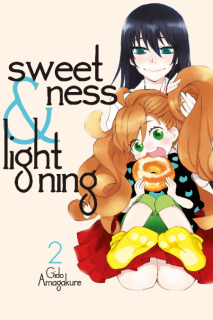
Sweetness and Lightning, Volume 2Sweetness and Lightning, Volume 2 by Gido Amagakure. I really enjoyed the mix of food and family present in the first volume of Sweetness and Lightning and so was looking forward to reading more of the series. The second volume continues in very much the same vein with perhaps just a little less melancholy. Granted, there are still a few heartwrenching moments, it’s just that there are plenty of heartwarming moments to go along with them. Inuzuka’s skills as a single dad and as a cook continue to slowly grow as the series progresses. One of his most recent stumbling blocks is trying to find a way to incorporate green peppers and other bitter vegetables into meals and have them be acceptable to his young daughter Tsugumi. The father-daughter relationship between Inuzuka and Tsugumi is one of my favorite relationships in Sweetness and Lightning and is one of the main reasons I enjoy the series so much. The dynamic is very sweet in addition to being portrayed very realistically–sometimes there are smiles and sometimes there are tears, sometimes there is laughter and joy and sometime there is yelling and frustration, but most importantly there’s always love. All of the good food doesn’t hurt things, either.

Save

Save

Filed Under: FEATURES, My Week in Manga Tagged With: Akira Hiramoto, Gido Amagakure, Ichiya Sazanami, Interviews with Monster Girls, Magia the Ninth, manga, Prison School, Sweetness and Lightning

Bookshelf Briefs 12/5/16

December 5, 2016 by Sean Gaffney and Michelle Smith Leave a Comment

assclass13Assassination Classroom, Vol. 13 | By Yusei Matsui | Viz Media -As this series goes on, it’s taken a turn for the dark. Not surprising given it’s about child assassins, but there honestly hasn’t been any actual assassination yet. At least not for the kids—a flashback to Irina’s past shows just how young she was when she started her seduction assassinations, and it’s clear she targeted lolicons. As if that weren’t enough, we meet Nagisa’s mother in this volume, and find out a lot about why he is the way he is—she’s a horribly abusive parent, emotionally manipulating him into having the life she didn’t—even if he’s a boy. It’s a sign of Nagisa’s growing moral sense that he doesn’t choose to give up on her. Still excellent, but this volume adds “grim” to that. – Sean Gaffney

butler23Black Butler, Vol. 23 | By Yana Toboso | Yen Press – I don’t love Black Butler or particularly care about the characters, but I continue to follow it in a desultory fashion. In this volume, Ciel and Sebastian are tasked with investigating a music hall that enchants rich and poor alike. The chief suspect is a fortune-teller who discerns Sebastian’s nature right away, so we get lots of Ciel investigating on his own while Sebastian lurks about outside, foisting his affections onto alley cats. The highlight of the volume is an absurd, multi-page boy-band-esque performance by the prefects Ciel encountered a few volumes ago. Though there’s really nothing here that moves or interests me in any profound way, I will probably keep reading it nonetheless. – Michelle Smith

dangan3Danganronpa: The Animation, Vol. 3 | By Spike Chunsoft and Takashi Tsukimi | Dark Horse – As with the previous volume, the big weakness of this adaptation is its rushed pacing—at times it was hard to follow what was going on, such as Monokuma killing off the Chihiro AI computer, which felt out of nowhere. We winnow the cast down further, and this time the murderer is not as sympathetic—make that murderers, as we have some multiple manipulations going on here. Much of the second half revolves around us trying to believe that optimistic girl Aoi is the next murderer, which is so unlikely that I’m relieved that they didn’t bother to drag it out. As it is, though, things wrap up next volume, so is anyone else going to die? Aside from the bear that started all this. – Sean Gaffney

magia1Magia the Ninth, Vol. 1 | By Ichiya Sazanami | Seven Seas – Given the sheer number of ‘demon hunter’ manga out now, which are all a variety on ‘groups of people hunt ghosts/yokai/demons that possess humans and turn their emotions negative,’ you really need to be unique in order to keep people reading. The creator of Magia the Ninth tries to do it by using classical music—the bishonen demon hunters in this series are all named after composers, and their magic attacks are their most famous works. There’s also some attempts at goofy humor to lighten the mood a bit. Still, apparently it wasn’t all that unique, as it wraps up in volume two, which means that a lot of the characters and foreshadowing being doled out here won’t amount to much. Something of a trifle. – Sean Gaffney

masamune3Masamune-kun’s Revenge, Vol. 3 | By Hazuki Takeoka and Tiv | Seven Seas – There aren’t any major new characters or plotlines introduced in this third volume, and as such it feels a bit like it’s coasting. Of course, there’s still a lot to play around with. Masamune can’t get his revenge if Aki hates him, so he has to work on that. As always, he fares much better when he’s not being manipulative. I wish I could say the same for Neko, but I suspect that she may be the villain here, and volume four may end up shredding a lot of plans. Other than that, there’s really not much going on here—like Masamune, the series feels like it’s backsliding a bit and getting flabby. To be fair, it was hard to top the start, which may be Aki’s most glorious rejection yet. At its best when she’s at her worst. – Sean Gaffney

girlsop3Sword Art Online: Girls’ Ops, Vol. 2 | By Neko Nekobyou and Reki Kawahara | Yen Press – Well, last volume was very comedic, but this one certainly isn’t. It turns out we haven’t heard all of Lux’s past, and like everything else in the Sword Art Online series to date it’s intertwined with the death guild Laughing Coffin. Honestly, having them use lackeys that they brand and threaten with death—I think they’d rape her if they could get away with it in SAO, frankly—is one of those “of COURSE they did that” moments, and Lux is sweet enough that it really hurts. Now, of course, her past is being used against her by a nihilist comrade with a grudge against her magically having new friends. Guess how well Lisbeth and company will take that. Good stuff. – Sean Gaffney

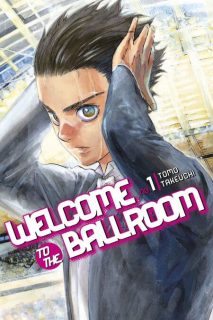
welcome2Welcome to the Ballroom, Vol. 2 | By Tomo Takeuchi | Kodansha Comics – I am very relieved that the thrilling last-minute substitution, while certainly a rush for our hero, was called out for the giant illegal move it was. Unfortunately, that would seem to sideline two of our main characters—Hyodo leaves to recover and Shizuku is somewhat upset that she wasn’t informed about Hyodo’s injury. But that’s OK, as we have new characters waiting in the wings, a brother/sister team who are opposites in personality. There’s a lot going on here comparing ballroom partners with romantic partners, and to be fair Fujita does seem to mesh faster with the new girl. And then there is the art, as always the #1 reason to read this series. Addictive. – Sean Gaffney

Welcome to the Ballroom, Vol. 2 | By Tomo Takeuchi | Kodansha Comics – I have to wonder whether an editor suggested that Takeuchi write about dance simply because she draws motion so well. Even if one cannot envision the steps, the exhilaration is clear, and I particularly love the way she draws the male physique whilst dancing. Plot-wise, Tatara dances in public for the first time thanks to Sengoku and his machinations, and ends up demonstrating an uncanny ability to achieve unity with his partner. This skill is put to the test when he acquires a new partner (a middle-schooler named Mako) and challenges her brother/former partner to a duel for having had the temerity to cast her aside in favor of Shizuku. I hope we get a more in-depth look at dance competitions next time! – Michelle Smith

wdyey11What Did You Eat Yesterday?, Vol. 11 | By Fumi Yoshinaga | Vertical, Inc. – Every time Shiro Kakei admits to someone that he’s gay, my heart grows a size. It seems to be coming a little easier to him this time, too. In this case, he’s responding to his landlord’s inquiry, as the latter is worried he might move to Shibuya, where a same-sex partnership law has been passed. Also in this volume, Kenji buys a suit for a birthday dinner and looks like a yakuza, Shiro is double-booked for sakura-viewing (and makes delicious looking bento treats), two of the lead’s coworkers (Shino and Tabuchi) take turns cooking, and Shiro apologizes to yogurt. It’s as charming and entertaining as ever, with multiple things to make a hungry reader drool, though I’ll have to pass on the carrot and tuna salad. – Michelle Smith

Filed Under: Bookshelf Briefs

My Big Sister Lives in a Fantasy World: The World’s Strongest Little Brother

December 5, 2016 by Sean Gaffney

By Tsuyoshi Fujitaka and An2A. Released in Japan as “Neechan wa Chuunibyou” by Hobby Japan. Released in North America digitally by J-Novel Club. Translated by Elizabeth Ellis.

It has been well over ten years since the Haruhi Suzumiya books hit Japan, and almost exactly ten years since the animated adaptation, so it’s no big surprise that we’re beginning to find works that are clearly inspired by its ideas. Actually, much of this book sounds like it’s been pulled together from what’s popular these days. No one gets pulled into another world, but there is a girl who’s a huge fan of that genre. There’s a vampire, although she could be any other kind of supernatural creature for all the relevance it has. And of course the Japanese title itself reminds us that focusing on the phenomenon of ‘chuunibyous’ is also quite popular, and has spawned several anime. So, as a hodgepodge of things that are popular lately, as well as the usual light novel tropes that have always been popular, this should be a giant mess. Yet somehow, I quite enjoyed it.

chuunibyou

This is one of J-Novel Club’s three debut digital titles, and I picked it to read first for a very simple reason: it’s the shortest. The premise is laid out at the start: normal high school kid Yuichi wakes up one day to find that he can see tags over people’s heads that show their ‘role’ – this starts normally with ‘big sister’, ‘office worker’, etc, but once he gets to school he runs into ‘vampire’, ‘zombie’, ‘witch’, and most ominously, ‘serial killer’. Unfortunately, this is basically the limits of Yuichi’s new power. Fortunately, he has a few tricks up his sleeve, as my earlier remark about his being a normal high school kid is a giant lie. Moreover, he has the title character, his big sister Mutsuko, who has prepared for this day her entire life, and made sure Yuichi is prepared as well.

The subtitle of this series is essentially the big reveal, and I must admit it’s quite well done. There are a few suggestions that Yuichi is not what he seems at the start – the strength equipment he uses that his new friend can’t even manage to move – but from about halfway through the book, once we gather than Yuichi IS in fact the world’s strongest, he is allowed to be as ridiculous as possible, jumping off four-story buildings, fighting oni to a standstill, and avoiding kicks to the crotch by forcing his testicles back into his body. If this sounds utterly ridiculous, it absolutely is, and only Yuichi’s blase narration really helps carry it off – to him, this is Tuesday. As for Mutsuko, this is basically her fault – imagine if Haruhi Suzumiya got a hold of Kyon at a very young age and began to train him to take on aliens, time travelers and espers with the power of MANLY STRENGTH and you’ve got the idea.

There’s nothing really subverted here – the serial killer with a lust for killing turns out to be easily distracted by Yuichi, who she can’t actually kill as he’s too good, and I suspect his harem will only grow. It’s also clearly written to be a longer series with the possibility of an anime – we don’t really find out anything about 3/4 of the class and their quirks, or Yuichi’s YOUNGER sister, who he shares a room with and doesn’t think that’s unusual at all. I’d only recommend this to light novels fans with an open mind. But if you are one, this is light, breezy, enjoyable fun, and I liked the characters. Surprisingly recommended.

Filed Under: REVIEWS

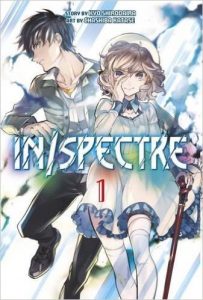
In/Spectre, Vol. 1

December 4, 2016 by Sean Gaffney

By Kyo Shirodaira and Chashiba Katase. Released in Japan as “Kyokou Suiri” by Kodansha, serialization ongoing in the magazine Shonen Magazine R. Released in North America by Kodansha Comics. Translated by Alethea & Athena Nibley.

I admit somewhat shamefacedly that I haven’t really read any of this author’s prior works in North America, even though he’s put out quite a bit. Supernatural detectives seem to be a running theme, and both Spiral (out from Yen Press) and Record of a Fallen Vampire (Viz, though the digital reprint is from Yen) were fairly popular. Now we have his newest series, In/Spectre, based on a novel. If I was to describe its plot in a one or two sentence fashion, you likely would not be impressed. A young girl with a connection to the supernatural meets a young man with a tragic past who also has a connection with same. If they team up, they can fight against yokai who have gotten out of hand. We’ve seen this sort of thing before many times. Luckily, a manga is not just about its plot. It’s about characterization, dialogue, and art. And in those respects, In/Spectre hits it out of the park on the very first pitch.

inspectre1

Kotoko is our heroine, and the main reason I enjoyed this as much as I did. She’s a 17-year-old girl who, a few years back, made a deal with the yokai to be a sort of conduit for them in exchange for losing a leg and an eye. (Amazingly, the manga does not give her a fetishey eyepatch the way literally any other author would, but gives her a perfectly serviceable prosthetic – same with the leg, the cane is mostly to pacify her parents.) While at the hospital for her exams, she meets Kuro, a young man who’s there with his girlfriend Saki, and falls in love at first sight. Of course, he has a girlfriend. A couple of years later, she meets him again, only now he’s broken up, and she immediately takes the initiative. Kotoko’s brash, pushy charm is the main reason to read this – she’s a hoot, whether it’s proposing to Kuro within five seconds of meeting him, using him in order to pacify an out of control yokai (which doesn’t work), or cheerfully admitting that getting hit with a steel beam was nothing compared to the pain of losing her virginity, Kotoko is a brat in the best way.

I haven’t mentioned Kuro much, and to be honest he’s the weakest part of the book, being a stoic type who’s still brooding about his breakup at the start. The other reason I haven’t mentioned him is that halfway through the book takes an interesting right turn and time skips again a couple years, where we see Kuro’s ex-girlfriend Saki, now a police officer, dealing with the vengeful spirit of an ex-idol who was killed by a falling I-Beam, and now walks around the town with no face attacking people with the same beam. Saki too has not taken the breakup well, and curses her own human frailties – she’s still a bit terrified of what Kuro is, but realizes that she was in the wrong. She runs into Kotoko as well, and I suspect will end up being the “straight woman” in this series – certainly she does not react well when Kotoko admits she’s now dating Kuro.

This sort of series is hard to review, because so much of it depends on the words, and I don’t just want to quote dialogue at you. The art is good, too – I don’t think the artist has done any other series, but they can sell both comedic and eerie quite well. I really want to read more immediately, a nice change of pace from most Volume 1s, where you’re waiting for the series to find its feet. None of that here – Kotoko sacrificed a leg so the series could get on its feet right away. Highly recommended (unless you dislike brats, as Kotoko is absolutely a brat.)

Filed Under: REVIEWS

Twinkle Stars, Vol. 1

December 2, 2016 by Sean Gaffney

By Natsuki Takaya. Released in Japan as two separate volumes by Hakusensha, serialized in the magazine Hana to Yume. Released in North America by Yen Press. Translated by Sheldon Drzka.

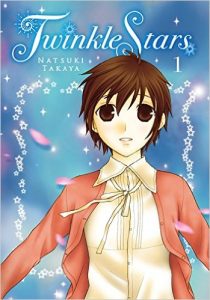
This was the first series to be released after the end of the amazingly popular Fruits Basket, and everyone was on tenterhooks to see what it was going to be like, both here and in Japan. Of course, for various reasons it wasn’t actually released here till 2016, a good five years after it ended in Japan, so a bit of the bloom is off the rose. Still, it’s hard not to feel a bit of affection and excitement for a new Takaya title. After reading this first volume, I get the sense that she had a better idea of where she was going with this – there’s a lot of backstory hints dropped here that the author is content to simply drop and then leave alone for a while. I suspect it will reward a reread. In the meantime, we have the adventures of a determined girl who always seems cheery but may be hiding a deep sadness, and the boy she runs into one day.

twinle1

I admit I did find it hard not to fall into the trap of “this is character X and Y from Fruits Basket mixed together!” at times. Sakuya does have a Tohru-esque sheen to her, though a lot of that is simply a similar “I will be happy and determined” attitude. I’m also thinking of Hijiri, who I will warn in advance is my favorite character. I’m sure I’m not alone in this, but let’s face it, she’s Hanajima and Shigure mixed together, and there’s no way I’m not going to love that. A mask of sweetness hiding a deeply manipulative side but still basically a good person. We also get the male best friend with a crush that is clearly doomed (blond, of course, as the clear winning guy has darker hair – you win again, shoujo cliches). And Kana, Sakuya’s guardian who seems to be a deliberate step away from a Shigure sort – from what the story tells us, he’s a struggling artist, and many question why he can even take care of Sakuya at all.

Then there’s the male lead Chihiro, who is easily the most fascinating character in this first volume. And I will admit, not always in a good way. We first met him after he invited himself into Sakuya’s house by pretending to be her boyfriend, something that seems completely out of the blue. Later, when she meets him again (she sees him on a train that she just misses, and proceeds to jump off the tracks and run after it till she hits the next stop, which may be the most Takaya thing ever), it feels a lot more unstable and dangerous, and frankly my first thought was to tell Sakuya to stay the hell away from him. Naturally, this is when she realizes she’s fallen in love. The second half of the book, where he (inevitably) shows up as a New Transfer Student, is thus filled with incredible awkwardness, fake smiles and Sakuya freaking out – but doing her best!

Basically, Twinkle Stars is exactly what you want in a new Takaya series. If you’ve read her other work, there’s a lot here that’s familiar – not just the characterizations, but the plot beats and emotional responses. But that’s actually great, as she’s so good at that. Twinkle Stars is like getting a brand new blanket that’s as warm and cozy as your last one. Settle down with it.

Filed Under: REVIEWS

Ten Count, Vols. 1 and 2

December 1, 2016 by Anna N

Ten Count Volumes 1 and 2 by Rihito Takarai

Ten Count is a yaoi series that caused me to wonder greatly about psychiatric ethics. Shirotani is an executive assistant who functions well in his job despite having an almost debilitating case of obsessive compulsive disorder. He has to wear gloves to hide his injuries from frequent hand washing and he has elaborate systems and rituals in place in order to make him feel safe. His condition also affects his relationships with other people, as he has an aversion to being touched.

One day Shirotani’s boss gets saved from an accident by a random bystander, who turns out to be Kurose, a therapist. Kurose recognizes Shirotani’s symptoms and goes out of his way to cultivate his acquaintance. Kurose’s mannerisms are brusque and not very emotional, but Shirotani seems to be drawn to him anyway. Kurose proposes that Shirotani gradually build up a tolerance to the situations that trigger his OCD by making a list of ten things he finds difficult or impossible to do, ranging from things like touching a door handle bare handed to eating with another person. Kurose says that this isn’t therapy, just two friends trading tips.

The relationship begins to grow, and Shirotani becomes increasingly dependant on Kurose, but Kurose abruptly cuts things off, only to leave Shirotani confused and upset. For someone who is supposed to be an expert in human behavior, Kurose seems a bit odd himself in how he conducts himself with this new friendship.

The first volume doesn’t need the explicit content warning on the front, but the second definitely does! I’m not terribly fond of relationships in yaoi manga where one person is entirely dominant and the other is set up in a more submissive role. In this case Kurose seemed to keep pushing Shirotani out of his comfort zone, and while it might end up that Shirotani becomes a more functional human being as a result of this, there were some dynamics to the relationship that I didn’t really enjoy reading. I think though that this is likely to be an enjoyable manga for most yaoi fans.

Filed Under: REVIEWS Tagged With: SuBLime, Ten Count, Yaoi

Manga the Week of 12/7

December 1, 2016 by Sean Gaffney 3 Comments

SEAN: Will December set a record for most titled released? We shall see. It’s off to a good start next week…

wolf

Bruno Gmuender continues to fulfill its niche of manly gay manga with the release of The Boy Who Cried Wolf.

ASH: It’s the second collection in English by Mentaiko Itto whose Priapus was highly entertaining, so I’m looking forward to it!

SEAN: Kodansha gives us another Fairy Tail spinoff, this one focusing on the Twin Dragons of Saber Tooth (note: not actual dragons).

And there’s a 6th volume of Maga-Tsuki.

Seven Seas has a 3rd volume of Masamune’s Revenge, which I still continue to vaguely be interested in despite itself.

And Monster Musume has reached double digits. Rejoice, monster girl fans!

There’s also a 3rd The Other Side of Secret, which is… let’s move on!

ASH: Usually there’s at least one Kodansha or Seven Seas manga that I’m particularly interested in but, alas, not this week.

SEAN: Udon fell behind a bit with Persona 4, so to make up for it they’re releasing both Vol. 4 and 5 next week.

ASH: Looks like I’ve got some catching up to do as well then.

SEAN: And Vertical has the fourth volume of Devil’s Line, which continues to be Devil Fine. (You know I’m tired when I’m making Medaka Box jokes in this list.)

And so we come to Viz. Assassination Classroom’s 13th volume should resolve the students’ current battle, and hopefully also Irina’s tortured emotions.

I’ve given in and admitted I simply like Black Clover, even though it is hilarious in its thefts of other manga. Looking forward to Vol. 4.

ANNA: I read volume 1 and then fell behind. Looks like I should try to catch up.

SEAN: Bloody Mary’s 5th volume is also out next week.

ANNA: VAMPIRES AND ANGST!

Catching up with Blue Exorcist means I always feel it’s been forever since the last volume, even though it’s only been since May. Here’s Vol. 16.

Everyone’s Getting Married hits its third volume, and it has been brought to my attention that in fact very few people are getting married at all.

MICHELLE: Heh.

ANNA: No surprise, I enjoy this josei manga.

foodwars15

SEAN: Food Wars! has a 15th chance to make us really hungry. It’s worked every volume so far.

Haikyu!!, meanwhile, just uses its 6th volume to make us so happy we are in a sports manga renaissance here in North America. (Meaning there’s more than one at one time.)

An here’s the other one, with a 3rd omnibus of Kuroko’s Basketball.

MICHELLE: *sighs happy sigh* I love all three of these.

ASH: I actually still need to read Kuroko’s Basketball, but I am really enjoying Food Wars! and Haikyuu!!.

ANNA: I enjoy Kuroko’s Basketball and Haikyuu!! very much.

SEAN: For Naruto fans, we get the 2nd part of the Itachi’s Story novel.

And an 18th One Piece 3-in-1, which wraps up Brook’s introductory arc.

Somehow So Cute It Hurts!!!!!!!!!! has reached 10 volumes as well. Have some exclamation marks to celebrate.

MICHELLE: *snerk*

SEAN: And Stan Lee’s collaboration with Japan, Ultimo, comes to an end with its 12th volume.

Finally, there is a 3rd volume of the wonderful shoujo series Yona of the Dawn.

MICHELLE: Yay! I’m really looking forward to this.

ASH: Same!

ANNA: Very excited!!!!

SEAN: And this is only the first week? Who knows what the rest of December will hold? What are you getting?

Filed Under: FEATURES, manga the week of

That Wolf-boy Is Mine!, Vols. 1-2

November 30, 2016 by Michelle Smith

By Yoko Nogiri | Published by Kodansha Comics

wolfboy1After making a social blunder at school that results in being shunned by her female classmates, Komugi Kusunoki is glad of the chance to start over in Hokkaido when the demands of her mother’s job mean Komugi will need to live with her father instead. At Maruyama High School, she quickly befriends a couple of nice girls (Kana and Keiko) and learns about the small clique of hotties over whom many girls swoon but who keep to themselves. One day, she surprises one of the boys (Yu Ogami) while he is napping and he turns into a wolf who promptly boops her on the nose.

Adorable as that was, he was actually trying to erase her memory of the incident. When repeated attempts to hypnotize her fail, she promises to keep their secret and thus becomes the first person to surmount the wall the boys have erected around themselves. It turns out they’re animal ayakashi who have learned to transform and who live in the human world for its entertainment. In addition to Ogami, the next most prominent character is Rin Fushimi the fox, though there’s also a troublemaking tanuki boy and an aloof cat boy.

wolfboy2As Komugi gets to know them better, she learns that Ogami is half human and was abandoned in the woods by his human mother. Although he doesn’t hate humans as Fushimi claims to do, and is in fact kind and sweet, he’s still determined that he is going to be the last of his line and that he won’t fall in love with anyone, which is a problem because it doesn’t take long for Komugi to fall for him. Meanwhile, Fushimi witnesses this happening and tries to spare her hurt, and when she’s later trying to acclimate to just being friends with Ogami, he’s the one who’s there for her to talk to, sparking some jealous feelings on Ogami’s part.
Whenever something claims to be “perfect for fans of _______,” I am dubious. Just because a book features a petite blonde who fights demons doesn’t mean that it resembles Buffy the Vampire Slayer in any truly meaningful way. So, when a back cover blurb claimed that That Wolf-boy Is Mine! is perfect for fans of Fruits Basket, I uncharitably thought that they must mean it’s because hot guys transform into animals.

Now, it’s certainly true that hot guys do transform into animals, but the real emphasis here is on someone finding out a secret, proving themselves trustworthy, and helping damaged boys presumably learn to accept themselves. Nogiri-sensei has also done a great job in developing the three lead characters—I especially like level-headed Komugi and wary Fushimi—and it’s been a very long time since I’ve found a love triangle as compelling as this one. Any doubts I had about this series have been firmly dispelled, and I’m not only eagerly looking forward to volume three, I’m also bummed that the series is only four volumes long.

That Wolf-Boy Is Mine! is complete in four volumes. Two volumes have been released in English so far.

Filed Under: Manga, REVIEWS, Shoujo, Supernatural

Manga Giveaway: Kodansha Comics Collection Giveaway

November 30, 2016 by Ash Brown

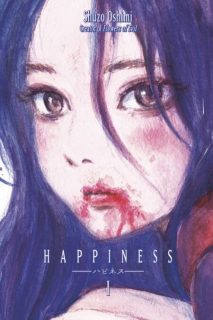
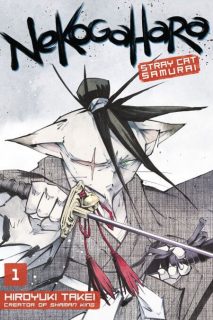
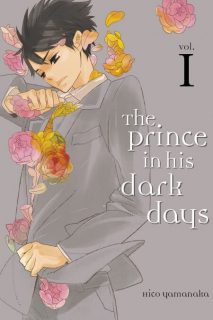
Both the last Wednesday and the last day of November has arrived, so it is once again time for a giveaway at Experiments in Manga! Last week was Thanksgiving in the States which happens to be my favorite holiday. (I really enjoy the delicious food and spending time with my family. The extra sleep helps, too.) As is now tradition, I like the giveaways for November to involve a whole feast of manga in order to celebrate. This year you all have the chance to win four first volumes of manga released in English by Kodansha Comics in 2016: Shuzo Oshimi’s Happiness, Hiroyuki Takei’s Nekogahara: Stray Cat Samurai, Hico Yamanaka’s The Prince in His Dark Days, and Tomo Takeuchi’s Welcome to the Ballroom. And, as always, the giveaway is open worldwide!

Happiness, Volume 1Nekogahara: Stray Cat Samurai, Volume 1The Prince in His Dark Days, Volume 1Welcome to the Ballroom, Volume 1

As the end of 2016 steadily approaches I’m starting to think about the manga published in the last year that I found particularly notable. Inevitably, I’m asked what my favorite manga is and I generally try to get away with mentioning a single publisher rather than a single title. This year, I’ve especially been impressed by the manga that Kodansha Comics has been licensing and releasing. Over the last few years Kodansha has been successfully expanding its catalog and demographic reach, offering titles that were at one point rumored to either be unliscensable or otherwise highly risky. Josei? Kodansha has it. Classic manga? Kodansha has it. Sports manga? Kodansha has it. Food manga? Kodansha has that, too. In fact, some of my most anticipated manga releases for 2016 were published by Kodansha Comics and looking forward to 2017 it seems as though that will likely be the case next year, too.

So, you may be wondering, how can you win a collection of Kodansha Comics?

1) In the comments below, tell me a little about a manga released by Kodansha Comics in 2016 that you particularly enjoyed and what you liked about it. (If you haven’t read or enjoyed any, simply mention that instead.)
2) If you’re on Twitter, you can earn a bonus entry by tweeting, or retweeting, about the contest. Make sure to include a link to this post and @PhoenixTerran (that’s me).

And there you have it! Participants in the giveaway have one week to submit comments and can earn up to two entries. If needed or preferred, comments can also be submitted directly to phoenixterran(at)gmail(dot)com and I will then post them here in your name. The giveaway winner will be randomly selected and announced on December 7, 2016. Good luck!

VERY IMPORTANT: Include some way that I can contact you. This can be an e-mail address in the comment form, a link to your website, Twitter username, or whatever. If I can’t figure out how to get a hold of you and you win, I’ll just draw another name.

Contest winner announced–Manga Giveaway: Kodansha Comics Collection Winner

Save

Filed Under: FEATURES, Giveaways Tagged With: Happiness, Hico Yamanaka, Hiroyuki Takei, manga, Nekogahara, Prince in His Dark Days, Shuzo Oshimi, Tomo Takeuchi, welcome to the ballroom

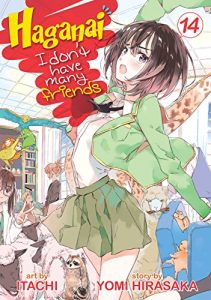
Haganai: I Don’t Have Many Friends, Vol. 14

November 30, 2016 by Sean Gaffney

By Yomi Hirasaka and Itachi. Released in Japan as “Boku wa Tomodachi ga Sukunai” by Media Factory, serialization ongoing in the magazine Comic Alive. Released in North America by Seven Seas. Translated by Ryan Peterson. Adapted by Ysabet Reinhardt McFarlane.

(Note: please do not post light novel spoilers in the comments.)

Most harem manga these days have to walk a very thin tightrope, especially in a modern, internet-forum friendly world. readers want the hero to end up with the girl they like best, and every time that things return to the status quo they are upset. Writers and editors want this to be successful for as long as possible, which means stringing things out and returning to status quo without making it look too obvious. With Haganai, the Neighbors Club has been the way to do this, as each of the cast is so socially inept that even basic interaction is a challenge, much less having a significant other. Or at least, that’s what Kodaka tells himself. In fact, Kodaka is very good at lying to himself and others, and the astute reader of Haganai has, through several books now, been feeling more and more like Rika, watching this play out and getting increasingly angry. This is the volume where that rage finally explodes.

haganai14

This kicks off with a seeming resolution of the perpetual love triangle between Kodaka and the two female leads. Yes, there are more than two love interests, but at heart it’s always been about Yozora vs. Sena. More on Yozora later, but I felt that Sena’s confession was first rate. Yes, it started out as her seemingly talking to herself while gaming, as if practicing for later, but once she realizes what actually happened, she doesn’t back off. This makes a start contrast to Kodaka, who literally runs away as fast as possible and hides from the rest of the club for days. His desire for stasis has never been more contemptible than it is here, particularly given that he spends said days with the Student Council, the Neighbors’ Club’s mortal enemies. To his surprise, they don’t view him as a thug and a bad person, and we see just how much of Kodaka’s self-worth problems are his own doing.

Then comes the scene with Rika. (Yes, there’s a nice scene with Yukimura as well, but while it’s heartwarming, it’s all setup for that one gag. You know the one I mean.) Rika already confronted Kodaka last time about his perpetual “Huh? What was that?” response, and was seen to be barely holding it together. Now she explodes, and it’s glorious. Kudos to Itachi, by the way: the art in Haganai has frequently taken on a sketchy, exaggerated look at times, particularly when it’s funny, and it doubles down on that here, with some amazing faces that would not look out of place in a horror title. Rika beats the shit out of Kodaka (scientifically, of course) as she rants about what she learned from Sena. She’s absolutely right, of course. Of all the girls in the series, Sena has gotten twice the romantic subtext as anyone else. And he’s running away from this because he can’t face up to her actually liking him as more than a friend.

Haganai is caught up with Japan, so it will be many months before we see the next volume. But now that Rika and Kodaka have admitted hey are indeed friends, can he man up and listen to Sena? More importantly, what about Yozora, who seemingly heard this entire exchange, and whose devastated sobbing face ends this arc? The artist notes that the manga may be a bit different from the light novels, though it’s unclear if that means additions or actual changes. In any case, for those who were waiting for the payoff in Haganai, here’s where it starts.

Filed Under: REVIEWS

Bookshelf Briefs 11/28/16

November 28, 2016 by Sean Gaffney and Michelle Smith Leave a Comment

maidsama11-12Maid-sama!, Vols. 11-12 | By Hiro Fujiwara | Viz Media – I wonder if the author has now been told she can pursue her endgame as she pleases, as things continue to happen in these two volumes of Maid-sama!. Turns out that while Usui is the black sheep of the family, that doesn’t mean he gets to run away and settle down with some normal Japanese girl (if you can define Misaki as normal). As for Misaki herself, she’s trying to take a good look at why she’s constantly angry all the time, and it’s earning results, even if repression is likely not the answer. We’ve gotten to the point where external forces are the only thing keeping these two apart, so we get to ramp them up. (Also, is Misaki’s sister sweet on Hinata or is it me?) Recommended for Maid-sama! fans and angry girl fans .– Sean Gaffney

princedark2The Prince in His Dark Days, Vol. 2 | By Hico Yamanaka | Kodansha Comics – Atsuko Okawa is being paid a million yen to impersonate a missing rich kid named Itaru. Though Itaru spent most of the first volume “off-camera,” the possible reasons for the disappearance were still the most intriguing thing about the series. I didn’t really expect any deviation from Atsuko’s fish-out-of-water, gender-bending masquerade, so spending time with Itaru was a pleasant surprise, even if the timeline was a little confusing. Itaru is having an identity crisis, and is terrified of vulnerability after a lifetime being renowned for arrogance and toughness. It’s actually fairly captivating, which makes going back to Atsuko’s story kind of a drag (no pun intended), even if I did like the shoujo soap opera cliffhanger at the end. If you were kind of “meh” about the first volume, the second might change your mind. – Michelle Smith

psychopass1Psycho-Pass: Inspector Shinya Kogami, Vol. 1 | By Midori Gotou and Natsuo Sai, based on a story by Gen Urobochi | Dark Horse Comics – Once again, I am reading a prequel to an anime I have never seen. I am familiar with Gen Urobochi, however, which means I’m trying not to get too attached to this cast of supernatural detectives who I assume will die in pain and agony. For the moment, however, they’re busy hunting down criminals whose emotional state has been judged to be criminal—technology can do that now, apparently. If you haven’t seen the anime, the reason to get this is that it’s a pretty good police drama with some good action scenes. If you have, then you likely know more than I do why to get it. Pretty good. – Sean Gaffney

roseking5Requiem of the Rose King, Vol. 5 | By Aya Kanno | Viz Media – For one of the greatest of all Shakespearean villains, Richard III makes a pretty nifty shoujo heroine… as well as a shoujo hero, fittingly enough. Here he’s romanced, somewhat unwittingly on his part, by King Henry’s son. Yes, that’s King Henry again, as he’s back on the throne, though it suits him incredibly badly. Kanno gets Henry’s disturbing religious zealotry pitch-perfect, impressing me. He’s also something of a zealot when it comes to Richard, and after Richard is wounded, their interaction takes up much of the last part of the book. If Richard has realized that he loves Henry, where can this go? Nowhere good, that’s for sure. And, as I suspect I’ll be saying a lot in the future, poor Anne! – Sean Gaffney

rinne22RIN-NE, Vol. 22 | By Rumiko Takahashi | VIZ Media – It’d been a while since I’d read any RIN-NE, but a mini-marathon this weekend really hit the spot. A few new characters have now joined the mix, most notably Anematsuri-sensei, whose “Peeking Ball” figures into several of the stories in this volume. Mostly, we get stuff like a scythe that functions like a scratch-off lottery ticket, a judo enthusiast cursed by the tree he keeps kicking, one school vending machine haunting another, etc. Probably the best chapter was the one in which we glimpse the characters’ dreams as they attempt to capture a supernatural critter. However, while I do enjoy the gentle, no-pressure read that RIN-NE offers, I can’t help wishing Takahashi were employing her talents on something with a little more plot. – Michelle Smith

roseguns2v1Rose Guns Days Season Two, Vol. 1 | By Ryukishi07 and Nana Natsunishi | Yen Press – I mentioned the last volume left things up in the air a lot, and unfortunately, Season Two doesn’t help to answer much, as it becomes apparent we’re going to focus on a new cast for the most part. Oh sure, Rose is around, as is Wayne, and the others get brief cameos. But Leo seems to actually be gone, and taking his place at the protagonist we have “Rapunzel,” a young girl with amnesia who ends up taken in by Rose’s crew. As we get to know her and the group of three misfits assigned to protect her, Rose deals with a growing unease between the Chinese and the Japanese, which honestly we could have predicted after the last arc. Not as good as Higurashi or Umineko. – Sean Gaffney

twinle1Twinkle Stars, Vol. 1 | By Natsuki Takaya | Yen Press – I reviewed the two volumes collected here five years ago, but couldn’t let Yen’s much-anticipated release go by without even a brief to commemorate it! Happily, I think I enjoyed the story even more than last time. Star-crazy Sakuya Shiina, like Tohru Honda, hides family trauma behind a cheery disposition and does her best to understand the people in her orbit, namely her cousin/paid guardian Kanade, who has evidently burnt out on the world, and a boy named Chihiro Aoi who wants to escape from reality. Nearly everyone except for Sakuya’s forthright friend Yuuri seems to be nurturing a secret, with readers receiving brief glimpses of some of these, and I am so excited to be able to get the rest of the story! It may not be much like Fruits Basket, but I bet it’ll be very good indeed. – Michelle Smith

Filed Under: Bookshelf Briefs

My Week in Manga: November 21-November 27, 2016

November 28, 2016 by Ash Brown

My News and Reviews

With American Thanksgiving, traveling, and visiting family, last week was once again a quiet one at Experiments in Manga. However, I am at least still reliably posting the My Week in Manga feature. Yen Press, though, was a little busier than I was last week and announced three new licenses: Asari Endō’s Magical Girl Raising Project light novel, Mutsumi Okubashi’s Grimgar of Fantasy & Ash manga, and the first Sound! Euphonium novel by Ayano Takeda. Of the three, Sound! Euphonium is definitely the one that I’m most interested in and am looking forward to. Even if I wasn’t a brass player (fun fact: I actually have a degree in horn performance), that would probably still be the case.

Quick Takes

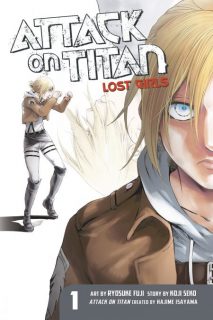
Attack on Titan: Lost Girls, Volume 1Attack on Titan: Lost Girls, Volume 1 written by Koji Seko and illustrated by Ryosuke Fuji. Considering how well Hajime Isayama’s Attack on Titan has been doing in North America, it’s not too surprising that most of the various spinoff series have been licensed as well. I actually didn’t know much about Lost Girls before reading it except that the series focuses on some of the more prominent female characters of Attack on Titan. The first volume of Lost Girls is a complete story in and of itself featuring Annie during the time she served as part of the Military Police Brigade. (Interestingly, it’s one of the few spinoff stories to take place within the context and timeline of the original series.) What I didn’t anticipate was that the first volume of Lost Girls is basically a murder mystery, or at least that’s what it turns into after Annie agrees to investigate the disappearance of a young woman. I’ll admit, I was pleasantly surprised by the first Lost Girls; it’s actually pretty great. The manga follows Annie as she searches for clues, uncovering some of the seedier aspects of the city and kicking ass as necessary. It also delves into her backstory. After reading the first volume of Lost Girls, I’ve come to appreciate even more how interesting a character Annie is.

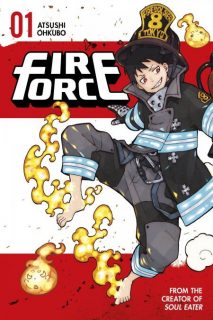
Fire Force, Volume 1Fire Force, Volume 1 by Atsushi Ohkubo. Although Fire Force isn’t the first manga by Ohkubo (who is probably best known as the creator of Soul Eater) to be released in English, it is the first one that I’ve actually read. I really like the basic premise of Fire Force. In order to fight back against something akin to demonic possession combined with spontaneous human combustion, brigades of Fire Soldiers have been formed. These teams are essentially exorcism units with unique firefighting capabilities, including pyrokinetic members who can control and create fire. The series’ main character is Shinra, a young fire user with a tragic past who has recently joined one of these brigades and who has the unfortunate habit of grinning maniacally whenever he’s nervous. Fire Force has the potential to be a fun and exciting manga with some great action sequences, but the first volume managed to extinguish most of my enthusiasm for the series. Ohkubo’s exposition is incredibly heavy-handed, frequently stating the obvious and relying on forced conversations to tediously explain everything that is going on rather than using more natural methods of worldbuilding or allowing the artwork to convey the action on its own.

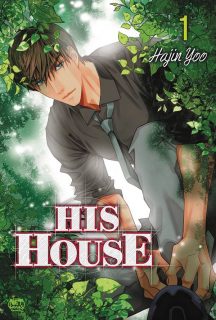
His House, Volume 1His House, Volumes 1-3 by Hajin Yoo. If I recall correctly, the first manhwa that I ever read was Yoo’s boys’ love series Totally Captivated and it remains a series of which I am quite fond. And so, when I learned that Netcomics was releasing His House, one of Yoo’s most recent full-color manhwa, I was immediately interested. The series follows Gangyoo, an orphan trying to finish college while struggling to make ends meet. In order to earn enough money for room, board, books, and tuition, he’s been renting himself out to women who for one reason or another temporarily need a fake boyfriend. Fortunately, his most recent gig pays so well that he won’t have to worry about his finances for a long time, however it’s a challenging and strange situation–not only is his client Soohyun a man, he doesn’t seem to actually like Gangyoo or even be interested in his services. The strongest points of Yoo’s manhwa tend to be the lead characters and their well-developed personalities. The stories, while engaging with excellent pacing, can sometimes run a little wild and end up somewhat convoluted. This is true of His House, too, but I still enjoyed the series. The manhwa is a page-turner as Gangyoo and Soohyun’s relationship evolves and their hidden pasts and true motivations are slowly revealed.

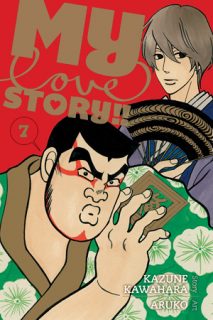
My Love Story!!, Volume 7My Love Story!!, Volume 7-10 written by Kazune Kawahara and illustrated by Aruko. I absolutely love My Love Story!! and yet I still somehow manage to forget just how much I enjoy the series between readings. This, of course, means that I get to rediscover my love for the manga on a fairly regular basis which isn’t necessarily a bad thing. My Love Story!! is one of those series that just makes me incredibly happy to read it and sometimes that’s just exactly what I need in a manga. It’s a funny, charming, and upbeat series with loveable and endearing characters which, incredibly, doesn’t come across as being overly sweet or idealistic. Takeo and Yamato’s earnest and pure romance is marvelously refreshing. But while I have no doubt that their relationship will continue there is still some uncertainty in it and it still takes communication and work on both of their parts. They have moments when they feel insecure or lack confidence, often because they love each other so much and want the absolute best for the other. Takeo and Yamato’s friendships with the other characters in My Love Story!! are likewise wonderful. I especially appreciate Sunakawa’s presence in the series and the closeness that exists between him and Takeo. I continue to adore My Love Story!!.

Filed Under: FEATURES, My Week in Manga Tagged With: Aruko, Atsushi Ohkubo, attack on titan, Fire Foce, Hajin Yoo, His House, Kazune Kawahara, Koji Seko, manga, manhwa, My Love Story, Ryosuke Fuji

The Isolator, Vol. 3

November 28, 2016 by Sean Gaffney

By Reki Kawahara and Shimeji. Released in Japan by ASCII Mediaworks. Released in North America by Yen On. Translated by ZephyrRz.

It is rather startling how little time the main events of The Isolator are taking place over. The eyes descended to Earth three months ago, despite the presence of what seems to be a long-standing secret organization dedicated to harnessing their power. It’s only been a day or two since the events of Book 2, as well, and this book also only takes a couple of days. And at the end, they’re discussing invading the enemy’s stronghold. I’m not sure how long Kawahara intends for this series to go, but I don’t think it’s meant to be that long. Though, given there’s an anime coming out this Winter, that may change if it gets popular enough. In any event, a new volume of The Isolator, and hey, a new cover girl.

isolator3

Yes, after getting the first two covers to herself, Yumiko is forced to give way to Suu, who really should be invisible on the cover, but a) that would give the game away, and b) that would mean there is no cute girl on the cover. Yes, Suu us a teammate of the group who can turn herself invisible (with the exception of her pupils), and as with all the other characters, it stems from past personal trauma. I was wary of getting too attached to her – literally everything she did from the moment she showed up to her final sacrifice screamed “I am going to die so that the main guy can learn a valuable lesson”. Fortunately, she doesn’t quite die (though if Book 4 takes place right after 3, she may not appear much), but the lesson is still learned.

Minoru and Yumiko continue to be the stars of this book, thoguh Suu obviously steals Yumiko’s spotlight a bit, something she is keenly aware of – her discussion with Minoru about her jealousy is possibly the best hart-to-heart they’ve had so far. And Minoru continues to find new ways to use his talent, turning the ability to isolate yourself in an impenetrable sphere into an actual dangerous weapon. Which is good, because the new villain of the book we meet, Trancer, manages to get away along with his boss, who is more of an arc villain. (You can tell that we’re not done with Trancer as we still haven’t heard his tragic backstory beyond that apparently he has his childhood friend frozen in ice somewhere.)

The Isolator continues to have the same strengths and weaknesses the previous two books had. The strength is the action scenes which are really first rate – it’s a short novel, but the pacing is perfect, and there’s lots of cool superhero moves on display. The weakness continues to be that, despite best efforts to try to inject levity into the series at odd points, this is still the most straightfaced and serious of Kawahara’s books, and given the incipient tragedy at the back of everyone’s lives, it can get a bit depressing if the reader isn’t prepared for it.

I’m not sure where the series goes from here – the next volume isn’t scheduled in Japan yet, so it will likely be at least a year till we see it – but I’m still on board. I just wish we could add a goofy ditz or a perverted best friend or something to take the edge off.

Filed Under: REVIEWS

Neo Parasyte f

November 27, 2016 by Sean Gaffney

By Various Artists, based on the manga created by Hitoshi Iwaaki. Released in North America by Kodansha Comics. Translated by Kumar Sivasubramanian

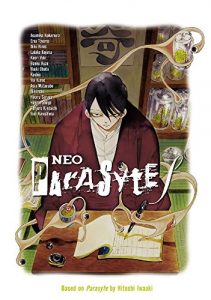
I have fond memories of Parasyte, despite never having actually read it. It was one of the first four titles that Tokyopop put out when it began, along with Sailor Moon, Magic Knight Rayearth, and the long forgotten Ice Blade. Unlike Ice Blade, Tokyopop actually finished the series, but it was always a sort of cult hit over here, known mainly for its odd sense of humor and its startling decapitations. I was pleased when Kodansha decided to release the updated Japanese version in 8 volumes, and that sold considerably better than the first time around, as the market was much better prepared for it. And now we have this anthology, which on the face of it is even more bizarre: taking a horror series that runs in a seinen magazine and giving it to various Japanese shoujo creators, to see what they make of it.

neoparasyte

Of course, anyone who knows Japanese shoujo knows that they are very familiar with the horror genre. Indeed, some of the artists in this anthology are best known over here for their shoujo gore, such as Kaori Yuki, whose tale of a twisted love triangle and a spoiled princess would not feel out of place in her other works. Parasyte filled a number of niches, and this anthology does a very good job of showing off why people liked it. There’s actually very little pure horror, as for the most part the artists try to do their own thing. As you’d expect given the genre, there are quite a few high school romances in here, some tragic, some heartwarming, and some with a twist that is both predictable yet also startling – Parasyte’s stock in trade. Miki Rinno’s story of a genki girl whose mind has broken a bit by the slaughter of her family as well as a parasyte inside her is particularly good.

That said, I think it may be the humor that draws in readers, and there’s a lot of that. From a fujoshi who uses her Parasyte to pair up hot guys (by Ema Toyama, the author of Missions of Love), to Parasyte cooking shows and otome games, there’s a lot of simply having fun with the premise. And for those who wonder if it’s all original characters, fear not: Shinichi and Migi are sprinkled throughout the book. Indeed, the story by Mikimaki of Migi shifting himself into various shoujo girls may be the funniest in the book. And sometimes I laughed even when I may not have been supposed to – Asia Watanabe’s somewhat disturbing take of a young girl in the thralls of puberty and her teacher, a priest (both of whom harbor parasytes) features a dizzy blonde girl named Luna, and it’s impossible not to see her as Luna Lovegood from the Harry Potter books.

So if you loved Parasyte, you’ll get a kick out of this book. But even if, like me, you never actually read the original, you may still find something here. The art is striking throughout, and there’s a lot of really good stories – I hadn’t even talked about the story by Kashio about a telepath who runs into a transfer student with a parasyte, which is tense and thrilling. I’d love to see more of these Anthologies from Western publishers.

Filed Under: REVIEWS

  • « Go to Previous Page
  • Page 1
  • Interim pages omitted …
  • Page 284
  • Page 285
  • Page 286
  • Page 287
  • Page 288
  • Interim pages omitted …
  • Page 554
  • Go to Next Page »
 | Log in
Copyright © 2010 Manga Bookshelf | Powered by WordPress & the Genesis Framework