• Skip to primary navigation
  • Skip to main content
  • Skip to primary sidebar
  • Home
  • About Us
    • Privacy Policy
    • Comment Policy
    • Disclosures & Disclaimers
  • Resources
    • Links, Essays & Articles
    • Fandomology!
    • CLAMP Directory
    • BlogRoll
  • Features & Columns
    • 3 Things Thursday
    • Adventures in the Key of Shoujo
    • Bit & Blips (game reviews)
    • BL BOOKRACK
    • Bookshelf Briefs
    • Bringing the Drama
    • Comic Conversion
    • Fanservice Friday
    • Going Digital
    • It Came From the Sinosphere
    • License This!
    • Magazine no Mori
    • My Week in Manga
    • OFF THE SHELF
    • Not By Manga Alone
    • PICK OF THE WEEK
    • Subtitles & Sensibility
    • Weekly Shonen Jump Recaps
  • Manga Moveable Feast
    • MMF Full Archive
    • Yun Kouga
    • CLAMP
    • Shojo Beat
    • Osamu Tezuka
    • Sailor Moon
    • Fruits Basket
    • Takehiko Inoue
    • Wild Adapter
    • One Piece
    • After School Nightmare
    • Karakuri Odette
    • Paradise Kiss
    • The Color Trilogy
    • To Terra…
    • Sexy Voice & Robo
  • Browse by Author
    • Sean Gaffney
    • Anna Neatrour
    • Michelle Smith
    • Katherine Dacey
    • MJ
    • Brigid Alverson
    • Travis Anderson
    • Phillip Anthony
    • Derek Bown
    • Jaci Dahlvang
    • Angela Eastman
    • Erica Friedman
    • Sara K.
    • Megan Purdy
    • Emily Snodgrass
    • Nancy Thistlethwaite
    • Eva Volin
    • David Welsh
  • MB Blogs
    • A Case Suitable For Treatment
    • Experiments in Manga
    • MangaBlog
    • The Manga Critic
    • Manga Report
    • Soliloquy in Blue
    • Manga Curmudgeon (archive)

Manga Bookshelf

Discussion, Resources, Roundtables, & Reviews

Features & Reviews

My Week in Manga: October 17-October 23, 2016

October 24, 2016 by Ash Brown

My News and Reviews

Last week was yet another week during which I wasn’t online much, though this time it was because I was on a short family vacation in Ohio to visit my folks. I did however still manage to post my review of the absolutely wonderful children’s book Are You an Echo?: The Lost Poetry of Misuzu Kaneko. The book, fully illustrated by Toshikado Hajiri, combines a biographical narrative of Kaneko’s work and life written by David Jacobson along with a selection of Kaneko’s poems presented in both the original Japanese and in English translation. Are You an Echo? is a beautiful book that adults will be able to appreciate, too; I wasn’t previously familiar with Kaneko’s poetry and am incredibly glad to have been introduced to it.

Although I was busy with family last week, a few things did catch my eye online: Vertical’s Fall 2016 manga licensing survey is now live for those interested in suggesting titles that they’d like to see the company publish in English; The Mystery Writers of Japan have released a very useful website in English which includes great information such as an outline of the group’s history and a list of recent English translations of the members’ works; As for cool queer comics Kickstarters, there is a newly launched campaign to collect Tab Kimpton’s delightful Minority Monsters comics in a single volume along with additional bonus content.

Quick Takes

Fairy Tail, Volume 55Fairy Tail, Volume 55 by Hiro Mashima. With all of the recent developments in Fairy Tail it seems like the series might in fact be reaching its final story arcs. Granted, Mashima could just as easily stretch things out for quite a bit longer as he has repeatedly done in the past. Often Fairy Tail feels rather directionless to me, as though the creator is making things up as he goes (which he has admitted to) or isn’t sure exactly what he wants to do with the series. That being said, when Mashima actually manages to bring together disparate storylines and plot developments together in a way that makes sense and seems planned from the beginning (even if it actually wasn’t) the results can be thrilling. The fifty-fifth volume of Fairy Tail opens with one of the biggest game-changing reveals in the series as Natsu and Zeref face each other down. It’s a dramatic encounter and works tremendously well. Sadly, the rest of the volume isn’t quite as strong as its opening and many of the other plot twists and backstories feel forced at best. Still, this most recent story arc is probably my favorite out of those that I’ve so far read. (I started reading Fairy Tail part way through, so there are several arcs that I’ve missed.) I especially appreciate how it gives the tournament arc, which grew increasingly tedious, a greater purpose in the series as a whole. The action sequences and battles continue to be an exciting part of the manga as well, and there are plenty of those to be found in this volume.

intense1Intense, Volume 1: Night on the Red Road by Kyungha Yi. I’ve deliberately been keeping a lookout for new print releases from Netcomics, but even if I wasn’t Yi’s Intense would have caught my attention. The series’ cover artwork is stunning and the manhwa’s production values and quality is some of the best that I’ve seen from Netcomics. Intense was originally released in six digital volumes, but the print edition has been collected into four. The interior artwork, though it’s not in color, is just as beautiful, striking, and moody as Yi’s cover illustrations. The story is likewise very moody and at times can be extremely dark and violent. The series follows Jiwoon, an assassin and bodyguard for a crime syndicate who has been temporarily assigned to a red-light district. There he encounters and is drawn to the mysterious Soohan who works there as a sort of handyman. With their melancholic, slightly detached personalities, it seems as though the two young men likely share a fair amount in common, so much so that the tragic backstory revealed in the flashbacks interspersed throughout the first volume could easily belong to either of them. If nothing else, Intense is certainly well named. The manhwa is heavy and intense both emotionally and psychologically, moreso than many other boys’ love stories I’ve read. I definitely plan on reading the rest of the series and I’m very curious to see how the relationship between Jiwoon and Soohan develops.

Paradise Residence, Volume 3Paradise Residence, Volume 3 by Kosuke Fujishima. Admittedly, it has been quite some time since I’ve read the first two volumes of Paradise Residence, but I really don’t remember the characters being especially infatuated with motorbikes and motorcycles which is something that is quite prominent in the third and final volume. Maybe I just completely missed it before and that’s why it seemed to suddenly come out of nowhere, but the resulting story is nice. However, it’s another sudden development that becomes the dramatic focus of the rest of the volume–due to some unfortunate circumstances, the dorm is scheduled for demolition rather than renovation and the young women living there must do all that they can to save their beloved home. They come up with a rather creative solution to their problem that, while it strains believability, is impressively audacious and clever. Paradise Residence is a series that I enjoyed much more than I thought or expected I would. It doesn’t really have a lot of substance or depth to it, but it’s a pleasant slice-of-life manga set in an all-girls high school. Though not particularly nuanced, most of the characters are generally likeable. Even with the occasional bit of drama, Paradise Residence tends to be a fairly quiet and low-key series. The artwork is attractive, too, although Fujishima seems fond of drawing characters with one eye closed; I’m not sure if they’re supposed to be winking or what.

Spoof on Titan, Volume 1Spoof on Titan, Volume 1 by Hounori. In general the manga spinoffs of Hajime Isayama’s Attack on Titan depend on readers having at least some familiarity with the original series, although to varying degrees. Spoof on Titan perhaps requires a little more than many of the others as the humor relies heavily on knowledge of the characters and their personalities. Unlike Attack on Titan: Junior High, the other Attack on Titan comedy series, Spoof on Titan is firmly set in the world of the original manga. Granted, it’s a much more friendly version of that world–the Titans, though mentioned frequently, barely make an appearance and the death, destruction, and violence has been greatly toned down. The gore and darkness of Attack on Titan aren’t really to be found in Spoof on Titan. Hounori’s illustrations and character redesigns are pretty cute, too. Spoof on Titan is a four-panel comedy manga which is a format that I tend to really like when it’s done well, but the comics in Spoof on Titan tended to be fairly hit-or-miss for me. Some of them legitimately made me laugh while I barely cracked a smile at others. Overall, though, I am largely enjoying the series and find it amusing. I’m not sure that I would necessarily want to binge-read Spoof on Titan, but the series can be fun in small doses. The first volume reads like a collection of comedic Attack on Titan bonus manga, which is essentially what it is even if Isayama himself isn’t directly working on the series.

Save

Filed Under: FEATURES, My Week in Manga Tagged With: attack on titan, Fairy Tail, Hiro Mashima, Hounori, Intense, Kosuke Fujishima, Kyungha Yi, manga, manhwa, Paradise Residence

Bookshelf Briefs 10/24/16

October 24, 2016 by Sean Gaffney and Michelle Smith Leave a Comment

fatezero3Fate/Zero, Vol. 3 | By Gen Urobuchi, Type-Moon, and Shinjiro | Dark Horse – I did say last time that the series was going to get darker, and boy howdy I was not wrong. No amount of cute shots of Rin as a child or amusing scenes of Irisviel driving like a maniac can really make up for the main thrust of the latter half of the book, which is that Caster is Bluebeard, an insane murderer (though historians now doubt this), and his master Ryunosuke is even worse. There are numerous scenes of women and children gleefully butchered, which I’m sure were quite lovingly described in the original novel but which the manga adds an extra dollop of horror to. Oh yes, and we also see what’s happening to Sakura, which if you’ve never played Heaven’s Feel may come as a shock. Horrifying but good. – Sean Gaffney

food14Food Wars!: Shokugeki no Soma, Vol. 14 | By Yuto Tsukuda and Shun Saeki | Viz Media – I was expecting Soma to level up and learn that he still had room to grow while working for Shinomiya, and I wasn’t wrong. The better part was seeing how far Shinomiya has come, given how much of an antagonist he was about ten volumes ago. He’s tough but never unfair, really knows his stuff, and I loved his backstory showing how his love for French food stemmed from his mother’s love of it. His staff were also fun, and it’s always wonderful to see Hinako again. But the arc is over, and there’s a nice montage of the main cast showing off their own growth aside from Soma. Now they earn the reward, which is a picnic with the top ten in the school. If you guessed they were all eccentric lunatics, congrats. Always great. – Sean Gaffney

haikyu4Haikyu!!, Vol. 4 | By Haruichi Furudate | Viz Media – Given a team as raw as the one that stars in Haikyu!!, it would be a bit of a stretch to see them winning right off the bat against other teams. Oh, don’t get me wrong, there are many opportunities to see Hinata and company show off their skills, and they keep things close all the time. But the thing I liked best about this volume was the fact that the rival team won as they simply work better as a team, not a brilliantly talented collection of individuals. And, as with all sports manga, you learn more and more about the ins and outs of volleyball as you go, though thankfully not to the point it gets boring. In the end, though, Kageyama makes the best point—if that had been a tournament, everything would have been over. Time to TRAIN HARDER. – Sean Gaffney

horimiya5Horimiya, Vol. 5 | By Hero and Daisuke Hagiwara | Yen Press – The last volume had me a little worried, but it does seem to have been a false alarm. Much of the beginning involves reactions to Miyamura’s new look, culminating in a fakeout where his supposed new admirer actually fancies Hori instead. I enjoyed that she seems to bring out his more irritable side, much like his middle-school friend Shindou does, as well as the latter mentioning that Miyamura is different with others. Miyamura insists it’s not an act, and it’s likely nothing will come of this, but it would be interesting if it did. We also get some excellent scenes with our main couple, including a kind of sexy one wherein Miyamura wonders whether it’s acceptable to try anything with her, and a cute reunion hug after he has to be out of town for a few days. I’m happy and relieved to continue to enjoy this series! – Michelle Smith

kamisama-22Kamisama Kiss, Vol. 22 | By Julietta Suzuki | Viz Media – This has just ended in Japan, and it’s beginning to show—this is definitely feeling like the final endgame plot. Leaving aside the fact that Nanami is slowly dying (and no, I don’t expect that to stick), the whole volume relies on Nanami’s basic goodness meaning that they cannot try the most obvious solutions to their problems. They can’t kill Akura-oh’s host, they can’t have Nanami kill a human to gain life force. Oh yes, and Tomoe finds out Nanami’s little secret, which leads to him, impatient as ever, scarfing the (temporary?) cure to hug her and berate her from keeping things from him. I’m not sure exactly how fluffy this ending is going to be, but I’m enjoying the journey it’s taking to get there. – Sean Gaffney

monster4My Monster Secret, Vol. 4 | By Eiji Masuda | Seven Seas – This continues to be an excellent combination of hilarious mayhem and cute romance, in that order. Which means that if you want a payoff right away, be prepared to be frustrated. Asahi and Youka are adorable and clearly meant to be together, but they’re both such shy, awkward dorks that I think it will be at least ten more volumes. Luckily, there is the humor to tide us over, being the destruction of a brand new car, the all-in attempt to get a rare hamburger, and the least subtle UFO ever. There’s also new characters, be it Youko’s parents, who are pretty much exactly as you’d expect, and a granddaughter from the future, who is more of a cliffhanger. This makes me laugh a lot, especially the art. – Sean Gaffney

sily16Say I Love You., Vol. 16 | By Kanae Hazuki | Kodansha Comics – It’s been a long time since my husband and I were in a long-distance relationship, but this volume of Say I Love You. expertly evoked those memories. Mei and Yamato are pursing their individual dreams and attending different schools. They do their best to keep in touch, but their schedules make it difficult to find time to see each other, and each is meeting new people and having new experiences independently. When Takeshi seems on the verge of dumping Asami in favor of a college classmate, and Mei finds out Yamato was spotted out with a woman (when he’d only said he’d be with “a friend”), she is thrown into turmoil. It’s great to see a shoujo series acknowledge that high school romances don’t always work out, and that people change and grow apart. I still doubt that’ll happen here, but it’s nice to feel like it’s a real possibility! – Michelle Smith

Say “I Love You,” Vol. 16 | By Kanae Hazuki | Kodansha Comics – Let’s face it, much as I find Asami fun, the relationship between her and Takeshi was the least developed one in this series, possibly as it was one of the first. And given that the theme of this first post-high school volume is about trying to sustain such relationships past school, it’s not a surprise that theirs might be the first one to head south. From our point of view, though, it’s Mei and Yamato that may be in more trouble, as Yamato has a new friend who is clearly going after him hard, even if he doesn’t quite want to admit it. Honestly, though, the best scene in the volume may be Megumi and Rin, as Megumi’s frustrations boil over and Rin offers some much-needed help. Will this all end well? – Sean Gaffney

Filed Under: Bookshelf Briefs

Yona of the Dawn, Vol. 2

October 23, 2016 by Sean Gaffney

By Mizuho Kusanagi. Released in Japan as “Akatsuki no Yona” by Hakusensha, serialization ongoing in the magazine Hana to Yume. Released in North America by Viz. Translated by JN Productions, Adapted by Ysabet Reinhardt MacFarlane.

I said I had wanted more plot development, and I get a lot of it here, very well told. We do indeed see there is a Fire Tribe in addition to the Wind tribe, and their young prince is appropriately a hothead (and ex-suitor) of Yona who is appalled when his hotheaded plan ends up turning into disaster. We also do not lose sight of Su-won, who may have started off the series by murdering Yona’s father but is not going to be just another insane shoujo villain. The idea that Yona is dead fills him with grief, and also allows us to see more flashbacks. Intterestingly, we see that Hak has actually told Su-won he wants to see him married to Yona and ruling as King. There is a silent “but not like this” that is very palpable, however.

yona2

Of course, this series is not 2 volumes long, and Yona is not dead. But before that, we get a nice look at Hak in his natural habitat, as we see another cliche of romance manga used quite well, which is the sheltered rich girl arriving in the town of the peasant boy and seeing how his simple, non-affluent lifestyle is much happier than she could have imagined. Hak is a good general who cares about his tribe, but is also able to let those who are his contemporaries (in age, if nothing else) get away with mouthing off to him provided it’s not an emergency. We also get a Tiny Tim sort, Tae-Yeon, who is adorable and inspiring and also needs his medicine. The world may be filled with political machinations, but here there are just good people.

And them there’s Yona herself, who does get to wield a sword in this volume, though she’s still shaking off her princess roots. Forced to pretend to be a lady’s maid at first, that doesn’t last long, as there’s no way that she can accept “just live here in hiding for the rest of your life” while people are suffering. I was very pleased that, rather than demand to come with Hak, she announces that she’s leaving, and wants him to come with HER. He calls her quite selfish, but it’s not the bad kind of selfishness. And, as long as we’re counting tropes, I loved the scene where she cuts off her long hair with a sword in order to escape the Fire Tribe leader. Not only is that sort of scene always badass, it gives supposed evidence of her death to the King later on.

But she isn’t dead, and despite the ridiculousness of Yona and Hak surviving a fall from that height (which the author herself points out in a 4-koma at the end), they seem to have been taken in by some allies. I’m not sure what will happen next, but given the type of manga this is, no doubt it will involve destiny and power struggles and possibly cool horseback riding? And more swords! The sky’s the limit, really. Oh yes, and some cute romance would be nice, but not necessary.

Filed Under: REVIEWS

Kitaro Meets Nurarihyon

October 21, 2016 by Sean Gaffney

By Shigeru Mizuki. Released in Japan as “Gegege no Kitaro” by (among others) Kodansha, serialized in various magazines. Released in North America by Drawn & Quarterly. Translated by Zack Davisson.

It is interesting reading these old late 1960s Kitaro manga, showing off the wonders and terrors of yokai to a Japanese audience, now that we are in something of a yokai glut here in North America. Oh, yokai are never going to pass vampires, or even monster girls. But you get things like Kamisama Kiss, which puts yokai in a supernatural shoujo romance. And Natsume’s Book of Friends, almost a spiritual successor to Kitaro, as he walks around solving problems and getting involved despite himself. And of course there’s the Shonen Jump series Nurarihyon no Mago, which wasn’t a huge hit, but got over 20 volumes, so could be said to be a mild hit in Japan. It did alright here as well.

kitanura

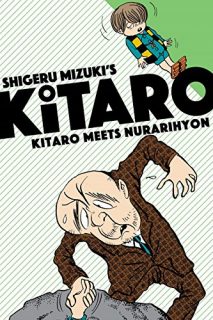
The Nurarihyon seen here on the cover is of the same type as Nura from the Jump manga (or, to be more accurate, Nura’s grandfather, who fits the stereotype better), but of course this Nurarihyon is not remotely a hero. He’s closer to the actual legend, an old man who walks into your house, drinks your tea, acts as if he owns the place, and leaves. Compared to the other yokai we see in this volume, he doesn’t have that many superpowers, but that just makes it all the more chilling when he gets rid of Kitaro and Nezumi Otoko so easily. Of course, Kitaro *is* the hero, so he manages to escape and trap Nurarihyon in a place he’s not going to be coming back from anytime soon. In fact, I would argue Kitaro’s solution is equally chilling.

These stories sometimes do feel their age, and not just due to the technology of the times. Kitaro is very much a morally ambiguous hero, getting involved when it looks as if humans are directly threatened with yokai but otherwise mostly getting pulled into things by the morally corrupt Nezumi Otoko, who even this early in the series has made his transition from rapscallion to scallywag, so to speak. He’s such a lovable creature you want to forgive him for being a greedy gluttonous and occasionally murderous swine. Oh yes, and somewhat sexist as well – one story has an old yokai try to seduce Nezumi Otoko merely as she’s watched a TV show with a May-December romance and wanted more fun in her life. Kitaro’s response amounts to “you are an ugly old woman, back where you came from!”, which left a sour taste in my mouth. Kitaro, at this point in the series, does not really reach for sentiment.

It does have plenty of creepy scares, though. The Wanyudo has always freaked me out a bit, and so seeing it in a story involving supposed lost diamonds made me shiver. And did I mention vampires earlier? Well, there’s one here, who’s employing Nezumi Otoko to find him fresh victims, but he runs afoul of a hair-based yokai who’s actually succeeded in possessing Kitaro (is this going to happen once a volume?). In essence, though, what we have here is Kitaro as he was at the height of his powers – warts and all. If you appreciate manga history, or just want a good spooky book for your kids, this is a great title to pick up.

Filed Under: REVIEWS

Manga the Week of 10/26

October 20, 2016 by Sean Gaffney, Michelle Smith, Ash Brown and Anna N 2 Comments

SEAN: End of October. 35 titles. Scary!

MICHELLE: I am having Count Floyd feels.

SEAN: Kodansha brings us the 9th volume of Genshiken 2nd Season, which may have a new cast but has ended up being about Madarame’s love life.

ASH: I’ll admit, I really wasn’t expecting it to basically become a harem manga.

ghostandlady1

SEAN: Kazuhiro Fujita, best known over here for the unlicensed yet very popular Ushio and Tora, has a new hardcover horror volume out, part of a series subtitled “The Black Museum” that runs in Morning. This one is called The Ghost And The Lady, and features Florence Nightingale. It sounds amazing.

ASH: It looks it, too!

SEAN: Kodansha also has a 7th volume of Kiss Him, Not Me!, which I hope is stocked next to The Ghost and the Lady at all good bookstores, just for the humor value.

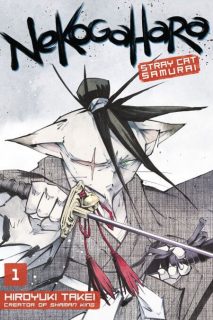
Speaking of new works by authors best known for something else, Nekogahara: Stray Cat Samurai is from the creator of Shaman King, and has… well, cat samurai. Be warned: this is not your Chi sort of cat book – it runs in Shonen Magazine Edge (I assume because the works are edgy).

MICHELLE: Huh.

ANNA: I have a similar reaction as Michelle.

SEAN: And a 17th volume of breakout hit Noragami.

ASH: I’ve come to really enjoy this series.

SEAN: Seven Seas also has a bunch of stuff. The 4th volume of spinoff A Certain Scientific Accelerator continues to be action oriented, much to the annoyance of Last Order.

A new Freezing omnibus, Vols. 11-12, will please anyone who likes breasts.

ewewew1

Speaking of such readers, the big release this week is Monster Girl Encyclopedia, which is apparently a lavishly illustrated guide to various types of monster girls. It’s a hardcover, so they’re really pushing this. I also hear that it’s possibly the most fanservicey title they’ve ever released.

ASH: That’s impressive in and of itself.

SEAN: And another omnibus, with manwha release Witch Hunter getting Vols. 17 and 18.

Vertical has a 2nd volume of Immortal Hounds.

Time for Yen. First of all, we have the digital-only releases: Aoharu x Machinegun 6, Black Detective 6, Saki 6, and Corpse Princess… 7. Sure, ruin my numerology, why don’t you.

ASH: Saki!

SEAN: Light novels. Psycome has a second volume of wacky insane girls in prison antics.

And the fourth volume of Sword Art Online: Progressive has Argo on its cover, which automatically makes it a must-read.

As for Yen’s print manga, we get an eighth Akame Ga KILL!

Did I say Aoharu x Machinegun was digital-only? Never mind. Like Handa-kun, it did well enough to get a print release, with Volume 1 shipping next week.

The Asterisk War has a 2nd manga release. I quite like the book’s cliched but breezy story.

We’ve caught up with Barakamon, so it’s been a while since the last volume. I’ve missed it. Here’s Vol. 12.

MICHELLE: I have every intention of getting caught up on Barakamon. Intentions, but not time, alas.

bloody12

SEAN: Bloody Cross comes to an end with its 12th and final volume.

A Certain Magical Index has its 7th manga volume, which I think starts to adapt the 6th novel.

And The Devil Is A Part-Timer! has its 7th manga volume, which is still adapting the 3rd novel, because it didn’t skip entire books like Index’s manga did.

And if you like cuter and fluffier, there’s a 5th volume of the High School!! spinoff.

Fruits Basket has a 6th omnibus, as Akito helpfully allows Tohru to gain resolve to stop the curse by being completely terrible.

I’d mentioned Handa-kun before, and we get a 4th print volume here.

Horimiya gives us a 5th volume of adorable high school romance.

MICHELLE: Yay for Furuba and Horimiya!

ASH: Yay, indeed!

SEAN: More manga adaptations of light novels, or in this case adaptations of songs, with the 7th Kagerou Daze.

I was lukewarm to the first Liselotte & Witch’s Forest, but a 2nd volume should help firm up which direction it’s going.

MICHELLE: I found it reasonably intriguing, but definitely the second volume is going to be key. I’m looking forward to it a lot.

ANNA: Surprisingly I haven’t read this yet, but I plan to.

SEAN: And there’s a 4th spinoff volume of Log Horizon’s West Wind Brigade.

MORE manga adaptations of light novels! This time the 2nd Re: Zero manga.

scum1

It’s rare we see seinen romance manga in North America, let alone by a female author. But Scum’s Wish is still about tortured high schoolers and hopeless crushes, have no fear. It runs in Big Gangan, and has been on the Crunchyroll app as well.

Taboo Tattoo gets a 4th volume, so it can’t be all THAT taboo.

Another manga gets out of digital only land, as we see the first volume of Today’s Cerberus. This is a Shonen Gangan series, has supernatural elements, and leans very much towards the comedy end of things. Not quite Another Monster Girl Series, but close as dammit.

Just because monster girls are the next big genre doesn’t mean we’re not getting more survival game as well. I know little about Tohyo Game except it runs in Big Gangan, and is an omnibus of the first 2 volumes.

Are you being tricked? Or is all this manga a treat?

Filed Under: FEATURES, manga the week of

Are You an Echo?: The Lost Poetry of Misuzu Kaneko

October 20, 2016 by Ash Brown

Are You an Echo?: The Lost Poetry of Misuzu KanekoAuthor: Misuzu Kaneko, David Jacobson
Illustrator: Toshikado Hajiri

Translator: Sally Ito and Michiko Tsuboi
Publisher: Chin Music Press
ISBN: 9781634059626
Released: September 2016

Misuzu Kaneko, who in the 1920s was a well-known author of poetry for children, almost faded into obscurity after her early death at the age of twenty-six only to have her work rediscovered in 1982. Since then her poetry has been met with great admiration and acclaim. Despite having her work translated into nearly a dozen different languages, Kaneko is relatively unknown in English. Are You an Echo?: The Lost Poetry of Misuzu Kaneko, published by Chin Music Press in 2016, is a beautifully illustrated and crafted children’s book created by a multi-national team with members hailing from Japan, the United States, and Canada in an effort to bring Kaneko’s work to a larger audience. Before reading Are You an Echo? I was unaware of both Kaneko and her poetry. After reading the volume I can only hope that more of her work will be translated in the future–the book is a marvelous introduction.

Are You an Echo? consists of two main parts. The first is a biographical narrative written by David Jacobson, a journalist and editorial consultant at Chin Music Press, which outlines both the life of Kaneko and the history of her work and its rediscovery by Setsuo Yazaki, another poet who also provides the foreword to the book. Although Are You an Echo? is meant for a young audience, Jacobson is honest and touches upon some of the sadder aspects of Kaneko’s story such as her unhappy marriage, unfortunate illness, and eventual decision to end her own life. However, the topics are handled with gentleness and sensitivity. Several of Kaneko’s poems are incorporated directly into the narrative while the second part of Are You an Echo? is specifically devoted to a selection of her work. The poems are presented in both their original Japanese and in an English translation jointly composed by Michiko Tsuboi and the poet Sally Ito.

Are You an Echo?, page 5The format is somewhat unusual for a children’s book, but I feel the decision to include a biography along with a selection of Kaneko’s work in a single volume is ultimately a good one. Are You an Echo? not only introduces Kaneko’s poetry, it also places it within a greater context. Jacobson’ s narrative is easily accessible and the story of how Kaneko and her work have come to positively influence the lives of so many people is a wonderful one. Hajiri’s illustrations are likewise captivating. The artwork is colorful without being garish and has a gentle softness to it that complements both Jacobson’s text and Kaneko’s poetry. Hajiri depicts scenes from Kaneko’s life and imagination and provides a lovely visual accompaniment to and interpretation of her work.

Twenty-five of Kaneko’s surviving five-hundred-twelve poems are included in Are You an Echo?. The translators have taken obvious care in rendering Kaneko’s work into English. Kaneko wrote in a feminine form of Japanese which doesn’t have a direct equivalent in English, but Ito and Tsuboi have successfully crafted a translation that reads well and captures the feelings and intentions of the originals. The poems collected in Are You an Echo? are utterly delightful. One of the things that I found most striking about Are You an Echo? is the tremendous empathy that Kaneko exhibits through her work. Though a touch of melancholy can frequently be found, the poems embody the natural curiosity, wonder, and earnestness of the children for whom she was writing. Kaneko’s poetry is immensely charming and deeply compassionate; I am so incredibly glad to have encountered it. While the book may be intended and suited for younger readers, there is still plenty for adults to enjoy and appreciate about it, too. Are You an Echo? is a treasure.

Thank you to Chin Music Press for providing a copy of Are You an Echo? for review.

Filed Under: REVIEWS Tagged With: Chin Music Press, David Jacobson, Misuzu Kaneko, Nonfiction, Poetry, Toshikado Hajiri

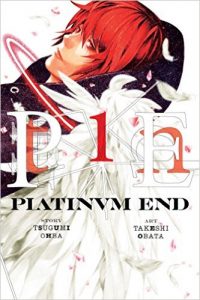
Platinum End, Vol. 1

October 18, 2016 by Sean Gaffney

By Tsugumi Ohba and Takeshi Obata. Released in Japan by Shueisha, serialization ongoing in the magazine Jump Aquare. Released in North America by Viz. Translated by Stephen Paul.

The creator team of Ohba and Obata has brought Japan and North America some of the most iconic manga out there in Death Note and Bakuman. In addition, Obata’s art has also been seen in Hikaru no Go, All You Need Is Kill, and, erm, School Judgment. OK, possibly not that last one, but otherwise, they’re all acknowledged hits and big influences. So I always feel guilty that I’ve never really warmed to any of them. I found Hikaru no Go pretty dull, Death Note’s nihilism wasn’t my bag, and Bakuman’s casual sexism rubbed me the wrong way. Yet hope springs eternal, and here they are with a new series. Can they build on the strengths of past works, or will I be grinding my teeth again?

platinum1

A little of both, really. I’m not as familiar with Death Note as most other readers are, mostly as I didn’t warm to its premise so never really read it, but it strikes me that a lot of the same themes I hear that it had are cropping up here. Our hero, Mirai, begins the story as, sadly, many manga protagonists do, by resolving to kill himself. He ends up being saved by an angelic being, Nasse, who explains he’s been chosen to participate in a war of sorts to see who gets to become the next God. He also has powers to a) fly, and b) make someone fall madly in love with him… for 33 days. Naturally, there are other participants as well, from the sleazy (a guy who decides to use the love arrows for orgies) to the so-called moralistic (the guy who becomes a vigilante superhero), to the girl Mirai has a crush on (who is the cliffhanger ending).

Ohta and Obata love grey, morally ambiguous works, and this is no exception. The star of the volume is without a doubt Nasse, who would love it if Mirai simply used his newfound powers a lot more indiscriminately. She’s supposedly an angel, but is 100% fine with murder and other morally reprehensible acts. Luckily, Mirai isn’t, and after his first horrific but accidental use of his powers, tries to think seriously about what to do and how to use them carefully – especially as he realizes that the God War involves killing off every other candidate. Nasse, though, is fine with absolutely anything as long as it gives him “normal happiness”, whatever that is, because that’s what he wished for from the start. It’s really creepy, to be honest.

Where the manga succeeds is where all Obata manga succeed – the art is fantastic, with dynamic poses, violence and fanservice when it’s appropriate, and a nice ability to read the character’s emotions from their expressions rather than just the dialogue, something many other artists have issues with. And the premise looks like it could go to interesting places… or nasty ones. The odd morality of the angels, though, reminds me more of Franken Fran than anything else, and likely will determine if I continue this series or not.

Filed Under: REVIEWS

Komomo Confiserie, Vols 4 and 5

October 17, 2016 by Anna N

Komomo Confiserie, Vols 4 and 5 by Maki Minami

This series was five volumes long, and it feels like exactly the right length to wrap everything up and not leave the readers hanging. It was pleasant enough, but I don’t see myself rereading it anytime soon. Still, this is the first Minami series that I’ve stuck with all the way to the end, so there’s something about cranky pasty chefs that I must find appealing! The last two volumes of the series work through a few barriers to Komomo and Natsu getting together.

This volume shows how Komomo deals with a psychotic girl who has decided to stalk Natsu in a dramatic fashion. Natsu starts ignoring Komomo for her own protection, because he doesn’t want Komomo to become a focus for Noelle’s wrath. Komomo doesn’t deal well with being ignored though, and since Natsu doesn’t openly discuss this problem with her at all (which is standard practice for shoujo heroes) the situation drags on far too long. While Komomo manages to fly under the radar for a little bit, Noelle becomes suspicious of Komomo and Natsu’s relationship and decides to take out her revenge on the Meli-Melo pastry shop. Here, Komomo’s sheer force of will and commanding nature comes out when she decides that she will not stand for Natsu’s livelihood being threatened, and she takes charge in a spectacular fashion, exhibiting some emotional maturity that she wouldn’t have been capable of at the start of the series.

Mitsuru, an old friend of Natsu starts to move in on the story. He’s fascinated with Komomo and figures out that Natsu must be in love with her. However, he has his own secret motivation for becoming involved with the odd pastry-obsessed couple, which is explored more fully in the next volume.

While Komomo starts to realize her feelings for Natsu when she begins to feel jealous of Noelle in the previous volume, the dynamic in the final volume is reversed as Natsu is forced to confront just how precious Komomo is to him once Mitsuru comes charging on the scene. Komomo has a choice to go back to her old life or stay devoted to Meli-Melo, and while her feelings aren’t in question, it takes a bit of time for Natsu to actually acknowledge what the reader has known has been going on since the very first volume.

Komomo Confiserie isn’t the most innovative shoujo manga, but I enjoyed the pastry-themed setting and Komomo’s imperious manner, expressive eyebrows, and occasional fits of rage. I While I don’t see myself rereading this manga anytime soon, it was the first Maki Minami series that I actually read from start to finish. Even though I had a very clear idea where the story would conclude after reading the first volume, I still enjoyed reading the whole series.

km5

Filed Under: REVIEWS Tagged With: komomo confiserie, shojo beat, shoujo, viz media

Bookshelf Briefs 10/17/16

October 17, 2016 by Sean Gaffney and Michelle Smith Leave a Comment

assclass12Assassination Classroom, Vol. 12 | By Yusei Matsui | Viz Media – I’ve talked before about how much I enjoy Irina’s crush on Kurasuma, and his seeming obliviousness to same. Seeming being the word there, as here we see he’s deliberately not seeing it so she won’t lose her edge. Of course, this is because he sees her as an assassin and not a woman. And as with women scorned through history, it makes Irina vulnerable to others who want to use her skills and go after the real target—Koro-sensei. Luckily, the kids have learned their lesson from the last book and are better than ever. Unluckily, that means very little against this new assassin, whose killing presence is very reminiscent of Nagisa’s. Add this all up and you get another excellent volume. – Sean Gaffney

blackclover3Black Clover, Vol. 3 | By Yuki Tabata | Viz Media – Still hugely enjoying this, despite its almost anti-originality. There are new powers discovered that call out only to the right one to wield them; huge battles where our hero is seemingly defeated only to power up at the last minute; saving the villain’s life because he’s not REALLY the villain, of course, just another guy like the rest of us; a dysfunctional bunch of arrogant heroes who will no doubt be hideously powerful and also learn humility. Oh, and look, some of them are Noelle’s siblings. And it all ends with the villain about to kill a defenseless child for the lulz, and our hero coming to the rescue. It would be horrible were it not well-drawn and plotted, with sympathetic heroes Classic Jump, really. – Sean Gaffney

demonprince6The Demon Prince of Momochi House, Vol. 6 | By Aya Shouoto | VIZ Media – After a pair of strong volumes, I was expecting more from this one, but ended up feeling a little disappointed. It isn’t bad, just not as good. Reeling from Aoi’s rejection, Himari meets a new teacher with a penchant for telling ghost stories and collecting magical objects, including a mirror that allows her to eventually accept the fact that, reciprocated or not, her feelings for Aoi won’t change. After an ultimately pointless visit from a demanding cat ayakashi, we do get some hints about the mysterious teacher that might prove interesting. Oddly enough, the best part is the baffling but intriguing bonus story. I don’t have absolute confidence in Shouoto-sensei’s ability to pull all of these threads together, but I’ll keep reading. – Michelle Smith

goldentime5Golden Time, Vol. 5 | By Yuyuko Takemiya and Umechazuke | Seven Seas – I think this is the start of the adaptation of the second light novel, and it shows, as this is mostly all setup with very little payoff. Banri and Kouko are together now, but as his memories return more and more (not helped by more head injuries, which can’t be good for him), it becomes increasingly apparent that Linda was his true love before the accident. Linda is having a breakdown now that he is remembering things, and Kouko is as always a complete emotional whirlwind, which is fun when she’s mocking her ex or trying to set her up with the still underdeveloped Oka, but can be extremely aggravating when you need someone in this soap opera to be sensible. – Sean Gaffney

honey4Honey So Sweet, Vol. 4 | By Amu Meguro | Viz Media – I’ve wanted to see more of Yashiro, the sharp and somewhat sarcastic best friend of the heroine, since the book began, and this volume allows me a whole pile of her. It shows off why she’s had so much trouble opening up—her family tends to ignore her, and the only real affection she’s gotten to date is from her much older tutor, who’s dating her but also cheating on her. This sort of character, in a shoujo manga, really is served best by a partner who wears their heart on their sleeve, and luckily Misaki is completely unable to hide any emotion whatsoever. Luckily, the tutor is wise enough to realize that she really is better off with someone other than him, and cheerfully breaks up with her. Fluffy angst is the best angst. – Sean Gaffney

haikyu4Haikyu!!, Vol. 4 | By Haruichi Furudate | VIZ Media – One of the best things about The Prince of Tennis was the many memorable rival teams Seigaku faced. But I think Haikyu!! has them beat with Nekoma, a consistent team with an arsenal of attacks, memorable characters (including several analogues to Karasuno players), and appealing backstory. I actually found myself rooting for them, and would totally read a spinoff about them! But it’s also great that they forced Hinata to start consciously aiming his hits, rather than depending on Kageyama all the time, beginning the duo’s evolution from “a monster and his club” to “one monster and another monster.” Also, Karasuno losing the practice game at this point will make an eventual rematch on the tournament stage even more pivotal and exciting. I’m looking forward to it! – Michelle Smith

mylovestory10My Love Story!!, Vol. 10 | By Kazune Kawahara and Aruko | VIZ Media – I love this series so, so, so much. Reading it makes me happy. I especially enjoyed this volume because it spends a lot of time on Takeo and Sunakawa’s friendship. First, Suna is there for Takeo when the latter is worrying about Ichinose the pastry chef confessing his feelings to Yamato, but then he starts feeling lonely when he realizes Takeo has gotten better at communicating his good intentions to others and might not need him anymore. He has a hard time admitting how he feels, and also later struggles to advise Takeo about his growing desire for Yamato. (Could this be further evidence of his asexuality?) Of course, there is plenty of romantic cuteness between our lead couple, but for getting to know Suna better, this volume is a standout. – Michelle Smith

My Love Story!!, Vol. 10 | By Kazune Kawahara and Aruko | Viz Media – Last time I hoped Yamato would figure out what was going on and shut Ichinose down. Well, she didn’t really figure it out, but we do get a rejection. Being Yamato, of course, it’s as sweet as pie, assuring Ichinose that his skills as a pastry chef are amazing without her as a muse AND reaffirming she’s head over heels for Takeo. In fact, these two are such a solid couple it might be time to take things to the next level, something Takeo has been brooding over but can’t quite get out due partly to his shyness and partly I think due to having Yamato on a pedestal. Luckily the class trip is coming up, giving them lots of opportunity to go further, though I doubt anything major will happen. Still adorable. – Sean Gaffney

neighborseki8My Neighbor Seki, Vol. 8 | By Takuma Morishige | Vertical Comics – It’s been a while since we’ve had Seki’s antics, and I find that this was an even more enjoyable volume of Seki than usual. There’s another one of the “Godo misinterprets Seki and Yokoi as a hot sexy couple” chapter, even as Yokoi is merely trying to figure out what the hell Seki is planning now. There’s a lot of Seki’s games rebounding on him this time, as he gets lost in imaginary toys, has a hilarious disaster with natto, and sprays his crotch with water in the worst possible way. As for Yokoi, all she wants is a nice sweet story from Seki’s playthings, but more often than not his nihilistic side takes over, such as his post-apocalyptic Game of Life. Even the cover gag is great. – Sean Gaffney

Filed Under: Bookshelf Briefs

My Week in Manga: October 10-October 16, 2016

October 17, 2016 by Ash Brown

My News and Reviews

I was a little preoccupied last week, dealing with some unexpected developments at work and home, so I wasn’t online much at all. However, I did still manage to post September’s Bookshelf Overload in which I reveal the manga, comics, books, and anime that I picked up last month. Also, a few weeks ago I mentioned the short story “The Mud God” which is tangentially related to a commission that Jenn Grunigen wrote for me. Well, it’s now freely available to read online!

Quick Takes

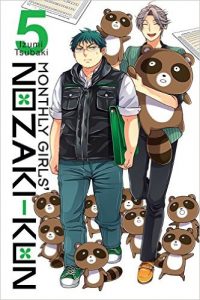
Monthly Girls' Nozaki-kun, Volume 2Monthly Girls’ Nozaki-kun, Volumes 2-4 by Izumi Tsubaki. My introduction to Monthly Girls’ Nozaki-kun was through the anime series which I adored. Because I loved the anime, it only made sense for me to seek out the original manga as well. Unsurprisingly, I enjoyed the first volume immensely. Despite that, it’s actually been quite a while since I’ve read any of Monthly Girls’ Nozaki-kun, which just means that I had the chance to fall in love with the series all over again. And I did, wholeheartedly. The series’ comedy is largely based on the characters and their personalities. The characters themselves are all a little odd but they are also incredibly endearing. Monthly Girls’ Nozaki-kun plays around with expectations, so the personality quirks of the characters intentionally defy stereotypes and are deliberately unexpected. In part, Monthly Girls’ Nozaki-kun is also a romantic comedy. The cast is fairly large and there could be any number of couples among the members except for the fact that most of the characters are completely oblivious of or misinterpret their own feelings. No one is actually together in the sense that they are dating in Monthly Girls’ Nozaki-kun (at least not yet), but in many cases they might as well be. The various relationships in Monthly Girls’ Nozaki-kun are close ones and are yet another major source of the manga’s good-natured humor.

The Prince and the Swan, Volume 2The Prince and the Swan, Volumes 1-2 by April Pierce and Gareth C.J. Wee. Pyotr Ilyich Tchaikovsky’s ballet Swan Lake, itself based on Russian folklore, has been the inspiration and basis for countless other works. One of the more recent retellings that I’m aware of is the webcomic The Prince and the Swan which began in 2013. I discovered the comic while at the 2016 Toronto Comics Arts Festival where the second print volume was making its debut; I couldn’t pass up Swan Lake reimagined as a queer fairytale. Knowledge of the ballet’s story isn’t at all necessary to enjoy The Prince and the Swan although readers who are familiar with it will be in a better position to appreciate the changes made for the comic. The basic premise of the story remains the same, but in the case of The Prince and the Swan Odette is now Odet, a prince who suffers from a curse that transforms him into a swan during the day. The other lead character in the comic is Prince Siegfried who is reluctantly preparing for his coronation and marriage as king. A chance encounter between the two men will change the course of both of their lives. The pacing of The Prince and the Swan seems a little slow at first, but the artwork, characterization, and storytelling quickly improve and gain confidence as the comic progresses. I look forward to seeing how The Prince and the Swan continues to develop.

Say I Love You, Volume 15Say I Love You, Volume 15 by Kanae Hazuki. One would think that after fifteen volumes Say I Love You would no longer surprise me, but I continue to be impressed by its honesty and authenticity. I do wonder if the recently introduced Aoi twins will continue to play a role in the series as most of the main characters are graduating high school in pursuit of their individual futures. While I was initially a little unsure of the addition of prominent new characters so late in the series, I ended up really liking them and their story arcs–I’d now hate to see them discarded so soon. (Granted, Kai still has another year to go before he graduates, so I wouldn’t be surprised if the twins will continue to make appearances.) The fifteenth volume of Say I Love You would have been a natural ending point for the series. As many of the characters are preparing to go their separate ways, either by immediately entering the workforce or by continuing their education, a fair amount of time is devoted to introspection and reflection on the past. Mei in particular has changed significantly since the beginning of the series, but all of the characters have grown and matured as individuals. The characterization in Say I Love You has always been one of the series’ strong points. It will be interesting to see where the manga goes from here as both the story and characters move beyond high school.

Run, Melos! and Other StoriesRun, Melos! and Other Stories by Osamu Dazai. I forget exactly when it was that I first learned of Dazai’s short story “Run, Melos!” but it’s more or less a staple of the Japanese education system so references to the work are fairly common in Japanese popular culture. I’ve been wanting to read to story for quite some time but was under the mistaken impression that it wasn’t actually available in English. However, I recently discovered that it had indeed been translated as part of the Kodansha English Library series… which was only ever released in Japan. Thanks to the power of inter-library loan, I was finally able to read “Run, Melos!” along with six of Dazai’s other works of short fiction: “A Promise Fulfilled,” “One Hundred Views of Mount Fuji,” “Schoolgirl,””Cherry Leaves and the Whistler,” “Eight Scenes of Tokyo,” and “One Snowy Night.” I had previously read another translation of Schoolgirl but the other stories were all new to me. Normally when I think about Dazai it’s his tragic novel No Longer Human that immediately comes to mind; I had actually forgotten how humorous some of his stories can be. Even though there is still a fair amount of melancholy to be found, this humor is much more apparent in Run, Melos! and Other Stories. Overall, the volumes a charming collection of stories mostly set in early twentieth-century Japan (the exception to that being “Run, Melos!” itself) with surprisingly relatable characters.

Save

Save

Filed Under: FEATURES, My Week in Manga Tagged With: April Pierce, comics, Gareth C.J. Wee, Izumi Tsubaki, Kanae Hazuki, manga, Monthly Girls' Nozaki-kun, Osamu Dazai, Prince and the Swan, Say I Love You

Fruits Basket Collector’s Edition, Vol. 5

October 16, 2016 by Sean Gaffney

By Natsuki Takaya. Released in Japan by Hakusensha, serialized in the magazine Hana to Yume. Released in North America by Yen Press. Translated by Sheldon Drzka.

Fruits Basket is, in large part, about a family and its cycles of abuse, and how it makes everyone suffer and endure. That’s why it’s so nice to see, in this omnibus, that there are at least one or two of the main characters whose families are not torn apart by physical abuse, hatred, neglect, suicide, or death. Hanajima during her childhood is, unlike what I talked about with Hiro last time, going through something that the reader is not going to understand, and she really needs to have someone that’s in her corner besides her little brother. I love the fact that immediately after Hana decides to be friends with Tohru and Uo, despite the fact that she may hurt them, she gains control over her powers, as if a switch is flipped. And then there’s Hiro’s mother, who is not only the one Sohma who unreservedly loves her child, but is also pregnant again, which makes everyone happy because the kid can’t be cursed, as all the Zodiac exist already. (More on this later.)

furuba5

There’s actually quite a lot of setup for future plots and pairings here, as clearly Takaya has been told that this is a big enough hit that she can take as much time as she wants. (Ironically, this is also where she hurt her hand, so a long hiatus came between the last volume and this one. The art style will eventually be greatly affected by this, but not just yet.) We meet another Sohma, but not via Tohru and her all-loving heart – this time it’s Uotani, who runs into a handsome yet absentminded young man in her part-time job and seems to fall for him immediately. (The fact that she says he reminds her of Tohru does not help Furuba’s yuri fans at all.) But Kureno seems to be more attached to Akito than the other Sohmas are, and therefore nothing really happens with it.

And then there’s Mayu, who we’ve met as the teacher of Tohru’s class, and were also told was close friends with Kana, Hatori’s lost love. Here we learn that she was in love with Hatori herself, but was so determined not to get in the way that she ended up dating Shigure, even though they’re clearly toxic for each other. (I suspect Shigure enjoyed this more… he seems to love toxic relationships.) Hatori is the stoic type who’s unable to grieve, and so Mayu is the one that grieves for him, for the life that he was never able to live. And Shigure is the manipulator who enjoys both messing with people for the lulz and also giving hem a push whether they want it or not. It’s quite interesting that this arc ends with a flashforward that shows Hatori and Mayu, many years later, together – things will change soon.

There is, of course, drama here as well, most of it stemming from the trip to the beachhouse the Sohmas take during their vacation. (We do meet Kyo’s father, and it is important to Kyo’s character, but he’s so unpleasant and awful I’d rather just not talk about him.) Hiro continues to lash out at things he finds annoying, and Tohru, who is effortlessly close to Kisa in a way he can’t seem to manage, is the biggest thing. It’s quite telling that Hiro is upset at Tohru’s obsession with her late mother – he’s the only one in the entire group who’s always had a warm and loving mother, and so he can’t possibly understand why she would be like this. Kyo, whose mother, it is heavily hinted, killed herself, gets Tohru far better, and immediately figures out that a) Tohru isn’t her usual self, and b) it’s probably because Hiro was rude. He’s maturing rapidly.

The book ends on an ominous note: Akito has followed the Sohmas and is at a neighboring beachhouse, and they all have to go visit – bar Tohru, who is thankfully not invited, and Kyo, who’s always excluded. Kisa being thankful Tohru won’t be there as she worries that Akito will abuse her is one of the saddest moments in the entire book, and will carry over directly into the next omnibus, where Akito decides to pay Tohru a visit after all. Again, if you haven’t read Furuba before, do so, and if you have, these omnibuses are a good opportunity for a reread.

Filed Under: REVIEWS

Manga the Week of 10/19

October 13, 2016 by Sean Gaffney, Ash Brown, Michelle Smith and Anna N Leave a Comment

SEAN: You thought this week might be lighter than the others? Ha! You fool!

Dark Horse has an anthology of works based on Oreimo. Unlike the anthology I’m about to talk about, it’s Japanese creators. It should be cute and incestuous, like its source.

anthology

Attack on Titan’s Anthology, a collection of works by Western creators based on the manga, has been the most anticipated title of the year. I reviewed it here, and it does not disappoint. Must buy.

ASH: It really is great!

SEAN: Kodansha also has the 3rd volume of Fairy Girls, which is not as exciting as the Attack on Titan Anthology, but probably has more nudity.

ASH: Fairy Girls is probably my least favorite Fairy Tail spin-off; a shame because the basic premise had such potential.

SEAN: There’s a 5th Inuyashiki, from the Gantz creator.

And a 7th L♥DK, still trying to give us its bad boy love.

And a 10th Tsubasa Reservoir Chronicle omnibus. Didn’t this end? Is it eternal? Am I buying a cursed book?

Somehow, Rise of the Shield Hero has become The Rising of the Shield Hero. Still from One Peace, and this is the 5th manga volume.

Seven Seas has a 2nd volume of Magical Guy series Battle Rabbits.

kobayashi

Their first debut this week is Miss Kobayashi’s Dragon Maid, another in a long line of monster girl works which permeate our world today. It runs in Manga Acton from Futabasha, which is at least not Comic Alive. The author has several works adapted to anime, including Miss Komori Can’t Decide and I Can’t Understand What My Husband Is Saying. I expect it will fall on the ‘goofy’ end of the scale, rather than ‘porn-ey’.

ASH: I am actually a little curious about this one.

SEAN: A 4th Mushoku Tensei: Jobless Reincarnation defies my ability to say anything about it.

I do enjoy My Monster Secret, though, and so a 4th volume is welcome. See? Not all monster girl titles make me sarcastic!

The other new Seven Seas title is complete in one omnibus. Tokyo Undead is part of a smaller trend Seven Seas has picked up on – zombie horror with lots of gore. It ran in Akita Shoten’s Play Comic. Don’t expect cuteness.

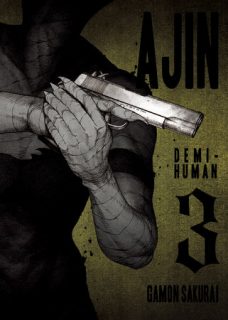
Also not cute is the 8th volume of Ajin, though I don’t know, given Japan’s current trends, we could get a high school AU Ajin 4-koma spinoff soon.

ASH: Ha!

SEAN: Viz has another gorgeous Miyazaki artbook coming out, with The Art of Castle in the Sky. AKA Laputa, dropped from the title for reasons that should be obvious.

Tokyo Ghoul 9 gives us additional zombies, and we also get…

Tokyo Ghoul: Days, a prose short story collection about the “everyday lives” of the cast.

Is this enough for you?

MICHELLE: I am literally not buying any of these things. Not even the Attack on Titan anthology.

ANNA: This is one of those weeks where I’m glad I’m not interested in anything, because it gives me some time to catch up on all my other unread manga.

Filed Under: FEATURES, manga the week of

My Pathetic Vampire Life, Vol. 1

October 13, 2016 by Sean Gaffney

By Ishikawa Rose. Released in Japan as “You no Ataranai Koide-kun” by Futabasha, serialization ongoing in the magazine Monthly Action. Released in North America by Seven Seas. Translated by Amber Tamosaitis. Adapted by Carol Fox.

This is, of course, one of the most inevitable titles ever. Japan loves vampire manga. Japan also loves its laid-back school comedies where nothing happens over the course of several volumes. Why not combine the two? But this particular title I think leans a bit too hard against the latter rather than the former. A complete lack of conflict, despite creating many obvious points where conflict could be achieved, makes this manga seem very underwhelming, as if it’s content to simply ride along on its premise: what if a couple of vampire bros had to live the same year in school, over and over again?

pathetic1

Koide is the main character here, a vampire who is governmentally mandated to stay in high school, since he’s still 16 years old. It’s just that this is the 150th year in a row he’s been 16. And of course, being a vampire, just being near the sun is enough to make him collapse. Luckily, he has a few things going for him. His friend Miura is three times his age, so you’d think would be suffering even more, but seems to have come to terms with it. (He’s a bishonen, which helps – Koide has more of a “I just got out of bed” look.) This could be Koide’s year, though – his classmates seem less concerned than usual about his being a vampire (put politely – put impolitely, they’re a bunch of clueless idiots), he has a couple of girls who seem to like him (though he’s mostly completely indifferent to them), and his teachers are there to help him out (even if the school nurse is a bit creepy). What’s not to love?

You know a slice-of-life title is having trouble when I keep wishing that it would turn darker and more serious. There’s lots of ways this series could have done that. The mere fact that there’s a government crackdown on vampires is a fascinating backstory that’s mostly just used as an expositional gag for why they can’t turn the nurse (who desperately wants to become a vampire, as he’s part of “the Haruhi generation” and would like more excitement). You’d think a lot of the plot would revolve around keeping their true nature hidden from the class, but no, the entire class knows they’re vampires, and are totally cool with it. Even Miura’s somewhat serious backstory of being beaten by farmers in the middle ages is used for humor value.

There are certainly amusing moments throughout – I like Koike’s accidentally antagonistic relationship with the girl who sits next to him, as keep depressing each other without meaning to. The class rep’s attempts to have the class get to know Koike are both well-meaning and awful in the best way, and the ‘i have never seen a photograph of myself for obvious reasons’ chapter has a terrific punchline. But I cannot help wanting to shake the author and say “you could have done so much more with this!” It’s a perfectly acceptable slice-of-life comedy that is content to coast.

Filed Under: REVIEWS

Overlord: The Dark Warrior

October 11, 2016 by Sean Gaffney

By Kugane Maruyama and so-bin. Released in Japan by Enterbrain. Released in North America by Yen On. Translated by Emily Balistrieri.

When we left Ainz at the end of the first novel, he was resolving to find out more about his world he’d been transported into, which was sort of kind of like his old game but not quite, and his evil minions had decided that his wishes amounted to total world conquest. Conquest is put on hold for the moment, though, as Ainz takes one of his minions and disguises himself as a common adventurer. “Common” is perhaps the wrong term, though, as Ainz mostly wants to show off how awesome he is so that his adventurer persona can acquire a reputation. Of course, this would be easier if he could read or write the language. And the minion he takes with him has no social skills whatsoever and regards humanity as worms. Oh yes, and there’s also the evil cult trying to turn an entire city into zombies…

overlord2

As with the first book, Overlord works best when it’s making fun of either Ainz or the world he’s in. Not only is he from modern Japan as a player, but even as Ainz, he sees the world completely differently from someone who actually lives in it. This comes to a head when he has to battle The Wise King of the Forest. He defeats it easily, and the party he’s with, as well as the residents of the city, are shocked and amazed at his badassery. Which is fine, except the Wise King is a giant hamster. Ainz is forced to ride around the city on to prove that he has “tamed” it. He feels a bit foolish, because from our perspective, it’s totally ridiculous. Likewise, his constant frustration with Narberal, who isn’t even attempting to pretend that Ainz is anything other than her lord and master, is equally hysterical.

Sadly, we’re also seeing a bit of what I worried about while reading the first book. As Momon, his adventurer persona he takes on, Ainz is able to cut an ogre in two with his sword just by strength alone. He hands out amazing unseen-before healing potions whose creation flummoxes even the best humans. He chews his way through endless undead with ease, and takes out the smug villain who desperately needs taking out by simply crushing her to his skeletal chest until she breaks. Ainz is not remotely challenged throughout the book. Even as Momon, when he thinks to himself that he was actually slightly damaged or somesuch, we’re quick to recall this is because he’s not using any of his skills as the Undead King, but attempting not to go outside the skill set of an average human. Basically, Ainz is too powerful, and in a book when the rest of the cast is human, it becomes more apparent.

That said, if you get past it, the book is still well written, with evocative descriptions. I liked the way that it tied into the village from the first book (and hey, the one guy in Momon’s party who survived turns out to be the childhood friend (and presumed future love interest, although for once it’s the girl who’s clueless) of the girl Ainz saved in Book 1, who’s still got her goblins. And when it is mocking Ainz and the D&D world he lives in, it can be very funny. There’s a cliffhanger leading into Book 3, which promises less pretending to be an adventurer. I look forward to it.

Filed Under: REVIEWS

Bookshelf Briefs 10/10/16

October 10, 2016 by Michelle Smith and Sean Gaffney 1 Comment

honey4Honey So Sweet, Vol. 4 | By Amu Meguro | VIZ Media – It’s hard to believe this charming series is already halfway over! Onise’s friend, Futami, makes good on his promise to confess to Nao, and after he’s rejected is surprised to find that Onise is still willing to be his friend. Awesomely, Onise had completely trusted Nao the whole time, and then he sings a song of friendship. No, really. After he and Nao achieve first-name status, the focus shifts to fleshing out their friends. I welcomed the opportunity to learn more about Yashiro, who has been lonely her whole life and who clung to her ne’er-do-well boyfriend until she realized she deserved something more. I really appreciated that he wasn’t depicted as pure evil and did care enough about her to let her go. Whether she and Misaki will eventually become a couple is up in the air, but I suspect the answer is yes. – Michelle Smith

kamisama-22Kamisama Kiss, Vol. 22 | By Julietta Suzuki | VIZ Media – Kamisama Kiss continues towards its conclusion and benefits from the increased focus. This volume finds everyone in the Land of the Dead, having followed Kirihito there as he searches for Akura-Oh’s body. Tomoe thinks he’s going to be able to kill him, but he can’t, and later helps the lost spirit of a little girl, which seem to be signs that his heart is softening towards humans and that he, therefore, will eventually succeed in becoming one. Meanwhile, Nanami has been hiding the fact that she’s only got six months to live, and we get a great (though lamentably brief) scene where Mizuki is prepared to sacrifice someone else just to save her. She stops him, of course, and finally tells Tomoe what’s going on. He’s upset that she didn’t rely on him, but claims there’s a way to save her. Three volumes to go! – Michelle Smith

kuroko3-4Kuroko’s Basketball, Vols. 3-4 | By Tadatoshi Fujimaki | VIZ Media – Seirin has steadily progressed through the Inter-High qualifiers, but now they must play two tough opponents on the same day. First, they face off against Seiho, who took them out of contention the prior year, and it was great to see the second-year characters get the chance to shine as they got payback. Seirin next advances to the match against Shutoku, a team with one of the Miracle Generation players on it. It’s a super-exciting game, in which Kagami gets perilously close to the “I can win on my own” line until Kuroko snaps him out of it. One of the great things about these two-in-one editions is that one volume-ending cliffhanger is nullified, but the buzzer-beater cliffhanger at the end of volume four is inescapable. Argh! Now I am good and hooked. – Michelle Smith

ofthered4Of the Red, the Light, and the Ayakashi, Vol. 4 | By nanao and HaccaWorks* | Yen Press – After an event-filled third volume, this new book seems to be spinning its wheels a bit, I’m afraid. This is always the difficulty with adapting visual novels, which fans buy knowing that there will be piles and piles of dialogue, only some of which may be relevant to the plot. Focusing on what interested me, then, the revelation that Tougo’s mother was abducted by a man in a fox mask right in front of him puts a chilling spin on current events. And I always enjoy seeing the two cute yet slightly insane yokai girls, who get a side-story cameo here and I wish did more. As for the main plot, I’m hoping things will pick up in the next book. – Sean Gaffney

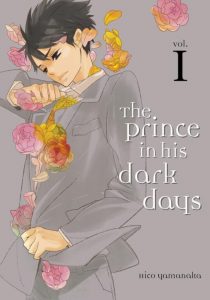
prince1The Prince in His Dark Days, Vol. 1 | By Hico Yamanaka | Kodansha Comics – I always do enjoy it when the first volume of a new series sets a mood, but it can be difficult when that mood is ‘horribly bleak and depressing.’ Atsuko is poor, her father is drunk, she’s doing compensated dating and it is suggested she’ll be doing prostitution soon. Luckily, she’s kidnapped by a group of rich young men, at first because the family heir wants to dress up in her clothing, and secondly when said heir disappears, and they ask her to dress up as him for a while. Most series with that premise would play it for laughs, but this is dead serious, and even the young hot bodyguards have tragic backstories and hidden secrets. A good start, but I’d hate to binge read something this heavy. – Sean Gaffney

Filed Under: Bookshelf Briefs

  • « Go to Previous Page
  • Page 1
  • Interim pages omitted …
  • Page 285
  • Page 286
  • Page 287
  • Page 288
  • Page 289
  • Interim pages omitted …
  • Page 551
  • Go to Next Page »
 | Log in
Copyright © 2010 Manga Bookshelf | Powered by WordPress & the Genesis Framework