Cells at Work!, Vol. 3 | By Akane Shimizu | Kodansha Comics – Much to my surprise, Red Blood Cell takes a back seat in this volume, though she gets the entire first story to herself, in an amusing but predictable variation on “I protect her journey without her ever seeing me.” White Blood Cell is front and center, though, dealing with pranking cold germs, and a community of hair that has been beset by acne. There’s also Memory Cell, whose memory proves to be less amusing than his tendency to panic and overthink things, and Killer and Helper T Cell, who are vitriolic best buds who were once in Killer T boot camp together. The plots are the opposite of original, but the fun in Cells at Work! is seeing how the author meshes the cliches with genuine information. Great fun. – Sean Gaffney
 Danganronpa: The Animation, Vol. 4 | By Spike Chunsoft and Takashi Tsukimi | Dark Horse – I’ve had issues with the rushed pacing during this entire adaptation, and it reaches a climax in this final volume, which is SO rushed it becomes almost a liability. And of course it’s compressing an anime that was already compressing a visual novel. That said, there are some striking visuals as you’d expect, particularly the revelation of the real villain and their final fate. Dark Horse hints at the end of the volume they may license more, and I’m vaguely interested, but honestly, this manga works better as an ad to get you to buy the game rather than as a story in itself. And as a vehicle for some truly wretched bear puns. – Sean Gaffney
 Food Wars: Shokugeki no Soma, Vol. 17 | By Yuto Tsukuda and Shun Saeki | VIZ Media – This is not your usual volume of Food Wars!. In fact, most of it is fairly frustrating, as the restrictive regime of Erina’s father must be established before Yukihira presumably succeeds in triumphing over it. Azami Nakiri swiftly disbands all research societies and essentially outlaws creativity, mandating that all students be allowed to cook only approved recipes decided on by an elite group. Of course Yukihira rails against this, but when Polaris dormitory is threatened, he decides to challenge corrupt Eizan from the Council of Ten, even knowing that the judges are in his pocket. Alas, the reveal of Yukihira’s cooking waits until next time. The best part of the volume is runaway Erina being welcomed by the Polaris crew, but otherwise volume seventeen provides setup for a satisfying installment without really being one itself. – Michelle Smith
 He’s My Only Vampire, Vol. 10 | By Aya Shouoto | Yen Press – With this volume, He’s My Only Vampire comes to an end. The details of Kana’s true origins are not belabored, but we do get some background on the origin of the stigmas and why Eriya is the way he is. As I expected (having previously read Shouoto’s Kiss of the Rose Princess, with its somewhat baffling finale), it doesn’t entirely make sense, but it makes enough sense for a reader like me, who doesn’t care enough anymore to quibble. The final confrontation is a bit rushed, but there’s a five-years-after epilogue that caps things off decently. In the end, this was an okay series—better than Kiss of the Rose Princess but not as good as The Demon Prince of Momochi House—but not one that I am likely to reread. – Michelle Smith
 The Honor Student at Magic High School, Vol. 6 | By Tsutomu Sato and Yu Mori | Yen Press – Honoka’s status as girl with a crush who frets a lot is so ingrained that I was actually very surprised at seeing her crush her competition in her event that starts the fourth volume. It’s always nice to see characters like her succeed after all their hard work. The same cannot be said for Subaru and Nanami, two minor characters whose job is to show off how good the other school’s candidates are. And Honoka may be in trouble in future events, as she seems to have given away a secret to a new friend/spy. There’s also some amusing side stories, including showing that the two girls who kidnapped Honoka and Shizuku at the start of the series are in fact dating each other. Good stuff for Mahouka fans. – Sean Gaffney
 UQ Holder, Vol. 10 | By Ken Akamatsu | Kodansha Comics – Last time we saw lots of unexplained Negima references, and this time we’re going back even further, as the start of this volume is nothing more than an extended riff on Love Hina—unsurprising given they’re all running an inn with an onsen at this point, but still, you can’t help but laugh. Kirie gets more focus and depth, and reminds me that Akamatsu loved to use Chisame more than the others as well. As for Kuromaru, she’s pretty much come down on the ‘she’ end of the equation with her growing chest, but her feelings for Tota are still causing her great difficulty. Oh well, it wouldn’t be Akamatsu without harem romance not going anywhere. Coming out slower, but still for for those who like Akamatsu. – Sean Gaffney




 A Banquet of Consequences by Elizabeth George
 The End of Everything by Megan Abbott
 The Ex by Alafair Burke
 Girl in the Dark by Marion Pauw
 Mr. Kiss and Tell by Rob Thomas and Jennifer Graham
 The Mysterious Affair at Styles by Agatha Christie
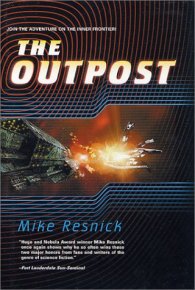 The Outpost by Mike Resnick
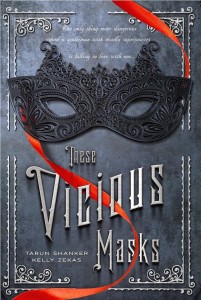 These Vicious Masks by Tarun Shanker and Kelly Zekas