• Skip to primary navigation
  • Skip to main content
  • Skip to primary sidebar
  • Home
  • About Us
    • Privacy Policy
    • Comment Policy
    • Disclosures & Disclaimers
  • Resources
    • Links, Essays & Articles
    • Fandomology!
    • CLAMP Directory
    • BlogRoll
  • Features & Columns
    • 3 Things Thursday
    • Adventures in the Key of Shoujo
    • Bit & Blips (game reviews)
    • BL BOOKRACK
    • Bookshelf Briefs
    • Bringing the Drama
    • Comic Conversion
    • Fanservice Friday
    • Going Digital
    • It Came From the Sinosphere
    • License This!
    • Magazine no Mori
    • My Week in Manga
    • OFF THE SHELF
    • Not By Manga Alone
    • PICK OF THE WEEK
    • Subtitles & Sensibility
    • Weekly Shonen Jump Recaps
  • Manga Moveable Feast
    • MMF Full Archive
    • Yun Kouga
    • CLAMP
    • Shojo Beat
    • Osamu Tezuka
    • Sailor Moon
    • Fruits Basket
    • Takehiko Inoue
    • Wild Adapter
    • One Piece
    • After School Nightmare
    • Karakuri Odette
    • Paradise Kiss
    • The Color Trilogy
    • To Terra…
    • Sexy Voice & Robo
  • Browse by Author
    • Sean Gaffney
    • Anna Neatrour
    • Michelle Smith
    • Katherine Dacey
    • MJ
    • Brigid Alverson
    • Travis Anderson
    • Phillip Anthony
    • Derek Bown
    • Jaci Dahlvang
    • Angela Eastman
    • Erica Friedman
    • Sara K.
    • Megan Purdy
    • Emily Snodgrass
    • Nancy Thistlethwaite
    • Eva Volin
    • David Welsh
  • MB Blogs
    • A Case Suitable For Treatment
    • Experiments in Manga
    • MangaBlog
    • The Manga Critic
    • Manga Report
    • Soliloquy in Blue
    • Manga Curmudgeon (archive)

Manga Bookshelf

Discussion, Resources, Roundtables, & Reviews

Features & Reviews

Junji Ito’s Cat Diary: Yon & Mu

January 6, 2017 by Katherine Dacey

On the surface, Junji Ito’s Cat Diary is a gag manga. J-Kun–a lightly fictionalized version of the author–reluctantly agrees to let his fiancee bring two cats into their home: Yon, a black-and-white cat with sinister markings on his back, and Mu, a Norwegian forest cat with a cute face and a wicked bite. Each story depicts Yon and Mu doing normal cat things, from coughing up hairballs to resisting unsolicited human affection.

Readers familiar with Ito’s previous manga will get a chuckle at J-Kun’s over-the-top reactions to cat poop, scratched floors, and feather wands, as his grotesque facial expressions have been swiped from the pages of Gyo and Uzumaki. Surprisingly, these grimaces work just as well in the context of a domestic comedy, capturing the mixture of revulsion and love that cat behavior elicits. The uninitiated reader may also find these scenes amusing, if a bit excessive; surely a grown man realizes that cats can be jerks?

On a deeper level, however, Cat Diary is a meditation on human relationships. Though the ostensible plot focuses on J-Kun’s struggle to overcome his dislike of cats, the real story is Yon and Mu’s role in bringing J-Kun closer to his fiancee. J-Kun comes to love the cats–spoiler alert!–but the way in which he expresses those feelings demonstrates his journey from “me” to “we,” as his selfish concerns about the house give way to a shared sense of responsibility for the cats’ welfare. This human dimension of Cat Diary infuses it with a warmth that’s frequently missing from Ito’s work, and prevents the stories from reading like a collection of cat GIFs. (I can haz laffs now!)

On a totally shallow note, reading Cat Diary made me want to get my own Norwegian forest cat. I’m not sure if that’s an endorsement of Ito’s comedy chops, but it’s proof that he can draw the hell out of cute, furry things.

The verdict: You don’t need to be a cat person–crazy or otherwise–to enjoy this idiosyncratic manga, though a healthy respect for cats definitely helps.

Junji Ito’s Cat Diary: Yon & Mu
By Junji Ito
Rated T, for readers 13+
Kodansha Comics, $10.99

This review originally appeared at MangaBlog on December 12, 2015.

Filed Under: Manga, Manga Critic, REVIEWS Tagged With: Cats, Comedy, Junji Ito, yen press

Short Takes: Deadman Wonderland and Livingstone

January 6, 2017 by Katherine Dacey

The November release of Jinsei Kataoka and Tomohiro Maekawa’s Livingstone provided me a nifty excuse to try Deadman Wonderland, an earlier series written and illustrated by Katoaka. Fans of Deadman Wonderland may know its complex licensing history here in the US: Tokyopop was its first publisher, releasing five volumes before going bankrupt in 2011. VIZ acquired the series in 2013, and is now just two volumes shy of the series’ grand finale, which arrives in February 2016.

deadman_wonderland1Deadman Wonderland, Vol. 1
Story & Art by Jinsei Kataoka and Kazuma Kondou
Rated T+, for Older Teens
VIZ Media, $9.99

In the not-so-distant future, visitors flock to Deadman Wonderland, a prison-cum-theme park in Tokyo Bay where inmates fight to the death in front of paying crowds. Our guide to this Roman circus is newly minted prisoner Ganta Igarashi, an ordinary fourteen-year-old who’s been wrongfully convicted of murdering his classmates. Ganta’s fundamental decency is challenged at every turn; try as he might to cling to his humanity and clear his name, the prison’s arbitrary rules and roving gangs make it hard to be principled.

From my thumbnail description, you might conclude that Deadman Wonderland was cobbled together from parts of Judge Dredd, Rollerball, and Escape from New York–and you wouldn’t be wrong. What prevents Deadman Wonderland from reading like Rollerball 2: The Revenge is imaginative artwork. Jinsei Kataoka and Kazuma Kondou have created a Bizarro World Disneyland with rides, concessions, grinning animal mascots, and attractions like the Happy Dog Run, a lethal obstacle course featuring swinging blades and spike-filled pits. The characters who inhabit this landscape are a motley crew: though some telegraph their bad-guy status with tattoos and goofy haircuts, there are enough ordinary-looking prisoners that it’s impossible to judge who’s trustworthy. That uncertainty creates a strong undercurrent of tension in every scene, making Ganta’s routine activities–a conversation in the bathroom, a trip to the cafeteria–as fraught with peril as an actual contest.

The manga’s other great strength is pacing. Kataoka and Kondou resist the temptation to dole out too much information in the first volume; we’re never more than a clue or two ahead of Ganta, though perceptive readers may finish volume one with some notion of the prison’s true purpose. The authors’ expert timing also prevents us from dwelling on the story’s most shopworn elements, instead focusing our attention on how Ganta responds to new characters and new challenges.

All of which is to say: Deadman Wonderland is more fun than it has any right to be, considering the high body count and recycled plot points. Count me in for the next twelve volumes!

The verdict: Great art, smart pacing, and an appealing lead character make Deadman Wonderland a winner. (A note to parents, teachers, and librarians: this manga’s rating is justified.)

livingstoneLivingstone, Vol. 1
Story  by Tomohiro Maekawa, Art by Jinsei Kataoka
Rated 16+
Kodansha Comics, $10.99

Livingstone is a handsomely illustrated bore, the kind of manga in which the writer has dressed up a simple concept with a profusion of fussy details that don’t add depth or interest to the story. The title refers to human souls–or, more accurately, the rock-like form that human souls take after a person dies. Sakurai and Amano, the manga’s protagonists, work together to harvest livingstones, thus ensuring that a soul is properly passed from one person to the next. If a person dies before his appointed time, however, his soul curdles into a gooey blob of bad juju.

The manga has the rhythm of a cop show: in each chapter, Sakurai and Amano solve or prevent one unscheduled death, usually by negotiating with someone who’s planning to kill himself. Livingstone‘s intense fixation on suicide is off-putting; none of the would-be victims are particularly sympathetic, and Sakurai and Amano’s ministrations are so tone-deaf that it’s hard to know what message author Tomohiro Maekawa is hoping to impart to readers. Sakurai and Amano’s antagonistic bickering is supposed to inject a note of levity into the proceedings, I think, but the timing of the jokes and the staleness of the characterizations do little to offset the dour tone. By the end of volume one, I found myself feeling bummed out and irritated–never a good sign for a series that’s exploring a subject as serious as death.

The verdict: Nice art, lousy script; I liked this story better when it was called The Kurosagi Corpse Delivery Service.

These reviews originally appeared at MangaBlog on November 27, 2015.

Filed Under: Classic Manga Critic, Manga, Manga Critic, REVIEWS Tagged With: Horror/Supernatural, Jinsei Kataoka, Kazuma Kondou, kodansha, Sci-Fi, Tomohiro Maekawa, VIZ

Say I Love You, Vols. 1-3

January 6, 2017 by Katherine Dacey

Back in the 1980s, filmmaker John Hughes peddled an intoxicating fantasy to thirteen-year-old girls: you might be the class misfit–the kid who wore the “wrong” clothes, listened to the “wrong” music, and had the “wrong” friends–but the hottest guy in school could still fall for you. Better still, he’d like you for being a “real” person, unlike the two-faced girls who inhabited his social circle. You’d have a bumpy road to your happily-after-ever, of course, since his friends felt compelled to say that you weren’t in his league, but in the end, your sincerity and quirkiness would prevail.

Say I Love You reads a lot like a manga version of Pretty in Pink or Some Kind of Wonderful, right down to the meet-cute between Mei, a moody loner, and Yamato, the most popular guy in school. Mei mistakenly believes that Yamato tried to peek up her skirt, and responds with a powerful roundhouse kick. Though Yamato’s friends demand an apology from her, Yamato is intrigued by Mei’s display of bravado and asks her out.

Mei is initially bewildered by Yamato’s courtship: why would someone as outgoing, handsome, and well regarded find her interesting? (You, dear reader, may also wonder why Yamato pursues Mei, given her generally sullen demeanor.) As Mei soon discovers, however, Yamato’s dating history is more complicated than she assumed; his good looks belie an earnest, thoughtful person who lost his virginity before he met someone he really cared about. He’s willing to endure a few tearful outbursts–not to mention some mixed signals–if it means he’ll get to know the real Mei before they go all the way.

And speaking of mixed signals, Say I Love You is refreshingly honest in acknowledging the full spectrum of teenage desire. Some characters embrace their feelings in healthy ways; others use sex to fill a void in their emotional lives; and still others are just beginning to explore their sexuality. Though many of the sexual encounters in the series are ill-advised, the teenage logic that underpins them rings true; an adult may feel an uncomfortable pang of recognition while reading Say I Love You.

The series’ greatest strength, however, is that author Kanae Hazuki is unusually generous with her supporting players. We’re privy to both Mei and Yamato’s thoughts, of course, but Hazuki also pulls the curtain back on other characters’ interior lives. In volume two, for example, mean girl Aiko becomes the temporary focus of the story, narrating her own transformation from a plump, pretty girl to a skinny, angry young woman who is furious that Yamato doesn’t like her. Her blunt self-criticism and body hang-ups remind younger readers that everyone wears a mask in high school; even students who seem outwardly blessed with good looks or talent are wrestling with the familiar demons of self-doubt and self-loathing.

If I had any criticism of Say I Love You, it’s that the plot twists are a little too by-the-book, with beach visits, Valentine’s Day agita, and misunderstandings of the “I saw you kiss her!” variety. In volume three, for example, Hazuki introduces Megumi, a model who’s hell-bent on making Yamato her boyfriend. When a direct approach doesn’t work–Yamato, of course, rebuffs Meg’s initial proposition–Meg transfers schools and ropes Yamato into becoming a model himself. I realize that “model,” “celebrity,” or “singer” epitomize a thirteen-year-old’s dream job, but the artifice and obviousness of diving into the modeling world feels like an unnatural direction for such a finely observed romance.

Perhaps the best compliment I could pay Say I Love You is that it has all the virtues of Pretty in Pink and Some Kind of Wonderful: it’s got a proud, tough heroine who’s skeptical of the popular kids, a sincere hot guy who can see past her bluster, and a veritable Greek chorus of peers who chart the ups and downs of their relationship. All it needs is a killer soundtrack.

Say I Love You, Vols. 1-3
By Kanae Hazuki
Rated OT, for older teens
Kodansha Comics, $10.99

This review originally appeared at MangaBlog on October 2, 2015.

Filed Under: Manga, Manga Critic, REVIEWS Tagged With: Kanae Hazuki, kodansha, Romantic Comedy

Komomo Confiserie, Vol. 1

January 6, 2017 by Katherine Dacey

Flip through The Big Book of Shojo Plotlines, and there – between “I’m Having an Affair with My Homeroom Teacher” and “I’m a Nutjob Who’s Inexplicably Irresistible” – you’ll find another time-honored trope: “I Was Mean to My Childhood Friend, and Now He’s Hot!” Komomo Confiserie embodies this plot to a tee: its wealthy heroine, Komomo, was spoiled rotten as a child, with an army of servants at her disposal. It was her special delight to order fellow six-year-old Natsu to make her sweets–he was the pastry’s chef son, after all–and terrorize him when he didn’t comply. When Komomo turns fifteen, however, her family loses everything, forcing her to get a job and attend public school. Natsu–now a successful baker in his own right–makes a seemingly chivalrous offer of employment to Komomo, who’s too guileless to realize that she’s walking into a trap.

You can guess the rest: Natsu revels in his new-found position of power, directing Komomo to perform menial tasks and scolding her for lacking the common sense to sweep floors or boil water. The fact that he’s cute only adds salt to the wound; Komomo vacillates between plotting her escape and speculating that Natsu bullies her out of love.

Whatever pleasure might come from witnessing Komomo’s comeuppance is undermined by the author’s frequent capitulations to shojo formula. Though Natsu declares that bullying Komomo is his privilege – and his alone – he routinely helps her out of jams, bakes her sweets, and behaves a lot like someone who’s harboring a crush on her. Komomo, for her part, behaves like such a twit that it’s hard to root for her; even when she has an epiphany about friendship or hard work, her insights are as shallow as the proverbial cake pan.

The series’ redeeming strength is the artwork. Though Maki Minami frequently resorts to pre-fab backgrounds and Photoshopped elements, she does a fine job of representing the emotional rush that a sugary treat can elicit in even the most jaded adult. Komomo’s food reveries are a swirl of flowers, tears, and lacy doilies that neatly suggest the mixture of joy and sadness she experiences whenever a macaroon or a petit-four stirs up childhood memories. Too bad the rest of the story isn’t as sharply observed.

The verdict: Saccharine plotting and unsympathetic leads spoil this confection.

Komomo Confiserie, Vol. 1
By Maki Minami
Rated T, for teens
VIZ Manga, $6.99 (digital)

This review originally appeared at MangaBlog on September 18, 2015.

Filed Under: Manga, Manga Critic, REVIEWS Tagged With: Cooking and Food, Maki Minami, shojo beat

Ultraman, Vol. 1

January 6, 2017 by Katherine Dacey

Dusting off a beloved franchise and making it appeal to a new generation is a hazardous undertaking: stray too far from the source material and incur the wrath of purists, but hew too closely to the original and risk camp. Manga-ka Eiichi Shimizu and Tomohiro Shimoguchi have found an elegant strategy for introducing Ultraman to contemporary readers, using the original premise of the 1966 TV show as a starting point for a new chapter in the story.

The prelude to volume one neatly outlines Ultraman’s origins. Shin Hayata, member of the Science Special Search Party (a.k.a. the Science Patrol), unwittingly becomes the host for Ultraman, a powerful alien tasked with ridding Earth of dangerous monsters. Only a few members of the Science Patrol know Ultraman’s true identity–a secret they keep from Hayata, who is unaware that he is the vessel for Ultraman’s powers. The story then leaps forward thirty years: Ultraman has returned to his own world, Hayata has retired from the Science Patrol, and his son Shinjiro is beginning to manifest powers of his own.

In contrast to the introduction, which is a model of economy, the first chapter sags under the weight of too much expository dialogue. The characters relate their histories and concerns in such bald declarations that the entire chapter reads like a rejected Mystery Science Theater 3000 script.  (A sample exchange: “We certainly don’t see much of each other these days.” “Right, even though I work at the Ministry of Defense, too.”) The pace improves with the sudden appearance of Be Mular–one of Ultraman’s old adversaries–who lures the inexperienced Shinjiro into a rooftop battle. Although the script has a familiar rhythm–powerful attacks punctuated by snappy one-liners–the fight choreography is well executed; you can almost feel the force of Shinjiro’s punches. Equally important, the fight’s outcome is not a foregone conclusion: the chapter ends on a cliffhanger just as Shinjiro realizes that he isn’t strong enough to protect his family from Be Mular… yet.

If the 2.0 version of Ultraman sounds like a radical departure from the original series, rest assured that Shimizu and Shimoguchi haven’t strayed too far from the show’s roots. The proof lies in the character designs: they’ve done a nice job of bringing Ultraman and Be Mular’s appearance in line with contemporary seinen aesthetics while preserving the look and feel of the original characters. Ultraman and Be Mular don’t exactly resemble their rubber-suited predecessors, but a long-time fan will recognize them as spiritual descendants–a fair compromise for a series that’s toeing the line between 1960s kitsch and 2010s pop culture.

The verdict: The first chapter is a tough slog, but the combat is staged with enough panache that I’ll be checking out volume two.

Ultraman, Vol. 1
By Eiichi Shimizu and Tomohiro Shimoguchi
Rated T, for teens
VIZ Media, $8.99 (digital edition)

This review originally appeared at MangaBlog on August 21, 2015.

Filed Under: Manga, Manga Critic, REVIEWS Tagged With: Seinen, Ultraman, VIZ

A Brief History of Manga

January 6, 2017 by Katherine Dacey

A Brief History of Manga is an odd duck: it’s too short and impressionistic to be a reference work, but too focused on historically significant titles to appeal to a casual Attack on Titan fan. That’s a pity, because Helen McCarthy’s generously illustrated book provides an accessible introduction to manga, from its prehistory to the present.

A Brief History of Manga begins with Toba Sojo’s famous Choju-jinbutsue-giga, a twelfth century scroll depicting frogs, rabbits, and monkeys engaged in human activities, then jumps ahead to the nineteenth century, when European ex-pats helped popularize new cartooning styles via influential publications such as The Japan Punch (1862). The rest of the book explores the emergence of longer-form storytelling, from the newspaper-style comics of Rakuten Kitazawa (1876-1955) to the cyberpunk manga of Masamune Shirow (b. 1961). Sprinkled throughout the book are callouts highlighting specific artists’ contributions to the medium, as well as summaries of famous series, thumbnail histories of important magazines, and milestones in the globalization of manga.

For a reader familiar with Frederick Schodt’s venerable Manga! Manga! The World of Japanese Comics (1983), many of McCarthy’s insights are old news. Schodt covered the early history of Japanese print culture in considerably more detail, painstakingly connecting the dots between Sojo’s frolicking animals, the birth of the Japanese publishing industry, and the emergence of the post-war manga market, bringing his narrative up to the 1980s. The final section of McCarthy’s book is a useful coda to Manga! Manga!, however, offering insights into more recent trends and titles, some well known–Boys Over Flowers, Death Note, Hetalia: Axis Powers–others less so–51 Ways to Save Her, Field of Cole, XX.

A Brief History of Manga has a more fundamental problem, however: its layout. Although the book’s designer has taken great pains to group images thematically, and link each entry with a timeline, the visual presentation is sometimes misleading. The 1931 entry, for example, pairs images of “manga pup” Norakuro with robot cat Doraemon without acknowledging the forty-year gap that separates the two characters. (Norakuro’s first story appeared in Shonen Club in 1931, while Doraemon debuted in 1969.) A caption informs the reader that Doraemon creator Hiroshi Fujimoto was born in 1933, but the main text never explicitly establishes the influence of Suiho Tagawa’s series on Fujimoto’s; even a simple, declarative sentence stating that Fujimoto had grown up reading Norakuro would have made this entry more valuable by demonstrating the role of pre-war children’s magazines in popularizing certain character types and storylines.

The first mention of gekiga–“1959: Manga’s Punk Movement Takes Root”–is similarly confusing. Although the text introduces gekiga pioneers Takao Saito (b. 1936) and Yoshihiro Tatsumi (1935-2015), the featured images are drawn from Fukushima Masami (b. 1948) and Kai Takizawa’s ultra-violent Prince Shotoku, a fascinating oddity from the late 1970s. While these images are among the most striking in the entire volume, they are not representative of early gekiga; it’s as if someone saw the word “punk” in the manuscript and set out to find the most visually outlandish artwork to emphasize McCarthy’s word choice. Complicating matters further is that the text never mentions Fukushima or Takizawa, or explains how their work built on the legacy of Saito and Tatsumi–no small oversight, given the pronounced differences between Prince Shotuko and Baron Air (1955) and Black Blizzard (1956), Saito and Tatsumi’s debut works.

I’m less bothered by McCarthy’s omissions than earlier reviewers were*; though it’s easy to cavil about missing works, McCarthy has chosen a representative sample of titles and authors across a wide spectrum of genres, demographics, and time periods. A manga newbie would find enough here to pique her interest, and perhaps steer her towards more comprehensive treatments of manga’s history. Knowledgable readers may find the quasi-encyclopedic format and emphasis on familiar material more frustrating, though they may be pleasantly surprised to discover new names and series through a careful scrutiny of the timeline. I did.

The verdict: A Brief History of Manga would make a swell gift for a new reader looking for information about the P.N.E. (that’s the Pre-Naruto Era).

* It’s worth noting that I heartily agree with Prof. Kathryn Hemmann’s concerns about the dearth of female creators in A Brief History of Manga. As Hemmann persuasively argues, this omission effectively silences some of the medium’s most influential and interesting voices. Click here to read Hemmann’s thoughts on the subject.

A Brief History of Manga
By Helen McCarthy
Ilex Press, $12.95

This review originally appeared at MangaBlog on August 14, 2015.

Filed Under: Books, Classic Manga Critic, Manga Critic, REVIEWS Tagged With: Helen McCarthy, Manga History

Short Takes: Back to School Edition

January 6, 2017 by Katherine Dacey

My inbox is overflowing with emails touting back-to-school deals on everything from sneakers to school supplies–a sure sign that the fall semester is right around the corner, and a nice reminder that Seven Seas, VIZ, and Vertical all have new (well, new-ish) school-themed comedies arriving in stores this month. Today, I take a look at Haven’t You Heard? I’m Sakamoto, a comedy about the World’s Most Fascinating High School Student; My Hero Academia, a shonen adventure about a teen who’s studying to become a superhero; and My Neighbor Seki, a gag series about a slacker who elevates procrastination to an art form.

sakamotoHaven’t You Heard? I’m Sakamoto, Vol. 1
By Miki Sano
Rated Teen
Seven Seas, $12.99

Haven’t You Heard? I’m Sakamoto is “The Aristocrats” of manga, a basic joke that yields endless variations, each more baroque than the last. The premise is simple: transfer student Sakamoto is handsome, brilliant, and athletic, making him a natural target for bullies and lovelorn girls. Any time a challenging situation arises–a bee in a classroom, a classmate injured by a softball–Sakamoto effortlessly meets that challenge, in the process revealing a previously undisclosed talent.

In the hands of a less imaginative storyteller, Sakamoto might be a wish-fulfillment character for every teenager who’s ever been tongue-tied or harassed by other students. Nami Sano puts a distinct spin on the material, however, portraying Sakamoto as so calculating and unflappable that he’s genuinely creepy; Sakamoto never smiles, laughs, or shows any discernible human emotion, even when confronted with other people’s tears or anger. (The real joke seems to be that everyone admires Sakamoto anyway.) I’m not sure that I LMAO, but Sakamoto’s odd persona and equally odd talents are a welcome rebuke to the school council presidents and earnest strivers who populate most teen-oriented manga; I’d much rather spend time with him than a standard-issue shonen prince.

The verdict: You’ll either find Sakamoto’s antics inspired or too weird to be amusing.

academiaMy Hero Academia, Vol. 1
By Kohei Horikoshi
Rated T, for teens
VIZ Media, $9.99

Meet Izuku Midoriya: he’s an ordinary teen living in a world where 80% of humanity possesses a super power. That doesn’t stop Izuku from aspiring to become a professional hero, however; since childhood, he’s dreamed about the day he might gain admission to prestigious U.A. High School, a training ground for future crime-fighters. A chance encounter with All Might, a celebrity superhero, gives Izuku a chance to prove his mettle and get the coaching he needs to pass the U.A. entrance exam.

Though the plot twists are unsurprising, and Izuku’s classmates familiar types (e.g. the Bully, the Spazzy Enthusiast), the breezy script propels My Hero Academia past its most hackneyed moments. The clean linework, playful superhero costumes, and artfully staged combat further enhance the series’ appeal; Kohei Horikoshi could give a master class on the reaction shot, especially when a supervillain is wrecking havoc on a downtown skyline. Most importantly, Horikoshi respects the sincerity of Izuku’s ambitions without letting the character’s earnest intensity cast a pall over the fun–in essence, it’s a Silver Age comic in modern shonen drag, with all the corny humor and fist-pumping action of Stan Lee and Steve Ditko’s best work on Spider-Man.

The verdict: My Hero Academia is as predictable as death and taxes, but a smart script and crisp artwork help distinguish it from other titles in the Shonen Jump catalog.

sekiMy Neighbor Seki, Vols. 1-3
By Takuma Morishige
Unrated
Vertical Comics, $10.95

Like Haven’t You Heard? I’m Sakamoto, My Neighbor Seki is a one-joke series: middle-school student Seki goofs off during class, much to the consternation of his seat mate Rumi. Seki isn’t just doodling in his notepad, however. He pets kittens, builds elaborate sculptures from shoji pieces, runs an intraschool mail service, and hosts a tea ceremony. To vary the rhythm of the joke-telling, artist Takuma Morishige occasionally transplants the action from the schoolroom to the playground, though the set-up remains the same; Seki does something outrageous and Rumi reacts, prompting the teacher to scold Rumi for not paying attention.

Given Seki‘s slender premise, it’s not surprising that each volume is a hit-and-miss affair. In volume one, for example, Seki knits a cactus plushie using a double-ended afghan hook. Rumi initially scoffs at his choice of tool; as she observes, “The hallmark of afghan knitting is its unique thickness and softness. It’s a texture best utilized when making sweaters,” not stuffed animals. When she sees the final results, however, she concedes that Seki has chosen the perfect technique and materials for his cactus, sending her into a rapturously funny meditation on yarn. Not all the gags are as successful: Seki’s penchant for staging elaborate scenes with action figures is moderately amusing at first, but grows more tiresome with each new and less imaginative iteration. Still, it’s impossible to deny the energy, creativity, and specificity with which Morishige brings Seki’s exploits to life, making this series more “win” than “fail.”

The verdict: My Neighbor Seki is best enjoyed in one or two chapter installments; when read in large bursts, some scenarios read like 4-koma strips stretched to epic and unfunny proportions.

These reviews originally appeared at MangaBlog on August 7, 2015.

Filed Under: Classic Manga Critic, Manga, Manga Critic, REVIEWS Tagged With: Comedy, My Hero Academia, Seven Seas, Shonen Jump, vertical, VIZ

Fragments of Horror

January 6, 2017 by Katherine Dacey

Uncanny–that’s the first word that comes to mind after reading Junji Ito’s Fragments of Horror, an anthology of nine stories that run the gamut from deeply unsettling to just plain gross. Ito is one of the few manga-ka who can transform something as ordinary as a mattress or a house into an instrument of terror, as the opening stories in Fragments of Horror demonstrate. Both “Futon” and “Wood Spirit” abound in vivid imagery: apartments infested with demons, floors covered in eyes, walls turned to flesh, rooves thatched in human hair. Watching these seemingly benign objects pulse with life is both funny and terrifying, a potent reminder of how thin the dividing line between animate and inanimate really is.

Taut–that’s another word I’d use to describe Fragments of Horror. Each story is a model of economy, packing 60 or 70 pages of narrative into just 20 or 30. “Dissection Chan,” for example, explores the forty-year relationship between Tatsuro, a surgeon, and Ruriko, a woman who’s obsessed with vivisection. In a brief flashback to Tatsuro’s childhood, Ito documents the unraveling of their friendship, capturing both Ruriko’s escalating desire to cut things open and Tatsuro’s profound shame for helping her procure the tools (and animals) necessary for her experiments. Three or four years have been packed into this seven-page vignette, but Ito never resorts to voice-overs or thought balloons to explain how Tatsuro feels; stark lighting, lifelike facial expressions, and evocative body language convey Tatsuro’s emotional journey from curious participant to disgusted critic.

Not all stories land with the same cat-like tread of “Dissection Chan.” “Magami Nanakuse,” a cautionary tale about the literary world, aims for satire but misses the mark. The central punchline–that authors mine other people’s suffering for their art–isn’t executed with enough oomph or ick to make much of an impression. “Tomio • Red Turtleneck”  is another misfire. Though it yields some of the most squirm-inducing images of the collection, it reads like a sixteen-year-old boy’s idea of what happens if your girlfriend discovers that you’ve been stepping out on her: first she’s angry at you, then she’s angry at the Other Woman, and finally she forgives you after you grovel and suffer. (In Tomio’s case, suffering involves grotesque humiliation with a cockroach–the less said about it, the better.)

Taken as a whole, however, Fragments of Horror is testament to the fecundity of Ito’s imagination, and to his skill in translating those visions into sharp, unforgettable illustrations like this one:

ito_horror_interior

PS: I recommend pairing this week’s review with 13 Extremely Disturbing Junji Ito Panels, a listicle compiled by Steve Fox. (The title is a little misleading: the images are unsettling, but are generally SFW.)

Fragments of Horror
By Junji Ito
Rated T+, for older teens
VIZ Media, $17.99

This review originally appeared at MangaBlog on July 17, 2015.

Filed Under: Manga, Manga Critic, REVIEWS Tagged With: Horror/Supernatural, Junji Ito, Short Stories, VIZ

Dream Fossil: The Complete Stories of Satoshi Kon

January 6, 2017 by Katherine Dacey

Dream Fossil is a window into a crucial stage in Satoshi Kon’s development: the six-year period between the publication of his first short story (1984) and his first long-form manga (1990). Readers may be astonished by Kon’s undisguised homage to Katsuhiro Otomo, and the flaws in his storytelling technique. Yet Dream Fossil is not simply a collection of juvenilia; these stories represent Kon’s first meaningful attempt to grapple with the themes that define his mature work, from Perfect Blue and Tokyo Godfathers to Paranoia Agent and Paprika.

Consider “Carve” and “Toriko,” two of Kon’s earliest works. Both take place in dystopian societies that stress conformity and obedience over individualism and free will–an ideal set-up for exploring the boundaries between reality and illusion. Though Kon delineates these boundaries more baldly in “Carve” and “Toriko” than in his later films, all of Kon’s characters exist in a false state of consciousness with only shattering acts of violence forcing them to question what they think is real. These early stories also suggest Otomo’s strong influence on Kon; “Carve,” in particular, feels like a compressed retelling of Akira, as both feature a young male protagonist whose extrasensory powers turn him into God-like being.

“Beyond the Sun” and “Joyful Bell” are another instructive pairing. Both stories evoke the humanist spirit of Tokyo Godfathers in their fond, funny depictions of two city-dwellers who temporarily escape the confines of their daily routines. As in Tokyo Godfathers, the urban landscape proves an essential component of both stories; Kon treats the city as a playground where adults can shed the burdens of age, failure, and loneliness to recover their optimism and youthful wonder.

Other stories work well on their own terms. “Guests,” a cautionary tale about real estate, skillfully blends humor and horror, while “Picnic,” one of Dream Fossil‘s briefest selections, depicts the sepulchral beauty of an underwater city. At the other end of the spectrum are Kon’s coming-of-age stories “Horseplay,” “Summer of Anxiety,” and “Day Has Dawned,” all of which suffer from tonal schizophrenia, see-sawing between wacky hijinks and meaningful lessons about adulthood. This combination might have worked in a longer format, but Kon’s characters are so underdeveloped that they never register as distinct individuals who are motivated by their own beliefs, fears, and desires.

If pressed to say whether I “liked” Dream Fossil, I’d be reluctant to give a simple yes-or-no answer. It’s difficult to overlook the rubbery faces and clumsy internal transitions in the volume’s weakest stories, or Kon’s flagrant efforts to cop Otomo’s style. Yet many of the stories feature the kind of arresting sequences, amusing plot twists, and flashes of genuine imagination that are hallmarks of Kon’s best films, making it difficult to dismiss this uneven body of work as “good,” “bad,” or “okay.”

Dream Fossil: The Complete Stories of Satoshi Kon
By Satoshi Kon
No rating
Vertical Comics, $24.95

This review originally appeared at MangaBlog on June 19, 2015.

Filed Under: Manga, Manga Critic, REVIEWS Tagged With: Satoshi Kon, Short Stories, vertical

One-Punch Man, Vols. 1-2

January 6, 2017 by Katherine Dacey

In a scene that would surely please Jack Kirby, One-Punch Man opens with a pow! splat! and boom!, as Saitama, the eponymous hero, goes mano-a-mano with the powerful Vaccine Man, a three-story menace with razor-sharp claws. Though Vaccine Man is formidable, he has a pronounced Achilles’ heel: chattiness. “I exist because of humankind’s constant pollution of the environment!” he tells Saitama. “The Earth is a single living organism! And you humans are the disease-causing germs killing it! The will of the earth gave birth to me so that I may destroy humanity and their insidious civilization!” Vaccine Man is so stunned that Saitama lacks an equally dramatic origin story that he lets down his guard, allowing Saitama to land a deadly right hook.

And so it goes with the other villains in One-Punch Man: Saitama’s unassuming appearance and matter-of-fact demeanor give him a strategic advantage over the preening scientists, cyborg gorillas, were-lions, and giant crabmen who terrorize City Z. Saitama’s sangfroid comes at a cost, however: the media never credit his alter ego with saving the day, instead attributing these victories to more improbable heroes such as Mumen Rider, a timid, helmet-wearing cyclist. Even the acquisition of a sidekick, Genos, does little to boost Saitama’s visibility in a city crawling with would-be heroes and monsters.

If it sounds as if One-Punch Man is shooting fish in a barrel, it is; supermen and shonen heroes, by definition, are a self-parodying lot. (See: capes, spandex, “Wind Scar.”) What inoculates One-Punch Man against snarky superiority is its ability to toe the line between straightforward action and affectionate spoof. It’s jokey and sincere, a combination that proves infectious.

Saitama is key to ONE’s strategy for bridging the action/satire divide: the character dutifully acknowledges tokusatsu cliches while refusing to capitulate to the ones he deems most ridiculous. (In one scene, Saitama counters an opponent’s “Lion Slash: Meteor Power Shower” attack with a burst of “Consecutive Normal Punches.”) ONE’s script is complemented by bold, polished artwork; even if the outcome of a battle is never in question, artist Yusuke Murata dreams up imaginative obstacles to prevent Saitama from defeating his opponents too quickly, or rehashing an earlier confrontation.

Is One-Punch Man worthy of its Eisner nomination? Based on what I’ve read so far, I’d say yes: it’s brisk, breezy, and executed with consummate skill. It may not be the “best” title in the bunch–I’d give the honor to Moyocco Anno’s In Clothes Called Fat–but it’s a lot more fun than either volume of Showa: A History of Japan… Scout’s honor.

The verdict:  Highly recommended.

One-Punch Man, Vols. 1-2
Story by ONE, Art by Yusuke Murata
Rated T, for teens
VIZ Media, $6.99 (digital)

This review originally appeared at MangaBlog on June 12, 2015.

Filed Under: Manga, Manga Critic, REVIEWS Tagged With: Comedy, one punch man, Shonen Jump, VIZ

Short Takes: Food Wars, Manga Dogs, and Yukarism

January 6, 2017 by Katherine Dacey

Did you receive an Amazon or RightStuf gift certificate this holiday? If so, this post is for you! Below, I’ve reviewed the first volumes of three series that debuted in 2014, offering a quick-and-dirty assessment of each. Already read Food Wars? Fear not—I’ve also tackled Manga Dogs, a comedy about a teen manga artist, and Yukarism, a time-traveling, gender-bendering manga from Chika Shiomi (Canon, Yurara).

thumb-10857-FDW_01_webFood Wars, Vol. 1
Story by Yuto Tsukada, Art by Shun Saeki
Rated T+, for Older Teens
VIZ Manga, $9.99

Food Wars begins with an only-in-manga scenario: Soma Yukihira’s dad shutters the family’s greasy spoon restaurant and lights out for America, leaving his son behind. With no place to go, Soma enrolls at Totsuki Culinary Academy, a hoity-toity cooking school that prides itself on its wealthy alumnae, rigorous curriculum, and high attrition rate. Soma’s working-class background is a major handicap in this environment, but his can-do attitude and culinary instincts allow him to triumph in difficult situations, whether he’s salvaging an over-salted pot roast or wowing an unscrupulous developer with a simple potato dish.

In theory, I ought to hate Food Wars for its cartoonish characters and abundant cheesecake, two qualities I generally despise in a manga. But here’s the thing: it’s fun. Soma repeatedly shows up bullies and snobs with his ability to transform everyday dishes into haute cuisine, proving that good food doesn’t need to be fancy. Though Soma’s foes are stock types—the Busty Bitch, the Rich Mean Boy, the Teacher With Impossibly High Standards—Shun Sakei’s crisp caricatures make them seem like fresh creations. I wish I could say the same for Sakei’s abundant fanservice, which quickly wears out its welcome with porny images of women enjoying Soma’s cooking. These pin-up moments are supposed to be funny, I guess, but the heavy emphasis on heaving cleavage and bare skin seems more like a concession to teenage male taste than an organic part of the story.

The verdict: I can’t decide if Food Wars is a guilty pleasure or a hate read, but I’ve just purchased volumes 2-4.

Manga Dogs 1Manga Dogs, Vol. 1
By Ema Toyama
Rated T, for Teens
Kodansha Comics, $10.99

Manga Dogs has a terrific premise: a teenage artist decides to enroll in her school’s manga program, only to discover that her teacher is inept, and her classmates are pretty-boy otakus with no skill or work ethic. When Kanna’s classmates discover that she’s actually a published artist, Fumio, Fujio, and Shota glom onto her in hopes of breaking into the business—even though her debut series is on the verge of being cancelled.

With such a ripe set-up, it’s a pity that Manga Dogs is DOA. Part of the problem is that the script panders to the reader at every turn, whether it’s poking fun at reverse-harem tropes or saddling the characters with pun-tastic names inspired by famous manga creators. The author spends too much time patting the reader on the back for “getting” the jokes and not enough time writing genuinely funny scenarios or imbuing her characters with more than one personality trait each. The other issue is pacing: the story and artwork are both frenetic, with characters screaming, jumping, and flapping their arms on almost every page. By the end of the third chapter, I felt as if someone had beaten me up for my lunch money while asking me, “Do you think I’m funny? No? Now do you think I’m funny?”

The verdict: Just say no.

1421575906Yukarism, Vol. 1
By Chika Shiomi
Rated T, for Teen
VIZ Media, $9.99

Yukarism combines the supernatural elements of Rasetsu with the historical drama of Sakuran, then adds a dash of gender-bending weirdness for good measure. The story revolves around Yukari, a best-selling author whose novels explore the history of Edo’s red-light district. Though fans attribute the abundant details in his writing to research, Yukari has an even better strategy for learning about the past: he visits it! When he returns to the 1800s, however, Yukari becomes Yumurasaki, a top-earning oiran (or courtesan) enmeshed in a web of political intrigue, lust, and violence.

Given the complexity of the plot, it’s not surprising that the first volume of Yukarism is a bumpy ride. The tone see-saws between broad physical comedy and brooding melodrama, making it difficult to know if Yukari’s plight is being played for laughs or sniffles. The script, on the other hand, is too pointed; manga-ka Chika Shiomi is so intent on telling us what Yukari is thinking and seeing that she forgets the old dictum about showing, not telling. The same kind of editorial interventions result in at least one character waxing profusely about how handsome and cool Yukari is, just in case we haven’t realized that he’s supposed to be handsome and cool. Now that the basic parameters of the story have been established, however, Shiomi can dispense with the heavy-handed dialogue and do what she does best: write sudsy supernatural romances with beautiful characters in beautiful costumes.

The verdict: Volume two should be a pure guilty pleasure.

These reviews originally appeared at MangaBlog on January 2, 2015.

Filed Under: Classic Manga Critic, Manga, Manga Critic, REVIEWS Tagged With: Cooking and Food, kodansha, shojo, Shonen, VIZ

Assassination Classroom, Vol. 1

January 6, 2017 by Katherine Dacey

Americans steadfastly believe that all students need to succeed are a few good teachers—think of how many movies you’ve seen about an unorthodox educator who helps a group of misfits, losers, or underachievers realize their full potential against all odds. Perhaps that’s why American publishers hesitated before licensing Assassination Classroom, a comedy that outwardly conforms to the tenets of the genre while poking fun at its hoariest cliches.

Assassination Classroom‘s star teacher is Koro-sensei, a super-powered alien who can wipe out an army with a swish of a tentacle. His students are class 3-E, the troublemakers and flunkies of Kunugigaoka Junior High School. Instead of studying calculus or Shakespeare, however, Koro-sensei’s charges are learning how to kill him and save Earth in the process—in other words, it’s To Sir With Lethal Force.

If the script isn’t quite as edgy as my summary suggests, Assassination Classroom scores points for the sheer ridiculousness of the premise. Koro-sensei’s relentless enthusiasm and high standards match those of other fictional educators—Michelle Pfeiffer in Dangerous Minds, Robin Williams in Dead Poets Society—but are applied to such activities as shooting and stabbing. He gives the same kind of inspirational speeches that you’d find in those movies, too, reminding his charges that he specifically requested the job because he knows the students’ true potential.

In one scene, for example, timid student Okuda presents Koro-sensei with three deadly potions, imploring him to sample them. “I’m not good at surprise attacks!” she tells him. “But I love chemistry! And I really put my heart and soul into this!” Koro-sensei cheerfully obliges, offering to help Okuda “research a poison that can kill me.” When Okuda proves more skillful at mixing chemicals than persuading her target to drink them, Koro-sensei reminds her that “in order to kill someone, you need to understand how they feel,” skills that she can cultivate through—what else?—reading and writing.

The exchange between Okuda and Koro-sensei is complemented by some of the best visual gags in volume one. One of the poisons, for example, neutralizes Koro-sensei’s Cheshire grin into a flat line, prompting a student to exclaim, “You look like an emoticon!” Although Koro-sensei’s face is the essence of simplicity—a circle with pin-dot eyes and a toothy smile—this subtle tweak of his appearance yields a big pay-off laugh-wise.

At the same time, however, the poison episode illustrates Assassination Classroom‘s biggest flaw: Yusei Matsui wants to have his cake and eat it, too, soft-pedaling the humor with an uplifting, awwww-worthy moment in almost every chapter. Students unironically vow to do their best after Koro-sensei points out the flaws in their technique, saves them from harm, or gives them a pep talk. None of the students harbor a grudge against him—at least not for very long—or question the value of Koro-sensei’s lessons. (Makes you wonder: is Koro-sensei guilty of grade inflation?)

Still, I enjoyed volume one enough to continue with the series, even if Matsui’s efforts to express the Shonen Jump dictum of “friendship, effort, victory” sometimes blunt the edge of his satire.

ASSASSINATION CLASSROOM, VOL. 1 • BY YUSEI MATSUI • RATED T+, FOR OLDER TEENS • VIZ MEDIA

This review originally appeared at MangaBlog on December 18, 2014.

Filed Under: Manga, Manga Critic, REVIEWS Tagged With: Comedy, Shonen Jump Advanced, VIZ, Yusei Matsui

Barakamon, Vol. 1

January 6, 2017 by Katherine Dacey

Barakamon is a textbook fish-out-of-water story: an impatient city slicker finds himself in the country where life is slower, folks are simpler, and meaningful lessons abound. Its hero, Seishuu Handa, is a calligrapher whose fiery temper and skillful but unimaginative work have made him a pariah in Tokyo. His foils are the farmers and fishermen of Gotou, a small island on the southwestern tip of Japan that’s inhabited by an assortment of eccentrics, codgers, and naifs.

If this all sounds a little too familiar, it is; you’ve seen variations on this story at the multiplex, on television, and yes, in manga. (I think I liked it better when it was called Cold Comfort Farm, and starred Kate Beckinsale and Rufus Sewell.) Satsuki Yoshino does her best to infuse the story with enough humor and warmth to camouflage its shopworn elements, throwing in jokes about internet pornography, dead frogs, and bad report cards whenever the story teeters on the brink of sentimentality. The mandates of the genre, however, demand that Handa endure humiliations and have epiphanies with astonishing regularity—1.5 times per chapter, by my calculations.

From time to time, however, Yoshino finds fresh ways to show us Handa’s slow and fitful progress towards redemption. The first chapter provides an instructive example: Handa angrily dismisses his six-year-old neighbor Naru when she declares his calligraphy “just like teachers write.” After seeing Naru’s wounded expression, Handa chastises himself for lashing out at a kid. Handa never musters an apology to Naru, but makes restitution by joining her for a series of small adventures. The experience of swimming in the ocean, scrambling over a wall, and watching a sunset prove liberating, leading Handa to an explosive outburst of creativity punctuated by a few high-flying kicks. (Now that’s what I call action painting.) The results are messy, but the message is clear: Handa has the potential to be a genuine artist if he can connect with his playful side.

Like the story, the artwork is serviceable if not particularly distinctive. Yoshino creates enough variety in her character designs that the reader can easily distinguish one islander from another—an important asset in a story with many supporting players. Yoshino’s grasp of anatomy, however, is less assured. When viewed from the side, for example, Handa’s Tokyo nemesis has a cranium like a gorilla’s and a chest to match; when viewed from above, however, the Director appears small and wizened. Other characters suffer from similar bodily distortions that exaggerate their necks, arms, and torsos, especially when Yoshino attempts to draw them from an unusual vantage point.

Yoshino is more successful at creating a sense of place. Through a few simple but evocative images of the harbor and coastline, she firmly establishes the seaside location. She also uses architectural details to suggest how old the village is; though locals enjoy such modern conveniences as television, their homes look otherwise untouched by modernity. Yoshino is less successful in creating a sense of space, however. It’s unclear, for example, if Naru lives a stone’s throw from Handa’s house—hence her frequent intrusions—or if she lives a mile down the road.

The dialogue, too, plays an important role in establishing the setting. Faced with the difficult task of rendering the Gotou dialect, translators Krista and Karie Shipley chose a broad Southern accent for the local population. That decision neatly illustrates the cultural divide between Handa and his neighbors, but at the cost of nuance; a few jokes that hinge on vocabulary simply can’t be conveyed by this particular adaptation strategy. (The Shipleys’ translation notes are helpful in demystifying these exchanges.) Most of the punchlines, however, need no such editorial interventions to enjoy; certain elements of city slicker/country bumpkin humor transcend culture.

My verdict: Barakamon has enough charm and energy to engage the reader, even if the story isn’t executed with enough precision or subtlety to transcend the basic requirements of the fish-out-of-water genre.

BARAKAMON, VOL. 1 • BY SATSUKI YOSHINO • RATED T, FOR TEENS • YEN PRESS

This review originally appeared at MangaBlog on November 19, 2014.

Filed Under: Manga, Manga Critic, REVIEWS Tagged With: Comedy, Satsuki Yoshino, yen press

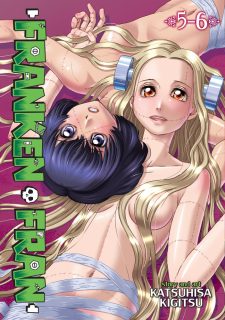
Franken Fran, Vols. 7-8

January 6, 2017 by Sean Gaffney

By Katsuhisa Kigitsu. Released in Japan by Akita Shoten, serialized in the magazine Champion Red. Released in North America by Seven Seas. Translated by Jocelyne Allen, Adapted by Shanti Whitesides.

More of everything. More outrageous humor, more appalling horror, more of the few sympathetic members of the cast having their lives destroyed in the worst way possible, more of the deeply horrible darkness that is humanity, and so many goddamn Sentinels that you’ll never want to watch sentai shows again. All of this is in the final omnibus of Franken Fran, where the author clearly knows things are wrapping up, and has therefore decided to make this Franken Fran’s Greatest hits. Which is fine, as that’s exactly what we read Franken Fran for. It’s over the top, it goes to far, it’s offensive but hilarious. And in the end you aren’t even sure if Fran is alive or dead.

Of course, sometimes things are moving a bit too fast. The author has a lot of stories to tell, and a limited number of pages in which to do so (he said in one afterword that he was forced to make one into a two-parter). The first story in the volume ends SO abruptly that I actually had to check to verify that we weren’t missing pages (and also gives us a bad end to another likable woman whose only crime is hanging around Fran too much, though like most of this ensemble cast she shows up right as rain again later). The art also seems a little messier than usual, as if it’s simply being drawn to too tight of a deadline. And sometimes the stories don’t really land – I admit that I’m sort of sick of the Sentinels, and didn’t need to see this much of their antics again.

The one story in here that stands out above all others – indeed, I suspect it to be the main reason fans clamored for this to be licensed in the first place – has Gavril hired to come to Fran and Veronica’s school and be a substitute teacher. We’ve seen teachers before who don’t act the part and dispense “real life” advice rather than platitudes, but Gavril takes this beyond eleven, telling guys the proper way to threaten rape on their fellow classmates, giving girls advice on how to get ahead in this world, and basically being the worst Great Teacher ever. Naturally, the kids all love her, mostly as, given that they’re in Franken Fran, the entire school is sort of deeply twisted to begin with. Other excellent chapters involve horror (Fran’s octopus specimen gets stolen, with amazingly dreadful results), humor (the continuing awfulness of every moment of Kuho’s life as a policewoman), or simply tragedy (the other best story in this volume, in which Veronica’s new friend at school takes agency against the adults who are gang-raping her in a particularly vengeful way).

The volume caps off with a dream sequence, after Fran is trapped on an ocean liner that sinks to the bottom of the sea. She dreams of the entire cast coming out to thank her for everything she’s done to them – sorry, I mean for them – over the years. Okita is in a human body, Kuho (and her clones) are happy, hell, even Veronica is briefly happy (so you can tell it’s a dream). And, like the first story in the volume, the ending is sort of ambiguous. Did Fran actually wake up and get rescued? Or is she just dreaming she’s back at the operating table? Franken Fran was a grand horror/comedy mess, and while I think it may have offended more people than it impressed, I always admired its moxie. I’ll miss it.

Filed Under: REVIEWS

Manga the Week of 1/11

January 5, 2017 by Sean Gaffney, Anna N, Ash Brown, MJ and Michelle Smith Leave a Comment

SEAN: The holidays are over and it’s back to the grind, but we have some manga here to help you along.

Dark Horse is not only putting out Shinji Ikari Raising Project omnibuses, but also the actual series. Vol. 17 is the 2nd to last. Love those Evangelion AUs.

Kodansha has a few books. I was very pleased with the first volume of In/Spectre, whose female lead basically ticks many marks I look for in female leads. I am very excited for Vol. 2.

ASH: I’m very curious to see how this series unfolds!

SEAN: And we also get a 3rd volume of That Wolf-Boy Is Mine!, though the wolf boy himself may say otherwise.

MICHELLE: I really enjoyed the first two volumes and am looking forward to the third!

SEAN: Meanwhile, the 12th Yamada-kun and the Seven Witches starts to show us how it intends to move on after for all intents and purposes ending last volume.

ASH: The series seems to have done this a few times now.

SEAN: The big publisher this week is Seven Seas, with five titles. First we have a 9th volume of techno thriller Arpeggio of Blue Steel.

And a 3rd volume of Zero Sum-tastic action series Battle Rabbits.

The debut this week is The Girl From the Other Side: Siúil, A Rún, which is a mouthful but I have high hopes. Also known as Totsukuni no Shoujo, it’s a Mag Garden title from Comic Blade. We haven’t seen much of them since the old Tokyopop days. It seems to be along the lines of Ancient Magus’ Bride and similar titles.

ASH: I am looking forward to this one immensely; possibly one of my most anticipated debuts of the year.

ANNA: This sounds interesting to me.

MJ: Oh, this. I’m definitely interested in this!

SEAN: Golden Time’s 6th volume continues to show us that law school students can have just as many angsty romantic triangles as high school students.

And the always gloriously silly My Monster Secret has a 5th volume.

Speaking of silly, or at least just plain weird, there’s a 6th volume of Nichijou from Vertical Comics.

Viz closes things out. First we have a 61st volume of Case Closed, which continues to feature lots of mysteries and lots of pointing.

The Legend of Zelda: Legendary Edition’s first volume was a huge bestseller, and I suspect the second, which will have Oracle of Seasons and Oracle of Ages, should do equally well.

Lastly, Ranma 1/2 has its second to last omnibus, which means that at least one of its many hanging subplots will get wrapped up. No, really, it will. But not any of the romantic ones, fear not.

ASH: Still glad Ranma is getting a re-release!

SEAN: There’s some really good titles here. What interests you?

MICHELLE: Apparently only wolf boys!

Filed Under: FEATURES, manga the week of

  • « Go to Previous Page
  • Page 1
  • Interim pages omitted …
  • Page 265
  • Page 266
  • Page 267
  • Page 268
  • Page 269
  • Interim pages omitted …
  • Page 538
  • Go to Next Page »
 | Log in
Copyright © 2010 Manga Bookshelf | Powered by WordPress & the Genesis Framework